Tag Archives: グルメ

Japanese Seasonal Fish: Striped Horse mackerel/Shimaaji

shimaaji-1

Shimaaji, or Striped Horsemackerel is one variety of Aji/Horsemackerel-Saurel.
Although the season is said to be in Summer, the taste varies little with the time of the year.
Striped Horsemackerel caught by anglers off the Izu Peninsula, Shizuoka Prefecture, are said to be the best in Japan.
It is known under the other names of Ookami, Kose and Katsuoaji.
It is very popular as sashimi:

shimaaji-2

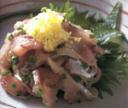
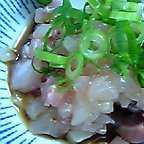
or as tataki (tartare), my favourite, with a dash of fresh grated ginger:
<a

shimaaji-3 shimaaji-3a

Of course, as a sushi, it has many lovers:

shimaaji-4

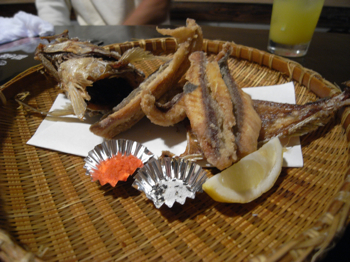
The best sushi restaurants will prepare the sashimi or sushi from live specimen swimming in their tanks and later serve the bones and head deep-fried. They will serve the whole fish deep-fried for the guests who are so keen on eating raw fish!

shimaaji-5

Recently, breeding the fish from their eggs off Chichijima Island has been successful, meaning more on our plates in the future!

Please check the new postings at:
sake, shochu and sushi

—————————————-
日本語のブログ
—————————————-

Japanese Home-made Lunch of the Day

lunch-09-04-01

With all the bentoes the Missus is (I was going to say “kindly” but don’t forget she eats the same lunch after all! LOL) preparing for me every Monday and Tuesday I have been asked what would be typical lunch at home.
Frankly speaking, it varies all the time, depending on the Missus’ mood and my own (rare) requests.
But today was a bit special. This morning, April Fool’s Day, I had to go through a stomach scan on my doctor’s orders (which revealed nothing serious, fortunately, apart of a big dent in this month budget!), which meant I hadn’t been allowed to eat for 18 hours (or drink for 58 hours!). As I was about to depart for the hospital, the Missus sent me off saying: “Don’t worry, I’ll prepare a nice healthy Japanese lunch as you like them!”
That could explain that for all the anaesthesics I had to ingurgitate, I stayed conscious during the whole operation!

lunch-09-04-01a

Because I did not have to sleep off all the medicine I managed to come home earlier than scheduled and take pictures of the meal as it came onto the table:
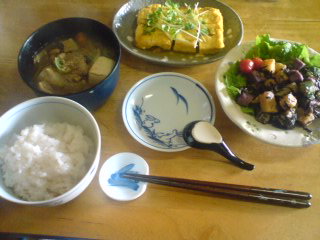
The salad was made with three types of potatoes: yellow sweet potato, violet sweet potato and regular potato to which was added cucumber cubes of the same size, “hijiki” sweet seaweed, lettuce with gomadare/sesame dressing.

lunch-09-04-01b

Naturally I had my tamagoyaki/Japanese omelette. The above picture shows it as it came out of the pan.

lunch-09-04-01c

It was then cut to bite size (half for each of us!) and served with “Kawaire Daikon” sprouts and a dash of ponzu.

lunch-09-04-01d

As for the meat, I had the Missus’ special: “motsu nikomi”/Japanese-style pork tripes stew with veg and tofu. (I had a second serving).

lunch-09-04-01e

As for the rice, I had rice steamed with shreds of sweet umeboshi/Japanese pickled plums. (I had a second serving of that, too!)

We had some small cakes for dessert.
I was so full that I had to sleep it off!

Tonight I ‘ll be able to open a bottle of sake at last! LOL

Please check the new postings at:
sake, shochu and sushi

—————————————-
日本語のブログ
—————————————-

Today’s Lunch Box/Bento (’09/20)

bento-09-03-31a

Today saw a rare occurence in that the Missus prepared a double bento for me!
Let me explain: As I have to submit to a camera scan of my stomach (you know, those long thin things they force through your gullet!) I’m not allowed to eat anything after 9:00 p.m.
As I usually have dinner at around 9:30 due to late work hours, the Missus included a small “6:00 p.m. dinner” (I can’t really call it a lunch box! LOL).

bento-09-03-31d

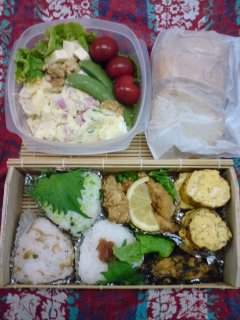
Lunch was served in that interesting box with a bamboo lid I have described before:
Three different “o-nigiri/rice balls”, one with an umeboshi/pickled Japanese plums, another one with Japanese cucumber (both wrapped in fresh shiso/perilla leaves) and the third one with fried “shirasu/Sardine whitebait”.

bento-09-03-31b

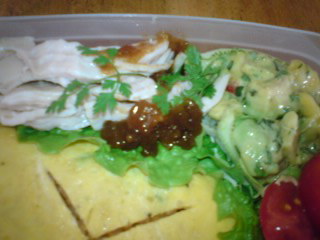
Two kinds of deep-fried chicken fillets cuts were provided with some lettuce. One kind was fried with white sesame seeds, the other with bits of shiso/perilla leaves.
The tamagoyaki/Japanese omelette came in a cylindrical shape instead of the usual rectangular one. This done is done by “rolling” it into a sushi roll bamboo sheet just after it has been cooked and kept pressed inside until it has completely cooled down.

bento-09-03-31c

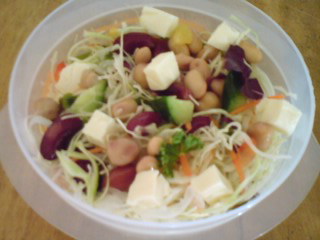
As for dinner I was provided with potato and ham salad to which the Missus added plum tomatoes, cut processed cheese, walnuts, sweet peas in their pod and more lettuce!

I’ll be hungry tonight!

Please check the new postings at:
sake, shochu and sushi

—————————————-
日本語のブログ
—————————————-

Tuna Species: Kindai Tuna/Kindai Maguro

kuromaguro.jpg

Following a kind request by my good Foodbuzz friend, Elizabeth, I decided to re-post an article on this particular tuna species to clear some misunderstandings and add new information!

“Kuromaguro” or Blue Fin Tuna has become almost a mythical fish all over the world to the point that non-Japanese refer to it by its Japanese name.

“Kuromaguro”, or Blue Fin Tuna (or Tunny) has many other names in Japanese: Honmaguro, Maguto,Meji,Yokowa, Shibi, Imoshii, Shibimaguro, Kuroshibi, and Hatsu!

The best are caught in Winter mainly in the seas off Kochi (Shikoku Island), Miyagi and Hokkaido Prefectures.
This variety is the most expensive and can reach astronomical prices, especially caught in Winter off Hokkaido.
Imported Kuromaguro usually reaches Japan frozen, but in recent years the fish has been successfully raised in semi-wild environments in Spain, Australia and Croatia and arrives in Japan fresh by plane.
Imports and sales of Kuromaguro are monopolised by Japanese trade associations, unless you are lucky enough to catch one (careful here, as poaching is a major offense in Japan!).
Between you and me, if you want to eat Kuromaguro sashimi, it might come cheaper if you do it while travelling in Spain!
Did you know that Japanese importers will fly to Spain and other countries just to check that the fish are bled properly?

Now “Kindai Maguro” (近/kin for “near/nearby” and 大/dai for “big”) is the name given Kuromaguro/Blue Fin Tuna entirely human-fed (I mean fed by humans, not fed with humans!LOL).
There is big “but”, though! Huma-fed does not mean human-raised.
Young tuna have first to be located, encircled with large nets, guided near a shore and then provided with food. What people forget is that the tuna gills are hard. If the fish cannot swim freely enough it will wither and eventually die. So Kindai Tuna is nothing less than wild tuna caught into a trap and raised inside it!

BUT GOOD NEWS!

Only last week, the Tokai Marine Studies University in Shimizu Ku, Shizuoka City (Shizuoka, Banzai!) has just announced that they have succeeded in raising Kuromaguro from the eggs! What is with the recent success by fish farmers in raising another variety of Kuromaguro in Kyushu, Specialist are confident that Japan will be able to actually export completely human-raised tuna in the foreseeable future!

———————
Related terms:

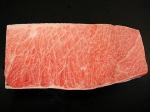
kuromaguro-otoro
Kuromaguro Otoro (fat part)

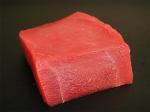
kuromaguro-chutoro
Kuromaguro Chutoro (semi-fat part)

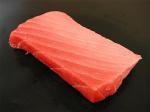
kuromaguro-akami
Kuromaguro Akami (lean part)

Please check the new postings at:
sake, shochu and sushi

—————————————-
日本語のブログ
—————————————-

Today’s Lunch Box/Bento (’09/19)

bento-09-03-30a

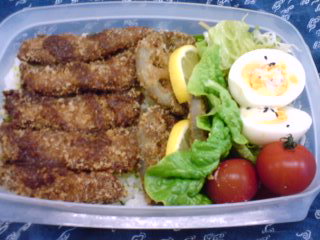
The Missus did not want to take a picture of today’s bento because, as in her own words, it looked too “brown”.
I ignored her protests because bentoes are simply looking brown sometimes,e specially when you include deep-fired items.

bento-09-03-30b

She deep-fired first soft pork strips after dipping thme into a sauce mix of hers and breadcrumbs, and then slices of renkon/fresh and peeled lotus roots in exactly the same way.

bento-09-03-30e

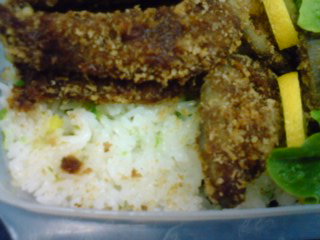
As for the rice it was plain steamed rice with which she later mixed chopped Japanese pivkled cucumbers.
A boiled eggs, plum tomatoes, lettuce and shredded veg completed the lunch.

bento-09-03-30c

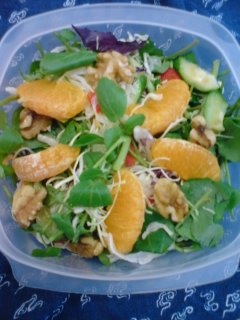
For more salad and dessert, shredded veg, “tankan” oranges from Yakushima island and walnuts!

Simple, tasty and very satisfying!

Please check the new postings at:
sake, shochu and sushi

—————————————-
日本語のブログ
—————————————-

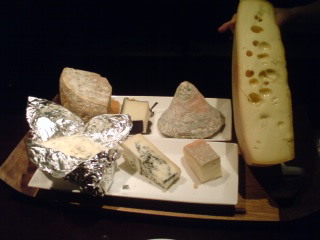
Cheese Plate at gentil (5)

gentil-09-03-a

Last night I paid a belated visit to Gentil Restaurant In Shizuoka City in the company of two good friends to check and taste what was on offer at that nationally famous restaurant.

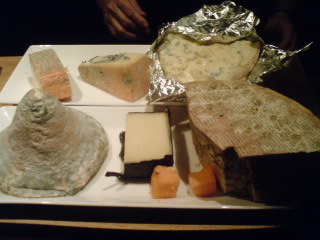
My good friend, Ms. Keiko Kubota, the only Japanese Cheese Sommelier to hold the title of compagnon d’Honneur de Taste Fromage came up with the tray of Cheeses she is currently maturing:

gentil-09-03-c

Front from left to right:
-Cone de Port Aubray (Goat Milk, Loire, France)
-2 year-old Chevre Noir (Goat’s Milk, Canada)
-10 year-old Red Cheddar (Cow’s Milk, Wisconsin, US. Yes, you read well!)
-Bleu de Sassenage (Cow’s Milk, Alpes, France)

Back from left to right:
-Talegio (Cow’s Milk, Piemonte, Italy)
-Gorgonzola Picante (Cow’s Milk, Piemonte, Italy)
-Gorgonzola Dolce (Cow’s Milk, Piemonte, Italy)

gentil-09-03-b

-10 year-old Red Cheddar (Cow’s Milk, Wisconsin, US. Yes, you read well!). A rarity!

gentil-09-03-d

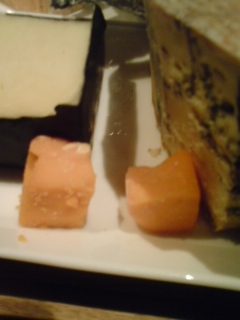
Another rarity: look at the pic at the top of this posting. It is the large cheese “standing” on the right:
-“Hokkaido Shintoku”, semi-hard type from Hokkaido, Japan. Only served presently at Gentil!

gentil-09-03-e

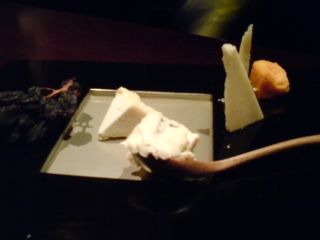
We actually tasted all the cheese on the tray.
This particular dish offers:
-Cone de Port Aubray (Goat Milk, Loire, France), top
-Gorgonzola Picante (Cow’s Milk, Piemonte, Italy)
-2 year-old Chevre Noir (Goat’s Milk, Canada) Standing
-10 year-old Red Cheddar (Cow’s Milk, Wisconsin, US.)!
-Gorgonzola Dolce (Cow’s Milk, Piemonte, Italy) in the wooden spoon.

What did we drink with that?
Chateau Talbot from Bordeaux, and wines from Crozes-Hermitage and Bourgogne!

Restaurant Gentil
Address:420-0031 Shizuoka Shi, Gofuku-cho, 2-9-1, Gennan Kairaku building, 2F
Tel.: 054-2547655 (Reservations advisable)
Fax: 054-2210509
Opening hours: 12:00~14:00, 18:00~last orders for meals at 21:30. Bar time 18:00~23:30. Closed on Mondays.
Credit cards OK
Homepage (Japanese)


The Japan Blog List

Please check the new postings at:
sake, shochu and sushi

—————————————-
日本語のブログ
—————————————-

Cream Sauce Prawns and Potato Pagoda

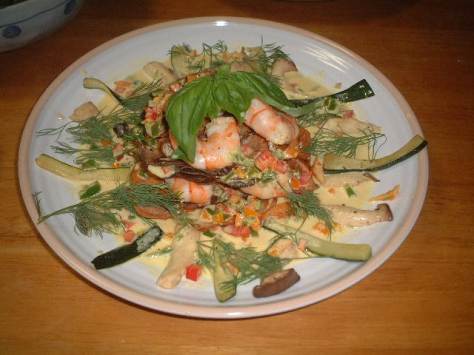
prawns-cream-potatoes

Frankly speaking, I was stumped by how to call this simple, healthy but fullfilling home-made recipe reminiscent of the Curry Sauce Mango Prawns and Scallops recipe I posted a couple of days ago!
Lauren would probably have kicked if I had called it “Prawns and Potatoes Sandwich in Cream Sauce”! LOL
As with other recipes, it can be multiplied into many variations. Vegetarians can replce the prawns with boiled cauliflower and Brocoli for example!

Ingredients (for 2 people/large apppetites!):

Small -medium prawns: 18 without their shells and kept in a little lemon juice
Potatoes: 4 medium-large
Courgette/Zucchini: 1 small cut in thin strips (at least 9 or 10. See pic above)
Eringi Mushrooms or subsitute: 2 large cut in thin strips (at least 9 or 10. See pic above)
Fresh dill (for decoration)
Fresh sweet basil (for topping)
Sauce:
Shallots: 1 large, finely chopped
Garlic: 1 large clove, finely chopped
Red, yellow, green pimento: 2 large tablespoons of each, finely chopped
Fresh Cream: 1 cup (200 cc)
White wine: 1 quarter of a cup (50 CC)
Olive oil
Lemon juice: 1 lemon
Salt, pepper, nutmeg, chili pepper (the last to taste). You can make it Indian by using curry mix powder.

Recipe:
Organize yourself so as to have everything on hand and ready from the beginning!
You will need at least two frypans and one deep pan.

-Cut potatoes as thin as possible. The thinner, the better. Also keep in mind you have to make 6 “pancakes”. Wash them. Take all water off them with a clen cloth or kitchen paper. Add a little salt, pepper, nutmeg and chili pepper (last one can be discarded) to them in a bowl.
-Pour a little olive oil in one non-stick frypan. On a medium-large fire wait until oil is hot enough and form a “pancake with potato slices. The trick is that no space should be left between potatoes and at the same time avoiding two sliced to cover each other completely. Wait until potatoes have cooked enough to stick together (“help” them if necessary by pressing them). Turn them over and cook the other side to a nice crispy light brown. Continue until you have obtained 6 “pancakes”. Keep warm.
-While the potatoes cook, fry first zucchini then eringi mushrooms in a little olive oil until tender to taste. Add a (very) little salt to them while cooking. Keep warm.
-Sauce: In a deep pan, pour 3 large tablespoon of olive oil, heat oil over medium fire. Fry shallots and garlic. When shallots have become translucent, add wine, fresh cream, lemon juice, salt, pepper, nutmeg and other spices. Take it easy with salt and spice at first. You can always rectify later. Let cook for a few minutes. Sieve sauce, add chopped pimento and cook for a good 5 minutes on a medium fire. Lower fire if it boils.
-Fry prawns in a little olive oil until only their centers are still a little raw. If you cook them any longer, they will harden up.

On a large plate you had kept hot in the oven, first place one potato pancake then 3 prawns on top. Repeat the operation twice more to obtain the “pagoda” or “Sandwich” shape. Place alternatively zucchini and eringi around to form a crown. With a large tablespoon scoop up the pimento out of the sauce and pile them on top of the Pagoda. Pour the sauce on the vegetables around the Pagoda. Decorate with plenty of fresh dill around and sweet basil leaves on top as shown on pic above.

Serve with a dry white wine or Pilsner tye beer. Non-drinkers could drink a nice fresh lemonade (real one!) with it!

Enjoy!

Please check the new postings at:
sake, shochu and sushi

—————————————-
日本語のブログ
—————————————-

Vegetables Facts and Tips (9/1): Mushrooms/Shitake

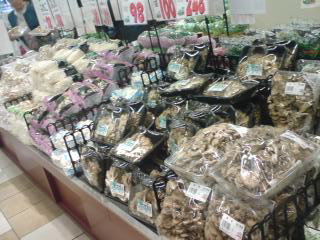
mushrooms-market
(Mushrooms at at a Shizuoka Supermarket)

I don’t intend to talk about wild mushrooms here as I would need a very thick book to post!
Japan is arguably the country cultivating the greatest number of varieties ( new ones appear and disappear every year!), so I will limit myself to give information on at least four of them and furthermore introduce most varieties I have found in Japanese supermarkets (most of them should be available in many countries.

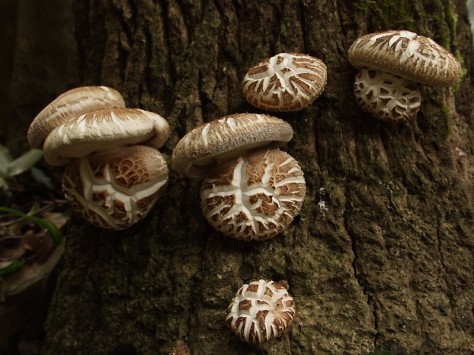
SHIITAKE

efbd93efbd88efbd89efbd89efbd94efbd81efbd8befbd85

FACTS:
Shiitake/Lentinula Edodes (Black Forest Mushrooms) are native to China but have been grown in both Japan and China since prehistoric times[2]. They have been cultivated for over 1000 years; the first written record of shiitake cultivation can be traced to Wu Sang Kwuang, born during the Song Dynasty (AD 960–1127). However, some documents record the uncultivated mushroom being eaten as early as AD 199.
Fresh and dried shiitake have many uses in the cuisines of East Asia. In Chinese cuisine, they are often sauteed in vegetarian dishes such as Buddha’s delight. In Japan, they are served in miso soup, used as the basis for a kind of vegetarian dashi, and also as an ingredient in many steamed and simmered dishes. In Korean cuisine, they are commonly used in dishes such as bulgogi (marinated grilled beef), jjigae (stews), and namul (sauteed vegetable dishes). In Thailand, they may be served either fried or steamed.

Shiitake are often dried and sold as preserved food in packages. These must be rehydrated by soaking in water before using. Many people prefer dried shiitake to fresh, considering that the sun-drying process draws out the umami flavour from the dried mushrooms by breaking down proteins into amino acids and transforms ergosterol to vitamin D. The stems of shiitake are rarely used in Japanese and other cuisines, primarily because the stems are harder and take longer to cook than the soft fleshy caps. The highest grade of shiitake are called donko in Japanese.
Extracts from shiitake mushrooms (such as ichtyol) have also been researched for many other immunological benefits, ranging from anti-viral properties to possible treatments for severe allergies, as well as arthritis.
The Japanese actually consume them from their raw form more than in any other country.

-Season: best in October~March for outdoors cultivation
-Main beneficial ingredients: Vitamin B1, B2, N6, Ergosterol, Lentinan, Fibers.

TIPS:

-Loosely wrap them in clean Newspaper or Kitchen Paper and store them in fridge away from the light.
-Choose specimens with unbroken “umbrella” and no black marks under.
-Fresh Shiitake are best enjoyed for their taste by keeping their cooking simple such as frying them over a grill with a dash of soy sauce and sake!

Please check the new postings at:
sake, shochu and sushi

—————————————-
日本語のブログ
—————————————-

Mango Curry Cream Sauce Prawns and Scallops with Wild Rice

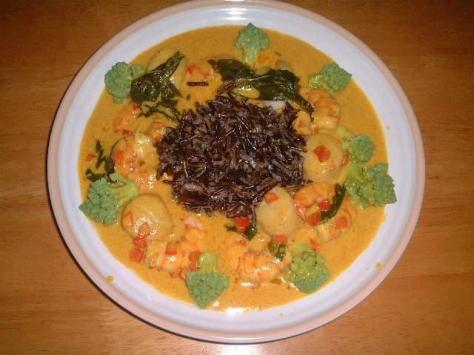
cream-prawns-wildrice

Here is a simple recipe of mine (yes, I do sometimes cook for the Missus! LOL) I have wanted to introduce for a long time. It calls for reasonably easy to find ingredients in many parts of the World. It is of course open to many variations!

Ingredients: For 2 people

-Fresh or frozen scallops: 12
-Medium-size prawns: 12
-Broccoli or Romanesco: 12 “flowers”
-Basil leaves: 12
-finely chopped red and yellow pimento: 4 large tablespoons
-Wild rice: 1 cup (200cc)
-1 large mango: cut in small cubes
-Lemon juice: 1 large tablespoon
-Fresh cream: 1 cup (200cc)
-White wine a quarter of a cup (50cc)
-Chopped Shallots: 1 large
-Chopped garlic: 1 clove
-Curry mix powder (or paste) 2 large tablespoons
-Salt, pepper (and spices to taste)
-White Butter: 1 large tablespoon
-Chicken stock: half a cup (100cc)
-Olive oil: 2 large tablespoon

Recipe:

-Cook the wild rice in lightly salted water for at least 20 minutes.
Drain water completely. Add butter and chicken stock and cook on a medium fire until you are satisfied with the consistency of the rice. Keep warm

-Prepare sauce:
Pour olive oil inside a large saucepan over a medium fire. Drop in shallots and garlic and fry until shallots become translucent. Add wine, mango, curry powder and fresh cream. let cook for a few minutes, mashing mango from time to time.
While doing this, first boil Romanesco broccoli in slightly saulted water until tender enough ( a couple of minutes). Drain and keep warm.
In a fry pan pour a little olive oil. Fry prawns, then scallops (season with just a little salt and pepper) long enough to cook the outside but leaving the inside almost raw. They will be more tender for them. Keep warm.
-Sieve the sauce for smoothness and getting rid of unwanted fibers.
Add chopped pimentoes and basil laves, heating the sauce over a small fire for a couple of minutes.
Season the sauce with salt, pepper and spices to taste.

On a large plate (that you would have kept warm inside the oven!), place the scallops, prawns and broccoli alternatively in a crown.
Pour plenty of sauce all over.
Finally transfer the wild rice in the middle for good effect!

Enjoy!

Please check the new postings at:
sake, shochu and sushi

—————————————-
日本語のブログ
—————————————-

Bryan Baird’s Newsletter (2009/8)

Baird Beer & Taproom Events Bulletin 2009 #8
bryan-sayuri.gif

Dear Taproom Friend & Baird Beer Enthusiast:

The dawn of spring in Japan means cherry blossom viewing which means outdoor fun with friends enjoying good food and fine libations. The Fishmarket Taproom in Numazu will be hosting its own outdoor Hanami party this coming Sunday, March 29. The venue is the Minato-Guchi Koen which is a park just a couple hundred meters down the road (toward the bay) from the Fishmarket Taproom. In addition to serving a great array of picnic food, we will be pouring three Baird Beers (Wheat King Ale, Teikoku IPA and a special sneak preview of this year’s Four Sisters Spring Bock). The event kicks off at noon and will run until 4:00 or 5:00 pm.

Event: Fishmarket Taproom Hanami Party
When: Sunday, March 29 (noon – late afternoon)
Where: Minato-Guchi Koen in Numazu (200 meters down the road from the Fishmarket Taproom)
Food: All-you-can-eat picnic buffet
Drink: All-you-can-drink Beer (Wheat King Ale, Teikoku IPA, Four Sisters Spring Bock); non-alcoholic beverages
Price: Adults 3,000 yen; Children free

If you plan on attending please send us an email at either fishmarket-tap@bairdbeer.com or brewery@bairdbeer.com so that we can get a decent gauge of the overall numbers. We will be gathering at the park at noon. In case of extremely inclement weather, we will be relocating to the Fishmarket Taproom. We hope you can join us and meet Chris Poel, our new lead brewer who begins work in April. Be sure to bring the kids as lots of young ones will be running around having a ball.

Also, please note that the Fishmarket Taproom will thus be closed on Sunday, March 29. The Fishmarket Taproom also will be closed Monday, March 30 through Wednesday, April 1 due to kitchen and bar rennovations that we are undertaking. We will open again, with a fresh new kitchen and beer dispense system, on Thursday, April 2.

Cheers,
Bryan Baird

Baird Brewing Company
Numazu, Japan
HOMEPAGE


The Japan Blog List

Please check the new postings at:
sake, shochu and sushi

—————————————-
日本語のブログ
—————————————-

Today’s Lunch Box/Bento (’09/18)

bento-09-03-24a

Our little “differences” of the past two days seem to have spurred the Missus into a creative mood as far as my bento was concerned (Elin and Lojol are going to throw things at me!).

bento-09-03-24b

I will talk about the rice later.
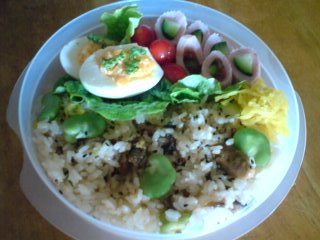
The boiled egg appeared as “mimosa egg” this time. Some lettuce, “ameera rubbins” tomatoes (sweet and small, only grown in our Prefecture) and some shredded “takuan”/yellow pickled daikon.

bento-09-03-24e

The pinky things are “Chikuwa/Fish paste steamed around a stick to give them their tube shape”.
These particular ones are called “Sakura Chikuwa” because of their pink colour.
The Missus pushed some cut cucumber into two four cut pieces of them. As for the other two she pushed in a combination of shiso leaves, cucumber stick and “umeboshi/pickled Japanese plum” flesh. Similar to some sushi maki!

bento-09-03-24d1

Now for the rice.
The Missus steamed the rice with a little dash of dashi stock, soy sauce and sake. She placed the contents of a tin of smoked oysters in oil on top before closing the lid and steaming the whole. Once ready, she mixed the contents inside the pan while they were hot (important!). She later added boiled broad beans/”sora mame”, Chinese pickled veg and black seame seeds.

bento-09-03-24c

As for the salad (to which I added dressing stored at work): on a bed of shredded veg, cheese, salad beans and more cut veg.

Took a big bottle of liquid yogurt for dessert.
Might as well as have an argument every Sunday evening!

Please check the new postings at:
sake, shochu and sushi

—————————————-
日本語のブログ
—————————————-

Today’s Lunch Box/Bento (’09/17)

bento-09-03-23a

Today’s bento had a little “history” behind it.
To tell the truth, the Missus had gone to bed in a real bad temper the night before (why? Don’t ask me,…). So, Missus or not, I still need my bento (mind you, I could always buy it, but that would make things even worse!). So I cooked the rice myself. That seemed to appease the Missus (after all, if a man starts cooking, a Japanese wife feels pretty useless,…), and when I realized I hadn’t put enough water and came up with rice a bit too hard, she took over.
-“Don’t worry, I’ll fix it. I’ll make Oomuraisu/Omellette Rice!”
I’m not one to argue in such moments!

bento-09-03-23b

As for the garnish, she put some salad I had made the night before consisting of cut avocado, mango and pieces of broad beans (boiled) with a mixture of mayonnaise, Thai spicy sweet sauce, basil, parsley and Italian parsley on small leaves of chickory/endive. She added home-made chicken ham (chicken breast first boiled, then marinated overnight) with English chutney pickles, lettuce, tomatoes and walnuts.

bento-09-03-23c

She fried the rice with some bits of chicken ham, veg, ketchup and spice before envelopping it into a thin omelette!
With yogurt for dessert, it made for a big hearty meal!

Please check the new postings at:
sake, shochu and sushi

—————————————-
日本語のブログ
—————————————-

Vegetables Facts and Tips (8): Leeks

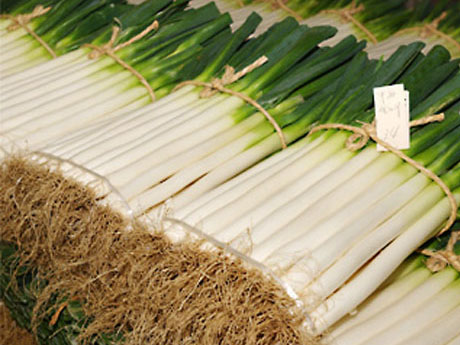
negi-1

Leeks, or “negi” in Japanese, is an almost universal vegetable.
It is used in cuisine at restaurants and homes on all continents and has been recognized for ages as very beneficial plant.

Recent research has demonstrated that it is an effective cure against cold in particular, not only for humans, but for many animals, too.
Some people do not appreciate them because of their pungent smell and taste, but this can be taken care of with a couple of simple steps.

Back home in France, we boil the central part of fat leeks and eat them under the name of “poor man’s asparaguses”!

FACTS:
-Season: leeks can be bought all year round, but the best season is from November to February in the Northern Hemisphere.

-Main beneficial elements: Carotene (green part), Vitamin C (white part), Calcium, Vitamin B1 (beneficial for blood circulation).
It is not only efficient against colds, but also to the stomach and innards health.

TIPS:
-Fatter specimens will have more taste.
-Choose specimen with a “wet” bottom cut.
-If you use large specimen raw in salads, first cut 5=8 cm long sections, then cut them thin lengthwise and leave them some time in clean cold water. The pungency will greatly diminish.
-To chop leeks for cooking, cut them first in 5~10 cm sections, then cut them thin lengthwise and only then chop them crosswise.

VARIETIES:
There are innemurable varieties in the World, but I will introduce here the main varieties encountered in Japan:
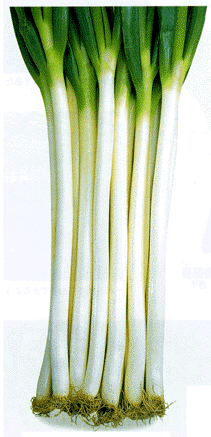
negi-senju
“Senju”
The most common and popular variety
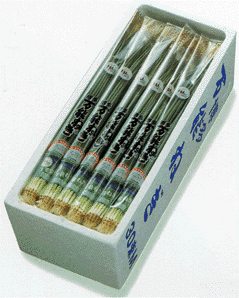
negi-hakata-manno-negi
“Hakata Manno”:
A choice specimen raised in Kyushu Island
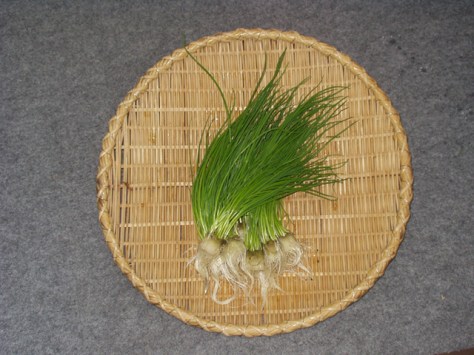
negi-hime
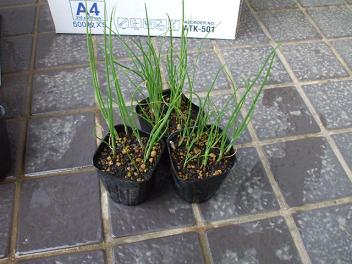
“Me” or “Hime”:
Could be called leek sprouts,too.
Eaten raw in salads, sushi, finger foods.
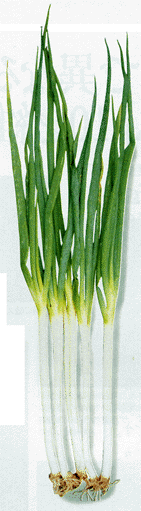
negi-ito-negi
“Ito” or Thread Leek, used in the same way as “Me/Hime”.
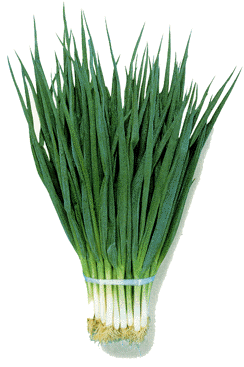
negi-kositsu-negi
“Koshitsu”, another common and popular variety.
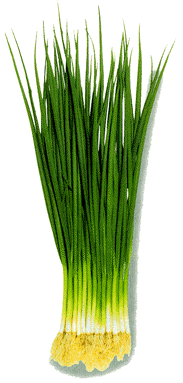
negi-kujo-futo-negi
“Kujo-Futo”:
A choice specimen origintaing from Kyoto.
negi-kujo-hoso1
“Kujo Hoso”. Same as above, but a lot thinner.
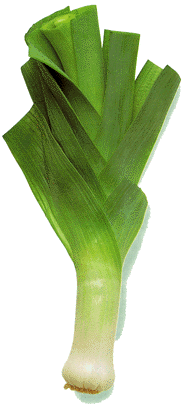
negi-riiki
“Riiki”
A short fat specimen popular for “nabe” and soups.
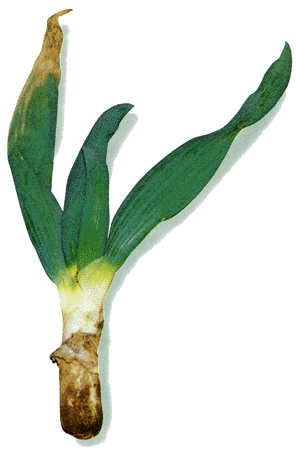
negi-shimonita-negi
“Shimonita”.
A fat variety with a short stem and long leaves. Popular with soupsand “nabe” (Japanese-style pot-au-feu)

Please check the new postings at:
sake, shochu and sushi

—————————————-
日本語のブログ
—————————————-
Shizuoka Local Food at Local Sake Brewery!

yui-2

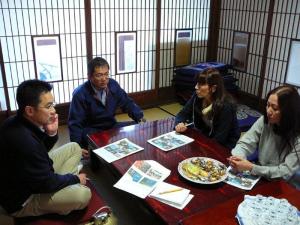
Last Sunday, I was invited to taste the new sake brewed by Kansawagawa Brewery In Yui, Shimizu Ku, Shizuoka City in the company of some old and new friends.
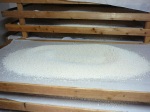
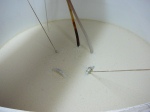
The purpose of the whole event was first to visit the brewery and being introduced to the arcan secrets of making sake:

yui-11 yui-12

yui-13 yui-14

I doubt that you are ready to read the whole sake brewery interview unless you are a sake fan. A more detailed report will eventually appear on Shizuoka Sake blog for the connoiseurs!

yui-9

The Brewery owner. Mr. Masataka Mochizuki, is a bit different from your usual owner. Most of his colleagues in Japan do not interfere whatsoever with the brewing and care only about the sale. On the other hand, Masataka Mochizuki is very passionate and even stubborn about his sake. He is far more knowlegeable about the craft than many owners and truly enjoys explaining and discussing the art.

yui-1

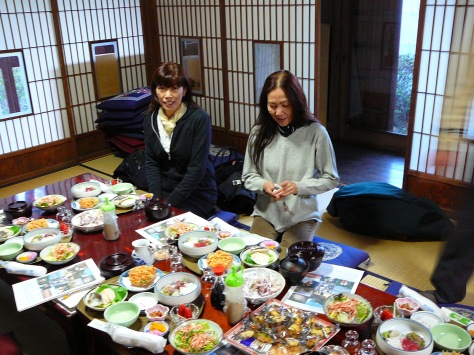
We had agreed on the idea to actually conduct the tasting of his new brews with purely local food.
A dinner was accordingly served to us inside the Brewery!
Now, Kansawagawa Brewery is located in Yui-Cho, Shimizu Ku, Shizuoka City, a harbour renown all over Japan for its delicacy, “Sakura Ebi/Cherry Shrimp”, a variety found only in our Prefecture. The catches being strictly regulated, it is a rare morsel outside our Prefecture.

yui-21

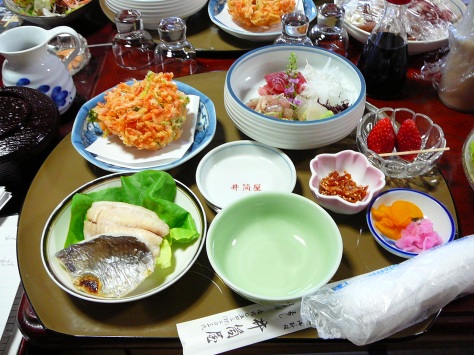
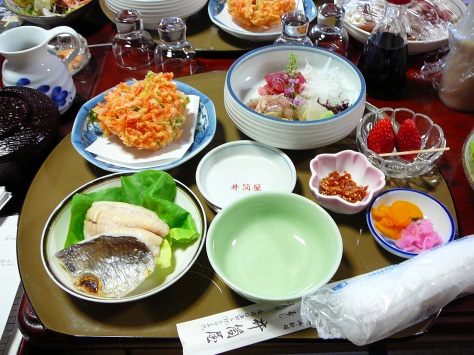
The dinner served to us included naturally rice and miso soup and:

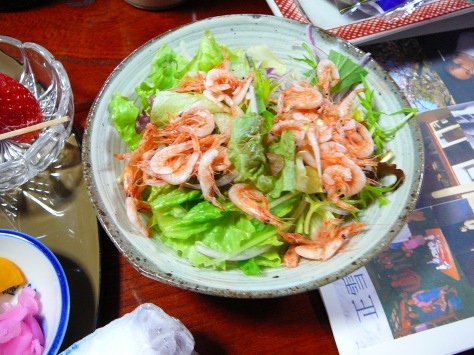
yui-3
Boiled Sakura Ebi Salad,

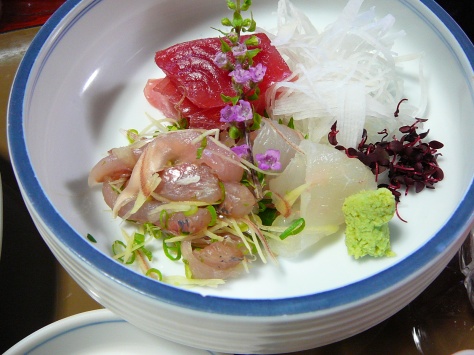
yui-5

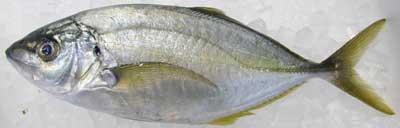
Sashimi plate. All seafood caught off Shizuoka shores!
Maguro/Tuna (top), Aji/Saurel and Hirame/Sole!

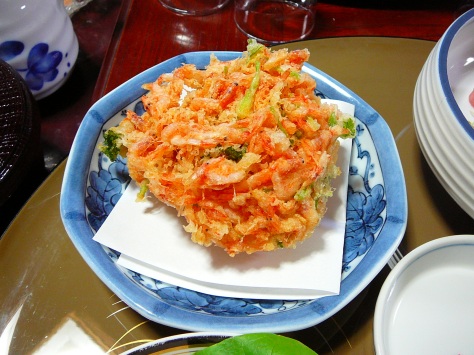
yui-4

Sakura Ebi Kakiage/Sakura Shrimps Tenpura. I know a lot of people in Tokyo who would take the first train to taste that!

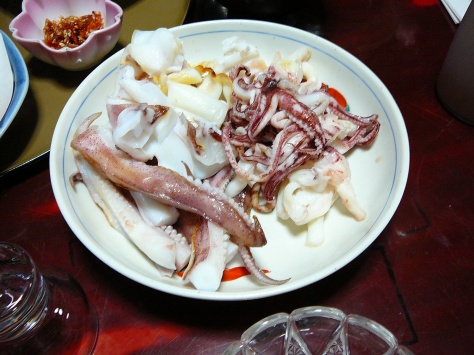
yui-71

Freshly boiled Ika/Cuttlefish. Great with sake.
The small plate contains pickled sakura shrimps.

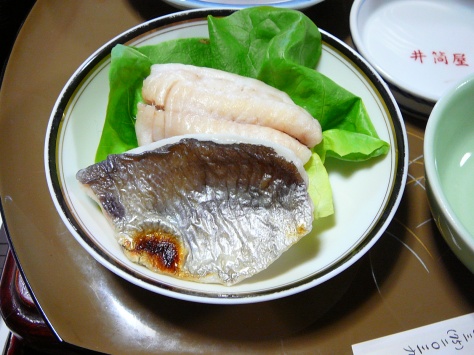
yui-6

Grilled Ishidai/Snapper served cold. An extravagant morsel to go with sake!

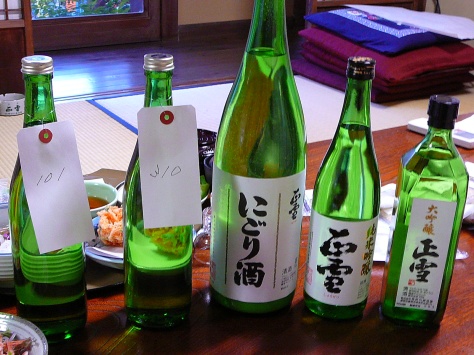
yui-8

And the sake!
The two with a “number” were not even for sale as they are still in the experimental phase!

Anyway, if you have the occasion to visit Yui, you will know that the real “package” is waiting for you!

Please check the new postings at:
sake, shochu and sushi

—————————————-
日本語のブログ
—————————————-
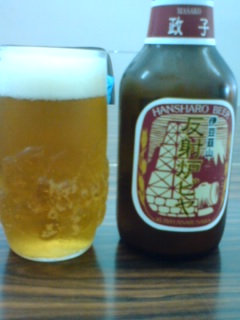
Shizuoka Beer 7/1: Hansharo Beer/Kurayanarusawa Brewery-Masako

hansharo-masako

The weather having turned for the warmer these days, I felt it was time to delve back into more Shizuoka micro-breweries brews!
The Good Beer and Country Boys in Nagoya will get tempted!

This particular brew, “Masako” by Kurayanarusawa in Izu-Nagaoka (Izu no Kuni City in Izu Peninsula) is a bit extra0rdinary: The master Brewer also works at Bandai Brewery (sake and shochu in Shizenji, Izu Peninsula) and after consulting Denbei Kawamura, the man who revolutionized sake in Shizuoka Prefecture, he used Shizuoka HD-1 usually utilized in brewing sake!

I can tell you I’m not one to complain!

Hansharo Beer/Kurayanarusawa Brewery-Masako
Ingredients: Grain Malt, Hops, HD-1 Yeast (Shizuoka)
Alcohol: 5%
Contents: 300ml
Live yeast, unfiltered, unpasteurized.

Clarity: Very clear
Colour: Dark orange
Foam: Longish, fine bubbles
Aroma: Strong, oranges, bread
Taste: Well-rounded with a comparatively soft attack. Shortish tail. Some welcome acidity with a dry finish.
Dry persimmons, memories of oranges. Bread. Oranges reappearing later.

Overall: Very refreshing, easy to drink. Thirst-quaffing. Goes well with a snack. Softer than expected.

Kurayanarusawa Brewery
Shizuoka Ken, Izu no Kuni Shi, Naka, 272-1
Tel.: 055-949-1208
Sales on site or through the Internet (Japanese)
Visits possible
Restaurant on site

Please check the new postings at:
sake, shochu and sushi

—————————————-
日本語のブログ
—————————————-