Tag Archives: 刺身

Sashimi Set at Tomii (’09/04)

sashimi-tomiir
Pic kindly upgraded by Jay Gustafson!

As said before, there are times I cannot work until late without taking a break and have a quick bite. I prefer to eat good food, then, even to a minimum. I’ve long stopped “filling a hole” with the nearest junk food.

To make a story short, I found myself in front a sashimi plate at my favourite Japanese restaurant, Tomii (the second posting in a row, I know! LOL).

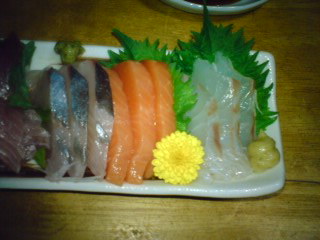
Here is what I was served:
(From right to left, bottom row)
-Isaki no Yakishimo/Isaki is a local seabream/snapper. “Yakishimo” can be called “Aburi”, that is the fish has been ever so slightly grilled on its skin. The fish was caught in Suruga Bay.
-Freshly grated wasabi from Shizuoka
-Aori Ika/Cuttlefish variety. Body and “ears”/fins
-Shiso/perilla flowers
-Uni/sea urchin on a small shiso/perilla leaf
(From right to left, top row)
-Madai/”true Snapper”. It was caught in Sagara (Shizuoka Pref.)
-Sliced balck daikon
-Hirame/sole caught off Miho, Shimizu Ku, Shizuoka City
-Akami/tuna lean part
All the chopped vegetables are local.

Culinary art at its best!


The Japan Blog List

Please check the new postings at:
sake, shochu and sushi

—————————————-
日本語のブログ
—————————————-

Japanese Seasonal Fish: Seabass/Suzuki

seabass-1

Suzuki or seabass is a fish so popular with anglers all over the world that a lot of people forget it is an extremely popular fish for sashimi and sushi in Japan.

seabass-2
(Pic taken at Tomii Restaurant in Shizuoka City)

Like any other fish, it bears many names: Madaka, Hakura, Shiibasu.
In the Kanto area, including Shizuoka Prefecture, it is called Seigo when under 25cm. At 3 years of age, when it has attained a length of near 60cm, it is called Fukko or Suzuki.
In Kansai it is called Seigo, Hane, and Suzuki.

seabass-3seabass-4

As you can see above the colour and texture are slightly different (Fukko is on the right)

It is indeed a bit early to introduce this fish, but I can’t help thonking about it!
A summer fish par excellence, it is caught mainly in Central and western japan.
The bigger and the older the fish, the better it is considered. After a decline in the 1980’s, catches have increased recently, reaching more than 9,300 tonnes after 2000.

Of course it is a fish you can appreciate cooked or simmered, or grilled, although it becomes fragile and breaks up easily upon being cooked.


The Japan Blog List

Please check the new postings at:
sake, shochu and sushi

—————————————-
日本語のブログ
—————————————-

Donburi: Sushi as a full meal

donburi-sapporo-1
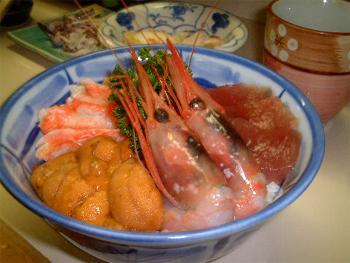
From bottom, clockwise:
“Uni” (Sea Urchin), “Kani Tsume” (Crab legs), “Maguro” (Tuna), “Nanban Ebi” ( large prawn variety)

“Donburi” is a popular way to eat sushi with foreigners as it combines quality and quantity, and usually reasonable prices!
I thought a few examples might help you choose your favourites nex time you come to Japan!
The above donburi and three following were savoured in Sapporo and Otaru (Hokkaido Island).
donburi-sapporo-2
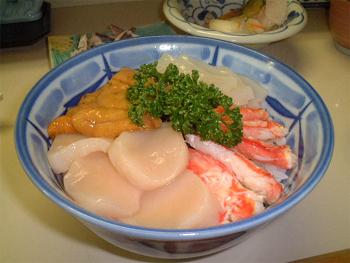
From bottom, clockwise:
A little variation from the first pic!

“Hotate” (Scallops), “Uni” (Sea urchin), “Ika” (Squid), “Kani Tsume” (Crab legs)
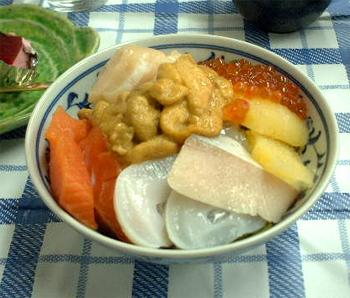
donburi-sapporo-3
A more extravagant sample this time:

From top middle clockwise:
“Ikura” (salmon roe), “Kazu no ko” (herring roe), “Kampachi” (Amberjack), “Tako” (octopus), “Sake” (raw salmon), “Hotate” (scallops), in the centre, “Uni” (sea urchin)
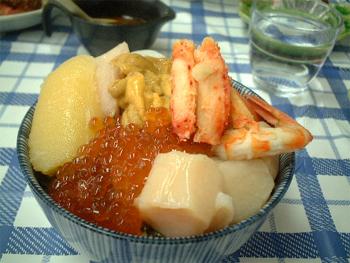
donburi-sapporo-4
This is a truly extravagant one!

From bottom, clockwise:
“Hotate” (Scallops), “Ikura” (Salmon roe), “Kazu no Ko” (Herring roe), “Kampachi” (Amberjack), “Uni” ( Sea Urchin), “Kani Tsume” (Crab leg), “Ebi” (Boiled prawn)

———————–
During a recent trip in Shiretoko, Hokkaido Island, we dropped at Ikyuya Restaurant, located in a small city called Shari (some of the place names in Hokkaido can become a real puzzle as they are mostly very local names written in Kanji that fit the pronunciation instead of the meaning!).
We (the Missus) had chosen this establishment as a representative of the local cuisine favoured by local people.
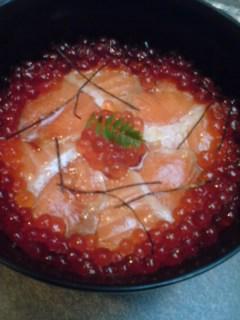
donburi-hokkaido-1

THe Missus oredered the “Oyako Don”/”Father-Mother and Son-Daughter Bowl”.
In Shizuoka it means chicken omelette (the Hen and the Egg!) spread on a bowl of rice. In Hokkaido, it stands for Shake sahimi”/salmon sashimi and “Ikura”/salmon roe spread over a bowl of rice. It must have been good as for once silence reigned around the table!
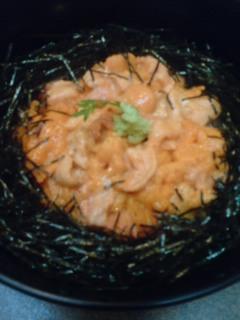
donburi-hokkaido-2

Our two friends (which included our gracious driver) opted for “Uni don”/sea urchin and chopped dry nori/seaweed spread over a bowl of rice,
donburi-hokkaido-3

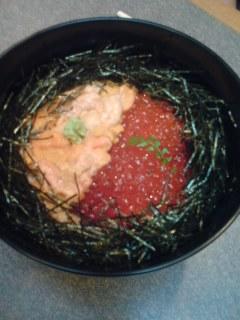
“Uni to Ikura Don”/sea urchin and salmon roe spread over a bowl of rice.
Extravagance at a very reasonable rice, absolutely fresh and sweet seafood away from metropolises, what more can you ask?
Ikyuya
Hokkaido, Shari Cho, Utoro Higashi, 13 (2 minutes walk from Utoro Hotsprings Bus Terminal)
Tel.: 0152-242557
Opening hours: 11:00~18:00 (might get closed in the afternoon on busy days. Come early!)
———————–
Home-made Donburi
donburi-home

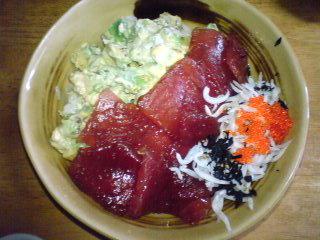
You do not have to go to a Japanese restaurant or sushi bar to eat “donburi” if you happen to have a wife who not only likes them but can also concoct them!
In short, my better (worse?) half once came up with the following for lunch:

Plain steamed rice topped with slices of “akami”/ lean tuna part, avocado salad with mayonnaise and wasabi pickles (the latter provided a nice balance with a spicy touch), boiled shirasu/whitebait sprinkled with “hijiki” seaweed and “tobikko”/flying fish roe.
The tobikko added a nice colour finish touch. It is quite cheap down here in Shizuoka City. From what I saw on Chuckeats Blog, it seems quite a treat over there in the U.S.!
I poured a little Shizuoka-made wasabi dressing on top. This dressing is a lot milder than pure grated wasabi with a little sweetness which combines well with the fish!

Please check the new postings at:
sake, shochu and sushi

—————————————-
日本語のブログ
—————————————-
7 US$ Sashimi Plate!

7-sashimi-1

The Missus welcomed me back home last night with her “triumphant smile”. By this, I knew she had made a good bargain at one of the nearby supermarkets.
Good, I will be able to humor her more easily, I thought (sly macho reaction,…)
Anyway, she had noticed a good sashimi set being sold for 1,000 yen (about 11 US$) at Coop Supermarket but could not decide whether to buy it or not (it was about 5:00 p.m.) and proceeded forward. But her feminine (sorry!) instincts called her back as this was just the time when bargains start at this good (and very reasonable) big supermarket chain. The price had gone down to 600 yen (about 7 US$)!

7-sashimi-2
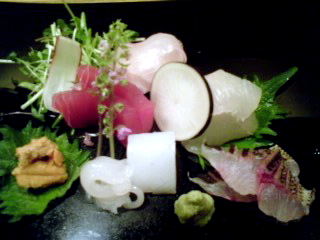
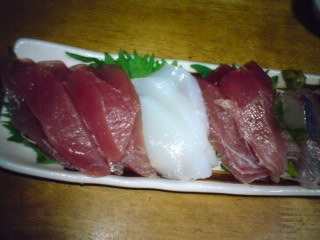
(from right to left: “Tai/Seabream”, “Shake or sake/Salmon” and “Kanpachi/Amberjack)

I don’t have to tell you with what relish she grabbed it!
She had the sashimi already seved on a plate on the dining room table for me to admire. I decided to take a pic, but she said that the dsiplay was not good enough for a pic!
I waited for her to go back to the kitchen and took my mobile phone out to take a few pics in a hurry!
The pics are of poor quality, I must admit, but I hope it will give some ideas to my friends!

7-sashimi-3
(from right to left: “Tonbo maguro/Tuna Variety, “Ika/Squid” and “Mebachi maguro/Big-eyed tuna”)

All seafood, except for the salmon are apparently from Shizuoka Prefecture. No wonder it is so cheap (even in Japan)

Please check the new postings at:
sake, shochu and sushi

—————————————-
日本語のブログ
—————————————-
Japanese Seasonal Fish: Turbot/Makogarei

makogarei

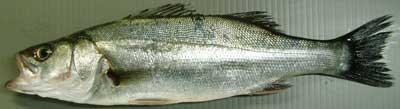
“Makogarei” or Pleuronectes yokohamae Gunther for the specialists is one of the many kinds of turbot indigeneous to Japan.
You will find it on the markets between June and August.
Depending where you live, you might do well to know its other names: “Aome” (Sendai), “Mushibirama” (Konahama), “Mako” (Tokyo) or “Amakarei” among many.
It is net-caught all around Japan.
It has comparatively a lot of flesh for a turbot, making it a choice morsel for nigiri or sashimi.

makogare-sushi

It can reach a length of 30 cm. Contrary to many other fish, the size will bear no incidence on the taste, but if you wish for extra taste, avoid female specimen bearing eggs/roe, and if possible, although a bit extravagant, choose a live fish (possible at Parche, Shizuoka JR Station!).
A good sushi or Japanese restaurant will deep-fry the bones and head for you, making for a great snack with great ale!

Please check the new postings at:
sake, shochu and sushi

—————————————-
日本語のブログ
—————————————-
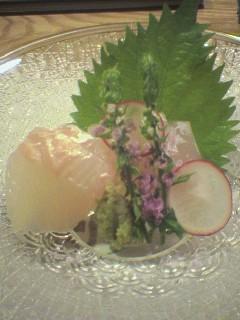
Japanese Fish Species: Scabbard Fish/Tachiuo

scabbard-fish-a1
(Sorry, but that fish is just too long for the screen!)

Scabbard Fish or “Tachiuo” (太刀魚/Great Sword Fish in Japanese), a very popular in Japan in spite of its great length is usually caught in Summer in Japan but also appears in Winter in Shizuoka Prefcture.
As other fish it owns other names: Tachi (not in Hokkaido, where the word means “whiting”!), Shirada and Tachinouo.
It is mainly caught off Wakayama, Ehime and Oita Prefectures, although it is also caught in Suruga Bay off Shizuoka Prefecture
It is both caught by line or net.
In 1999, 37,000 tonnes were caught, but it fell to 23,000 tonnes in 2000.
It is also imported from Kore and China, although their fish is slightly different from the Japanese variety. More than half of imported fish are eaten west of Kansai.

scabbard-fish-c

It is fish than can be eaten raw as nigiri.

scbbard-fish-b1

I personally prefer it “aburi” (slightly grilled) with a dash of ponzu and some momijioroshi (grated daikon with chili pepper) as above served at Sushi Ko Restaurant.

scabbard-fish-d

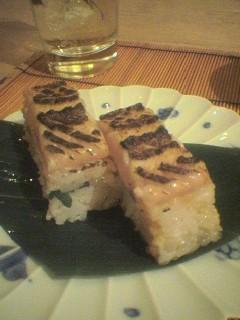
Some time ago I ate it at Oboro No Tsuki Restaurant (now defunct) as above:
They first put a double layer of sushi rice interspaced with shiso leaves (perilla) in a box for “oshi zushi” (pressed sushi), then top it with thick fillets (the fish is actually quite thin) and press the whole.
Next they slightly grill the top (“aburi”), take it out of the box and cut it to size.
Quite tasty and appetizing-looking!


The Japan Blog List

Please check the new postings at:
sake, shochu and sushi

—————————————-
日本語のブログ
—————————————-
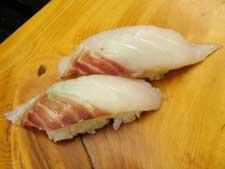
Chirashizushi: Marinated Tuna Sushi for Lunch


The Japan Blog List

Please check the new postings at:
sake, shochu and sushi

—————————————-
日本語のブログ
—————————————-
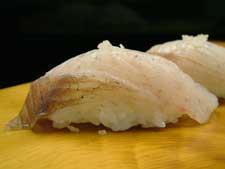
home-chirashi

The Missus does not work on Thursday. This is the day we usually go out at night, but the frigid temperature outside having discouraged her to venture into town, she decided to cook both lunch and dinner for us for my (and her own ) pleasure!

For lunch we had a salad of beans, yams from Ishigaki Island and greens with a big bowl of miso and mushrooms soup. As for the main dish featured above, she prepare “Chirashizushi/Sushi on a plate or in a lunch box.
She steamed the rice with a piece of konbu/seaweed.
She later added this seaweed shredded once the rice had been mixed with the rice vinegar, sugar and some “secrets”. She also mixed in some shredded “takuan”/yellow pickled daikon to balance the sweetness of the sushi. Sushi in Shizuoka in generally “sweeter” than that found in other areas of japan, notably Tokyo where it is more “vinegary”.
On top of the rice she placed slices of “maguro”/tuna she had marinated beforehand in konbu ponzu ( a lot lighter tha soy sauce!) and mirin. She added “ikura”/salmon roe and “tobikko”/flying fish roe and completed for color effect and balance pieces of “shiso”/perilla leaves. A dollop of real grated wasabi, et voila!

She couldn’t help remark how much she would price it for customers at her virtual restaurant! LOL (not a bad price, actually!)

Japanese Seasonal Fish: Noresore/Conger Eel Whitebait


The Japan Blog List

Please check the new postings at:
sake, shochu and sushi

—————————————-
日本語のブログ
—————————————-
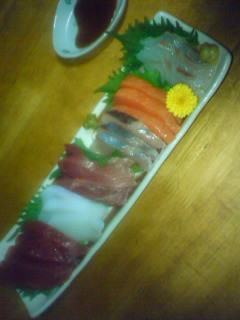
noresore4.jpg

“Noresore” will soon appear at some select fish markets, and as it will be a very short season, you will have to keep your eyes open!
Noresore stands for very young conger eels. They are called different names depending on regions: “Berada” in Okayama Prefecture, “Tachikurage” in Misaki, “Nagatankurage” in Wakayama Prefecture
In Shizuoka, they mainly come from Hamana Lake, a seawater lake west of the Prefecture, famous for its oysters, eels and clams.

noresore2

5~6cm long, they are practically transparent, save for their eyes. They emit no smell. In our Prefecture they are available only during the first two weeks of March. They are slowly but surely becoming a rarity wherever in Japan, and people come from afar just for the experience!

nresore3

Before serving them, lightly wash them in clean salted water.
As sushi, put them on top of “gunkan”, or a rice ball if you are an expert, with freshly grated ginger and chopped thin leeks.
I like them best served as they are with a little “ponzu or “yuzu” vinegar, a dash of “momijioroshi” (freshly grated daikon and chili pepper) and some chopped thin leeks for a last touch of colour!

Japanese Crustacean Species 3: Squilla/Shako


The Japan Blog List

Please check the new postings at:
sake, shochu and sushi

—————————————-
日本語のブログ
—————————————-
shako1.jpg

The Squilla or “Shako” (蝦蛄in Japanese) is a delicacy that appears on the sushi bar counters from April to Summer, although different varieties can be found in Hokkaido markets (Otaru City in particular) almost all year round.
You will discover it under names such as “shaku” and “Gazaebi”.
They are actually caught in almost all Japanese seas, but the best are supposed to originate from Hokkaido.

shako2

Like any crustaceans, they can be eaten in many ways.
The Japanese favour the small kind with a violet back. I had the pportunity to buy some very large specimen in Otaru, and eat them just boiled andserved with rice vinegar mixed with a little Japanese mustard, or in salad.
They almost disappeared from Tokyo Bay in the 1960’s but reappeared in the 1970’s. Most fishermen in the Kanto area will place them in boxes themselves to sell them directly at fish markets. The market value can vary wildly, but look for the genuine harbour markets and buy them yourself.

shako3

Naturally, they are most popular as nigiri sushi. Customers jokingly ask for “garage” (in English) as “shako” also means (different kanji, of course) “garage”!

Japanese Crustacean Species 2: Large Prawn/”Botan ebi”


The Japan Blog List

Please check the new postings at:
sake, shochu and sushi

—————————————-
日本語のブログ
—————————————-
botanebi1.jpg

Botanebi/”Botan” Prawn, or “Pandalus nipponesis” for the specialists, is a large prawn found in all seas of Japan at depths varying from 300 to 500 metres. They are caught at 200~300 metres depth in Suruga Bay and along the WEstern coast of Izu Peninsula In Shizuoka Prefecture. Once abundant, they have become scarce and only small specimen are found whereas Hokkaido produces up to 20cm-long prawns.

sushiko-08-12-25-31

They are known under different names: toyamaebi and Kijiebi.
It is not a cheap morsel in Sushi bars. But it is interesting to note they are essentially eaten raw as like “amaebi”, they become very sweet after some time in the refrigerator.

oda-4.jpg

Now, if you are lucky enough to find them fresh with their eggs, ask your chef to dress them as above, or even better, put the eggs on top of a “gunkan nigiri”!

sushiko-08-12-25-5

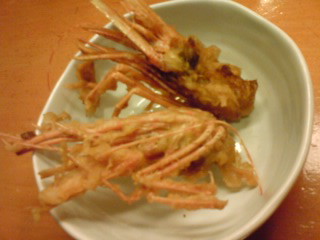
And one more thing, if they are fresh again, don’t forget to ask for the heads deep-fried!

Incidentally, botanebi change sex (gender) with age to end up as big juicy females!

Sashimi Set: Sushi Ko Restaurant


The Japan Blog List

Please check the new postings at:
sake, shochu and sushi

—————————————-
日本語のブログ
—————————————-
sushiko-08-12-25-1

Last night, the Missus and I went out to celebrate Christmas our own way by having dinner at Sushi Ko, our favourite sushi restaurant in Shizuoka City!
This was our first order, a “sashimi no moriawase/sashimi plate”.
All seafood came from Shizuoka Prefecture!
For the rest of our dinner, please check Shizuoka Sushi!

From left to right:
“Mebachi Maguro/Big-eyed Tuna” on a “shiso/perilla” leaf and finely cut daikon, fresh “Sakura Ebi/Cherry Blossom Shrimp” from Yui with grated ginger and cucumber, “Aburi Kinmeidai/slightly grilled Golden Eyes Snapper/Seabream”, lemon, “Shiso no Hana/Perilla Flowers, “Ishidai/Parrot bass, Stone Flounder, Striped Knifejaw” and freshly grated wasabi!

Sushi Ko
shizuoka City, Aoi Ku, Ryogae-cho. 2-3-1 (Aoba Koen)
Tel.: 054-2512898
Business Hours: 17:00~25:00. 17:00~23:00 (Sundays)
Closed on Wednesdays
Reservations recommended
Credit cards OK
HOMEPAGE (Japanese)

Japanese Crustacean Species 1: White Shrimp/”Shiroebi”


The Japan Blog List

Please check the new postings at:
sake, shochu and sushi

—————————————-
日本語のブログ
—————————————-
shiroebi1.jpg

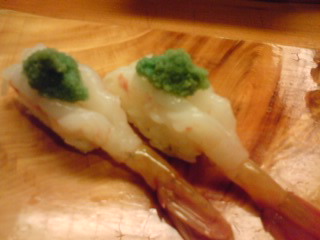
Shiroebi or White Shrimp is not as known as other shrimp/prawn varieties. However it is a very popular crustacean in Japanese cuisine.
Also known under the the names of “Shiraebi, Hirataebi and Bekkoebi”, it is mainly caught between depths of 40 and 200 metres off the coasts of Toyama Bay on the other side of Japan and Suruga Bay in Shizuoka Prefecture.

shiraebi-22

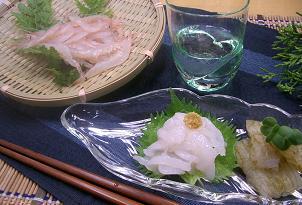
It is mainlly served as sashimi with some ponzu and grated fresh ginger

shiraebi-3

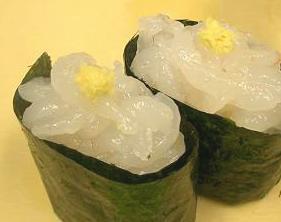
as “gunkan” topped with a dash of grated fresh ginger.

It is possible to serve it as “nigiri”, although one would need large specimen, as the usual length is only 7 cm.
Shiroebi appears on our tables between April and November in many guises:

shirebi-4

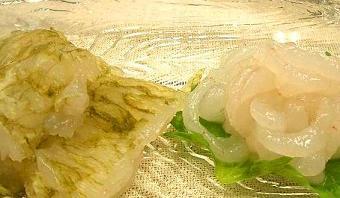
The picture above shows on the right the shiroebi in its natural flesh whereas on the left it has been kept between two sheets of wetted seaweed for a while as “kombu-jime”, another very popular way to prepare all kinds of sashimi/sushi.

White Shrimps also enter in the preparation of a kind of “Tamagoyaki”/Japanese Omelette when they are first processed into a paste and mixed thoroughly with beaten eggs, sieved and then cooked.
The Japanese also love them as soft sembei/rice crackers.

The annual catch has exceeded 600 tonnes in recent years, half of them in Toyama.
They are also exported whole.

Japanese Shellfish Species 1: Torigai/”Large Cockle”


The Japan Blog List

Please check the new postings at:
sake, shochu and sushi

—————————————-
日本語のブログ
—————————————-

torigai1.jpg

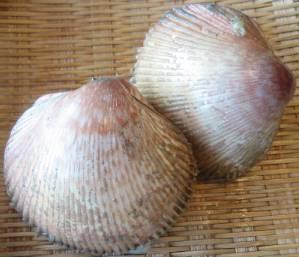
“Torigai” does not have a real name in English. They are approximately translated “large cockle”
They will appear on the market in Spring and earlier in Shizuoka Prefecture. They are mainly found in Tokyo Bay, Ise bay and Seto Inner Sea. Some are imported from Korea, but catches can wildly vary, especially with the occurence of “red tides”. A lot are imported from Aichi Prefecture (Nagoya region) to Shizuoka.

torigai-shellfish

They must be absolutely fresh to be consumed.
One easy way to check if they are still fresh is to slam them on the wooden board. They should immediately retract, even if cut out. They are at their cheapest between March and May.

torigai-nigiri.jpg
(Pic taken at Sushiya No Ichi, Shizuoka City)

They can be appreciated either as “tsumami”/Appetizer with a little grated wasabi and shoyu, or as nigiri.
Beware of torigai with a thin colour! They are not fresh!

Japanese Seasonal Fish: Sole/Hirame


The Japan Blog List

Please check the new postings at:
sake, shochu and sushi

—————————————-
hirame.jpg

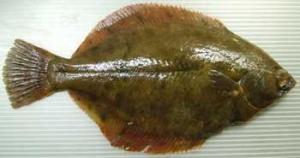
“Hirame” could be translated in many ways depending of your country of origin: Flat Fish, Sole, Turbot (although the latter should define “karei”) and what else. There are many varieties, wild or humanーfed. In Japanese, the names are numerous: Hirame, Shitabirame, Ooguchikarei, oyanirami, etc.
The best season is Autumn to Winter. They are still available until Spring in Shizuoka Prefecture. Wild ones come from Hokkaido and Aomori. Human-fed ones mainly hail from Oita, Ehime, Mie, and Kagoshima Prefectures.
hiramesashimi.jpg
The domestic wild catch is around 7600 tonnes a year, while human-fed fish amount to around 7100 tonnes a year. A recent increase has been observed in recent years, though. A lot are imported from Korea through Fukuoka and Shimoseki.
hirame-nigiri.jpg
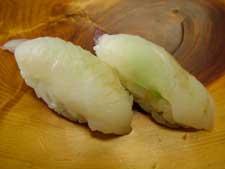
Hirame can be enjoyed as sashimi, cut in various thickness, according to the chef’s preference and presented artfully.
I like both sashimi and nigiri, but in the case of nigiri, I have a marked preference (see pic above taken at Sushi No Ichi, Shizuoka City): Seasoned with a little lemon juice or yuzu (if available) and salt (preferably “snow salt” from Okinawa), eaten as it is with no shoyu!

Japanese seasonal Fish: Saba/Mackerel


The Japan Blog List

Please check the new postings at:
sake, shochu and sushi

—————————————-

saba1.jpg

Mackerel or saba, not to be confused with sanma/mackerel pike, is a fish eaten over the whole Northern Hemisphere and does come under many varieties and names.
In Japan it is mainly called “Saba”, “Masaba” or “Sekisaba”.
“Saba” is written 鯖 in Japanese, that is a combination of kanji characters for “fish” and “blue”!
Here, it is mainly caught off Oita, Saga Prefecture (Kyushu), although quite a few are caught off our coasts. They feed on plankton mainly.
saba-yaizu.jpg
(mackerel catch in Yaizu Harbour)
They are prepared and cooked in many guises.
In France, my birthplace, they are steamed and then pickled in white wine and spices. In Northern Europe they are also eaten half raw as smorgasbrod and pickled fish.
It can be appreciated as sashimi, but it must be absolutely fresh and is best served with grated fresh ginger and lemon:
saba2.jpg
As far as sushi is concerned, “masaba” variety is best:
saba3.jpg
It is especially popular as “oshizushi” (pressed sushi).
My preference goes for konbu zume saba. the mackerel is kept inside a variety of wet seaweed for an hour or so before put whole on top of a long “bar” of rice, then cut to size:
saba-sushi.jpg
(picture taken at Tomii estaurant, Shizuoka City)