Tag Archives: 寿司

Vegan Sushi at Sushi Ko (’09/08/31)

SUSHIK-09-08-31-12

On Monday August 31st, my birthday, the Missus invited me to our favourite sushi restaurant in Shizuoka City, namely Sushi Ko!
There are many reasons for Sushi Ko to be our favourite sushi restaurant that I have mentioned many a time before: supreme fish and vegetables (and even meat), great side dishes, including cooked dishes, originality, great service and willingness to tackle customers’ challenges! On top that add a great list of sake, shochu and even wines! As for the icing the prices are more than reasonable and clearly indicated!
Omnivores should check HERE for the full article!

Although neither of us is vegan, mr. Oda and I have this little game every time of a challenge consisting of a plate featuring at least four vegan sushi.
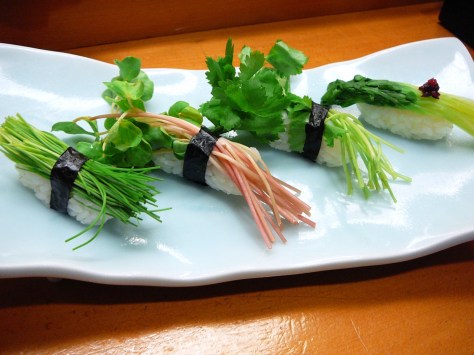
Here is what the chef came with this time:

SUSHIK-09-08-31-13

Himenegi/young thin leeks reminiscent of French ciboulette.

SUSHIK-09-08-31-14

Kaiwaredaikon/Japanese radish sprout, lightly boiled and topped with some umeboshi/Japanese pickled plum.

SUSHIK-09-08-31-15

Betarazuke/daikon lightly pickled in sweet vinegar. In this cases served with a piece of shiso/perilla leaf between the shari/sushi rice and the neta/topping. Some lime skin was grated ontop making for a sweet sophisticated taste!

SUSHIK-09-08-31-16

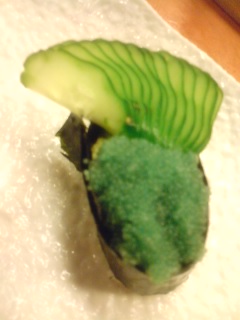
Mitsuba/Trefoil: the stems and leaves were slightly boiled and sparated, making for a bicolour combination accentuated by finely cut kyuri/cucumber!

Sushi Ko
shizuoka City, Aoi Ku, Ryogae-cho. 2-3-1 (Aoba Koen)
Tel.: 054-2512898
Business Hours: 17:00~25:00. 17:00~23:00 (Sundays)
Closed on Wednesdays
Reservations recommended
Credit cards OK
HOMEPAGE (Japanese)

Please check the new postings at:
sake, shochu and sushi

—————————————-
日本語のブログ
—————————————-

Local Sushi & Sashimi only at Ginta!

GINTA-LOCAL-1

The particularity of Ginta, a minuscule sushi restaurant located near the harbour of Yui in the eastern part of Shizuoka City is that it proposes sushi and sashimi plates from fish exclusively caught in Suruga Bay only a few miles and fathoms from the very shore!

The other day I convinced the Missus to pay Ginta a belated (for me as it was a first for her) visit and sample the fish of the moment.

Iforgot to say that the prices are ridiculously low when taking the quality and rarity in consideration!

The “Jizakana/Local Fish” set of 8 above is priced at 1,800 yen/ 19 US $!

Here is a description of the sushi (Picture above):

Above, from left to right:
-Tora Fugu/a popular species of globefish, served pre-seasoned (no need to dip it in the soy sauce)
-Hanadai/A kind of grouper, served pre-seasoned
Mr. Hara actually deep-fries the scales of that particular fish before inserting them under the slice of raw fish!
-Tachiuo/Scabbard Fish, v
-Sakura Ebi/Cherry Shrimps, served in “gunkan” style.

Bottom, from left to right:
-Kanpachi/Albacore
-Kurodai/another kind of grouper
-Kurozawa Aji/Saurel caught in Kurozawa area, next to Yui.
-Kose/a purely local fish also called “kushikinme or goso (in Numazu City). It is apparently a local variety of grouper.

GINTA-LOCAL-2

Having enjoyed kose for the first time, we decided to order it as a full sashimi plate.
A real beauty: firm, almost crisp, not a hint of “fishy taste” and absloutely delicious!

No wonder customers come all the way from Tokyo!
Now, the advantage I have on such customers is that Mr. Hara is so enthusiastic sharing his knowledge with local patrons!

GINTA
421-3111 Shizuoka Shi, Shimizu Ku, Yui cho, Imajuku, 165. (get off at Yui Station and walk to your right. Only a few minutes away)
Tel.: 0543-75-3004
Opening hours: 11:00~23:00
Closed on Tuesdays
Reservations on the telephone recommended!

Please check the new postings at:
sake, shochu and sushi

—————————————-
日本語のブログ
—————————————-

Vegan Peach & Luccola Salad

PEACH-LUCOLLA-1

Fruit are great as desserts, but they have so many benefits that they aso make for some great combinations with vegetables, especially salads!
Her is an example as peaches and luccola are in season:
Vegan Peach & Luccola Salad!

INGREDIENTS: For 1 person
-Peach: half a fresh one
-Luccola: 3 leaves
-Lemon: 1 sixth/1 wedge
-Salt: a pinch (to taste)
-Ground black pepper (to taste)
-Olive oil (EV): 1 large tablespoon

RECIPE:
-Chill a plate.

PEACH-LUCOLLA-2
-Cut each luccola sprig in 8 cm long parts. Drop into a bowl.

-Peel peach, and cut 1 half into 5 wedges (if you do not eat the rest right away, sprikle with lemon juice, wrap in cellophane paper and keep in the fridge!).

-Add in the bowl lemon juice, olive oil and salt. Lightly toss.

-Add peach wedges and toss again just a little. Place onto a plate with an eye for decoration.

-Grind black pepper over the salad!

Simple, easy and healthy!

NOTE:
Eat at once or luccola will change colour and turn soggy.
Don’t forget to bring some white wine!

Please check the new postings at:
sake, shochu and sushi

—————————————-
日本語のブログ
—————————————-

Tuna and Watermelon Salad

TUNA-WATERMELON-TARTARE-1

This particular salad is actually called “Yukke” in Japanese, and it is inspired from Korean gastronomy, the most influential foreign gastronomy with the Chinese one in Japan’s everyday meals!
“Yukke” could be roughly (many people might disagree there, sorry!) as “Tartare”.
Great in summer with a glass of sake or shochu!

INGREDIENTS: For 2 persons
-Watermelon: Including the red and white parts/150 g
-Raw tuna: 100 g
-Sesame oil: one and a half large tablespoons
-Miso: 2 small teaspoons
-Soy sauce: 2 small teaspoons
-Powdered/ground sesame seeds: 2 large tablespoons
-Grated garlic: to taste
-Fresh egg yolks: 2
-Leaf vegetables: shiso/perilla, Myoga, thin leeks, etc (to taste)

RECIPE:
-Cut tuna and two thirds of the watermelon (red part without the pips/seeds) to small enough sized pieces.

TUNA-WATERMELON-TARTARE-2
-Cut the white part of the watermelon into thin strips as shown above.

-Grate the remaining watermelon (red part) and mix well with sesame oil, Miso, soy sauce, powdered/ground sesame seeds, and grated garlic.
Add the cut tuna and red watermelon pieces and mix.

-On to different plates, palce the watermelon white strips first and then the tuna and watermelon as sown in top picture. Make a small well on top and delicately drop an egg yolk. add chopped leaves for better effect and taste.

NOTE:
-As watermelon tends to give away water, eat as soon as prepared.
-For people whole like their food spicy add ingredients of your liking!

Please check the new postings at:
sake, shochu and sushi

—————————————-
日本語のブログ
—————————————-

Japanese Seasonal Fish: Sayori/Japanese Half Beak

SAYORI-1

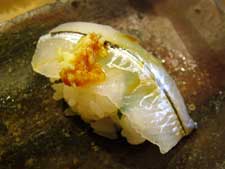
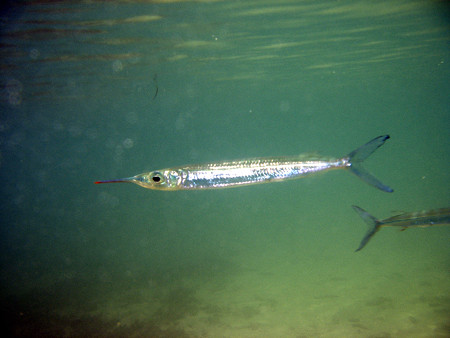
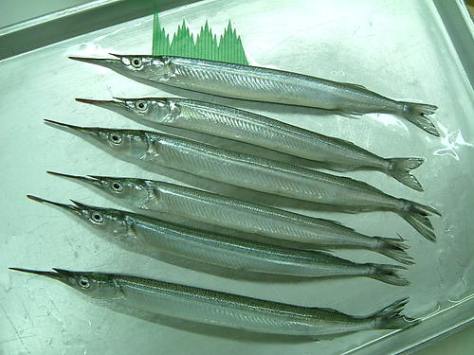
The Japanese Half beak or “Sayori” is a very popular fish in Japan as sashimi or sushi.

SAYORI-2

Although difficult to dress, it is much appreciated for its “clean look”.

It is also known unde the names of “Hariuo”, “Kannuki”. The latter name is used for large sprcimen sold in the Tokyo area.
It is mainly caught between Winter and Summer, but the best specimens are before and after the spawning season in April~June.
The Japanese sayori mainly come from the shores of Mie, Hyogo, Ishikawa, Hiroshima and Wakayama Prefectures.
It is also imported from China, Korea and Australia.

SAYORI-

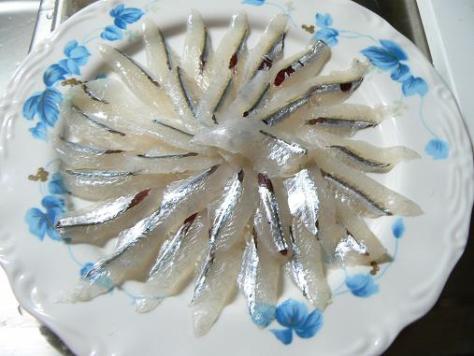
One can easily buy it filletted at suoermakets and fishmongers, making for some beautiful sashimi!

SAYORI-3

It makes for superlative sushi open to all kind of variations!

Please check the new postings at:
sake, shochu and sushi

—————————————-
日本語のブログ
—————————————-

Sushi Rice: The Recipe

015
Vegan Sushi at Sushi Ko, Shizuoka City

I’ve been asked for some time about the secrets of making sushi rice, or “shari/シャリ in Japanese, but actually there are no real secrets, only a method.
The following recipe is professional and involves a large volume. Think of a sushi party before preparing it. There are simpler versions (the Missus is particularly good at it!) and I’ll be glad to reply to enquiries!
The advantage of this recipe is that it will fit the needs of vegans, vegetarians and omnivores alike. It is also open to a lot of variations. Read the notes at the end!

-Check the pics for the tools you will need, or their subsitutes.
-I do not explain the rice steaming itself. I assume you Know how to steam rice.
Note: a simple trick to add taste to your rice: steam with a piece of konbu/昆布/seaweed!

INGREDIENTS:

-Rice: 3 “go”/540 cc/2.7 cups. A “go” is a traditional measure in Japan: 180 cc.

Sushi Stock (about 120 cc/0.6 cup):
-White sugar: 55 g
-Salt: 18 g
-Rice vinegar: 82 cc/0.82 cup
Mix all above ingredients until dissolved and keep ready.

RECIPE:
SUSHI-RICE-1

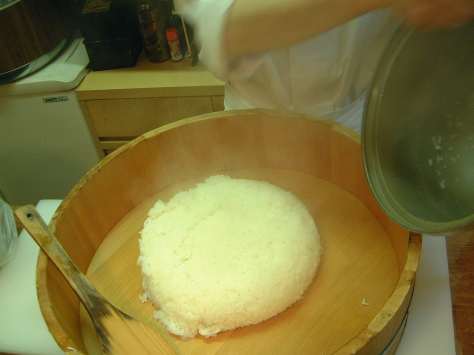
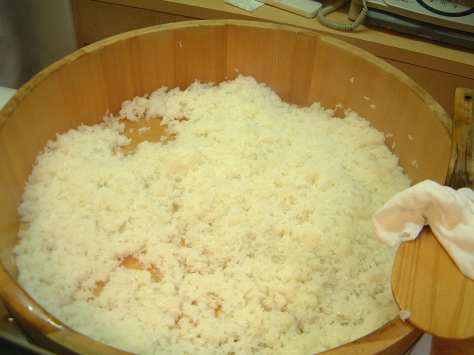
Steam the rice to slightly harder than usual. Drop inside wooden sushi bowl/飯台/handai (keep in mind to humidify the bowl with clean water before using!)

SUSHI-RICE-2

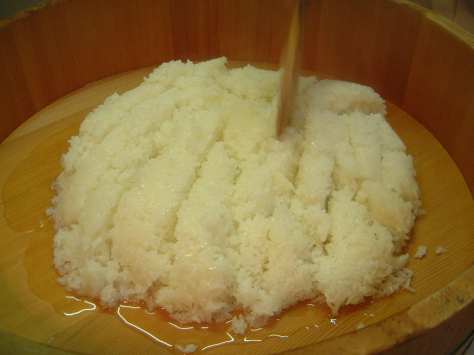
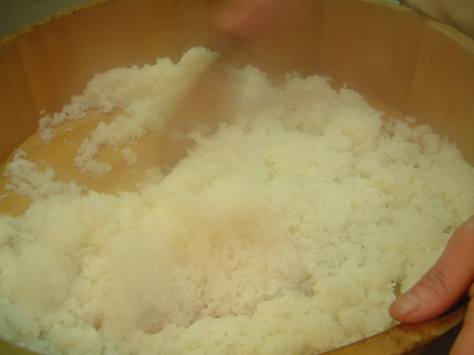
While the rice is still hot (important!) pour sushi stock all over it.
A technique is to hold the wooden rice spoon/しゃもじ/hamoji over the rice and pour the stock onto it for better uniformity.
“Cut” through rice with wooden sushi spoon/shamoji.

SUSHI-RICE-3

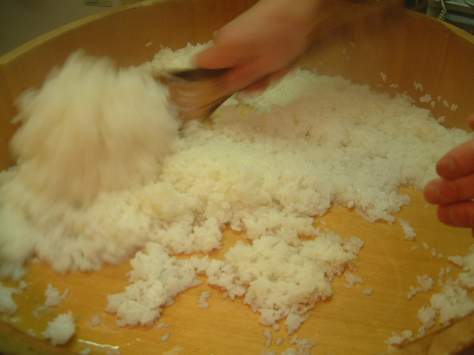
After having made “cuts” through the rice, mix quickly (this is probably the most important step!). As the stock will flow down, mix from bottom to top, scooping the rice and flipping it over.

SUSHI-RICE-4

Scoop rice and drop it on top and “cut” through.

SUSHI-RICE-5

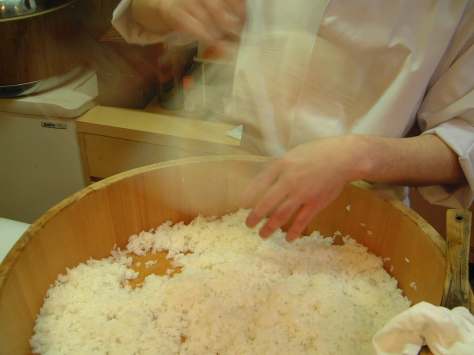
When mixing the rice, bear in mind that overmixing will result into sticky rice. Just “cut” through and mix. It should take only a minute. Next spread the rice and cool it with a hand held traditional fan/うちわ/uchiwa for 10 seconds.

SUSHI-RICE-6

By cooling the rice with a fan/uchiwa, it will allow for an even expansion of the vinegar. Turn rice over once more and fan it for 10 more seconds.
If you use the rice at once, it will get sticky. Leave it covered with a humid and clean cloth for a couple of hours.
Don’t forget to clean the wooden bowl with clean water after usage!

NOTES:
-The type and brand of rice, vinegar, sugar and salt will all play into the taste. Investigate and experiment!
Depending upon the region, sushi rice will taste vastly different in Japan.
In Tokyo, it will taste almost sour, while it will appear sweet here in Shizuoka.
You may use brown sugar instead of white sugar for a different colour.
But it will be easier to make a mistake in taste balance!
The same if you want to introduce a little soy sauce in the stock!

Please check the new postings at:
sake, shochu and sushi

—————————————-
日本語のブログ
—————————————-

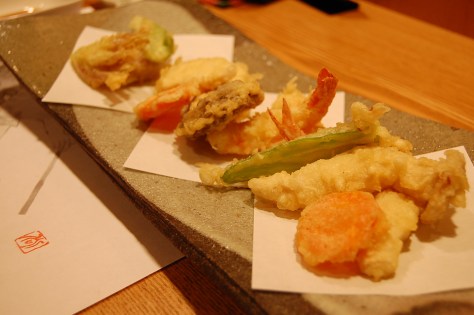
Tempura Plate at Tomii (’09/07/01)

TOMI-TEMPURA-MEL
(Courtesy of Melinda Joe)

This was the second dish we were served at my favourite Japanese Restaurant, Tomii, in Shizuoka City after accompanying Melinda Joe at Aoshima Brewery in Fujieda City during her Japan Times interview.

Can you recognize any of the tempura?

Waiting for your answers! LOL

TOMII
Shizuoka City, Aoi Ku, Tokiwa-cho, 1-2-7, Tomii Bldg, 1F
Tel.: 054-274-0666
Business hours: 17:00~22:00
Closed on Sundays
HOMEPAGE (Japanese)

Please check the new postings at:
sake, shochu and sushi

—————————————-
日本語のブログ
—————————————-
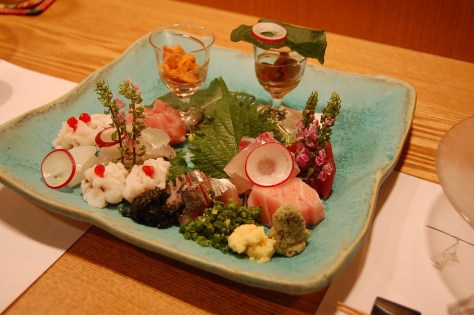
Sashimi Plate at Tomii (’09/07/01)

TOMII-SASHIMI-MEL
(Courtesy of Melinda Joe)

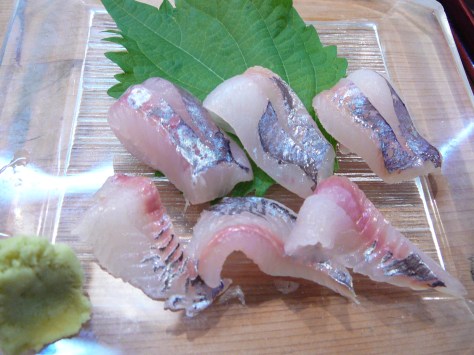
Last week, Wednesday, I had the occasion to sample a plate of sashimi at my favourite Japanese Restaurant, Tomii, in Shizuoka City after accompanying Melinda Joe at Aoshima Brewery in Fujieda City during her Japan Times interview.

Can you recognize any of the sashimi?

TOMII
Shizuoka City, Aoi Ku, Tokiwa-cho, 1-2-7, Tomii Bldg, 1F
Tel.: 054-274-0666
Business hours: 17:00~22:00
Closed on Sundays
HOMEPAGE (Japanese)

Waiting for your answers! LOL
Please check the new postings at:
sake, shochu and sushi

—————————————-
日本語のブログ
—————————————-

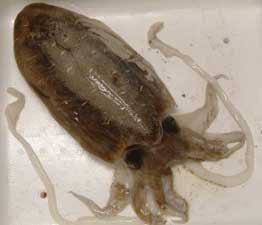
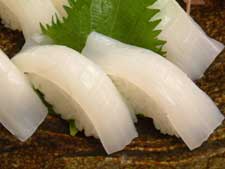
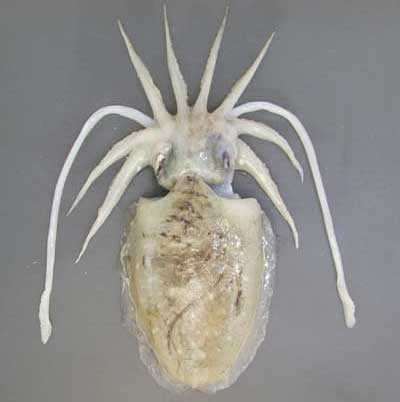
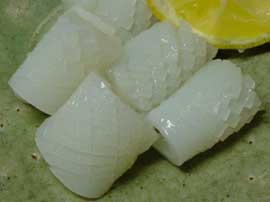
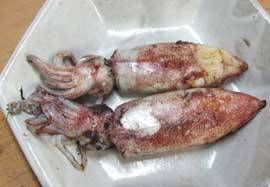
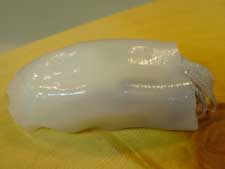
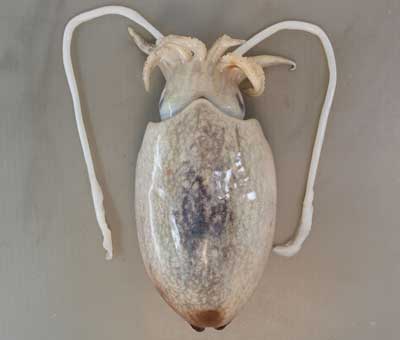
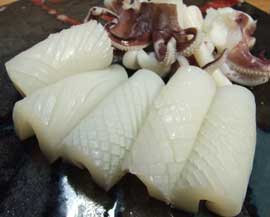
Cuttlefish/Squid Species 6: “Japanese lesser” Varieties

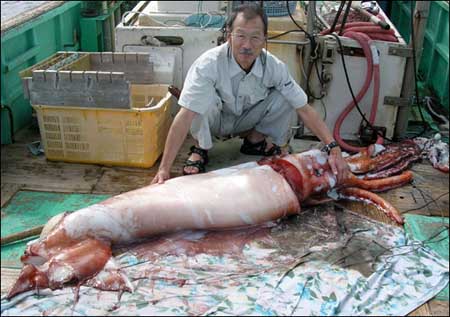
IKA-MONSTER
Inedible Lesser Variety!: Giant Squid

Here is the last article on this series called “The Jacques Cousteau” upon suggestion by Jaded Fork and forBread + Butter, and Elin who don’t mind being on a long haul! LOL

By “Japanese lesser” I mean species both more difficult to find on markets, more local and not as appreciated as the former five varieties.
Howeve these should looked over as they are still good enough for the finnicky Japanese and appreciated as rarities!

BOZU IKA
IKA-BOUZUIKA-1

IKA-BOUZUIKA-2

IKA-BOUZUIKA-3

IKA-BOUZUIKA-4

EZOHARI IKA
IKA-EZOHARIIKA-1

IKA-EZOHARIIKA-2

HAKUTENKOU IKA
IKA-HAKUTENKOUIKA-1

IKA-HAKUTENKOUIKA-2

HIMEKOU IKA
IKA-HIMEKOUIKA-1

IKA-HIMEKOUIKA-2

KAMINARI IKA
IKA-KAMINARIIKA-1

IKA-KAMINARIIKA-2

KO IKA
IKA-KOIKA-1

IKA-KOIKA-2

IKA-KOIKA-3

IKA-KOIKA-4

SHINDO IKA
IKA-SHINDOIKA-1

IKA-SHINDOIKA-2

IKA-SHINDOIKA-3-SHIOYAKI

IKA-SHINDOIKA-4

SHIRIYAKE IKA
IKA-SHIRIYAKEIKA-1

IKA-SHIRIYAKEIKA-2

IKA-SHIRIYAKEIKA-3

SODE IKA
IKA-SODEIKA-1

IKA-SODEIKA-2

SUJI IKA
IKA-SUJIIKA-1

IKA-SUJIIKA-2

USUBENI IKA
IKA-USUBENIIKA-1

IKA-USUBENIIKA-2

If you have any questions, don’t hesitate!

Please check the new postings at:
sake, shochu and sushi

—————————————-
日本語のブログ
—————————————-
Sashimi Plate at Tomii (’09/06/22)

TOMII-09-06-22

Just came from a “quick fix” at Tomii as I was too hungry to continue work! (I’m back at the office right now!)

Just ordered “o-tsukuri/Sashimi plate” as the calories are non-existent (the Missus is preparing dinner!).

From top clockwise:
-Madai/Japanese Snapper species
-Aburi Tachiuo/lightly grilled Scabbard Fish
Note the shiso/perilla flowers in between!
-Hata/Grouper
-Murasaki Uni/Violet Sea Urchin from Aomori Prefecture
-Hamo/Pike Conger Eel, lightly boiled
-Aka Ika-Kensaki Ika/Red cuttlefish-Squid
In the middle:
-Mebachi-maguro/big-eyed Tuna Akami/lean part

I honestly wish you were all here!

Please check the new postings at:
sake, shochu and sushi

—————————————-
日本語のブログ
—————————————-

Crustacean Species 6: Kuruma Ebi/Japanese Imperial Prawn

KURUMA-EBI-1

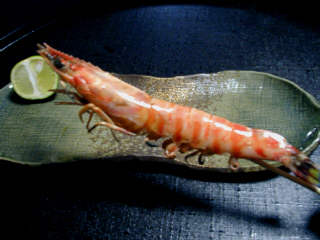
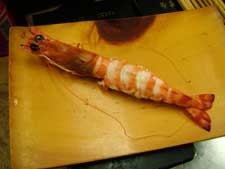
Kuruma Ebi, or Japanese Imperial Prwan, is probably the most popular prawn in Japan!
It has different names depending on its size: Saimaki (up to 5 cm), Maki (up to 10cm)

Its season lasts from late Autumn to the end of Winter.
It is found south of Hokkaido Island down to the Indian Ocean until depths of 50 metres.
It had been successfully artificially grown for some time until diseases put a momentary stop.
The prawn has steadily become a rare morsel. Altogether, natural and human raised specimen, the annual catch amounts only to 2,000 tonnes.

KURUMA-EBI-1a

Raw, or

KURUMA-EBI-2

boiled, they make for great decoration on top of suucculent taste!

KURUMA-EBI-4

They are very much appreciated a sashimi, especially after having been made to “dance” in Japanese sake!

KURUMA-EBI-5

Grilled on the stick would tempt many an officionado!

KURUMA-EBI-6

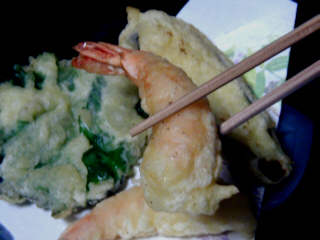
They make for extravagant tempura!

KURUMA-EBI-7

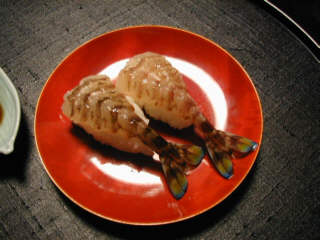
As sushi Nigiri, they are equally popular raw, or

KURUMA-EBI-3

boiled!

If you the chance to buy tem alive (In shizuoka, we do have them kicking), put them in a pan with Japanese sake under a lid. Wait until they have grown “quiet”, and prepare them right away!

Please check the new postings at:
sake, shochu and sushi

—————————————-
日本語のブログ
—————————————-
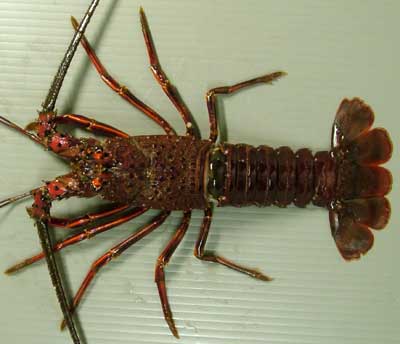
Crustacean Species 5: Ise Ebi/Japanese Spiny Lobster

ISE-EBI-1

Ise Ebi, or Japanese Spiny Lobster is one the Spiny lobster varieties so popular all over the World.
The Japanese variety is smaller, or more precisely is more popular under a certain size.

Also called Kamakura Ebi, it is caught off the shores of Chiba, Wakayama, Mie and Shizuoka Prefectures.

The best specimens are aught in Winter, although imported lobsters can be found at other seasons.

The annual catch is fairly stable at 1,000 tonnes a year.
Imprted specimens account for 10,000 tonnes, mainly from Australia, New Zealand and New Caledonia.
In the case they are also called Minami/South Ebi.

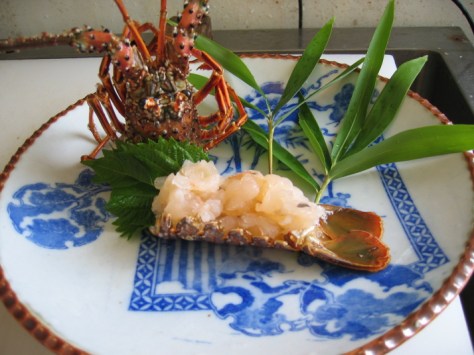
The Japanese appreciate their lobsters raw.

ISE-EBI-SASHIMI

As o-tsukuri/sashimi plate they are quite spectacular!

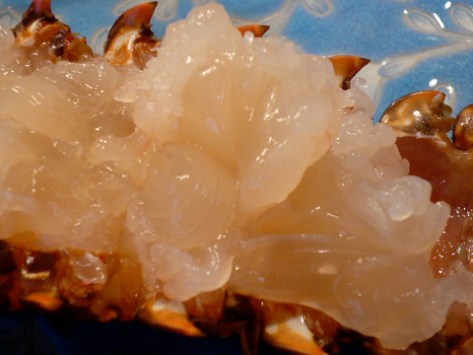
ISE-EBI-SASHIMI2

For a closer look!

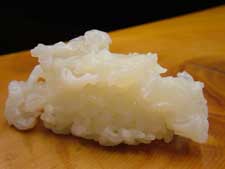
ISE-EBI-SUSHI

And of course as sushi nigiri!

Please check the new postings at:
sake, shochu and sushi

—————————————-
日本語のブログ
—————————————-
Crustacean Species 4: Amaebi/Alaskan Pink Shrimp-Pink Shrimp

AMAEBI-1

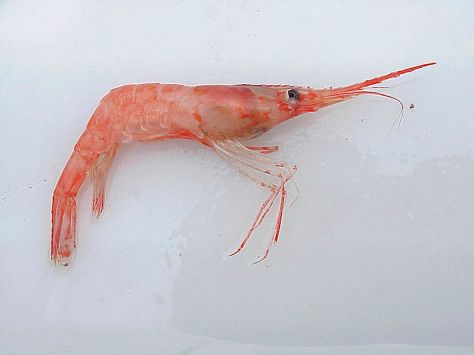
Amaebi (in Japanese) or by its Latin name Pandalus borealis (also called Pandalus eous) is a species of shrimp found in cold parts of the Atlantic and Pacific Oceans. Many different English names are used, with little consensus (deep-water shrimp, cold-water shrimp, northern shrimp, Alaskan pink shrimp, pink shrimp, northern red shrimp, Greenland prawn (UK)). Often the word shrimp is replaced by prawn, albeit incorrectly.

In Japan, it is also known as Hokkoku Akaebi/North Country Red Shrimp, Nanban Ebi or Tongarasahi.

The season in Japan is Winter, although it can be found all year round thanks to large imports from Greenland and Canada. Yearly domestic catch amount to 2,000 tonnes in Hokkaido and 800 tonnes in Ishikawa Prefecture.

It is a species famous for its sexual properties: the shrimps are hermaphroditic. They start out male, but after year or two, their testicles turn to ovaries and they complete their lives as females. However, if there is a predominance of female Pandalus shrimp, the males will delay their transformation. Likewise should there be a shortage of females, the male shrimp will begin their transformation earlier, all for the sake of maintaining balance for procreational purposes.

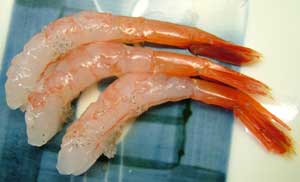
They are called “Ama Ebi/Sweet Shrimp” in Japanese as they will turn very sweet after a couple of days in the refrigerator, whereas they will show no sweetness at all when fresh!

AMAEBI-2

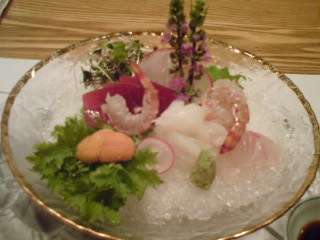
They are great as sashimi on their own, in salads or as part of a larger sashimi plate such as served i Tomii in Shizuoka:

TOMII-09-05-20b

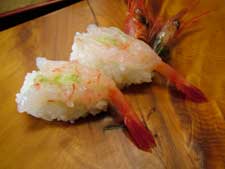
Of course, as sushi, they are a superb morsel!

AMAEBI-3

Please check the new postings at:
sake, shochu and sushi

—————————————-
日本語のブログ
—————————————-
Crustacean Species 3: Shako-Squilla

shako1.jpg

The Squilla or “Shako” (蝦蛄in Japanese) is a delicacy that appears on the sushi bar counters from April to Summer, although different varieties can be found in Hokkaido markets (Otaru City in particular) almost all year round.
You will discover it under names such as “Shaku” and “Gazaebi”.
They are actually caught in almost all Japanese seas, but the best are supposed to originate from Hokkaido.

shako2

Like any crustaceans, they can be eaten in many ways.
The Japanese favour the small kind with a violet back. I had the opportunity to buy some very large specimen in Otaru, and eat them just boiled and served with rice vinegar mixed with a little Japanese mustard, or in salads.
They almost disappeared from Tokyo Bay in the 1960’s but reappeared in the 1970’s. Most fishermen in the Kanto area will place them in boxes themselves to sell them directly at fish markets. The market value can vary wildly, but look for the genuine harbour markets and buy them yourself.

shako3

Naturally, they are most popular as nigiri sushi. Customers jokingly ask for “garage” (in English) as “shako” also means (different kanji, of course) “garage”!

Please check the new postings at:
sake, shochu and sushi

—————————————-
日本語のブログ
—————————————-
Crustacean Species 2: Botan Ebi-Large Prawn

botanebi1.jpg

Botanebi/”Botan” Prawn, or “Pandalus nipponesis” for the specialists, is a large prawn found in all seas of Japan at depths varying from 300 to 500 metres. They are caught at 200~300 metres depth in Suruga Bay and along the Western coast of Izu Peninsula In Shizuoka Prefecture. Once abundant, they have become scarce and only small specimens are found, whereas Hokkaido produces up to 20cm-long prawns.

sushiko-08-12-25-31

They are known under different names: “Toyamaebi and Kijiebi”.
It is not a cheap morsel in Sushi bars. But it is interesting to note they are essentially eaten raw as like “Amaebi”. They become very sweet after some time in the refrigerator.

oda-4.jpg

Now, if you are lucky enough to find them fresh with their eggs, ask your chef to dress them as above, or even better, put the eggs on top of a “gunkan nigiri”!

sushiko-08-12-25-5

And one more thing, if they are fresh again, don’t forget to ask for the heads deep-fried!

Incidentally, botanebi change sex (gender) with age to end up as big juicy females!

Please check the new postings at:
sake, shochu and sushi

—————————————-
日本語のブログ
—————————————-