Tag Archives: 寿司

Sushi Restaurant: Ginta

ginta-1

Yesterday, I had the pleasure to introduce a “hidden treasure” to my friends Anselmo and Ticiana Zeri with Ticiana’s moter, Helda, who were on their 6th visit of Japan. Anselmo had found my blogs some time ago as he researched on Japan and had contacted me for more information.
Anselmo then decided it was grand time to visit Shizuoka Prefecture.
It was my pleasure to guide them for two days in and around Shizuoka City.
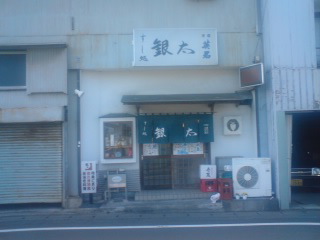
Yesterday I took them to Ginta, a minuscule Sushi restaurant not far from Yui Harbour famed for its sakura ebi/Cherry shrimps.
To cap it all we are in the middle of the season guaranteeing the best seafood available in this small city.

ginta-21

Now, Mr. Hara’s restaurant is unassuming and can be easily missed. But I can guarantee you you do need to reserve if you venture there at lunch as hordes of tourists and businessmen from all corners of Japan make a point tocome just to savour the region’s specialties.

There are indeed many possibilities, and a very good, amost ridiculous prices.
We decided to sample the 3,000 yen sakura ebi full course:

ginta-3

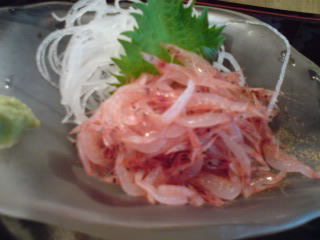
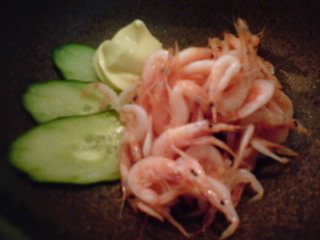
Raw Sakura Ebi, caught in the very morning in Suruga Bay.
Mr. Hara demostrated us how to recognize fresh Sakura Ebi. Take a few between two fingers. They should slip easily away!

ginta-4

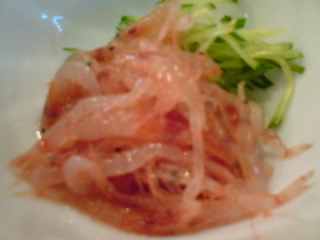
Boiled sakura Ebi salad. Great with Eikun, the local sake available in Ginta!

ginta-5

Sakura Ebi lightly pickled in rice vinegar.

ginta-6

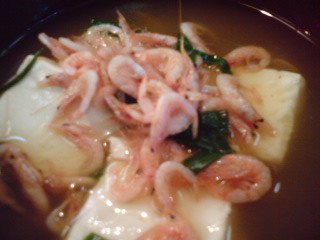
Sakura Ebi in “Suimono/clear hot soup” style with tofu.

ginta-11

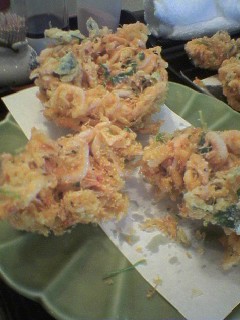
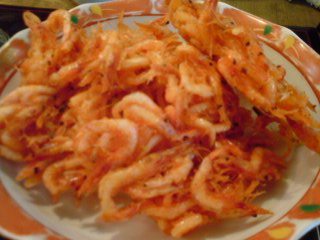
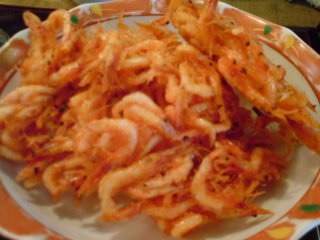
Sakura Ebi Kakiage/Sakura Ebi Tempura. Extremely generous portions.

ginta-7

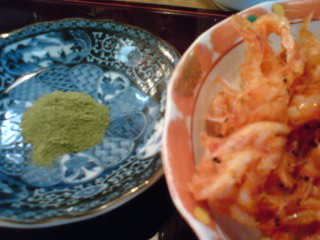
The Kakiage is served with salt and matcha tea mixture. Perfect with tempura! We hust ate them with our fingers!

ginta-8

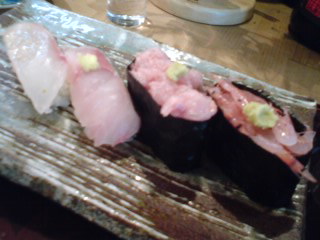
Sushi set (part of the full-course!):
Tai/Seabream sushi served with its deep-fried scales between the fish slice and rhe rice.
Aji/Horesemackerel-Saurel with a dash of fresh grated ginger.
Kawahagi/Filefish with its flesh chopped in tartare style with its fresh liver in gunkan manner topped with a dash of fresh grated wasabi. A rare morsel indeed!
Sakura Ebi in gunkan manner topped with a dash of fresh grated wasabi.
Mr. Hara advised us not to dip the sushi directly into the soy sauce, but to “brush” it with a piece of pickled ginger (provided on the same dish) after having dippe it into soy sauce. “That will be just quite enough soy sauce!”, he added.

Actually, once mr. Hara has warmed up to a particular customer, he can become an incredible source of information that even fishmongers at Tsukiji would not be able to equal! I can guarantee you an interesting report next I go there to sample his local fish sushi sets!

ginta-9

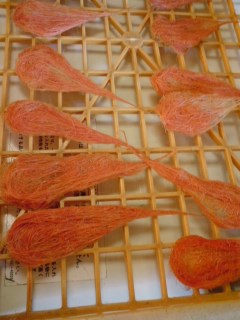
Now, what are these Sakura Ebi-shaped things?
This is another specialty of Yui: People there take the long antenna (three times as long as the body) and dry them in the sun after having “shaped them”. These will be used all year long crushed into powder over a bowl of freshly cooked rice!

Since the Missus gotextremely jealous of our little venture, you can expect a report soon!

GINTA
421-3111 Shizuoka Shi, Shimizu Ku, Yui cho, Imajuku, 165. (get off at Yui Station and walk to your right. Only a few minutes away)
Tel.: 0543-75-3004
Opening hours: 11:00~23:00
Closed on Tuesdays
Reservations on the telephone recommended!

Please check the new postings at:
sake, shochu and sushi

—————————————-
日本語のブログ
—————————————-

The Pride of Shizuoka: Sakura Ebi/Cherry shrimp!

sakura-ebi1.jpg

With Spring comes the season for a specialty found in Shizuoka Prefecture only!
“Sakura Ebi” or Sakura shrimp is a vey small (maximum 5 cm) crustacean caught in the Suruga Bay of Shizuoka Prefecture. Most of ships are anchored in Yui City (part of Shizuka City city) and Fujikawa Harbours.

sakura-ebi-yui.jpg sakura-ebi-catch.jpg sakura-ebi-market.jpg
The shrimps are caught in special net baskets. They are then siphoned through special “tubes” with the baskets kept just above the water. Later all sea creatures inadvently caught in the nets are released alive back into the sea! Who said the Jpanese are not environment-conscious?
Moreover, for the first time in Japan, the Association of Cherry Shrimps Fishermen decided in 1965 to strictly limit their yearly total catch to preserve stocks. A salutary initiative long before normal citizens became aware of conservation and environment!

According to long traditions they are put on the market immediately for auction.
Many fishermen open their own sushi restaurants, bars and often their catches of the night until early in the afternoon before taking a well-earned sleep.

sakura-ebi2.jpg sakura-ebi-cuisine.jpg sakura-ebi-gunkan.jpg

For people who prefer them as sushi, the gunkan style is the most appreciated!
Most French and Italian Restaurants in Shizuoka City and around will serve them in quiches!

izutsuya6.jpg
(Pic taken at Izutsuya Restaurant, Yui)

Another popular way to eat them is of course as a tempura called kaki-age, either with fresh sakura ebi in season or frozen/dried ones.
Fishermen use to dry their catch for sale and export until the government had the great idea to run an expressway just along the harbour!
The shrimps are now dried along nearby Fujikawa River at the foot of Mount Fuji, creating large quaint rose expanses in the most useen for locations!

sakura-ebi-drying.jpg

Please check the new postings at:
sake, shochu and sushi

—————————————-
日本語のブログ
—————————————-

Foodbuzz 24, 24, 24: 24 Sashimi & 24 Sushi in Wasabi Land!

24-24-24-131
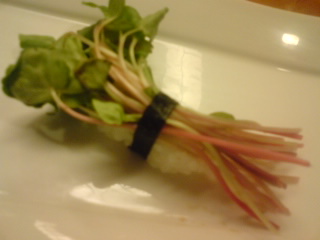
(Vegan Sushi: Soba no Shinme/Buckwheat Sprouts)

Wasabi has arguably become the most famous single Japanese condiment/spice in the World, but how many people know that it originated in Shizuoka Prefecture, which incidentally grows 80% of the total production in Japan?
(farmers have started growing it South Korea, Taiwan, Tasmania and elsewhere with various degrees of success)
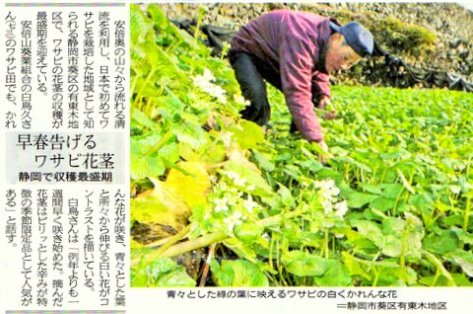
It is mass-produced in the Izu Peninsula and at the foot of Mount Fuji, but the best wasabi is cultivated in altitude (500~1,000 meters) in Utougi, Shizuoka City, about 33 km up the Abe River.
An organic vegetable by definition, it requires a full two years to mature into constantly flowing pure water in comparatively cold environment.
img043
(Utougi/Courtesy of Shizuoka Shinbun, January 21st, 2009/Start of harvest season!)

Widely known in its wild form all over Japan, a resident in Utougi first successfully grew it in 1604. Tokugawa Ieyasu, the Shogun of Japan who had just retired in Sumpu (present Shizuoka City) after closing the doors of Japan, fell enamored with the condiment and actively promoted it.
The root is grated, preferably on a sharkskin grater, before being used, not only for sushi and sashimi, but also for raw or cooked meat, o-cha zuke (vegans, rejoice!) and almost any seafood.
dominique1
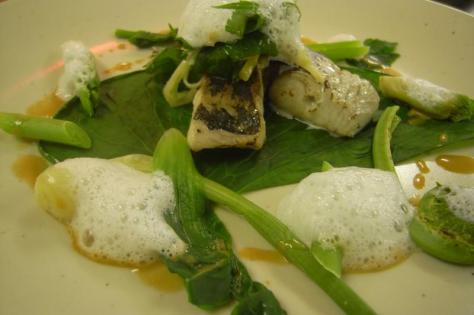
(Courtesy of Dominique Corby)

The stems and leaves are edible and a rare treat in their raw form in salads, in tempura, or steamed as demonstrated by Dominique Corby in his Osaka restaurant.
The stems and leaves (and flowers!) are also cut and pickled into sakekasu/sake white lees to become “wasabizuke”, another Shizuoka gastronomic specialty!
Tamaruya, the first shop to sell it at the beginning of the 17th Century, still exists in Shizuoka City, and even has a stand at Haneda Airport in Tokyo!
dominique2
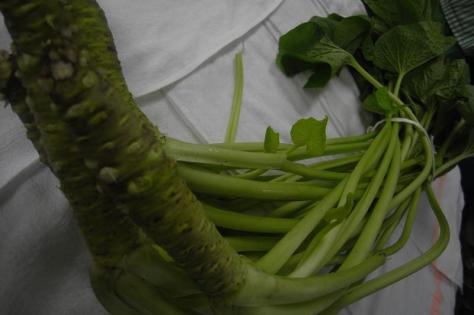
(Fresh whole wasabi fromUtogi sold at Shizuoka JR Station!)

The wasabi served and used in Shizuoka restaurants (and many homes) is naturally of the best quality. If you happen to stop over in Shizuoka City, make a point to visit Sunpu Raku Ichi shop inside the JR Station where the plant is sold fresh and whole for a ridiculous price!
Shizuoka Prefecture is not only blessed with wasabi (and green tea), but also prides itself in catching some of the best fish in Japan thanks to the rich waters of Suruga Bay and Peninsula. It is an open secret that most of it finds it way onto Tokyo restaurant tables!
As the icing on the cake, know that Shizuoka Prefecture has acquired national fame for providing some of the rarest and best sake thanks to the extravagant abundance of pure water flowing from the Southern Alps and Mount Fuji!

Which naturally leads me to the main theme of this posting, namely sashimi and sushi.
There is a widespread misconception that it is all about fish and meat.
Not true at all, as vegan and vegetarian friends will read in this account of the mission Foodbuzz had agreed to follow me on.
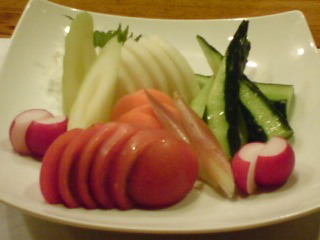
24-24-24-1a
(Vegan/Vegetarian Sashimi at Yasaitei)

There was no way I could fit everything into one dinner.
The obvious solution was to have two meals, lunch and dinner and a couple of friends to help me out!
Therefore, I booked lunch both at Yasatei and Sushi Ko in Shizuoka City. Neither place usually opens for lunch, buy I had enough reasons to persuade my good friends to indulge the old geezer!
Lunch was all about Sashimi:
I ran first to Yasaitei to sample their vegetable sashimi of the day:
(See pic above, left to right, bottom to top)
Celery, Tomato (Ameera variety from Iwata City, as sweet as a fruit!), Organic Carrot from Chiba Prefecture, Myoga, Red Radish, Cucumber (su yoo/四葉/four leaves variety) and Daikon all grown organically (but for the carrot) in Shizuoka Prefecture. Shiso/perilla leaves and chopped white winter onion from Shizuoka, too.
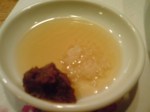
24-24-24-1b1
As for their dressing, they were served with sesame oil, salt and miso mix.

Just took the time to call my good friend Mika and off we went to Sushi Ko, one of the best (and most reliable) sushi restaurants in town for all the other sushi promised!
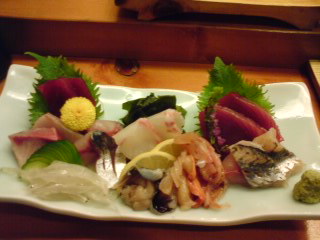
24-24-24-21
Explaining the taste, texture and what else will make this blog too long (I promise to answer any queries!), so I shall keep to simple names and explanations:
The first sashimi plate was:
(from right column to left column)
Shirauo/Japanese anchovy, Buri/Amberjack, Mebachi Maguro Akami/Big-eye Tuna Lean Part, Torigai/Surf Clam, Akagai/Blood Clam, Ishidai/Snapper variety, Aji/Saurel=Horse Mackerel, Katsuo/Bonito.
Served with shiso/perilla leaves and flowers, Wakame/Seaweed and edible Chrysanthemum/Kiku.
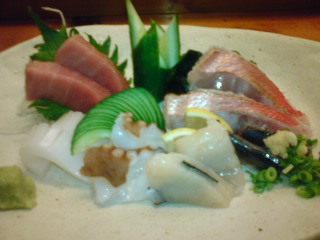
24-24-24-6
As for the second sashimi plate:
(front, then back)
Mooko Ika/Cuttlefish variety, Matako/Octopus, Hotate/Scallops stuffed with nori/dry seaweed, Seguro Iwashi/Black-back Sardine.
Minami Maguro Chutoro/South Pacific Tuna semi-fat part, Kinmeidai/Snapper variety.
24-24-24-4a
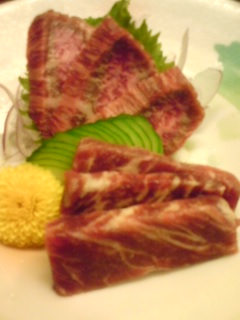
The last sashimi are for the barbarian (I’m one of them) meat-eaters:
Gyusashi/Raw beef (above), Basashi/Raw horsemeat (below)
24-24-24-4b
Served with a mixture of soy sauce, raw quail egg, grated ginger and chopped thin leeks.

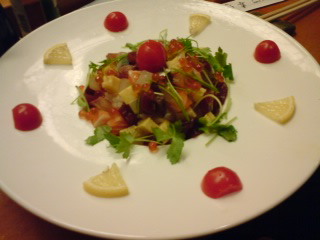
Well, I basically took care of all the sashimi, while my friend got herself lost in the following sushi:
24-24-24-31
Chirashizuhi: Cubes of Tamagoyaki/Japanese omelette, Shake/Salmon, Amberjack (do you remember the Japanese word? LOL), Akami, Ikura/salmon roe, and mini tomatoes.
24-24-24-5
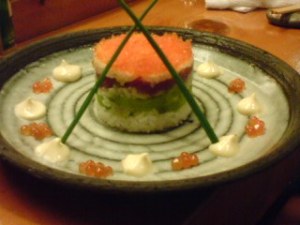
Millefueille Sushi:
Thin slices of cucumber, shari/sushi rice, avocado, shari, maguro akami, shari, tobikko/flying fish roe.
24-24-24-7
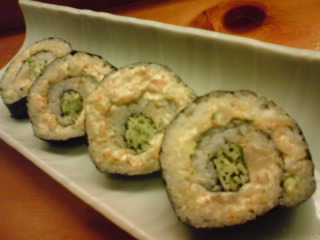
That is when Mika’s eyes got bigger than her stomach and asked for Sushi Ko’s special “Pirikara Hotate Maki/Spicy scalops Roll” consisting of finely chopped cucumber and a mixture of chopped scallops, mayonnaise, chili pepper, sesame oil, tobikko, wasabi and “tenkasu/fried tenpura batter crumbs”!
24-24-24-8
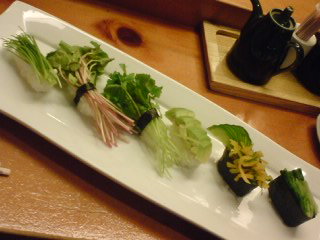
I was still hungry enough to ask for a set of 6 vegan/vegetarian sushi:
(from left to right)
Menegi/Leek Sprouts, Soba no Shinme/Buckwheat Sprouts, Mitsuba, avocado, Takuan/pickled Daiko and sSiso and Cucumber Gunkan, Mizuna Gunkan.

That was it for lunch!

——–

As for dinner, I asked Marcus, another foodbuzz member living in Shizuoka City to help me back at Sushi Ko as some serious drinking was involved,too!
We kept to sushi as the sashimi (24) had already been taken care of!

Her they are in the chronoligical order.
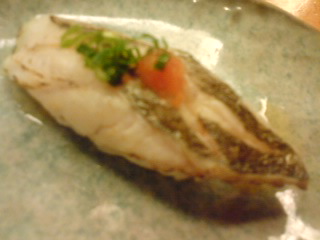
I found out later that some pics were a bit fuuzzy. I took all pictures with my mobile phone as a real camera would have bothered some of the customers in that very busy place. At least, they have the merit to be authentic!
24-24-24-15
Tachiuo Aburi/Lightly grilled Scabbard Fish with ponzu, momioroshi and chopped thin leeks
24-24-24-16
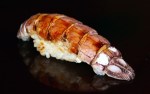
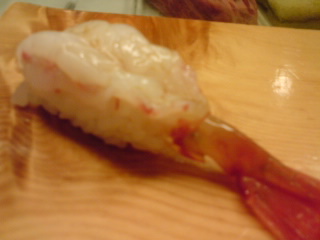
Botan ebi/large raw prawn (very sweet!)
24-24-24-17
Hirame/Sole (fuzzy pic/sorry!). Served with salt and lemon juice. No need for soy sauce!
24-24-24-18
Amaebi/Sweet shrimp

24-24-24-19
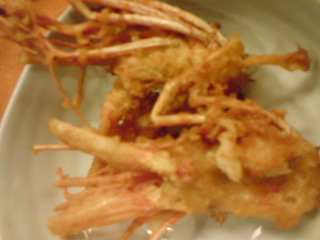
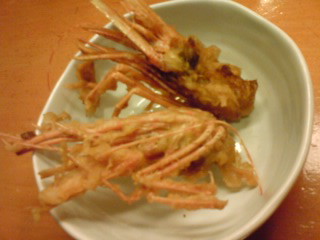
The deep-fried heads of the botan ebi. Tasted like rice crackers!
24-24-24-20
Maguro zuke/Marinated Tuna (my favourite!)
24-24-24-211
California roll/Japanese size!: boiled prawn, tamagoyaki, cucumber and black sesame.
24-24-24-22
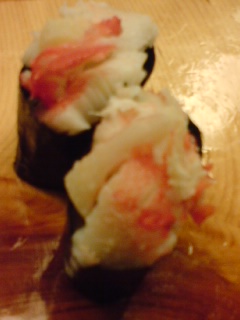
Kani Tsume/Taraba Crab Pincers

24-24-24-23
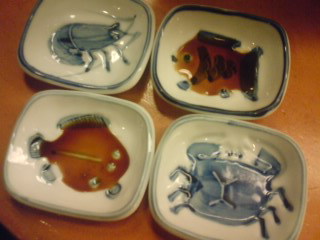
Cute soy soy sauce saucers, aren’t they? (inedible!)
24-24-24-24
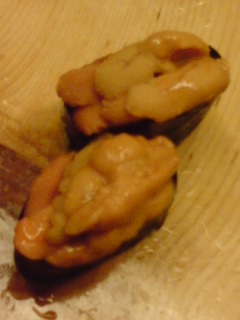
Uni gunkan/Sea Urchin Gunkan

24-24-24-25
Shako/Mantis Shrimp. “Shako” also means “garage” in Japanese. Would you believe that a lot of Japanese customers actually say “Garage, kudasai!”?
24-24-24-26
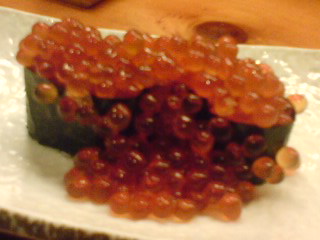
Ikura gunkan/Salmon Roe Gunkan. Very generous serving!
24-24-24-27
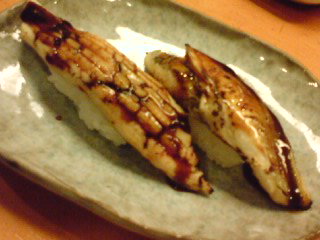
Anago/Conger Eel. Traditionally cooked and served with sweet sauce.
24-24-24-28
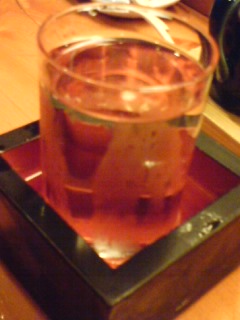
That’s the way they serve sake all over Japan!
24-24-24-291
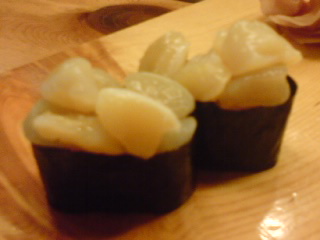
Kobashira/Round Clam Round Twin Muscles Gunkan.
24-24-24-30
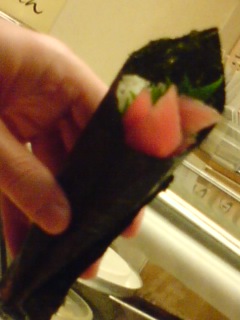
Maguro Te-Maki/Maguro Hand Roll.

24-24-24-311
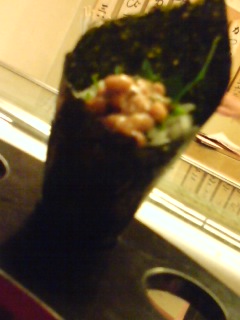
Vegan/vegetarian Te-Maki: natto, shiso, ume/Japanese pickled plum.
24-24-24-32
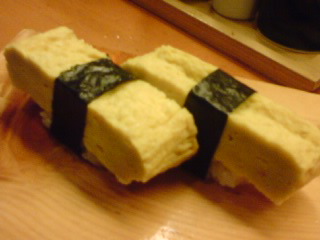
Tamagoyaki/Japanese Omelette sushi for first dessert.
24-24-24-33
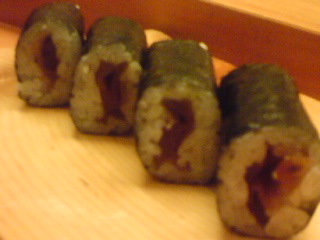
Vegan/vegetarian Kanpyo-Maki/Dry Gourd Shavings (later cooked and marinated) roll for second dessert!

Now, I know I sampled exactly 24 sashimi, but I have the impression that I had more than 24 sushi!
Oh well, no worries!

I can send extra pics to anyone asking for them!

YASAITEI
Shizuoka City, Aoi Ku, Tokiwa-Cho, 1-6-2 Green Heights Wamon 1-C
Tel.: 054-2543277
Business hours: 17:30~22:00
Closed on Sundays
Reservations highly recommended
———–
SUSHI KO
shizuoka City, Aoi Ku, Ryogae-cho. 2-3-1 (Aoba Koen)
Tel.: 054-2512898
Business Hours: 17:00~25:00. 17:00~23:00 (Sundays)
Closed on Wednesdays
Reservations recommended
Credit cards OK
HOMEPAGE (Japanese)

Please check the new postings at:
sake, shochu and sushi
Mika could not help asking for the dessert-like Millefueille Ssushi made (from bottom to top) sliced cucumber, shari/sushi rice, avocado, shari, maguro akami, shari and tobikko/flying fish roe.

—————————————-
日本語のブログ
—————————————-
Japanese Fish Species: Bonito/Katsuo

bonito-pic

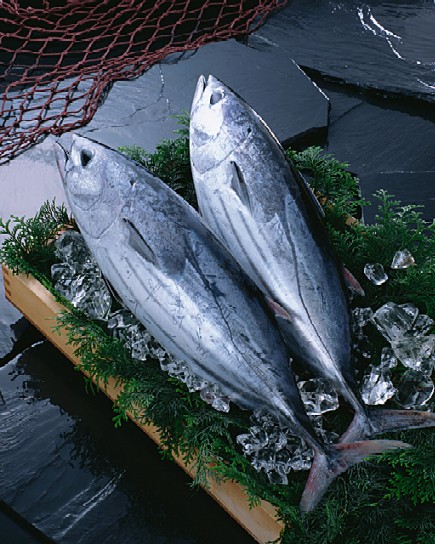
Bonito or “katsuo” in Japanese are extensively caught by fishermen from Numazu, Shimizu, Yaizu and Omaezaki Harbours. The main fishing areas are Shizuoka, Mie, Kochi & Miyazaki Prefectures.
It is also called “katsu” (Tohoku Region), “Honkatsuo” (Kyushu Island), “Magatsuo” (Shikoku and Kyushu Islands. N.B.: the same name designates another fish in other parts of Japan!), “Suji” (Yamaguchi & Wakayam Pref>).
It appears on the markets early Spring~Autumn as “sho gatsuo” (first bonito in Spring) and “modori gatsuo” (return bonito end of Autumn).
They are traditionally line-caught but nets have been used extensively in recent years.

bonito-sashimi

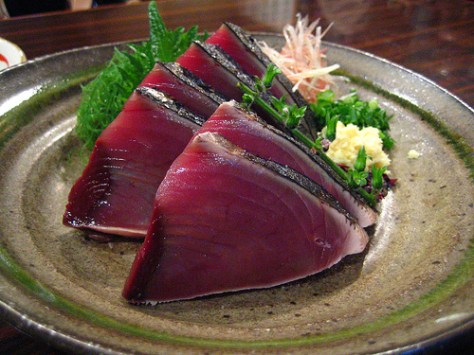
It can be appreciated raw, as sashimi with its skin or without it, preferably served with a saucer of soy sauce (shoyu) mixed with thin slices of fresh garlic, or with wasabi, a touch of lemon and shoyu,

bonito-3

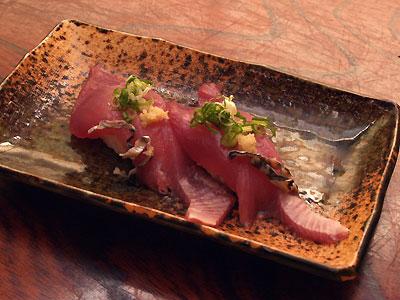
or as nigiri topped with grated fresh ginger a thin slice of garlic, unless you prefer grated fresh ginger with chopped thin leeks.

bonito-tataki

Another very popular way to eat it that will please Europeans and North Americans alike, is “tataki”.

bonito-tataki-cut

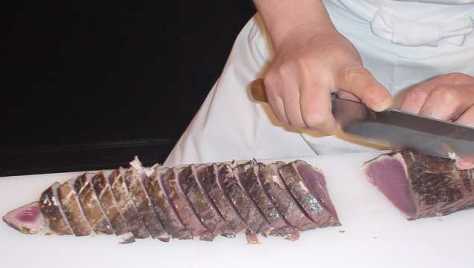
The fish is first seared/grilled over charcoal until it is lightly cooked on the whole outside then plunged into ice water to stop it from cooking any longer. It is then cut into large slices and served with freshly chopped garlic and thin leeks, “shiso” leaves (perilla/beefsteak plant) and wasabi.

Note 1: in restaurants specify whether you want the skin or not when ordering sashimi.

Note 2: the same fish is a staple food in Sri LAnka where it is first smoked and then prepared as soup or curry!

Please check the new postings at:
sake, shochu and sushi

—————————————-
日本語のブログ
—————————————-
Sushi Donburi for Friday the 13th! / Budget Lunch (part of)

donburi-09-02-13

Yesterday I made the mistake to notify the Missus too early that I was not going out tonight as per my usual schedule.
-“Fine,” she replied, “and I expect you to cook as well!”
-“No problem!”
-“I’d better prepare a light lunch, then!”
-“….”

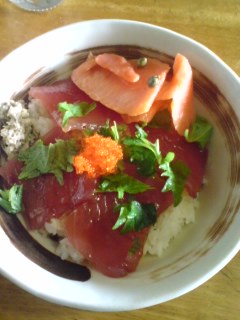
So as part of a “budget lunch” including salad and miso soup (and strawberries for dessert) she prepared the above donburi:
-The rice was steamed rice to which she mixed the konbu/seaweed finely cut.
-She marinated thin slices of raw tuna in ponzu, sake and what else. The leftover marinade was poured over the rice to season it before she placed the pieces of tuna on top.
-Smoked salmon with capers.
-A spoon of “tobikko/flying fish roe”
-a generous portion of locally-made (up the Abe River in Shizuoka City) “Wasabi zuke/chopped wasabi stems and flowers fermented in “sake kasu/sake white lees” (all from Shizuoka Prefecture!)
-She tore some shiso/perilla leaves above the fish, et voila!

Friday the 13th it is today. Let’s hope it is my (our) lucky day!

Please check the new postings at:
sake, shochu and sushi

—————————————-
日本語のブログ
—————————————-
Sashimi and Sushi for the Saint Valentine!

shizuokaminamimagurochu

I suppose I have to bend to the Saint Valentine since I started receiving presents from other ladies (at my grand age?).
I would like to reciprocate, but in Japan men have to wait until March 14t, “White Day”, another festivity invented the Japanese Chocolate Businesses.
I will just suggest to do it more the “Japanese Way”, LOL.

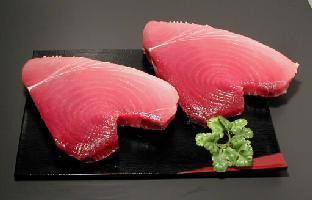
Above are two heart-shaped slices of Minami Maguro/South Pacific Tuna. That is for the solid appetites.

st-valentine-sushi

Now, for the small appetites, how about these dainty, minuscule “genkan sushi” with ikura/salmon roe.
they are very easy to design. They are everywhere in Sushi restaurants these days!

Please check the new postings at:
sake, shochu and sushi

—————————————-
日本語のブログ
—————————————-
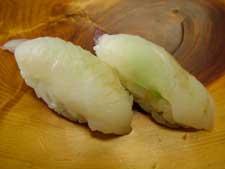
Japanese Seasonal Fish: Seabass/Suzuki

seabass-1

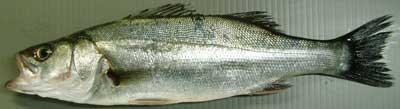
Suzuki or seabass is a fish so popular with anglers all over the world that a lot of people forget it is an extremely popular fish for sashimi and sushi in Japan.

seabass-2
(Pic taken at Tomii Restaurant in Shizuoka City)

Like any other fish, it bears many names: Madaka, Hakura, Shiibasu.
In the Kanto area, including Shizuoka Prefecture, it is called Seigo when under 25cm. At 3 years of age, when it has attained a length of near 60cm, it is called Fukko or Suzuki.
In Kansai it is called Seigo, Hane, and Suzuki.

seabass-3seabass-4

As you can see above the colour and texture are slightly different (Fukko is on the right)

It is indeed a bit early to introduce this fish, but I can’t help thonking about it!
A summer fish par excellence, it is caught mainly in Central and western japan.
The bigger and the older the fish, the better it is considered. After a decline in the 1980’s, catches have increased recently, reaching more than 9,300 tonnes after 2000.

Of course it is a fish you can appreciate cooked or simmered, or grilled, although it becomes fragile and breaks up easily upon being cooked.


The Japan Blog List

Please check the new postings at:
sake, shochu and sushi

—————————————-
日本語のブログ
—————————————-
Donburi: Sushi as a full meal

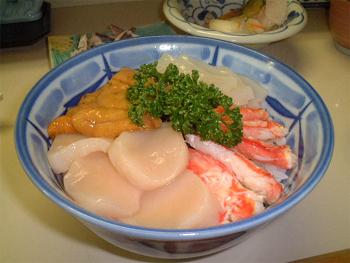
donburi-sapporo-1
From bottom, clockwise:
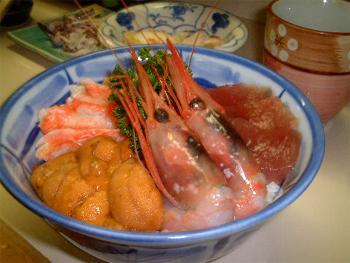
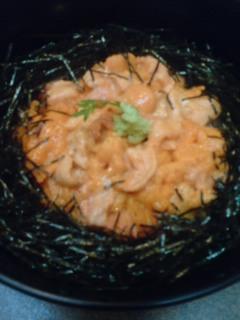
“Uni” (Sea Urchin), “Kani Tsume” (Crab legs), “Maguro” (Tuna), “Nanban Ebi” ( large prawn variety)

“Donburi” is a popular way to eat sushi with foreigners as it combines quality and quantity, and usually reasonable prices!
I thought a few examples might help you choose your favourites nex time you come to Japan!
The above donburi and three following were savoured in Sapporo and Otaru (Hokkaido Island).

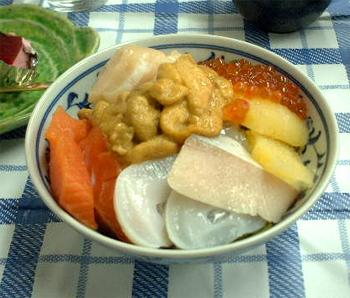
donburi-sapporo-2
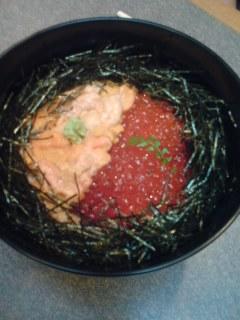
From bottom, clockwise:
A little variation from the first pic!

“Hotate” (Scallops), “Uni” (Sea urchin), “Ika” (Squid), “Kani Tsume” (Crab legs)

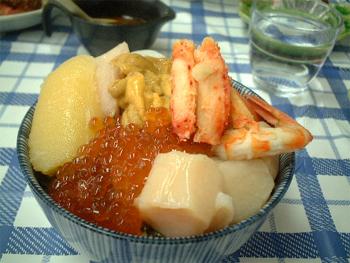
donburi-sapporo-3
A more extravagant sample this time:

From top middle clockwise:
“Ikura” (salmon roe), “Kazu no ko” (herring roe), “Kampachi” (Amberjack), “Tako” (octopus), “Sake” (raw salmon), “Hotate” (scallops), in the centre, “Uni” (sea urchin)

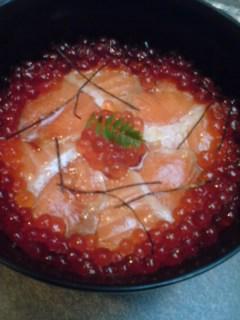
donburi-sapporo-4
This is a truly extravagant one!

From bottom, clockwise:
“Hotate” (Scallops), “Ikura” (Salmon roe), “Kazu no Ko” (Herring roe), “Kampachi” (Amberjack), “Uni” ( Sea Urchin), “Kani Tsume” (Crab leg), “Ebi” (Boiled prawn)

———————–
During a recent trip in Shiretoko, Hokkaido Island, we dropped at Ikyuya Restaurant, located in a small city called Shari (some of the place names in Hokkaido can become a real puzzle as they are mostly very local names written in Kanji that fit the pronunciation instead of the meaning!).
We (the Missus) had chosen this establishment as a representative of the local cuisine favoured by local people.

donburi-hokkaido-1

THe Missus oredered the “Oyako Don”/”Father-Mother and Son-Daughter Bowl”.
In Shizuoka it means chicken omelette (the Hen and the Egg!) spread on a bowl of rice. In Hokkaido, it stands for Shake sahimi”/salmon sashimi and “Ikura”/salmon roe spread over a bowl of rice. It must have been good as for once silence reigned around the table!

donburi-hokkaido-2

Our two friends (which included our gracious driver) opted for “Uni don”/sea urchin and chopped dry nori/seaweed spread over a bowl of rice,

donburi-hokkaido-3

“Uni to Ikura Don”/sea urchin and salmon roe spread over a bowl of rice.
Extravagance at a very reasonable rice, absolutely fresh and sweet seafood away from metropolises, what more can you ask?
Ikyuya
Hokkaido, Shari Cho, Utoro Higashi, 13 (2 minutes walk from Utoro Hotsprings Bus Terminal)
Tel.: 0152-242557
Opening hours: 11:00~18:00 (might get closed in the afternoon on busy days. Come early!)
———————–
Home-made Donburi

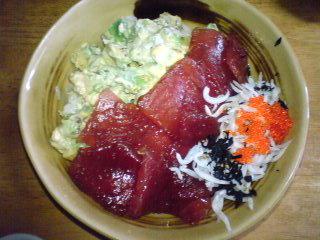
donburi-home

You do not have to go to a Japanese restaurant or sushi bar to eat “donburi” if you happen to have a wife who not only likes them but can also concoct them!
In short, my better (worse?) half once came up with the following for lunch:

Plain steamed rice topped with slices of “akami”/ lean tuna part, avocado salad with mayonnaise and wasabi pickles (the latter provided a nice balance with a spicy touch), boiled shirasu/whitebait sprinkled with “hijiki” seaweed and “tobikko”/flying fish roe.
The tobikko added a nice colour finish touch. It is quite cheap down here in Shizuoka City. From what I saw on Chuckeats Blog, it seems quite a treat over there in the U.S.!
I poured a little Shizuoka-made wasabi dressing on top. This dressing is a lot milder than pure grated wasabi with a little sweetness which combines well with the fish!

Please check the new postings at:
sake, shochu and sushi

—————————————-
日本語のブログ
—————————————-
Japanese Seasonal Fish: Turbot/Makogarei

makogarei

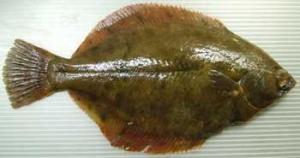
“Makogarei” or Pleuronectes yokohamae Gunther for the specialists is one of the many kinds of turbot indigeneous to Japan.
You will find it on the markets between June and August.
Depending where you live, you might do well to know its other names: “Aome” (Sendai), “Mushibirama” (Konahama), “Mako” (Tokyo) or “Amakarei” among many.
It is net-caught all around Japan.
It has comparatively a lot of flesh for a turbot, making it a choice morsel for nigiri or sashimi.

makogare-sushi

It can reach a length of 30 cm. Contrary to many other fish, the size will bear no incidence on the taste, but if you wish for extra taste, avoid female specimen bearing eggs/roe, and if possible, although a bit extravagant, choose a live fish (possible at Parche, Shizuoka JR Station!).
A good sushi or Japanese restaurant will deep-fry the bones and head for you, making for a great snack with great ale!

Please check the new postings at:
sake, shochu and sushi

—————————————-
日本語のブログ
—————————————-
Japanese Fish Species: Scabbard Fish/Tachiuo

scabbard-fish-a1
(Sorry, but that fish is just too long for the screen!)

Scabbard Fish or “Tachiuo” (太刀魚/Great Sword Fish in Japanese), a very popular in Japan in spite of its great length is usually caught in Summer in Japan but also appears in Winter in Shizuoka Prefcture.
As other fish it owns other names: Tachi (not in Hokkaido, where the word means “whiting”!), Shirada and Tachinouo.
It is mainly caught off Wakayama, Ehime and Oita Prefectures, although it is also caught in Suruga Bay off Shizuoka Prefecture
It is both caught by line or net.
In 1999, 37,000 tonnes were caught, but it fell to 23,000 tonnes in 2000.
It is also imported from Kore and China, although their fish is slightly different from the Japanese variety. More than half of imported fish are eaten west of Kansai.

scabbard-fish-c

It is fish than can be eaten raw as nigiri.

scbbard-fish-b1

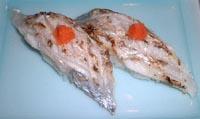
I personally prefer it “aburi” (slightly grilled) with a dash of ponzu and some momijioroshi (grated daikon with chili pepper) as above served at Sushi Ko Restaurant.

scabbard-fish-d

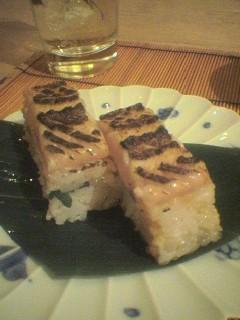
Some time ago I ate it at Oboro No Tsuki Restaurant (now defunct) as above:
They first put a double layer of sushi rice interspaced with shiso leaves (perilla) in a box for “oshi zushi” (pressed sushi), then top it with thick fillets (the fish is actually quite thin) and press the whole.
Next they slightly grill the top (“aburi”), take it out of the box and cut it to size.
Quite tasty and appetizing-looking!


The Japan Blog List

Please check the new postings at:
sake, shochu and sushi

—————————————-
日本語のブログ
—————————————-
Japanese Crustacean Species 3: Squilla/Shako


The Japan Blog List

Please check the new postings at:
sake, shochu and sushi

—————————————-
日本語のブログ
—————————————-
shako1.jpg

The Squilla or “Shako” (蝦蛄in Japanese) is a delicacy that appears on the sushi bar counters from April to Summer, although different varieties can be found in Hokkaido markets (Otaru City in particular) almost all year round.
You will discover it under names such as “shaku” and “Gazaebi”.
They are actually caught in almost all Japanese seas, but the best are supposed to originate from Hokkaido.

shako2

Like any crustaceans, they can be eaten in many ways.
The Japanese favour the small kind with a violet back. I had the pportunity to buy some very large specimen in Otaru, and eat them just boiled andserved with rice vinegar mixed with a little Japanese mustard, or in salad.
They almost disappeared from Tokyo Bay in the 1960’s but reappeared in the 1970’s. Most fishermen in the Kanto area will place them in boxes themselves to sell them directly at fish markets. The market value can vary wildly, but look for the genuine harbour markets and buy them yourself.

shako3

Naturally, they are most popular as nigiri sushi. Customers jokingly ask for “garage” (in English) as “shako” also means (different kanji, of course) “garage”!

Japanese Crustacean Species 2: Large Prawn/”Botan ebi”


The Japan Blog List

Please check the new postings at:
sake, shochu and sushi

—————————————-
日本語のブログ
—————————————-
botanebi1.jpg

Botanebi/”Botan” Prawn, or “Pandalus nipponesis” for the specialists, is a large prawn found in all seas of Japan at depths varying from 300 to 500 metres. They are caught at 200~300 metres depth in Suruga Bay and along the WEstern coast of Izu Peninsula In Shizuoka Prefecture. Once abundant, they have become scarce and only small specimen are found whereas Hokkaido produces up to 20cm-long prawns.

sushiko-08-12-25-31

They are known under different names: toyamaebi and Kijiebi.
It is not a cheap morsel in Sushi bars. But it is interesting to note they are essentially eaten raw as like “amaebi”, they become very sweet after some time in the refrigerator.

oda-4.jpg

Now, if you are lucky enough to find them fresh with their eggs, ask your chef to dress them as above, or even better, put the eggs on top of a “gunkan nigiri”!

sushiko-08-12-25-5

And one more thing, if they are fresh again, don’t forget to ask for the heads deep-fried!

Incidentally, botanebi change sex (gender) with age to end up as big juicy females!

Sashimi Set: Sushi Ko Restaurant


The Japan Blog List

Please check the new postings at:
sake, shochu and sushi

—————————————-
日本語のブログ
—————————————-

sushiko-08-12-25-1

Last night, the Missus and I went out to celebrate Christmas our own way by having dinner at Sushi Ko, our favourite sushi restaurant in Shizuoka City!
This was our first order, a “sashimi no moriawase/sashimi plate”.
All seafood came from Shizuoka Prefecture!
For the rest of our dinner, please check Shizuoka Sushi!

From left to right:
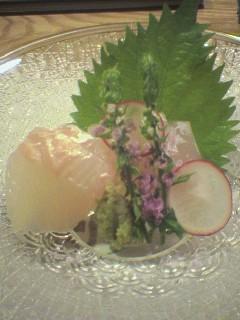
“Mebachi Maguro/Big-eyed Tuna” on a “shiso/perilla” leaf and finely cut daikon, fresh “Sakura Ebi/Cherry Blossom Shrimp” from Yui with grated ginger and cucumber, “Aburi Kinmeidai/slightly grilled Golden Eyes Snapper/Seabream”, lemon, “Shiso no Hana/Perilla Flowers, “Ishidai/Parrot bass, Stone Flounder, Striped Knifejaw” and freshly grated wasabi!

Sushi Ko
shizuoka City, Aoi Ku, Ryogae-cho. 2-3-1 (Aoba Koen)
Tel.: 054-2512898
Business Hours: 17:00~25:00. 17:00~23:00 (Sundays)
Closed on Wednesdays
Reservations recommended
Credit cards OK
HOMEPAGE (Japanese)

Japanese Crustacean Species 1: White Shrimp/”Shiroebi”


The Japan Blog List

Please check the new postings at:
sake, shochu and sushi

—————————————-
日本語のブログ
—————————————-

shiroebi1.jpg

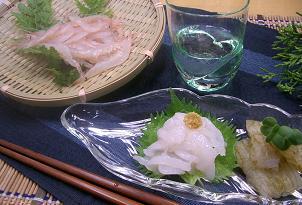
Shiroebi or White Shrimp is not as known as other shrimp/prawn varieties. However it is a very popular crustacean in Japanese cuisine.
Also known under the the names of “Shiraebi, Hirataebi and Bekkoebi”, it is mainly caught between depths of 40 and 200 metres off the coasts of Toyama Bay on the other side of Japan and Suruga Bay in Shizuoka Prefecture.

shiraebi-22

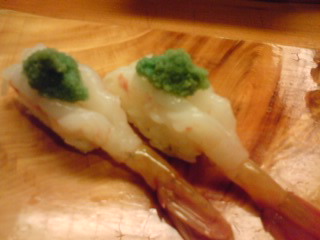
It is mainlly served as sashimi with some ponzu and grated fresh ginger

shiraebi-3

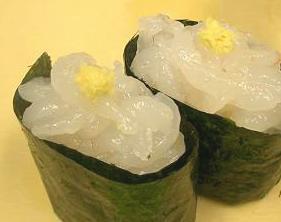
as “gunkan” topped with a dash of grated fresh ginger.

It is possible to serve it as “nigiri”, although one would need large specimen, as the usual length is only 7 cm.
Shiroebi appears on our tables between April and November in many guises:

shirebi-4

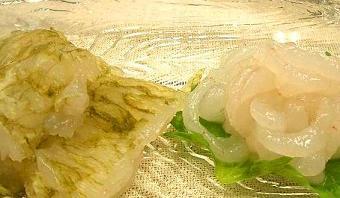
The picture above shows on the right the shiroebi in its natural flesh whereas on the left it has been kept between two sheets of wetted seaweed for a while as “kombu-jime”, another very popular way to prepare all kinds of sashimi/sushi.

White Shrimps also enter in the preparation of a kind of “Tamagoyaki”/Japanese Omelette when they are first processed into a paste and mixed thoroughly with beaten eggs, sieved and then cooked.
The Japanese also love them as soft sembei/rice crackers.

The annual catch has exceeded 600 tonnes in recent years, half of them in Toyama.
They are also exported whole.

Vegan & Vegetarian Japanese delicacy: “Sea Grapes/Umibudou”


The Japan Blog List

Please check the new postings at:
sake, shochu and sushi

—————————————-
日本語のブログ
—————————————-

umibudou-11

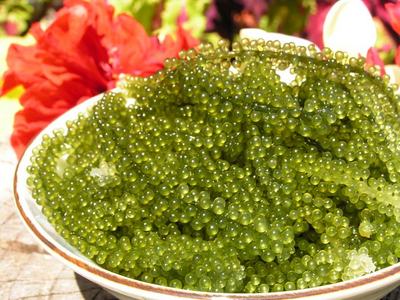
Although not from Shizuoka, this Okinawa delicacy regularly appears in good supermarkets such as Shizuoka JR Station Supermarket and in good Japanese restaurants.

Although called Sea Grapes (Umibudou) for their shape, it is a saweed variety!
Its Latin name is “Caulerpa lentillifera” for the purists.

umibudou-2

Apparently they can be found in some islands an seas in South Eastern Asia and Oceania. World vegetarian and vegans, look out for them (I mean discovere and eat them! LOL)!
The whole seaweed can reach betwen 2 and 5 metres, but only the extremities including the “grapes” are consumed.
In Okinawa where they have been eaten eons, they are also called “green caviar”!
You can eat them raw of course with soy sauce or rice vinegar mixed with mustard.

umibudogunkan

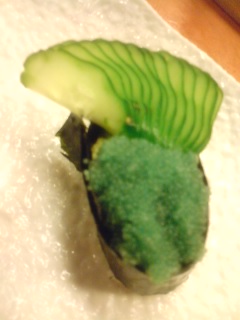
In sushi, as “gunkan/maothership”, they certainly make for great fun and taste!
Beware of counterfeits! No less than the JAS was recently caught selling them in August 2008!
Growing them in Japan has apparently been successful, great news for vegans and vegetarians who will find a great source of iodine and other beneficial elements!
Didi I say it? They are delicious/”oishii”!