Tag Archives: 日本料理

Vegetables facts and Tips (12): Sansai/Japanese Wild Mountain Plants

tomii-veg31

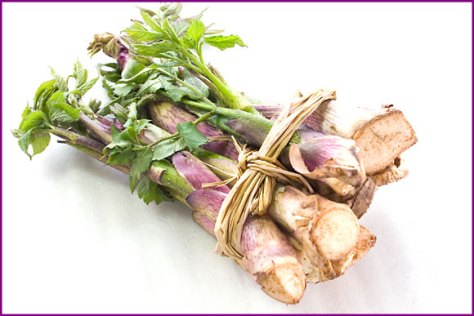
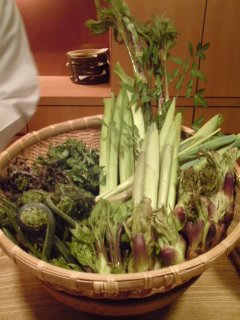
Following the recent posting on the all-vegetable dinner at Tomii, Rich nicely asked me for more information, especially concerning the names of wild edible plants found in Japan as he rightly recognized it could come very handy to vegans and vegetarians everywhere!

Now, I titled this particular posting “Sansai/Wild Mountain Plants”, because they also include wild fruit that can be eaten both as vegetables and fruit with various preparations.
Some can be boiled, others fried, prepared as tempura, cooked in soup, prepared as pickles or jam, etc.

As it would become far too big (already massive, but inexhaustive) a posting if I wrote everything, please pick up one item at a time if you want more explanations and I will write an individual article for your pleasure!

Here we go:
(No particular order)
ainu-negi-alium-victorialis
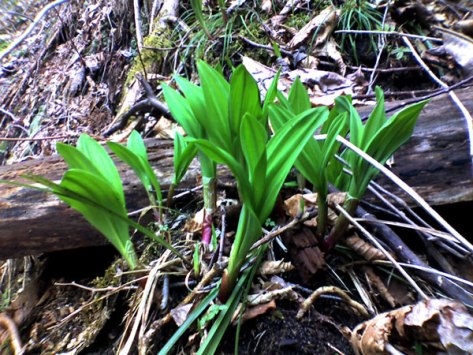
AINU NEGI: ALIUM VICTORIALIS

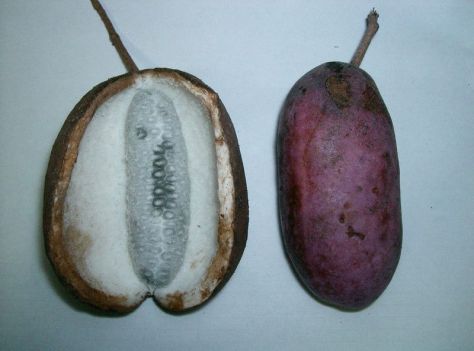
akebi-chocolate-vine
AKEBI: CHOCOLATE VINE

amadokoro-polygonatum-odoratum
AMADOKORO: POLYGONATUM ODORATUM

azami-thistle
AZAMI: THISTLE

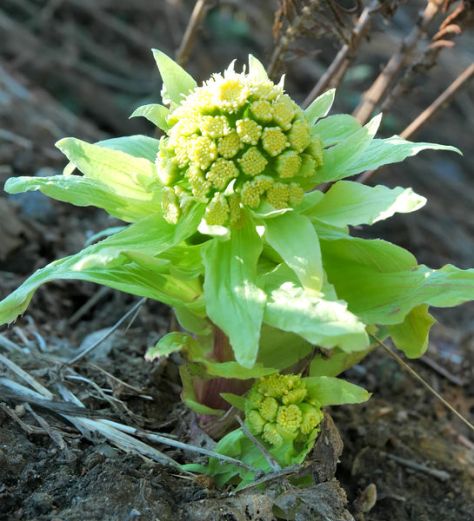
fukinoto-giant-butterbur
FUKINOTO: GIANT BUTTERBUR

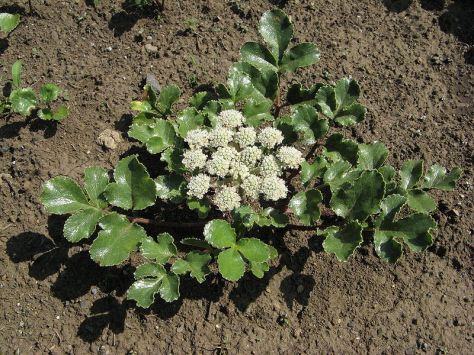
hamaboufuu-glhnia-littoralis
HAMABOUFUU: GLEHNIA LITTORALIS

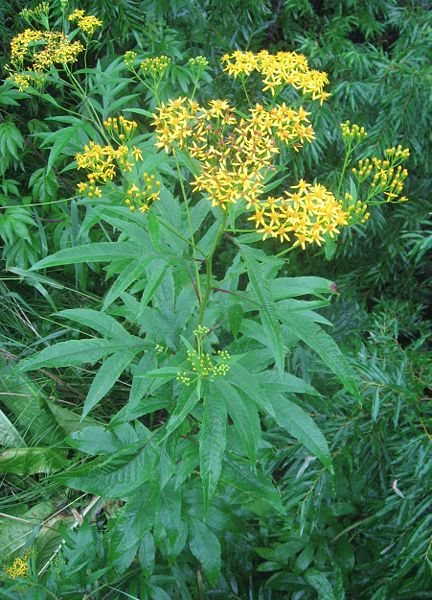
hangonsou-senecio-cannabifolius
HANGONSOU: SENECIO CANNABIFOLIUS

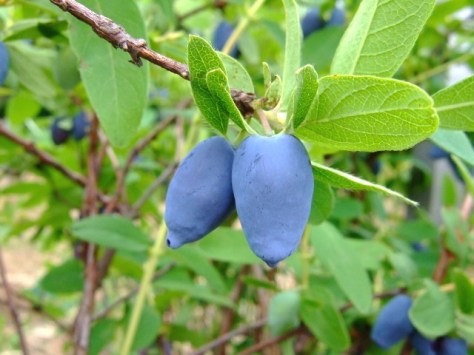
hasukappu-lonicera-caerulea
HASUKAPPU: LONICERA CAERULEA/HASCUP

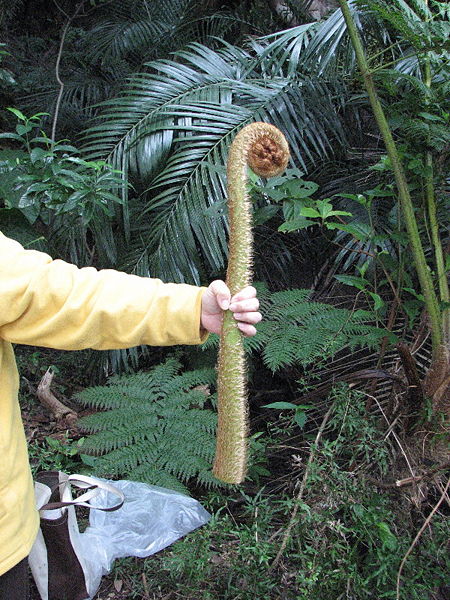
hikagehego-flying-spider-monkey-tree-fern
HIKAGEHEGO: FLYING SPIDER MONKEY TREE FERN

irakusa-urtica-thunbergiana
IRAKUSA: URTICA THUNBERGIANA

itadori-japanese-knotweed
ITADORI: JAPANESE KNOTWEED

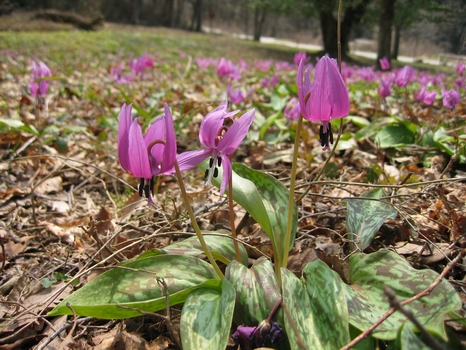
katakuri-dogtooth-violet
KATAKURI: DOGTOOTH VIOLET

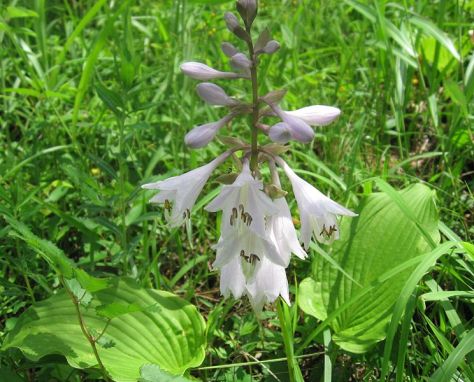
kiboushi-plantain-lily-hosta-fortinei
KIBOUSHI: PLANTAIN LILY HOSTA FORTINEI ( a variety of Hosta Montana)
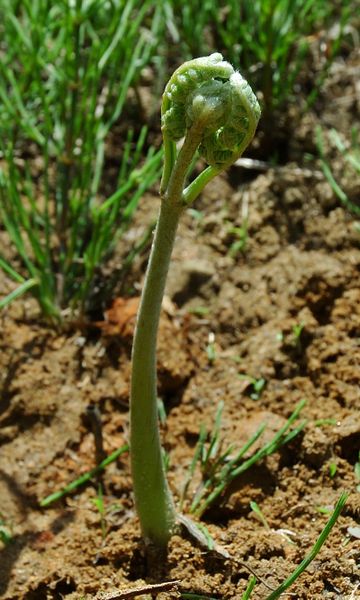
kogomi-ostrich-fern
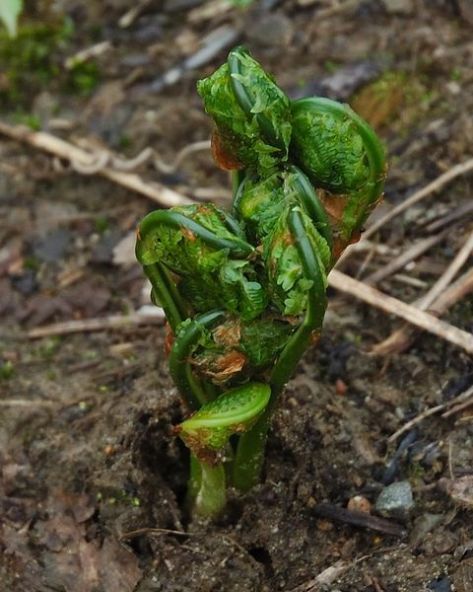
KOGOMI: OSTRICH FERN (exists as green and red)
koshiabura-ascathopanax-sciadophylloides
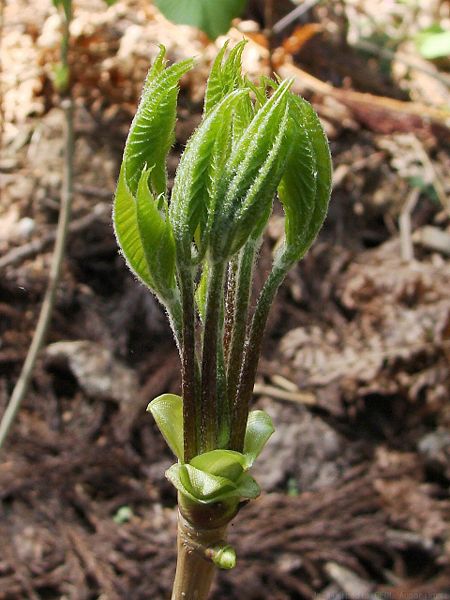
KOSHIABURA : ASCATHOPANAX SCIADOPHYLLOIDES
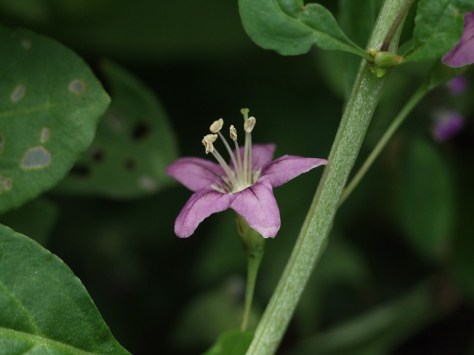
kuko-chinese-wolfberry
KUKO: CHINESE WOLFBERRY

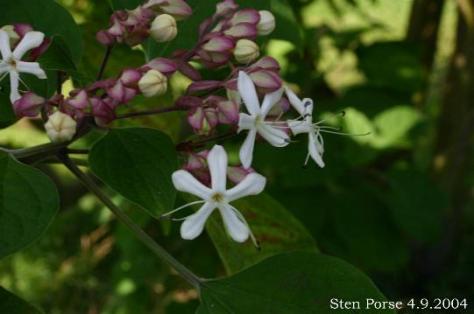
kusagi-harlequin-glory-bower-peanut-butter-shrub2
KUSAGI: HARLEQUIN GLORY BOWER PEANUT BUTTER SHRUB

matatabi-silver-vine
MATATABI: SILVER VINE

mitsuba-japanese-honeywort
MITSUBA: JAPANESE HONEYWORT

nirinsou-anemone-flaccida
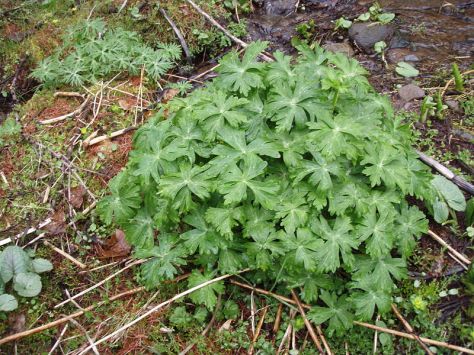
NIRINSOU: ANEMONE FLACCIDA

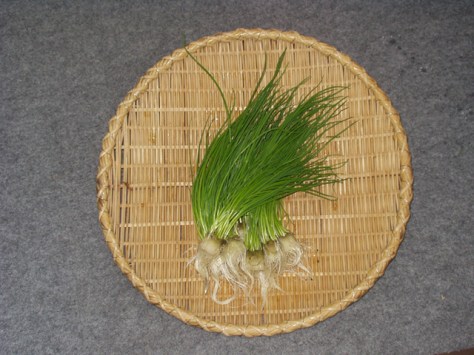
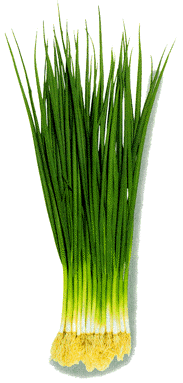
nobiru-alium-macrostemon
NOBIRU: ALIUM MACROSTEMON

oyamabokuchi-synurus-pungens
OYAMABOKUCHI: SYNURUS PUNGENS

ryoubu-clrthra-barbinervis
RYOUBU: CLERTHRA BARBINERVIS

sarunashi-actinia-arguta
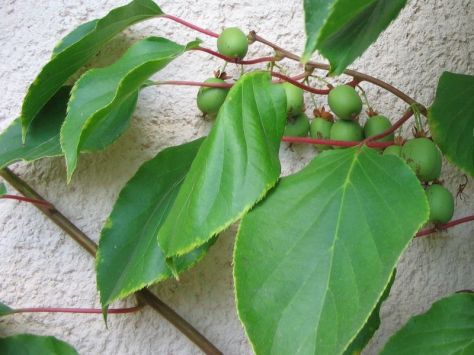
SARUNASHI: ACTINIA ARGUTA

seri-japanese-parsley
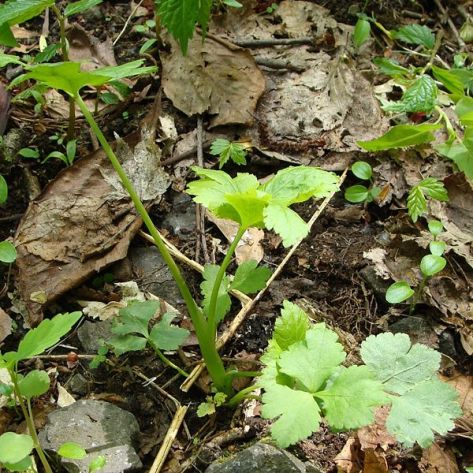
SERI: JAPANESE PARSLEY

suberiyu-common-purslane
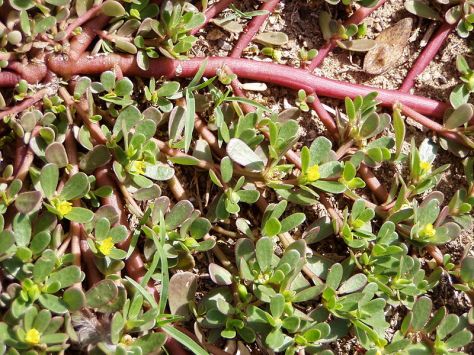
SUBERIYU: COMMON PURSLANE

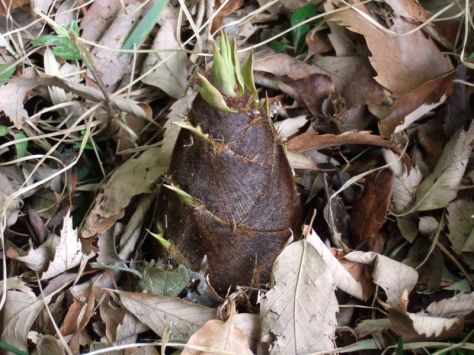
takenoko-bamboo-shoots
TAKENOKO: BAMBOO SHOOTS (SPROUTS)

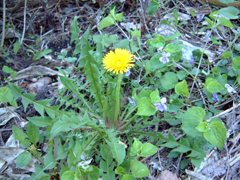
tanpopo-dandelion
TANPOPO: DANDELION

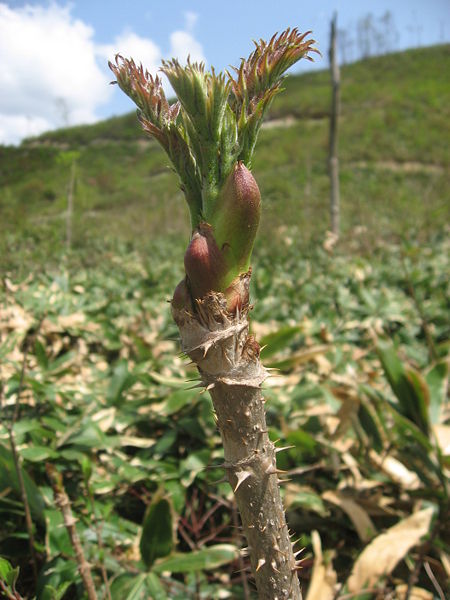
tara-no-me-aralia-elata
TARA NO ME: ARALIA ELATA

tsukushi-horsetail
TSUKUSHI: HORSETAIL

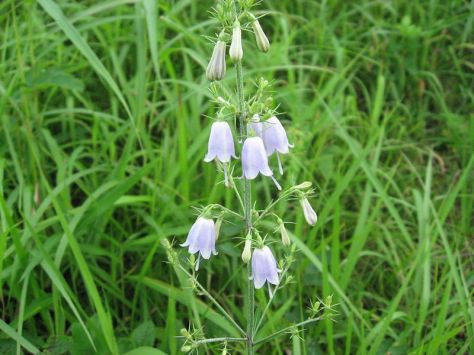
tsuroganeninjin-adenophora-triphylla
TSUROGANENINJIN: ADENOPHORA TRIPHYLLA

udo-aralia-cordata
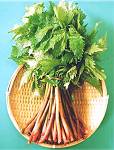
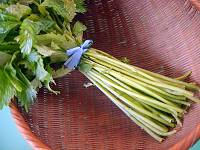
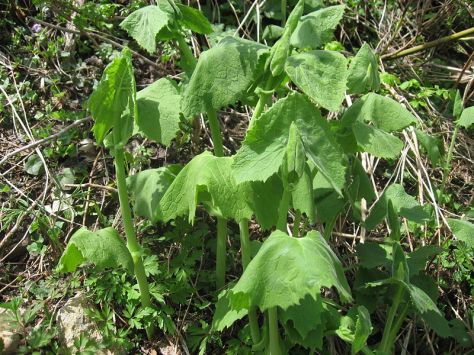
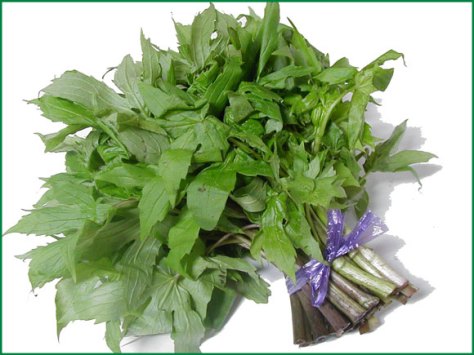
UDO: ARALIA CORDATA

yamaudo
YAMAUDO: same as UDO (above)

urui-hosta-montana
URUI: HOSTA MONTANA

warabi-pteridium-aquilinum
WARABI: PTERIDIUM AQUILINUM

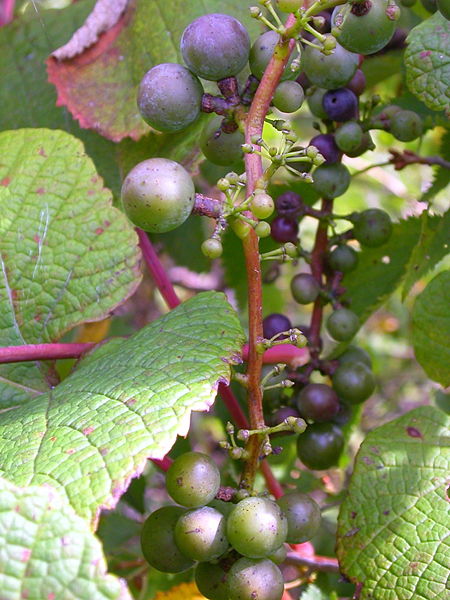
yamabudo-crimson-glory-vine
YAMABUDO: CRIMSON GLORY VINE

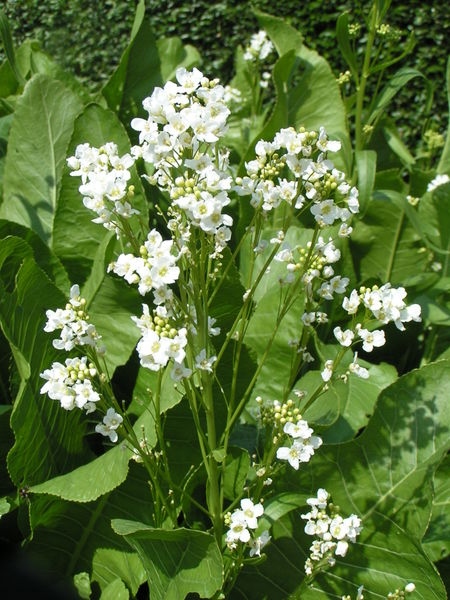
yamawasabi-wild-horseradish
YAMAWASABI: WILD HORSERADISH

zenmai-osmunda-japonica
ZENMAI: OSMUNDA JAPONICA

—————————
Still have to find the English names for the following ones!
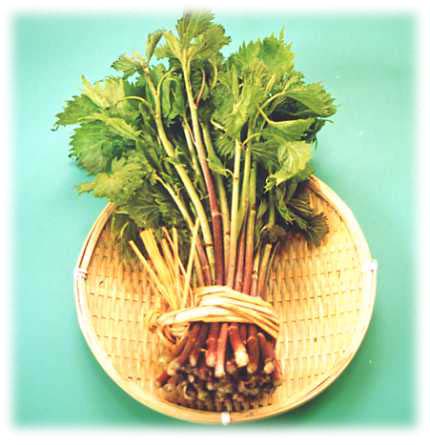
aiko
AIKO

akamizu
AKAMIZU

aomizu
AOMIZU

inudouna
INUDOUNA

shidoke
SHIDOKE

Please check the new postings at:
sake, shochu and sushi

—————————————-
日本語のブログ
—————————————-
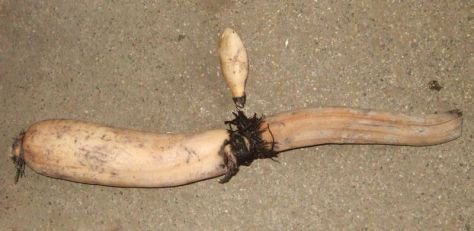
Vegetables Facts and Tips (11): Lotus Roots/Renkon

lotus-root1

In Japan we are at the end of Lotus Roots season, but eat them all year round!
Lotus roots come from a plant called Nelumbo nucifera, also known by a number of names including Indian lotus, sacred lotus, bean of India, or simply lotus. This plant is an aquatic perennial. Under favorable circumstances its seeds may remain viable for many years.
A common misconception is referring to the lotus as a water-lily (Nymphaea), an entirely different plant.

Native to Greater India and commonly cultivated in water gardens, the lotus is the national flower of India and Vietnam.

The flowers, seeds, young leaves, and “roots” (rhizomes) are all edible. In Asia, the petals are used sometimes for garnish, while the large leaves are used as a wrap for food. In Korea, the leaves and petals are used as a tisane. Yeonkkotcha (연꽃차) is made with dried petals of white lotus and yeonipcha (연잎차) is made with the leaves. The rhizome (called ǒu (藕) in pinyin Chinese, ngau in Cantonese, bhe in Hindi, renkon (レンコン, 蓮根 in Japanese), yeongeun (연근) in Korean is used as a vegetable in soups, deep-fried, stir-fried and braised dishes. Petals, leaves, and rhizome can also all be eaten raw, but there is a risk of parasite transmission (e.g., Fasciolopsis buski): it is therefore recommended that they be cooked before eating.

FACTS:
-Season: September~December in Japan.
-Beneficial elements:
Lotus roots have been found to be rich in dietary fiber, vitamin C, potassium, thiamin, riboflavin, vitamin B6, phosphorus, copper, iron and manganese, while very low in saturated fat.
Various parts of the lotus are also used in traditional Asian herbal medicine.

TIPS:

-Choose specimens with a clear white cut section. There should not be any black spots.
-Use large specimen as they are easier to cut and use.
-To prevent oxydising, warp cut specimen into wet kitchen paper.
-Add vinegar to water when bolingthem to keep them white.
-The easiest way to peel them is to use a potato peeler!

COOKING:

The stamens can be dried and made into a fragrant herbal tea called liánhuā cha (蓮花茶) in Chinese, or (particularly in Vietnam) used to impart a scent to tea leaves. The lotus seeds or nuts (called liánzĭ, 蓮子; or xian liánzĭ, 鲜莲子, in Chinese) are quite versatile, and can be eaten raw or dried and popped like popcorn, phool makhana. They can also be boiled until soft and made into a paste, or boiled with dried longans and rock sugar to make a tong sui (sweet soup). Combined with sugar, lotus seed paste becomes one of the most common ingredient used in pastries such as mooncakes, daifuku, and rice flour pudding.

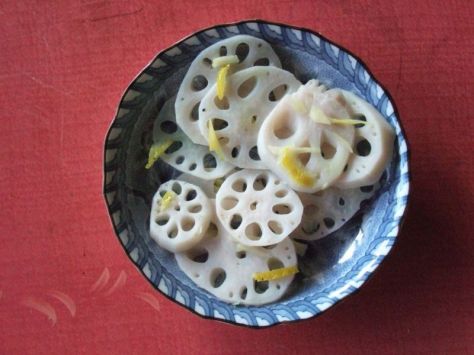
Japanese popular Renkon dishes:

lotus-root-nimono

“NIMONO”

lotus-root-sumono

“SUMONO”

lotus-root-kimpira

“KIMPIRA”

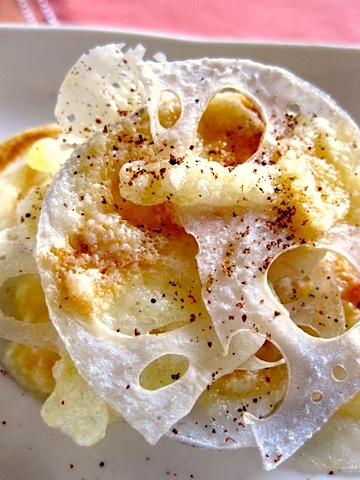
lotus-roots-chips

“CHIPS”

Please check the new postings at:
sake, shochu and sushi

—————————————-
日本語のブログ
—————————————-

Vegetables Facts and Tips (10): Egg plants/Aubergines

aubergines-1

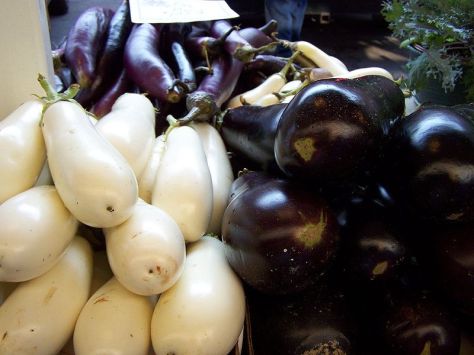
The eggplant, aubergine, or brinjal (Solanum melongena) is a plant of the family Solanaceae (also known as the nightshades) and genus Solanum. It bears a fruit of the same name, commonly used as a vegetable in cooking. As a nightshade, it is closely related to the tomato and potato and is native to India and Sri Lanka.

That for the Wikipedia definition. The word Aubergine is mainly used in Europe. It comes in many shapes, sizes and even colours, but they share the same facts.

FACTS:
-Season: June to September in the Northern Hemisphere, but are available all year round thanks to greenhouse cultivation.
-Main beneficial elements: Potassium, Vitamin C and B1
-90% is water, but the skin contains a lot of polyphenols so useful against aging and arteries cleaning!
It is also of a great help to fight diabetes.

VARIETIES:

As mentioned above, aubergines come in many varieties, but Japa has come up with another interesting kind:
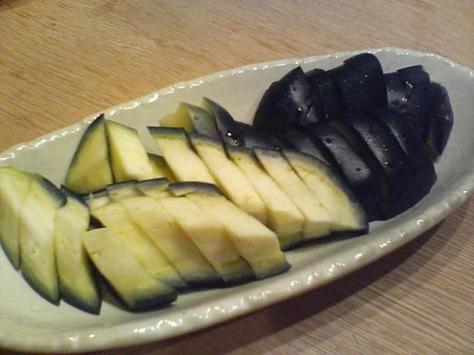
aubergines-mizu
“Mizu Nasu”, litterally “Water Aubergine”
It has the particularity that it can be eaten raw cut and served like sashimi! With miso, pickled plum flesh, wasabi or soy sauce, it opens all kindsof possibilities fro vegans, vegetarians and raw food lovers!

TIPS:

-Choose specimens with a deep colour, bright appearance and comparatively light weight.
-To preserve them, wrap them individually in cellophane paper before storing them in the refrigerator.
-Before cooking them, cut them and leave them in clear water util usage to prevent oxydizing.
If you want to fry them, cut them first and rub them with a lttle salt to take excess water out of them.

Please check the new postings at:
sake, shochu and sushi

—————————————-
日本語のブログ
—————————————-
Sashimi Set at Tomii (’09-04)

tomii-09-04

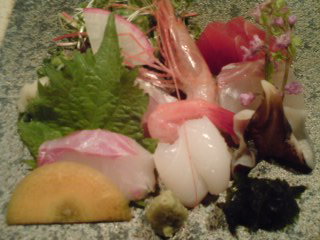
For all my regular visits at Tomii, my favourite Japanese Cuisine Restaurant in Shizuoka City, It had been some time since I last introduced one of their seasonal sashimi plates!

I need little to say anything about the quality and presentation as they are perect as usual, so I’ll just describe the assortment:

Front row, left to right:
Sakuradai Seabream with a sllice of yellow carrot, Grated wasabi, Yari Ika/Calamari variety/Squid, Torigai/Surf Clam with fresh seaweed in front.

Second row:
Behind the shiso/perilla leaf, Aji/Horsemackerel-saurl from Kogawa, Shizuoka, Amaebi/Sweet Prawn, Ishidai Seabream with Shiao/Perilla flowers.

Third row:
Aka daikon/ red Daikon and various herbs, Honmaguro/Blue fin tuna.
Hoped you enjoyed the explanation as much as I enjoyed the taste! LOL

TOMII
Shizuoka City, Aoi Ku, Tokiwa-cho, 1-2-7, Tomii Bldg, 1F
Tel.: 054-274-0666
Business hours: 17:00~22:00
Closed on Sundays
HOMEPAGE (Japanese)

———————————————–
Please check the new postings at:
sake, shochu and sushi

—————————————-
日本語のブログ
—————————————-

Japanese Seasonal Fish: Striped Horse mackerel/Shimaaji

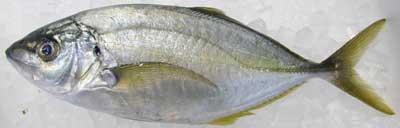
shimaaji-1

Shimaaji, or Striped Horsemackerel is one variety of Aji/Horsemackerel-Saurel.
Although the season is said to be in Summer, the taste varies little with the time of the year.
Striped Horsemackerel caught by anglers off the Izu Peninsula, Shizuoka Prefecture, are said to be the best in Japan.
It is known under the other names of Ookami, Kose and Katsuoaji.
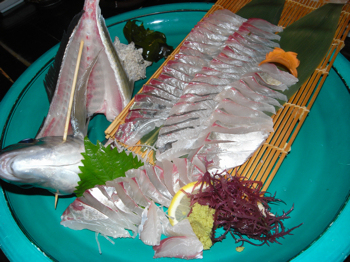
It is very popular as sashimi:

shimaaji-2

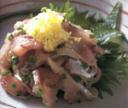
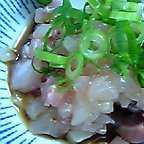
or as tataki (tartare), my favourite, with a dash of fresh grated ginger:
<a

shimaaji-3 shimaaji-3a

Of course, as a sushi, it has many lovers:

shimaaji-4

The best sushi restaurants will prepare the sashimi or sushi from live specimen swimming in their tanks and later serve the bones and head deep-fried. They will serve the whole fish deep-fried for the guests who are so keen on eating raw fish!

shimaaji-5

Recently, breeding the fish from their eggs off Chichijima Island has been successful, meaning more on our plates in the future!

Please check the new postings at:
sake, shochu and sushi

—————————————-
日本語のブログ
—————————————-
Japanese Home-made Lunch of the Day

lunch-09-04-01

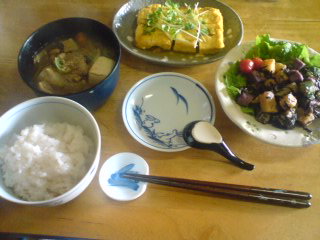
With all the bentoes the Missus is (I was going to say “kindly” but don’t forget she eats the same lunch after all! LOL) preparing for me every Monday and Tuesday I have been asked what would be typical lunch at home.
Frankly speaking, it varies all the time, depending on the Missus’ mood and my own (rare) requests.
But today was a bit special. This morning, April Fool’s Day, I had to go through a stomach scan on my doctor’s orders (which revealed nothing serious, fortunately, apart of a big dent in this month budget!), which meant I hadn’t been allowed to eat for 18 hours (or drink for 58 hours!). As I was about to depart for the hospital, the Missus sent me off saying: “Don’t worry, I’ll prepare a nice healthy Japanese lunch as you like them!”
That could explain that for all the anaesthesics I had to ingurgitate, I stayed conscious during the whole operation!

lunch-09-04-01a

Because I did not have to sleep off all the medicine I managed to come home earlier than scheduled and take pictures of the meal as it came onto the table:
The salad was made with three types of potatoes: yellow sweet potato, violet sweet potato and regular potato to which was added cucumber cubes of the same size, “hijiki” sweet seaweed, lettuce with gomadare/sesame dressing.

lunch-09-04-01b

Naturally I had my tamagoyaki/Japanese omelette. The above picture shows it as it came out of the pan.

lunch-09-04-01c

It was then cut to bite size (half for each of us!) and served with “Kawaire Daikon” sprouts and a dash of ponzu.

lunch-09-04-01d

As for the meat, I had the Missus’ special: “motsu nikomi”/Japanese-style pork tripes stew with veg and tofu. (I had a second serving).

lunch-09-04-01e

As for the rice, I had rice steamed with shreds of sweet umeboshi/Japanese pickled plums. (I had a second serving of that, too!)

We had some small cakes for dessert.
I was so full that I had to sleep it off!

Tonight I ‘ll be able to open a bottle of sake at last! LOL

Please check the new postings at:
sake, shochu and sushi

—————————————-
日本語のブログ
—————————————-
Tuna Species: Kindai Tuna/Kindai Maguro

kuromaguro.jpg

Following a kind request by my good Foodbuzz friend, Elizabeth, I decided to re-post an article on this particular tuna species to clear some misunderstandings and add new information!

“Kuromaguro” or Blue Fin Tuna has become almost a mythical fish all over the world to the point that non-Japanese refer to it by its Japanese name.

“Kuromaguro”, or Blue Fin Tuna (or Tunny) has many other names in Japanese: Honmaguro, Maguto,Meji,Yokowa, Shibi, Imoshii, Shibimaguro, Kuroshibi, and Hatsu!

The best are caught in Winter mainly in the seas off Kochi (Shikoku Island), Miyagi and Hokkaido Prefectures.
This variety is the most expensive and can reach astronomical prices, especially caught in Winter off Hokkaido.
Imported Kuromaguro usually reaches Japan frozen, but in recent years the fish has been successfully raised in semi-wild environments in Spain, Australia and Croatia and arrives in Japan fresh by plane.
Imports and sales of Kuromaguro are monopolised by Japanese trade associations, unless you are lucky enough to catch one (careful here, as poaching is a major offense in Japan!).
Between you and me, if you want to eat Kuromaguro sashimi, it might come cheaper if you do it while travelling in Spain!
Did you know that Japanese importers will fly to Spain and other countries just to check that the fish are bled properly?

Now “Kindai Maguro” (近/kin for “near/nearby” and 大/dai for “big”) is the name given Kuromaguro/Blue Fin Tuna entirely human-fed (I mean fed by humans, not fed with humans!LOL).
There is big “but”, though! Huma-fed does not mean human-raised.
Young tuna have first to be located, encircled with large nets, guided near a shore and then provided with food. What people forget is that the tuna gills are hard. If the fish cannot swim freely enough it will wither and eventually die. So Kindai Tuna is nothing less than wild tuna caught into a trap and raised inside it!

BUT GOOD NEWS!

Only last week, the Tokai Marine Studies University in Shimizu Ku, Shizuoka City (Shizuoka, Banzai!) has just announced that they have succeeded in raising Kuromaguro from the eggs! What is with the recent success by fish farmers in raising another variety of Kuromaguro in Kyushu, Specialist are confident that Japan will be able to actually export completely human-raised tuna in the foreseeable future!

———————
Related terms:

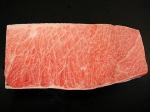
kuromaguro-otoro
Kuromaguro Otoro (fat part)

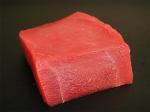
kuromaguro-chutoro
Kuromaguro Chutoro (semi-fat part)

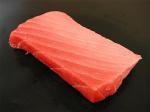
kuromaguro-akami
Kuromaguro Akami (lean part)

Please check the new postings at:
sake, shochu and sushi

—————————————-
日本語のブログ
—————————————-
Vegetables Facts and Tips (9/1): Mushrooms/Shitake

mushrooms-market
(Mushrooms at at a Shizuoka Supermarket)

I don’t intend to talk about wild mushrooms here as I would need a very thick book to post!
Japan is arguably the country cultivating the greatest number of varieties ( new ones appear and disappear every year!), so I will limit myself to give information on at least four of them and furthermore introduce most varieties I have found in Japanese supermarkets (most of them should be available in many countries.

SHIITAKE

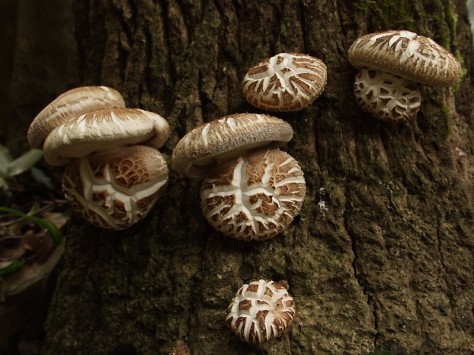
efbd93efbd88efbd89efbd89efbd94efbd81efbd8befbd85

FACTS:
Shiitake/Lentinula Edodes (Black Forest Mushrooms) are native to China but have been grown in both Japan and China since prehistoric times[2]. They have been cultivated for over 1000 years; the first written record of shiitake cultivation can be traced to Wu Sang Kwuang, born during the Song Dynasty (AD 960–1127). However, some documents record the uncultivated mushroom being eaten as early as AD 199.
Fresh and dried shiitake have many uses in the cuisines of East Asia. In Chinese cuisine, they are often sauteed in vegetarian dishes such as Buddha’s delight. In Japan, they are served in miso soup, used as the basis for a kind of vegetarian dashi, and also as an ingredient in many steamed and simmered dishes. In Korean cuisine, they are commonly used in dishes such as bulgogi (marinated grilled beef), jjigae (stews), and namul (sauteed vegetable dishes). In Thailand, they may be served either fried or steamed.

Shiitake are often dried and sold as preserved food in packages. These must be rehydrated by soaking in water before using. Many people prefer dried shiitake to fresh, considering that the sun-drying process draws out the umami flavour from the dried mushrooms by breaking down proteins into amino acids and transforms ergosterol to vitamin D. The stems of shiitake are rarely used in Japanese and other cuisines, primarily because the stems are harder and take longer to cook than the soft fleshy caps. The highest grade of shiitake are called donko in Japanese.
Extracts from shiitake mushrooms (such as ichtyol) have also been researched for many other immunological benefits, ranging from anti-viral properties to possible treatments for severe allergies, as well as arthritis.
The Japanese actually consume them from their raw form more than in any other country.

-Season: best in October~March for outdoors cultivation
-Main beneficial ingredients: Vitamin B1, B2, N6, Ergosterol, Lentinan, Fibers.

TIPS:

-Loosely wrap them in clean Newspaper or Kitchen Paper and store them in fridge away from the light.
-Choose specimens with unbroken “umbrella” and no black marks under.
-Fresh Shiitake are best enjoyed for their taste by keeping their cooking simple such as frying them over a grill with a dash of soy sauce and sake!

Please check the new postings at:
sake, shochu and sushi

—————————————-
日本語のブログ
—————————————-
Vegetables Facts and Tips (8): Leeks

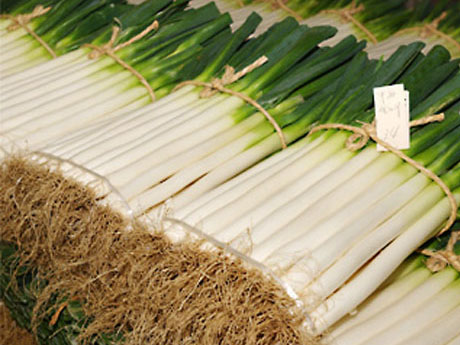
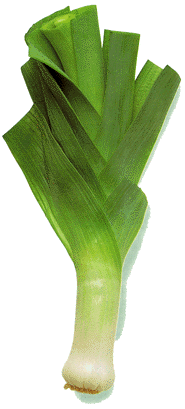
negi-1

Leeks, or “negi” in Japanese, is an almost universal vegetable.
It is used in cuisine at restaurants and homes on all continents and has been recognized for ages as very beneficial plant.

Recent research has demonstrated that it is an effective cure against cold in particular, not only for humans, but for many animals, too.
Some people do not appreciate them because of their pungent smell and taste, but this can be taken care of with a couple of simple steps.

Back home in France, we boil the central part of fat leeks and eat them under the name of “poor man’s asparaguses”!

FACTS:
-Season: leeks can be bought all year round, but the best season is from November to February in the Northern Hemisphere.

-Main beneficial elements: Carotene (green part), Vitamin C (white part), Calcium, Vitamin B1 (beneficial for blood circulation).
It is not only efficient against colds, but also to the stomach and innards health.

TIPS:
-Fatter specimens will have more taste.
-Choose specimen with a “wet” bottom cut.
-If you use large specimen raw in salads, first cut 5=8 cm long sections, then cut them thin lengthwise and leave them some time in clean cold water. The pungency will greatly diminish.
-To chop leeks for cooking, cut them first in 5~10 cm sections, then cut them thin lengthwise and only then chop them crosswise.

VARIETIES:
There are innemurable varieties in the World, but I will introduce here the main varieties encountered in Japan:

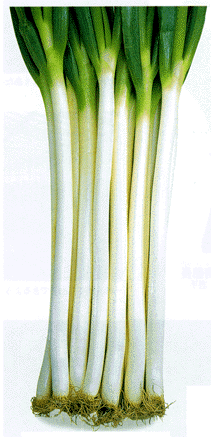
negi-senju
“Senju”
The most common and popular variety

negi-hakata-manno-negi
“Hakata Manno”:
A choice specimen raised in Kyushu Island

negi-hime
“Me” or “Hime”:
Could be called leek sprouts,too.
Eaten raw in salads, sushi, finger foods.

negi-ito-negi
“Ito” or Thread Leek, used in the same way as “Me/Hime”.

negi-kositsu-negi
“Koshitsu”, another common and popular variety.

negi-kujo-futo-negi
“Kujo-Futo”:
A choice specimen origintaing from Kyoto.

negi-kujo-hoso1
“Kujo Hoso”. Same as above, but a lot thinner.

negi-riiki
“Riiki”
A short fat specimen popular for “nabe” and soups.

negi-shimonita-negi
“Shimonita”.
A fat variety with a short stem and long leaves. Popular with soupsand “nabe” (Japanese-style pot-au-feu)

Please check the new postings at:
sake, shochu and sushi

—————————————-
日本語のブログ
—————————————-
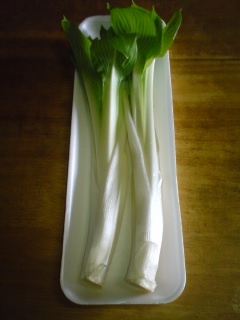
New Vegetable: Urui/Hosta Montana

urui-61

Last Sunday, while visiting my favourite supermarket inside the Shizuoka JR Station in search of unusual vegetables I had the pleasure to re-discover that increasingly popular Japanese vegetable, namely urui.
Its Latin name id Hosta Montana. If someone knows the English name, I would be very grateful to be enlightened!
Now, originally this vegetable was a “sansai/wild vegetable” until it has been successfully grown almost all over Japan.

urui-1

The real name of this mountain plant is Oobagibooshi, too long a name to be marketed, hence the “new” name “urui” for the cultivated species.
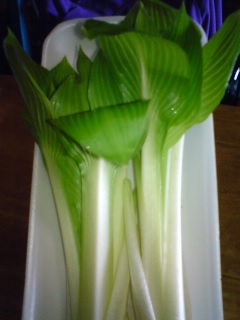
At full maturity it can reach imposing height and width.
Like asparaguses, it is harvested early before it extends over a foot/30 cm height.

urui-2

The leaves are still small, thin and tender then.
The whole plant, unless cooked as tenpura or fried, needs to be lightly boiled in lightly salted water beforehand.

urui-31

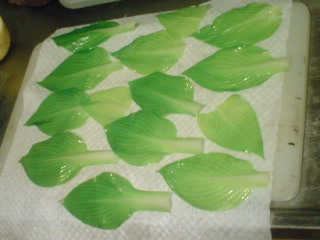
To prepare the plant for the evening snack I had in mind for the Missus (Natasha, Tangled Noodle, do you remember? LOL) I cut the plant into 3 equal lengths and boiled the two bottom ones first as they would take longer. Once boiled to satsifaction I took theme out and cooled them under cold water, cut them lengthwise to thin enough strips and laid them onto a sheet of kitchen paper.
I boiled the leaves just long enough to make them tender, cooled them under cold water and spread them on a sheet of kitchen paper.

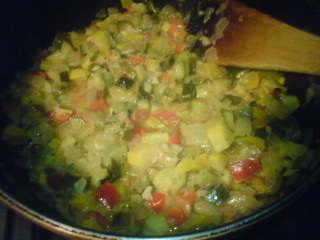
fine-ratatouille

I had cooked a fine ratatouille beforehand, let it cool completely and added a dressing of my making with soft Dijon mustard, tarragon white wine vinegar, walnut oil, pepper and salt.
Now vegan and vegetarian friends should proceed directly to the dish I created as the rest ill not suit them!

seafood

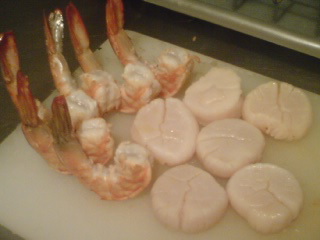
Next I lightly fried small scallops (after marinating then in lemon juice for a couple of minutes) just enough to keep them almost raw inside and put them aside to cool. I did the same, marinade included with some white shrimps.
Note: to attain their “standing shape” is very easy. First “peel” them leaving the tail ends for better “handling”, make a shallow cut along their back, take out the innards and fry just enough to cok both sides to a nice color and keep them almost hlf raw inside. This way they will be firm but extremely tender.

snack

As for the dish itself, vegan and vegetarian friends can forget the seafood and replace it with more ratatouille and edible flowers for example.
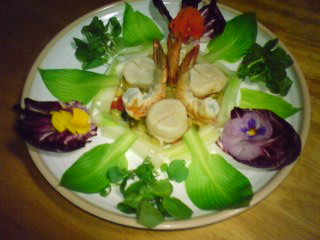
I built an “enclosure” with the cut urui stem, filled it with ratatouille. I placed the seafood geomatrically above the ratatouille. Around it I alternately placed urui leaves, trevise with edible flowers and watercress.
I made a point to take a pic before we sprinkled the lot with dressing (I leave the choice to you!)
Great with a Blanquette de Limoux sparkling wine!

Please check the new postings at:
sake, shochu and sushi

—————————————-
日本語のブログ
—————————————-
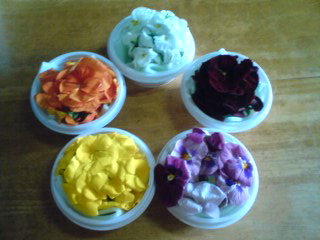
Vegetables Facts and Tips (7): Edible Flowers

flowers-8
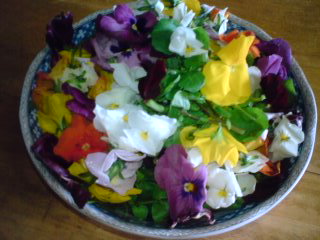
(5 edible flowers and water cress salad)

Yesterday, while I was shopping at the big supermarket at the Shizuoka JR Station I was reminded of a recent post by Natasha at 5 Star Foodie when I noticed edible flowers on sale.
Edible flowers have been on the Japanese markets for quite a few years already.
They tend to first appear in late winter, although it is only a question of time when they will be sold all year long!

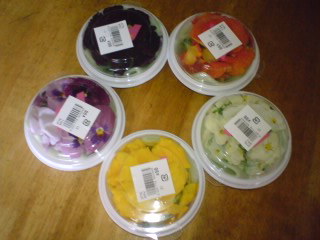
flowers-1

flowers-2

They come in very cheap, at 98 yen a small box (1 US$), but they ought to be used as early as possible.
Aichi Prefecture, our neighbour Prefecture seems to have become the largest growing area in Japan.
Thai, Indian and Persian citizens, as far as I know, have been using flowers in food for quite some time. The Japanese have served mini-chrysanthemum and perilla flowers since immemorial times.

flowers-3 flowers-4 flowers-5 flowers-6 flowers-71

Most edible flowers are of the pansy, snapdragon, primura and so on varieties.
Do you recognize some of them above?

Now, the great news is that they contain an enormous amount of Vitamin A carotene:
1,100 to 9,400 micrograms per 100 grams as compared to 390 micrograms for tomatoes, 720 micrograms for broccoli and 3,100 micrograms for spinach.
as well as Vitamin C:
230 t0 650 mg per 100 grams as compared to 20 mg for tomatoes, 100 mg for spinach and 160 mg for broccoli!
The Japanes will use them either in flower or vegetable salads or on cakes.

One small advice for caution: don’t overeat them as they have purgative powers!

Please check the new postings at:
sake, shochu and sushi

—————————————-
日本語のブログ
—————————————-
Vegan/vegetarian Japanese Dressing: Gomadare/Sesame Dressing

fig-sesame

Following a few queries about gomadare/sesame dressing I (and the Missus) use a lot, I felt a little information and a simple recipe would come in useful.

Gomadare is a great tasty dressing that can be used indifferently with cold dishes as a normal dressing, or in and with hot food, especially nabe/Japanese pot-au-feu, shabu-shabu and any meat or veg actually.
The problem that the gomadare sold over the counter is not vegan, or even vegetarian for that matter (it usually contains egg white and I don’t know what!)

Now, here is a simple recipe that will add that little zest and “consistency” to your favourite food:
Ingredients (for about 2 people):
white sesame seeds: 2 large tablespoons
soy milk: 4 large tablespoons
miso: 1 teaspoon
soy sauce: a little (up to taste)
sugar: a little
ground white sesame: a little

First ground together with a pestle the white sesame seeds, soy milk and miso until it has attained a nice smooth consistency.
If have difficulty mixing it, heat it a little.
Add soy sauce, sugar and ground white sesame to taste.
A little experimentation will work wonders.

Tip: my favourite dish is to peel ripe figs (see pic), cut them in quarters and pour a generous amount of gomadare over it!

Enjoy!

Please check the new postings at:
sake, shochu and sushi

—————————————-
日本語のブログ
—————————————-
Shizuoka Izakaya: Uzu

uzu-1

Service: Excellent and very friendly. Very Japanese atmosphere.
Facilities: good washroom facilities. Great cleanliness overall
Prices: reasonable.
Specialty: Great sake from Shizuoka and Japan Great Shochu.

Uzu has been an institution in Shizuoka City for now 8 years and has maintained and improved on its quality, both in service and food (and drinks!) all the while.
The cuisine is typical of a new wave of young Japanese chefs who strive to offer dishes made from local ingredients, including organic vegetables and meat from animals raised in an healthy environment in the Prefecture, always looking for the unusual and delicious!

uzu-7

The atmosphere is so Japanese!
You can choose a table with a view on a minuscule garden, or if you prefer to see the chef and staff at work, sit at the counter.
Before looking at the ever-changing food menu, have a good look at the sake and shochu list.
I urgently recommend the sake tasting set with three sake from Shizuoka usually including Kikuyoi, Hatsukame and another one!

uzu-2

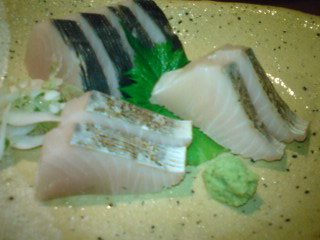
A typical example of their originality is the delicious sashimi we were offered, the Missus and I:
“Kan Sawara”: Young cod caught in the coldest time of the year in Suruga Bay off Shizuoka. They had found only enough for one day. Very firm flesh for a fish, but with a very soft bite and a taste that would have Tokyoites take the first train!

uzu-3

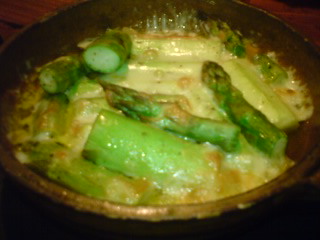
They also offer plenty of variety to please European and American palates such as the above green asparaguses (large specimens grown locally) and mozzarella gratin!

uzu-4

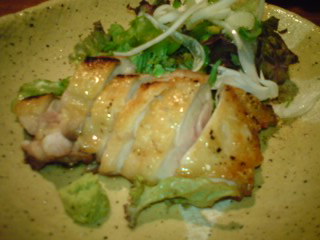
“Shamo Chicken”/Chicken comparable to the Bresse chicken in France, grilled to perfection, with a crispy skin and so tender flesh, and served with grated fresh wasabi!

uzu-5

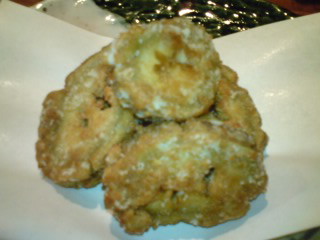
Vegans and vegetarians should not worry. There is plenty for them, such as this very unusual giant burdock root/”Oura Gobo” grown organically at the foot of Mount Fuji and deep-fried with a light cornstarch coating. Very satisfying bite and delicious!

uzu-6

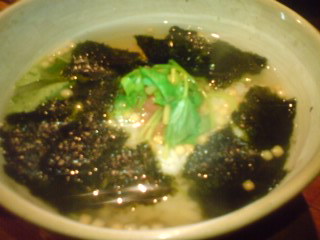
Also try their “O-cha-zuke”/rice in hot tea. Great hot vegan/vegetarian fare in Winter!

uzu-10

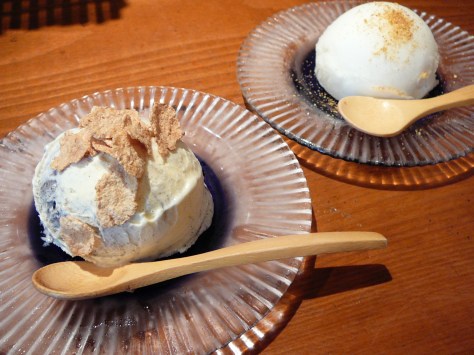
Yes, yes, they have desserts!
You must try their fabulous home-made ice-creams and sherbets!

Will visit them soon again!

UZU
Shizuoka City, Otowa-cho, 3-18
Tel.: 054-249-6262
Business hours: 17:00=23:00
Closed on Mondays and first Tuesday
Reservations recommended
Credit cards OK
HOMEPAGE (Japanese)

Please check the new postings at:
sake, shochu and sushi

—————————————-
日本語のブログ
—————————————-

Vegetarian Japanese Cuisine: Fried Tofu and Vegetables

fried-tofu-vegetables
Pic kindly upgraded by Jay Gustafson!

The other night, the Missus thought that some healthy food was in order, that is as much for herself as for me, what with her drinking wine and me savouring my Japanese sake!

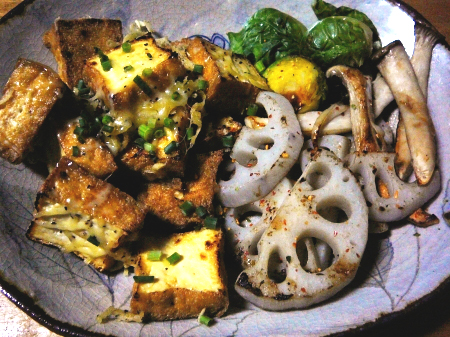
She used already deep-fried tofu cubes called “nama-age” bought at the nearby supermarket, cut them to bite-size, saute them on a non-stick frypan as they were (no need for oil) with a liberal amount of pizza cheese and served them with a good measure of freshly chopped thin leeks. All the while on another pan she fried slightly boiled renkon/lotus roots slices with eringi mushrooms cut lengthwise and half-cut Brussels sprouts with some olive oil, a litle salt, pepper and a spicy seasoning mix.
Once ready she added themhot on the same plate.

So simple and tasty!

Please check the new postings at:
sake, shochu and sushi

—————————————-
日本語のブログ
—————————————-
Japanese Cuisine: “Zensai”/Hors d’Oeuvres

zensai-09-02-04

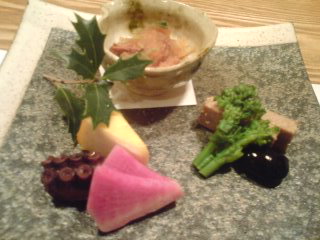
Good Japanese Cuisine Restaurants in this country have a way to encourage you to eat and ord by serving “Zensai”, or Hors d’Oeuvres with your first drink. Whereas it can be mediocre at the best in most establishments, it becomes a real treat at Tomii, one of my favourite “Nihon Ryouri”?Japanese Cuisine restaurants in Shizuoka City!

This is what I was served last night as I took a break from work:

-Hotate Kainashira Daikon Oroshi/in the small pot, cooked scallops and served cold with grated daikon and sauce.
-Na no Hana/Rape flowers atop:
-Tori no Matsukazekaze Yaki/Japanese-style Chicken Terrine
-Fuku Mame/ a large sweet black bean
-Aka kabu/Red Turnip atop Tako/Simmered Octopus and in front of Uni Shinjo Take/steamed fish paste coated with sea urchin sauce

I wouldn’t mind dining on s eries of them!

TOMII
Shizuoka City, Aoi Ku, Tokiwa-cho, 1-2-7, Tomii Bldg, 1F
Tel.: 054-274-0666
Business hours: 17:00~22:00
Closed on Sundays
HOMEPAGE (Japanese)


The Japan Blog List

Please check the new postings at:
sake, shochu and sushi

—————————————-
日本語のブログ
—————————————-