Tag Archives: 美食

French Cake by Bernard Heberle: Tarte aux Figues/Fig Tart

FIGUES-HEBERLE

My good French friend, Bernard Heberle, a native from Alsace in France and plying his trade as a patissier in Hamamatsu City, has just sent me his last creation:

Tart aux Figues/Fig Tart!

In his own words:
“Voici une tarte de saison , la combinaison de figue et de framboise sur un fond de pâte sucrée a l’amande régulée par une douce crème pâtissière , un vrai mélange de saveur et de parfum avec une sensation croustillante et mielleuse a la fois.”

“Here is a seasonal tart. The fig and raspberry combination on an almond pâte sucrée is enhanced by a soft crème pâtissière/custard. A true mixture of savours and perfume with a crusty and honey sensation.”

Abondance
Address: Hamamatsu Shi, Sumiyoshi, 2-14-27 (in front of Seirei Hospital)
Tel.: 053-4738400
Fax: 053-4738401
Opening hours: 10:00~20:00. Closed on Tuesdays.
Homepage

Please check the new postings at:
sake, shochu and sushi

—————————————-
日本語のブログ
—————————————-

Tonkatsu Recipes 2: Katsudon

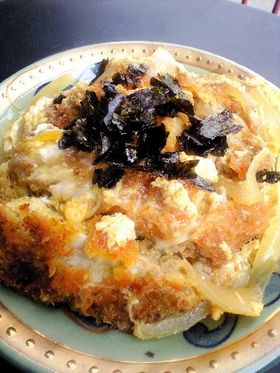
TONKATSU-KATSUDON-3

Katsudon is the favorite dish of famous Japanese baseball players such as the Yankees’ Hideki Matsui. In hard-boiled Japanese films, it is a dish served to villains under police interrogation!

If you have grasped the recipe for tonkatsu and oyakodon, it is pretty easy to make.

Here is a variation very popular in Japanese homesteads:

INGREDIENTS: For 4 people

-Tonkatsu:
Pork cuts: 4
Black pepper: to taste
Flour: 2~3 tablespoons
Egg: 1
Breadcrumbs/Panko: 1~2 cups
Frying oil

-Soup Stock:
Sugar: 1 tablespoon
Jaoanese sake: 50 ml
Sweet sake/Mirin: 50 ml
Soy sauce: 50 ml
Dashi (or soup stock): 100 ml

-Others:
Onion: 1 large
Sesame oil: 1 tablespoon
Steamed rice: enough for 4 servings
Eggs: 4~5
Trefoil or other leaf vegetables (including thin leeks,…): chopped, to taste
Dry seaweed/Nori: Finely cut, to taste

RECIPE:

KATSUDON-RECIPE-1

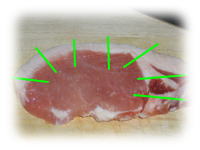
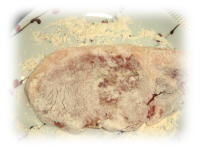
Make shallow cuts every 3~4 cm along the rim of the pork cuts (to prevent thme from bending or contracting). Sprinkle with black pepper, Roll in flour, then egg and last in breadcrumbs like in normal tonkatsu recipe.

KATSUDON-RECIPE-2

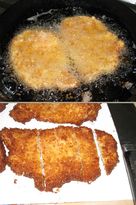
Deep-fry at 170~180 degrees Celsius.
Fry until breadcrumbs have become solid. Only then you may manipulate the tonkarsu and turn it over inside the oil.
Once cooked, cut it in serving size slices when still hot.

KATSUDON-RECIPE-3

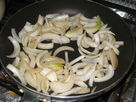
Cut the onion in half first, then into about 5 mm thick slices. Fry in sesame oil until they become translucent.
During that time, pour sake and mirin in a small pan and bring to boil. Add sugar, soy sauce and dashi. Bring to boil.

KATSUDON-RECIPE-4

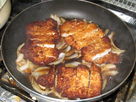
Pour soup on onion and bring to boil.
Drop in allthe cut tonkatsu and cook for a couple of minutes.

KATSUDON-RECIPE-5

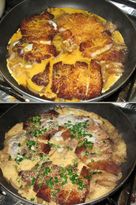
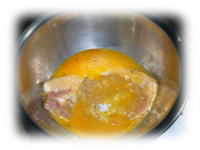
Lower fire a little so that the soup does not boil. Pour the eggs well-beaten and add trefoil. Cover and cook on a medium fire for about a minute.
Eggs should be cooked on top but still half-cooked under. Make sure the eggs fill the spaces betwen the pork cuts.

KATSUDON-RECIPE-6

Fill each bowl with steamed rice and cover each with tonkatsu and omelette. Pour the left over soup over the top. Add dry seaweed on top and serve!

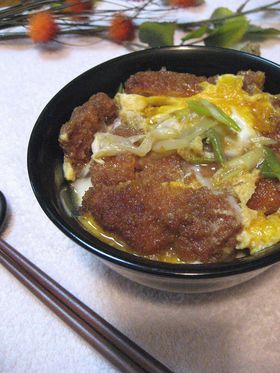
OTHER KATSUDON SAMPLES:

TONKATSU-KATSUDON-1

TONKATSU-KATSUDON-2

Please check the new postings at:
sake, shochu and sushi

—————————————-
日本語のブログ
—————————————-

French Sweets: Salted Butter & Ginger Bread Caramels

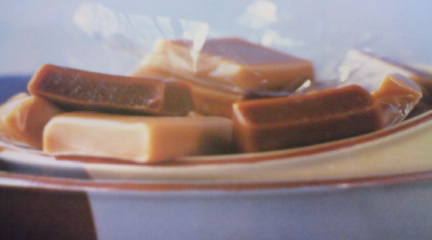
CARAMEL

Who does not like caramels?
Of course, there are many varieties depenfing on taste, texture and countries of origin.
My preferences lean towards the soft ones with a special taste.
These two caramels make use of ingredients from two different regions: Salted butter/Beurre sale from Bretagne/Brittany or Normandie/Normandie and Ginger bread/Pain d’epices from Bourgogne/Burgundy!

INGREDIENTS: ~35 caramels

-Salted butter caramels:
Fresh cream: 500g
Sugar: 375 g
Glucose syrup: 375 g
Salted butter: 200 g

-Ginger bread Caramels:
Fresh cream: 500
Good quality ginger bread: 100 g
Sugar: 375 g
Glucose syrup: 350 g
Fresh vanilla pod: 1
Salted butter: 100 g

-Utensils:
Thermometer
Thick bottom pan (middle size)
30 cm square mold for caramels

RECIPE:

-First prepare the salted butter caramels:

Line a mold with baking paper
In a thick bottom pan mix the glucose syrup and the sugar.Heat on a medium low fire to obtain a brown caramel.
Take off fire.
Add salted butter. Mix well. Add fresh cream. Mix well.
Put the pan back on the fire.
Whisking/stirring all the time, heat the mixture up to 180 degrees Celsius.
Cook for two more minutes and pour mixture inside mold.
Cut caramels with a saw-style knife before they have completely cooled down.
Wrap them separately/individually inside small thin jam cellophane paper.

-Secondly, prepare the ginger bread caramels:

Mix the fresh cram and the (crumbled) ginger bread in a bowl.
Cut the vanilla pod legthwise and take out the seeds.
In a thick bottom pan mix the sugar, glucose syrup, vanilla seeds and the ginger bread cream.
Stirring all the time heat the mixture uo to 180 degrees Celsius.
Add butter and mix.
Cook for two more minutes and pour mixture inside mold.
Cut caramels with a saw-style knife before they have completely cooled down.
Wrap them separately/individually inside small thin jam cellophane paper.

NOTE:
To obtain soft caramels do not overcook them.

Please check the new postings at:
sake, shochu and sushi

—————————————-
日本語のブログ
—————————————-

Tonkatsu Recipes 1: Basic Recipe

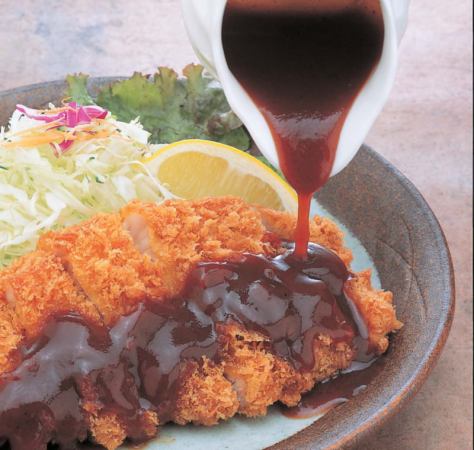
TONKATSU-PH

Tonkatsu, if properly organized, is not difficult to cook or prepare.
Here is the first of a series of recipes you easily accomodate to your taste and preferences:

Tonkatsu Basic Recipe:

INGREDIENTS: For one person

-Pork cutlet: one large, 1~2 cm thick. Choose good quality with as little fat as possible, although some around the rim is welcome.
-Flour: 2 tablespoons
-Black pepper: to taste:
-Salt: to taste
-Nutmeg: a pinch (you may use other spices of course, including chili pepper!)
-Egg: 1 large
-Fresh breadcrumbs (if unavailable, use dry breadcrumbs or panko): half a cup
-Deep-fry oil (as fresh as possible!)
-Cabbage (as much as you want, finley shredded)
-Sesame powder/ground sesame seeds: 1 tablespoon
-Tonkatsu sauce: 2 large tablespoons (easily found in markets. You can of course make your own with worcestershire sauce, ketchup, mustard and so on!)

RECIPE:

TONKATSU-RECIPE-1

-Make a shallow incision across the rim every 3~4 cm. It is an important step as it will prevent the meat from contracting or bending!

TONKATSU-RECIPE-2

-In a bowl mix flour, pepper, salt and spices. One can add curry mix powder there, too!

TONKATSU-RECIPE-3

-Cover both side of the pork cut with the flour mixture. Take care not to form lumps of flour.
Trick: Try to use only one hand to come in contact with the food, while the other hand stays dry and can manipulate utensils!

TONKATSU-RECIPE-4

-In a different bowl beat the egg. Preferably do this ahead of everything.
Dip the floured pork cut into the beaten egg.

TONKATSU-RECIPE-5

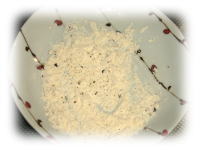
-Pour the breadcrumbs on a plate and spread it evenly. Thisis also better done before you start anything!
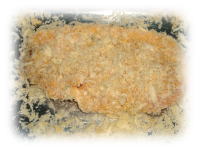
Lay the pork cut on the breadcrumbs and gently press. Cover the top side with breadcrumbs, too and pat gently to help the breadcrumbs adhere. Don’t be afraid of coating with a lot of breadcrumbs!

TONKATSU-RECIPE-6

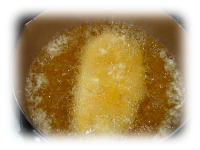
-Heta the oil to 170 degrees Celsius. Drop a little breadcrumb in the oil to check if it’s hot enough. It should start frying with bubbles right away. Drop the pork cut gently into the oil to avoid any accident.

TONKATSU-RECIPE-7

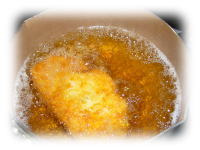
-Turn the pork cut over for even frying as it will rise to the surface. Do it as gently as possible either with long wooden chopsticks of frying tongs.

TONKATSU-RECIPE-8

-On a serving plate lay a bed of shredded cabbage decorated with a little parsley and a few lemon slices. Provide some strong mustard if wanted.
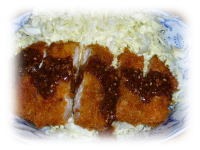
Take pork cut out of the oil and lay on a grill for a few seconds to take off excess oil. Transfer onto a working table and cut into strips.
Place it above or beside shredded cabbage in the right order so as to remind you of the original shape.

Please check the new postings at:
sake, shochu and sushi

—————————————-
日本語のブログ
—————————————-

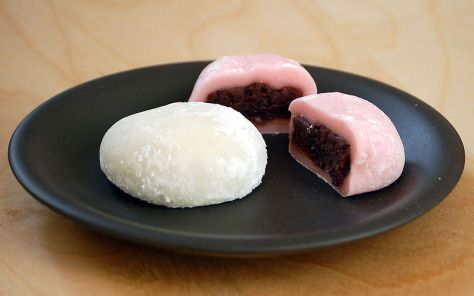
Japanese Cakes-Wagashi 15: Daifuku

DAIFUKU-1

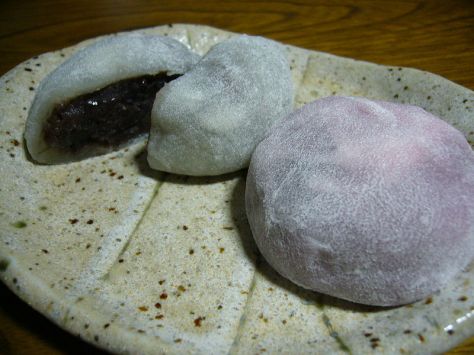
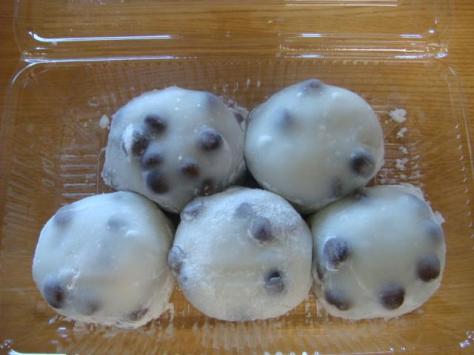
Daifukumochi (大福餅), or Daifuku (大福) (literally “great luck”), is a Japanese confection consisting of a small round mochi (glutinous rice cake) stuffed with sweet filling, most commonly anko, sweetened red bean paste made from azuki beans.

The traditional daifuku, like all Wagashi are vegan in concept.

But Daifuku comes in many varieties.
The most common is white, pale green or pale pink colored mochi filled with anko.
These come in two sizes, one approximately the diameter of a half-dollar coin, the other palm-sized.
Some versions contain whole pieces of fruit, mixtures of fruit and anko or crushed melon paste.
Nearly all daifuku are covered in a fine layer of corn or taro starch to keep them from sticking to each other, or to the fingers. Some are covered with confectioner’s sugar or cocoa.

DAIFUKU-2

HISTORY:
Daifuku were originally called Harabuto mochi (腹太餅) (belly thick rice cake) because of its filling nature. Later the name was changed to Daifuku mochi (大腹餅) (big belly rice cake). Since the pronunciation of Fuku (腹) (belly) and Fuku (福) (luck) is the same in Japanese, the name was further changed to Daifuku mochi (大福餅) (great luck rice cake), a bringer of good luck. By the end of the 18th century, Daifuku were gaining popularity and people began eating them toasted. They were also used for gifts in ceremonial occasions

VATIETIES:

DAIFUKU-3
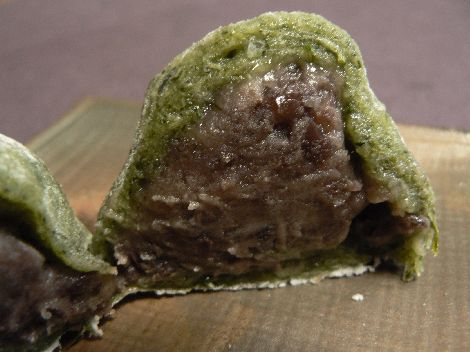
Yomogi daifuku (蓬大福)
A version made with kusa mochi (草餅), which is mochi flavored with mugwort.

DAIFUKU-4
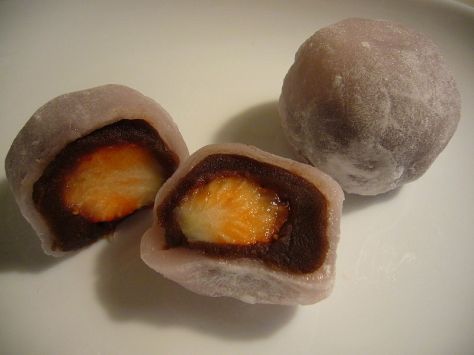
Ichigo daifuku (イチゴ大福)
A variation containing strawberry and sweet filling, most commonly anko, inside a small round mochi. Creams are sometimes used for sweet filling. Because it contains strawberry, it is usually eaten during the spring time. It was invented in the 1980s. Many patisseries claim to have invented the confection, so its exact origin is vague.

DAIFUKU-5
Mame daifuku (豆大福)
Another variation made of mochi mixed with red peas or soy beans.

Please check the new postings at:
sake, shochu and sushi

—————————————-
日本語のブログ
—————————————-

French Restaurant: Tetsuya SUGIMOTO (the approach)

TETSUYA-SUGIMOTO-12

Service: excellent and very friendly
Facilities: great washroom, great cleanliness overall
Prices: reasonable, good value.
Strong points: Very fresh local ingredients extensively used. Seasonal ingredients only.

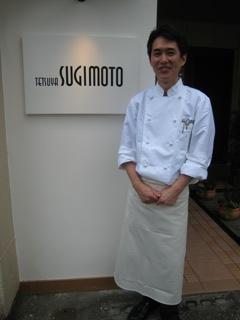
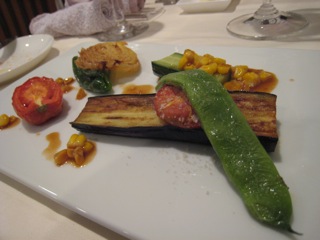
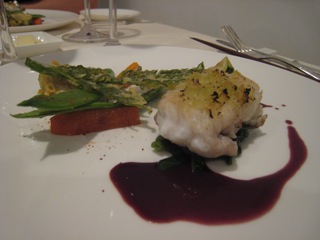
Tetsuya Sugimoto, former owner of Sugimoto Restaurant, has finally come back to us after venturing into unchartered waters to open his new restaurant, Tetsuya SUGIMOTO, in shizuoka City for the great pleasure of his many fans.
I personally consider him, and many friends agree, to be the best French in town and probably in the Prefecture.
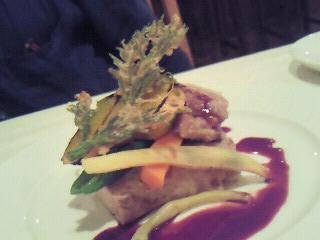
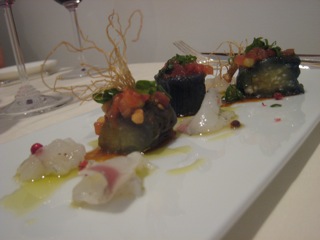
As he has only just started again, the menu is still very much under study and is bound to vastly expand. I will only feature the dishes that I and a friend of mine tasted, as well as those that my other friend Marcus took during two quick meals.
A bigger one is coming next week, so stay tuned.

My Pictures:

TETSUYA-SUGIMOTO-1

TETSUYA-SUGIMOTO-2

TETSUYA-SUGIMOTO-3

TETSUYA-SUGIMOTO-4

TETSUYA-SUGIMOTO-5

TETSUYA-SUGIMOTO-6

TETSUYA-SUGIMOTO-7

————–
Marcus’ pics:

TETSUYA-SUGIMOTO-8

TETSUYA-SUGIMOTO-9

TETSUYA-SUGIMOTO-10

TETSUYA-SUGIMOTO-11

Tetsuya SUGIMOTO
420-0038 Shizuoka Shi, Aoi Ku, Umeya, 2-13, 1F
Tel./Fax: 054-251-3051
open for lunch and dinner
Closed on Wednesdays

Please check the new postings at:
sake, shochu and sushi

—————————————-
日本語のブログ
—————————————-

Italian Restaurant: Contorno

CONTORNO-3

Service: excellent and very friendly
Facilities: great washroom, great cleanliness overall
Prices: very reasonable, good value.
Strong points: Very fresh local ingredients extensively used.

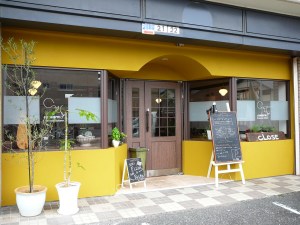
Contorno is the new Italian restaurant in fashion in Shizuoka. It was open in Spring this year by a former chef working for Hana Hana, another remarkable French/Italian restaurant in Shizuoka City.
The proximity of Contorno to the seashore and harbour of Mochimune means access to gereat and fresh seafood.
It makes an extensive usage of local vegetables, fish and meat whenever possible, and that only is a good enough reason to visit it!
Moreover it is open on Sundays and has its own car park.
Anyway the other day, a very hot Sunday, I decided to make a trial visit.

CONTORNO-1

It certainly looked charming from the outside.
The welcome is warm if a bit shy.
As it was lunch, there was a choice of set menus and side dishes.

CONTORNO-2

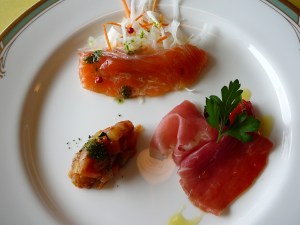
The Itlian smoked ham and other tidbits served as an appetizer with the first drink were surprisingly of very high quality!

CONTORNO-3

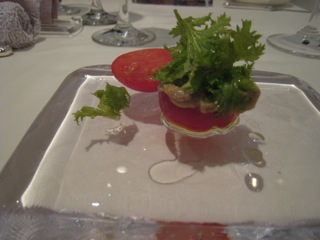
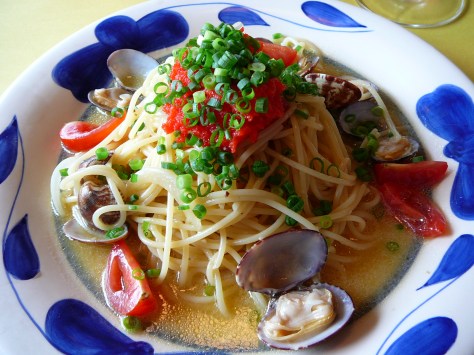
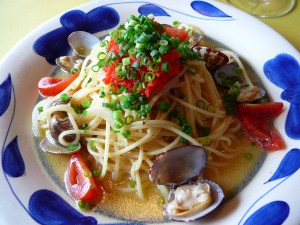
My other half had this superlative cold pasta seafood salad while I was having roast guinea fowl (sorry, lost the pic!). Now all ingredients are of perfect freshness. As for the taste, the dishes were remarkable for their simplicity and great balance in perfect accordance with the season!

CONTORNO-4

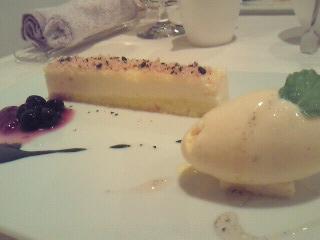
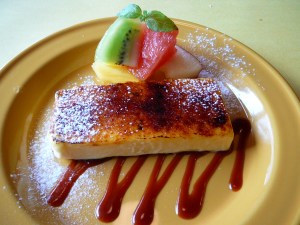
Italian restaurants, however good, are not always renown for their desserts. It was certainly a pleasnat surprise to discover Contorno’s creations:
Above, the Catalan Creme Brulee might not be Italian, but I know a lot of people would not complain and visit the restaurant for that single dessert!

CONTORNO-5

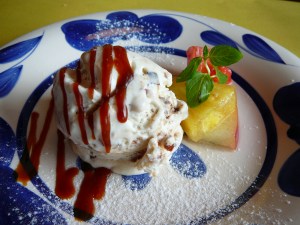
Now, the Sicilian Dry fruit and nuts Sicilian ice cream was very Italian, and I can tell I was happy leaving my half eating (most of) the creme brulee!

Conclusion?
I must the lace for dinner! Full stop!

CONTORNO
421-0122 Shizuoka City, Suruga Ku, Mochimune, 5-1-10, Sunrise Mochimune (5 minutes walk from Mochimune Station)
Tel.: 054-2565877
Opening hours: 11:30~14:30, 17:00~21:30
Closed on Wednesdays

Please check the new postings at:
sake, shochu and sushi

—————————————-
日本語のブログ
—————————————-

Bryan Baird’s Newsletter (2009/20)

Baird Beer & Taproom Events Bulletin 2009 #20
bryan-sayuri.gif

Dear Taproom Friend & Baird Beer Enthusiast:

The heat and langour that typify the “dog days” of August are waning; autumn is in the air. Therefore, we are in a rush to release a first-time Baird Beer end-of-summer seasonal brew: Dog Days Golden Ale.

*Dog Days Golden Ale (ABV 5.3%):

Zesty and effervescent, Dog Days Golden Ale is lightly hopped (20 BUs) with three American varieties: Galena, Perle and Vanguard. The light kiss of hop bitterness is just sufficient to balance the soft honey-biscuit flavor of the simple malt bill (Maris Otter, Carahell, Caramel Wheat). A sprite floral hop flavor and aroma (dry-hopping with Vanguard) remind the imbiber that the end of summer is near. Let’s enjoy what’s left of it!

Dog Days Golden Ale will be available on draught at our Taproom pubs beginning Wednesday, August 26 as well as at other Baird Beer retailing pubs and restaurants in Japan. 633 ml bottles can be purchased direct from the brewery as well as through the fine family of Sakaya which retail Baird Beer in Japan.

As craft brewers, we enjoy autumn every bit as much as we do summer. In anticipation, and celebration, of the onset of fall, we are releasing (rather, re-releasing) a unique style of dark lager that we have been conditioning since its original release in April 2008: Baird Pacific Porter.

*Baird Pacific Porter (ABV 6.6%):

This is the Baird Beer version of a Baltic Porter (a strong dark beer fermented with lager yeast that has enjoyed historical popularity in Baltic region countries). The color is deep copper-brown. The aroma is soft, round and fruity with a hint of chocolate. The body is chewy but not thick. Subtly sweet flavors of caramel and milk chocolate are highlighted magnificently by an underbelly of nut and pit fruit character. The overall impression is one of smoothness and balance.

Limited quantities of Pacific Porter (including 360 ml bottles) remain and will be available on a first-come, first-serve basis.

Cheers,
Bryan Baird

Baird Brewing Company
Numazu, Japan
HOMEPAGE


The Japan Blog List

———————————
Must-see tasting websites:
-Sake: Tokyo Through The Drinking Glass, Tokyo Foodcast, Urban Sake, Sake World
-Wine: Palate To Pen, Warren Bobrow, Cellar Tours
-Beer: Good Beer & Country Boys, Another Pint, Please!
-Japanese Pottery to enjoy your favourite drinks: Yellin Yakimono Gallery
——————————–
Please check the new postings at:
sake, shochu and sushi

—————————————-
日本語のブログ
—————————————-

Japanese Cake: Taiyaki/”Baked Seabream”

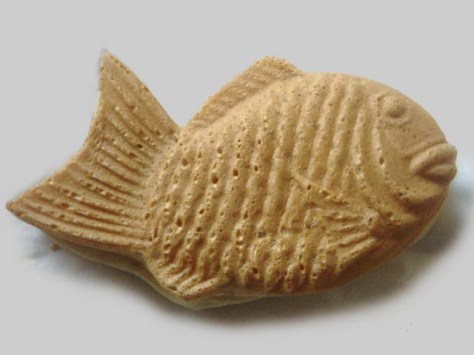
TAIYAKI-1

There are may Japanese traditional cakes making their way abroad these days.
But have ever heard of “Taiyaki”?

Frst of all, do not confuse it “Takoyaki”!

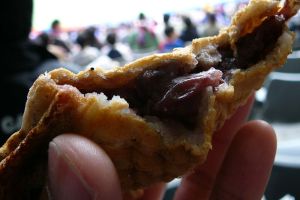
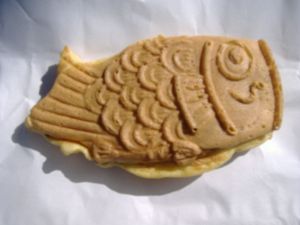
Taiyaki (たい焼き, , literally “baked seabream”) is a Japanese fish-shaped cake. The most common filling is red bean paste that is made from sweetened azuki beans.
Other common fillings may be custard, chocolate, or cheese. Some shops even sell taiyaki with okonomiyaki, gyoza filling, or a sausage inside.

TAIYAKI-2

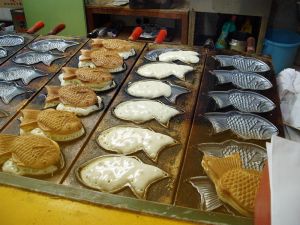
Taiyaki is made using regular pancake or waffle batter. The batter is poured into a fish-shaped mold for each side. The filling is then put on one side and the mold is closed. It is then cooked on both sides until golden brown.

TAIYAKI-3

Taiyaki was first baked by a sweet shop Naniwaya in Azabu, Tokyo in 1909, and now can be found all over Japan, especially at food courts of supermarkets and Japanese festivals (祭, matsuri) and other Asian countries (for example Korea, but they call it buunga baang).

They are similar to imagawayaki (今川焼き?, which are thick round cakes also filled with sweet azuki bean paste or custard.

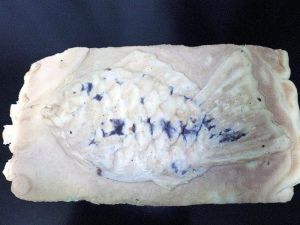
They come in different shapes according to the occasion or/and area:

TAIYAKI-4

In Fukushima Prefecture where the Aquamarine Fukushima is located they sell taiyaki made from a mold reminscent of the famed coelacanth!

TAIYAKI-5

In some areas they make a taiyaki in the shape of a carp floater to commemorate Boys Day on May 5th!

TAIYAKI-6

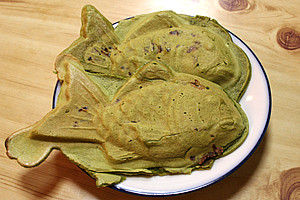
As for Shizuoka Prefecture, people in Ieyama along the Oigawa Railway make a taiyaki with matcha tea!

Please check the new postings at:
sake, shochu and sushi

—————————————-
日本語のブログ
—————————————-

Japanese Cuisine: Ankake Tofu Kani Chawanmushi-Tofu & Crab Chawanmushi with Sweet & Sour Sauce

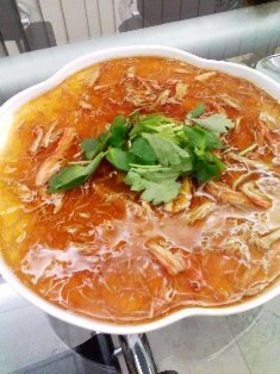
TOFU-CHAWANMUSHI

Another easy recipe for the Tofu Tribe, (Terecita, Elin, Jenn and Jennifer !
This time is a tofu accomodated as Chawanmushi, a very popular dish in Japan!

INGREDIENTS: For 4 people

1)
Tofu: 450 g (fine texture/kinu dofu)
Eggs: 2
Crab: 1 small can/shredded

2) For the chawanmushi
Dashi: 2 cups (konbu dashi or fish dashi)
Salt: 1 quarter of a teaspoon
Japanese sake: 1 tablespoon

3) For the sweet & sour sauce
Dashi: half a cup
Soy sauce: 1 tablespoon
Mirin/sweet sake: 1 tablespoon
Japanese sake: 1 tablespoon
Cornstarch dissolved in water: according to preferences
Trefoil (or other leaves) for decoration: according to preferences

RECIPE:

-Chill the dashi. Beat eggs into fine omelette. Add dashi, salt and Japanese sake. Mix well.

-Use a steamer for the chawanmushi. Chawan means tea bowl/cup and mushi means steaming!

-Fill four cups with one fourth of the tofu, pouring it into the cups little by little with a spoon. Pour one fourth of the egss dashi mixture on top.
Cover each cup with a piece of cellophane paper. Steam for 2 minutes on strong fire, then 20 minutes on a low fire.

-While the chawanmushi is steaming, prepare the sweet and sour sauce.
In a small pan, pour the dashi, soy sauce, mirin, Japanese sake and bring to boil.
Shred the crab and add to sauce.
Add cornstarch and mix well until sauce is smooth. Take off fire.
Bear in mind that the sauce must be ready at the moment the chawanmushi is completely steamed, not before!

-Pour an equal amount of sauce on each chawanmushi. Decorate with trefoil and serve!

NOTE:
The chawanmushi taste is a bit weak, while the taste of the sweet and sour taste is trong, thus attaining the right balance!

Please check the new postings at:
sake, shochu and sushi

—————————————-
日本語のブログ
—————————————-

Japanese Cuisine: Korokke-Croquettes

KOROKKE-1

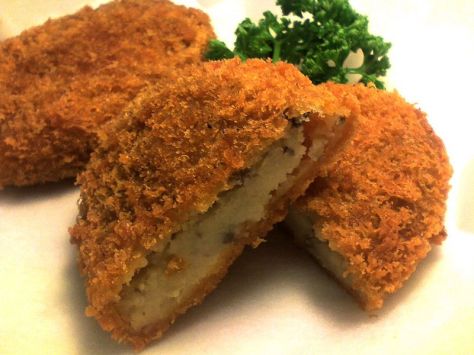
Korokke (Japanese: コロッケ) is the Japanese name for a deep fried dish originally related to a French dish, the croquette. It is also said thai it comes from the Dutch, Kroket.
It was introduced in the early 1900s. This dish is also popular in South Korea where it is typically sold in bakeries.

Korokke is made by mixing cooked chopped meat or seafood, vegetables with mashed potato or white sauce, or both, rolling it in wheat flour, eggs, and breadcrumbs/panko, then deep frying this until brown (fox colour in Japanese!) on the outside.
Korokke are usually shaped like flat patties. They are generally called ingredient + Korokke. For example, those using beef would be called beef (gyu) korokke, those using shrimp, ebi korokke, etc.. Those using white sauce may also be called Cream Korokke.

KOROKKE-2

Korokke are often served with worcestershire sauce and shredded cabbage.

Korokke can be eaten as is, and are sometimes sold wrapped in paper at stalls. They may also be used as a topping for other dishes. When sandwiched between a piece of bread, they are be called “Korokke pan” (pan being bread in Japanese).

Korrokke was the most sold single frozen food in 2007 and has been among the top three ever since.

Please check the new postings at:
sake, shochu and sushi

—————————————-
日本語のブログ
—————————————-

Japanese Cuisine: Tonkatsu-The Basics

TONKATSU-1

Tonkatsu (豚カツ, とんかつ, or トンカツ, pork cutlet), invented in the late 19th century, is a popular dish in Japan. It consists of a breaded (breadcrums/panko), pork cutlet one to two centimeters thick first deep-fried whole then sliced into bite-sized pieces, generally served with shredded cabbage and/or miso soup. Either a pork fillet (ヒレ, hire) or pork loin (ロース, rōsu) cut may be used; the meat is usually salted, peppered and dipped in a mixture of flour, beaten egg and panko (Japanese breadcrumbs) before being deep fried.
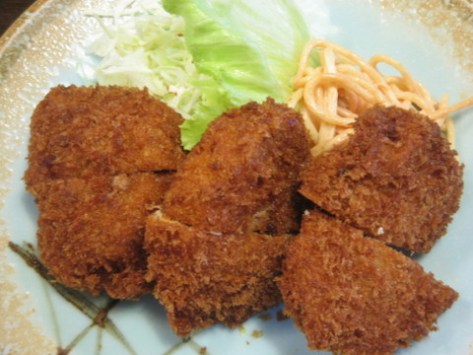
TONKATSU-HIREKATSU
Hire Katsu or high quality pork fillet served and cut into one bite size.

It was originally considered a type of yōshoku/洋食—Japanese versions of European schnitzel invented in the late 1800s and early 1900s—and was called katsu-retto (“cutlet”) or simply katsu. Early katsu-retsu was usually beef; the pork version, similar to today’s tonkatsu, is said to have been first served in 1890 in a western food restaurant in Ginza, Tokyo. The term “tonkatsu” (“pork katsu”) was coined in the 1930s.

In Korea, this dish is known as donkkaseu (돈까스), a simple transliteration of the Japanese word to Korean.
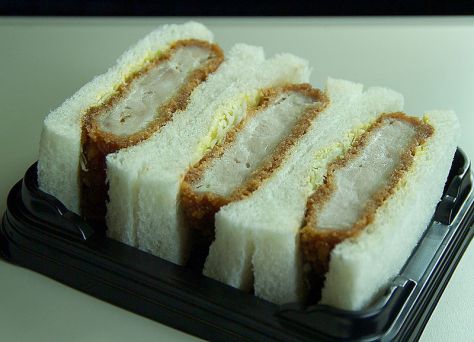
TONKATSU-KATSUSANDO
“Katsu sando/Tonkatsu Sandwich” as served in Okinawa

Variations
Tonkatsu has Japanized over the years more so than other yōshoku and is today usually served with rice, miso soup and tsukemono/pickles in the style of washoku/和食 (traditional Japanese food) and eaten with chopsticks. Recently, some establishments have taken to serving tonkatsu with the more traditional Japanese grated daikon and ponzu instead of tonkatsu sauce.
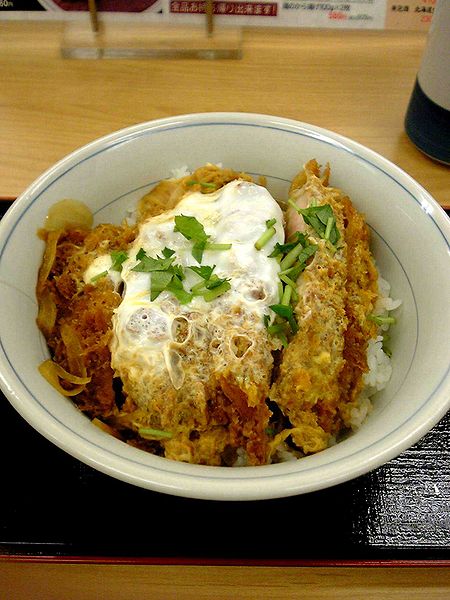
TONKATSU-KATSUDON
Katsudon

Tonkatsu is also popular as a sandwich filling (katsu sando) or served on Japanese curry (katsu karē). It is sometimes served with egg on a big bowl of rice as katsudon—an informal one-bowl lunchtime dish.

Regardless of presentation, tonkatsu is most commonly eaten with a type of thick Japanese Worcestershire sauce that uses pureed apples as a principal ingredient and is called tonkatsu sauce (tonkatsu sōsu) (トンカツソース), often simply known as sōsu (“sauce”), and often with a bit of spicy yellow karashi (Japanese mustard) and perhaps a slice of lemon. Some people like to use soy sauce instead. In Nagoya and surrounding areas, miso katsu—tonkatsu eaten with a miso-based sauce—is a specialty.

Variations on tonkatsu may be made by sandwiching an ingredient like cheese or shiso leaf between the meat, and then breading and frying. For the calorie conscious, konnyaku is sometimes sandwiched between the meat. And in Waseda, Tokyo, a restaurant serves a tonkatsu with a bar of chocolate sandwiched inside, sometimes compared to a Western creation: the deep-fried Mars Bar.

There are several variations to tonkatsu that use alternatives to pork:

Chicken katsu (チキンカツ) is a similar dish, using chicken instead of pork. This variant often appears in Hawaiian plate lunches.
Menchi katsu is a minced meat patty, breaded and deep fried.
Hamu katsu (ハムカツ “ham katsu”), a similar dish made from ham, is usually considered a budget alternative to tonkatsu.
Gyū katsu (牛カツ “beef katsu”), also known as bīfu katsu, is popular in the Kansai region around Osaka and Kobe.
Saengseonkkaseu (생선까스 “fish katsu”) is a Korean fish-cutlet modelled on the Japanese fry[citation needed].
Prices for a tonkatsu vary from 198 yen for a pre-cooked tonkatsu from a supermarket to over 5,000 yen in an expensive restaurant. The finest tonkatsu is said[citation needed] to be made from kurobuta (black pig) from Kagoshima Prefecture in southern Japan

Please check the new postings at:
sake, shochu and sushi

—————————————-
日本語のブログ
—————————————-

French Dessert: Glace aux Mendiants/Beggars’ Ice Cream

BEGGARS

“Beggars” in French has two meanings:
1) hobo, mendicant, …
2) it is the name given to dry fruit and grains used in desserts and cakes.
It is a tradition for example to make a tart called the Beggars Tart with 7 different kinds of dry fruit and nuts in Winter.

This is why why this ice-cream is called “Beggars’ Ice Cream”!

INGREDIENTS: 4 persons

-Milk: 250 ml
-Thyme leaves: 1 tablespoon
-Sugar: 90 g
-Powder milk: 40 g
-Egg: 1
-Whole fresh cream: 120 ml

-Marrons glaces: 75 g
-Preserved orange peels: 5o g
-Unsalted pistachio: 15 g

RECIPE:

-In a large pan bring the milk to boil and let the thyme infuse into it.

-In a large bowl mix the sugar and the powder milk.

-Separate egg yolks and whites.
In a deep bowl beat the egg yolks with a whisker with a little lukewarm nilk. Add the sugar and milk powder and mix. Add the rest of the milk.
Pour back into the large pan and mix with a spatula over a medium low fire.

-When the cream has become homogeneous/smooth, take off the fire and pour back into the deep bowl. Le cool.

-When the cream has completely cooled down, add and mix in the fresh cream and leave in refrigerator for at least 20 minutes.

-Take the cream out and strain it to discard the thyme leaves.

-Switch the ice cream maker/ice cream freezer on. Pour in the cream and let it turn/work for 25 minutes. When the ice cream starts jellyfing add egg whites, marrons glaces, orange peels and pistachio.
Fill soft molds (to make ice-crams easy to unmold) with ice ceam and leave inside freezer until just before serving.

-Serve it decorated with small pieces of marrons glaces, orange peels and broken pistachio over a caramel tile!

Please check the new postings at:
sake, shochu and sushi

—————————————-
日本語のブログ
—————————————-
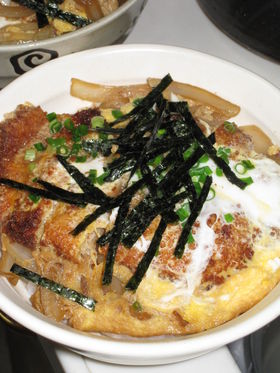
French Cuisine: Duck, Prunes & Hazlenuts Pound Cake

DUCK-CAKE

Pound Cakes should be all cakes. The recipe can be adapted for meat eaters into an eminently presentable dish!
Duck/Magret is an exceptionally easy to adapt meat in such a case.
Here is another easy French recipe with another log name (it is becoming a habit! LOL):

Cake aux Magrets de Canard, Pruneaux et Noisettes
Duck Breast, Prunes & Hazlenuts Pound Cake!

INGREDIENTS: for 4 persons

-Eggs: 3
-Flour: 150 g
-Baking powder: 3~4 g
-Sunflower Oil: 100 ml
-Unskimmed milk: 125 ml
-Gruyere/Emmental Cheese: 100 g (grated)
-Duck breast: 150 g
-Prunes (pitted): 80 g (roughly cut)
-Hazenuts (roughly broken): 30 g
-Salt: a pinch
-Pepper: 2 pinches

RECIPE:

-Preheat oven to 6/180 degrees Celsius

-Cut the duck breast in small enough pieces with their skin on. dry fry them (no oil or fat needed) on both sides 3 minutes each.
-In a big bowl or processor, mix the eggs, flour, baking powder. . Mix well. Add sunflower oil and milk. Mix well. Add cheese. Mix again.

-Add the duck, prunse and hazlenuts.
Pour the lot into a buttered pound cake mold and bake for 45 minutes.

NOTE:
-You could use rabbit instead of duck.
-Let cool down completely before taking it out the mold.

Drink a sweet white wine with it!

Please check the new postings at:
sake, shochu and sushi

—————————————-
日本語のブログ
—————————————-
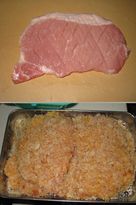
French Cuisine: Broad Beans, Parmegiano & Basil Clafoutis

BROAD-CLAFOUTIS

Clafoutis are not all desserts. The recipe can be easily adapted to vegetables and others. Living in Japan it is a bit reminiscent of tamagoyaki!
Here is another simple French recipe with a long name:
Clafoutis de Fevettes au Parmesan et Basilic
Broad Beans, Parmegiano & Basil Clafoutis!

INGREDIENTS: fro 4~6 persons

-Broad beans (choose them small): 500 g
-Eggs: 4
-Milk: 200 ml
-Fresh cream: 100 ml
-Grated Parmegiano Cheese: 70 g
-Flour: 2 tablespoons
-Sweet basil: a small bunch (finely chopped)
-Salt: a pinch
-Grated nutmeg: a pinch
-Freshly ground white pepper

RECIPE:

-Pre-heat oven to 160 degrees Celsius

-Drop the brad beans in a big pan of boiling salted water and cook for only a minute. Strain immediately and cool under running cold water. Drain again and put aside.

-In a large bowl break the eggs. Add milk and fresh cream. Strongly beat into an omelette.

-Add salt, flour, parmegiano, nutmeg, pepper and basil. Mix well. add brad beans.

-Butter the inside of a clafoutis dish.
Pour in the broad beans mixture.
Put inside oven immediately and bake for 35 minutes.

-Serve hot or cold with a roquette salad.

-Best appreciated with sparkling rose wine!

Please check the new postings at:
sake, shochu and sushi

—————————————-
日本語のブログ
—————————————-