Tag Archives: 美食

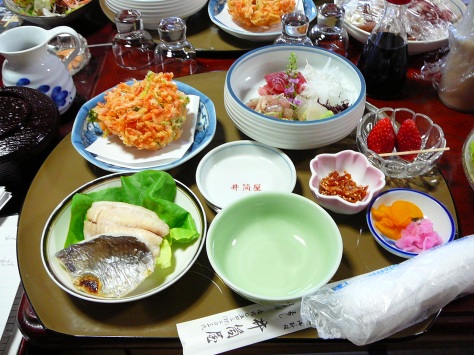
Japanese Seasonal Fish: Striped Horse mackerel/Shimaaji

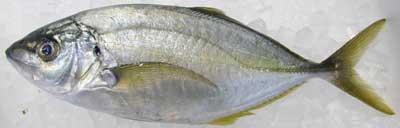
shimaaji-1

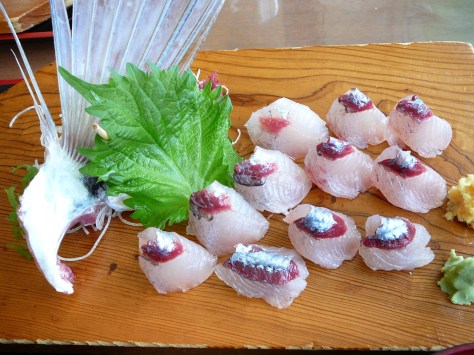
Shimaaji, or Striped Horsemackerel is one variety of Aji/Horsemackerel-Saurel.
Although the season is said to be in Summer, the taste varies little with the time of the year.
Striped Horsemackerel caught by anglers off the Izu Peninsula, Shizuoka Prefecture, are said to be the best in Japan.
It is known under the other names of Ookami, Kose and Katsuoaji.
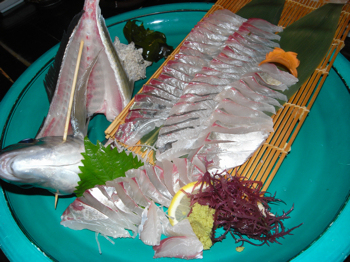
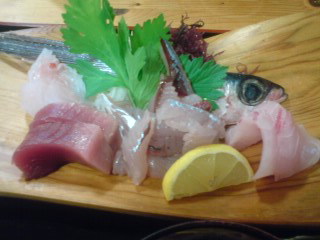
It is very popular as sashimi:

shimaaji-2

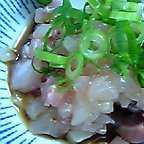
or as tataki (tartare), my favourite, with a dash of fresh grated ginger:
<a

shimaaji-3 shimaaji-3a

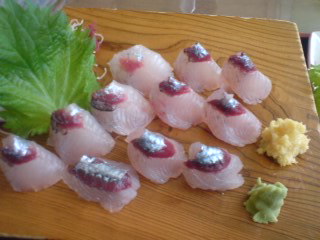
Of course, as a sushi, it has many lovers:

shimaaji-4

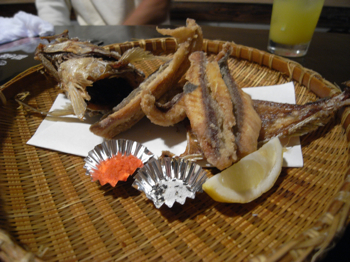
The best sushi restaurants will prepare the sashimi or sushi from live specimen swimming in their tanks and later serve the bones and head deep-fried. They will serve the whole fish deep-fried for the guests who are so keen on eating raw fish!

shimaaji-5

Recently, breeding the fish from their eggs off Chichijima Island has been successful, meaning more on our plates in the future!

Please check the new postings at:
sake, shochu and sushi

—————————————-
日本語のブログ
—————————————-

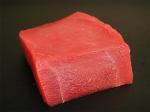
Tuna Species: Kindai Tuna/Kindai Maguro

kuromaguro.jpg

Following a kind request by my good Foodbuzz friend, Elizabeth, I decided to re-post an article on this particular tuna species to clear some misunderstandings and add new information!

“Kuromaguro” or Blue Fin Tuna has become almost a mythical fish all over the world to the point that non-Japanese refer to it by its Japanese name.

“Kuromaguro”, or Blue Fin Tuna (or Tunny) has many other names in Japanese: Honmaguro, Maguto,Meji,Yokowa, Shibi, Imoshii, Shibimaguro, Kuroshibi, and Hatsu!

The best are caught in Winter mainly in the seas off Kochi (Shikoku Island), Miyagi and Hokkaido Prefectures.
This variety is the most expensive and can reach astronomical prices, especially caught in Winter off Hokkaido.
Imported Kuromaguro usually reaches Japan frozen, but in recent years the fish has been successfully raised in semi-wild environments in Spain, Australia and Croatia and arrives in Japan fresh by plane.
Imports and sales of Kuromaguro are monopolised by Japanese trade associations, unless you are lucky enough to catch one (careful here, as poaching is a major offense in Japan!).
Between you and me, if you want to eat Kuromaguro sashimi, it might come cheaper if you do it while travelling in Spain!
Did you know that Japanese importers will fly to Spain and other countries just to check that the fish are bled properly?

Now “Kindai Maguro” (近/kin for “near/nearby” and 大/dai for “big”) is the name given Kuromaguro/Blue Fin Tuna entirely human-fed (I mean fed by humans, not fed with humans!LOL).
There is big “but”, though! Huma-fed does not mean human-raised.
Young tuna have first to be located, encircled with large nets, guided near a shore and then provided with food. What people forget is that the tuna gills are hard. If the fish cannot swim freely enough it will wither and eventually die. So Kindai Tuna is nothing less than wild tuna caught into a trap and raised inside it!

BUT GOOD NEWS!

Only last week, the Tokai Marine Studies University in Shimizu Ku, Shizuoka City (Shizuoka, Banzai!) has just announced that they have succeeded in raising Kuromaguro from the eggs! What is with the recent success by fish farmers in raising another variety of Kuromaguro in Kyushu, Specialist are confident that Japan will be able to actually export completely human-raised tuna in the foreseeable future!

———————
Related terms:

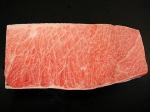
kuromaguro-otoro
Kuromaguro Otoro (fat part)

kuromaguro-chutoro
Kuromaguro Chutoro (semi-fat part)

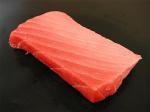
kuromaguro-akami
Kuromaguro Akami (lean part)

Please check the new postings at:
sake, shochu and sushi

—————————————-
日本語のブログ
—————————————-

Cheese Plate at gentil (5)

gentil-09-03-a

Last night I paid a belated visit to Gentil Restaurant In Shizuoka City in the company of two good friends to check and taste what was on offer at that nationally famous restaurant.

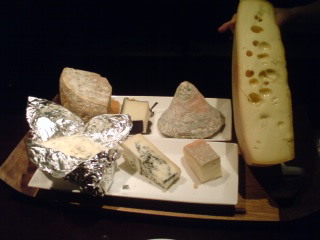
My good friend, Ms. Keiko Kubota, the only Japanese Cheese Sommelier to hold the title of compagnon d’Honneur de Taste Fromage came up with the tray of Cheeses she is currently maturing:

gentil-09-03-c

Front from left to right:
-Cone de Port Aubray (Goat Milk, Loire, France)
-2 year-old Chevre Noir (Goat’s Milk, Canada)
-10 year-old Red Cheddar (Cow’s Milk, Wisconsin, US. Yes, you read well!)
-Bleu de Sassenage (Cow’s Milk, Alpes, France)

Back from left to right:
-Talegio (Cow’s Milk, Piemonte, Italy)
-Gorgonzola Picante (Cow’s Milk, Piemonte, Italy)
-Gorgonzola Dolce (Cow’s Milk, Piemonte, Italy)

gentil-09-03-b

-10 year-old Red Cheddar (Cow’s Milk, Wisconsin, US. Yes, you read well!). A rarity!

gentil-09-03-d

Another rarity: look at the pic at the top of this posting. It is the large cheese “standing” on the right:
-“Hokkaido Shintoku”, semi-hard type from Hokkaido, Japan. Only served presently at Gentil!

gentil-09-03-e

We actually tasted all the cheese on the tray.
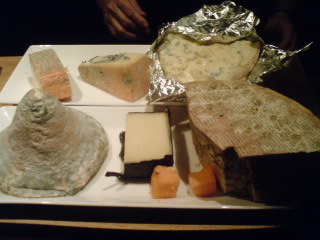
This particular dish offers:
-Cone de Port Aubray (Goat Milk, Loire, France), top
-Gorgonzola Picante (Cow’s Milk, Piemonte, Italy)
-2 year-old Chevre Noir (Goat’s Milk, Canada) Standing
-10 year-old Red Cheddar (Cow’s Milk, Wisconsin, US.)!
-Gorgonzola Dolce (Cow’s Milk, Piemonte, Italy) in the wooden spoon.

What did we drink with that?
Chateau Talbot from Bordeaux, and wines from Crozes-Hermitage and Bourgogne!

Restaurant Gentil
Address:420-0031 Shizuoka Shi, Gofuku-cho, 2-9-1, Gennan Kairaku building, 2F
Tel.: 054-2547655 (Reservations advisable)
Fax: 054-2210509
Opening hours: 12:00~14:00, 18:00~last orders for meals at 21:30. Bar time 18:00~23:30. Closed on Mondays.
Credit cards OK
Homepage (Japanese)


The Japan Blog List

Please check the new postings at:
sake, shochu and sushi

—————————————-
日本語のブログ
—————————————-

Cream Sauce Prawns and Potato Pagoda

prawns-cream-potatoes

Frankly speaking, I was stumped by how to call this simple, healthy but fullfilling home-made recipe reminiscent of the Curry Sauce Mango Prawns and Scallops recipe I posted a couple of days ago!
Lauren would probably have kicked if I had called it “Prawns and Potatoes Sandwich in Cream Sauce”! LOL
As with other recipes, it can be multiplied into many variations. Vegetarians can replce the prawns with boiled cauliflower and Brocoli for example!

Ingredients (for 2 people/large apppetites!):

Small -medium prawns: 18 without their shells and kept in a little lemon juice
Potatoes: 4 medium-large
Courgette/Zucchini: 1 small cut in thin strips (at least 9 or 10. See pic above)
Eringi Mushrooms or subsitute: 2 large cut in thin strips (at least 9 or 10. See pic above)
Fresh dill (for decoration)
Fresh sweet basil (for topping)
Sauce:
Shallots: 1 large, finely chopped
Garlic: 1 large clove, finely chopped
Red, yellow, green pimento: 2 large tablespoons of each, finely chopped
Fresh Cream: 1 cup (200 cc)
White wine: 1 quarter of a cup (50 CC)
Olive oil
Lemon juice: 1 lemon
Salt, pepper, nutmeg, chili pepper (the last to taste). You can make it Indian by using curry mix powder.

Recipe:
Organize yourself so as to have everything on hand and ready from the beginning!
You will need at least two frypans and one deep pan.

-Cut potatoes as thin as possible. The thinner, the better. Also keep in mind you have to make 6 “pancakes”. Wash them. Take all water off them with a clen cloth or kitchen paper. Add a little salt, pepper, nutmeg and chili pepper (last one can be discarded) to them in a bowl.
-Pour a little olive oil in one non-stick frypan. On a medium-large fire wait until oil is hot enough and form a “pancake with potato slices. The trick is that no space should be left between potatoes and at the same time avoiding two sliced to cover each other completely. Wait until potatoes have cooked enough to stick together (“help” them if necessary by pressing them). Turn them over and cook the other side to a nice crispy light brown. Continue until you have obtained 6 “pancakes”. Keep warm.
-While the potatoes cook, fry first zucchini then eringi mushrooms in a little olive oil until tender to taste. Add a (very) little salt to them while cooking. Keep warm.
-Sauce: In a deep pan, pour 3 large tablespoon of olive oil, heat oil over medium fire. Fry shallots and garlic. When shallots have become translucent, add wine, fresh cream, lemon juice, salt, pepper, nutmeg and other spices. Take it easy with salt and spice at first. You can always rectify later. Let cook for a few minutes. Sieve sauce, add chopped pimento and cook for a good 5 minutes on a medium fire. Lower fire if it boils.
-Fry prawns in a little olive oil until only their centers are still a little raw. If you cook them any longer, they will harden up.

On a large plate you had kept hot in the oven, first place one potato pancake then 3 prawns on top. Repeat the operation twice more to obtain the “pagoda” or “Sandwich” shape. Place alternatively zucchini and eringi around to form a crown. With a large tablespoon scoop up the pimento out of the sauce and pile them on top of the Pagoda. Pour the sauce on the vegetables around the Pagoda. Decorate with plenty of fresh dill around and sweet basil leaves on top as shown on pic above.

Serve with a dry white wine or Pilsner tye beer. Non-drinkers could drink a nice fresh lemonade (real one!) with it!

Enjoy!

Please check the new postings at:
sake, shochu and sushi

—————————————-
日本語のブログ
—————————————-

Vegetables Facts and Tips (9/1): Mushrooms/Shitake

mushrooms-market
(Mushrooms at at a Shizuoka Supermarket)

I don’t intend to talk about wild mushrooms here as I would need a very thick book to post!
Japan is arguably the country cultivating the greatest number of varieties ( new ones appear and disappear every year!), so I will limit myself to give information on at least four of them and furthermore introduce most varieties I have found in Japanese supermarkets (most of them should be available in many countries.

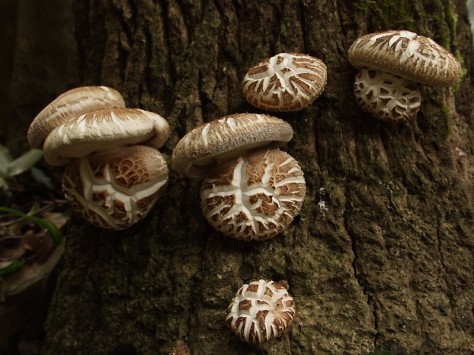
SHIITAKE

efbd93efbd88efbd89efbd89efbd94efbd81efbd8befbd85

FACTS:
Shiitake/Lentinula Edodes (Black Forest Mushrooms) are native to China but have been grown in both Japan and China since prehistoric times[2]. They have been cultivated for over 1000 years; the first written record of shiitake cultivation can be traced to Wu Sang Kwuang, born during the Song Dynasty (AD 960–1127). However, some documents record the uncultivated mushroom being eaten as early as AD 199.
Fresh and dried shiitake have many uses in the cuisines of East Asia. In Chinese cuisine, they are often sauteed in vegetarian dishes such as Buddha’s delight. In Japan, they are served in miso soup, used as the basis for a kind of vegetarian dashi, and also as an ingredient in many steamed and simmered dishes. In Korean cuisine, they are commonly used in dishes such as bulgogi (marinated grilled beef), jjigae (stews), and namul (sauteed vegetable dishes). In Thailand, they may be served either fried or steamed.

Shiitake are often dried and sold as preserved food in packages. These must be rehydrated by soaking in water before using. Many people prefer dried shiitake to fresh, considering that the sun-drying process draws out the umami flavour from the dried mushrooms by breaking down proteins into amino acids and transforms ergosterol to vitamin D. The stems of shiitake are rarely used in Japanese and other cuisines, primarily because the stems are harder and take longer to cook than the soft fleshy caps. The highest grade of shiitake are called donko in Japanese.
Extracts from shiitake mushrooms (such as ichtyol) have also been researched for many other immunological benefits, ranging from anti-viral properties to possible treatments for severe allergies, as well as arthritis.
The Japanese actually consume them from their raw form more than in any other country.

-Season: best in October~March for outdoors cultivation
-Main beneficial ingredients: Vitamin B1, B2, N6, Ergosterol, Lentinan, Fibers.

TIPS:

-Loosely wrap them in clean Newspaper or Kitchen Paper and store them in fridge away from the light.
-Choose specimens with unbroken “umbrella” and no black marks under.
-Fresh Shiitake are best enjoyed for their taste by keeping their cooking simple such as frying them over a grill with a dash of soy sauce and sake!

Please check the new postings at:
sake, shochu and sushi

—————————————-
日本語のブログ
—————————————-

Mango Curry Cream Sauce Prawns and Scallops with Wild Rice

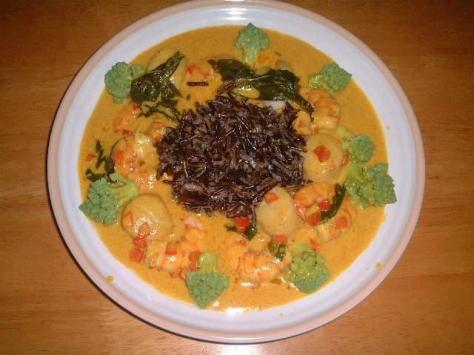
cream-prawns-wildrice

Here is a simple recipe of mine (yes, I do sometimes cook for the Missus! LOL) I have wanted to introduce for a long time. It calls for reasonably easy to find ingredients in many parts of the World. It is of course open to many variations!

Ingredients: For 2 people

-Fresh or frozen scallops: 12
-Medium-size prawns: 12
-Broccoli or Romanesco: 12 “flowers”
-Basil leaves: 12
-finely chopped red and yellow pimento: 4 large tablespoons
-Wild rice: 1 cup (200cc)
-1 large mango: cut in small cubes
-Lemon juice: 1 large tablespoon
-Fresh cream: 1 cup (200cc)
-White wine a quarter of a cup (50cc)
-Chopped Shallots: 1 large
-Chopped garlic: 1 clove
-Curry mix powder (or paste) 2 large tablespoons
-Salt, pepper (and spices to taste)
-White Butter: 1 large tablespoon
-Chicken stock: half a cup (100cc)
-Olive oil: 2 large tablespoon

Recipe:

-Cook the wild rice in lightly salted water for at least 20 minutes.
Drain water completely. Add butter and chicken stock and cook on a medium fire until you are satisfied with the consistency of the rice. Keep warm

-Prepare sauce:
Pour olive oil inside a large saucepan over a medium fire. Drop in shallots and garlic and fry until shallots become translucent. Add wine, mango, curry powder and fresh cream. let cook for a few minutes, mashing mango from time to time.
While doing this, first boil Romanesco broccoli in slightly saulted water until tender enough ( a couple of minutes). Drain and keep warm.
In a fry pan pour a little olive oil. Fry prawns, then scallops (season with just a little salt and pepper) long enough to cook the outside but leaving the inside almost raw. They will be more tender for them. Keep warm.
-Sieve the sauce for smoothness and getting rid of unwanted fibers.
Add chopped pimentoes and basil laves, heating the sauce over a small fire for a couple of minutes.
Season the sauce with salt, pepper and spices to taste.

On a large plate (that you would have kept warm inside the oven!), place the scallops, prawns and broccoli alternatively in a crown.
Pour plenty of sauce all over.
Finally transfer the wild rice in the middle for good effect!

Enjoy!

Please check the new postings at:
sake, shochu and sushi

—————————————-
日本語のブログ
—————————————-

Bryan Baird’s Newsletter (2009/8)

Baird Beer & Taproom Events Bulletin 2009 #8
bryan-sayuri.gif

Dear Taproom Friend & Baird Beer Enthusiast:

The dawn of spring in Japan means cherry blossom viewing which means outdoor fun with friends enjoying good food and fine libations. The Fishmarket Taproom in Numazu will be hosting its own outdoor Hanami party this coming Sunday, March 29. The venue is the Minato-Guchi Koen which is a park just a couple hundred meters down the road (toward the bay) from the Fishmarket Taproom. In addition to serving a great array of picnic food, we will be pouring three Baird Beers (Wheat King Ale, Teikoku IPA and a special sneak preview of this year’s Four Sisters Spring Bock). The event kicks off at noon and will run until 4:00 or 5:00 pm.

Event: Fishmarket Taproom Hanami Party
When: Sunday, March 29 (noon – late afternoon)
Where: Minato-Guchi Koen in Numazu (200 meters down the road from the Fishmarket Taproom)
Food: All-you-can-eat picnic buffet
Drink: All-you-can-drink Beer (Wheat King Ale, Teikoku IPA, Four Sisters Spring Bock); non-alcoholic beverages
Price: Adults 3,000 yen; Children free

If you plan on attending please send us an email at either fishmarket-tap@bairdbeer.com or brewery@bairdbeer.com so that we can get a decent gauge of the overall numbers. We will be gathering at the park at noon. In case of extremely inclement weather, we will be relocating to the Fishmarket Taproom. We hope you can join us and meet Chris Poel, our new lead brewer who begins work in April. Be sure to bring the kids as lots of young ones will be running around having a ball.

Also, please note that the Fishmarket Taproom will thus be closed on Sunday, March 29. The Fishmarket Taproom also will be closed Monday, March 30 through Wednesday, April 1 due to kitchen and bar rennovations that we are undertaking. We will open again, with a fresh new kitchen and beer dispense system, on Thursday, April 2.

Cheers,
Bryan Baird

Baird Brewing Company
Numazu, Japan
HOMEPAGE


The Japan Blog List

Please check the new postings at:
sake, shochu and sushi

—————————————-
日本語のブログ
—————————————-

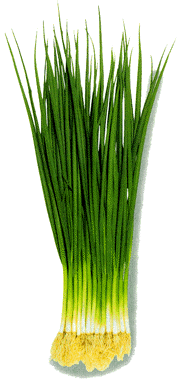
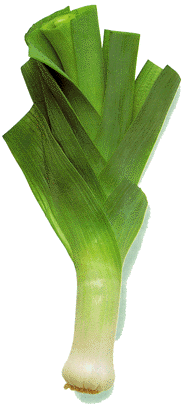
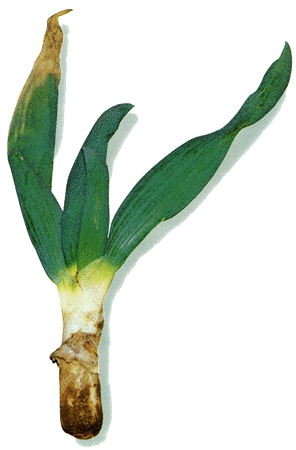
Vegetables Facts and Tips (8): Leeks

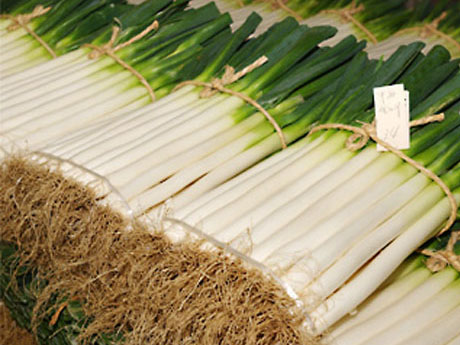
negi-1

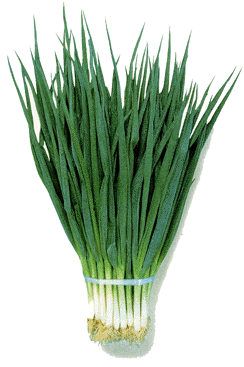
Leeks, or “negi” in Japanese, is an almost universal vegetable.
It is used in cuisine at restaurants and homes on all continents and has been recognized for ages as very beneficial plant.

Recent research has demonstrated that it is an effective cure against cold in particular, not only for humans, but for many animals, too.
Some people do not appreciate them because of their pungent smell and taste, but this can be taken care of with a couple of simple steps.

Back home in France, we boil the central part of fat leeks and eat them under the name of “poor man’s asparaguses”!

FACTS:
-Season: leeks can be bought all year round, but the best season is from November to February in the Northern Hemisphere.

-Main beneficial elements: Carotene (green part), Vitamin C (white part), Calcium, Vitamin B1 (beneficial for blood circulation).
It is not only efficient against colds, but also to the stomach and innards health.

TIPS:
-Fatter specimens will have more taste.
-Choose specimen with a “wet” bottom cut.
-If you use large specimen raw in salads, first cut 5=8 cm long sections, then cut them thin lengthwise and leave them some time in clean cold water. The pungency will greatly diminish.
-To chop leeks for cooking, cut them first in 5~10 cm sections, then cut them thin lengthwise and only then chop them crosswise.

VARIETIES:
There are innemurable varieties in the World, but I will introduce here the main varieties encountered in Japan:

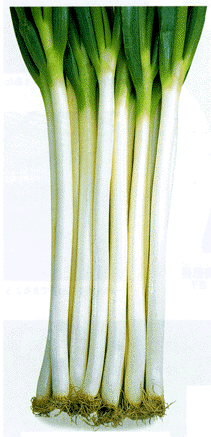
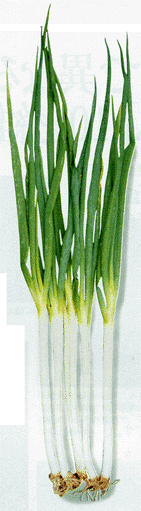
negi-senju
“Senju”
The most common and popular variety

negi-hakata-manno-negi
“Hakata Manno”:
A choice specimen raised in Kyushu Island

negi-hime
“Me” or “Hime”:
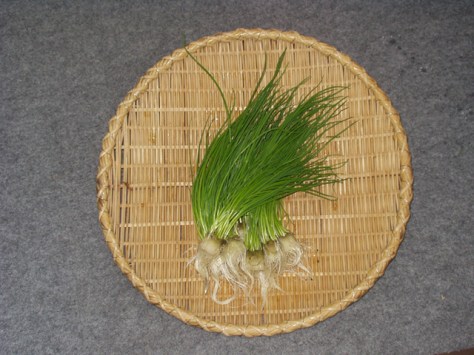
Could be called leek sprouts,too.
Eaten raw in salads, sushi, finger foods.

negi-ito-negi
“Ito” or Thread Leek, used in the same way as “Me/Hime”.

negi-kositsu-negi
“Koshitsu”, another common and popular variety.

negi-kujo-futo-negi
“Kujo-Futo”:
A choice specimen origintaing from Kyoto.

negi-kujo-hoso1
“Kujo Hoso”. Same as above, but a lot thinner.

negi-riiki
“Riiki”
A short fat specimen popular for “nabe” and soups.

negi-shimonita-negi
“Shimonita”.
A fat variety with a short stem and long leaves. Popular with soupsand “nabe” (Japanese-style pot-au-feu)

Please check the new postings at:
sake, shochu and sushi

—————————————-
日本語のブログ
—————————————-

Shizuoka Local Food at Local Sake Brewery!

yui-2

Last Sunday, I was invited to taste the new sake brewed by Kansawagawa Brewery In Yui, Shimizu Ku, Shizuoka City in the company of some old and new friends.
The purpose of the whole event was first to visit the brewery and being introduced to the arcan secrets of making sake:

yui-11 yui-12

yui-13 yui-14

I doubt that you are ready to read the whole sake brewery interview unless you are a sake fan. A more detailed report will eventually appear on Shizuoka Sake blog for the connoiseurs!

yui-9

The Brewery owner. Mr. Masataka Mochizuki, is a bit different from your usual owner. Most of his colleagues in Japan do not interfere whatsoever with the brewing and care only about the sale. On the other hand, Masataka Mochizuki is very passionate and even stubborn about his sake. He is far more knowlegeable about the craft than many owners and truly enjoys explaining and discussing the art.

yui-1

We had agreed on the idea to actually conduct the tasting of his new brews with purely local food.
A dinner was accordingly served to us inside the Brewery!
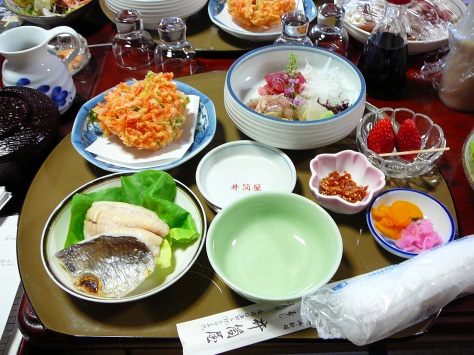
Now, Kansawagawa Brewery is located in Yui-Cho, Shimizu Ku, Shizuoka City, a harbour renown all over Japan for its delicacy, “Sakura Ebi/Cherry Shrimp”, a variety found only in our Prefecture. The catches being strictly regulated, it is a rare morsel outside our Prefecture.

yui-21

The dinner served to us included naturally rice and miso soup and:

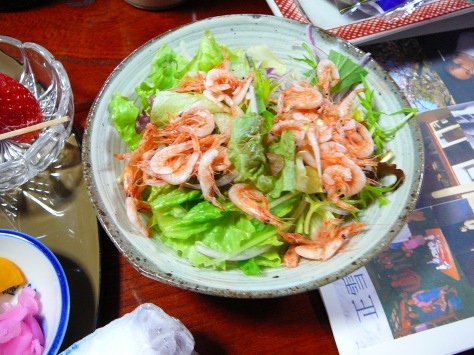
yui-3
Boiled Sakura Ebi Salad,

yui-5

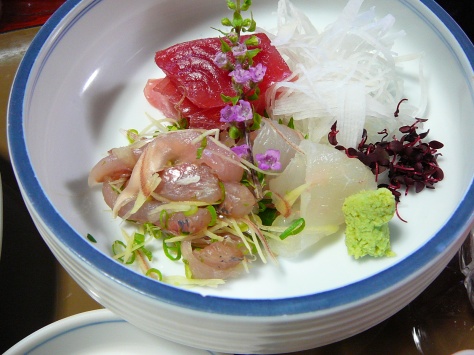
Sashimi plate. All seafood caught off Shizuoka shores!
Maguro/Tuna (top), Aji/Saurel and Hirame/Sole!

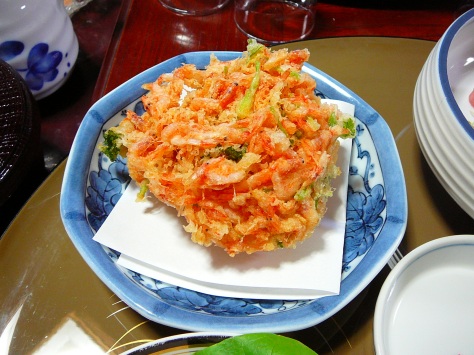
yui-4

Sakura Ebi Kakiage/Sakura Shrimps Tenpura. I know a lot of people in Tokyo who would take the first train to taste that!

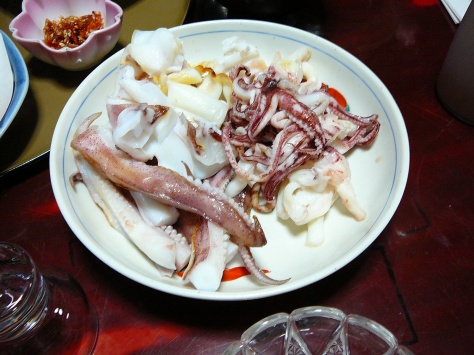
yui-71

Freshly boiled Ika/Cuttlefish. Great with sake.
The small plate contains pickled sakura shrimps.

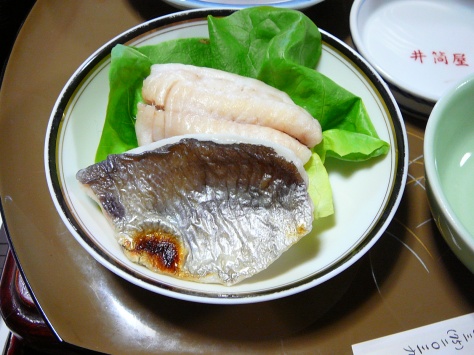
yui-6

Grilled Ishidai/Snapper served cold. An extravagant morsel to go with sake!

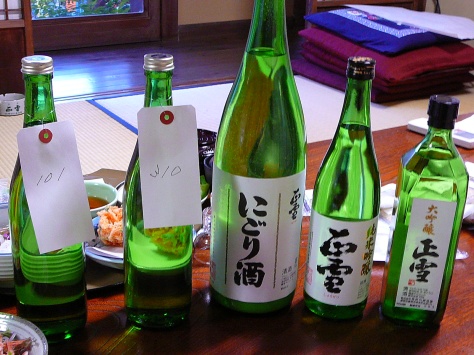
yui-8

And the sake!
The two with a “number” were not even for sale as they are still in the experimental phase!

Anyway, if you have the occasion to visit Yui, you will know that the real “package” is waiting for you!

Please check the new postings at:
sake, shochu and sushi

—————————————-
日本語のブログ
—————————————-

Shizuoka Beer 7/1: Hansharo Beer/Kurayanarusawa Brewery-Masako

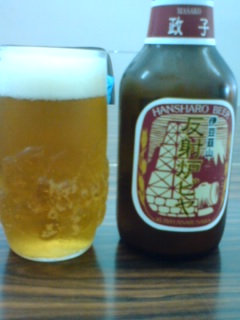
hansharo-masako

The weather having turned for the warmer these days, I felt it was time to delve back into more Shizuoka micro-breweries brews!
The Good Beer and Country Boys in Nagoya will get tempted!

This particular brew, “Masako” by Kurayanarusawa in Izu-Nagaoka (Izu no Kuni City in Izu Peninsula) is a bit extra0rdinary: The master Brewer also works at Bandai Brewery (sake and shochu in Shizenji, Izu Peninsula) and after consulting Denbei Kawamura, the man who revolutionized sake in Shizuoka Prefecture, he used Shizuoka HD-1 usually utilized in brewing sake!

I can tell you I’m not one to complain!

Hansharo Beer/Kurayanarusawa Brewery-Masako
Ingredients: Grain Malt, Hops, HD-1 Yeast (Shizuoka)
Alcohol: 5%
Contents: 300ml
Live yeast, unfiltered, unpasteurized.

Clarity: Very clear
Colour: Dark orange
Foam: Longish, fine bubbles
Aroma: Strong, oranges, bread
Taste: Well-rounded with a comparatively soft attack. Shortish tail. Some welcome acidity with a dry finish.
Dry persimmons, memories of oranges. Bread. Oranges reappearing later.

Overall: Very refreshing, easy to drink. Thirst-quaffing. Goes well with a snack. Softer than expected.

Kurayanarusawa Brewery
Shizuoka Ken, Izu no Kuni Shi, Naka, 272-1
Tel.: 055-949-1208
Sales on site or through the Internet (Japanese)
Visits possible
Restaurant on site

Please check the new postings at:
sake, shochu and sushi

—————————————-
日本語のブログ
—————————————-

Gastronomic Destinations: Yakushima Island (4)

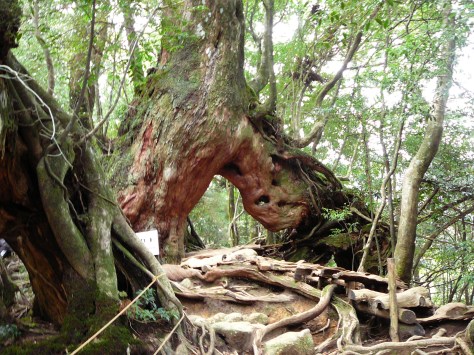
japan-i-first-1
(Ancient Cedar Tree in Princess Mononoke Forest)

Day 4: March 11th

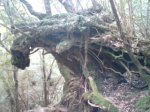
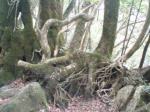
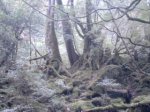
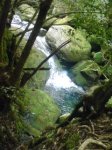
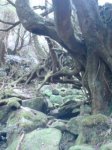
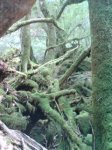
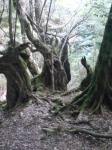
We had kept the “hard work” for last day, that is more than 3 hours of trekking up in the mountains to visit the most famous forest in Japan, “Mononoke Hime no Mori/Princess Mononoke Forest” which inspired a great manga/cartoon/animated film of the same name.

nagata-21

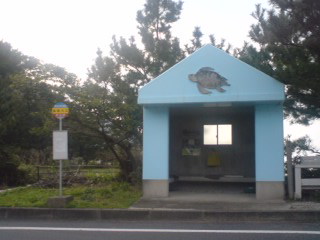
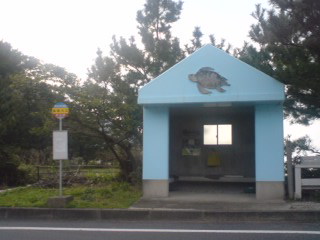
It is located in a place called Shiratani Usuikyo/白谷雲水峰, up very high in the mountains and a good hour by bus from the hotel (did you notice the sea turtle on the bus stop?)

momonoke-1 momonoke-2
momonoke-3 momonoke-5
momonoke-41 momonoke-6
momonoke-7 momonoke-10
momonoke-9 momonoke-8
(if you want larger pics, I’ll mail them to you!)

The owners at Tsuwanoya had given us sandwiches and nigiri/rice balls without being asked. Greats service which proved fortuitous as a part of a refuge and foutain half way up, there is no shop in the vicinity, although the forest and mountain are beautifully serviced and equipped by the local government.
Take good shoes, an extra sweater and and be careful. This is a hard climb, and an even harder descent, but so much worth it! Expect wild deer (and monkeys) coming out of the blue (green) in the most unlikely spots!

If you happen to do it too, you will understand how famished and thirsty we were back at the inn!

tsuwanoya-81

Luckily, Tsuwanoya had an enormous Japanese dinner ready for us!

tsuwanoya-7

Including another plate of succulent sashimi: Mizu Ika/Aori Ika=cuttlefish and Kampachi/Albacore.

tsuwanoya-6

And a succulent (half) Asahi Crab!

Itook care of the last day to sample the three shochu brewed by Mitake Brewery, the only truly “native” Brewery in th Island!

mitake

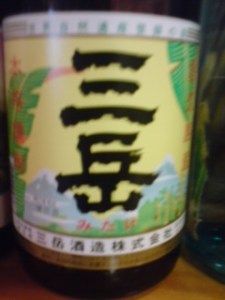
MItake/”the Three Peaks”
Alcohol: 25%
Aroma: Clean, discreet, elegant
Taste: Soft attack, clean. Shortish tail.
Dry. Dry roasted nuts, coffee beans.
Stands well to food with a sweetish undertone.
Comments: Pleasant refined shochu.
Like all shochu brewed by Mitake Brewery, best drunk with ice only.

mitake-aiko

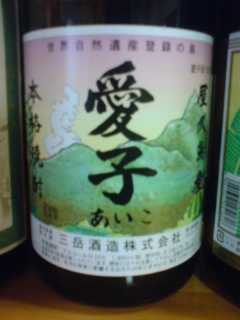
Aiko/”Love Child”
Alcohol: 25%
Aroma: Very dry, clean, strong.
Taste: Soft attack. Clean taste. Nicely warming up back of the palate.
Dry. Shortish tail. Memories of coffee beans and nuts.
Comments: Great with sashimi.
Turns sweetish and deeper with food with memories of brown sugar.

mitake-yakushima

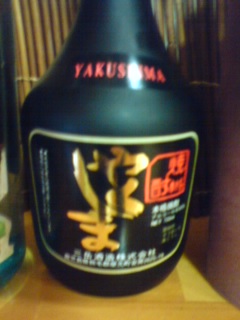
Yakushima
Alcohol: 35%. Genshu/no pure water added. Unaltered.
Aroma: Fine and discreet.
Taste: Clean, deep taste. Fruity: brown sugar. Almost sweet.
Keeps well with food. Turns drier with food. Shortish tail.
Comments: A fine, elegant shochu, which can be enjoyed for its sake or with food. A very high-level shochu!

Well, that was it for our second trip to Yakushima. Of course the day after was busy with buying tons of souvenirs for the friends back home!

Please check the new postings at:
sake, shochu and sushi

—————————————-
日本語のブログ
—————————————-

Gastronomic Destinations: Yakushima Island (3)

095
(Flying Fish Sashimi at Yakushima Toruism Center Restaurant)

Day 3: March 10th

Since we were not in so much of a hurry on that particular day,we thought some exercise would do us some good before the “long” bus ride, first Miyanoura and later to Nagata.

iwasaki-17

As I said in the previous posting, Iwasaki hotel is a located of its own enormous park stretching half way up the nearby mountain.

iwasaki-18

Haf an hour walk through the forest will lead you to a seclude spot overlooking a grand fall running through the trees in total natural wilderness!

We had in mind to visit Yakushima Tourism Center halfway to Nagat for the simple reason they have the best shop in the island where you will find not only a vast array of local food and products, but also plenty of island crafts.

miyaura-sashimi-1

Now, their restaurant upstairs deserves a visit if you want to taste real local food.
My wife ordered the Tobiuo/Flying Fish Sashimi set. The fish is so fresh it just melts inside the mouth.

miyaura-sashimi-2

I selected a full lunch set of a different kind.

miyaura-sashimi-3

It featured “kubi ore saba/fresh mackerel”. “Kubi ore” means “broken neck”. The fishermen actually break the fish just behind the head to ensure the fish will stay straight and fresh until it is served on your plate. Not easy to find in big cities as most mackerel are a little seared beforehand. In Yakushima it just comes off the boat! A totally different delicacy!
With a glass of Mitake “Aiko” Shochu, just perfect!

Yakushima Tourism Center
891-4205 Kagoshima Ken, Kumage Gun, Yakushima Cho, Miyanoura, 799 (just by the beach)
Tel.: 0997-42-0091
Fax: 0997-42-2081
Business hours: 08:00~19:00
Homepage (Japanese)

————-

nagata-1

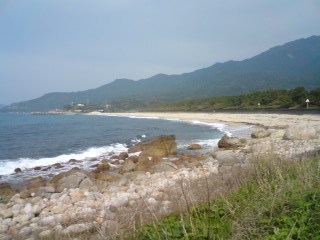
The beach along Nagata is renown for sea turtles laying their eggs there in June! Highly protected then you can be assured!
The sea gets deep very quickly there, but there are plenty of natural pools available for bathing!

nagata-2

No way you can miss your destination with such a bus stop!

Tsuwanoya Inn is not only great for its location near the sea and the mountains, but also for its service. A phone call will have the owner come an pick you up at the bus station!

098

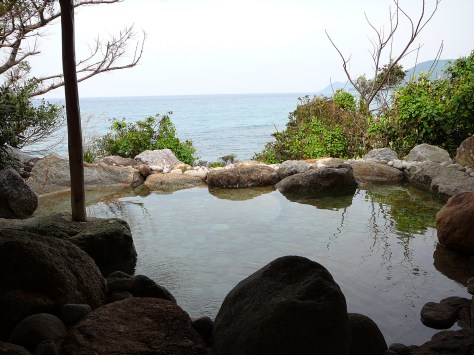
Another reason is the impregnable view from the open-air bath/”rotenburo!

The inn is a family business helped with local smiling staff.
The food is within possibility completely local. Even the bread and jams are concocted in situ!

tsuwanoya-1

Thei dinners (always different every evening) and breakfasts (Japanese or continental) are very generous.

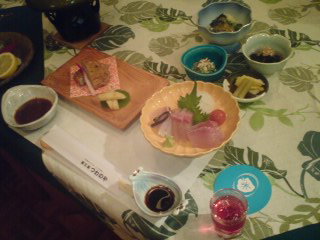
Our first dinner included:

tsuwanoya-2
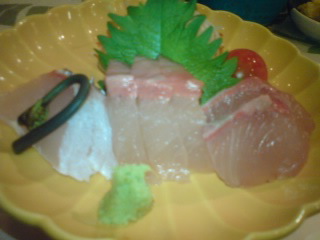
Sahimi: Kampachi and Tai.

tsuwanoya-3
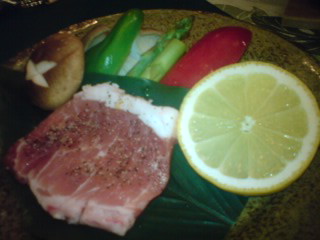
Kagoshima Black Pork pot.

tsuwanoya-4
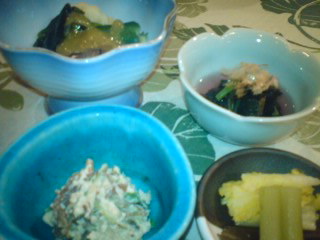
All kinds of Japanese hors d’ouvres.

tsuwanoya-5
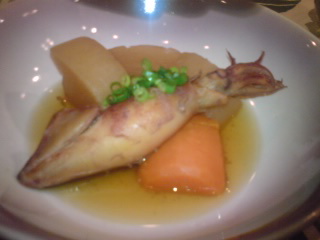
Simmered Cuttlefish.

And rice, miso soup and pickles.
A couple of glasses of local Mitake Shochu (tasting notes in the next posting!) and it was time for a quiet evening as we had a long trek planned for the next day!

TSUWANOYA
891-4201 Kagoshima Ken, Kumage Gun, Yakushima Cho, Nagata, 3358-7
Tel.: 0997-45-2717
Fax: 0997-45-2465
Lunch and dinner can be reserved by non-guests.
Credit Cards OK
Dining room no-smoking-logo1
HOMEPAGE (Japanese)
To be continued.

Please check the new postings at:
sake, shochu and sushi

—————————————-
日本語のブログ
—————————————-

Abondance’s Classic Cakes (3): Noisette/Hazlenut

noisette

As promised, this is another cake created by my good friend Bernard Heberle In Hamamatsu City!

In his own words:
“Voici le gâteau du mois ” Noisette” tout simplement un mélange de chocolat noir et de lait avec une dacquoise aux noisettes torréfiées ainsi que base croustillante le tout surmonte d’une chantilly légèrement chocolatée. Très agréable en bouche , un mélange de saveurs et de texture façon criollo.”

noisette-2 noisette-3

“Here is this month cake, “Noisette/Hazelnut”.
It consists of a simple mixture of milk and black chocolate with a roasted hazelnuts Dacquoise as a crusty base. The whole is topped with slightly chocolate -flavoured Chatilly cream and black chocolate.
Very soft on the tongue. A combination of savours and texture in criollo fashion.

As usual, I doubt I need to add any comment!

Abondance
Address: Hamamatsu Shi, Sumiyoshi, 2-14-27 (in front of Seirei Hospital)
Tel.: 053-4738400
Fax: 053-4738401
Opening hours: 10:00~20:00. Closed on Tuesdays.
Homepage


The Japan Blog List

Please check the new postings at:
sake, shochu and sushi

—————————————-
日本語のブログ
—————————————-

Bryan Baird’s Newsletter (2009/7)

Baird Beer & Taproom Events Bulletin 2009 #7
bryan-sayuri.gif

Dear Taproom Friend & Baird Beer Enthusiast:

Do you like your java in the morning? Do you enjoy a beer later in the day? Both of these pleasures are combined in one extremely satisfying Baird Stout: Morning Coffee Stout.

Morning Coffee Stout 2009 (ABV 7.0%):

We brew Morning Coffee Stout once a year for release in late winter / early spring. Each year the recipe differs as does the coffee we use to craft this phenomenal brew. Morning Coffee Stout 2009 combines a blend of three roasted malts, roasted barley and Japanese kokuto (black sugar) with Tully’s Holiday Roast (Guatemala Cupper Reserve) coffee that is cold brewed and added to the stout just at packaging. The secondary fermentation and maturation that occurs post-packaging produces a hybrid stout-coffee elixir that is, in a word, divine.

Morning Coffee Stout 2009 is available on draught and in bottles (633 ml) through the fine family of Baird Beer retailers in Japan beginning Monday, March 16. Its debut also kicks off the annual Lucky Seven Stout Week held at our Taproom pubs.

Lucky Seven Stout Week (Monday, March 16 – Sunday, March 22):

The event coincides every year with St. Patrick’s Day (an Irish holiday celebrated on March 17), and gives us an excuse to celebrate a beer style category long associated with Ireland: Stout. This year the event will be held simultaneously at both the Fishmarket and Nakameguro Taprooms. The lucky seven stouts to be served (in addition to our year-round Shimaguni Stout) are:

(1) Mama’s Milk Stout
(2) Chocolate Malt Stout
(3) Great American Stout
(4) Midnight Oil Export Stout 2009
(5) Morning Coffee Stout 2009
(6) Dark Sky Imperial Stout 2009 (at Nakameguro); Dark Sky Imperial Stout 2008 (at Fishmarket)
(7) Barrel-Aged Dark Sky Imperial Stout 2008

Special Lucky Seven Stout Cards, which include punches for all seven seasonal stouts plus one for Shimaguni Stout, will be available for purchase and use during the week. Enthusiasts who purchase and complete the card will be entered into an end-of-the-week raffle in which seven beer prizes will be given away. The seven prizes are:

(1) Taproom Nombei Pint Drink Ticket
(2) Taproom Nombei Half-Pint Drink Ticket
(3) Mixed 4-Pack of seasonal stouts (Morning Coffee 2008, Morning Coffee 2009, Midnight Oil Export Stout 2008, Dark Sky Imperial Stout 2008)
(4) Baird Beer T-shirt (choose from Wheat King Ale, Red Rose Amber Ale, Rising Sun Pale Ale, Teikoku IPA)
(5) Baird Beer Taproom T-shirt (black or grey)
(6) Set of two Baird Beer logo glasses (pint and half-pint)
(7) Set of 8 Baird Beer Posters

Cards purchased at the Nakameguro Taproom can only be used at Nakameguro. Likewise, cards purchased at the Fishmarket Taproom are only for use in Numazu. Each Taproom will hold its own raffle with winners announced Monday, March 23.

Great stout-inspired cuisine will be served up by the Taproom kitchens and warm Irish-style comraderie and revelry will be in abundance. Friday, March 20 is a Japan national holiday and thus both Taprooms will be open all day from noon then and, as always, on Saturday and Sunday. Please plan on joining us.

Cheers,
Bryan Baird

Baird Brewing Company
Numazu, Japan
HOMEPAGE


The Japan Blog List

Please check the new postings at:
sake, shochu and sushi

—————————————-
日本語のブログ
—————————————-

Gastronomic Destinations: Yakushima Island (2)

tsuruya-3

Day 2: March 9th

In Yakushima Island, it doesn’t rain, it pours! That is , you are either in for a continuous shower or beautiful clear skies!
Well today was “pour buckest days”!
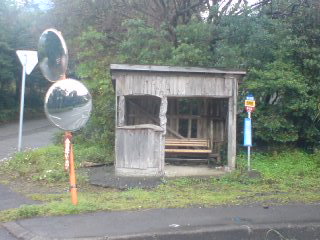
tsuruya-busstop
(ecological bus stop!)

No worries, we had bought our “bus day tickets” (they can be bought at major hotels or tourism offices). People tend to forget this is a large island and bus fares can quickly amount to a lot at the end of a day. As an example tickets cost 2,000 yen for one day, 3,000 yen for two days and 3,000 yen for four days. A single tour (you will have to come back!) of the whole island costs almost 3,000 yen!
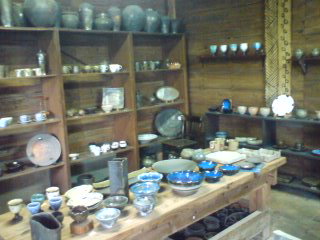
tsuruya-pottery

Ther are enough artists and craftsmen in this island to make it the them of a single tour.
There is one great potter we missed on our firts visit of the island, and rain or not we were going to visit it and buy some beautiful small plates and sake cups, all different and lovely!
Yakushima Yaki Shinyakugama
891-4406 Kagoshima Ken, Kumage Gun, Yakushima Cho, Hirauchi, 630-4
Tel/Fax: 0997-67-2624, 0997-47-3088 (night time)
They also organize pottery classes.
Although their HP is in Japanese do check it for a better view of their craft and photoes of their life in Yakushima Island!!
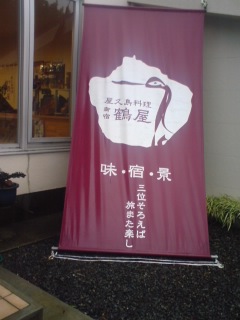
tsuruya-1

We already knew of the place to go for lunch near Anbo Harbour (the major harbour with Miyanoura for voyages to and from Kagoshima).
Tsuruya is an excellent “minshuku/family inn” which serves exclusively local fare. Reserved for in-guests for breakfast and dinner it opens its doors to the public for lunch.
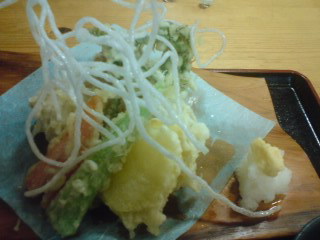
tsuruya-2

The Missus opted for the Tempura Set Lunch featuring an unusual fish tempura, “yokowa/ a tuna variety”. Obviously tempura, like sushi or sashimi might be the same word all over Japan, but you will be surprised how many different cuisines they stand for!
tsuruya-31

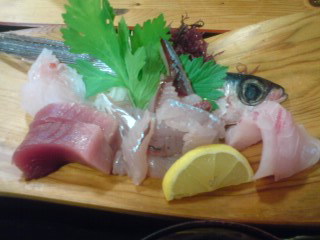
I was more interested in sashimi than cooked fish and asked for the sashimi set menu.
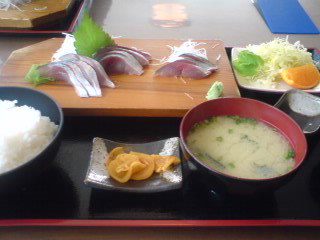
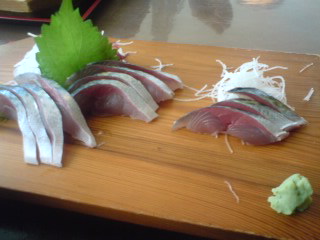
the sashimi featured “Akihara” (local fish), “Yokowa/local tuna variety”, “Tobiuo/Flying Fish” (local specialty) and “Tamure” (local fish): a truly gasronomic experience at ridiculous prices!
Lunches are generous, even by European/American standards.
If you add a glass of local shochu to help it down, you won’t feel hungry until late in the evening!
Incidentally, Tsuruya is a rare izakaya in the island which serves the three brew varieties by Mitake, the only truly local shochu brewery.
A special tatsing report will come later!

Then it was back in the rain and the buses.
Bus rides are leisurely enough to enjoy the landscapes (and seascapes) along the road. Big families ought to rent a car though. A whole tour of the island stretches over more than 100 km!
Yakushima island 20,000-plus population (they are apparently “recruiting” citizens!), mainly farming and fishing communities, although Miyanoura is a full-fledged “city” with high-school and even a baseball ground!
botanical-1botanical-2botanical-3
botanical-4botanical-5botanical-6

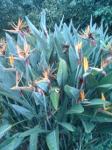
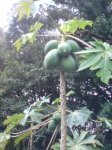
Fortunately the rain started to let up when we reached the Yakushima Botanical Gardens.
Open all year round, it takes a good half hour to visit and discover all the plants, flowers and fruit cultivated there.
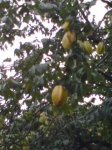
Can recognize the fruit pictured above?
torooki-falls

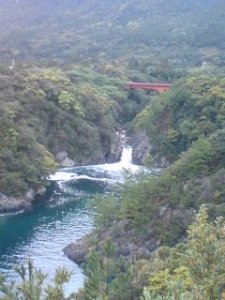
But don’t forget to climb its view platform from which you will dicover one of the landmarks of the island, the Tooroki Falls pourin directly into the sea!

As buses are not that many, we decided to walk back a good half of the way before boarding one, great physical exercise before taking another well-earned dip into the “rotenburo/open-air hotsprings bath” back at the hotel!
iwasaki-111

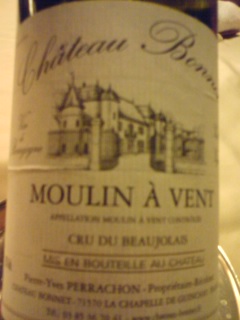
Today (actually the day after) was the Missus’ birthday. More elaborate celebrations being planned once back in Shizuoka, we nonetheless opened a Moulin a Vent, Domaine Bonnet Vieilles Vignes, 2006, excellent enough for any kind of food (I’m cheating as it is a wine brewed near my birthplace!) while we ordered for the food:
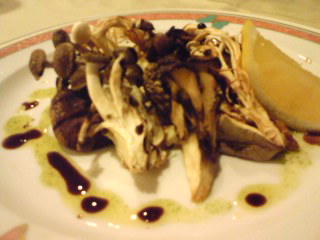
iwasaki-12
Assortment of grilled mushrooms.

iwasaki-13
Pan-fried “Mizu Ika/Aori Ika=local cuttlefish variety” Salad.
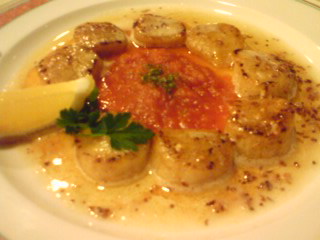
iwasaki-14
Provencal Scallops (sorry, that’s French!)
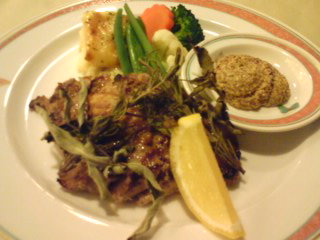
iwasaki-15
Her-roasted oasted Kagoshima Pork.

iwasaki-16
Veal Schnitzel with cheese coating.

We finished with (not featured, sorry!) guava sherbet for dessert.

We were tired enough to imediately back to our room and bed!

To be continued.

Please check the new postings at:
sake, shochu and sushi

—————————————-
日本語のブログ
—————————————-