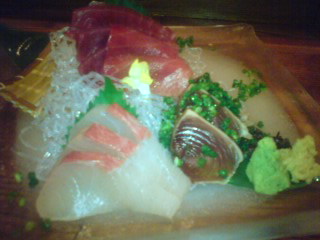
Tag Archives: 酒造

Shizuoka Sake Tasting: Yamanaka Brewery-Aoitenka Toubinkoi Muroka Junmai Ginjo

Yamanaka Brewery i not easy to access as it is far away from Kakegawa Station near the sea and one can reach only by bus, car and bicycle (not from Shizuoka City for the latter!)!
It is a fairly small establishement, although very well known, the more for it that its neighbour is the famous soy sauce brewery, Sakae!

This particular bottle was extravagant for many reasons.
The decoration was very original in the sense that the label on the bottle is actually made of cloth!
Coming into a great box with plenty of explanations, both the bottle and box are worth a collector’s attention.

The contents were also absolutely extravagant:
The real title is Yamanaka Shuzo/Yamanak Brewery, Aointenka (sake name), Tobinkoi (sake extracted drop by drop by being left hanging into sacke inside the tank and into a large glass jar), Muroka (unfiltered), Junami Ginjo (high premium with no alcohol added), Genshu (no pure water added), the whole meaning a completely untouched sake brew!

Now for the details:
Rice: Yamada Nishiki from Hyogo Prefecture
Rice milled down to 48% (high dai ginjo level!)
Yeast: 1401
Dryness: +2
Acidity: 1.7
Alcohol: 16~17 gegrees
Bottled in July 2010

Clarity: very clear
Colour: transparent
Aroma: Slghtly dry and very fruity. Almonds, coconuts with notes of pineapple. Extremely pleasant
Body: fluid
Taste: Very complex and fruity. Extremely pleasant and sophisticated.
Dry and fruity. Junmai petillant spreading over the back of the palate. Lingers on only a little.
Dry almonds, pineapple with hints of banana and vanilla.
Finishes on a very dry almond note, but turns a little sweetish with food. Later on reveals faint notes of dark chocolate and cofee beans.

Overall: Simply extravagant, although its pricetag is ridiculously cheap (that is for that quality!). The rice millage would be of another plane elsewhere!
Sophisticated, lmost “feminine” in spite of high alcohol content.
Best appreciated lightly chilled or at room temperature.
Personally the best aperitif one can come across!

Must-see tasting websites:
-Sake: Tokyo Through The Drinking Glass, Tokyo Foodcast, Urban Sake, Sake World
-Wine: Palate To Pen, Warren Bobrow, Cellar Tours, Ancient Fire Wines Blog
-Beer: Good Beer & Country Boys, Another Pint, Please!
-Japanese Pottery to enjoy your favourite drinks: Yellin Yakimono Gallery
——————————–
Please check the new postings at:
sake, shochu and sushi

—————————————-
日本語のブログ
—————————————-
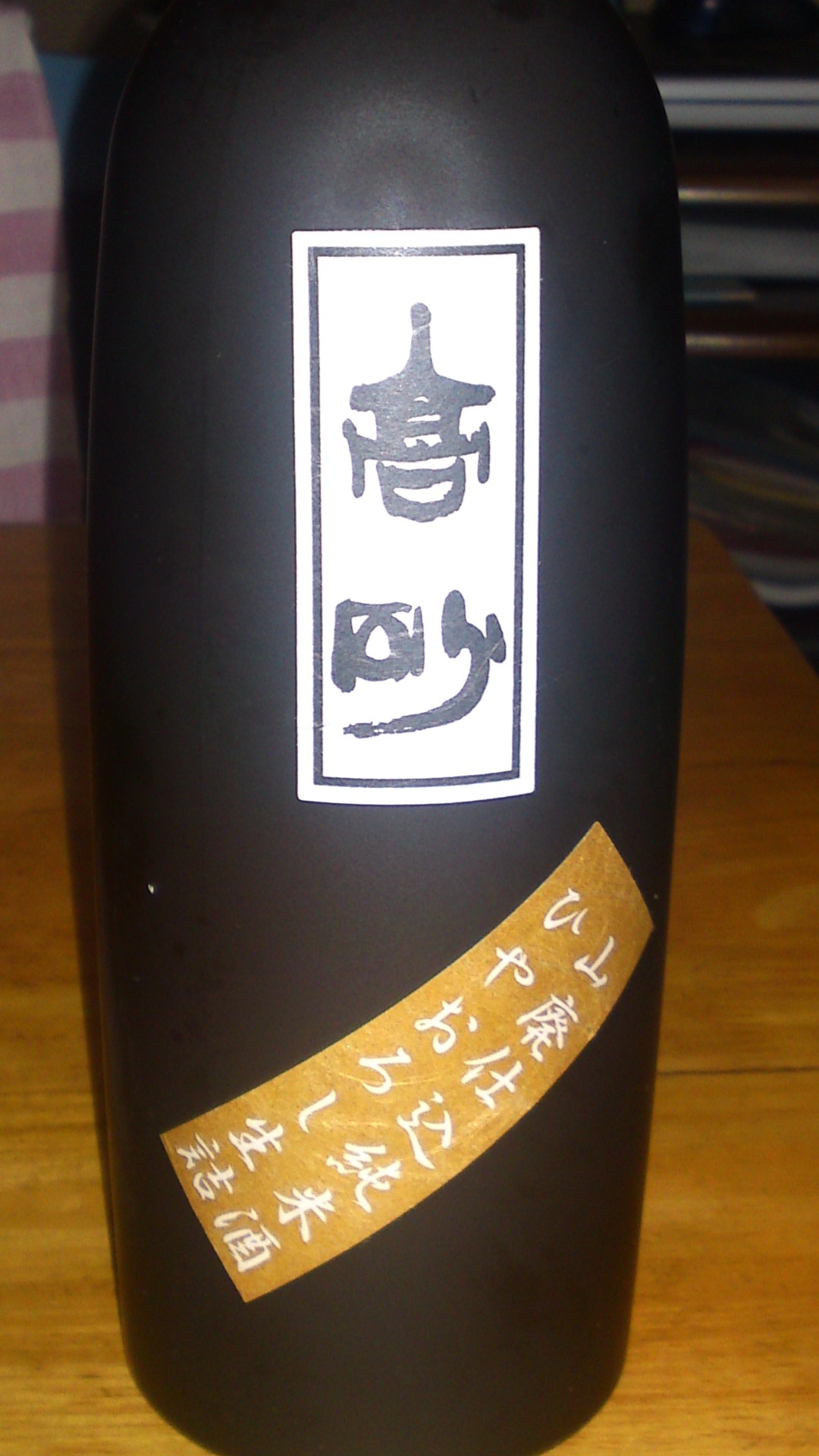
Shizuoka Sake Tasting: Fuji-Takasago Brewery/Takasago Yamahai Junmai Hiyaoroshi

It’s been some time since I tasted a sake from Fuji-Takasago Brewery in Fujinomiya City.
Since September is the time to taste the Hiyaoroshi sake/sake taht has been sterelized only once, it is such an embarrssment of choices, but I opted for this brewery as it is slightly unusual in Shizuoka refecture.

The real title for this particular sake is “Takasago Yamahai Shikomi Junmai Shu Hiyaoroshi Namatsume”!
Meaning: Takasago (main name) Yamahai Shikomi (old style brewing) Junmai Shu (Junmai=no alcohol added) Hitaoroshi Namatsume (bottled without a second sterilization.
On top of this it is a genshu/no water added!

Fuji-Takasago Brewery/Takasago Yamahai Junmai Hiyaoroshi

Rice: Yamada Nishiki 100% (Hyogo Prefecture)
Riced milled down to 55% (extravagant!)
Alcohol: 16~17 degrees (genshu)
Dryness: -3 (sweet for Shizuoka)
Bottled in September 2010

Clarity: very clear
Colour: Faint golden hue
Aroma: Strong, very fruity: bananas, vanilla, sweet ornages
Body: Fluid
Taste: Strong attack with a lot of junmai “petillant”, sweetish.
Complex: Macadamia nuts, bananas, oranges, vanilla.
Warms back of the palate for some time. Lingers for a while with very dry almonds backed up by oranges and vanilla.
Sweet by Shizuoka standards at first approach but dries up quickly.

Overall: A sake that can be greatly enjoyed chilled or at room temperature.
Great as a sweetish aperitif or in lieu of a port wine.
Strikes a great marriage with choclate or blue cheese.
Chilled, can be drunk as a dessert drink! Would do excellently poured over ice-cream!

Must-see tasting websites:
-Sake: Tokyo Through The Drinking Glass, Tokyo Foodcast, Urban Sake, Sake World
-Wine: Palate To Pen, Warren Bobrow, Cellar Tours, Ancient Fire Wines Blog
-Beer: Good Beer & Country Boys, Another Pint, Please!
-Japanese Pottery to enjoy your favourite drinks: Yellin Yakimono Gallery
——————————–
Please check the new postings at:
sake, shochu and sushi

—————————————-
日本語のブログ
—————————————-
Uncovering Sake’s hidden Stories by Melinda Joe

Sake-Pine-Ball

The present article has been written by my good friend Melinda Joe on behalf of a common friend, namely John Gauntner, the foreign (as to the Japanese) authority on Japanese sake!

MELINDA-JOE
Melinda Joe

I like secrets as much as, if not slightly more than, the next guy, so it didn’t take much convincing to get me to read John Gauntner’s new e-book, Sake’s Hidden Stories. Although it wasn’t the juicy, tell-all memoir I hope he’ll pen one day, this collection of essays offers a glimpse of a world that is closed to most of us, particularly non-speakers of Japanese. It tells stories of strong wills, iconoclasts, and errant sons who return home to carry on the work of generations. In our fast-paced modern society, where individualism reigns supreme, the words honor, duty, and tradition seem like anachronistic concepts; yet, these are the very forces that have kept the sake industry alive.

Part of what attracted me, and my fellow nihon-shu bloggers Tim, Etsuko, and Robert-Gilles; to sake was the spirit and enthusiasm of the folks who make it. However, much of the sake literature out there – at least in English – focuses mainly on the products themselves. It’s refreshing to finally find a book that introduces the people behind the brand. A sake insider for more than a decade, Mr. Gauntner is the perfect man for the job. He takes us with him up the gravelly roads and through the cool, dark rooms of centuries-old buildings. Some of the anecdotes describe his first meetings with the brewery owners and staff, and readers feel his surprise and, in many cases, awe.

After meeting the former president of Tairin Brewery in Gifu, Gauntner asks how he was able to control the milling of the rice, which was done at that time on a primitive machine.

The older gentleman answered very simply and humbly, “Well, I listen to it.” You listen to it? Huh?

He walked over to one end of the small machine and lifted up – of all things – a stethoscope that hung neatly over a pipe. “Well, Yeah. I use this, and I listen to it. I have been doing this in this way for so many years that I can easily tell by the sound of the rice spinning inside how much has been milled away.”

Amazing. Most modern seimaiki are automated so the operator has to do nothing, just put in the rice, set the controls, and wait. But for decades this gentleman has been listening to the sound of the rice as it rolled around inside the cylindrical drum, and by using only his senses, polished with years of experience, he can be so accurate that they could make the fine sake Tairin is known for. By using a stethoscope. Simply wild.

The book contains a fair amount of technical information, and, although the first section is devoted to sake basics, true novices may find it difficult to take everything in. The author was a former engineer and his fascination with machinery is evident. For those with a firm foundation of sake knowledge, however, the book is a terrific resource providing in-depth details of production.

Still, everyone can relate to he characters themselves (and, in the sake world, there are plenty of them). When he meets the purple-track-suit-wearing Nakao-san, president and toji of Tsuyu Masamune in Osaka, Gauntner wonders how he learned to make sake.

“Ah, but that’s another long story,” he begins, raising his teacup as if toasting the idea for emphasis. He sets it down on the low table between us before continuing. “You see, I never wanted to be in this business. Originally I was not going to take over the brewery here. I wanted to be a phys ed instructor.”

That’s not the only surprise the kuramoto has in store for him.

In another departure from precedent, Nakao-san has begun to hold the occasional rap concert inside his brewery for the local community rap fans. “It’s kind of tight, but we have barely enough space. The band is down there, people dance up there, on that platform, just in front of the tanks. It’s kinda cool, actually.

These kinds of delightful details make Sake’s Hidden Stories a lot of fun to read, and you’ll definitely feel like an insider by the end of the book. In fact, you may end up itching to take to the sake road yourself. I certainly did!

Must-see tasting websites:
-Sake: Tokyo Through The Drinking Glass, Tokyo Foodcast, Urban Sake, Sake World
-Wine: Palate To Pen
-Beer: Good Beer & Country Boys, Another Pint, Please!
-Japanese Pottery to enjoy your favourite drinks: Yellin Yakimono Gallery

English Sake Brewer Master in Japan: Phillip Harper (3) (Postnotes added!)

tetsukezu

A lot has been written and will be written both here in Japan and abroad on Phillip Harper as he has, with the likes of John Gauntner, Timothy Sullivan and Melinda Joe, established himself as one of the references proving once for all that Japanese sake has at last expanded beyond the confines of this island for the good of all.
It is only a question of time when sake breweries will become a part of life like wine and beer abroad as demonstrated by the five existing branches of large Japanese breweries in the United States employing a full American staff and Moto I, the entirely owned and run American Sake Brewery.

harper-1

What makes the difference is that Phillip has gone as far as becoming the only foreign sake “toji”/master brewer in a Japanese brewery, namely Ki no Shita Brewery in Kyoto Prefecture!
An Oxford graduate hailing from Cornwall, it took him 18 years of sheer courage and guts to break into the closely guarded world of Japanese sake to gain recognition and earn his master brewer status in 2001.
The media (including The Los Angeles Times) finally take good note of his achievements when he was formally asked by Owner Yoshito Kinoshita to become his new Master Brewer (incidentally Phillip had already held that position in Osaka for two years).

This the third of the three bottles I received from his fans in Tokyo. That particular one was sent to me by Melinda Joe.

Kinoshita Brewery, Tamagawa, Tetsukezu Genshu Junmai Ginjo
Rice: Gohyakumangiku
Rice milled down to: 60%
Alcohol: 18~19 degrees (high as it is a genshu/unaltered alcohol contents)

Clarity: Very clear
Colour: Transparent
Aroma: Fruity, elegant. Strawberries, apricot.
Body: Velvety
Taste: Strong attack backed by alcohol.
Shortish tail. Warms up back of the palate.
Complex. Junmai tingle.
Fruity and dryish: apricots with hints of strawberries, almonds and macadamia nuts.
Elegant.
Dry almonds making a regular comeback.
Holds its own well with food, but revealing different facets, especially strawberries with a dry finish.

Overall: Elegant and easy to drink in spite of high alcohol contents.
For once, similar to Shizuoka-brewed sake.
Combines fruitiness and dryness into a remarkably palatable (eminently drinkable) creation!

PHILLIP’S COMMENTS:

The specs for that sake are:

SMV +4, Acidity 1.7, Amino Acids 1.5, Alcohol 18.7.

It was brewed with the same organic rice used to make the Konotori kimoto you reviewed the other day – at 60% polish this time.
Though it doesn’t seem to have made an impression on you, that sake isslightly effervescent. Bubbly sake is usually made either by refermenting in the bottle (like Champagne…), or injecting gas into the sake itself. Oh,and a few people do a kind of sparkling wine thing with secondary fermentationin tanks. Tetsukezu bubbles are different, because they derive from the originalfermentation in the mash itself. We trap them in by a secret method that I can’t
reveal, except to say that it is as high-tech as all the other stuff we do at Tamagawa.

Regards, Philip

———————————
Must-see tasting websites:
-Sake: Tokyo Through The Drinking Glass, Tokyo Foodcast, Urban Sake, Sake World
-Wine: Palate To Pen
-Beer: Good Beer & Country Boys, Another Pint, Please!
-Japanese Pottery to enjoy your favourite drinks: Yellin Yakimono Gallery
———————————————–
Please check the new postings at:
sake, shochu and sushi

—————————————-
日本語のブログ
—————————————-

English Sake Brewer Master in Japan: Phillip Harper (3)

tetsukezu

A lot has been written and will be written both here in Japan and abroad on Phillip Harper as he has, with the likes of John Gauntner, Timothy Sullivan and Melinda Joe, established himself as one of the references proving once for all that Japanese sake has at last expanded beyond the confines of this island for the good of all.
It is only a question of time when sake breweries will become a part of life like wine and beer abroad as demonstrated by the five existing branches of large Japanese breweries in the United States employing a full American staff and Moto I, the entirely owned and run American Sake Brewery.

harper-1

What makes the difference is that Phillip has gone as far as becoming the only foreign sake “toji”/master brewer in a Japanese brewery, namely Ki no Shita Brewery in Kyoto Prefecture!
An Oxford graduate hailing from Cornwall, it took him 18 years of sheer courage and guts to break into the closely guarded world of Japanese sake to gain recognition and earn his master brewer status in 2001.
The media (including The Los Angeles Times) finally take good note of his achievements when he was formally asked by Owner Yoshito Kinoshita to become his new Master Brewer (incidentally Phillip had already held that position in Osaka for two years).

This the third of the three bottles I received from his fans in Tokyo. That particular one was sent to me by Melinda Joe.

Kinoshita Brewery, Tamagawa, Tetsukezu Genshu Junmai Ginjo
Rice: Gohyakumangiku
Rice milled down to: 60%
Alcohol: 18~19 degrees (high as it is a genshu/unaltered alcohol contents)

Clarity: Very clear
Colour: Transparent
Aroma: Fruity, elegant. Strawberries, apricot.
Body: Velvety
Taste: Strong attack backed by alcohol.
Shortish tail. Warms up back of the palate.
Complex. Junmai tingle.
Fruity and dryish: apricots with hints of strawberries, almonds and macadamia nuts.
Elegant.
Dry almonds making a regular comeback.
Holds its own well with food, but revealing different facets, especially strawberries with a dry finish.

Overall: Elegant and easy to drink in spite of high alcohol contents.
For once, similar to Shizuoka-brewed sake.
Combines fruitiness and dryness into a remarkably palatable (eminently drinkable) creation!

PHILLIP’S COMMENTS:

The specs for that sake are:

SMV +4, Acidity 1.7, Amino Acids 1.5, Alcohol 18.7.

It was brewed with the same organic rice used to make the Konotori kimoto you reviewed the other day – at 60% polish this time.
Though it doesn’t seem to have made an impression on you, that sake isslightly effervescent. Bubbly sake is usually made either by refermenting in the bottle (like Champagne…), or injecting gas into the sake itself. Oh,and a few people do a kind of sparkling wine thing with secondary fermentationin tanks. Tetsukezu bubbles are different, because they derive from the originalfermentation in the mash itself. We trap them in by a secret method that I can’t
reveal, except to say that it is as high-tech as all the other stuff we do at Tamagawa.

Regards, Philip

———————————
Must-see tasting websites:
-Sake: Tokyo Through The Drinking Glass, Tokyo Foodcast, Urban Sake, Sake World
-Wine: Palate To Pen
-Beer: Good Beer & Country Boys, Another Pint, Please!
-Japanese Pottery to enjoy your favourite drinks: Yellin Yakimono Gallery
———————————————–
Please check the new postings at:
sake, shochu and sushi

—————————————-
日本語のブログ
—————————————-
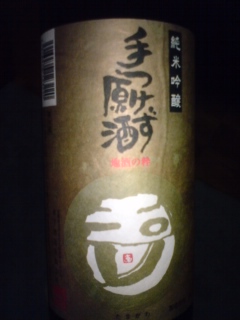
English Sake Brewer Master in Japan: Phillip Harper (2)

time-machine

A lot has been written and will be written both here in Japan and abroad on Phillip Harper as he has, with the likes of John Gauntner, Timothy Sullivan and Melinda Joe, established himself as one of the references proving once for all that Japanese sake has at last expanded beyond the confines of this island for the good of all.
It is only a question of time when sake breweries will become a part of life like wine and beer abroad as demonstrated by the five existing branches of large Japanese breweries in the United States employing a full American staff and Moto I, the entirely owned and run American Sake Brewery.

harper-1

What makes the difference is that Phillip has gone as far as becoming the only foreign sake “toji”/master brewer in a Japanese brewery, namely Ki no Shita Brewery in Kyoto Prefecture!
An Oxford graduate hailing from Cornwall, it took him 18 years of sheer courage and guts to break into the closely guarded world of Japanese sake to gain recognition and earn his master brewer status in 2001.
The media (including The Los Angeles Times) finally take good note of his achievements when he was formally asked by Owner Yoshito Kinoshita to become his new Master Brewer (incidentally Phillip had already held that position in Osaka for two years).

This the second of the three bottles I received from his fans in Tokyo. That particular one was sent to me by Etsuko Nakamura.

Kinoshita Brewery, TIME MACHINE Tamagawa
Dryness: -72
Acidity: 3.2 (very high compared to Shizuoka)
Rice milled down to 88%

Clarity: Slightly smoky (nothing wrong with this as it contains some lees)
Colour: Rich gold
Aroma: Powerful. Fruity. Plums
Body: Velvety
Taste: Powerful. Strong and pleasant attack. Complex. Flowery and fruity: plums and mirabelles. Memories of coffee beans and almonds.
Bitter chocolate peaking out later.
Liquorish with a hint of acidity.

Overall: I’ve been accused of not beingvery lyrical in my comments, whatever my feelings towards a wine or sake in spite of my great love for them. I suppose I’m too old to change! LOL
I waited until the very last glass (note, galss, not cup!) before writing my impressions.
Frankly speaking, an unknowledgeable person could be easily fooled into believing into thinking he is drinking wine! What with the bottle shape, the colour of the sake and the quaint label!
Liquorish, but not tart or overwhelming, I slowly savoured it like Sauternes or sweet white Port.
With plenty of translated explanations, it should hit the palate of some vaunted “tasters” anywhere in the world!

PHILLIP’S NOTES:

“We also do a barking mad sake called Time Machine that is made in the style of the Edo Period. Etsuko took a shine to it last year. We pressed this year’sTime Machine last week: specs are

SMV -70, Acidity 3.4, Amino acids 7.3, Alcohol 16.6.”
(Specs seem to vary with what is written on the labels)
Phillip later commented:
“The discrepancy in the data is because you drank last year’s
(slightly diluted) version: I gave the specs for this year’s
genshu – which, for your information, is already more deeply
coloured than the bottle you drank, only a week after pressing.”

———————————
Must-see tasting websites:
-Sake: Tokyo Through The Drinking Glass, Tokyo Foodcast, Urban Sake, Sake World
-Wine: Palate To Pen
-Beer: Good Beer & Country Boys, Another Pint, Please!
-Japanese Pottery to enjoy your favourite drinks: Yellin Yakimono Gallery
———————————————–
Please check the new postings at:
sake, shochu and sushi

—————————————-
日本語のブログ
—————————————-

Wine Tasting at La Vigne

lavigne-tasting-1

Service: Excellent and very friendly
Facilities: great washroom, great cleanliness overall
Prices: reasonable, good value
no-smoking-logo!

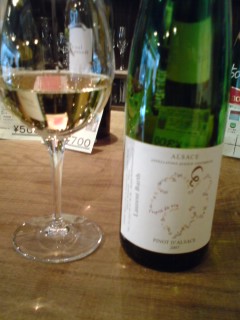
As I found myself not busy with cricket due to heavy rain the night before I took the opportunity to visit la Vigne, the new French wine shop in Shizuoka which is conveniently equipped with a standing bar.
As usual I had the opportunity of making new from vastly different regions and ways of life as I tasted one of the dozen wines on offer:

lavigne-tasting-2

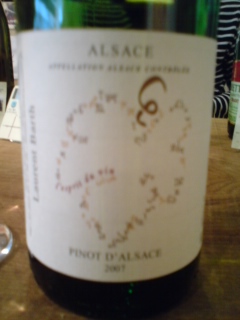
Region: Alsace
Grapes: Pinot d’Alsace
Year: 2007
Producer/owner: Laurent Barth at Bennwihr

lavigne-tasting-3

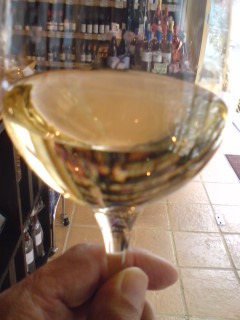
Clarity: Very clear and clean
Colour: Golden hue
Aroma: Light and fruity. Muscat. Elegant
Taste: Light, fruity, well balanced by pleasant acidity. Shortish tail. Light impression lingering at the back of the plalate. Muscat, memories of sweet raisins. Fleeting.

Overall: Would do well as an aperitif. Would marry well with light vegetables hors d’oeuvres and white flesh fish.
On the other hand, was subdued by the cheese I ate with it,
Probably best drunk on its own, very slightly chilled.

lavigne-tasting-4

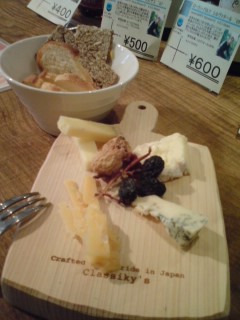
The “cheese tray” included (from top left around the clock):
Laguiole, Brie de Meaux, Bleu de Gex and 25-month Gouda.

LA VIGNE
420-0852 Shizuoka City, Aoi Ku, Gofuku-Cho, 17-2, 1F (within walking distance for Shizuoka JR Station in front of Fugetsuro!)
Tel. & Fax: 054-2054181
Business hours: 10:00~22:00
HOMEPAGE (Japanese)

Must-see tasting websites:
-Sake: Tokyo Through The Drinking Glass, Tokyo Foodcast, Urban Sake, Sake World
-Wine: Palate To Pen
-Beer: Good Beer & Country Boys, Another Pint, Please!
-Japanese Pottery to enjoy your favourite drinks: Yellin Yakimono Gallery
———————————————–
Please check the new postings at:
sake, shochu and sushi

—————————————-
日本語のブログ
—————————————-

English Sake Brewer Master in Japan: Phillip Harper (1)

harper-koonotori

A lot has been written and will be written both here in Japan and abroad on Phillip Harper as he has, with the likes of John Gauntner, Timothy Sullivan and Melinda Joe, established himself as one of the references proving once for all that Japanese sake has at last expanded beyond the confines of this island for the good of all.
It is only a question of time when sake breweries will become a part of life like wine and beer abroad as demonstrated by the five existing branches of large Japanese breweries in the United States employing a full American staff and Moto I, the entirely owned and run American Sake Brewery.

harper-1

What makes the difference is that Phillip has gone as far as becoming the only foreign sake “toji”/master brewer in a Japanese brewery, namely Ki no Shita Brewery in Kyoto Prefecture!
An Oxford graduate hailing from Cornwall, it took him 18 years of sheer courage and guts to break into the closely guarded world of Japanese sake to gain recognition and earn his master brewer status in 2001.
The media (including The Los Angeles Times) finally take good note of his achievements when he was formally asked by Owner Yoshito Kinoshita to become his new Master Brewer (incidentally Phillip had already held that position in Osaka for two years).

I have always been intrigued by this fellow sake-loving foreigner, and when Melinda Joe and Etsuko Nakamura started sending me some of his bottles, I decided it was grand time that I atoned for my ignorance and tasted his sake which has won so many fans in Japan and abroad!

Before I continue with this first of three (and hopefully more) bottles tasting report, I would like to point out that some will not agree with my heavily Shizuoka sake influenced palate and my “wine” tasting methods (just can’t get rid of my Burgundian origin!). I will just invite them to drink, taste and compare notes!

harper-koonotori

Ki No shita Brewery (kyoto Fu)
Tamagawa (Brand name), Junmai, Nama Genshu (unaltered original pressed sake), Muroka (unfiltered), Kimoto (traditional brewing method)
Rice: Gohyakumangoku
Rice milled down to 77%
Alcohol contents: 19~20 degrees

Clarity: Very clear
Colour: Almost transparent
Aroma: fruity, banana
Body: Velvety
Taste: Strong attack backed by alcohol.
Dry. Complex. Shortish tail. Fruity: Musk Melon. Coffee beans and cherries appearing later.
Hold its own well with food with a light mellow turn.

Overall: A sake devised for food, especially heavy food.
Strong, almost aggressive sake with an uncompromising character.
Turns more complex with the second glass. Elusive at times, but always with a fruity note so remiscent of Musk Melon.
For strong sake officionados!

PHILLIP’S NOTES:

Like all the kimoto and yamahai sakes we do here, this was made without the use of anything but water, rice and koji. We do not
add cultured yeast or anything else to the mash. It is pre-Meiji brewing, and the kimoto under question is precisely the kind of sake that we read about in Meiji Period texts – SMV well into double figures on the plus side, junmai of course, acidity well over two, and comfortably at modern levels of alcohol.

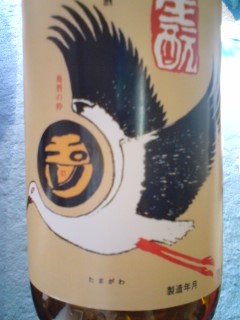
The rice for the kimoto you tasted is organic Gohyakumangoku grown 15 miles away near the haunt of the Oriental White Stork/コウノトリ (as depicted on the label). The methods are different from standard organic rice farming, as the prime intention is to provide a habitat for these
amazing birds. As you can see from the red sticker, some of the
price goes towards a support organization. This project is all about the
birds, so it would be great if you could give them a plug. FYI, the original artwork is by Sakane Katsuke, an eminent artist who happens to be the boss’s brother-in-law and is also the creator of our excellent Tamagawa logo.

———————————
Must-see tasting websites:
-Sake: Tokyo Through The Drinking Glass, Tokyo Foodcast, Urban Sake, Sake World
-Wine: Palate To Pen
-Beer: Good Beer & Country Boys, Another Pint, Please!
-Japanese Pottery to enjoy your favourite drinks: Yellin Yakimono Gallery
———————————————–
Please check the new postings at:
sake, shochu and sushi

—————————————-
日本語のブログ
—————————————-
Shizuoka Local Food at Local Sake Brewery!

yui-2

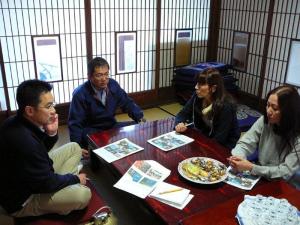
Last Sunday, I was invited to taste the new sake brewed by Kansawagawa Brewery In Yui, Shimizu Ku, Shizuoka City in the company of some old and new friends.
The purpose of the whole event was first to visit the brewery and being introduced to the arcan secrets of making sake:

yui-11 yui-12

yui-13 yui-14

I doubt that you are ready to read the whole sake brewery interview unless you are a sake fan. A more detailed report will eventually appear on Shizuoka Sake blog for the connoiseurs!

yui-9

The Brewery owner. Mr. Masataka Mochizuki, is a bit different from your usual owner. Most of his colleagues in Japan do not interfere whatsoever with the brewing and care only about the sale. On the other hand, Masataka Mochizuki is very passionate and even stubborn about his sake. He is far more knowlegeable about the craft than many owners and truly enjoys explaining and discussing the art.

yui-1

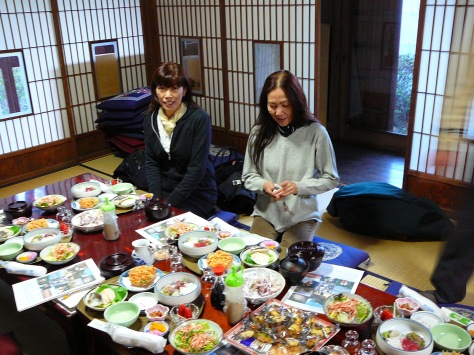
We had agreed on the idea to actually conduct the tasting of his new brews with purely local food.
A dinner was accordingly served to us inside the Brewery!
Now, Kansawagawa Brewery is located in Yui-Cho, Shimizu Ku, Shizuoka City, a harbour renown all over Japan for its delicacy, “Sakura Ebi/Cherry Shrimp”, a variety found only in our Prefecture. The catches being strictly regulated, it is a rare morsel outside our Prefecture.

yui-21

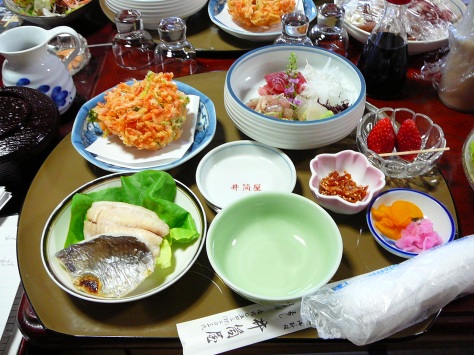
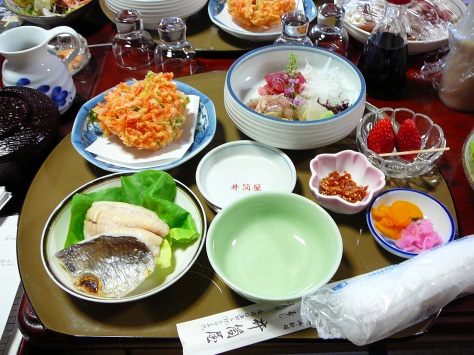
The dinner served to us included naturally rice and miso soup and:

yui-3
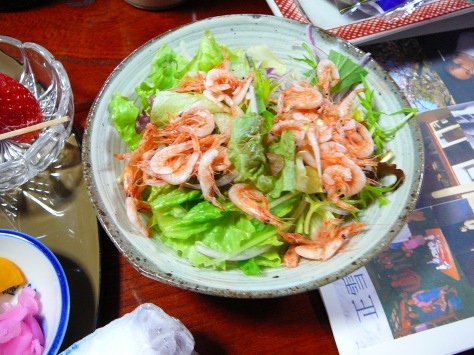
Boiled Sakura Ebi Salad,

yui-5

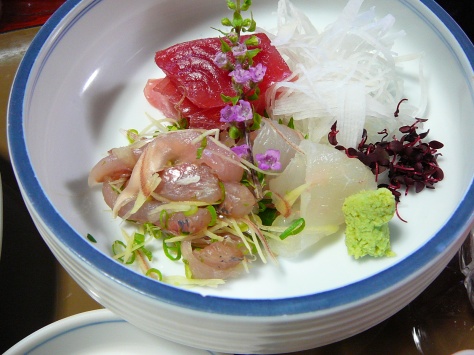
Sashimi plate. All seafood caught off Shizuoka shores!
Maguro/Tuna (top), Aji/Saurel and Hirame/Sole!

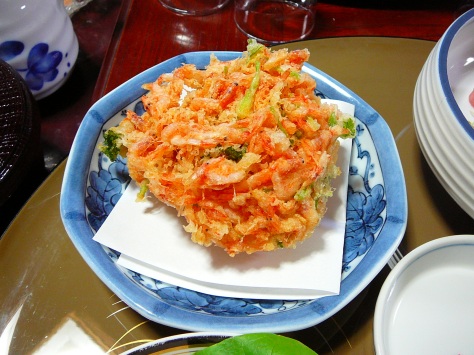
yui-4

Sakura Ebi Kakiage/Sakura Shrimps Tenpura. I know a lot of people in Tokyo who would take the first train to taste that!

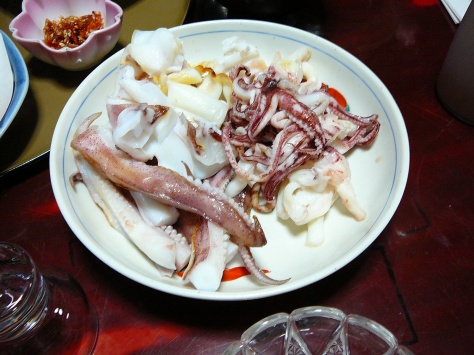
yui-71

Freshly boiled Ika/Cuttlefish. Great with sake.
The small plate contains pickled sakura shrimps.

yui-6

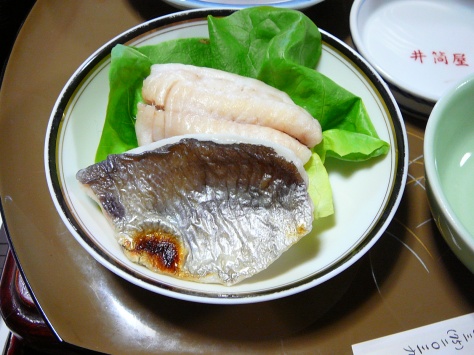
Grilled Ishidai/Snapper served cold. An extravagant morsel to go with sake!

yui-8

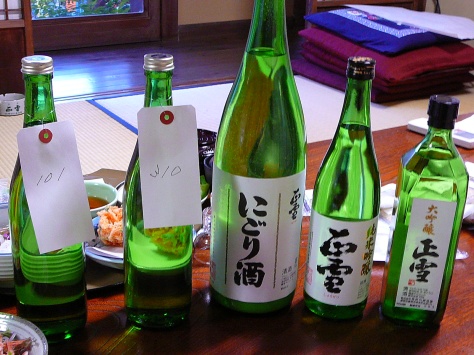
And the sake!
The two with a “number” were not even for sale as they are still in the experimental phase!

Anyway, if you have the occasion to visit Yui, you will know that the real “package” is waiting for you!

Please check the new postings at:
sake, shochu and sushi

—————————————-
日本語のブログ
—————————————-

Sake Fundamentals Workshop in Tokyo on January 17th! (Melinda Joe)


The Japan Blog List

Please check the new postings at:
sake, shochu and sushi

—————————————-
日本語のブログ
—————————————-

melinda

Tokyo residents or visitors are so lucky!

On January 17th (Saturday, 14:00) join Melinda Joe and Japanese food expert Elizabeth Andoh, author of award-winning cookbook Washoku, for the first installation of our Sake Fundamentals workshop! In this session, we’ll talk about sake production, grades of sake, and pairing. Find out what separates a honjozo from a daiginjo, how to choose the right sake for your food, and much, much more. You’ll have the chance to taste five wonderful sake, along with Andoh-sensei’s delicious Japanese home-cooking. You only have a week to sign up, so get cracking.

More sessions on February 7th and March 7th! Check calendar!

Must-see tasting websites:
-Sake: Tokyo Through The Drinking Glass, Tokyo Foodcast, Urban Sake, Sake World
-Wine: Palate To Pen
-Beer: Good Beer & Country Boys, Another Pint, Please!
-Japanese Pottery to enjoy your favourite drinks: Yellin Yakimono Gallery

Umeshu: Sanwa Brewery


The Japan Blog List

Please check the new postings at:
sake, shochu and sushi

—————————————-
日本語のブログ
—————————————-

umeshu-sanwa

Umeshu comes under different guises in Japan, but if you buy one instead of making it yourself make sure you buy one brewed by a reputable Brewery!
In Shizuoka Prefecture, umeshu is an extravagant affair when made by the local breweries.
Sanwa Brewery in Shimizu Ku, Shizuoka City is no exception!

Sanwa Brewery Garyubai Umeshu

Alcohol: 12 degrees (fairly low for Shizuoka but still high when compared with cheap stuff!)
Ingredients: Japanese Plum (“Ume”), Sake. Sugar.

Clarity: Very clear at rest. Smoky if stirred beforehand
Colour: Orange/sepia
Aroma: Ver fragrant and sweet plums.
Body: Velvety~fluid
Taste: Dry attack, turns sweet later. Shortish tail. Very pleasant impression. Elegant.

Overall: Very enjoyable and easy to drink.
Fine at room temperature.
Makes for a great aperitif when chilled.
Great with cheese at room temperature.
Elegant beverage. Should please both ladies and gentlemen!

Shizuoka Izakaya: Drinking History at Yasaitei


The Japan Blog List

Please check the new postings at:
sake, shochu and sushi

—————————————-
日本語のブログ
—————————————-

Last night I was invited by the owners of Odakkui, Katayurimo and Hana Oto Izakayas to share a very special bottle of sake (above pic).
This sake, a superlative Daiginjo, had been brewed back in 1997 by Okada Brewery which eventually ceased operations in 2006. In spite of its old age (for a sake) it had preserved in perfect condition all the time at very cold temperature by a collector cum liquor shop, Matsunagaya in Shizuoka City.
For the connoiseurs, this Daiginjyo is called Okinabeneten, brewed by Okada Brewery in Fujieda City. Rice: Yamada Nishiki milled down to an extravagant 35%. The yeast was a Shizuoka NEW-5 Yeast. Dryness is only +7~+9 and acidity a very low 1.0~1.3. The drawing process was “Fune shibori/tank press”. Alcohol was standard 15~16 degrees.
A great sake, so pleasant to drink with a dry elegant entry, short tail and a complex and rich aroma and taste. Tended to show different facets with food, alternatively turning drier and sweeter. An incredibly extravagant sake to drink with food. We drank it both chilled and heated.

Now, what did we eat with such a nectar?
First of all, sashimi of course. Not one kind, but two!
First seafood sashimi as shown on pic above:
(From top clockwise) Fresh Shirasu/baby sardines, Akami/lean tuna, Madai/red snapper, Hotategai/scallops, Katsuo/bonito. In the centre is boiled Tako/octopus. The whole was provided with wasabi (real one!), grated ginger, myoga cut into very fine strips and chopped thin leeks.

Yasai sashimi/vegetables sashimi, the specialty of the house. Great juicy and crunchy cucumber, daikon, red radishes, celery (Shizuoka Prefecture produces half of all celery in Japan!), myoga and sweet red pimento. You probably noticed the big shiso leaf concealing chopped sweet onions. A treat for vegetarians (and vegans!)!

Yasatei is also renown for its superlative Kansai-style oden!

And finally another treat for vegetarians: renkon/lotus roots sauteed with soy sauce and sprinkled with sesame seeds!

Great food for a great sake!

Yasaitei
Shizuoka City, Aoi Ku, Tokiwa-Cho, 1-6-2 Green Heights Wamon 1-C
Tel.: 054-2543277
Business hours: 17:30~22:00
Closed on Sundays
Reservations highly recommended

Shizuoka Izakaya: Bu-Ichi (re-visited)


The Japan Blog List

Please check the new postings at:
sake, shochu and sushi

—————————————-
日本語のブログ
—————————————-


(Oumuraya Brewery, Hakuen Bishamon Honjozo)

The Missus has this special liking for Bu-Ichi Izakaya (which I share!), not only because she loves the food, drinks and atmosphere, but also because she always happens to learn something new she will be glad to try reproduce (in her own way) back home! I’m not one to complain, and I certainly enjoy writing about the place over and over again!


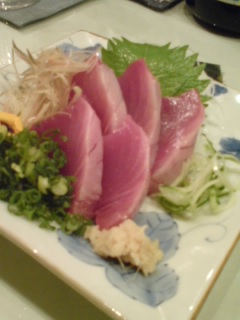
One thing is certain: this is one the very best places in the whole Prefecture to enjoy sashimi as once again demonstrated by the succulent katsuo/bonito served with grated ginger and thinly-chopped leeks.


Another reason is the top-class Shizuoka Sake!
I (my wife drinks wine as a matter of course) chose this very limited edition (only 300 bottles) by Oumuraya Brewery in Shimada (Tim, are you reading?):
Hakuen Bishamon, Honjozo, a very soft, almost sweet sake (Dryness: +1, acidity: 1.3).


Sanma/Mackerel Pike is in season. We ordered a yaki sanma sarada/grilled mackerel pike salad. The fish is first grilled, then shred into small bite-sized chunks and served with vegetables and home-made dressing. This is the recipe that the Missus has a special interest for!


Talking of vegetables,Bu-Ichi, in spite of all its great fish and meat, would be the perfect place for a vegetarian too thanks to perfect vegetables tenpura! Wherever they come from, they are always exlusively seasonal!


With such meals, sake tends to disappear too quickly! My next order was a Kikuyoi Tokubetsu Junmai by Aoshima Brewery in Fujieda City. Mr. Aoshima makes superlative sake getting recognition all over Japan in spite of its relatively small size. Incidentally he also speaks fluent English for those who would like to visit his brewery!

As we are both omnivores, we felt a little meat was in order to finish our meal (we usually skip dessert in Japanese restaurants as there is always the open possibility to visit another one later!).
Bu-Ichi serves a scrumptious sansho tori karaage/fried chicken with Japanese pepper. A beauty that my American friends in particular would swim across oceans to taste!

Look forward to the next meal there!

Bu-Ichi
420-0032 Shizuoka City, Aoi Ku, Ryogae-cho, 1-6-10, Dai 2 Matsunaga Bldg. 2F
Tel.: 054-2521166
Closed on Wednesdays
Reservations advisable

Shizuoka Izakaya: Waga


The Japan Blog List

Please check the new postings at:
sake, shochu and sushi

—————————————-
日本語のブログ
—————————————-

Waga is your typical new wave izakaya. Opened a little more than two years ago by the very young at heart (a fan of the Beatles,Queen and Led Zeppelin among others) Shuhei Ichikawa it seems very popular as I managed to enter it only at the third try and this somewhat late at night. In any case if you plan to patronize the place before 9:00 p.m., you had better reserve in advance!

The staff in their late 20’s (30’s?) are a smiling hard-working bunch, but nonetheless extremely welcoming and attentive.
Now as any good izakaya, Waga always has at least a couple of remarkable jizake on offer, although they do change regularly.

The first I ordered was a Hakuin Masamune Junmai by Takashima Brewery in Namazu, a real beauty!
It just drank like wine! Pity I could not stay too long this time, or I might have contributed to the bottle death!

Actually you had better keep your eyes wide open! Not many izakaya offer French Pernod and Ricard, and Portuguese Porto wines!

Now the first indication of a good izakaya, and especially in Shizuoka Prefeture, is its sashimi offering. If you ask for “moriawase/plate”, you will get a good idea of the establishment.
Now, the “Katsuo Tataki/Bonito slightly cooked”, “Kanpachi/Yellowtail” and “Maguro/Tuna” were simply of the higher level that would put a few vaunted Tokyo places at shame, but at very kind prices!

As I said, my friend and I were in a bit of a hurry, but we opted for dishes representative of the establishment. The seasonal dish was “Jukusei Tsurushi Buta Saute to Kisetsu no Kinoko Ankake/Sauteed matured Pork (with tofu) and seasonal mushrooms in sweet and sour sauce”. A hearty dish which should satisfy a big appetite!

Talking of solid appetites the “Karaage/Deep-fried Chicken)” was not only succulent but absolutely enormous. You would problems closing your hand around any of them!

When it comes to sake I’m a big drinker. I asked for the other Shizuoka Sake available, Takasago karakuchi Junmai by Fuji Takasago Brewery in Fujinomiya City. Very dry indeed, but so easy and pleasant to drink!

“Tamagoyaki/Japanese Omelette” is also another preriquisite at any good izakaya, and the one concocted by Waga is also a beauty. We certainly did not need any dessert!

Blimey! There is no way we could sample all the offerings. Which means I will have to come back in a hurry!

Waga
420-0839 Shizuoka Shi, Aoi Ku, Takajo Machi, 2-1-20, Kuroyanagi Bldg., 1F
Tel. & Fax: 054-271-7121
Opening hours: 17:30~23:30 (Monday to Thursday), 17:30~26:00 (Friday, Saturday and day before any National Holiday).
Closed on Sundays and National Holidays.
Set menus and parties possible.
Reservations recommended.
HOMEPAGE (Japanese)

Shizuoka Umeshu: Masu Ichi Brewery


The Japan Blog List

Please check the new postings at:
sake, shochu and sushi

—————————————-
日本語のブログ
—————————————-

Every year more local breweries are offering “umeshu” eminently popular in summer when it is most appreciated poured over a few ice cubes!

Masu-Ichi Brewery in Shizuoka City has just entered the fray with concoction called “Denjiro”, which actually is the master brewer/toji’s trade name as he is the second apprentice of Denbei Kawamura, the man who created the Shizuoka Yeast.

It contains less alcohol, 7~8 degrees, as compared to the more usual 15 degrees, making it very easy to drink by ladies and younger people in particular.

Masu Ichi Brewery: “Denjiro”, “Tsuka/Plum Aroma” Umeshu

Alcohol: 7~8 degrees
Plums, sake, sugar.
Bottled: July 11th, 2008

Clarity: very clear
Colour: light red/pink
Aroma: light, dry, plums
Body: velvety
Taste: Shortish tail. Plum taste discreet, not overwhelming. Elegant. Dry.

Overall: Makes for a great light aperitif in hot summers!