Tag Archives: 野菜

Vegan French Steamed Organic Salad at Pissenlit

Service: excellent and very friendly
Facilities: great washroom, great cleanliness overall
Prices: reasonable, good value.
Strong points: Interesting wine list. Great use of local products.
no-smoking-logoentirely non-smoking!

Great food is great food!
Be you vegan, vegetarian or omnivore, one can only appreciate and being thankful for savouring vegetables not only of the best quality, but local and organically grown to boot!
I will never tire of saying to everyone how lucky we are here in Shizuoka Prefecture, Japan, a region renown nationally and increasingly internationally for its exceptional gastronomy!

Bazooka Gourmet is probably going to have another (shooting) field day when he learns that I have just been approached by the local government to help promote the local agriculture through blogging!
What can I say? It’s simply a pleasure!

To cut an increasingly long story short, I visited Pissenlit for lunch, and when I saw “Mishima Hirokawa San Yasai no Etuvee”/Steamed vegetables grown by Mr. (Hideyaki) Hirokawa in Mishima City, I knew that no-one could unhook me from my (delicious) doom!

To tell the truth I have nurtured a special relation with chef Tooru Arima (and many others), and he is only too happy to oblige with my sometimes very selfish requests!

He gracefully allowed me to take pics of his treasures! The pic above are greens grown by Mr. Hirokawa!
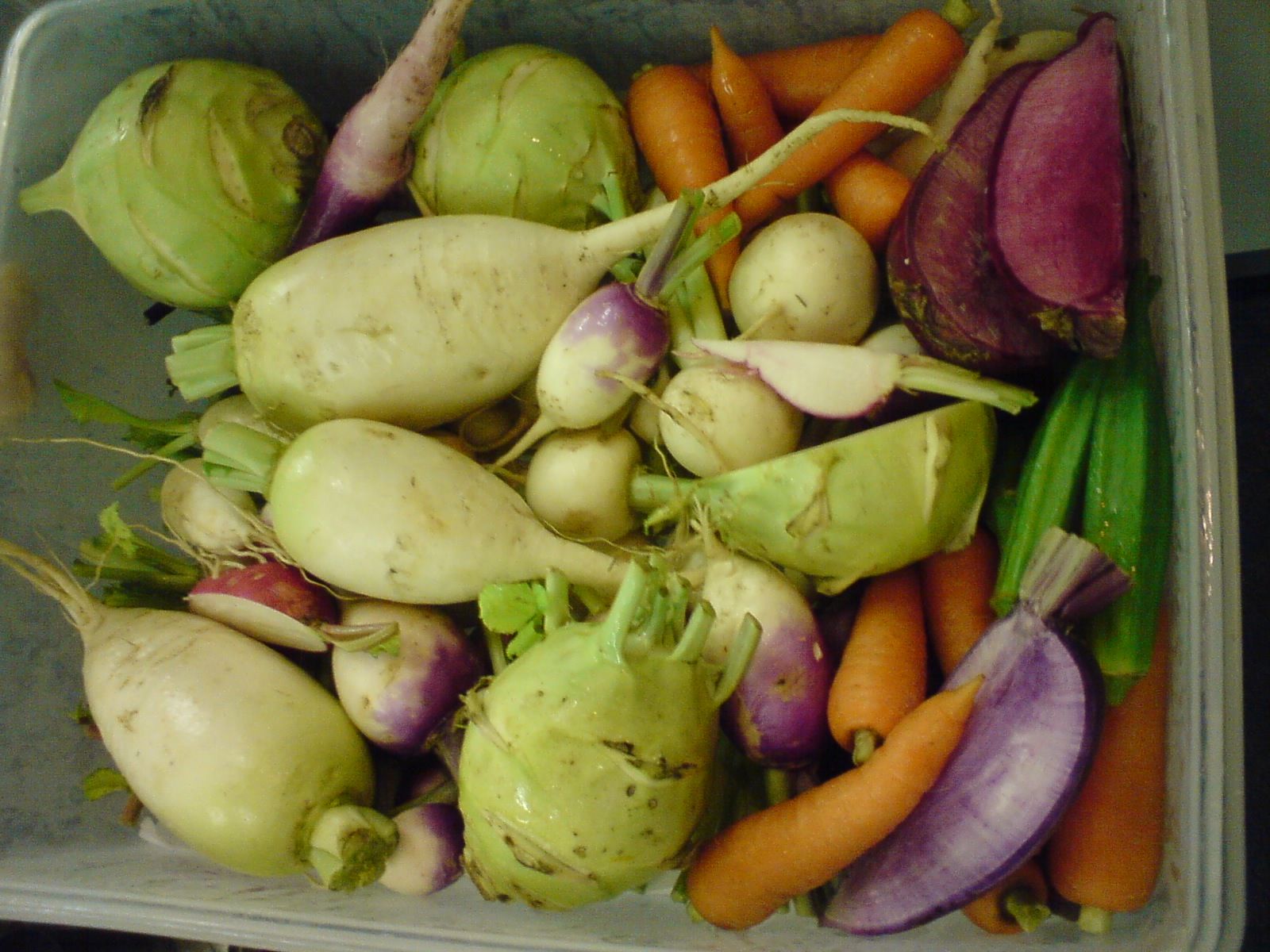
And these the other organic vegetables grown by the same farmer!

Alright, let me give you at least the names of the vegetables I enjoyed so much:
in above picture you can see:
Front row: Carrot/Ninjin/人参, Red Round Daikon/Beni Maru Daikon/紅丸大根
Second row: Violet Round Daikon/Murasaki Maru Daikon/紫丸大根, Snow Beauty Daikon/Yuki Bijin Daikon/雪美人大根, Day Field Leaf Turnip/Hinona No Kabu/日野菜の蕪, Cauliflower/こりフラワー, and Ayame Turnip/Ayame Kabu/あやめ蕪.

Front row: Violet Round Daikon/Murasaki Maru Daikon/紫丸大根, Stick Junior Broccoli/シティックジューニアブロッコリー, Snow Beauty Daikon/Yuki Bijin Daikon/雪美人大根, Red Round Daikon/Beni Maru Daikon/紅丸大根,
Carrot/Ninjin/人参
Second row: Akakura Daikon/赤くら大根, Day Field Leaf Turnip/Hinona No Kabu/日野菜の蕪, Red Long Water Daikon/Aka Naga Mizu Daikon/赤長水大根, Cauliflower/こりフラワー, and Ayame Turnip/Ayame Kabu/あやめ蕪.
Third row: Small Turnip/Ko Kabu/子株 on top of White Cucumber/Shiro Kyuuri/白胡瓜.
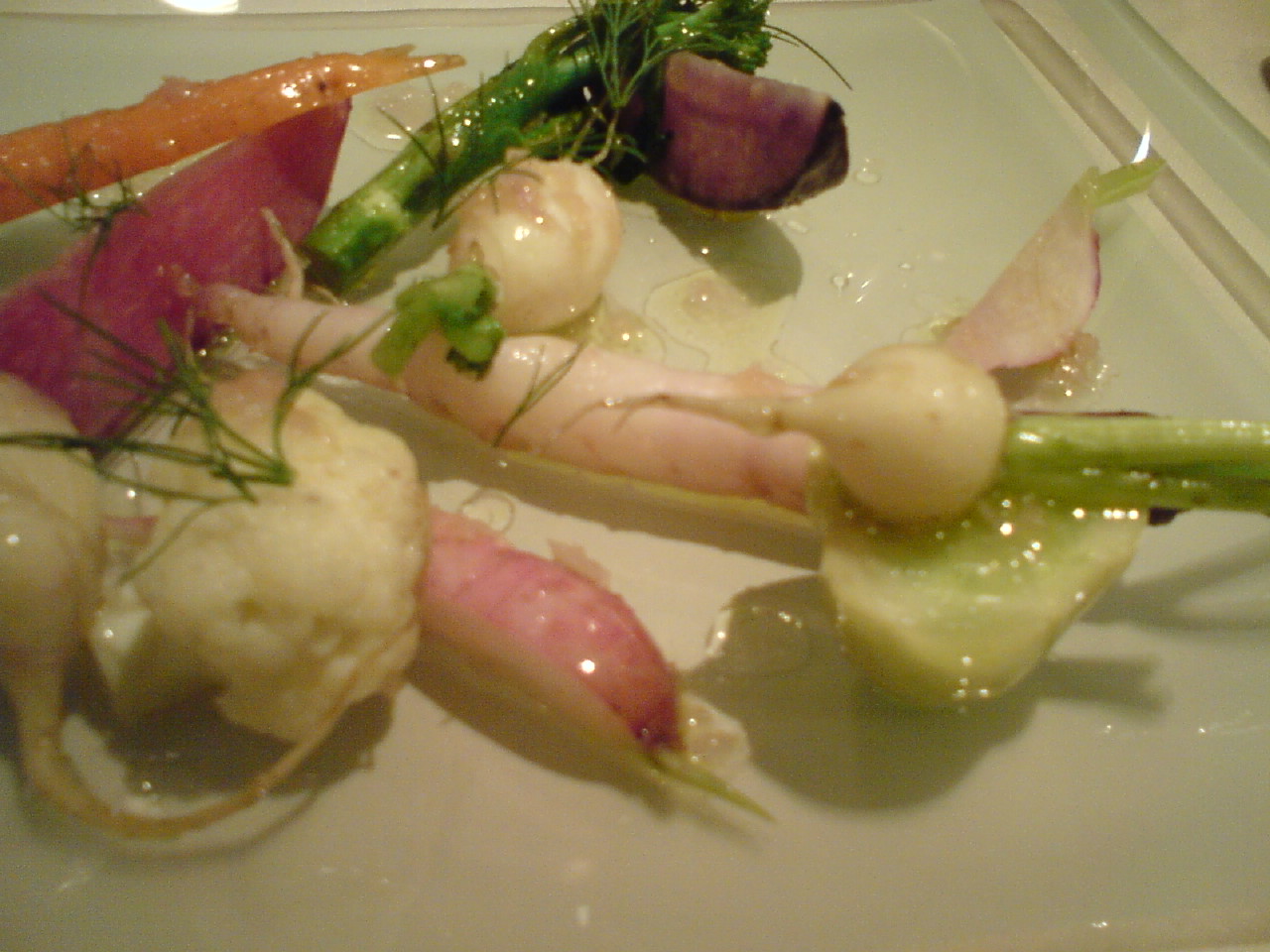
Front row: Ayame Turnip/Ayame Kabu/あやめ蕪, Cauliflower/こりフラワー, Aka Naga Mizu Daikon/赤長水大根, and Small Turnip/Ko Kabu/子株 on top of White Cucumber/Shiro Kyuuri/白胡瓜.
Second row: Carrot/Ninjin/人参, Red Round Daikon/Beni Maru Daikon/紅丸大根, Snow Beauty Daikon/Yuki Bijin Daikon/雪美人大根, Day Field Leaf Turnip/Hinona No Kabu/日野菜の蕪, and Akakura Daikon/赤くら大根.
Third row: Stick Junior Broccoli/シティックジューニアブロッコリー and Akakura Daikon/赤くら大根.

Front row: Small Turnip/Ko Kabu/子株 on top of White Cucumber/Shiro Kyuusri/白胡瓜, Day Field Leaf Turnip/Hinona No Kabu/日野菜の蕪, Violet Round Daikon/Murasaki Maru Daikon/紫丸大根.
Second row: Red Log Water Daikon/Aka Naga mizu Daikon/赤長水大根, Cauliflower/こりフラワー, Snow Beauty daikon/Yuki Bijin Daikon/雪美人大根, and Stick Junior Broccoli/シティックジューニアブロッコリー.
Third row: Ayame Turnip/Ayame Kabu/あやめ蕪, Red Round Daikon/Beni maru Daikon/紅丸大根 and Carrot/Ninjin/人参!

The vegetables were steamed/cooked to perfection providing a satisfying bite with the right combination of tenderness and crunchiness.
The dressing was also vegan, shallots, garlic, olive oil, Guerande salt and vegetables “juices”, providing for an elegant and precise seasoning!

If you have the occasion to visit Mishima City this is the address of our great farmer!

Mr. Hideyaki Hirokawa, Mishima City, Kawaharagaya Yamada, 765
Tel.: 055-973-2702

PISSENLIT
420-0839 Shizuoka City, Aoi Ku, Takajo, 2-3-4
Tel.: 054-270-8768
Fax: 054-627-3868
Business hours: 11:30~14:30; 17:00~22:00
Closed on Tuesdays and Sunday evening
Homepage (Japanese)
Credit Cards OK

RECOMMENDED RELATED SITES:
Warren Bobrow, Bread + Butter, Zoy Zhang, Hungry Neko, Think Twice, Frank Fariello, Mangantayon, Hapabento, Elinluv Tidbit Corner, Tokyo Terrace, Maison de Christina, Chrys Niles,Lexi, Culinary Musings, Wheeling Gourmet, Comestiblog, Chronicles Of A Curious Cook, Tokyo Through The Drinking Glass, Tokyo Foodcast, Palate To Pen, Yellin Yakimono Gallery, Tokyo Terrace, Hilah Cooking, More than a Mount Full, Arkonite Bento, Happy Little Bento; 5 Star Foodie; Jefferson’s Table; Oyster Culture; Gourmet Fury; Island Vittles; Good Beer & Country Boys; Rubber Slippers In Italy; Color Food daidokoro/Osaka;/a; The Witchy Kitchen; Citron Et Vanille, Lunsj Med Buffet/Estonian Gastronomy (English), Cook, Eat, Play, Repeat, Chrisoscope
Please check the new postings at:
sake, shochu and sushi

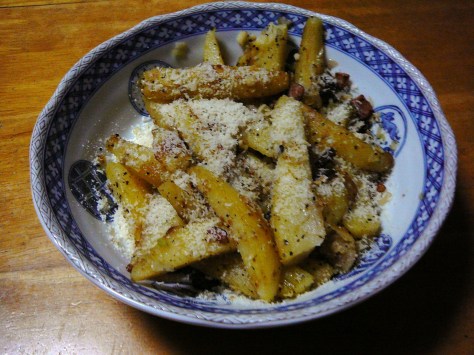
Fried Potatoes, the healthier and tastier way!

fried-potatoes

Fried potatoes have been temptying us since the 17th Century when the Belgians first experimented cooking them in oil. At the time, deep-frying, imported by Crusaders from the Middle East, was the only absolutely safe way to cook, especially in the “flat countries” as Belgium and Holland were called at the time, because water was a bed for all kinds of diseases.

Now, eveyone knows that boiled potatoes are healthy, if somewhat bland in taste, whereas fried potatoes are tasty but hideously high in unwanted calories.
Time and again I use a simple method half way which will enable you to enjoy your favourite snack/main dish with a lighter heart (and midriff) and at the same time allow you to serve a savoury dish to your ravenous friends or family! (But don’t overeat them!)

INGREDIENTS
(for 2 to 4, depending whether it is an accompaniment or full dish):

-4 large potatoes
-1 large echalotte/shallot (if unavailable, half a red onion is great!), finely chopped
-3 cloves of garlic, finely chopped
-Bacon (vegan and vegetarians, please skip this but keep in mind you will have to add a little salt)-1 large rasher cut in small pieces (half a cm square or half the size of your little finger nail, cut short!)
-Parmesan/Parmiggiano Cheese (vegans, please skip this or use alternative), freshly grated, 3 large tablespoons.
-Salt (for the potatoes boiling water, otherwise as little as possible, as bacon and cheese will contain enough!)
-Pepper, nutmeg. Foodies who like their food Indian-style may add a little powdered curry mix and chili pepper.
-Olive oil: 2 large tablespoons

RECIPE:

-Boil potatoes in plenty of salted water. If you do not add salt to the water, the potatoes will end up very bland in taste.

-Once the potates are boiled at about 80%, plunge them into cold water. This little trick will prevent them from breaking up later.

-When potatoes are cold enough, peel and cut them in wedges (the size is up to you). If the potatoes are new,leave the skin on.

-In deep enough frying pan dry-fry (no oil added) the chopped bacon until it becomes a nice crisp and dark. Put aside on a small dish. For non-vegan/vegetarians, do not wipe the pan, or you will miss a lot of taste!

-Pour two large tablespoons of olive oil in the same frying pan. That is enough, and the oil will be “sucked in” by the potatoes with the result that the potatoes will not be “greasy”. Use olive oil, extra virgin, as this is best, not only for taste, but for health (the vitamin C contained in olive oil do not disappear even cooked for a long time).

-When potatoes have almost reached the wanted colour, drop in shallots, garlic, fried bacon, pepper, nutmeg (and salt if you absolutely must use some!). Toss-fry until shallots have turned transparent.

-Pour the lot into a serving dish and sprinkle parmesan over it.

Enjoy at once!

Sometimes, simple is best!

RECOMMENDED RELATED SITES:
Bread + Butter, Comestilblog, Greedy Girl, Bouchon For 2, Zoy Zhang, Hungry Neko, Mangantayon, Elinluv Tidbit Corner, Maison de Christina, Chrys Niles, Lexi, Culinary Musings, Eats and Everything, Bite Me New England, Heather Sweet, Warren Bobrow, 5 Star Foodie, Frank Fariello, Oyster Culture, Ramendo, Alchemist Chef, Ochikeron, Mrs. Lavendula, The Gipsy Chef

Please check the new postings at:
sake, shochu and sushi

—————————————-
日本語のブログ
—————————————-

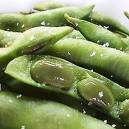
Edamame: Japanese Green Soybeans

I’ve always been somewhat puzzled to find the word “edamame” in my U.S. (and European) friends’ blogs. This conspicuous vegetable seems to conjure grand images of Japanese gastronomy in spite of its almost base status in this country.

After all, “edamame” (枝豆/branch bean in Japanese) is nothing but green soybeans, a food mass-produced and heavily exported by North American farmers.
Or, is it that the soybean’s image has fallen so low on the other side of the Pacific because some people grow it for bio-ethanol that restaurateurs feel more comfortable with a grand-sounding Japanese name?

Alright, before I get collared for indulging into a cheap rant, let me introduce my own recipe for preparing the “delicacy”:
One does not have to boil it, cool it and serve it sprinkled with salt. This is probably the worst and least healthy way to consume it!
If you can, choose them fresh on the branch(es). This will guarantee they haven’t lost any of their nutrient qualities.
Cut out all the pods and throw away the branches (or re-process them inside your fertilizer box!).
Clean the pods under running water.
Drain water, but do not wipe them dry.
Drop them in an appropriate-sized non-stick pan and hand-rub them in a little coarse salt. The less salt, the better, but enough to season all pods. Experience and personal preferences will tell you how much you need.
Cover pan with a glass lid and switch on fire to medium-low. Cook until water seeps out of the pods. Switch off fire and keep inside covered pan (do not take the lid off!) for a good 5 minutes. By then, they should be sufficiently cooked.
Serve immediately.

In Japan there exists another variety called Kuro Edamame/黒枝豆-Black Edamame.
Actually they are a light brown-green soybean grown in Shizuoka Prefecture and elsewhere. They are definitely tastier and deserve the title of “delicacy”.
The beans out of their pods also make for great addition to salads, artful presentation with meat dishes, and are great mixed inside “nigiri”!

RECOMMENDED RELATED SITES
Not-Just-Recipes, Bengal cuisine, Cooking Vegetarian, Frank Fariello, Gluten-free Vegan Family, Meatless MamaFrank Fariello, , Warren Bobrow

Please check the new postings at:
sake, shochu and sushi

—————————————-
日本語のブログ
—————————————-

Vegan Farandole

p1010612

Next Sunday, I will have to cook dinner for a vegan friend, and I just happen to be litterally submerged with vegetables.
I will simply reproduce a recipe and dish I created at the beginning of the year again!
This simple idea can expanded at infinitum. It has the merit of making use of very healthy ingredients and help the system take a much needed rest! LOL

farandole-oil-22 farandole-oil-3 farandole-oil-1

I utilized three different oils from three different countries to add a little inernationalization: Olive oil from Italy, Walnut oil from France and Argan oil from Morocco!

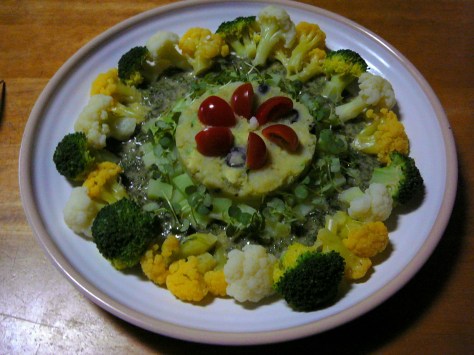
In the centre of the plate I arranged a “circle” of boiled potatoes mixed in “brandade style” with plenty of olive oil, avocado, black olives, lemon juice, a minimum of salt, chopped fresh garlic, pepper, nutmeg, thyme and yuzu chili pepper. Indian friends would probably add plenty more spices.
I surrounded it with a thin crown of boiled diced brocoli stems and shiso/perilla shoots/mini leaves.

farandole-2

I then added plenty of dressing around the lot. The dressing was made with walnut oil, taragon white wine vinegar, soft Dijon mustard (with seeds), lemon juice, a little salt, pepper and a large amount of very finely chopped fresh parsley and basil. It was very consistent and easy to spread without “leaking” everywhere.
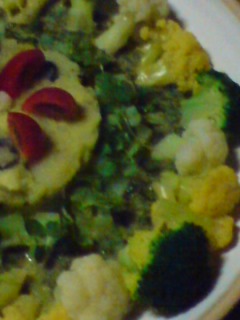
Around the whole, I arranged boiled green brocoli, white cauliflower and yellow cauliflower (beautiful and very tasty) all grown in Shizuoka Prefecture.
I decorated the potato core with plum tomato wedges, and sprinkled both the cauliflower(s) and tomatoes with a little dash of argan oil (take it easy with this particular oil as it is particularly fragrant!).

I hope this will give ideas to my vegan and vegetarian friends for their next repast! By the way, “Farandole is a dance!

RECOMMENDED RELATED SITES
Not-Just-Recipes, Bengal cuisine, Cooking Vegetarian, Frank Fariello, Gluten-free Vegan Family, Meatless MamaFrank Fariello, , Warren Bobrow

Please check the new postings at:
sake, shochu and sushi, Le Petit Cuisinier, Vegan Epicurean, Miss V’s Vegan Cookbook

—————————————-
日本語のブログ
—————————————-

Scottish Dessert: Whisky and Rolled Oats Mousse

BARLEY-WHISKY

Yes, they have great for desserts in Scotland!

Whisky & Rolled Oats Mousse!

INGREDIENTS: for 4 persons

-Fresh cream: 600 ml
-Rolled Oats/Barley: 75 g
-Whisky: 6 tablespoons
-Honey (liquid): 3 tablespoons
-Raspberries (can be replaced by seasonal small fruit: strawberries, blaberries, etc.): 500 g

RECIPE:

-Spread the rolled oats on an oven hot plate. Place them under the grill for 2~3 minutes until they become golden. Let cool down completely on the oven hot plate.

-Beat the fresh cream (chilled!) with an electric beater/whisker. When the cream has become a firm Chantilly, continue to beat as you add the whisky and honey.
Then add the rolled oats with a wooden spoon.

-Pour some of the cream in 4 large glass cups. Place a layer of raspberries. Repeat the process until you reach the top of the glass cup.

-Keep the glasses inside a fridge for at least 2 hours (you can prepare the dessert the night before).

Drink your favourite whisky with it!

Please check the new postings at:
sake, shochu and sushi

—————————————-
日本語のブログ
—————————————-

Scottish Cuisine: Green Peas and Mint Soup

PEAS-MINT

I have nurtured a special fondness for Scotland where I stayed many times as far back as in the 1970’s. I’m still an ardent fan of Hamilton Academics, better known as the “Accies”, Football Club (Soccer)!

Scotland has more to offer than whisky and haggis, and its gastronomy is slowly but steadily getting better attention thanks to the thousands of tourists visiting this beautiful and still wild country.

It is a very cold country in winter, and a good soup is always much appreciated there!

Green Peas and Mint Soup!

INGREDIENTS: For 4 people

-Fresh or frozen green peas: 500 g
-Lettuce leaves: 150 g
-Onions: 250 g
-Chopped fresh mint: 3 large tablespoons
-Butter: 50 g
-Fresh cream: 100 ml
-Salt and pepper to taste

RECIPE:

-Peel the onions and chop finely. Wash the lettuce leaves and cut/chop finely.

-Melt the butter in large deep pan and cook the onions slowly over a low fire. They must melt but not change colour. Add the lettuce first and after a minute or two add 1 litre of water. Cook over a very low fire for 20 minutes.

-Add the green peas and bring to boil. Take off fire.

-Add the mint and mix for a long time with an electric whisker. Season with salt and pepper. Sieve the soup through a very fine mesh and pour again into the pan.

-Add the fresh cream and re-heat the soup over a low fire, taking care not to boil it.

-Serve hot with a few green peas and mint leaves.

NOTE:
You may also serve this soup with whisked fresh cream to which you have added plenty of pepper!

Please check the new postings at:
sake, shochu and sushi

—————————————-
日本語のブログ
—————————————-

French Gastronomy on Stamps (29): Traditional Ingredients & Dishes

TIMBRES-GASTRONOMIE-1

France has issued many stamps on food (not foodstamps!) on her own gastronomy for quite some time including the new series will be issued on April 25th and wil be printed in the form of mini-sheets dedicated to a particular region with stamps, pics and explanations.
As for stamps issued since the first stamp in 1849, a number of them were issued with Traditional Ingredients and Dishes as a theme:

TIMBRES-BEURRE
BEURRE/butter
Someone said that France is a muntain of butter in the middle of a lake of milk, a statement hotly disputed by Denmark!

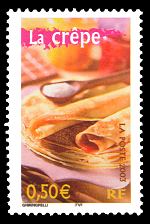
TIMBRES-CREPE
CREPE
The word crepe apllies only for the sweet whet flour pancake. Its original meaning is “lace” as of a lace veil.
The buckwheat pancake is called “galette”.

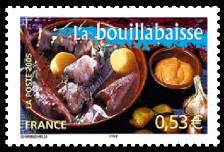
TIMBRES-GASTRONOMIE-BOUILLABAISSE
BOUILLABAISSE
Oriinally a poor man/fisherman’s soup eaten with toasted bread has beome an extravagant “national” dish almost unrelated with the real one.

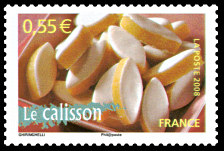
TIMBRES-GASTRONOMIE-CALISSON
CALISSON
A traditional sweet from south France.

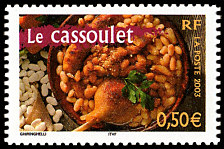
TIMBRES-GASTRONOMIE-CASSOULET
CASSOULET
Created with beans originally from India. It takes four hours to cook it with beans, tomatoes and meat (pork, duck or goose) before being gratineed in an oven for at leat an hour.

TIMBRES-GASTRONOMIE-FOIEGRAS
FOIE GRAS
Made in different regions of France. originally mad with goose liver. I, for myself prefer duck foie gras!

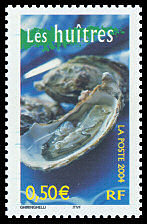
TIMBRES-GASTRONOMIE-HUITRES
HUITRES/Oysters
Did you know that all oysters in France, except for the Belon variety either came from Great Britain or Japan?

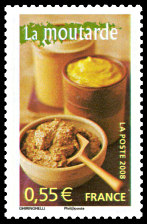
TIMBRES-GASTRONOMIE-MOUTARDE
MOUTARDE/Mustard
Originally from the Middle East, it is mainly prepared in Dijon, my birthplace!

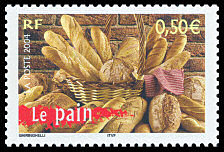
TIMBRES-GASTRONOMIE-PAIN
PAIN/Bread
Baguette is not French by the way. It was introduced by the Austrian Queen, marie-Antoinette!

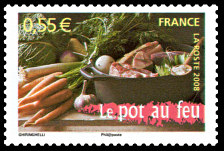
TIMBRES-GASTRONOMIE-POTAUFEU
POT AU Feu/Pot on the Fire
Has become universal!

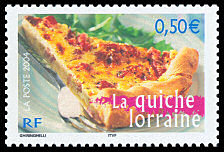
TIMBRES-GASTRONOMIE-QUICHE
QUICHE LORRAINE
The original one, cooked with fresh cream, eggs and bacon only!

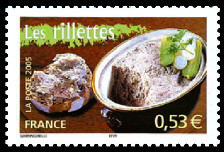
TIMBRES-GASTRONOMIE-RILLETTES
RILLETTES
made with lean pork and lard. Great, but careful with those calories!

TIMBRES-LECAFE

CAFES, the symbol of a lifestyle originally came from Austria!

————————-
Please check the new postings at:
sake, shochu and sushi

—————————————-
日本語のブログ
—————————————-

French Gastronomy on Stamps (28): River Fish

TIMBRES-GASTRONOMIE-1

France has issued many stamps on food (not foodstamps!) on her own gastronomy for quite some time including the new series will be issued on April 25th and wil be printed in the form of mini-sheets dedicated to a particular region with stamps, pics and explanations.
As for stamps issued since the first stamp in 1849, a number of them were issued with River Fish as a theme:

TIMBRES-GASTRONOMIE-POISSON-Saumon

SAUMON/Salmon

Of course most varieties of Salmo both live in the sea and in rivers.
In France, salmon fishing regulations are very strict and define the season when one can catch the fish, its minimum size and fishing area.
The French probably appreciate it most poached, and served cold with a jelly coating and mayonnaise either served whole or in medaillons/thick slices.

TIMBRES-GASTRONOMIE-POISSONS-Brochet

BROCHET/Pike

Both caled the “King of Rivers” and the “River Shark”, its catches are also strictly regulated.
Most apprecated either poached and cold like salmon, or as quenelles/dumplings served hot in a gratineed bechamel sauce as made in Lyon!

TIMBRES-GASTRONOMIE-POISSONS-Gardon

GARDON/Common Roach

Found in big schools in quiet rivers, it is a small cousin of the carp.
The French mostly appreciate it in small size, emptied, rolled into flour and deep-fried, served with lemon and a good glass of white wine or beer.

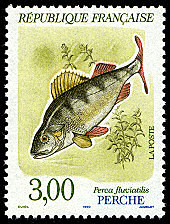
TIMBRES-GASTRONOMIE-POISSONS-Perche

PERCHE/Perch=River Bass

here is a fish whose catching, except for the season, is practically not regulated as it tends to overpopulate rivers and lakes to the detriment of other fish.
Best appreciated as deep-fried filets served with lemon or tartatr sauce! Great with a solid beer!

Look forward to the next postings! There are plenty more!

————————-
Please check the new postings at:
sake, shochu and sushi

—————————————-
日本語のブログ
—————————————-

French Gastronomy on Stamps (27): Fruits, Vegetables, Herbs

timbres-gastronomie-2

France has issued many stamps on food (not foodstamps!) on her own gastronomy for quite some time including the new series will be issued on April 25th and wil be printed in the form of mini-sheets dedicated to a particular region with stamps, pics and explanations.
As for stamps issued since the first stamp in 1849, a great number of them were issued with edible Fruits, Vegetables and Herbs as a theme:

TIMBRES=GASTRONOMIE-CANNEASUCRE

CANNE A SUCRE/Sugarcane
France produces a lot of its brown sugar from sugarcanes grown in the West French Indies and African Islands in the Indian Ocean.

TIMBRES=GASTRONOMIE-POMMEDETERRE

POMME DE TERRE/Potatoes.
France was comparatively late in Europe adopting this particular vegetable.

TIMBRES=GASTRONOMIE-THYME

THYM/Thyme
What would the French do witout it?

TIMBRES-GASTRONOMIE-AWARA

AWARA
Exclusively grown in French Guyana/Guyanne.

TIMBRES-GASTRONOMIE-CASSIS

CASSIS
Cassis is mainly grown and poduced in Dijon, my birthplace!

TIMBRES-GASTRONOMIE-CHATAIGNE TIMBRES-GASTRONOMIE-CHATAIGNE-b

CHATAIGNE/Chestnuts
For a long time, in many rural areas of France, chestnuts provided the flour for bread!

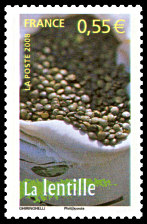
TIMBRES-GASTRONOMIE-LENTILS

LENTILLES/Lentils
Originally coming from Indian, the green small ones are the best!

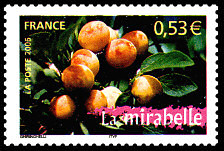
TIMBRES-GASTRONOMIE-MIRABELLE TIMBRES-MIRABELLE

MIRABELLES
At one time almost extinct, they are evrywhere to be found in early Autumn!

TIMBRES-GASTRONOMIE-MYRTILLE

MYRTILLE/Blueberry
Used in making jams and also spirits!

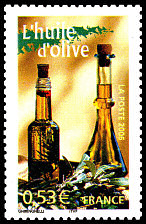
TIMBRES-GASTRONOMIE-OLIVE TIMBRES-OLIVEOIL

OLIVES-HUILE D’OLIVE/Olives and Olive Oil
Grown in Provence mainly!

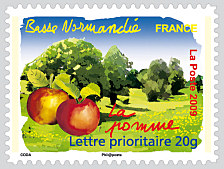
TIMBRES-GASTRONOMIE-POMME

POMMES/Apples
Make for great Cider and Pommeau! (and cakes!)

TIMBRES-GASTRONOMIE-QUETSCHE

QUETSCHE/Plums
What I would give for a tart of them!

TIMBRES-GASTRONOMIE-SALICORNE

SALICORNE
A very rare vegetable/plant growing in salted waters!
Great as pickles!

Look forward to the next postings! There are plenty more!

————————-
Please check the new postings at:
sake, shochu and sushi

—————————————-
日本語のブログ
—————————————-

Vegetables Facts and Tips (6): Asparaguses

asparagus-varieties

Asparagus has been used from very early times as a vegetable and medicine, owing to its delicate flavour and diuretic properties. There is a recipe for cooking asparagus in the oldest surviving book of recipes, Apicius’s third century AD De re coquinaria, Book III. It is said that it was cultivated by the ancient Egyptians, Greeks and Romans, who ate it fresh when in season and dried the vegetable for use in winter.It lost its popularity in the Middle Ages but returned to favour in the seventeenth century.

Facts:
Season: They are at their best March~June in the Northern Hemisphere, but can be obtained all year round thanks to state-of-the-art greenhouse cultivation.
Beneficial elements: Carotene, Vitamin C and E, Vitmanins from the B group, Rutin, Vegetal fibers, Folic Acid, Potassium. The amino acid asparagine gets its name from the plant.
Asparagus rhizomes and root are used ethnomedically to treat urinary tract infections, as well as kidney and bladder stones.
Asparagus is also believed to have aphrodisiac properties (this belief is at least partially due to the phallic shape of the shoots).

Tips:
-Choose asparaguses with a clean cutting surface. No black spots should appear.
-The darker the colour, the better. As for white asparaguses, choses with a “wet cutting”
-When storing your asparaguses in the fridge, have them stand upright in a long narrow container with their foot wrapped in wet kitchen paper. Discard bent asparaguses on the supermarket stands.
-Choose green asparaguses with the smallest possible foliage along the stems and dark tips.
-When boiling them, either boil them stading upright inside a pasta mesh container, or absolutely flat in a sauce pan. Do not bend them.
-Asparaguses are best digested when lightly fried with oil.
-If Asparaguses cannot be obtained directly from the farmer, lightly peel but keep yop half as it is to preserve Vitamins.

Varieties:
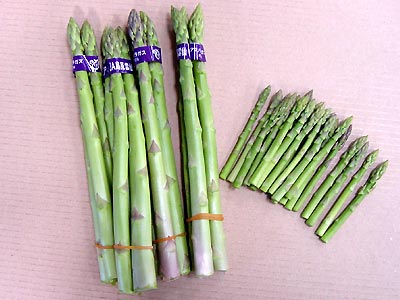
Most popular varieties are shown in the picture above: White, Green and “wild-style” (apeelations vary!)

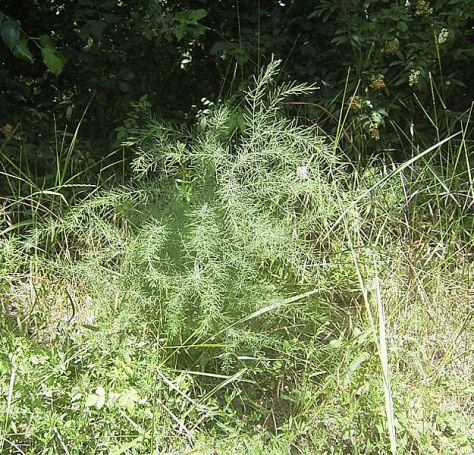
asparagus-wild

Asparaguses are abundant in the while, but they grow very quickly and get too hard for consumption.
The wild ones picked in their natural environment are my favourite as I fondly rememebr picking them up as a soldier in the South of France during our drills and cooking them in simple omelettes!

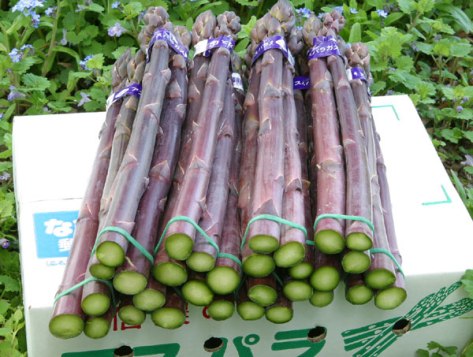
asparagus-violet

Violet asparaguse are very popular in any restaurants!

asparagus-mini

Mini-asparaguses are ever so popular in Japan thanks to their practical size.

uzu-41

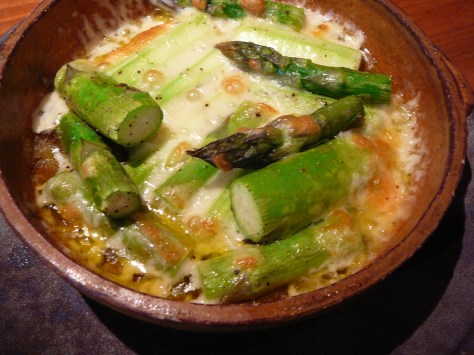
Recipes are endless, but my favourite is the large green asparaguses and mozzarella gratin as prepared and served at Uzu Izakaya in Shizuoka City!

Please check the new postings at:
sake, shochu and sushi

—————————————-
日本語のブログ
—————————————-

Vegetarian Japanese Cuisine: Fried Tofu and Vegetables

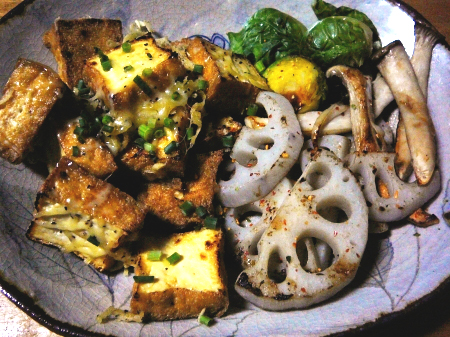
fried-tofu-vegetables
Pic kindly upgraded by Jay Gustafson!

The other night, the Missus thought that some healthy food was in order, that is as much for herself as for me, what with her drinking wine and me savouring my Japanese sake!

She used already deep-fried tofu cubes called “nama-age” bought at the nearby supermarket, cut them to bite-size, saute them on a non-stick frypan as they were (no need for oil) with a liberal amount of pizza cheese and served them with a good measure of freshly chopped thin leeks. All the while on another pan she fried slightly boiled renkon/lotus roots slices with eringi mushrooms cut lengthwise and half-cut Brussels sprouts with some olive oil, a litle salt, pepper and a spicy seasoning mix.
Once ready she added themhot on the same plate.

So simple and tasty!

Please check the new postings at:
sake, shochu and sushi

—————————————-
日本語のブログ
—————————————-

Pervert Daikon?


The Japan Blog List

Please check the new postings at:
sake, shochu and sushi

—————————————-
日本語のブログ
—————————————-

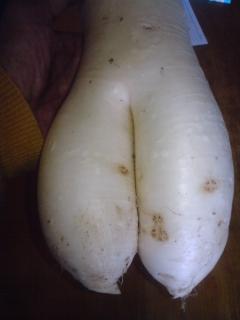
pervert-daikon

My usually prudish half turned up triumphantly with this strange daikon grown in her parents’ garden!

I didn’t know where to start cutting it…

In the end I saw gradually disappearing as I grated the whole for a “daikon-nabe”!

Vegetables Facts and Tips (5): Yams


The Japan Blog List

Please check the new postings at:
sake, shochu and sushi

—————————————-
日本語のブログ
—————————————-

satsuma-1

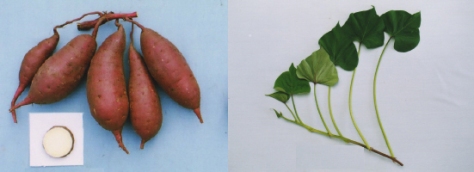
Yams or “Satsuma Imo” were first introduced to Japan in the rykyu Islands (Okinawa) in 1604 by the Chinese. It was then introduced in Kyushu in 1609, an area that grows 80% of the total Japanese production.

It has been recognized in this country fro a long time for both its nutritional and pharmaceutical qualities.

satsumabeni_haruka

There are over a hundred species in Japan, but the most popular edible ones (not the ones exclusively used for making shochu) have red skins and light yellow flesh.

satsumatanegashima

My personal favorite is the “Tanekoshima Gold Imo” grown in Taneko Island south of Kyushu. It has the particularity of being red when raw before chaning to a rich golden color when cooked. Among other varieties, the violet yams are getting increasingly popular.

yummy
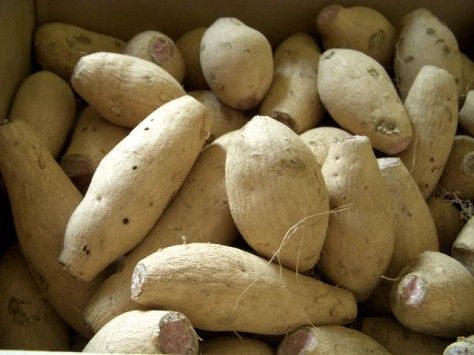
Tanekoshima yam (deep yellow), “common yam” (light yellow) and Murasaki/Violet yam.

The Missus particularly likes to mix the three above as a cold salad with mayonnaise or cream-based dressing.

FACTS:
-Season: September to November
-Main elements: Carbohydrates, Carotene, Vitamin C, Vitamin E, Potassium, Calcium, Magnesium, vegetal fibers.
-Beneficial to digestion.
-Lose very little of its beneficial elements even after a long cooking.

TIPS:
-Choose specimens with nice color and a “fat/roundish” aspect!
-Plunge yam in cold water as soon as you have cut them. They will not lose their color!
-Boil, bake or steam long enough before taking skin off. Discard skin!

Vegetables Facts and Tips (4): Carrots


The Japan Blog List

Please check the new postings at:
sake, shochu and sushi

—————————————-
日本語のブログ
—————————————-

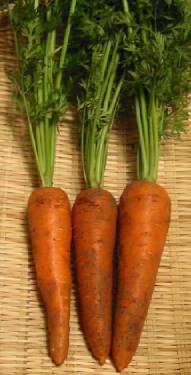
carrot-1

Carrots are consumed everywhere in the World, raw or cooked in so many manners, including desserts, that you need a whole book to describe all the recipes! And you might have to come up with a special addenda leaflet to introduce all its varieties!

Now, people might have forgotten that this cousin of the spinach orignated from Afghanistan before it was first introduced in China and Europe (by the Dutch) in the 12th Century. Japan had to wait until the 16th Century before the Chinese brought it to the Island of the Rising Sun.

FACTS:

Some time ago carrots were not popular in Japan because of their strong taste characteristics, but the Japanese have come with sweeter and softer varieties:
carrot-kyo
“Kyo-Ninjin”, a variety developed in Kyoto, with a deep dark red colour and very sweet taste.

carrot-gosun
“Go-Sun Ninjin”, the most common in Japan.

carrot-sansu
“San-Sun Ninjin”, a smaller variety of the above.

carrot-daijyo
“Daijyo Ninjin”, a very long and thin variety very popular in Japanese restaurants! Great for sticks!

carrot-kinji
“Kinji Ninjin”, probably the most elegant of them all!

carrot-shim-yellow
“Kiiro Ninjin”, beautiful and very sweet!

carrot-mini
“Mini Ninjin”, so much fun!

carrot-leaves-vitaminc
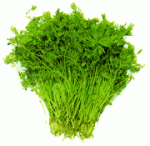
Now, do not forget the leaves which contain an enormous amount of Vitamin C!

-Season: May to June, and October to Deecember in the Northern Hemisphere.
-Beneficial elements:
Carotenes
An absolute need for humans. Carotenes are more easily absorbed by the body systems when the carrots are eaten together with oil, dressing or “glace”.
Vitamin C, Potassium, Calcium.

TIPS:

Preservation: Carrots should not be kept inside too cold fridges. Protect them by wrapping them into newspaper “standing up”, or into cellophane paper if they are cut.
Choose specimen with a good constant colour and with a small stem core if you buy them with leaves already cut away.

Important: When you peel them, do so as thinly as possible as the majority of the carotenes lie just under the skin!

First Sashimi Set of the Year at Tomii!


The Japan Blog List

Please check the new postings at:
sake, shochu and sushi

—————————————-
日本語のブログ
—————————————-

tomii-09-06

Yesterday evening, being hungry late at work, I just took a “break” and went for a (slightly extravagant!) quick fix at my favourite Japanese restaurant in Shizuoka City.

Apart of the usual appetizer, I was served the following “O-Tsukuri/Sashimi set” (See above picture, from left to right, top first):

-“Buri/Japanese Amberjack” on a cushion of fresh sprouts
-“Hon-maguro no Akami/Bluefin tuna lean part” with “Shiso no Hana/Perilla Flowers”
-“Inada/young Japanese Amberjack”. The difference with Buri is that the flesh is still white. On a “Shiso no Happa/Perilla Leaf” and a radish slice
-“Madai/True Snapper-Seabream”
-“Amaebi/Sweet Shrimp)
-“Uni/Sea Urchin)
-Freshly grated “Wasabi/Green Japanese Horseradish”
-“Kou-Ika/wide-bodied cuttlefish variety

Heavens!

TOMII
Shizuoka City, Aoi Ku, Tokiwa-cho, 1-2-7, Tomii Bldg, 1F
Tel.: 054-274-0666
Business hours: 17:00~22:00
Closed on Sundays
HOMEPAGE (Japanese)