Tag Archives: 静岡

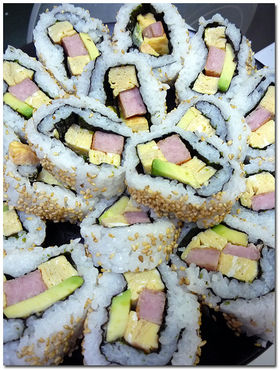
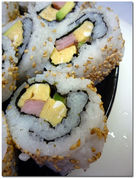
Spam California Roll

Back into spam!
Bazooka Gourmet is going to kill for that one!LOL
Making the most of simple ingredients to create that ever popular Clifornai Roll!

INGREDIENTS:

-Sapm: 1 can
-Eggs: 2
-Avocado: 1 (ripe)
-Nori/dry seaweed (as much as needed)
-Sesame seeds (as much as needed)
-Mayonnaise (as much as needed)
-Rice: 2 large bowls (freshly made. See sushi rice recipe HERE)
-Salt, pepper: to taste

RECIPE:

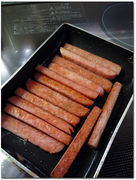
-Cut spam into strips and fry.

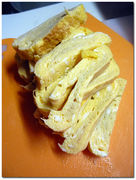
-Prepare the eggs as tamagoyaki/Japanese omelette and cut as shown in above picture. Check HERE for basic Tamagoyaki recipe!

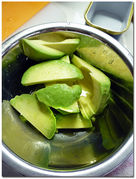
-Cut avocado as in above picture and let them for a while in some water added with lemon juice. This will prevent the avocado turning brown.

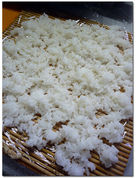
-First spread a sheet of cellophane paper over a sushi roll mat. Then spread sushi rice over it evenly and not too thickly!.

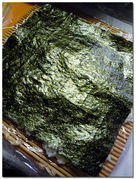
-Spread dry seaweed sheets over the rice.

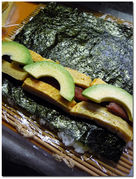
-Place the sapm, tamgoyaki and avocado as shown in above picture at some distance from the extremity. Line with some mayonnaise.
Point: mix some grated wasabi with the mayonnaise first!

-Roll your Californai roll.
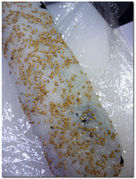
Unwrap and sprinkle it sesame seeds as shown in above picture.

-Cut and serve!

NOTES:

-The rice can be simple slightly salted steamed rice instead of the sushi rice.
-Tamagoyaki can be made in thin wide omelette you will roll first before lining the California roll with it.
-Let your imagination go free if you want to replace the sesame seeds with something else!

Easy, isn’t it?

RECOMMENDED RELATED SITES:
Bread + Butter, Comestilblog, Greedy Girl, Bouchon For 2, Zoy Zhang, Hungry Neko, Mangantayon, Elinluv Tidbit Corner, Maison de Christina, Chrys Niles, Lexi, Culinary Musings, Eats and Everything, Bite Me New England, Heather Sweet, Warren Bobrow, 5 Star Foodie, Frank Fariello, Oyster Culture, Ramendo, Alchemist Chef, Ochikeron, Mrs. Lavendula, The Gipsy Chef, Spirited Miu Flavor, Wheeling Gourmet, Chef de Plunge, The Lacquer Spoon, Octopuspie, Pegasus Legend, Gourmet Fury

Please check the new postings at:
sake, shochu and sushi

—————————————-
日本語のブログ
—————————————-

Russian Cuisine: Liver sauteed with Potatoes

in spite of those vegan and vegetarian postings, I’m not ready yet to abandon meat, especially liver, which particularly healthy and tasty as far as meat comes!

The Russians do have a gastronomy, and a very homey one at that in spite of all these platters of caviar, and smoked salmon washed down with vodka or Georgia (former Russian Republic!) wine!

Here is a simple recipe to keep you warm on these increasingly colder months of the winter:

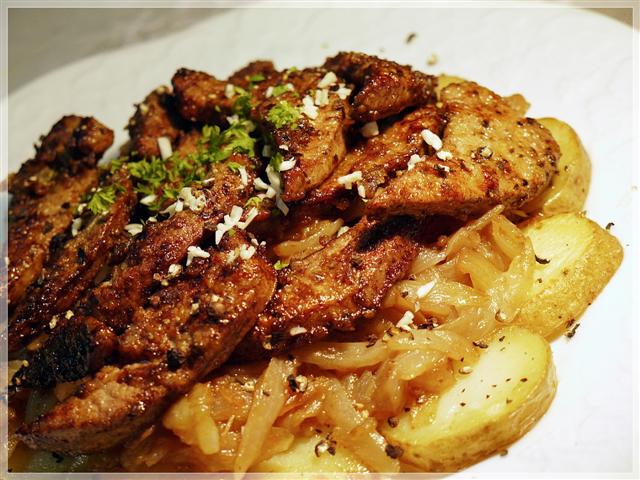
Russian-style Liver suteed with potatoes!

INGREDIENTS: For 2 people

-Potatoes: 2 (may Queen, or potatoes that fry well)
-Unsalted butter (A): 20 g
-Salt and black pepper: a little of each

-Liver: 200 g (pork or veal according to your priorities. sliced)
-Onions: 2
-Wine vinegar: 1 tablespoon
-Basalmico vinegar: 1 tablespoon
-Olive oil: 2 tablespoons
-Unsalted butter (B): 30 g
-Unsalted butter (C): 20 g
-Light flour, salt, black pepper: a little of each
-Parsley: a little (finely chopped)
-Garlic: a little (finely chopped)
-Balck pepper: to taste (coarsely ground)

RECIPE:

-Peel onions, cut in half, cut across and along and chop into 7~8 mm wide pieces.
Transfer into an oven dish. Add a little salt and 2 tablespoons of olive oil (not included in the ingredients). Mix well. Wrap it closed with some cellophane paper.
Cook inside microwave oven for 5~7 minutes at 600 W.
This step will help the onions to sweeten up and will improve the overall taste.

-Peel the potatoes. Boil them as they are. Once cooked, cut them into 1 cm thick slices.
In a frypan melt unsalted butter (A), fry the potatoes lightly into it. Season with salt and black pepper. Transfer in a separate hot dish for keeping.

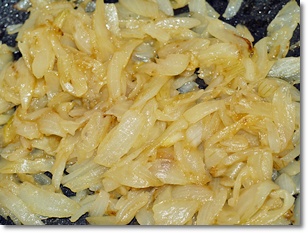
-in the same frypan melt unsalted butter (b) and fry the onions in it until they get lightly brown and sweet. Transfer into a separate hot dish for keeping.

-Coat the sliced liver with a little salt, black pepper and flour. In the same frypan melt unsalted butter (C) with the olive oil and saute the liver in it.

-Once the liver slices are properly cooked on both sides, add the blsamico vinegar and saute for a while to allow the balsamico vinegar to penetrate into the liver. Transfer into a separate dish.

-In the same frypan transfer the onions back and fry them into the juices laying at the bottom of your frypan. Saute them to let them absorb those juices. Add wine vinegar and sautee long enough for the final touch.

-On a serving plate, first lay the sliced potatoes.
Lay the onions over the potatoes.
Lay the liver over the onions.
Think of presentation when arranging them on the plate. Look at pic above!
Season the whole by sprinkling the chopped leeks, chopped garlic and coarsely ground black pepper.

Serve with dark beer!

RECOMMENDED RELATED SITES:
Bread + Butter, Comestilblog, Greedy Girl, Bouchon For 2, Zoy Zhang, Hungry Neko, Mangantayon, Elinluv Tidbit Corner, Maison de Christina, Chrys Niles, Lexi, Culinary Musings, Eats and Everything, Bite Me New England, Heather Sweet, Warren Bobrow, 5 Star Foodie, Frank Fariello, Oyster Culture, Ramendo, Alchemist Chef, Ochikeron, Mrs. Lavendula, The Gipsy Chef, Spirited Miu Flavor, Wheeling Gourmet, Chef de Plunge, The Lacquer Spoon, Octopuspie, Pegasus Legend, Gourmet Fury

Please check the new postings at:
sake, shochu and sushi

—————————————-
日本語のブログ
—————————————-

French Restaurant: Vegetarian Lunch at Tetsuya Sugimoto

Service: excellent and very friendly
Facilities: great washroom, great cleanliness overall
Prices: reasonable, good value.
Strong points: Very fresh local ingredients extensively used. Seasonal ingredients only.

Today is Sunday.
As the Missus has to work (for an orthondontist! You can imagine what I’m going though about to\eeth hygiene!LOL) and that I didn’t any have sports event to worry about, I just went to my office for some “work”.
I was not that hungry when an idea burst into the back of my head: why not check on my good friend Tetsuya Sugimoto? I knew he was getting all kind of supremley delicious vegatables for all over the Prefecture and beyond.
My hunch had been the right one when I saw the vegetables advertized on their blackboard outside!

Apart of very comfortable tables and chairs, the restaurant has a beautiful counter where loners (and couples!) can enjoy thir meal almost in semi privacy while ogling at the chef working in his kitchen.

The view from the counter towards the entrance!

The other from the counter looking at Tetsya Sugimoto at work!

Testuya Sugimoto has a wine list all the more remarkable for its very reasonable prices when you consider the taste and combination of the available nectars.
As there was little chance of my guzzling down a full bottle, I just asked for a couple of glass of red wine.

I was served a Bourgogne Pinot Noir 2007 by Chanson et Freres.
A bit young and tannic, but just what I needed!
Now, I didn’t even bother looking at the Sunday Lunch menu and set Courses. I had made sure to come late enough not to interfere with the restaurant’s business and asked Tetsuya in person (if you know him, he is very amenable and will accomodate all your priorities) what he could do with allthe vegetables he had on hand.
“OK!” was the terse reply, but he had realized that I had seen what vegetables were on offer!

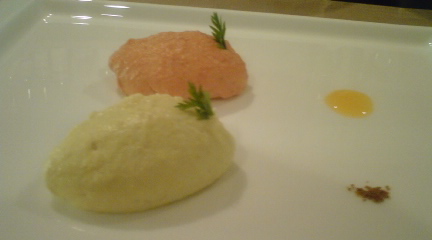
The little appetizer above is a combination of two different carrot mousses, red Kyo ninjin and yellow Kyo ninjin (Kyo stands for Kyoto-style, Ninjin for carrots) grown in Hamamatsu city. A dessert if there was one!
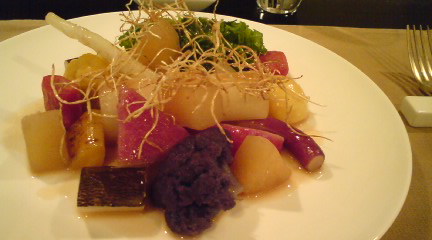
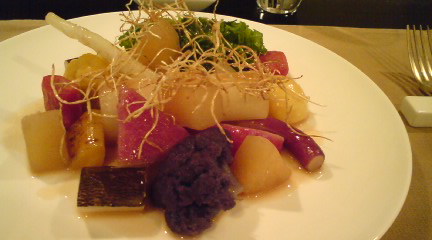
And then came the “platter” of sauteed vegetables!
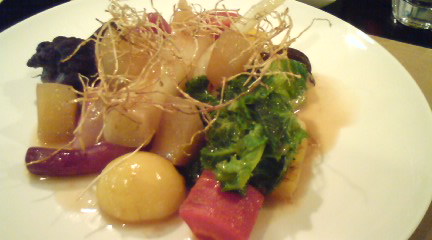
Viewed at a different angle!
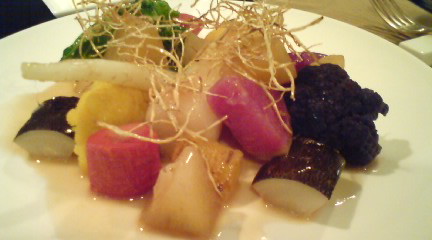
And viewed form another angle again!

Testuya explained to me that all the vegetables were sauteed with a little oil, salt and pepper only. The sauce was formed nturally with water and the vegetables juices! Vegans, rejoice!

Now the vegetables were:
Yacon, Kuro Daikon (black-skinned daikon), Yellow and Violet Cauliflower, Aka Kyoninjin (red Kyoto-style carrots), Kiiro Kyoninjin (yellow Kyoto-style carrots), Hina no Kabu/long thin red and white turnip, Petit Vert Lettuce, Shiroi Kabu/White round turnips, andLeek/Poireau from Mr. Matsuki’s Biofarm in Shibakawa-Cho at the foot of Mount Fuji (the other vegetables are from Hamamatsu City).

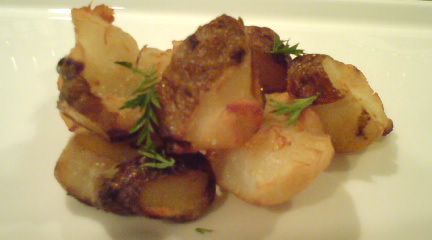
Testyya belatedly he had forgotten to include the topinambours from Hokkaido Island! He then prepared a small plate of sauteed topinambour in olive oil. Absolutely gorgeous!

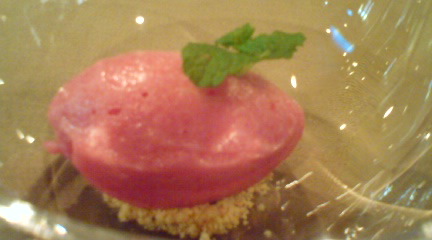
The deseert was a beautiful sorbet made with late-ripening apples from Hokkaido. The texture was reminiscent of apple compote. Delicious!

Coffee and mignardises!
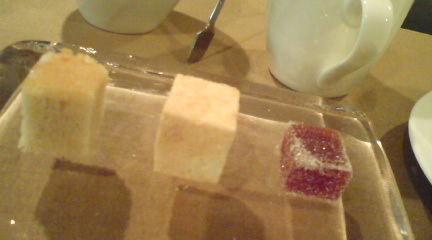
For a better view of the mignardises!

My, my, now how much did you pay for that? You might ask.
40 US $, wine, coffe, bread and butter included!
I was so embarrassed I left a 10 US $ tip!

Tetsuya SUGIMOTO
420-0038 Shizuoka Shi, Aoi Ku, Umeya, 2-13, 1F
Tel./Fax: 054-251-3051
Open for lunch and dinner
Vegetarian and Vegan courses on order
Closed on Wednesdays
Credit Cards OK

RECOMMENDED RELATED SITES:
Bread + Butter, Comestilblog, Greedy Girl, Bouchon For 2, Zoy Zhang, Hungry Neko, Mangantayon, Elinluv Tidbit Corner, Maison de Christina, Chrys Niles, Lexi, Culinary Musings, Eats and Everything, Bite Me New England, Heather Sweet, Warren Bobrow, 5 Star Foodie, Frank Fariello, Oyster Culture, Ramendo, Alchemist Chef, Ochikeron, Mrs. Lavendula, The Gipsy Chef, Spirited Miu Flavor, Wheeling Gourmet, Chef de Plunge, Sushi Nomads, Chuckeats, Not-Just-Recipes, Bengal cuisine, Cooking Vegetarian, Gluten-free Vegan Family, Meatless Mama, Le Petit Cuisinier, Vegan Epicurean, Miss V’s Vegan Cookbook, To Cheese or not To Cheese, The Lacquer Spoon, Russell 3, Octopuspie, Pegasus Legend, Gourmet Fury

Please check the new postings at:
sake, shochu and sushi

—————————————-
日本語のブログ
—————————————-
Vegan Japanese Cuisine: Gazpacho

Gazpacho is a world popular cold Spanish tomato-based raw vegetable soup, originating in the southern region of Andalusia. Gazpacho is widely consumed throughout Spain, neighboring Portugal (where it is known as gaspacho) and parts of Latin America.

But sometimes vegans have some edifficulty in reproducing it according to their preferences.
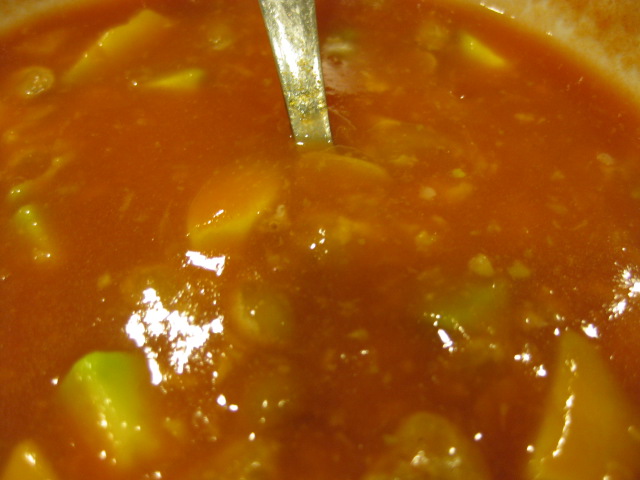
Here is a simple Japanese version using natto and avocado that any vegans and vegetarians can enjoy!
Actually the Japanese believe that Gazpacho is beneficial to human skin!

Vegan Japanese Gazpacho

INGREDIENTS:

-Tomato juice: 1 standard can (of course you can/may prepare your own from organic tomatoes!)
-Natto: 1 standard pack: 50 g
-Avocado: 1 half (Jenn, asked me how to proceed to prevent avocado from chamging colour. Simple. sprinkleit with lemonjuice!)
-Garlic: 2 cloves
-Sesame oil: a little
-Salt and pepper to taste
-Optional spices (chili, nutmeg, etc.)
-Optional Vegetables (celery, coriander, etc.)

RECIPE:

-Cut avocado in pieces. Grate garlic.

-Mix the natto wll with a little sesame oil.

-In a large bowl pour the tomato juice and natto. Add salt, pepper and spices.

3- Heat the whole for 1 minute.

4. Let cool completely and leave in refrigerator.
Eat/drink chilled topped with some freshly cut greens.

RECOMMENDED RELATED SITES
Not-Just-Recipes, Bengal cuisine, Cooking Vegetarian, Frank Fariello, Gluten-free Vegan Family, Meatless MamaFrank Fariello, , Warren Bobrow, Wheeling Gourmet, Le Petit Cuisinier, Vegan Epicurean, Miss V’s Vegan Cookbook, Comestiblog, To Cheese or not To Cheese, The Lacquer Spoon, Russell 3, Octopuspie, Bread + Butter, Pegasus Legend, Think Twice

Please check the new postings at:
sake, shochu and sushi

—————————————-
日本語のブログ
—————————————-
Japanese Seasonal Fish: Tara/Cod

Cod, or “Tara/鱈” in Japanese reads a the “Snow Fish”. Unlike in many countries in Europe and North America, the fish is eaten fresh, raw or cooked in Japan, but practically never salted.
Only the Norwegians can boast a difference as they eat the tongue of the fish as soon as they catch it!

As other fish in Japan, it is called different names: Ibodara, Maidara (Toyama Prefecture), Ara (Nagasaki Prefecture) as far as “Madar” or “True Cod” is concerned.
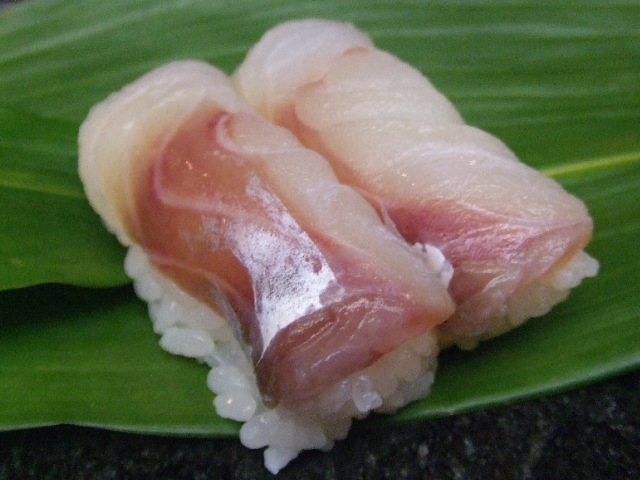
There are other varieties as is shown below in sushi pictures.

It is mainly caught in the Sea of Okhotsk in Winter.
The average total Cod catch is 437,000 tonnes, 55.000 of which is “True Cod”. Imports average annualy 152,000 tonnes mainly from the US and Russia.

Cod sashimi with its male sperm sacs/Shirako

It makes for great sashimi.

But it is also equally appreciated cooked, especially grilled or in “Nabe/Japanese-style pot au feu”.

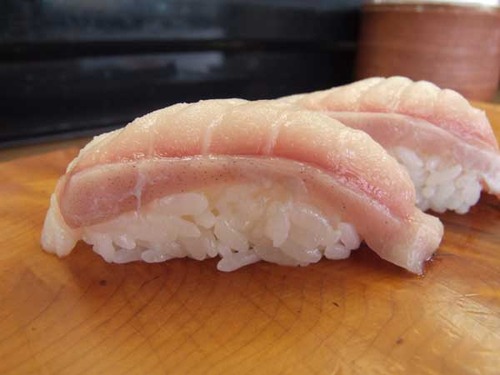
Gintara/銀鱈 Cod variety as sushi nigiri.

Higetara/髭鱈 Cod variety as sushi nigiri.

Madara/真鱈 Cod as sushi nigiri.

As shown above, many varieties of tara are greatly appreciated as sushi, especially nigiri.

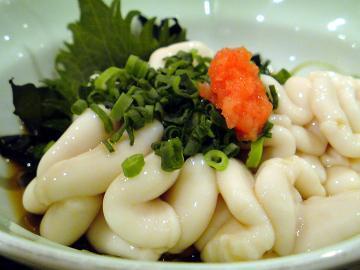
Shirako/白子, or the sperm sacs of the male fish, is an extremely popular delicay in Japan.
It is either served raw or lightly boiled as in above picture with ponzu, chopped leeks and momijioroshi/grated daikon with chili pepper.

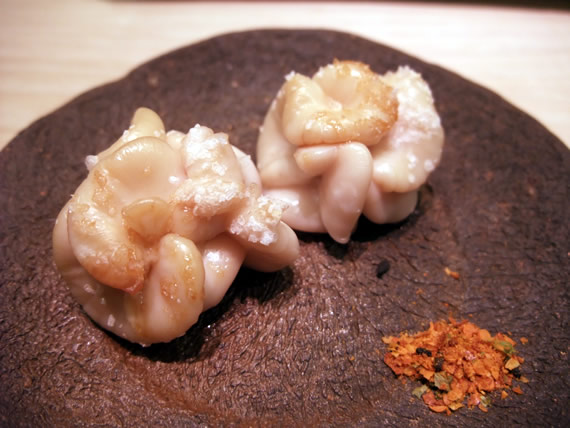
Shirako is also very popular served as sushi in gunkan shape as above.

It becomes another delicacy when grilled.
French and Italian Restaurants in Japan also extensively use it sauteed or in gratin!

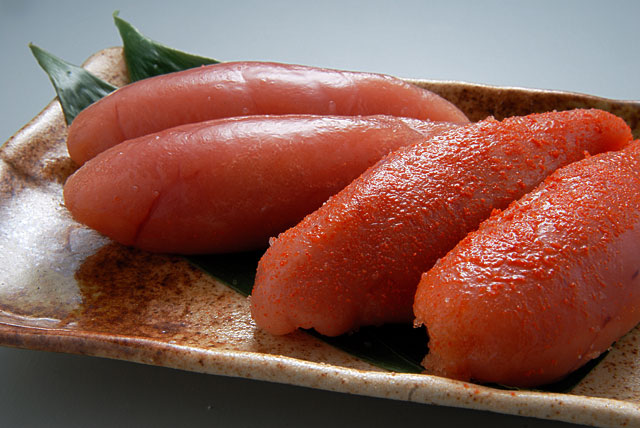
The roe sacs of the femal fish is also a very popular (and expensive) delicacy especially when preserved in chili pepper (as above) and sold as Mentaiko/明太子!

The same roe is also served as “Tarako/鱈子”, especially in the sushi gunkan form!

RECOMMENDED RELATED SITES:
Bread + Butter, Comestilblog, Greedy Girl, Bouchon For 2, Zoy Zhang, Hungry Neko, Mangantayon, Elinluv Tidbit Corner, Maison de Christina, Chrys Niles, Lexi, Culinary Musings, Eats and Everything, Bite Me New England, Heather Sweet, Warren Bobrow, 5 Star Foodie, Frank Fariello, Oyster Culture, Ramendo, Alchemist Chef, Ochikeron, Mrs. Lavendula, The Gipsy Chef, Spirited Miu Flavor, Wheeling Gourmet, Chef de Plunge, Sushi Nomads

Please check the new postings at:
sake, shochu and sushi

—————————————-
日本語のブログ
—————————————-
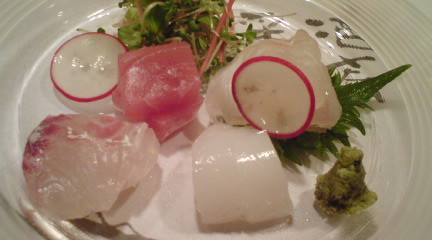
Sashimi Mini-Plate at Tomii (’10/01/09)

This is the second part of my “Quick fix” last night at Tomii.
I posted this article separately as it will also go to my sushi blog page and Sushi Nomads Website.

All the fish served on this “min sashimi plate” are seasonal (as always at Tomii).

Left top: “Honmaguro Akami”, or lean part of bluefin tuna backed with various sprout vegetables.
Right top: “Hirame” or sole on a leaf of shiso/perilla.
Left bottom: “Tai”, or seabream. In thei case “Madai”, or true seabream.
Right bottom: “Aori Ika”, or bigfin reef squid.
The wasabi is naturally freshly grated wasabi from Shizuoka!

TOMII
Shizuoka City, Aoi Ku, Tokiwa-cho, 1-2-7, Tomii Bldg, 1F
Tel.: 054-274-0666
Business hours: 17:00~22:00
Closed on Sundays
HOMEPAGE (Japanese)

RECOMMENDED RELATED SITES:
Bread + Butter, Comestilblog, Greedy Girl, Bouchon For 2, Zoy Zhang, Hungry Neko, Mangantayon, Elinluv Tidbit Corner, Maison de Christina, Chrys Niles, Lexi, Culinary Musings, Eats and Everything, Bite Me New England, Heather Sweet, Warren Bobrow, 5 Star Foodie, Frank Fariello, Oyster Culture, Ramendo, Alchemist Chef, Ochikeron, Mrs. Lavendula, The Gipsy Chef, Spirited Miu Flavor, Wheeling Gourmet, Chef de Plunge

Please check the new postings at:
sake, shochu and sushi

—————————————-
日本語のブログ
—————————————-
Japanese Gastronomy: Zensai/Appetizer at Tomii (’10/01/09)

Dining or just “having a snack” in Japan in the right places can easily turn into an intimidating experience.
Last night, suffering from a bout of starvation, my body took me to my favourite Japanese restaurant for a “quick bite”.
People know me well there and don’t really bother to ask me for orders. I just tell them “a little today”, or “plenty today”! That kind of attitude will make my friends think I’ve gone snobbish at last…

Not at all, actually, which means anyone can expect great surprises in this country, even if it concerns a simple appetizer.

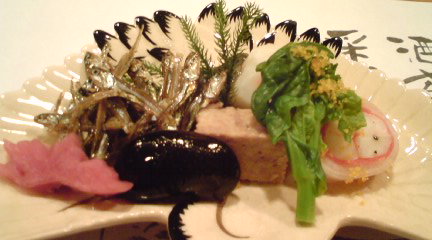
That particular plate wich came with the first drink consisted of the following:
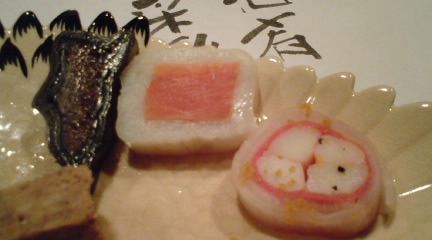
From left to right:
“Tazukuri”, or grilled (very) small fish.
“Nishin no Kobumaki”, or herring simmered and rolled into seaweed.
“Sake Nekimitamaki”, or salmon steamed inside fish paste.
“Hoshoumaki”, or crab roll.

For a closer picture of “Nishin no Kobumaki”, “Sake Nekimitamaki”, and “Hoshoumaki”.

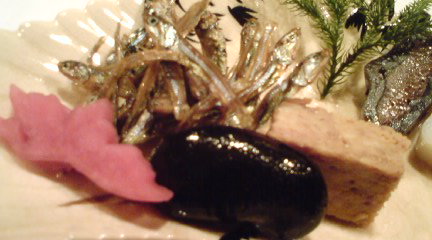
For a closer picture ofthe other ingredients:
The “Tazukuri”, or grilled (very) small fish at the back.
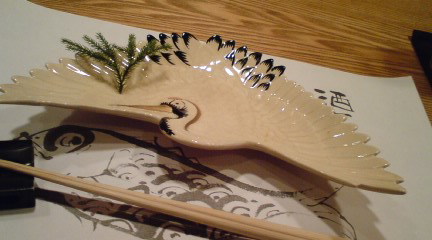
“Tsurudaikon”, or daikon coloure in plum water and cut in the shape of a “tsuru”, or Ja@anese crane.
“Tori no terrine”, or a small cube of chicken terrine.
“Fukumame”, or large simmered black bean.

The green is “Na no Hana”, or rape blossom sprinkled with “Karasumi Oroshi”, or grated pickled mullet roe.
The grated wasabi is fresh one from Shizuoka!

For a better view of the beautiful Japanese Crane pottery dish used to serve that great appetizer!

TOMII
Shizuoka City, Aoi Ku, Tokiwa-cho, 1-2-7, Tomii Bldg, 1F
Tel.: 054-274-0666
Business hours: 17:00~22:00
Closed on Sundays
HOMEPAGE (Japanese)

RECOMMENDED RELATED SITES:
Bread + Butter, Comestilblog, Greedy Girl, Bouchon For 2, Zoy Zhang, Hungry Neko, Mangantayon, Elinluv Tidbit Corner, Maison de Christina, Chrys Niles, Lexi, Culinary Musings, Eats and Everything, Bite Me New England, Heather Sweet, Warren Bobrow, 5 Star Foodie, Frank Fariello, Oyster Culture, Ramendo, Alchemist Chef, Ochikeron, Mrs. Lavendula, The Gipsy Chef, Spirited Miu Flavor, Wheeling Gourmet, Chef de Plunge

Please check the new postings at:
sake, shochu and sushi

—————————————-
日本語のブログ
—————————————-
Vegan Japanese Cuisine: Sauteed Avocado

Avocadoes are great and versatile vegetables/fruits that can be combined in so many ways.
They also have the marked advantage to provide much-needed calories and beneficial ingredients.

Here is a simple but hearty way to prepare them:

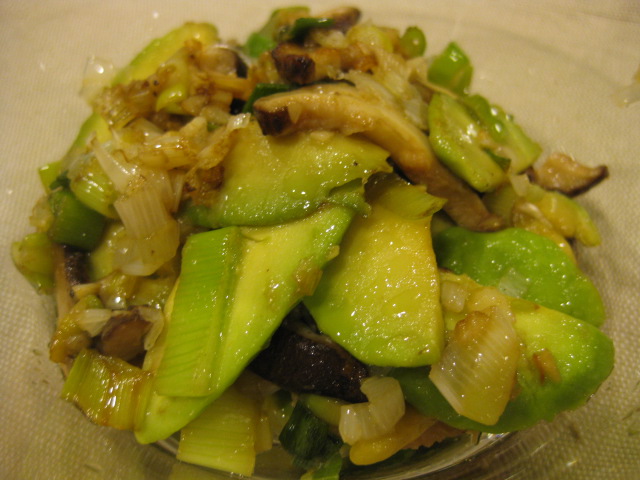
Sauteed Avocado!

INGREDIENTS: For one person (can be multiplied accordingly!)

-Avocado: 1 half
-Long leeks: 1 half, chopped
-Shiitake: 3 (fresh)
-Sesame oil: 2 tablespoons
-Soy sauce: 1.5 tablespoons

RECIPE:

-Cut the avocado in proper (to your liking) size pieces. Do the same with the shiitake. Chop the leeks finely

-in a frypan pour the sesame oil and fry the leeks first.

-Add the shiitake and fry to satisfaction. Add avocado and soy sauce and turn the whole in the frypan a few times.

-Lastly season with black pepper and serve.

NOTE:

-If you happen to have unripe and hard avocado, fry them first until crispy outside. You’ll find out they’ll be very soft inside.
-For extra seasoning you may use chillies or curry powder!

RECOMMENDED RELATED SITES
Not-Just-Recipes, Bengal cuisine, Cooking Vegetarian, Frank Fariello, Gluten-free Vegan Family, Meatless MamaFrank Fariello, , Warren Bobrow, Wheeling Gourmet, Le Petit Cuisinier, Vegan Epicurean, Miss V’s Vegan Cookbook, Comestiblog, To Cheese or not To Cheese, The Lacquer Spoon, Russell 3

Please check the new postings at:
sake, shochu and sushi

—————————————-
日本語のブログ
—————————————-
Vegan Japanese Deep-fried Taro/Sato Imo Age

Taro or Sato Imo in Jpaanese, can also for some great and hearty dishes for c\vegans and vegetarians, too!

Hre is a very simple recipe that can be enjoyed by all!
As for the Dashi, or Jpanese soup stock, check HERE for the basic recipe!

INGREDIENTS: For 4 people

-Taro/Sato imo: 16 small
-Dashi: 4 tablespoons
-Mirin/Sweet sake: 4 tablespoons
-Soy sauce: 3 tablespoons
-Sugar: 2 teaspoons
-Oil for deepfrying

RECIPE:

-Clean the taro/sato imo quickly.
Boil them in water for 15 minutes.
Peel them.

-Heat the deep frying oil to 170 degrees Celsius and deep fry the taro/sato imo until they obtain a nice brownish colour.

-In a pan drop dashi, mirin, soy sauce and sugar and heat (and stir) until the sugar has completely dissolved. Transfer the taro/sato imo into the pan and cook for a while in the sauce.

-Simmer until the sauce has reached a thick consistence.
Serve at once.
A few chopped greens would make for a good seasoning.
You may add spices of your liking to the sauce (grated ginger, chilies, etc.).

RECOMMENDED RELATED SITES
Not-Just-Recipes, Bengal cuisine, Cooking Vegetarian, Frank Fariello, Gluten-free Vegan Family, Meatless MamaFrank Fariello, , Warren Bobrow, Wheeling Gourmet, Le Petit Cuisinier, Vegan Epicurean, Miss V’s Vegan Cookbook, Comestiblog, To Cheese or not To Cheese, The Lacquer Spoon, Russell 3

Please check the new postings at:
sake, shochu and sushi

—————————————-
日本語のブログ
—————————————-
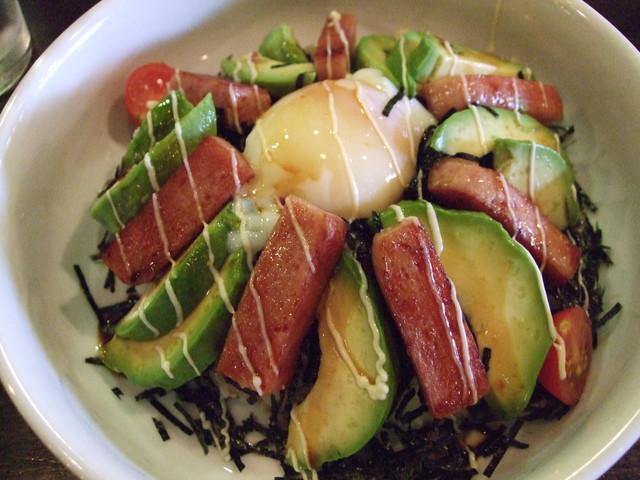
Spam Donburi/Japanese Spam on a Bowl of Rice

Here is another suggestion for using spam that is surely going to provoke Bazooka Gourmet into new comments! LOL

It is very simple and makes for a solid meal.

Steam some rice either to be served plain or as sushi rice. See sushi rice recipe HERE for the latter.

Fill a large bowl with the sushi rice.
Sprinkle the top with plenty of Finely cut dry seaweed.
You might smear here and there with a little grated wasabi, too.

Use spam that you would have cut into strips and fried (and let cool) with seasoning beforehand.
Intersperse them with avocado slices (seasoned with a little soy sauce and lemon juice.
Place a poached egg in the middle.
Season the whole with the dressing or mayonnaise of your choice in the pattern suggested in picture.
You may add plum tomatoes and greens for better effect and taste!

RECOMMENDED RELATED SITES:
Bread + Butter, Comestilblog, Greedy Girl, Bouchon For 2, Zoy Zhang, Hungry Neko, Mangantayon, Elinluv Tidbit Corner, Maison de Christina, Chrys Niles, Lexi, Culinary Musings, Eats and Everything, Bite Me New England, Heather Sweet, Warren Bobrow, 5 Star Foodie, Frank Fariello, Oyster Culture, Ramendo, Alchemist Chef, Ochikeron, Mrs. Lavendula, The Gipsy Chef, Spirited Miu Flavor, Wheeling Gourmet, Chef de Plunge

Please check the new postings at:
sake, shochu and sushi

—————————————-
日本語のブログ
—————————————-
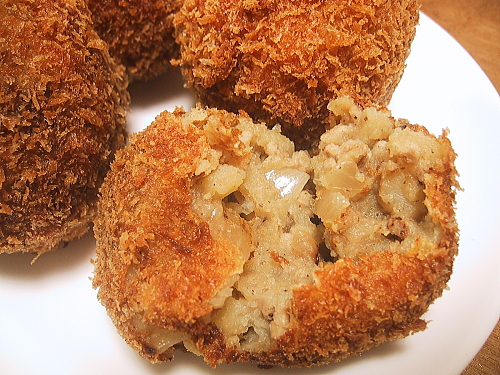
Japanese Cuisine: Korokke/Croquettes-Basic Recipe

I already have introduced the basics about the this marsel which has become such an ubiquitous feature of everyday Japanese food, namely Korokke-Croquettes.

Here is the basic recipe prevalent in restaurants and homesteads.
Naturally it can be expanded and modified at will.
I will not bother you with measurements this time as the method is the point of this posting!

INGREDIENTS:

-Potatoes (you will have to decide which variety! In Japan, “Danshaku” are best!)
-Onion
-Minced meat (of your choice!)
-Salt and pepper
-Flour (of your choice)
-egg
-Milk
-Breadcrumbs (fresh if possible)
-Oil
-Lard (skip if you don’t like, but a pity!)

RECIPE:

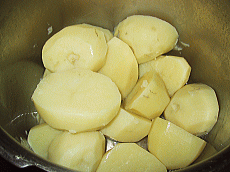
-Boil the potatoes with their skins.
Peel the skins off just out of the water when very hot. This way, the potatoes will not be too wet.

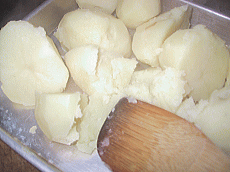
-Mash the potatoes roughly with a wooden spoon/spatula. Add salt and peepper and mix roughly. Cover with cellophane paper to keep the potatoes warm as long as possible.

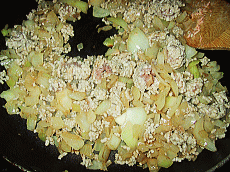
Chop the onions finely and fry in lard if possible for better taste. If you don’t like lard, use oil. You could add chopped garlic and small pieces of bacon.
Add minced meat of your choice. Season with a little salt, pepper, sugar and soy sauce according to you preferences. Fry until the monced meat is cooked.

-Add the mashed potatoes. Mixing them all atogether at the same time fry until potatoes have become dry enough.
Let cool completely and transfer to a stroage dish. Cover with cellophane paper and leave overnight in the refrigerator to allow taste to permeate the potatoes. This is an important point as not only it will enhnace the taste but make the croquettes easier to shape.

-Spread a little oil over your palms and shape croquettes to you preffered size.

-Roll in flour and “shake” croquettes so that not too much flour adhere to them.

-Prepare (you might better do that first, LOL) the croquettes egg dip by mixing beaten egg, flour and milk to your preference.
Dip the croquettes in the batter competely.

-Roll the croquettes in the breadcrumbs.
One way to make breadcrumbs is to use real bread which had turned completely solid, soften it in milk, let it dry again and crush it into powder!

-Deep-fry croquettes at 170 degrees Celsius until they have reached a colour of your liking.
As everything is already cooked inside, don’t worry if they are not enough cooked.
Point: add a little sesame oil to your frying oil for extra taste.

There are all kinds of sauce and decoration you cane serve croquettes with, unless you like them plain with a little mustard for example.

Here is a little suggestion for good taste and appetizing presentation:
Prepare a light white sauce/bechamel in the aurora style sauce with plenty of white pepper and boiled gree peas.

Don’t they look nice like that!

RECOMMENDED RELATED SITES:
Bread + Butter, Comestilblog, Greedy Girl, Bouchon For 2, Zoy Zhang, Hungry Neko, Mangantayon, Elinluv Tidbit Corner, Maison de Christina, Chrys Niles, Lexi, Culinary Musings, Eats and Everything, Bite Me New England, Heather Sweet, Warren Bobrow, 5 Star Foodie, Frank Fariello, Oyster Culture, Ramendo, Alchemist Chef, Ochikeron, Mrs. Lavendula, The Gipsy Chef, Spirited Miu Flavor, Wheeling Gourmet, Chef de Plunge

Please check the new postings at:
sake, shochu and sushi

—————————————-
日本語のブログ
—————————————-
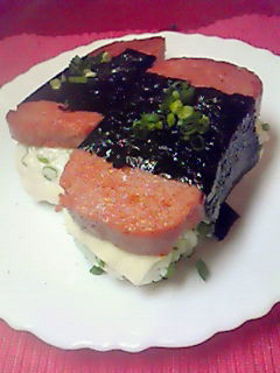
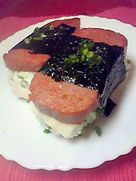
Spam Nigiri with Ginger Rice

My friends know I nurture a pet hate for all spammers!LOL
Following a suggestion by my good Foodbuzz friend, Bazooka Gourmet, I decided to run a little series on recipes including Spam.

Spam Spam sushi nigiri is apparently the “National Sushi of Hawaii”.
I’m sure friends there will come with some more interesting suggestions!

Spam Nigiri with Ginger rice!

INGREDIENTS:

-Steamed rice: 3 small bowls ( a bowl means a serving in Japan. That should make enough for 6 nigiri. Bear in mind that the nigiri will be a large as a spam slice)
-Spam: 1 standard can. Enough to make 6 slices
-Fresh ginger: 30 g
-Leeks (Manno style, but any leeks can work if thin enough): 4~5 stems
-Sesame oil: 1 tablespoon
-White sesame seeds: 1 tablespoon
-Cheese (sliced cheese): 2 fourths of a large thin slice.
-Nori: dry seaweed for binding

RECIPE:

Here is the kind of spam available in Japan.

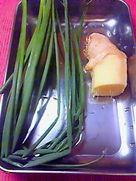
-Leeks and fresh ginger before chopping (leeks) and grating (ginger).

-Fry the spam slices on both sides until satisfaction.
-You may vary on the thickness of the spam slice.

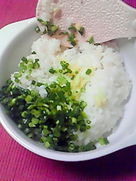
-Add the grated 80% of the chopped leeks, ginger, sesame seeds and sesame oil with the freshly steamed rice.
Chop the leeks.

-Form a rice ball of the spam surface size and and shape. Place a cheese on top, than a slice of fried spam.
Secure with a band of nori/dried seaweed.
Serve them sprinkled with the rest of the chopped leeks.
Eat at once!

NOTES:

-Try and use freshely steamed rice. It willbe easier to shape and will not break away.
-Don’t be afraid of increasing the amount of ginger, leeks and white seame to add more taste.ご飯は少し硬めに-On the other hand, do not add sesame oil!

RECOMMENDED RELATED SITES:
Bread + Butter, Comestilblog, Greedy Girl, Bouchon For 2, Zoy Zhang, Hungry Neko, Mangantayon, Elinluv Tidbit Corner, Maison de Christina, Chrys Niles, Lexi, Culinary Musings, Eats and Everything, Bite Me New England, Heather Sweet, Warren Bobrow, 5 Star Foodie, Frank Fariello, Oyster Culture, Ramendo, Alchemist Chef, Ochikeron, Mrs. Lavendula, The Gipsy Chef, Spirited Miu Flavor, Wheeling Gourmet, Chef de Plunge

Please check the new postings at:
sake, shochu and sushi

—————————————-
日本語のブログ
—————————————-
Vegan White Miso Soup

As promised, back to my vegan and vegetarian friends to whom I promised this series of dashi-based (for most of them) soups (and other dishes).
Miso is increasingly becoming popular.
Check the miso posting!
And check the dashi posting, too!

Vegan White Miso Soup!

INGREDIENTS: For one person

-Egg-plant/aubergine: 1 half
-Onion: 1/4 (sliced)
-Konbu dashi/seaweed soup stock: 1 cup/ 200cc/ml
-White miso paste: 1 tablespoon
-White leek cut into very fine strips for decoration and finishing taste point

RECIPE:

1-Cut the egg-plant/aubergine into thin slices. Wash in water.

2-Pour some oil in a frypan and fry the egg-plant/aubergines slices until both sides are slightly brown.

3-Pour the konbu dashi into a pan. Add the sliced onion and simmer for a while until onuon are soft enough.

4-Add fried egg-plant/aubergines. Add and mix in white miso paste.

5-Serve in a bowl with chopped white leeks.

NOTE:

The miso contains enough salt, so no need to add any really.
I also add ground sesame seeds before serving.
One can add some sesame oil when frying the egg-plants/aubergines.
Add spices according to preferences.

RECOMMENDED RELATED SITES
Not-Just-Recipes, Bengal cuisine, Cooking Vegetarian, Frank Fariello, Gluten-free Vegan Family, Meatless MamaFrank Fariello, , Warren Bobrow, Wheeling Gourmet, Le Petit Cuisinier, Vegan Epicurean, Miss V’s Vegan Cookbook, Comestiblog, To Cheese or not To Cheese, The Lacquer Spoon, Russell 3

Please check the new postings at:
sake, shochu and sushi

—————————————-
日本語のブログ
—————————————-
Chicken Liver Simmered with Balsamico

I love liver and am always looking for new simple ways to eat some, be it yakitori for Japanese style, stirfry for Chinese style or any European/American style!

Just found this easy recipe in my notes, which blends many influences:

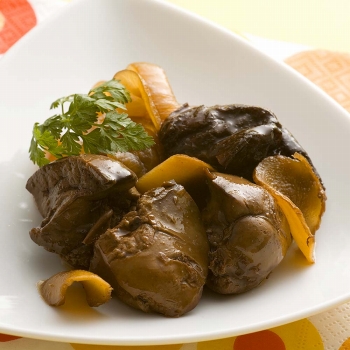
Chicken liver simmered in Balasamico!

INGREDIENTS: For 2 people

-Chicken liver: 150 g
-Onion: 1/2
-Fresh Ginger: 2×2 cm piece
-Prunes: 4

-Soy Sauce: 1/2 tablespoon
-Water: 2/3 cup/140 cc/ml
-Balsamico vinegar: 1 1/2 tablespoon
-Red wine: 1 tablespoon
-Bouillon/Chicken stock: 1 cube
-Sugar: 1 tablespoon
-Chervil: to taste

RECIPE:

1-Leave the liver in water for 20 minutes. Take out veins and nerves. Cut in bite-sized pieces.

2-Slice onion into 5 mm thick slices. Cut the ginger into fine slices

3 -Gently boil the liver with some chopped leek leaves (not included in the ingredients) and scoop out unwanted matters.

4-In a pan drop the water, balsamico vinegar, red wine, bouillon, sugar and sliced ginger. Bring to light boil. Add sliced onion and prunes.

5-Wait untio it starts boiling again, then lower fire to low and simmer until satisfaction.
Serve and decorate with chervil.

RECOMMENDED RELATED SITES:
Bread + Butter, Comestilblog, Greedy Girl, Bouchon For 2, Zoy Zhang, Hungry Neko, Mangantayon, Elinluv Tidbit Corner, Maison de Christina, Chrys Niles, Lexi, Culinary Musings, Eats and Everything, Bite Me New England, Heather Sweet, Warren Bobrow, 5 Star Foodie, Frank Fariello, Oyster Culture, Ramendo, Alchemist Chef, Ochikeron, Mrs. Lavendula, The Gipsy Chef, Spirited Miu Flavor, Wheeling Gourmet, Chef de Plunge

Please check the new postings at:
sake, shochu and sushi

—————————————-
日本語のブログ
—————————————-
Vegan Japanese Dashi/Soup Stock: The Basic Recipe

So many times have I heard my vegan and vegetarian friends complain about the fact that most dashi/soup stock is not done according to their priorities in Japan, making it impossible for them to enjoy food in this country.
Fortunately, this is a big misconception. Vegan dashi exists and is very easy to make or request.
Now, to make sure that the same friends can savour Japanese food, either at home or with friends, here is the basic ans simple recipe!
Please save or copy this recipe for future reference (I have more vegan soup recipes in store for you!)

Vegan Japanese Dashi/Soup Stock

INGREDIENTS: (multiply according to demands. This is the minimum quantity!)

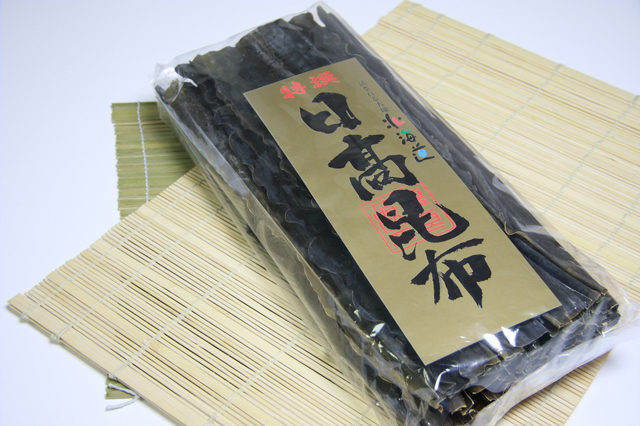
Konbu as sold in Japan

Konbu out of its packaging

-Konbu/dried thick dark seaweed: 5cm×5cm piece (dry)
-Water: 400cc/ml
-Japanese sake: 1 tablespoon (don’t worry, the alcohol will disappear upon heating/cooking!)
-Mirin/sweet sake (same comments as above!): 2 tablespoons
-Soy sauce: 2 and a half tablespoons

RECIPE:

Pour the awter into a large pan. Drop the seaweed into the water.
Switch on the fire.
The moment bubbles appear on the surface of the konbu, the water will start sucking the its essence in.
At that time add soy sauce, sake and mirin.

Taste from time to time to decide when taste suits you best.
Switch fire then and take konbu out.
Let cool completely, pour it inside a bottle. Seal the bottle properly and store inside refrigerator.
Use it as soon as possible.

The seaweed doesn’t have to be thrown away. It is edible as it is once cooked!

RECOMMENDED RELATED SITES
Not-Just-Recipes, Bengal cuisine, Cooking Vegetarian, Frank Fariello, Gluten-free Vegan Family, Meatless MamaFrank Fariello, , Warren Bobrow, Wheeling Gourmet, Le Petit Cuisinier, Vegan Epicurean, Miss V’s Vegan Cookbook, Comestiblog, To Cheese or not To Cheese, The Lacquer Spoon, Russell 3

Please check the new postings at:
sake, shochu and sushi

—————————————-
日本語のブログ
—————————————-