Tag Archives: 静岡

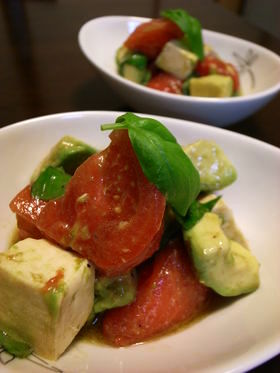
Vegan Japanese Cuisine: Tofu, Avocado & Tomato Marinade

Tofu, Avocado & Tomato?
Very much in “season”! Actually could be obtained easily all year round!
Here is a Japanese (and Italian?) inspired vegan (and vegetarian) recipe for the hot days of summer!
Choose your ingredients well, striving for the best and organic, if you can!

INGREDIENTS: For 2~ people

-Tomato: 1
-Avocado: 1
-Tofu: half a standard block~200 g
-Basil: 6 medium leaves

Marinade:
-Olive oil (EV): 2 tablespoons
-Lemon juice: 1.5 tablespoons
-Balsamico vinegar: 1 teaspoon
-Sugar: 1/2 teaspoon
-Salt & black pepper: as appropriate

RECIPE:

-Press water out of tofu (cover it with a clean cloth and a weight on top).
Cut tomatoes, tofu and avocado in same size chunks/cubes (important!).
Think of final look!

-Cut basil in small enough bits for easy mixing.

-Mix all marinade ingredients in a large bowl.

-Add tofu, tomato, avocado and cut basil. Mix delicately. Cover with cellophane paper. Keep in fridge long enough to chill or until you serve.

-Try to be inventive on presentation!

-So easy and yummy!

NOTES:

-Peel skin off tomato if too hard. Choose “fleshy” tomatoes with a little water and seeds as possible. Take the later off if possible.

-Choose a particularly aromatic lemon juice. Meyer would be interesting!

-Keep basil leaves handy for decoration! Mint could be interetsing, too!

RECOMMENDED RELATED SITES:
Warren Bobrow, Bread + Butter, Zoy Zhang, Hungry Neko, Think Twice, Frank Fariello, Mangantayon, Hapabento, Elinluv Tidbit Corner, Tokyo Terrace, Maison de Christina, Chrys Niles,Lexi, Culinary Musings, Wheeling Gourmet, Comestiblog, Chronicles Of A Curious Cook, Tokyo Through The Drinking Glass, Tokyo Foodcast, Palate To Pen, Yellin Yakimono Gallery, Tokyo Terrace, Hilah Cooking, More than a Mount Full, Arkonite Bento, Happy Little Bento; 5 Star Foodie; Jefferson’s Table; Oyster Culture; Gourmet Fury; Island Vittles; Good Beer & Country Boys; Rubber Slippers In Italy; Color Food daidokoro/Osaka;/a; The Witchy Kitchen; Citron Et Vanille, Lunsj Med Buffet/Estonian Gastronomy (English), Cook, Eat, Play, Repeat, Chrisoscope; Jacqueline Church

Please check the new postings at:
sake, shochu and sushi

Sushi Cupcakes: For an easy Party!

Cupcakes don’t need to be introduced, neither sushi!
But have you ever thought of combining the two for an easy party meal/snack for adults or children?
Here is a simple suggestion you can easily adapt to impress your friends!

Sushi Cupcakes!

INGREDIENTS: for 15~20 cups

-Sushi Tarou Sushi Mix: 1 pack
The above can be found easily in Japan or at Asian supermarkets abroad to make your work very easy! They are also called “Go Moku Chirashi”.

The above is available on Amazon.com in Japan!

-Steamed rice (warm): 500 g

A)Boiled prawn: 2
A)Avocado and lemon juice: as appropriate

B)Kamaboko/Fish paste (red): as appropriate
B)Mitsuba/Trefoil: as appropriate

C)Mini Tomato: as appropriate
C)Sliced cheese: as appropriate
C)Kaiware/Daikon Sprouts (or other): as appropriate

D)Sweet Rice vinegar renkon/lotus root: as appropriate
D)Cucumber: as appropriate
D)Kanikama/Surimi: as appropriate
D)Ginnan/gingko nuts (boiled): as appropriate

E)Smoked salmon: as appropriate
E)Shiso or Oba/Perilla leaves: as appropriate
E)Yuzu/lime zests (grated) as appropriate

RECIPE:

-Pour the warm rice and the sushi mixture into a large bowl and mix quickly.

-Fill aluminum foil cupcakes or cups with the sushi rice. Make groups of two or three cups. Srim\nkle them all with finley cut dry seaweed (skip seaweeed if you don’t like it!), or with some roasted sesame seeds. If you have some tube wasabi handy, put a little in the middle.

-Top first series with A) you will have beforehand seasoned with mayonnaise of your liking.

-Top second series with B). Season with a little yuzu koshio if you have some. If not, a little lemon juice is fine.

-Top third series with C).

-Top fourth series with D) Notice the way the cucumber are cut!

-Top fifth series with E)

Have good fun!

RECOMMENDED RELATED SITES:
Warren Bobrow, Bread + Butter, Zoy Zhang, Hungry Neko, Think Twice, Frank Fariello, Mangantayon, Hapabento, Elinluv Tidbit Corner, Tokyo Terrace, Maison de Christina, Chrys Niles,Lexi, Culinary Musings, Wheeling Gourmet, Comestiblog, Chronicles Of A Curious Cook, Tokyo Through The Drinking Glass, Tokyo Foodcast, Palate To Pen, Yellin Yakimono Gallery, Tokyo Terrace, Hilah Cooking, More than a Mount Full, Arkonite Bento, Happy Little Bento; 5 Star Foodie; Jefferson’s Table; Oyster Culture; Gourmet Fury; Island Vittles; Good Beer & Country Boys; Rubber Slippers In Italy; Color Food daidokoro/Osaka;/a; The Witchy Kitchen; Citron Et Vanille, Lunsj Med Buffet/Estonian Gastronomy (English), Cook, Eat, Play, Repeat, Chrisoscope; Jacqueline Church

Please check the new postings at:
sake, shochu and sushi

Today’s Lunch Box/Bento (’10/59): Duck Confit Sushi Bento

The Missus couldn’t go shopping yeaterday and she had to make do with what was left available this morning (BG will probably comment that I’m bonding the Missus into slavery!).
But apparently there was still plenty left in fridge and the “pantry”.

She steamed plain sushi rice she mixed with edamame boiled the precious evening and added some seasme seeds for seasoning.
There was still one frozen duck confit left in the freezer.
The benefits of internet were clearly felt there. The Missus orders a lot of French ingredients dirctly from Dining Plus, a Japanese import Company based in Osaka, with a great list and very fast service.
You don’t really need to unfreeze the duck confit in a hurry. Just Put it on a teflon non-stick frypan and cover it. It will cook to a crispy state in its own fat.
Once cooked you, you tsrip the bone (“for me!”, said the Missus. BG, keep quiet!) and cut or shred the meat. Don’t forget the crispy skin, it’s beautiful!

She topped the rice with plenty of shredded duck confit (cooled down), Shizuoka-grown cress, and deep-fried (small) renkon/lotus root slices.
French pickles were added to contribute another French note to the bento. I should have called it “French Sushi Bento”!

The dessert/salad dish included mini tomatoes, pink and yellow potato salad on lettuce.
Dessert wers plums (the Japanese call them “prunes”, another Japlish word!), and sliced peach.

Another solid bento for this stamina sapping weather!
Definitely a French bento! I wonder who the “Japanese half “is! LOL

Adventures in Bento Making, American Bento, Beanbento, Bento No1, Bento Wo Tsukurimashou, Cooking Cute, Eula, Hapabento , Happy Bento, Jacki’s Bento Blog, Kitchen Cow, Leggo My Obento, Le Petit Journal Bento & CO (French), Lunch In A Box, My Bento Box, Vegan Lunch Box; Tokyo Tom Baker, Daily Food Porn/Osaka, Only Nature Food Porn, Happy Little Bento, The Herbed Kitchen, J-Mama’s Kitchen, Cook, Eat, Play, Repeat; Bento Lunch Blog (German); Adventures In Bento; Anna The Red’s Bento Factory; Cooking Cute; Timeless Gourmet; Bento Bug; Ideal Meal; Bentosaurus;

Please check the new postings at:
sake, shochu and sushi

—————————————-
日本語のブログ
—————————————-

Vegan Local Organic Salad at Uzu

Service: excellent, easy-going and very friendly
Facilities: great washroom, great cleanliness overall
Prices: very reasonable, good value.
Strong points: Very fresh local ingredients, especially organic vegetables extensively used. Local sake. Home-made umeshu. Great shochu list.

I wish all my vegan and vegeterian friends could at least visit once Uzu Izakaya in Shizuoka City!
They try really hard to serve local organic vegetables, especially those grown by Mr Satsuki at Satsuki Bio Farm in Shibakawa Cho, Fujinomiya City at the foot of Mount Fuji!

The above salad was ordered last Thursday by the Missus.
It was enormous and I was certainly supposed to help finishi it!
We were actually lucky to get as they they were limited to 5 serving only.
We always make a point of ordering it as the vegetables will be different next time!

They did include many varieties, some of which I can’t remember.
There are red okra, white goya, Red Moon and Inca mezame potatoes (first fried), black tomatoes, green peppers, shishito chili pepper, red chickory/endive, orange, zucchini, the whole basket!

Another view!

To be savored one at a time, with chopsticks (and a great glass of sake!)!

UZU
Shizuoka City, Otowa-cho, 3-18
Tel.: 054-249-6262
Business hours: 17:00=23:00
Closed on Mondays and first Tuesday
Reservations recommended
Credit cards OK
HOMEPAGE (Japanese)

RECOMMENDED RELATED SITES:
Warren Bobrow, Bread + Butter, Zoy Zhang, Hungry Neko, Think Twice, Frank Fariello, Mangantayon, Hapabento, Elinluv Tidbit Corner, Tokyo Terrace, Maison de Christina, Chrys Niles,Lexi, Culinary Musings, Wheeling Gourmet, Comestiblog, Chronicles Of A Curious Cook, Tokyo Through The Drinking Glass, Tokyo Foodcast, Palate To Pen, Yellin Yakimono Gallery, Tokyo Terrace, Hilah Cooking, More than a Mount Full, Arkonite Bento, Happy Little Bento; 5 Star Foodie; Jefferson’s Table; Oyster Culture; Gourmet Fury; Island Vittles; Good Beer & Country Boys; Rubber Slippers In Italy; Color Food daidokoro/Osaka;/a; The Witchy Kitchen; Citron Et Vanille, Lunsj Med Buffet/Estonian Gastronomy (English), Cook, Eat, Play, Repeat, Chrisoscope; Jacqueline Church

Please check the new postings at:
sake, shochu and sushi

Today’s Lunch Box/Bento (’10/58): Pacific Saury/Sanma/秋刀魚Bento

You do not have to fill yourself with supplements to insure your sufficient intake of Vitamin D, Omega 3 and Iron.
Red-flesh fish contain far enough and more!

The Japanese take an abundant catch of Pacific Saury or Sanma/秋刀魚(Autumn Sword Fish) and these fish are full of them all!
They can be accomodated in many way although the Japanese will either broil or stew them.

As the have just come in season, although it is still Summer, the Missus buys them in batches, already dressed, and first fry them before stewing them for a short while in sauce of her own.

She steamed the rice with umeboshi flesh and chopped myoga ginger before mixing in two types of roasted sesame seeds.
She placed the fish on top with the sauce wich added plenty of taste to the rice.
She sprinkled the lot with a few home-pickled sansho/Jpanaese pepper seeds and added ome home-made (her mother’s) cucumber and ginger pickles.

The fish certainly looks appetizing, but all that brown color tends to dull the eyesight.
That is when the Missus became a bit inventive!LOL

She started with a Japanese-stylesemi-soft boiled egg sprinkled with balck roasted sesmae seeds.
She the added “chikuwa/fish paste tubes” she filled with okra and cut for artistic effect!
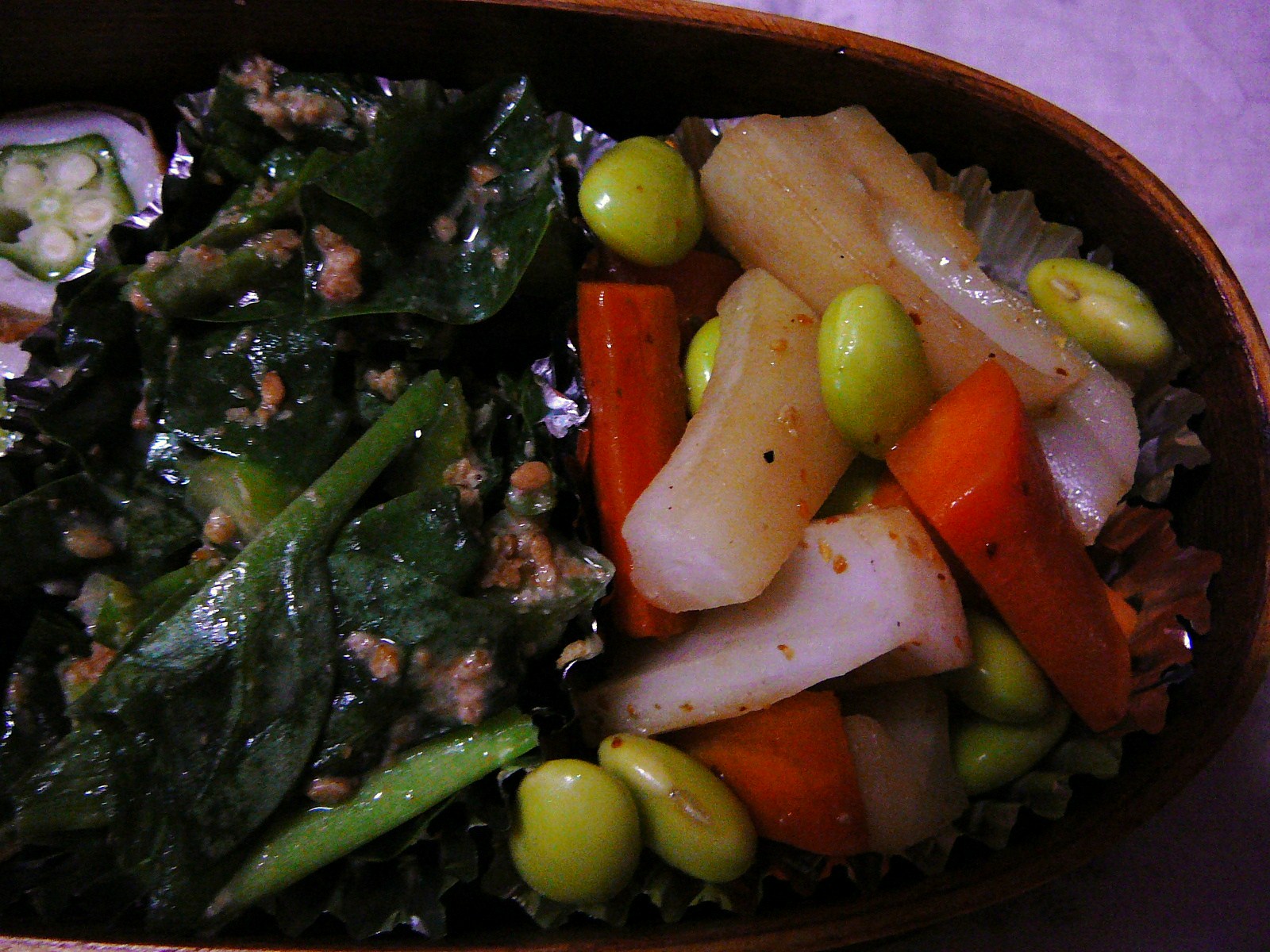
The greens are boiled and fried “tsurumurasaki/Indian spinach, Malabar spinach” seasoned with gomadare/sesame dresing and ground sesame seeds.

The rest of the salad consisted of boiled/fried renkon/lotus roots. carrot, and edamame with some seasoning for plenty of fibers and vitamin C.

More Vitamin C with a dessert of sweet mini tomatoes, plums and nashi/梨 pear!

Great balance!

RELATED ECOMMENDED SITES

Adventures in Bento Making, American Bento, Beanbento, Bento No1, Bento Wo Tsukurimashou, Cooking Cute, Eula, Hapabento , Happy Bento, Jacki’s Bento Blog, Kitchen Cow, Leggo My Obento, Le Petit Journal Bento & CO (French), Lunch In A Box, My Bento Box, Vegan Lunch Box; Tokyo Tom Baker, Daily Food Porn/Osaka, Only Nature Food Porn, Happy Little Bento, The Herbed Kitchen, J-Mama’s Kitchen, Cook, Eat, Play, Repeat; Bento Lunch Blog (German); Adventures In Bento; Anna The Red’s Bento Factory; Cooking Cute; Timeless Gourmet; Bento Bug; Ideal Meal; Bentosaurus;

Please check the new postings at:
sake, shochu and sushi

—————————————-
日本語のブログ
—————————————-

Sushi Recipe: Grilled Mackerel/Yaki Saba

Mackerel, or saba/鯖 in Japanese is a very popular fish everywhere in the world.
The Japanese love theiir mackerel sushi either raw or pickled as “shimesaba/しめ鯖”.
For people who both love sushi, but prefer their mackerel cooked, hereis a simple recipe:

Grilled Mackerel Sushi/yaki Saba Sushi!

INGREDIENTS: for 2 people

-Rice: 180 cc/ml (uncooked)
-Mackerel: 1/2, fresh (not salted)
-Fresh ginger: 20 g
-Salt: 1/2 teaspoon
-Rice vinegar: 2 large tablespoons
-Sugar: 2 tablespoons
-Salt: 1/2 teaspoon

RECIPE:

-Wash the rice and steam it normally, but with a little less water than ususal.

-Chop the fresh ginger very finely.
Add the rice vinegar, sugar and salt to the chopped fressh ginger into a bowl and heat to boil. Reduce fire to low immediately and cook for 1~2 minutes.
Let cool down.

-Take bones out of the fish.
Salt both sides and grill on both sides.
Grill until skin becomes “bubbly”.

-In a bowl, drop the freshly steamed rice. Add the ginger dressing to it.
Using a fan to cool it at the same time, “cut in/mix” the rice gently with a spatula until it has become brilliant and well-coated.

-Spread the fish skin down on a sheet of cellophane paper. Place the sushi rice on top and along so as to cover it completely. Don’t be afraid to use plenty!

-Wrap the cellophane paper around the mackerel and rice and form a thick “stick” with your hands. Leave aside for a while.

-Cutting: use a sharp knife and cut acroos the wrapped sushi, wiping the knife clean after every cut.
Unwrap and serve!

Easy sushi recipe for people who don’t like raw fish!

RECOMMENDED RELATED SITES:
Warren Bobrow, Bread + Butter, Zoy Zhang, Hungry Neko, Think Twice, Frank Fariello, Mangantayon, Hapabento, Elinluv Tidbit Corner, Tokyo Terrace, Maison de Christina, Chrys Niles,Lexi, Culinary Musings, Wheeling Gourmet, Comestiblog, Chronicles Of A Curious Cook, Tokyo Through The Drinking Glass, Tokyo Foodcast, Palate To Pen, Yellin Yakimono Gallery, Tokyo Terrace, Hilah Cooking, More than a Mount Full, Arkonite Bento, Happy Little Bento; 5 Star Foodie; Jefferson’s Table; Oyster Culture; Gourmet Fury; Island Vittles; Good Beer & Country Boys; Rubber Slippers In Italy; Color Food daidokoro/Osaka;/a; The Witchy Kitchen; Citron Et Vanille, Lunsj Med Buffet/Estonian Gastronomy (English), Cook, Eat, Play, Repeat, Chrisoscope; Jacqueline Church

Please check the new postings at:
sake, shochu and sushi

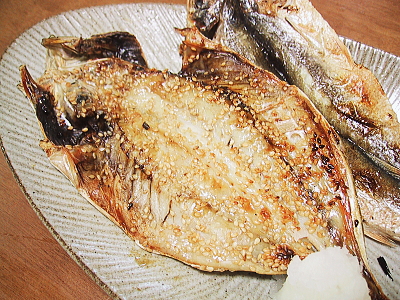
Japanese Cuisine: Himono-Dried Fish

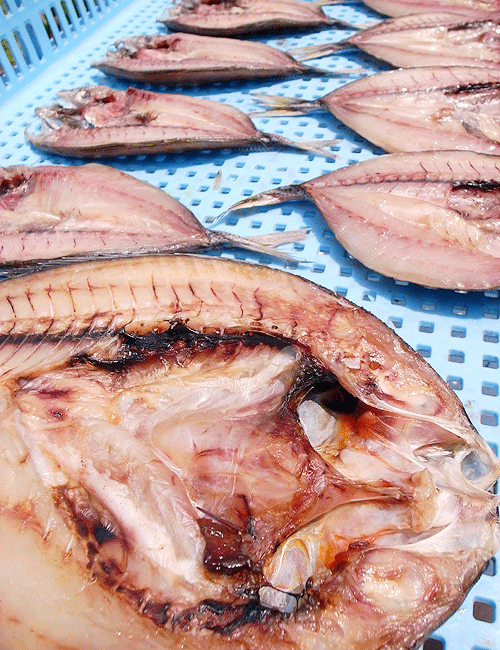
How many people outside Shizuoka Prefecture know that half (yes, half!) of all dried fish are caught and processed in our Prefecture, notably along the shores of the Izu Peninsula?
When will I convince everyone that Shizuoka Prefecture is THE true gastronomic region of Japan? LOL
To those guys living in Tokyo, may I remind them that Mount Fuji, Izu Peninsula and wasabi are all in Shizuoka Prefecture? Please, someone stop me!

Soon the season for preparing died fish will start anew, although it lasts almost all year round in some parts of Izu peninsula. i take the opportuity to re-publish this posting. The Spanish in particular are good at making the same thing, and the basic recipe can be applied alost worldwide.

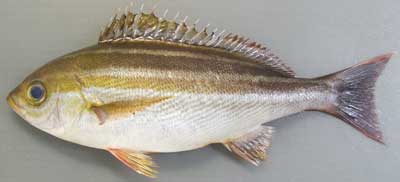
I chose a fish called “isaki” or “Chicken Grunt” (who came up with that English name?) that is quite common on our shores.
The same recipe naturally applies to loads of fish!

CLEANING THE FISH:

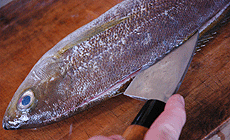
Using a strong short sharp knife (the Japanese use the same knife to cut and gut medium size fish), first get rid of the scales as much as possible.
Wash once under running clear cold water.
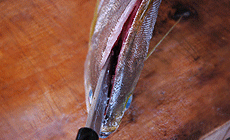
Cut along the back (not the belly! very important) from the tail to the head as shown on above picture deeply enough to reach the main bone.

Once the knife has cut all along the back and reached the head, cut the head in half along the same cutting line.
The head of a isaki being small it is quite easy. It might requires some strength for bigger head fish like seabreams. Call the MOTH then! (not the moths, the “Man”! LOL).

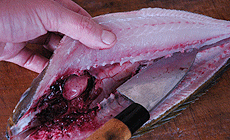
Open the fish and continue cutting in half all the way through.

Take out innards carefully so as not having them getting in contact with the flesh!
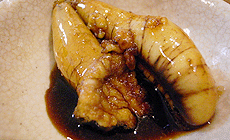
Depending upon the season, you might be lucky to get male sperm sacks (shirako). Don’t throw that away. They are great simmered with soy sauce, mirin/sweet sake, japanese sake and chili pepper! (see pic below).

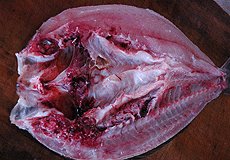
Open the fish and clean it under running clear cold water.
Take water off with some kitchen paper or a clean piece of cloth.
Sprinkle with salt and dry outside under the sun until it has reached a nice aspect. You could also smoke it.
It can be preserved insde an airtight plastic bag and frozen, although eaten quickly it will taste so much better!

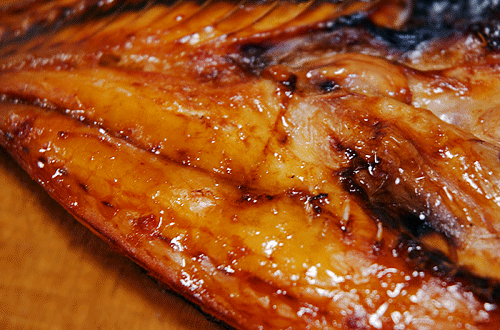
The Japanese grill their himono/dried fish pasted with a liuttel soy sauce or tare. Beautiful with beer, Good Beer and Country Boys!

Great also grilled with a little salt!

If grilled with salt don’t forget the freshly grated daikon (and lemon juice, and soy sauce…)

The male sperm sacs (shirako) make for a great snack with your beer or sake once simmered in soy sauce, mirin/sweet sake and Japanese sake (and a little chili pepper)!

RECOMMENDED RELATED SITES:
Warren Bobrow, Bread + Butter, Zoy Zhang, Hungry Neko, Think Twice, Frank Fariello, Mangantayon, Hapabento, Elinluv Tidbit Corner, Tokyo Terrace, Maison de Christina, Chrys Niles,Lexi, Culinary Musings, Wheeling Gourmet, Comestiblog, Chronicles Of A Curious Cook, Tokyo Through The Drinking Glass, Tokyo Foodcast, Palate To Pen, Yellin Yakimono Gallery, Tokyo Terrace, Hilah Cooking, More than a Mount Full, Arkonite Bento, Happy Little Bento; 5 Star Foodie; Jefferson’s Table; Oyster Culture; Gourmet Fury; Island Vittles; Good Beer & Country Boys; Rubber Slippers In Italy; Color Food daidokoro/Osaka;/a; The Witchy Kitchen; Citron Et Vanille, Lunsj Med Buffet/Estonian Gastronomy (English), Cook, Eat, Play, Repeat, Chrisoscope; Jacqueline Church

Please check the new postings at:
sake, shochu and sushi

Japanese Rice Crackers/ Senbei (煎餅)-The Basics

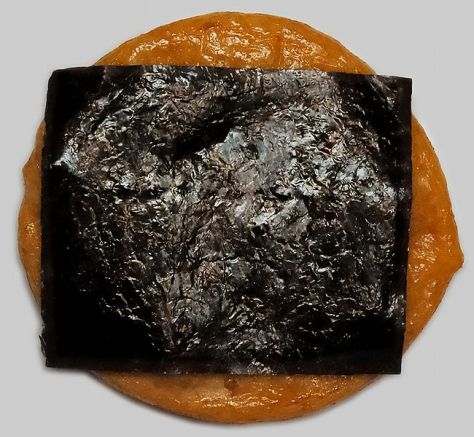
Nori Senbei/Rice Cracker coated with a dry seaweed

I remember eating those rice-crackers a (very) long time ago when I was at college in England.
At the time I never made the relation between these snacks and Japan!

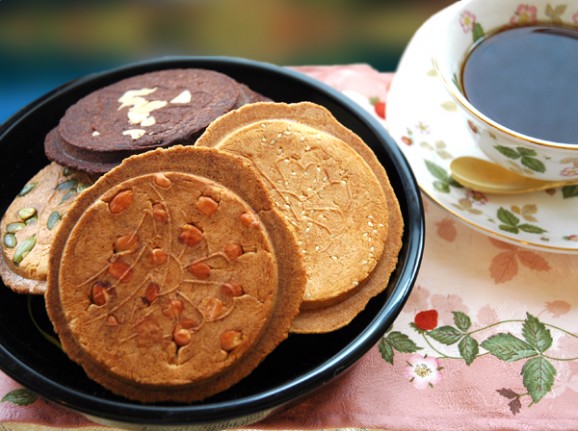
Senbei (煎餅, alternatively spelled sembei) are a type of Japanese rice crackers. They come in various shapes, sizes, and flavors, usually savory but sometimes sweet. Senbei are often eaten with green tea as a casual snack and offered to visiting house guests as a courtesy refreshment.
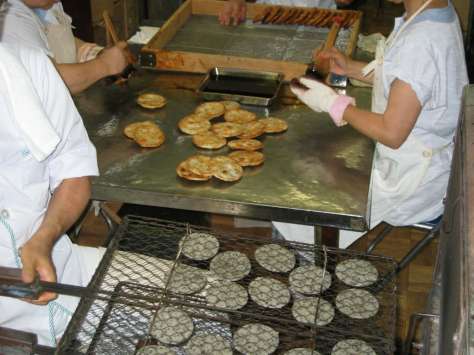
Senbei are usually cooked by being baked or grilled, traditionally over charcoal. While being prepared they may be brushed with a flavoring sauce, often one made of soy sauce and mirin. They may then be wrapped with a layer of nori. Alternatively they may be flavored with salt or so-called “salad” flavoring.

In China, the same characters used to write senbei are read jiānbǐng (煎餅). There are varieties like Shandong Jianbing and Tianjin Jianbing. However, these are in actuality a different food. In China, they are more like wraps and pancakes, similar to okonomiyaki, whereas in Japan they are hard (not floppy), and are bite-sized snacks rather than meals. However, crackers similar to Japanese senbei can be found in China today. Their modern Chinese name is 仙贝 (or 鲜贝) (Pinyin: xianbei), which reflects the Japanese-language pronunciation of “senbei” (煎餅).
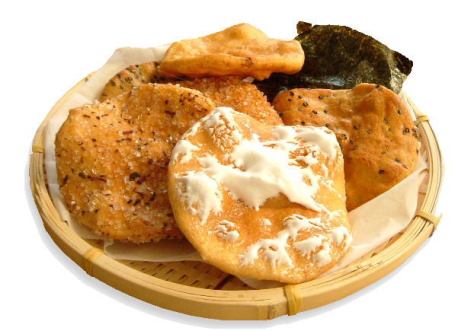
Sweet senbei (甘味煎餅) came to Japan during the Tang Dynasty, the first recorded usage in 737 AD, and still are very similar to Tang traditional styles, originally often baked in the Kansai area, of which include the traditional “roof tile” senbei. These include ingredients like potato and wheat flour or glutinous rice, and are similar to castella cakes. (Distinctly different from what most people would consider as Senbei today).

What Japanese commonly refer to as sembei nowadays was popularized by a shop in the Edo Period, Sōkajuku, which spread salty soy sauce flavored sembei throughout Japan.
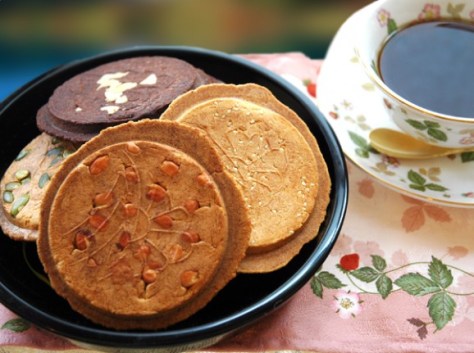
There are several types of traditional Japanese senbei. They include the 2 categories, sweet sembei (over 15 types) and rice candy senbei (米菓煎餅), and others, which include even fish senbei (魚せんべい), lotus senbei (蓮根煎餅) and bone senbei (骨せんべい).

Modern senbei versions are very inventive and may include flavorings which can range from kimchi to wasabi to curry to chocolate.

Kansai senbei tend to use glutinous rice and have a lightly seasoned and delicate in texture (saku saku). Kantō senbei were originally based on uruchimai, a non-glutinous rice, and they tend to be more crunchy (kari kari) and richly flavored.

OTHER TYPES OF SENBEI:

ARARE
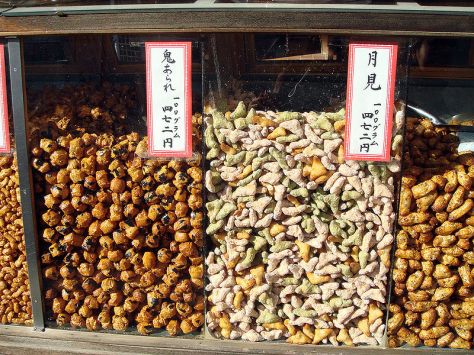
Arare (あられ “hailstones”) is a type of bite-sized Japanese cracker made from glutinous rice and flavored with soy sauce. The size and shapes are what distinguish arare from senbei.
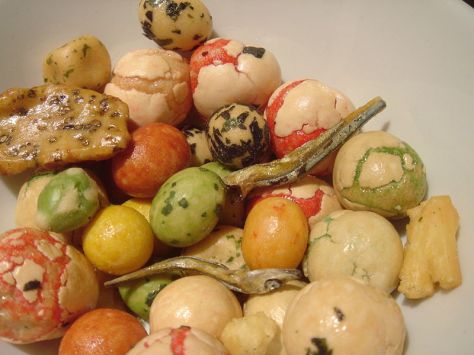
There are many different sizes, colors, and shapes of arare. Some are sweet, and others savory. One, called norimaki arare (nori meaning an edible seaweed foodstuff in the form of a dried sheet; maki meaning roll shape) is wrapped with dried nori seaweed. Another, kaki no tane (柿の種), takes its name from its resemblance to a persimmon seed. (Kaki is Japanese for “persimmon”.) Kaki no tane are often sold with peanuts, a combination called kakipī (かきピー). These are a popular snack to accompany Japanese beer.
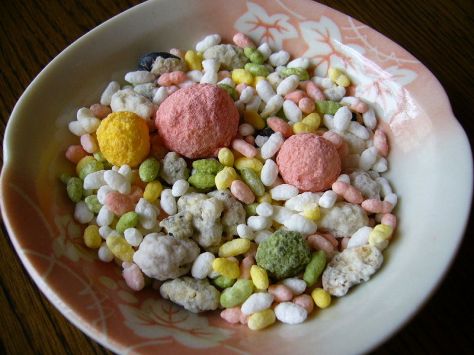
Hina Arare

Japanese typically consume arare to celebrate the Doll Festival (Hinamatsuri), on March 3, Girls’ Day in Japan. The arare made during the festival are very colorful – pink, yellow, white, brown, light green, and so on. Regular arare can be bought throughout the year, but the colorful ones are only available around January to March in anticipation of the Doll Festival.

Arare was brought to the U.S. by Japanese immigrants who came as plantation workers in the early 1900s. In Hawaii, the snack is often called kakimochi (fried rice paste) or mochi crunch. In Hawaii, it’s popular to mix arare with popcorn (some people mix in furikake, too). The popular Hurricane popcorn includes both arare and furikake with the popcorn. Also popular in Hawaii is li hing arare.

AGEMOCHI:
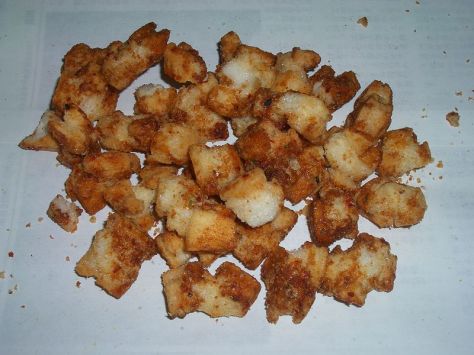
Agemochi (揚げ餅?) is a popular Japanese snack food made from fried mochi (sticky rice). The dry mochi is broken into small pieces, about 1cm cubed, and deep fried. The pieces then puff up. It is usually eaten lightly salted, but there are also various flavoured versions, such as shichimi agemochi, agemochi covered with shichimi seasoning. Agemochi can be purchased anywhere in Japan and is also a common home-made snack.

YATSUHASHI:
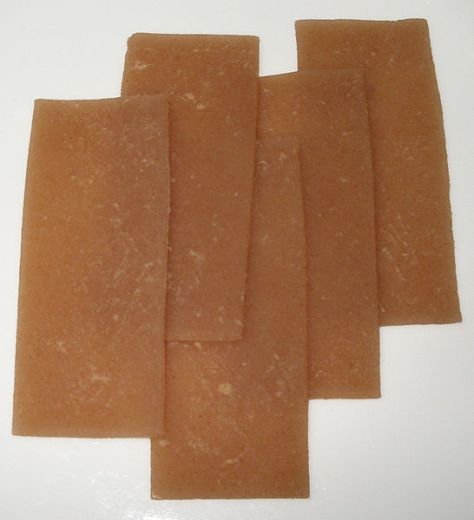
Yatsuhashi (八ツ橋 or 八橋) is a Japanese confectionery sold mainly as a souvenir sweet (miyagegashi). It is one of the best known meibutsu (famous regional products) of Kyoto. It is made from rice flour (上新粉, jōshinko), sugar and cinnamon. Baked, it is similar to senbei. Raw, unbaked yatsuhashi (Nama yatsuhashi) has a soft, mochi-like texture and is often eaten wrapped around red bean paste (餡, an), and may come in a variety of different flavours. Most notable to the Kyoto area is the black version of this. The addition of black bean powder to the wrapper gives a distinctive black color.

KAPPA EBISEN:
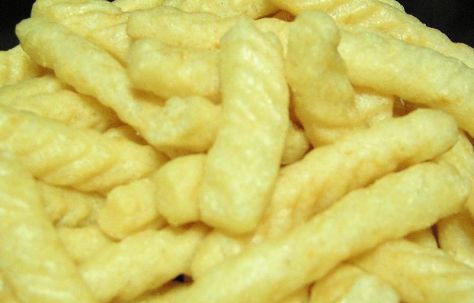
Kappa Ebisen (かっぱえびせん) is a Japanese snack food produced by Calbee of Japan. It is a crunchy, shrimp-flavored snack resembling french fries that is very popular in Japan.
The primary ingredients of Kappa Ebisen are wheat flour, vegetable oil, starch, shrimp, sugar, salt, baking powder, amino acid and sweetening.
Kappa Ebisen was first sold in 1964 and has gained wide popularity among Japanese consumers as a snack food.
In 1966, Calbee began exporting Kappa Ebisen to Hawaii and Southeast Asia.[1] It is now sold in dozens of countries worldwide.
There are different flavors of Kappa Ebisen, such as curry flavor, available in Japan and a few other countries.
A similar product known as Saewoo Ggang (새우깡) has been produced by Nongshim of South Korea since 1971. It is not licensed by Calbee.

Well, this is for the basics!
Will look for varieties and recipes from now on!

RECOMMENDED RELATED SITES:
Warren Bobrow, Bread + Butter, Zoy Zhang, Hungry Neko, Think Twice, Frank Fariello, Mangantayon, Hapabento, Elinluv Tidbit Corner, Tokyo Terrace, Maison de Christina, Chrys Niles,Lexi, Culinary Musings, Wheeling Gourmet, Comestiblog, Chronicles Of A Curious Cook, Tokyo Through The Drinking Glass, Tokyo Foodcast, Palate To Pen, Yellin Yakimono Gallery, Tokyo Terrace, Hilah Cooking, More than a Mount Full, Arkonite Bento, Happy Little Bento; 5 Star Foodie; Jefferson’s Table; Oyster Culture; Gourmet Fury; Island Vittles; Good Beer & Country Boys; Rubber Slippers In Italy; Color Food daidokoro/Osaka;/a; The Witchy Kitchen; Citron Et Vanille, Lunsj Med Buffet/Estonian Gastronomy (English), Cook, Eat, Play, Repeat, Chrisoscope; Jacqueline Church

Please check the new postings at:
sake, shochu and sushi
Vegan Sashimi at Yasaitei (2010/08/04)

Service: Excellent and very friendly. All ladies!
Facilities: very clean
Prices: reasonable
Specialty: Vegan and vegetarian Cuisine, Izakaya gastronomy, local products, oden.

In these hot days of summer (and sultry nights) in Japan, one is in a constant need for water/fluid and vitamins.
Although I’m no vegan or vegetarian, I totally agree that fresh vegetables are best.
Here in Shizuoka, we are not only blessed with a wealth of local vegetables, but due to the central location in this country, vegetables from all other parts of Japane find their way quickly onto our plates.

“Mokuzu seaweed” appetizer.

We are also blessed with great izakayas who make a point of serving as much local produce as possible.
One of them is the famed Yasaitei in downtown Shizuoka.
It might be a good idea to call or reserve beforehand as it is packed what the time of the day/night or the economic situation!

A closer look at mokuzu seaweed served in rice vinegar with a few seame seeds and lemon zests.

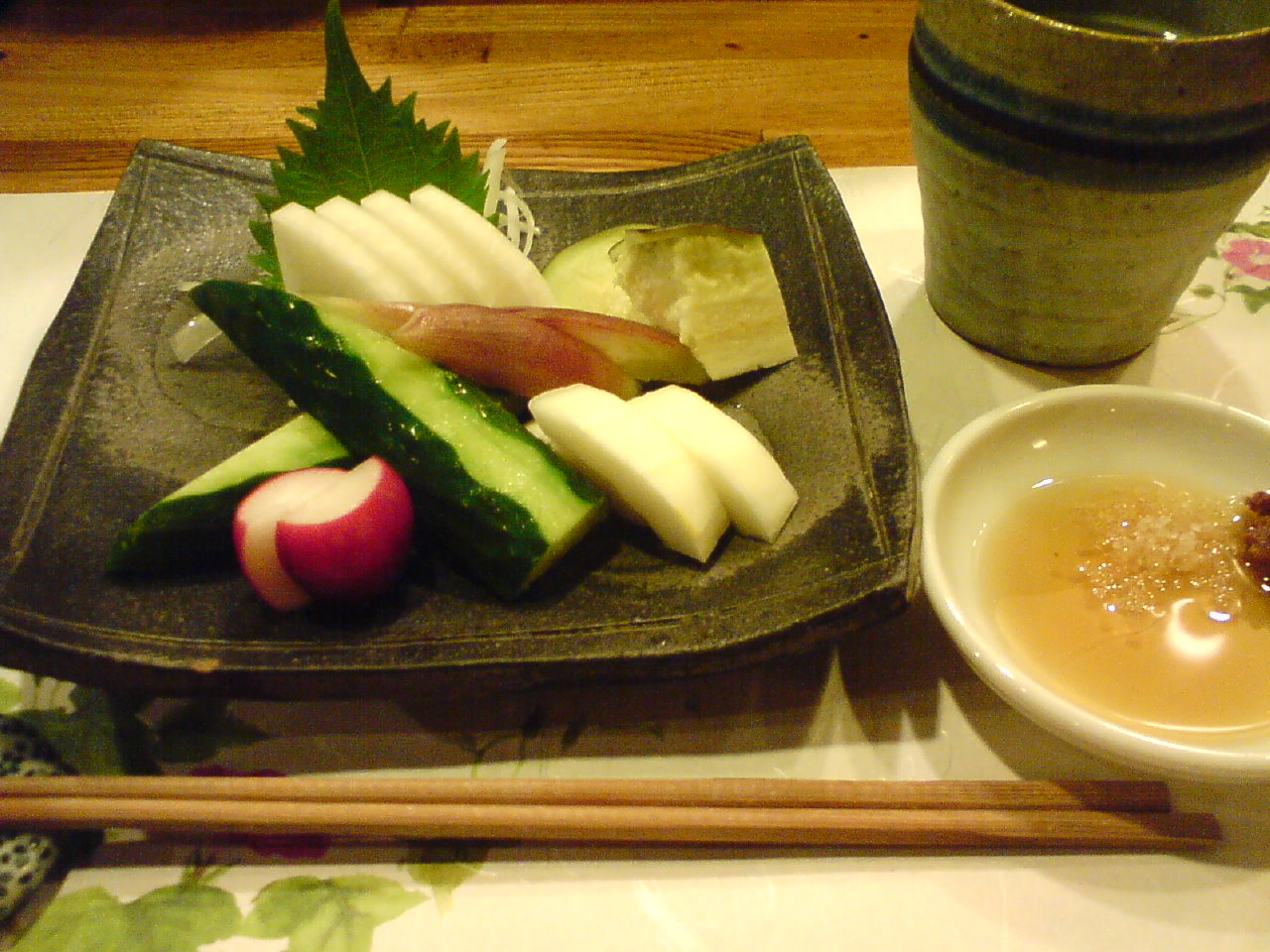
If you are vegan or vegetarian, you must ask: “Yasai no Sashimi kudasai! (Vegetables Sashimi, please!)”.
And this a sample of what going to be served.
Actually you can even ask which vegetables you would like to sample by pointing at them displayed on the shelf along the counter!

The dressing is also vegan!
Sesame oil/goma abura, rock salt/gaien and miso paste!

A side view which will give you an idea of the plate design!

And another one!

Alright, time for a detailed explanation:
Front: Radish, Cucumber, both crucnshy and juicy, and “Makuwa Uri”

“Makuwa Uri” is Oriental Melon in English, although they come in many varieties.
If you call a melon “uri/瓜” in Japanese, it refers to thekinds eaten as vegetables.
This particular is a bit of a misnomer as it is sweet and can be eaten only raw.
It tastes like pears, but less sweet. it makes for a beautiful note among other vegetables.

As for the second row, I was served daikon, myoga ginger sprouts and mizu nasu/water eggplants. The latter are eaten raw and mostly come from Osaka.

The last row/supporting row consists of shiso/perilla leaf and finely sliced white onion (sweet!).

I hope I have given you an idea for a refreshing and healthy summer appetizer!

YASAITEI
Shizuoka City, Aoi Ku, Tokiwa-Cho, 1-6-2 Green Heights Wamon 1-C
Tel.: 054-2543277
Business hours: 17:30~22:00
Closed on Sundays
Reservations highly recommended
Seating: 6 at counter + 14 at tables
Set Courses: 3,000, 4,000, 5,000 yen
HOMEPAGE (Japanese)

RECOMMENDED RELATED SITES:
Warren Bobrow, Bread + Butter, Zoy Zhang, Hungry Neko, Think Twice, Frank Fariello, Mangantayon, Hapabento, Elinluv Tidbit Corner, Tokyo Terrace, Maison de Christina, Chrys Niles,Lexi, Culinary Musings, Wheeling Gourmet, Comestiblog, Chronicles Of A Curious Cook, Tokyo Through The Drinking Glass, Tokyo Foodcast, Palate To Pen, Yellin Yakimono Gallery, Tokyo Terrace, Hilah Cooking, More than a Mount Full, Arkonite Bento, Happy Little Bento; 5 Star Foodie; Jefferson’s Table; Oyster Culture; Gourmet Fury; Island Vittles; Good Beer & Country Boys; Rubber Slippers In Italy; Color Food daidokoro/Osaka;/a; The Witchy Kitchen; Citron Et Vanille, Lunsj Med Buffet/Estonian Gastronomy (English), Cook, Eat, Play, Repeat

Please check the new postings at:
sake, shochu and sushi

Tomato & Eggplants Stew

Aubergines or eggplants/eggplants and tomatoes are the vegetables of the summer!
They come in cheap, are aplenty and very healthy.
The French have “invented” ratatouille to accomodate them together.
This recipe is a cross between the French and Italian concept.
Vegans should forget the bacon and adopt this simple recipe!

Tomato & Eggplants Stew!

INGREDIENTS: For 4 people

-Eggplants: 4
-Tomatoes: 2
-Bacon: 60g
-Garlic: 1 clove
-Parsley/finely chopped: 1 tablespoon
-Flour: as appropriate
-Olive oil (EV): as appropriate
-Salt & pepper
-Frying oil

RECIPE:

-Peel the eggplants partly along their length in 4~5 spots for design. Cut lengthwise in 4 and cut across to obtain 2 cm thick pieces.

-Cut the tomatoes in 2 cm side cubes.

-Cut bacon in 8 mm wide strips/pieces.

-Cut the garlic clove in two halves and take out core (indegistble!). Cruch the garlic.

-Coat the cut eggplants with flour. Shake off excess flour before deep-frying them at high temperature (170~180 degrees Celsius). Once fried, lay on kitchen paper to take off excess oil, then transfer into bowl. Sprinkle them with a little salt.

-Pour some olive oil in a frypan. Heat it and fry bacon in it. When the bacon becomes crispy, add the tomato cubes and garlic. Fry until most water/liquid is gone. Season with salt and pepper.

-Throw in the eggplants and check taste and add salt and pepper if necessary. Add chopped parsley and a little more olive oil before serving.

Very easy and adaptable, isn’t it?

RECOMMENDED RELATED SITES:
Warren Bobrow, Bread + Butter, Zoy Zhang, Hungry Neko, Think Twice, Frank Fariello, Mangantayon, Hapabento, Elinluv Tidbit Corner, Tokyo Terrace, Maison de Christina, Chrys Niles,Lexi, Culinary Musings, Wheeling Gourmet, Comestiblog, Chronicles Of A Curious Cook, Tokyo Through The Drinking Glass, Tokyo Foodcast, Palate To Pen, Yellin Yakimono Gallery, Tokyo Terrace, Hilah Cooking, More than a Mount Full, Arkonite Bento, Happy Little Bento; 5 Star Foodie; Jefferson’s Table; Oyster Culture; Gourmet Fury; Island Vittles; Good Beer & Country Boys; Rubber Slippers In Italy; Color Food daidokoro/Osaka;/a; The Witchy Kitchen; Citron Et Vanille, Lunsj Med Buffet/Estonian Gastronomy (English), Cook, Eat, Play, Repeat, Chrisoscope

Please check the new postings at:
sake, shochu and sushi

Japanese Cuisine: Sesame Crackers/Goma Senbei

Senbei means rice crackers in Japanese. But they don’t have to be made solely with rice.
How about sesame seeds?
They are not difficult to make and here is another recipe for BG who requested them!

Sesame Crackers/Goma Senbei!

INGREDIENTS: For one “sheet”

Egg: 1
-Sugar: 60 g
-Miso: 1 teaspoon
-Flour: 20 g
-Sesame seeds: 80 g
-Ginger juice: a few drops

RECIPE:

-Drop whole egg and sugar in a bowl.
Preheat oven to 180 degrees Celsius.

-Beat until sugar and sugar are well incorporated. Add miso and ginger juice. Mix thoroughly, but take care not have any bubbles in mixture.

-Sieve flour over mixture and add sesame seeds. Mix well. It seems like a lot of sesame seeds, but don’t worry!

-Humidify your hands. Line the oven plate with kitchen paper. Spread cracker mixture thin so as to cover the whole plate.

-Bake at 180 degrees celsius for 8 minutes.
Might take longer depending on the thickness.

-Once the colour has attained a nice rich brown. Take sheet out.
Cut with a sharp knife into equal pieces.

-They should to a crispy state once they have cooled down.
If they don’t feel crispy enough, bake the cut pieces again at 150 degrees Celsius for a few minutes.

-Serve or keep tighly sealed inside a dry box!

RECOMMENDED RELATED SITES:
Warren Bobrow, Bread + Butter, Zoy Zhang, Hungry Neko, Think Twice, Frank Fariello, Mangantayon, Hapabento, Elinluv Tidbit Corner, Tokyo Terrace, Maison de Christina, Chrys Niles,Lexi, Culinary Musings, Wheeling Gourmet, Comestiblog, Chronicles Of A Curious Cook, Tokyo Through The Drinking Glass, Tokyo Foodcast, Palate To Pen, Yellin Yakimono Gallery, Tokyo Terrace, Hilah Cooking, More than a Mount Full, Arkonite Bento, Happy Little Bento; 5 Star Foodie; Jefferson’s Table; Oyster Culture; Gourmet Fury; Island Vittles; Good Beer & Country Boys; Rubber Slippers In Italy; Color Food daidokoro/Osaka;/a; The Witchy Kitchen; Citron Et Vanille, Lunsj Med Buffet/Estonian Gastronomy (English), Cook, Eat, Play, Repeat, Chrisoscope

Please check the new postings at:
sake, shochu and sushi

For your Dining Room: Tansu/Japanese Chests

Japan is still a very good country to prospect for antiques in spite of its devouring modernity.
When it comes to antique or even more homey tansu/箪笥, one should keep both eyes open as these Japanese-style chests can become extremely useful in any home because of their practical shapes and sturdy material, not to mention their aesthetic qualities.
Even if you are here for a short stay or plan to leave soon, they can easily be filled with your belongings actually helping with the ever tiring chore of removal.

Fine, Sir, but what is a tansu?Sorry, my good friend, I ought to have explained that a bit earlier!
Tansu is the word for chest, chest of drawers or cupboard, all in one word in Japanese. It is often used in the West, notably in the antique business, to refer to traditional Japanese chests, handcrafted and made of fine wood. The latter is important when it comes to pricing. Most popular woods are Hinoki/檜 or Japanese cypress, Keyaki/欅 or Japanese elm, Kuri/栗 or Chestnut,, Sugi/杉 and Kiri/桐 or Paulownia.
After all, it is a very vague term to describe a whole range of chests, but many collectors focus on finding antique Tansu. There are many workshops (especially in Shizuoka or other prefectures with a good supply of wood) in imitation of the classic antiques. Some are made of excellent reclaimed wood causing the new Tansu to retain a more aged look that some people seek. Make sure to ask first if the antique tansu is authentic or an imitation.
But my bet, that is if you have the time, is to look around in farms and in the country where there are not only authentic, but cheap and serviceable. Moreover, people tend to be happy to get rid of them!

Now, before you go prospecting, it always a good idea to acquire a little basic knowledge. One way to conduct a successful bargain!

Main types of Tansu:
-Choba-dansu/著場箪笥/Merchant Tansu. Used by merchants, they display elaborate metal hardware and were used in shops to impress customers. They come in many sizes depending on trade plied by their owners: sewing supplies chests, sea chests, merchant chests, futon chests or kitchen equipment chests. They could either open from a single side or be accessible from both sides.
-Kusuri-dansu/薬箪笥 were and still are apothecary/medicine chest. They were used to store herbs, especially at medicinal herbs/kanpoyaku/漢方薬 traditional pharmacists. They are often made of paulownia wood and have many small drawers. They make for the perfect chest for jewels, spectacles or other small collection object storage, or even display.
-Kaidan-dansu/階段箪笥, or step-chests are another very popular collection item, although their initial purpose was of a totally different nature. They were actually used to avoid taxation on other areas of a home when taxes were levied based on the size of one’s home! When the tax collectors appeared on the horizon, home-dwellers quickly moved those chests under the stairs away from their eyes! When small, they make for great display chests at homes and shops. When big, their aesthetical and practical qualities can be combined to save space.
-Katana-dansu/刀箪笥. These were used to store swords.They are long and low and often made of palownia to keep sword from rusting.
-Mizuya-dansu/水や箪笥 or Daidokoro-dana/台所棚 used in kitchens for the storage of plates, utensils and food items. They usually include many sliding doors and drawers of full plain wood, or adjourned wood, the latter coming with mesh or bars.

-Sendai-dansu/仙台箪笥. These are used to store kimomo and clothing. Originally made from the Sendai region, they are often made of zelkova wood with drawers lined in cedar. They usually come as one long top drawer with three slightly smaller drawers underneath. Some are true antiques as they were commissioned from former sword makers after the Samurai were disbanded in the Meiji era.
-Cha-dansu/茶箪笥. They were used to store tea ceremony implements. This is one type of antique chest that can still be found in homes or in the country!
-Funa-dansu/船箪笥. They were ship chests, used a scontainers from the Edo period to the Meiji Era. They came in three basic designs:
Kakesuzuri/かけすずり, a small chest with a single swinging door and multiple internal drawers inside.
Hangai/半外, a small chest for clothing storage.
Cho-Bako/庁箱, or account box.. This last comes in many more types, a pleasure for collectors!

Many regions of Japan made tansu. Check where the former castle towns on the posts roads stood and you will have a good chance to make a discovery. Look for the ironware and quizz their owners! Wood and lacqyuer types are also clue to the origin of some pieces.
The elements of antique tansu hardware were created from forged iron, and sometimes with copper. Search for design elements engraved or inlaid. Incidentally, black finish on the iron was created by applying rapeseed oil to the hot metal.

Recommended Books:
Traditional Japanese Furniture by Kazuko Koizumi
Japanese Cabinetry/The Art & Craft Of Tansu by David Jackson & Dane Owen

Recommended website:
Jtansu at: http://www.jtansu.com/Japanese-Tansu-s/1.htm
David Jackson: Tansu Restoration & Conservation at: http://www.tansuconservation.com/

RECOMMENDED RELATED SITES:
Warren Bobrow, Bread + Butter, Zoy Zhang, Hungry Neko, Think Twice, Frank Fariello, Mangantayon, Hapabento, Elinluv Tidbit Corner, Tokyo Terrace, Maison de Christina, Chrys Niles,Lexi, Culinary Musings, Wheeling Gourmet, Comestiblog, Chronicles Of A Curious Cook, Tokyo Through The Drinking Glass, Tokyo Foodcast, Palate To Pen, Yellin Yakimono Gallery, Tokyo Terrace, Hilah Cooking, More than a Mount Full, Arkonite Bento, Happy Little Bento; 5 Star Foodie; Jefferson’s Table; Oyster Culture; Gourmet Fury; Island Vittles; Good Beer & Country Boys; Rubber Slippers In Italy; Color Food daidokoro/Osaka;/a; The Witchy Kitchen; Citron Et Vanille, Lunsj Med Buffet/Estonian Gastronomy (English), Cook, Eat, Play, Repeat, Chrisoscope

Please check the new postings at:
sake, shochu and sushi

Today’s Lunch Box/Bento (’10/57): Shake Maze Sushi Bento

Tuesday: Sushi Bento Day!
Did I say it was flaming hot outside?
I am certainly going to enjoy my day in my air-conditioned office!
“Shake or Sake/鮭”, although BG will come with another snide remark, means “Salmon”. Both words might turn a bit confusing for some when you write them! LOL

Salmon can easily be bought all year round at supermarkets as “Shiozake/Salted Salmon/塩鮭” and frozen when you have any left.
The Missus is always keen on using some, although I always ask her to discard the skin and fat after sauteing it.
She steamed some rice with a big piece of konbu/seaweed before seasoning it into sushi rice. She mixed it with sauteed salmon flakes, thinly cut pickled myoga ginger and cucumber and sesame seeds (these were not cut, BG!).

She lined the bento box with fresh lettuce before filling it with the sushi rice. She topped it plenty of thinly sliced fresh shiso/perilla leaves, home-pickled sansho/Japanese pepper and a piece of lemon for extra seasoning.

The Missus came up with a Salvador Dali (or is it a Picasso?) like side dish!

She came up with the interesting idea of including a half avocado pear inside its skin as a kind of vessel with its filling, the whole to be eaten with a spoon (I’ve got one at the office!). The semi-hard egg had been boiled in onsen tamago style with its yolk still running. The egg had furthermore been marinated in soy sauce and amazu/sweet vinegar, thus providing the seasoning to the avocado (you “crush” the egg into the avocado with your spoon when eating it!). Some more lettuce for the fiber and Vitamin C, and walnut for dessert.

The salad part was completed with raw sweet pimento sticks and home-pickled cucumber. Cream cheese dressing was provided as a dip sauce for the pimentoes.

I should have called that bento, Mexican Bento!

RELATED ECOMMENDED SITES

Adventures in Bento Making, American Bento, Beanbento, Bento No1, Bento Wo Tsukurimashou, Cooking Cute, Eula, Hapabento , Happy Bento, Jacki’s Bento Blog, Kitchen Cow, Leggo My Obento, Le Petit Journal Bento & CO (French), Lunch In A Box, My Bento Box, Vegan Lunch Box; Tokyo Tom Baker, Daily Food Porn/Osaka, Only Nature Food Porn, Happy Little Bento, The Herbed Kitchen, J-Mama’s Kitchen, Cook, Eat, Play, Repeat; Bento Lunch Blog (German); Adventures In Bento; Anna The Red’s Bento Factory; Cooking Cute; Timeless Gourmet; Bento Bug; Ideal Meal; Bentosaurus;

Please check the new postings at:
sake, shochu and sushi

—————————————-
日本語のブログ
—————————————-

Shizuoka Agricultural Products: The Nemotos’ Garden

Royichi/良一 and Sumiko/スミ子 Nemoto/根本

It was another one of those blistering days this year’s summer seems intent on inflicting on all of us, citizens or farmers alike.
I already had lost a sizeable amount of liquid when I reached Miwa Agriroad, my regular Wednesday starting point for investigating the local farmers and their products.

Yuyama/湯山 was still a long way away, but my good friend Natsuko Koyanagi/小柳奈津子 and I only had to wait a little while before her husband obligingly delivered his car to us. For all of the locally made chilled lemon and honey drink I had guzzled down, I was really thankful to make the second part of my trip in an air-conditioned car than on my dear bicycle!

The Nemotos are the second generation of that particular farming family.
Their main crops are rice and tea, but that still leaves them with enough time to look after a vast “garden” for extra cash.
Natsuko had called Sumiko Nemoto beforehand , and the dear lady was waiting for us!

Taking pictures and talking to the farmers were a pretty straightforward affair as everything was set as straight as you could hope for. The weather having been dry for a good couple of weeks, no need for boots either. While I was taking the pictures of the egg-plants/aubergines/nasu/茄子 above, the ladies were chatting away, but were always ready to answer questions. They wouldn’t let that city man repeat the same mistakes! LOL

The leeks/negi/葱 did look thirsty!

The hedge of cucumbers/kyuri/胡瓜 had been cleverly placed so as to block a good part of a single side of the garden from the sun and the elements.

These are okra/オクラ, and I’ve learned to appreciate them of late. The Missus chooses them as big as possible before lightly steaming them and then marinate them in the fridge. Make for great appetizers in summer! Have you ever seen their flowers? Beautiful!

Taro/Sato Imo/里芋. The Nemotos actually grow two varieties. I couldn’t see the tubers, but the stems were of two definitely different colours.

While the ladies were busy chattering and I taking pictures, Mr. Nemoto stolidly kept watering the garden. And it certainly needed plenty! He was using a motor pump for it as water is abundant underground.

Aster/アスター

It is not all vegetables in the Nemoto’s garden. Actually many farmers in this vicinity grow flowers, and I can tell you these disappear quickly form the market every morning.
The Nemotos have a special love for Asters, and I agree that they make beautiful flowers!
They also grow Chrysnathemums and daliahs!

Mr. Nemoto kept slowly walking back his hose in hand all the time…

Here’s the grand old chap at last!
I wonder if I might dress like them in summer.
We citizens seem badly protected, whereas Sumiko San in particular seemed to wear half a dozen layers without a sweat!

Bitter melons/Goya/ゴーヤー are not grown in the “warmer” areas of Japan anymore. They are very common in Shizuoka Prefecture where all vegetables and fruit seem to grow. They even grow bananas in nearby Shimizu!

Tomatillo, a Japanese variety.
Except for some specialized farms, these are used more for decoration than food. Very popular with flower arrangement/ikebana/活花 artists!

These are Devil’s Tongue Tubers/Konnyaku/コニャク. The Japanese love these “tubers” to make a kind of jelly. Very popular with vegetarians and people on a diet!

Talking to the farmers has definitely become a pleasure. There are always little stories to listen to and so much to learn!
And like many farmers all over the world, they are generous and proud of their work.
I shouldn’t tell you maybe, but I always end up with a batch of vegetables!
“Did you bring your ecobag?”, Natsuko asked me again with a laugh.
I wouldn’t have forgotten it, although this sounds like using these nice people.
To cut a story short, I ended up with enormous egg plants, small and juicy goya, okra straight as arrows, but then I had to stop them!

Nemotos’ Garden
Shizuoka City, Aoi Ku, Yuyama, 1898
Tel.: 054-2941325

RECOMMENDED RELATED SITES:
Warren Bobrow, Bread + Butter, Zoy Zhang, Hungry Neko, Think Twice, Frank Fariello, Mangantayon, Hapabento, Elinluv Tidbit Corner, Tokyo Terrace, Maison de Christina, Chrys Niles,Lexi, Culinary Musings, Wheeling Gourmet, Comestiblog, Chronicles Of A Curious Cook, Tokyo Through The Drinking Glass, Tokyo Foodcast, Palate To Pen, Yellin Yakimono Gallery, Tokyo Terrace, Hilah Cooking, More than a Mount Full, Arkonite Bento, Happy Little Bento; 5 Star Foodie; Jefferson’s Table; Oyster Culture; Gourmet Fury; Island Vittles; Good Beer & Country Boys; Rubber Slippers In Italy; Color Food daidokoro/Osaka;/a; The Witchy Kitchen; Citron Et Vanille, Lunsj Med Buffet/Estonian Gastronomy (English), Cook, Eat, Play, Repeat, Chrisoscope

Please check the new postings at:
sake, shochu and sushi

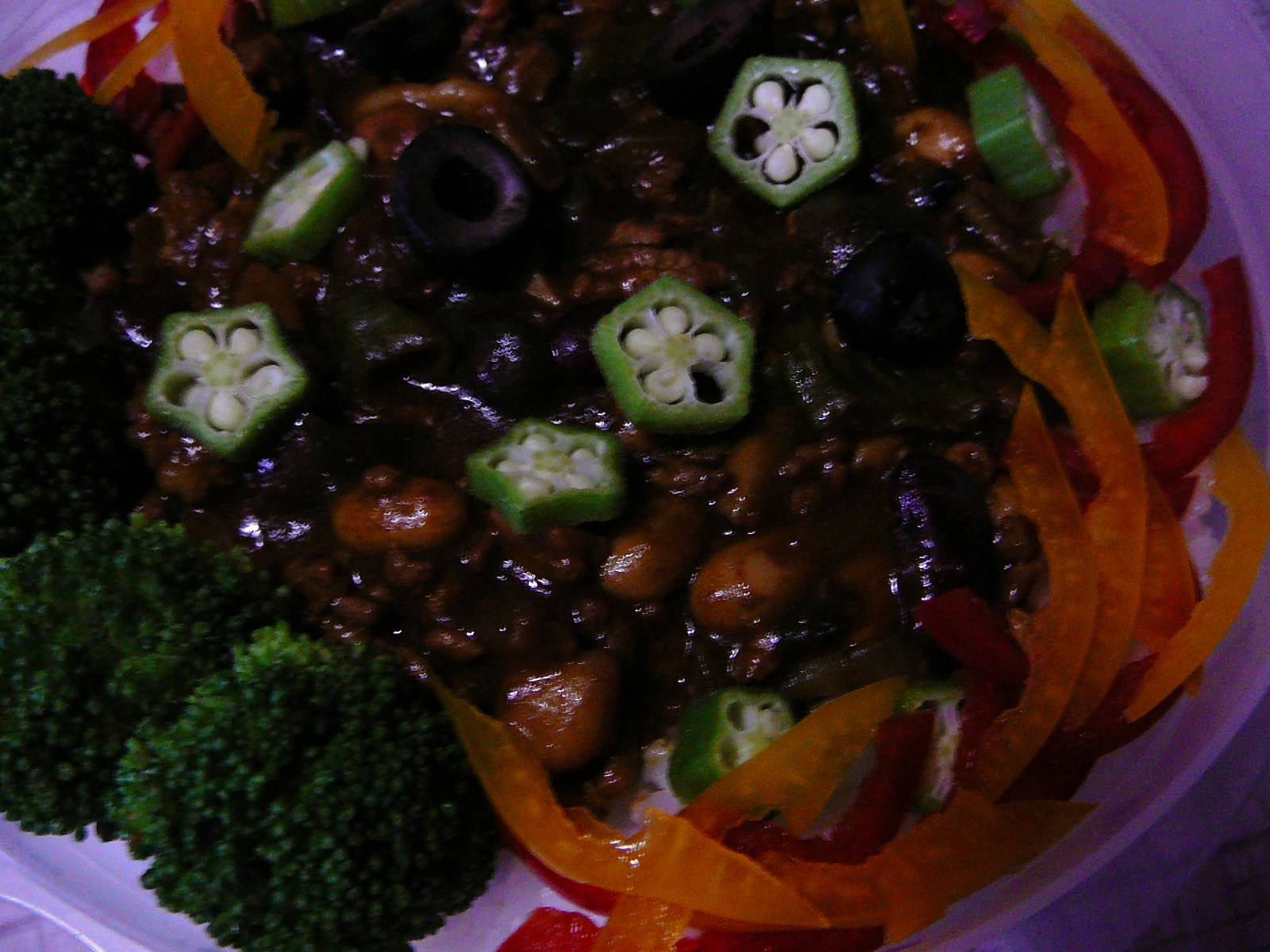
Today’s Lunch Box/Bento (’10/56): Pork & Beans Curry Bento

We are in for a long and dreary summer, what with the infernal heat or torrential rains. Take your pick.
I’ve been repeating this for a few weeks now, but I suppose I’m only emulating the Missus who is having a hard time in her hot kitchen!
Accordingly, although meals still have to stay balanced and contain enough greens for the vital vitamin, they must also pack for more energy as we tend to drink more and eat less.

The Missus foraged in the refrigerator and came up with a curry of her own (she can’t live without pasta or curry, incdentally!). I do not really want to go into details as I was busy while she was cooking.
This is one her favourites: beans of all kinds stewed with minced pork and mushrooms, the whole in a curry sauce of her own.

She used these dear old tupperware box and filled it with plain steamed rice, making a dip/valley in the middle to include more curry.
The Vitamins and fibers came boiled brocoli and sliced raw okra (very much in season. Have you ever seen their flowers?), red and yellow pimentoes ad a few sliced black olives.
Plenty, I can assure you!

Fresh peaches for dessert.

I should be able to hold until tonight!

Adventures in Bento Making, American Bento, Beanbento, Bento No1, Bento Wo Tsukurimashou, Cooking Cute, Eula, Hapabento , Happy Bento, Jacki’s Bento Blog, Kitchen Cow, Leggo My Obento, Le Petit Journal Bento & CO (French), Lunch In A Box, My Bento Box, Vegan Lunch Box; Tokyo Tom Baker, Daily Food Porn/Osaka, Only Nature Food Porn, Happy Little Bento, The Herbed Kitchen, J-Mama’s Kitchen, Cook, Eat, Play, Repeat; Bento Lunch Blog (German); Adventures In Bento; Anna The Red’s Bento Factory; Cooking Cute; Timeless Gourmet; Bento Bug; Ideal Meal; Bentosaurus;

Please check the new postings at:
sake, shochu and sushi

—————————————-
日本語のブログ
—————————————-