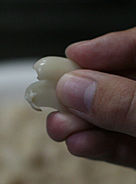
Tag Archives: Desserts

Japanese Cakes/Wagashi 5: Recipe-Kinako/Roasted Soy Beans Powder

WAGASHI-ABEKAWAMOCHI-2
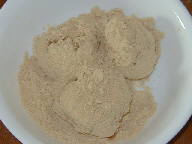
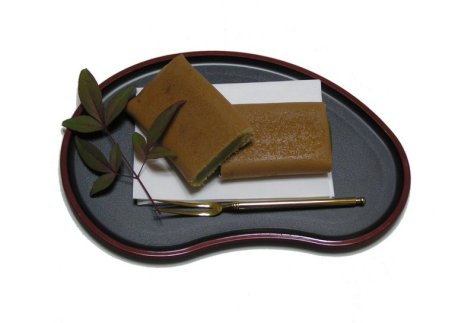
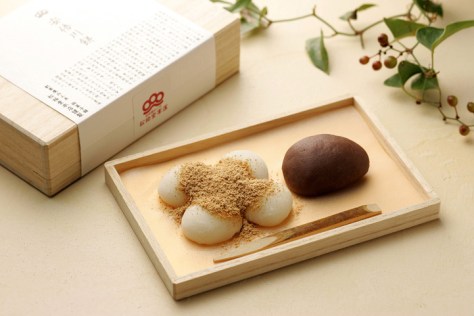
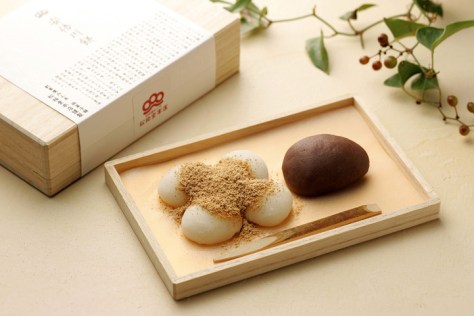
Abekawa Mochi from Shizuoka, one served pasted inside red sweetmeats/anko and the others with kinako powder.

As promised here is a simple recipe for kinako/黄な粉, roasted soy beans powder, so often used with Japanese cakes/Wagashi!
MOCHI-KINAKO

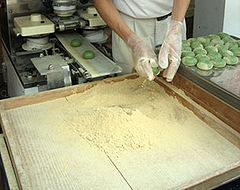
Kinako (黄粉 or きなこ), also known as soybean flour, is a product commonly used in Japanese cuisine. In order to create the soybean flour, soybeans are toasted and ground into powder. Its flavor is commonly compared to that of peanut butter.

INGREDIENTS:
Soy beans: 1 cup (200cc)

RECIPE:

KINAKO-1
Discard beans showing broken skin or with an unusual colour.

KINAKO-2
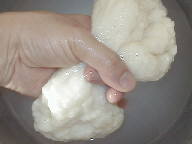
To make sure of any taking away any humidity, put them inside a clean cloth sack and roll them inside your hands/fingers.

KINAKO-4
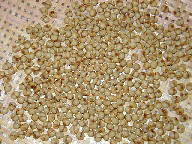
Use a pan with as thick a bottom as possible. Roast for 12 minutes above medium fire. Stir around with wooden spatula. The soy beans will emit their smell making small “noises” at the same time.
KINAKO-3
Transfer to a bamboo basket/zaru or a reipient with small holes to cool off.
KINAKO-5
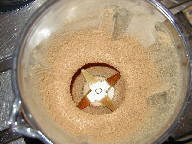
Start slowly processing them inside a food processor/mixer, working 15 seconds at a time, 3 or 4 times. All the beans will probably not be reduced to powder. Transfer powder into earthenware mortar little by little until all the beans are reduced into powder.

KINAKO-6
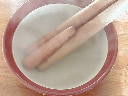
Make sure you get an even powder by crushing it around with a wooden pestle.

KINAKO-7
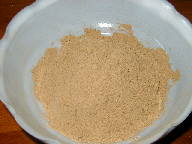
Sieve powder through a fine strainer.
KINAKO-8
The powder obtained should be fragrant and almost sweet.

You can turn into a drink if you want to!
Milk: 1 glass, kinako, 2 tablespoons, sugar, 1 tablespoon.

Kinako should be eaten as soon as possible!

Please check the new postings at:
sake, shochu and sushi

—————————————-
日本語のブログ
—————————————-

Japanese Cakes/Wagashi 4: Recipe-Mochi

WAGASHI-SAKURA-MOCHI
Wagashi/Sakura Mochi

Here is a simple way to make mochi.
Bear in mind that mochi can be eaten fresh as it is especially with wagashi cakes and that it can be mixed with other ingredients for colouring. It can be aslo dried and grilled and also included in soups and other recipes such as mochi pizza!

INGREDIENTS:
Glutinous rice: 3 go (Japanese measure): 540 cc (2.8 cups)
Kinako (to taste)

Notes on kinako and glutinous rice:

MOCHI-KINAKO

Kinako (黄粉 or きなこ), also known as soybean flour, is a product commonly used in Japanese cuisine. In order to create the soybean flour, soybeans are toasted and ground into powder. Its flavor is commonly compared to that of peanut butter.

Kinako, being composed of soybeans, is a healthy topping and flavoring which contains B vitamins and protein. It can also be used as a drink;. For example, warabi mochi is a famous kinako-covered sweet

I will introduce a recipe soon!

MOCHI-TRADITIONAL

Glutinous rice (Oryza sativa var. glutinosa or Oryza glutinosa; also called sticky rice, sweet rice, waxy rice, botan rice, biroin chal, mochi rice, and pearl rice) is a type of short-grained Asian rice that is especially sticky when cooked. It is called glutinous (Latin glūtinōsus) in the sense of being glue-like or sticky and not in the sense of containing gluten; on the other hand, it is called sticky but should not be confused with the other varieties of Asian rice that become sticky to one degree or another when cooked.

RECIPE:

MOCHI-1
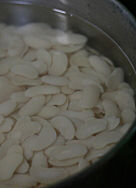
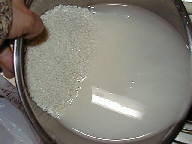
Wash the rice and let it soak in water overnight.

MOCHI-2
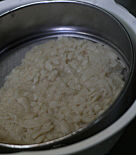
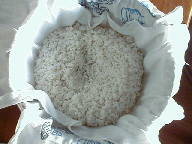
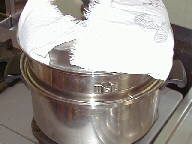
Pour water in steamer. Bring to boil. Set a clean cloth inside. Drain rice. Pour rice inside cloth. Dig a “well” in the middle for better cooking.

MOCHI-3
Steam over a medium fire for 20~25 minutes.

MOCHI-4
Pour hot water inside pestle bowl and leave the wooden sticks inside water for long enough to have all of them well impregnated with water. Throw water away just before next step. This will insure a better mochi!

MOCHI-5
Check rice for an even cooking. No water should be left or the mochi will be runny. If you make a small quantity, softer rice than usual is better as it will tend to dry faster than a large quantity.

MOCHI-6
Now this is the hard part!
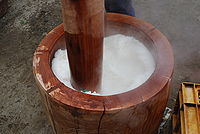
You will need three adults to press hard on the rice with the wooden sticks at the same time to crush the rice completely. It might take as long as 10 minutes.

MOCHI-7
Now that the rice has been softened, One can continue on his own or work in shifts. Pound the rice in the middle 10 times. Turn over the rice from outside to inside and continue always around the clock.
Important: always pound in the middle, never on the sides or you will break the bowl!

MOCHI-8
That is how it should look. Make balls by twisting rice out.

MOCHI-9
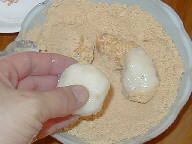
Roll mochi in kinako mixed with sugar to taste. They are ready to be eaten!

MOCHI-10
This is how are served in Japan for children (and adults!)

MOCHI-11
If you want to preserve them for a while before eating, roll them in rice powder. Rice powder will come in useful if you want to fashion the mochi into thin sheets or else.

MOCHI-12
That is they look grilled!

Please check the new postings at:
sake, shochu and sushi

—————————————-
日本語のブログ
—————————————-
French Cake by Bernard Heberle: Tisane

TISANE

Here’s the latest creation by my good friend, Bernard Heberle, the owner-patissier at Abondance in Hamamatsu City!
It is called “Tisane”, or herb tea infusion.

In his own words:
“Voici un gâteau au nom de ” Tisane ” et pour cause il est a base d’herbe fraîche et plus spécialement de Verveine.
La combinaison Verveine, crème, oeuf, lait et amour se marie très bien surtout en approche de la saison chaude et humide.”

“Here is a caked I called “Tisane” because it is prepared with a fresh herb base, especially Verveine.
The combination of Verveine, cream, egg, milk and love is just perfect as we approach the hot sultry season!”

Abondance
Address: Hamamatsu Shi, Sumiyoshi, 2-14-27 (in front of Seirei Hospital)
Tel.: 053-4738400
Fax: 053-4738401
Opening hours: 10:00~20:00. Closed on Tuesdays.
Homepage

HOMEPAGE (Japanese)
Please check the new postings at:
sake, shochu and sushi

—————————————-
日本語のブログ
—————————————-

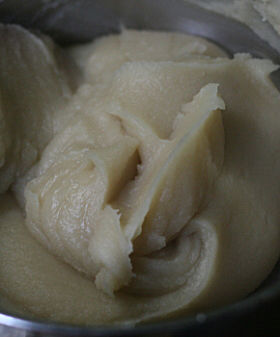
Japanese Cakes/Wagashi 3: Recipe-Shiro Anko/White Sweetmeats

WAGASHI-SHIROANKO-1

In my previous article, I introduced the recipe for “red sweetmeats” or just “anko” in Japanese, an improtant ingredients in Wagashi.
But the red/violet colour is not always wanted.
Another popular way to make anko is to use “ingen mame”/kidney beans (US), or string/French beans (Europe).
Note that soy beans/”daizu” are not used in this recipe!
The advantage are multiple, as the “white” (actually beige) colour can be modified by adding green peas (green), pumpkin (yellow or orange), fruit pulp from papaya and mago. Variations are practically unlimited!

INGREDIENTS:
Kidney beans: 500g
Sugar: 400g
Salt: three small pinches

RECIPE:

WAGASHI-SHIROANKO-2
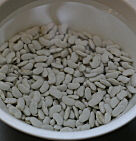
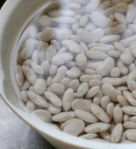
Put beans in 3 times their volume of water in a large pan. Let soak for two nights. Change water twice a day.

WAGASHI-SHIROANKO-3
Beans should have lost their “wrinkles” by then.

WAGASHI-SHIROANKO-b
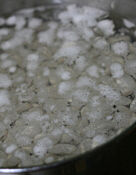
Bring water to boil over strong fire then simmer for 5 minutes on medium fire.

WAGASHI-SHIROANKO-4
Drain water, making sure beans don’t dry up. The skin of the beans should peel off easily. Take skins and dark spots away.

WAGASHI-SHIROANKO-5
Simmer again peeled beans until they soft and start breaking up. Start on a strong fire to bring to boil, then lower to medium fire.

WAGASHI-SHIROANKO-6
Heat until most of the water has evaporated. Beans will pass through sieve more easily.

WAGASHI-SHIROANKO-7
Pass all the beans through the sieve. Wash and dry the pan.

WAGASHI-SHIROANKO-8
Add sugar and stir/mix over low fire.

WAGASHI-SHIROANKO-9
Sugar becoming liquid upon heating will give a watery aspect to the mixture. Heat over low fire, stirring all the time for 25 minutes.

WAGASHI-SHIROANKO-10
Once satisfied with the paste consistency, add salt, mix and stop fire.

WAGASHI-SHIROANKO-11
Transfer to another dish for preserving until use. Do it at once while it is still hot.
Make sure it does not dry up.
Cover with a lid.
If lid does not close well enough, wrap the whole into cellophane paper.

Please check the new postings at:
sake, shochu and sushi

—————————————-
日本語のブログ
—————————————-

Japanese Cakes/Wagashi 2: Recipe-Anko/Sweetmeats

WAGASHI-4

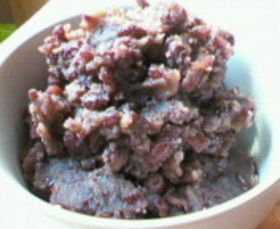
One main ingredients in traditional Wagashi/Japanese Cakes is “anko” (or more simply “an”) which can be translated as “sweetmeats” or “bean jam”.

I would like here to introduce a simple way to make one’s own “anko” at home:

INGREDIENTS:

Azuki/Adzuki/red beans (in Japanese: 小豆): 150 g
Sugar: 150g
Salt: a little

RECIPE:

a) Wash azuki lightly. Put in a large basin with an equal amount of water and turn on heat to high.

b) Bring to boil. If beans level is higher that of water, add water till beans are completely covered. Let simmer. Add water 2 or 3 times as soon as the water does not cover completely the beans and this until beans stop floating on water.

c) Drain beans, put them back into basin with same amount of water and turno fire to high. Repeat a9 operation.

d) Cook as c) fro 40~60 minutes.

e) Mash azuki beans lightly. Add sugar. Simmer and stir to mix, making sure the jam does not overboil.

f) Add a little salt (to your taste) and mix.
Let cool completely.
You can eat as it is of course, but you will need it to make your cakes!
You can either sieve it to make it a very fine paste, sieve a part and mix it with the unsieved part, or use it as it is. In any case it will be easy to fashion!

WAGASHI-ANKO

Please check the new postings at:
sake, shochu and sushi

—————————————-
日本語のブログ
—————————————-

Japanese Cakes/Wagashi 1: Introduction

WAGASHI-1

There is a traditional way of making cakes in Japan that ought to please no end vegans and people allergic to wheat flour and dairy products, namely Wagashi!

Wagashi (和菓子) is a traditional Japanese confectionery which is often served with tea, especially the types made of mochi, azuki bean paste, and fruits.

Wagashi is typically made from natural based (mainly plant) ingredients. The names used for wagashi commonly fit a formula—a natural beauty and a word from ancient literature; they are thus often written with hyōgaiji (kanji that are not commonly used or known), and are glossed with furigana.

Generally, confectioneries that were introduced from the West after the Meiji Restoration (1868) are not considered wagashi. Most sorts of Okinawan confectionery and those originating in Europe or China that use ingredients alien to traditional Japanese cuisine, e.g., kasutera, are only rarely referred to as wagashi.

WAGASHI-2
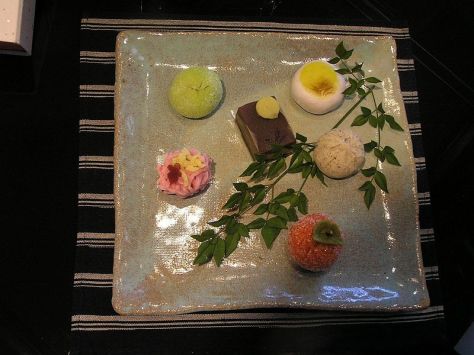
Assortment of wagashi for a tea ceremony

During the Edo period, the production of sugarcane in Okinawa became highly productive, and low quality brown sugar as well as heavily processed white sugar became widely available. A type of sugar, wasanbon, was perfected in this period and is still used exclusively to make wagashi. Wagashi was a popular gift between samurai, in significance much like a good wine. Wagashi is served as part of a Japanese tea ceremony, and serving a good seasonal wagashi shows one’s educational background.

WAGASHI-3
Wagashi in the shape of rape flowers/Na no Hana

There are many, many kinds of Wagashi.
I will introduce them in the next posting, followed by another posting on the basic preparation.

WAGASHI-ABEKAWAMOCHI-2
Shizuoka’s Abekawa Mochi

Just know that about every region in Japan has its own traditional Wagashi!

Avaibility:
Wagashi is widely available in Japan, but quite rare outside it.
Minamoto Kitchoan (源 吉兆庵)
Has a varied selection, and stores in New York City (shipping throughout the US), London (shipping throughout Europe), and Singapore, in addition to Japan.
Toraya (とらや)
Has a full Paris store, stores in Japan, and sells a limited selection (yōkan only) at New York stores.
Fugetsu-do
Family owned and operated in the USA, since 1903, Fugetsu-do now ships anywhere in the USA.

Please check the new postings at:
sake, shochu and sushi

—————————————-
日本語のブログ
—————————————-

LE CAFE-LABO: Classic Cakes (11)-Benihoppe

BENIHOPPE-1

It’s been some time since I could find a new creation by Le Cafe-Labo in Shizuoka City. The fact is that their current palette sells well, but I finally got my hands on one today!

BENIHOPPE-2

“Benihoppe” is interesting for many reasons:
“Benihoppe” means “Red Cheeks” in Japanese, the name of a very popular strawberry variety in Shizuoka Prefecture. Did I tell you that Shizuoka is the biggest producer of strawberries in this country with more 1,200 registered growers?
This is obviously a seasonal creation.
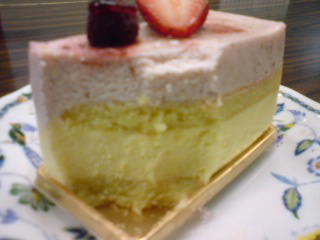
The base is made up of a very thin layer of light “Joconde” sponge cake supporting a thick layer of vanilla mousse. Another thin layer of Joconde sponge cake helps support on another thick layer of Benihoppe Strawberry Mousse. The whole is covered with a very thin layer of strawberry coulis, a small benihoppe strawberry, a redcurrant, and a raspberry..

A very elegant, feminie cake you enjoy cutting through before letting all the savours melt into your mouth. Very tasty and light at the same time. A cake for the summer!

LE CAFE-LABO
424-0886 Shizuoka City, Shimizu Ku, Kusanagi, 46
Tel.: 054-3441661
Also available at Isetan Dept. Store, Shizuoka City, Aoi Ku, Shichiken-Cho

Please check the new postings at:
sake, shochu and sushi

—————————————-
日本語のブログ
—————————————-

TAKY’S classic Cakes (9): Buche Pistache

TAKYS-PISTACCHIO2

I have just discovered another new creation by talented Takuya Hanai and served it to two of my students today. The beginning of the week is always a good time as Mr. Iwai tries his new cakes out then!
I don’t have to tell you I have to keep a constant lookout as this talented and still young patissier.

“Buche” means a French roll cake in the form and shape of a wooden log, although it would be half a log in this cake. This why it caught my eye as I tend to avoid full rounded roll cakes.

TAKYS-PISTACCHIO1

It is another marvel as you go through all kinds of textures and falvours!
From bottom to top (although you will probably appreciate it theother way round):
-Thin flat base layer of chocolate sponge cake containing dry cherries and flavoured with cherry liqueur.
-Pistacchio Mousse. very elegant, light and very feminine in concept.
-Chocolate Sponge Cake, simple and light.
-Chocolate Mousse, creamy and savoury.
-A layer of Chocolate Ganache, firm, hard and crispy enough to incite you to break through it!

To appreciate with a great coffee or English tea!

TAKY’S
420-0839 Shizuoka City, Aoi Ku, Takajo, 1-11-10
Tel.: 054-255-2829
Opening hours: 11:00~22:00
Closed on Sundays

Please check the new postings at:
sake, shochu and sushi

—————————————-
日本語のブログ
—————————————-

BOUQUET’s Classic Cakes (2): Caramel Mousse

bouquet-car1

Bouwuet has long been a favourite of mine and one of the oldest cake-shops stiil alive in Shizuoka City. It could actually be called an institution here!
The only place willng to bake Gateau Basque, it regularly comes up with classics and novelties.
Since I had to find a cke for a student of mine I chose this particular cake.
The name is a bit of a misnomer as it is far more sophisticated than it sounds.

bouquet-car2

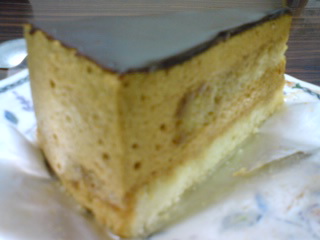
A thin layer of sponge made for the base on which was spread a frist layer of Caramel Mousse. A second round and smaller spong circle was then laid in the middle and imbibed with a syrup cotaining pear liqueur.
It was then “filled up” with Caramel Mousse. A thun layer of chocolate sauce was added for the last colour finish and protect the Mousse!

To savour with a great coffee!

Bouquet
420-0839 Shizuoka City, Aoi Ku, Takajo machi, 1-8-6
Tel. & fax: 054-2530349
Open: 11:00~20:00
11:00~19:00 (Sundays & National Holidays)
Closed on Wednesdays

Please check the new postings at:
sake, shochu and sushi

—————————————-
日本語のブログ
—————————————-

French Pissaladiere: Recipe, History, Facts & Etymology

pissaladiere-w
(Wikipedia)

When Babeth pointed out that my brother’s creation ought to be called something else, I decided to investigate.
I must say that I gladly owe her an apology and will tell Francois to rename it something like “French-style healthy Pizza”!
Being aware of my younger brother’s character, I’m in for some flak from both sides of the World!

Now for Wikipedia’s definition:

[Pissaladiere or Pissaladina (pissaladiera in Provençal, “piscialandrea” in Ligurian) is a type of pizza made in southern France, around the Nice, Marseilles, Toulon and the Var District, and in the Italian region of Liguria, especially in the Imperia district. Believed to have been introduced to the area by Roman cooks during the time of the Avignon Papacy, it can be considered a type of white pizza, as no tomatoes are used. The dough is usually thicker than that of the classic Italian pizza, and the topping consist of: sauteed (almost pureed) onions and anchovies. No cheese is used, again unlike the Neapolitan pizza, however in the nearby Italian town of San Remo mozzarella is added. Now served as an appetizer, it was traditionally cooked and sold early each morning.

Another view held by food specialists is that pissaladiere is not a pizza, but a flat open-face tart garnished with onions, olives, anchovies and sometimes tomato. The etymology of the word seems to be from Old French pescion from the Latin piscis.]

I would tend to believe that Pissaladiere is more a local Provence gastronomic creation, although one must remember that Provence (the name itself could mean province/colony) changed hands many times including those of the Celts, Greeks, Romans and Italians.

Knowing the French propensity for arguments, some will soon (and rightly so) point out that after all, it is only another “poor people’s” food, like bouillabaisse, aligot or fondue (or pizza, or pasta!), which has turned into a fashionable gastronomy with the consequent “evolution”!

This “battle” is not confined to France or Europe but as far as the States as illustrated in the excellent posting by Daria in Paris. But it can also bring people together like Brunsli so funnily described!

Please check the new postings at:
sake, shochu and sushi

—————————————-
日本語のブログ
—————————————-

Pizza: Easy French Pissaladiere

pissaladiere-1

Pissaladiere is the French version of the Italian Pizza.
It originated in southeast France.
The main difference is that it usually makes use for more vegetables and less cheese. Actually if it obviously does not look like a pizza, it can be called a pissaladiere!LOL
The merit of it is that it is usually lighter both in calories and taste.

pissaladiere-2

My youngest brother, Francois, came up with this simple recipe.
As he works for Areva and has to spend a week every month in the States I believe he has been “influenced”!
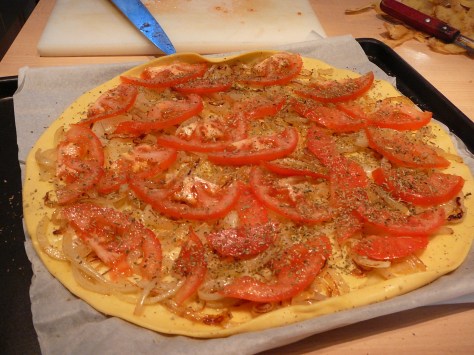
For the bread base, he used a large frozen filo-style sheet. He first covered it with onions, large shallots and garlic, which he had cut into thin slices and previously fried in olive oil. He then covered them with a generous amount of thinly sliced ripe tomatoes (this was the end of the summer). Plenty of ground black pepper, herbes de Provence (dried aromatic herbs), a little salt and some secret seasoning (up to you there!) and that was it!
Baked into a hot oven to the right crispiness, it made for a great snack with some heady red wine!

Please check the new postings at:
sake, shochu and sushi

—————————————-
日本語のブログ
—————————————-
TAKY’S classic Cakes (8): Framboise

framboise-1

I have just discovered his new creation by talented Takuya Hanai and served to one of my students today.
I have to keep a constant lookout as this talented and still young patissier has a habit to offer new cakes almost every week.

This cake, Framboise, ia reminiscent of Fedora I introduced in an earlier posting.
Also fairly simple in concept, it is nonetheless a small gem:

framboise-2

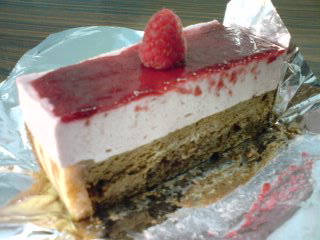
On a thin layer of chocolate chips-studded chocolate sponge, he first lay a layer of chocolate bavarois/mousse, then again, but twice as thick, a framboise/raspberry bavarois/mousse with a final layer of thick Raspberry sauce with a fresh raspeberry for the final touch.
The whole cake is “surrounded” with bicolor sponge for mpre personality.
Breaking through the whole and tasting the combination of the various tastes all at the same time reveals the sublime qualities of this other little marvel!

To appreciate with a great coffee or English tea!

TAKY’S
420-0839 Shizuoka City, Aoi Ku, Takajo, 1-11-10
Tel.: 054-255-2829
Opening hours: 11:00~22:00
Closed on Sundays

Please check the new postings at:
sake, shochu and sushi

—————————————-
日本語のブログ
—————————————-

Pizza: Bourgogne-style Escargots Pizza

pizza-escargots

The Italian are not the only ones to make pizzas!
The French do to, and I have this very, very simple recipe for a Bourgogne-style pizza!

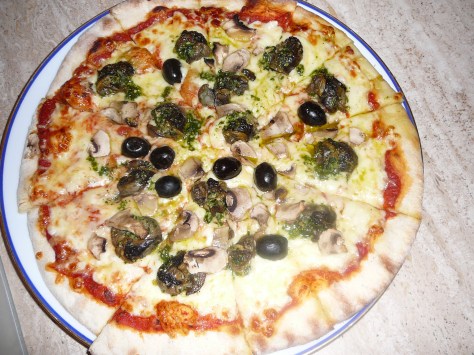
Prepare your own pizza dough, it’s so much better. Brush with plenty of tomato sauce (I recommend basil). Place plenty plenty of mozzarella slices all over it.
Next use frozen ready-made (or home-made. A good way to use any leftovers!) escargots with their butter. A few black olives, some ground black pepper, et voila!

Even my American friends won’t leave a crumb!

Please check the new postings at:
sake, shochu and sushi

—————————————-
日本語のブログ
—————————————-
French Dessert at Rouge et Piquant: Dessert Blanc

blanc-09a

Service: Excellent and very friendly
Facilities: great washroom, great cleanliness overall
Prices: reasonable, good value
no-smoking-logo!

After I savoured Rouge et Piquant’s Dessert Rouge after such a long time, I just couldn’t help going there again for the second in a week to savour the other beauty called Dessert Blanc/White Dessert!

blanc-09b

Like Dessert Rouge it is a combination of two desserts:
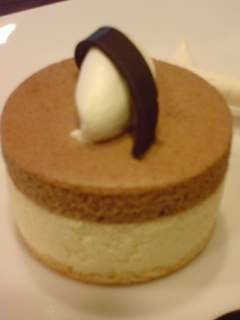
The cake on its own is called “Cafe au Lait” and consists of a thin layer of Genoise short cake first overlaid with Milk and Vanilla Mousse, and then again with Coffee Mousse, the whole artistically topped with some cream and a chocolate ribbon.

blanc-09c

The second part was a feuillantine biscuit cup containing succulent caramel and vanilla ice-creams topped with almonds and another choclate ribbon.
A final note was added with meringue biscuits and chocolate sauce.

Once again, to be savoured with a good coffee!

Don’t forget there are more to savour: Chocolat Assortment: Chocolat mousse and Caramel Ice Cream + Chocolate Sauce. Assortment (800 yen).
I would also recommend the Entremets glaces at 600 yen (Profiterolle or Mille-Feuille).
Also gateau at 500 yen, Ice Cream at 500 yen. Very good teas and coffes (10 varieties).
Take out homemade biscuits (7 kinds). Birthday cakes on order.
Entirely non-smoking place!

Address: 420-0032 Shizuoka Shi, Ryogae-cho, 2-4-29, Aspis Bldg. 2F
Tel. & Fax: 054-2214358
Opening hours: 14:00~24:00
Closed on Mondays
Chef-Owner: Ms. Kanae Tsunogai

Please check the new postings at:
sake, shochu and sushi

—————————————-
日本語のブログ
—————————————-
CHOCOLAT FIN’S CLASSIC CAKES (5): Fig Tile

fig-tile-1

I just could not resist buying this latest creation by Chocolat Fin when I saw it! Measuring 12 by 14cm, the price tag of less than 10 US $ was just too much of a bargain! I can always cut it to size later for my students! LOL

fig-tile-3

It is fairly simple in concept but certainly asks for professional flair and savoir-faire/skills!
It is first laid on a thin cooky tart base, then spread ove by a fairly thick layer of almond cream/marzipan containg bits of dried figs.

fig-tile-2

The center was subsequently decorated with a generous amount of slices of dried figs “cut across the body”.
The whole was brushed with a generous amount of delicious apricot jam.
A delicacy reminiscent of the Middle East, Turkey and Northern Africa!

To be savoured with a great coffee!

Chocolat Fin
Shizuoka City, Aoi Ku, Takajo Machi, 1-3-7 (2 minutes walk from Shin Shizuoka Center)
Tel. & fax: 054-2516321
Business hours: 10:00~20:00

———————————————–
Please check the new postings at:
sake, shochu and sushi

—————————————-
日本語のブログ
—————————————-