Tag Archives: French cuisine

Gastronomic Destinations: New Caledonia (’09/09-3)

096
Ilot des Canards/Duck-canard Islet

New Caledonia ofers many escapes within short distances.
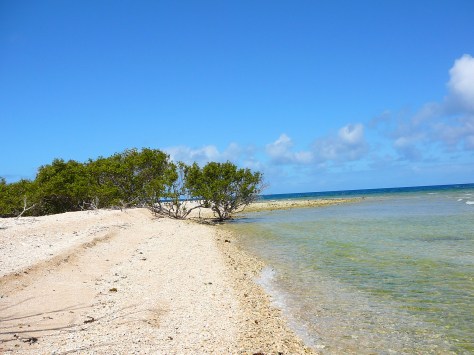
One of mine (and the Missus’) is a small islnad only 15 minutes away by boat from Noumea called Ilot (or Ile) des canards/Ducks Islet.
if you have your own boat (a yacht wouldn’t be able to find deep enough water to stop there) wind sail board or kayak you could reach the place quickly enough.
For pedestrians, go to Colleen Excursions (Tel.: 28-33-58) in Anse Vata Bay where you can book a boat across the lagoon for 1,000 Pacific Francs (return ticket)/12 US $.

072

The sland is worthe the vist (daytime only) for many reasons:
Originally copmpletely desert, a French-japanese couple obtained the license to develop it.
Not ony did they build a restarant wih seats and parasols there, they also planted trees and plants form New caledonia, thus ceating a new environment while protecting and furthering native nature.
The birds have come back and even “fight off” tourists away from their nests!

060
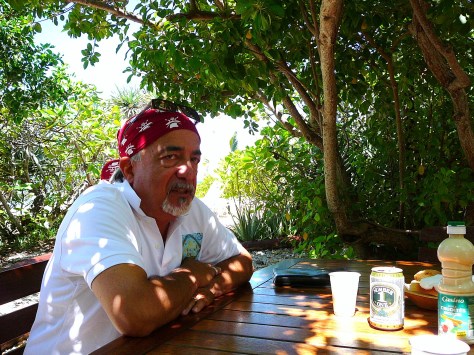
Enjoying local beer on an empty stomach…

The restaurant offers healthy and plentiful fare in a great natuaral enironment away but still within a short distance of civilization.

068
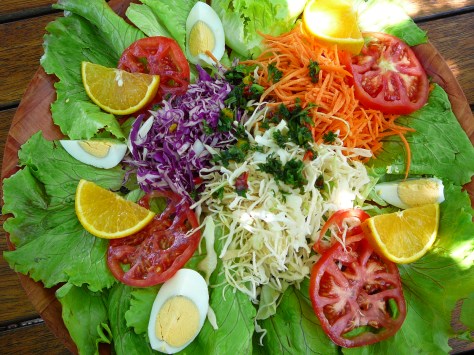
Salade de Crudites/Vegetables Salad

067
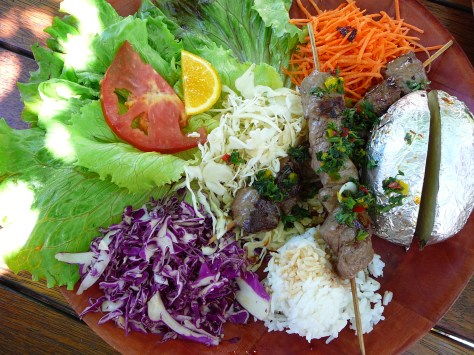
Venison Grill Salad

095

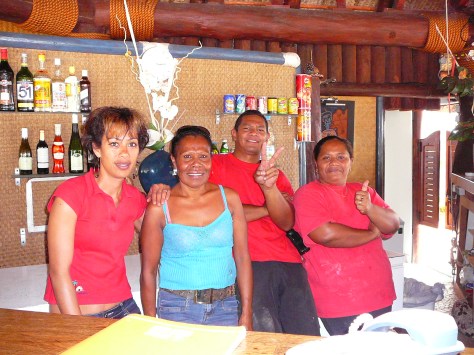
The staff are all recruited from the locals who are very warm and friendly.
One can rent cahairs and parasols (bring your own parasol if you don’t want to spend the money as it can be pretty hot!)

A great day off away from the crowd (that is, in the off sason!)

ILOT CANARD, PLAGE LOISIRS
Tel.: 46-92-84
(Call to check day off)
Credit cards not accepted

RECOMMENDED RELATED SITES:
Our Adventures in Japan
Warren Bobrow
Wild River Review
Bread + Butter
5 Star Foodie
Frank Fariello
Mangantayon
Hapabento
Elinluv Tidbit Corner
Think Twice

Please check the new postings at:
sake, shochu and sushi

—————————————-
日本語のブログ
—————————————-

Gastronomic Destinations: New Caledonia (‘09/09-2)

004
Ile des canards seen from Noumea, Anse Vata Bay

new caledonia is our regular destination when when we find the the time to escape from Japan for a short vacance.
being blessed with sun, sea and great food, be it French or “ethnic” of all kinds, it also offers some of the best natural water in the Pacific Ocean!

I’m not tired of repeating it, a benediction for beer Brewers and beer lovers!

029

There are three distinct microbreweries in New Caledonia:
The first one, 3 Brasseurs, is actually a branch of a great microbrewery in France, but it uses only local water and thus can be considered a true New Caledonian mkicrobrewery!
It not only offers a range of four different beers, all made from pure malt and hops, unpasteurized and unfiltered:
Blonde (lager), Ambree (red ale), Scotch (porter) and Blanche (weizen)
sampling their tasting set is simply a must!

039
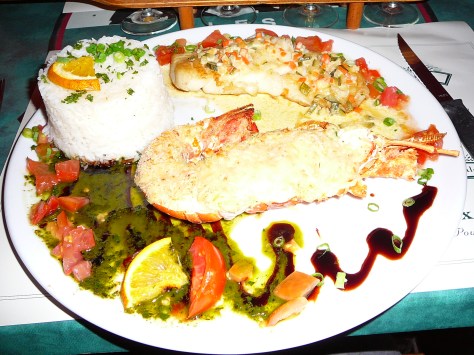
New Caledonia lobsters!

But they also include a restaurant upstairs where you can eat all typical Alsatian Cuisine, Southern French Cuisine, and other typical French specialties:

041

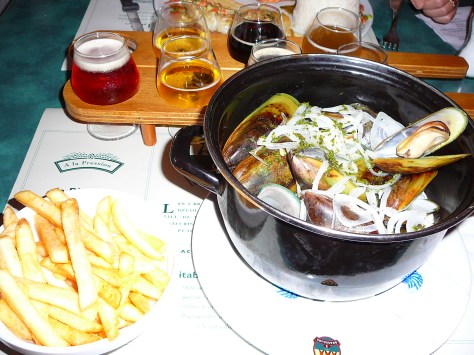
Mussles and fried potatoes, which is a belgian specialty actually!

On the first floor, you can either enjoy a drink at the pub or on a terrace.
Check their special band music nights!

3 Brasseurs
Centre Commercial de la Baie des Citrons, Noumea, Nouvelle Caledonie
Tel.: (687)241510

RECOMMENDED RELATED SITES:
Our Adventures in Japan
Warren Bobrow
Wild River Review
Bread + Butter
5 Star Foodie
Frank Fariello
Mangantayon
Hapabento
Elinluv Tidbit Corner
Think Twice

Please check the new postings at:
sake, shochu and sushi

—————————————-
日本語のブログ
—————————————-

Gastronomic Destinations: New Caledonia (’09/09-1)

078
View of Noumea from Ile des Canards

Travelling to New Caledonia can easily become a thirsty venture!
Even in “Spring” (September), temperatures can uickly soar over 25 degrees in the shade, meaning at least 10 more in the sun!

024
Number 1 Beer and havannah Beer at Le Fun Beach

New Caledonia is not only blessed with sun, sea and great food, but it also offers some of the best natural water in the Pacific Ocean!
No wonder this island has been settled for millennia as the water is slowly filtered through rocks before to gush out at the feet of pretty high (over 2,000 metres in some cases) for such a small island!
A benediction for beer Brewers and beer lovers!

025
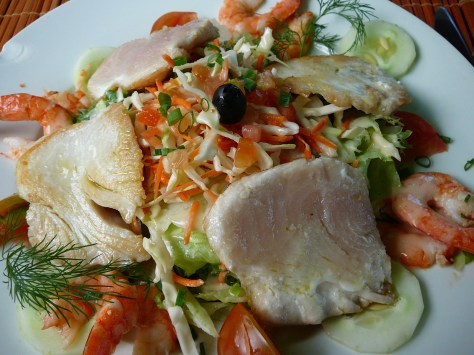
Tuna Salad at le Fun Beach

026
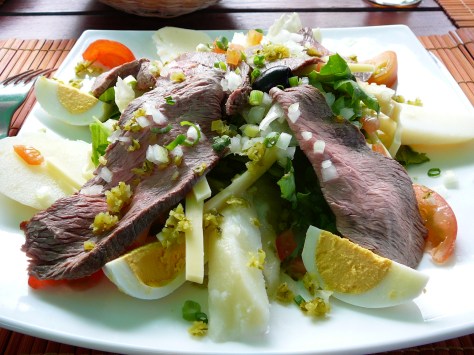
Roast Beef salad at Le Fun Beach.

There are many restaurants in Noumearemisniscent of Southern France. Actually the Caucasian population is mainly from Southern France and Corsica.
Food in such restaurants is very healthy although a missing a little spice. Sauces and vinaigrettes are light in particular.
There are exceptions I will mention in my next posting!

LE FUN BEACH
Promenade R. Laroque, Noumea, New caledonia/Nouvelle Caledonie
Tel: 263132
Credit cards OK
Great View on Anse vata Beach and Bay
Lunch and Dinner

RECOMMENDED RELATED SITES:
Warren Bobrow
Wild River Review
Bread + Butter
5 Star Foodie
Frank Fariello
Mangantayon
Hapabento
Elinluv Tidbit Corner
Think Twice

Please check the new postings at:
sake, shochu and sushi

—————————————-
日本語のブログ
—————————————-

Marine Life Sustainability and Stock Preservation in Japan

research-fishingship

Foodbuzz never asked me for such an article. I just wrote it first out of concern for some of my Foodbuzz Friends!

It was Lou-Ann‘s surprise in particular which originally prompted me into investigation to back up knowledge acquired though many years spent in this great country, Japan. It is the second time I publish this article as it has become more of actuality and new information has been made available.

I use the word “great” when applied to Japan for a simple reason:
Japan is the one country which most extensively conducts and sponsors research and development of fish stocks.
This country has also come up with some momentous discoveries related to the fishing environment:
-Japanese fishermen south of Kyushu Island discovered that planting trees on small islands increased manifold the amount of vegetal plankton carried into the surrounding sea resulting in an immediate increase of the fish population.
-Japanese researchers found out that building small pyramids on the sea floor with concrete or plastic (a beneficial dumping at last?) blocks attracted corals, sea anemones, seaweed and shellfish, thus creating a food chain for fish. Such pyramids will surely prove more beneficial to mankind than all the Egyptian pyramids put together!
They have also realised that dragging out sunk ships was not needed as the same lost vessels were populated by all kinds of marine life!
In the north of Japan crab stocks are been replenished by simply sinking giant scaffolds to the bootom of the sea, thus providing the delicious critters with the subtarreanean geography they love best!
Sakura ebi/Cherry shrimps fishermen in Yui (Shizuoka Prefecture again!) syphon the shrimp out of the nets before opening and releasing all other marine lie safely back into the sea!

The Japanese have been (unjustly) accused of emptying the seas. Actually Spain holds the world record for fish catch and consumption.
I already have written an article on whale meat. I find it galling that Japan is villified for eating whale meat by the very countries which depopulated the globe of sea-mammals in the 19th Century: US, Canada, Russia, Australia and New Zealand (alright, Great Britain for the last two maybe!) in the Pacific Ocean. US, Canada, Norway, Great Britain, France, Spain and Russia in the Atlantic Ocean. And most of them again in the Arctic and Antarctic Oceans. What do you think Commodore Perry was before he was delegated to order Japan to “open its doors”?
This country is repeatedly thrown into the same basket of evils. I was recently “told off” because the Japanese kill sharks for their fins before throwing the dead fish back into the sea. Sorry, mate, but you will have to ask the Chinese! The Japanese eat the whole fish when they catch it and make kamaboko from it!

It could go on and on, but this was never the real purpose of this article.

Now, to illustrate and justify the heading of this posting, here is a list of the fish and seafood raised in Japan as opposed to being caught in the wild:
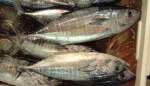
research-honmaguro
Blue Fin Tuna/Honmaguro

Yes, you read it, Blue Fin Tuna! After 23 years of experimentation, a Kyushu fishmonger has finally succeeded in producing the fish from natural mating inside giant offshore sea parks. The fish is already sold over the counter at supermarkets.
No later than last year the Tokai Marine University in Shimizu, Shizuoka City (I live in a great place, don’t I?) also succedein a more sientific manner the raising of the same tuna from the egg, promising that domestic Blur Fin Tuna will roam the same waters in Suruga bay as their wild cousins!
With a ban on tuna fishing in the Mediterranean Sea being pushed through legislation by the EU, Japan will find itself one day in the rich position of actually exporting tuna!
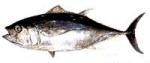
research-mebachi
Big-eyed Tuna/Mebachi Maguro

Human-raising Research is conducted and nearly brought to fruition.
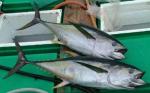
research-kihada
Albacore Tuna: Kihada Maguro

Human-raising Research is conducted and will soon be sucessful.

Note:
Indian Ocean Tuna/Indo Maguro: Human-raising Research is conducted abroad and such fish are imported to Japan.
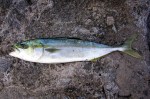
research-buri
Yellowtail/Buri

Over 62,000 tons of human-raised fish consumed last year.
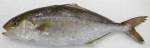
research-kanpachi
Amberjack/Kanpachi

Over 49,000 tons of human-raised fish consumed last year.
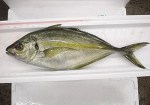
research-shimaaji
Striped Jack/Shima Aji

Over 3,000 tons of human-raised fish consumed last year.
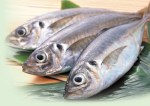
research-maaaji
Horse Mackerel/Ma Aji

Over 3,500 tons of human-raised fish consumed last year.
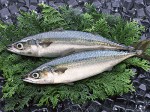
research-masaba
True Mackerel-Japanese Mackerel/Ma Saba

Human raising succeeded and fish are already sold over the counter.
research-maiwashi
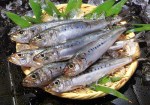
True Sardine-Pilchard/Ma Iwashi

Human-raising Research is being conducted and could created a real revolution as the same fish also become feed for above tuna.
research-isaki
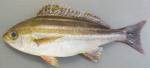
Isaki/Grouper variety-Parapristipona Trilinoatum

9 tons of human-raised fish consumed in Nagasaki Prefecture alone last year. Shizuoka is also coming up with them!

research-silversalmon
Silver Salmon/Gin Sake

Over 8,000 tons of human-raised fish consumed last year.
Production very fast.
research-madai
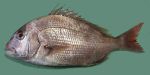
Porgy/Madai

Over 71,000 tons of human-raised fish consumed last year as opposed to 15,000 tons caught at sea.
Al kinds of seabreams are actually on the line.
research-suzuki
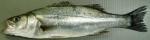
Seabass/Suzuki

382 tons tons of human-raised fish consumed in Kagawa Prefecture (Shikoku) alone last year.

research-kisu
Sand Borer-Sillago/Kisu

Human-raising Research is being conducted.

research-kochi
Bar-tailed Flathead/Kochi

Human-raising is being conducted.
research-ainame
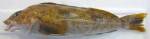
Ainame/Alexagrammos otakii

Human-raising has succeeded and some fish is already sold over the counter.
research-kue
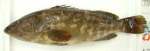
Kelp Bass/Kue

A success story in Shizuoka and Nagasaki Prefectures where human-raised fish are already sold over the counter.
research-torafugu
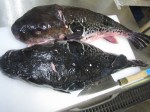
Globefish-Tiger Globefish/Tora Fugu

Over 5,000 tons of human-raised fish consumed last year.
Shizuoka is rapidly becoming a major producer, especially inhamana (sea) Lake in the Western part of the Prefecture.
research-kurumaebi
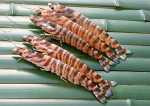
Large Prawn/Kuruma Ebi

Over 1,700 tons of human-raised prawns consumed last year.
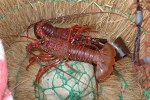
research-iseebi
Spiny Lobster/Ise Ebi

Human-raising Research is being conducted.

research-akagai
Ark Shell-Bloody Clam/Akagai

Human-raising Research is being conducted.
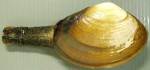
research-mirugai
Gaper/Mirugai

Human-raising Research is being conducted
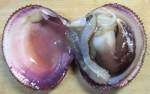
research-torigai
Large Cockle/Torigai

Human-raising Research is being conducted
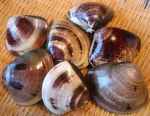
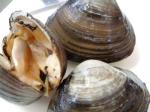
research-hamaguri
Hard Clam/Hamaguri

Very large amounts of half human-raised shellfish consumed last year.
All the clams picke by tourist in Hamana lake have actually been planted young there!
research-hokkigai
Surf Clam/Hokkigai

Human-raising Research bein conducted
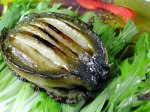
research-awabi
Abalone/ Awabi

32 tons tons of human-raised abalones consumed in Hokkaido and Nagasaki Prefectures alone last year.
Now, knowing the price of such shellfish and the enormous consumption in other countries, it promises to become a very lucrative business!
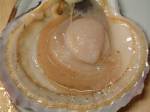
research-hotate1
Scallops/Hotate

Over 270,000 tons of human-raised scallops consumed last year.
The shellffish being hermaphrodite, it will become easier and easier tomake and sell. Here in Shizuoka it has simply become ridiculaoulsy cheap!
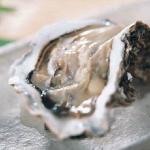
research-kaki
Oysters/Kaki

Over 220,000 tons of human-raised oysters + over 35,000 tons of the same out of the shell consumed last year as opposed to 1,600 tons of wild oysters.
Actually soon or later the catch of wild oysters will become strictly regulated as many other shellfish. Poaching both by Japanese and “foreigners” is being fought off in earnest.
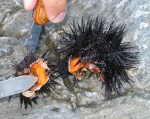
research-uni
Sea Urchin/Uni

7 tons tons of human-raised sea urchin consumed in Hokkaido Prefecture alone last year.

research-maanago
Conger Eel/ Ma Anago

Human-raising Research is being conducted

research-unagi
Common Eel/Unagi

Over 21,000 tons of human-raised fish consumed last year as opposed to 610 tons caught in the wild.

In some places, notably Mishima City, eel restaurants refuse to serve wild eels.

research-hamo
Oike Conger eel/Hamo

Human-raising Research is being conducted.

The Japanese have also starting research on different varieties of octopus/tako and squids/ika.

Probably more coming soon or later!

RECOMMENDED RELATED SITES:
Warren Bobrow
Wild River Review
Bread + Butter
5 Star Foodie
Frank Fariello
Elinluv Tidbit Corner
Tokyo Terrace
Maison de Christina
Chrys Niles
Comestilblog
Greedy Girl
Bouchon For 2

Please check the new postings at:
sake, shochu and sushi

—————————————-
日本語のブログ
—————————————-

Karasumi/Botarga/Boutargue Season in Shizuoka!

karasumi.gif
(Courtesy of Shizuoka Shimbun Daily)

Karasumi, known as “boutargue” in French, or as “botarga” in Italian, is the natrally dried/preserved roe pouches of the mullet.
It is quite an expensive morsel in Japanese cuisine as well as in Europe (that is, the real one!).

Numazu City, one of the main fishing harbors in Shizuoka Prefecture, is quite renown for its karasumi.
The season for catching bora/鯔, or mullet in English, has begun and fishermen have just started drying their roe pouches/karasumi/カラスミ under the Autumn sun in this comparatively rainless time of the year.
It is grim and painstaking businees as the the roe pouches have to be carefully cleaned, got rid of any blood vesels, and sprinkled with the right quantity of salt.

karasumi2.jpg

They will be served thinly cut as they are in Japanese restaurants, or used in Italian and French restaurants, especially with pasta.

This yearly catch is slowly dwindling due to high demand, so brace yourselves when you open your purse!

Note: beware of imported specimens, especially from “Asia”!

RECOMMENDED RELATED SITES:
Warren Bobrow
Bread + Butter
5 Star Foodie
Frank Fariello
Elinluv Tidbit Corner
Tokyo Terrace
Maison de Christina
Chrys Niles
Comestilblog
Greedy Girl
Bouchon For 2

Please check the new postings at:
sake, shochu and sushi

—————————————-
日本語のブログ
—————————————-
For Vegan and Vegetarians! “Forgotten” Vegetables 17: Yacon

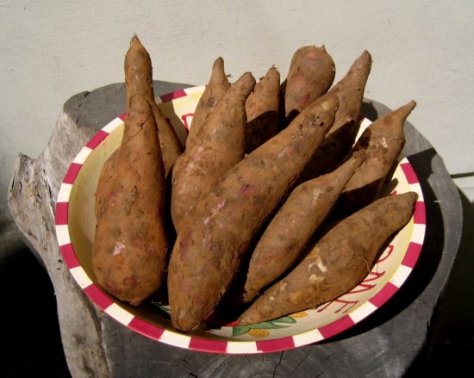
YACON-1

SYNOPSIS:
Organic agriculture and biodiversity have in recent years brought about a rediscovery of many “forgotten” vegetables that people especially in Europe and France conscientiously tried to forget as they reminded them of the privations suffered during WWII. The same people had then to make do with untraditional vegetables because potatoes, carrots and so on were confiscated by occupying forces or their own armies.
With sustainibility and bioagriculture made more important by the deficiencies of modern mass agriculture, those “forgotten” vegetables have suddenly come to the fore for the pleasure of all, and that of course of vegetarians and vegans!

This particular series of postings will introduce these vegetables one by one. I hope they will become useful for a long time to come to all my vegan and vegetarian friends!
1) Scorsonere/Oyster Plant
2)Potimarron
3) Vitelotte
4) Rutabaga
5) Cardon
6) Panais/Parsnips
7) Patisson
8) Topinambour
9) Crosne
10) Cerfeuil Tubereux
11) Poiree
12) Oca
13) Ulluque/Ulluco
14) Tigernuts
15) Capucine tubereuse-Maschua
16) Chataigne de Terre-Great Pignut

Yacon is another example of a forgotten vegetables rapidly getting popular in Japan, where it is very cheap!

The Yacón is a perennial plant grown in the Andes of Perú for its crisp, sweet-tasting tubers. The texture and flavour have been described as a cross between a fresh apple and watermelon which is why it is sometimes referred to as the apple of the earth. The tuber is composed mostly of water and fructo-oligosaccharides. It has recently been introduced into farmer’s markets and natural food stores in the US.

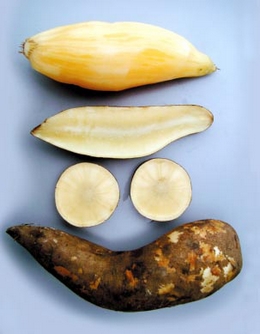
YACON-2

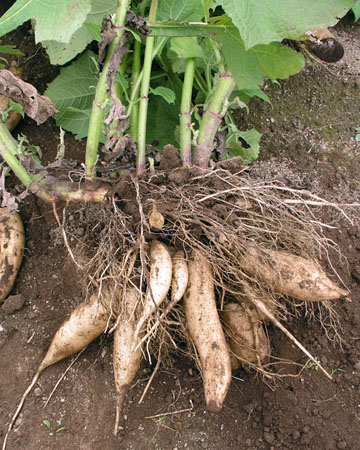
Although sometimes confused with jicama, yacón is actually a close relative of the sunflower and Jerusalem artichoke. The plants produce propagation roots and storage tubers. Propagation roots grow just under the soil surface and produce new growing points that will become next year’s aerial parts. These roots resemble Jerusalem artichokes. Storage tubers are large and edible.

YACON-3

These edible tubers contain inulin, an indigestible sugar, which means that although they have a sweet flavour, the tubers contain fewer calories than would be expected.

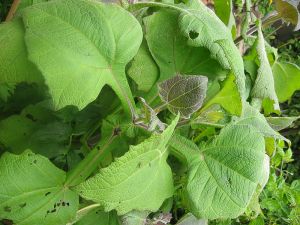
Yacón plants can grow to over 2 meters in height and produce small, yellow inconspicuous flowers at the end of the growing season. Unlike many other root vegetables domesticated by the Indigenous Peoples of the Andes (olluco, oca), the yacón is not photoperiod sensitive, and can produce a commercial yield in the tropics.

YACON-LEAVES

Yacon Leaves

Yacón provides for two nutritional products the yacón syrup and yacón tea. Both products are popular among diabetic people and dieters who consume these products because of its low sugar properties.

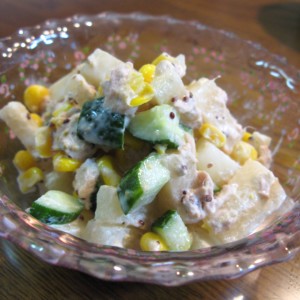
YACON-SALAD

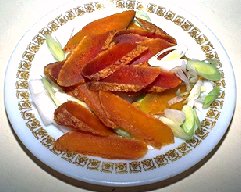
Japanese Yakon Salad

Yacón can easily be grown in home gardens in climates with only gentle frosts. It grows well in southern Australia, Tasmania and New Zealand, where the climate is mild and the growing season long. It has recently been introduced to the Philippines, and is now widely available in markets.

Propagation roots with growing points can be planted in a well-dug bed in early spring, near the time of the last expected frost. While aerial parts are damaged by frost, the roots are not harmed unless they freeze solid. Yacón is a vigorous grower much like Jerusalem artichokes. The plants grow best with fertilization.

After the first few frosts the tops will die and the plants are ready for harvest. It is generally best to leave some in the ground for propagating the following spring. Alternatively, the propagating roots can be kept in the refrigerator or buried away from frost until spring. While usable-sized tubers develop fairly early, they taste much sweeter after some frost.

YACON-NARAZUKE

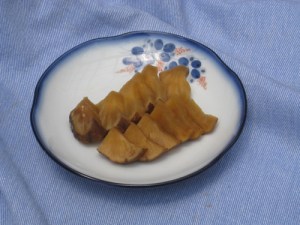
One reason why Yacon is fast becoming popular in Japan is that it is easy to pickle in “Narazuke” Style (see above picture),

YACON-DRIED-SLICES

and as dried slices, making for a great snack all year round!

RECOMMENDED RELATED SITES
Not-Just-Recipes
Bengal cuisine
Cooking Vegetarian
Frank Fariello
Gluten-free Vegan Family
Meatless Mama

Please check the new postings at:
sake, shochu and sushi

—————————————-
日本語のブログ
—————————————-
For Vegan and Vegetarians! “Forgotten” Vegetables 16: Chataigne de Terre-Great Pignut

CHATAIGNE-DE-TERRE
(Courtesy: Jean-Luc de Belgique)

SYNOPSIS:
Organic agriculture and biodiversity have in recent years brought about a rediscovery of many “forgotten” vegetables that people especially in Europe and France conscientiously tried to forget as they reminded them of the privations suffered during WWII. The same people had then to make do with untraditional vegetables because potatoes, carrots and so on were confiscated by occupying forces or their own armies.
With sustainibility and bioagriculture made more important by the deficiencies of modern mass agriculture, those “forgotten” vegetables have suddenly come to the fore for the pleasure of all, and that of course of vegetarians and vegans!

This particular series of postings will introduce these vegetables one by one. I hope they will become useful for a long time to come to all my vegan and vegetarian friends!
1) Scorsonere/Oyster Plant
2)Potimarron
3) Vitelotte
4) Rutabaga
5) Cardon
6) Panais/Parsnips
7) Patisson
8) Topinambour
9) Crosne
10) Cerfeuil Tubereux
11) Poiree
12) Oca
13) Ulluque/Ulluco
14) Tigernuts
15) Capucine tubereuse-Maschua

The Chataigne de Terre (Earth Chestnut in French) or Bunium bulbocastanum in latin is a truly rare vegetable, even in Europe where gardeners, more than farmers, grow it in France and Belgium notably.

Its other names include: terre noix, marron de terre, gland de terre, moinson (French), Erdkastanie (German) ; bulbo castaño (Spanish) ; bulbocastano comune (Portuguese) great pignut (English) and aardkastanje (Dutch).

CHATAIGNE-DE-TERRE.1jpg

It is an ombrelliferea and is also cultivated as a decoration garden plant.

The plant, wit comparatively few leaves can reach a height of 30~70 cm (1~2 feet).
It blossoms in Autumn with beautiful white flowers.
After seeds have been formed, the arial part of the plant will dry out.
It is then than one can find many tuber-like (they are not true tubers) nodules coming out of the roots when the whole plant is pulled out the earth.

These can be eaten raw after being washed in clear cold running water.
They have a distinctive chestnut taste and are greatly appreciated as a snack (for aperitif!)

They also become an ingredient for the German Liqueur called Kummel!

RECOMMENDED RELATED SITES
Not-Just-Recipes
Bengal cuisine
Cooking Vegetarian
Frank Fariello
Gluten-free Vegan Family
Meatless Mama

Please check the new postings at:
sake, shochu and sushi

—————————————-
日本語のブログ
—————————————-
For Vegan and Vegetarians! “Forgotten” Vegetables 15: Capucine tubereuse-Maschua

capucine-tubereuse2

SYNOPSIS:
Organic agriculture and biodiversity have in recent years brought about a rediscovery of many “forgotten” vegetables that people especially in Europe and France conscientiously tried to forget as they reminded them of the privations suffered during WWII. The same people had then to make do with untraditional vegetables because potatoes, carrots and so on were confiscated by occupying forces or their own armies.
With sustainibility and bioagriculture made more important by the deficiencies of modern mass agriculture, those “forgotten” vegetables have suddenly come to the fore for the pleasure of all, and that of course of vegetarians and vegans!

This particular series of postings will introduce these vegetables one by one. I hope they will become useful for a long time to come to all my vegan and vegetarian friends!
1) Scorsonere/Oyster Plant
2)Potimarron
3) Vitelotte
4) Rutabaga
5) Cardon
6) Panais/Parsnips
7) Patisson
8) Topinambour
9) Crosne
10) Cerfeuil Tubereux
11) Poiree
12) Oca
13) Ulluque/Ulluco
14) Tigernuts

The Capucine tubereuse (French), Maschua (Inca) or Tropaeolum tuberosum (Latin) is a very old tuber originally grown on the high plateaux of Peru and around Titicaca Lake.

2m high, it is mainly used for its flowers as a decorative plant.
It blooms from July to Autumn. The seeds are formed at the same time.

capucine-tubereuse

It was already grown and eaten by the pre-Incas 5.500 years BC.
It gives out fairly good yields.

Maschua has recently become popular in France and Belgium for its tubers.
They can be eaten like potatoes.
Its peppery taste (it contains mustard oils) is not always appreciated.
This peppery taste disappears upon freezing or long boiling.
The taste is best when the tubers are harvested after the first frosts.
In Bolivia and Peru the tubers are also eaten with molasses and frozen as a dessert.

The young leaves can be eaten as a green vegetable, either raw or cooked.
The flowers can be eaten raw and have a sweet taste ending up on a peppery note.

RECOMMENDED RELATED SITES
Not-Just-Recipes
Bengal cuisine
Cooking Vegetarian
Frank Fariello
Gluten-free Vegan Family

Please check the new postings at:
sake, shochu and sushi

—————————————-
日本語のブログ
—————————————-
For Vegan and Vegetarians! “Forgotten” Vegetables 14: Tigernuts, Amande de Terre

AMANDE-DE-TERRE-1a

SYNOPSIS:
Organic agriculture and biodiversity have in recent years brought about a rediscovery of many “forgotten” vegetables that people especially in Europe and France conscientiously tried to forget as they reminded them of the privations suffered during WWII. The same people had then to make do with untraditional vegetables because potatoes, carrots and so on were confiscated by occupying forces or their own armies.
With sustainibility and bioagriculture made more important by the deficiencies of modern mass agriculture, those “forgotten” vegetables have suddenly come to the fore for the pleasure of all, and that of course of vegetarians and vegans!

This particular series of postings will introduce these vegetables one by one. I hope they will become useful for a long time to come to all my vegan and vegetarian friends!
1) Scorsonere/Oyster Plant
2)Potimarron
3) Vitelotte
4) Rutabaga
5) Cardon
6) Panais/Parsnips
7) Patisson
8) Topinambour
9) Crosne
10) Cerfeuil Tubereux
11) Poiree
12) Oca
13) Ulluque/Ulluco

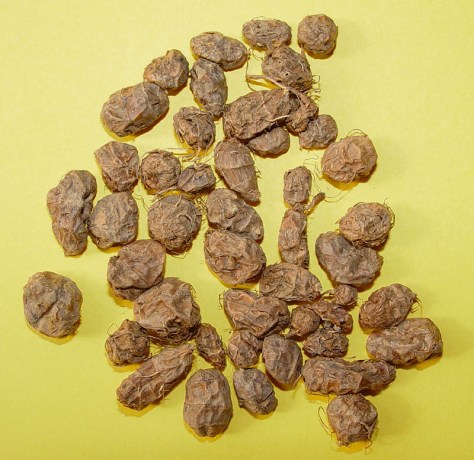
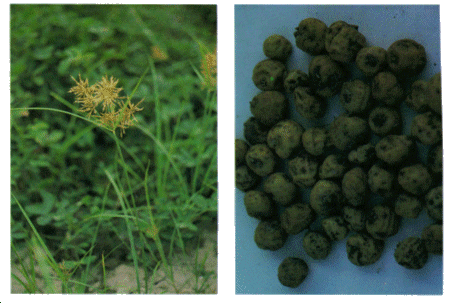
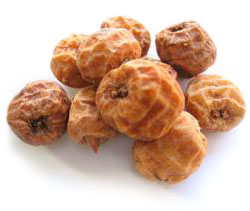
Tigernuts or chufa flatsedge in English, amande de terre (earth almond!), choufa, noix tigrée, souchet comestible in French, Chufa in Sapnish, Zigolo dolce in Italian or Yellow Nutsedge in the US, Cyperus esculentus does have many names!

AMNDE-DE-TERRE-1

Very popular in Spain, the plant is a cousin of the papyrus.
It produces small 2~3 cm tubers/rhyhomes in Autumn.
Once dried thay can be safely kept for years.

AMANDE-DE-TERRE

In Spain they are fermented into a celebrated drink with an almond taste called Hodchata!

Many people eat them raw as snacks or griilled or in salads with a drink, too!

Before re-planting them April~May, let them in lukewarm water for 48 hours. They need quite some watering, especially during dry seasons.

Harvest are conducted from end of Otober to the beginning of November by pulling out the whole plant.ue vous conserverez au frais.

Le saviez-vous ?
Le souchet sert à préparer une boisson Espagnole appelée “horchata de chufa”. Chufa est son nom en Espagne.

It is also used in place of almonds in cakes.

RECOMMENDED RELATED SITES
Not-Just-Recipes
Bengal cuisine
Cooking Vegetarian
Frank Fariello

Please check the new postings at:
sake, shochu and sushi

—————————————-
日本語のブログ
—————————————-
French Cuisine: Young Cod and Lentils

CABILLAUD-LENTILS

Young cod or “Cabillaud” in French is one of those white-fleshed fish which are so easy to prepare and do not require complicated recipes!

Here is a recipe which will make you sound like an accomplished chef:
Paves de Cabillaud aux Lentilles/Young Cod Steaks and Lentils!

INGREDIENTS: for 6 persons

-6 large pieces of cod fillets, 150 g each
-Puy green lentils: 500 g
-Bacon or Pancetta: 6 very thin slices
-Carrot: 1
-Onion: 1
-Olive oil (EVO): 4 tablespoons
-Xeres vinegar: 1 tablespoon
-Bouquet garni (if unavailable, make your own with fresh of dried rosemary, thyme, sage, etc)
-Salt: to taste
-Black pepper, freshly groungd: to taste

RECIPE:

-Peel the carrot and onion. Slice the onion very thin and cut the carrot into small dices. Drop the sliced onion and carrot dices and lentils into a large pan and cover (a little higher than the whole level) with cold water (containing as little calcium as possible=soft water). Add the bouquet garni. Bring to boil. Set the heat as to simmer the vegetables for 45 minutes.

-10 minutes before the vegetables are cooked fry the bacon slices on a large non-stick frypan until golden. Take excess fat off by laying them on a kitchen paper sheet.
In the same frypan heat a tablespoon of olive oil. Lay the cod on the rypan and fry on high fire for 2 minutes on each side. Turn the heat low. Sprinkle the fish with salt and pepper and let cook for 5 more minutes on a low fire.

-Drain the lentils. Pour them on a serving dish.
Prepare a vinaigrette with salt, pepper, Xeres vinegar and the remaining olive oil. Pour it onto the lentils. Mix. Place the the bacon slices and cod onto the lentils and serve at once.

-If you serve them individually, keep six plates warm. Place each cod fillet on a bed of lentils and a slice of bacon. Sprinkle the fish with a little freshly chopped Italian parsley and just a little olive oil. Place a sprig of Italian parsley on the whole for the fnal touch.

Serve a good Beaujolais with it (not Beaujolais Nouveau, for people’s sake! LOL)

RECOMMENDED RELATED SITES:
Warren Bobrow
Bread + Butter
5 Star Foodie
Frank Fariello
Mangantayon
Elinluv Tidbit Corner

Please check the new postings at:
sake, shochu and sushi

—————————————-
日本語のブログ
—————————————-

Cheese Plates at Gentil (’09/09/25)

GENTIL-09-25-3

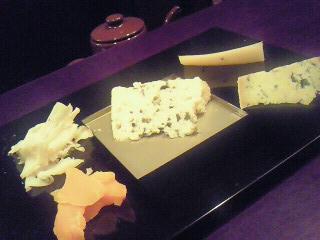
Last Friday, as said in previous reports, my two friend students and I visited Gentil, the oldest French restaurant in Shizuoka City.
It is a great and accordingly expensive restaurant, but you confine yourself to a plate of cheese and a glass of good wine, it is actually great value.
Ms. Keiko Kubota is THE authority on any cheese in Japan and actually help mature cheese she acquires all year long in season only.

As we were three of us, she served us two trays of them.

Above picture:
-Top left: “Tsuki no Okurimono/The Moon’s Present”, Cow’s milk, Hokkaido, Japan.
-Top left: Ossau Iraty, Ewe’s milk, Pyrenees, France
-Centre: Bleu des Causses, Cow’s milk, Causses, France
-Bottom left: Mimolette, 18-month old, Cow’s milk, North, France
-Bottom right: Bleu du Vercors Sassenage, Cow’s milk, Alpes, France

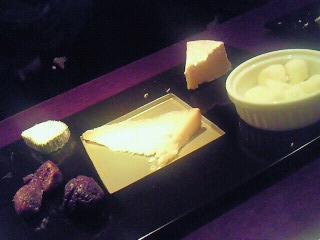
GENTIL-09-25-2

The second plate was an original combination:
-Top-left: Sainte-Maure, Goat’s milk, Loire, France
-Top-right: Aged Camembert, Cow’s Milk, Normandie, France
-Centre: Cosne de Porte Aubray, Goat’s milk, Loire, France
-Bottom left: dried black figs
-Bottom right inside a small dish: “Baby Cheese”, Cow’s milk, Canada!

What did wedrink with that?
A very fine Morgon from Bourgogne, France!

Restaurant Gentil
Address:420-0031 Shizuoka Shi, Gofuku-cho, 2-9-1, Gennan Kairaku building, 2F
Tel.: 054-2547655 (Reservations advisable)
Fax: 054-2210509
Opening hours: 12:00~14:00, 18:00~last orders for meals at 21:30. Bar time 18:00~23:30. Closed on Mondays.
Credit cards OK
Homepage (Japanese)

RECOMMENDED RELATED SITES:
Warren Bobrow
5 Star Foodie
Frank Fariello
Mangantayon
Cheese Monger
Rubber Slippers in Italy

Please check the new postings at:
sake, shochu and sushi

—————————————-
日本語のブログ
—————————————-

French Dessert Combination at Gentil (’09/09/25)

GENTIL-09-25-1

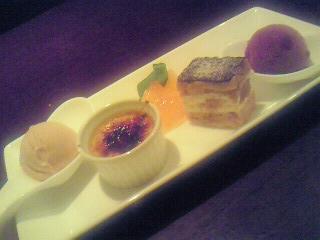
Last night, after we visited Sushi Ko in Shizuoka City, we went to Gentil, the oldest French restaurant in town for cheese (report coming next) and dessert.

The chef at Gentil has just changed and the style is different, but very modern in approach as demonstrated by the combination dessert we were served:

From left to right:
-Caramel ice-cream
-Kabocha/Japanese Pumpkin Creme Brulee
-Fresh kaki/persimmon (my first this year!)
-Banana Cake
-Cassis Sorbet

Definitely extravagant!

Restaurant Gentil
Address:420-0031 Shizuoka Shi, Gofuku-cho, 2-9-1, Gennan Kairaku building, 2F
Tel.: 054-2547655 (Reservations advisable)
Fax: 054-2210509
Opening hours: 12:00~14:00, 18:00~last orders for meals at 21:30. Bar time 18:00~23:30. Closed on Mondays.
Credit cards OK
Homepage (Japanese)

RECOMMENDED RELATED SITES:
Warren Bobrow
Bread + Butter
5 Star Foodie
Frank Fariello
Mangantayon
Tokyo Foodcast
Tokyo Through The Drinking Glass

Please check the new postings at:
sake, shochu and sushi

—————————————-
日本語のブログ
—————————————-
For Vegan and Vegetarians! “Forgotten” Vegetables 13: Ulluque/Ulluco

ULLUQE-1

SYNOPSIS:
Organic agriculture and biodiversity have in recent years brought about a rediscovery of many “forgotten” vegetables that people especially in Europe and France conscientiously tried to forget as they reminded them of the privations suffered during WWII. The same people had then to make do with untraditional vegetables because potatoes, carrots and so on were confiscated by occupying forces or their own armies.
With sustainibility and bioagriculture made more important by the deficiencies of modern mass agriculture, those “forgotten” vegetables have suddenly come to the fore for the pleasure of all, and that of course of vegetarians and vegans!

This particular series of postings will introduce these vegetables one by one. I hope they will become useful for a long time to come to all my vegan and vegetarian friends!
1) Scorsonere/Oyster Plant
2)Potimarron
3) Vitelotte
4) Rutabaga
5) Cardon
6) Panais/Parsnips
7) Patisson
8) Topinambour
9) Crosne
10) Cerfeuil Tubereux
11) Poiree
12) Oca

The Ulluque (French), Ulluco (Spanish), or Ullucus tuberosus (Latin) is a plant grown primarily as a root vegetable, secondarily as a leaf vegetable.

ULLUQUE-1
Ulluque Tubers

The Ulluque is one of the most widely grown and economically important root crops in the Andean region of South America, second only to the potato. It is known there with the common name of papa lisa, but also by the regional names melloco (Ecuador), olluco (Peru, chugua (Colombia) or ruba (Venezuela). The leaf and the tuberous root are edible, similar to spinach and the potato, respectively. They are known to contain high levels of protein, calcium, and carotene. Papalisa were originally used and discovered by the Incas.

The origin and development of the ullucu in the cold climates of the Andes suggest that it is one of the crops most suited to the complex agro-ecology of areas between 3000 and 4000 m. Although the precise role of hybridization, introgression and mutation in the ullucu is not known, these must have acted—along with natural and human selection pressure—to favour the plant’s distribution and adaptation to the various types of Andean climate and soils.

ULLUQUE-LEAF
Ulluque Leaves

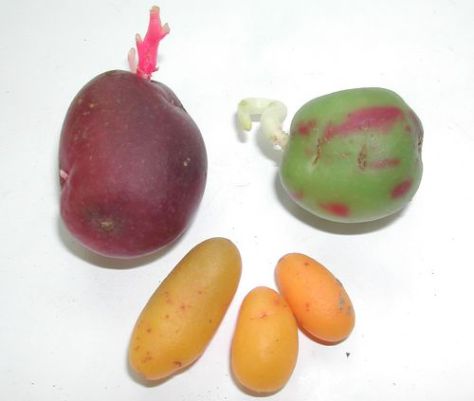
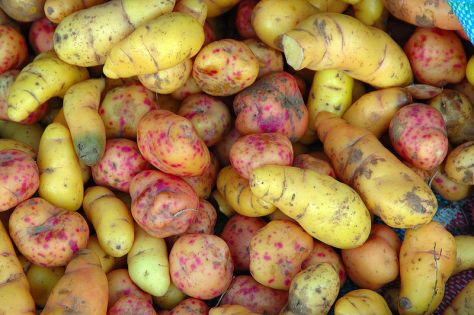
Oblong and thinly shaped, they grow to be only a few inches long. Varying in color, papalisa potatoes may be orange/yellow in color with red/pink/purple freckles. In Bolivia, they grow to be very colorful and decorative, though with their sweet and unique flavor they are rarely used for decoration.

The major appeal of the ulluco is its crisp texture which, like the jicama, remains even when cooked. Because of its high water content, the ulloco is not suitable for frying or baking but it can be cooked in many other ways like the potato. In the pickled form, it is added to hot sauces.

ULLUQUE-Cocido-Boyacense
Cocido Boyacense (Courtesy of Gastrononia & Cia)

It is a basic ingredient together with the cubio in the typical Colombian dish cocido boyacense. They are generally cut into thin strips.

Oblong and thinly shaped, they grow to be only a few inches long. Varying in color, papalisa potatoes may be orange/yellow in color with red/pink/purple freckles. In Bolivia, they grow to be very colorful and decorative, though with their sweet and unique flavor they are rarely used for decoration.

RECOMMENDED RELATED SITES
Not-Just-Recipes
Bengal cuisine
Cooking Vegetarian
Frank Fariello

Please check the new postings at:
sake, shochu and sushi

—————————————-
日本語のブログ
—————————————-
For Vegan and Vegetarians! “Forgotten” Vegetables 12: Oca

OCA-1

SYNOPSIS:
Organic agriculture and biodiversity have in recent years brought about a rediscovery of many “forgotten” vegetables that people especially in Europe and France conscientiously tried to forget as they reminded them of the privations suffered during WWII. The same people had then to make do with untraditional vegetables because potatoes, carrots and so on were confiscated by occupying forces or their own armies.
With sustainibility and bioagriculture made more important by the deficiencies of modern mass agriculture, those “forgotten” vegetables have suddenly come to the fore for the pleasure of all, and that of course of vegetarians and vegans!

This particular series of postings will introduce these vegetables one by one. I hope they will become useful for a long time to come to all my vegan and vegetarian friends!
1) Scorsonere/Oyster Plant
2)Potimarron
3) Vitelotte
4) Rutabaga
5) Cardon
6) Panais/Parsnips
7) Patisson
8) Topinambour
9) Crosne
10) Cerfeuil Tubereux
11) Poiree

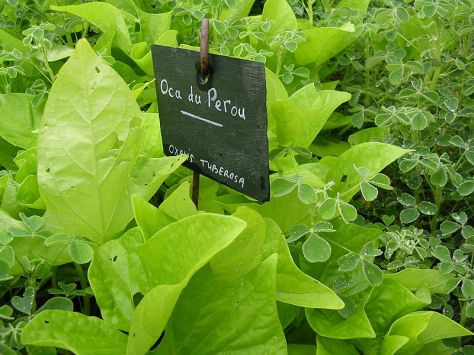
Oca or Oca du Perou in French or Oxalis tuberosa in Latin is an annual plant that overwinters as underground stem tubers. These tubers are known as oca , oka or New Zealand Yam. The plant was brought into cultivation in the central and southern Andes for its tubers which are used as a root vegetable. The plant is not known in the wild.

The stem tubers of oca form in the ground in the autumn. These are commonly boiled before eating although they may also be eaten raw. The leaves and young shoots can be eaten as a green vegetable. Introduced to Europe in 1830 as a competitor to the potato and to New Zealand as early as 1860, it has become popular in that country under the name New Zealand yam and is now a common table vegetable there although it was practically abandonned in France, Europe and North America. It is also widely known in the Polynesian islands of the South Pacific under the name yam.

OCA-2

The flavour is slightly tangy, and texture ranges from crunchy (like a carrot) when undercooked, to starchy or mealy when fully cooked. Though the original Andean varieties are widely variable in colour from purple to yellow, the usual New Zealand variety is a fleshy pink.

Oca can be boiled, baked or fried. In the Andes it is used in stews and soups, served like potatoes or can be served as a sweet. Oca is eaten raw in Mexico with salt, lemon and hot pepper.

OCA-3

Not only the tubers, but also the leaves are edible.

Oca is one of the important staple crops of the Andean highlands, second only to the potato due to its easy propagation, and tolerance for poor soil, high altitude and harsh climates.

Ocas need a long growing season, and are day length dependent, forming tubers when the day length shortens in the autumn. In areas with harsh winter climates, early frosts may cut back the foliage before the tubers have a chance to form. In tropical areas where the days are unchanging in length, oca will not set a crop successfully.

OCA-4
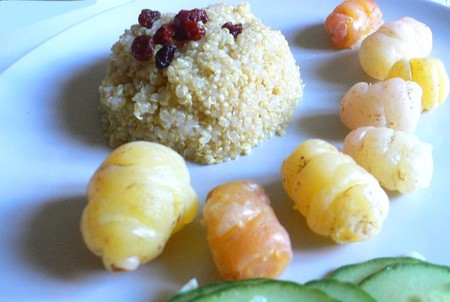
Oca and Quinoa (Courtesy of Blogbio)

Ocas are fairly high in oxalates, concentrated in the skin, and traditional Andean preparation methods were geared towards reducing the oxalate level of the harvested vegetable. This is done by exposure to sunlight which increases the glucose content and sweet taste of the oca. Recent oca cultivars have a lower oxalate content, and have also been selected for more flexibility in day lengths.

In Ireland during the 19th Century, following the potato famine, many people suggested to grow Peruvian Oca, but the project was quickly abandonned due to insufficient yields.

RECOMMENDED RELATED SITES
Not-Just-Recipes
Bengal cuisine
Cooking Vegetarian

Please check the new postings at:
sake, shochu and sushi

—————————————-
日本語のブログ
—————————————-

For Vegan and Vegetarians! “Forgotten” Vegetables 11: Poiree/Spinach Beet

POIREE

SYNOPSIS:
Organic agriculture and biodiversity have in recent years brought about a rediscovery of many “forgotten” vegetables that people especially in Europe and France conscientiously tried to forget as they reminded them of the privations suffered during WWII. The same people had then to make do with untraditional vegetables because potatoes, carrots and so on were confiscated by occupying forces or their own armies.
With sustainibility and bioagriculture made more important by the deficiencies of modern mass agriculture, those “forgotten” vegetables have suddenly come to the fore for the pleasure of all, and that of course of vegetarians and vegans!

This particular series of postings will introduce these vegetables one by one. I hope they will become useful for a long time to come to all my vegan and vegetarian friends!
1) Scorsonere/Oyster Plant
2)Potimarron
3) Vitelotte
4) Rutabaga
5) Cardon
6) Panais/Parsnips
7) Patisson
8) Topinambour
9) Crosne
10) Cerfeuil Tubereux

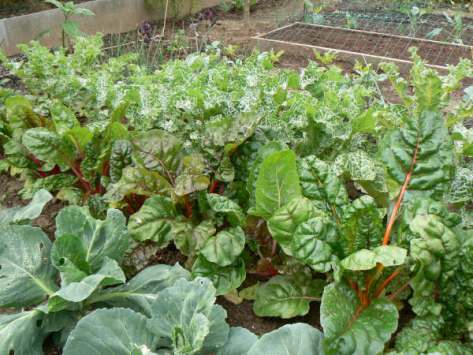
Poiree is regaining a lot of favour these days, as far as in Japan. It is a herb vegetable which can eaten in two different ways, depending if you use the leafy part or the harde central stem part.

Its Latin name is Beta vulgaris, whereas it is called bette à cardes, blette, poirée à cardes in French,Schnittmangold in German, spinach beet or foliage beet in English and remolacha de mesa in Spanish.

This plant is a variant of the maritime beet (Beta vulgaris L. subsp. maritima (L.) Arcang. in Latin) which grows spontaneously along European shores.

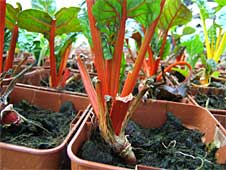
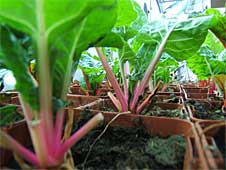
Poirée is bi-annual (it takes two to mature) and cultivated for its leaves. These are large and their central part can come into many colours, making them very attractive for salads (after boiling) and other preparations:

POIREE-JAUNE
Yellow Poiree

POIREE-ORANGE
Orange Poiree

POIREE-ROSE
Pink Poiree

POIREE-ROUGE
Red Poiree

POIREE-VERTE-RACE-BERAC
Green Berac Poiree

POIREE-VERTE-RACE-SUISSE
Green Swiss Poiree

POIREE-LUCULLUS
Lucullus Poiree

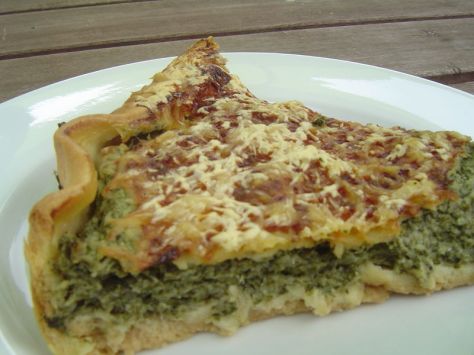
The leaves can be prepared eaten like spinach, whereas the stems after being cut and cooked can prepared in gratin, tarts, quiches, raviolis and soups.

POIREE-TARTE
Poiree Tart (Courtesy of Tarabiscotta)

RECOMMENDED RELATED SITES
Not-Just-Recipes
Bengal cuisine
Cooking Vegetarian

Please check the new postings at:
sake, shochu and sushi

—————————————-
日本語のブログ
—————————————-