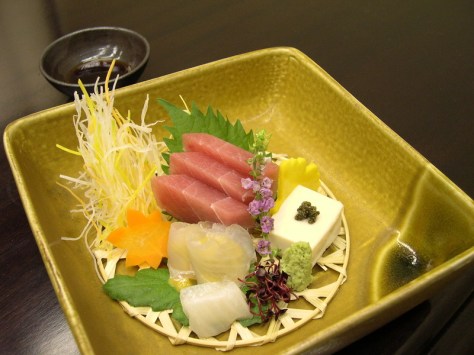
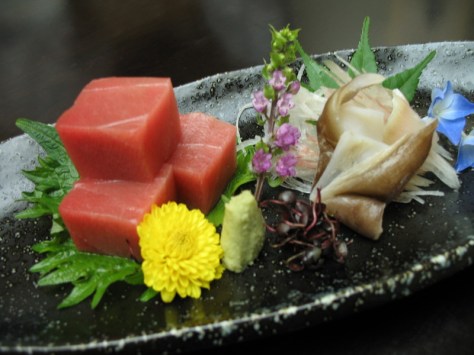
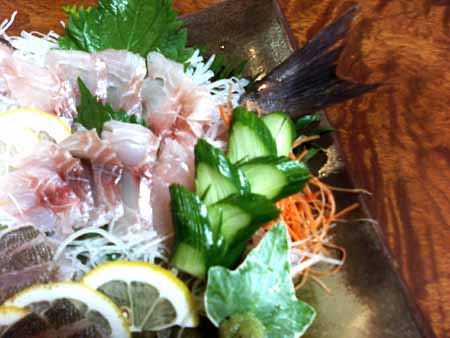
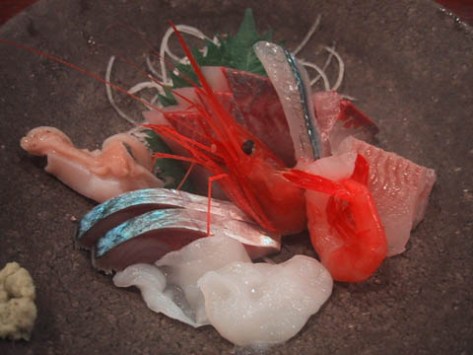
Tag Archives: Japanese Cuisine

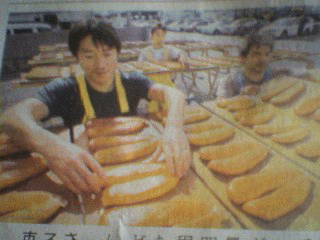
Karasumi/Botarga/Boutargue Season in Shizuoka!

karasumi.gif
(Courtesy of Shizuoka Shimbun Daily)

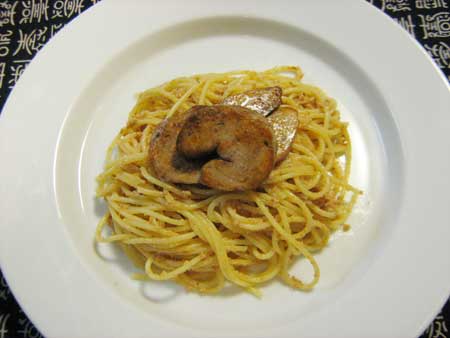
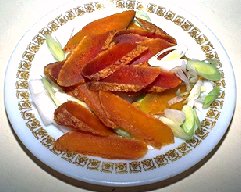
Karasumi, known as “boutargue” in French, or as “botarga” in Italian, is the natrally dried/preserved roe pouches of the mullet.
It is quite an expensive morsel in Japanese cuisine as well as in Europe (that is, the real one!).

Numazu City, one of the main fishing harbors in Shizuoka Prefecture, is quite renown for its karasumi.
The season for catching bora/鯔, or mullet in English, has begun and fishermen have just started drying their roe pouches/karasumi/カラスミ under the Autumn sun in this comparatively rainless time of the year.
It is grim and painstaking businees as the the roe pouches have to be carefully cleaned, got rid of any blood vesels, and sprinkled with the right quantity of salt.

karasumi2.jpg

They will be served thinly cut as they are in Japanese restaurants, or used in Italian and French restaurants, especially with pasta.

This yearly catch is slowly dwindling due to high demand, so brace yourselves when you open your purse!

Note: beware of imported specimens, especially from “Asia”!

RECOMMENDED RELATED SITES:
Warren Bobrow
Bread + Butter
5 Star Foodie
Frank Fariello
Elinluv Tidbit Corner
Tokyo Terrace
Maison de Christina
Chrys Niles
Comestilblog
Greedy Girl
Bouchon For 2

Please check the new postings at:
sake, shochu and sushi

—————————————-
日本語のブログ
—————————————-

Vegan Dressing: Shizuoka Wasabi Dressing

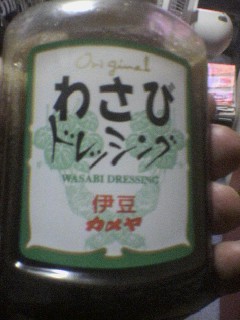
wasabi-dressing.jpg

Shizuoka has claimed world fame for being the first to grow wasabi in the 17th Century (in Yutogi, Shizuoka City exactly, up along the Abe River) and for producing more than 80% of the wole Japanese output, but people tend to forget that it can be accomodated in varuious manners, apart of being used a condiment for sashimi, sushi and the ubuquitous makisushi/rolled sushi!

The whole plant for instance can be made ito a pickled delicacy of its own.

One more great use has been initiated in Mishima City in eastern Shizuoka Prefecture: Wasabi Dressing!

It is not at all hot, but almost sweet and makes great accompaniment for any salads, on omelettes (Japanese or traditional) and mixed with sauces. I (and my better/worse) half are still disovering more usages!

Definitely worth a try! Moreover it contains a crowd of healthy ingredients!
Moreover, as it contains only vegetal oil, vinegar and ntural spices, it makes for the perfect vegan or vegetarian dressing!

Wasabi Dressing
Izu Kameya Co.
Mishima City, Heiseidai 5
Tel.: 0120369981
Can be bought in Sunpu Raku Ichi Shop, Asty, Shizuoka JR Station

RECOMMENDED RELATED SITES:
Warren Bobrow
Bread + Butter
5 Star Foodie
Frank Fariello
Elinluv Tidbit Corner
Tokyo Terrace
Maison de Christina
Chrys Niles
Comestilblog
Greedy Girl
Bouchon For 2

Please check the new postings at:
sake, shochu and sushi

—————————————-
日本語のブログ
—————————————-

Organic Cafe: Giono

GIONO-4

Service: excellent and very friendly
Facilities: great cleanliness overall
Prices: reasonable, good value.
Strong points: Very fresh local ingredients extensively used. Seasonal ingredients only. All organic.

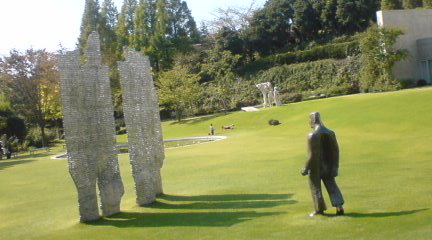
If you have the chance to visit Mishima City at the foot of Mount Fuji, there is a place where to enjoy a full day in an art-filled park of the highest level: Clematis no Oka/Clematis Hill.

VANGI-17

A free shuttle bus will take you from Mishima JR Station all the way to Nagaizumi Cho past vegetable farms and resort villas and drop you at this grand art complex in the middle of a forest.

It comprises two main parts:
-The Clematis Garden Area with an enormous (by Japanese standards) park with an infinite amount of flowers and a Museum/Park concept called the Vangi Statues Garden Art Museum, enough of a venue by itself.
-Buffet Area: not a diner-buffet area but the Bernard Buffet Museum you can either acceed to by shuttle or by walking across from the Vangi Park and a exquisite suspended bridge.
The Bernard Buffet is a major Museum in Japan with regular visiting exhibitions such as Leonard Foujita.
Check their great Homepage!

GIONO-1

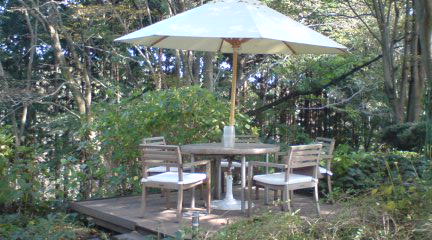
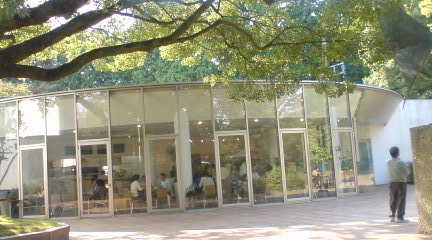
Right in front of the Museum entrance stands an inviting cafe/restaurant/boutique.
You can choose a seat either inside the cafe or at one of the three parasol tables (choose the latter if possible).

GIONO-3

Open only for lunch in accordance to the Musuem business hours it offers an exclusively organic menu, be it vegan, vegetarian or omnivore.
Almost all vegetables are grown in neighbourhood gardens and farms.
Mishima City and its surroundings are a reference in Shizuoka Prefecture when it comes to agricultural produce of any kind, including organic and biological growing and raising.

GIONO-2

The menu is purely seasonal, and where not available locally, the ingredients, such as olive oil, are carefully chosen among products from France, Italy and other countries.
The Missus and I on that day opted for two different set-courses.
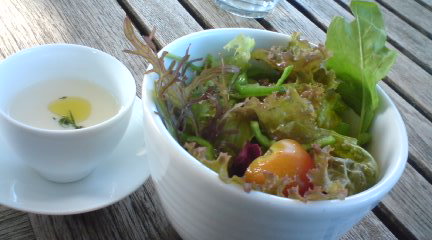
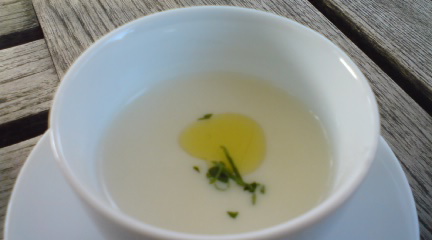
Both courses come with an appetizer. In this case, chilled vychissoise soup with olive oil and a sprinkle of fresh herbs, and a pot of organic vegetables salad.

GIONO-5

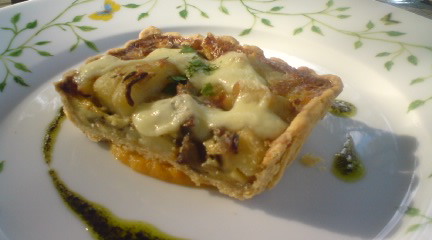
The Dragon (my other half) had a delicious mushroom and potato quiche. I managed to steal half of it! Beautifully light but satisfying, I must emulate it as soon as possible!

GIONO-6

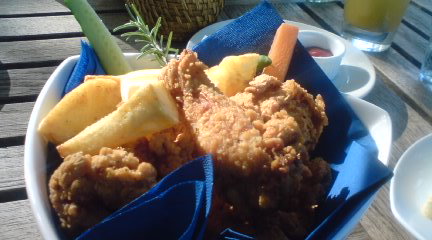
The Rabbit (me!) ordered the deep-fried chicken in a batter containing 14 spices and garnished with organic fried potatoes. A lunch to convince you away from those famed/notorious diners (can you guess?)!

We were also offered a complimentary drink with the course.
Note: Lunches are served with a big bottle of water coming directly from the streams flowing down Mount Fuji!

GIONO
411-0931, Mshima City, Nagaizumi-Cho, Clematis Garden (Suruga Oka), 347-1, Bernard Buffet Museum
Tel.: 055-980-5856
Opening hours: 10:00~17:30 (lunches until 15:00). Time will change in winter.
Closed on Tuesdays or on Wednesdays if Tuesday is a National Holiday.
HOMEPAGE (English)

RECOMMENDED RELATED SITES:
Warren Bobrow
Wild River Review
Bread + Butter
5 Star Foodie
Frank Fariello
Mangantayon
Hapabento
Elinluv Tidbit Corner
Think Twice

Please check the new postings at:
sake, shochu and sushi

—————————————-
日本語のブログ
—————————————-

Japanese Cheese: NEEDS Co. (Hokkaido)

CHEESE-NEEDS2

I have already said that the Japanese have been steadily increasing their own cheese production for the last 10 years or so with some reamarkable results.
Moreover, these cheese have slowly but steadily become available over the whole country at specialised shops and department stores.
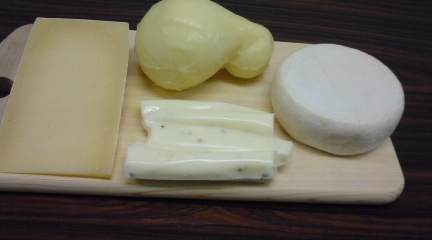
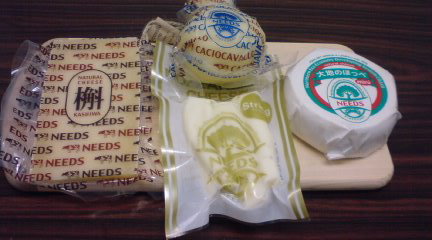
As a futher proof I have discovered four more cheeses by a different company I hadn’t heard of before: NEEDS Co Ltd in the island of Hokkaido!
NEEDS stands for “Northern Eco Economy Developing System”.
The amusing details are that names are in English or Japanese while weights and packaging are written in French.
NEEDS Co. Ltd. is relatively new as it was founded in 2003.

CHEESE-NEEDS1

They are all made from raw cow’s milk and very safely packaged, a must in this country with very changeable climates!

CHEESE-NEEDS3

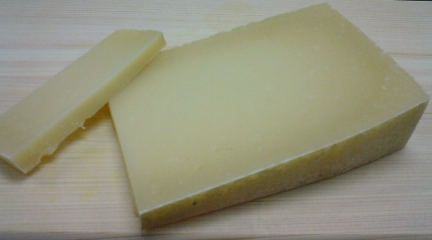
The above cheese, a hard type variety is called Kashiwa/槲 (Japanese Emperor Oak), the name of a tree found in Hokkaido.
It is a cross obtween Emmental and Gruyere, with some welcome pungency and solid taste.

CHEESE-NEEDS4

This cheese is called “Oochi no Hoppe/大地のほっぺ” meaning the “Cheek of the Large lands”!
Reblochon-style, it is quite soft and pobably will do better with some more maturing.

CHEESE-NEEDS5

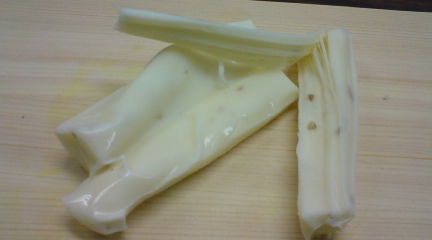
The cheese above is called “Sakeru Type Mozzarella/White pepper/String/さけるタイプ・モッツアレラチーズ・ホワイトペッパーストリング”. in brief it is a string-type cheese you can tear easily. great as a snack. The pepper contained in the cheese is a good initiative. As for the name Mozzarella, it just shows that the Japanese laws are somewhat a bit lax! great snack with beer.

CHEESE-NEEDS6

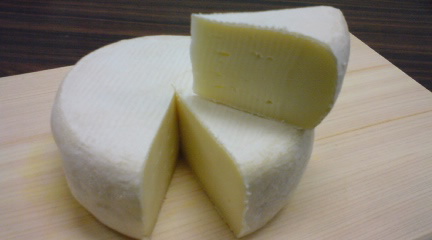
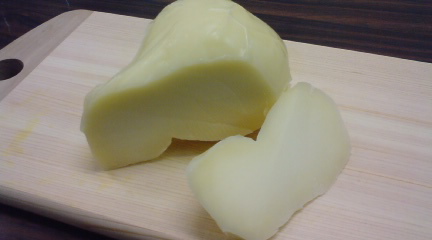
As the name “Caciocavallo” indicates, the above cheese is Italian-inspired!
Softer than its Italian counterpart, it has nonetheless a solid taste with plenty of supleness, making for a great snack!

NEEDS Co. Ltd.
Hokkaido, Nakagawa Gun, Makubetsu cho, Shinwa, 162-111
Tel.: (819(0)155-57-2511

RECOMMENDED RELATED SITES:
Warren Bobrow
5 Star Foodie
Think Twice
Frank Fariello
Cheesemonger’s Weblog

Please check the new postings at:
sake, shochu and sushi

—————————————-
日本語のブログ
—————————————-

Japanese Seasonal Fish: Kawahagi/Thread-sail Filefish

kawahagi1.jpg

Kawahagi or Thread-sail Filefish (or simply Filefish) is an angler’s favourite in summer.
Like any other fishes, it has other names such as “Gihagi, “Hagi”, “Gyuu”, “Subuta” or “bakuchiuchi”.
It is fairly common in Central and South Japan.
It is called Leatherjacket down in Australia where it is considered a pest!

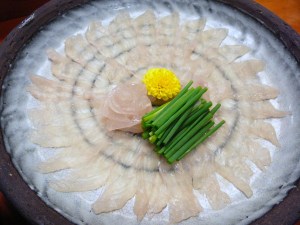
In Kansai area, it replaces Fugu/Globefish when it is out of season for its similarity as sashimi

012

The skin should be rough like that of a shark and brightly coloured.
Avoid sticky skin fish.
The bigger the size, the greater the taste (anglers, enjoy!)

Savouring the full Filfish meal at Sushi Ko, Shizuoka City:

Back in June, as I had to atone for some somewhat egoistical pleasure-seeking, I took the Missus to our favourite Sushi Restaurant in Shizuoka City, namely Sushi Ko,located along Aoba Park.

Although we did order the inevitable favourites, “katsuo/bonito” sashimi, “Shirako to Ankimo/Combination of Cod Sperm sacs and Frogfish/Monkfish liver”, “Pon Kara Maguro/Deep-fried tuna cubes”, “Shishamo/Spirinchus lanceolatus”, “Hotate/Scallops”, “Maguro Zuke/Marinated Tuna sushi”, and “Amaebi nigiri to Shiraebi Gunkan/Sweet shrimp and white shrimp sushi”, the star of the day was “Kawahagi/Filefish”!

The chef took a splendid live specimen (see top pic) just caught off Mochimune coast in Shizuoka City out of the “aquarium” and proceeded to serve the complete fish in three different manners:


“O-Tsukuri”:
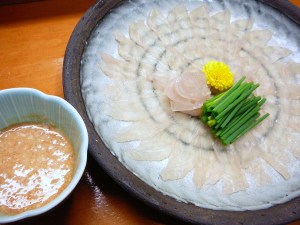
After having taken away the inedible skin, the chef first cut the fillets into very thin slices to be served with thin leeks and dip sauce made of ponzu mixed with the fresh liver of the same fish. As now is the best season, those comparatively thin fish come up with enormous livers!


“O nigiri”:
The chef managed to keep four slices aside to prepare nigiri with the fish flesh topped with a piece of its liver, some “momiji oroshi/grated daikon with chili pepper” and seasoned with ponzu!

SUSHI-KO-2008-10-11“Kara age”:
The “cheeks bones” with their meat were last deep-fried and served as they are with some lemon. Simple and great!
All this with one single fish!

Sushi Ko
shizuoka City, Aoi Ku, Ryogae-cho. 2-3-1 (Aoba Koen)
Tel.: 054-2512898
Business Hours: 17:00~25:00. 17:00~23:00 (Sundays)
Closed on Wednesdays
Reservations recommended
Credit cards OK
HOMEPAGE (Japanese)

RECOMMENDED RELATED SITES:
Warren Bobrow
Bread + Butter
5 Star Foodie
Frank Fariello
Elinluv Tidbit Corner
Tokyo Terrace
Maison de Christina
Chrys Niles
Comestilblog
Greedy Girl
Bouchon For 2

Please check the new postings at:
sake, shochu and sushi

—————————————-
日本語のブログ
—————————————-

Ankimo Presentations 2

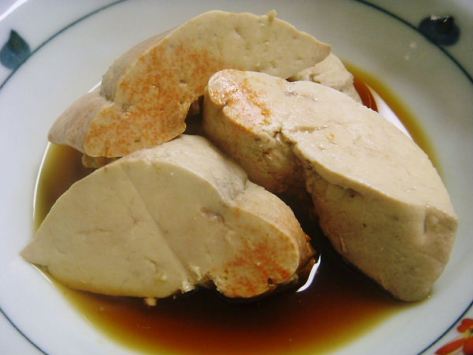
ANKIMO-STEAMED
Plain steamed ankimo served with simple cold ponzu sauce

I have already introduced the recipe for preparing Ankimo/Frogfish Liver (Japanese Foie Gras) in a precedent article as well an article on various presentations.
This posting will show you other possibilities!

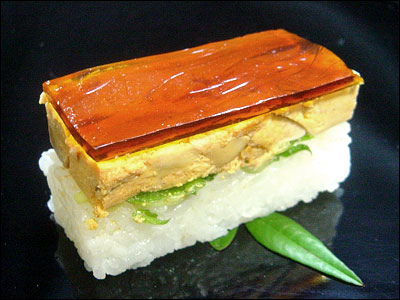
ANKIMO-SUSH-1

The oshizushi/pressed sushi above is a beauty with fish jelly on top!

—————–

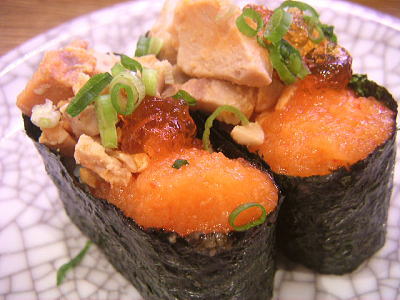
Ankimo Gunkan Mini Seriies!

ANKIMO-SUSHI-2

ANKIMO-SUSHI-3

ANKIMO-SUSHI-4

ANKIMO-SUSHI-5

————————–

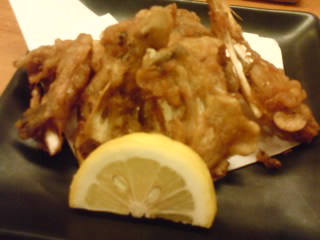
ANKIMO-FRIED

Ankimo does not have to be on sushi.
It can be cooked for its own sake such as in Japanese style above or:

ANKIMO-PASTA

Ankimo Pasta. Japanese foie gras instead of duck/goose foie gras!

RECOMMENDED RELATED SITES:
Warren Bobrow
Bread + Butter
5 Star Foodie
Frank Fariello
Mangantayon
Hapabento
Elinluv Tidbit Corner
Tokyo Terrace
Maison de Christina
Chrys Niles
Comestilblog

Please check the new postings at:
sake, shochu and sushi

—————————————-
日本語のブログ
—————————————-

Japanese Seasonal Fish: Salmon-Sake

SAKE-1

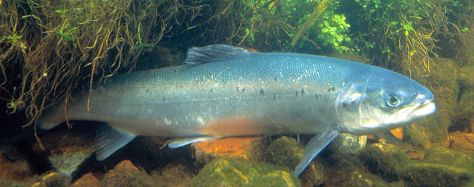
Salmon is a favourite almost everywhere on the Globe, but it is in Japan that you can enjoy in the most numerous manners!

Like every other fish it has many names according to season and place:
Shirozake/White Salmon, Akiaji or Akizake for Autumn Salmon, Shake in Tokyo.
In Spring it is called Tokishirazu.
I don’t have to tell you there are many, many names for it all over the world!

SAKE-SUJIKO

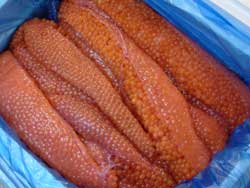
Its roe, before processing, is called Sujiko in Japanese, whereas the salmon roe, once treated, is called Ikura.

SAKE-ROE-SUSHI

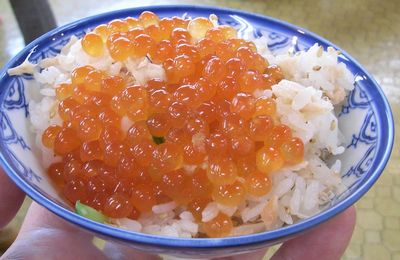
Many Japanese appreciate the roe untreated, but more people enjoy it on top of rice as it is with some soy sauce and grated wasabi.

SAKE-SUSHI

It also makes for some splendid colourful creation on a plate of sushi!

SAKE-SUSHI-2

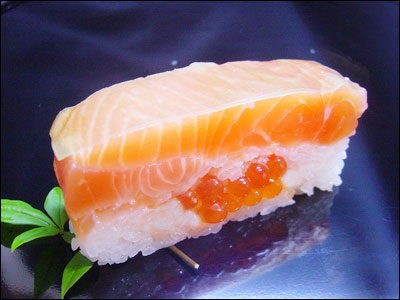
As oshizushi/pressed sushi, it can make some very interesting combinations with the salmon flesh and roe.

SAKE-GOHAN

Have you ever tasted Sake Gohan/Salmon Rice?

SAKE-OSHIZUSHI

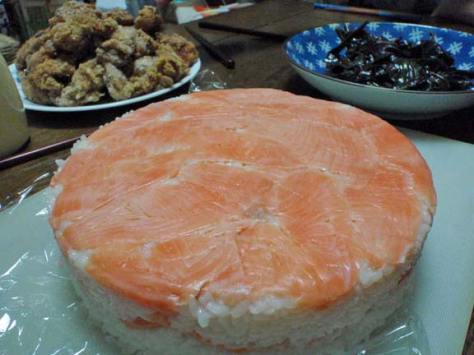
Slightly smoked the Japanese way, It is extensively used in the making of bentoes!

RECOMMENDED RELATED SITES:
Warren Bobrow
Bread + Butter
5 Star Foodie
Frank Fariello
Mangantayon
Tokyo Foodcast
Tokyo Through The Drinking Glass
Urban sake
Hapabento
Elinluv Tidbit Corner

Please check the new postings at:
sake, shochu and sushi

—————————————-
日本語のブログ
—————————————-

Japanese Cuisine: Seabream in Kabayaki Style

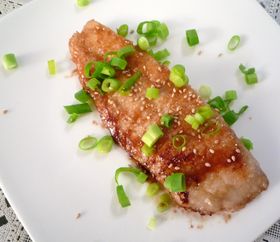
TAI-KABAYAKI1

Seabreams or groupers are aslo common almost all year long.
They make for all kinds of preparation in Japanese cuisine, either in nabe/Japanese pot au feu or grilled.
This very simple recipe is a grill in kabayaki style:

Seabream in Kabayaki Style:

INGREDIENTS: For two persons

-White-flesh fish (seabreams or groupers. Recipe can apply to almost any white flesh fish): 120g~

Marinade
-Soy sauce: 1 teaspoon
-Japanese Sake: 1 teaspoon

-Cornstarch: 2 tablespoons~
-Oil: 1 tablespoon

Sauce:
-Soy sauce: 1 tablespoon
-Japanese Sake: 1 tablespoon
-Mirin/Sweet sake: half a tablespoon
-Sugar: half a tablespoon
-White sesame seeds: 1~2 teaspoons
-Finely chopped thin leeks: 2 tablespoons

RECIPE:

TAI-KABAYAKI2

-Marinate fish soy sauce and Japanese sake for about 10 minutes.
-In a separate bowl mix soy sauce, Japanese Sake, mirin and sugar.

-Rest fish on a piece of kitchen paper to take excess marinade.
-Sprinkle both sides with cornstarch.
-Heat oil on a frypan and grill fish on both sides util “bubbles/eyes” appear on it surface.

-Once the heat has reched/cooked the core of the fish, slide fish against the side or corner of the frypan. Pour the sauce in the remaing space of the frypan. As soon as sauce starts boiling, caramelize both sides of the fish with the sauce.

-As soon as you are satisfied with the cooking of the fish, serve fish on a dish. Mix white sesame seeds with reamining sauce and pour over fish. Sprinkle with chopped thin leeks.

NOTE:

-Keep in mind that fish can break easily when you flip it over to fry it on both sides.
-Fry the skin side first.

RECOMMENDED RELATED SITES:
Warren Bobrow
Bread + Butter
5 Star Foodie
Frank Fariello
Mangantayon
Tokyo Foodcast
Tokyo Through The Drinking Glass
Urban sake
Hapabento
Elinluv Tidbit Corner

Please check the new postings at:
sake, shochu and sushi

—————————————-
日本語のブログ
—————————————-

Japanese Cuisine: Salmon grilled with Leek Miso

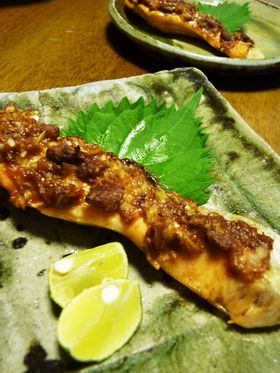
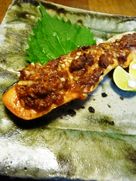
SALMON-NEGI-1

Salmon is basically available all year round these days.
The Japanese prepare it in all kinds of ways.
Here is a simple recipe very popular in Japanese homes you can also enjoy as a snack with a cool beer!

Salmon grilled with leek miso:

INGREDIENTS: For 2 persons

-Salmon: 2 slices
-Miso: 1 large tablespoon
-Japanese sake: 1 tablespoon (can be reduced or increased)
-Leek: 5 cm long cut (chopped fine)
-Umeboshi/pickled Jpanes plum: 1 teaspoon (can be reduced or increased)

RECIPE:

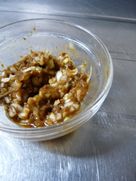
SALMON-NEGI-2

-In a bowl mix miso, sake, leek and umeboshi. Add sake if the mixture is not smooth enough. As for miso, choose one cotaining beans.
Do not be afraid to experiment as far as ingredients and quantities are concerned.

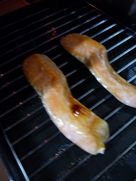
SALMON-NEGI-3

Grill with the lower face/side up first.
Turn over as the first “bubbles” appear on its surface.
Smear the salmon with the leek miso mix and grill until “bubbles apear on the fish surface.

SALMON-NEGI-4

Serve with shiso or lettuce leaves for decoration and limes forthe final touch.

NOTES:

-Take care not to overgrill the fish.
-If you use salmon with its skin, grill skin first.

RECOMMENDED RELATED SITES:
Warren Bobrow
Bread + Butter
5 Star Foodie
Frank Fariello
Mangantayon
Tokyo Foodcast
Tokyo Through The Drinking Glass
Urban sake
Hapabento
Elinluv Tidbit Corner

Please check the new postings at:
sake, shochu and sushi

—————————————-
日本語のブログ
—————————————-

Tofu Donuts: Recipe

tofu-kinds-5
“Tofu Doughnuts” at Shizutetsu Supermarket in Shizuoka City

Following a kind message from Dawn Figueroa who after returning from Japan could not find the tofu donuts back home, nor their recipes.

There are many recipes indeed, most of them including eggs, milk, wheat flour, pancake mix and what not.
Moreover I discovered that the stores in Japan use wheat flour, too.
Although this would be enough for vegans and vegetarians (I’M not), I decided to introduce an easy recipe which non-gluten, nor containing wheat flour.

For people who want to start from scratch, check tofu preparation recipe below!

HOME-MADE TOFU DONUTS
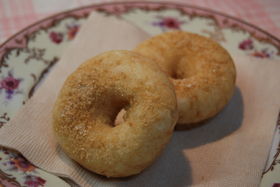
TOFU-DONUTS-1

Ingredients: For 3 donuts (multiply accordingly!)

-Rice powder (riz blanc in French): 45 g
-Cornstarch: 15 g
-Baking powder (non-gluten): half a teaspoon
Sugar beet: 10 g (optional/use a little salt if you want to prepare appetizer donuts)
-(Kinu tofu) Silk Tofu: 60 g
-Deepfry oil

Recipe:

TOFU-DONUTS-2

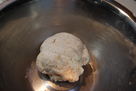
-In a large bowl, mash/crush the tofu
TOFU-DONUTS-3

-Add rice powder, cornstarch, baking powder and sugar beet. Mix well.Form a ball.
TOFU-DONUTS-4

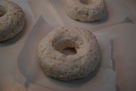
-Shape three donuts by hand and place them atop pieces of cooking paper. Shape the central hole large enough.
TOFU-DONUTS-5

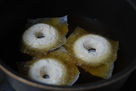
-Preheat oil to 160 degrees Celsius.
Drop the doughnuts into the oil with their cooking paper.
Take paper out with tongs as soon as the oil “boil”around the donuts.
Fry the donuts until they attain a nice “fox”/brown colour.
Turn the donuts over halfway for an even cooking and colour.

NOTES:

-If you use too much tofu in the recipe the donuts will be difficult to shape.
-Proportion between rice powder, beet sugar and baking pwder is based on the following:
Rice powder: 100 g
Beet sugar: 10 g
Baking powder: 3 g
-You can add taste to the donuts according to your preferences.

————————

TOFU PREPARATION

zarudofu
“Zarudofu”, my favourite variety of tofu just filtered out in a “zaru/basket”. You just eat it with a spoon on its own. No seasoning needed!

Ingredients (for one large piece, one cho/丁in Japanese)

Soy beans: 2 cups (360cc)
Nigari: 2 large tablespoons
(Magnesium chloride is an important coagulant used in the preparation of tofu from soy milk. In Japan it is sold as nigari (the term is derived from the Japanese word for “bitter”), a white powder produced from seawater after the sodium chloride has been removed, and the water evaporated. In China it is called “lushui”.. Nigari or Lushui consists mostly of magnesium chloride, with some magnesium sulfate and other trace elements. It is also an ingredient in baby formula milk).
Water: 5 cups (twice and a half the volume of soy beans)

Utensils:
One large pot
One large clean cloth pouch to press tofu through
One bowl
One mixer
One thermometer
One large piece of gauze to filter water off shaped tofu
One large wooden spoon
One wooden tofu-shaper case

RECIPE:
toofu-1
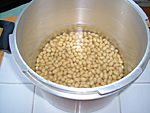
1) Preparation: soak soy beans in water overnight

toofu2
2) Preparation: Mix nigari with 1 cup of water and set aside
toofu-3
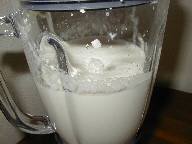
3) According to its size, Pour the whole or part by part soy beans and water (1) and make paste as fine as possible. If mixer runs at an even pace without crushing beans into paste, add more water. The paste obtained is called “namago” (生呉)

toofu-4
4) Pour the bean paste into a large pot with an equal amount of water. Heat stirring all the time. The paste will come to a boil suddenly. Switch off fire. Switch on low once the paste has settled for 10 minutes and take off fire.
toofu-5
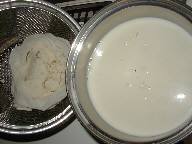
5) Pour paste into the cloth pouch and press. Right of the picture is tofu paste before pressing. Left is pressed out tofu
toofu-6
6) Solidifying (coagulating) with nigari.
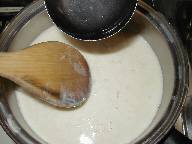
Stir tofu over light fire. When the temperature has reached 75~80 degrees Celsius pour in nigari slowly and stir all the time. The solid matter will sink to the bottom and accumulate. The coagulation will be complete when liquid above tofu has become transparent. Stop the operation and let rest for 15 minutes.

toofu-7
7) Arrange the gauze inside tofu a tofu shaper case which should have small holes to let excess water run out.

toofu-8
8) Cover with lid with a weight (or glass of water) of about 250 g and further press out water for 15 minutes
toofu-9
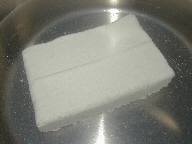
9) Delicately empty tofu in basin filled with called water and leave it there for an hour to take out excess nigari. Store in refrigerator.

RECOMMENDED RELATED SITES
Not-Just-Recipes
Bengal cuisine
Cooking Vegetarian
Frank Fariello
Gluten-free Vegan Family
Meatless Mama

Please check the new postings at:
sake, shochu and sushi

—————————————-
日本語のブログ
—————————————-
Shizuoka Local Fish: Houbo/Blue Fin Robin

houbou.jpg

Many a time, my good friend Patrick Harrington has rightly pointed out on the importance to eat “local” as much as possible. Consequently, I have endeavoured whenever possible to introduce any vegetables, dairy products, meat and fish grown, made, raised or caught in Shizuoka Prefecture (and its waters)
As for today I would like to introduce again a fairly cheap and tasty fish: houbou. Its English name is quite poetic: blue fin robin (“Chelidonichthys spinosus” for the purists). The reason is its very wide round green-blue side fins.
Some call it grotesque, others beautiful.

Most of them are found in Niigata Prefecture from Autumn to Winter (30~50 cm), but they are caught in early Spring in Suruga Bay (the Shizuoka variety is smaller, up to 20 cm). But now and thenwe find them at dfferent times of the year.

It can be prepared in many ways:

-Sashimi and sushi if just caught.

-In “nabe/鍋” (soup pot) or as “nimono/煮物” (simmered) in Japanese-style cuisine.

-Steamed and served with a sweet and sour sauce in Chinese-style food.

My preferred way is Mediterranean style (one fish per person):
Cut the side fins and scrape the scales off. discard the insides and clean under clear cold running water. Make a couple of shallow incisions over each flank.
Fill the stomach with a mixture of finely chopped vegetables and herbs (leave your imagination go free!).
Put it on a large sheet of olive oil coated cooking foil paper, sprinkle it with a little salt and pepper. Place vegetables cut in long strings on both sides (plenty is fine), and one or two thin lemon slices on top. Coat it with some (not too much) extra virgin oil. As a last touch, I add some white wine and a little anise spirit (Pernod, Ricard or Absinthe).
Loosely wrap the fish with foil paper, close both ends by twisting them around.
Place the fish in its foil paper directly on the metal plate inside the oven preheated at 180 degrees Celsius and cook for about 15 minutes (longer for large fish).
If you do not have an oven, steam it the Chinese way!

RECOMMENDED RELATED SITES:
Warren Bobrow
Bread + Butter
5 Star Foodie
Frank Fariello
Mangantayon
Elinluv Tidbit Corner

Please check the new postings at:
sake, shochu and sushi

—————————————-
日本語のブログ
—————————————-
Sushi & Sashimi: The Basics 5 – Sashimi Presentations

SUSHIK-09-08-31-5
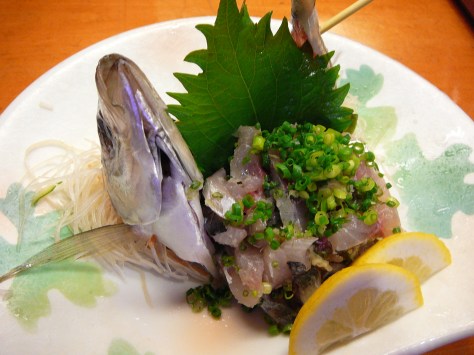
Aji Tataki/Horse mackerel Tartare served at Sushi Ko, Shizuoka City

SYNOPSIS:
I already have wrtitten a lot in bits and pieces on Sushi and Sashimi, including in my other blog, Shizuoka Sushi, but I felt it was time to post an article that could be used as general reference by my blogging friends.
The Basic 1: Definitions
The Basics 2: Questions & Answers
The Basics 3: Ingredients
The Basics 4/1: Sushi Presentations
The Basics 4/2: Sushi Presenations-Rolls
The Basics 4/3: Sushi Presentations-Donburi

Sashimi, as almost everyone knows means thin slices, whether it be fish, meat or vegetables. When raw fish, seafood or meat is not sashimi but served raw, it is usually called tsumami/side, snack.
Fish and other seafood van be presented solely as sashimi or as a combination of sashimi and tsumami.

The possibilities are infinite as there are many ways a chef can cut and present his food.

Below I propse a “small” selection of waht can be found in Japan.
here is a little challenge for you:
Can you recognize all ingredients?

011
Usu tsukuri style/Thin cut style

SASHIMI-PRESENTATIONS-1
Japanese Cuisine Sashimi O-Tsukuri/Plate

SASHIMI-PRESENTATIONS-2
Another Japanese Cuisine Sashimi O-Tsukuri/Plate

SASHIMI-PRESENTATIONS-3
Japanese Cuisine Sashimi O-Tsukuri/Plate in Kado/Square style

SASHIMI-PRESENTATIONS-4
I suppose you recognize this single sashimi served in Somen/thin noodles style!

SASHIMI-PRESENTATIONS-5
Another way to serve the whole fish

SASHIMI-PRESENTATIONS-6
A simple individual plate of sashimi

SASHIMI-PRESENTATIONS-7
A more sophisiticated individual plate of sashimi and tsumami

SASHIMI-PRESENTATIONS-8
An individual Plate of sashimi served with the seasoning

SASHIMI-PRESENTATIONS-9
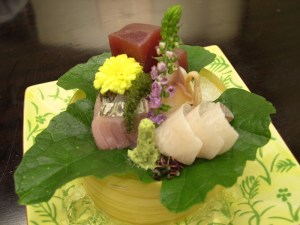
Elegant and simple individual plate of sashimi!

RECOMMENDED RELATED SITES:
Warren Bobrow
Bread + Butter
5 Star Foodie
Frank Fariello
Mangantayon
Tokyo Foodcast
Tokyo Through The Drinking Glass
Urban sake
Hapabento
Elinluv Tidbit Corner

Please check the new postings at:
sake, shochu and sushi

—————————————-
日本語のブログ
—————————————-
Japanese Cheese: Kyodo Gakui Shintoku Nojyo

CHEESE-JAPAN-2

This is the second set of cheese made by Kyodo Gakui Tokunojyou in Hokkaido Island I found In Lavigne, Shizuoka City.

hok-cheese-2

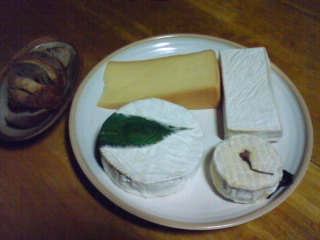
I have already introduced other cheeses from the same company (see above picturse).
They iincluded Sasa no Yuki, a Camembert style wrapped in a small bamboo leaf, Koban, Sakura and Raclette

CHEESE-JAPAN-1

These two cheeses seem to complete the whole series from that particular company.

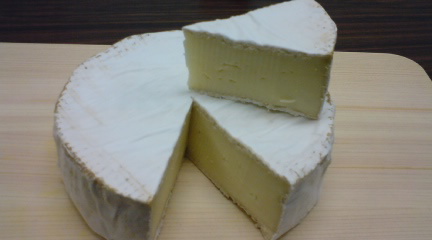
CHEESE-JAPAN-3

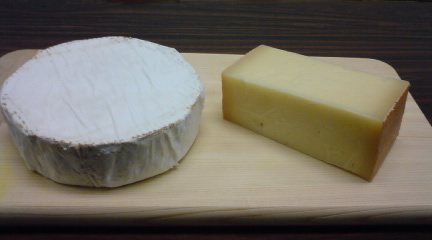
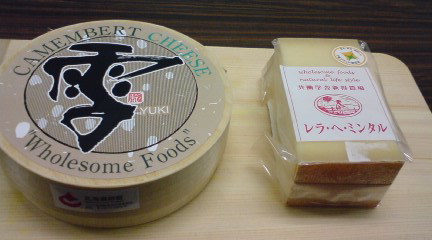
This one is simply called “Camembert-type”, and it is very near the French product, the more for it that it ismade with raw cow’s milk.
Actually it is the Sasa no Yuki minus the bamboo leaf!
Well-matured and soft, it can be matured a longer time.

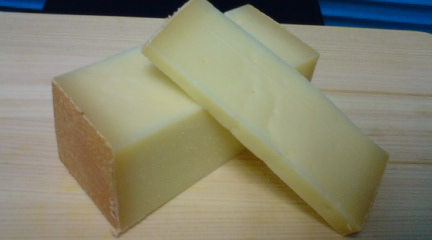
CHEESE-JAPAN-4

The last one, a hard type cheese also made with raw cow’s milk is called “Lera He Mental”, obviously inspired by Emmental and Comte cheeses. Surprisingly strong in characteristic, it makes for a great snack with wine and bread. Can definitely be used in somewhat extravagant cooking!

Another discovery!

Kyodo Gakui Shintoku Nojyo
081-0038 Hokkaido, Kamikawa Gun, Shintoku Machi, Jishintoku, 9-1
(081-0038 北海道上川郡新得町字新得9-1)
Tel.: (81)(0)156-69-5600

RECOMMENDED RELATED SITES:
Warren Bobrow
Bread + Butter
5 Star Foodie
Frank Fariello
Mangantayon
Cheese Sommelier
Rubber Slippers in Italy

Please check the new postings at:
sake, shochu and sushi

—————————————-
日本語のブログ
—————————————-
Sushi & Sashimi: The Basics 4/3-Sushi Presentations-Donburi

donburi-09-02-13
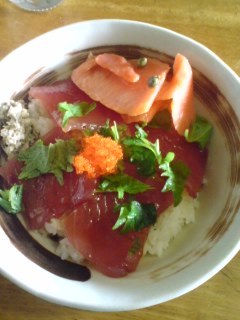
Donburi made by the Missus:
-She marinated thin slices of raw tuna in ponzu, sake and what else. The leftover marinade was poured over the rice to season it before she placed the pieces of tuna on top.
-Smoked salmon with capers.
-A spoon of “tobikko/flying fish roe”
-a generous portion of locally-made (up the Abe River in Shizuoka City) “Wasabi zuke/chopped wasabi stems and flowers fermented in “sake kasu/sake white lees” (all from Shizuoka Prefecture!)

SYNOPSIS:
I already have wrtitten a lot in bits and pieces on Sushi and Sashimi, including in my other blog, Shizuoka Sushi, but I felt it was time to post an article that could be used as general reference by my blogging friends.
The Basic 1: Definitions
The Basics 2: Questions & Answers
The Basics 3: Ingredients
The Basics 4/1: Sushi Presentations
The Basics 4/2: Sushi Presenations-Rolls

There is another form of sushi, partly similar to Chirashizushi called Donburi Sushi.
It is popular not only at sushi restaurants, especially in Hokkaido Island, but also in Japanese homes all over Japan!
The moment you know how to prepare sushi rice, it is great fun!
You can make donburi vegan, vegetarian, seafood or even meat.
It is entirely up to your imagination!

Here is another example by the Missus:

DONBURI-HOME
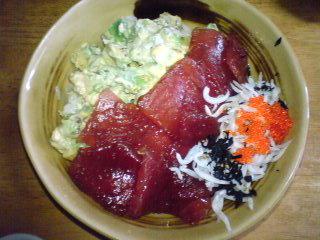
Plain steamed rice topped with slices of “akami”/ lean tuna part, avocado salad with mayonnaise and wasabi pickles (the latter provided a nice balance with a spicy touch), boiled sirasu/whitebait sprinkled with “hijiki” seaweed and “tobikko”/flying fish roe.
The tobikko added a nice colour finish touh. It is quite cheap down here in Shizuoka City.
I poured a little Shizuoka-made wasabi dressing on top. This dressing is a lot milder than pure grated wasabi with a little sweetness which combines well with the fish!

I go very often to Hokkaido and have collected quite a few samples of Donburi:

The following three were taken near Abashiri a short distance from Shiretoko, one of the Japanese World Nature Heritage in the far North:

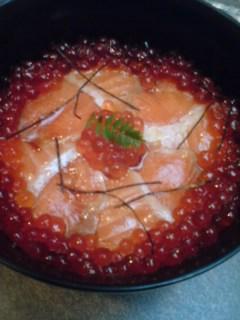
DONBURI-HOKKAIDO-1
“Oyako” Donburi/”Mother and Child”. In this case it means Salmon and Salmon Roe!

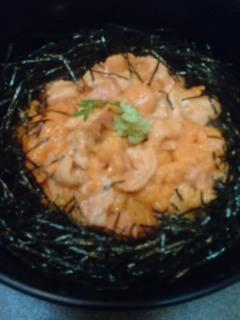
DONBURI-HOKKAIDO-2
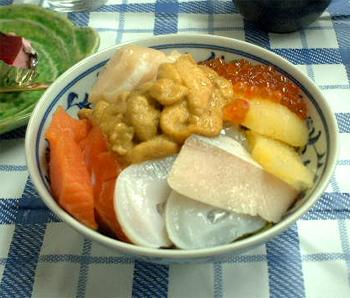
“Uni” Donburi, Sea Urchin Donburi. Absolutely extravagant!

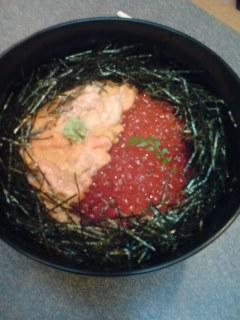
DONBURI-HOKKAIDO-3
Uni to Ikura Donburi, even more extravagant!

The next four were savoure in Sapporo City, the capital of Hokkaido:

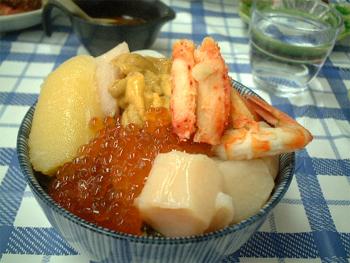
DONBURI-SAPPORO-1
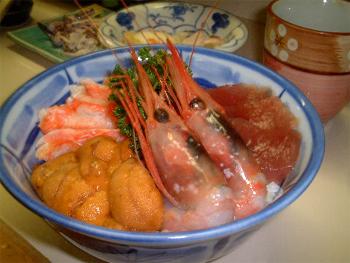
From bottom, clockwise:
“Uni” (Sea Urchin), “Kani Tsume” (Crab legs), “Maguro” (Tuna), “Nanban Ebi” ( large prawn variety)

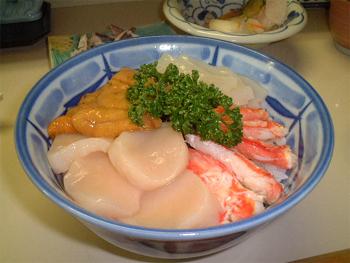
DONBURI-SAPPORO-2
From bottom, clockwise:
“Hotate” (Scallops), “Uni” (Sea urchin), “Ika” (Squid), “Kani Tsume” (Crab legs)

DONBURI-SAPPORO-3
From top middle clockwise:
“Ikura” (salmon roe), “Kazu no ko” (herring roe), “Kampachi” (Amberjack), “Tako” (octopus), “Sake” (raw salmon), “Hotate” (scallops), in the centre, “Uni” (sea urchin)

DONBURI-SAPPORO-4
From bottom, clockwise:
“Hotate” (Scallops), “Ikura” (Salmon roe), “Kazu no Ko” (Herring roe), “Kampachi” (Amberjack), “Uni” ( Sea Urchin), “Kani Tsume” (Crab leg), “Ebi” (Boiled prawn)

Next article will be about Sashimi Presentations!

RECOMMENDED RELATED SITES:
Warren Bobrow
Bread + Butter
5 Star Foodie
Frank Fariello
Mangantayon
Tokyo Foodcast
Tokyo Through The Drinking Glass
Urban sake
Hapabento
Elinluv Tidbit Corner

Please check the new postings at:
sake, shochu and sushi

—————————————-
日本語のブログ
—————————————-
Sashimi & Sushi: The Basics 4/2: Sushi Presentations/Rolls
SUSHI-ROLL-2-SIZES
Futo-Maki/Large sushi roll with normal size nori-maki for comparison

SYNOPSIS:
I already have wrtitten a lot in bits and pieces on Sushi and Sashimi, including in my other blog, Shizuoka Sushi, but I felt it was time to post an article that could be used as general reference by my blogging friends.
The Basic 1: Definitions
The Basics 2: Questions & Answers
The Basics 3: Ingredients
The Basics 4/1: Sushi Presentations

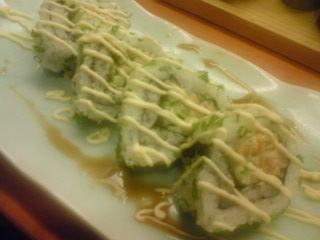
SUSHIKO-08-12-25-9
California Roll by Sushi Ko in Shizuoka City

I stopped counting the number of complaints I received about the so-called sushi rolls they serve in other countries. “Gross”, “Impossible to finish”, “Nothing to do with sushi”, and so forth.
This is like any “ethnic” food served outside its country of origin: some unscrupulous restaurateurs/businessmen catch on the fad and immediately serve “authentic” cuisine to gullible/unknowing customers.
But soon or later, thanks to better and faster global communications, the same customers will realize their mistake and stop patronizing such establishments.
The problem is that very often they are left with no decent sushi restaurant to visit.
About time to learn to make these famous rolls and enjoy them at home or parties until that great real sushi restaurant comes to town!
Here are some examples of sushi rolls to help you with your own crations!

-Sushi do not have all to be of the”California Roll” type.
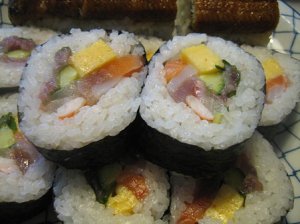
Below are typical examples of “futo maki/large maki” with the seaweed/nori outside.

SUSHI-ROLL-HOME-TYPE-1
Home-type futo-maki/large sushi roll 1

SUSHI-ROLL-HOME-TYPE-2
Home-type futo-maki/large sushi roll 2

They can be larger of course, but there is limit to size.
Below are great examples of what can be achieved with large types:

SUSHIK-09-08-31-1
Futo maki roll: (Large) Rainbow Roll at Sushi Ko, Shizuoka City

SUSHIKO-09-25-2
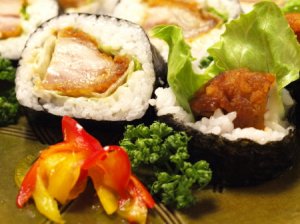
Pirikara Hotate Futo maki/large spicy scallops roll at Sushi Ko, Shizuoka City

SUSHI-ROLL-TONKATSU
Tonkatsu sushi roll

Nori-maki style rolls are probably the easiest to make, serve and eat.
And there are so many possibilities as you can devise them with a single ingredient!

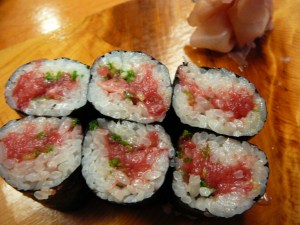
SUSHIK-09-08-31-19
Negi-toro nori maki sushi roll at Sushi Ko, Shizuoka City

vegan-sushi3
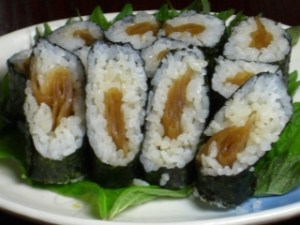
Kanpyo maki/dried gourd shavings roll

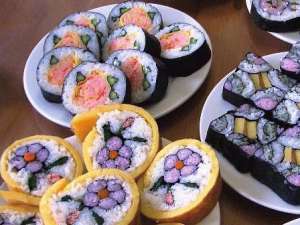
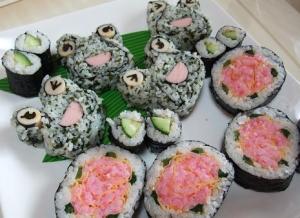
Making “decoration rolls2 for the family can be great fun!
Look below for some examples:

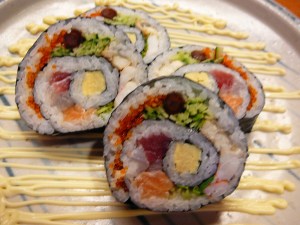
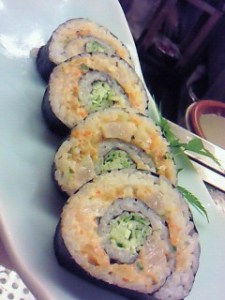
SUSHI-ROLL-DECORATION

SUSHI-ROLL-DECORATION-2

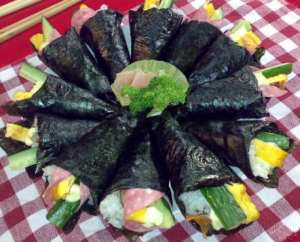
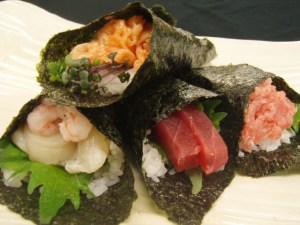
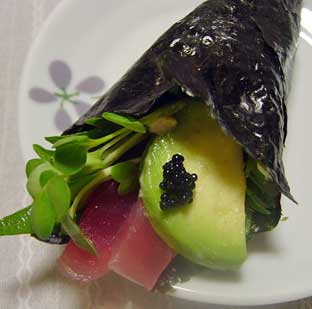
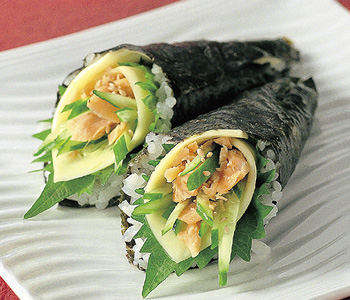
Another type of roll very popular in Japanese restaurants and homes is te-maki/手巻き, literally hand-roll.
They have the advantage that you can choose your own ingredients at will!

TE-MAKI-ZUSHI-HOMESTYLE
Home-style te-maki plate!

TE-MAKI-2
Te-maki set served at a sushi restaurant.
Can you recognize the ingredients?

TE-MAKI-3
How about this one, also served in a sushi restaurant! Looks very healthy!

TE-MAKI-1
Japanese home-style te-maki made with cheese, shiso and canned tuna!

Next article is about sushi donburi!

RECOMMENDED RELATED SITES:
Warren Bobrow
Bread + Butter
5 Star Foodie
Frank Fariello
Mangantayon
Tokyo Foodcast
Tokyo Through The Drinking Glass
Urban sake
Hapabento
Elinluv Tidbit Corner

Please check the new postings at:
sake, shochu and sushi

—————————————-
日本語のブログ
—————————————-