Tag Archives: Japanese Cuisine

Gyudon: Basic Recipe

GYUUDON

Gyūdon (牛丼) can be literally translated into English as (Japanese-style) beef bowl. It is a typical Japanese comfort food consisting of a bowl of rice topped with beef and onion simmered in a mildly sweet sauce flavored with dashi, soy sauce and mirin. It also often includes shirataki/translucent konyaku noodles. It is commonly served with beni shōga (pickled ginger), shichimi/seven flavor chili pepper, and a side dish of miso soup. Mixing in a raw egg is also very popular.

Here is the basic recipe:

INGREDIENTS: For 2 persons
-Two bowls of freshly steamed rice
-Beef, thinly sliced: 200 g
-Onion: 1
-Ito konyaku/shirataki/translucent konyaku noodles, 1 pack/180 g
-Fresh ginger: 1 medium-sized piece.
-Dashi (seaweed dashi): 2 cups/400 ml
-Soy sauce: 4 tablespoons
-Mirin/sweet Japanese sake: 4 tablespoons
-Beni shoga/red pickled ginger: to taste

RECIPE:

-If you have bought the beef in one block, cut in very thin slices.

-Cut the onion in halves first, then in slices about 5 mm thin slices.

-drain ito konyaku. Cut into 5 cm long strands. Wash well with cold clear water and leave in water for a while. Drain well.

-Cut the frsh ginger in thin slices.

-Bting dashi to boil and add soy sauce and mirin. Stir. Drop in beef, sliced onion, ito konyaku and sliced ginger all at the same tome. Let simmer on strog fire until onion has become translucent. Switch off fire.
Pour on top of a bowl filled with freshly steamed rice. Add some beni shoga and serve with a raw egg in a separate dish.

NOTE:

If you have the time, cook the beef beforehand. Let cool completely.
Re-heat quickly on a hot fire just before serving. It will taste even better!

Please check the new postings at:
sake, shochu and sushi

—————————————-
日本語のブログ
—————————————-
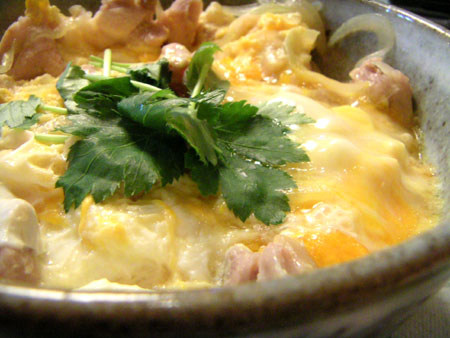
Oyakodon: Basic Recipe

OYAKODON

Oyakodon must count as one of the top 5 as far as poplular food comes in Japan.
It is easy to prepare and improvise with.
Bear in mind that depending upon the region you are in Japan, the ingredients are totally different. For example, in Hokkaido you will be served salmon sashimi and salmon roe!
After all, “oyakodon” means “parent and child bowl” (ingredients!)!
Being asked about a recipe, I decided to introduce the main lines of a basic one here made with chicken and eggs, not bothering about quantities but concentrating on the method.

-Rice
Steam rice beforehand.
Oyakodon prepared with freshly steamed rice is miles ahead of reheated rice as far as taste is concerned!

-Chicken
Choose breast or thigh chicken. It is up to you to use or discard the skin. I prefer to discard it, unless I deep-fry the chicken first.

-Eggs
Choose the freshest ones as possible with large deep-coloured yolks.

-Vegetables:
Thinly sliced onion to be cooked together with the oyakodon.
A lot of people feel like adding other vegetables. Keep in mind they have to be cut thin and need to be fried.
Fresh leaved greens for the final and important touch. My favourite is fresh trefoil. If not available, I use flat parsley or chopped leeks.
In many regions they also add chopped dry seaweed for the final touch.

-Stock soup/sauce:
You may use water, but dashi is a lot better. I pesonally use seaweed dashi. One might use chicken stock, too.
I add a little soy sauce, sugar, Japanese sake and sweet Japanese sake/mirin.
That is where improvisation and personal taste come in!
You may season with salt and pepper, but bear in mind that soy sauce already contains salt, so easy on that one!

METHOD:

-Cut chicken in small enough pieces. Fry or deep-fry them first. If you fry/sautee them, just season chicken with a little salt and pepper. If you dep-fry them, season them with salt and pepper and cover them with plenty of cornstarch, unless you prefer the flour, egg and breadcrumbs method.
Once the chicken has been fried to 90%, take out and leave in another plate or on a metallic grill to get rid of excess oil.

-Using only a little oil (that left by the chicken is fine), fry the onion (and other vegetables) until almost properly cooked.
Add soup/stock. bring slowly to boil on a small fire. Add chicken and boil for a minute just to let the taste penetrate the chicken.
During that time, beat eggs (quantity is up to you!) with chopsticks to leave some parts white (some people like well beaten).
As soon as the chicken has completely cooked, dicard some soup if too much of it, and add the eggs.

Point 1: the chicken should be tender, not overcooked.
Point 2: Too much soup/stock will prevent the eggs from cooking fast, or you might end up with scrambled eggs
Point 3: the “real” (debatable) recipe calls for the eggs to be only half cooked before transferring the lot onto the rice.
In Kyoto, for example the eggs are most of the time well cooked and topped with a raw egg yolk.

-As soon as you are satisfied with the eggs, transfer the lot on top of a bowl filled with steamed rice.
Decorate with trefoil and serve.

Please check the new postings at:
sake, shochu and sushi

—————————————-
日本語のブログ
—————————————-
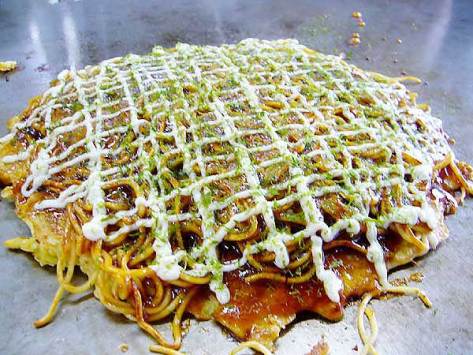
Please check the new postings at:
sake, shochu and sushi

—————————————-
日本語のブログ
—————————————-

Okonomiyaki: Osaka/Kansai Style

OKOMIYAKI-OSAKA-RECIPE-1

As promised to Tom and other friends, here is a basic recipe for the (modern) Osaka/Kanasai-style Okonomiyaki (Osaka is the name of the city, Kansai means Western Japan). This particular recipe includes soba that you may discard and replace with more vegetables:

INGREDIENTS:
(All ingredients might not be available in your country. Improvise!)

-Batter (enough for at least two large okonomiyaki):
Mineral water: a small amount
Salad oil: a little
Soy sauce (“thin taste”): 50 ml
Mirin/sweet sake: 50 ml
Japanese Cooking sake (or sake): 50 ml
Salt: a pinch
Pepper: 1 tablespoon
Dashi powder/Stock powder: 10 g
Flour: 1 kg

-Filling (quantity according to preferences. Experiment!):
Shredded cabbage
Dry fish stock powder
Grated taro root
Egg: 1
Chopped leeks
Soba noodles
Tenkasu/tenpura crumbs
Bacon slices

-Sauce
Okonomiyaki sauce can be bought at specialized stores, bu I make my own with worcester sauce, bulldog sauce, ketchup, hot mustard and pepper.

-Ketchup

-Dry seaweed powder

-Mayonnaise

RECIPE:

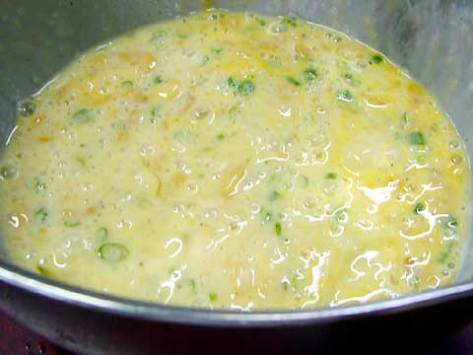
-Mix all batter ingredients to gether in a large bowl.

OKOMIYAKI-OSAKA-RECIPE-2

In a separate large bowl, drop egg, dry fish stock powder and tenkasu/tenpura crumbs.

OKOMIYAKI-OSAKA-RECIPE-3

Add Grated taro root.

OKOMIYAKI-OSAKA-RECIPE-4

Add chopped leeks.

OKOMIYAKI-OSAKA-RECIPE-5

Add batter.

OKOMIYAKI-OSAKA-RECIPE-6

Mix well.

OKOMIYAKI-OSAKA-RECIPE-7

Add shredded cabbage.

OKOMIYAKI-OSAKA-RECIPE-8

Mix well.

OKOMIYAKI-OSAKA-RECIPE-9

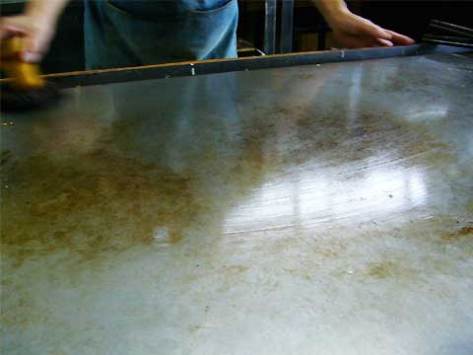
Oil large hot plate (or large frypan).

OKOMIYAKI-OSAKA-RECIPE-10

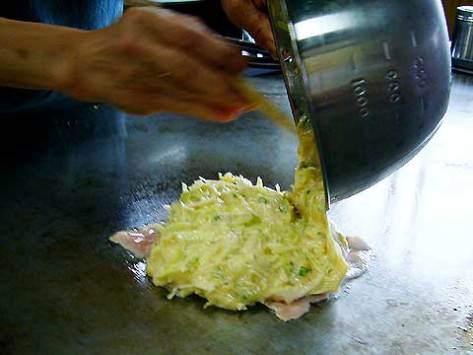
Place 3 large pork/bacon rashers parrallel to each other.

OKOMIYAKI-OSAKA-RECIPE-11

Pour okonomiyaki batter on top.

OKOMIYAKI-OSAKA-RECIPE-12

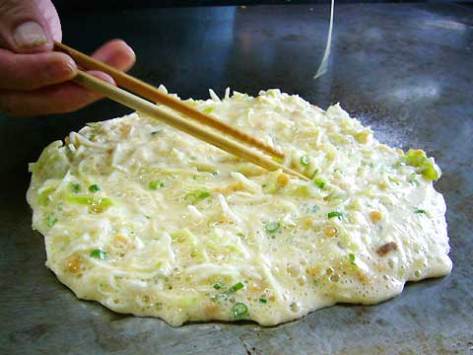
Shape the okonomiyaki into a circle.

OKOMIYAKI-OSAKA-RECIPE-13

Put the soba onto the hot plate.

OKOMIYAKI-OSAKA-RECIPE-14

Add sauce and ketchup to soba and fry.

OKOMIYAKI-OSAKA-RECIPE-15

Flip the okonomiyaki over.

OKOMIYAKI-OSAKA-RECIPE-16

Brush with some sauce.

OKOMIYAKI-OSAKA-RECIPE-17

Place soba on top.

OKOMIYAKI-OSAKA-RECIPE-17b

Pour some batter onto the noodles.

OKOMIYAKI-OSAKA-RECIPE-19

Flip the whole over with pancake on top.

OKOMIYAKI-OSAKA-RECIPE-20

Flip over again after a while.

OKOMIYAKI-OSAKA-RECIPE-18

Add sauce all over the noodles.

OKOMIYAKI-OSAKA-RECIPE-21

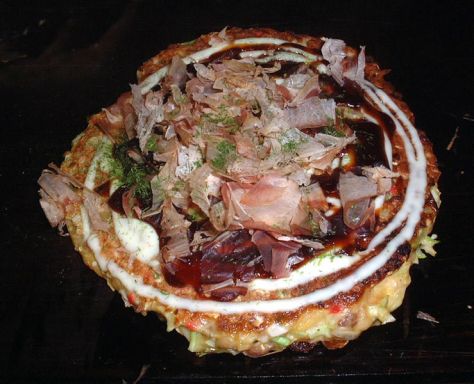
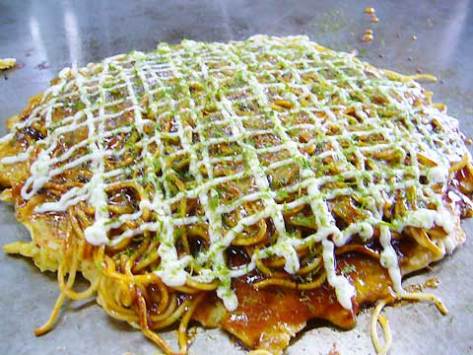
Add mayonnaise as in picture.

OKOMIYAKI-OSAKA-RECIPE-22

Sprinkle with dry seaweed powder. The okonomiyaki in front is a double decker, the one at at the back a single decker!

OKOMIYAKI-OSAKA-RECIPE-23

Et voila!

OKOMIYAKI-OSAKA-RECIPE-24

Cut and serve as shown on the picture.

I will look around and see if I can find more variations!

Please check the new postings at:
sake, shochu and sushi

—————————————-
日本語のブログ
—————————————-
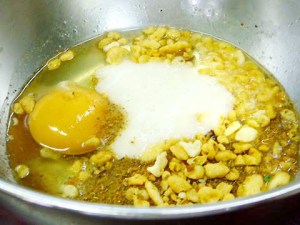
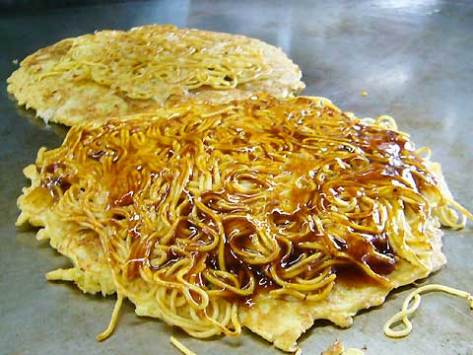
Okonomiyaki: Hiroshima Style

OKONOMIYAKI-HIROSHIMA-RECIPE-1

As I mentioned to Tom and other friends, there are two basic styles for Okonomiyaki: Hiroshima-style and Osaka-style.

Here is a basic recipe for the Hiroshima-style Okonomiyaki:
(Note that I have written this recipe step by step. Copy it for better reference as I skipped the usual Ingredients introduction)

OKONOMIYAKI-HIROSHIMA-RECIPE-2

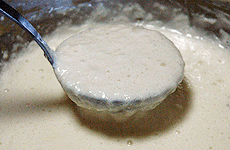
First make a batter.
In Hiroshima, they mix flour with grated taro tuber mixed with bonito or seaweed stock. If you cannot find the latter, just mix an equal amount of flour and lukewarm water and add a little salt.

OKONOMIYAKI-HIROSHIMA-RECIPE-3

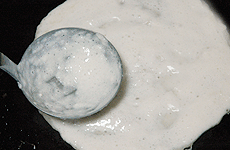
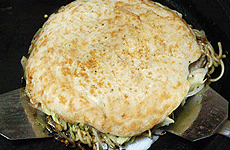
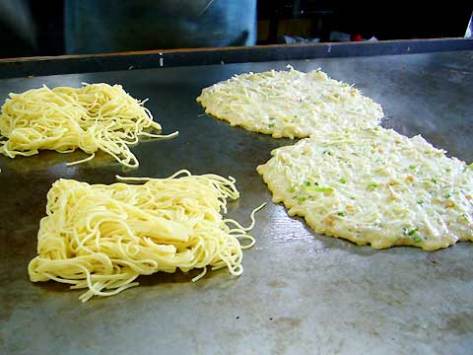
Heat a hot plate well. Pour some oil (in Hiroshima they use leek-scented oil). Make a pancake as shown on picTure.

OKONOMIYAKI-HIROSHIMA-RECIPE-4

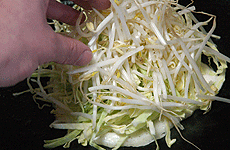
Add shredded cabbage and beansprouts/moyashi. You can use any herb/leaf vegetable instead of beansprouts but cabbage is a must. Quantity is up to you. The more vegetables you add, the more skill you need for flipping over later.
Sprinkle with some ground black pepper.

OKONOMIYAKI-HIROSHIMA-RECIPE-5

In Hiroshima, adding “tororokonbu/type of dried seaweed is popular. If you can’t find it just skip!

OKONOMIYAKI-HIROSHIMA-RECIPE-6

Add pork/bacon rahers. Keep in mind that their length should be less than the the diameter of the pancake.

OKONOMIYAKI-HIROSHIMA-RECIPE-7

With a large metal spatula (or two small ones as in Japan), flip over the whole onto the hot plate. No hesitation here! Close your eyes if necessary (LOL) but do it as fast and smoothly as possible!

OKONOMIYAKI-HIROSHIMA-RECIPE-8

Tuck anything that comes out back under the pancake.

OKONOMIYAKI-HIROSHIMA-RECIPE-9

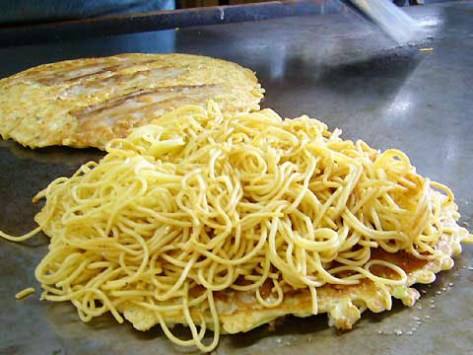
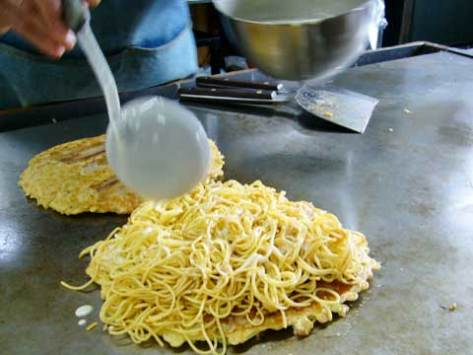
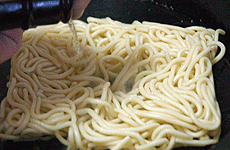
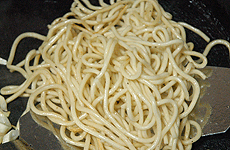
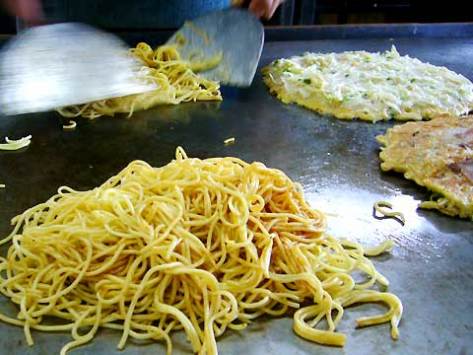
On another part of the hot plate drop some noodles. Keep in mind that some noodles have to be lightly boiled beforehand. Preferably use ready-bolied noodles. You can use yakisoba-style noodles. This is one step where you may use an ingredient of your choice according to avaibility!

OKONOMIYAKI-HIROSHIMA-RECIPE-10

Fry the noodles for a while. Form a disc with them about the same size as the pancake.

OKONOMIYAKI-HIROSHIMA-RECIPE-11

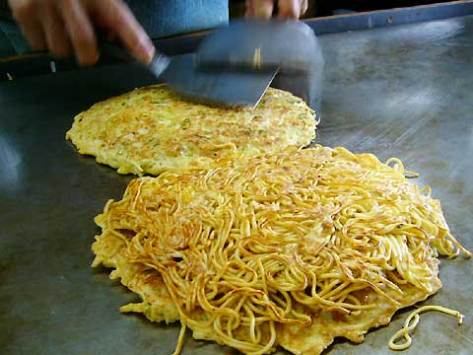
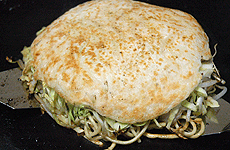
Place the pancake, cabbage, moyashi and bacon on top of the noodles. This is not as difficult as it sounds as the bacon will give a solid base to slide the spatula under. If the Japanese can do it, you can do it! (LOL)

OKONOMIYAKI-HIROSHIMA-RECIPE-12

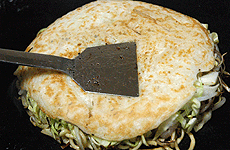
Havimg tucked everything under the pancake again, press on top for a while (press hard) with the spatula to help cook all ingredients.

OKONOMIYAKI-HIROSHIMA-RECIPE-13

Besides the okonomiyaki, break an egg, spread it into a circle and fry according to taste (break the yolk!). Don’t overcook the egg!

OKONOMIYAKI-HIROSHIMA-RECIPE-14

Slide the okonomiyaki on top of the egg. The noodles should have a solid crispy surface by now, making the operation easy.

OKONOMIYAKI-HIROSHIMA-RECIPE-18

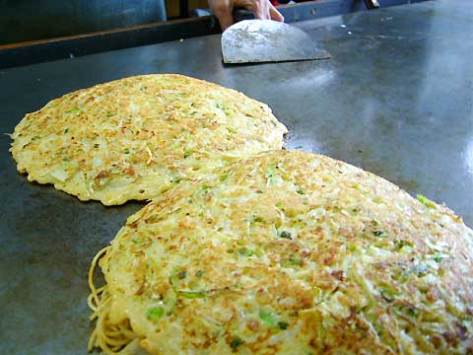
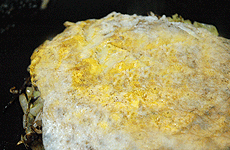
Immediately after, flip the whole over so as to have the pancake at the bottom and the egg on top.

OKONOMIYAKI-HIROSHIMA-RECIPE-15

Turn the heat down to lo or slide the okonomiyaki onto a cooler part of the plate.
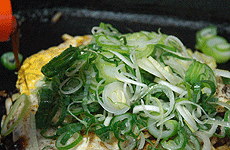
Place plenty of finely chopped leeks on top of it all.

OKONOMIYAKI-HIROSHIMA-RECIPE-16

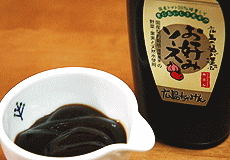
Prepare the okonomiyaki sauce.
You might obtain it ready-made at specialized stores.
As for myself, I prefer to concoct it myself: Worcester sauce + bulldog sauce + hot mustard + ketchup and pepper.
Make it beforehand as you might need to experiment!

OKONOMIYAKI-HIROSHIMA-RECIPE-17

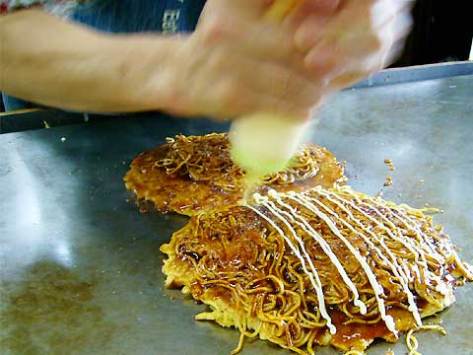
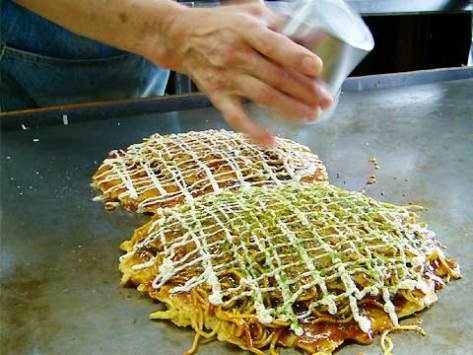
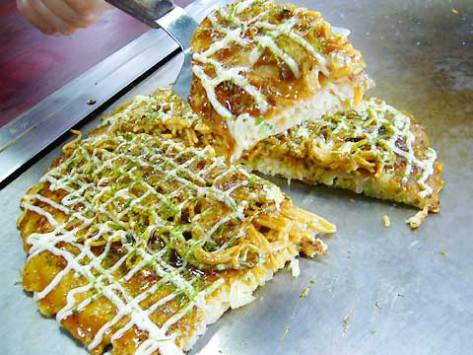
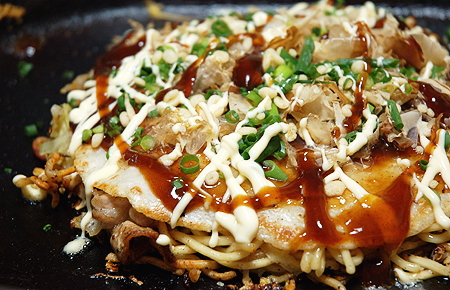
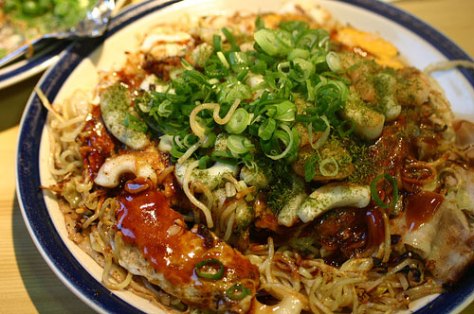
Pour sauce on top. add mayonnaise, dry seaweed powder, tempura crumbs, whatever you fancy!
Enjoy with plenty of beer!

Osaka-style okonomiyaki coming soon!

Please check the new postings at:
sake, shochu and sushi

—————————————-
日本語のブログ
—————————————-

Okonomiyaki: The styles

OKOMIYAKI-KANSAI

Okononomiyaki, Kansai/ Osaka Style

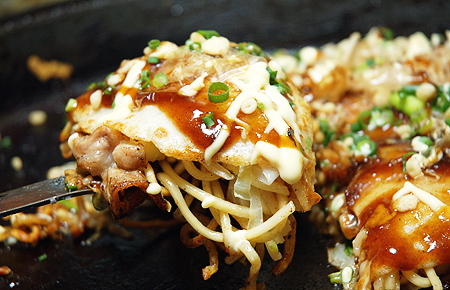
Okonomiyaki (お好み焼き) is a Japanese savoury pancake containing a variety of ingredients. The name is derived from the word okonomi, meaning “what you like” or “what you want”, and yaki meaning “grilled” or “cooked”. Okonomiyaki is mainly associated with Kansai or Hiroshima areas of Japan, but is widely available throughout the country. Toppings and batters tend to vary according to region.

Kansai/Osaka area
Kansai (Osaka)-style okonomiyaki is the predominant style of the dish, found throughout most of Japan. The batter is made of flour, grated yam, water or dashi, eggs and shredded cabbage, and usually contains other ingredients such as green onion, meat (generally pork or bacon), octopus, squid, shrimp, vegetables, kimchi, mochi or cheese.

In Osaka (the largest city in the Kansai region), where this dish is said to have originated, okonomiyaki is prepared much like a pancake. The batter and other ingredients are fried on both sides on either a hot plate (teppan) or a pan using metal spatulas that are later used to slice the dish when it has finished cooking. Cooked okonomiyaki is topped with ingredients that include okonomiyaki sauce (similar to Worcestershire sauce but thicker and sweeter), aonori (seaweed flakes), katsuobushi (fish flakes), Japanese mayonnaise and pickled ginger (beni shoga).

OKONOMIYAKI-HIROSHIMA

Okonomiyaki/Hiroshima style

Hiroshima area
In Hiroshima, the ingredients are layered rather than mixed together. The layers are typically batter, cabbage, pork, and optional items such as squid, octopus, and cheese. Noodles (yakisoba, udon) are also used as a topping with fried egg and a generous amount of okonomiyaki sauce. The amount of cabbage used is usually 3 to 4 times the amount used in the more common Osaka style. It starts out piled very high and is pushed down as the cabbage cooks. The order of the layers may vary slightly depending on the chef’s style and preference, and ingredients will vary depending on the preference of the customer. People from Hiroshima claim that this is the correct way to make okonomiyaki. This style is also called Hiroshima-yaki or Hiroshima-okonomi.

Other areas
In Tokyo, Tsukishima town is popular for both Okonomiyaki and Monjayaki. Monjayaki is a liquid, runny variant of okonomiyaki. The main street of this town is called Monja Street.

In Hamamatsu City (Shizuoka Prefecture), takuan (pickled daikon) is mixed in okonomiyaki.

In Okinawa, okonomiyaki is called hirayachi (ヒラヤーチー) and is thinner than in other areas. People cook it at home, so there are no hirayachi restaurants in Okinawa, although okonomiyaki restaurants can be found in a few places.

Don’t worry, Friedzen, I’m coming up with a recipe soon!

Please check the new postings at:
sake, shochu and sushi

—————————————-
日本語のブログ
—————————————-
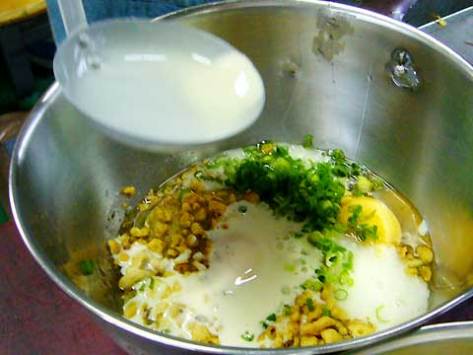
Vegetarian Japanese Cuisine: Dragon Fruit Flower Shoot Tempura

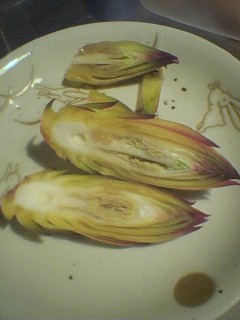
dragon-tempura1.jpg

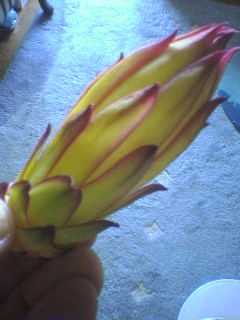
The Missus recently came back once again with a favourite “unusual vegetable” of hers: Dragon Fruit Flower Shoots.
The Japanese have come with the best idea to sample any new vegetable: tempura!
Technically speaking it originated in Portugal whose sailors introduced it to Japan a few centuries ago. The word itself is Portuguese.

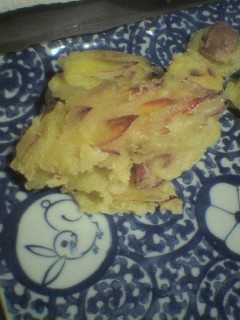
dragon-tempura2.jpg

My better (worse?) half cut them into halves and prepared batter. She favours her own style, heavier than the Japanese, but lighter than the European/American “fritters”!

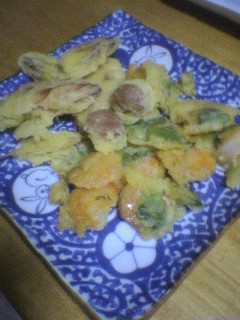
dragon-tempura3.jpg dragon-tempura4.jpg

She took the opportunity to add some other tempura made with shrimps and goya.
Served with ma-cha tea powder and salt mixed with sakura/cherry blossoms powder, it just turned out perfect with beer and sake!

NOTE:
Vegans can make tempura by mixing water an dflour with cornstarch instead of egg whites.

Please check the new postings at:
sake, shochu and sushi

—————————————-
日本語のブログ
—————————————-
Vegan Peach & Luccola Salad

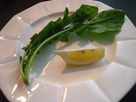
PEACH-LUCOLLA-1

Fruit are great as desserts, but they have so many benefits that they aso make for some great combinations with vegetables, especially salads!
Her is an example as peaches and luccola are in season:
Vegan Peach & Luccola Salad!

INGREDIENTS: For 1 person
-Peach: half a fresh one
-Luccola: 3 leaves
-Lemon: 1 sixth/1 wedge
-Salt: a pinch (to taste)
-Ground black pepper (to taste)
-Olive oil (EV): 1 large tablespoon

RECIPE:
-Chill a plate.

PEACH-LUCOLLA-2
-Cut each luccola sprig in 8 cm long parts. Drop into a bowl.

-Peel peach, and cut 1 half into 5 wedges (if you do not eat the rest right away, sprikle with lemon juice, wrap in cellophane paper and keep in the fridge!).

-Add in the bowl lemon juice, olive oil and salt. Lightly toss.

-Add peach wedges and toss again just a little. Place onto a plate with an eye for decoration.

-Grind black pepper over the salad!

Simple, easy and healthy!

NOTE:
Eat at once or luccola will change colour and turn soggy.
Don’t forget to bring some white wine!

Please check the new postings at:
sake, shochu and sushi

—————————————-
日本語のブログ
—————————————-

Tuna and Watermelon Salad

TUNA-WATERMELON-TARTARE-1

This particular salad is actually called “Yukke” in Japanese, and it is inspired from Korean gastronomy, the most influential foreign gastronomy with the Chinese one in Japan’s everyday meals!
“Yukke” could be roughly (many people might disagree there, sorry!) as “Tartare”.
Great in summer with a glass of sake or shochu!

INGREDIENTS: For 2 persons
-Watermelon: Including the red and white parts/150 g
-Raw tuna: 100 g
-Sesame oil: one and a half large tablespoons
-Miso: 2 small teaspoons
-Soy sauce: 2 small teaspoons
-Powdered/ground sesame seeds: 2 large tablespoons
-Grated garlic: to taste
-Fresh egg yolks: 2
-Leaf vegetables: shiso/perilla, Myoga, thin leeks, etc (to taste)

RECIPE:
-Cut tuna and two thirds of the watermelon (red part without the pips/seeds) to small enough sized pieces.

TUNA-WATERMELON-TARTARE-2
-Cut the white part of the watermelon into thin strips as shown above.

-Grate the remaining watermelon (red part) and mix well with sesame oil, Miso, soy sauce, powdered/ground sesame seeds, and grated garlic.
Add the cut tuna and red watermelon pieces and mix.

-On to different plates, palce the watermelon white strips first and then the tuna and watermelon as sown in top picture. Make a small well on top and delicately drop an egg yolk. add chopped leaves for better effect and taste.

NOTE:
-As watermelon tends to give away water, eat as soon as prepared.
-For people whole like their food spicy add ingredients of your liking!

Please check the new postings at:
sake, shochu and sushi

—————————————-
日本語のブログ
—————————————-

Japanese Seasonal Fish: Sayori/Japanese Half Beak

SAYORI-1

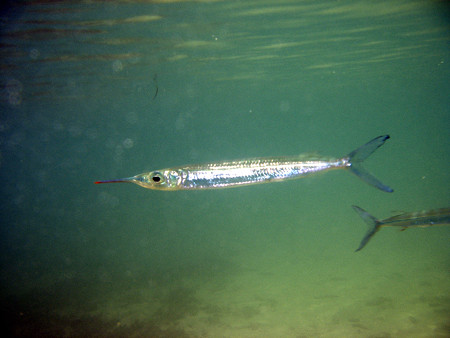
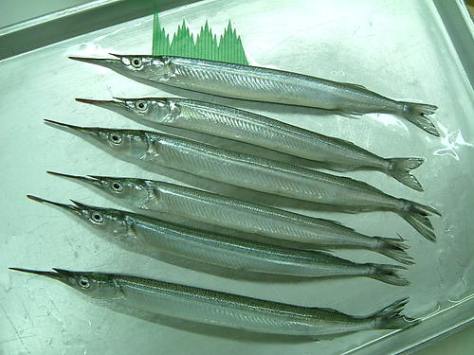
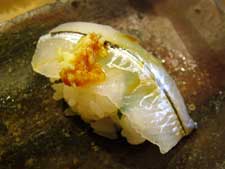
The Japanese Half beak or “Sayori” is a very popular fish in Japan as sashimi or sushi.

SAYORI-2

Although difficult to dress, it is much appreciated for its “clean look”.

It is also known unde the names of “Hariuo”, “Kannuki”. The latter name is used for large sprcimen sold in the Tokyo area.
It is mainly caught between Winter and Summer, but the best specimens are before and after the spawning season in April~June.
The Japanese sayori mainly come from the shores of Mie, Hyogo, Ishikawa, Hiroshima and Wakayama Prefectures.
It is also imported from China, Korea and Australia.

SAYORI-

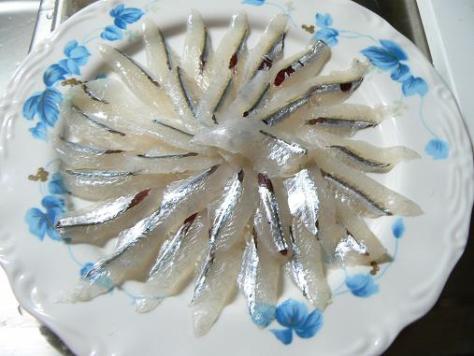
One can easily buy it filletted at suoermakets and fishmongers, making for some beautiful sashimi!

SAYORI-3

It makes for superlative sushi open to all kind of variations!

Please check the new postings at:
sake, shochu and sushi

—————————————-
日本語のブログ
—————————————-
Tempura Plate at Tomii (’09/07/01)

TOMI-TEMPURA-MEL
(Courtesy of Melinda Joe)

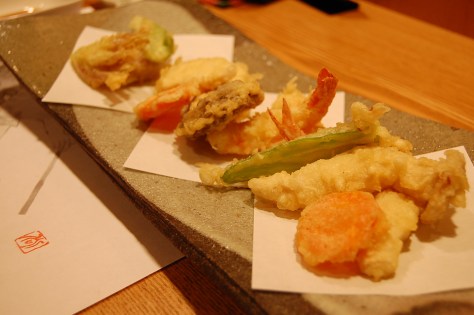
This was the second dish we were served at my favourite Japanese Restaurant, Tomii, in Shizuoka City after accompanying Melinda Joe at Aoshima Brewery in Fujieda City during her Japan Times interview.

Can you recognize any of the tempura?

Waiting for your answers! LOL

TOMII
Shizuoka City, Aoi Ku, Tokiwa-cho, 1-2-7, Tomii Bldg, 1F
Tel.: 054-274-0666
Business hours: 17:00~22:00
Closed on Sundays
HOMEPAGE (Japanese)

Please check the new postings at:
sake, shochu and sushi

—————————————-
日本語のブログ
—————————————-

Sashimi Plate at Tomii (’09/07/01)

TOMII-SASHIMI-MEL
(Courtesy of Melinda Joe)

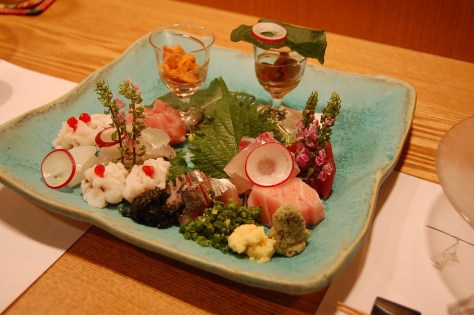
Last week, Wednesday, I had the occasion to sample a plate of sashimi at my favourite Japanese Restaurant, Tomii, in Shizuoka City after accompanying Melinda Joe at Aoshima Brewery in Fujieda City during her Japan Times interview.

Can you recognize any of the sashimi?

TOMII
Shizuoka City, Aoi Ku, Tokiwa-cho, 1-2-7, Tomii Bldg, 1F
Tel.: 054-274-0666
Business hours: 17:00~22:00
Closed on Sundays
HOMEPAGE (Japanese)

Waiting for your answers! LOL
Please check the new postings at:
sake, shochu and sushi

—————————————-
日本語のブログ
—————————————-
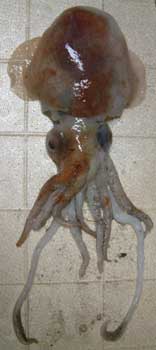
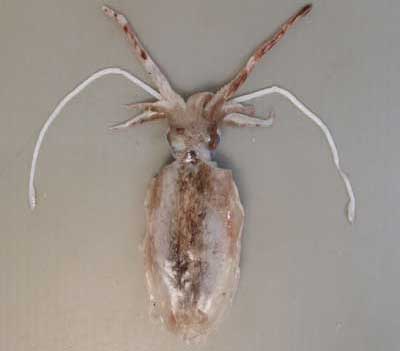
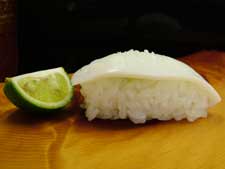
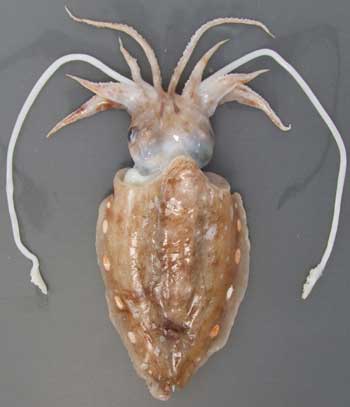
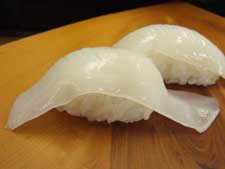
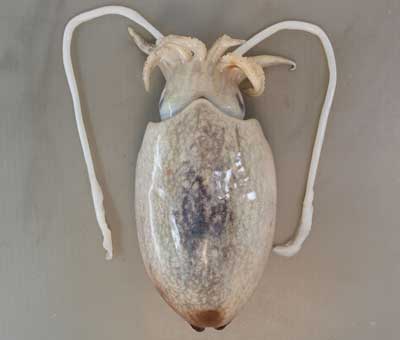
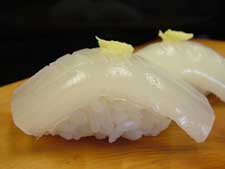
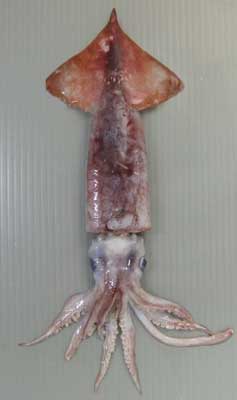
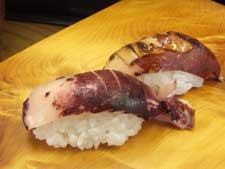
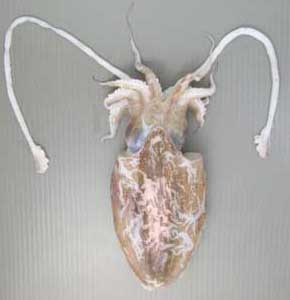
Cuttlefish/Squid Species 6: “Japanese lesser” Varieties

IKA-MONSTER
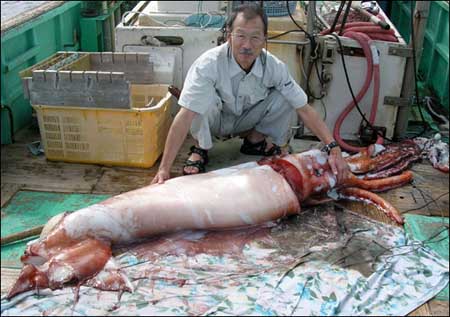
Inedible Lesser Variety!: Giant Squid

Here is the last article on this series called “The Jacques Cousteau” upon suggestion by Jaded Fork and forBread + Butter, and Elin who don’t mind being on a long haul! LOL

By “Japanese lesser” I mean species both more difficult to find on markets, more local and not as appreciated as the former five varieties.
Howeve these should looked over as they are still good enough for the finnicky Japanese and appreciated as rarities!

BOZU IKA
IKA-BOUZUIKA-1

IKA-BOUZUIKA-2

IKA-BOUZUIKA-3

IKA-BOUZUIKA-4

EZOHARI IKA
IKA-EZOHARIIKA-1

IKA-EZOHARIIKA-2

HAKUTENKOU IKA
IKA-HAKUTENKOUIKA-1

IKA-HAKUTENKOUIKA-2

HIMEKOU IKA
IKA-HIMEKOUIKA-1

IKA-HIMEKOUIKA-2

KAMINARI IKA
IKA-KAMINARIIKA-1

IKA-KAMINARIIKA-2

KO IKA
IKA-KOIKA-1

IKA-KOIKA-2

IKA-KOIKA-3

IKA-KOIKA-4

SHINDO IKA
IKA-SHINDOIKA-1

IKA-SHINDOIKA-2

IKA-SHINDOIKA-3-SHIOYAKI

IKA-SHINDOIKA-4

SHIRIYAKE IKA
IKA-SHIRIYAKEIKA-1

IKA-SHIRIYAKEIKA-2

IKA-SHIRIYAKEIKA-3

SODE IKA
IKA-SODEIKA-1

IKA-SODEIKA-2

SUJI IKA
IKA-SUJIIKA-1

IKA-SUJIIKA-2

USUBENI IKA
IKA-USUBENIIKA-1

IKA-USUBENIIKA-2

If you have any questions, don’t hesitate!

Please check the new postings at:
sake, shochu and sushi

—————————————-
日本語のブログ
—————————————-
Sashimi Plate at Tomii (’09/06/22)

TOMII-09-06-22

Just came from a “quick fix” at Tomii as I was too hungry to continue work! (I’m back at the office right now!)

Just ordered “o-tsukuri/Sashimi plate” as the calories are non-existent (the Missus is preparing dinner!).

From top clockwise:
-Madai/Japanese Snapper species
-Aburi Tachiuo/lightly grilled Scabbard Fish
Note the shiso/perilla flowers in between!
-Hata/Grouper
-Murasaki Uni/Violet Sea Urchin from Aomori Prefecture
-Hamo/Pike Conger Eel, lightly boiled
-Aka Ika-Kensaki Ika/Red cuttlefish-Squid
In the middle:
-Mebachi-maguro/big-eyed Tuna Akami/lean part

I honestly wish you were all here!

Please check the new postings at:
sake, shochu and sushi

—————————————-
日本語のブログ
—————————————-
Cuttlefish/Squid Species 5: Hotaru Ika/Firefly Squid-Sparkling Enope Squid

IKA-HOTARUIKA-1

Here we go again with this series called “The Jacques Cousteau” upon suggestion by Jaded Fork and forBread + Butter, and Elin who don’t mind being on a long haul! LOL

Sparkling Enope Squid is a name difficult to remember and the translation of the Japanese name, Hotaru Ika/蛍烏賊 or Firefly Squid, certainly holds a better sound and is more adapted to reality.
It is also known as Matsui Ika in Toyama Prefecture.

The Sparkling Enope Squid is found in the Western Pacific ocean at depths of 600 to 1200 feet and exhibits bioluminescence. Each tentacle has an organ called a photophore, which produces light. By flashing these lights, the Sparkling Enope Squid can attract small fish to feed upon.

The Sparkling Enope Squid is the only species of cephalopod in which evidence of color vision has been found. While most cephalopods have only one visual pigment, firefly squid have three, along with a double-layered retina. These adaptations for color vision may have evolved to enable firefly squid to distinguish between ambient light and bioluminescence.

The Sparkling Enope Squid measures about 3 inches long at maturity and dies after one year of life.
The Sparkling Enope Squid can also light up its whole body to attract a mate. The mating season of the Sparkling Enope Squid lasts from March to June.

The fishing season lasts from Spring to Summer. The annual catch varies between 4,500 and 6,500 tonnes.

IKA-HOTARUIKA-2

They are very popular boiled as a snack or cooked in soy sauce and sake. You can of course cook them in wine or tomato sauce, European-style.

IKA-HOTARUIKA-3

They are very much much appreciated raw and whole as sashimi or lightly boiled as sushi on nigiri!

Please check the new postings at:
sake, shochu and sushi

—————————————-
日本語のブログ
—————————————-
Shellfish species 12: Japanese Ivory Shell-Japanese Babylon Shell/Baigai

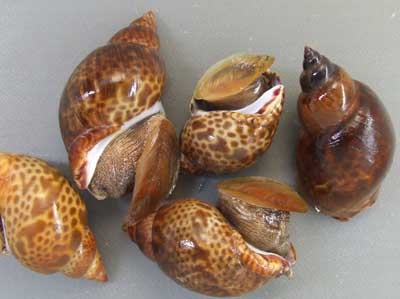
BAIGAI-1

Japanese Ivory Shell/Japanese Babylon Shell are known as Bai, Baigai, Isobai in Japanese.
They are just in season now as we see them over the counters from Spring to Summer.
They used to very common and found all over Japan, but unfortuantely too many have been caught or killed by pollution in recent years.
The biggest specimens are caught off Toyama fairly deep where they can attain 15cm length and weigh as much as 300g.

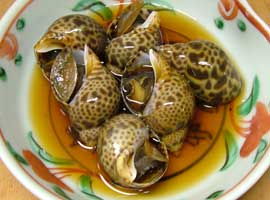
BAIGAI-2

The most popular way of eating them is to first boil them in water and soy sauce and serve them cold.

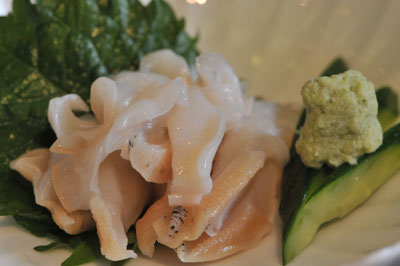
BAIGAI-SASHIMI

But the Japanese apprecaite them very much raw as sashimi and

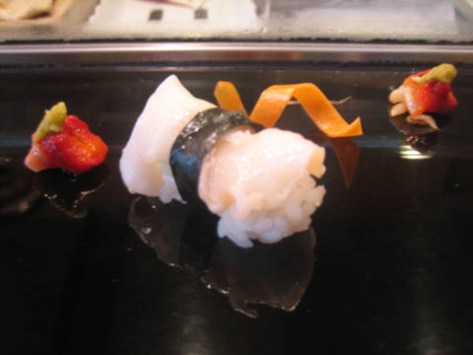
BAIGAI-SUSHI

sushi!

There must be a good reason for the Japanese to call them “Kai no Oosama/King of Shelfish”!

Please check the new postings at:
sake, shochu and sushi

—————————————-
日本語のブログ
—————————————-