Tag Archives: Japanese Cuisine

Sashimi Plate at Tomii (’09/05/20)

TOMII-09-05-20b

I suppose I need not introduce my favourite Japanese restaurant in Shizuoka City any more, as I just have stopped counting the articles I wrote about this place!

Anyway, Last night I went for a quick fix before resuming work.

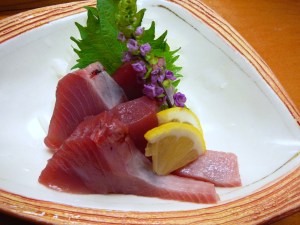
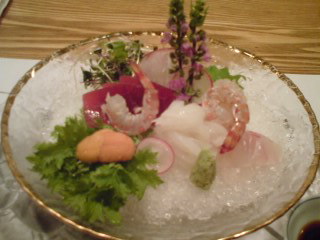
Look at pic above showing what I was served as “o-sukuri/sashimi plate:
Front row:
-Uni/Sea Urchin, “Saimaki Kuruma Ebi/Shrimp variety, Aka Ika/Red Cuttle Fish, Ishidai/Seabream variety
Second row:
-Hon Maguro Akami/Blue Fin Tuna Lean Part, Kurodai/Black Seabream, Houbo/Bluefin Robin.
Note the Shiso/perilla flowers!
TOMII-09-05-20c

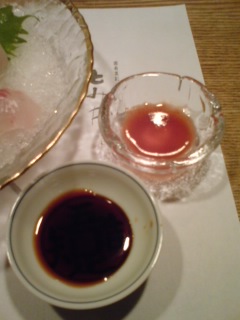
Apart of the freshly grated wasabi, I was presented two kinds of soy sauces: normal soy sauce and the other a mixture of soy sauce and sweet pickled Japanese plum/Ume Shoyu. The later is great with white-fkesh fish!
TOMII-09-05-20a

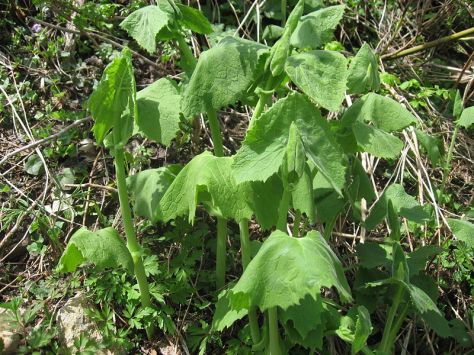
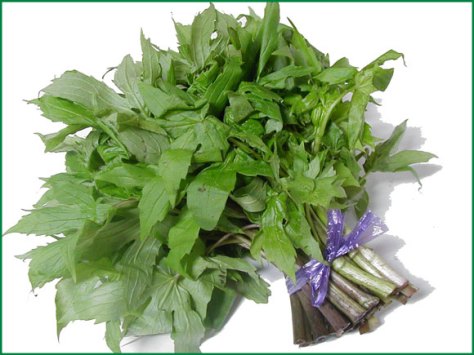
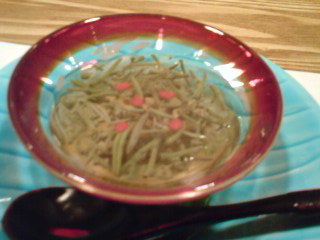
Before that I was served “Shunsai/Spring Vegetable”, a very tasty morsel for which vegans and vegetarians would swim across the Pacific Ocean!

TOMII
Shizuoka City, Aoi Ku, Tokiwa-cho, 1-2-7, Tomii Bldg, 1F
Tel.: 054-274-0666
Business hours: 17:00~22:00
Closed on Sundays
HOMEPAGE (Japanese)

Please check the new postings at:
sake, shochu and sushi

—————————————-
日本語のブログ
—————————————-
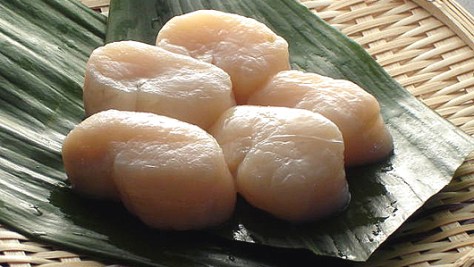
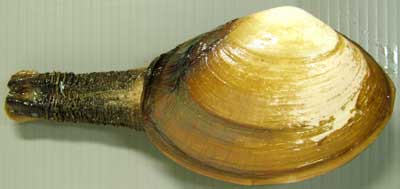
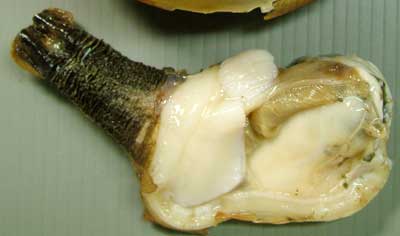
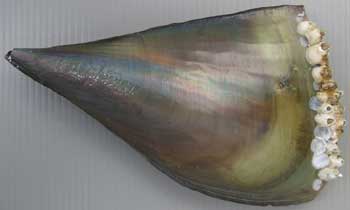
Shellfish Species 8: Pen Shell/Tairagi

TAIRAGI-4

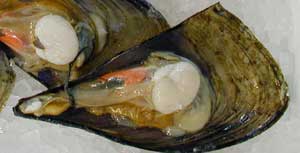
Pen Shells or Tairagi in Japanese are usually sold in winter but tend to still appear in Sping in Shizuoka.

TAIRAGI-1

Also called Tairagai, it was very common not so long ago when the domestic catch amounted to 13,395 tonnes in 1976 to suddenly fall to a mere 134 tonnes in 1994!
It disappeared from the Tokyo Bay and is presently mainly caught in the Inner Japanese Sea between Shikoku and Honshu Islands.

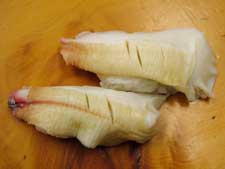
TAIRAGI-2

It has become expensive these days and when you realize there is not so much to eat for such a big shell, one can understand it is fast becoming a rare morsel.

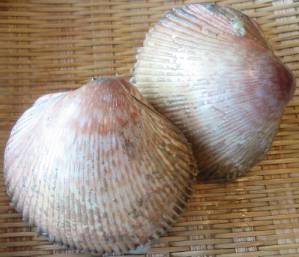
TAIRAGI-3

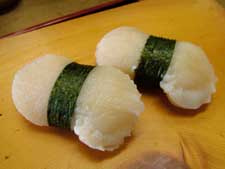
It is particularly delicious as sashimi or salt-grilled and is very similar to scallops, although distinctly different in shape.
Naturally it is most popular served as sushi nigiri!

Please check the new postings at:
sake, shochu and sushi

—————————————-
日本語のブログ
—————————————-

Shellfish Species 7: Clam/Hamaguri

HAMAGURI-SUSHI2

Clams come in many varieties in Japan.
They are either called Common Orient Clams or Hard Clams, whatever their mode of cooking.

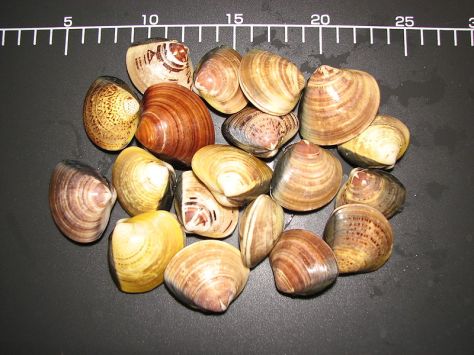
HAMAGURI-JAPANESE

Japanese Clam Variety

In 1993, Japan produced 29,000 tonnes before suffering a steep decline down to only 1,500 tonnes in 2000.
Since then imported clams are 15 times the domestic production.
Main importers to Japan are:

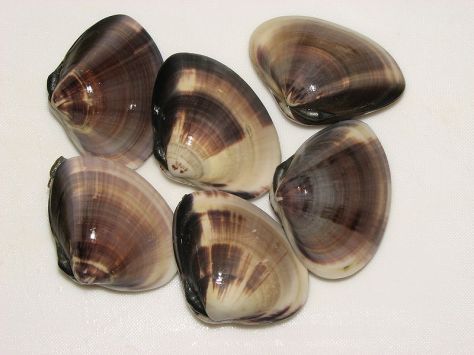
HAMAGURI-CHINA

China (see variety above): 20,100 tonnes

HAMAGURI-NORTH-KOREA

North Korea (see variety above): 3,33 tonnes

A great part of both Chinese and North Korean varieties are imported young and “re-planted” on Japanese beaches to be sold as Japanese varieties!

80 percent of all clams are sold over the counter at supermarkets while 20 percent are proceesed by canneries.

Clams, like everywhere in the world, are cooked/prepared inmay ways in Japan:

HAMAGURI-NI

Ni-Hamaguri/simmered clams served in broth with vegetables, tofu and chopped thin leeks.

HAMAGURI-SUSHI1

Chirashizushi/”Decoration Sushi”, very popular in Japanese homes!

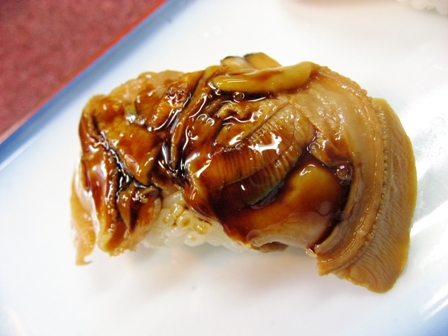
HAMAGURI-SUSHI2

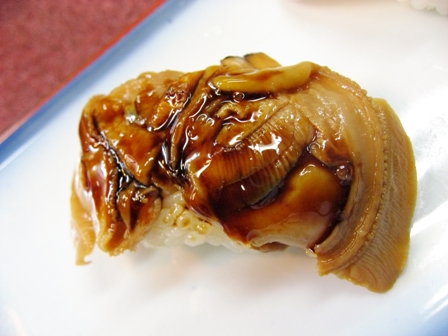
But my favourite is Ni-Hamaguri Sushi!
The clam,s large variety only, are first slowly simmered into broth, then drained and cooled before being served brushed with a sweet “tare” sauce. Sublime!

Please check the new postings at:
sake, shochu and sushi

—————————————-
日本語のブログ
—————————————-

Shellfish Species 6: Turbo Shell/Sazae

SAZAE-1 SAZAE-2
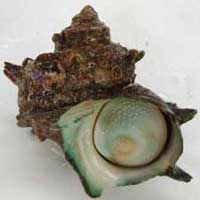
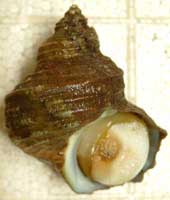
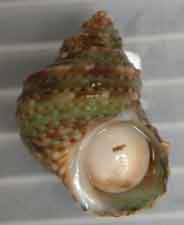
Japanese turbo shells with and without “spikes”

Turbo shells are common all over the world, but are not eaten everywhere. Called Sazae or Sadae in Japan, they are at their best in Winter and Spring.
About 10,000 tonnes are consumed every year.

SAZAE-KOREA

Korean turbo shells are also found in markets.

The Japanese consider that the best specimen should have a comparatively thin shell and well-pointed “head horn”.
They should not emit any noise when lightly shaken.
They should be avoided in hot weather as they tend to spoil quickly.

SAZAE-3 SAZAE-4

They can enjoyed grilled with soy sauce.
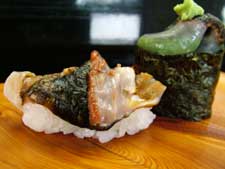
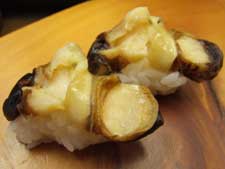
As sushi,they can be served as nigiri either raw or cooked.
Large specimen’s livers are served raw as “gunkan”!

Note: I feel in a good mood today as I slowly manage to convince old Blogspot friends like Melinda and new ones like Rachael to modify their Comment Box! At last I can leave messages and compliments for these great sites! LOL

Please check the new postings at:
sake, shochu and sushi

—————————————-
日本語のブログ
—————————————-

Shellfish Species 5: Gaper/Mirugai

MIRUKUI-1

We are just in season for Mirugai or Gaper Shellfish.
Known under many names including Mirugai, Mirukui, Mirukuigai, Mirukugai, Guidakku, Umitake or Atlantic Miru, it is a bit grotesque with its vent protruding endlessly.
In Japan it is collected mainly in the sea between Shikoku and Honshu islands.

MIRUKUI-2

It can be either dark brown or completely whitish beige.
When consumed as sushi or sashimi, the dark skin is taken off.
It is widely consumed in this country and more are imported from Canada, and Korea. There is practically no difference in taste or quality whatever its origin.

MIRUKUI-3

It is particularly popular with sushi lovers with a big appetite!

————————-
Please check the new postings at:
sake, shochu and sushi

—————————————-
日本語のブログ
—————————————-

Shellfish Species 4: Surf Clam/Torigai

torigai1.jpg

“Torigai” does not have a real name in English. They are approximately translated “large cockle”
They appear on the market in Spring and earlier in Shizuoka Prefecture. They are mainly found in Tokyo Bay, Ise bay and Seto Inner Sea. Some are imported from Korea, but catches can wildly vary, especially with the occurence of “red tides”. A lot are imported from Aichi Prefecture to Shizuoka.

TORIGAI-SHELL

They must be absolutely fresh to be consumed.
One easy way to check if they are still fresh is to slam them on the wooden board. They shouldimmediately retract, even if cut out. They are at their cheapest between March and May.

torigai-nigiri.jpg
(Pic taken at Sushiya No Ichi, Shizuoka City)

They can appreciated either as tsumami with a little grated wasabi and shoyu, or as nigiri.
Beware of torigai with a thin colour! They are not fresh!

————————-
Please check the new postings at:
sake, shochu and sushi

—————————————-
日本語のブログ
—————————————-

Shellfish Species 3: Oysters/Kaki

Oysters! One would be hard put to find a produce from the sea more internationally recognized as a gourmet’s choice! Moreover, it is the only shellfish you coul survive on if you get marrooned on a desert island! It is a complete food in irself if consumed raw.
For a long time (that is before coming to Japan), I had thought that my country, France, was the place to eat them. Well, I must admit it was a little pretentious from me, especially in the light that more than half of the oysters consumed back at home originated from Japan!

Now the Japanese has come with many ways of appreciating them:
-As in the picture above they would eat them as sashimi with a dash of wasabi and soy sauce.

-Or just a little lemon juice as in Euope, Americas or Oceania.

-Or in another japanese fashion, with ponzu and momijioroshi (succulent!)

-Or, and here Japanese and foreigners are simply crazy about them, as “kakifrai”, deep-fried oysters in batter and breadcrumbs with a nice tartare sauce!

-Or finally, and I would recommend the experience to all foreigners, as “kaki-gohan”, either with oysters steamed together with the rice, or cooked apart in light broth poured over a bowl of freshly steamed rice!

Of course, any good sushi restaurants will serve oysters as nigiri or gunkan!

In Japan, oysters come from various areas, mainly Hiroshima, Iwate and so on.
As for Shizuoka Prefecture, oysters mainly come from Hamanako inland sallted lake near Hamamatsu City.

————————-
Please check the new postings at:
sake, shochu and sushi

—————————————-
日本語のブログ
—————————————-

Shellfish Species 2: Scallops/Hotategai

hotategai.jpg

Hotategai, or Scallops, is another worldwide favourite and also a source of dispute caused by illegal poaching, international or domestic.
The season is summer and the shellfish is sometimes called Akitagai, as of Akita Prefecture.
They are caught off Hokkaido, Aomori, Iwate and Miyagi Prefectures.
The domestic production/catch is over 300.000 tonnes a year, while 400 tonnes are imported from China as whole Scallops and 700 tonnes as the muscle part only (“kaibashira”). Japanese scallops will be significantly larger than the Chinese.

Of course, they are much appreciated as sashimi, but also as sushi:
HOTATENIGIRI
(pic taken at Sushi Ko in Shizuoka City)

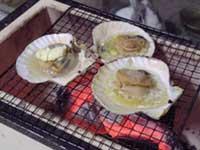
They are also much appreciated cooked/grilled in the shell with just a little shoyu and sake:
HOTAGE-GRILLED

Actually, a good-class sushi restaurants will serve the muscle part as sashimi or sushi, and will serve the rest of the shellfish cooked in light broth inside the shell later!

————————-
Please check the new postings at:
sake, shochu and sushi

—————————————-
日本語のブログ
—————————————-

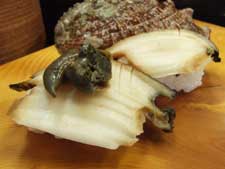
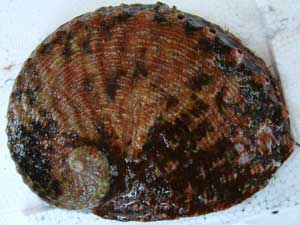
Shellfish Species 1: Abalone/Awabi

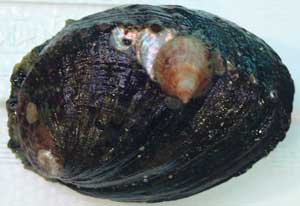
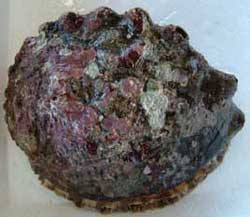
AWABI-KURO-2
Kuro Awabi/”Black Abalone

With the weather definitely turning hotter, the first abalones or “awabi” start appearing on the markets.
The Japanese are great connoisseurs and amateurs of abalones, and they do have to import a lot to satisfy their demand!
There amany varieties of different quality avalaible inthe markets and restaurants.
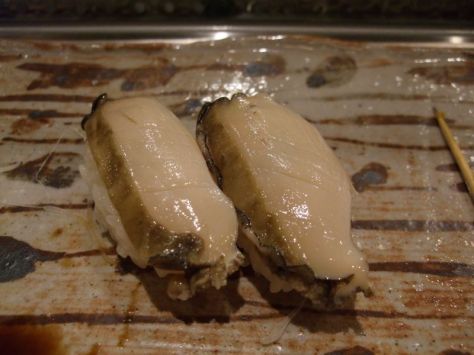
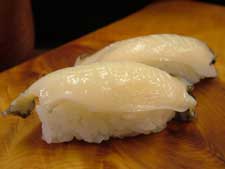
Most are eaten raw, especially as sushi on nigiri!

AWABI-KURO-1
Kuro Awabi/”Black Abalone”

As for the main varieties, you can sample expensive Kuro Awabi or “Black Abalones”

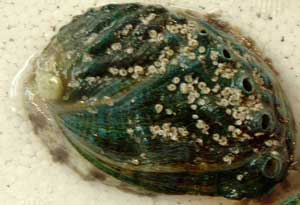
AWABI-EZO-1

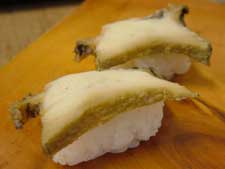
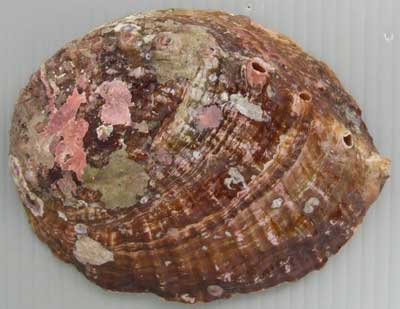
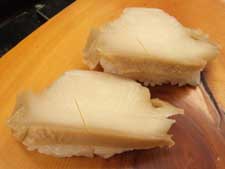
Another expensive variety is Ezo Awabi/”Ezo Abalone”

AWABI-EZO-2
Ezo Awabi as sushi.

Lesser varieties include:

AWABI-MADAKA-1
Madaka Awabi

AWABI-MADAKA-2
Madaka Awabi as sushi

AWABI-MEGAI-1
Megai Awabi

AWABI-MEGAI-2
Megai Awabi as sushi.

AWABI-VICTORIA-1
Victoria Awabi imported from Australia.

AWABI-VICTORIA-2
Victoria Awabi as sushi.

Do not forget that catching abalones in a ny place in Japan without a proper license is a severly punished poaching offense!

————————-
Please check the new postings at:
sake, shochu and sushi

—————————————-
日本語のブログ
—————————————-

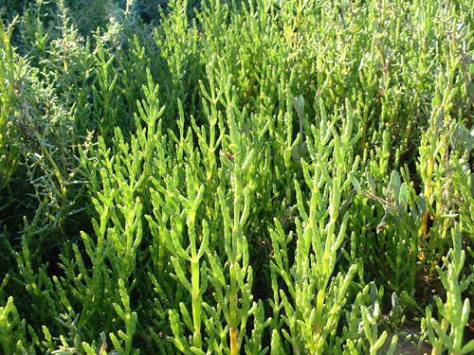
Vegetables Facts and Tips (13): Salicorne

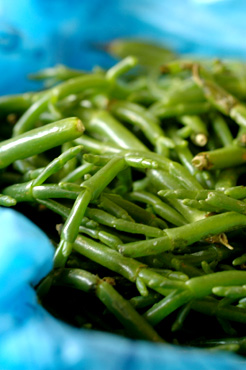
SALICORNE-1

I decided to run this posting on this rare vegetable following a query from my dear friend Jenn.

Salicorne has a slightly salty with a fresh, not overpowering, herbal taste. It grows exceptionally well in salt marshes and can sometimes be harvested under wharves. Although salicorne is a weed and does grow by the sea, it does not look like seaweed. It is more like a sprig off a tree with small dark green fleshy branches.
Apparently they are grown or collected in France onlyalong its Westen and Northern shores.

SALICORNE-2

Salicorne has no comfortable English name. Some call it sea asparagus, and it does have a little of the sweet flavour of that vegetable. It is also known as slender glasswort, La salicorne, or criste-marine and perce-pierre in French. Its etymology is actually the Arabic word: “salcoran”. It is also thought to mean salt (sali) horn (corne) in French. So salicorne is how it is usually called in English and French.

It is exported to Canada fresh, pickled or in cans.
Human-grown as opposed to natural salicorne is better suited for cooking as it does not include all kinds of unwanted twigs and other unrelated plants when harvested in the wild.

Vegetarians and vegans can eat it fresh as it is, in salads or as pickles.

SALICORNE-3

Cooking/cuisine suggestion:
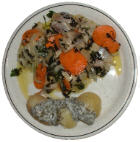
Smoked herring marinated in Salicorne cream:
Place 250 g of smoked herring in a deep oven dish. Cover fish with milk and let marinate for 2 hours. Drain and take moisture out by placing fish on kitchen paper.
Put them back inside the oven dish and cover with whote wine. Let them marinate again for 2 hours.
Drain them and cut the fish acrss into slices 2 or 3 cm thick.
Place te fish slices in a terrine dish, alternating them with thin slices of onion and carrot, a few parsley leaves, a branch of thyme and a leaf of laurel both chopped fine, some pepper and a tablespoon of finely cut wakame/Japanese seaweed. Cover with olive oile and let marinate inside fridge for 4~5 hours.
Take out a dozen sprigs of vinegared salicorne (canned), cut them finaly and mix them into a bowl of fresh cream that one can use later at will.
Place herring, onions and carrots on a dish with a little oil from the marinade.
Serve with hot boiled potatoes!

Please check the new postings at:
sake, shochu and sushi

—————————————-
日本語のブログ
—————————————-

Sushi Restaurant: Sushi Ko (revisited)

012

As advertised on Foodbuzz, I finally managed to drag the Missus to a belated visit of our favourite Sushi Restaurant in Shizuoka City: Sushi Ko!
I also succeeded in persuading the Missus in helping me with the pics. I hope this will become useful with friends who need information!

007

As we are just in season we started with katsuo/bonito. Maybe I told you that the best bonito is caught by fishermen from Shizuoka Prefecture who bring it to the Harbours of Numazu and Yaizu!
Notice the shiso/perilla flower sprig!

010

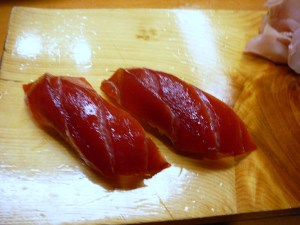
Every time, and I say every time, we visit Sushi Ko, the Missus must have deep-fried tuna served with momijioroshi (grated daikon with cayenne pepper)! Alright, it’s a great morsel, indeed!

008

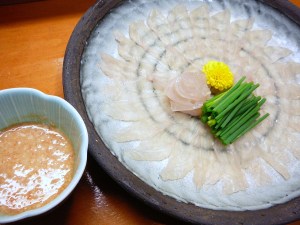
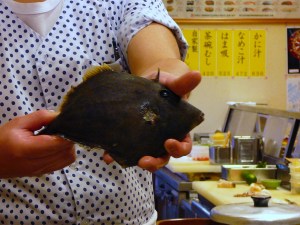
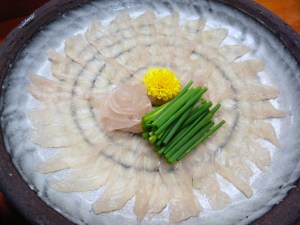
Kawahagi/Filefish is in season, too.
We asked Mr. Oda to serve it as to serve it as tsukuri:

011

You roll a few pieces around a couple of hosonegi/thin leek and dip it in a sauce made with the fresh raw liver of the fish and some soy sauce and sake (see pic at the top)!

013

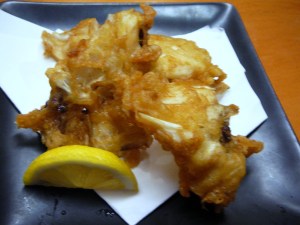
The “jowls” came later deep-fried!

015

I then challenged Mr. Oda to serve us one of his vegetarian sushi set:
Menegi/dwarf leek, Soba Me/Buckwheat Sprouts, Mitsuba/Trefoil, Kawaire Daikon!

017

Maguro Zuke/Marinated raw tuna. Another specialty of the house!

020

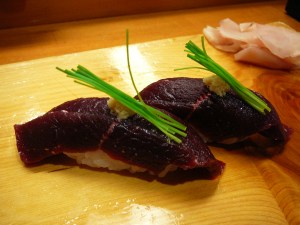
Kujira/Whale meat. Shizuoka Prefecture is one of the rare places where you can find it in Japan!

022

Sakura Ebi/Cherry Shrimps, fresh from Yui as gunkan. Can be found in that state only in Shizuoka Prefecture!

024

Pirikara Hotate Maki/Hot Scallops Roll. Another specialty of the house. American Friends, I can hear you salivating (drooling)!

026

Tamagoyaki! Cute, ain’t it?

027

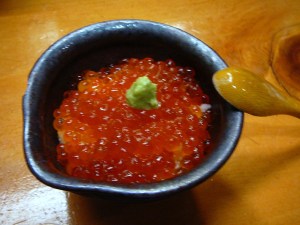
Ikura no Mini Donburi/Mini bowl of salmon roe!

We did drink a lot, and only ate that. Mind you, we came back home full and content!

Sushi Ko
shizuoka City, Aoi Ku, Ryogae-cho. 2-3-1 (Aoba Koen)
Tel.: 054-2512898
Business Hours: 17:00~25:00. 17:00~23:00 (Sundays)
Closed on Wednesdays
Reservations recommended
Credit cards OK
HOMEPAGE (Japanese)

Please check the new postings at:
sake, shochu and sushi

—————————————-
日本語のブログ
—————————————-
Vegetables Facts and Tips (9/2): Japanese Cultivated Mushrooms

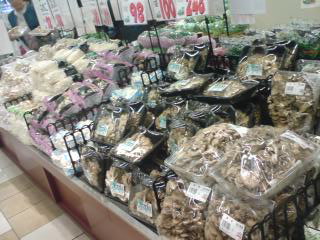
mushrooms-market

Mushrooms at Supermarket in Shizuoka City

This the second part concerning edible mushrooms in general.
Instead of going through one by one, which might turn into a boring chore, let me show what is available in Japan!

I don’t intend to talk about wild mushrooms here as I would need a very thick book to post!

Japan is arguably the country cultivating the greatest number of varieties (new ones appear and disappear every year!), so I will limit myself to give information on the varieties I have found so far in Japanese supermarkets (most of them should be available in many countries.
Note that the names are in Japanese as most are marketed this way abroad.

ERINGE or ERINGI
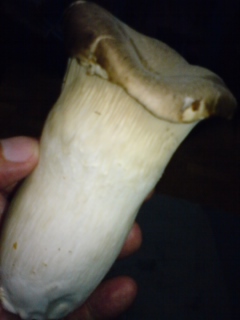
mushrooms-eringe-2

Very interesting mushrooms as they keep firm and lose only some of their volumes. Vegetarians can prepare them suteed like scallops!

mushrooms-eringe-1
As sold in the supermarkets

TAMOGITAKE
tamogitake1
As found in the nature

efbd94efbd81efbd8defbd8fefbd87efbd89efbd94efbd81efbd8befbd85efbc92
As human-grown.

tamogitake3
As sold in the supermarkets
Very elegant small mushroom

KIKURAGE

kikurage
Called Judas Ear, as sold in the supermarkets.

BUNAPII

mushrooms-hara
As found in the supermarkets. A rcent variety!

BROWN MUSHROOM

mushrooms-brown
Brown Mushrooms are called so in Japan. Ther are a variety of Agaricus originall imported from Canada.
As found in the supermarkets.

TAMPA SHIMEJI

mushrooms-tampa
A variety of Shimeji.
As foundin the Supermarkets.

HON-SHIMEJI

mushrooms-honshimeji
“True” Shimeji as found in the supermarkets.

PORTOBELLA MUSHROOM

portobella-mushroom
A universally loved mushroom.
As found in the supermarkets.

mushrooms-portobella-sugimoto-3
Before being cooked!

mushrooms-portobella-sugimoto-21
As prepared by Tetsuya Sugimoto!

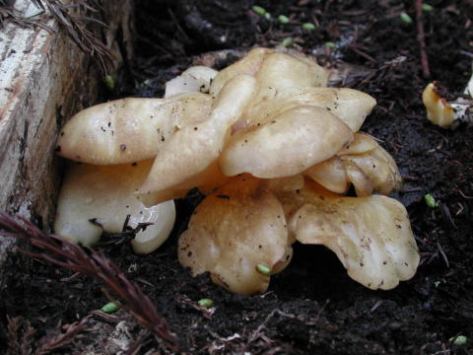
NAMEKO

nameko1
As found in nature.

nameko2pholiota_nameko
As sold in the supermarkets.

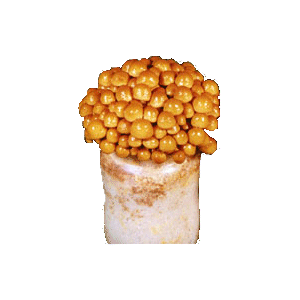
efbd8eefbd81efbd8defbd85efbd8befbd8fefbc91
Grown in earthenware bottles.

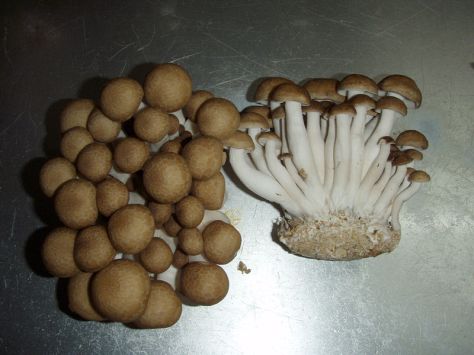
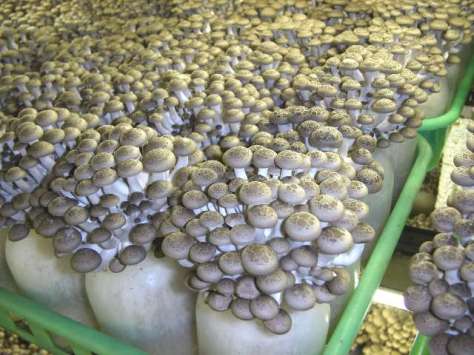
BUNA-SHIMEJI

bunashimeji-hypsizygus_marmoreus
As found in nature.

bunashimejihypsizygus_tessellatus03
Human-grown ans as sold in the supermarkets.

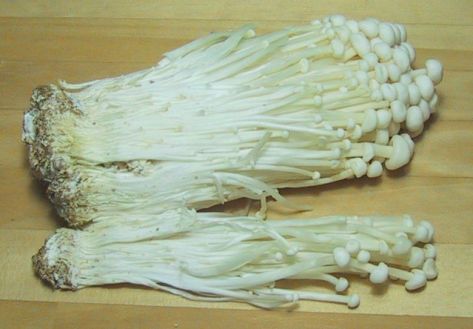
ENOKITAKE

efbd85efbd8eefbd8fefbd8befbd89efbd94efbd81efbd8befbd85-flammulina_velutipes
As found in nature.

efbd85efbd8eefbd8fefbd8befbd89efbd94efbd81efbd8befbd85efbc91
As fully human-grown.

enokitakejapanesemushroom
As very youn human-grown and usually sold in the supermarkets. Very popular in soups, nabe and sukiyaki.

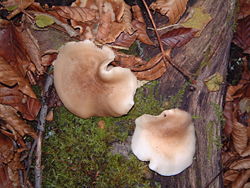
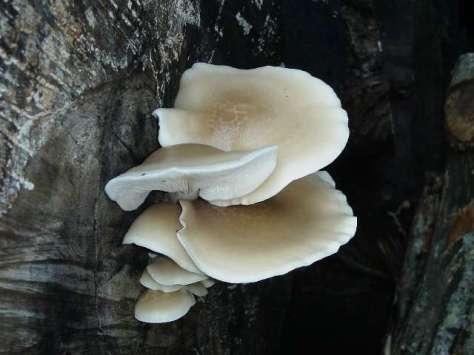
HIRATAKE

hiratake2
Also called Oyster Mushrooms as found in nature.

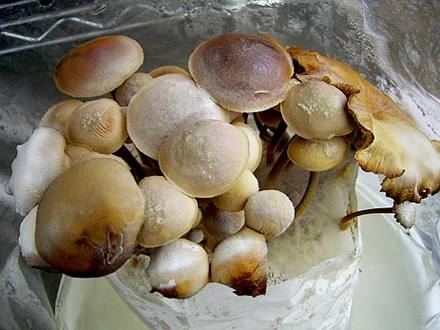
hiratake1
Human-grown.

MUKITAKE

mukitake
As found in nature.

Will keep looking for more!

Please check the new postings at:
sake, shochu and sushi

—————————————-
日本語のブログ
—————————————-
Vegetables facts and Tips (12): Sansai/Japanese Wild Mountain Plants

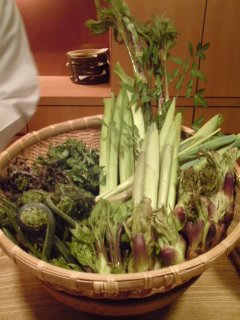
tomii-veg31

Following the recent posting on the all-vegetable dinner at Tomii, Rich nicely asked me for more information, especially concerning the names of wild edible plants found in Japan as he rightly recognized it could come very handy to vegans and vegetarians everywhere!

Now, I titled this particular posting “Sansai/Wild Mountain Plants”, because they also include wild fruit that can be eaten both as vegetables and fruit with various preparations.
Some can be boiled, others fried, prepared as tempura, cooked in soup, prepared as pickles or jam, etc.

As it would become far too big (already massive, but inexhaustive) a posting if I wrote everything, please pick up one item at a time if you want more explanations and I will write an individual article for your pleasure!

Here we go:
(No particular order)

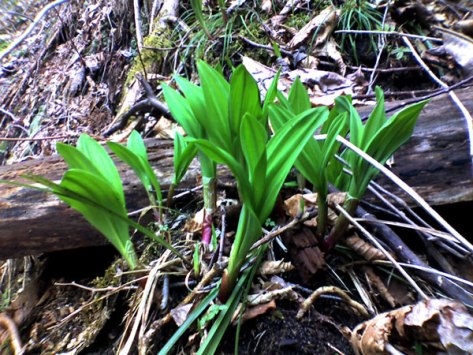
ainu-negi-alium-victorialis
AINU NEGI: ALIUM VICTORIALIS

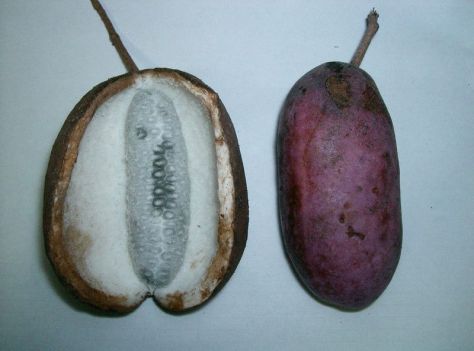
akebi-chocolate-vine
AKEBI: CHOCOLATE VINE

amadokoro-polygonatum-odoratum
AMADOKORO: POLYGONATUM ODORATUM

azami-thistle
AZAMI: THISTLE

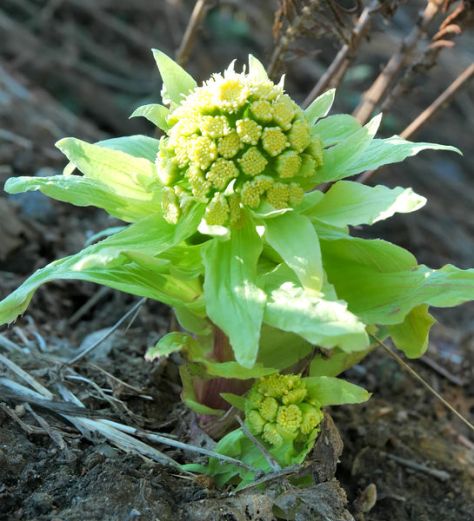
fukinoto-giant-butterbur
FUKINOTO: GIANT BUTTERBUR

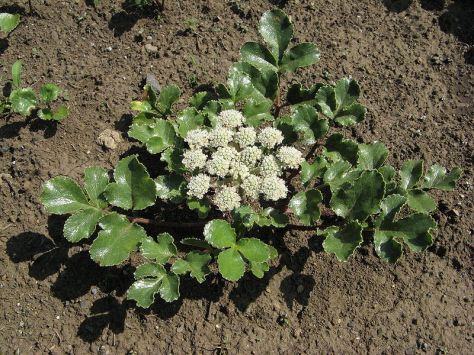
hamaboufuu-glhnia-littoralis
HAMABOUFUU: GLEHNIA LITTORALIS

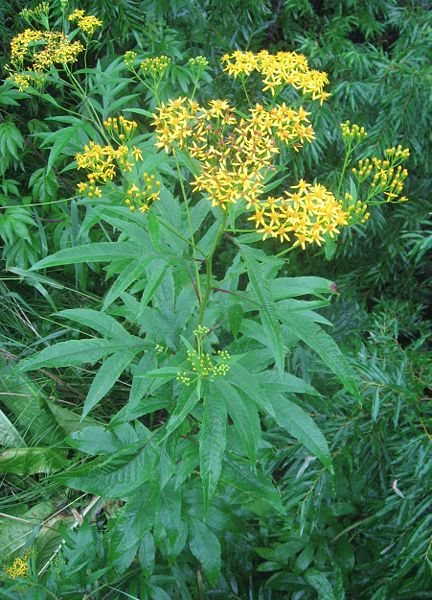
hangonsou-senecio-cannabifolius
HANGONSOU: SENECIO CANNABIFOLIUS

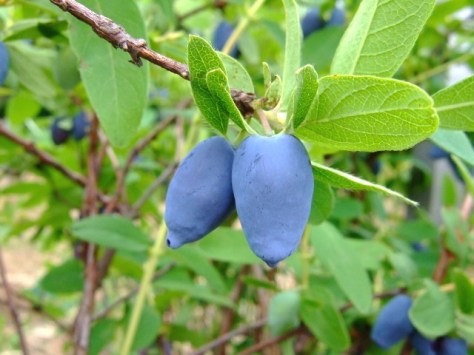
hasukappu-lonicera-caerulea
HASUKAPPU: LONICERA CAERULEA/HASCUP

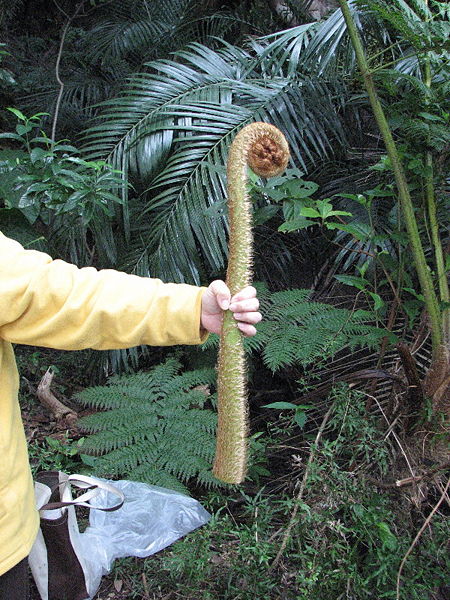
hikagehego-flying-spider-monkey-tree-fern
HIKAGEHEGO: FLYING SPIDER MONKEY TREE FERN

irakusa-urtica-thunbergiana
IRAKUSA: URTICA THUNBERGIANA

itadori-japanese-knotweed
ITADORI: JAPANESE KNOTWEED

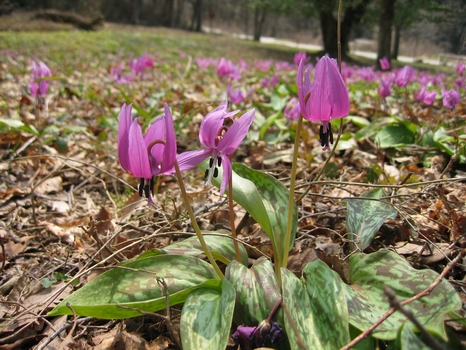
katakuri-dogtooth-violet
KATAKURI: DOGTOOTH VIOLET

kiboushi-plantain-lily-hosta-fortinei
KIBOUSHI: PLANTAIN LILY HOSTA FORTINEI ( a variety of Hosta Montana)

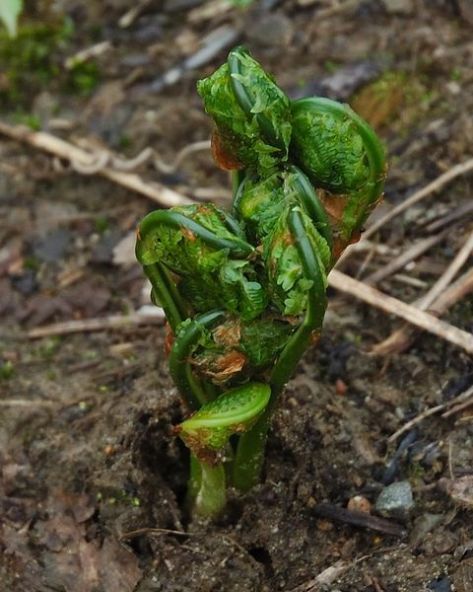
kogomi-ostrich-fern
KOGOMI: OSTRICH FERN (exists as green and red)

koshiabura-ascathopanax-sciadophylloides
KOSHIABURA : ASCATHOPANAX SCIADOPHYLLOIDES

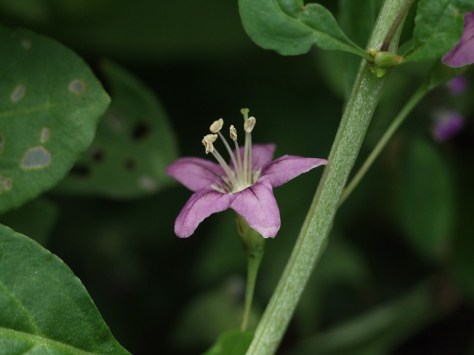
kuko-chinese-wolfberry
KUKO: CHINESE WOLFBERRY

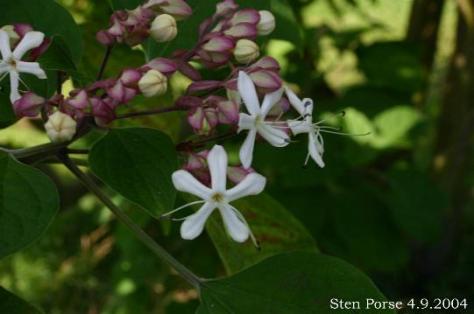
kusagi-harlequin-glory-bower-peanut-butter-shrub2
KUSAGI: HARLEQUIN GLORY BOWER PEANUT BUTTER SHRUB

matatabi-silver-vine
MATATABI: SILVER VINE

mitsuba-japanese-honeywort
MITSUBA: JAPANESE HONEYWORT

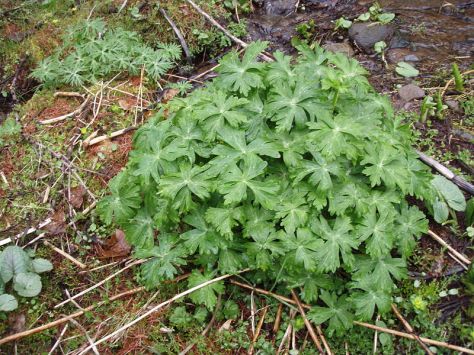
nirinsou-anemone-flaccida
NIRINSOU: ANEMONE FLACCIDA

nobiru-alium-macrostemon
NOBIRU: ALIUM MACROSTEMON

oyamabokuchi-synurus-pungens
OYAMABOKUCHI: SYNURUS PUNGENS

ryoubu-clrthra-barbinervis
RYOUBU: CLERTHRA BARBINERVIS

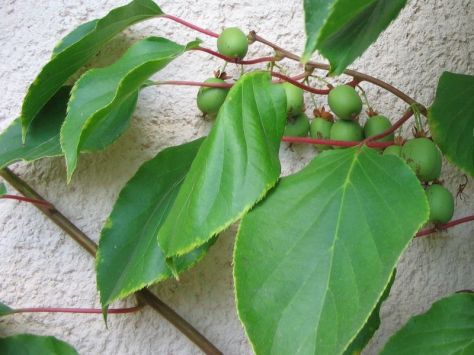
sarunashi-actinia-arguta
SARUNASHI: ACTINIA ARGUTA

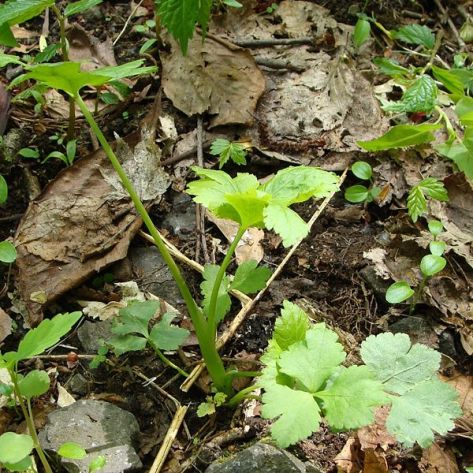
seri-japanese-parsley
SERI: JAPANESE PARSLEY

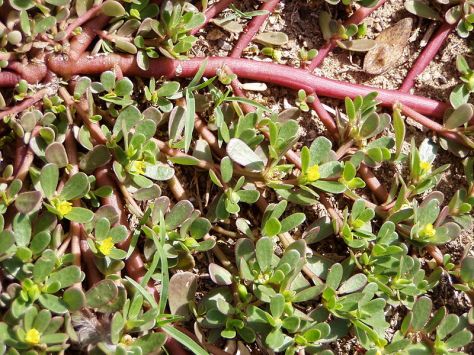
suberiyu-common-purslane
SUBERIYU: COMMON PURSLANE

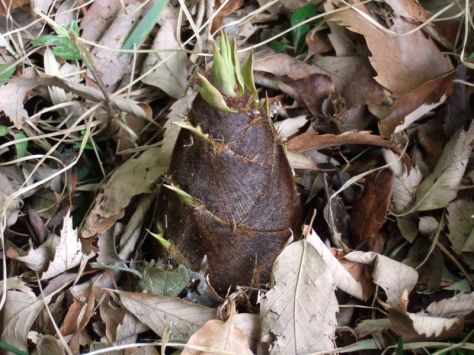
takenoko-bamboo-shoots
TAKENOKO: BAMBOO SHOOTS (SPROUTS)

tanpopo-dandelion
TANPOPO: DANDELION

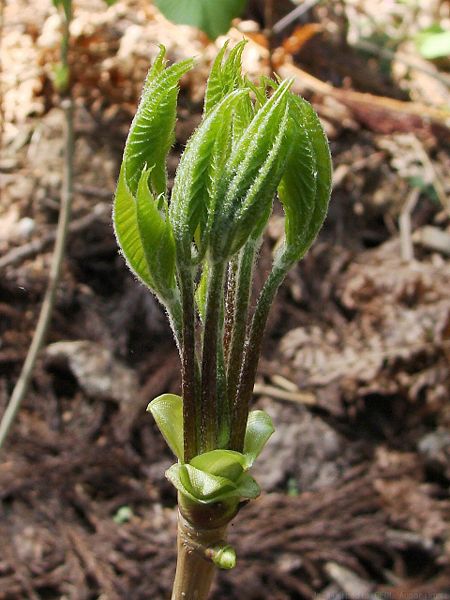
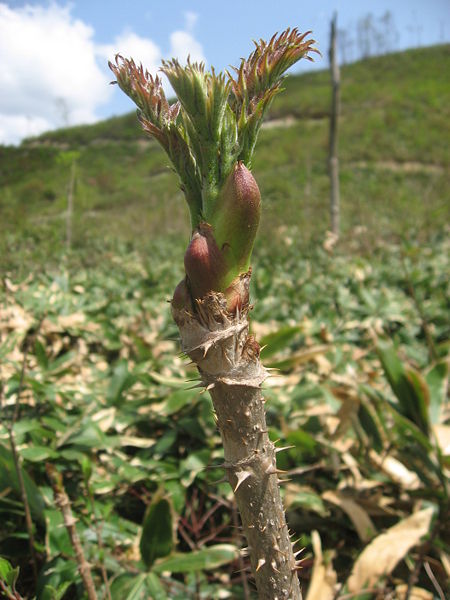
tara-no-me-aralia-elata
TARA NO ME: ARALIA ELATA

tsukushi-horsetail
TSUKUSHI: HORSETAIL

tsuroganeninjin-adenophora-triphylla
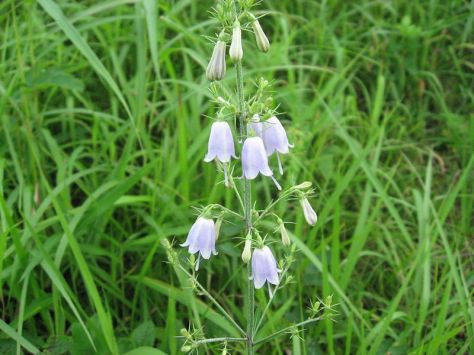
TSUROGANENINJIN: ADENOPHORA TRIPHYLLA

udo-aralia-cordata
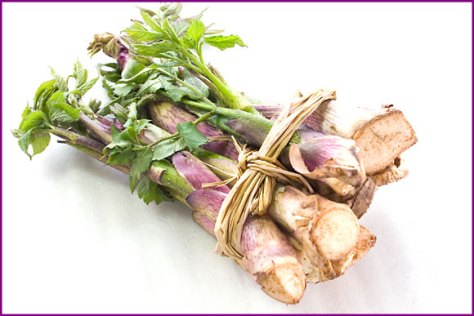
UDO: ARALIA CORDATA

yamaudo
YAMAUDO: same as UDO (above)

urui-hosta-montana
URUI: HOSTA MONTANA

warabi-pteridium-aquilinum
WARABI: PTERIDIUM AQUILINUM

yamabudo-crimson-glory-vine
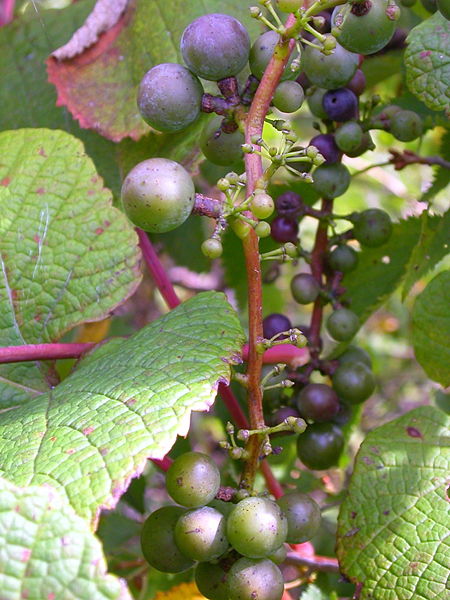
YAMABUDO: CRIMSON GLORY VINE

yamawasabi-wild-horseradish
YAMAWASABI: WILD HORSERADISH

zenmai-osmunda-japonica
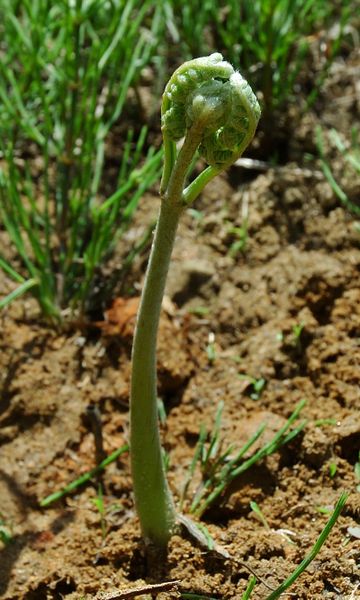
ZENMAI: OSMUNDA JAPONICA

—————————
Still have to find the English names for the following ones!

aiko
AIKO

akamizu
AKAMIZU

aomizu
AOMIZU

inudouna
INUDOUNA

shidoke
SHIDOKE

Please check the new postings at:
sake, shochu and sushi

—————————————-
日本語のブログ
—————————————-
Vegetables Facts and Tips (11): Lotus Roots/Renkon

lotus-root1

In Japan we are at the end of Lotus Roots season, but eat them all year round!
Lotus roots come from a plant called Nelumbo nucifera, also known by a number of names including Indian lotus, sacred lotus, bean of India, or simply lotus. This plant is an aquatic perennial. Under favorable circumstances its seeds may remain viable for many years.
A common misconception is referring to the lotus as a water-lily (Nymphaea), an entirely different plant.

Native to Greater India and commonly cultivated in water gardens, the lotus is the national flower of India and Vietnam.

The flowers, seeds, young leaves, and “roots” (rhizomes) are all edible. In Asia, the petals are used sometimes for garnish, while the large leaves are used as a wrap for food. In Korea, the leaves and petals are used as a tisane. Yeonkkotcha (연꽃차) is made with dried petals of white lotus and yeonipcha (연잎차) is made with the leaves. The rhizome (called ǒu (藕) in pinyin Chinese, ngau in Cantonese, bhe in Hindi, renkon (レンコン, 蓮根 in Japanese), yeongeun (연근) in Korean is used as a vegetable in soups, deep-fried, stir-fried and braised dishes. Petals, leaves, and rhizome can also all be eaten raw, but there is a risk of parasite transmission (e.g., Fasciolopsis buski): it is therefore recommended that they be cooked before eating.

FACTS:
-Season: September~December in Japan.
-Beneficial elements:
Lotus roots have been found to be rich in dietary fiber, vitamin C, potassium, thiamin, riboflavin, vitamin B6, phosphorus, copper, iron and manganese, while very low in saturated fat.
Various parts of the lotus are also used in traditional Asian herbal medicine.

TIPS:

-Choose specimens with a clear white cut section. There should not be any black spots.
-Use large specimen as they are easier to cut and use.
-To prevent oxydising, warp cut specimen into wet kitchen paper.
-Add vinegar to water when bolingthem to keep them white.
-The easiest way to peel them is to use a potato peeler!

COOKING:

The stamens can be dried and made into a fragrant herbal tea called liánhuā cha (蓮花茶) in Chinese, or (particularly in Vietnam) used to impart a scent to tea leaves. The lotus seeds or nuts (called liánzĭ, 蓮子; or xian liánzĭ, 鲜莲子, in Chinese) are quite versatile, and can be eaten raw or dried and popped like popcorn, phool makhana. They can also be boiled until soft and made into a paste, or boiled with dried longans and rock sugar to make a tong sui (sweet soup). Combined with sugar, lotus seed paste becomes one of the most common ingredient used in pastries such as mooncakes, daifuku, and rice flour pudding.

Japanese popular Renkon dishes:

lotus-root-nimono

“NIMONO”

lotus-root-sumono

“SUMONO”

lotus-root-kimpira

“KIMPIRA”

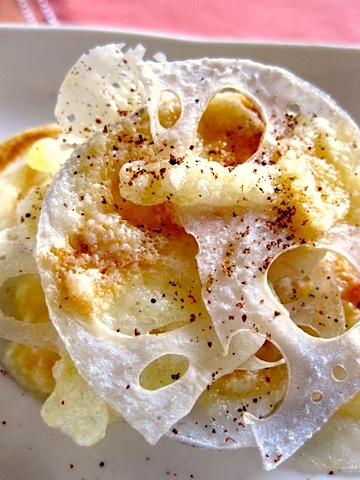
lotus-roots-chips

“CHIPS”

Please check the new postings at:
sake, shochu and sushi

—————————————-
日本語のブログ
—————————————-
Vegetables Facts and Tips (10): Egg plants/Aubergines

aubergines-1

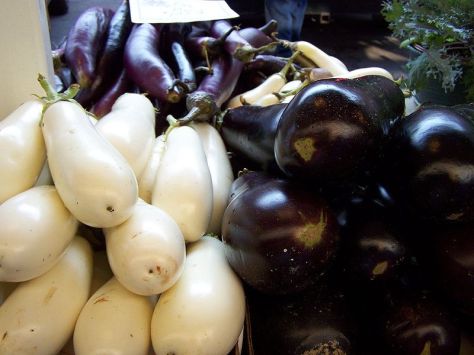
The eggplant, aubergine, or brinjal (Solanum melongena) is a plant of the family Solanaceae (also known as the nightshades) and genus Solanum. It bears a fruit of the same name, commonly used as a vegetable in cooking. As a nightshade, it is closely related to the tomato and potato and is native to India and Sri Lanka.

That for the Wikipedia definition. The word Aubergine is mainly used in Europe. It comes in many shapes, sizes and even colours, but they share the same facts.

FACTS:
-Season: June to September in the Northern Hemisphere, but are available all year round thanks to greenhouse cultivation.
-Main beneficial elements: Potassium, Vitamin C and B1
-90% is water, but the skin contains a lot of polyphenols so useful against aging and arteries cleaning!
It is also of a great help to fight diabetes.

VARIETIES:

As mentioned above, aubergines come in many varieties, but Japa has come up with another interesting kind:
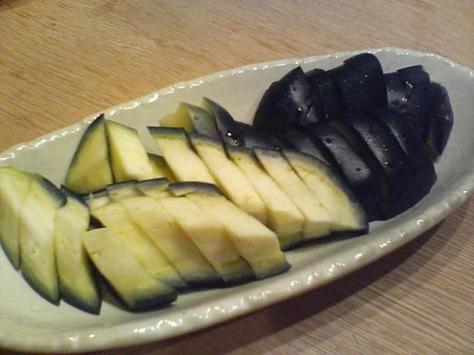
aubergines-mizu
“Mizu Nasu”, litterally “Water Aubergine”
It has the particularity that it can be eaten raw cut and served like sashimi! With miso, pickled plum flesh, wasabi or soy sauce, it opens all kindsof possibilities fro vegans, vegetarians and raw food lovers!

TIPS:

-Choose specimens with a deep colour, bright appearance and comparatively light weight.
-To preserve them, wrap them individually in cellophane paper before storing them in the refrigerator.
-Before cooking them, cut them and leave them in clear water util usage to prevent oxydizing.
If you want to fry them, cut them first and rub them with a lttle salt to take excess water out of them.

Please check the new postings at:
sake, shochu and sushi

—————————————-
日本語のブログ
—————————————-