Tag Archives: Japanese Cuisine

Vegan and Vegetarian Japanese Cuisine: Tofu (2)-Varieties


The Japan Blog List

Please check the new postings at:
sake, shochu and sushi

—————————————-
日本語のブログ
—————————————-

zarudofu
“Zarudofu”, my favourite variety of tofu just filtered out in a “zaru/basket”. You just eat it with a spoon on its own. No seasoning needed!

This is the second article dedicated to some of the many varieties of that celebrated food, tofu. A third article is in preparation as for recipes!
tofu-kinds-10
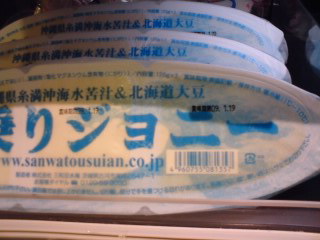
Okinawa Tofu

Tofu comes in various degrees of firmness.
The softest are “Zaru dofu” (see pic above) and Okinawa-style tofu.
tofu-kinds-7
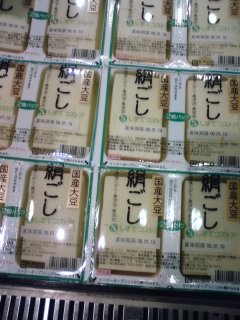
“Kinu Goshi Tofu”

Next come “Kinu Tofu/Kinu Goshi Tofu”/Silk-sieved tofu. It can be used for almost any recipe, although you might have to press it as it contains a lot of water.

tofu-kinds-9
“On Tofu”

“On Tofu” is similar to “Kinu tofu”, but it has been conceived as it its name indicates for being eaten hot or warm instead of cold.
tofu-kinds-6
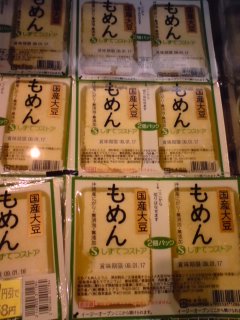
“Momen Tofu”

“Momen Tofu”/”Wool Tofu” contains less water, is firmer and is perfect for “Nabe/Japanese Pot-au-feu”.

tofu-kinds-8
“Yaki Tofu”

“Yaki Tofu/Grilled tofu” (not to be confused with deep-fried tofu) is usually “Momen tofu” grilled to give it the “gratine” look. Tasty, it is particularly interesting when sauteed with vegetables and so forth in Japanese, Chinese, Korean or Thai food.
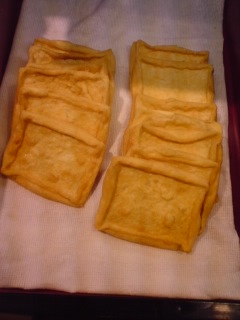
tofu-kinds-1
“Yawarakaage or Yawarakai Aburaage”

Tofu can be bought cooked/deep-fried in many manners.
“Yawarakaage” is tofu deep-fried into a thin sheet which can be opened as a pouch like in:
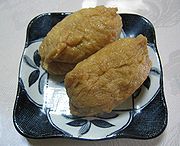
inari-tofu
“Inari”

“Inari” is “Yawarakaage”, which has been first marinated in mirin, soy Sauce and sugar. Do ask about its preparation as some companies or individuals add dashi, which is usually not vegan or vegetarian!

tofu-kinds-2
“Namaage”

“Karaage Tofu/Deep-fried Tofu” comes in many forms.
The above “Namaage/Deep-fried raw” is the most common.
tofu-kinds-3
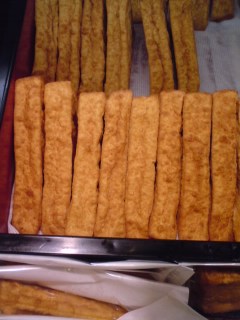
“Kinu Namaage”

“Kinu namaage” is great for the contrast between a solid outside and vey soft inside.
tofu-kinds-4
“Ganmo” and “Kyo-Ganmo”

“Ganmo” is Tofu that has pressed to almost dry, then broken into very small lumps to which one added cooked carrots, Hijiki sweet seaweed, grated yam, a little sugar (not always), shaped into a ball and lightly deep-fried. Great, heated again with vegetables and a swet and sour sauce, or in whatever recipe you might imagine. “Kyo-Ganmo” is the smaller Kyoto-Style variety. Ganmo should be made exclusively with vegetal matter, but do ask if you are not sure!

tofu-kinds-5
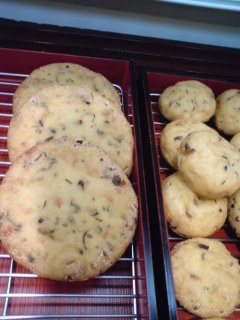
“Tofu Doughnuts”

Yes, you have read it, “Tofu Doughnuts”, very popular with kids!

Other varieties:
-“Okara” is hard-pressed, almost dry tofu sold broken into very small lumps.
-“Yuba” is the “skin” appearing on top of the pan when tofu is being prepared. Very popular served cold with all kinds of ingredients.
-“Koya” is hard-pressed tofu sold marinated. Now, as it contains fish stock dashi, it is not suitable to vegans or vegetarians.
-“Kuro goma tofu” or “Shiro goma tofu” (Black and white sesame curd) are not made with soy beans but sesame, although they make for great food for vegans and vegetarians.

There are many other “fancy” varieties, but I cannot guarantee their suitability to vegans or vegetarians!

Enjoy!

Blue-Fin Robin and Scampi baked in Foil Paper


The Japan Blog List

Please check the new postings at:
sake, shochu and sushi

—————————————-
日本語のブログ
—————————————-

blue-fin2
Pic kindly upgraded by Jay Gustafson!

Last Friday, on my way back from University, I visited the big Parche Supermarket inside Shizuoka City JR Station as I wanted to cook some seafood for the Missus that night!

houbou2

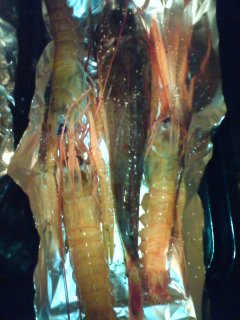
I was lucky to find a couple of medium-sized “Houbou/Blue-Fin Robin” for a little over 4 US$. This fish was caught off the western part of Shizuoka shore. I also discovered a few great value fresh “Te-naga Ebi/Scampi” caught in Suruga Bay (Shizuoka Prefecture). I only needed to check with the vegetables stand nearby and I was back home!

houbou3

Things are (most of the time) best when kept simple.
I had had the fishmonger dress the fish beforehand, so I needed only to make a couple of shallow cuts across the skin.
In two separate large sheets of foil paper, I place one fish (seasoned with salt and pepper) in the middle, flanked it with two (on the the left) and one scampi (on the right), filled the upper right corner with plenty of fresh basil and dill. I placed mini asparaguses and large fresh broad beans along them, added a good portion of white wine, a little olive oil, some freshly pressed lime juice and a good measure of sweet and hot Thai sauce.
I closed the foil tightly around the whole and baked it on grill at 250 degrees Celsius for 25 minutes.
Served at once, they made for a great and light dinner enjoyed with white wine (for the Missus) and Japanese sake (for me!)

First Sashimi Set of the Year at Tomii!


The Japan Blog List

Please check the new postings at:
sake, shochu and sushi

—————————————-
日本語のブログ
—————————————-

tomii-09-06

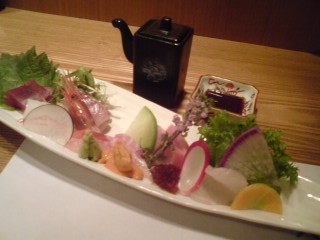
Yesterday evening, being hungry late at work, I just took a “break” and went for a (slightly extravagant!) quick fix at my favourite Japanese restaurant in Shizuoka City.

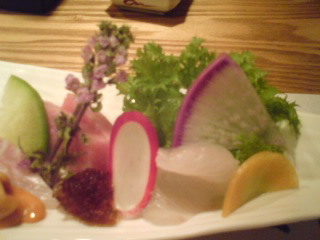
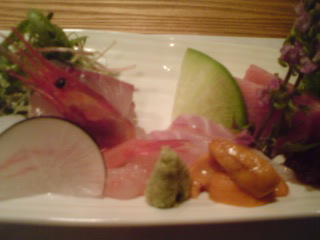
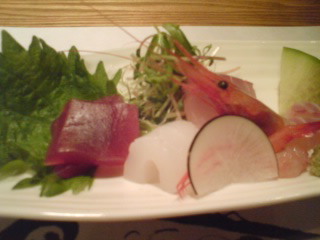
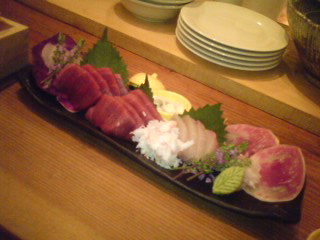
Apart of the usual appetizer, I was served the following “O-Tsukuri/Sashimi set” (See above picture, from left to right, top first):

-“Buri/Japanese Amberjack” on a cushion of fresh sprouts
-“Hon-maguro no Akami/Bluefin tuna lean part” with “Shiso no Hana/Perilla Flowers”
-“Inada/young Japanese Amberjack”. The difference with Buri is that the flesh is still white. On a “Shiso no Happa/Perilla Leaf” and a radish slice
-“Madai/True Snapper-Seabream”
-“Amaebi/Sweet Shrimp)
-“Uni/Sea Urchin)
-Freshly grated “Wasabi/Green Japanese Horseradish”
-“Kou-Ika/wide-bodied cuttlefish variety

Heavens!

TOMII
Shizuoka City, Aoi Ku, Tokiwa-cho, 1-2-7, Tomii Bldg, 1F
Tel.: 054-274-0666
Business hours: 17:00~22:00
Closed on Sundays
HOMEPAGE (Japanese)

Vegan & Vegetarian Japanese delicacy: “Sea Grapes/Umibudou”


The Japan Blog List

Please check the new postings at:
sake, shochu and sushi

—————————————-
日本語のブログ
—————————————-

umibudou-11

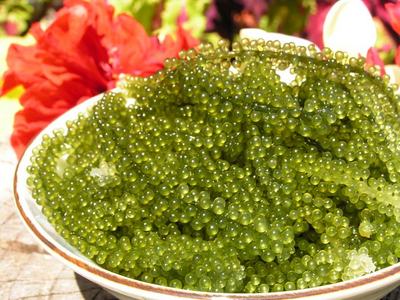
Although not from Shizuoka, this Okinawa delicacy regularly appears in good supermarkets such as Shizuoka JR Station Supermarket and in good Japanese restaurants.

Although called Sea Grapes (Umibudou) for their shape, it is a saweed variety!
Its Latin name is “Caulerpa lentillifera” for the purists.

umibudou-2

Apparently they can be found in some islands an seas in South Eastern Asia and Oceania. World vegetarian and vegans, look out for them (I mean discovere and eat them! LOL)!
The whole seaweed can reach betwen 2 and 5 metres, but only the extremities including the “grapes” are consumed.
In Okinawa where they have been eaten eons, they are also called “green caviar”!
You can eat them raw of course with soy sauce or rice vinegar mixed with mustard.

umibudogunkan

In sushi, as “gunkan/maothership”, they certainly make for great fun and taste!
Beware of counterfeits! No less than the JAS was recently caught selling them in August 2008!
Growing them in Japan has apparently been successful, great news for vegans and vegetarians who will find a great source of iodine and other beneficial elements!
Didi I say it? They are delicious/”oishii”!

Vegan and Vegetarian Japanese Cuisine: Tofu (part 1)-Preparation


The Japan Blog List

Please check the new postings at:
sake, shochu and sushi

—————————————-
日本語のブログ
—————————————-

zarudofu
“Zarudofu”, my favourite variety of tofu just filtered out in a “zaru/basket”. You just eat it with a spoon on its own. No seasoning needed!

As promised, here is the first posting about tofu.
This article concerns the home-making of it.
The next article will introduce different kinds of tofu and recipes!

Ingredients (for one large piece, one cho/丁in Japanese)

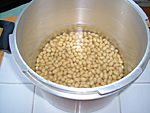
Soy beans: 2 cups (360cc)
Nigari: 2 large tablespoons
(Magnesium chloride is an important coagulant used in the preparation of tofu from soy milk. In Japan it is sold as nigari (the term is derived from the Japanese word for “bitter”), a white powder produced from seawater after the sodium chloride has been removed, and the water evaporated. In China it is called “lushui”.. Nigari or Lushui consists mostly of magnesium chloride, with some magnesium sulfate and other trace elements. It is also an ingredient in baby formula milk).
Water: 5 cups (twice and a half the volume of soy beans)

Utensils:
One large pot
One large clean cloth pouch to press tofu through
One bowl
One mixer
One thermometer
One large piece of gauze to filter water off shaped tofu
One large wooden spoon
One wooden tofu-shaper case

RECIPE:
toofu-1
1) Preparation: soak soy beans in water overnight

toofu2
2) Preparation: Mix nigari with 1 cup of water and set aside

toofu-3
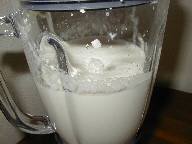
3) According to its size, Pour the whole or part by part soy beans and water (1) and make paste as fine as possible. If mixer runs at an even pace without crushing beans into paste, add more water. The paste obtained is called “namago” (生呉)

toofu-4
4) Pour the bean paste into a large pot with an equal amount of water. Heat stirring all the time. The paste will come to a boil suddenly. Switch off fire. Switch on low once the paste has settled for 10 minutes and take off fire.

toofu-5
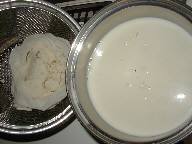
5) Pour paste into the cloth pouch and press. Right of the picture is tofu paste before pressing. Left is pressed out tofu

toofu-6
6) Solidifying (coagulating) with nigari.
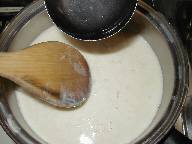
Stir tofu over light fire. When the temperature has reached 75~80 degrees Celsius pour in nigari slowly and stir all the time. The solid matter will sink to the bottom and accumulate. The coagulation will be complete when liquid above tofu has become transparent. Stop the operation and let rest for 15 minutes.

toofu-7
7) Arrange the gauze inside tofu a tofu shaper case which should have small holes to let excess water run out.

toofu-8
8) Cover with lid with a weight (or glass of water) of about 250 g and further press out water for 15 minutes

toofu-9
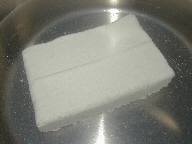
9) Delicately empty tofu in basin filled with called water and leave it there for an hour to take out excess nigari. Store in refrigerator.

Japanese Oysters


The Japan Blog List

Please check the new postings at:
sake, shochu and sushi

—————————————-

Oysters! One would be hard put to find a produce from the sea more internationally recognized as a gourmet’s choice! Moreover, it is the only shellfish you could survive on if you get marrooned on a desert island! It is a complete food in irself if consumed raw.
For a long time (that is before coming to Japan), I had thought that my country, France, was the place to eat them. Well, I must admit that it was a little pretentious from me, especially in the light that more than half of the oysters consumed back at home originated from Japan!

Now the Japanese have come with many ways of appreciating them:
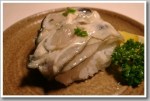
-As in the picture above they would eat them as sashimi with a dash of wasabi and soy sauce.

-Or just a little lemon juice as in Europe, Americas or Oceania.

-Or in another Japanese fashion, with ponzu and momijioroshi (fresh grated daikon mixed with chili pepper. Succulent!)

-Or, and here Japanese and foreigners are simply crazy about them, as “kakifrai”, deep-fried oysters in batter and breadcrumbs with a nice tartare sauce!

-Or finally, and I would recommend the experience to all foreigners, as “kaki-gohan”, either with oysters steamed together with the rice, or cooked apart in light broth poured over a bowl of freshly steamed rice!

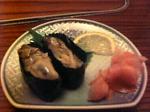
kaki-nigiri kakigunkan

Of course, any good sushi restaurants will serve oysters as nigiri or gunkan!

In Japan, oysters come from various areas, mainly Hiroshima, Iwate and so on.
As for Shizuoka Prefecture, oysters mainly come from Hamanako inland salted lake near Hamamatsu City.

Japanese Sushi: Gunkan/Mothership


The Japan Blog List

Please check the new postings at:
sake, shochu and sushi

—————————————-

gunkan-ikura.jpg

Intestingly enough, for all the fame of sushi and (California) rolls (maki), a very popular form of Sushi in Japan is almost ignored abroad.
Gunkan or “Mothership” in Japanese is a typically Japanese way of serving ingredients which would be difficult to serve on top of a nigiri.
They are usually made by wrapping a piece of “nori”/dry seaweed around a ball of rice/shari with plenty of space left on top to fill.
The advantages are multiple. The nori/seaweed is crisp. You eat the whole in one go with your fingers (clean your hand first!). And they make for beautiful decoration!
Some people do not appreciate the “nori”, but it could be replaced with very thin strips of daikon, cucumber, zucchuni and so on.

Here are some samples of “gunkan” I have eaten over the years:
gunkan-ikura.jpg gunkan-kanisalada.jpg gunkan-kanitsume.jpg
Ikura/Salmon roe Kani Salada/Crab salad Kanitsume/Crab pincers

gunkan-kobashira.jpg gunkan-mizuna.jpg gunkan-negitoro.jpg
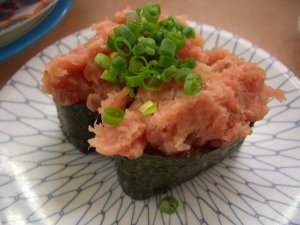
Kobashira/Round Clam round twin muscles Mizuna/A Japanese thin leaf vegetable + quail egg Negitoro/finely chopped tuna and thin leeks

gunkan-shirako.jpg gunkan-takuan.jpg
Shirako/Whiting-male cod sperm sacs Takuan/Pickled Japanese daikon + cucumber

gunkan-shirako2.jpg
“Shirako” (Cod Whiting) for a repeat.

gunkan-benisuwai.jpg gunkan-mitsukuruebi.jpg gunkan-kobashira2.jpg gunkan-namakarasumi.jpg

“Benisuwaigani” (Red Suwai Crab), “Mikkuriebi” (Mikkuri Shrimp, a variety of sweet shrimp, delicious in spite of the colour!), “Kobashira” (Muscle from the “Bakagai” Shellfish), “Nama Karasumi” (raw mullet roe)

gunkan-ooenkougani.jpg gunkan-akahada.jpg gunkan-sakuraebi.jpg gunkan-shirasu.jpg

“Ooenkogani” (Ooenko Crab, featuring body flesh, red brins and pincers flesh!), “Akahada Tsurutsuru”, a seaweed gunkan! It is a red seaweed variety), “Sakura ebi” (Sakura Shrimp, the pride of Shizuoka Prefecture!), “Nama Shirasu/Umeiwashi” (raw whitebait from “Ume” sardines)

gunkan-bafununi.jpg
“Gunkan” can be presented on individual plates for better effect!
gunkan-bafununi.jpg gunkan-murasakiuni.jpg gunkan-uni.jpg
The three above are varieties of sea urchins: “Bafun uni” and Murasaki Uni”, whereas the last last show both gunkan and nigiri.

gunkan-egani.jpg gunkan-ibaraganimodoki.jpg gunkan-matsubagani.jpg
Above are three types of crabs: “Egani”, Ibaraganimodoki” and Matsubagani”

gunkan-kagabai.jpg gunkan-nejinukibai.jpg gunkan-sazae.jpg
Three shellfish varieties: “Kagabai”, Nejinakubai” and “Sazae” (Turbo Shell)

gunkan-hoteiuo.jpg gunkan-konago.jpg gunkan-muroaji.jpg
We go to fish varieties: “Hoteiuo” roe, “Konago”, and “Muroaji” (horse mackerel variety)

gunkan-noresore.jpg gunkan-shiraebi.jpg gunkan-sunaebi.jpg
“Noresore” (baby conger eels), and two shrimp varieties: “Shiraebi” (white shrimp) and “sunaebi” (sand shrimp)

oda-4.jpg
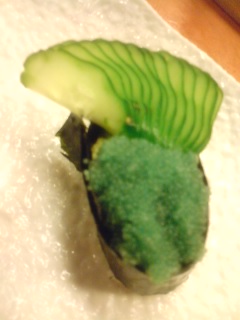
We were fortunate enough to find those “botan ebi/large sweet prawns” fresh with their eggs. Two provided enough eggs for a single “botan ebi ko gunkan”.Not an easy treat to find, as it must absolutely be fresh. The eggs were sweet with not any disagreeable “fishy” background. By the way, this is the only sushi featuring the colour “blue” that comes to my mind!

For more about sushi check Shizuoka Sushi!

Sashimi at Tomii: The Epitome of Excellency!


The Japan Blog List

Please check the new postings at:
sake, shochu and sushi

—————————————-
日本語のブログ
—————————————-

tomii-08-12-16a

Many people have been asking me: “How can you afford that?”
Well, I don’t smoke and I don’t drive, either. I can imagine what some people in the Northern part of the US might tell me… and I don’t care!
All that “saved” money goes into good food, good drink, good travel and improved relations with my (better, ok for this time!) half! And nothing for those “poor” doctors out there!

I’ve been a regular customer at Tomii in Shizuoka City for many, many, many reasons. But the one I value most is that everyone at this great Japanese restaurant are willing to talk about, explain and extoll the virtues of their craft. Craft, I said? It is probably nearer to artistry as Melinda, Etsuko and Tim will vouch for me!

Anyway, to write a story short, I just popped at Tomii this evening (yes, I’m writing this just after I came back to “work”), and asked for a sashimi plate (well, this is not the way to ask it: You should say: “O-tsukuri, kudasai!”). I did not need to tell them what to serve me. I wouldn’t even have dared!
On the other hand, they didn’t mind explaining no less than three times to make sure that the old geezer got his stuff right!

tomii-08-12-16b
From right to left:
“Kiiro Ninjin”?Yellow Carrot (sashimi is not all about fish, vegetables are rapidly becoming an essential part of the picture!), “Beni Daikon”/Red (“rouge”) Daikon, “Wasabina/not wasabi, but a leaf vegetable with a similar taste!”, “Hirame/Sole”, “Hime Daikon/Princess Daikon”, “Shiso no Hana/Perilla Flowers (edible as Rowena will agree!) on top of “Toro/Tuna Fatty Part) and “Bakudai No Ki no Mi/Impossible to translate”, only that it is an edible part from a tree (sorry, I was not attentive enough!)!

tomii-08-12-16c
From right to left:
“Uni/Sea Urchin Roe” (in front) with freshly grated “Wasabi/Japanese Horseradish” (let me tell for the umpteenth time that wasabi was first grown in Shizuoka City in the 17th Century and that Shizuoka Prefecture still produces 80% of the world total!), “Ishidai/Ishidai Snapper” just behind, the green daikon is called “Uguisu Daikon/Nightingale Daikon”, “Amaebi/Sweet Shrimp”, and “kanpachi/Japanese Amberjack” just behind!

tomii-08-12-16d
From right to left:
“Kuroi Daikon/Black Daikon”, “Aori Ika/Aori Cuttlefish”, “Akami/Lean Tuna” on a “Shiso no happa/perilla leaf”. To back it up a mixture of seasonal sprouts: “Kushinsai + Soba no Mi (Buckwheat) + Cress (from Shizuoka like most of them) + Kawaire Daikon + Cabbage + Broccoli” (about time you call a local farmer for explanations!)!

Small servings they might look, but I challenge anyone to find better quality!
Now, for people who really want to know it, you will have to fork out at least three times as much in Tokyo, and as far the US and Europe are concerned, you might as well start riding a bicycle like I do!

TOMII
Shizuoka City, Aoi Ku, Tokiwa-cho, 1-2-7, Tomii Bldg, 1F
Tel.: 054-274-0666
Business hours: 17:00~22:00
Closed on Sundays
HOMEPAGE (Japanese)

Shochu: the way to drink and taste it!/ Parlons de la dégustation du SHOCHU


The Japan Blog List

Please check the new postings at:
sake, shochu and sushi 

Version français ci-dessous !

—————————————-

kampai-shochu.jpg
Kampai!

I’ve been asked a few times already about shochu and how to drink it.
Shochu is distilled spirit as opposed to Japanese sake which is a fremented drink.
Like Japanese sake, shochu, if made in proper clean environment is an alcohol that both vegans and vegetarians can enjoy!
For extensive information on Shochu made in Shizuoka Prefecture (38 found so far by 10 breweries!), check Shizuoka Shochu!

If you use shochu simply as an additive, or to quickly reach an irresponsible inebriety, just skip reading the following!

-Shochu comes in four main varieties: imo/tubers, mugi/wheat-grain, kome/rice and finally in what I call “fancy shochu” (which is not a detrimental term at all!).
The latter includes green tea (the best is from Shizuoka Prefecture), buckwheat and what else.

-So, first decide on the variety. As far as quality is concerned, shochu in Shizuoka Prefecture is only produced by Sake Brewers, which means higher quality and dependability.
-Once you have chosen your baby, first pour a tiny bit inside a normal glass, turn it around until the bouquet (smell) reaches your nostrils (smokers, get out of here!). Taste it at room temperature. It will give you a kick, but you will learn its true character.
-Next, if you are a true shochu lover, fill a large glass with ice (one very large block is best), pour a reasonable quantity of shochu on it, and drink it slowly through (or around) the ice. As the ice slowly melts, the shochu taste will subtly change, giving you an indication, whether you want to drink it straight, on the rocks, or with a certain amount of ice and water, or added with warm water.
-After all, you are in Shizuoka, so why don’t you try the “Shizuoka Hai”. Pour hot or ice-cold Shizuoka green tea, or better, mixed with powdered “macha” tea. You might get hooked!
-The other step is to find what goes best with shochu (as regards your personal taste): ginger ale, oolong tea, soda,… There is no end to it!
Enjoy!
Robert-Gilles

Kampai!

I

Cela fait plusieurs fois que l’mon demande comment boire le shochu, qui est un alcool distillé, contrairement au saké qui lui est fermenté. Tout comme le saké, que l’on appelle plutôt nihonshu, le shochu a bien des qualités, et y compris celles du respect de l’environnement. Jetez un oeil à notre autre blog ici pour plus d’informations (en anglais) sur les variétés de Shizuoka: Shizuoka Shochu! A Shizuoka on a pour l’instant selon mes comptes 38 variétés pour 10 distilleries.

Si vous vous servez du shochu pour cuisiner ou pour vous faire tourner la tête vous pouvez éviter de lire les paragraphes qui suivent !

On a principalement 4 variétés de shochu : Patates/tubercules, blé (mugi), riz (kome) et ensuite ce qu’on pourrait appeler les shochu fantaisie (avec tout le respect et la considération que j’ai pour eux néanmoins ! )

Je pense qu’il faut déjà penser à la variété. Bien que la qualité soit un facteur tout autant essentiel, dans Shizuoka tous les shochus sont fabriqués avec conscience par les distilleries de saké, donc très fiables.


Quand vous aurez choisi votre petit bébé, mettez-le dans un verre et faites le tourner jusqu’à ce que l’odeur pénètre vos narines (évitons de fumer en même temps). Dégustez-le à température ambiante si vous voulez bien faire connaissance avec lui, même si cela devrait vous mettre un coup de fouet.

Si vous êtes un vrai amateur de shochu, remplissez un verre avec de la glace, un gros glaçon est l’idéal, mettez une quantité “raisonnable” de shochu à l’intérieur et buvez-le ainsi. Avec la fonte du glaçon, le goût du shochu se verra aussi modifié ce qui devrait vous donner aussi plus d’informations sur la manière idéale de le déguster (mélange d’eau, plus de glaçons, avec de l’eau chaude, de l’eau pétillante)…


Après tout si vous êtes à Shizuoka, n’hésite pas le Shizuoka Hai, à base d’eau chaude ou froid et de thé vert de Shizuoka ou encore mieux avec du Macha ! Vous pourriez vous laisser prendre 🙂

Enfin il existe plein de manières d’agrémenter son Shochu : Gingembre, thé oolong, soda etc… !

Vegan & Vegetarian Sushi

Please check the new postings at:
sake, shochu and sushi

—————————————-
日本語のブログ
—————————————-

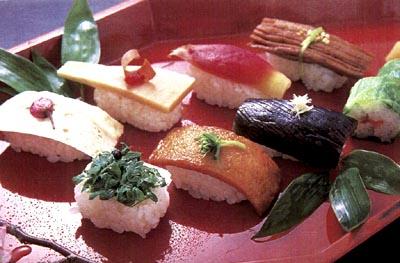
iroha-2.jpg
(from top to bottom and left to right: Konnyaku/Devil’s Tongue Tuber, Celery marinated in Amazu/sweet vinegar and pickled Japanese plums, Shiro negi/White leek, Na no Hana/Rape Blossoms, Gobo/Burdock roots, Satsuma Imo/Sweet yams, Daikon/Long Japanese radish)

Whenever I can convince there is Japanese food fit for Vegans and Vegetarians (I’m neither!), I make a point of posting articles that might help friends with different culinary priorities!

There is vegan and vegetarian sushi in Japan and elsewhere!
As a proof have a good look at the picture and explanations above. The pic was taken at Iroha Sushi, a small but extremely renown sushi restaurant in Iwata City, an area celebrated for its vegetables!

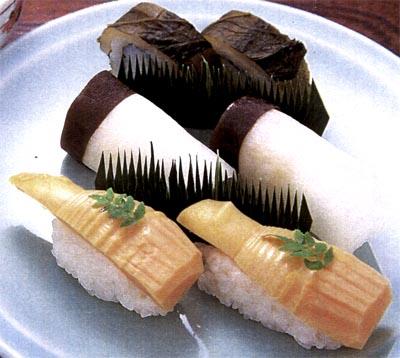
vegan-sushi1
Kyoto is a renown place for Vegan & Vegetarian Sushi!
From right to left, top to bottom:, Yuuba (tofu sheets), Takenoko (Bamboo shoots), Myoga (myoga ginger), Zenmai (Spring vegetable variety), Ki no mi (Spring vegetables), Awafu (grilled tofu sheets), Kamo Nasu (kamo egg-plant), Hakusai Maki (Chinese cabbage).
Print a copy of this pic, show it to your local Sushi Restaurant and challenge him/her into preparing your favorite tidbits!

vegan-sushi2
From bottom to top: Takenoko (boiled bamboo shoots topped with a sprig of sansho/Japanese pepper plant)), Kabu Tsukemono (pickled turnip), Sugiku no Ha Maki (sugiku Chrysanthemum leaves)
And what about these? Not only tasty but fulfilling!

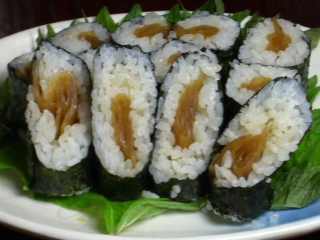
efbd8befbd81efbd8defbd90efbd99efbd8fefbd95efbd8daki
“Kanpyou maki”/dry gourd shavings: here is one that any sushi restaurant will serve you!

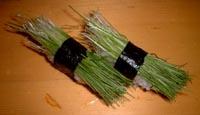
vegan-sushi3
That small one is my personal favourite: “menegi”/thin leeks sprouts!

I promise I’ll keep searching!

Shizuoka Izakaya: Kaze To Matsu


The Japan Blog List

Please check the new postings at:
sake, shochu and sushi

—————————————-
日本語のブログ
—————————————-

Kaze To Matsu is a great example of a successful Izakaya which shows that a chef’s origins do not matter when recognizing and serving an intelligent combination of produce from Shizuoka and other Prefectures.

Mr. Matsumiya, for all his relative youth, shows a remarkable eclectism when choosing Shizuoka Sake to accompany brews from Gunma Prefecture, his home: Hakauin Masamune (Takashima Brewery, Numazu City), Isojiman (Yaizu City), Shidaizumi (Fujieda City) and Hana no Mai (Hamamatsu City). Naturally, all kinds of drinks, including wine, are available.
The place, seating 11 at the counter and 14 at very comfortable tables, is very popular, and I would definitely recommend anyone to reserve especially on week-ends.
My good friend Patrick and I made a point to come before opening hours to reserve two seats at the counter and we certainly well when the establishment was packed by 18:00!
We are both fans of sushi and ordered the “Special Sashimi Plate”.

From left to right:
“Kanpachi”/Japanese Amberjack, “Tennen Maguro”/Wild Tuna, “Nama Yuba”/Tofu Sheets, “Suwagani”/Suwa Crab, “Kanpachi” again, “Tachiuo”/Scabbard Fish (under the shiso flowers) and “Koushin Daikon”/A red inside daikon variety.

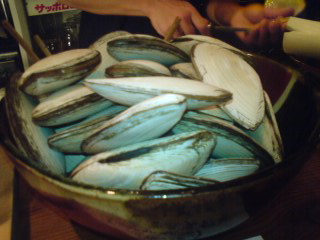
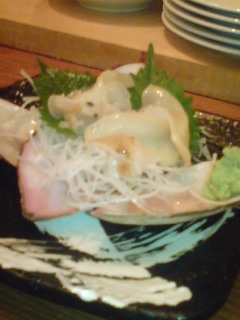
We spotted some fresh seashells on display. I had noticed them before, but I couldn’t remember their name. “Shirogai” is the usual name in Japan, meaning White Seashell.

As they were still alive and appetizing, we opted for a plate of sashimi!
Almost sweet they were, a discovery!

The menu is very extensive and we had to limit ourselves to favourites for our first visit!
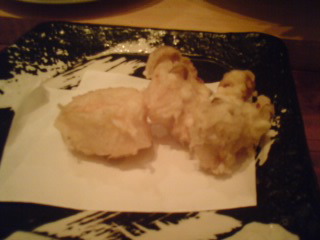
The tenpura (above pic) are served one at a time as they should be! Succulent!

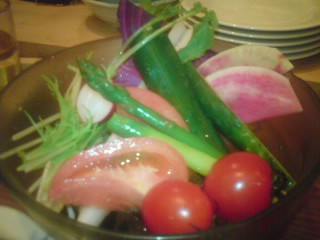
Vegetarians and vegans will rejoice to learn that Kaze To Matsu serve “Yuki Yasai Sarada”/Organic Vegetables Salad! Very well-chosen seasonal vegetables only.

A gentle piece of advice:
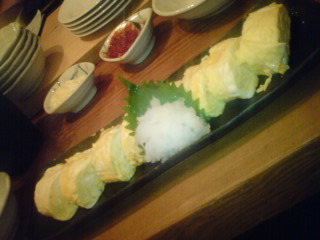
Whatever you have savoured, do end with their “Tamagoyaki”/Japanese Omelette!
I can assure ou you won’t need any dessert!

Kaze To Matsu
Shizuoka City, Aoi Ku, Hitoyado-Cho, 1-4, 1F
Tel.: 054-251-2004
Business hours: 17:30~24:00
Closed on Mondays
HOMEPAGE (Japanese)

Vegetarian & Vegan Cuisine: “Mukashi Mushi Pan”/Old-Fashioned Steamed Bread


The Japan Blog List

Please check the new postings at:
sake, shochu and sushi

—————————————-
日本語のブログ
—————————————-

Although I’m neither a vegetarian or vegan, I make a point to introduce anything I discover here which might help friends out!

Fukasawa Foods in Shibakawa Cho at the foot of Mount Fuji produces all year round an incredible array of soba/buckwheat noodles, udon/wheat flour noodles, ice-creams, cakes and I don’t know what else.

Now, all their food is organic. No artificial fertilizers are used for whatever they grow or buy, and no additives or preservatives are used in any of their product, which means all have to be properly stored and eaten quickly.

Vegans will be happy to know they use tofu instead of any dairy product.

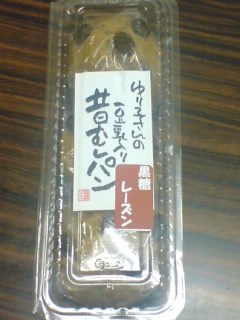
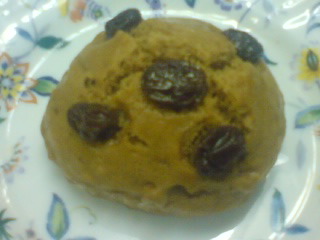
This particular cake called “Mukashi Mushi Pan” or Old-Fashioned Steamed Bread was made with wheat flour, tofu, brown sugar, raisins, salt, vegetable oil.
That is all!

One cake could have easily been held inside your palm, but it was very fulfilling and delicious!
They have other varieties made with pumpkin and other vegetables.

Fukasawa Foods
Fuji Gun, Shibakawa Cho, Naibo, 3895-8
Tel.: 0544-65-0143
Closed on Tuesdays
HOMEPAGE (Japanese)

Vegetarian & Vegan Cuisine: Ginger as a Vegetable


The Japan Blog List

Please check the new postings at:
sake, shochu and sushi

—————————————-
日本語のブログ
—————————————-

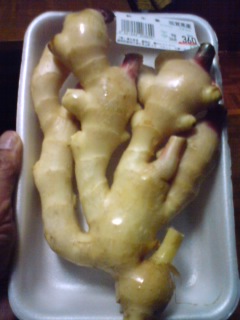
Ginger when eaten outside Japan generally comes under its semi-dry or dry root.
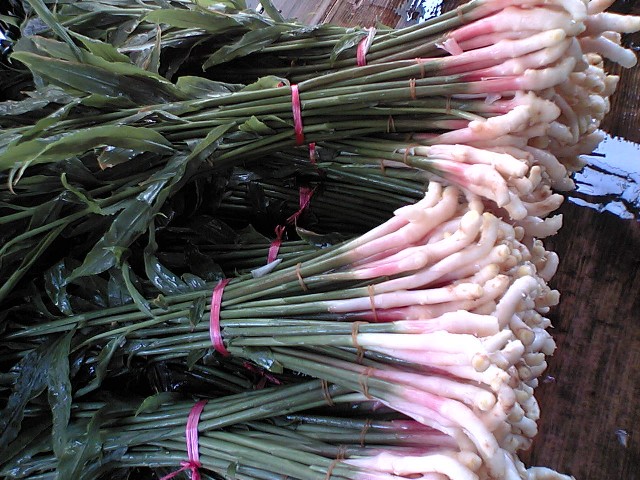
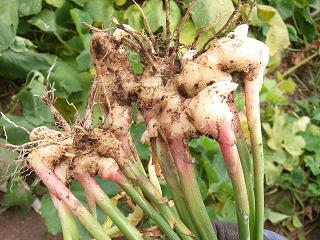
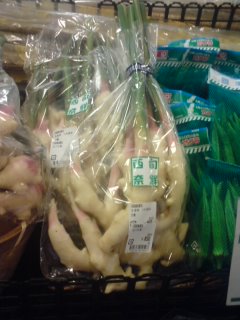
Actually here, and in Shizuoka especially, fresh ginger or “Ha Shoga”/Leaf Ginger comes into some great recipes to please any one who does not consume meat (of course ginger is used in many meat recipes!)

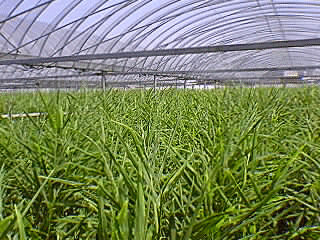
Extensively grown in our Prefecture, it can be bought fresh in season in any Supermarket:

There are many ways to prepare and eat it:


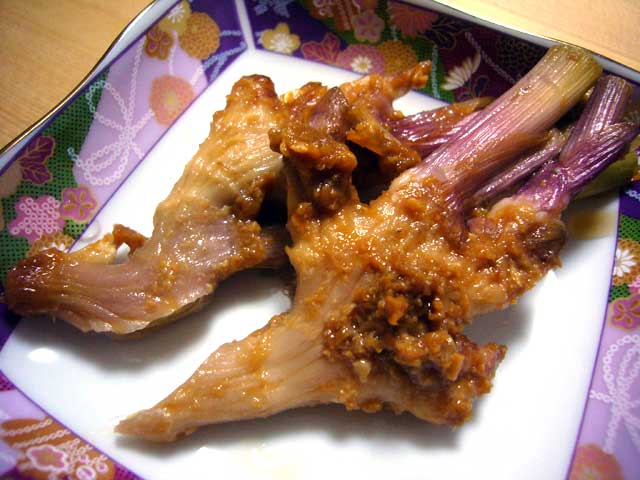
Fresh Ginger pickled in miso.
Very practical when you can buy loads in season. Choose your miso paste well so as avoid too much salt!


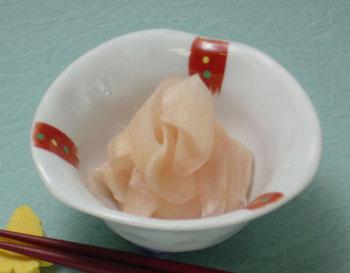
Everyone knows pickled sliced ginger (use fresh plants only!) served with sushi!


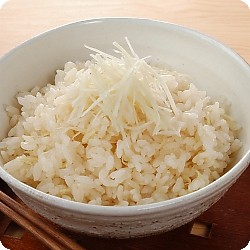
Ginger can be steamed with rice or served very finely cut on top of a bowl of steaming rice!


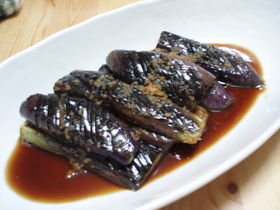
Ginger is great finely chopped and fried with egg-plant/aubergines, soy sauce and mirin!
(Plan to introduce recipe!)


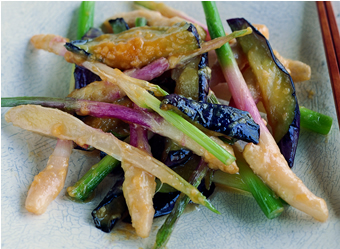
Fresh thin ginger roots are simply beautiful fried/sauteed with othe vegetables!
(Plan to introduce recipe!)

Enjoy!

Vegetarian & Vegan Cuisine: Myoga as a Vegetable


The Japan Blog List

Please check the new postings at:
sake, shochu and sushi

—————————————-
日本語のブログ
—————————————-

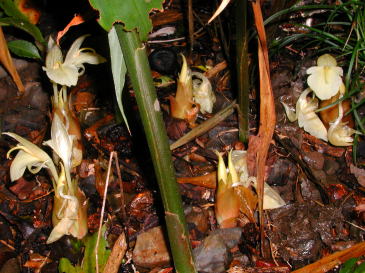
Myōga (茗荷) or myoga ginger (Zingiber mioga, Zingiberaceae) is an herbaceous, deciduous, perennial native to Japan that is grown for its edible flower buds and flavorful shoots.

As a woodland plant myoga has specific shade requirements for its growth. It is frost-tolerant to 0F, -18C possibly colder.
Some constituents of myoga have shown promise for potentially anti-carcinogenic properties

A traditional crop in Japan, myoga has been introduced to cultivation in Australia and New Zealand for export to the Japanese market. I’ve always wondered if it were available on American and European Markets.
It is a great plant for use in vegetarian and vegan dishes as it adds lots of soft flavors.
Flower buds are usually found finely shredded raw in Japanese cuisine as a garnish.
But there are many other possibilities:


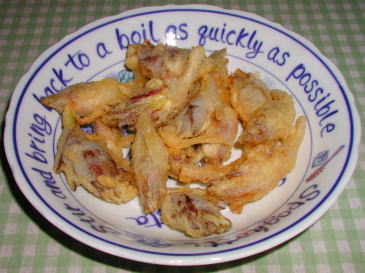
Tenpura.
Actually some Japanese restaurants will prepare the flowers as well as tenpura.
Vegans should replace the egg white included in the batter with a little cornstarch.


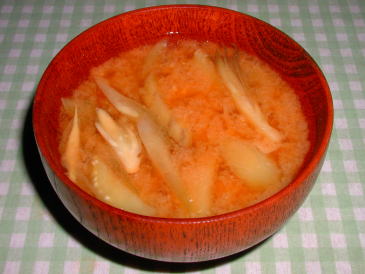
Myoga in Miso Soup.
Cut the myoga into thin strips and just add them to the miso soup inside bowls before serving it.


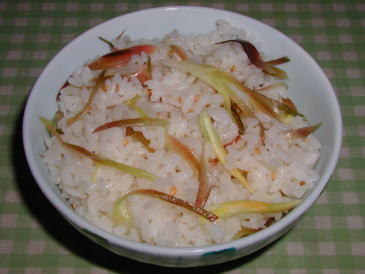
Myoga Gohan/Myoga Rice.
Cut the myoga in very thin strips and put it on top of the rice before steaming it. When the rice is cokked, mix in the myoga with rice and serve.
Vegetarians and Vegans may use genmai/whole rice for higher nutritients.
Beautiful when freshly cooked!


Myoga Pickles
Wash myoga quickly under running water. Drain and take excess water with kitchen paper.
Best pickled with amazu/sweet rice vinegar. If not available use rice vinegar, sugar and soft umeboshi/Japanese pickled plums.

Enjoy!

Ekiben/Railway Station Lunch Boxes-Bento 3: Bankama


The Japan Blog List

Please check the new postings at:
sake, shochu and sushi

—————————————-
日本語のブログ
—————————————-


”Ekiben” or Railway Station Lunch Box (eki=station + ben/abbreviation for bento)in Japan and Shizuoka are a must for travellers who wish to experience real local food!
Shizuoka has a higher average because of the great numbers of railway stations and access to many kinds of food and ingredients.
The Missus purchased that particular one at Ito City Railway Station on October 23rd.

It is called “Bonkama”.

It consists of steamed sushi rice flavoure with rice vinegar, scrambled egg, “Tai/snapper (vinegared)”, “Shiitake Mushroom”, “Ebi/boiled shrimp”, “Renkon/Lotus root”, “kuri/chestnut”, “Tobikko/Flying Fish Roe”, Lemon, and “Amasu Syoga/Ginger pickled in sweet vinegar”


Provided with chopsticks and tooth pick, it made for a great lunch while visiting the Izu Kougen shoreline!