Tag Archives: sashimi

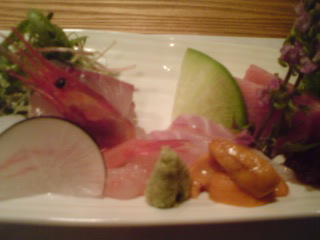
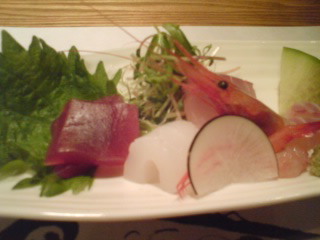
Sashimi at Tomii: The Epitome of Excellency!


The Japan Blog List

Please check the new postings at:
sake, shochu and sushi

—————————————-
日本語のブログ
—————————————-

tomii-08-12-16a

Many people have been asking me: “How can you afford that?”
Well, I don’t smoke and I don’t drive, either. I can imagine what some people in the Northern part of the US might tell me… and I don’t care!
All that “saved” money goes into good food, good drink, good travel and improved relations with my (better, ok for this time!) half! And nothing for those “poor” doctors out there!

I’ve been a regular customer at Tomii in Shizuoka City for many, many, many reasons. But the one I value most is that everyone at this great Japanese restaurant are willing to talk about, explain and extoll the virtues of their craft. Craft, I said? It is probably nearer to artistry as Melinda, Etsuko and Tim will vouch for me!

Anyway, to write a story short, I just popped at Tomii this evening (yes, I’m writing this just after I came back to “work”), and asked for a sashimi plate (well, this is not the way to ask it: You should say: “O-tsukuri, kudasai!”). I did not need to tell them what to serve me. I wouldn’t even have dared!
On the other hand, they didn’t mind explaining no less than three times to make sure that the old geezer got his stuff right!

tomii-08-12-16b
From right to left:
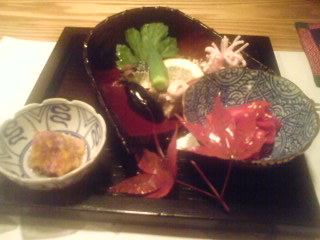
“Kiiro Ninjin”?Yellow Carrot (sashimi is not all about fish, vegetables are rapidly becoming an essential part of the picture!), “Beni Daikon”/Red (“rouge”) Daikon, “Wasabina/not wasabi, but a leaf vegetable with a similar taste!”, “Hirame/Sole”, “Hime Daikon/Princess Daikon”, “Shiso no Hana/Perilla Flowers (edible as Rowena will agree!) on top of “Toro/Tuna Fatty Part) and “Bakudai No Ki no Mi/Impossible to translate”, only that it is an edible part from a tree (sorry, I was not attentive enough!)!

tomii-08-12-16c
From right to left:
“Uni/Sea Urchin Roe” (in front) with freshly grated “Wasabi/Japanese Horseradish” (let me tell for the umpteenth time that wasabi was first grown in Shizuoka City in the 17th Century and that Shizuoka Prefecture still produces 80% of the world total!), “Ishidai/Ishidai Snapper” just behind, the green daikon is called “Uguisu Daikon/Nightingale Daikon”, “Amaebi/Sweet Shrimp”, and “kanpachi/Japanese Amberjack” just behind!

tomii-08-12-16d
From right to left:
“Kuroi Daikon/Black Daikon”, “Aori Ika/Aori Cuttlefish”, “Akami/Lean Tuna” on a “Shiso no happa/perilla leaf”. To back it up a mixture of seasonal sprouts: “Kushinsai + Soba no Mi (Buckwheat) + Cress (from Shizuoka like most of them) + Kawaire Daikon + Cabbage + Broccoli” (about time you call a local farmer for explanations!)!

Small servings they might look, but I challenge anyone to find better quality!
Now, for people who really want to know it, you will have to fork out at least three times as much in Tokyo, and as far the US and Europe are concerned, you might as well start riding a bicycle like I do!

TOMII
Shizuoka City, Aoi Ku, Tokiwa-cho, 1-2-7, Tomii Bldg, 1F
Tel.: 054-274-0666
Business hours: 17:00~22:00
Closed on Sundays
HOMEPAGE (Japanese)

Japanese seasonal Fish: Saba/Mackerel


The Japan Blog List

Please check the new postings at:
sake, shochu and sushi

—————————————-

saba1.jpg

Mackerel or saba, not to be confused with sanma/mackerel pike, is a fish eaten over the whole Northern Hemisphere and does come under many varieties and names.
In Japan it is mainly called “Saba”, “Masaba” or “Sekisaba”.
“Saba” is written 鯖 in Japanese, that is a combination of kanji characters for “fish” and “blue”!
Here, it is mainly caught off Oita, Saga Prefecture (Kyushu), although quite a few are caught off our coasts. They feed on plankton mainly.
saba-yaizu.jpg
(mackerel catch in Yaizu Harbour)
They are prepared and cooked in many guises.
In France, my birthplace, they are steamed and then pickled in white wine and spices. In Northern Europe they are also eaten half raw as smorgasbrod and pickled fish.
It can be appreciated as sashimi, but it must be absolutely fresh and is best served with grated fresh ginger and lemon:
saba2.jpg
As far as sushi is concerned, “masaba” variety is best:
saba3.jpg
It is especially popular as “oshizushi” (pressed sushi).
My preference goes for konbu zume saba. the mackerel is kept inside a variety of wet seaweed for an hour or so before put whole on top of a long “bar” of rice, then cut to size:
saba-sushi.jpg
(picture taken at Tomii estaurant, Shizuoka City)

Japanese seasonal Fish: Sanma/Mackerel Pike


The Japan Blog List

Please check the new postings at:
sake, shochu and sushi

—————————————-

“Sanma” or Mackerel Pike has come on our plates with the advent of Autumn and will stay with us until almost end of the year.
Known under other names such “Saira” or “Banjyo”, it is a fish with red meat rich with proteins.
In Japanese, 秋刀魚, it means “Autumn Sword Fish”!
In season, the flesh is fatty and sweet and ought to be sampled as sashimi served with grated fresh ginger and thinly cut leeks:

(Pic taken at Tonami, Shizuoka City. Notice the shiso/perilla flowers)
It is mainly caught off the north eastern shores of Japan as the fish swim down from Hokkaido.
But the more south it is caught, the less fat it will contain.
The annual catch exceeds 20,000 tonnes, although breeding is increasingly successful.
Incidentally for all the fish consumed in this country, Japan is the World leader when it comes to marine research and stock renewal develoment!
If you eat it at a good place such as Tonami in Shizuoka, you will be served its with its bones and head deep-fried.
Of course, as a sushi it is a morsel to savour!

Eel Species

Please check the new postings at:
sake, shochu and sushi

—————————————-
日本語のブログ
—————————————-

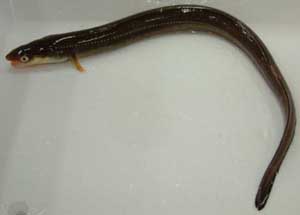
Here is another fish, second only to tuna, so popular in Japan!

Anago/Conger Eel
anago1.jpg

Anago or Conger Eel, a favourite all over Japan, does come in many varieties, some edible, some not.

The most popular conger eel in Japan is “Maanago” (“True Conger Eel”).
It is also called “Anago”, “Hakarime” and “Hamo” (although this particular kind should be treated separately)
Summer is the best season, although they are available all year round in Sushi restaurants.
They are mainly caught in Tokyo Bay, Jyowata Bay and Seto Sea.
anago3.jpg
Most Japanese appreciate them first boiled in broth then cooked on a grill over charcoal fire and then dipped in “tare/Japanese grill sauce”.
anago4.jpg anago5.jpg
As for nigiri, they come in many guises: topped with “tare” (sauce) or just with a light brush of shoyu (see above pics)
anago6.jpg anago7.jpg
Or a bit on the crispy side, or on the very soft and melting one (see above pics)
It basically depends on the chef’s skills and preferences.
anago2-tempura.jpg
One should not forget they also taste great as tempura, including the bones, a particular favourite of mine!

Samples with bright skin transaprent flesh are the best.
Imports from China and Korea have increased recently, although Japan is starting putting strong regulations to protect the species.
As for Shizuoka Prefecture, we do have access to fresh fish. Select your sushi restaurant accordingly!
———————————
Unagi/Common Eel

Unagi or common eel is fish which made Hamanako/Hamana Lake famous in western Shizuoka Prefecture.
As summer approaches, the Japanese are looking forward to eat the delicacy as it is supposed to revitalize your body on very hot days.
Also called “Kayoko”, “Subera” or “Aobai”, it is farmed mainly in Shizuoka, Aichi and Gifu Prefectures.
It is only in the Edo Period that the Japanese starting it after they realized it could not be eaten raw as opposed to anago/conger eel or hamo/pike conger eel (coming soon!).
Japan presently produces more than 24,000 tonnes and still imports 14,000 tonnes whole and 71,000 tonnes cooked, most of it from China.

It is quite popular as nigiri in any part of Japan.

But the Japanese are simply crazy about “kabayaki”, which requires to grill and baste the fish at the same time, a fairly tedious process. It is a bit of an acquired taste as the connoisseurs eat the skin, which a bit oily to my liking.
In Hamamtsu, it is possible to eat the real wild fish in a very few restaurants, but you will know the difference when the bill comes!

Tuna Species

Please check the new postings at:
sake, shochu and sushi

—————————————-
日本語のブログ
—————————————-

I noticed that many friends at Foodbuzz are anglers and fish lovers.
Here is some useful information on the most popular fish in Japan (and in Spain, too), namely Tuna!
Kuromaguro/Blue Fin Tuna

kuromaguro.jpg

Tuna or “Maguro” is the most popular fish for sushi and sashimi lovers in Japan (and abroad). It is said that more than 60% of total catch is consumed in Japan alone (and probably a lot higher depending on species). Incidentally, Japan is not the single bigger consumer of fish. Spain is!

Now, there is tuna and tuna. Briefly said there many species with many names and very different price tags as well!

The first species I would like to introduce is “Kuromaguro”, or Blue Fin Tuna (or Tunny). It has many other names in Japanese: Honmaguro, Maguto,Meji,Yokowa, Shibi, Imoshii, Shibimaguro, Kuroshibi, and Hatsu!

The best are caught in Winter mainly in the seas off Kochi (Shikoku Island), Miyagi and Hokkaido Prefectures.
This variety is the most expensive and can reach astronomical prices, especially caught in Winter off Hokkaido.
Imported Kuromaguro usually reaches Japan frozen, but in recent years the fish has been successfully raised in semi-wild environments in Spain, Australia and Croatia and arrives in Japan fresh by plane.
Import and sale of Kuromaguro are monopolised by Japanese trade associations, unless you are lucky enough to catch one (careful here, as poaching is a major offense in Japan!).
Between you and me, if you want to eat Kuromaguro sashimi, it might come cheaper if you do it while travelling in Spain!
Did you know that Japanese importers will fly to Spain and other countries just to check that the fish are bled properly?
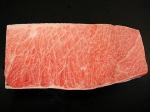
kuromaguro-otoro
Kuromaguro Otoro (fat part)

kuromaguro-chutoro
Kuromaguro Chutoro (semi-fat part)

kuromaguro-akami
Kuromaguro Akami (lean part)

———————

Mebachi/Big-eyed Tuna

mebachi.jpg

We are nearing the season for savouring Mebachi or Big-eyed Tuna, a fairly reasonable kind of tuna especially popular for its “akami” (lean part)
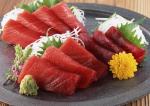
mebachi-akami

It has different names according to the areas: “Darumashibi” (Mie Prefecture), “Mebuto” (Kyushu). In Tokyo, Shizuoka and Wakayama, it is called “Daruma” when caught a young age.
The best seasons for catching are during the rainy season or the Fall.
This kind of tuna is mainly caught off the shores of Miyagi, Kagoshima, Kochi, Shizuoka, Kanagawa and Hokkaido Prefectures.

As said before it is mainly appreciated for its lean beautiful red flesh, but also cooked and grilled as “kama”:
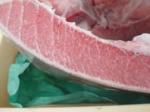
mebachi-kama
In the fall it is also a source of toro (fatty part) when kuromaguro is not available.
In recent years it has been extensively caught in the Pacific, Atlantic and Indian Oceans and in the Mediterranean Sea. It also comes frozen from Chile, Peru and North America. It is also flown fresh from Australia, Indonesia and New York. A lot equally comes frozen from South Korea and Taiwan.

——————–

Kihada: Yellowfin Tuna

kihada1.jpg

“Kihada maguro” or Yellowfin Tuna” will appear on our tables from early summer.
It is mainly caught off Shizuoka, Miyagi and Kochi Prefectures coasts.
Like all other fish it is called other names in different regions:
Kiwada, Itoshibi (Wakayama, Kochi, Kyushu), Shibi (Kyusyu, Osaka), Ban (Osaka) and Tuna Kajibi (Okinawa)
Kihada roams over many seas between 30 degrees north latitude and 30 degrees south latitude and even wider depending on the season.
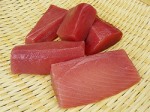
Most of the fish caught in Japan is served locally as sashimi:
efbd8befbd89efbd88efbd81efbd84efbd81efbc92
Very recognizable for its pinkish colour.
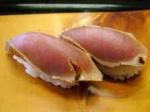
It is also widely appreciated as Zuke (first lightly grilled, then dipped into ice water before being cut in thin slices) on nigiri:
kihada3
A lot is imported frozen.
In Shizuoka try to go for the freshly caught samples coming from Yaizu or Numazu.

—————–

Minamimaguro/Southern Blue Fin Tuna
minamimaguro.jpg

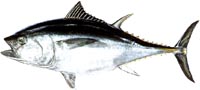
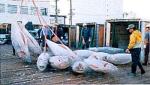
Minamimaguro or Southern Blue Fin Tuna could be called a true Shizuoka Prefecture tuna as our Prefecture accounts for 30% of the total in Japan!
shizuokaminamimaguro
Like all fish it has different names: Indomaguro, Goushyumaguro, Bachimaguro.
In Autumn it is mainly caught off Australia, New Zealand, Capetown (South Africa) in the Southern Hemisphere and off the coasts of Shizuoka, Kochi, Kagoshima and Miyagi Prefectures in Japan.
Mianmimaguro is comparatively cheaper than its fellows as it contains little fat, which on the other hand makes it very easy to freeze and preserve.
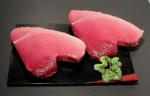
shizuokaminamimagurochu
Regardless of the lack of fat, it makes for excellent sashimi, sushi and various parts are succulent grilled or cooked.
The parts discarded by humans make for a lot of cat food!

————————

Binnaga/Albacore Tuna

binnaga.jpg

Binnaga or Albacore is very often called Tonbo Maguro in Japan. It is also known under the name of Binchyou.
It is caught in the Summer off the coasts of Miyagi, Kochi, Mie and Miyazaki Prefectures.
This is probably the cheapest kind of tuna available in Japan apart of Marlin.
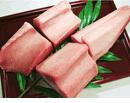
binnagatonbo
It makes for most of the cheaper tuna sashimi in supermarkets.
I personally like it fried in large slices before eating them as tuna hamburgers. Absolutely delicious and far healthier than a McDonald’s (let them sue me!)!
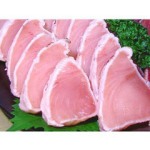
efbd82efbd89efbd8eefbd8eagatataki
For people who want to try their hand at making “tataki”, it would be the perfect first step into Japanese gastronomy.
It is also vastly used by canneries under the name of “Sea Chicken”.
It is probably the most popular tuna species outside Japan.
———————–
Mekajiki/Big-eye Marlin

mekajiki.jpg

Strictly speaking, marlins are only a different branch from tuna, but as it is so often offered as a substitute for true tuna, I decided to introduce it as such.
There are many types of marlins all over the world, but the most commonly caught and eaten is “Mekajiki”/Big-eye Marlin.
kajiki1.jpg
It is found in various supermarkets and cheap izakaya. Still it is a very popular as sashimi as well as grilled fish. Even in my home country it is served as “Carpaccio”.
It is caught all around Japan from Atumn to Winter.
It is also called “Meka” in Tokyo or “Mesara” in Kanagawa Prefecture.
Sashimi varieties came in two main kinds: “kuro” and “shiro”.
“Makajiki” (“true marlin”) is peach pink while “Mekajiki” (“big-eye marlin”) is of a whitish orange.
More than 1,000 tonnes are caught off Japan, whereas imports amount to more than 1,100 tonnes.
In Europe and America it is popular as canned food or grilled.
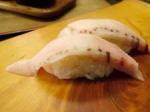
mekajiki-sushi
One can enjoy it as cheap “nigiri” in sushi restaurants.
Fresh marlin should be shiny and show veins bright red.
It is mainly caught at night as it swims near the surface then.
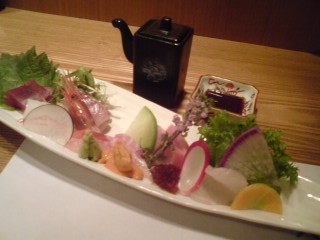
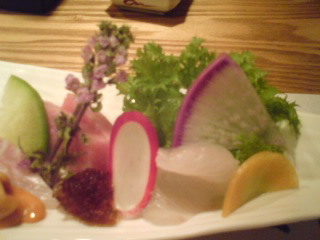
Tuna Trio Hors d’oeuvre

Please check the new postings at:
sake, shochu and sushi
Shizuoka Pics

—————————————-
日本語のブログ
—————————————-

tuna-trio.jpg

Here what my better (worse?) half came up last night as a starter after she found a good bargain at our nearby Coop Supermarket. Plenty for two, the fish costing only 440 yen (US$ 4.50)!

From top left around the clock:

-Maguro akami (lean part of the tuna) thin sashimi topped with homemade pickled wasabi plant and Shizauok wasabi dressing.
-Maguro akami/maguro zuke (lean part of the tuna marinated Japanese style) topped with “shigeki rayu” (Chinese style hot sesame oil) dressing from Ishigaki Island, Okinawa.
-Negitoro (minced tuna semi-fat part, but without the usual chopped leeks) topped with “kizami tamanegi” (onion cream) dressing

The whole on a bed of fresh cress grown in our Prefecture. The perfect starter for her wine and my sake (I mean the drink!)

Sushi Restaurant: Ekimae Matsuno Sushi (revisited)

Please check the new postings at:
sake, shochu and sushi
Shizuoka Pics

—————————————-
日本語のブログ
—————————————-

matsuno-2008-11-10c

As the grotty weather last Sunday prevented any cricket to be played, I just went to do some “work” at my classroom. When lunch came, I decided it was about time I paid a visit to an old favourite sushi restaurant of mine, namely Ekimae Matsuno Sushi in fornt of Shizuoka City JR Station.
They do make a point to serve local fish whenever practical and last Sunday was no exception!

matsuno-2008-11-10b
The “snack” served with the sake (See below article) from Yoshiya Brewery in Shizuoka was “Seguro Iwashi”/”black back sardine”, a succulent fatty fish in season.

matsuno-2008-11-10c
The “sashimi no moriawase”/sashimi plate were all fish (as well as all other fish cited in this article) brought from Yaizu Harbour in Central Shizuoka Prefecture:
From left to right:
-“Akami”/tuna lean part
-“Yari Ika”/cuttle-fish (calamari)
-“Kawahagi to Kimo”/filefish cut in thin strips and mixed with its own liver. Sweet dipped in a mixture of three different miso paste rice vinegar!
-“Bora”/mullet. So fresh there was no need for soy sauce. Just a little “yuzu”/lime juice was perfect!

matsuno-2008-11-10d

The chef recommended a couple of seasonal morsels:
the first one, above, was “Tachiuo Aburi”/scabbard fish lightly grilled on one side. Just a little salt, wasabi and lime juice. The meat melts away between your teeth!

matsuno-2008-11-10e
The second one was “Houbo”/blue fin robin. Tender and sweet!

matsuno-2008-11-10d_0001

As for dessert I asked for “Tamagoyaki”/Japanese omelette (not shown) and “Kanpyou Maki”/dry gourd shavings maki!

Here are my tastig notes for the sake:

Yoshiya Brewery (Shizuoka City): Chuumasa Junmai Ginjo
Alcohol: 15~16 degrees
Contents: 300ml
Bottled: April 2008

Clarity: Very clear
Colour: Transparent
Aroma: Dry, light and fruity: Pineapple, ricey
Body: Velvety
Taste: Short tail. Junmai tingle. Complex. Fruity: Pineapple, almonds, nuts, coffee beans.
Nice acid finish with bitter chocolate, coffee beans and banan.
Turns drier with food with a strong comeback by coffee beans and almonds, although it did surprise me with a sweetish finish at times.

Overall: A “Shizuoka Type” Sake.
Very elegant, pleasant and easy to drink.
Great with sushi and sashimi.
Strong character and many facets revealed all way through.

Ekimae Matsuno Sushi
Shizuoka City, Aoi Ku, Oyuki Cho, 9-3 (just across from Shizuoka JR Station North Exit after Matsuzakaya Dept)
Tel.: 054-2510123
Business hours: 11:00~21:00
Closed on Wednesdays
Credit Cards OK
HOMEPAGE (Japanese)

Simple Recipes: Scallops Salad

Please check the new postings at:
sake, shochu and sushi

—————————————-
日本語のブログ
—————————————-

scallops-salad.jpg

My wife, a couple of days ago, was “stuck” with some succulent-looking scallops. The problem was they were too small to make acceptable sashimi. So for once, she forgot she was Japanese and opted for the European thinking.
She had some very fresh cress (cresson) grown in Shizuoka Prefecture as well as a variety of tomatoes called “Aamera”. These tomatoes are the second smallest (there is another variety looking like redcurrants!) grown in our Prefecture only (so far). They are very firm and very sweet. You could serve them together with a plate of red fruit!
aamera.jpg
So as you can see on the picture, I first made a thin bed of cress topped with avocado slices, made a rondo of scallops in the center with a core of cut aamera tomatoes. It certainly looked more difficult than it reaaly was!
Topped with a dressing of your choice, with the option of some cottage cheese and finely cut Italian parsley or basil, it makes for a beautiful appetizer!

Shizuoka Hotsprings: Guest House Kazeyoobi


The Japan Blog List

Please check the new postings at:
sake, shochu and sushi

—————————————-
日本語のブログ
—————————————-

kazeyoobi-17

Izu Peninsula in Eastern Shizuoka Prefecture is the most famous and oldest hotsprings area in Japan. Start either from Atami or Mishima JR Shinkasen Stations and visit this great region by train, bus or car!
If you begin your journey from Atami, take the train to Ito City and change onto the local private line and get off at Izu Koogen Station. From there you can either walk (45 minutes) or take a taxi if you are in a hurry!
Guest House Kazeyoubi in fact is a private pension with real hotsprings private bath and open-air bath fed with water coming from the nearby Ooumuro Yama, a long-extinct volcano.

The Guest House is a bit out the ordinary as it is conceived and decorated as a Spanish House with Spanish food as its main course for dinner! Plenty to please and satisfy expats! The owner actually told us that foreigners are far from being the exception, but keep in mind that they offer Japanese cuisine options as you will see later!

kazeyoobi-1 kazeyoobi-15a kazeyoobi-15_0001
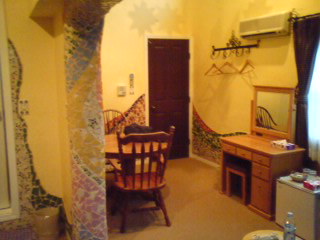
As I said, the whole interior decoration has been conceived along Spanish lines!

kazeyoobi-2a kazeyoobi-3a
But the Japanese bath on the balcony is definitely Japanese-style with real hotsprings water!
The rooms do have European-style shower, bathrooms, so no worries there, either!
There is also a “rotenburo”/open-air semi-public bath. As the guest house has only 6 rooms, you will always find some time during the day or night vacant all for yourself (ves)!

kazeyoobi-10a kazeyoobi-16a
The dining room for dinner and breakfast has also been decorated in Spanish style. You can even eat on the verandah when the weather is good enough!
Dinners are served early from 18:00 but breakfasts start from 08:00 (nothing Spanish about that, LOL!)

kazeyoobi-4a
Now, expats will happy to learn that meals are Gargantuan by Japanese standards! Above Amuse include Iberico Smoked Ham!

kazeyoobi-7a
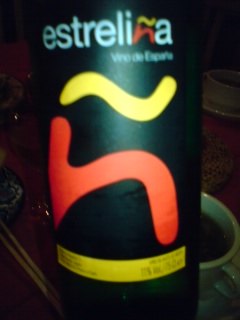
Now if you want to drink wine (Spanish. There are all kinds of drinks available, though!), ask for “nomihoudai”/”drink as much as you want” system, it’s a bargain!

We had ordered the sashimi plate on the Internet as an optional dish to an already great meal!:
-From top clockwise (see above picture):
Aji no sashimi/Saurel Sashimi
Amaebi/Sweet Shrimps
Aji no tataki/Saurel cut in small pieces
Katsuo/Bonito with freshly grated ginger
Inada/Young Japanese amberjack (buri)
Maguro/Tuna
-Centre:
Ika somen/Cuttle-fish served in long thin strips
Notice all the shiso leaves!

kazeyoobi-6a
The very Spanish garlic soup!

kazeyoobi-8a
The (small) lobster (enormous) paella for two!

kazeyoobi-9a
The fresh vegetable dip to help us wait for the next courses!

kazeyoobi-11a
The Iberico Pork Steak for me,

kazeyoobi-12a
and a great Japanese Beef steak for the Missus!

kazeyoobi-13a
Do not ask how we managed to finish the dessert (actually, I helped the Missus!)!

In fact eating dinner so early was a good idea, because
kazeyoobi-14a
I had to help the Missus finish it!

Guest House Kazeyoobi, a place I would definitely recommend to anyone, especially considering the great smiling and attentive welcome!

Guest House Kazeyoubi
〒413-0235 Ito City, Oomuro Kougen, 7-210 
TEL 0557-51-2935
HOMEPAGE (Japanese)

Sashimi Sets: Tomii (Nov. ’08)


The Japan Blog List

Please check the new postings at:
sake, shochu and sushi

—————————————-
日本語のブログ
—————————————-

tomii-sashimi-08-11

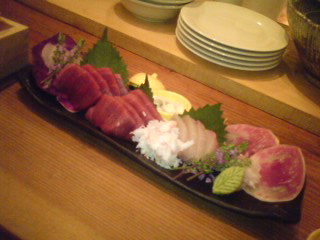
Here is an example when sashimi is served not only for its taste, but also for its artistic presentation at Tomii Japanese Cusine Restrant in Shizuoka City:
The dish is of lacquered wood.

Top left: kanpachi/Amberjack on a bed of fine leafy vegetables and topped with shiso/perilla flowers (all edible).

Top centre: Uni/Sea Urchin (Murasaki/Violet variety).

Top right: Isaki/A snapper variety behing a fine slice of red radish.

Centre left: Hon Maguro/”Trie” tuna (it acyually melts inside the mouth!)

Bottom left: Aka Ika/”Red” cuttle-fish

Bottom centre: Hirame/Sole in front of a fine slice of red radish

Bottom right: beside freshly grated wasabi, Sakura Ebi/Cherry Blossom Shrimp (only caught in Yui, Shizuoka Prefecture. It will be very difficult to get them fresh in Tokyo!) on a shiso/perilla leaf

TOMII
Shizuoka City, Aoi Ku, Tokiwa-cho, 1-2-7, Tomii Bldg, 1F
Tel.: 054-274-0666
Business hours: 17:00~22:00
Closed on Sundays
HOMEPAGE (Japanese)

Shizuoka Izakaya: Kaze To Matsu


The Japan Blog List

Please check the new postings at:
sake, shochu and sushi

—————————————-
日本語のブログ
—————————————-

Kaze To Matsu is a great example of a successful Izakaya which shows that a chef’s origins do not matter when recognizing and serving an intelligent combination of produce from Shizuoka and other Prefectures.

Mr. Matsumiya, for all his relative youth, shows a remarkable eclectism when choosing Shizuoka Sake to accompany brews from Gunma Prefecture, his home: Hakauin Masamune (Takashima Brewery, Numazu City), Isojiman (Yaizu City), Shidaizumi (Fujieda City) and Hana no Mai (Hamamatsu City). Naturally, all kinds of drinks, including wine, are available.
The place, seating 11 at the counter and 14 at very comfortable tables, is very popular, and I would definitely recommend anyone to reserve especially on week-ends.
My good friend Patrick and I made a point to come before opening hours to reserve two seats at the counter and we certainly well when the establishment was packed by 18:00!
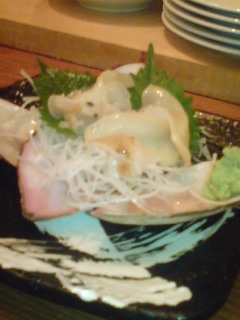
We are both fans of sushi and ordered the “Special Sashimi Plate”.

From left to right:
“Kanpachi”/Japanese Amberjack, “Tennen Maguro”/Wild Tuna, “Nama Yuba”/Tofu Sheets, “Suwagani”/Suwa Crab, “Kanpachi” again, “Tachiuo”/Scabbard Fish (under the shiso flowers) and “Koushin Daikon”/A red inside daikon variety.

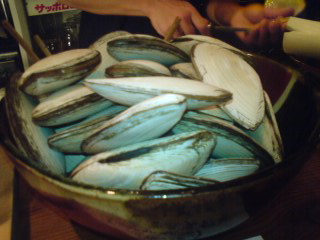
We spotted some fresh seashells on display. I had noticed them before, but I couldn’t remember their name. “Shirogai” is the usual name in Japan, meaning White Seashell.

As they were still alive and appetizing, we opted for a plate of sashimi!
Almost sweet they were, a discovery!

The menu is very extensive and we had to limit ourselves to favourites for our first visit!
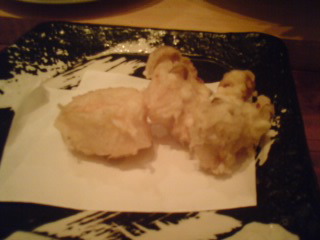
The tenpura (above pic) are served one at a time as they should be! Succulent!

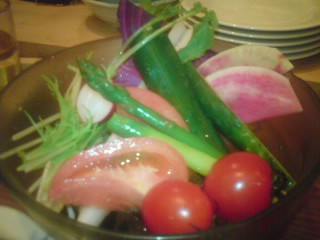
Vegetarians and vegans will rejoice to learn that Kaze To Matsu serve “Yuki Yasai Sarada”/Organic Vegetables Salad! Very well-chosen seasonal vegetables only.

A gentle piece of advice:
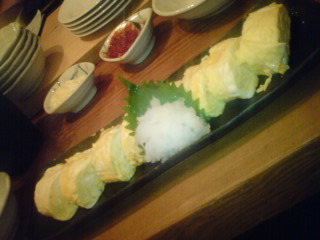
Whatever you have savoured, do end with their “Tamagoyaki”/Japanese Omelette!
I can assure ou you won’t need any dessert!

Kaze To Matsu
Shizuoka City, Aoi Ku, Hitoyado-Cho, 1-4, 1F
Tel.: 054-251-2004
Business hours: 17:30~24:00
Closed on Mondays
HOMEPAGE (Japanese)

Shizuoka Supermarket Sashimi


The Japan Blog List

Please check the new postings at:
sake, shochu and sushi

—————————————-
日本語のブログ
—————————————-

Last Sunday, as I had to “cook” that evening before the Missus came back from work, I ventured in Shizutetsu Store Supermarket in front of Ichiritsu High School.
Frankly speaking, I did not have a clue about I could concoct for my better-worse (sorry, Rowena!). That until I noticed ridiculously cheap seafood on display. Actually October is a great for lots of fish which come in plenty.

Here is what I bought on impulse:


“Maguro Sashimi/Tuna sashimi” for 480 yen. Allison, can you believe it?


“Ika Somen/Thinly cut fresh cuttle-fish2 for 217 yen


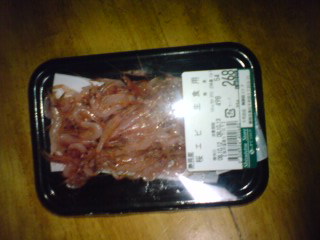
“Sakura Ebi/Cherry Blossom Shrimp” for 268 yen. These shrimps are exclusively caught of Yui shore in Shizuoka Prefecture.


“Katsuo Sashimi/Bonito Sashimi” for 480 yen from Shizuoka Prefecture, of course. Enormous portion!

“Myoga” and “Shiso” for 246 yen

Grand total: 1641 yen/less than US $ 16.50, enough for 4 persons (we managed to eat the whole, though!)!

Shizuoka Sushi Restaurant: Sushi Ko (revisited)


The Japan Blog List

Please check the new postings at:
sake, shochu and sushi

—————————————-
日本語のブログ
—————————————-

Last Thursday, as I had to atone for some somewhat egoistical pleasure-seeking, I took the Missus to our favourite Sushi Restaurant in Shizuoka City, namely Sushi Ko,located along Aoba Park.


Although we did order the inevitable favourites, “katsuo/bonito” sashimi, “Shirako to Ankimo/Combination of Cod Sperm sacs and Frogfish/Monkfish liver”, “Pon Kara Maguro/Deep-fried tuna cubes”, “Shishamo/Spirinchus lanceolatus”, “Hotate/Scallops”, “Maguro Zuke/Marinated Tuna sushi”, and “Amaebi nigiri to Shiraebi Gunkan/Sweet shrimp and white shrimp sushi”, the star of the day was “Kawahagi/Filefish”!

The chef took a splendid live specimen (see top pic) just caught off Mochimune coast in Shizuoka City out of the “aquarium” and proceeded to serve the complete fish in three different manners:


“O-Tsukuri”:
After having taken away the inedible skin, the chef first cut the fillets into very thin slices to be served with thin leeks and dip sauce made of ponzu mixed with the fresh liver of the same fish. As now is the best season, those comparatively thin fish come up with enormous livers!


“O nigiri”:
The chef managed to keep four slices aside to prepare nigiri with the fish flesh topped with a piece of its liver, some “momiji oroshi/grated daikon with chili pepper” and seasoned with ponzu!


“Kara age”:
The “cheeks bones” with their meat were last deep-fried and served as they are with some lemon. Simple and great!
All this with one single fish!

Sushi Ko
shizuoka City, Aoi Ku, Ryogae-cho. 2-3-1 (Aoba Koen)
Tel.: 054-2512898
Business Hours: 17:00~25:00. 17:00~23:00 (Sundays)
Closed on Wednesdays
Reservations recommended
Credit cards OK
HOMEPAGE (Japanese)

Shizuoka Japanese Cuisine: Tomii (revisited)


The Japan Blog List

Please check the new postings at:
sake, shochu and sushi

—————————————-
日本語のブログ
—————————————-

Last Wednesday, my merry companions, Etsuko, Melinda and Tim and I finally arrved at Tomii in Shizuoka after a long day interviewing local sake breweries.
It was fitting that it was also the first time I visited this favourite Japanese Cuisine Restaurant as it had just gone through a total re-designing.

The place is definitely more comfortable for it, having done with the mixture of Japanese and Western-style seating and adopted a more practical arrangement of tables and chairs that can either divided into smaller rooms or left completely open. The counter has been reduced by a third but is far more ongenila for it.

As for the Cuisine it is as high quality as ever with the difference that local sake has been increased to a toatl of nine with the notion of changing regularly to cover as many breweries as possible during the year.
We had actually asked the restaurant to prepare a meal according to the sake served.
We did managed to taste eight of them!
Just look at the food which was served with them and see if you recognize any!

Are you tempted?
I’m sure you are!

TOMII
Shizuoka City, Aoi Ku, Tokiwa-cho, 1-2-7, Tomii Bldg, 1F
Tel.: 054-274-0666
Business hours: 17:00~22:00
Closed on Sundays
HOMEPAGE

Sushi Ko: Sashimi and Sushi (revisited)


The Japan Blog List

Please check the new postings at:
sake, shochu and sushi

—————————————-
日本語のブログ
—————————————-

Thursday! If everything goes well (Rowena, don’t start shooting!) t means eating out with the Missus.
Well, no surprise at all, as she requested we visited that (ver) old favourite of ours, namely Sushi Ko Restaurant in Shizuoka City!
No need to explain anything. Let’s keep to the basics and explain some of the morsels we ordered (not all, as it would become a boring repeat!).
Above is “Ika Somen/cutte fish cut very thinly, hence the name “somen/thin noodles”. The cuttle-fish variety is “Yari Ika/Halberd cuttle fish or calamari in Italian”.

“Sanma/mackerel pike”, a seasonal fish, although tis particular one came from Hokkaido. We shall have to wait until September for the Shizuoka specimen!

“Shima Aji/Saurel variety”. Another seasonal fish. Almost sweet!

We could not resist from ordering that very special maki/roll: “Piri kara hotate maki/hot scallops roll coated with “tobiko/flying fish roe”. That one is for you, Allison!

Finally, my favourite (my wife tends to shun it!): Japanese Foie Gras/Ankimo-Frogfish Liver!

Naturally I will spare you such details as French Chardonnay wine for the Missus and Shizuoka sake for me (I know, I know…). If you come to shizuoka,make a point to contact me! LOL

Sushi Ko
shizuoka City, Aoi Ku, Ryogae-cho. 2-3-1 (Aoba Koen)
Tel.: 054-2512898
Business Hours: 17:00~25:00. 17:00~23:00 (Sundays)
Closed on Wednesdays
Reservations recommended
Credit cards OK
HOMEPAGE (Japanese)