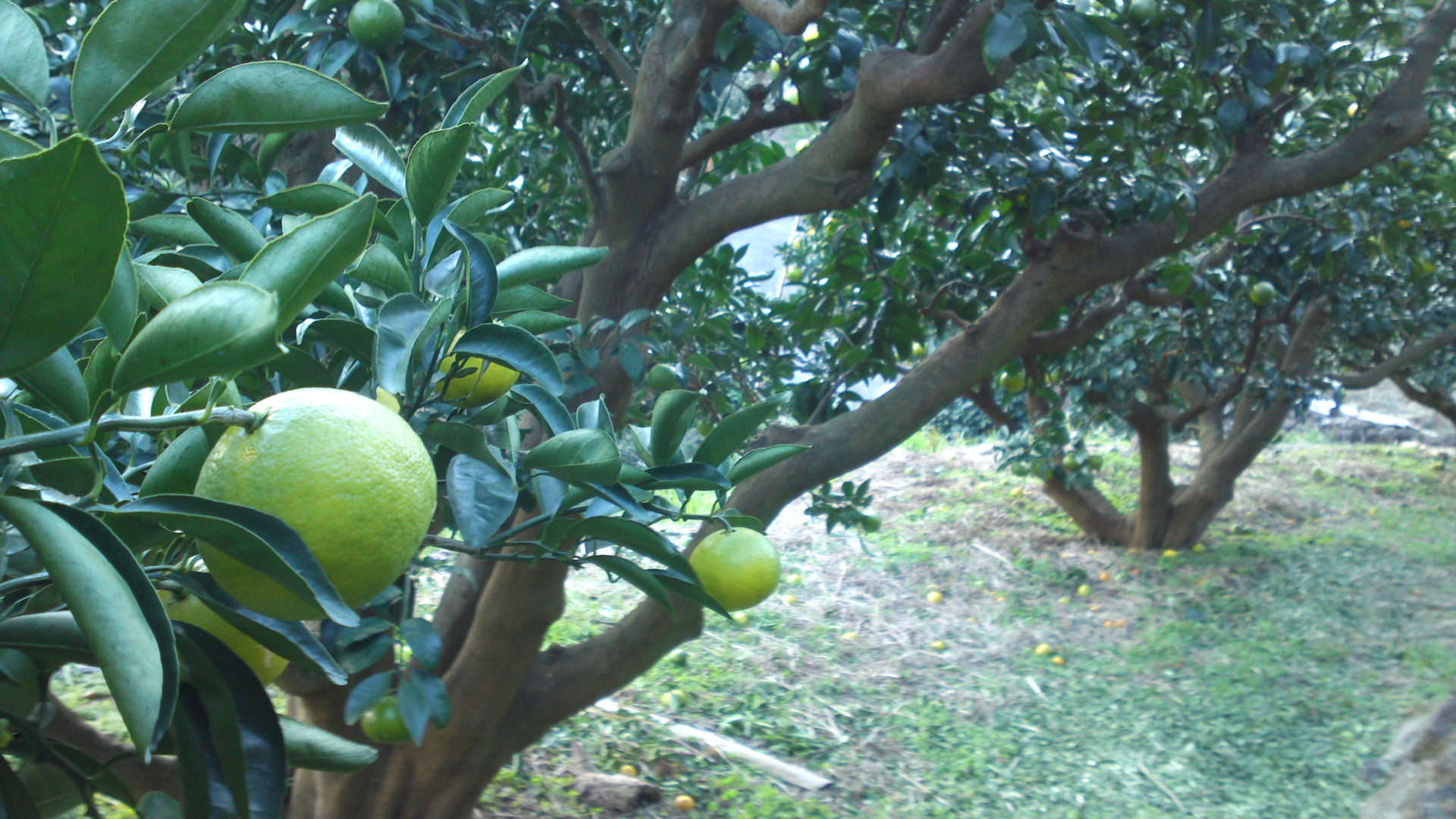
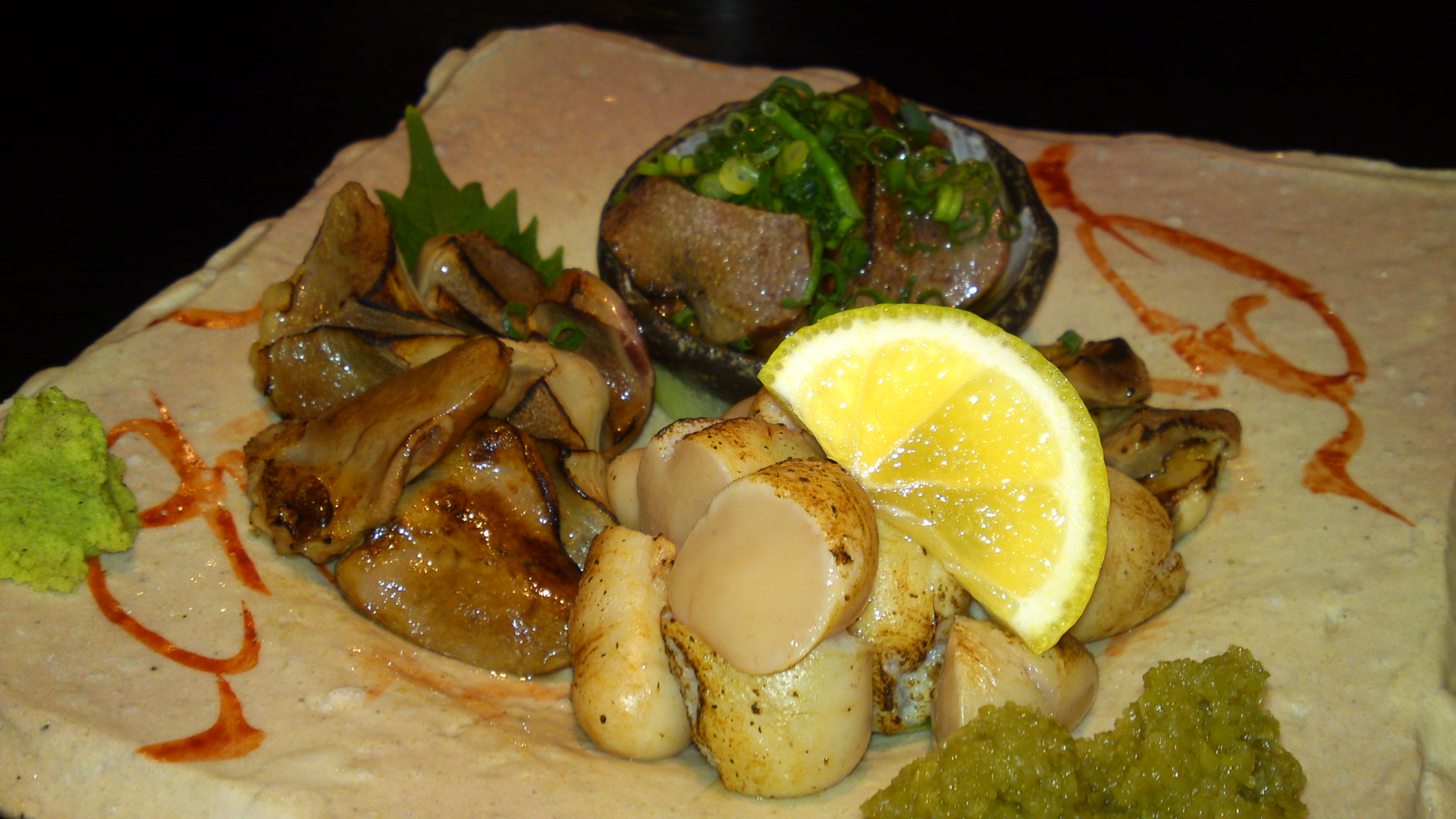
Tag Archives: Shizuoka

Today’s Lunch Box/Bento (’10/88): Oyakodon Bento

The Missus disagreed technically with the term “oyakodon” as she sid it should be a sort of soft omelette in one piece. She didn’t agree either with the term”Soboro” as it is fine and sweet omelette powder.
She just called “Chicken and Eggs”! LOL

What she did was to first fry the small chicken pieces in sauce before steaming the lot with the rice with the chicken on top. She later mixed the lot and added home-pickled Japanese pepper seeds.
She then added scrambled eggs.

For a closer view. She added tiny slices of home-pickled daikon for tatste and looks.

The “Garnish box” was kept healthy and simple:
Spicy fried burdock roots chips salad.
-Rape blossom plants/Na no Hana/菜の花 and carrots salad with gomadare sauce/sesame dressing.
-Shizuoka-grown kiwi fruit slices and tomatoes!

Healthy and simple, I said?

Adventures in Bento Making, American Bento, Beanbento, Bento No1, Bento Wo Tsukurimashou, Cooking Cute, Eula, Hapabento , Happy Bento, Jacki’s Bento Blog, Kitchen Cow, Leggo My Obento, Le Petit Journal Bento & CO (French), Lunch In A Box, My Bento Box, Vegan Lunch Box; Tokyo Tom Baker, Daily Food Porn/Osaka, Only Nature Food Porn, Happy Little Bento, The Herbed Kitchen, J-Mama’s Kitchen, Cook, Eat, Play, Repeat; Bento Lunch Blog (German); Adventures In Bento; Anna The Red’s Bento Factory; Cooking Cute; Timeless Gourmet; Bento Bug; Ideal Meal; Bentosaurus; Mr. Foodie (London/UK)

Please check the new postings at:
sake, shochu and sushi

—————————————-
日本語のブログ
—————————————-

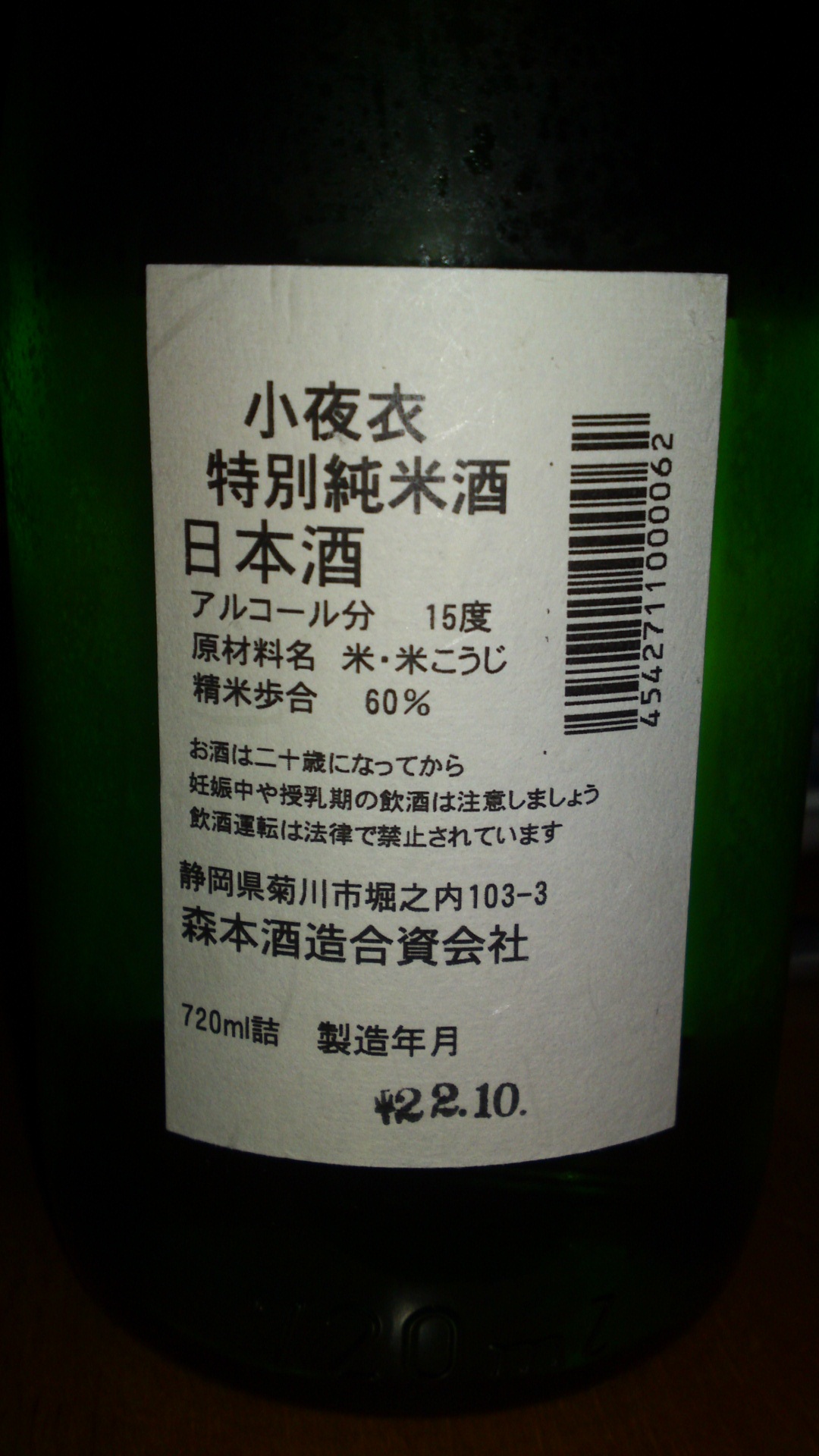
Shizuoka Sake Tasting: Morimoto Brewery-Sayogoromo Tokubetsu Junmai Homare Fuji

The great thing about Morimoto Brewery is the unpredictability of its sake!
All are worth tasting again and again every year as they show different characters and idyosincrasies.

This sake made with Shizuoka-grown Homare Fuji sake rice is another proof of their originality!

Morimoto Brewery: Sayogoromo Tokubetsu Junmai Homare
Fuji

Rice: Homare Fuji (Shizuoka-grown)
Rice milled down to 60%
Alcohol: 15~16 degrees
Bottled in October 2010

Clarity: very clear
Color: transparent
Aroma: Fruity, alcohol, custard, macadamia nuts. Sweetish and pleasurable
Taste: Very dry attack backed with a little pleasant alcohol and junmai petillant.
Fruity: custard, almond nuts, greens.
Disappears quickly with notes of coffee beans and dry almonds.
Sharpish, straightforward. Devised to accompany and complement food.
Changes little with food, turns only a little drier.

Overall: A very good sake for food, especially winter heavy food.
Contribute a dry note to balance heavy food.
A fine sake on its own, too!

Must-see tasting websites:
-Sake: Tokyo Through The Drinking Glass, Tokyo Foodcast, Urban Sake, Sake World
-Wine: Palate To Pen, Warren Bobrow, Cellar Tours, Ancient Fire Wines Blog
-Beer: Good Beer & Country Boys, Another Pint, Please!
-Japanese Pottery to enjoy your favourite drinks: Yellin Yakimono Gallery
——————————–
Please check the new postings at:
sake, shochu and sushi

—————————————-
日本語のブログ
—————————————-

Cream Cheese Tiramisu (Japanese style?)

The Japanese are very fond of their cream cheese and cheese cakes, But they are also crazy about tiramisu!
Here is a simple recipe uniting both in a Japanese style!

Cream Cheese Tiramisu!

INGREDIENTS: For a mold 15 X 20 cm

-Cream Cheese: 200 g
-Fresh Cream: 200 g
-Sugar: 100 g
-Rum (or brandy): 1 large spoon
-Soft Biscuits: 150 g

Coffee syrup:
-Water: 100 cc/1/2 cup
-Sugar: 30 g
Instant coffee: 2 teaspoons

Finishing:
-Cocoa powder: as appropriate

RECIPE:

1- Pour the ingredients for the coffee syrup into a large cup and let heat in a microwave oven for 1 minute. If the sugar is completely dissolved, let it cool down completely.

2- In a large bowl drop the cream cheese and work with a spatula until smooth. If too hard warm it up lightly first inside the microwave oven for 30~60 seconds.

3- Add one third of the sugar to the cream cheese and mix well. Repeat the same process once again.

4- In another bowl pour the fresh cream and add the remaining one third of the sugar and beat up until 80% hard.

5- Add and mix the cream cheese into the fresh cream one half at a time and mix well both times. Add rum (or brandy) and mix well.

6- Line the bottom of a mold with one layer of biscuits (half of the total). Brush the biscuits with plenty of coffee syrup (half).
Spread evenly one half of the cream cheese over the biscuits.
Lay the other layer of biscuits. Brush plenty of coffee syrup over the biscuits and evenly spread rest of cream cheese over the biscuits.

7- Sprinkle plenty of chocolate powder over the whole cream cheese with a sieve. Chill well and serve!

Easy, ain’t it?

RECOMMENDED RELATED SITES:
Warren Bobrow, Bread + Butter, Zoy Zhang, Hungry Neko, Think Twice, Frank Fariello, Mangantayon, Hapabento, Elinluv Tidbit Corner, Tokyo Terrace, Maison de Christina, Chrys Niles,Lexi, Culinary Musings, Wheeling Gourmet, Comestiblog, Chronicles Of A Curious Cook, Tokyo Through The Drinking Glass, Tokyo Foodcast, Palate To Pen, Yellin Yakimono Gallery, Tokyo Terrace, Hilah Cooking, More than a Mount Full, Arkonite Bento, Happy Little Bento; 5 Star Foodie; Jefferson’s Table; Oyster Culture; Gourmet Fury; Island Vittles; Good Beer & Country Boys; Rubber Slippers In Italy; Color Food daidokoro/Osaka;/a; The Witchy Kitchen; Citron Et Vanille, Lunsj Med Buffet/Estonian Gastronomy (English), Cook, Eat, Play, Repeat, Chrisoscope, Agrigraph, The Agriculture Portal to shizuoka!

Please check the new postings at:
sake, shochu and sushi

Bryan Baird’s Newsletter (2010/12/17)

Baird Beer & Taproom Events Bulletin
bryan-sayuri.gif

Holiday Season Release: Jubilation Ale!

Dear Taproom Friend & Baird Beer Enthusiast:

The year-end holiday season is upon us once again. As always we take this occasion as opportunity to recognize and celebrate the numerous blessings of life. As brewers, we like to eulogize these blessings in liquid form each December with the release of our special Jubilation Ale.

Jubilation Ale (ABV 7%):

This malty rich, festively red-hued ale derives its special character primarily from the addition of two wonderful local ingredients: (1) fully ripened and freshly picked figs (ichijiku) and (2) cinnamon twigs culled from a Japanese nikki tree. The full bodied character combined with the attendant alcohol strength will warm the flesh just as it brings jubilation to the soul.

Jubilation Ale will be available on draught and in bottles (633 ml) throughout Japan beginning Saturday, December 18. Consumer purchases of bottles direct from the brewery are possible through our online E-Shop: (http://bairdbeer.com/en/shop/).

Holiday Events at our Taprooms:
There is no place where you can better enjoy the jubilant spirit and warm camaraderie of the holiday season than at a cozy beer pub. And wonderful holiday cuisine? We have that for you also.

*Numazu Fishmarket Taproom:
Our chef will be preparing a gorgeous Christmas meal to be served both on Christmas eve (December 24 from 7:30 pm) and Christmas day (December 25 from 7:00 pm). The full meal costs 3,500 yen and reservations are required.

*Nakameguro Taproom:
Wonderful Christmas dishes will be served from December 23 (national holiday) through Christmas day. You can choose your dishes a la carte and match them with the beers of your preference. Reservations are not required.

New Year’s Eve countdown parties will be held on Friday, December 31 at both our Numazu Fishmarket and Nakameguro Taprooms (the Harajuku Taproom will be closed). Event details will be released early next week. The Harajuku Taproom will be open from January 1 for all of you who need refurbishment after an O-shogatsu visit to the nearby Meiji Shrine.

Happy Holidays!

Cheers,

Bryan Baird

Baird Brewing Company
Numazu, Japan
HOMEPAGE


The Japan Blog List

———————————
Must-see tasting websites:
-Sake: Tokyo Through The Drinking Glass, Tokyo Foodcast, Urban Sake, Sake World
-Wine: Palate To Pen, Warren Bobrow, Cellar Tours, Ancient Fire Wines Blog
-Beer: Good Beer & Country Boys, Another Pint, Please!
-Japanese Pottery to enjoy your favourite drinks: Yellin Yakimono Gallery
——————————–
Please check the new postings at:
sake, shochu and sushi

—————————————-
日本語のブログ
—————————————-

Miso Paste: Made Onsite at Miwa Agriroad

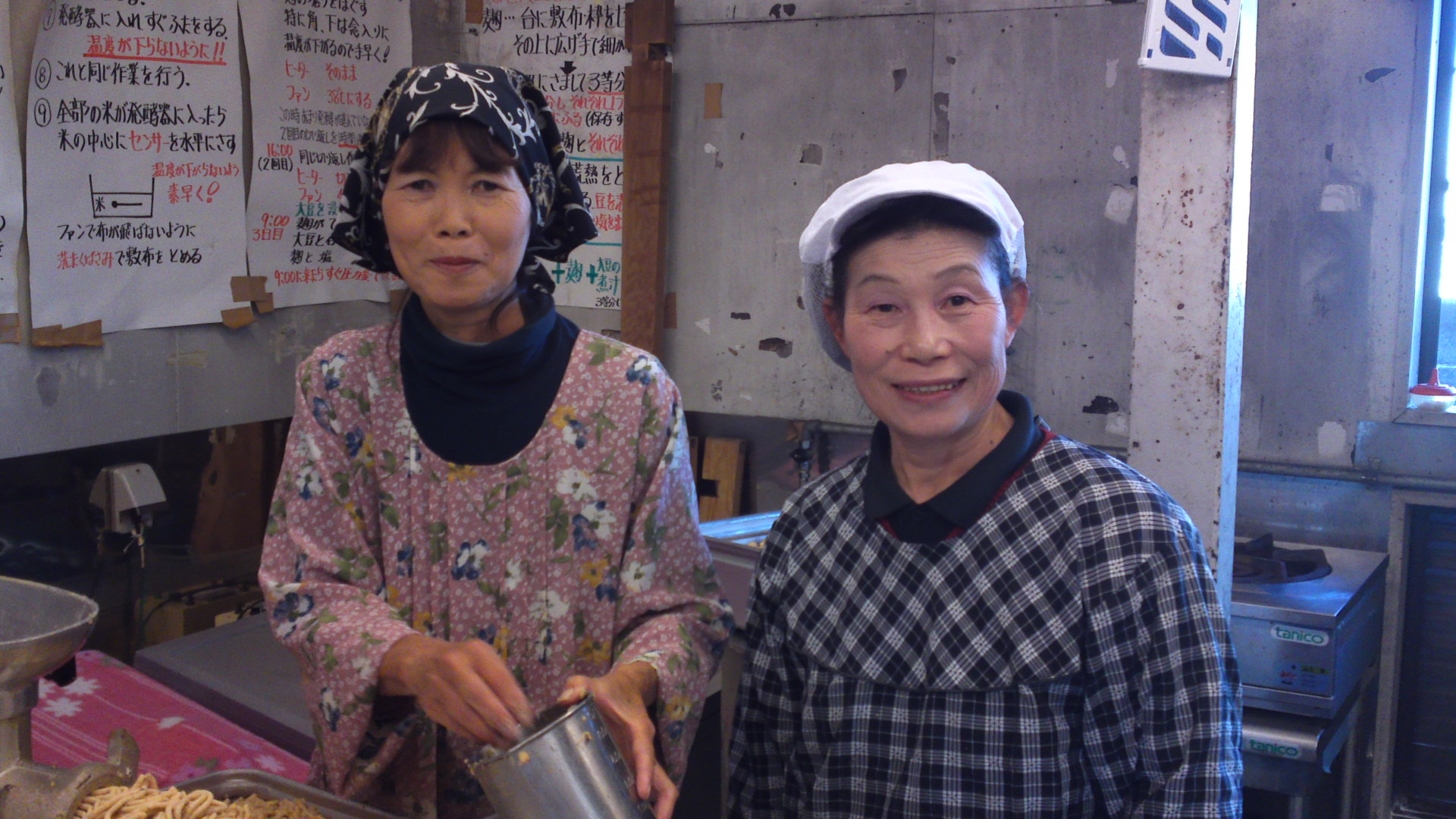
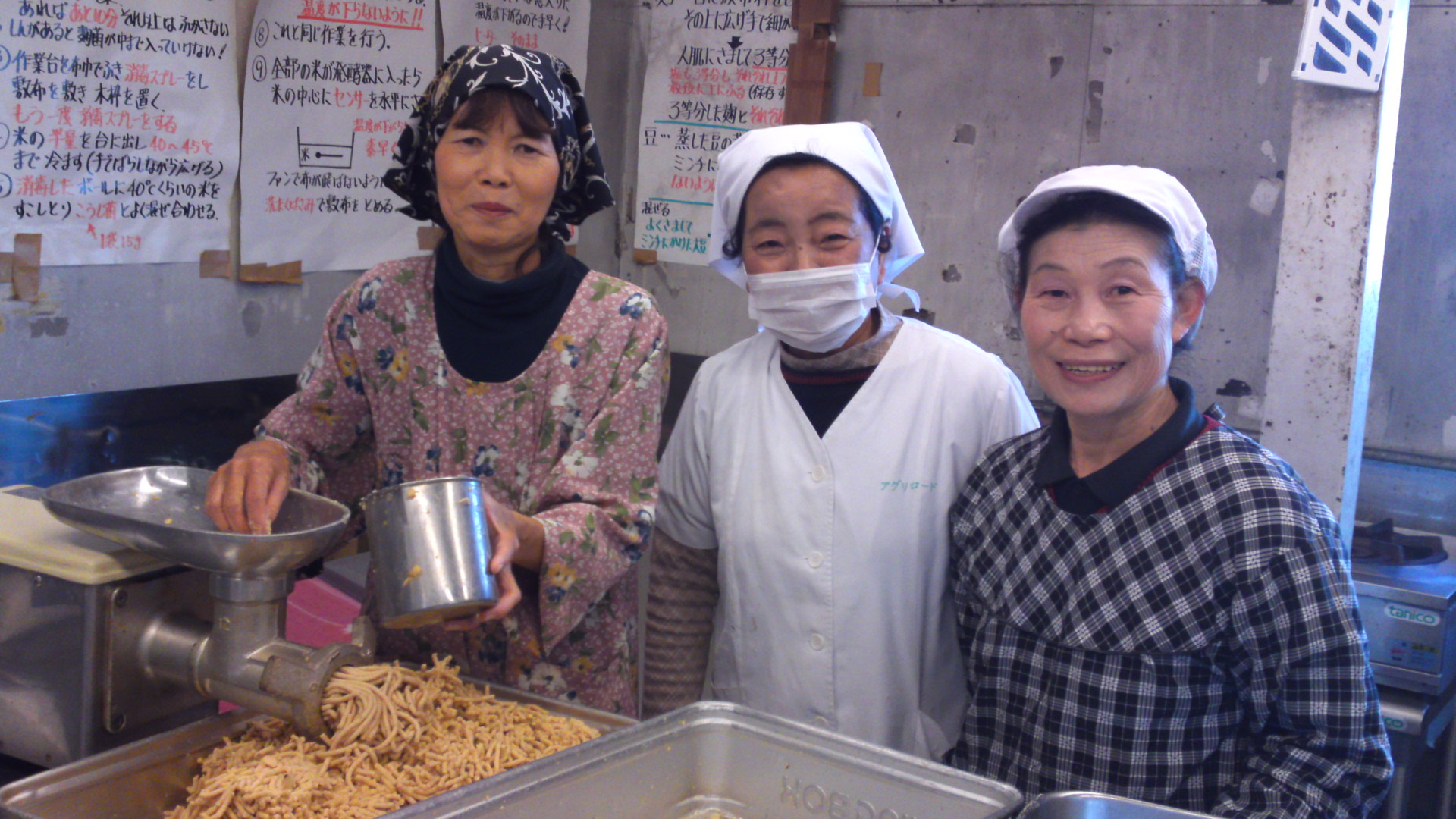
Mrs. Yukiko Mochizuki/望月幸子 and Mrs. Kayoko Mochizuki/望月加代子

“We make miso onsite for better quality, safety and traceability!”

Wednesday is on of the days I usually reserve for on-field interviews. On Wednesday mornings, whenever I have the chance, I try to meet my old friend, Mrs. Natsuko Koyanagi/小柳奈津子 in Agriroad Miwa, in Miwa, Aoi Ku, Shizuoka City.

As mentioned before, Agriroad Miwa is a market run in collaboration by the JA and local ladies to sell all kinds of vegetables, bentoes and processed foods prepared by more than 100 lady members.
There are quite a few of these locally-run markets in town and prefecture, and they are the best bet for freshest and best quality without mentioning the very low prices!

I had noticed for quite a while these big boxes of miso paste on sale at this market. At 650 yen for a kg, this is quite good value.

When I questioned Natsuko about it, she explained that it was made in turns by lady members inside the Agriroad Market kitchen between December and March!

Natsuko hiding behind her mask (she had just caught a cold! LOL)

Good miso should not be complicated to make.
The good thing about this particular miso is that it is not only fresh and free of all preservatives and whatnot found in mass-produced miso pastes, it is also safe, stable and traceable!

The big vat in which the soy beans are boiled.

What do you need, then?
Quantities will be also according to the size of your kitchen snd utensils, but the bigger, the better!
-Soy beans: 30 kg
-Rice: 30 kg
-Salt: coarse salt/arashio/荒塩. Natsuko actually uses rock salt form Nepal!: 12 kg
-Yeast/koujikin/麹菌: one standard pack (can be bought in specialized shops all over Japan)
-Water, water, and more water (lol)

The ladies of the day were kind enough to explain the process with plenty of smiles!
The soybeans are first soaked for a whole night and then boiled until soft. Keep some of the soybeans water when you want to adjust the miso paste humidity later instead of plain water!
Agriroad uses soybeans grown in Hokkaido.

At the same time wash, rince and steam the rice. Old rice, that is from the previous year’s harvest, is best.
Agriroad uses exclusively local rice and salt made in Japan.
Let the rice cool down just a little. Sprinkle the yeast all over it evenly and let ferment for one day and a half (break it and mix it a few times).

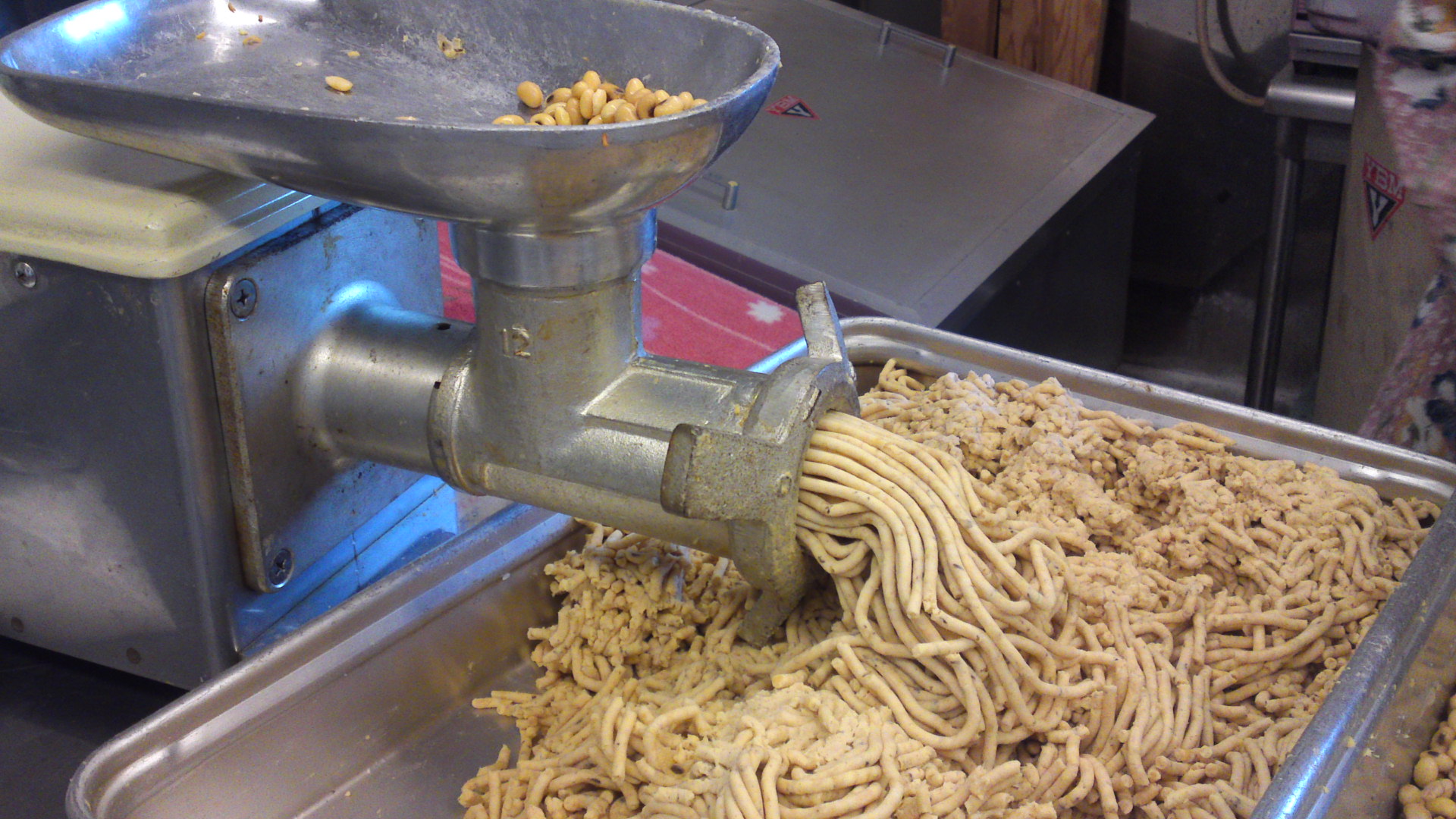
Mash the soybeans.

Pour the mashed soybeans, fermented rice, salt, and whenever wanted (use your eyes and tastebuds) the “juices”/soybean boil water (cold) and mix well.

And that’s it!
Pour the miso into jars or other vessels, close tightly.
Some people use it as it is, but is best matured for 6 months at room temperature in winter or in the fridge in summer.

This the basic and delicious recipe.
Natsuko mixes her own with yuzu/lime/柚子!

Agriraod miwa/アグリロード美和
〒421-2114 Shizuoka Shi, Aoi Ku, Abeguchishinden, 537-1.
〒421-2114 静岡市葵区安部口新田, 537-1.
Tel.: 054-296-7878.
Fax: 054-296-7878
Business hours: 09:30~15:30 (from 08:30 on Saturday, Sunday and Holidays)

RECOMMENDED RELATED SITES:
Warren Bobrow, Bread + Butter, Zoy Zhang, Hungry Neko, Think Twice, Frank Fariello, Mangantayon, Hapabento, Elinluv Tidbit Corner, Tokyo Terrace, Maison de Christina, Chrys Niles,Lexi, Culinary Musings, Wheeling Gourmet, Comestiblog, Chronicles Of A Curious Cook, Tokyo Through The Drinking Glass, Tokyo Foodcast, Palate To Pen, Yellin Yakimono Gallery, Tokyo Terrace, Hilah Cooking, More than a Mount Full, Arkonite Bento, Happy Little Bento; 5 Star Foodie; Jefferson’s Table; Oyster Culture; Gourmet Fury; Island Vittles; Good Beer & Country Boys; Rubber Slippers In Italy; Color Food daidokoro/Osaka;/a; The Witchy Kitchen; Citron Et Vanille, Lunsj Med Buffet/Estonian Gastronomy (English), Cook, Eat, Play, Repeat, Chrisoscope, Agrigraph, The Agriculture Portal to shizuoka!

Please check the new postings at:
sake, shochu and sushi

Today’s Lunch Box/Bento (’10/87): Two-Tiered Shrimp Sushi Bento

It seems that after all, that cold of mine (ours) is going to leave me alone soon.. I certainly have the appetite to prove it!
The only problem is that the Missus keeps badering me on my waistline!
Anyway the colors in today’s bento seem to point out that she was in a comparatively better mood!

For the staple dish she prepared an easy sushi rice seasoned with finely chopped japanese pickles.
She made two tiers with each layer covered with boiled shrimps (without the “tails” om the first tier), small cubes of avocado and cheese and, thin bits of lemon and Italian parsley.

Plenty of colors again in the “garnish” box:
Boiled broccoli with walnuts and sprinkled with chestnut powder.
Red radishes and soft-boiled egg.
Salad of thin slices of red and yellow apples and cress.

Tasty and refreshing!

Adventures in Bento Making, American Bento, Beanbento, Bento No1, Bento Wo Tsukurimashou, Cooking Cute, Eula, Hapabento , Happy Bento, Jacki’s Bento Blog, Kitchen Cow, Leggo My Obento, Le Petit Journal Bento & CO (French), Lunch In A Box, My Bento Box, Vegan Lunch Box; Tokyo Tom Baker, Daily Food Porn/Osaka, Only Nature Food Porn, Happy Little Bento, The Herbed Kitchen, J-Mama’s Kitchen, Cook, Eat, Play, Repeat; Bento Lunch Blog (German); Adventures In Bento; Anna The Red’s Bento Factory; Cooking Cute; Timeless Gourmet; Bento Bug; Ideal Meal; Bentosaurus; Mr. Foodie (London/UK)

Please check the new postings at:
sake, shochu and sushi

—————————————-
日本語のブログ
—————————————-

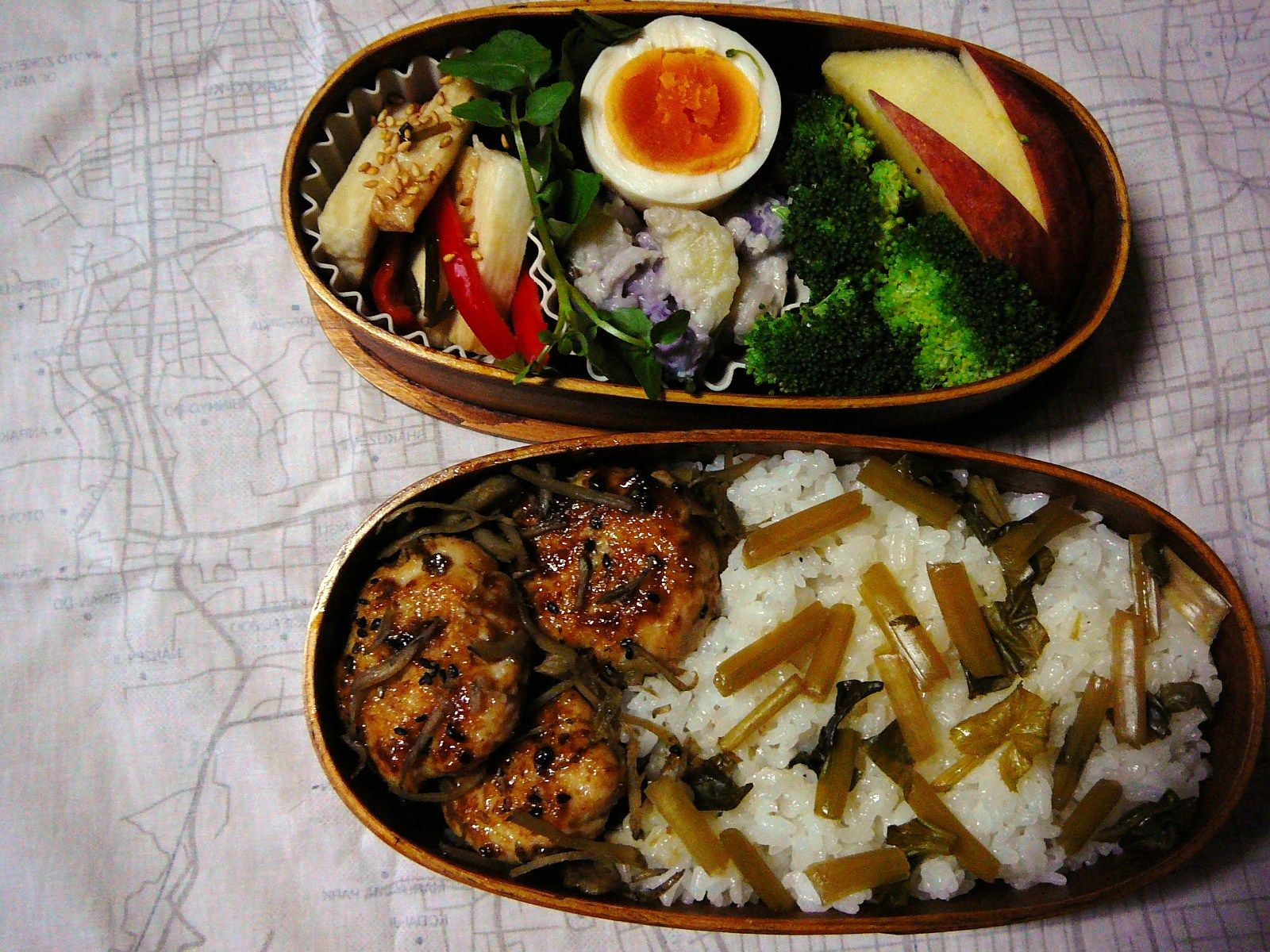
Today’s Lunch Box/Bento (’10/86): Chicken Balls Bento

It seems that the Missus and I cannot get rid of our cold and coughs (orginally the Missus’!) although it has started improving. But with all these people falling under the curse, one is not careful enough.
That is when you need a hearty lunch!

Some ingredients are actually useful against colds, especially wasabi.
The other day I had brought a whole root with its stems and leaves and the Missus was more than happy to make pickles with the stems and leaves.
Accordingly she prepared plain rice and spread plenty of wasabi pickles over it.

We are very much in the season for durock root/goboo/牛蒡 and we naver can get enough.
The Missus make thin chips out of them.
After preparing chicken balls of her own (secret) recipe (fried and broiled) she placed them on a bed of budock root chips with some more on top of the chicken balls with black roasted sesame seeds.

As for the “garnish” box, plenty of vitamin and natural health food with a salad of raw yamamimo/yams, pimentoes, konbu/seaweed and sesame seeds, another salad of potatoes and violet sweet potatoes and fresh cress, Boiled broccoli on a mayonnaise bed, a half boiled egg and honey core apple.

I must admit that the Missus is trying hard getting us rid of those colds!LOL

Adventures in Bento Making, American Bento, Beanbento, Bento No1, Bento Wo Tsukurimashou, Cooking Cute, Eula, Hapabento , Happy Bento, Jacki’s Bento Blog, Kitchen Cow, Leggo My Obento, Le Petit Journal Bento & CO (French), Lunch In A Box, My Bento Box, Vegan Lunch Box; Tokyo Tom Baker, Daily Food Porn/Osaka, Only Nature Food Porn, Happy Little Bento, The Herbed Kitchen, J-Mama’s Kitchen, Cook, Eat, Play, Repeat; Bento Lunch Blog (German); Adventures In Bento; Anna The Red’s Bento Factory; Cooking Cute; Timeless Gourmet; Bento Bug; Ideal Meal; Bentosaurus; Mr. Foodie (London/UK)

Please check the new postings at:
sake, shochu and sushi

—————————————-
日本語のブログ
—————————————-

Agricultural Products from Producer to the Gastronomic Table: LOCOMANI

Ranking
Very friendly and relaxed
Equipment: Very clean
Prices: Very reasonable
Strong points:Freshest produce and ingredients only, mainly from Shizuoka Prefecture. Organic vegetables. Seasonal food only

Entirely non-smoking!

“Healthy and tasty Shizuoka food!”

When Shigeyuki Aoshima/青島茂幸 (35) and his wife Hiroko/寛子 (33) opened Locomani in Takajo Machi, Shizuoka City in June 2008 they were on a mission: create healthy food for all and mainly from Shizuoka products.

Their restaurant/cafe is a very cozy place all wood and country decoration, a warm place to enjoy slow food at lunch or early dinner or a little haven for a quiet drink and a book or friend.

Their menus outside and inside are written in Japanese but they will be glad to explain the food to foreigners, however long it will take with a constant smile. Actually both are very shy, but once the ice is broken they enjoy a good talk!

Chicken in Peking Duck fashion set meal.

They cater both for vegetarians (vegan is possible on order) and omnivores. They always use the freshest ingredients and organic vegetables whenever possible.

Even set lunches (all priced at 1,000 yen) are for the main part vegetables, cooked or raw.

genmai/玄米/whole rice

Rice can be ordered white, genmai/玄米/whole, or half white, half whole.

Vegetarian kuruma fun katsu/車ふんカツ lunch set

The katsu/cutlets are vegetarian and served with an apple and miso sauce!

Organic vegetables curry set

This very tasty curry is practically vegan as they use coconut milk!

All set lunches come with miso soup and three-year old organic tea!
As a rule they change 2 of 4 set lunches every week (the other two, including the organic vegetable curry are “regular set lunches”)

Fresh fig tart

if you come in the afternoon be on the lookout for their simple but great seasonal desserts!

As I mentioned above, the Aoshimas are always trying to use local vegetables, especially organic vegetables, and others. Accordingly they are on a constant search of new sources.
If you are a gardener, producer or farmer proud of your vegetables, do contact them for an eventual business collaboration!

And do check their blog. too!

LOCOMANI
Shizuoka City, Aoi Ku, Takajo machi, 1-10-06
静岡市葵区鷹匠町1-10-06
Tel.: 054-260-6622
opening hours: 11:30~20:00
Closed on Wednesdays

Blog: http://rokomani.exblog.jp/

RECOMMENDED RELATED SITES:
Warren Bobrow, Bread + Butter, Zoy Zhang, Hungry Neko, Think Twice, Frank Fariello, Mangantayon, Hapabento, Elinluv Tidbit Corner, Tokyo Terrace, Maison de Christina, Chrys Niles,Lexi, Culinary Musings, Wheeling Gourmet, Comestiblog, Chronicles Of A Curious Cook, Tokyo Through The Drinking Glass, Tokyo Foodcast, Palate To Pen, Yellin Yakimono Gallery, Tokyo Terrace, Hilah Cooking, More than a Mount Full, Arkonite Bento, Happy Little Bento; 5 Star Foodie; Jefferson’s Table; Oyster Culture; Gourmet Fury; Island Vittles; Good Beer & Country Boys; Rubber Slippers In Italy; Color Food daidokoro/Osaka;/a; The Witchy Kitchen; Citron Et Vanille, Lunsj Med Buffet/Estonian Gastronomy (English), Cook, Eat, Play, Repeat, Chrisoscope

Please check the new postings at:
sake, shochu and sushi

Bryan Baird’s Newsletter (2010/12/09)

Baird Beer & Taproom Events Bulletin
bryan-sayuri.gif

Seasonal Releases: West Coast Wheat Wine and More!

Dear Taproom Friend & Baird Beer Enthusiast:

The cool weather and short days provide the perfect season for the enjoyment of hearty, warming and complex ales of potency. We are pleased to greet the season with the release of our 2010 version of West Coast Wheat Wine. To make this year’s release extra special, we are unveiling new brand artwork for West Coast Wheat Wine crafted for us by our friend and immensely talented artist, Ms. Eiko Nishida.

Wheat Wine is a beer style born on the U.S. West Coast in the 1980s, thought to have been originally brewed at the Rubicon brewery-pub in Sacramento, California. It has as its progenitor the British Barely Wine style. A Wheat Wine, generally, is characterized by a rich and hearty complexity that is lightened and made a touch sprite by a predominantly wheat, rather than barley, malt base. It is a style representative of the irreverent creativity and unrelenting passion that are hallmarks of craft brewing on the West Coast of the United States. Baird West Coast Wheat Wine is crafted in annual homage to the skilled brewing artisans and fearless beer entrepreneurs who have pioneered craft brewing on America’s great West Coast!

This 2010 version of West Coast Wheat Wine contains no character malt whatsoever and thus appears in a wonderfully hazy hue of sunset gold. The flavor is characterized by a deep, layered wheat malt complexity that is complemented beautifully by a cleanly bitter hop character (exclusive use of U.S. West Coast hops: Magnum, Horizon, Perle, Sterling). Two yeasts (American and Scottish) combine in two stages of fermentation to add further flavor complexity and to produce a piquant all-natural carbonation.

West Coast Wheat Wine will be available at various of our Taproom pubs and at other Baird Beer retailing pubs and liquor shops beginning Friday, December 10. Bottles (633 ml) can be purchased by individual consumers direct from the brewery via our online E-Shop.

Other New Seasonal Beers on Tap:
We also have just released two new small-batch ales which are pouring as Real Ale from the hand-pumps of our three Taproom pubs: Queen & Country Pale Ale and Wheaty Stout.

*Queen & Country Pale Ale (ABV 5%):

This British-style Pale Ale is a deep golden-amber color, exhibits a pleasant caramel-like sweetness in the mouth and finishes with a burst of herbal hop flavor. The dry-hop aroma (NZ Hallertau Aroma and Slovenian Styrian Golding) is grassy, herbal and just a touch spicy.

*Wheaty Stout (ABV 6%):

Midnight black in color and pouring with a massively dense tan-brown head, this hoppy stout (50 BUs of a combination of Warrior, Columbus, Simcoe, Amarillo) is surprisingly light in body due to ample additions of an unique blend of wheat malts (British base wheat, carawheat, chocolate wheat, and un-malted roasted wheat). If you enjoy stouts and porters, this is a must try.

Please visit one of our Taproom pubs soon for a tasting of these splendid real ales.

Holiday Season Cheers!

Cheers,

Bryan Baird

Baird Brewing Company
Numazu, Japan
HOMEPAGE


The Japan Blog List

———————————
Must-see tasting websites:
-Sake: Tokyo Through The Drinking Glass, Tokyo Foodcast, Urban Sake, Sake World
-Wine: Palate To Pen, Warren Bobrow, Cellar Tours, Ancient Fire Wines Blog
-Beer: Good Beer & Country Boys, Another Pint, Please!
-Japanese Pottery to enjoy your favourite drinks: Yellin Yakimono Gallery
——————————–
Please check the new postings at:
sake, shochu and sushi

—————————————-
日本語のブログ
—————————————-

The Yamaguchis’ Benihoppe Strawberry Fields (beginning of December)

Mrs. Tamako Yamaguchi/山口玉子 and her daughter Haruka/晴香

Last Monday, December 6th, I traveled to the Izu Peninsula for the second time in eight days.
The occasion was my third visit to Yamaguchi Benihoppe Strawberry Farm.

Their daughter, Haruka (she is also a student of mine at University!), was on hand to pick me up at Mishima JR Station and drive me all the way to Nirayama/韮山 in Izu No Kuni City/伊豆の国市.

It was another gorgeous day of that unending Autumn and Mount Fuji kept an eye on us all the time!

Her father, Mitsuo/光雄, being away to a meeting ,Haruka had arranged the interview with her mother who knows as much as her husband.
When we arrived at her home (above picture) her mother, Tamako/玉子, was still busy in one of their greenhouses, so we took a leisurely tour of their home and the neighborhood.

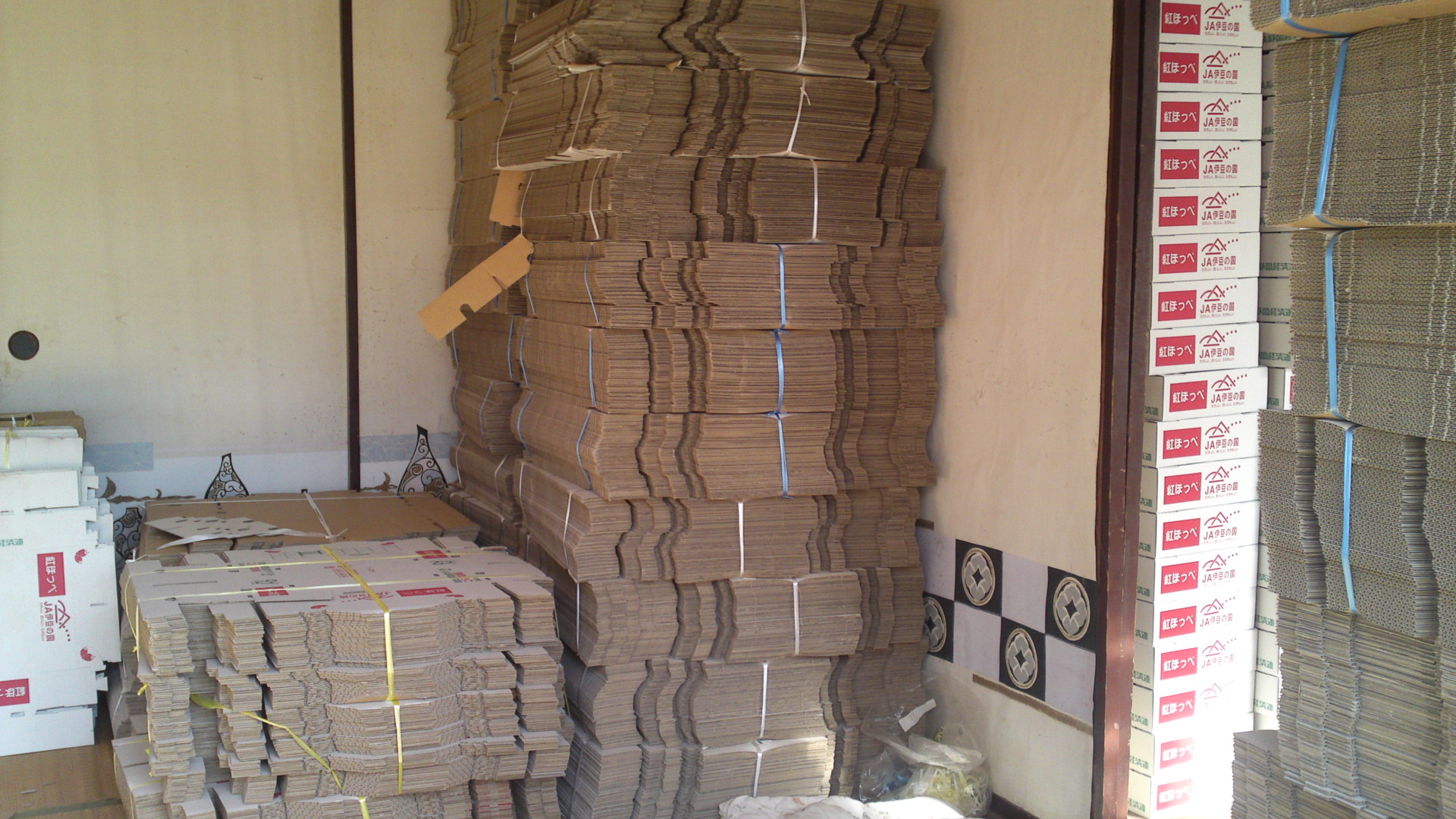
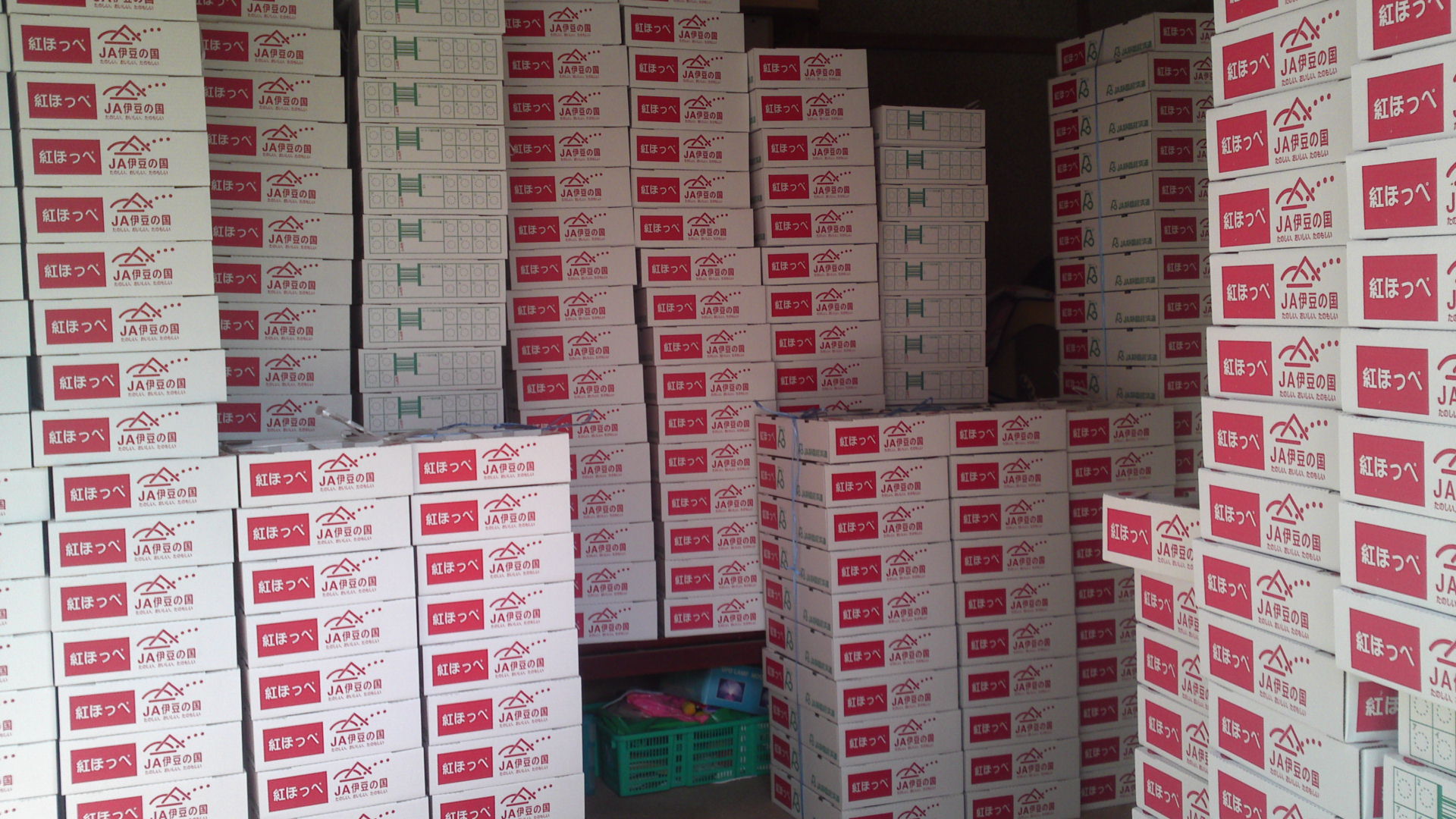
The strawberry packages storeroom.
Plenty of work every morning!

The strawberries are usually picked early every morning, sorted, packed and stored into a large refrigerator before being sent and delivered the next morning.

Near their home I noticed the sign of an abandoned yakiniku restaurant. The name of the sake advertized, Kikugenji/菊源氏 was from a brewery in Izu Peninsula which has been absorbed by Bandai Brewery/万代酒造 quite some time ago. It must have been abandoned a long time ago!

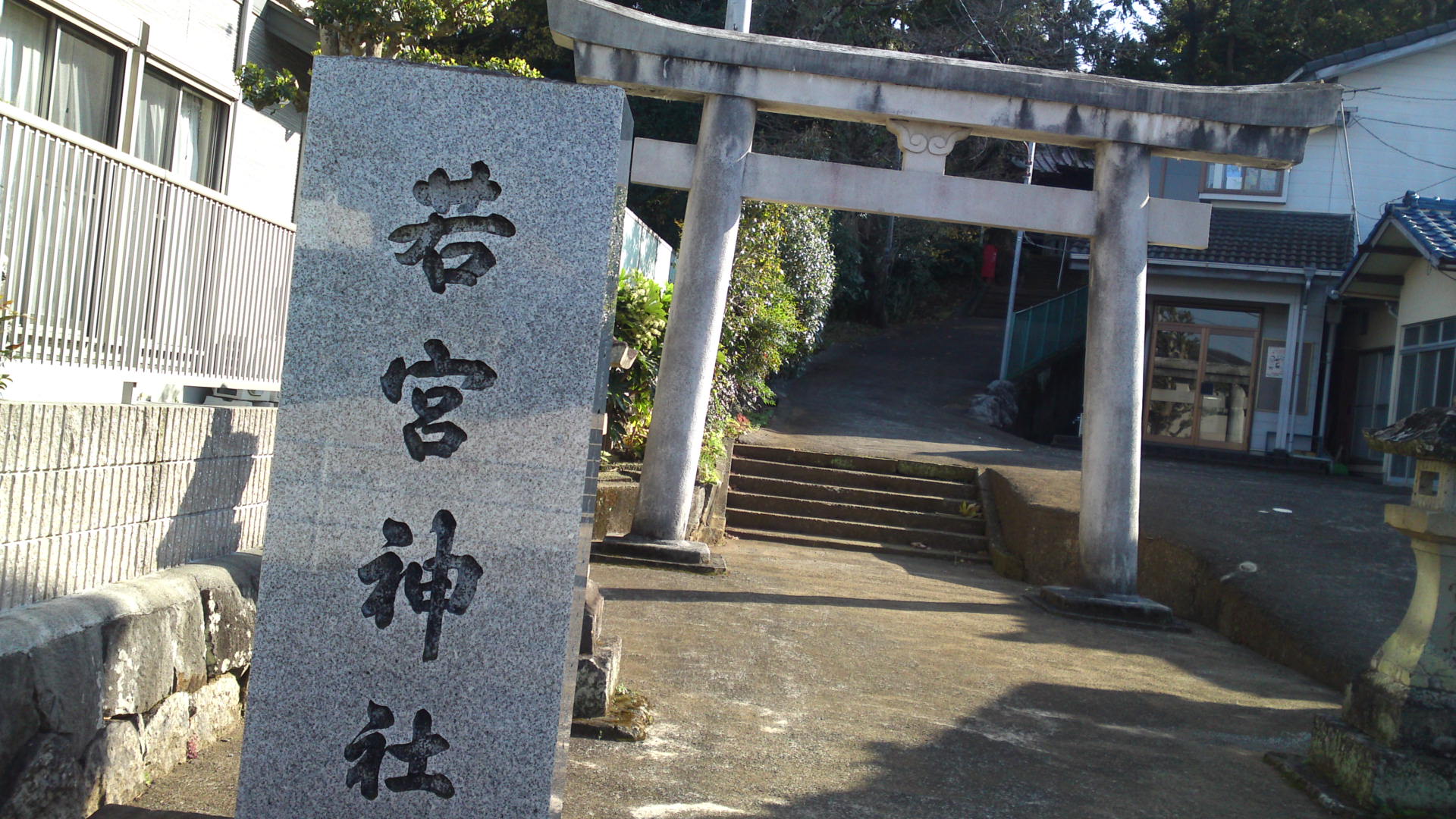
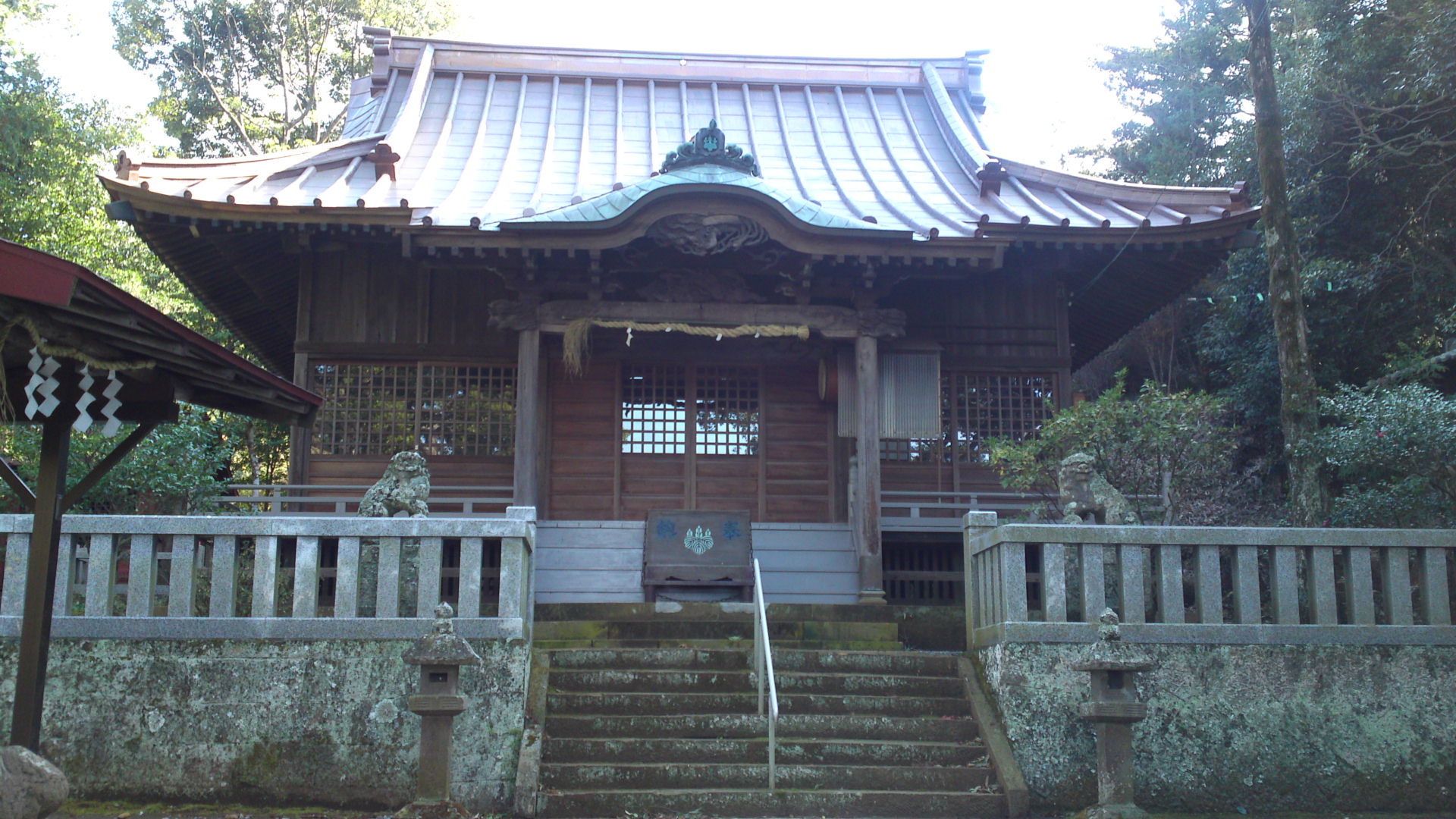
Just next to their home again is the entrance to a shinto shrine called Wakamiya Jinja/若宮神社.
If you look carefully around you will found many of them tucked away in the Japanese countryside!

This one is not that old by Japanese standards (1926), but it did look venerable!

Her mother finally joined us and we all went to one of their many greenhouses.
You will find a box in front of every greenhouse. They are beehives. Mr. Yamaguchi does not bother about frills and makes his boxes practical. The bees don’t seem to mind! The latter are very peaceful, used as they are to humans.
Usually other growers will borrow such boxes for a fee.
Strawberry culture might be possible without the bees, but you will never obtain large fruit of a regular shape!

Those “bee boxes” don’t look much from the outside, but they are so valuable that they have to secured against theft (unfortunately it regularly happens!)!

A very small exit from the beehive and a slightly larger entrance into the greenhouse.

Inside the greenhouse. A lot of green foliage, but don’t worry, plenty of strawberries can be found under it!
On the average each plant produces 20 crops!

Each grower has his/her own techniques.
The Yamaguchis keep the inner temperature at nearly 30 degrees Celsius with this apparatus.

This apparatus will distribute carbon dioxide gas to help fruition.
It is carefully used and as little as possible. The Yamaguchis understand they cannot avoid using it but they do so sparsely and with utmost care.

As a rule, the Yamaguchis do not use pesticides from the very moment the plants are transfered to soil inside the greenhouses. They fight pests in many ways: these sticky yellow cards will catch a lot of insects, especially flies. The bees practically never get caught as they are placed well above the plants. They also use natural enemies such as ladybugs.

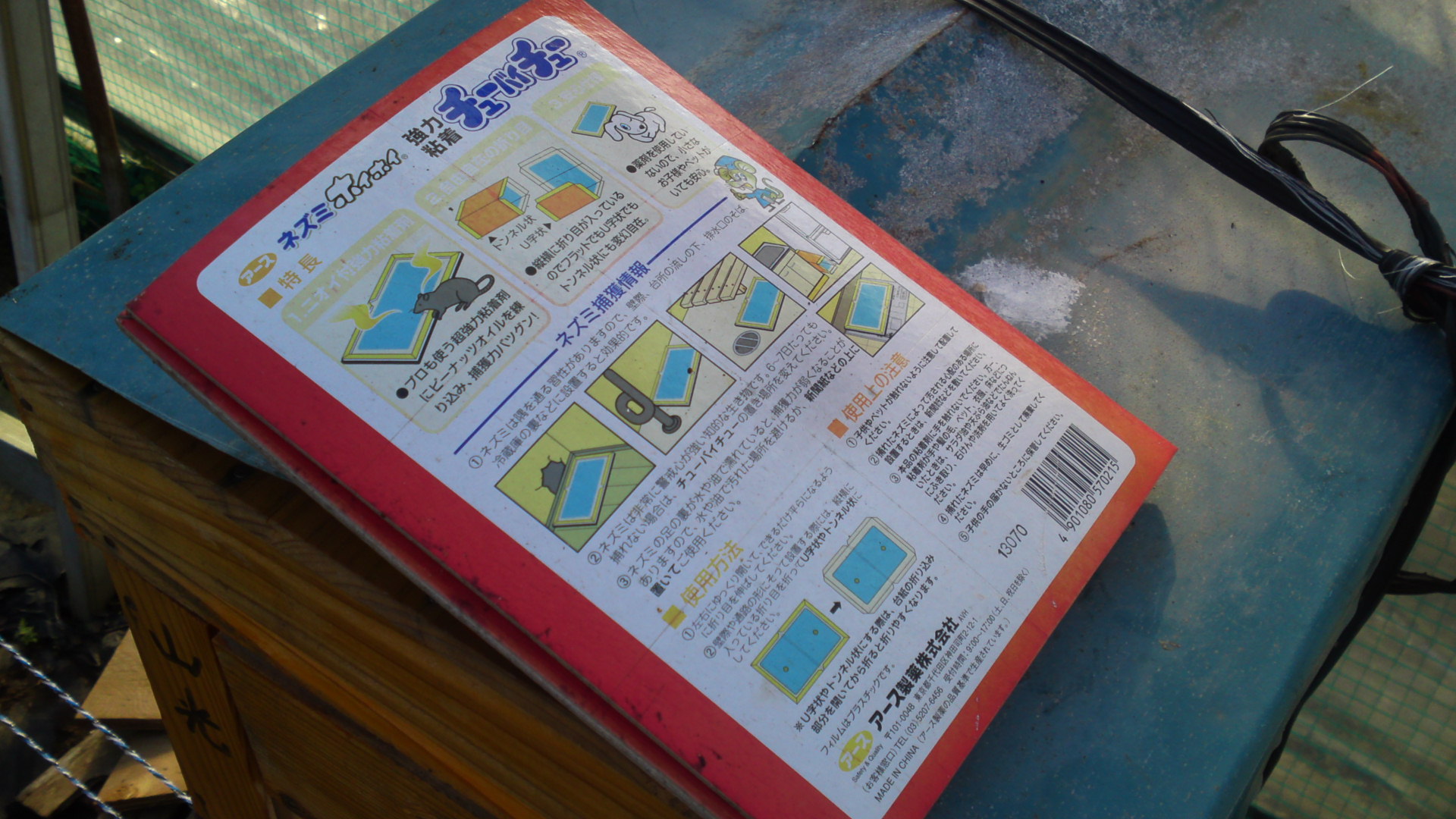
These traps are usually devised for mice, but placed atop the beehives, they will catch nastier enemies!

Giant carnivorous wasps/suzumebachi/雀蜂 and what else!

At night they have to surround the greenhouses with electric wires to fend off hakubishin/白鼻芯/civets! Those pests (they can eat a whole crop in a single night!) found their way into Japan through our very Prefecture in 1945 when pets from China were abandoned into the wild!

The space between the rows is filled with rice husks to absorb excess humidity and allow for easier harvesting.

Strawberry flowers.

A bee pollinating a flower.
They produce top-class honey!

A view of the strawberries in the afternoon which had been harvesting the morning.

Because of the very large demand for Christmas cakes, the small round strawberries are the most expensive in this season.
After Christmas, the plants will be regularly pruned to allow only for large strawberries.

But I was offered no less than 4 boxes of these great large specimens!

Enormous!
They are always packed with their sepals, otherwise they would lose half of their Vitamin C and nutrients within half an hour.
Strawberries without their sepals in cakes are not that good for the body, whereas half a dozen medium ones (with their sepals) pack enough Vitamin C for a whole day!

Yamaguchi Benihoppe Strawberry Farm
410-2114, Izu no Kuni, Nan-jo, 8
Tel.: 055-949-2330

RECOMMENDED RELATED SITES:
Warren Bobrow, Bread + Butter, Zoy Zhang, Hungry Neko, Think Twice, Frank Fariello, Mangantayon, Hapabento, Elinluv Tidbit Corner, Tokyo Terrace, Maison de Christina, Chrys Niles,Lexi, Culinary Musings, Wheeling Gourmet, Comestiblog, Chronicles Of A Curious Cook, Tokyo Through The Drinking Glass, Tokyo Foodcast, Palate To Pen, Yellin Yakimono Gallery, Tokyo Terrace, Hilah Cooking, More than a Mount Full, Arkonite Bento, Happy Little Bento; 5 Star Foodie; Jefferson’s Table; Oyster Culture; Gourmet Fury; Island Vittles; Good Beer & Country Boys; Rubber Slippers In Italy; Color Food daidokoro/Osaka;/a; The Witchy Kitchen; Citron Et Vanille, Lunsj Med Buffet/Estonian Gastronomy (English), Cook, Eat, Play, Repeat, Chrisoscope, Agrigraph, The Agriculture Portal to shizuoka!

Please check the new postings at:
sake, shochu and sushi

Today’s Lunch Box/Bento (’10/85): “Crabby” Bento!

Why did I call this bento “crabby”?
Well, the Missus was “crabby”, meaning she was in a slightly foul mood! LOL
The other reason is that she did use you crab in her bento!

After steaming the rice she prepared simple balls of rice mixed with a few capers inside cellophane paper.
She unwrapped them, made an indent in their middle by pressing the ball with her thumb, filled the indent with mayonnaise and placed some crab in the middle.
All the crab came from frozen boiled pincers!
She then placed the balls inside the bamboo fiber box individually wrapped in lettuce.

As for the “Garnish” she included a salad of carrot tagliatelle and mixed boiled beans in one half and fresh tamagoyaki/Japanese omelette with lettuce and home-pickled radish.

For dessert she included a ponkan orange I brought from the other side of Izu Peninsula.

Simple, colourful and very satisfying!
I still have to get rid of the cold the Missus was so kind to give me!LOL

Adventures in Bento Making, American Bento, Beanbento, Bento No1, Bento Wo Tsukurimashou, Cooking Cute, Eula, Hapabento , Happy Bento, Jacki’s Bento Blog, Kitchen Cow, Leggo My Obento, Le Petit Journal Bento & CO (French), Lunch In A Box, My Bento Box, Vegan Lunch Box; Tokyo Tom Baker, Daily Food Porn/Osaka, Only Nature Food Porn, Happy Little Bento, The Herbed Kitchen, J-Mama’s Kitchen, Cook, Eat, Play, Repeat; Bento Lunch Blog (German); Adventures In Bento; Anna The Red’s Bento Factory; Cooking Cute; Timeless Gourmet; Bento Bug; Ideal Meal; Bentosaurus; Mr. Foodie (London/UK)

Please check the new postings at:
sake, shochu and sushi

—————————————-
日本語のブログ
—————————————-

Today’s Lunch Box/Bento (’10/84): A bento For A Cold

The Missus is a kind lady: she even gives me her colds!
I certainly needed a healthy meal to help go along with this predicament!

I must she came up with a good idea by steaming the rice with vegetables including chopped red pimetoes and burdock roots with curry powder mix she later seasoned with black sesame seeds and to which she some French pickles.

A very colourful and hearty “garnish dish”!

Salad of violet sweet potaoes, walnuts and cheese with lettuce to accompany her specialty: karaage chicken/deep-fried chicken!

Semi-hard boiled egg, boiled string beans and tomato, more lettuce and lemon for extra seasoning! Plenty of Vitamins here!

Shizuoka-grown Benihoppe/Red Cheeks strawberries (more Viamin C!) and banana chips (for more nutrients!).

The cold had somewhat abated by then and I do hope I will feel better tomorrow!LOL

Adventures in Bento Making, American Bento, Beanbento, Bento No1, Bento Wo Tsukurimashou, Cooking Cute, Eula, Hapabento , Happy Bento, Jacki’s Bento Blog, Kitchen Cow, Leggo My Obento, Le Petit Journal Bento & CO (French), Lunch In A Box, My Bento Box, Vegan Lunch Box; Tokyo Tom Baker, Daily Food Porn/Osaka, Only Nature Food Porn, Happy Little Bento, The Herbed Kitchen, J-Mama’s Kitchen, Cook, Eat, Play, Repeat; Bento Lunch Blog (German); Adventures In Bento; Anna The Red’s Bento Factory; Cooking Cute; Timeless Gourmet; Bento Bug; Ideal Meal; Bentosaurus; Mr. Foodie (London/UK)

Please check the new postings at:
sake, shochu and sushi

—————————————-
日本語のブログ
—————————————-

Healthy Oranges in a Healthy Environment: Shiratori Orchard in Izu Peninsula

Healthy Oranges in a Healthy Environment!

Last Monday I somehow managed to get a full day free (and I certainly needed the whole of it!). My good friend Yasushi Imaizumi/今泉康 drove me on a grand tour of the Eastern part of Shizuoka Prefecture.
Our destination was a remote place deep south the eastern coast of Izu Peninsula.

The day was just gorgeous!
Absolutely blue skies and mild temperatures.
We just couldn’t help taking pictures of snow-capped Mount Fuji on the way!

It took us (Yasushi) three hours to drive down to Shirata/白田, near the minuscule fishing harbor of Inatori/稲取, in Kamo Gun/賀茂郡, only a short distance from Shimoda City/下田市.

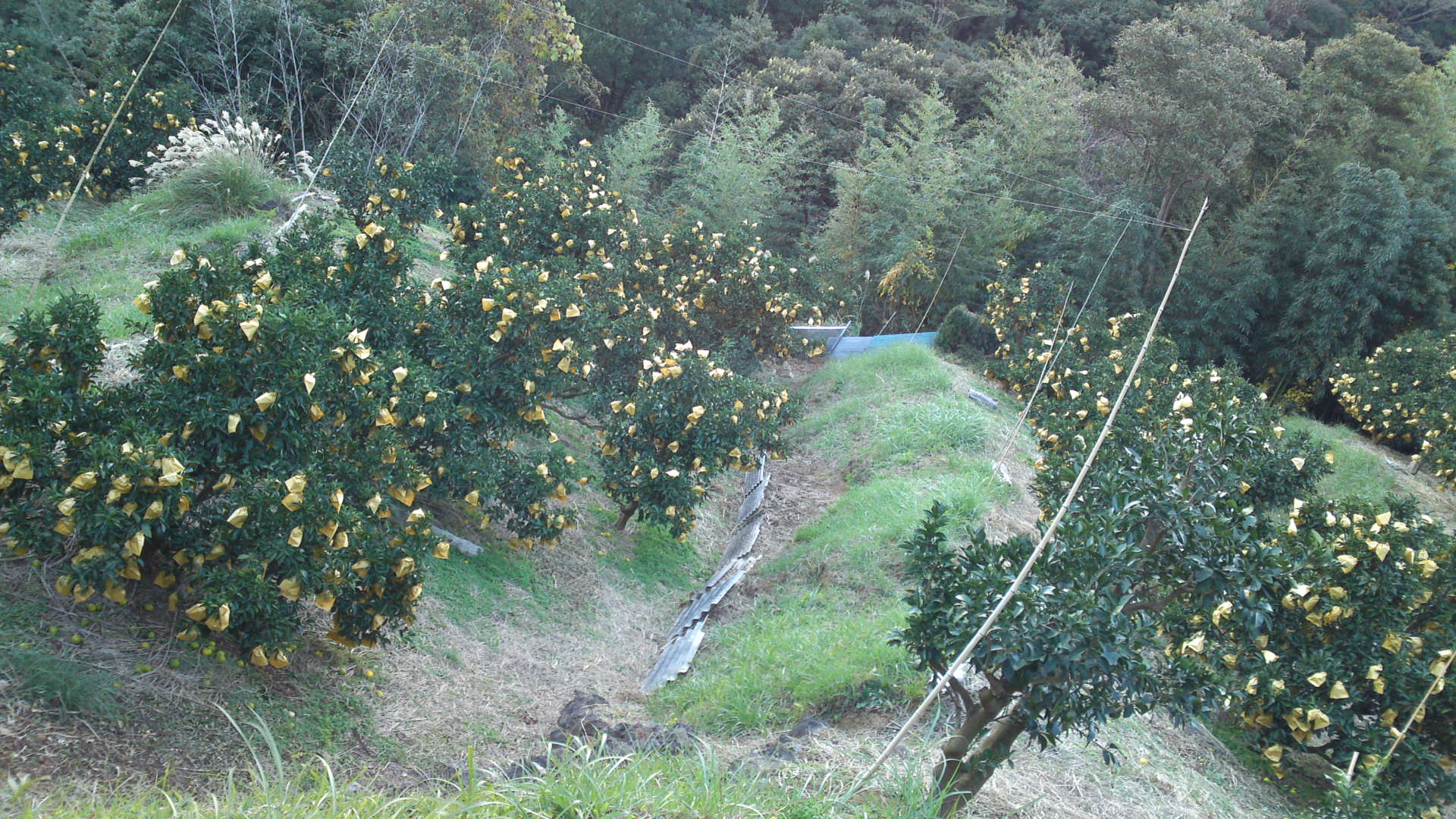
There, we discovered the oranges orchard of the Shiratori Family with an incredible view over the ocean. By clear weather you can see as far as Oshima/大島 Island!
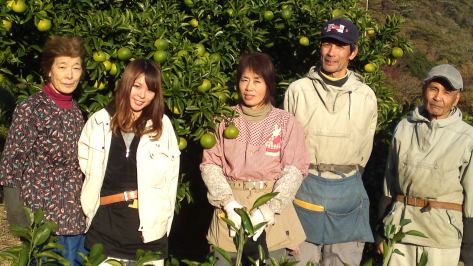
Miyoko Shiratori/白鳥美代子, a live-in student, her daughter-in-law, Hiroko/弘子, her son, Takehisa/岳寿 and her husband, Ryuusaku/龍作.

Mr. Ryuusaku Shiratori/白鳥龍作 (82), was a seventh generation of growers of rice, tea, oranges and wasabi back in Shizuoka City until he decided to move there 40 years ago to become the first of three generations of orange growers.
This must have been the right choice as he and his wife Miyoko/美代子 could pose in any magazines as models of incredibly healthy longevity!

Having bought those 2 ha of steep terrain, he had it buldozzed into shelves within three days!

I can tell you that you need good feet and good eyes to move through the orchard!

He has never looked back since then!
He is presently helped by his son Takehisa/岳寿 (54), his daughter-in-law, Hiroko/弘子 (49) and his grandson Tatsumi/達巳 (26). They also get the very much needed hands of a live-in student from Shizuoka City.

Ryuusaku Shiratori demonstrating cuttings to my friend Yasushi.

They do grow many varieties of oranges and one of them, a hybrid developed by Ryuusaku, Shiratori Hyuuga/白鳥日向 (developed from Hyuuga Natsu/日向夏 from Miyazaki Prefecture in Kyushu Island) has been registered with the Japanese Agriculture & Forestry Ministry!
Actually, he is quite well-known as no later than a week before a whole Tokyo HHK TV crew of 10 staff and 2 cameras spent a whole day there!
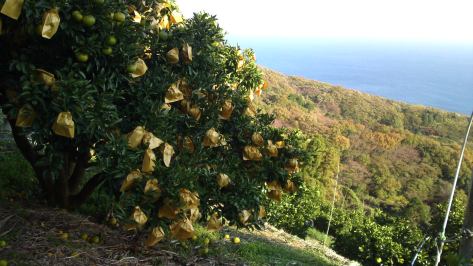
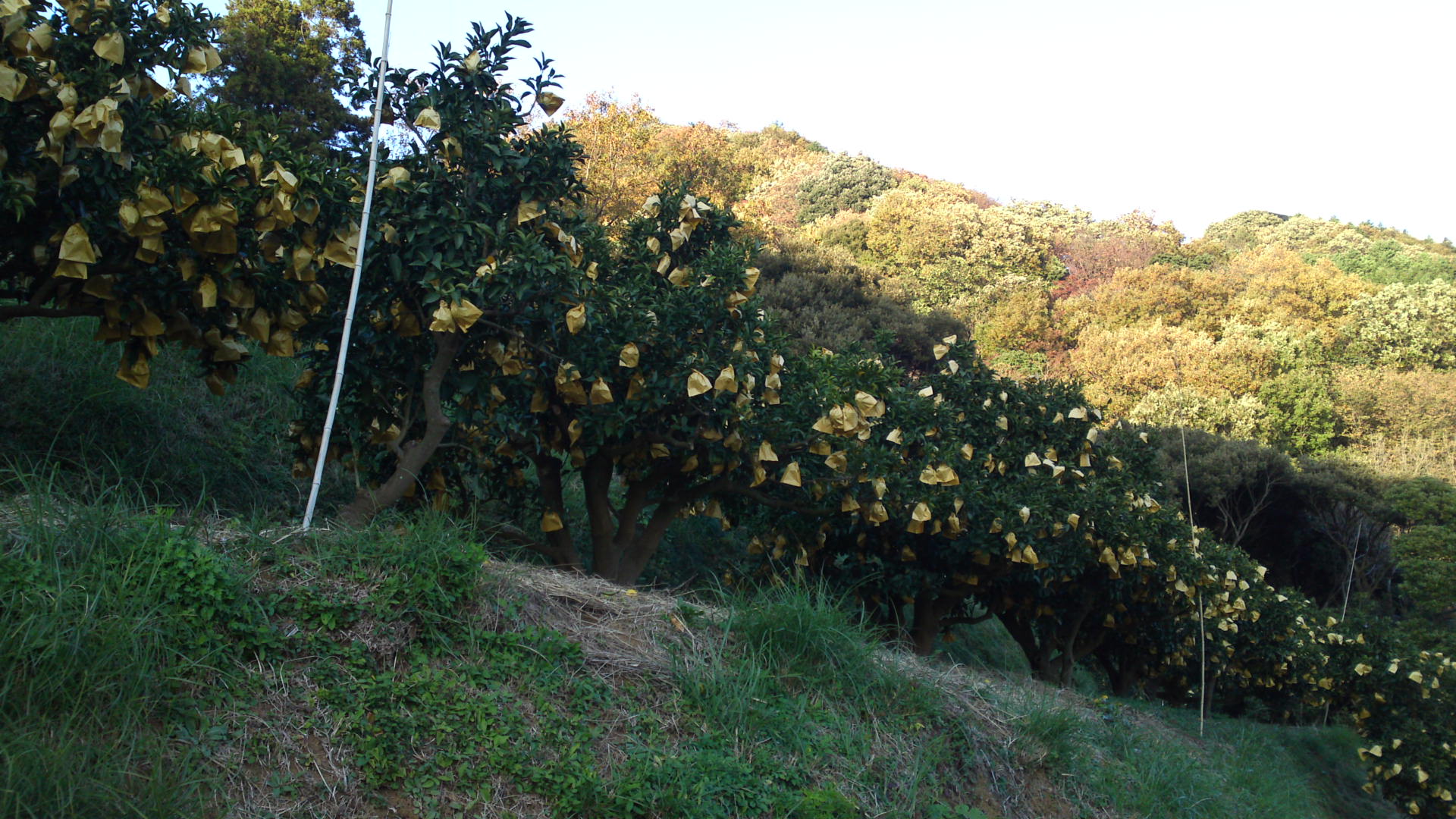
These Hyuuga Shiratori oranges are carefully pruned away to leave only the best fruit which are wrapped in paper for better fruition!
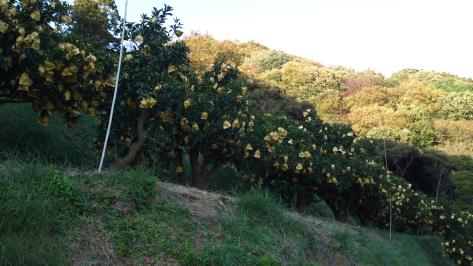
Another view of the trees!
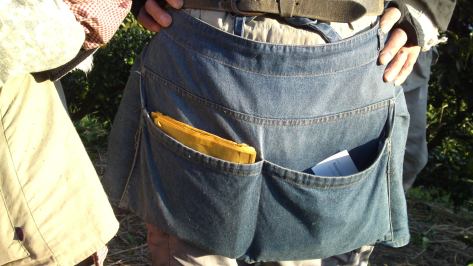
The wrapping takes days and days!
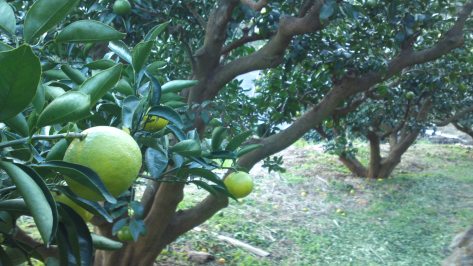
40-years old trees! They can be harvested until the grand age of 60 years!

Trees are propagated with cuttings planted directly into the soil.
These new trees will be completely pruned for 4~5 years before harvesting the first oranges.
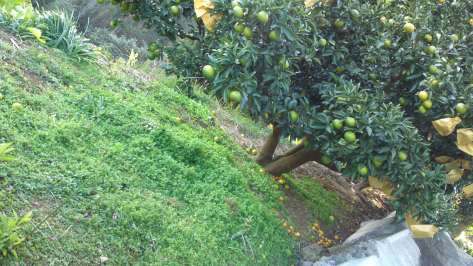
100% organic culture is impossible, but the Shiratoris reckon that their orchard is more than 90% organic. The second and third generations have actually been awarded the title of Ecofarmers by the Government!
Fertilizer is practically organic. You understand it when you see the beautiful grass growing between the trees.
As for pests, they use the very minimum of pesticides and introduce natural enemies of such pests such as ladybugs and other carnivorous insects!
Pollination is done either by hand, with the help of the wind, or with rented bees!

Their Shiratori Hyuuga oranges, although seedless and full of juice, will take two more months to mature to a tasty and sweet juice.


This beauty is not ready yet!
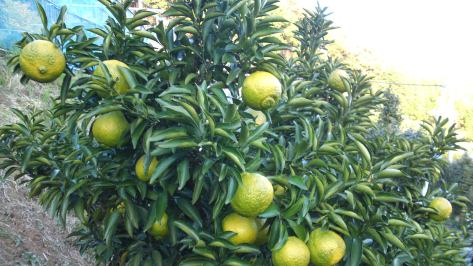
New Summer Oranges (will be mature in May!)

As I said, they grow many varieties to organize a constant harvest and delivery.
Among them Haruka/晴香, Ponkan/ポンカン, and New Summer Oranges are extremely popular.
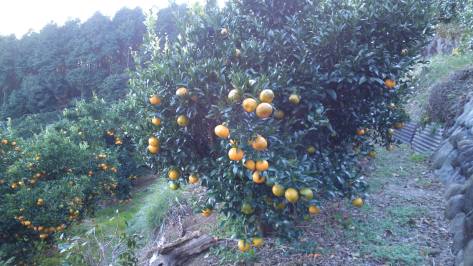
Ponkan ready for harvest and delivery!

They do grow and experiment with other fruit such as loquats/biwa/琵琶!

Although great exposure to the sun and big differences of temperature between day and night are welcome, the wind isn’t!
To fend off the wind, Ryuusaku planted hedges of camelias/tusbaki/椿.
He likes them so much that he made a point to plant as many varieties as possible. He invited me to admire them next February!

They do also grow a lot of their own food, such as these shiitake mushrooms and string beans I was offered to take back home with a whole bunch of ponkan!

Since I have to make at least two more trips expect more pics and explanations!

Shiratori Orchard/白鳥農園
413-0304 Shizuoka Ken, Kamo Gun, Higashi izu Cho, Shirata, 1742
413-0304 静岡県賀茂郡東伊豆町白田1742
Tel./Fax: 0557-95-2083
Mobile phone: 090-7025-6659

Check their HOMEPAGE for orange varieties, prices and orders!

RECOMMENDED RELATED SITES:
Warren Bobrow, Bread + Butter, Zoy Zhang, Hungry Neko, Think Twice, Frank Fariello, Mangantayon, Hapabento, Elinluv Tidbit Corner, Tokyo Terrace, Maison de Christina, Chrys Niles,Lexi, Culinary Musings, Wheeling Gourmet, Comestiblog, Chronicles Of A Curious Cook, Tokyo Through The Drinking Glass, Tokyo Foodcast, Palate To Pen, Yellin Yakimono Gallery, Tokyo Terrace, Hilah Cooking, More than a Mount Full, Arkonite Bento, Happy Little Bento; 5 Star Foodie; Jefferson’s Table; Oyster Culture; Gourmet Fury; Island Vittles; Good Beer & Country Boys; Rubber Slippers In Italy; Color Food daidokoro/Osaka;/a; The Witchy Kitchen; Citron Et Vanille, Lunsj Med Buffet/Estonian Gastronomy (English), Cook, Eat, Play, Repeat, Chrisoscope, Agrigraph, The Agriculture Portal to shizuoka!

Please check the new postings at:
sake, shochu and sushi

Shizuoka Agricultural Products from The Producers to the Gastronomic Table: Dinner at UZU

Organic vegetables shabu-shabu

Service: excellent, easy-going and very friendly
Facilities: great washroom, great cleanliness overall
Prices: very reasonable, good value.
Strong points: Very fresh local ingredients, especially organic vegetables extensively used. Local sake. Home-made umeshu. Great shochu list.

Uzu has become the reference in the whole Shizuoka Prefecture when it comes to enjoy local ingredients of the highest quality in a Japanese Izakaya or Restaurant!

The “oyakata”/Chef, Mr. Yoshimura constantly scours the whole Prefecture for the best vegetables, meat, fish and fruit.
But he will neither scorn a great product if it is not from Shizuoka, especially shochu! But more than 90% of the food was grown, caught or raised in our plains, mountains and sea!
The overwhelming result of his enthusiasm is that he can please anyone whatever his/her gastronomic priorities.
A phone call beforehand will be enough to devise a vegan, vegetarian or omnivore meal!

As an example, let me describe what the four of us ordered there a couple of weeks ago. Do not forget we also had plenty of local sake/jizake/地酒!
The above picture features sashimi Shizuoka is particularly famous for:
-Katsuo/鰹/Bonito from Suruga Bay.
-Kinmedai/金目鯛/Splendid Alfonsino (interesting name in English!) from the Izu peninsula.
-Benimasu/紅鱒/Rainbow Trout raised in Fujinomya City at the foot of Mount Fuji!

Shamo Chicken/軍鶏 from Umegashima up the Abe River.
This dish solely consists of grilled or fried offal including shirako/白子/sperm sacs! Don’t worry, these morsels can be served only if they are super fresh and the chef has a special license!

Organic green tomatoes from Matsuki Biofarm in Fujinomiya City served as tempura!

Fried (enormous) lotus roots/renkon/蓮根 from Asabata/麻端 in Shizuoka City. So crunchy and satisfying!

Salad of organic mushrooms and broccoli from Matsuki Biofarm!

Organic Vegetables (from Matsuki Biofarm) Shabu Shabu!
Bear in mind this particular dish must be ordered at least 2 days in advance!

The Shabu Shabu is served with a great soup (can be ordered vegan!) in which you either dip or simmer the fresh vegetables to your liking!

Depending on the season and the ever-changing menu one can order organic salads such as above (I had it one month ago!) and many other delicacies!
Make a point of checking their homepage first (even if you don’t read Japanese, the pictures will give you a good idea of what’s in store for you!)

UZU
Shizuoka City, Otowa-cho, 3-18
Tel.: 054-249-6262
Business hours: 17:00~23:00
Closed on Mondays and first Tuesday
Reservations recommended
Credit cards OK
HOMEPAGE (Japanese)

RECOMMENDED RELATED SITES:
Warren Bobrow, Bread + Butter, Zoy Zhang, Hungry Neko, Think Twice, Frank Fariello, Mangantayon, Hapabento, Elinluv Tidbit Corner, Tokyo Terrace, Maison de Christina, Chrys Niles,Lexi, Culinary Musings, Wheeling Gourmet, Comestiblog, Chronicles Of A Curious Cook, Tokyo Through The Drinking Glass, Tokyo Foodcast, Palate To Pen, Yellin Yakimono Gallery, Tokyo Terrace, Hilah Cooking, More than a Mount Full, Arkonite Bento, Happy Little Bento; 5 Star Foodie; Jefferson’s Table; Oyster Culture; Gourmet Fury; Island Vittles; Good Beer & Country Boys; Rubber Slippers In Italy; Color Food daidokoro/Osaka;/a; The Witchy Kitchen; Citron Et Vanille, Lunsj Med Buffet/Estonian Gastronomy (English), Cook, Eat, Play, Repeat, Chrisoscope, Agrigraph, The Agriculture Portal to shizuoka!

Please check the new postings at:
sake, shochu and sushi

A Japanese Gardener’s Winter Preparations

Looking at my dear neighbor, Mr. Yoshizo Sugiyama’s garden this morning I realized that winter was about to fall on us in spite of the prevailing mild weather.
The telltale signs were the fruit and vegetables hung out to dry as the climate will turn very dry and cold enough for such a process.

I know he has a few persimmon/kaki/柿 trees in another plot he’s lent for some time.
Dried persimmons are a typical Japanese delicacy, and they certainly don’t come cheap on the market. It is definitely worth drying them yourself!
The persmmons are first peeled, then a twine is passed through them under their sepals before they are hung to dry.
The fruit will reduce to less than half their size and will be delicious with all their concentrated sugar!

The daikon of the same garden were being for takuan/沢庵 or Japanese pickled daikon!

In spite of their crazy shapes, these dailon will make excellent pickles.
They were first thoroughly washed before being hung.
Beside them you can also freshly hung persimmons and more that are almost completely matured into dry fruit.

The picture shows you how easy to hang the daikon.
Their heavy leaves are used as a counterweight with the result there is not need to secure them with twine.
After the daikon have dried to almost half their size they will be pickled for the whole winter!
The same picture shows you again the persimmons!

RECOMMENDED RELATED SITES:
Warren Bobrow, Bread + Butter, Zoy Zhang, Hungry Neko, Think Twice, Frank Fariello, Mangantayon, Hapabento, Elinluv Tidbit Corner, Tokyo Terrace, Maison de Christina, Chrys Niles,Lexi, Culinary Musings, Wheeling Gourmet, Comestiblog, Chronicles Of A Curious Cook, Tokyo Through The Drinking Glass, Tokyo Foodcast, Palate To Pen, Yellin Yakimono Gallery, Tokyo Terrace, Hilah Cooking, More than a Mount Full, Arkonite Bento, Happy Little Bento; 5 Star Foodie; Jefferson’s Table; Oyster Culture; Gourmet Fury; Island Vittles; Good Beer & Country Boys; Rubber Slippers In Italy; Color Food daidokoro/Osaka;/a; The Witchy Kitchen; Citron Et Vanille, Lunsj Med Buffet/Estonian Gastronomy (English), Cook, Eat, Play, Repeat, Chrisoscope

Please check the new postings at:
sake, shochu and sushi