Tag Archives: Simple Recipes

Vegan Japanese Cuisine: Marinated Aubergines/Egg Plants

Aubergines/egg plants are available all year round and are so versatile.

Here is a simple recipe for vegans and vegetarians to expand on:
Marinated Aubergines!

INGREDIENTS: for 2~3 persons

-Aubergines/egg plants: 3
-Garlic: 1 clove (thinly sliced)
-Capsicum/red chili pepper: 1 (Cut into thin rings)
-Wine vinegar: 1 tablespoon
-Olive Oil (EV): 3 tablespoons
-Mint leaves

RECIPE:

Cut the aubergines into 5 mm thick slices.
line them in a dish with salt.
After 15 minutes, the aubergines should have expelled enough water.
Wipe the aubergine slices with some kitchenpaper.
Sprinkle with salt and deep-fry.

-In a dish spread the aubergines on top of each other. Place the thin garlic slices over the top layer. Place the thin rings of capsicum over the garlic. Sprinkle the whole with wine vineagar and olive oil. Place plenty of mint leaves over the top.
Chill thoroughly inside the refrigerator.
Mint leaves might change colour with the wine vinegar. You may add them last when you serve the aubergines.

You may add more garlic slices in between the aubergines layers for stronger taste.

Serve as shown in above picture.

Easy again, isn’t it?
Great with beer!

RECOMMENDED RELATED SITES
Not-Just-Recipes, Bengal cuisine, Cooking Vegetarian, Frank Fariello, Gluten-free Vegan Family, Meatless Mama, Warren Bobrow, Wheeling Gourmet, Le Petit Cuisinier, Vegan Epicurean, Miss V’s Vegan Cookbook, Comestiblog, To Cheese or not To Cheese, The Lacquer Spoon, Russell 3, Octopuspie, Bread + Butter, Pegasus Legend, Think Twice, The French Market Maven

Please check the new postings at:
sake, shochu and sushi

—————————————-
日本語のブログ
—————————————-

Vegan Japanese Cuisine: Taro in Sesame and Miso sauce

Here is another vegan recipe that is not only healthy and easy to pprepare but will also give you plenty of satisfaction:
Taro In sesame and Miso sauce!

INGREDIENTS: For 3~4 people

-Taro/sato imo: 3 medium to large
-Miso: 1 tablespoon
-Sugar: 1 tablespoon
-Mirin/Sweet sake: 1/2 tablepoon
-Ground sesame seeds: 1/2 tablespoon

RECIPE:

1- Wash the taro/sato imo and wrap as they are in cellophan paper. Cook them in a microwave oven at 600W for 7 minutes. Turn them over halfway.

2-Take them out and peel them. Shi\ould be easy by hand.. Cut them into pieces of your preference.

3-Mix the miso, sugar, mirin and ground sesame and season the taro/sato imo with them.
Serve in individual or large plate.
Add some freshly chopped greens or sprouts.

Bear in mind that depending on the size of the taro/sato imo, you might have to amend the cooking time.
Don’t forget to turn them over once halfway.
You can also vary the quantity of ground sesame!

Easy again, ain’t it?

RECOMMENDED RELATED SITES
Not-Just-Recipes, Bengal cuisine, Cooking Vegetarian, Frank Fariello, Gluten-free Vegan Family, Meatless Mama, Warren Bobrow, Wheeling Gourmet, Le Petit Cuisinier, Vegan Epicurean, Miss V’s Vegan Cookbook, Comestiblog, To Cheese or not To Cheese, The Lacquer Spoon, Russell 3, Octopuspie, Bread + Butter, Pegasus Legend, Think Twice, The French Market Maven

Please check the new postings at:
sake, shochu and sushi

—————————————-
日本語のブログ
—————————————-

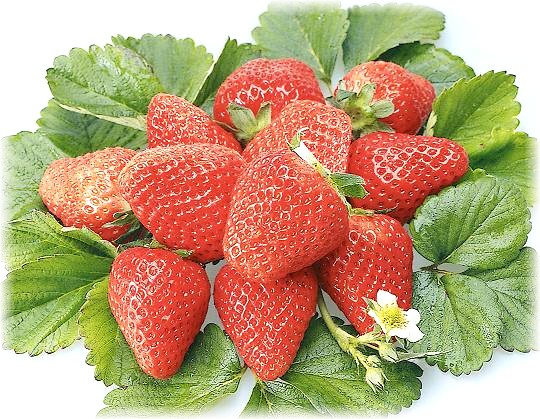
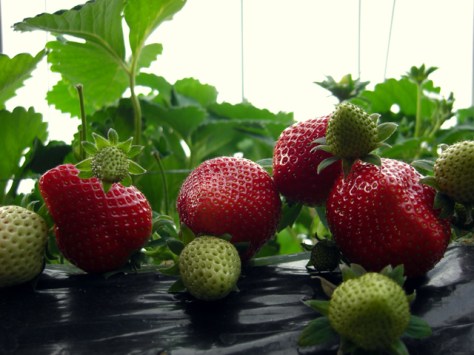
Strawberries: Facts & Tips

I was going to start an information series on Fruits like I’m doing for vegetables, but after realizing the enormous task I decided to limit myself to the fruits popular and grown in Japan.
Believe there are enough!

Why do I start with strawberries?
Can you guess?
Shizuoka Prefecture with more 1,500 strawberry commercial growers officially registered is called “Ichigo no Ookoku/Strawberry Kigdom” in Japan!

The garden strawberry is a common plant of the genus Fragaria which is cultivated worldwide for its fruit, the (common) strawberry. The fruit is widely appreciated, mainly for its characteristic aroma but also for its bright red color, and it is consumed in large quantities — either fresh, or in prepared foods such as preserves, fruit juice, pies, ice creams, milk shake, etc..

The garden strawberry was first bred in Bretagne/Brittany, France in 1740 via a cross of Fragaria virginiana from eastern North America , which was noted for its flavor, and Fragaria chiloensis from Chile and Argentina brought by Amédée-François Frézier, which was noted for its large size.

Cultivars of Fragaria × ananassa have replaced, in commercial production, the woodland strawberry, which was the first strawberry species cultivated in the early 17th century.

TIPS:

-Best season for natural Strawberries is May~June
For green house-cultivated, hydroponically or not, specimens the season is from December to April.

-To preserve them, don’t wash them, cover themlightly with cellophane paper and keep them inthe vegetable compartment of your refrigerator.
If you want to freeze them, get them rid of their leaves and stem first, then wash them and drain them thoroughly.

-if you wish to wash them, leave them in clear cold water for 5 minutes. If you take the leaves and stem out before washing them, they will lose a lot of their vitamin C.

-Wherever possible, don’t take the leaves and stem out before eating them. Strawberries in decoration cakes have lost large amounts of tehir beneficial elements!

-Eat strawberries after drinking alcohol or when stressed! You will be surprised how much they help!

VARIETIES:

Although Japan was late in starting growing strawberries, they probably have the largest number of varieties!

“Benihoppe/Red Cheeks”
A recent cultivar developped in Shizuoka Prefecture!
Really sweet, but with a striking balance with just enough acidity.
Most of them go to Tokyo!

“Amaou/Sweet, Round & Big”
From Fukuoka Prefecture. Sweet and a little acidity.

“Nyohou”
From Tochigi Prefecture. Juicy. Cultivation has recently decreased.

“Tochiotome”
From Tochigi Prefecture. The most common in Japan. Very sweet.

“Moikko/One More Please”
From Miyagi Prefecture. Round and refreshingly sweet.
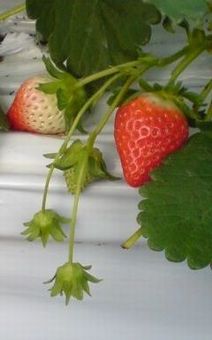
“Sagahonaka”
From Saga Prefecture. Extensively sold in Western Japan. Very sweet.
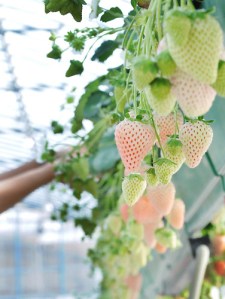
“Hatsukoi no kaori/the Scent of First Love!”
Developped in 2006. Probably the most expensive strawberry in the world.
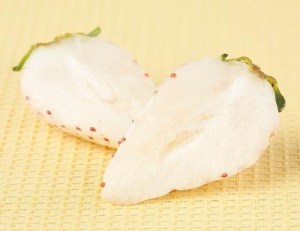
Its flesh is completely white while the skin is ivory with red seeds. It is not an albino strawberry!
But the taste is somewhat average.
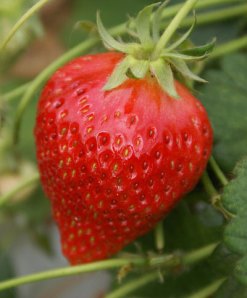
“Aiberi/Love Berry”
From Aichi Prefecture. High qaulity and expensive. Great balance. Red flesh.
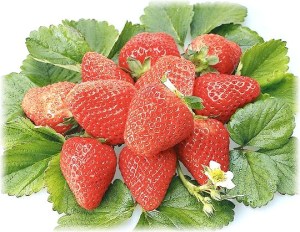
“Toyohime”
Very popular with “strawberry picking tours”. Very sweet.

“Sachinoka”
High in sugar. Popular for its high sun resistance.

“Yayoihime”
From Gunma Prefecture. Ver sweet. Especially available in December (in time for the celebrations!).

“Hinoshizuku”
From Kumamoto Prefecture. High in sugar, low acidity. Available from December, too!

“Yumenoka”
From Aichi Prefecture. Very juicy and great balance.

FACTS:

Strawberries contain a great amount of Vitamin C and flavonoids.
7 medium-sized strawberries contain enough Vitamin C for a whole day for an adult human!
Thy also contain Vitamin B1, B2.and B6, Potassium, Calcium and Magnesium and a little iron.

They also contain a lot of digestible vegetal fibers, helping digestion a lot.
They also contain a lot of collagen, helping skin against blemishes!

HEALTH FACTS:

-Combined with yams, or yoghurt, or chickory, or shiso/perilla, helps strengthen the stomach, helps combat cancer and ageing.

-Combined with broccoli, or pink gapefruit, or tomato, or red carrot, helps combat cancer, stress, and helps the skin and stimulates brain activity.

-Combined with wakame seaweed, or onion, Judas’ era mushroom, or peanuts, helps prevent high blood pressure, heart diseases and blood vessels hardening.

-Combined with oyters, or kiwi fruit, or lemon, helps the skin and combats stress (and over-drinking!)

RECOMMENDED RELATED SITES:
Bread + Butter, Comestilblog, Greedy Girl, Bouchon For 2, Zoy Zhang, Hungry Neko, Mangantayon, Elinluv Tidbit Corner, Maison de Christina, Chrys Niles, Lexi, Culinary Musings, Eats and Everything, Bite Me New England, Heather Sweet, Warren Bobrow, 5 Star Foodie, Frank Fariello, Oyster Culture, Ramendo, Alchemist Chef, Ochikeron, Mrs. Lavendula, The Gipsy Chef, Spirited Miu Flavor, Wheeling Gourmet, Chef de Plunge, Sushi Nomads, Island Vittles, Jefferson’s Table

Please check the new postings at:
sake, shochu and sushi,
—————————————-
日本語のブログ
—————————————-

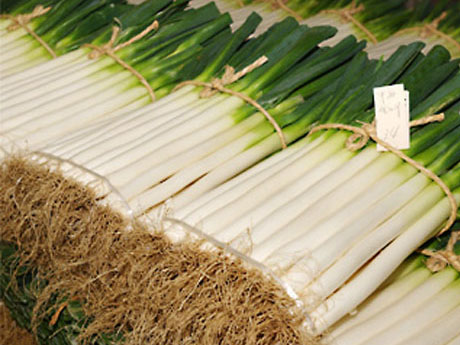
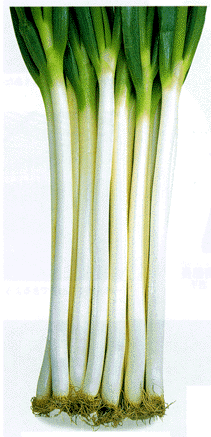
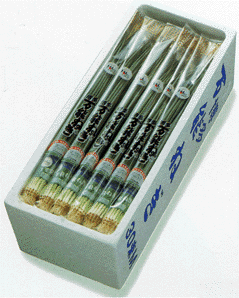
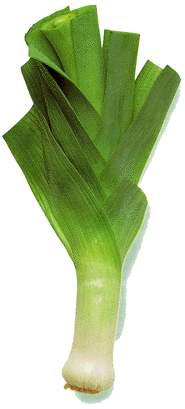
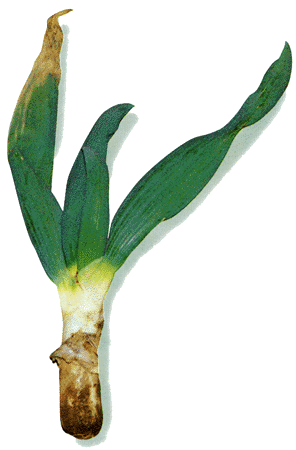
Vegetables facts & Tips 8: Leeks (Expanded and amended)

negi-1

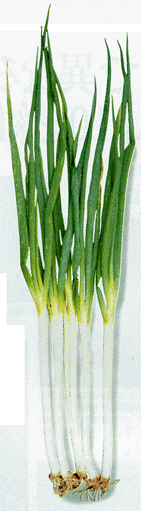
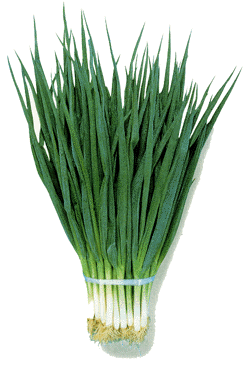
Leeks, or “negi” in Japanese, are an almost universal vegetable.
It is used in cuisine at restaurants and homes on all continents and have been recognized for ages as very beneficial plant.

Recent research has demonstrated that They are an effective cure against colds in particular, not only for humans, but for many animals, too.
Some people do not appreciate them because of their pungent smell and taste, but this can be taken care of with a couple of simple steps.

Back home in France, we boil the central part of fat leeks and eat them under the name of “poor man’s asparaguses”!

FACTS:
-Season: leeks can be bought all year round, but the best season is from November to February in the Northern Hemisphere.

-Main beneficial elements: Carotene (green part), Vitamin C (white part), Calcium, Vitamin B1 (beneficial for blood circulation), B2, B8, Potassium, Calcium (in big amounts!), Iron, Manganese, vegetal fibers.

TIPS:
-Fatter specimens will have more taste.
-Choose specimens with a “wet” bottom cut.
-If you use large specimens raw in salads, first cut 5~8 cm long sections, then cut them thin lengthwise and leave them some time in clean cold water. The pungency will greatly diminish.
-To chop leeks for cooking, cut them first in 5~10 cm sections, then cut them thin lengthwise, and only then, chop them crosswise.

VARIETIES:
There are innemurable varieties in the World, but I will introduce here the main varieties encountered in Japan:

negi-senju
“Senju”
The most common and popular variety

negi-hakata-manno-negi
“Hakata Manno”:
A choice specimen raised in Kyushu Island

negi-hime
“Me” or “Hime”:
Could be called leek sprouts,too.
Eaten raw in salads, sushi, finger foods.

negi-ito-negi
“Ito” or Thread Leek, used in the same way as “Me/Hime”.

negi-kositsu-negi
“Koshizu”, another common and popular variety.

negi-kujo-futo-negi
“Kujo-Futo”:
A choice specimen originting from Kyoto.

negi-kujo-hoso1
“Kujo Hoso”. Same as above, but a lot thinner.

negi-riiki
“Riiki”
A short fat specimen popular for “nabe” and soups.

negi-shimonita-negi
“Shimonita”.
A fat variety with a short stem and long leaves. Popular with soups and “nabe” (Japanese-style pot-au-feu)


“Aka Negi”
Red Leeks in Japanese, soft with little pungency. Considered as a delicacy.

HEALTH FACTS:

-Combined with Juda Ear Mushrooms, or sardine, or mackerel, or seaweed, heolps lower blood cholesterol and high blood pressure, and prevents blood vessels hardening.

-Combined with umeboshi/Japanese pickled plums, or Japanese sake, or ginger, or shiso/perilla, helps prevent and cure colds, combats ageing and helps recovery from diseases.

-Combined with onion, or cucumber, or garlic, or Judas’ Ear mushrooms, helps blood flow and combats blood clotting.

-Combined with seaweed/wakame, or sweet potato, or lotus root, helps combat constipation and obesity.

RECOMMENDED RELATED SITES
Not-Just-Recipes, Bengal cuisine, Cooking Vegetarian, Frank Fariello, Gluten-free Vegan Family, Meatless Mama, Warren Bobrow, Wheeling Gourmet, Le Petit Cuisinier, Vegan Epicurean, Miss V’s Vegan Cookbook, Comestiblog, To Cheese or not To Cheese, The Lacquer Spoon, Russell 3, Octopuspie, Bread + Butter, Pegasus Legend, Think Twice, The French Market Maven

Please check the new postings at:
sake, shochu and sushi

—————————————-
日本語のブログ
—————————————-

Vegan Japanese Cuisine: Grilled Aubergines-Egg Plants and Garlic Chives Dressing

Looking through my notes I found another easy vegan Japanese recipe with aubergines/egg plants that requires only little work and provides plenty of beneficial elements!

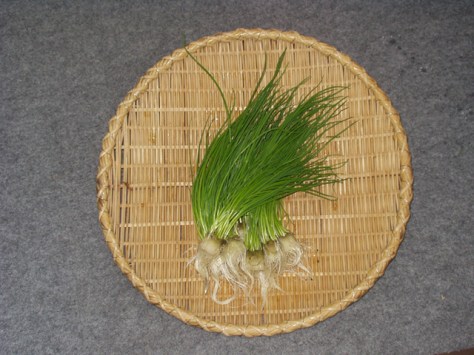
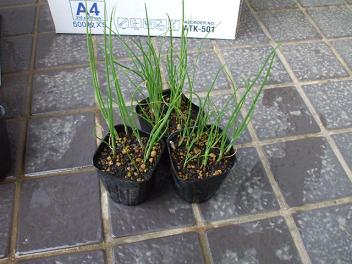
Chinese Chives, or Garlic Chives (English), Ciboule de Chine (France), or Nira/韮 in Japanese have a dintinct taste and are widely used in Japanese cuisine for fried foods.
Both leaves and the stalks of the flowers are used as a flavoring similarly to chives, green onions or garlic and are used as a stir fry ingredient.

Garlic Chives and tofu.

The flowers may also be used as a spice. In Vietnam, the leaves of garlic chives are cut up into short pieces and used as the only vegetable in a soup of broth.

Grilled Aubergines/Egg Plants and Chinese Chives Dressing!

INGREDIENTS: For 3~4 people

-Aubergines/Egg plants: 3
-Garlic Chives/Nira: 1 bunch
-Soy sauce: 1.5 tablespoons
-Rice vinegar: 1 tablespoon
-Sugar: 1/2 tablespoons
-Sesame oil: 1/2 tab;espoon
-White sesame seeds: 1 tablespoon

RECIPE:

-Chopp the garlic chives finely. Drop tthm in saucepan with the soy sauce, rice vinegar, sugar, sesame oil and sesame seeds. Mix well. Let marinate for 15 minutes, stirring form time to time.

-Cut the stem end of the aubergines./ egg plants
Grill the egg plants/aubergines directly over the flame on a grill.
Doing it in the oven is fine, too.

-Once the the egg plants/aubergines have been evenly grilled and become soft inside, peel them completely.

-Cut the aubergines/egg plants into bite-sized pieces and serve topped with plenty of garlic chives dresing.

-Can be savoured hot, lukewarm or chilled!

RECOMMENDED RELATED SITES
Not-Just-Recipes, Bengal cuisine, Cooking Vegetarian, Frank Fariello, Gluten-free Vegan Family, Meatless Mama, Warren Bobrow, Wheeling Gourmet, Le Petit Cuisinier, Vegan Epicurean, Miss V’s Vegan Cookbook, Comestiblog, To Cheese or not To Cheese, The Lacquer Spoon, Russell 3, Octopuspie, Bread + Butter, Pegasus Legend, Think Twice, The French Market Maven

Please check the new postings at:
sake, shochu and sushi

—————————————-
日本語のブログ
—————————————-
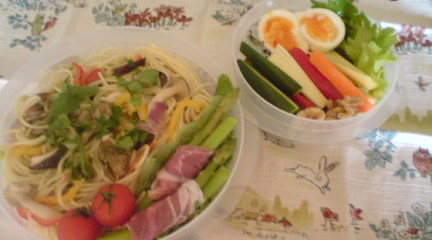
Today’s Lunch Box/Bento (’10/06): Pasta Bento

The Dragon is still in a good mood (the bright weater and her day off might explain it! LOL).
For once, she kept away from rice or bread and concocted a pasta bento.

It certainly made for a colourful bento!

The pasta base was made with spaghettini.
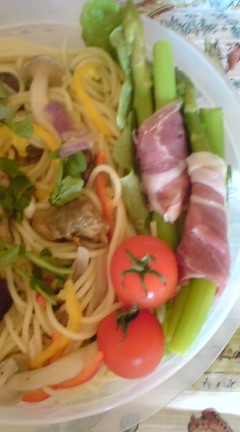
After boiling and cooling them she mixed in tinned smoked oyters, and vegetables she had lightly fried beforehand: shimeji muchrooms, red and yellow pimentoe, red onion and sliced shiitake. She seasoned the lot with the smoked oysters oil and smoked salt, and a little dressing. She finally topeed it fresh cress.

As for the garnish: Boiled green asparaguses rolled in raw ham and mini tomatoes lined with lettuce.

The side dish consisted of soft boiled egg, and vegetable sticks with their dipping sauce: carrots, cucumber, and celery.
A few walnuts and a mini banana (not featured) for dessert.

Very healthy, indeed. No wonder the Missus is checking my waistline every morning! LOL

RECOMMENDED RELATED SITES:
Warren Bobrow, Bread + Butter, Zoy Zhang, Hungry Neko, Think Twice, Frank Fariello, Mangantayon, Hapabento, Elinluv Tidbit Corner, Tokyo Terrace, Maison de Christina, Chrys Niles,Lexi, Culinary Musings, Wheeling Gourmet

Please check the new postings at:
sake, shochu and sushi

—————————————-
日本語のブログ
—————————————-
Today’s Lunch Box/Bento (’10/05)

Today was a bright day and the Missus was in a fairly good morning mood (evenings are somewhat different), and the colourful bento proved it!

The Missus? (picture taken at a fashion store in Shizuoka City)

Friends who know my e-mail address know that a dragon and a raabit are featured therein, but have you ever wondered who was which? LOL
If you want to see more pictures of everyday life in Shizuoka with more dragons and oddities, just go THERE!

As I said, the bento was full of colours!

The rice is violet because it was steamed together with pieces of violet sweet potatoes/murasaki satsuma imo. The potatoes were placed on top of the rice before steaming it. They were then stirred together with black sesame seeds when the rice was cooked.

As for the garnish, I got my compulsory tamagoyaki/Japanese omelette (cooked with pieces of sweet pimentoes), lettuce and mini-tomato.

The shiitake and the rolls were fried together and seasoned with wasabi dressing.

The rolls were made enoki (farm-growned) mushrooms rolled into thin pork belly strips and fried together. The enoki being thin, long and tender,they blend in very quickly.

The salad/dessert side dish consisted of a bed of shredded greens covered with pieces of lettuce, celery, orange sweet pimento and cheese, cucumber slices, walnuts, home-made apple compote and wedges of kiwi fruit for dessert.

The real Missus? (picture taken at Komagata Shrine in Shizuoka City)

Thank you, Dragon! (Alright, she is the Rabbit!)

RECOMMENDED RELATED SITES:
Warren Bobrow, Bread + Butter, Zoy Zhang, Hungry Neko, Think Twice, Frank Fariello, Mangantayon, Hapabento, Elinluv Tidbit Corner, Tokyo Terrace, Maison de Christina, Chrys Niles,Lexi, Culinary Musings, Wheeling Gourmet

Please check the new postings at:
sake, shochu and sushi

—————————————-
日本語のブログ
—————————————-

Vegan Japanese Cuisine: Egg plants/Aubergines & Miso Caviar

This recipe is another/different version form the previous egg plants/aubergines recipe to cater for vegan priorities.
Back in France, we do call aubergine paste, aubergine caviar (probably because of the sometimes reminiscent dark colour).
The process is almost the same, and it is of course open to variations, especially as far spices are concerned.

INGREDIENTS: For 2 people

-Egg plants/Aubergins: 3~4
-Rice vinegar: 1 tablespoon
-Miso (of your choice): 1 tablespoon
-Fresh perilla/shiso leaves: enough for decoration. Chop them finely first.

-Salt: no need as enough is contained inside the miso

-Optional: Spices (of your choice), grated ginger, and so on.

RECIPE:

-Grill the egg plants/aubergines directly over the flame on a grill.
Doing it in the oven is fine, too.

-Once the the egg plants/aubergines have been evenly grilled and become soft inside, peel them completely.

-Mash them finely with a knife.
Do not use a food processor as the the egg plants/aubergines will become a messy juice!

-Pour the mashed egg plants/aubergines in a bowl.
Add the rice vinegar and miso.
Mix well.
Served topped with finely chopped shiso leaves.

-Experiment with grated garlic, sesame oil and grated ginger!

RECOMMENDED RELATED SITES
Not-Just-Recipes, Bengal cuisine, Cooking Vegetarian, Frank Fariello, Gluten-free Vegan Family, Meatless Mama, Warren Bobrow, Wheeling Gourmet, Le Petit Cuisinier, Vegan Epicurean, Miss V’s Vegan Cookbook, Comestiblog, To Cheese or not To Cheese, The Lacquer Spoon, Russell 3, Octopuspie, Bread + Butter, Pegasus Legend, Think Twice, The French Market Maven

Please check the new postings at:
sake, shochu and sushi

—————————————-
日本語のブログ
—————————————-

Vegetarian Japanese Cuisine: Egg Plant/Aubergine & Yoghurt Paste

Aubergines or egg plants were introduced from India to Jpan a very long time ago.
The Japanese since then have adopted them in their gastronomy and lore. Interetingly enough, it has become the symbol of both male virility and utter stupidity! (In Frnce they are a surname given to lady traffic wardens!).

Aubergines are a very versatile vegetable which can be easily cooked/prepared into vegetarian cuisine.
Here is a simple recipe reminiscent ofTurkish gastronomy to enjoy as a snack on freshly toasted bread!

Egg Plant/Aubergine & Yoghurt Paste!

INGREDIENTS: For 2 people

-Egg plants/aubergines: 4 (organic if possible!)
-Garlic: 1 clove (grated)
-Yoghurt: 2~3 cups/400~600 cc/ml
-Olive oIl (EVA): 2 tablespoons
-Salt: 1/2 teaspoon
-Lemon juice: To taste

Optional: spices to taste

RECIPE:

-Grill the egg plants/aubergines directly over the flame on a grill.
Doing it in the oven is fine, too.

-Once the the egg plants/aubergines have been evenly grilled and become soft inside, peel them completely.

-Mash them finely with a knife.
Do not use a food processor as the the egg plants/aubergines will become a messy juice!

-Pour the mashed egg plants/aubergines in a large bowl. Add grated garlic, olive oil and yoghurt.
Mix well.
Season with lemon juice, salt and spices (optional). Check taste and rectify if needed.
The taste might a bit bland to some, so season it to your preferences.
You may add some parmegiano cheese for example.

In Turkey they don’t always include garlic. Actually recipes vary greatly in that country.
The Japanese will sometimes add sesame oil.
Nuts paste or ground sesame seeds are also a great alternative!

Enjoy it on your favourite toasted bread!

RECOMMENDED RELATED SITES
Not-Just-Recipes, Bengal cuisine, Cooking Vegetarian, Frank Fariello, Gluten-free Vegan Family, Meatless Mama, Warren Bobrow, Wheeling Gourmet, Le Petit Cuisinier, Vegan Epicurean, Miss V’s Vegan Cookbook, Comestiblog, To Cheese or not To Cheese, The Lacquer Spoon, Russell 3, Octopuspie, Bread + Butter, Pegasus Legend, Think Twice, The French Market Maven

Please check the new postings at:
sake, shochu and sushi

—————————————-
日本語のブログ
—————————————-

Vegan Sashimi Plate at Yasaitei (’10/01/20)

I suppose I don’t have to explain any more this longing I have for Yasatei Izakaya in Shizuoka City, nor the reasons I have to invent to go there!

Therefore, I will start right away describing what I hate and drank there yesterday evening:

Let’s start with the “front row”:
-Slices of green zucchini grown in the western part of Shizuoka Prefecture. They were first cut, then massaged with salt and finally washed, making them tender and tasty.
-Iceplant leaves. I already mentioned this plant is worth discovering, you be vegan, vegetarian or omnivore! They are tender and crispy at the same time, and almost sweet with no tanginess, whatsoever.
-Carrots.
-Sweet red pimento.

“Back row”:
-Plum tomato.
-Daikon. Juicy and so soft in taste!
-Cucumber. Japanese variety, crispy!

Side view to show how the shiso/perilla leaf is supported by thinly sliced onion (winter onion grown in Shizuoka, with its tanginess taken away in a cold water bath).

As usual the dressing was a small saucer of sesame oil with high-quality salt and dark miso paste.

I found out that shochu is the best alcohol to enjoy with such vegetarian/vegan fare.
Incidentally, good quality shochu is vegan.
The first glass (straight with plentyof ice) is called “Doman”, the name of a very rare crab found in Hamanako Lake in the western part of Shizuoka Prefecture. It is a rice shochu distilled by Hamamatsu-Tenjigura Brewery in Hamamatsu City. Crispy and gentle on the palate with plenty of character at 25 degrees proof.

My second glass came from a rare bottle of brown sugar shochu made in Amami Oshima, a small island south of Kagoshima Prefecture, Kyushu Island (great place to visit and forget about cities, I guarantee you!).
The reason it was at Yasaitei is that one of the lady waitresses is married to a gentleman from that far away island!
The name “Hikanzakura” is the name of a local cherry tree. I don’t have a clue how Oshima Shokuryo Co. distills it, but it is so flowery and mellow, even at 30 degrees proof!

YASAITEI
Shizuoka City, Aoi Ku, Tokiwa-Cho, 1-6-2 Green Heights Wamon 1-C
Tel.: 054-2543277
Business hours: 17:30~22:00
Closed on Sundays
Reservations highly recommended
Seating: 6 at counter + 20 at tables
Set Courses: 3,000, 4,000, 5,000 yen
HOMEPAGE (Japanese)

RECOMMENDED RELATED SITES
Not-Just-Recipes, Bengal cuisine, Cooking Vegetarian, Frank Fariello, Gluten-free Vegan Family, Meatless Mama, Warren Bobrow, Wheeling Gourmet, Le Petit Cuisinier, Vegan Epicurean, Miss V’s Vegan Cookbook, Comestiblog, To Cheese or not To Cheese, The Lacquer Spoon, Russell 3, Octopuspie, Bread + Butter, Pegasus Legend, Think Twice, The French Market Maven

Please check the new postings at:
sake, shochu and sushi

—————————————-
日本語のブログ
—————————————-

Vegan Korean Cuisine: Kimchi Tofu Miso Soup

Although I live in and loves its food, I’ve learnt to appreciate Korean gastronomy through many trips to Seoul and eating at Yakiniku Restaurants here.

I’M sure that vegan and vegetarinas would love a simple tatse of Korean food according to their preferences.
Her is a very simple recipe for cold winters!

Kimchi Tofu Miso Soup!

INGREDIENTS:

-Kimchi: as much as you want
-Tofu (soft silk/kinu tofu style): 200 g
-Sesame oil: 1 tablespoon
-Leeks: as much as you like (chopped)
-Dashi/Konbu Dashi (vegan dashi)/ soup stock: 1 cup/200 cc/ml (check dashi posting)
-Miso: 1 tablespoon (check miso posting!)

-Optional: freshly cut green leaf vegetables for decoration.

RECIPE:

-Heat the sesame oil in a pan. Fry the leeks and kimchi together for a while.

-Add dashi soup stock and bring to boil.
As soon as it boils, lower fire to small.
Add miso and stir and add tofu cut in bite-sized pieces and cooked until tofu is warm enough (never overcook tofu!)

-Pour into serving bowl and eat with chopsticks and Chinese spoo (or just with a spoon!).
-I like it served with freshly chopped thin leeks or coriander!

Simple again, isn’t it?

RECOMMENDED RELATED SITES
Not-Just-Recipes, Bengal cuisine, Cooking Vegetarian, Frank Fariello, Gluten-free Vegan Family, Meatless MamaFrank Fariello, , Warren Bobrow, Wheeling Gourmet, Le Petit Cuisinier, Vegan Epicurean, Miss V’s Vegan Cookbook, Comestiblog, To Cheese or not To Cheese, The Lacquer Spoon, Russell 3, Octopuspie, Bread + Butter, Pegasus Legend, Think Twice

Please check the new postings at:
sake, shochu and sushi

—————————————-
日本語のブログ
—————————————-

Vegan Japanese Cuisine: Taro & Tomato Stew

Benn rummaging through my notes and discovered another simple and hearty recipe for my vegan and vegetarian friends!

Taro & Tomato Stew!

INGREDIENTS: For 2 people

-Taro/Sato Imo: 4
-Carrot: 1
-Onion: 1
-Garlic: 1 clove
-Tomato: 100~200 g (canned with their water, or fresh, peeled and seeded)
-Cabbage: 3 leaves
-Miso: 2 tablespoons
-Water: 1/2 cup/100 cc/ml
-Mirin/sweet sake: a little for taste and seasoning

RECIPE:

1-Peel taro and cut into big pieces. Cut carrot into large pieces. Cut onion into 4 quarters. Cut the garlic into thin slices. Cut the cabbage into rough pieces.

2-In a pan drop the taro, carrot, onion and garlic with the tomato and switch on fire. Bring to boil and then lower fire. Cover with lid and cook until vegetables are soft.

3-If you have a pressure cooker, pour everything into it, heat and cook on a low fire for 5 minutes.

4-Add cabbage, miso, mirin and water and cook for a while until cabbage has become soft. Rectify/season with a little salt if necessary although miso contains enough salt.

NOTES:

-Any miso can be used according to your preferences.
-I personally add some lemon juice.
-When servin in bowls, I top it with chopped thin leeks. Fresh coriander would be great, too.

RECOMMENDED RELATED SITES
Not-Just-Recipes, Bengal cuisine, Cooking Vegetarian, Frank Fariello, Gluten-free Vegan Family, Meatless MamaFrank Fariello, , Warren Bobrow, Wheeling Gourmet, Le Petit Cuisinier, Vegan Epicurean, Miss V’s Vegan Cookbook, Comestiblog, To Cheese or not To Cheese, The Lacquer Spoon, Russell 3, Octopuspie, Bread + Butter, Pegasus Legend, Think Twice

Please check the new postings at:
sake, shochu and sushi

—————————————-
日本語のブログ
—————————————-

Vegan Japanese Cuisine: Water Spinach Miso Soup

Water Spinach is called Kuushinsai/空芯菜 in Japanese.
Ipomoea aquatica, latin foe Water Spinach is a semi-aquatic tropical plant grown as a leaf vegetable. It is known in English as Water Spinach, Water Morning Glory, Water Convolvulus, or by the more ambiguous names “Chinese spinach” and “swamp cabbage”. It has many other names in other languages. It is found throughout the tropical and subtropical regions of the world; it is not known exactly where it originated.

Water spinach

Ipomoea aquatica is most commonly grown in East and Southeast Asia. Because it flourishes naturally in waterways and requires little if any care, it is used extensively in Malay and Chinese cuisine, especially in rural or kampung (village) areas.

The vegetable is a common ingredient in Southeast Asian dishes. In Singapore, Indonesia and Penang, the leaves are usually stir fried with chile pepper, garlic, ginger, dried shrimp paste (belacan/terasi) and other spices. In Penang and Ipoh, it is cooked with cuttlefish and a sweet and spicy sauce. During the Japanese Occupation of Singapore in World War II, the vegetable grew remarkably well and easily in many areas, and become a popular wartime crop.

In Chinese cuisine (traditional and simplified Chinese: 空心菜) there are numerous ways of preparation, but a simple and quick stir-fry either plain or with minced garlic is probably the most common. In Cantonese cuisine, a popular variation adds preserved tofu (furu, Mandarin). In Hakka cuisine, yellow bean paste[clarification needed] is added, sometimes along with fried shallots. The vegetable is also extremely popular in Taiwan, where it grows well.

In Thailand, where it is called phak bung (Thai: ผักบุ้ง), and in Burma, where it is called ga zun ywet, it is frequently stir-fried with oyster sauce or yellow soybean paste, and garlic and chillies. It can also be eaten raw, for instance with green papaya salad.

In Vietnam, it once served as a staple vegetable of the poor (known as rau muống). In the south, the stems are julienned into thin strips and eaten with many kinds of noodles, and used as a garnish as well. Ipomoea aquatica has become a common ingredient of Vietnamese cuisine.

In the Philippines, Ipomoea aquatica is usually sauteed in cooking oil, onions, garlic, vinegar, and soy sauce. This dish is called “adobong kangkong”. It is also a common leaf vegetable in fish and meat stews like sinigang. There is also an appetizer in the Philippines called “crispy kangkong”, in which Ipomoea aquatica leaves are coated with batter and fried until crisp and golden brown.

Here is a simple vegan Japanese-style recipe with miso soup:

Water Spinach Miso Soup!

INGREDIENTS:

-Water Spinach/Kushinsai: 1 bunch (leaves only)
-Wakame/seaweed (if dry, soften in lukewarm water first): as much as you want!)
-Aburaage/deep-fried tofu sheet: 1 half (cut according to preferences)
-Dashi/ Konbu dashi/ Seaweed dashi: 1 cup/200 cc/ml (check dashi posting)
-Miso: 1.5 tablespoons (check miso posting!)
-Chopped thin leeks

RECIPE:

1.Wash the water spinach, cut out the leaves and drain.
Leave the aburaage in some lukewarm water for a while to take off excess oil.

2.In a pan pour the dashi. Add aburaage and wakame. Heat till just before boiling point (Boiling miso is not a good thing!).
Add miso and mix until well incorporate. Add water spinach and cook until the vegetables are cooked to satisfaction (completely raw water spinach are a bit hard on the system!).
Serve in bowl sprinkled with chopped thin leeks.

RECOMMENDED RELATED SITES
Not-Just-Recipes, Bengal cuisine, Cooking Vegetarian, Frank Fariello, Gluten-free Vegan Family, Meatless MamaFrank Fariello, , Warren Bobrow, Wheeling Gourmet, Le Petit Cuisinier, Vegan Epicurean, Miss V’s Vegan Cookbook, Comestiblog, To Cheese or not To Cheese, The Lacquer Spoon, Russell 3, Octopuspie, Bread + Butter, Pegasus Legend, Think Twice

Please check the new postings at:
sake, shochu and sushi

—————————————-
日本語のブログ
—————————————-

Today’s Lunch Box/Bento (’10/04)

It’s been some time since yhe Missus switched to “Open Sandwich Bento” mode. The merit is that if you in a hurry, you just look waht is left in the fridge and improvise from there!

A view of my bento as I unwrapped the cloth/napkin.

The toasted muffins.
In Japan they sell pre half-cut, making them easy to prepare or toast.

As you can see, there was plenty of fillings for my sandwich.
Actually I ate half of them with a fork I keep handy at work!

From top:
Fried/boiled taro/sato imo from yesterday’s bento leftovers.
Lettuce.
Sliced baked ham (part of end-of-the-year present).
Peeling cheese.
Japanese-style scrambled eggs.

From top:
Lettuce.
Taro.
Home-made pickles.
Bean (canned) salad.

For dessert, sliced kiwi fruit and home-made apple compote.

Simple but effective!

RECOMMENDED RELATED SITES:
Warren Bobrow, Bread + Butter, Zoy Zhang, Hungry Neko, Think Twice, Frank Fariello, Mangantayon, Hapabento, Elinluv Tidbit Corner, Tokyo Terrace, Maison de Christina, Chrys Niles,Lexi, Culinary Musings, Wheeling Gourmet

Please check the new postings at:
sake, shochu and sushi

—————————————-
日本語のブログ
—————————————-

Today’s Lunch Box/Bento (’10/03)

It still is cold for the season although the weather is beautiful.
Yesterday we could manage a full day of “gardening and terraforming” at the cricket ground in glorious weather!
Which means I’m quite hungry as I write this posting on the Missus’ bento.

For the rice she came up with one of her “oishii/delicious” creations: “maze gohan/混ぜご飯” or mixed rice.

I “stole” that picture as she was momentarily busy while the rice was steaming.
After soaking the rice for a while with a piece of konb, she first fried the mushrooms in soy sauce, grated ginger and someting I couldn’t steal away. She then transfered the lot on top of the rice and steamed as shown in above picture.

Once the rice was properly steamed, she mixed the rice and mushrooms before while hole placing them inside the bento box.

As for the garnish, she quickly fried some taro/sato imo (bought steamed) in soy sauce and something else before coating them with white sesame seeds. She added boiled Na no Hana/rape blossoms seasoned with gomadare/sesame dressing and white sesame seeds, home-made pickles with black sesame seeds (carrots, red daikon, celeri) and freshly made tamagoyaki/Japanese omelette.

The salad and dessert dish included mini tomatoes on a bed of shredded vegetables, trevise cabbage and cress, (tinned) smoked oysters with shiso/perilla leaves to wrap them in and sliced of kiwi fruit!

Plenty of satisfaction here!

RECOMMENDED RELATED SITES:
Warren Bobrow, Bread + Butter, Zoy Zhang, Hungry Neko, Think Twice, Frank Fariello, Mangantayon, Hapabento, Elinluv Tidbit Corner, Tokyo Terrace, Maison de Christina, Chrys Niles,Lexi, Culinary Musings, Wheeling Gourmet

Please check the new postings at:
sake, shochu and sushi

—————————————-
日本語のブログ
—————————————-