Tag Archives: Vegan

Healthier, tastier fried Potatoes!


The Japan Blog List

Please check the new postings at:
sake, shochu and sushi

—————————————-
日本語のブログ
—————————————-
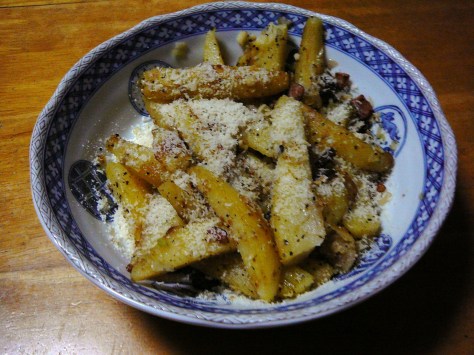
fried-potatoes

Fried potatoes have been temptying us since the 17th Century when the Belgians first experimented cooking them in oil. At the time, deep-frying, imported by Crusaders from the Middle East, was the only absolutely safe way to cook, especially in “flat countries” as Belgium and Holland were called, as water was a bed for all kinds of diseases.
Incidentally, Paris had a good laugh when some time ago a misinformed gentleman proposed than French Fries should be re-named “Freedom Fries” on the White House menus. Sorry, mate, but they are Belgian, not French!

Now, eveyone knows that boiled potatoes are healthy, if somewhat bland in taste, whereas fried potatoes are tasty but hideously high in unwanted calories.
There is a simple method half way which will enable you to enjoy your favourite snack/main dish with a lighter heart (and midriff) and at the same time allow you to serve a savoury dish to your ravenous friends or family! (But don’t overeat them!)

INGREDIENTS
(for 2 to 4, depending whether it is an accompaniment or full dish):
-4 large potatoes
-1 large echalotte/shallot (if unavailable, half a red onion is great!), finely chopped
-3 cloves of garlic, finely chopped
-Bacon (vegan and vegetarians, please skip this keeping in mind you will have to add a little salt)-1 large rasher cut in small pieces (half a cm square or half the size of your little finger nail, cut short!)
-Parmesan/Parmiggiano Cheese (vegans, please skip this or use alternative), freshly grated, 3 large tablespoons.
-Salt (for the potatoes boiling water, otherwise as little as possible, as bacon and cheese will contain enough!)
-Pepper, nutmeg. Foodies who like their food Indian-style may add a little powdered curry mix and chili pepper.
-Olive oil: 2 large tablespoons

RECIPE:
-Boil potatoes in plenty of salted water. If you do not add salt to the water, the potatoes will end up very bland in taste.
-Once the potates are boiled at about 80%, plunge them into cold water. This little trick will prevent them from breaking up later.
-When potatoes are cold enough, peel and cut them in wedges (the size is up to you).
-In deep enough frying pan dry-fry (no oil added) the chopped bacon until it becomes a nice crisp and dark. Put aside on a small dish. For non-vegan/vegetarians, do not wipe the pan, or you will miss a lot of taste!
-Pour two large tablespoons of olive oil in the same frying pan. That is enough, and the oil will be “sucked in” by the potatoes with the result that the potatoes will not be “greasy”. Use olive oil, extra virgin, as this is best, not only for taste, but for health (the vitamin C contained in olive oil do not disappear even cooked for a long time).
-When potatoes have almost reached the wanted colour, drop in shallots, garlic, fried bacon, pepper, nutmeg (and salt if you absolutely must use some!). Toss-fry until shallots have turned transparent.
-Pour the lot into a serving dish and sprinkle parmesan over it.
Enjoy at once!

Sometimes, simple is best!

Hot Asparagus Pudding/Flan chaud d’Asperges

Please check the new postings at:
sake, shochu and sushi

—————————————-
日本語のブログ
—————————————-

asparaflan.jpg

Fresh asparaguses are becoming available all year roun here in Shizuoka Prefecture, a region famous for its Winter-cultivated vegetables.
Here a traditional French recipe for the green ones. It is not as difficult as the title might suggest!
When you choose your asparaguses, check the cut part at the bottom of the stems. The more moisture, the less peeling needed!

Vegans and vegetarians seeking substitutes for milk, butter and eggs should check with Miss V’s excellent suggestions!

INGREDIENTS (4 people):
Green Asparaguses: 1.25 kg
Eggs: 5
Milk: 250cc
Butter: 50g
Trefoil or Italian Parsley (optional): 4 sprigs for decoration
Thyme, laurel & nutmeg (optional & varying to taste)
Salt
White Pepper

RECIPE:

Peel asparaguses from top, cut out the bottom fibery part. Cut the tips and keep them aside.
Cut the stems in 1 cm-thick slices and put them in a pot. pour in milk, salt, white pepper and spices to taste. Let cook for 15 minutes. Take away from fire and transfer to food processor.
Add a few leaves of trefoil or Italian parsley and process to a fine mash.
Preheat oven to 6 (180 degrees Celsius) and put a large dish with water in it to be ready as a bain-marie.
Break the eggs in a large bowl, beat slightly, pour in the asparagus puree and mix.
Butter the inside of 4 small oven dishes (ramequin-style), pour in the mixture and cook in bain-marie for 20 minutes.
During that time put the asparagus tips in a frying pan, add the rest of the butter, 200cc of water, some salt and let cook for 20 minutes stirring from time to time until there is no more liquid left.
When the puddings are cooked, unmold them onto individual plates and decorate with asparagus tips and some trefoil or Italian parsley.
Serve at once.

Vegan & Vegetarian Sushi

Please check the new postings at:
sake, shochu and sushi

—————————————-
日本語のブログ
—————————————-

iroha-2.jpg
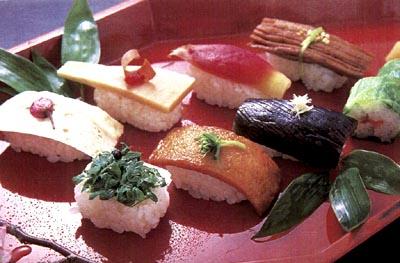
(from top to bottom and left to right: Konnyaku/Devil’s Tongue Tuber, Celery marinated in Amazu/sweet vinegar and pickled Japanese plums, Shiro negi/White leek, Na no Hana/Rape Blossoms, Gobo/Burdock roots, Satsuma Imo/Sweet yams, Daikon/Long Japanese radish)

Whenever I can convince there is Japanese food fit for Vegans and Vegetarians (I’m neither!), I make a point of posting articles that might help friends with different culinary priorities!

There is vegan and vegetarian sushi in Japan and elsewhere!
As a proof have a good look at the picture and explanations above. The pic was taken at Iroha Sushi, a small but extremely renown sushi restaurant in Iwata City, an area celebrated for its vegetables!

vegan-sushi1
Kyoto is a renown place for Vegan & Vegetarian Sushi!
From right to left, top to bottom:, Yuuba (tofu sheets), Takenoko (Bamboo shoots), Myoga (myoga ginger), Zenmai (Spring vegetable variety), Ki no mi (Spring vegetables), Awafu (grilled tofu sheets), Kamo Nasu (kamo egg-plant), Hakusai Maki (Chinese cabbage).
Print a copy of this pic, show it to your local Sushi Restaurant and challenge him/her into preparing your favorite tidbits!

vegan-sushi2
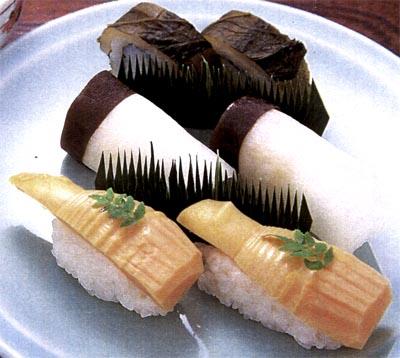
From bottom to top: Takenoko (boiled bamboo shoots topped with a sprig of sansho/Japanese pepper plant)), Kabu Tsukemono (pickled turnip), Sugiku no Ha Maki (sugiku Chrysanthemum leaves)
And what about these? Not only tasty but fulfilling!

efbd8befbd81efbd8defbd90efbd99efbd8fefbd95efbd8daki
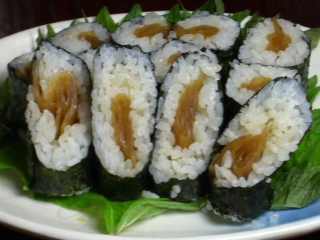
“Kanpyou maki”/dry gourd shavings: here is one that any sushi restaurant will serve you!

vegan-sushi3
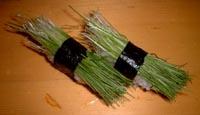
That small one is my personal favourite: “menegi”/thin leeks sprouts!

I promise I’ll keep searching!

Wasabi: Japanese Horseradish


The Japan Blog List

Please check the new postings at:
sake, shochu and sushi

—————————————-
日本語のブログ
—————————————-

wasabi-harvest.jpg

As winter is approaching again I felt compelled to write again in this Shizuoka Gourmet Blog an article I had written some time ago in Shizuoka Sushi Blog.
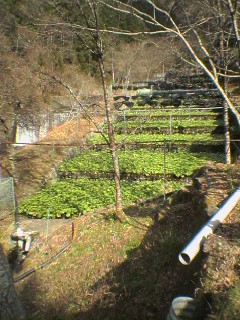
Wasabi harvest will soon start in earnest in Shizuoka City, Aoi Ku, Utougi (along the Abe River), the birthplace of wasabi (c. 1600) as shown in picture above.
They will soon appear on the markets and Internet all over the country. A sizeable amount is also directly exported to South Korea and theU.S.
—————-
Wasabi: Japanese green horseradish

wasabi.jpg

Did you know that wasabi originated from Shizuoka City?
Around 1600, farmers in Utougi District, some 33 km from Shizuoka JR STation along the Abe River, first started experimenting with the culture of that particular plant, which they already knew as a wild vegetable used for pickling. At the time they were only processing the stems, leaves and flowers.

wasabiplant.jpg

This is still a very popular kind of pickles in Shizuoka where they are sold in season.
In 1604, Tokugawa Ieyasu, who had just moved to Sumpu (presently Shizuoka City), grew extremely fond of the grated root and helped spread its use all over the country. Its present culture has expanded outside our Prefecture, especially in Nagano, but Shizuoka still produces the best In Utougi and in the Amagi Range in Izu Peninsula (80% of the total Japanese production!).
The above-ground part of the plant is also used for making delicious “wasabi zuke” with “sake kasu” (Sake white lees). You can imagine why Shizuoka products are of so high quality when you realize what “sake kasu” is being used!
wasabizuke.jpg
In my own biased opinion, the best “wasabi zuke” is made by Tamaruya Company in Shizuoka City.
tamuraya-haneda.jpg
Above picture was taken in Haneda Airport where the Company has its own stand!

Now, if you want to buy and serve your own “wasabi”, which I would recommend to any real Japanese cuisine amateur, you will need a wasabi grater.
wasabigrater.jpg
If you want to visit Utougi, where you will find a soba restaurant and other shops as well as the possibility of trekking and festivals watching in April and October, either go by car (55 minutes) or take a bus (bus platform 7 at Shizuoka JR Station/75 minutes). The trip along along the Abe River is worth it with all the changing landscapes!
utouki.jpg wasabi.jpg

Now, you might not know it, but thinly sliced wasabi root is not as strong as grated wasabi. In Shizuoka, as it is not that expensive, try and ask your favourite sushi chef to cut it in very thin strips and roll as it is in a “maki”. It’s called “bakudan maki” (the real one, not the buster made with grated wasabi!). A favourite of mine!

Note: Wasabi is proper food for vegans!

Vegetarian & Vegan Cuisine: “Mukashi Mushi Pan”/Old-Fashioned Steamed Bread


The Japan Blog List

Please check the new postings at:
sake, shochu and sushi

—————————————-
日本語のブログ
—————————————-

Although I’m neither a vegetarian or vegan, I make a point to introduce anything I discover here which might help friends out!

Fukasawa Foods in Shibakawa Cho at the foot of Mount Fuji produces all year round an incredible array of soba/buckwheat noodles, udon/wheat flour noodles, ice-creams, cakes and I don’t know what else.

Now, all their food is organic. No artificial fertilizers are used for whatever they grow or buy, and no additives or preservatives are used in any of their product, which means all have to be properly stored and eaten quickly.

Vegans will be happy to know they use tofu instead of any dairy product.

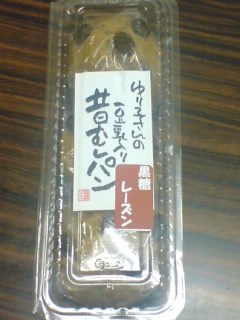
This particular cake called “Mukashi Mushi Pan” or Old-Fashioned Steamed Bread was made with wheat flour, tofu, brown sugar, raisins, salt, vegetable oil.
That is all!

One cake could have easily been held inside your palm, but it was very fulfilling and delicious!
They have other varieties made with pumpkin and other vegetables.

Fukasawa Foods
Fuji Gun, Shibakawa Cho, Naibo, 3895-8
Tel.: 0544-65-0143
Closed on Tuesdays
HOMEPAGE (Japanese)

Vegetarian & Vegan Cuisine: Ginger as a Vegetable


The Japan Blog List

Please check the new postings at:
sake, shochu and sushi

—————————————-
日本語のブログ
—————————————-

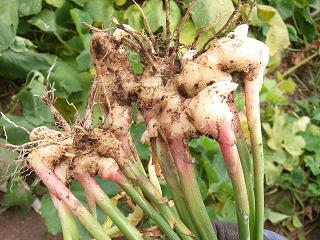
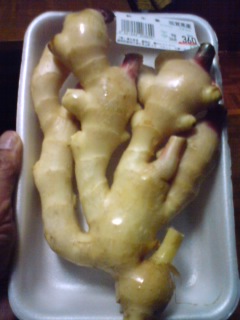
Ginger when eaten outside Japan generally comes under its semi-dry or dry root.
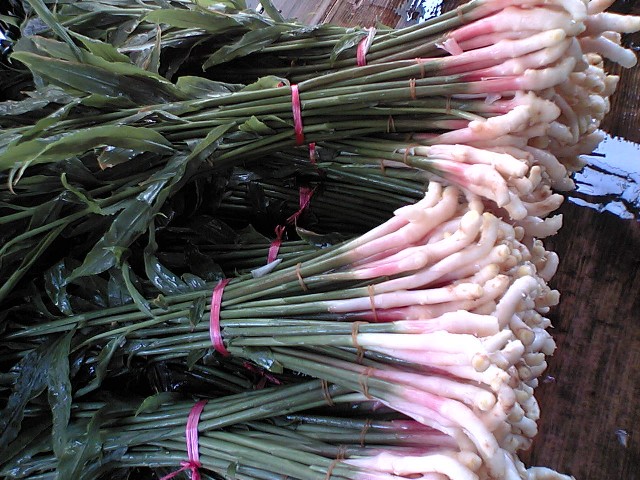
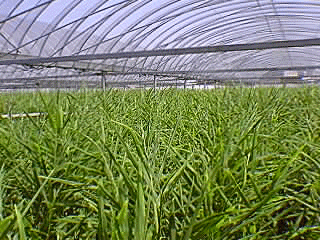
Actually here, and in Shizuoka especially, fresh ginger or “Ha Shoga”/Leaf Ginger comes into some great recipes to please any one who does not consume meat (of course ginger is used in many meat recipes!)

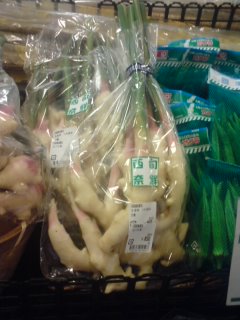
Extensively grown in our Prefecture, it can be bought fresh in season in any Supermarket:

There are many ways to prepare and eat it:


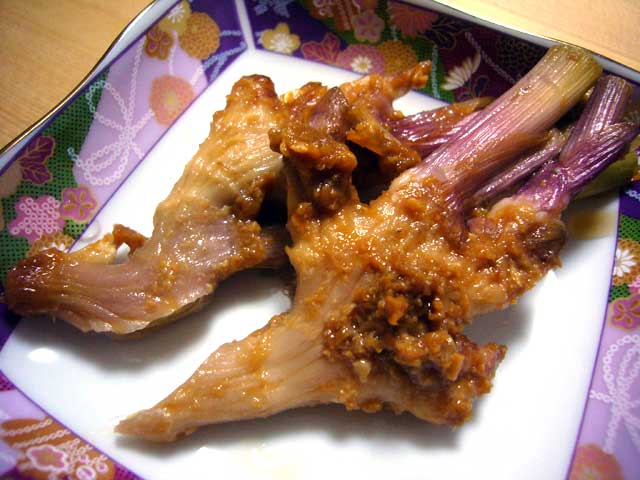
Fresh Ginger pickled in miso.
Very practical when you can buy loads in season. Choose your miso paste well so as avoid too much salt!


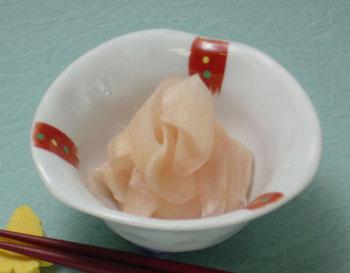
Everyone knows pickled sliced ginger (use fresh plants only!) served with sushi!


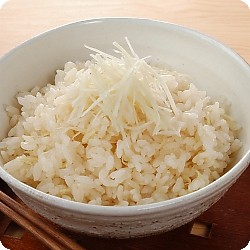
Ginger can be steamed with rice or served very finely cut on top of a bowl of steaming rice!


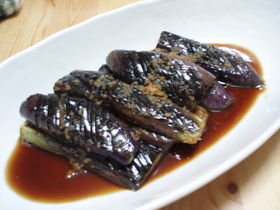
Ginger is great finely chopped and fried with egg-plant/aubergines, soy sauce and mirin!
(Plan to introduce recipe!)


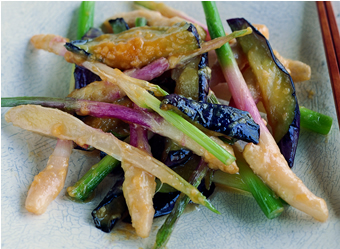
Fresh thin ginger roots are simply beautiful fried/sauteed with othe vegetables!
(Plan to introduce recipe!)

Enjoy!

Vegetarian & Vegan Cuisine: Myoga as a Vegetable


The Japan Blog List

Please check the new postings at:
sake, shochu and sushi

—————————————-
日本語のブログ
—————————————-

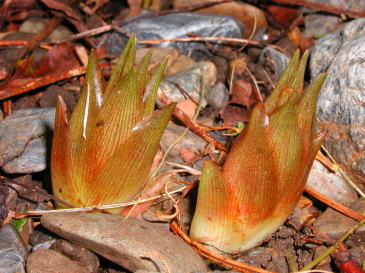
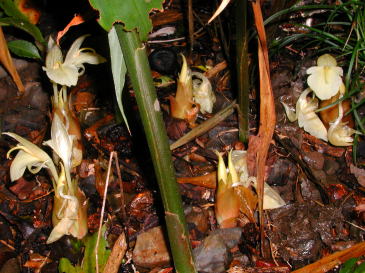
Myōga (茗荷) or myoga ginger (Zingiber mioga, Zingiberaceae) is an herbaceous, deciduous, perennial native to Japan that is grown for its edible flower buds and flavorful shoots.

As a woodland plant myoga has specific shade requirements for its growth. It is frost-tolerant to 0F, -18C possibly colder.
Some constituents of myoga have shown promise for potentially anti-carcinogenic properties

A traditional crop in Japan, myoga has been introduced to cultivation in Australia and New Zealand for export to the Japanese market. I’ve always wondered if it were available on American and European Markets.
It is a great plant for use in vegetarian and vegan dishes as it adds lots of soft flavors.
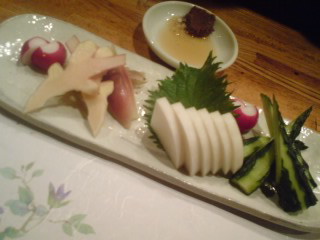
Flower buds are usually found finely shredded raw in Japanese cuisine as a garnish.
But there are many other possibilities:


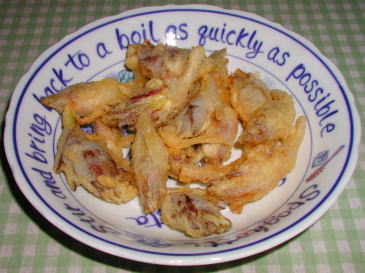
Tenpura.
Actually some Japanese restaurants will prepare the flowers as well as tenpura.
Vegans should replace the egg white included in the batter with a little cornstarch.


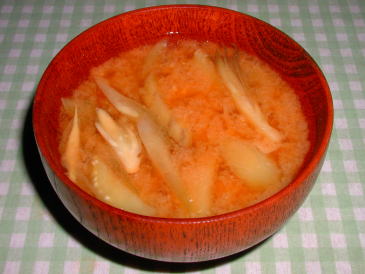
Myoga in Miso Soup.
Cut the myoga into thin strips and just add them to the miso soup inside bowls before serving it.


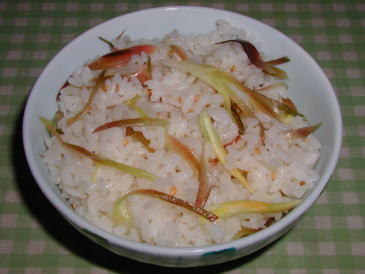
Myoga Gohan/Myoga Rice.
Cut the myoga in very thin strips and put it on top of the rice before steaming it. When the rice is cokked, mix in the myoga with rice and serve.
Vegetarians and Vegans may use genmai/whole rice for higher nutritients.
Beautiful when freshly cooked!


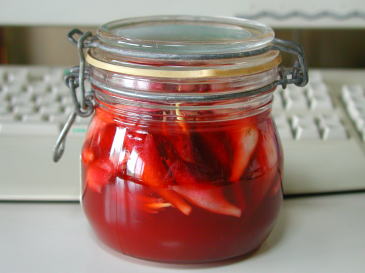
Myoga Pickles
Wash myoga quickly under running water. Drain and take excess water with kitchen paper.
Best pickled with amazu/sweet rice vinegar. If not available use rice vinegar, sugar and soft umeboshi/Japanese pickled plums.

Enjoy!

Shizuoka Sobaya (Soba/Buckwheat Noodles): Setsugetsuka


The Japan Blog List

Please check the new postings at:
sake, shochu and sushi

—————————————-
日本語のブログ
—————————————-

Last week, during that memorable day spent in the merry company of Etsuko Nakamura, Melinda Joe and Timothy Sullivan, we had lunch at a sobaya I had planned to visit for quite some time in Shimada City: Setsugetsuka.

This is the kind of place I can recommend to a lot of people with very different culinary tastes, be they vegetarian, vegan or omnivourous (that’s for me).
The interior has just been revamped into a great Japanese semi-traditional atmosphere, which should please guests in search of a true Japanese setting.

The food from complimentary soba tofu (see above picture) to dessert is of refined quality at very reasonable prices.
The 7th generation chef (the place was opened 90 years ago) tries to combine classics and original recipes:


“Fuwa fuwa tamagoyaki”/a Japanese omelette with a twist: The tamagoyaki is first cooked, put inside a bowl with “dashi/soup stock”, then covered with beaten eggs and cooked again in an oven to attain a “cloudy omelette” reminiscent of a souffle!


Tenpura are served one at a time to ensure freshness.


Tenpura includes “sakura Ebi Kakiage”, made with Sakura Shrimps which can be caught only off Yui-cho shore in the Prefecture!


Soba come in many varieties from stright “10-wari” to:


violet soba (mixed with violet yam!)

Frankly speaking one cannot exhaust all the possibilities, so visit their homepage (Click on anything printed in blue or violet!). Even if you do not understand Japanese, you will enjoy the pics!

Incidentally, they serve great local sake from their neighbours at Oomuraya Brewery!

Setsugetsuka
Shimada City, Hotoori, 2-3-4
TEL: 0547-35-5241
Opening hours: 11:30~14:30; 17:00~22:00
Closed on Mondays and third Tuesdays
HOMEPAGE

Simple Recipes: Shiso/perilla Flowers and Leaves


The Japan Blog List

Please check the new postings at:
sake, shochu and sushi

—————————————-
日本語のブログ
—————————————-

I felt compelled to answer a question from Rowena and provide some useful information on “shiso” or perilla/beefsteak plant in a simple posting that I hope will help Japanese food lovers and vegetarians!

First of all, one can grow shiso, be it green or violet, almost anywhere as long as you have plenty of sunshine and water opportune times (as long as you water it yourself, fine!).
For example, Rowena presently lives in Italy and has successfully grown some from seeds I sent her.

Seeds should be planted in March/ April. The hotter the prevailing climate, the earlier it should be done. Prepare some moist vegetables-growing soil and make small shallow holes on top at a comfortable distance from each other. drop 2 or 3 seeds in each hole. Cover with more soil and spread a newspar sheet over the lot. Keep in shade. Once the first shoots have come out, take newspaper out and expose to sun all day long. Water morning and evening at the base of the stems, not on the leaves (or they wuld “burn”!).


By August (or earlier) to September the shiso will start flowering!
These flowers, if picked early enough are edible!

(Pic taken at Tomii)
Reputable Sushi and Japanese restaurants extensively use them all year round. They make for exquisite decoration and are really tasty!

Now, if you want your own seeds, wait until the folwers and stems turn brown and shake them over a plate. You should get plenty of minuscule seeds for the following year. I checked this very morning with my neighbour, a retired farmer who is looking after his own garden. He said there is little use to keep them indoors in winter unless you want to start a greeh House business with all the hassles involved! Just collect the seeds and replant! Actually such seeds could become a source of business in Italy and elsewhere!

Now, the leaves can be accomodated in hundred of ways. Pick them up young and tender enough. The Missus keep them in a plastic Tupperware-type box with a sheet of clean kitchen paper imbibed with clean water (put it at the bottom of the box) before storing it in the fridge vegetables compartment.

You can wrap them around nigiri/rice balls instead of nori/seaweed.


(Pic taken at Oddakui)

Make a liberal use of them with sashimi!

They are also great as tenpura!
Do not hrow away the small or damaged leaves. Chop them fine and add them to fresh salads or to any stews and ratatouille!

The violet variety is edible of course, although the Japanese do not use for decoration like the gree one, except for the flowers.
They usually pickle them for their sake or add them to other pickled vegetables such as cucumber.
They also make juice, sherbet or sauces with them, too.

Vegetables Sashimi at Yasaitei


The Japan Blog List

Please check the new postings at:
sake, shochu and sushi

—————————————-
日本語のブログ
—————————————-

As often happens on a long work day, I needed a quick fix around 7 p.m. keeping in mind that I would eat dinner at 9:30 back home.
I have taken the habit in such a dilemna to visit Yasaitei and eat vegetarian food there.
I have already introduced their specialty, “Vegetables Sashimi”. As it changes with the season I know I will eat something fresh and different every time!

Allison and maybe Rowena would jump on that, I’m sure!

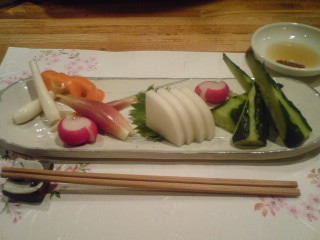
From left to right:
Small red radish, freshly cut ginger root (still thin and just out of the garden with leaves and all), “myoga” leaves (another variety of ginger, thinly sliced daikon on shiso leaf, radish again and Japanese cucumbers (very crunchy and juicy at the same time!)

The seasoning plate contains miso, salt and sesame oil.
A repast for vegetarians and vegans alike! (I’m neither, sorry!)

Yasaitei
Shizuoka City, Aoi Ku, Tokiwa-Cho, 1-6-2 Green Heights Wamon 1-C
Tel.: 054-2543277
Business hours: 17:30~22:00
Closed on Sundays
Reservations highly recommended

Vegetable Sashimi at Yasatei


The Japan Blog List

Please check the new postings at:
sake, shochu and sushi

—————————————

yasai-sashimi1.jpg

It was another one of my quick “evening breaks” this evening, and I just decided to pop up at Yasatei as I knew I would be able to nibble on a great morsel or two.
Now, what I ordered should please vegetarians and vegans alike (I’m neither), but I suspect Simaldeff (because of his weight problems). Allison (she loves her veg) and Lindsay (always keen on Healthy food) would particularly be curious to find out what I ate.

Well, I ordered “yuuki yasai no sashimi”.
Translation: bio vegetables sashimi.

From left to right:
“Eshyaletto/Japanese echalottes”, “daidai piman/soft orange pimento”, “myoga/ginger sprouts”, “aka radisyu/red radishes”, “shiso/perilla”, “daikon/Japanese long radish”, and “kyuuri/cucumber”.
All vegetables, except for the orange soft pimento also have the merit to be grown in Shizoka Prefecture!

yasai-sashimi2.jpg

As for “seasoning”, I was offered “goma abura/sesame oil” from Kyoto (see pic) with salt and miso paste.

Yasaitei
Shizuoka City, Aoi Ku, Tokiwa-Cho, 1-6-2 Green Heights Wamon 1-C
Tel.: 054-2543277
Reservations highly recommended

Sushi for Vegetarians & Vegans (2)


The Japan Blog List

Please check the new postings at:
sake, shochu and sushi

—————————————-

sushi-vegetarian-set1.jpg

Here are other very typical examples of sushi fit for Vegetarians and even vegans!
So next time you are planning to eat sushi, come armed with your knowledge and tease your favourite sushi chef with it!

Top picture:
From right to left, top to bottom:
Yuuba (tofu sheets), Takenoko (bamboo shoot), Myoga (ginger sprout), Gobo (burdock roots)
Ki no mi (leaf vegetable variety), Awafu (cooked tofu), Kamo Nasu (pickled eggplant/aubergine variety), Hakusai Maki (Chinese cabbage roll)

sushi-vegetarian-set3.jpg

From top to bottom:
Sugiku no Ha Maki ((pickled chrysanthemum plant roll), Kabu Tsukemono (pickled turnip), Takenoko (bamboo shoot)

Sushi for Vegetarians & Vegans (1)


The Japan Blog List

Please check the new postings at:
sake, shochu and sushi

—————————————-
日本語のブログ
—————————————-

iroha-2.jpg

Although I’m not a vegetarian nor a vegan, I do understand the needs of people with different regimen and always try to inform them about gastronomic options available in Japan and Shizuoka Prefecture.
Now, sushi for strict vegetarians or vegans exist as sown in those two pictures I took yesterday in a very small but famous Sushi Restaurant called Sushi Iroha in Iwata City, south of Toyoda JR Station.

The picture above features vegetables all grown in then neighbourhood Which were first cooked or/and marinated:
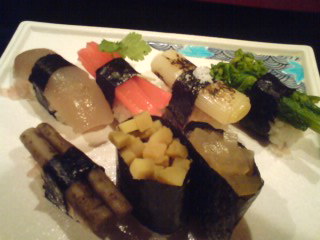
From left to right and top to bottom:
Konnyaku/Devil’s Tongue Yuber Paste (nigiri)
Celery marinated in Amazu/sweet vinegar and Umeboshi/salted Japanese plum (nigiri)
Shiro Negi/white leek (nigiri)
Na no hana/Rape Blossoms (nigiri)
Gobo/Burdock Roots (nigiri)
Satsuma Imo/Yams (gunkan)
Daikon/Japanese Long Radish (gunkan)

iroha-3.jpg

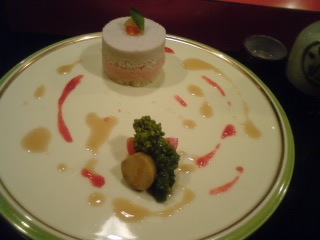
Next I was served a sublime creation concocted with Ebine Imo/Ebine Tuber served mille-feuilles style intersped with sushi rice and presnted with dashes of olive oil, seame oil/goma abura and soy sauce/shoyu.

Look forward to reading Part 2!
HOMEPAGE

Tea Buckwheat Noodles: “Tya-soba”


The Japan Blog List

Please check the new postings at:
sake, shochu and sushi

—————————————-
日本語のブログ
—————————————-

cha-soba1.jpg

Shizuoka Prefecture is celebrated for its green tea all the World.
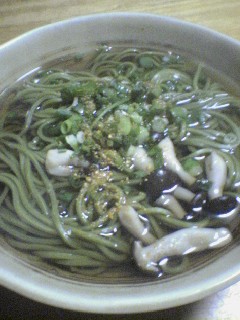
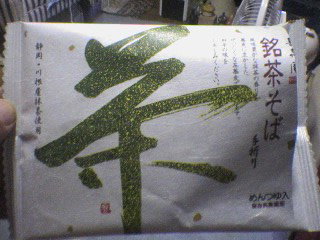
Vegeterians (and vegans!), rejoice! A company called Ikejima Foods in Hamakita Ku, Hamamatsu City has come up with Tea Buckwheat Noodles/Tya-soba!.
Tea comes from the Kawane area which produces some of the best tea in the Prefecture.
The noodles contain no preservatives and neither the noodles, nor the tsuyu/soup contains any animal extracts whatsoever (no milk or egg products).
One pack contains enough for 4 small or 2 medium portions.

cha-soba2.jpg

As for cooking, here are simple instructions:
Cold Noodles style:
Dilute tsuyu/soup in 100 ml of clean water.
In one big pan heat 2 litres of water. Bring to boiling point. Drop in noodles. Lower fire to samll. Stir with long chopsticks. The noodles are ready when they readily come to the surface. Wash them rapidly under running cold water inside a “zaru”/small basket or inside a bowl full of cold water until noodles are cool enough. Drain water and place on a flat dish over a bamboo net if possible. Eat noodles by dipping them in tsuyu/soup to which you can add freshly cut raw leeks and wasabi (or any spices you fancy!)

Hot noodles style:
Dilute tsuyu/soup into 230 ml of hot water.
Cook noodles as for cold style. Drain and drop into bowl full of tsuyu/soup. Add vegetables, freshly cut raw leeks and spices to taste.

“Meicha Soba”
Ikejima Foods
Hamamatsu City, Hamakita Ku, Terajima, 2351
Tel.: 053-587-1025