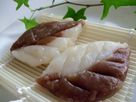
Tag Archives: Wagashi

Japanese Vegetarian & Vegan Cakes: Wagashi/和菓子12: Dango-団子-Sweet Dumplings-Recipe

DANGO-1a
(Mitarashi Dango)

Japanese dango are not complicated, although it might be better to make a lot at a time!

INGREDIENTS:
-Rice (“Uruchi Kome”/normal Japnese round rice): 200g
-Water (for dango): 130cc
-Water (for sauce): 60cc
-Cornstarch: 1 teaspoon
-Sugar: 1 teaspoon
-Soy sauce: 2 teaspoons

RECIPE:
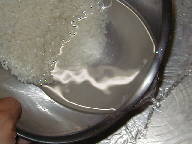
DANGO-RECIPE-1

Wash rice thoroughly.
If rice is no-wash type, skip 3 first steps.
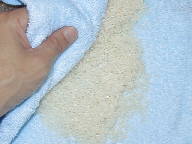
DANGO-RECIPE-2

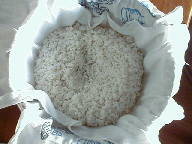
Once the rice washing water is coming out clean, drain rice and spread ontowel. Take off all excess humidity.
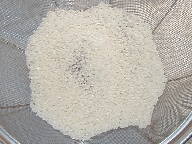
DANGO-RECIPE-4

Let the rice dry for two hours.

DANGO-RECIPE-3

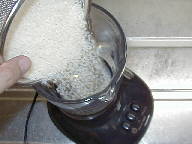
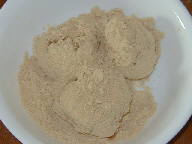
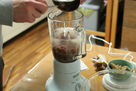
Pour rice in Blender/mixer. First work the blender for only a few seconds at a time until all the rice has been broken completeley. Then blend three times 15 seconds at a time.
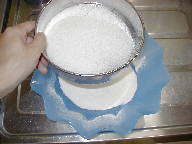
DANGO-RECIPE-5

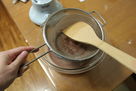
If the rice does not turn into powder easily, sift rice as many times as necessary until all rice has been reduced to powder.
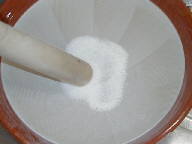
DANGO-RECIPE-6

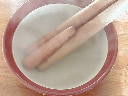
Finish the job with mortar and pestle.
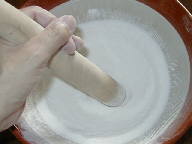
DANGO-RECIPE-7

Once the rice has been reduced completely into powder, work the pestle in for 5 more minutes.
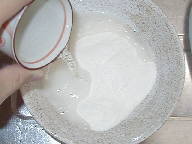
DANGO-RECIPE-8

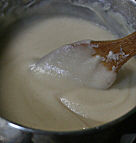
Add water and mix well with spoon.

DANGO-RECIPE-9

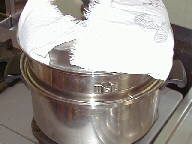
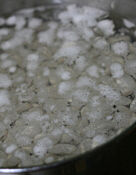
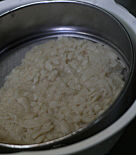
Divide into small portions and steam for 15 minutes.
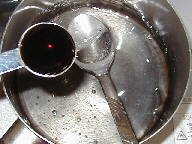
DANGO-RECIPE-10

In a pan add cornstarch to water (for the sauce). keep stirring over a low fire. once the water has been become transparent add sugar and soy sauce and mix well until you obtain a smooth syrup. take off fire.
DANGO-RECIPE-11

Fill a glass with water and keep within arm’s reach.
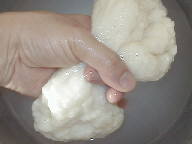
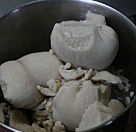
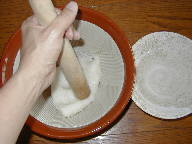
Drop all the steamed dango paste into mortar.
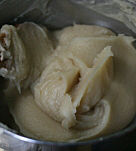
Work dango paste with a wet wooden pestle.
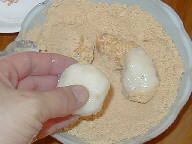
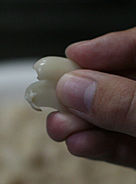
Once the paste has been become sticky and elastic, form small balls (the operation should not last more than 10 minutes).
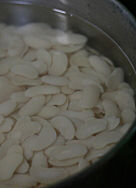
Wet them to prevent them from sticking to each other.
DANGO-RECIPE-12

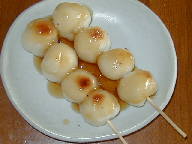
Push a wet (important!) stick through the balls (4 or 5 at the most).
Grill the balls (or not) for better effect.
Serve them smeared with syrup.

RECOMMENDED RELATED WEBSITES

With a Glass,
Clumsyfingers by Xethia
Adventures in Bento Making, American Bento, Beanbento, Bento No1, Bento Wo Tsukurimashou, Cooking Cute, Eula, Hapabento , Happy Bento, Jacki’s Bento Blog, Kitchen Cow, Leggo My Obento, Le Petit Journal Bento & CO (French), Lunch In A Box, My Bento Box, Vegan Lunch Box; Tokyo Tom Baker, Daily Food Porn/Osaka, Only Nature Food Porn, Happy Little Bento, The Herbed Kitchen, J-Mama’s Kitchen, Cook, Eat, Play, Repeat; Bento Lunch Blog (German); Adventures In Bento; Anna The Red’s Bento Factory; Cooking Cute; Timeless Gourmet; Bento Bug; Ideal Meal; Bentosaurus; Mr. Foodie (London/UK); Ohayo Bento

Must-see tasting websites:

-Sake: Tokyo Through The Drinking Glass, Tokyo Foodcast, Urban Sake, Sake World
-Wine: Palate To Pen, Warren Bobrow, Cellar Tours, Ancient Fire Wines Blog
-Beer: Good Beer & Country Boys, Another Pint, Please!
-Japanese Pottery to enjoy your favourite drinks: Yellin Yakimono Gallery
Japanese Vegetarian & Vegan Cakes: Wagashi/和菓子11: Dango-団子-Sweet Dumplings

DANGO-1a
(Mitarashi Dango)

Dango (団子) is a Japanese dumpling made from mochi-ko (rice flour), related to mochi. It is often served with green tea.
In Edo times, they were very popular at tea stands along the country roads.

Dango are eaten year-round, but the different varieties are traditionally eaten in given seasons. Three to four dango are often served on a skewer. One variety of dango from Hokkaidō is made from potato flour and baked with shoyu (soy sauce).

Types of dango:

There are many different varieties of dango which are usually named after the various seasonings served on or with it.

DANGO-2
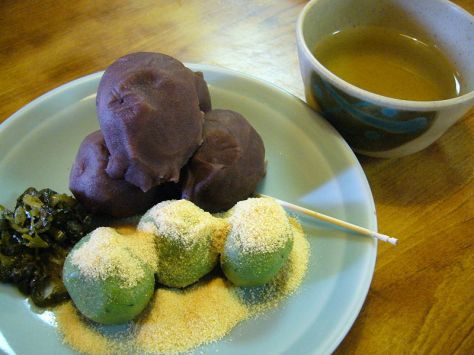
Chadango: Green-tea flavored Dango.

DANGO-4
Dango served covered with anko.

Actually, if you want to write all about Dango, you’d need to publish a whole book!

But I will publish an easy recipe tomorrow!

RECOMMENDED RELATED WEBSITES

With a Glass,
Clumsyfingers by Xethia
Adventures in Bento Making, American Bento, Beanbento, Bento No1, Bento Wo Tsukurimashou, Cooking Cute, Eula, Hapabento , Happy Bento, Jacki’s Bento Blog, Kitchen Cow, Leggo My Obento, Le Petit Journal Bento & CO (French), Lunch In A Box, My Bento Box, Vegan Lunch Box; Tokyo Tom Baker, Daily Food Porn/Osaka, Only Nature Food Porn, Happy Little Bento, The Herbed Kitchen, J-Mama’s Kitchen, Cook, Eat, Play, Repeat; Bento Lunch Blog (German); Adventures In Bento; Anna The Red’s Bento Factory; Cooking Cute; Timeless Gourmet; Bento Bug; Ideal Meal; Bentosaurus; Mr. Foodie (London/UK); Ohayo Bento

Must-see tasting websites:

-Sake: Tokyo Through The Drinking Glass, Tokyo Foodcast, Urban Sake, Sake World
-Wine: Palate To Pen, Warren Bobrow, Cellar Tours, Ancient Fire Wines Blog
-Beer: Good Beer & Country Boys, Another Pint, Please!
-Japanese Pottery to enjoy your favourite drinks: Yellin Yakimono Gallery
Japanese Vegetarian & Vegan Cakes: Wagashi/和菓子10: Youkan-Easy Recipe-Mizu Youkan

MIZU-YOKAN-1

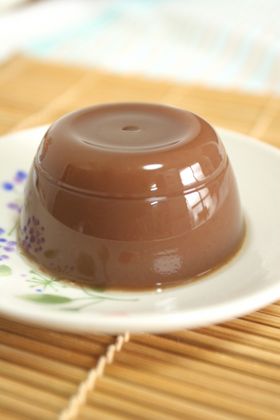
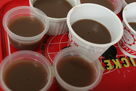
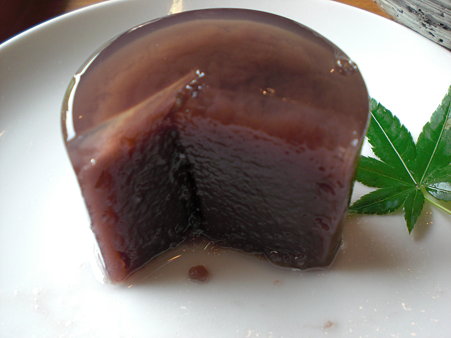
Youkan come in many guises. Here is an easy and very basic recipe for “Mizu Youkan” that you will be able to adapt into many creations of yours! For vegans, vegetarians and omnivores!

INGREDIENTS:
-Boiled azuki beans: 1 can (430 g)
-Brown sugar: 60 g
-Salt: a pinch
-Agar agar Powder (“kanten” in Japanese): 4 g
-Water: 300 ml + 300 ml

RECIPE:

MIZU-YOKAN-2

Blend beans and 300 ml of water until smooth.

MIZU-YOKAN-3

Pass mixture through fine sieve.

MIZU-YOKAN-4

In 300 ml of water drop agar agar. Bring to boil, stiring at the same time. Then keep stiring vover medium fire for 1 minute.

MIZU-YOKAN-5

Switch off fire. Add sugar and salt. Mix well. Add bean paste. Mix well.

MIZU-YOKAN--6

Pour in recipients of your choice (that is when the fun starts!) and let cool completely. Keep in fridge (not too cold, please). Take out of recipient and serve!

RECOMMENDED RELATED WEBSITES

With a Glass,
Clumsyfingers by Xethia
Adventures in Bento Making, American Bento, Beanbento, Bento No1, Bento Wo Tsukurimashou, Cooking Cute, Eula, Hapabento , Happy Bento, Jacki’s Bento Blog, Kitchen Cow, Leggo My Obento, Le Petit Journal Bento & CO (French), Lunch In A Box, My Bento Box, Vegan Lunch Box; Tokyo Tom Baker, Daily Food Porn/Osaka, Only Nature Food Porn, Happy Little Bento, The Herbed Kitchen, J-Mama’s Kitchen, Cook, Eat, Play, Repeat; Bento Lunch Blog (German); Adventures In Bento; Anna The Red’s Bento Factory; Cooking Cute; Timeless Gourmet; Bento Bug; Ideal Meal; Bentosaurus; Mr. Foodie (London/UK); Ohayo Bento

Must-see tasting websites:

-Sake: Tokyo Through The Drinking Glass, Tokyo Foodcast, Urban Sake, Sake World
-Wine: Palate To Pen, Warren Bobrow, Cellar Tours, Ancient Fire Wines Blog
-Beer: Good Beer & Country Boys, Another Pint, Please!
-Japanese Pottery to enjoy your favourite drinks: Yellin Yakimono Gallery
Japanese Vegetarian & Vegan Cakes: Wagashi/和菓子9: Youkan/羊羹

YOUKAN-JELLY

Here is another popular type of Japanese Wagashi fit for Vegans and Vegetarians: Youkan!

YOUKAN-MIZUYOKAN
Mizu Youkan

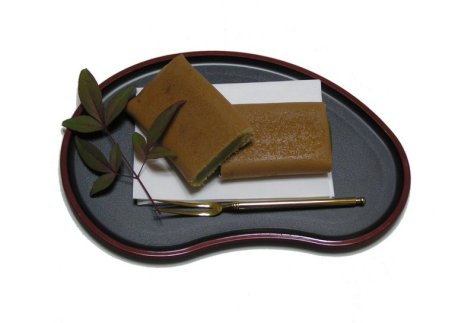
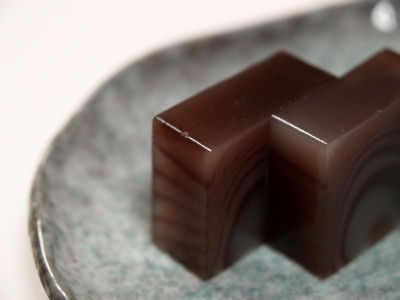
Yōkan (羊羹) is a thick jellied dessert made of red bean paste, agar (寒天/”kanten” in Japanese), and sugar. It is usually sold in a block form, and eaten in slices.

There are two main types: neri yōkan and mizu yōkan. “Mizu” means “water”, and indicates that it is made with more water than usual. Mizu yōkan is often chilled and eaten in summer.
Although most yōkan found in Japan and abroad are typically made with red bean paste, yōkan made from white kidney bean paste (しろあん, 白餡, “shiro an” in Japanese) are also relatively common. This type of yōkan is milky and translucent with a much milder flavour than the ones made of red bean paste.

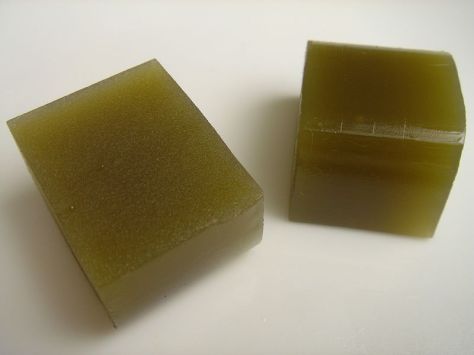
YOUKAN-GREENTEAYOUKAN
Tea Youkan

As such, they can be effectively flavored and colored by using green tea powder or matcha.

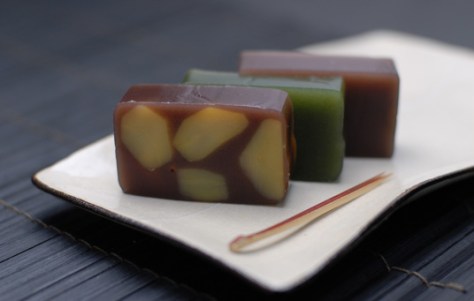
YOUKAN-TRICOLOUR

MizuyōkanYōkan may also contains chopped chestnuts, persimmons, whole sweetened azuki beans, figs, and sweet potato, among other additions. Sugar can be also be substituted with honey, dark brown sugar, or molasses to alter the taste of the yōkan produced. There is also shio yōkan, which uses small amounts of salt (shio/塩) as an additive.

Other Pictures of Youkan:

YOUKAN-BICOLOUR

YOUKAN-CHERRY

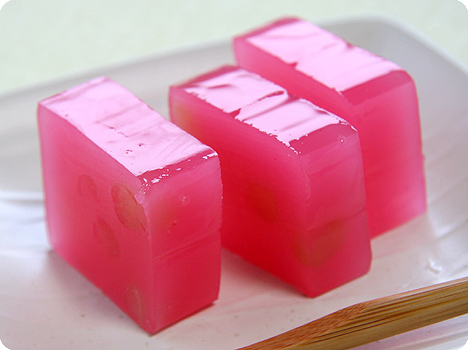
YOUKAN-PINK

I will introduce an easy recipe soon!

RECOMMENDED RELATED WEBSITES

With a Glass,
Clumsyfingers by Xethia
Adventures in Bento Making, American Bento, Beanbento, Bento No1, Bento Wo Tsukurimashou, Cooking Cute, Eula, Hapabento , Happy Bento, Jacki’s Bento Blog, Kitchen Cow, Leggo My Obento, Le Petit Journal Bento & CO (French), Lunch In A Box, My Bento Box, Vegan Lunch Box; Tokyo Tom Baker, Daily Food Porn/Osaka, Only Nature Food Porn, Happy Little Bento, The Herbed Kitchen, J-Mama’s Kitchen, Cook, Eat, Play, Repeat; Bento Lunch Blog (German); Adventures In Bento; Anna The Red’s Bento Factory; Cooking Cute; Timeless Gourmet; Bento Bug; Ideal Meal; Bentosaurus; Mr. Foodie (London/UK); Ohayo Bento

Must-see tasting websites:

-Sake: Tokyo Through The Drinking Glass, Tokyo Foodcast, Urban Sake, Sake World
-Wine: Palate To Pen, Warren Bobrow, Cellar Tours, Ancient Fire Wines Blog
-Beer: Good Beer & Country Boys, Another Pint, Please!
-Japanese Pottery to enjoy your favourite drinks: Yellin Yakimono Gallery
Japanese Vegetarian & Vegan Cakes: Wagashi/和菓子8: Recipe-Beni Mochi

BENI-MOCHI-1

Here is a simple Japanese Cake/Wagashi Recipe that can be adapted to all shapes by vegans and vegetarians! Beni Mochi.
Beni Mochi, or 紅餅 in Japanese, means “Red Mochi”.

INGREDIENTS: 16 pieces

-Rice flour: 250 g
-White sugar: 80 g
-Water: 100 ml/half a cup (for white mochi)
-Brown sugar (take care in choosing the colour): 80 g
-Water: 100 ml/half a cup (for red mochi)

RECIPE:

BENI-MOCHI-2

Divide rice flour into two equal parts (125 g) and pour into two different bowls.

BENI-MOCHI-3

In a deep pan, drop red sugar and add water. Heat over fire until completely melted. Switch off fire. Add rice flour and mix well.
Repeat same procedure with white sugar.

BENI-MOCHI-4

In a steamer, put mochi pastes (take care no to mix them) on a steaming paper and steam for 10 minutes.

BENI-MOCHI--5

Take out. Let cool. Make two balls and keep in different bowls.

BENI-MOCHI--6

Shape the mochi as above or according to your preference. Put them back inside the steamer on steaming paper and steam for 10 more minutes.

BENI-MOCHI--7

Let cool and serve!
Are best enjoyed with Japanese tea, hot or cold!

RECOMMENDED RELATED WEBSITES

With a Glass,
Clumsyfingers by Xethia
Adventures in Bento Making, American Bento, Beanbento, Bento No1, Bento Wo Tsukurimashou, Cooking Cute, Eula, Hapabento , Happy Bento, Jacki’s Bento Blog, Kitchen Cow, Leggo My Obento, Le Petit Journal Bento & CO (French), Lunch In A Box, My Bento Box, Vegan Lunch Box; Tokyo Tom Baker, Daily Food Porn/Osaka, Only Nature Food Porn, Happy Little Bento, The Herbed Kitchen, J-Mama’s Kitchen, Cook, Eat, Play, Repeat; Bento Lunch Blog (German); Adventures In Bento; Anna The Red’s Bento Factory; Cooking Cute; Timeless Gourmet; Bento Bug; Ideal Meal; Bentosaurus; Mr. Foodie (London/UK); Ohayo Bento

Must-see tasting websites:

-Sake: Tokyo Through The Drinking Glass, Tokyo Foodcast, Urban Sake, Sake World
-Wine: Palate To Pen, Warren Bobrow, Cellar Tours, Ancient Fire Wines Blog
-Beer: Good Beer & Country Boys, Another Pint, Please!
-Japanese Pottery to enjoy your favourite drinks: Yellin Yakimono Gallery
Japanese Vegetarian & Vegan Cakes: Wagashi/和菓子7: Creation 2-Hanabira Mochi

WAGASHI-HANABIRAMOCHI

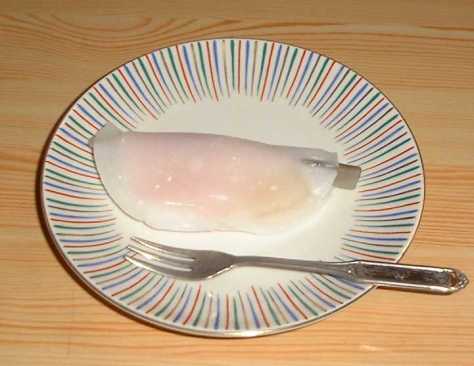
Here is another traditional Japanese Cake/Wagashi: Hanabira Mochi (菱葩餅 in Japanese)!
Hanabiramochi is a Japanese sweet usually eaten at the beginning of the year. Hanabiramochi is also served at the first tea ceremony of the New Year.

The name “Hanabiramochi” literally means “Flower petal mochi”. The original form of Hanabiramochi is Hishihanabira, a dessert that was eaten by the Imperial family at special events coinciding with the beginning of the year.

Hanabiramochi was first made in the Meiji Era (8 September 1868 – 30 July 1912), but it is now a familiar New Year wagashi.

The exact shape of Hanabiramochi is strictly defined by tradition. The white mochi covering is flat and round, folded over to form a semicircular shape, and must have a pink color showing through in the center of the confection, fading to a white at the edge. Unlike a daifuku, the mochi must not completely seal the insides.

In the center of a hanabiramochi is a layer of anko, a sweet bean paste, commonly the white kind made from sweetened mung beans. In the very center is a thin strip of sweetly flavoured gobo (burdock root) which protrudes from the mochi on both sides.

Each element of the hanabiramochi is significant.

The red colour showing through the white mochi is not only appropriate to the celebration of the New Year but also evokes the Japanese apricot/plum (ume) blossom, which in turn represents the purity, perseverance, and renewal associated with the New Year.

The gobo represents pressed ayu, a fish exclusive to East Asia, and a prayer for a long life.

A vegan way to celebrate the New Year!

RECOMMENDED RELATED WEBSITES

With a Glass,
Clumsyfingers by Xethia
Adventures in Bento Making, American Bento, Beanbento, Bento No1, Bento Wo Tsukurimashou, Cooking Cute, Eula, Hapabento , Happy Bento, Jacki’s Bento Blog, Kitchen Cow, Leggo My Obento, Le Petit Journal Bento & CO (French), Lunch In A Box, My Bento Box, Vegan Lunch Box; Tokyo Tom Baker, Daily Food Porn/Osaka, Only Nature Food Porn, Happy Little Bento, The Herbed Kitchen, J-Mama’s Kitchen, Cook, Eat, Play, Repeat; Bento Lunch Blog (German); Adventures In Bento; Anna The Red’s Bento Factory; Cooking Cute; Timeless Gourmet; Bento Bug; Ideal Meal; Bentosaurus; Mr. Foodie (London/UK); Ohayo Bento

Must-see tasting websites:

-Sake: Tokyo Through The Drinking Glass, Tokyo Foodcast, Urban Sake, Sake World
-Wine: Palate To Pen, Warren Bobrow, Cellar Tours, Ancient Fire Wines Blog
-Beer: Good Beer & Country Boys, Another Pint, Please!
-Japanese Pottery to enjoy your favourite drinks: Yellin Yakimono Gallery
Japanese Vegetarian & Vegan Cakes: Wagashi/和菓子6: Creation 2-Sakura Mochi (& Recipe!)

WAGASHI-SAKURA-MOCHI-2

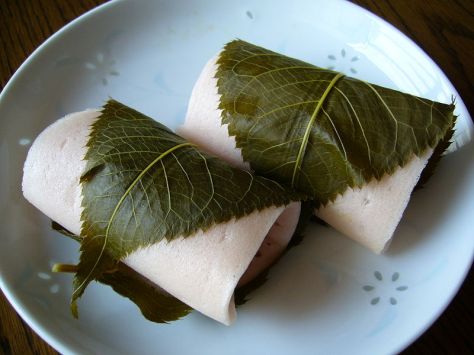
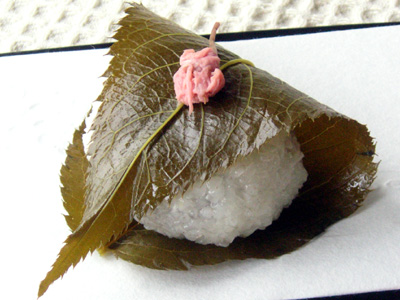
Sakura Mochi (桜餅) is a variety of wagashi, or Japanese confectionery consisting of a sweet pink mochi (rice cake) and red bean paste, covered with a leaf of sakura (cherry blossom).

Sakura Mochi (桜餅) or Cherry Blossom Mochi has been popular all over Japan since the beginning of gastronomy in the Land of the Rising Sun.
The style of Sakura Mochi differs with the regions in Japan.
Basically, the east of Japan such as Tokyo uses shiratama-ko (白玉粉/ rice flour) and the west side such as Kansai uses dōmyōji-ko (道明寺粉/glutinous rice flour) for “batter”.

WAGASHI-SAKURA-MOCHI
Anko is folded inside a mochi sheet and again inside an edible cherry tree leaf.

WAGASHI-SAKURA-MOCHI-3

Here the anko is inside white mochi, then folded in cherry tree leaf and topped with an edible cherry flower.

WAGASHI-SAKURA-MOCHI-4

A smaller, very cute Sakura Mochi: the colored mochi contains anko and is presented inside an edible cherry tree leaf.

WAGASHI-SAKURA-MOCHI-5

Sakura mochi as sold over the counter in the Kansai/West Japan Region.
They are also called Sakura Dango/Cherry Balls (no comment, please!LOL)

SIMPLE RECIPE
This recipe is for making Western-style sakuramochi. Serves 8.

INGREDIENTS:
3/4 cup glutinous rice flour
1/3 cup sugar
1 cup water
3/4 cup red bean paste
red food coloring (optional)
8 sakura leaves pickled in salted water

PREPARATION:
Wash pickled sakura leaves and dry.
Boil water in a pan.
Mix glutinous flour in the water.
Cover the pan with a lid and leave it for 5 minutes.
Place a wet cloth in a steamer and put the dough on the cloth.
Steam the dough for about 20 minutes over medium heat.
Remove the steamed dough to a bowl.
Mash the dough slightly with a wooden pestle, mixing sugar into the dough.
Dissolve a little bit of red food color in some water.
Add some of the red water in the dough and mix well.
Divide the pink mochi into 8 balls.
Flaten each mochi ball by hands and place red bean paste filling on the dough.
Wrap the filling with mochi and rounds by hands.
Wrap each mochi with a sakura leaf.

RECOMMENDED RELATED WEBSITES

With a Glass,
Clumsyfingers by Xethia
Adventures in Bento Making, American Bento, Beanbento, Bento No1, Bento Wo Tsukurimashou, Cooking Cute, Eula, Hapabento , Happy Bento, Jacki’s Bento Blog, Kitchen Cow, Leggo My Obento, Le Petit Journal Bento & CO (French), Lunch In A Box, My Bento Box, Vegan Lunch Box; Tokyo Tom Baker, Daily Food Porn/Osaka, Only Nature Food Porn, Happy Little Bento, The Herbed Kitchen, J-Mama’s Kitchen, Cook, Eat, Play, Repeat; Bento Lunch Blog (German); Adventures In Bento; Anna The Red’s Bento Factory; Cooking Cute; Timeless Gourmet; Bento Bug; Ideal Meal; Bentosaurus; Mr. Foodie (London/UK); Ohayo Bento

Must-see tasting websites:

-Sake: Tokyo Through The Drinking Glass, Tokyo Foodcast, Urban Sake, Sake World
-Wine: Palate To Pen, Warren Bobrow, Cellar Tours, Ancient Fire Wines Blog
-Beer: Good Beer & Country Boys, Another Pint, Please!
-Japanese Pottery to enjoy your favourite drinks: Yellin Yakimono Gallery
Japanese Vegetarian & Vegan Cakes: Wagashi/和菓子5: Creation 1-Birthday Cake

WAGASHI-VARIETIES-1

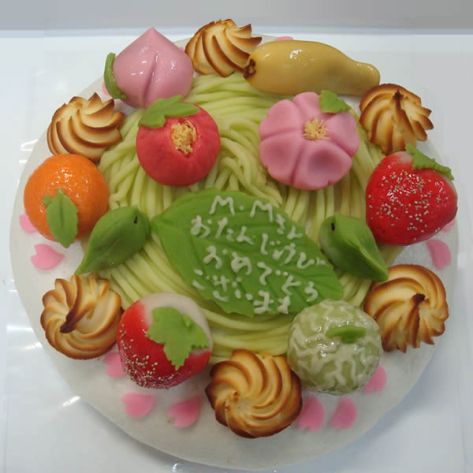
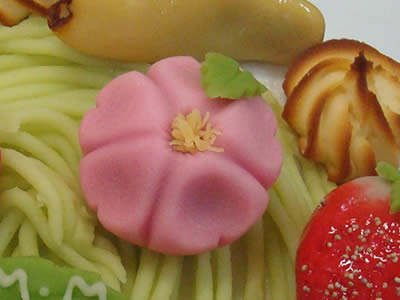
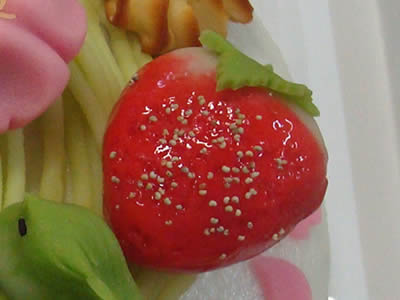
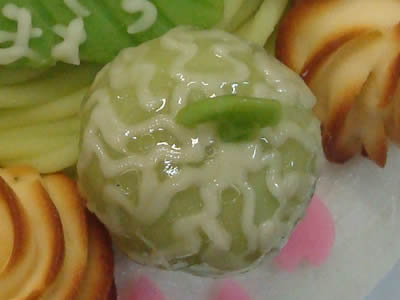
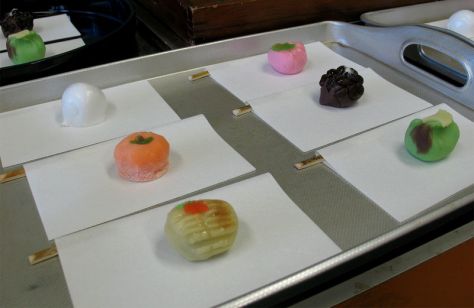
Here is an example of what could be done by a Japanese chef as Wagashi/Japanese Cake!
This particular Birthday Cake creation is the work of Chef Maeda at Kouseido in Osaka City!
Will look around and post other creations whenever I can!

Here is a breakdown of the above:

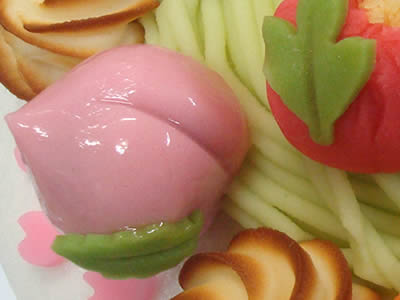
WAGASHI-VARIETIES-MOMO

“Momo”/Peach

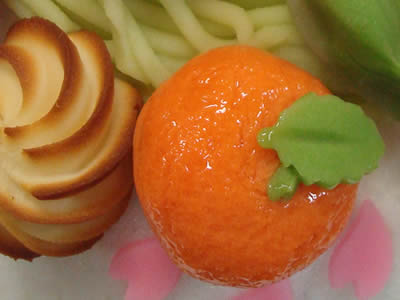
WAGASHI-VARIETIES-MIKAN

“MIkan”/Orange

WAGASHI-VARIETIES-TSUBAKI

“Tsubaki”/Camelia

WAGASHI-VARIETIES-SAKURA

“Sakura”/Cherry Blossom

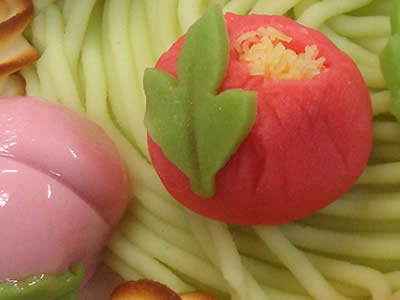
WAGASHI-VARIETIES-ICHIGO

“Ichigo”/Strawberry

WAGASHI-VARIETIES-MELON

“Meron”/Melon

RECOMMENDED RELATED WEBSITES

With a Glass,
Clumsyfingers by Xethia
Adventures in Bento Making, American Bento, Beanbento, Bento No1, Bento Wo Tsukurimashou, Cooking Cute, Eula, Hapabento , Happy Bento, Jacki’s Bento Blog, Kitchen Cow, Leggo My Obento, Le Petit Journal Bento & CO (French), Lunch In A Box, My Bento Box, Vegan Lunch Box; Tokyo Tom Baker, Daily Food Porn/Osaka, Only Nature Food Porn, Happy Little Bento, The Herbed Kitchen, J-Mama’s Kitchen, Cook, Eat, Play, Repeat; Bento Lunch Blog (German); Adventures In Bento; Anna The Red’s Bento Factory; Cooking Cute; Timeless Gourmet; Bento Bug; Ideal Meal; Bentosaurus; Mr. Foodie (London/UK); Ohayo Bento

Must-see tasting websites:

-Sake: Tokyo Through The Drinking Glass, Tokyo Foodcast, Urban Sake, Sake World
-Wine: Palate To Pen, Warren Bobrow, Cellar Tours, Ancient Fire Wines Blog
-Beer: Good Beer & Country Boys, Another Pint, Please!
-Japanese Pottery to enjoy your favourite drinks: Yellin Yakimono Gallery
Japanese Vegetarian & Vegan Cakes: Wagashi/和菓子4: Recipe-Mochi

WAGASHI-SAKURA-MOCHI
Wagashi/Sakura Mochi

Mochi/餅 is probably the most ancient sweet/cake confectioned by humans in Japan as its main ingredient is glutinous rice.
It is the more popular as it can be eaten and made all year round.
Kinako/黄粉 is a powder made from roasted soy beans (next article).
The combination of the two and other ingredients such as sweetmeats/anko/餡子, also made from soy beans, make for a valuable, tasty and nourishing food!
Read notes below!

Here is a simple way to make mochi.
Bear in mind that mochi can be eaten fresh as it is, especially with wagashi cakes, and that it can be mixed with other ingredients for colouring. It can be also dried and grilled and also included in soups and other recipes such as mochi pizza!

INGREDIENTS:
Glutinous rice: 3 go (Japanese measure): 540 cc (2.8 cups)
Kinako (to taste)

Notes on kinako and glutinous rice:

MOCHI-KINAKO

Kinako (黄粉 or きなこ), also known as soybean flour, is a product commonly used in Japanese cuisine. In order to create the soybean flour, soybeans are toasted and ground into powder. Its flavor is commonly compared to that of peanut butter.

Kinako, being composed of soybeans, is a healthy topping and flavoring which contains B vitamins and protein. It can also be used as a drink;. For example, warabi mochi is a famous kinako-covered sweet.

I will introduce a recipe soon!

MOCHI-TRADITIONAL

Glutinous rice (Oryza sativa var. glutinosa or Oryza glutinosa; also called sticky rice, sweet rice, waxy rice, botan rice, biroin chal, mochi rice, and pearl rice) is a type of short-grained Asian rice that is especially sticky when cooked. It is called glutinous (Latin glūtinōsus) in the sense of being glue-like or sticky and not in the sense of containing gluten; on the other hand, it is called sticky but should not be confused with the other varieties of Asian rice that become sticky to one degree or another when cooked.

RECIPE:

MOCHI-1
Wash the rice and let it soak in water overnight.

MOCHI-2
Pour water in steamer. Bring to boil. Set a clean cloth inside. Drain rice. Pour rice inside cloth. Dig a “well” in the middle for better cooking.

MOCHI-3
Steam over a medium fire for 20~25 minutes.

MOCHI-4
Pour hot water inside pestle bowl and leave the wooden sticks inside water for long enough to have all of them well impregnated with water. Throw water away just before next step. This will insure a better mochi!

MOCHI-5
Check rice for an even cooking. No water should be left or the mochi will be runny. If you make a small quantity, softer rice than usual is better as it will tend to dry faster than a large quantity.

MOCHI-6
Now this is the hard part!
You will need three adults to press hard on the rice with the wooden sticks at the same time to crush the rice completely. It might take as long as 10 minutes.

MOCHI-7
Now that the rice has been softened, one can continue on his own or work in shifts. Pound the rice in the middle 10 times. Turn over the rice from outside to inside and continue always around the clock.
Important: always pound in the middle, never on the sides or you will break the bowl!

MOCHI-8
That is how it should look. Make balls by twisting rice out.

MOCHI-9
Roll mochi in kinako mixed with sugar to taste. They are ready to be eaten!

MOCHI-10
This is how they are served in Japan for children (and adults!)

MOCHI-11
If you want to preserve them for a while before eating, roll them in rice powder. Rice powder will come in useful if you want to fashion the mochi into thin sheets or else.

MOCHI-12
That is how they look grilled!

RECOMMENDED RELATED WEBSITES

With a Glass,
Clumsyfingers by Xethia
Adventures in Bento Making, American Bento, Beanbento, Bento No1, Bento Wo Tsukurimashou, Cooking Cute, Eula, Hapabento , Happy Bento, Jacki’s Bento Blog, Kitchen Cow, Leggo My Obento, Le Petit Journal Bento & CO (French), Lunch In A Box, My Bento Box, Vegan Lunch Box; Tokyo Tom Baker, Daily Food Porn/Osaka, Only Nature Food Porn, Happy Little Bento, The Herbed Kitchen, J-Mama’s Kitchen, Cook, Eat, Play, Repeat; Bento Lunch Blog (German); Adventures In Bento; Anna The Red’s Bento Factory; Cooking Cute; Timeless Gourmet; Bento Bug; Ideal Meal; Bentosaurus; Mr. Foodie (London/UK); Ohayo Bento

Must-see tasting websites:

-Sake: Tokyo Through The Drinking Glass, Tokyo Foodcast, Urban Sake, Sake World
-Wine: Palate To Pen, Warren Bobrow, Cellar Tours, Ancient Fire Wines Blog
-Beer: Good Beer & Country Boys, Another Pint, Please!
-Japanese Pottery to enjoy your favourite drinks: Yellin Yakimono Gallery

Japanese Vegetarian & Vegan Cakes: Wagashi/和菓子3: Recipe-Shiro Anko/White Sweetmeats

WAGASHI-SHIROANKO-1

In my previous article, I introduced the recipe for “red sweetmeats” or just “anko” in Japanese, an important ingredients in Wagashi.
But the red/violet colour is not always wanted.
Another popular way to make anko is to use “ingen mame”/kidney beans (US), or string/French beans (Europe).
Note that soy beans/”daizu” are not used in this recipe!
The advantage are multiple, as the “white” (actually beige) colour can be modified by adding green peas (green), pumpkin (yellow or orange), fruit pulp from papaya and mango (orange). Variations are practically unlimited!

INGREDIENTS:
Kidney beans: 500g
Sugar: 400g
Salt: three small pinches

RECIPE:

WAGASHI-SHIROANKO-2
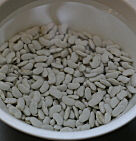
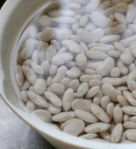
Put beans with 3 times their volume of water in a large pan. Let soak for two nights. Change water twice a day.

WAGASHI-SHIROANKO-3
Beans should have lost their “wrinkles” by then.

WAGASHI-SHIROANKO-b
Bring water to boil over strong fire. Simmer for 5 minutes over medium fire.

WAGASHI-SHIROANKO-4
Drain water, making sure beans don’t dry up. The skin of the beans should peel off easily. Take skins and dark spots away.

WAGASHI-SHIROANKO-5
Simmer again peeled beans until they get soft and start breaking up. Start on a strong fire to bring to boil, then lower to medium fire.

WAGASHI-SHIROANKO-6
Heat until most of the water has evaporated. Beans will pass through sieve more easily.

WAGASHI-SHIROANKO-7
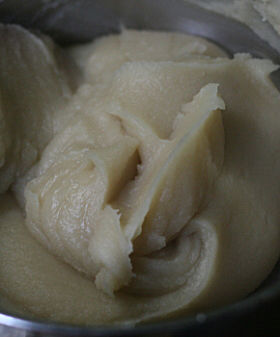
Pass all the beans through the sieve. Wash and dry the pan.

WAGASHI-SHIROANKO-8
Add sugar to sieved beans and stir/mix over low fire.

WAGASHI-SHIROANKO-9
Sugar becoming liquid upon heating will give a watery aspect to the mixture. Heat over low fire, stirring all the time for 25 minutes.

WAGASHI-SHIROANKO-10
Once satisfied with the paste consistency, add salt, mix and stop fire.

WAGASHI-SHIROANKO-11
Transfer to another dish for preserving until use. Do it at once while it is still hot.
Make sure it does not dry up.
Cover with a lid.
If lid does not close well enough, wrap the whole into cellophane paper.

RECOMMENDED RELATED WEBSITES

With a Glass,
Clumsyfingers by Xethia
Adventures in Bento Making, American Bento, Beanbento, Bento No1, Bento Wo Tsukurimashou, Cooking Cute, Eula, Hapabento , Happy Bento, Jacki’s Bento Blog, Kitchen Cow, Leggo My Obento, Le Petit Journal Bento & CO (French), Lunch In A Box, My Bento Box, Vegan Lunch Box; Tokyo Tom Baker, Daily Food Porn/Osaka, Only Nature Food Porn, Happy Little Bento, The Herbed Kitchen, J-Mama’s Kitchen, Cook, Eat, Play, Repeat; Bento Lunch Blog (German); Adventures In Bento; Anna The Red’s Bento Factory; Cooking Cute; Timeless Gourmet; Bento Bug; Ideal Meal; Bentosaurus; Mr. Foodie (London/UK); Ohayo Bento

Must-see tasting websites:

-Sake: Tokyo Through The Drinking Glass, Tokyo Foodcast, Urban Sake, Sake World
-Wine: Palate To Pen, Warren Bobrow, Cellar Tours, Ancient Fire Wines Blog
-Beer: Good Beer & Country Boys, Another Pint, Please!
-Japanese Pottery to enjoy your favourite drinks: Yellin Yakimono Gallery
Japanese Vegetarian & Vegan Cakes: Wagashi/和菓子2: Recipe-Anko/Sweetmeats

WAGASHI-4

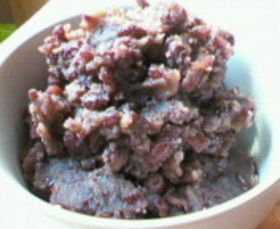
One main ingredients in traditional Wagashi/Japanese Cakes is “anko/餡子” (or more simply “an”) which can be translated as “sweetmeats” or “bean jam”.

I would like here to introduce a simple way to make one’s own “anko” at home:

INGREDIENTS:

Azuki/Adzuki/red beans (in Japanese: 小豆): 150 g
Sugar: 150g
Salt: a little

RECIPE:

a) Wash azuki lightly. Put in a large basin with an equal amount of water and turn on heat to high.

b) Bring to boil. If beans level is higher that of water, add water till beans are completely covered. Let simmer. Add water 2 or 3 times as soon as the water does not cover completely the beans and this until beans stop floating on water.

c) Drain beans, put them back into basin with same amount of water and turn fire to high. Repeat a) operation.

d) Cook as c) for 40~60 minutes.

e) Mash azuki beans lightly. Add sugar. Simmer and stir to mix, making sure the jam does not overboil.

f) Add a little salt (to your taste) and mix.
Let cool completely.
You can eat it as it is of course, but you will need it to make your cakes!
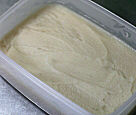
You can either sieve it to make it a very fine paste, sieve a part and mix it with the unsieved part, or use it as it is. In any case it will be easy to fashion!

WAGASHI-ANKO

RECOMMENDED RELATED WEBSITES

With a Glass,
Clumsyfingers by Xethia
Adventures in Bento Making, American Bento, Beanbento, Bento No1, Bento Wo Tsukurimashou, Cooking Cute, Eula, Hapabento , Happy Bento, Jacki’s Bento Blog, Kitchen Cow, Leggo My Obento, Le Petit Journal Bento & CO (French), Lunch In A Box, My Bento Box, Vegan Lunch Box; Tokyo Tom Baker, Daily Food Porn/Osaka, Only Nature Food Porn, Happy Little Bento, The Herbed Kitchen, J-Mama’s Kitchen, Cook, Eat, Play, Repeat; Bento Lunch Blog (German); Adventures In Bento; Anna The Red’s Bento Factory; Cooking Cute; Timeless Gourmet; Bento Bug; Ideal Meal; Bentosaurus; Mr. Foodie (London/UK); Ohayo Bento

Must-see tasting websites:

-Sake: Tokyo Through The Drinking Glass, Tokyo Foodcast, Urban Sake, Sake World
-Wine: Palate To Pen, Warren Bobrow, Cellar Tours, Ancient Fire Wines Blog
-Beer: Good Beer & Country Boys, Another Pint, Please!
-Japanese Pottery to enjoy your favourite drinks: Yellin Yakimono Gallery
Japanese Vegetarian & Vegan Cakes: Wagashi/和菓子1: Introduction

WAGASHI-1

There is a traditional way of making cakes in Japan that ought to please no end vegans and people allergic to wheat flour and dairy products, namely Wagashi!

Wagashi (和菓子) is a traditional Japanese confectionery which is often served with tea, especially the types made of mochi, azuki bean paste, and fruits.

Wagashi is typically made from natural based (mainly plant) ingredients. The names used for wagashi commonly fit a formula—a natural beauty and a word from ancient literature; they are thus often written with hyōgaiji (kanji that are not commonly used or known), and are glossed with furigana.

Generally, confectioneries that were introduced from the West after the Meiji Restoration (1868) are not considered wagashi. Most sorts of Okinawan confectionery and those originating in Europe or China that use ingredients alien to traditional Japanese cuisine, e.g., kasutera, are only rarely referred to as wagashi.

WAGASHI-2
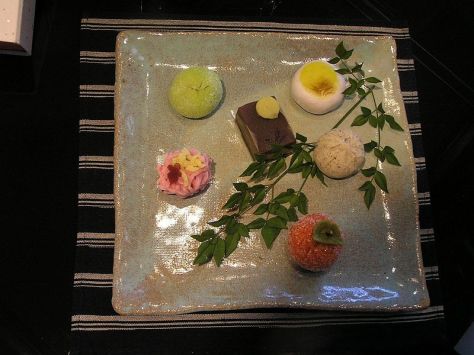
Assortment of wagashi for a tea ceremony

During the Edo period, the production of sugarcane in Okinawa became highly productive, and low quality brown sugar as well as heavily processed white sugar became widely available. A type of sugar, wasanbon, was perfected in this period and is still used exclusively to make wagashi. Wagashi was a popular gift between samurai, in significance much like a good wine. Wagashi is served as part of a Japanese tea ceremony, and serving a good seasonal wagashi shows one’s educational background.

WAGASHI-3
Wagashi in the shape of rape flowers/Na no Hana

There are many, many kinds of Wagashi.
I will (re-)introduce them in the next postings, followed by other postings on the basic preparation.

WAGASHI-ABEKAWAMOCHI-2
Shizuoka’s Abekawa Mochi

Just know that about every region in Japan has its own traditional Wagashi!

Avaibility:
Wagashi is widely available in Japan, but quite rare outside it.
Minamoto Kitchoan (源 吉兆庵)
Has a varied selection, and stores in New York City (shipping throughout the US), London (shipping throughout Europe), and Singapore, in addition to Japan.
Toraya (とらや)
Has a full Paris store, stores in Japan, and sells a limited selection (yōkan only) at New York stores.
Fugetsu-do
Family owned and operated in the USA, since 1903, Fugetsu-do now ships anywhere in the USA.

RECOMMENDED RELATED WEBSITES

With a Glass,
Clumsyfingers by Xethia
Adventures in Bento Making, American Bento, Beanbento, Bento No1, Bento Wo Tsukurimashou, Cooking Cute, Eula, Hapabento , Happy Bento, Jacki’s Bento Blog, Kitchen Cow, Leggo My Obento, Le Petit Journal Bento & CO (French), Lunch In A Box, My Bento Box, Vegan Lunch Box; Tokyo Tom Baker, Daily Food Porn/Osaka, Only Nature Food Porn, Happy Little Bento, The Herbed Kitchen, J-Mama’s Kitchen, Cook, Eat, Play, Repeat; Bento Lunch Blog (German); Adventures In Bento; Anna The Red’s Bento Factory; Cooking Cute; Timeless Gourmet; Bento Bug; Ideal Meal; Bentosaurus; Mr. Foodie (London/UK); Ohayo Bento

Must-see tasting websites:

-Sake: Tokyo Through The Drinking Glass, Tokyo Foodcast, Urban Sake, Sake World
-Wine: Palate To Pen, Warren Bobrow, Cellar Tours, Ancient Fire Wines Blog
-Beer: Good Beer & Country Boys, Another Pint, Please!
-Japanese Pottery to enjoy your favourite drinks: Yellin Yakimono Gallery
Wagashi/Japanese Cakes at Mochi No Ie in Shizuoka City

If you happen to visit the Toro Ruins or the magnificent Serizawa Keisuke Art Gallery in Shizuoka City take the time to visit Mochi No Ie just inside the Toro Ruins Park!

You are in for a time slip!

The whole 180-year old farm house was brought piece by piece from Okkaizu/奥会津 City in Fukushima Prefecture some time ago!

It harbors a traditional Japanese restaurant serving local o-mochi/rice cakes and soba/buckwheat noodles at hours coinciding with the opening hours of the Serizawa Keisuke Art Gallery.

The watermill wheel was also brought all the way!

This is Japan!
Can you see the goldfish?

Beautiful noren representing a rabbit pounding rice cakes on the moon!
They have another shop inside Shizuoka City JR Station with the same noren!

Of course inside is all wood!

Traditional Japanese fireplace!
The whole house is a microcosm of country life in 19th Century Japan!

Green tea is served in cups with the design of the place!

The small shop inside the house where you can buy o-mochi and soba to take back home!

One can either sit at tables or on tatami straw mats.

They also serve soba (for another report) but they are famous for teir mochi/soft rice cake of various kinds.
The above is Karamimochi/からみもち, an appetizer version served with grated daikon and freshly grated wasabi!

You break the whole thing with your chopsticks and mix it before savoring it. Great with beer!
Moreover, it is vegan as they use only rice flour to make them!

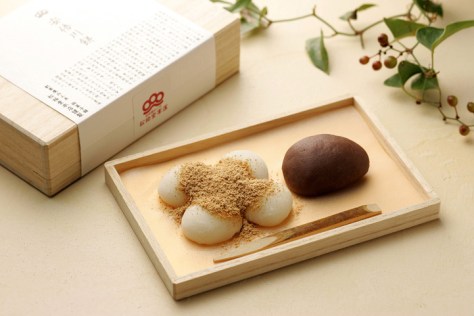
A combination of two true Shizuoka wagashi/Japanese rice cakes: Abekawa mochi/安倍川もち made of rice flour covered with sweatmeats/anko/餡子, and Kinako mochi/きなこもち rice flour cakes served with dry soy beans flour.
Again these cakes are vegan!

For a closer view! A great healthy dessert!

The owners always kindly invite newcomers to visit the upper floor!

Up the wooden stairs…

A cute noren/curtain!

Upstairs is a real museum but you can eat there upon reservation and make it a wholy non-smoking private room!

Beautiful overview of the entrance garden!

Farm crop baskets!

Original drawings by Serizawa Keisuke!

I’d love to possess this fan painted by the same artist!

Many things to discover in dark corners…

I’m planning to visit their shop at Shizuoka Station soon, but I must come back here again soon to enjoy their soba!

To be followed…

MOCHI NO IE
Shizuoka Shi, Suruga Ku, Toro, 5-15-13 (Just inside the Toro Ruins Park)
Tel.: 054-263-1663
Opening hours: 10:30~17:00
Closed on Mondays

RECOMMENDED RELATED WEBSITES

With a Glass,
Clumsyfingers by Xethia
Adventures in Bento Making, American Bento, Beanbento, Bento No1, Bento Wo Tsukurimashou, Cooking Cute, Eula, Hapabento , Happy Bento, Jacki’s Bento Blog, Kitchen Cow, Leggo My Obento, Le Petit Journal Bento & CO (French), Lunch In A Box, My Bento Box, Vegan Lunch Box; Tokyo Tom Baker, Daily Food Porn/Osaka, Only Nature Food Porn, Happy Little Bento, The Herbed Kitchen, J-Mama’s Kitchen, Cook, Eat, Play, Repeat; Bento Lunch Blog (German); Adventures In Bento; Anna The Red’s Bento Factory; Cooking Cute; Timeless Gourmet; Bento Bug; Ideal Meal; Bentosaurus; Mr. Foodie (London/UK); Ohayo Bento

Must-see tasting websites:

-Sake: Tokyo Through The Drinking Glass, Tokyo Foodcast, Urban Sake, Sake World
-Wine: Palate To Pen, Warren Bobrow, Cellar Tours, Ancient Fire Wines Blog
-Beer: Good Beer & Country Boys, Another Pint, Please!
-Japanese Pottery to enjoy your favourite drinks: Yellin Yakimono Gallery
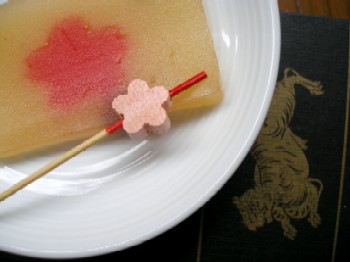
Vegan Japanese Dessert: Sweet Potato, Apple & Gardenia Seeds Kinton

It is always a bit complicated for vegans and vegetarians alike to create desserts without using eggs or dairy products, unlessyou start using derivatives and susbstitues, which is not always a good idea.
The Japanese must be, without knowing it, the greatest creators of vegan desserts thanks to such techniques as found in the making of wagashi!

One variety of wagashi is called Kinton.
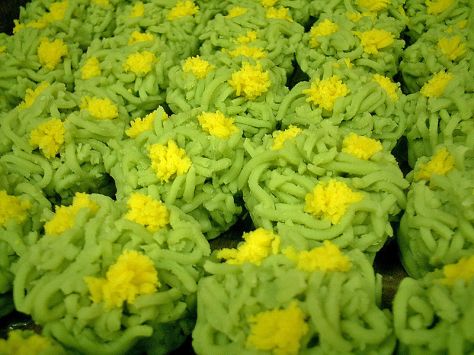
Kinton, or きんとんin Japanese is a Japanese tradtional dessert made with chestnuts/kuri/栗 and sugar.
Originally created in Gifu in the late 1870’s it is now found and available almost everywhere in Japan for the pleasure of all, vegans and vegetarians included.

Kuchinashi (Japanese) or Gardenia jasminoides (also known as Gardenia augusta) is a fragrant flowering evergreen tropical plant, a favorite in gardens worldwide. It originated in Asia and is most commonly found growing in Vietnam, Southern China, Taiwan and Japan.
The fruit is used as a yellow dye, which is used for clothes and food (including the Korean mung bean jelly called hwangpomuk).
Medicinal uses:
Gardenia jasminoides fructus (fruit) is used within Traditional Chinese Medicine to “drain fire” and thereby treat certain febrile conditions.

Kuchinashi no Mi/Gardenia fruit.

Kuchinashi no mi/Gardenia fruit, dried as found in Japanese stores.

I took the precaution to go through these preliminary explantaions before introducing the following dessert:

Sweet Potato, Apple & Gardenia Seeds Kinton!

INGREDIENTS:

-Apple: 1 large
-Sweet Potato/Satsuma Imo: 1 medium
-Lemon juice: 1/4
-Sugar: 1 tablespoon
-Gardenia seed/Kuchinashi no Mi: 1

RECIPE:

-Peel the sweet potato, cut in four legthwise and across again every 2 cm. Leave aside in clear cold water.
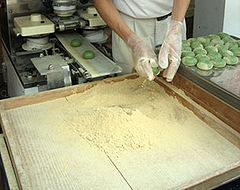
-Peel the apple, cut into 8 wedges and slice again every 5 mm. Drop in a stainless pot. Add lemon and sugar. Cover with lid and simmer on a low fire until softened.
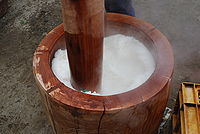
-Cut the kuchinashi no mi/Gardenia seed in two and insert it in a small cooking bag (gauze as for bouquet garni).

-In a different pan, drop the sweet potato with ebnough water to boil them. Add teh kuchunashi no mi/gardenia seed. Boil until the sweet potato is soft enough to be easily skewered with a bamboo/wooden toothpick.
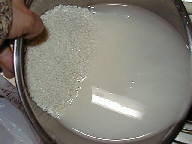
-Throw the water of the sweet potato out. Keep cooking the sweet potato to let their water evaporate.

-Add 1/3 of the apple to the sweet potato and mix well.

-Serve the sweet potato topped with the cooked apple.

NOTES:

-Roast some some walnuts and top the dessert with them!

RECOMMENDED RELATED SITES
Not-Just-Recipes, Bengal cuisine, Cooking Vegetarian, Frank Fariello, Gluten-free Vegan Family, Meatless Mama, Warren Bobrow, Wheeling Gourmet, Le Petit Cuisinier, Vegan Epicurean, Miss V’s Vegan Cookbook, Comestiblog, To Cheese or not To Cheese, The Lacquer Spoon, Russell 3, Octopuspie, Bread + Butter, Pegasus Legend, Think Twice, The French Market Maven, Fuji Mama, Great Teacher Sato, Peas Love Carrots

Please check the new postings at:
sake, shochu and sushi

—————————————-
日本語のブログ
—————————————-

Japanese Cakes/Wagashi 13: Kabotcha/Pumpkins

WAGASHI-PUMPKIN-1

Just found this recipe to please vegans (and others) with a sweet tooth:
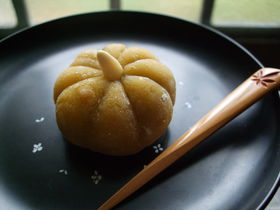
Japanese Cake/Wagashi: Pumpkin/Kabotcha Wagashi!

INGREDIENTS: For 5 cakes
-Pumkin paste: 20 g
-Rice flour: 30 g
-Sugar: 12 g
-Water: 50 ml
-Sweetmeats/Anko (See Recipe here)
-Cornstarch: enough for operation
-Pumpkin seeds or pine nuts: 5 (for decoration)

RECIPE:

WAGASHI-PUMPKIN-2
-Peel skin from pumkin and heat pulp inside microwave oven until soft enough to make paste. Let cool down completely.

WAGASHI-PUMPKIN-3
-In an oven bowl mix well punpkin paste, rice flour, sugar and water until it becomes bubbly. Cover with cellophane paper and heat for 40 seconds at 700W inside microwave oven.

WAGASHI-PUMPKIN-4
-Work the paste until smooth.

WAGASHI-PUMPKIN-5
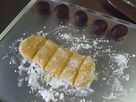
-Using cornstarch to work paste more easily as it will easily stick to yor fingers, divide the paste into 5 identical portions.
WAGASHI-PUMPKIN-6
-Divide sweetmeats/anko into 5 identical parts and fashion them into small balls.
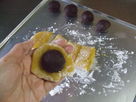
Coat your fingers with a little cornstarch and completely wrap sweetmeat/anko ball with pumpkin paste as shown in picture.

WAGASHI-PUMPKIN-7
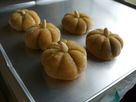
-Make indents around the ball with a wooden sticks to shape the ball into a small pumpkin.

WAGASHI-PUMPKIN-8
-As soon as the ball is finished, gently brush away whatever cornstarch is left on the surface.

WAGASHI-PUMPKIN-9
-On top of each pumpkin cake place a seed for decoration and effect!

WAGASHI-PUMPKIN-10
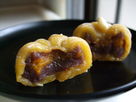
-That is how your “pumpkin” will look when you cut it!

NOTE:
You can sieve the pumpkin pulp first for a finer texture.

Please check the new postings at:
sake, shochu and sushi

—————————————-
日本語のブログ
—————————————-