Japanese Seasonal Fish: Tara/Cod

Cod, or “Tara/鱈” in Japanese reads a the “Snow Fish”. Unlike in many countries in Europe and North America, the fish is eaten fresh, raw or cooked in Japan, but practically never salted.
Only the Norwegians can boast a difference as they eat the tongue of the fish as soon as they catch it!

As other fish in Japan, it is called different names: Ibodara, Maidara (Toyama Prefecture), Ara (Nagasaki Prefecture) as far as “Madar” or “True Cod” is concerned.
There are other varieties as is shown below in sushi pictures.

It is mainly caught in the Sea of Okhotsk in Winter.
The average total Cod catch is 437,000 tonnes, 55.000 of which is “True Cod”. Imports average annualy 152,000 tonnes mainly from the US and Russia.

Cod sashimi with its male sperm sacs/Shirako

It makes for great sashimi.

But it is also equally appreciated cooked, especially grilled or in “Nabe/Japanese-style pot au feu”.
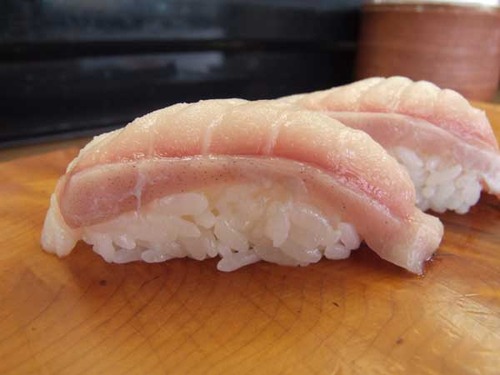
Gintara/銀鱈 Cod variety as sushi nigiri.

Higetara/髭鱈 Cod variety as sushi nigiri.
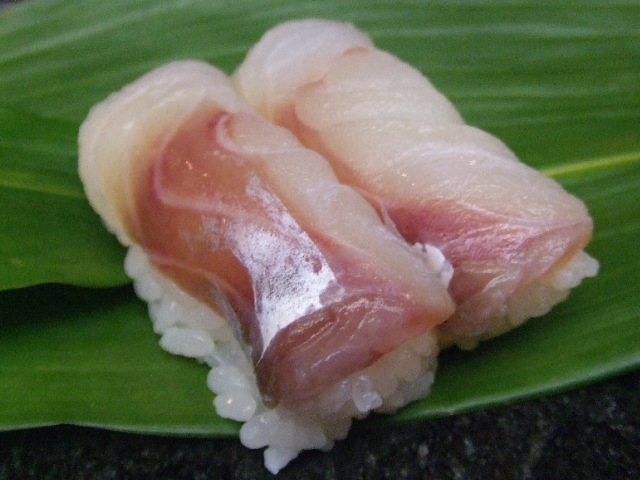
Madara/真鱈 Cod as sushi nigiri.

As shown above, many varieties of tara are greatly appreciated as sushi, especially nigiri.
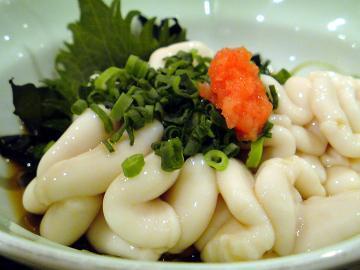
Shirako/白子, or the sperm sacs of the male fish, is an extremely popular delicay in Japan.
It is either served raw or lightly boiled as in above picture with ponzu, chopped leeks and momijioroshi/grated daikon with chili pepper.

Shirako is also very popular served as sushi in gunkan shape as above.
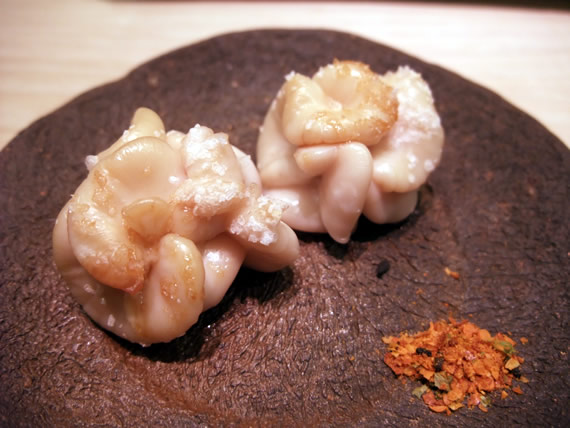
It becomes another delicacy when grilled.
French and Italian Restaurants in Japan also extensively use it sauteed or in gratin!
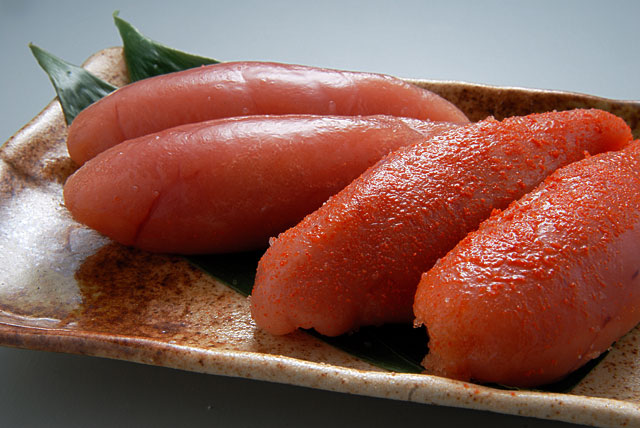
The roe sacs of the femal fish is also a very popular (and expensive) delicacy especially when preserved in chili pepper (as above) and sold as Mentaiko/明太子!

The same roe is also served as “Tarako/鱈子”, especially in the sushi gunkan form!

RECOMMENDED RELATED SITES:
Bread + Butter, Comestilblog, Greedy Girl, Bouchon For 2, Zoy Zhang, Hungry Neko, Mangantayon, Elinluv Tidbit Corner, Maison de Christina, Chrys Niles, Lexi, Culinary Musings, Eats and Everything, Bite Me New England, Heather Sweet, Warren Bobrow, 5 Star Foodie, Frank Fariello, Oyster Culture, Ramendo, Alchemist Chef, Ochikeron, Mrs. Lavendula, The Gipsy Chef, Spirited Miu Flavor, Wheeling Gourmet, Chef de Plunge, Sushi Nomads

Please check the new postings at:
sake, shochu and sushi

—————————————-
日本語のブログ
—————————————-
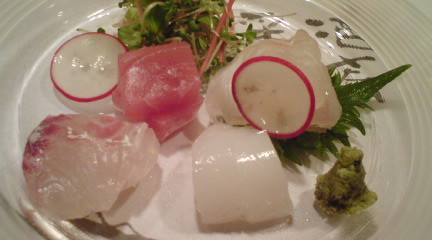
Sashimi Mini-Plate at Tomii (’10/01/09)

This is the second part of my “Quick fix” last night at Tomii.
I posted this article separately as it will also go to my sushi blog page and Sushi Nomads Website.

All the fish served on this “min sashimi plate” are seasonal (as always at Tomii).

Left top: “Honmaguro Akami”, or lean part of bluefin tuna backed with various sprout vegetables.
Right top: “Hirame” or sole on a leaf of shiso/perilla.
Left bottom: “Tai”, or seabream. In thei case “Madai”, or true seabream.
Right bottom: “Aori Ika”, or bigfin reef squid.
The wasabi is naturally freshly grated wasabi from Shizuoka!

TOMII
Shizuoka City, Aoi Ku, Tokiwa-cho, 1-2-7, Tomii Bldg, 1F
Tel.: 054-274-0666
Business hours: 17:00~22:00
Closed on Sundays
HOMEPAGE (Japanese)

RECOMMENDED RELATED SITES:
Bread + Butter, Comestilblog, Greedy Girl, Bouchon For 2, Zoy Zhang, Hungry Neko, Mangantayon, Elinluv Tidbit Corner, Maison de Christina, Chrys Niles, Lexi, Culinary Musings, Eats and Everything, Bite Me New England, Heather Sweet, Warren Bobrow, 5 Star Foodie, Frank Fariello, Oyster Culture, Ramendo, Alchemist Chef, Ochikeron, Mrs. Lavendula, The Gipsy Chef, Spirited Miu Flavor, Wheeling Gourmet, Chef de Plunge

Please check the new postings at:
sake, shochu and sushi

—————————————-
日本語のブログ
—————————————-
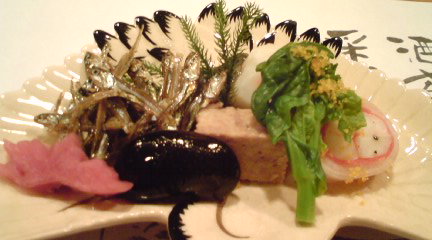
Japanese Gastronomy: Zensai/Appetizer at Tomii (’10/01/09)

Dining or just “having a snack” in Japan in the right places can easily turn into an intimidating experience.
Last night, suffering from a bout of starvation, my body took me to my favourite Japanese restaurant for a “quick bite”.
People know me well there and don’t really bother to ask me for orders. I just tell them “a little today”, or “plenty today”! That kind of attitude will make my friends think I’ve gone snobbish at last…

Not at all, actually, which means anyone can expect great surprises in this country, even if it concerns a simple appetizer.

That particular plate wich came with the first drink consisted of the following:
From left to right:
“Tazukuri”, or grilled (very) small fish.
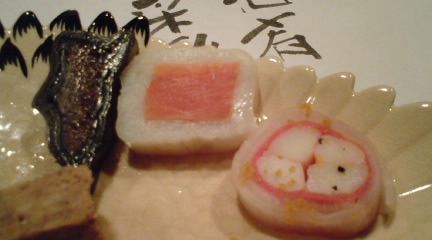
“Nishin no Kobumaki”, or herring simmered and rolled into seaweed.
“Sake Nekimitamaki”, or salmon steamed inside fish paste.
“Hoshoumaki”, or crab roll.

For a closer picture of “Nishin no Kobumaki”, “Sake Nekimitamaki”, and “Hoshoumaki”.

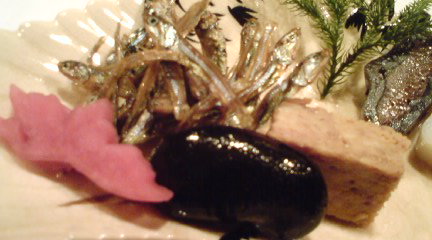
For a closer picture ofthe other ingredients:
The “Tazukuri”, or grilled (very) small fish at the back.
“Tsurudaikon”, or daikon coloure in plum water and cut in the shape of a “tsuru”, or Ja@anese crane.
“Tori no terrine”, or a small cube of chicken terrine.
“Fukumame”, or large simmered black bean.

The green is “Na no Hana”, or rape blossom sprinkled with “Karasumi Oroshi”, or grated pickled mullet roe.
The grated wasabi is fresh one from Shizuoka!

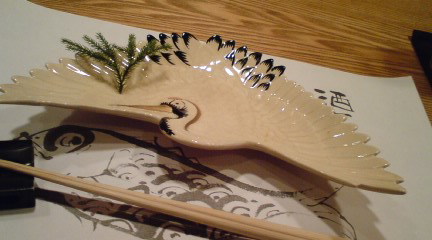
For a better view of the beautiful Japanese Crane pottery dish used to serve that great appetizer!

TOMII
Shizuoka City, Aoi Ku, Tokiwa-cho, 1-2-7, Tomii Bldg, 1F
Tel.: 054-274-0666
Business hours: 17:00~22:00
Closed on Sundays
HOMEPAGE (Japanese)

RECOMMENDED RELATED SITES:
Bread + Butter, Comestilblog, Greedy Girl, Bouchon For 2, Zoy Zhang, Hungry Neko, Mangantayon, Elinluv Tidbit Corner, Maison de Christina, Chrys Niles, Lexi, Culinary Musings, Eats and Everything, Bite Me New England, Heather Sweet, Warren Bobrow, 5 Star Foodie, Frank Fariello, Oyster Culture, Ramendo, Alchemist Chef, Ochikeron, Mrs. Lavendula, The Gipsy Chef, Spirited Miu Flavor, Wheeling Gourmet, Chef de Plunge

Please check the new postings at:
sake, shochu and sushi

—————————————-
日本語のブログ
—————————————-
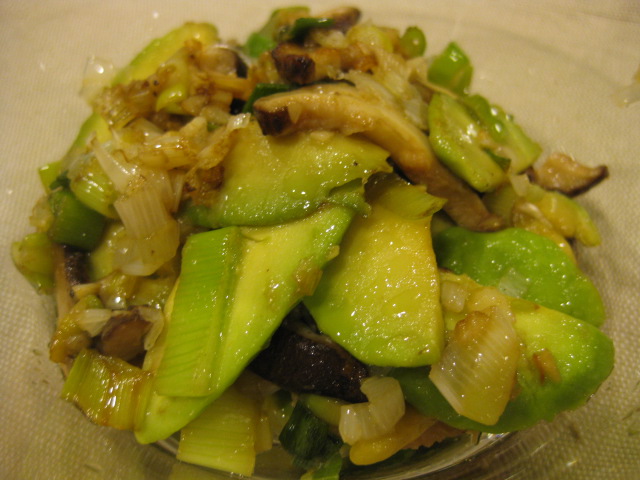
Vegan Japanese Cuisine: Sauteed Avocado

Avocadoes are great and versatile vegetables/fruits that can be combined in so many ways.
They also have the marked advantage to provide much-needed calories and beneficial ingredients.

Here is a simple but hearty way to prepare them:

Sauteed Avocado!

INGREDIENTS: For one person (can be multiplied accordingly!)

-Avocado: 1 half
-Long leeks: 1 half, chopped
-Shiitake: 3 (fresh)
-Sesame oil: 2 tablespoons
-Soy sauce: 1.5 tablespoons

RECIPE:

-Cut the avocado in proper (to your liking) size pieces. Do the same with the shiitake. Chop the leeks finely

-in a frypan pour the sesame oil and fry the leeks first.

-Add the shiitake and fry to satisfaction. Add avocado and soy sauce and turn the whole in the frypan a few times.

-Lastly season with black pepper and serve.

NOTE:

-If you happen to have unripe and hard avocado, fry them first until crispy outside. You’ll find out they’ll be very soft inside.
-For extra seasoning you may use chillies or curry powder!

RECOMMENDED RELATED SITES
Not-Just-Recipes, Bengal cuisine, Cooking Vegetarian, Frank Fariello, Gluten-free Vegan Family, Meatless MamaFrank Fariello, , Warren Bobrow, Wheeling Gourmet, Le Petit Cuisinier, Vegan Epicurean, Miss V’s Vegan Cookbook, Comestiblog, To Cheese or not To Cheese, The Lacquer Spoon, Russell 3

Please check the new postings at:
sake, shochu and sushi

—————————————-
日本語のブログ
—————————————-
Vegan Japanese Deep-fried Taro/Sato Imo Age

Taro or Sato Imo in Jpaanese, can also for some great and hearty dishes for c\vegans and vegetarians, too!

Hre is a very simple recipe that can be enjoyed by all!
As for the Dashi, or Jpanese soup stock, check HERE for the basic recipe!

INGREDIENTS: For 4 people

-Taro/Sato imo: 16 small
-Dashi: 4 tablespoons
-Mirin/Sweet sake: 4 tablespoons
-Soy sauce: 3 tablespoons
-Sugar: 2 teaspoons
-Oil for deepfrying

RECIPE:

-Clean the taro/sato imo quickly.
Boil them in water for 15 minutes.
Peel them.

-Heat the deep frying oil to 170 degrees Celsius and deep fry the taro/sato imo until they obtain a nice brownish colour.

-In a pan drop dashi, mirin, soy sauce and sugar and heat (and stir) until the sugar has completely dissolved. Transfer the taro/sato imo into the pan and cook for a while in the sauce.

-Simmer until the sauce has reached a thick consistence.
Serve at once.
A few chopped greens would make for a good seasoning.
You may add spices of your liking to the sauce (grated ginger, chilies, etc.).

RECOMMENDED RELATED SITES
Not-Just-Recipes, Bengal cuisine, Cooking Vegetarian, Frank Fariello, Gluten-free Vegan Family, Meatless MamaFrank Fariello, , Warren Bobrow, Wheeling Gourmet, Le Petit Cuisinier, Vegan Epicurean, Miss V’s Vegan Cookbook, Comestiblog, To Cheese or not To Cheese, The Lacquer Spoon, Russell 3

Please check the new postings at:
sake, shochu and sushi

—————————————-
日本語のブログ
—————————————-
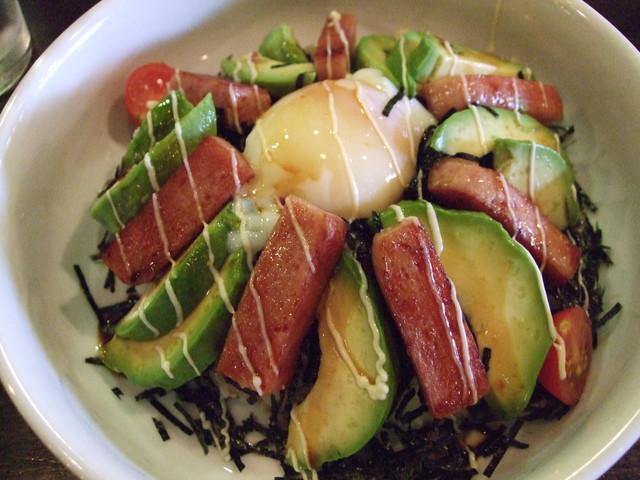
Spam Donburi/Japanese Spam on a Bowl of Rice

Here is another suggestion for using spam that is surely going to provoke Bazooka Gourmet into new comments! LOL

It is very simple and makes for a solid meal.

Steam some rice either to be served plain or as sushi rice. See sushi rice recipe HERE for the latter.

Fill a large bowl with the sushi rice.
Sprinkle the top with plenty of Finely cut dry seaweed.
You might smear here and there with a little grated wasabi, too.

Use spam that you would have cut into strips and fried (and let cool) with seasoning beforehand.
Intersperse them with avocado slices (seasoned with a little soy sauce and lemon juice.
Place a poached egg in the middle.
Season the whole with the dressing or mayonnaise of your choice in the pattern suggested in picture.
You may add plum tomatoes and greens for better effect and taste!

RECOMMENDED RELATED SITES:
Bread + Butter, Comestilblog, Greedy Girl, Bouchon For 2, Zoy Zhang, Hungry Neko, Mangantayon, Elinluv Tidbit Corner, Maison de Christina, Chrys Niles, Lexi, Culinary Musings, Eats and Everything, Bite Me New England, Heather Sweet, Warren Bobrow, 5 Star Foodie, Frank Fariello, Oyster Culture, Ramendo, Alchemist Chef, Ochikeron, Mrs. Lavendula, The Gipsy Chef, Spirited Miu Flavor, Wheeling Gourmet, Chef de Plunge

Please check the new postings at:
sake, shochu and sushi

—————————————-
日本語のブログ
—————————————-
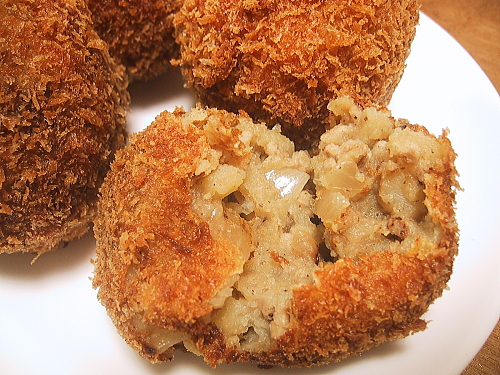
Japanese Cuisine: Korokke/Croquettes-Basic Recipe

I already have introduced the basics about the this marsel which has become such an ubiquitous feature of everyday Japanese food, namely Korokke-Croquettes.

Here is the basic recipe prevalent in restaurants and homesteads.
Naturally it can be expanded and modified at will.
I will not bother you with measurements this time as the method is the point of this posting!

INGREDIENTS:

-Potatoes (you will have to decide which variety! In Japan, “Danshaku” are best!)
-Onion
-Minced meat (of your choice!)
-Salt and pepper
-Flour (of your choice)
-egg
-Milk
-Breadcrumbs (fresh if possible)
-Oil
-Lard (skip if you don’t like, but a pity!)

RECIPE:

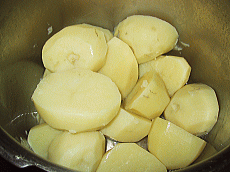
-Boil the potatoes with their skins.
Peel the skins off just out of the water when very hot. This way, the potatoes will not be too wet.

-Mash the potatoes roughly with a wooden spoon/spatula. Add salt and peepper and mix roughly. Cover with cellophane paper to keep the potatoes warm as long as possible.

Chop the onions finely and fry in lard if possible for better taste. If you don’t like lard, use oil. You could add chopped garlic and small pieces of bacon.
Add minced meat of your choice. Season with a little salt, pepper, sugar and soy sauce according to you preferences. Fry until the monced meat is cooked.

-Add the mashed potatoes. Mixing them all atogether at the same time fry until potatoes have become dry enough.
Let cool completely and transfer to a stroage dish. Cover with cellophane paper and leave overnight in the refrigerator to allow taste to permeate the potatoes. This is an important point as not only it will enhnace the taste but make the croquettes easier to shape.

-Spread a little oil over your palms and shape croquettes to you preffered size.

-Roll in flour and “shake” croquettes so that not too much flour adhere to them.

-Prepare (you might better do that first, LOL) the croquettes egg dip by mixing beaten egg, flour and milk to your preference.
Dip the croquettes in the batter competely.

-Roll the croquettes in the breadcrumbs.
One way to make breadcrumbs is to use real bread which had turned completely solid, soften it in milk, let it dry again and crush it into powder!

-Deep-fry croquettes at 170 degrees Celsius until they have reached a colour of your liking.
As everything is already cooked inside, don’t worry if they are not enough cooked.
Point: add a little sesame oil to your frying oil for extra taste.

There are all kinds of sauce and decoration you cane serve croquettes with, unless you like them plain with a little mustard for example.

Here is a little suggestion for good taste and appetizing presentation:
Prepare a light white sauce/bechamel in the aurora style sauce with plenty of white pepper and boiled gree peas.

Don’t they look nice like that!

RECOMMENDED RELATED SITES:
Bread + Butter, Comestilblog, Greedy Girl, Bouchon For 2, Zoy Zhang, Hungry Neko, Mangantayon, Elinluv Tidbit Corner, Maison de Christina, Chrys Niles, Lexi, Culinary Musings, Eats and Everything, Bite Me New England, Heather Sweet, Warren Bobrow, 5 Star Foodie, Frank Fariello, Oyster Culture, Ramendo, Alchemist Chef, Ochikeron, Mrs. Lavendula, The Gipsy Chef, Spirited Miu Flavor, Wheeling Gourmet, Chef de Plunge

Please check the new postings at:
sake, shochu and sushi

—————————————-
日本語のブログ
—————————————-

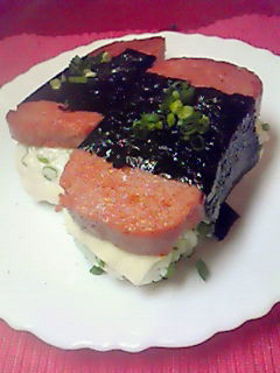
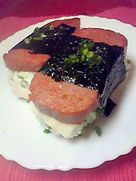
Spam Nigiri with Ginger Rice

My friends know I nurture a pet hate for all spammers!LOL
Following a suggestion by my good Foodbuzz friend, Bazooka Gourmet, I decided to run a little series on recipes including Spam.

Spam Spam sushi nigiri is apparently the “National Sushi of Hawaii”.
I’m sure friends there will come with some more interesting suggestions!

Spam Nigiri with Ginger rice!

INGREDIENTS:

-Steamed rice: 3 small bowls ( a bowl means a serving in Japan. That should make enough for 6 nigiri. Bear in mind that the nigiri will be a large as a spam slice)
-Spam: 1 standard can. Enough to make 6 slices
-Fresh ginger: 30 g
-Leeks (Manno style, but any leeks can work if thin enough): 4~5 stems
-Sesame oil: 1 tablespoon
-White sesame seeds: 1 tablespoon
-Cheese (sliced cheese): 2 fourths of a large thin slice.
-Nori: dry seaweed for binding

RECIPE:

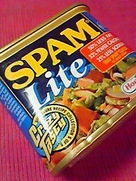
Here is the kind of spam available in Japan.

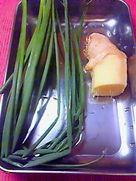
-Leeks and fresh ginger before chopping (leeks) and grating (ginger).

-Fry the spam slices on both sides until satisfaction.
-You may vary on the thickness of the spam slice.

-Add the grated 80% of the chopped leeks, ginger, sesame seeds and sesame oil with the freshly steamed rice.
Chop the leeks.

-Form a rice ball of the spam surface size and and shape. Place a cheese on top, than a slice of fried spam.
Secure with a band of nori/dried seaweed.
Serve them sprinkled with the rest of the chopped leeks.
Eat at once!

NOTES:

-Try and use freshely steamed rice. It willbe easier to shape and will not break away.
-Don’t be afraid of increasing the amount of ginger, leeks and white seame to add more taste.ご飯は少し硬めに-On the other hand, do not add sesame oil!

RECOMMENDED RELATED SITES:
Bread + Butter, Comestilblog, Greedy Girl, Bouchon For 2, Zoy Zhang, Hungry Neko, Mangantayon, Elinluv Tidbit Corner, Maison de Christina, Chrys Niles, Lexi, Culinary Musings, Eats and Everything, Bite Me New England, Heather Sweet, Warren Bobrow, 5 Star Foodie, Frank Fariello, Oyster Culture, Ramendo, Alchemist Chef, Ochikeron, Mrs. Lavendula, The Gipsy Chef, Spirited Miu Flavor, Wheeling Gourmet, Chef de Plunge

Please check the new postings at:
sake, shochu and sushi

—————————————-
日本語のブログ
—————————————-
Vegan White Miso Soup

As promised, back to my vegan and vegetarian friends to whom I promised this series of dashi-based (for most of them) soups (and other dishes).
Miso is increasingly becoming popular.
Check the miso posting!
And check the dashi posting, too!

Vegan White Miso Soup!

INGREDIENTS: For one person

-Egg-plant/aubergine: 1 half
-Onion: 1/4 (sliced)
-Konbu dashi/seaweed soup stock: 1 cup/ 200cc/ml
-White miso paste: 1 tablespoon
-White leek cut into very fine strips for decoration and finishing taste point

RECIPE:

1-Cut the egg-plant/aubergine into thin slices. Wash in water.

2-Pour some oil in a frypan and fry the egg-plant/aubergines slices until both sides are slightly brown.

3-Pour the konbu dashi into a pan. Add the sliced onion and simmer for a while until onuon are soft enough.

4-Add fried egg-plant/aubergines. Add and mix in white miso paste.

5-Serve in a bowl with chopped white leeks.

NOTE:

The miso contains enough salt, so no need to add any really.
I also add ground sesame seeds before serving.
One can add some sesame oil when frying the egg-plants/aubergines.
Add spices according to preferences.

RECOMMENDED RELATED SITES
Not-Just-Recipes, Bengal cuisine, Cooking Vegetarian, Frank Fariello, Gluten-free Vegan Family, Meatless MamaFrank Fariello, , Warren Bobrow, Wheeling Gourmet, Le Petit Cuisinier, Vegan Epicurean, Miss V’s Vegan Cookbook, Comestiblog, To Cheese or not To Cheese, The Lacquer Spoon, Russell 3

Please check the new postings at:
sake, shochu and sushi

—————————————-
日本語のブログ
—————————————-
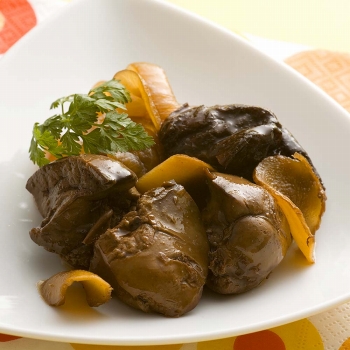
Chicken Liver Simmered with Balsamico

I love liver and am always looking for new simple ways to eat some, be it yakitori for Japanese style, stirfry for Chinese style or any European/American style!

Just found this easy recipe in my notes, which blends many influences:

Chicken liver simmered in Balasamico!

INGREDIENTS: For 2 people

-Chicken liver: 150 g
-Onion: 1/2
-Fresh Ginger: 2×2 cm piece
-Prunes: 4

-Soy Sauce: 1/2 tablespoon
-Water: 2/3 cup/140 cc/ml
-Balsamico vinegar: 1 1/2 tablespoon
-Red wine: 1 tablespoon
-Bouillon/Chicken stock: 1 cube
-Sugar: 1 tablespoon
-Chervil: to taste

RECIPE:

1-Leave the liver in water for 20 minutes. Take out veins and nerves. Cut in bite-sized pieces.

2-Slice onion into 5 mm thick slices. Cut the ginger into fine slices

3 -Gently boil the liver with some chopped leek leaves (not included in the ingredients) and scoop out unwanted matters.

4-In a pan drop the water, balsamico vinegar, red wine, bouillon, sugar and sliced ginger. Bring to light boil. Add sliced onion and prunes.

5-Wait untio it starts boiling again, then lower fire to low and simmer until satisfaction.
Serve and decorate with chervil.

RECOMMENDED RELATED SITES:
Bread + Butter, Comestilblog, Greedy Girl, Bouchon For 2, Zoy Zhang, Hungry Neko, Mangantayon, Elinluv Tidbit Corner, Maison de Christina, Chrys Niles, Lexi, Culinary Musings, Eats and Everything, Bite Me New England, Heather Sweet, Warren Bobrow, 5 Star Foodie, Frank Fariello, Oyster Culture, Ramendo, Alchemist Chef, Ochikeron, Mrs. Lavendula, The Gipsy Chef, Spirited Miu Flavor, Wheeling Gourmet, Chef de Plunge

Please check the new postings at:
sake, shochu and sushi

—————————————-
日本語のブログ
—————————————-
Vegan Japanese Dashi/Soup Stock: The Basic Recipe

So many times have I heard my vegan and vegetarian friends complain about the fact that most dashi/soup stock is not done according to their priorities in Japan, making it impossible for them to enjoy food in this country.
Fortunately, this is a big misconception. Vegan dashi exists and is very easy to make or request.
Now, to make sure that the same friends can savour Japanese food, either at home or with friends, here is the basic ans simple recipe!
Please save or copy this recipe for future reference (I have more vegan soup recipes in store for you!)

Vegan Japanese Dashi/Soup Stock

INGREDIENTS: (multiply according to demands. This is the minimum quantity!)

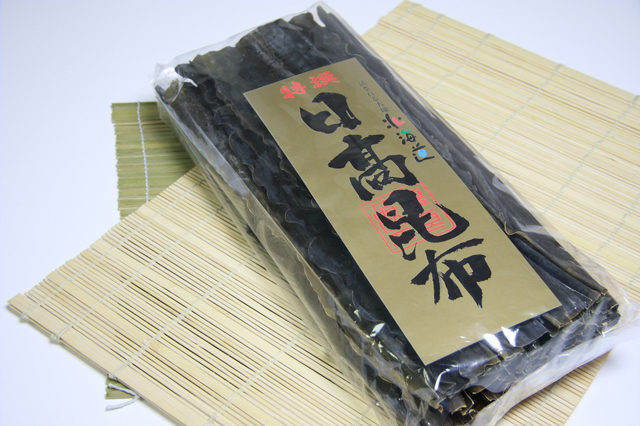
Konbu as sold in Japan

Konbu out of its packaging

-Konbu/dried thick dark seaweed: 5cm×5cm piece (dry)
-Water: 400cc/ml
-Japanese sake: 1 tablespoon (don’t worry, the alcohol will disappear upon heating/cooking!)
-Mirin/sweet sake (same comments as above!): 2 tablespoons
-Soy sauce: 2 and a half tablespoons

RECIPE:

Pour the awter into a large pan. Drop the seaweed into the water.
Switch on the fire.
The moment bubbles appear on the surface of the konbu, the water will start sucking the its essence in.
At that time add soy sauce, sake and mirin.

Taste from time to time to decide when taste suits you best.
Switch fire then and take konbu out.
Let cool completely, pour it inside a bottle. Seal the bottle properly and store inside refrigerator.
Use it as soon as possible.

The seaweed doesn’t have to be thrown away. It is edible as it is once cooked!

RECOMMENDED RELATED SITES
Not-Just-Recipes, Bengal cuisine, Cooking Vegetarian, Frank Fariello, Gluten-free Vegan Family, Meatless MamaFrank Fariello, , Warren Bobrow, Wheeling Gourmet, Le Petit Cuisinier, Vegan Epicurean, Miss V’s Vegan Cookbook, Comestiblog, To Cheese or not To Cheese, The Lacquer Spoon, Russell 3

Please check the new postings at:
sake, shochu and sushi

—————————————-
日本語のブログ
—————————————-
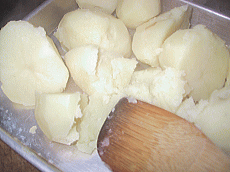
Sauteed Liver with Garlic Stems

For all the recipes I publish to help my vegan and vegetarian friends, I need my meat!
The difference is that I tried to balance my diet as much as I can.
Mind you, if one keeps to good ingredients, it is quite easy.
Here is a simple recipe, both Japanese and Chinese in cocept, which has the merits to be bvery healthy, calorie-low and balanced.
Makes for a great snack with a beer!

Sauteed Liver with Garlic Stems

INGREDIENTS: For 1 person?

-Liver (sliced): 150 g (choose the liver according to your priorities!)
-Garlic stems: 5 or 6
-Garlic: 1 clove
-Soy sauce: 2 tablespoons
-Japanese sake: 2 tablespoons
-Water: 50 ml/cc
-Salad oil: 1 tablespoon

RECIPE:

-Slice the garlic thinly. Cut the garlic stems into 6~7 cm long pieces.

-Mix the soy sauce, Japanese sake and water as a sauce in a separate bowl.

-Heat the oil in a frypan over a strong fire. Stirfry sliced garlic and liver together.

-Once the liver is almost cooked add garlic stems and sauce.

-Cover with lid, reduce fire and simmer it for about 3 minutes.

-Serve immediately.

NOTES:

There are many possible variations to this recipe:
-add spices of your liking, especially black pepper and chilies.
-add vegetables, especially leaf vegetables.

RECOMMENDED RELATED SITES:
Bread + Butter, Comestilblog, Greedy Girl, Bouchon For 2, Zoy Zhang, Hungry Neko, Mangantayon, Elinluv Tidbit Corner, Maison de Christina, Chrys Niles, Lexi, Culinary Musings, Eats and Everything, Bite Me New England, Heather Sweet, Warren Bobrow, 5 Star Foodie, Frank Fariello, Oyster Culture, Ramendo, Alchemist Chef, Ochikeron, Mrs. Lavendula, The Gipsy Chef, Spirited Miu Flavor, Wheeling Gourmet

Please check the new postings at:
sake, shochu and sushi

—————————————-
日本語のブログ
—————————————-
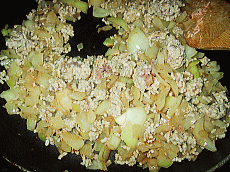
Vegetables Facts and Tips 6: Asparaguses (amended & expanded)

asparagus-varieties

SYNOPSIS:

I started this series (15 articles so far) quite some time ago to help my vegan and vegetarian (I’m not!) friends and omnivores as well because of the obvious health benefits.
Since then, I’ve learned and discovered a lot more information that could not stay ignored.
Therefore I plan to amend and expand all former articles before I can continue introducing a lot more vegetables!
Incidentally、 nothing, pictures included, is copyrighted in my food blogs, so please feel free to use anything!
1) POTATOES, 2) TOMATOES, 3) BROCCOLI, 4) CARROTS, 5) Sweet Potatoes

Asparagus has been used from very early times as a vegetable and medicine, owing to its delicate flavour and diuretic properties. There is a recipe for cooking asparagus in the oldest surviving book of recipes, Apicius’s third century AD De re coquinaria, Book III. It is said that it was cultivated by the ancient Egyptians, Greeks and Romans, who ate it fresh when in season and dried the vegetable for use in winter.It lost its popularity in the Middle Ages but returned to favour in the seventeenth century.

FACTS:

-Season: They are at their best March~June in the Northern Hemisphere, but can be obtained all year round thanks to state-of-the-art greenhouse cultivation.

-Beneficial elements: Carotene, Vitamin C and E, Vitamins from the B group (B1, B2, B6), Rutin, Vegetal fibers, Folic Acid, Potassium. The amino acid asparagine gets its name from the plant.

-Asparagus rhizomes and root are used ethnomedically to treat urinary tract infections, as well as kidney and bladder stones.

-Asparagus is also believed to have aphrodisiac properties (this belief is at least partially due to the phallic shape of the shoots).

TIPS:

-Choose asparaguses with a clean cutting surface. No black spots should appear.

-The darker the colour, the better. As for white asparaguses, choses with a “wet cutting”

-When storing your asparaguses in the fridge, have them stand upright in a long narrow container with their foot wrapped in wet kitchen paper. Discard bent asparaguses on the supermarket stands.

-Choose green asparaguses with the smallest possible foliage along the stems and dark tips.

-When boiling them, either boil them stading upright inside a pasta mesh container, or absolutely flat in a sauce pan. Do not bend them.

-Asparaguses are best digested when lightly fried with oil.

-If Asparaguses cannot be obtained directly from the farmer, lightly peel but keep yop half as it is to preserve Vitamins.

Varieties:
Most popular varieties are shown in the picture above: White, Green and “wild-style” (apeelations vary!)

asparagus-wild

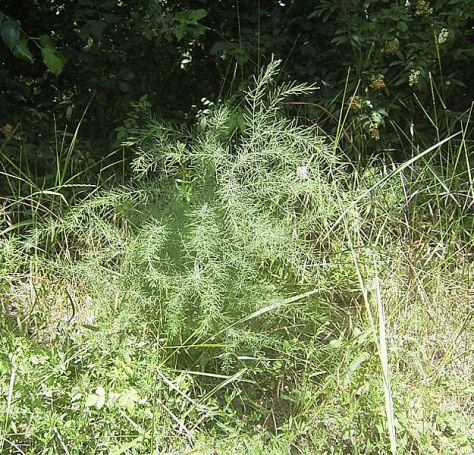
Asparaguses are abundant in the while, but they grow very quickly and get too hard for consumption.
The wild ones picked in their natural environment are my favourite as I fondly rememebr picking them up as a soldier in the South of France during our drills and cooking them in simple omelettes!

asparagus-violet

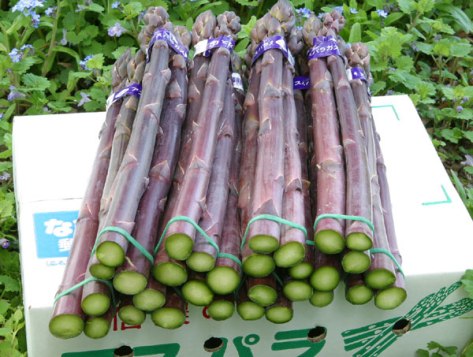
Violet asparaguse are very popular in any restaurants!

asparagus-mini

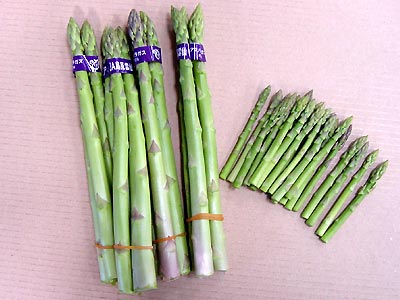
Mini-asparaguses are ever so popular in Japan thanks to their practical size.

uzu-41

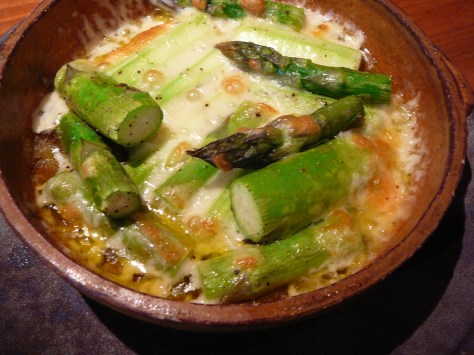
Recipes are endless, but my favourite is the large green asparaguses and mozzarella gratin as prepared and served at Uzu Izakaya in Shizuoka City!

HEALTH FACTS:

-When combined with seaweed, or carrot, or Broccoli, or Spinach, provides stamina and helps combat cancer and colds.

-When combined with shellfish, or chicken, or turnips, or red-fleshed fat fish, helps combat liver problems and provides stamina.

-When combined with okr, or avocado, or celery, or garlic, heps combat cancer, high blood pressure and heart diseases.

-When combined with onion, or codfish, or tofu (especially yuba), or konnyaku/devil’s tongue tuber, helps with qaulitey and flow of blood, helps combat obesity and blood vessel hardening.

RECOMMENDED RELATED SITES
Not-Just-Recipes, Bengal cuisine, Cooking Vegetarian, Frank Fariello, Gluten-free Vegan Family, Meatless MamaFrank Fariello, , Warren Bobrow, Wheeling Gourmet, Le Petit Cuisinier, Vegan Epicurean, Miss V’s Vegan Cookbook, Comestiblog

Please check the new postings at:
sake, shochu and sushi

—————————————-
日本語のブログ
—————————————-

French Cuisine: New Year Lunch at Pissenlit

Last Monday (I mean the 4th of July), we belatedly visited that favourite French restaurant of ours in Shizuoka City for the lunch out of the year.
I’ve already introduced that particular restaurant and his chef, Mr. Arima.
The prices are not only reasonable but the ingredients are simply extravagant.Moreover they are exclusively seasonal, be they from Shizuoka, Japan or abroad. A great emphasis is done on local bio bvegetables and one can expect a feast of colors!

Here what we enjoyed on tha particular day:

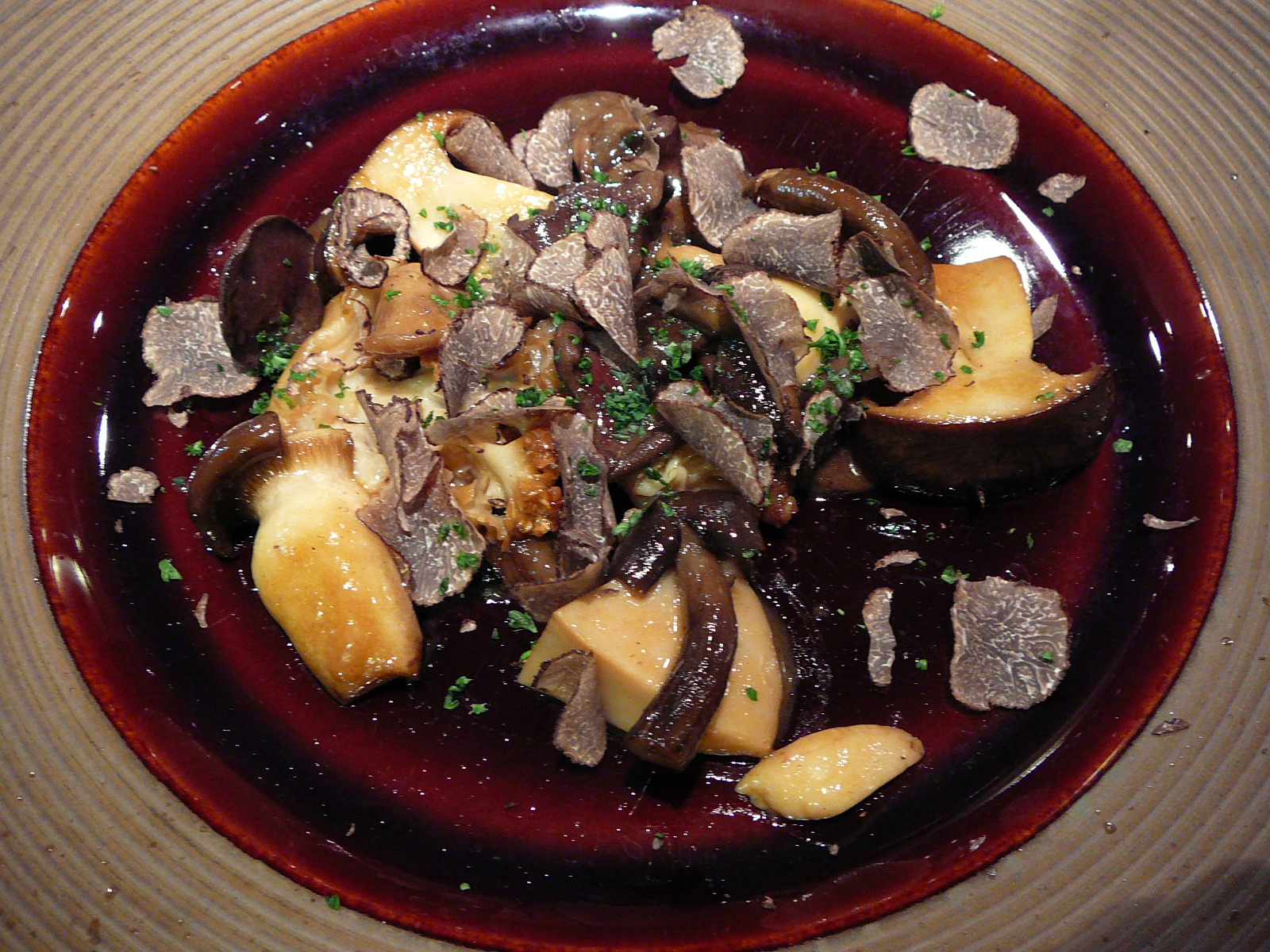
The Missus chose that beautiful plate of sauteed mushrooms topped with fresh truffles!

When I eat French food, I tend to a bit rustic. LOL.
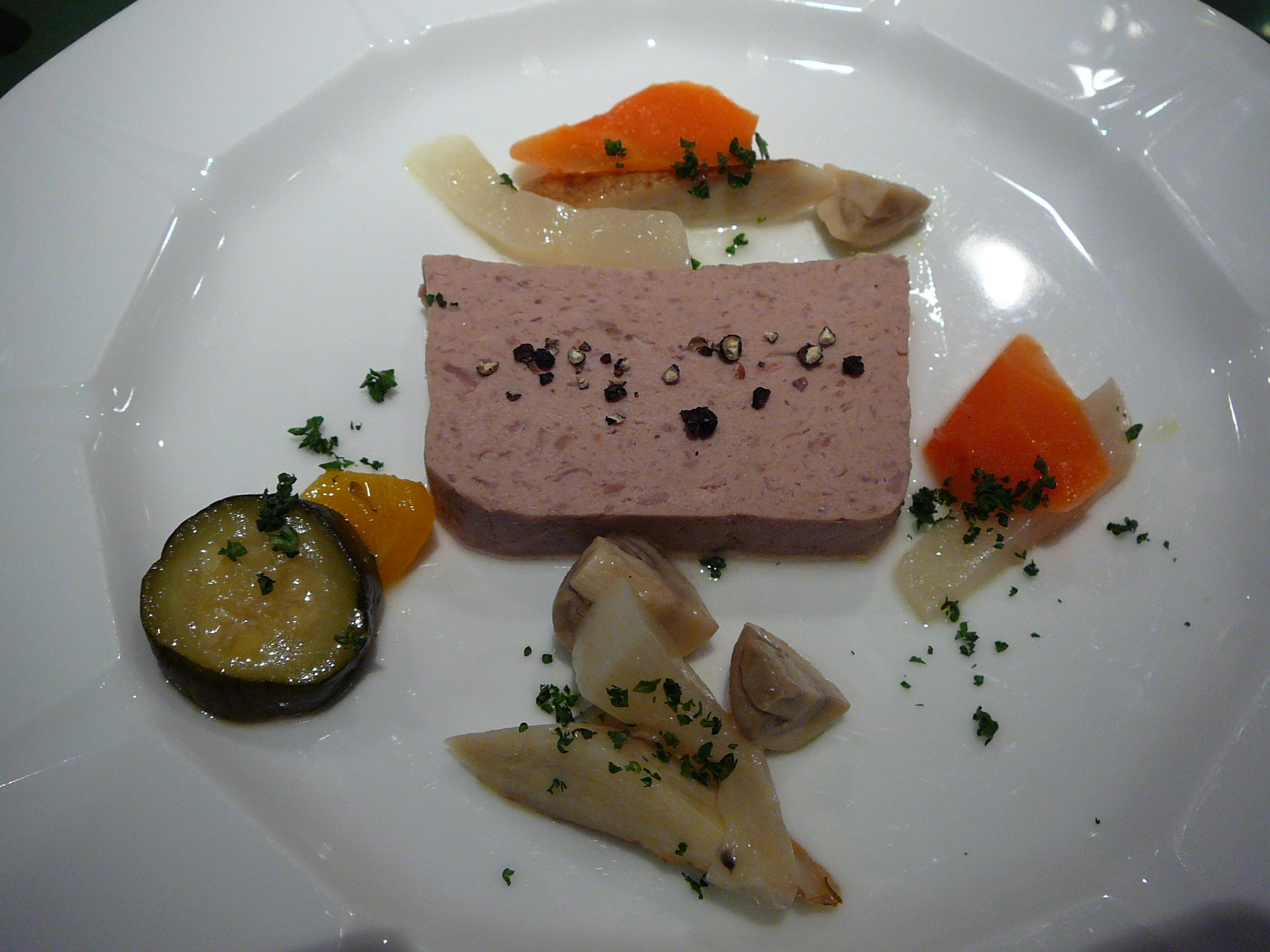
Simple but elegant and perfect chicken liver terrine!

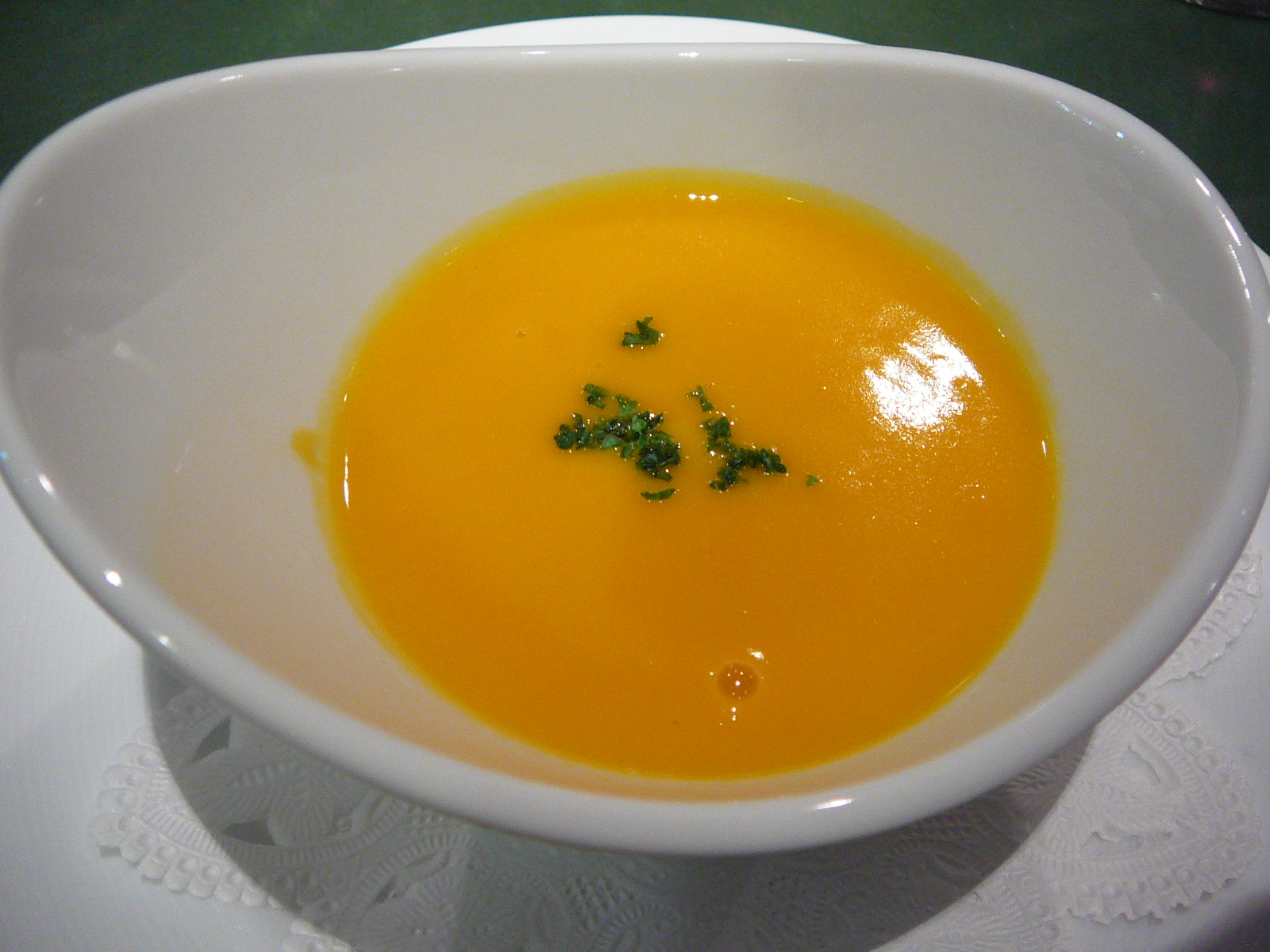
A beautiful kabocha cream for both of us before the main dish.

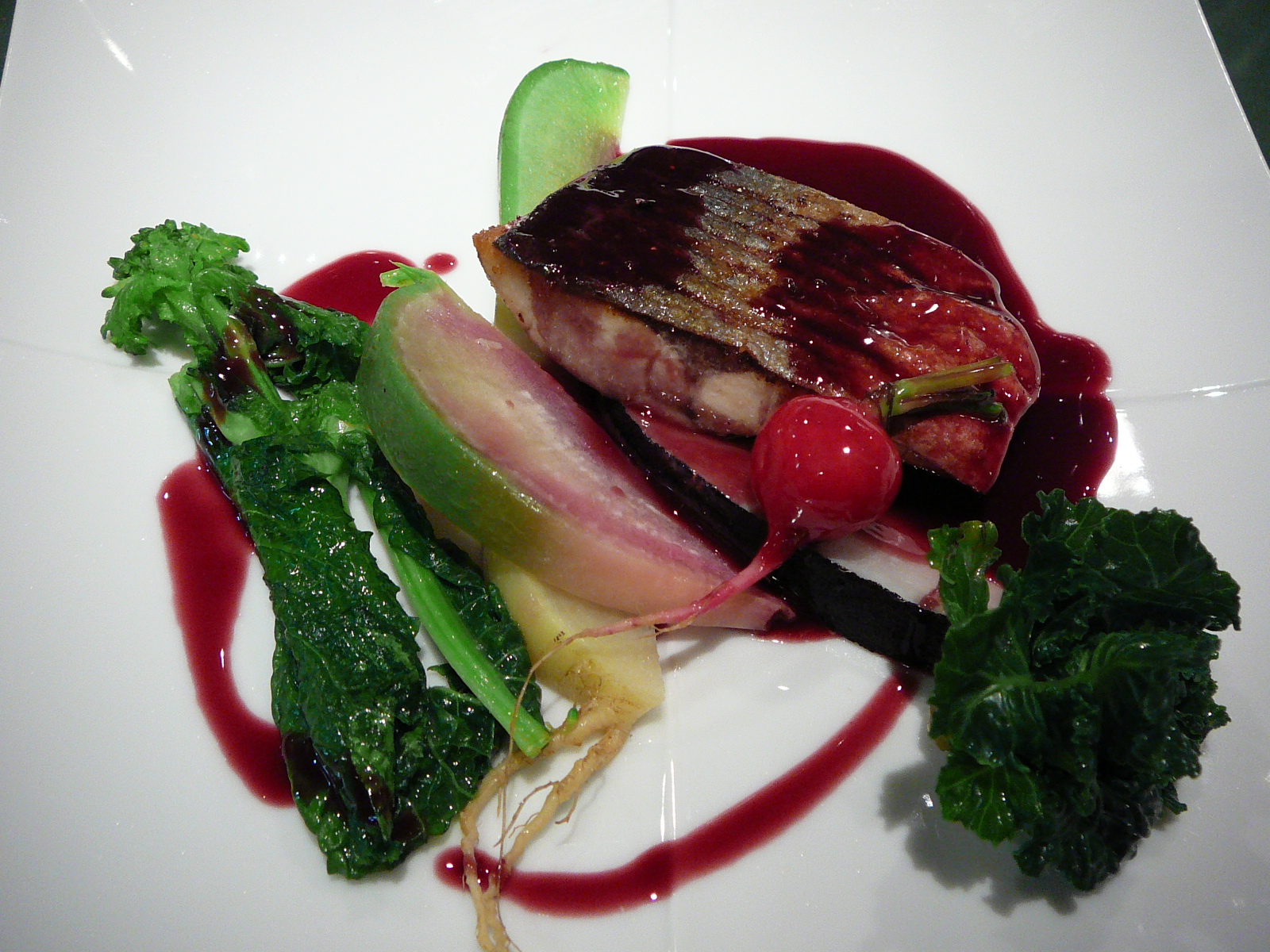
For once, we both opted for fish.
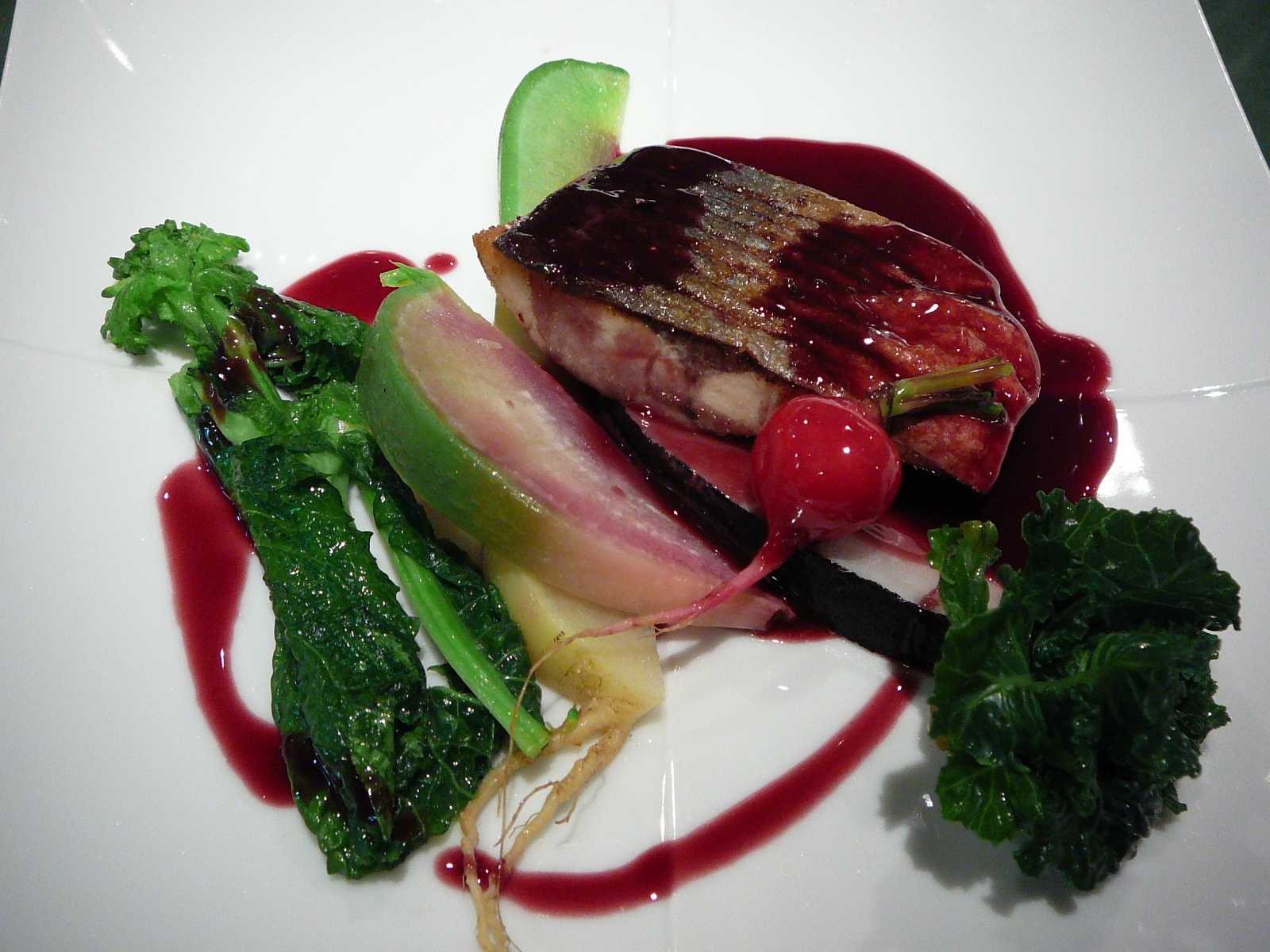
The Missus ordered sauteed “Sawara/Spanish Mackerel” with cassis sauce. Look at those veg!

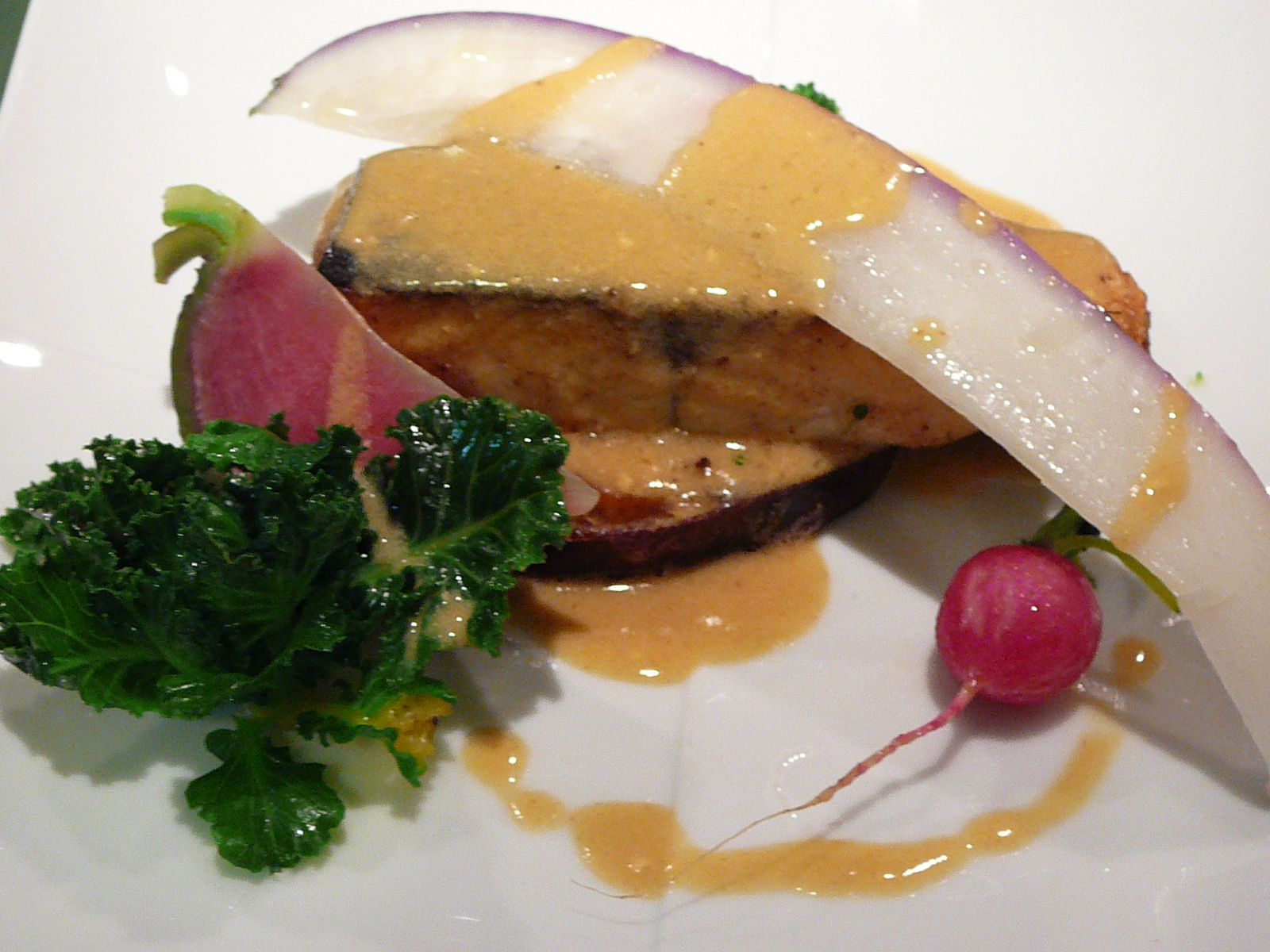
As for me, I devoured “Inada or young buri/yellowtail” sauteed and served with a dijon mustard cream sauce. Look at those veg again!

And it was time for dessert:
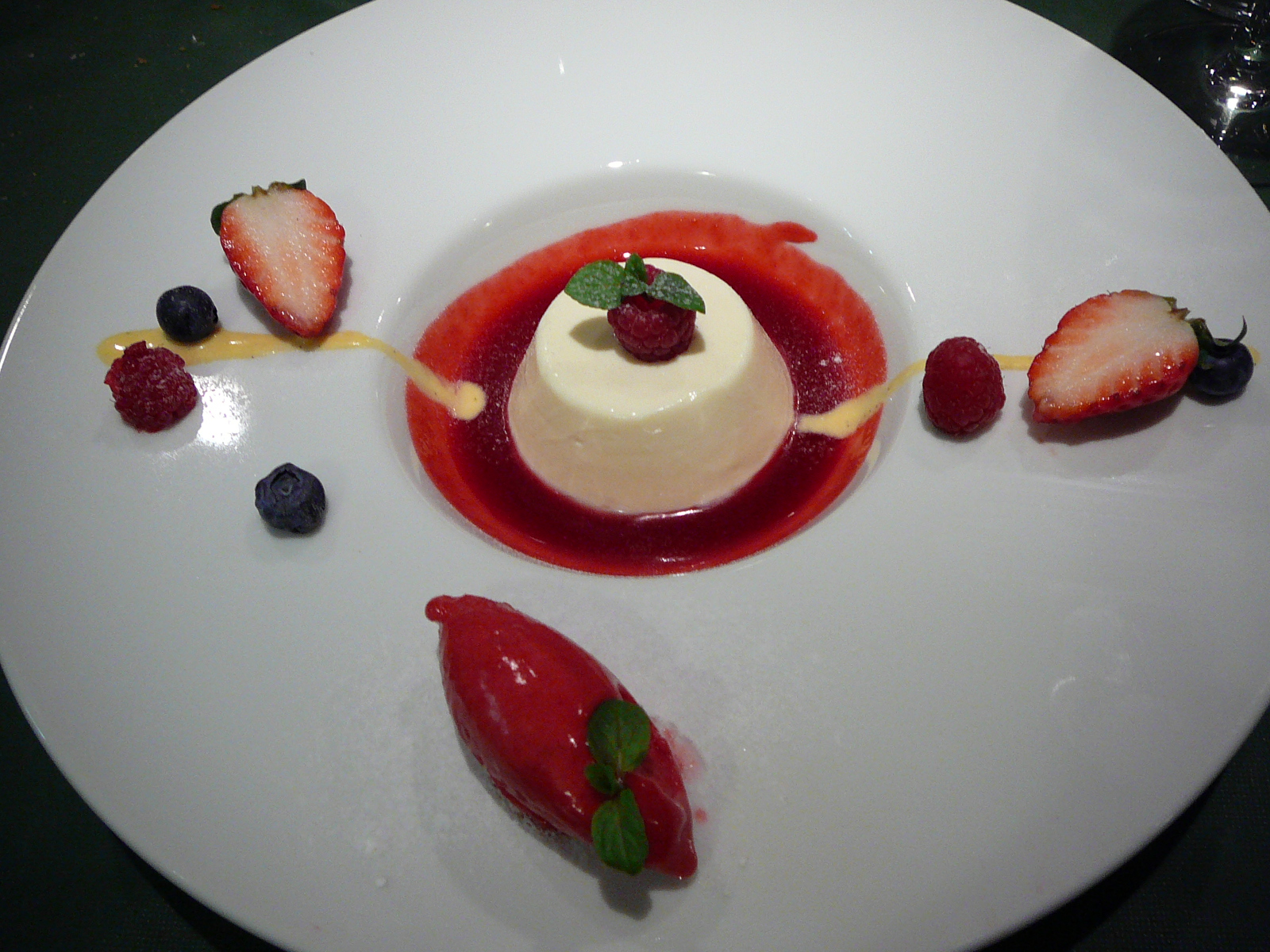
The Missus delved into Panacotta and raspberry sorbet.

As for me, marrons and almonds tart with cassis sorbet.

Alright, alright, you want to know how much we paid for that?
30 US$ per person, bread, butter and coffee included.
We had 3 glasses of wine each. The total bill was 110 US$.
Worth it, wasn’t it?

PISSENLIT
420-0839 Shizuoka City, Aoi Ku, Takajo, 2-3-4
Tel.: 054-270-8768
Fax: 054-627-3868
Business hours: 11:30~14:30; 17:00~22:00
Closed on Tuesdays and Sunday evening
Homepage (Japanese)
Credit Cards OK

RECOMMENDED RELATED SITES:
Bread + Butter, Comestilblog, Greedy Girl, Bouchon For 2, Zoy Zhang, Hungry Neko, Mangantayon, Elinluv Tidbit Corner, Maison de Christina, Chrys Niles, Lexi, Culinary Musings, Eats and Everything, Bite Me New England, Heather Sweet, Warren Bobrow, 5 Star Foodie, Frank Fariello, Oyster Culture, Ramendo, Alchemist Chef, Ochikeron, Mrs. Lavendula, The Gipsy Chef, Spirited Miu Flavor, Wheeling Gourmet

Please check the new postings at:
sake, shochu and sushi

—————————————-
日本語のブログ
—————————————-

Vegan Sushi Recipe Suggestions 2: Daikon

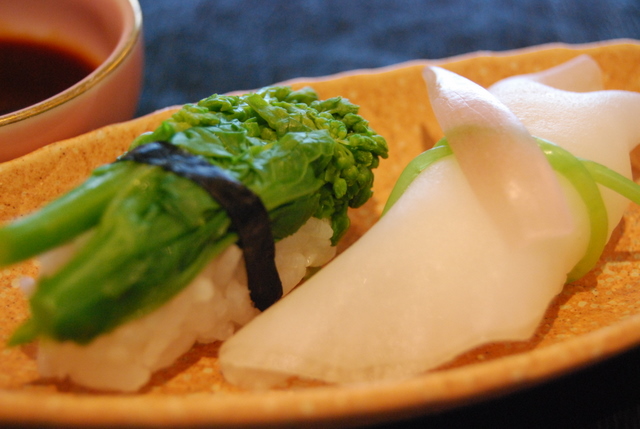
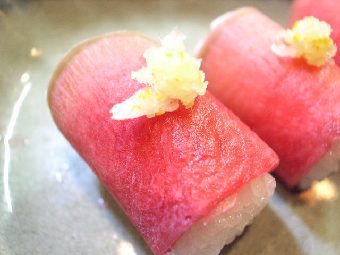
Daikon Nigiri as served at Sushi Ko, Shizuoka City, Japan!

SYNOPSIS:

I already have introduced Vegan and Vegetarian Sushi, but following further requests and questions by my vegan (I’m not!) friends, I decided to contribute a small series of postings to give them more detailed suggestions and ideas!

Now, please check sushi rice recipe HERE to make things more practical!

1) Myoga/Myoga Ginger

————————————

The second vegetable amenable to sushi I would like to introduce is Daikon, or Japanese Radish/Daikon Radish.

Please check DAIKON HERE on Wikipedia!

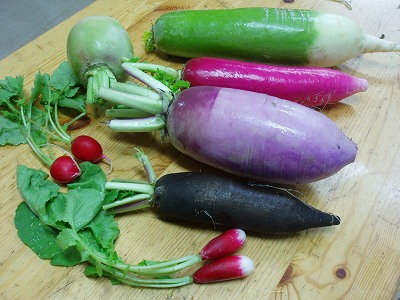
Daikon seems to be known only in its big white shape with a green top.
Actually, not only it is a versatile vegetables, but it does come into many shapes and colors as shown in picture above.

Once cut, look at these beautiful colors.

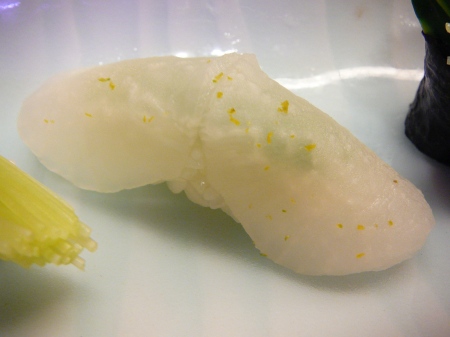
Daikon sushi, especially served as nigiri can be made very simple as in above picture where the daikon was sliced very thin and marinated for a while in lemon added water.

For more sophisticated preparations and presentations browse below!

The same as the top picture. The daikon was marinated for a while in yuzu juice and rice vinegar then derved with grated yuzu zest/skin.

Simple but so sophisticated. The other one is rape blossom.

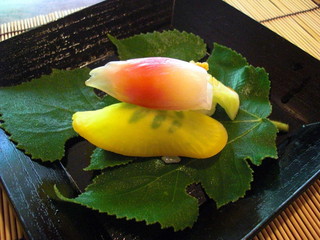
Daikon can be pickled Japanese-style into “takuan/沢庵”, making for great colors and combination!

Takuan & Beni Shoga/takuan and red ginger temari sushi!

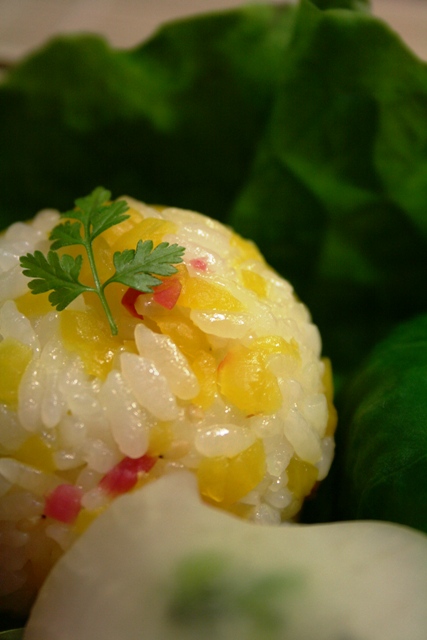
Great color afain with Koushin Daikon/紅芯大根!

The possibilities are infinite. Can you imagine the takuan above on a rice ball. The whole daikon was first pickled then peeled/cut into a sheet, rolled with lettuce and cut across!

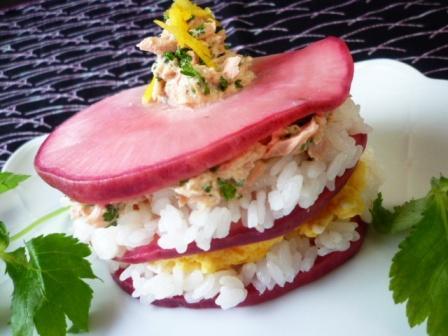
And how about a daikon millefeuille sushi for dessert!

RECOMMENDED RELATED SITES
Not-Just-Recipes, Bengal cuisine, Cooking Vegetarian, Frank Fariello, Gluten-free Vegan Family, Meatless MamaFrank Fariello, , Warren Bobrow, Wheeling Gourmet, Le Petit Cuisinier, Vegan Epicurean, Miss V’s Vegan Cookbook, Comestiblog, To Cheese or not To Cheese, The Lacquer Spoon, Russell 3

Please check the new postings at:
sake, shochu and sushi

—————————————-
日本語のブログ
—————————————-