Category Archives: Shizuoka agricultural products

Shizuoka Beer 2-1: Bayern Meister Beer-Prinz

Please check the new postings at:
sake, shochu and sushi

—————————————-
日本語のブログ
—————————————-
bayern-prinz.jpg

Bayern Maeister Beer Co. Ltd. is based in Fujinomiya City and has employed for some while a Master Brewer from Southern Germany called Stefan Rage who is deservedly making his own name in the Shizuoka microbrewery world.

“Prinz” is the first brew I had the pleasure to taste.

Product name: Prinz Draught beer
Contents volume: 330 ml
Alcohol: 5.5%
Ingredients: malt, hops and live yeast all imported from Southern Germany.

Clarity: clear and clean
Colour: Golden
Foam: solid and regular
Aroma: both light and sharpish/grapefruit-Oranges
Taste: Light, easy to drink. Welcome acidity/light oranges and grapefruit. Lingers on the palate.

Comments: Refreshing and reassuringly solid.Goes very well with food. A good summer drink.

Bayern Meister Beer Co. Ltd.
Shizuoka Prefecture, Fujinomiya City, Kami-Ideji, Kawaharatan, 1254-1
Tel.: 0544-443311

Shizuoka Agricultural Products: Nashi Pear

Please check the new postings at:
sake, shochu and sushi

—————————————-
日本語のブログ
—————————————-

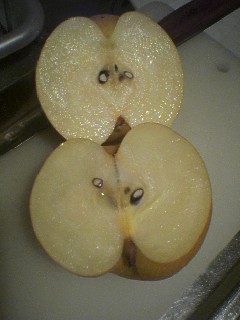
nashi1.jpg
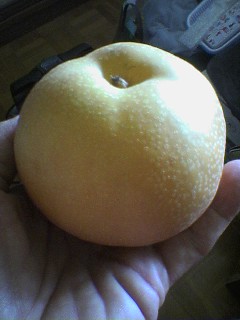
The Nashi pear, Pyrus pyrifolia, is sometimes called the Asian pear . It has also been called Japanese pear or Taiwan Pear, as well as sand pear, apple pear, bapple, papple, and bae, from the Korean 배. In India is it called nashipati. Nashi pears are widely grown for their sweet fruit, a popular food in East Asia. They are sweet on the tree and are eaten crisp or else bletted.
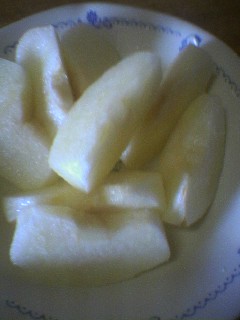
nashi2.jpg nashi3.jpg
Nashi pears generally are not baked in pies or made into jams because they have a high water content and a crisp, grainy texture, very different from the buttery European varieties. Also, Nashi pears are not as intensely sweet, having a more refreshing, light taste.

They are grown in various areas in Japan under different cultivar and brand names.
I have the luck to be offered every summer a full box of them coming from Yaizu City where their brand name is “Shinsui”/新水. They are the perfect fruit for a hot summer and have far more value than a whole bottle of soda!

Soba/Buckwheat Restaurant: Yoshino

Please check the new postings at:
sake, shochu and sushi

—————————————-
日本語のブログ
—————————————-

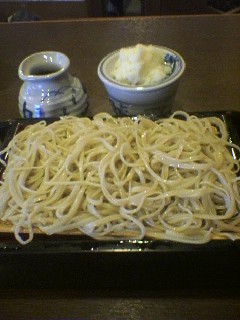
yoshino4.jpg

I love soba, and many Japanese and expats do too!
It is not only great for health (vegetarians, listen carefully), it is tasty and satisfying!
Unfortunately there is soba and soba. Meaning: a lot of places do have to be avoided…
What makes Yoshino special is that they are very exactting about their quality and serve only soba on the day. If they run out, they simply close the place!
yoshino3.jpg
For the connoisseurs hey serve both ni-hachi (80%) and ju-wari (100% which tend to run out quickly!)
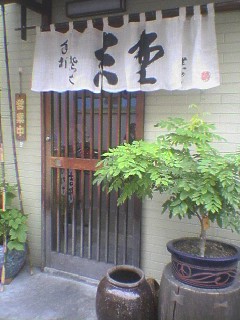
Although Mr. Hiromichi Yoshino opened his restaurant only in 1999 after serving his time in another famous soba restaurant, Kuromugi in Shizuoka, the place has become so popular you do have to choose your time of the day to enjoy the food. Actually, you ought to take your time as this is a real “slow-food” soba restaurant. As it sits only 22 plus a few at the counter, you will understand it could become a scramble sometimes.
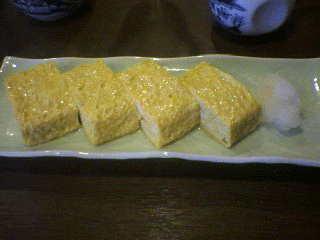
The more for its side dishes (“tsumami”):
yoshino1.gif
The “tamagoyaki” (fine, some vegetarians might not agree!) and the:
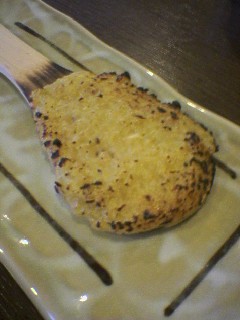
yoshino2.jpg
“yakimiso” (soba/buckwheat powder mixed with miso and cooked under the grill), a must in any good soba restaurant.
But people who really know me would not be convinced if I fail to mention that also serve Shizuoka sake!
They serve no less than 8 kinds!:
Fujinishiki/Arabashiri (Shibakawa Cho)
Hatsukame/junmai + Kame dai ginjo 3 year-old koshu (Okabe cho)
Isojiman/ dai ginjo + junmai ginjo (Yaizu City)
Kikuyoi/daiginjo (Fujieda City)
Onnanakase/Oomuraya-Wakatake daiginjo (Shimada City)
Kokkou/junmai ginjo (Fukuroi City)
Now, a little secret for the sake lovers, these high-quality sake certainly come cheaper than anywhere else!

Apart of the whole gamut of cold and hot soba, they serve exquisite tempura, satsumaage, oniage, yakimiso,and so on.

Last but not least it becomes a no-moking place at lunch!

Yoshino
420-0839 Shizuoka City, Aoi Ku, Takajo Machi, 1-7-10 (just behind Shin Shizuoka Center)
Tel.: 054-2553277
Business hours: 11:00~22:00 (or until run out soba)
“Kaiseki course” on reservations
Simple Recipes: Ratatouille

Please check the new postings at:
sake, shochu and sushi

—————————————-
日本語のブログ
—————————————-

ratatouille.jpg
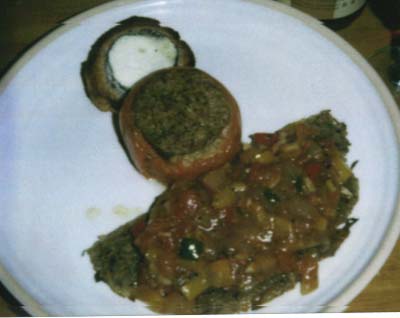
Ratatouille as accompaniment to Stuffed Tomato and Grilled Goat Cheese

In Summer Ratatouille will please both omnivores and vegetarians as it can be served on its own as it is or as an accompaniment to other foods (see pic above).
It can be made in almost any country in the world, but particularly here in Shizuoka Prefecture due to the abundance of great vegetables!

Ingredients (for 4 to 6 people):
Onions: 3 large
Aubergines (egg-plants): 4
Courgettes (zucchini): 4
Tomatoes: 500g
Peppers (pimento): 2 to 4 (mix colours)
Garlic: 2 cloves
Olive oil: 1 cup (extra virgin oil PLEASE!)
Bouquet garni (parsley, thyme, laurel)
Salt & pepper to taste
Soft spices to taste (clove, nutmeg, sage, etc.)

Recipe:

Peel and slice the onions, aubergines and courgettes. Cut the tomatoes in pieces. Cit in strips the peppers after ridding them of their seeds.
Heat the olive oil in a deep saucepan. Throw in the onions first and one minute later all the vegetables the garlic cloves , the bouquet garni, salt, peppers and spices.
Cover and let simmer on small fire for one hour and thirty minutes, mixing now and then to prevent the stew to stick on the bottom of the saucepan.
If too much water is rtill left in the stew, half cover halfway. Take garlic and bouquwr garni before serving.
NOTES: This the basic recipe. I usually add some tomato puree. The size of the cut vegetables depend on their purpose. The smaller they are cut, the shorter the cooking time. Can be served hot as accompaniment (side dish) or as main course for vegetarians (add chick peas!) or refrigerated as snacks for beer in summer.

Umeshu Season!

Please check the new postings at:
sake, shochu and sushi

—————————————-
日本語のブログ
—————————————-

This is Umeshu making season in Shizuoka!

I decided to make my own, even if I am breaking all the rules!

Here how I proceeded in the secrecy of my office (even my better-worse half does not know about it!):

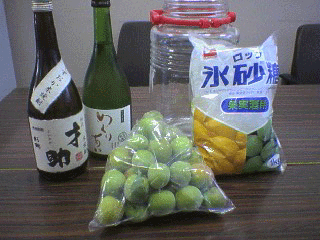
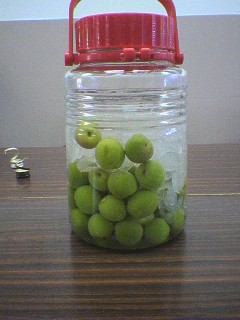
Bought 1 kg of green “ume” (Japanese plums) from a local grocery, 1kg of “koorizato” (“Ice sugar”) at Tomitaya Saketen.
To which I added in the most extravaganta manner:

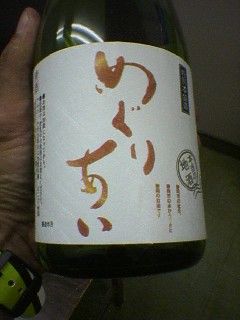
1 bottle (720ml) of Kumpai Meguriai Honjyozo (Kumpai Brewery/Shizuoka City)

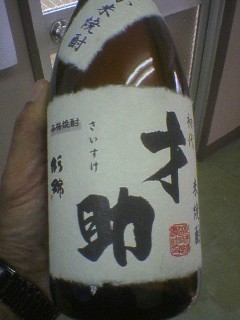
1 bottle (720ml) of Sugii Shodai Saisuke Kome/Rice shochu.

I cleaned the ume/plums, dropped them in jar especially conceived for home-made shochu, added all the sugar and poured in the above two bottles.


I closed it tight, marked the date on the lid, put in a cool area away from the light and will wait until next winter!

Blueberries Season

Please check the new postings at:
sake, shochu and sushi

—————————————-
日本語のブログ
—————————————-

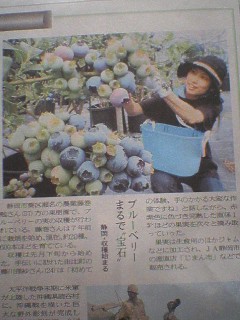
Blueberries are already being harvested in Sena farms, Aoi Ku, Shizuoka City!
For example, Mr. Tsutomu Fujimaki (57) who has been growing the fruit for the last 7 years has started picking 20 varieties of blueberries from no less than 600 plantings.
The ripe fruit reach as much as 1cm diameter.
Apart of the best items found fresh on your tables, a lot will go to make succulent jams.
Some gourmets even preserve in shochu or sake!
Some fine samples can be bought at the Shizuoka JA direct agricultural products sale shop in Shizuoka City.

Agricultural products: Biwa/Loquat

Please check the new postings at:
sake, shochu and sushi

—————————————-
日本語のブログ
—————————————-

biwa.jpg

The Loquat season has reached us in Shizuoka Prefecture at last!
Called “Biwa” in Japanese, it is considered as a fairly expensive delicacy as the beginning. Fruit sold at stores are carefully chosen. The bigger, the better it seems.
The most noted growers are located in Okitsu where 20 of them have formed the Okitsu Biwa Association. They particularly sweet and juicy.

Whenever I can, I pick the small ones you can find almost everywhere and either make sorbet of “biwa shu” (preserved in Shochu and sugar).

Shimizu goes bananas!

Please check the new postings at:
sake, shochu and sushi

—————————————-
日本語のブログ
—————————————-

bananas.jpg

Article appeared in Shizuoka Shimbun on March 16th
First harvest of bananas grown in Shimizu City.
Mr. masao Yonezawa of Okitsu Higashi Machi, Shimisu Ku, Shizuoka City, has succeeded for the first time in our Prefecture in grrowing and harvesting the fruits of f the 3 “banana trees” ( a grass actually!) inside his green house (“vinyl house in Japlish). He first attempted the culure of bananas in November 2005. His crop was a total failure last year when the flowers refused to germinate. A JA member, he will exhibit the bananas at A Coop Freppie in Okitsu and hopes to start marketing them from next year.