Tag Archives: 日本

Real Potato Chips

Now, what are real potato chips?

Not the French fries, which are actually Belgian fries.

And not the poor imitations you wolf down with untold amounts of salt and preservatives!

Real potato chips, as known in Great Britain or France (!) are made with potatoes, real ones I mean, and they are easy to make and much, much healthier!

Now, what do you need?
Potatoes, of course, a (very) little salt and good oil.

How do you prepare them?

Your potatoes, being old or not, can be used with a simple technique.

If they are old, no problem.
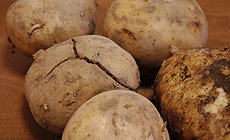
If you brush them (with a real hard brush) under clear water, you will be able to reduce their outer layer to a very thin skin that is edible (actually most of the really beneficient matters are contained in their skin!).

Cut them as thin as possible (with their skin!).

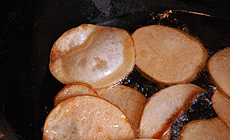
Important: slices of different thickness should not be fried together.
Try to separate them as shown on above pic and fry them separately.
Great fun if you have the kids around!

Clean potato slices in cold running water. This is an important step unless you want them to stick together, turn black and make a mess!
Dry them thoroughly inside a large clean cloth (or the water will fly upon frying!).

Heat frying oil to 170 degrees Celsius.

This is how your chips should look just before frying!

Use long wooden chopsticks to prevent chips from sticking to each other.

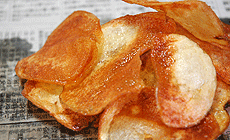
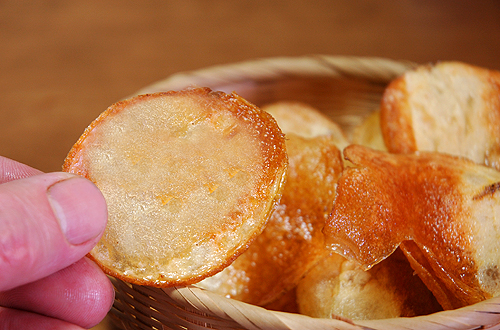
Your chips will change colour and if the oil is at proper temperature swell nicely!

Once you are satisfied with their colour, take them out of the oil and let them rest for a very short while over a fine mesh to get rid of excess oil. Sprinkle a (very) little salt for taste. I personally like some parmegiano and pepper instead of the salt!

Don’t forget the “wrong shapes”! They make for great chips, too, especially with the kids!

I susally serve the round chips with oven-baked chicken or guinea fowl!

Did I mention vegans can eat these?

RECOMMENDED RELATED SITES:
Warren Bobrow
Bread + Butter
5 Star Foodie
Frank Fariello
Elinluv Tidbit Corner
Tokyo Terrace
Maison de Christina
Chrys Niles
Comestilblog
Greedy Girl
Bouchon For 2

Please check the new postings at:
sake, shochu and sushi

—————————————-
日本語のブログ
—————————————-

Vegan Smoked Tofu

It is sometimes a hard world for vegans when it comes to find new ideas and recipes, even you love tofu!
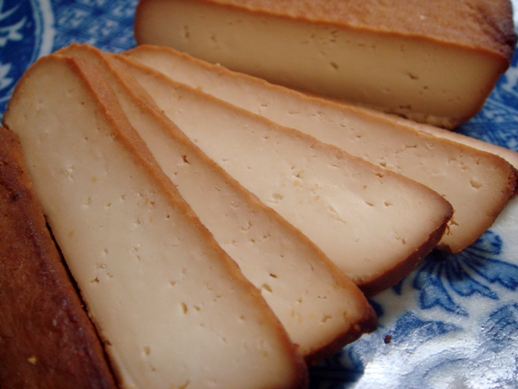
Here is a simple way to prepare and enjoy tofu as it was a big piece of cheese!

Vegan Smoked Tofu!

INGREDIENTS: for ? People

-Tofu: a large piece 300~400g or more
-Miso of your liking, as much as you wish
-Soy sauce, not too much (beware the salt)
-Sake or mirin, a little just for the taste
-Spices, if you wish!

RECIPE:

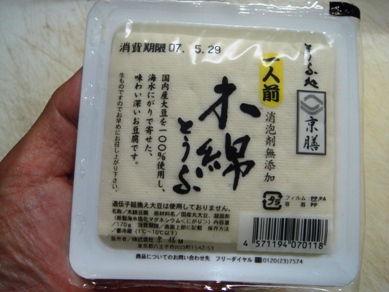
-As the tofu shouldn’t be too soft, choose “momendofu”, or slightly solid.

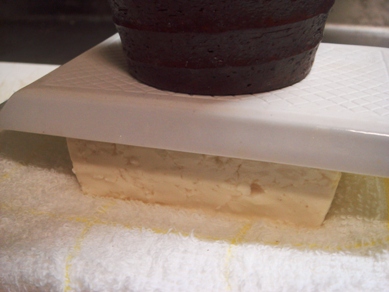
-Place the tofu on a clean cloth.
-Top it with a clean plate or board.
-Put a heavy weight on top.
-Leave it like this for half a day. The tofu will reduce to half.

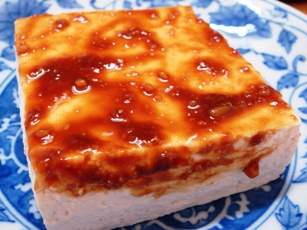
-Smear the whole tofu on every face with plenty of a mixture of miso, soy sauce and other ingredients of your choice. The more, the better.

-Wrap it carefully in cellophane paper and leave it in the fridge overnight.

-Take it out of the fridge and take off the cellophane paper.
-Let it dry for 2 hours at room temperature over a piece of kitchen paper.

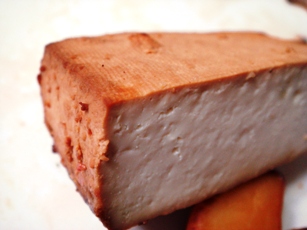
-Smoke inside a Chinese smoking set for 1 hour.

-Very practical for smoking small quantities!

-Here you are! Enjoy!

RECOMMENDED RELATED SITES:
Warren Bobrow
Bread + Butter
5 Star Foodie
Frank Fariello
Elinluv Tidbit Corner
Tokyo Terrace
Maison de Christina
Chrys Niles
Comestilblog
Greedy Girl
Bouchon For 2

Please check the new postings at:
sake, shochu and sushi

—————————————-
日本語のブログ
—————————————-

Cream Cheese Brownies

The Japanese have become extremely efficient at reproducing and improving on European/American (I mean the continents!) recipes when it comes to cakes and desserts.
Here is an example I found in my notes:

Crema Cheese Brownies!

INGREDIENTS: 20×20 cm square mold or a 23cm diameter round mold.

Cream Cheese Topping:
-Beaten egg: 1
-Cream cheese: 225 g
-Sugar: 50g
-Vanilla essence: 1 teaspoon

-Brownies
-Chocolate (for cakes and baking): 115 g
-Unsalted butter: 115 g
-Brown sugar: 150 g
-Beaten eggs: 2
-Light cake flour: 75 g
-Baking powder: 1 teaspoon

RECIPE:

-Butter/oil the inside of the mold and sprinkle with flour/line the mold with baking paper.
Sift and mix flour and baking powder together.
Pre-heat oven to 160 degrees Celsius (3725F)

-Soften cream cheese inside microwave oven for 10 seconds and beat it just long enough as to obtain a smooth cream.

-Mix in te beaten egg, sugar and vanilla essence.
Set apart.

-In a separate bowl, drop the chocolate and butter and soften for 10 seconds inside a microwave oven. Take care not heat it too long, otherwise the chocolate will solidify.
Mix well with a spatula.

-Add brown sugar and mix well with electric mixer. Ad the 2 beaten eggs little by little and mix well.

-With a spatula (no mixer, please!) fold in the flour and baking powder in three equal steps.

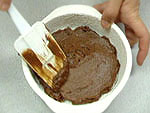
-Pour in the brownies mixture inside the mold (about 4 fifths of its depths) and smoothen surface with spatula.

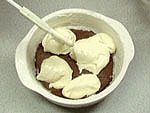
-First place the cream cheese into 4 parts on top as in picture.

-Spread each cheese cream “ball” around with the spatula.

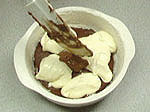
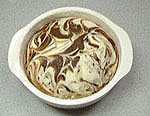
-Make “patterns” with a stick.

-Bake at 160 degrees Celsius (325F) for 25~30 minutes.
Let cool completely before taking out the cake.

RECOMMENDED RELATED SITES:
Bread + Butter, Zoy Zhang, Hungry Neko, Mangantayon, Elinluv Tidbit Corner, Maison de Christina, Chrys Niles, Lexi, Culinary Musings, Eats and Everything, One Frugal Foodie, Bite Me New England, Heather Sweet

——————————–
Please check the new postings at:
sake, shochu and sushi

—————————————-
日本語のブログ
—————————————-

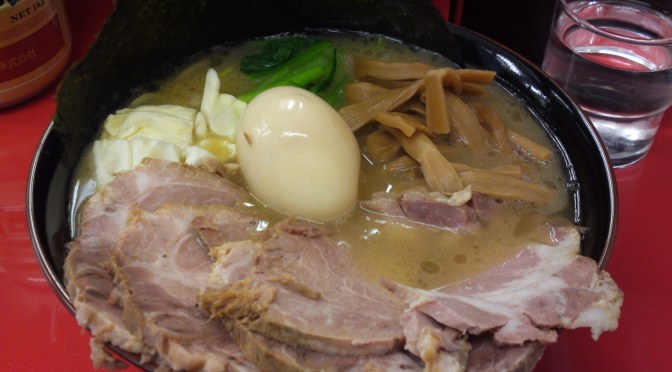
Ramen: Tonkotsu Ramen-Professional Recipe

Here is the “professional Recipe for Tonkotsu Ramen as promised!

INGREDIENTS: (will provide 3.5 litres of soup, enough for quite a few servings!

-Pork bones: 5 (2500 g)
-Water: 13 litres

RECIPE:

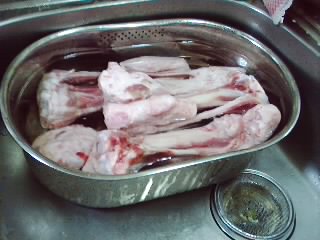
Bring frozen bones to room temperature in plenty of water.
It should take about 2 hours. If you cook frozen bones directly, the blood will solidify and will be very difficult to get rid of.
If you can get fresh bones, skip this step.

Fill a very large cooking pot with water and bring to boil.

Switch off fire as soon as the water boils. Drop in the bones and let cool. This process will help you get rid of the blood and blood vessels easily.

Leave it to cool down for 30~40 minutes.

Drain the water off the bones in a large strainer.
Throw off the water.
Check and take off any blood or blood vessels for the bones.
Don’t forget to clean the pot!
Break all the bones in two with a hammer.

Fill the pot again with clear water and bring to boil.
Drop the bones inside.

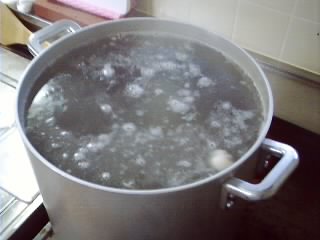
Keep cooking over a strong fire and scoop out foam and unwanted matters coming up on the surface (this should take 20 minutes at the most).
As the bottom might get hooter than near surface, stir with a large ladle from time to time.
If the inside of the pot over the water surface gets clogged with matter or gets dark, switch off fire, clean with a clean cloth and switch fire on again.

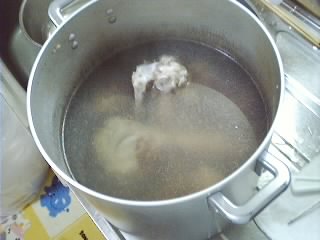
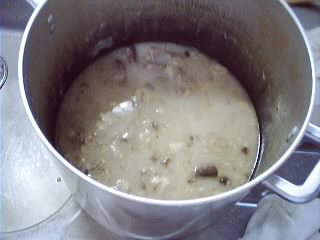
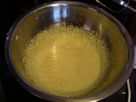
Above picture shows the soup after all unwanted matters have stopped coming up.

Cover with a lid and a weight to prevent steam coming out from under the lid. Keep simmering on a low fire.

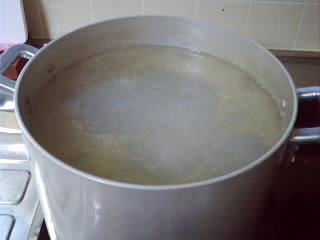
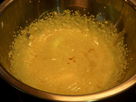
That’s how it looks after 1 hour.
Keep cooking.

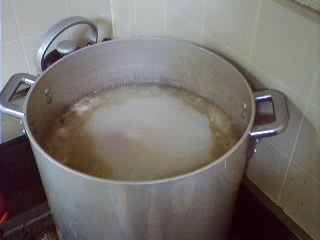
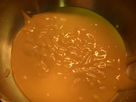
That’s how it looks after 3 hours.

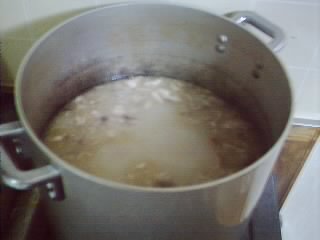
That’s how it looks after 6 hours.

That’s how it looks after 10 hours.

And after 12 hours (start early in the morning!)!

Keep cooking. Remember you are aiming at 3.5 litres of soup.
After 12 hours you may raise the fire to accelerate the cooking.
Keep the lid on!

This is what you are looking for!

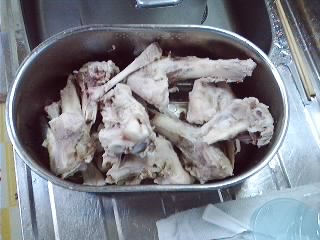
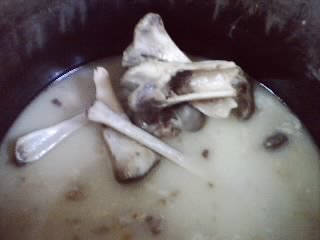
This is how the bones will look after 15 hours of cooking!
Cooked at last!

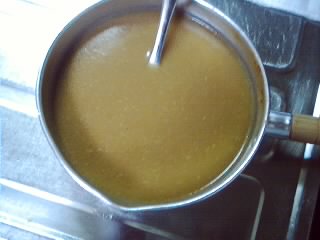
Filter the soup and here you have your tonkotsu base soup ready!
After that it is up to you and your preferences: add miso, tofu, salt, sesame oil, garlic chips and your little secrets!

Now what secret ingredients have I thrown in? LOL

RECOMMENDED RELATED SITES:
Bread + Butter, Comestilblog, Greedy Girl, Bouchon For 2, Zoy Zhang, Hungry Neko, Mangantayon, Elinluv Tidbit Corner, Maison de Christina, Chrys Niles, Lexi, Culinary Musings, Eats and Everything, Bite Me New England, Heather Sweet, Warren Bobrow, 5 Star Foodie, Frank Fariello, Oyster Culture, Ramendo, Alchemist Chef, Ochikeron, Mrs. Lavendula, The Gipsy Chef

Please check the new postings at:
sake, shochu and sushi

—————————————-
日本語のブログ
—————————————-

Tempura: The Basics

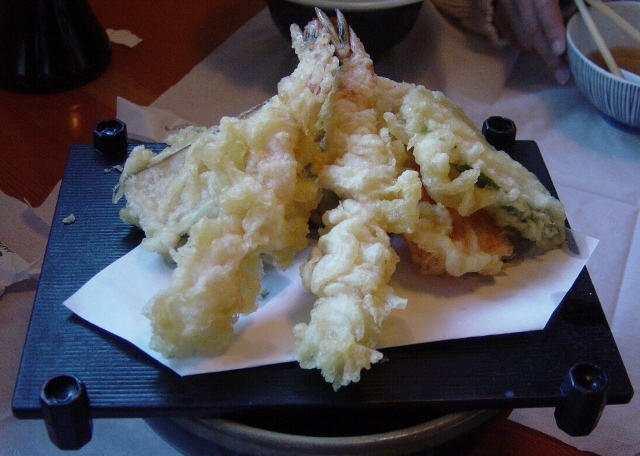
Home-made style tempura

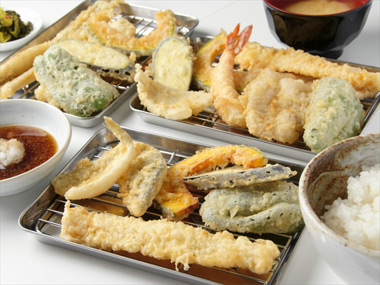
Tempura (天麩羅, or 天婦羅, tenpura, also written as “天ぷら”), which may be of Portuguese origin, is a popular Japanese dish of deep fried, battered seafood, or vegetables which has spread all the world!

The word tempura, or the technique of dipping fish and vegetables into a batter and frying them, comes from the word “tempora,” a Latin word meaning “times”, “time period” used by both Spanish and Portuguese missionaries to refer to the Lenten period or Ember Days (ad tempora quadragesimae), Fridays, and other Christian holy days.
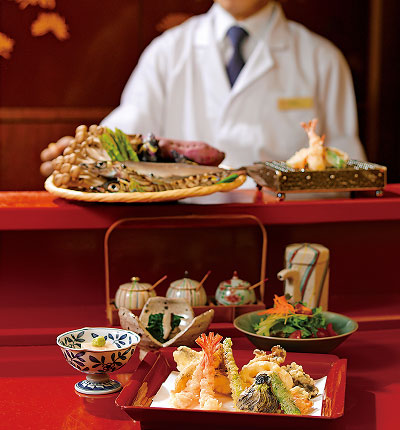
Tempura at a Japanese Restaurant

In Japan, restaurants specializing in tempura are called tenpura-ya and range from inexpensive fast food chains to very expensive five-star restaurants. Many restaurants offer tempura as part of a set meal or an obento (lunch box), and it is also a popular ingredient in take-out or convenience store obento boxes. The ingredients and styles of cooking and serving tempura vary greatly through the country, with importance being placed on using fresh, seasonal ingredients.
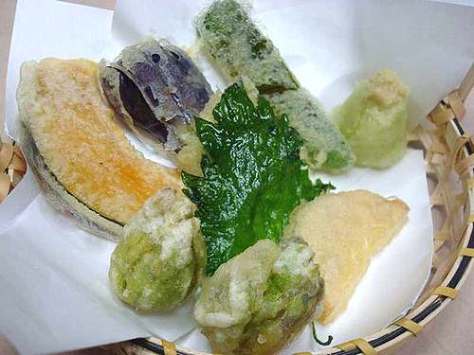
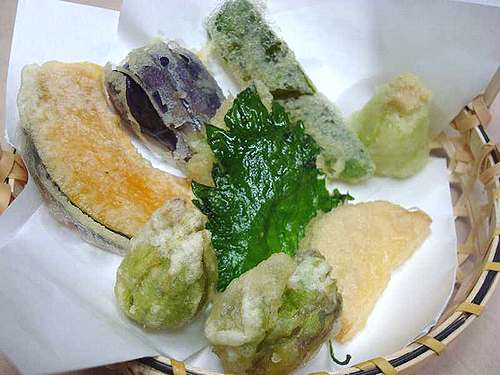
Vegetables Tempura

Batter
A light batter is made of cold water and soft wheat flour. Eggs, baking soda or baking powder, starch, oil, and/or spices may also be added. Tempura batter is traditionally mixed in small batches using chopsticks for only a few seconds, leaving lumps in the mixture that, along with the cold batter temperature, result in the unique fluffy and crisp tempura structure when cooked. The batter is often kept cold by adding ice, or by placing the bowl inside a larger bowl with ice in it. Over-mixing the batter will result in activation of wheat gluten, which causes the flour mixture to become chewy and dough-like when fried.

Specially formulated tempura flour is available in worldwide supermarkets. This is generally light (low-gluten) flour and occasionally contains leaveners such as baking powder.

Some varieties of tempura are dipped in a final coating, such as sesame seeds, before frying. Tempura generally does not use breadcrumbs in the coating.
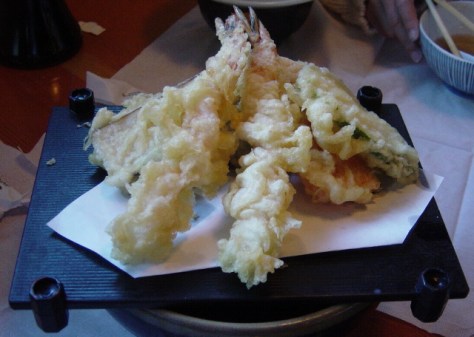
Shrimps Tempura

Frying
Thin slices or strips of vegetables or seafood are dipped in the batter, then briefly deep-fried in hot oil. Vegetable oil or canola oil are most common, however tempura was traditionally cooked using sesame oil. Many specialty shops still use sesame oil or tea seed oil, and it is thought that certain compounds in these oils help to produce light, crispier batter.

When cooking shellfish, squid, or hard-skinned watery vegetables such as bell pepper or eggplant, the skin is usually scored with a knife to prevent the ingredients from bursting during cooking, which can cause serious burns from splashing oil.

Oil temperature is generally kept between 160 and 180 degrees Celsius, depending on the ingredient. In order to preserve the natural flavour and texture of the ingredients, care is taken not to overcook tempura. Cooking times range between a few seconds for delicate leaf vegetables, to several minutes for thick items or large kaki-age fritters.

The bits of batter (known as tenkasu) are scooped out between batches of tempura, so they do not burn and leave a bad flavour in the oil. A small mesh scoop is used for this purpose. Tenkasu are often reserved as ingredients in other dishes or as a topping.
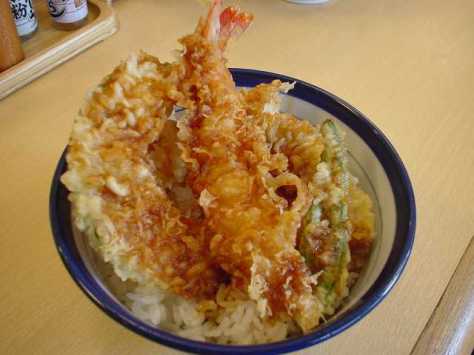
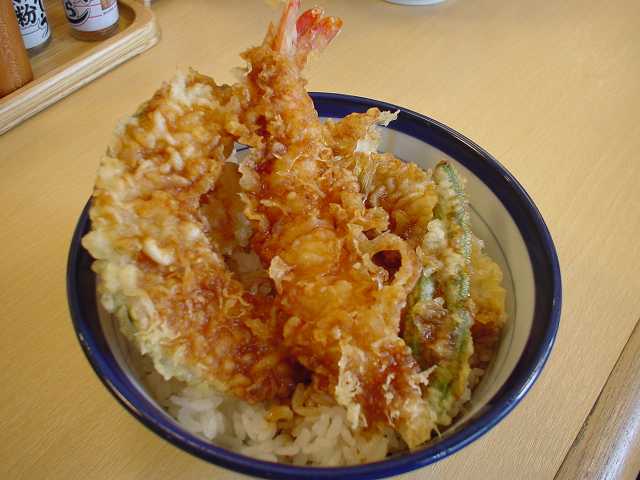
Tempura Tendon (on a bowl of rice)

Ingredients
Seafood: Prawn, Shrimp, squid, scallop, anago (conger eel), ayu (sweetfish), crab, and a wide variety of fish and shellfish.
Vegetables: bell pepper, kabocha squash, eggplant, carrot, burdock, green beans, sweet potato, yam, potato, renkon (lotus root), shiitake mushroom, mushrooms, bamboo shoots, okra.
There is no real limit, actually.
Keep in mind that it is probably the best way to appreciate wild mountain vegetables!
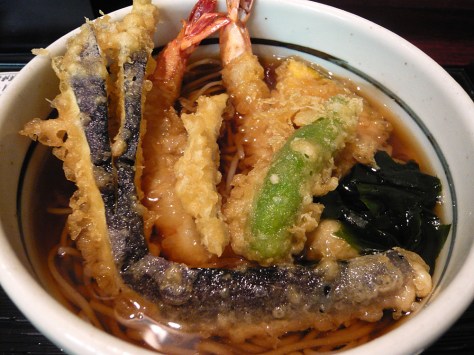
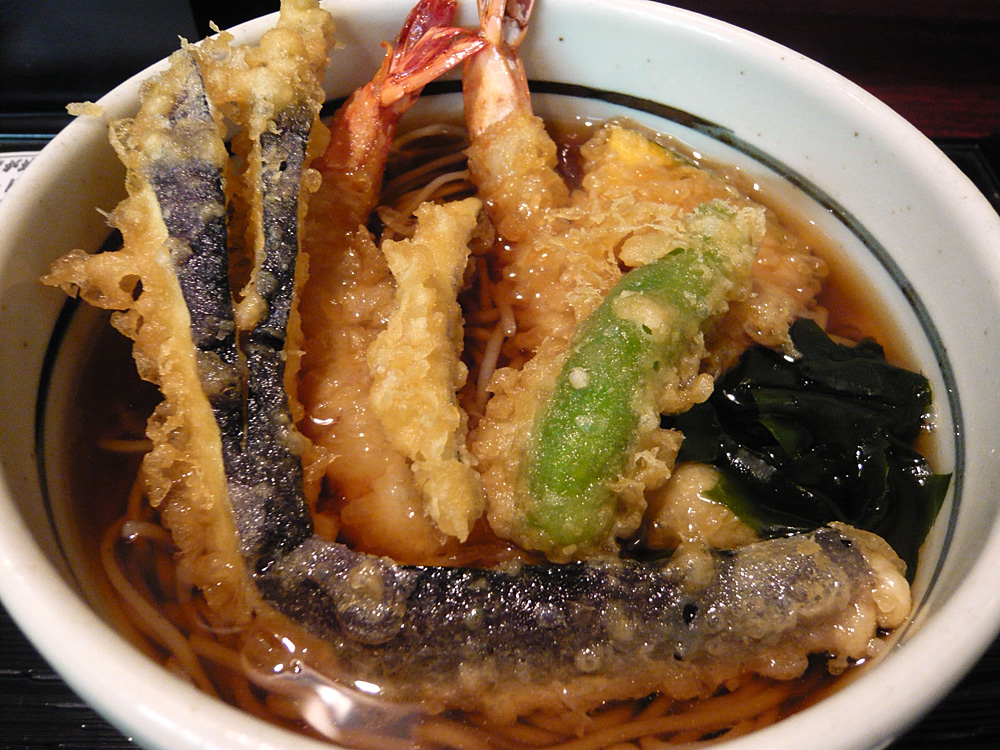
Tempura served on Soba!

Serving and presentation
Cooked bits of tempura are either eaten with dipping sauce or used to assemble other dishes. Tempura is commonly served with grated daikon and eaten hot immediately after frying. The most common sauce is tentsuyu sauce (roughly three parts dashi, one part mirin, and one part shoyu). Alternatively, tempura may be sprinkled with sea salt before eating. Mixtures of powdered green tea and salt or yuzu and salt are also used.
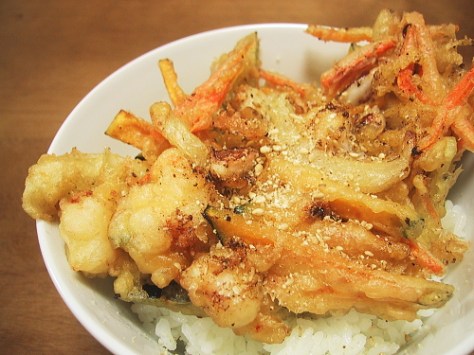
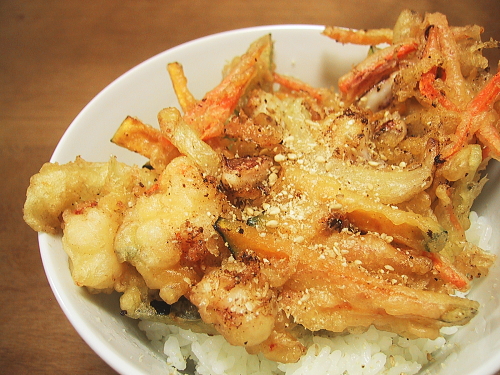
Kakiage on a bowl of rice

Kakiage is a type of tempura made with mixed vegetable strips, such as onion, carrot, and burdock, and sometimes including shrimp, which are deep fried as small round fritters.

Tempura is also used in combination with other foods. When served over soba (buckwheat noodles), it is called tempura soba or tensoba. Tempura is also served as a donburi dish where tempura shrimp and vegetables are served over steamed rice in a bowl (tendon) and on top of udon soup (Tempura Udon).

Tempura and Kakiage Professional recipes coming soon!

RECOMMENDED RELATED SITES:
Bread + Butter, Comestilblog, Greedy Girl, Bouchon For 2, Zoy Zhang, Hungry Neko, Mangantayon, Elinluv Tidbit Corner, Maison de Christina, Chrys Niles, Lexi, Culinary Musings, Eats and Everything, Bite Me New England, Heather Sweet, Warren Bobrow, 5 Star Foodie, Frank Fariello, Oyster Culture, Ramendo, Alchemist Chef, Ochikeron, Mrs. Lavendula, The Gipsy Chef

Please check the new postings at:
sake, shochu and sushi

—————————————-
日本語のブログ
—————————————-
Kabocha Lemon Cupcakes

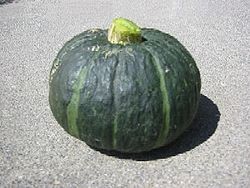
It seems I have finally caught the “cupcakes disease”. I cannot fail being attracted to cupcake recipe, but with the difference I’m only interested in the Japanese varieties!

Kabocha, or Cambodia abóbora in Latin, originally came from the Andes region in South America but was develpped as the present variety in Cambodia, hence its name.
The Japanese grow a lot of them but they have to import them notably from Tonga in the South Pacific to satisfy the enormous demand!

Here is a very simple recipe for people in a hurry!
Kabocha Lemon Cupcakes!

INGREDIENTS: 8~10 cakes

-Hot-cake mix: 200 g
-Honey (liquid): 3 tablespoons
-Kabotcha (or pumpkin): 3 tablespoons (mash them first)
-Lemon juice: 2 tablespoons
-Milk: 60 ml
-Unsalted butter: 80 g
-Eggs: 2 large
-Almond slices (to taste)

RECIPE:

-Pre-heat oven to 180 degrees Celsius. Bring butter back to home temperature.

-In a bowl mix the eggs and butter well until smooth. Add honey and mix. Add mashed kabocha and mix.

-Add milk and mix. Add hot cake mix (powdered mixture) and mix well.

-Add lemon juice and mix well.

-Fill cups up to 6 or 7 tenths of their depths. Decorate with almond slices

-Bake in oven at 180 degrees Celsius for 2~23 minutes.

Easy, isn’t it?

RECOMMENDED RELATED SITES:
Bread + Butter, Zoy Zhang, Hungry Neko, Mangantayon, Elinluv Tidbit Corner, Maison de Christina, Chrys Niles, Lexi, Culinary Musings, Eats and Everything, One Frugal Foodie, Bite Me New England, Heather Sweet

——————————–
Please check the new postings at:
sake, shochu and sushi

—————————————-
日本語のブログ
—————————————-

Ramen: Korean-style Recipe

Not only the Japanese, but koreans also make succulent ramen.
Here is a very simple home-made recipe in Korean style:

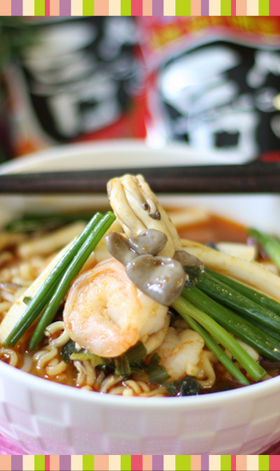
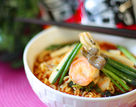
Korean-style ramen!

INGREDIENTS: For 1 person?

-Instant Korean ramen with their soup powder: 1 pack (size is up to you! readily available in all Asian markets)
-Water: 500 ml
-Squid: 50 g
-Shrimps: 50 g
-Mushrooms: 30 g
-Fresh beasprouts: 50 g
-Thick short leek: 2
-Salad oil: 1 tablespoon
-Grated garlic: 1 teaspoon
-Oyster sauce: 1 teaspoon
-Salt: a little
-Pepper: a little

RECIPE:

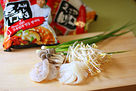
-Cut the squid in 1 cm/5cm pieces. Take shell off shrimps.
In a frypan pour the oil with grated garlic and switch on fire/heat.

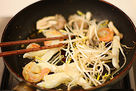
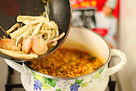
-As soon as the garlic aroma comes out add shrimps and squid and fry until shrimp have changed colour. Add mushrooms, beansprouts, oyster sauce, salt and pepper and stir-fry for a short moment.

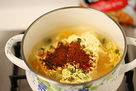
-In a large pot bring water to boil. Drop ramen, instant Korean powdered soup and other seasoning if included.

-As soon as you are satisfied with the consistency of the ramen add fried squid and shrimps and leeks cut in proper size.

-You prefer to serve in the following way:
First the ramen with their soup.
Second topped with fried squid, shrimps and mushrooms.
Last decorated with cut leeks.

Simple and easy to improve on!

RECOMMENDED RELATED SITES:
Bread + Butter, Comestilblog, Greedy Girl, Bouchon For 2, Zoy Zhang, Hungry Neko, Mangantayon, Elinluv Tidbit Corner, Maison de Christina, Chrys Niles, Lexi, Culinary Musings, Eats and Everything, Bite Me New England, Heather Sweet, Warren Bobrow, 5 Star Foodie, Frank Fariello, Oyster Culture, Ramendo, Alchemist Chef, Ochikeron, Mrs. Lavendula, The Gipsy Chef

Please check the new postings at:
sake, shochu and sushi

—————————————-
日本語のブログ
—————————————-
Vietnamese Restaurants: Annam (revisited)

Pa in seo/Japanese okonomiyaki!

Annam is probably not only the only authentic Vietnamese restaurant in Shizuoka Prefecture, but is definitely in a clss of its own.
If I listened to the Missus we would visit the place every week!LOl
Antway, the other day my best friedn, who happens to be Irish, and his Jpanese wife came to visit us after a lapse of two years.
We just couldn’t find a better reason to visit our favourite South Asian restaurant!

Here is what we ordered:

The Vietnamese have brewed beer for a long time and thier 333 is as good as any!

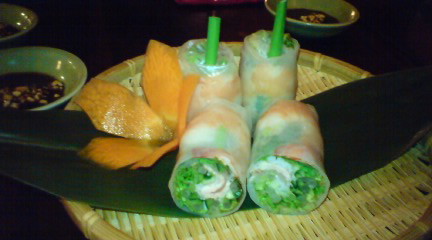
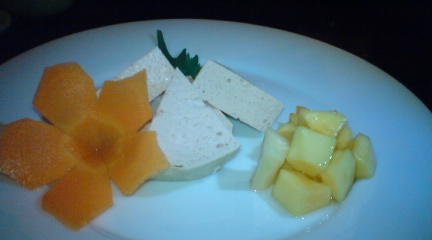
Artistic and very light raw spring rolls with shrimps.

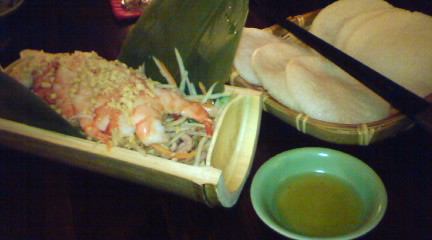
Healthy green papaya and shrimp salad.

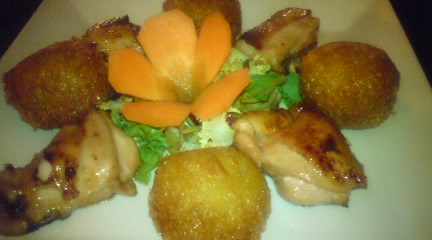
Stir-fried chicken and deep-fried rice cakes.

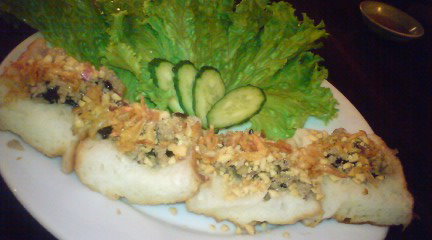
French influence in the steamed French bread with shrimp and peanuts topping.

As the beer and the sake (from Shizauok) has disappeared quickly, we chose a honest and reliable bottle of French Cotes du Rhone from Annam’s very decent wine list.

Home-made Vietnamese ham as a complimentary dish!

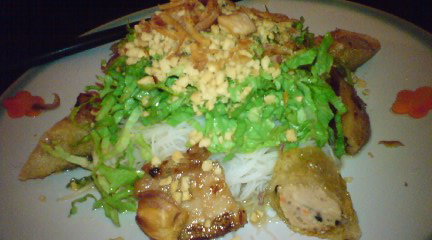
Stir-fried chicken and deep-fried imperial rolls with cold rice noodles salad.

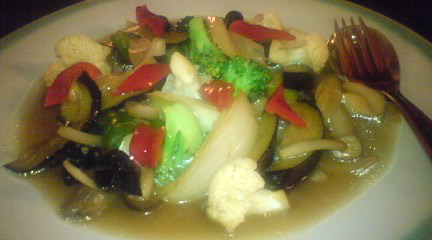
Very light stir-fried vegetables in sweet and sour sauce.

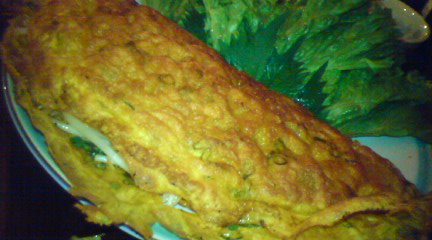
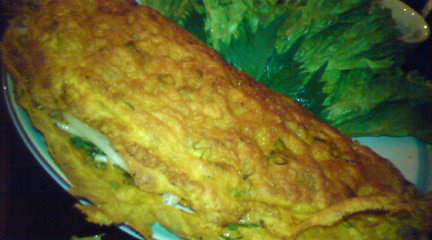
Pa in seo/Vietnamese okonomiyaki, the specialty of the restaurant.
Enormous but as light as a feather and filled with loads of beansprouts!

No we did not have dessert, but pho soup instead!

Can’t wait for the next visit!

Shizuoka City, Aoi-Ku, Tenmacho, 17-9
Tel.: 054-2502266
Fax: 054-2502323
Lunch: 11:30~14:30
Dinner: 17:00~22:00 (last orders: 21:30)
Closed on Mondays and day after National Holidays
Homepage
Credit cards OK

RECOMMENDED RELATED SITES:
Bread + Butter, Comestilblog, Greedy Girl, Bouchon For 2, Zoy Zhang, Hungry Neko, Mangantayon, Elinluv Tidbit Corner, Maison de Christina, Chrys Niles, Lexi, Culinary Musings, Eats and Everything, Bite Me New England, Heather Sweet, Warren Bobrow, 5 Star Foodie, Frank Fariello, Oyster Culture, Warren Bobrow, Think Twice, Frank Fariello, Chuck Eats, Alchemist Chef, Ochikeron, Mrs. Lavendula, The Gipsy Chef

Please check the new postings at:
sake, shochu and sushi

—————————————-
日本語のブログ
—————————————-

Robert Yellin’s Newsletter: Japanese Pottery by Fujioka Shuhei

Greetings from Mishima,

We hope this finds all well and enjoying the wonders of autumn
(here in the northern hemisphere).

As the rain falls here for the past few days, I know magical snow is falling on Mt.Fuji, what a wonder to see when rain stops and the clouds part; I hope to share that wondrous sight in a future online listing! Stay tuned, yet for now it’s Iga time.

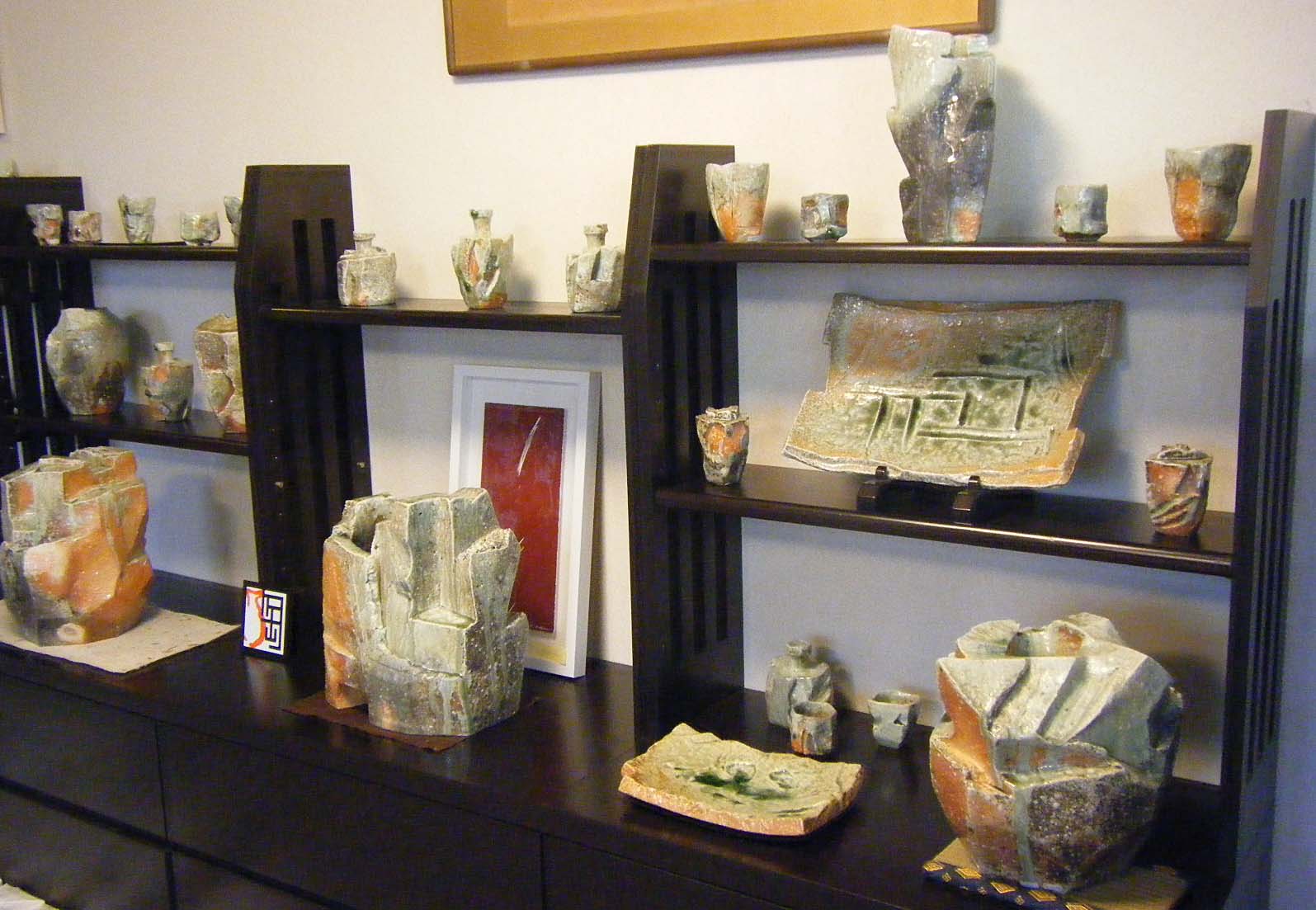
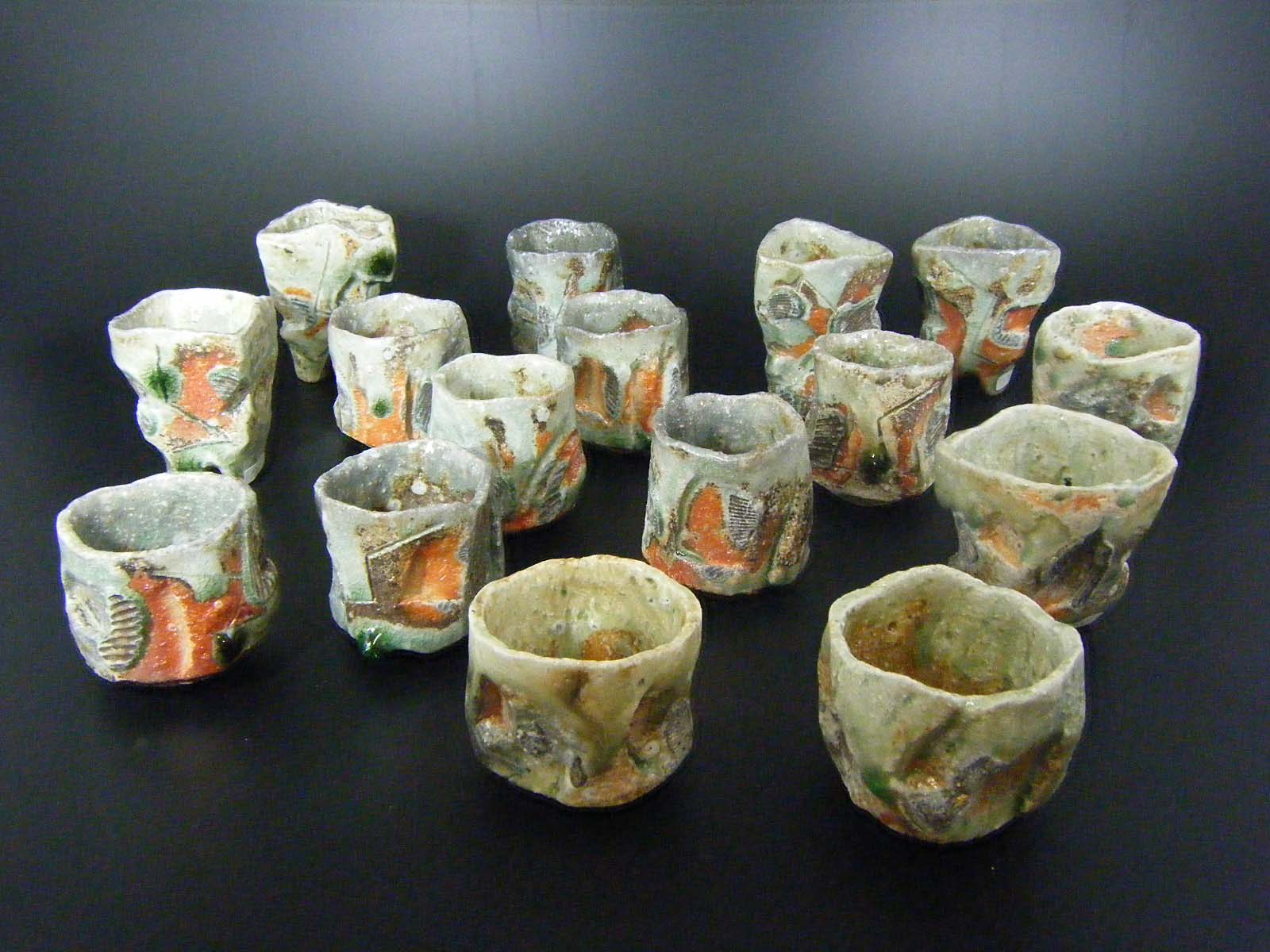
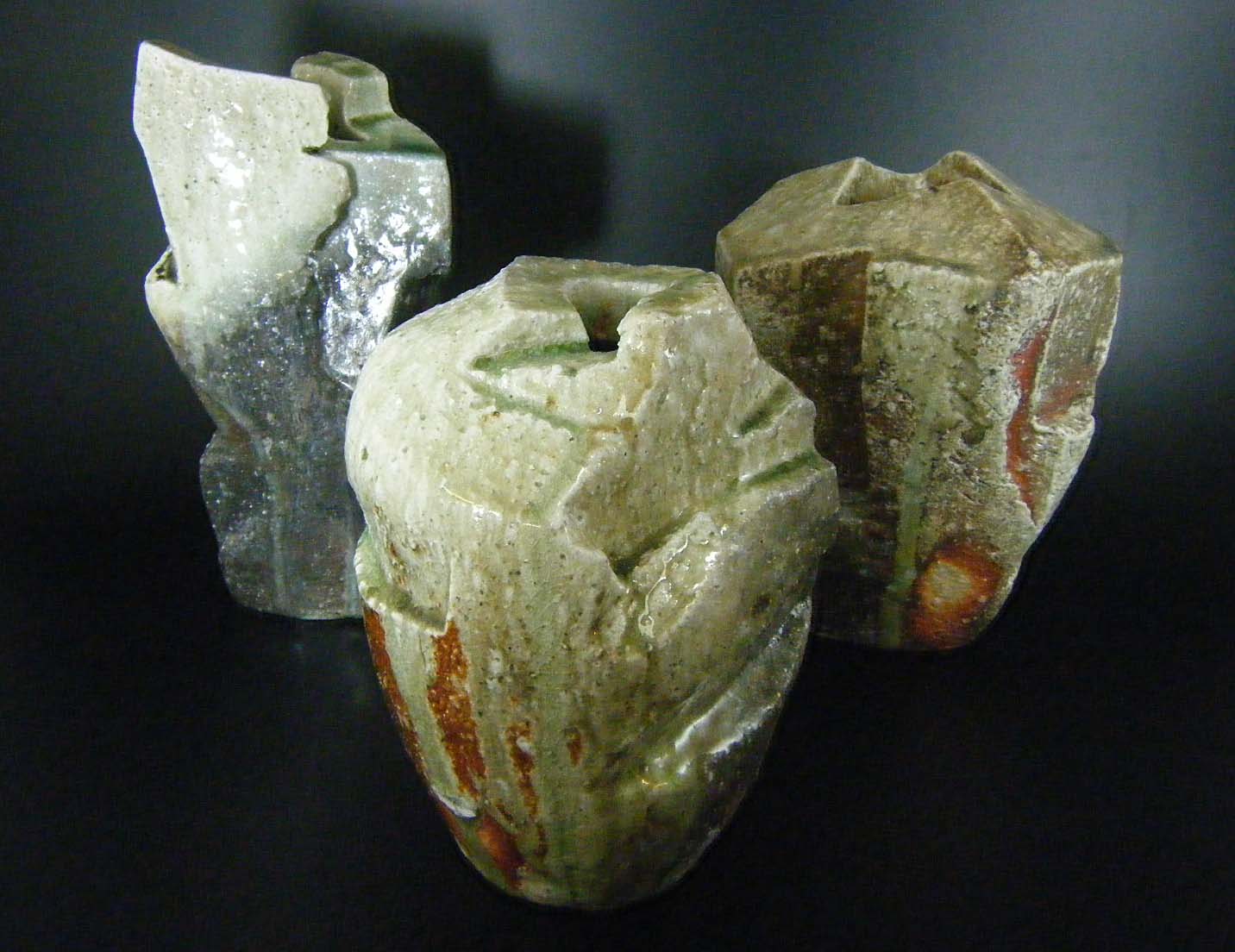
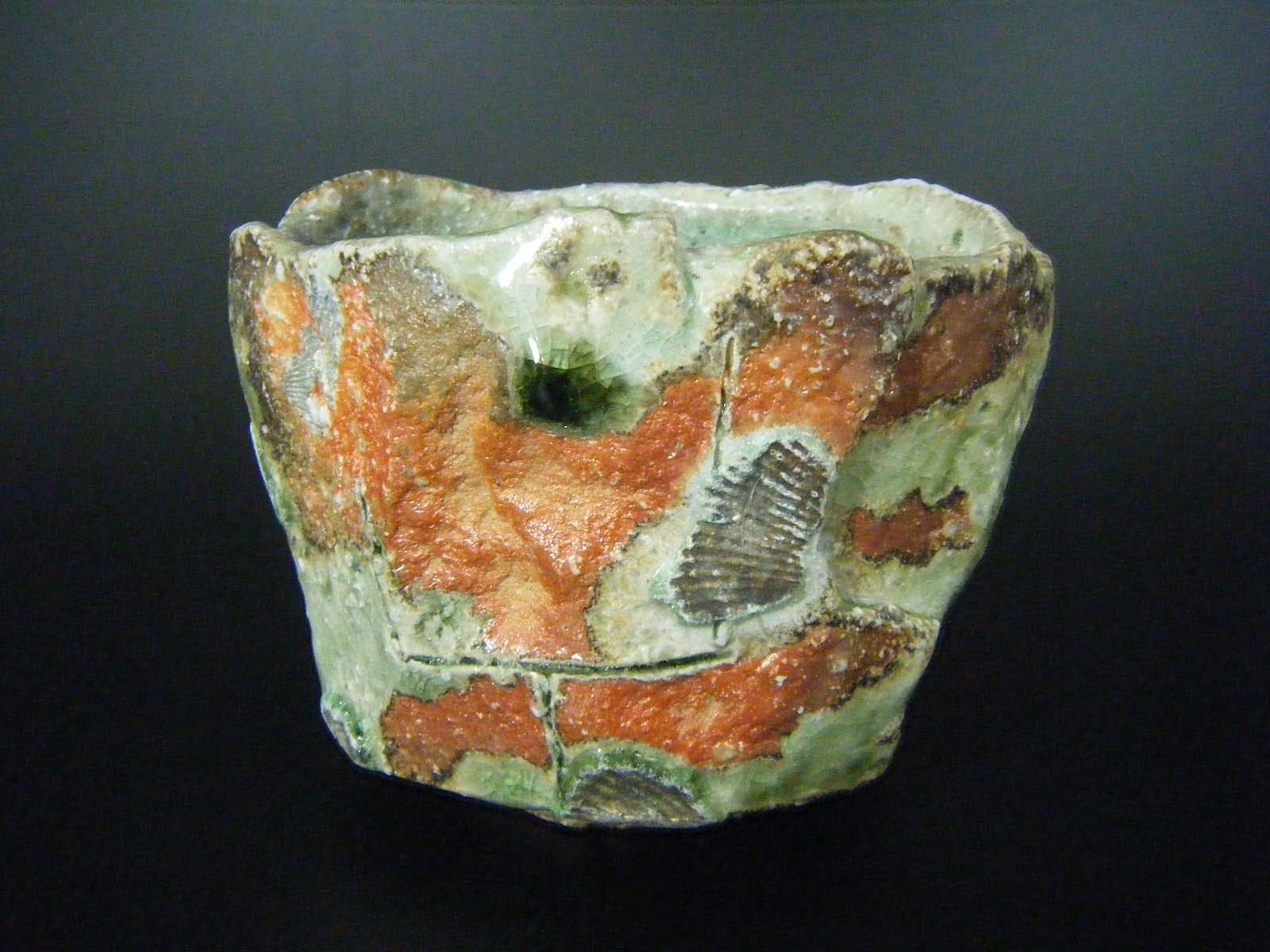
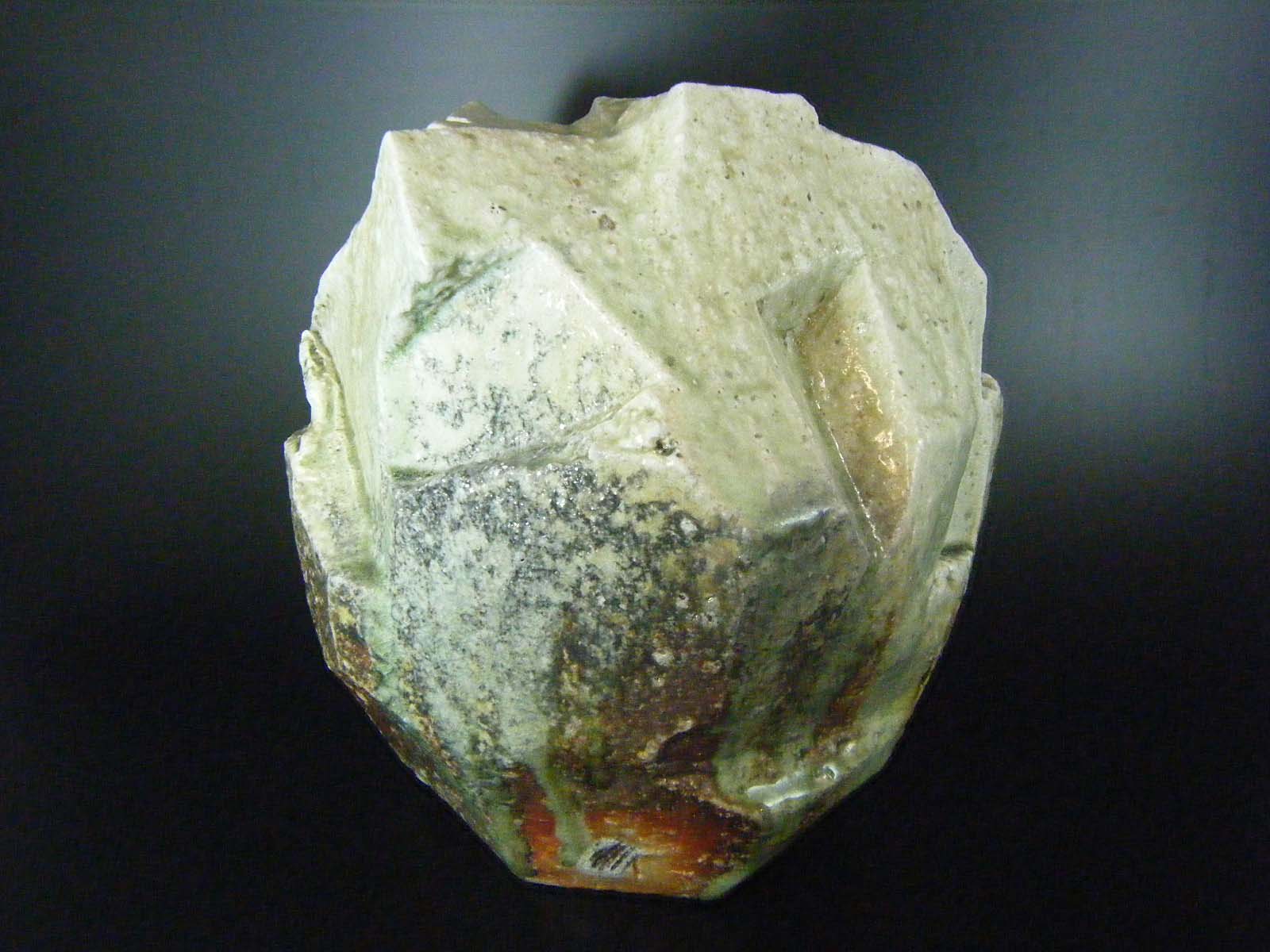
We are excited to announce and share previews of our third Fujioka Shuhei exhibition. Iga ceramic artist Fujioka Shuhei (b.1947) possesses the power to make mountains out of clay. He then fires his bold creations in an anagama to ‘fire-brush’ on mossy green, blue and gray natural ash glazes.

These captivating colors contrast and highlight the rich clay flavor and hi-iro (fire color) that Iga is world-renowned for, as well as the koge scorch colors (Iga has three famous keshiki-landscapes of hi-iro, koge and bidoro-glass). Iga is one of those magical medieval styles that speaks volumes of the Zen-inspired ways that are to be found within Tea-pottery; Fujioka understands this. His heart is pure and he loves the earth at his feet, whether it is for his clay works, or the vegetables he grows in the fields. Like potters of old, he too is a farmer and listens to the teachings that nature whispers in his ears. In a nutshell, after graduating college Fujioka went to work for a production kiln in Seto. Yet upon seeing a Ko-Iga piece, he then knew there was no other style for him. He apprenticed with Tanimoto Kosei before establishing his own kiln in 1975.

He’s had countless solo exhibitions throughout Japan and has been featured in numerous publications. Fujioka is to Iga what Harada and Kakurezaki are to Bizen, except without all the awards. He’s a soft-spoken man, humble and deep; all these qualities are in his work as well as an awe-inspiring feel of the power of nature. Fujioka fires a small kiln for three
days and if he gets a one-third success rate for any kiln he feels it’s been a success. The high loss rate is one reason we find so few Iga potters, it’s almost loony–as Fujioka himself says—to work in Iga with all its hurdles and failures. Yet the successes are clay jewels, as you’ll see for yourself in the following links. We are extremely pleased to offer the world a chance to see Fujioka’s Iga world online or here at our Mishima gallery until December 10th.

The exhibition will go online for public viewing on Tuesday of next week, for those who have signed our guest book please see the following hidden preview links. Only minimal details are noted and any extra information or additional photos will gladly be sent upon request. We hope you enjoy the world of one of Iga’s most important ceramic artists today, Fujioka Shuhei:
1, 2, 3, 4, 5, 6, 7, 8, 9, 10, 11, 12, 13, 14, 15, 16, 17, 18, 19, 20, 21, 22, 23

Also, our gallery was very honored to be the feature in arecent Japan Times article, you can access that here:
http://search.japantimes.co.jp/cgi-bin/fl20091114a1.html

Kampai and all the best from Japan.

Cordially,

Robert Yellin
HOMEPAGE

RECOMMENDED RELATED SITES:
Warren Bobrow
5 Star Foodie
Think Twice
Frank Fariello

Please check the new postings at:
sake, shochu and sushi

—————————————-
日本語のブログ
—————————————-

Organic Delights in Kamakura

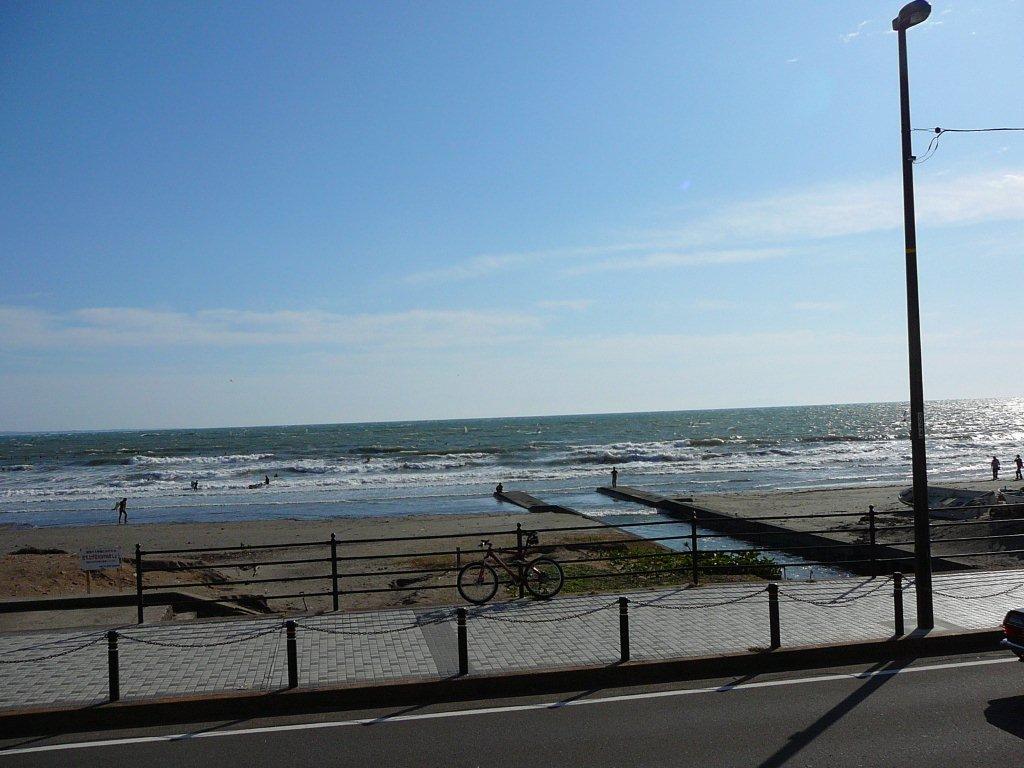
Kamakura beach and surfers

Kamakura in Kanagawa Prefecture is an internationally celebrated tourist post.

Unfortunately for all the beauty of the city, its mountains, old buildings, ancient culture and striking sea shore, the great majority of its restaurants and cafes are little more than traps for the crowds of tourists and surfers.

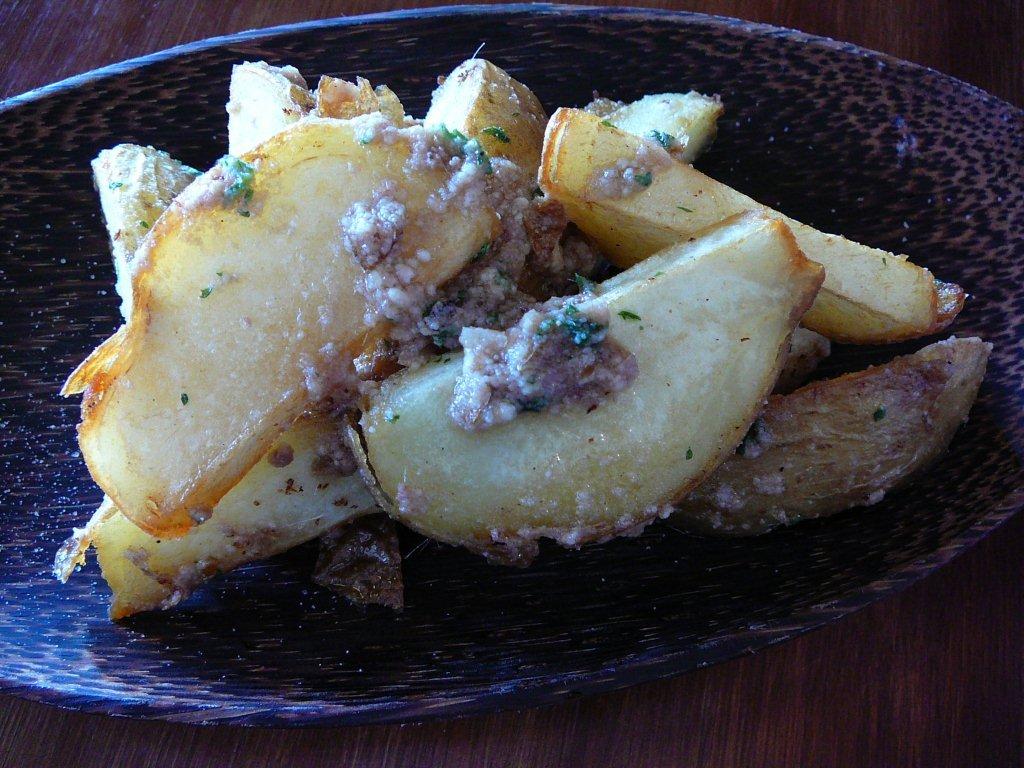
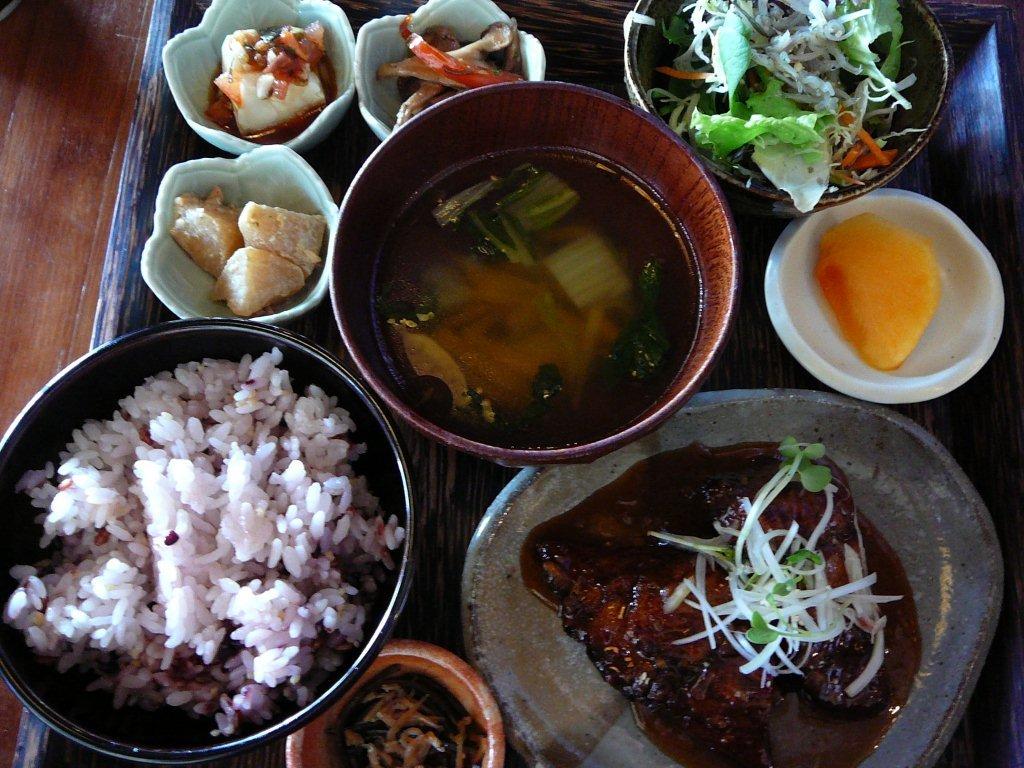
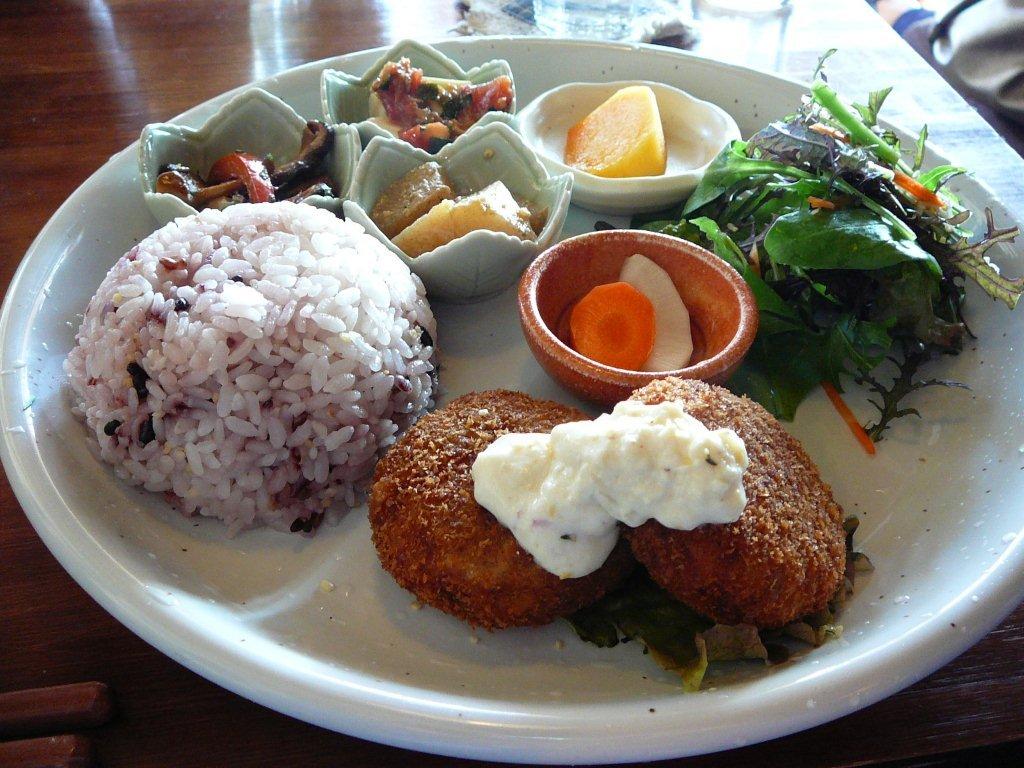
The perfect fried organic potatoes with anchovy and garlic savoury garnish at Magokoro!

But some locals belatedly realized that things had to change or else.
Heaps of organic food are grown or raised in Kamakura and its neighbourhood.
Just add to that the marine produce of the Pacific Ocean and you have the ideal combination to satisfy all tastes and priorities, be they omnivore, vegetarian or even vegan.

The same locals formed their own association, The Japan Vegetarian Society, in 1993 to help their fellow citizens and newcomers alike to discover restaurants, cafes and shops in accordance with their favourite food styles.

Since then they have grown into a small but extremely active non profit organization not only with their own blog/website but also a semi bilingual free pamphlet with a guide and map to no less than 51 establishments!

Blog address (Japanese)
Call 0467-25-2668 if you cannot find the map.

Organic Vegetables and fish (mackerel) Lunch tray at Magokoro

The pamphlet/map is a real little treasure as it features not only restaurants, cafes, confectioneries, fair trade goods shops, grocery stores but even “earth-conscious (ecological) shops”, temples, body-care-shop, bicycle rental shops, hiking courses, temples, cooking schools and tourist information desks!

Each establishment is represented with at least one picture with letters indicating whether it serves or sells vegan, vegetarian food. It also clearly explains through the same simple lettering system if the food contains seafood, seafood seasoning, dairy products, eggs or even if it does contain such produce as leek, Chinese chive (nira) Japanese shallot (Rakkyo), onion or garlic!

It goes as far as counseling people to double-check in some cases!
The whole literally backed up by an easy English/Japanese lexicon for tourists with special gastronomic priorities on the other side of the pamphlet!

The same very ecology-conscious association has initiated an unusual association of shops with their own currency: Beach Money and Beach Money Shops!

The all-organic vegetables lunch tray at Magokoro

One outstanding establishment among this unforeseen wealth is a café/restaurant located right in front of the main beach where surfers and wind-surfers practice their sport all year round: Magokoro/麻心!

Founded in 2001, it has become the reference to organic (for all tastes!) food in the city of Kamakura.
For lunch you can choose among trays of organic food containing only vegetables, or a combination of the same and meat or fish. They will make sure not to include any dairy products, egg or mayonnaise for vegans upon request.
Vegetarians and omnivores will want to sample the restaurant organic creations featuring pizzas, curry dishes, macrobiotic cakes, organic coffees and teas, hemp beer according to the seasons and times of the year.
Keep in mind you might have to wait as it is extremely popular!

In the afternoon it will be easier to enjoy the sea view from their bay window counter seats or relax surrounded by a décor all of wood, painted walls and charming artistic bric-a-brac, the more for it as the whole establishment is non-smoking!

Live music and events are organized in the evenings (also in daytime occasionally), including Colour Therapy Sessions.
Better check in advance!

The Organic & Hemp Style Café & Bar, Magokoro
2-8-11, Hase, Kamakura, 248-0016 (within walking distance fromHase Station)
Tel. & Fax: 0467-25-1414
Homepage (Japanese, but including pics of their food!)

Kamakura Welcome Guide Association
Tel.: 0467-22-3516
Homepage (English, French, Japanese, Chinese plus services provided in Korean, Spanish, Portuguese, and Italian)

RECOMMENDED RELATED SITES:
Bread + Butter, Comestilblog, Greedy Girl, Bouchon For 2, Zoy Zhang, Hungry Neko, Mangantayon, Elinluv Tidbit Corner, Maison de Christina, Chrys Niles, Lexi, Culinary Musings, Eats and Everything, Bite Me New England, Heather Sweet, Warren Bobrow, 5 Star Foodie, Frank Fariello, Oyster Culture

Please check the new postings at:
sake, shochu and sushi, <a

—————————————-
日本語のブログ
—————————————-

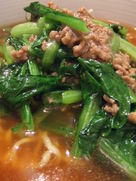
Ramen with Komatsuna and Minced Meat

All ramen lovers, please check Ramendo’s great Ramen Poll!

Ramen make for excellently balanced meals when properly combined with green vegetables and meat.
Here is a simple recipe combining ramen with minced pork and bee and komatsu leaves:

Ramen with Komatsuna and Minced Meat!

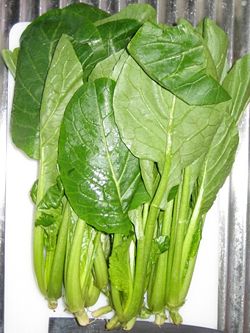
Komatsuna (Brassica rapa var. perviridis or var. komatsuna, コマツナ/小松菜、冬菜、鶯菜) is a type of leaf vegetable. It is a variant of the same species as the common turnip. It is grown in Japan, Taiwan and Korea. It is also known as Japanese Mustard Spinach and can be stir-fried, pickled, boiled and added to soups or used fresh in salads. It is an excellent source of calcium. It is also used for fodder in some Asian countries. The leaves of komatsuna can be eaten at any stage of growth. In a mature plant they are dark green with slender light green stalks, around 30 cm long and 18 cm wide. It is most often grown in the spring and autumn, as it cannot endure extreme heat or cold for more than a short time.

INGREDIENTS: For 2 persons

-Non-fry instant ramen (sold with shoyu/soy sauce taste stock soup powder): 2 packs
-Minced meat (half beef, half pork. Can be replaced with chicken): 180 g
-Komatsuna (or spinach): 1 bouquet (as much as you want, actually!)
-Ginger: 1 fresh piece (2×2 cm)
-Garlic (little smell variety if you can find it): 1 large clove
-Sesame oil: 1 teaspoon
-Chicken Bouillon powder (to taste): 1 cube~ crushed into powder

-Cornstarch: to taste (depends on how thick you like your soup)
-Water: 50 ml

RECIPE:

-Cut the komatsuna/spinach into 2 or 3 easy to eat lengths. Chop the ginger fine. Slice the garlic.

-Mix the cornstarch with a water in small cup (don’t forget to stir it again before using it!)

-Prepare the soup by heating water added with the soup bought together with the instant ramen.

-Boil the ramen in salted water to the consistence of your liking.

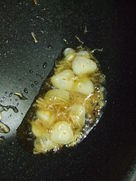
-While the ramen are boiling, In a frypan fry the ginger and garlic in sesame oil over a small fire so as to bring out flavour.

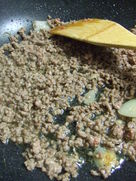
-Once the aroma of the fried chopped condiments come out add the minced meat and fry over a medium high fire.

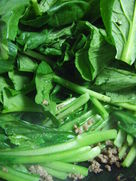
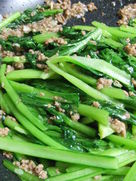
-Once the meat is well cooked, throw in the komatusna, lower stems irst for a few seconds and then all the rest, over a strong fire.

-Add the chicken bouillon powder and mix well.

-Reduce the fire to low. sprinkle over with all the starch mixed with water. Turn the fire to high and stir until the sauce around the meat and veg has thickened to your liking. Switch off fire.

-In a bowl (two bowls for 2 in this case), drop the boiled and drained ramen. Cover with soup and top with fried komatsuna and minced meat.

Simple!

RECOMMENDED RELATED SITES:
Bread + Butter, Comestilblog, Greedy Girl, Bouchon For 2, Zoy Zhang, Hungry Neko, Mangantayon, Elinluv Tidbit Corner, Maison de Christina, Chrys Niles, Lexi, Culinary Musings, Eats and Everything, Bite Me New England, Heather Sweet, Warren Bobrow, 5 Star Foodie, Frank Fariello, Oyster Culture
href=”http://ramendo.wordpress.com/”>Ramendo, Ramendo

Please check the new postings at:
sake, shochu and sushi

—————————————-
日本語のブログ
—————————————-
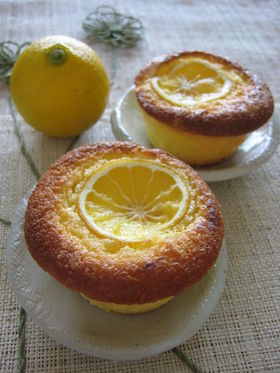
Non-Wheat Kabosu Cupcakes

Here is a tasty Japanese inspired cupcake for wheat allergics!

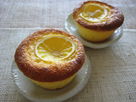
Non-wheat kabosu cupcakes!

Kabosu (カボス or 臭橙) is a juicy green citrus fruit (Latin name: Citrus sphaerocarpa) closely related to the yuzu/Japanese lime with the sharpness of lemon, used instead of vinegar in some Japanese dishes. It grows on a flowering plant with sharp thorns, and the fruit is harvested when still green but ripens to yellow. Kabosu was brought over from China in the Edo Period and became a popular fruit in Japan. It is produced in most areas of Ōita Prefecture (Kyushu Island) but particularly in Taketa and Usuki. The actual fruit is regarded as a delicacy in other parts of Japan, as it is often expensive outside of Ōita Prefecture. It improves the taste of many dishes, especially baked fish, sashimi and hot pot dishes.

INGREDIENTS: for 6~7 cupcakes

-Kabosu 1 (if notavailable, use lime, yuzu or lemon or your choice!)
-Eggs: 2
-Rice powder: 80 g
-Sugar: 50 g
-Butter: 50 g
-Sugar for icing

RECIPE:

-Cut out six thin slices from the kabosu/lime. Press the juice out of the rest (15 ml). Cut the skin into thin strips (later cut them again into small pieces according to your preference).

-Melt the butter inside a microwave oven (500~600W) for 40~50 seconds. Keep aside.
Pre-heat oven to 180 degrees Celsius.

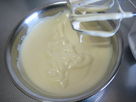
-In a bowl beat the eggs with half of the sugar over a bain-marie (a larger bowl containing hot water (about 60 degrees Celsius). When smooth add the rest of the sugar.

-When the mixture has reached a temperature equivalent to a human body temperature take bowl off the bain-marie. Keep beating until the mixture attains a whitish colour. Then beat at low speed for 3 more minutes.

-Add the rice powder and fold/mix it in with a spatula.

-Add melted butter, Kabosu/lime juice and chopped Kabosu/lime skin/zest. Mix them in gently.

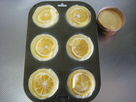
-Grease mold with butter or olive oil if you use a mold instead of cupcake paper cups. Fill in mold/cups with mixture.

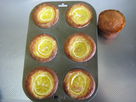
-Place one slice of Kabosu/lime on top of each cake. Sprinkle sugar over the top.
Bake in oven at 180 degrees Celsius for 20 minute.

-Take out and let cool down completely before taking cakes out of their molds.

-If you do not serve them immediately, wrap them in cellophane paper and preserve them inside fridge.

RECOMMENDED RELATED SITES:
Bread + Butter, Zoy Zhang, Hungry Neko, Mangantayon, Elinluv Tidbit Corner, Maison de Christina, Chrys Niles, Lexi, Culinary Musings, Eats and Everything, One Frugal Foodie, Bite Me New England, Heather Sweet

——————————–
Please check the new postings at:
sake, shochu and sushi

—————————————-
日本語のブログ
—————————————-
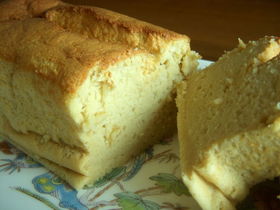
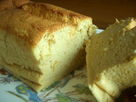
Tofu Pound Cake

Tofu has the great quality that it makes all things lighter, especially cakes.
Have you ever thought of making a pound cake with it (with a twist added!)?

Tofu Pound Cake!

INGREDIENTS: For a cake 16.5 cm long and a square cut of 7 cm sides

-Egg whites: 2
-Egg yolks: 2
-Sugar: 30 g
-Tofu (after taking some of its water off): 120 g
-Honey (liquid): 2 tablespoons
-All-purpose flour: 50 g
-Baking powder: half a teaspoon
-Soy sauce: 1 teaspoon
-Mirin/sweet sake: 1 tablespoon
-Milk: 2 tablespoons

RECIPE:

-Mix flour and baking powder well.
-Preheat oven to 180 degrees Celsius

-In a bowl drop the egg whites with half of the sugar. Beat until solid. Beat 30 more times with a whisk.

-In a separate bowl drop in the tofu, rest of the sugar and egg yolks. Beat with a whisker until smooth. Do not mix too much!

-Add honey, soy sauce, mirin and milk in that order to the egg yols mixture and mix in one each at a time.

-Add and mix in the flour and baking powder mixture little by little with a spatula.

-Add the meringue (beaten egg whites) by folding them in with a spatula in 2 or three sessions.

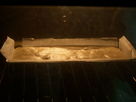
-Line the mold with baking paper and pour in the whole mixture.
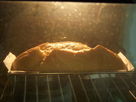
Bake for 40 minutes (the picture above shows the cake baked after 10 minutes)

-Leave the cake inside the oven for 10 more minutes after the oven has switched off after the 40 minutes of cooking. Open the oven, but leave the cake inside for an extra 10 minutes before taking it out.

-Let cool down completely.
Leave inside the fridge for half a day before serving.

NOTE:

You can replace the soy sauce and mirin with cocoa powder (1 tablespoon)!

RECOMMENDED RELATED SITES:
Bread + Butter, Zoy Zhang, Hungry Neko, Mangantayon, Elinluv Tidbit Corner, Maison de Christina, Chrys Niles, Lexi, Culinary Musings, Eats and Everything, One Frugal Foodie, Bite Me New England, Heather Sweet

——————————–
Please check the new postings at:
sake, shochu and sushi

—————————————-
日本語のブログ
—————————————-

Ramen: Simple Recipe with Beansprouts, Butter and Miso!

The Basic and Complete Ramen Recipe, I must admit, was complicated and a bit hard for friends to follow, but ramen can also be made simple and tasty.
Here is an example:
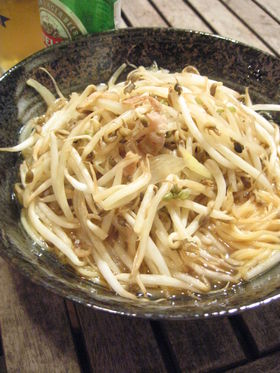
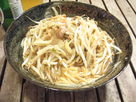
Ramen with beansprouts, butter and miso!

INGREDIENTS: For 2 servings

-Beansprouts (“moyashi”/もやし): one pack or a very large handful. Fresh, please!
-Onion: one half
-Bacon: 2 rashers
-Ramen: enough for 2 persons
-Butter: 1 tablespoon
-Miso: to taste

RECIPE:

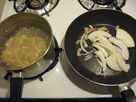
-While you boil the ramen, cut the onion and bacon into thin slices and fry. Boil some very lightly salted water for the soup (if you have bought the ramen with their soup, add it to the water, although it might become a bit heavy)

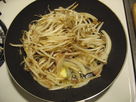
After the onion have become translucent and started taking in the bacon juices throw in the beansprouts and butter. Add just enough soup water as to obtain a thick enough soup. Add miso and stir.

In a bowl drop the boiled and drained ramen and top it with the beansprouts, bacon and onion soup!
Easy, isn’t it?

NOTE:
If you wish to make your ramen spicy add spices and chili when you fry the onion and bacon.
Don’t be afraid of using a lot of beansprouts (and other thinly cut veg if you wish)!

RECOMMENDED RELATED SITES:
Bread + Butter, Comestilblog, Greedy Girl, Bouchon For 2, Zoy Zhang, Hungry Neko, Mangantayon, Elinluv Tidbit Corner, Maison de Christina, Chrys Niles, Lexi, Culinary Musings, Eats and Everything, Bite Me New England, Heather Sweet, Warren Bobrow, 5 Star Foodie, Frank Fariello, Oyster Culture, Ramendo

Please check the new postings at:
sake, shochu and sushi

—————————————-
日本語のブログ
—————————————-
Bryan Baird’s Newsletter (2009/11/16)

Baird Beer & Taproom Events Bulletin
bryan-sayuri.gif

Dear Taproom Friend & Baird Beer Enthusiast:

After several months of conditioning, the 2009 version of Yabai-Yabai Strong Scotch Ale is at last ready for release. The draught version will be pouring from our Taproom taps as well as the taps of other Baird Beer retailing pubs and restaurants beginning Thursday, November 19. 633 ml bottles will be available for purchase beginning the same day at fine craft beer retailing liquor stores throughout Japan.

Yabai-Yabai Strong Scotch Ale (ABV 7.7%):

Scotland, an historically important center of beer brewing, has a cool climate that favors cultivation of the hardy barley plant. Scottish Ales, thus, tend to feature the rich and robust flavor of malted barley. Baird Yabai-Yabai Strong Scotch Ale is, in a word, opulent! The color is a deep mahogany brown and the head is dense, creamy and tan. The aroma is one of soft fruit esters and warm fusel alcohols. The body is chewy and the flavor exhibits notes of molasses, caramel apples, rum cake and pit fruit. One hearty pint is enough to take the bite out of the late autumn chill. Two pints will leave you toasty, and blissfully, warm. Three pints and…. YABAI!

Beers for Books Charity Event @ Numazu Fishmarket Taproom (Sunday, November 22):

The Numazu Fishmarket Taproom is joining hands with the Beers for Books organization (www.beersforbooks.org) to raise money for the Room to Read charity which purchases books for poverty-stricken kids in third world countries. All day long on Sunday, November 22, the Fishmarket Taproom will donate 100 yen per Baird Beer pint sold (and 10% of revenue generated from other drink sales) to the Room to Read charity. In conjunction, the Baird Brewery will be conducting charity-supporting brewery tours for interested attendees at 1:00, 3:00 and 5:00 pm. A charity beer quiz and guess the # of hops in the Jar contest also will be held and prizes awarded. We even are trying to organize a catch the biggest fish competition hopefully to be held in the fish market inner harbor across from the Taproom. This is a terrific cause and the event promises to be as enjoyable as it is constructive. Please plan on joining us.

Cheers!

Bryan Baird
Baird Brewing Company
Numazu, Japan
HOMEPAGE


The Japan Blog List

———————————
Must-see tasting websites:
-Sake: Tokyo Through The Drinking Glass, Tokyo Foodcast, Urban Sake, Sake World
-Wine: Palate To Pen, Warren Bobrow, Cellar Tours
-Beer: Good Beer & Country Boys, Another Pint, Please!
-Japanese Pottery to enjoy your favourite drinks: Yellin Yakimono Gallery
——————————–
Please check the new postings at:
sake, shochu and sushi

—————————————-
日本語のブログ
—————————————-