Tag Archives: 農業

Shizuoka Agricultural Products: Horiuchi Vegetables Garden

“We grow vegetables 364 days a year, and sometimes 365 days!”, replied Mrs. Satoko Horiuchi/堀内里子 when asked how busy she and her husband were.

Her family has been growing tea and rice for 6 or 7 generations (“I don’t remember!” confided the sweet old lady with a laugh).

Eggplants.

The Horiuchi family was introduced to me by my good friend Natsuko Koyanagi/小柳奈津子from Agriroad/アグリロード in Miwa/美和 in Aoi Ku/葵区 in Shizuoka City.

Basil.

“Whenever we are short of vegetables at Agriroad Market, we just give her a call and she will fill the place again!” Natsuko explained.

Komatsuna/小松菜 or Japanese Mustard Spinach.

The Horiuchi family cultivates vegetables over an area of 25 acres.
Satoko and her husband do most of the work with occasional from their daughter.

Satoimo/里芋, taro

As far as fertilizer is concerned they use a combination of organic manure fertilizer and artificial fertilizer.

Can you guess what these are?
Peanuts/Rakkasei/落花生!

Exploring their garden is like a lesson!
These are kabocha/南瓜 flowers!

The kabocha itself. Still too young and soft yet!
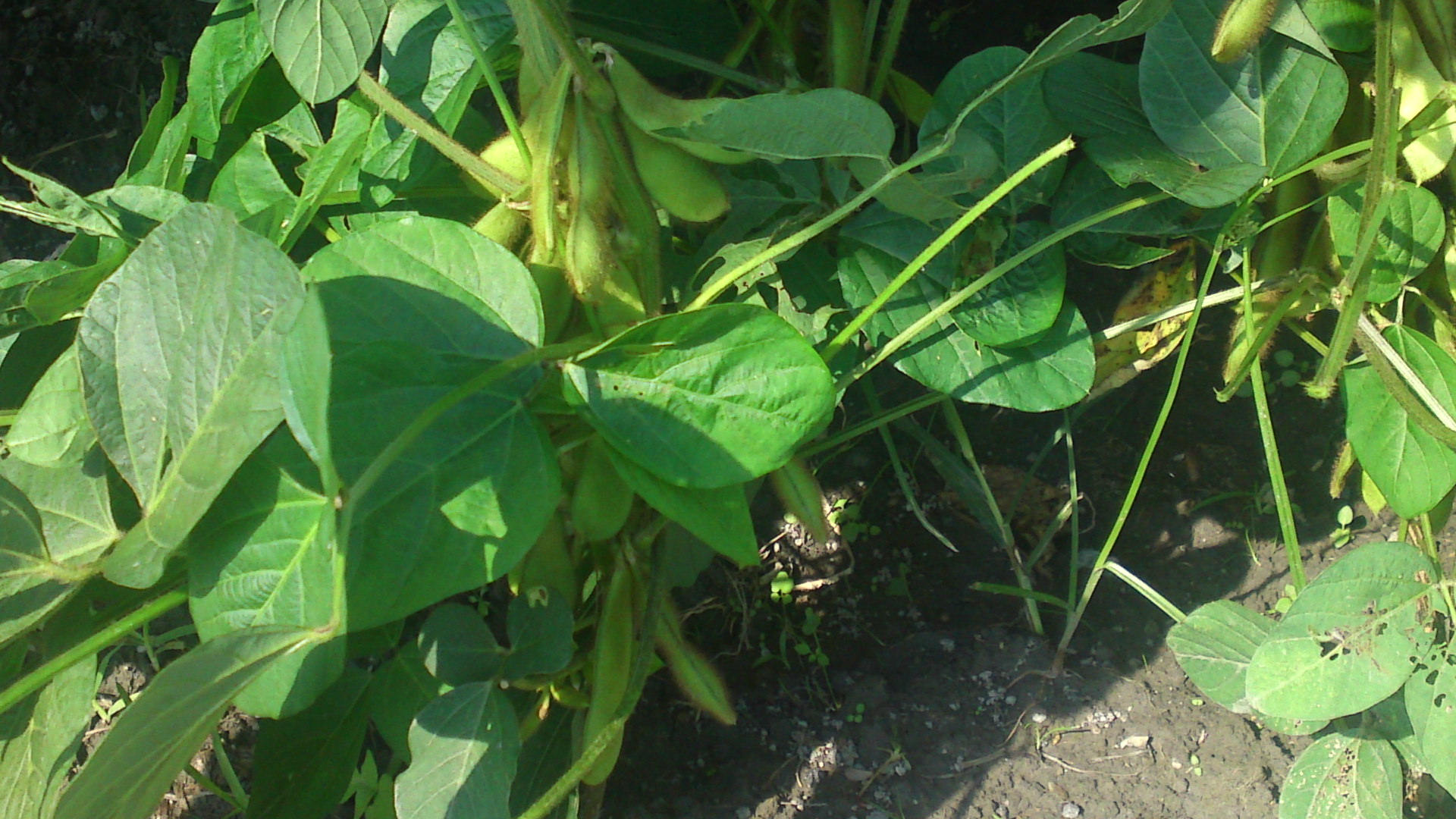
Edamame/枝豆! They are actually soy beans/daizu/大豆 harvested still green like you would do with string beans.

Enormous okra/オクラ!
The Japanese like them small, although I like biting through their seeds after having steamed and marinated them!

Satsuma Imo/Sweet potatoes/薩摩芋.
The Horiuchis use as little pesticide as possible although it is a daily fight with their daughter who wishes to grow more organic vegetables to satisfy the new demands!

Broccoli in front and myoga/myoga ginger/茗荷 at the back.

Japanese lettuce variety.

The Horiuchis on the average will grow at least two if not three of vegetable varieties on the same plot of land depending on the season.

Cucumbers.
This particular greenhouse is their daughter’s organic domain!
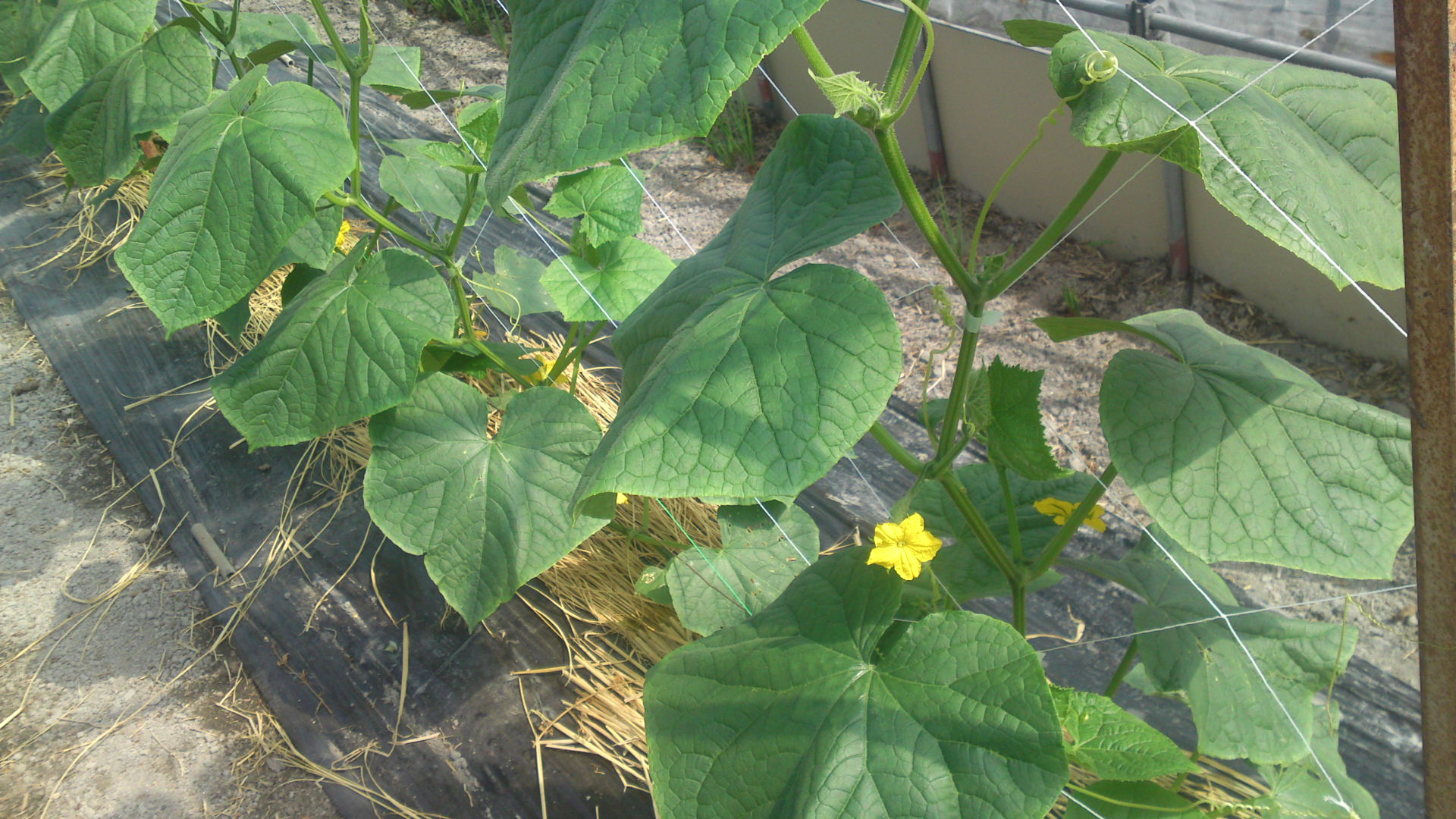
Beautiful and healthy!

The “heart” of the garden!

All these are the Horiuchis’ property, not counting the oranges and tea fields in nearby mountains!

There is a constant demand for peppers or piman/ピーマン in Japanese!

Daikon still at an early stage.
Don’t forget that the leaves are also edible. They make for great pickles!

And the leeks/negi/葱 naturally!
I’m convinced that the Japanese must be some of the highest consumers in the world!

You will understand why I will have to visit their garden in the near future!

Incidentally they also take direct orders apart of of selling their vegetables in many markets. Give them a call to find out what is available!

Horiuchi Garden
Shizuoka City, Aoi Ku, Nakanogo, 32
静岡市葵区中乃郷32
Tel.: 054-296-3886

RECOMMENDED RELATED SITES:
Warren Bobrow, Bread + Butter, Zoy Zhang, Hungry Neko, Think Twice, Frank Fariello, Mangantayon, Hapabento, Elinluv Tidbit Corner, Tokyo Terrace, Maison de Christina, Chrys Niles,Lexi, Culinary Musings, Wheeling Gourmet, Comestiblog, Chronicles Of A Curious Cook, Tokyo Through The Drinking Glass, Tokyo Foodcast, Palate To Pen, Yellin Yakimono Gallery, Tokyo Terrace, Hilah Cooking, More than a Mount Full, Arkonite Bento, Happy Little Bento; 5 Star Foodie; Jefferson’s Table; Oyster Culture; Gourmet Fury; Island Vittles; Good Beer & Country Boys; Rubber Slippers In Italy; Color Food daidokoro/Osaka;/a; The Witchy Kitchen; Citron Et Vanille, Lunsj Med Buffet/Estonian Gastronomy (English), Cook, Eat, Play, Repeat, Chrisoscope

Please check the new postings at:
sake, shochu and sushi

Vegetarian French Lunch with Shizuoka Ingredients at Tetsuya SUGIMOTO (2010/10/28)

Ranking
Service: Highly professional and friendly
Equipment: Great overall cleanliness. Beautiful washroom
Prices:~
Strong points:Freshest produce and ingredients only, mainly from Shizuoka Prefecture. Organic vegetables. Seasonal food only

Map (Japanese)
Entirely non-smoking!

I have to keep regularly to Tetsuya Sugimoto Restaurant as his ingredients are seasonal and nothing else!
As today is practical for a light lunch I visited him a bit late on purpose to have ample time to report. Tetsuya does not mind at all and actually always welcome the chat!

As there was no real local meat around, we kept it purely to vegetables.
He didn’t say he had that many form Shizuoka, only to show a dozen Tupperware to choose from!
Now, the mushrooms above are wild ones from Fujinomiya City’s vicinity at the foot of Mount Fuji!
They are called “Shougenji” mushrooms. And these were bigger than the cultivated variety!

Tetsuya Sugimoto is quickly turning into the Alain Passard of Shizuoka!
So he started “shopping” among the incredible (and he said small!) array of his vegetables.
The above are organic chayottes (hayato uri in Japanese)f from Hamamatsu.

His vegetables and all other ingredients are stored with such great care!

Now, can you guess what this vegetable might be? If you can, you owe my respect as this was a first for me!

Rice stalks or “ine” in Japanese. These are grown that thick on Amagi Plateau in Izu Peninsula!. The thick core is very easy to cook!

Look at these! All from Shizuoka Prefecture and organic to boot!

The other vegetables included:
Lotus root (“renkon” in Japanese, slightly boiled preserved in its own water) from Asabata, Shizuoka City
Winged Bean (“Shikaku Mame”) from Hamamatsu City
White and violet “Mabiki” Daikon, Tsurumurasaki and Carrot (“Ninjin”), all from Matsuki Biofarm at the foot of Mount Fuji!

The vegetables were first slowly fried with some white butter and a minimum of water and covered with a lid to prevent the juices to evaporate.

The vegetables were taken out in order according to their size and softness.
A minimum amount of water was added from time to time to help the larger vegetables to cook properly.

A lttle butter was added to liaise the sauce made up of the vegetables juices only as well as a little salt and a little lemon vinegar. Nothing else!

In front of me!

From another angle!

Testuya told he is going to scour the Izu Peninsula in search for seaweed varieties (Shizuoka has the largest number of varieties in Japan!) to create a vegetarian marine cuisine!

Tetsuya SUGIMOTO
420-0038 Shizuoka City, Aoi Ku, Umeya,, 2-13,1F
Tel./Fax: 054-251-3051
Opening hours:11:30~14:30,17:30~21:30
Holidays: undecided
Cedit cards OK
HOMEPAGE

RECOMMENDED RELATED SITES:
Warren Bobrow, Bread + Butter, Zoy Zhang, Hungry Neko, Think Twice, Frank Fariello, Mangantayon, Hapabento, Elinluv Tidbit Corner, Tokyo Terrace, Maison de Christina, Chrys Niles,Lexi, Culinary Musings, Wheeling Gourmet, Comestiblog, Chronicles Of A Curious Cook, Tokyo Through The Drinking Glass, Tokyo Foodcast, Palate To Pen, Yellin Yakimono Gallery, Tokyo Terrace, Hilah Cooking, More than a Mount Full, Arkonite Bento, Happy Little Bento; 5 Star Foodie; Jefferson’s Table; Oyster Culture; Gourmet Fury; Island Vittles; Good Beer & Country Boys; Rubber Slippers In Italy; Color Food daidokoro/Osaka;/a; The Witchy Kitchen; Citron Et Vanille, Lunsj Med Buffet/Estonian Gastronomy (English), Cook, Eat, Play, Repeat, Chrisoscope

Please check the new postings at:
sake, shochu and sushi

Alain Passard’s Visit in Shizuoka!

Shizuoka Prefecture is at long last receiving the attention it deserves!
From Monday October 25th through Friday October 29th, Alain Passard will hold no less than 4 dinner shows and one demonstration for professionals in Shizuoka, Hamamatsu and Itoh Cities!

At the official Press Conference inside the Shizuoka Prefecture Hall.

Alain Passard is an establishment in France where he has been awarded the three Michelin Stars for the last 14 years for his Restaurant, Arpège, in Paris.
A few years ago, conscious of environment and health in general, he took a big risk and won the challenge of offering high class gastronomy mainly based on vegetables and fruits.
He has already introduced French gastronomy in Japan on many occasions, but this was the first time he concentrated his visit on Shizuoka Prefecture only!

Suzuki Gakuin, the scene of Alain Passard’s demonstration.

Why did such a celebrated chef choose our Prefecture?
A very simple reason: the quality and variety of Shizuoka Prefecture’s vegetables and fruit had finally reached his ears, and as a true professional chef and a lover of good food he could ignore our region any longer, the more for it that it reminds him of his native Bretagne, another region world-famous for its superlative vegetables and extraordinary seafood.

During the Press Conference, Mr. Passard was the image of a true ambassador with a passion and a warmth that quickly won everybody’s heart. A model of civility without ostentation, he explained his reasons for coming at last to Shizuoka and discover its long hidden treasures.
He personally invited me for a private lunch with his staff and Government officials where he showed an intense interest for all I had the time to tell about my adopted home.

Shizuoka ingredients line-up!

At 14:00 we found ourselves in Suzuki Gakuin Cooking School for a demonstration reserved for paying professionals only.
Although the place was crowded to the very limits, many guests had to wait until the other event, the dinner at Nakajimaya Hotel, to have a chance to witness Mr. Passard’s art.

More than 80 professionals were attending!

Among them, some very famous local chefs from all over the Prefecture!

Participants, however far from the stage, could follow the demonstration from overhead mirrors,

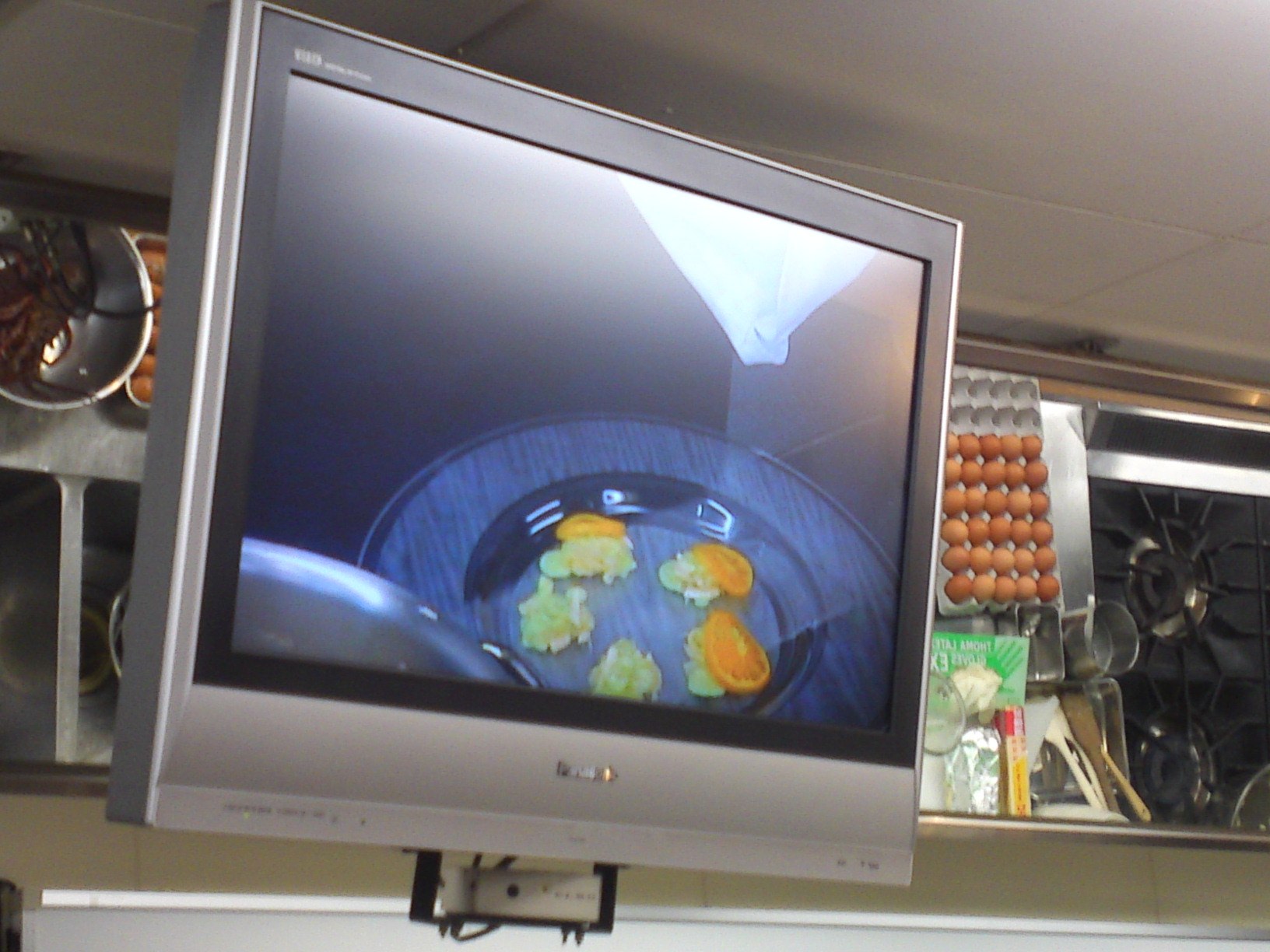
and two live TV screens!

Apart of an official interpreter, Alain Passard had his own two aides on hand, Isabelle Schipp from Alsace and Julien Lebon from Paris, two extremely capable lieutenants than no true chef can do without!

Alain Passard’s was not only a demonstration of his skills and inventiveness, but of the whole concept of preparing food.
First, he insisted on the importance of shopping for ingredients when he chose from the array of vegetables displayed in front of him.

Second, having chosen the ingredients of his fancy, came the moment of intense reflection on what he would create with them. As he so justly explained, a true chef has always his moments of uncertainty he has to overcome before immersing himself in his art.

And then the show finally started in earnest!
A long video might have done a better job but at least let me show you the results I had such a great pleasure to witness!

Except for the butter, milk and salt, all ingredients were from Shizuoka!
We were offered three recipes, all created on the moment!

1) Shizuoka Onions (Fondue) and Mandarines (Confit) with Wasabi and Fresh Peanuts, as appetizers.

For a closer view!

2) Shizuoka Small Turnips and Cherry Tomatoes with Shiitake Mushrooms and Ciboulette Leeks, as a main dish.

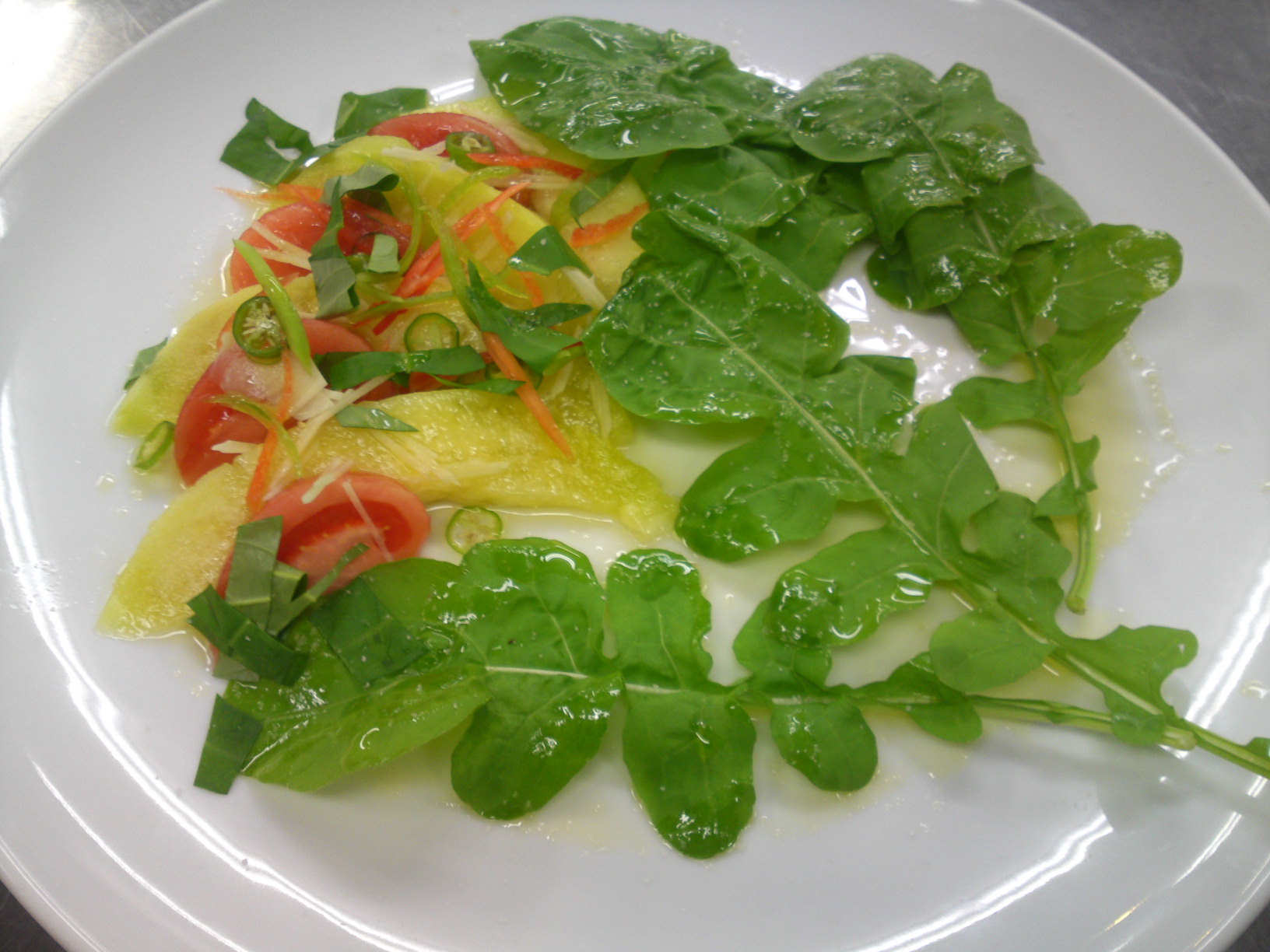
3) Shizuoka Melon (Carpaccio) and fresh Ginger with Shishito Peppers and Roquette (Luccola) for dessert!

Did I mention this was a vegetarian delight?
If you have more precise questions about the whole (cooking) process, I’ll be glad to oblige!

RECOMMENDED RELATED SITES:
Warren Bobrow, Bread + Butter, Zoy Zhang, Hungry Neko, Think Twice, Frank Fariello, Mangantayon, Hapabento, Elinluv Tidbit Corner, Tokyo Terrace, Maison de Christina, Chrys Niles,Lexi, Culinary Musings, Wheeling Gourmet, Comestiblog, Chronicles Of A Curious Cook, Tokyo Through The Drinking Glass, Tokyo Foodcast, Palate To Pen, Yellin Yakimono Gallery, Tokyo Terrace, Hilah Cooking, More than a Mount Full, Arkonite Bento, Happy Little Bento; 5 Star Foodie; Jefferson’s Table; Oyster Culture; Gourmet Fury; Island Vittles; Good Beer & Country Boys; Rubber Slippers In Italy; Color Food daidokoro/Osaka;/a; The Witchy Kitchen; Citron Et Vanille, Lunsj Med Buffet/Estonian Gastronomy (English), Cook, Eat, Play, Repeat, Chrisoscope

Please check the new postings at:
sake, shochu and sushi

French Gastronomy with Shizuoka Ingredients: “Shamo” Chicken at Tetsuya SUGIMOTO

Ranking
Service: Highly professional and friendly
Equipment: Great overall cleanliness. Beautiful washroom
Prices:~
Strong points:Freshest produce and ingredients only, mainly from Shizuoka Prefecture. Organic vegetables. Seasonal food only

Map (Japanese)
Entirely non-smoking!

I suppose I will have to repeat myself again and again, but If you happen to visit Shizuoka City, you will find many restaurants and izakayas serving and mainly using produce/products and ingredients from Shizuoka Prefecture. There are many treasures to be discovered in this hoard!
One of them is the French restaurant going by the name of Tetsuya SUGIMOTO!

Now, Mr. Sugimoto is always looking for the best and the best only in our Prefecture.
This particular dish was made with a superb chicken called “Shamo/軍鶏, more precisely Ikkoku shamo/一黒軍鶏, a variety of Shamo Chicken raised in Central and Western Shizuoka Prefecture.

Male Ikkoku Shamo Chicken.

Female Ikokku Shamo Chicken.
The latter certainly deserves her name of “black” Shamo!

M. Sugimoto used chicken raised in Makinohara/牧の原 in the south-central part of our Prefecture.
These chickens are fed along very strict rules, with only natural feed. Their coops are at least 1 meter above soil and maintained as the healthiest environment as possible.
They are culled usually at 130 days when they reach 4 kg for the best quality.

Their meat has no “fibers” or unwanted smell.
Their meat contains less water and more nutrients than usual chicken. They can be served raw as sashimi in all safety.
Their flesh is extraordinarily tender and soft. and their skin delicious when fried thin and crispy.

From another angle!

Mr. Sugimoto first fried thick breast slices on their skins over a thick skillet and then finished them in the oven.
The sauce was made with the juices of the chicken, wild mushrooms and Sherry vinegar.
The mushrooms are all wild Japanese mushrooms!
A superb dish for the Fall/Autumn!

Tetsuya SUGIMOTO
420-0038 Shizuoka City, Aoi Ku, Umeya,, 2-13,1F
Tel./Fax: 054-251-3051
Opening hours:11:30~14:30,17:30~21:30
Holidays: undecided
Cedit cards OK
HOMEPAGE

RECOMMENDED RELATED SITES:
Warren Bobrow, Bread + Butter, Zoy Zhang, Hungry Neko, Think Twice, Frank Fariello, Mangantayon, Hapabento, Elinluv Tidbit Corner, Tokyo Terrace, Maison de Christina, Chrys Niles,Lexi, Culinary Musings, Wheeling Gourmet, Comestiblog, Chronicles Of A Curious Cook, Tokyo Through The Drinking Glass, Tokyo Foodcast, Palate To Pen, Yellin Yakimono Gallery, Tokyo Terrace, Hilah Cooking, More than a Mount Full, Arkonite Bento, Happy Little Bento; 5 Star Foodie; Jefferson’s Table; Oyster Culture; Gourmet Fury; Island Vittles; Good Beer & Country Boys; Rubber Slippers In Italy; Color Food daidokoro/Osaka;/a; The Witchy Kitchen; Citron Et Vanille, Lunsj Med Buffet/Estonian Gastronomy (English), Cook, Eat, Play, Repeat, Chrisoscope

Please check the new postings at:
sake, shochu and sushi

Shizuoka Agricultural Products: Naitoh Fig Orchard in Okitsu

“With the present changes in climate my neighbors are joking that we might have to think of growing pineapples soon!” Mr. Yoshihiko Naitoh told me while driving me from Okitsu Station to his orchard up in the mountains.

I had called him te day before after my good friend Yasushi Imaizumi, a gastronome and real connoisseur, has introduced me to this great farmer.
He had gracefully agreed to pick me up as his farm is noteasy to find, but had warned me he had some work on the way.

Which suited me fine as it gave me the occasion to visit Okitsu JA Farmers Market where he delivered some of the morning’s crop.
Mr. Naitoh is a fourth generation farmer as far as tea and mikan/madarine oranges are concerned, but as for figs he is a first generation farmer and has grown them for 22 years.

The first that struck me in his orchard is that he uses almost no pesticides or herbicides as proved by the grasses growing freely between the rows of fig trees.
As for fertilizer he mainly uses pig’s manure from a neighboring farmer that he mixes with only a minimum of artificial fertilizer, mainly calcium and potassium.

This particular fig, in spite of its green/-yellow skin is ripe!
It is a “banané fig/バナネ無花果”, a French variety. Beautiful and succulent!

Mr. Naitoh grows three types of figs which don’t need any help for pollination: Banané Fig/バナネ無花果, Common Fig/普通無花果, and

and Violet Figs/ヴィオレ無花果, another French variety which turns to a striking black/purple color when ripe!

One cannot replant a fig tree in the same spot from where another fig tree has been rooted out. Mr. Naitoh therefore keeps experimenting even using discarded polysterene boxes!

Mr. Naitoh also grows fig trees in pots to sell to homes and gardeners!

I wouldn’t mind one of those on my balcony!

For a closer look!
Taking care of a fig tree is not so difficult. Don’t forget to cut the fruit-bearing branches at their base in winter. Don’t worry they will grow fast again and produce two crops in July and Ocotober in warm conditions!

As Mr. Naitoh uses no pesticides, in the afternoon he turns hunter and kill the little critters by hand!

Mr. Naitoh is not only a grower but a fine chef!
I bought this succulent-looking fig compote!
I also got his fig jam!

These figs will be delivered as far as Chiba Prefecture on the other side of Tokyo!

Apart of oranges and tea on pieces of land dispersed in the mountains, Mr. Naitoh also cultivates Roselle/ロセル, a variety of hibiscus.
Now, why is he growing flowers in the middle of his orchards?

For food!

The flowers are picked before they open at all.
The core will be discarded and only the red sepal will be kept to be turned into jam!
I got a full bag of them and made my own jam, reminiscent of acid pomegranates. Absolutely beautiful (in taste as well as in looks!)!

Mr. Naitoh accepts private orders of his three types of figs, fig compote, fig jam, roselle, so do not hesitate to call him!

NAITOH ORCHARD/内藤農園
Yoshihiko Naitoh/内藤好彦
Mobile: 09029465250
Tel.: 054-369-1679

RECOMMENDED RELATED SITES:
Warren Bobrow, Bread + Butter, Zoy Zhang, Hungry Neko, Think Twice, Frank Fariello, Mangantayon, Hapabento, Elinluv Tidbit Corner, Tokyo Terrace, Maison de Christina, Chrys Niles,Lexi, Culinary Musings, Wheeling Gourmet, Comestiblog, Chronicles Of A Curious Cook, Tokyo Through The Drinking Glass, Tokyo Foodcast, Palate To Pen, Yellin Yakimono Gallery, Tokyo Terrace, Hilah Cooking, More than a Mount Full, Arkonite Bento, Happy Little Bento; 5 Star Foodie; Jefferson’s Table; Oyster Culture; Gourmet Fury; Island Vittles; Good Beer & Country Boys; Rubber Slippers In Italy; Color Food daidokoro/Osaka;/a; The Witchy Kitchen; Citron Et Vanille, Lunsj Med Buffet/Estonian Gastronomy (English), Cook, Eat, Play, Repeat, Chrisoscope

Please check the new postings at:
sake, shochu and sushi

French Dessert with Shizuoka Ingredients At Tetsuya SUGIMOTO

Ranking
Service: Highly professional and friendly
Equipment: Great overall cleanliness. Beautiful washroom
Prices:~
Strong points:Freshest produce and ingredients only, mainly from Shizuoka Prfecture. Organic vegetables. Seasonal food only

Map (Japanese)
Entirely non-smoking!

If you happen to visit Shizuoka City, you will find many restaurants and izakayas serving and mainly using produce/products and ingredients from Shizuoka Prefecture. There are many treasures to be discovered in this hoard!
One of them is the French restaurant going by the name of Tetsuya SUGIMOTO!
But when it comes to serving desserts mainly made up of Shizuoka ingredients, it is simply a tour de force!

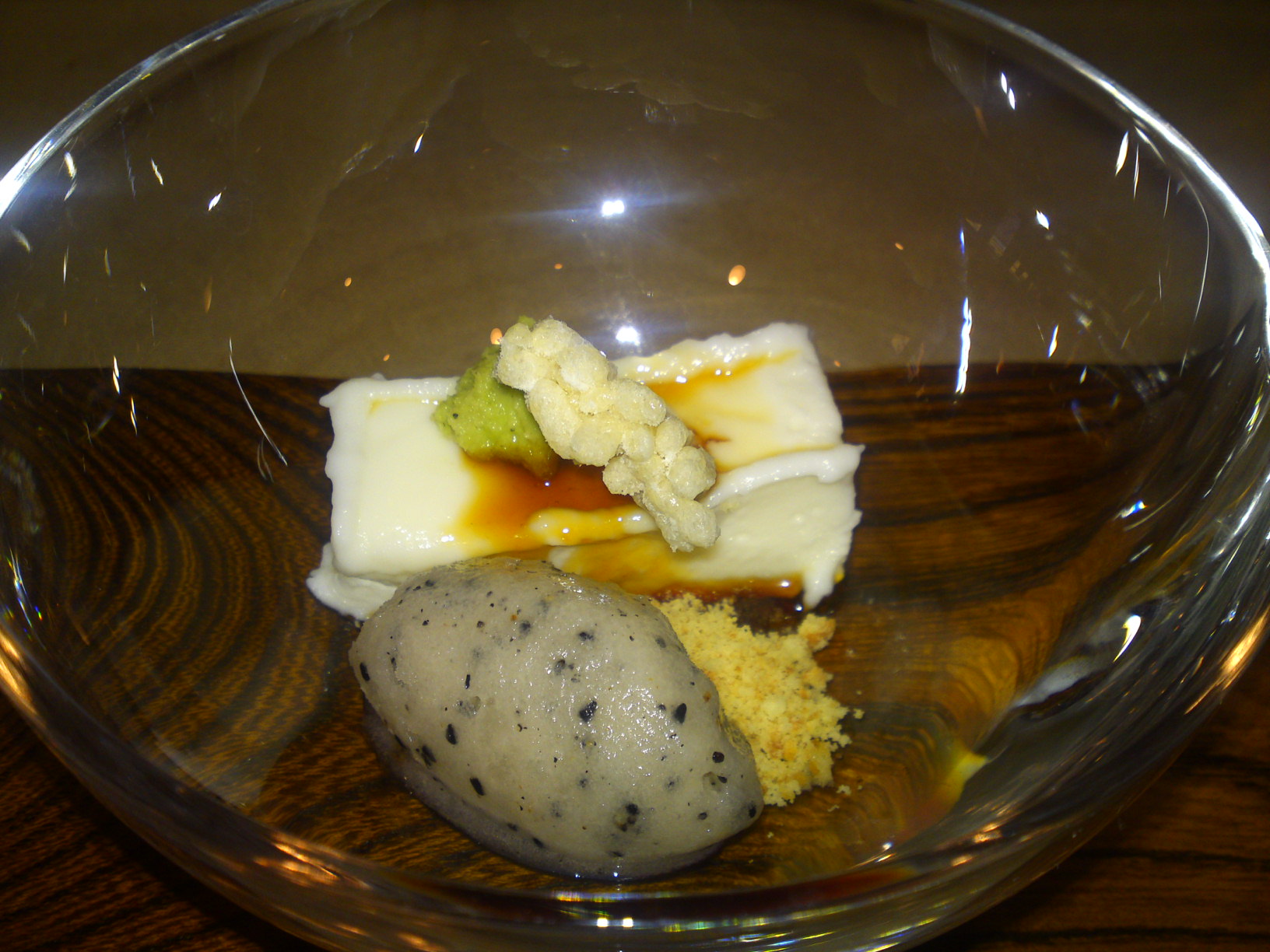
For a closer view!

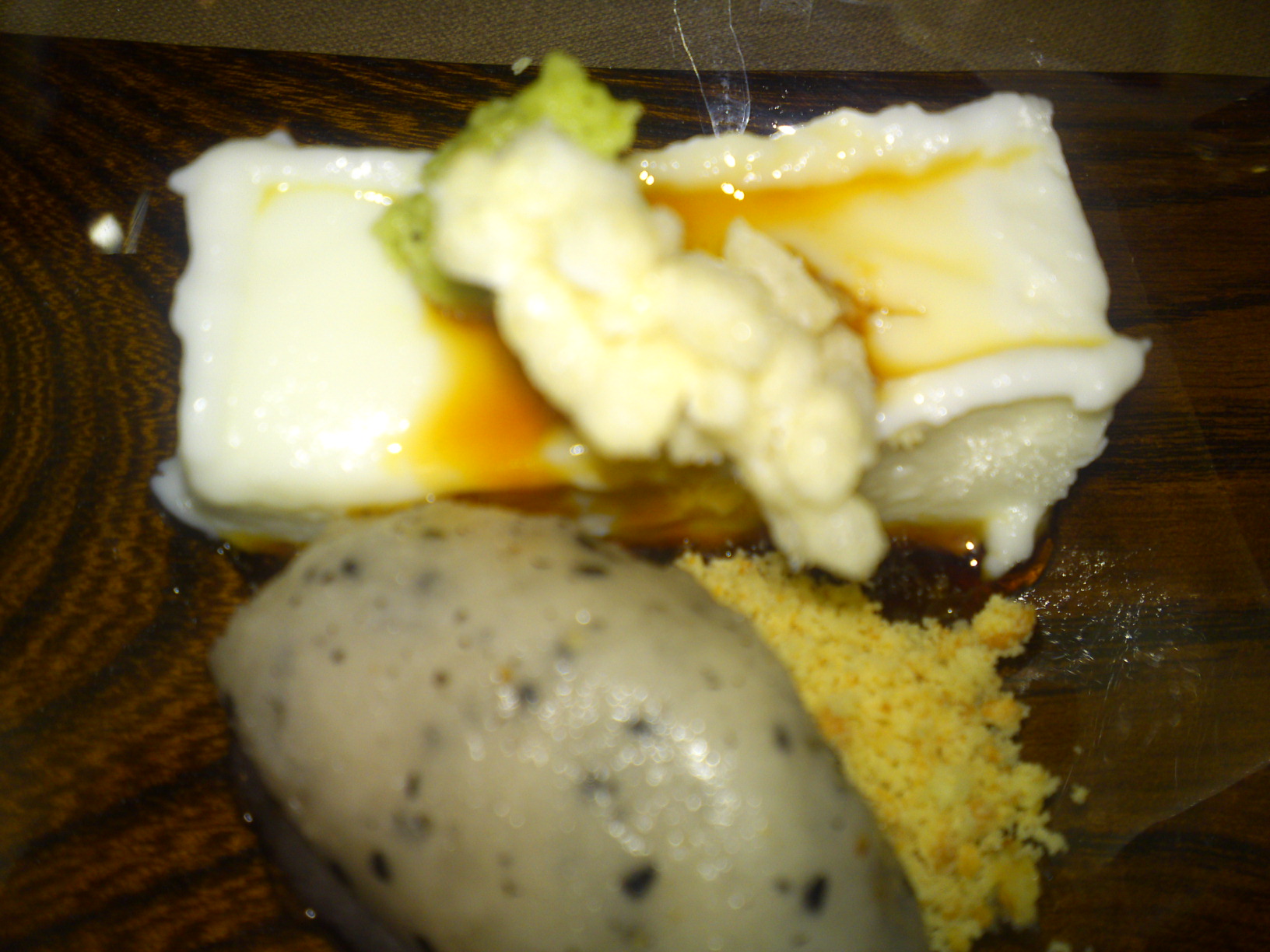
Now what is that dessert made of?
-First the white part is a blanc manger (pudding) made with rice!
The sauce is a combination of honey and soy sauce while the topping of freshly wasabi and the rice popcorn are also from Shizuoka Prefecture!
-The dragonfruit sorbet with its unusual grey colour for a dessert was made from fruit grown in Shizuoka Prefecture.
-The “powder” is actually crumbled sponge cake for a fine last touch in design, colour and taste!

I wonder what is going to be the next Shizuoka dessert!

Tetsuya SUGIMOTO
420-0038 Shizuoka City, Aoi Ku, Umeya,, 2-13,1F
Tel./Fax: 054-251-3051
Opening hours:11:30~14:30,17:30~21:30
Holidays: undecided
Cedit cards OK
HOMEPAGE

RECOMMENDED RELATED SITES:
Warren Bobrow, Bread + Butter, Zoy Zhang, Hungry Neko, Think Twice, Frank Fariello, Mangantayon, Hapabento, Elinluv Tidbit Corner, Tokyo Terrace, Maison de Christina, Chrys Niles,Lexi, Culinary Musings, Wheeling Gourmet, Comestiblog, Chronicles Of A Curious Cook, Tokyo Through The Drinking Glass, Tokyo Foodcast, Palate To Pen, Yellin Yakimono Gallery, Tokyo Terrace, Hilah Cooking, More than a Mount Full, Arkonite Bento, Happy Little Bento; 5 Star Foodie; Jefferson’s Table; Oyster Culture; Gourmet Fury; Island Vittles; Good Beer & Country Boys; Rubber Slippers In Italy; Color Food daidokoro/Osaka;/a; The Witchy Kitchen; Citron Et Vanille, Lunsj Med Buffet/Estonian Gastronomy (English), Cook, Eat, Play, Repeat, Chrisoscope

Please check the new postings at:
sake, shochu and sushi

Shizuoka Agricultural Products: The Yamaguchis’ Benihoppe Strawberry Fields (beginning of October)

Haruka/晴香, Tamako/玉子 and Mitsuo/光雄 Yamaguchi/山口

This the second part as promised of my interview of the Yamaguchi Family, a major grower of strawberries, exclusively of the Benihoppe variety, in Nirayama, Izu Peninsula. Read the first part for better understanding!

As mentioned before, “Benihoppe” or “Red Cheeks” strawberries is a cultivar which was successfully developed no later than in 2002 in Shizuoka Prefecture. It has since been voted as the best-balanced strawberry in Japan, and Izu Peninsula being near Tokyo, we do not see too many of our fruit on our own market stands!

To cut a long story short I was back at Mishima JR Station yesterday where Haruka Yamaguchi picked me up to give me a lift to her parents strawberry fields.

The Yamaguchis own a total of 15 greenhouses for a total of 1,500 tsubo (4,500 square meters), a fairly large property for a single family in this particular area counting for no less than 187 registered farms!
When you realize that their greenhouses stand in many different locations you can understand the sheer work of only opening and closing the roofs depending upon the weather, humidity and temperature every day! No need to say that when torrential rains fall upon them it becomes a real scramble!

The new strawberry seedlings were finally planted on the 15th of September. A couple of seedlings had been cut out and analyzed to ascertain that the flowers buds were forming.

Now, what is that box for?
A beehive will stand on it 5 days before the first strawberry flowers start blooming.
One just can’t pollinate the flowers without them!
Artificial pollination would be too cumbersome and will not be uniform with the consequence of misshaped fruits.
The Yamaguchis breed their own bees in 16 beehives, one for each greenhouse.
Don’t worry, they eat and share the honey!

Fruit size will depend on how well the flowers are pollinated.
Only the strict minimum of fertilizer will be dispensed until the soil is covered with vinyl sheets.
Weeds will have to be picked out by hand until then.
No pesticides will be used either.
Insects-eating insects will then be introduced!

The Yamaguchis will use large vinyl sheets to close the soil between the seedlings and rows. Instead of making holes in the sheets which tend to damage the seedlings, they join the sheets between the plants with staplers.
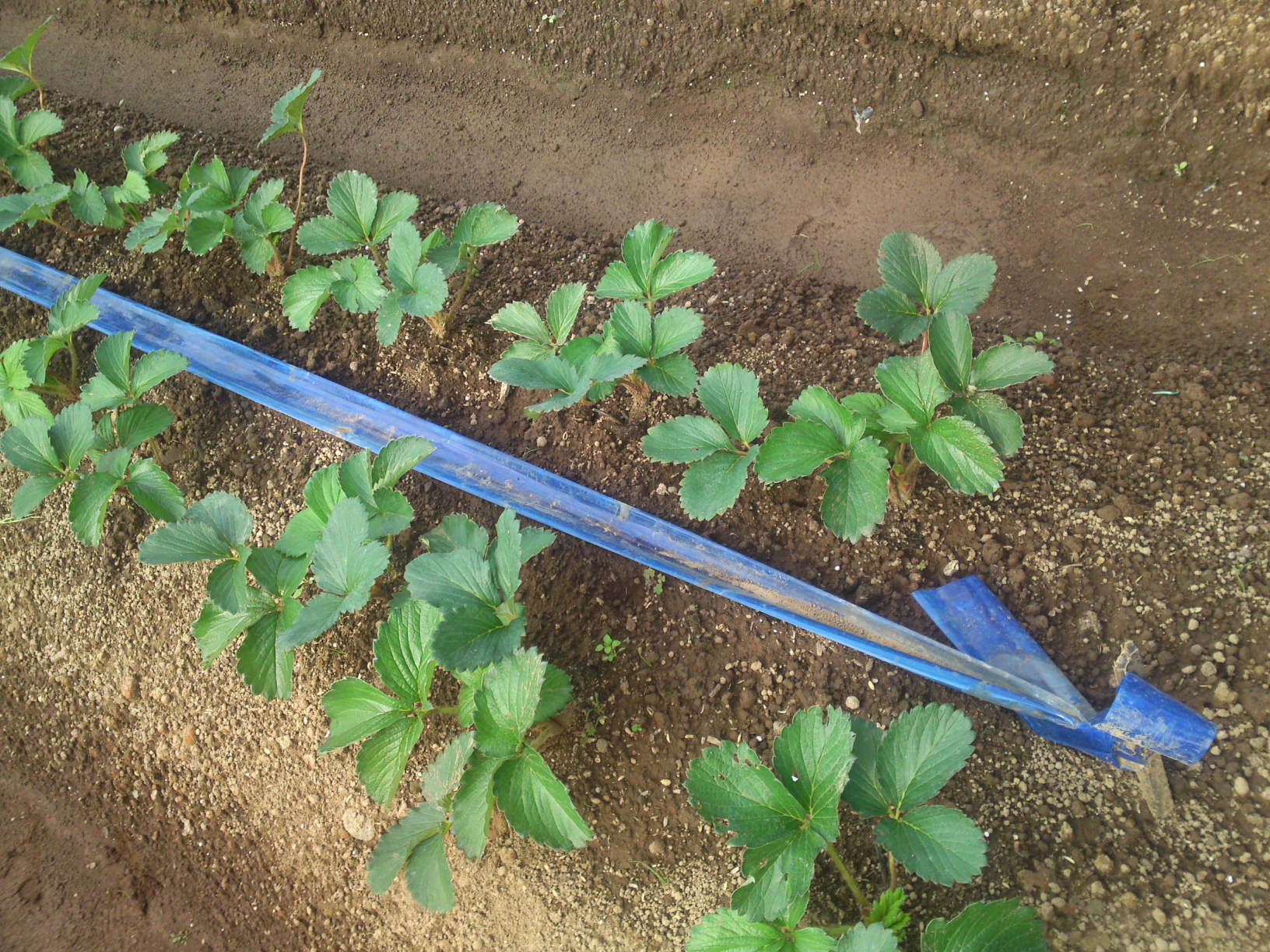
Now, do you see the blue tube running between the plants?

They are actually water hoses (or pipes, as you like)

The water springs out of the tube exactly between the plants.
That is, there will be enough space left between the vinyl sheets for the seedlings to be watered twice a week for 15 minutes.
Clever, isn’t it?

Maintaining the plants and picking the fruit is impossible work to do standing or kneeling.
The Yamaguchis and many other strawberry growers use that clever contraption to “run/roll” between the rows and work in relative ease!

Strawberry season lasts from about November 15th and 31st of May.
The best season are December and May as for sweetness. February see the largest fruits while the largest production occurs in March.

Look forward to my next report in December!

Yamaguchi Benihoppe Strawberry Farm
410-2114, Izu no Kuni, Nan-jo, 8
Tel.: 055-949-2330

RECOMMENDED RELATED SITES:
Warren Bobrow, Bread + Butter, Zoy Zhang, Hungry Neko, Think Twice, Frank Fariello, Mangantayon, Hapabento, Elinluv Tidbit Corner, Tokyo Terrace, Maison de Christina, Chrys Niles,Lexi, Culinary Musings, Wheeling Gourmet, Comestiblog, Chronicles Of A Curious Cook, Tokyo Through The Drinking Glass, Tokyo Foodcast, Palate To Pen, Yellin Yakimono Gallery, Tokyo Terrace, Hilah Cooking, More than a Mount Full, Arkonite Bento, Happy Little Bento; 5 Star Foodie; Jefferson’s Table; Oyster Culture; Gourmet Fury; Island Vittles; Good Beer & Country Boys; Rubber Slippers In Italy; Color Food daidokoro/Osaka;/a; The Witchy Kitchen; Citron Et Vanille, Lunsj Med Buffet/Estonian Gastronomy (English), Cook, Eat, Play, Repeat, Chrisoscope

Please check the new postings at:
sake, shochu and sushi

Shizuoka Prefecture Agricultural High School (1)

I’ve lived 34 years in Shizuoka City, and I still remember that about 20 years ago farmers’ sons had to be dragged screaming into that venerable establishment!
How times have changed since then!

Founded in 1903 (3rd year of Taisho Era), it has been rebuilt many a time and has grown into a highly respected high school in the whole Prefecture and well beyond.

There are many reasons to that and probably not the ones you would expect.
First of all, the environment is truly propitious to study with all the greenery between the buildings. I’m not talking about the 3 ha of cultivated land! By Japanese standards, it is a large school by area standards.

Although it used to be mainly a boys’ high school, the trend has completely changed with 493 girls for 231 boys!
The introduction of three new subjects in the curriculum in 1996 is probably the most notable factor behind this change: Agricultural production, that is real farming, Environment and Food Departments.

Although plenty of history is still visible within its compounds, Shizuoka Prefectural (Public) High School is resolutely modern and extremely well-equipped, even included animal husbandry!
My relation with the high school started this year when I met some of their teachers at a party. Teachers and staff on the whole are unusually warm, easy-going but firm on etiquette, smiling and most of all pro-active. Pro-active? I mean that these ladies and gents are not afraid to show everyone that they themselves are keen to learn!

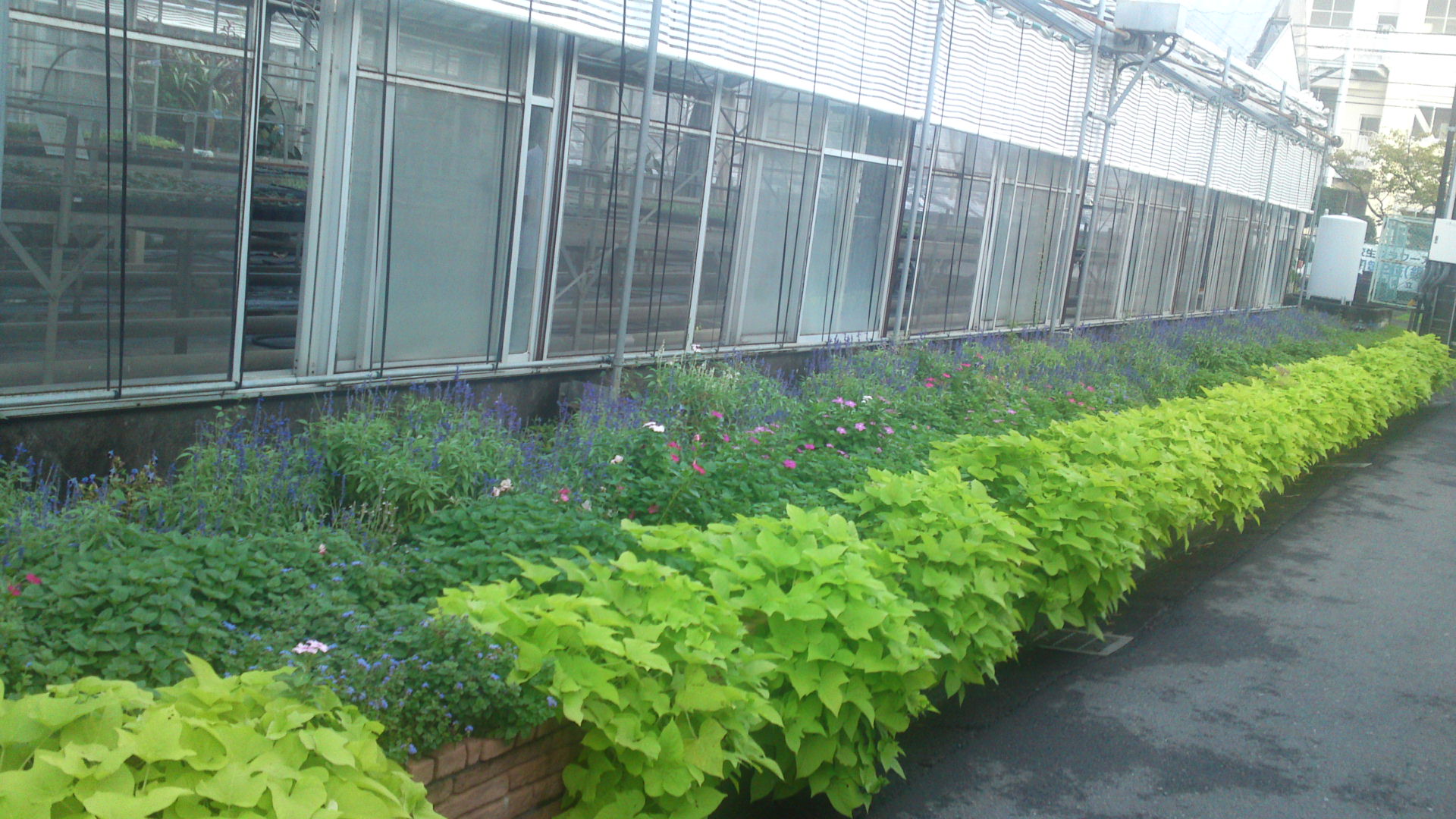
Flowers!

I had already visited the school quite a few times when the Shizuoka Prefecture-run Agricultural Homepage, AGRIGRAPH (6 languages) sent me on a series of reports.
Now, visiting the school compounds is like exploring a farming enterprise!

Tomatoes and other vegetables.

The greenhouses might be squarer and higher bt the techniques and technology are the same!
Actually Shizuoka has 3 Prefectural High Schools, a sure sign of the times when people are getting more aware of their food and environment!

A spinach variety.

Akihime strawberries. Looking forward to another visit soon! LOL

Cucumbers

Actually the students either take their produce back home or sell it. In the latter case, all the proceeds go to the Prefecture!

Tomatoes again!

This particular vegetable bed is allotted to 41 students.

Except for one, they all work in pairs on their alotted bed with their names written on small poles in front of each culture!

Plenty of tools for plenty of students!

Don’t they look neat!

Dressed as real farmers, aren’t we!

Teachers there are happily obeyed and listened to! I never heard a misplaced word by any lecturer, a rarity in Japanese high schools!

Daikon and spinach seeds.

Would you believe that one of those two little ladies greeted me not only in English, but also in French!

Don’t forget this is green tea land, as Shizuoka Prefecture produces no less than 45% of all green tea in Japan!

What strikes most in this establishment is that almost every available space is filled with greenery and flowers, a luxury in space-cramped Japan!

I had to pay a long visit to my new friend’s, Mr. Ishida, class and school club. Mr. Ishida teaches solely the art of making bread (and some cakes)! That particular class is an elective subject. There are only 33 students (1st to 3rd year) but the learn how to make 33 different breads during the whole 3-year cursus!

The present subject was wholegrain wheat bread!
Fermented no less than 3 times!

Girls from another class who came to collect their chocolate cakes!

Shaping the small loaves for the oven.
Quite a few boys among the students!

The mini loaves coated with wholegrain flour before being baked at 210 degrees Celsius!
I went back home with half a dozen of them (plus a baguette and chocolate cake!)!

The chocolate cakes!

Absolutely yummy!

A sample line of the breads created by the students.
Incidentally Shizuoka Prefecture Agricultural School is famous all over Japan for taking most prizes at the Annual Japan High School National Bread Contest!

Attentive, aren’t they?

Well, this is the first of a series of articles!
Look forward to the next ones!

Shizuoka Prefecture Agricultural High School
420-0812 Shizuoka City, Aoi Ku, Furusho, 3-1-1
Tel: 054-261-0111/0113
Fax: 054-264-2226
Homepage: http://www.shizuoka-c.ed.jp/shizuoka-ah/ (Japanese)

RECOMMENDED RELATED SITES:
Warren Bobrow, Bread + Butter, Zoy Zhang, Hungry Neko, Think Twice, Frank Fariello, Mangantayon, Hapabento, Elinluv Tidbit Corner, Tokyo Terrace, Maison de Christina, Chrys Niles,Lexi, Culinary Musings, Wheeling Gourmet, Comestiblog, Chronicles Of A Curious Cook, Tokyo Through The Drinking Glass, Tokyo Foodcast, Palate To Pen, Yellin Yakimono Gallery, Tokyo Terrace, Hilah Cooking, More than a Mount Full, Arkonite Bento, Happy Little Bento; 5 Star Foodie; Jefferson’s Table; Oyster Culture; Gourmet Fury; Island Vittles; Good Beer & Country Boys; Rubber Slippers In Italy; Color Food daidokoro/Osaka;/a; The Witchy Kitchen; Citron Et Vanille, Lunsj Med Buffet/Estonian Gastronomy (English), Cook, Eat, Play, Repeat, Chrisoscope; Jacqueline Church; The Foodonymph (in Dubai!); Alchemy, Simple Ingredients, magical Food (in Ireland!); Curious Foodie; Mr. Foodie (London/UK)

Please check the new postings at:
sake, shochu and sushi

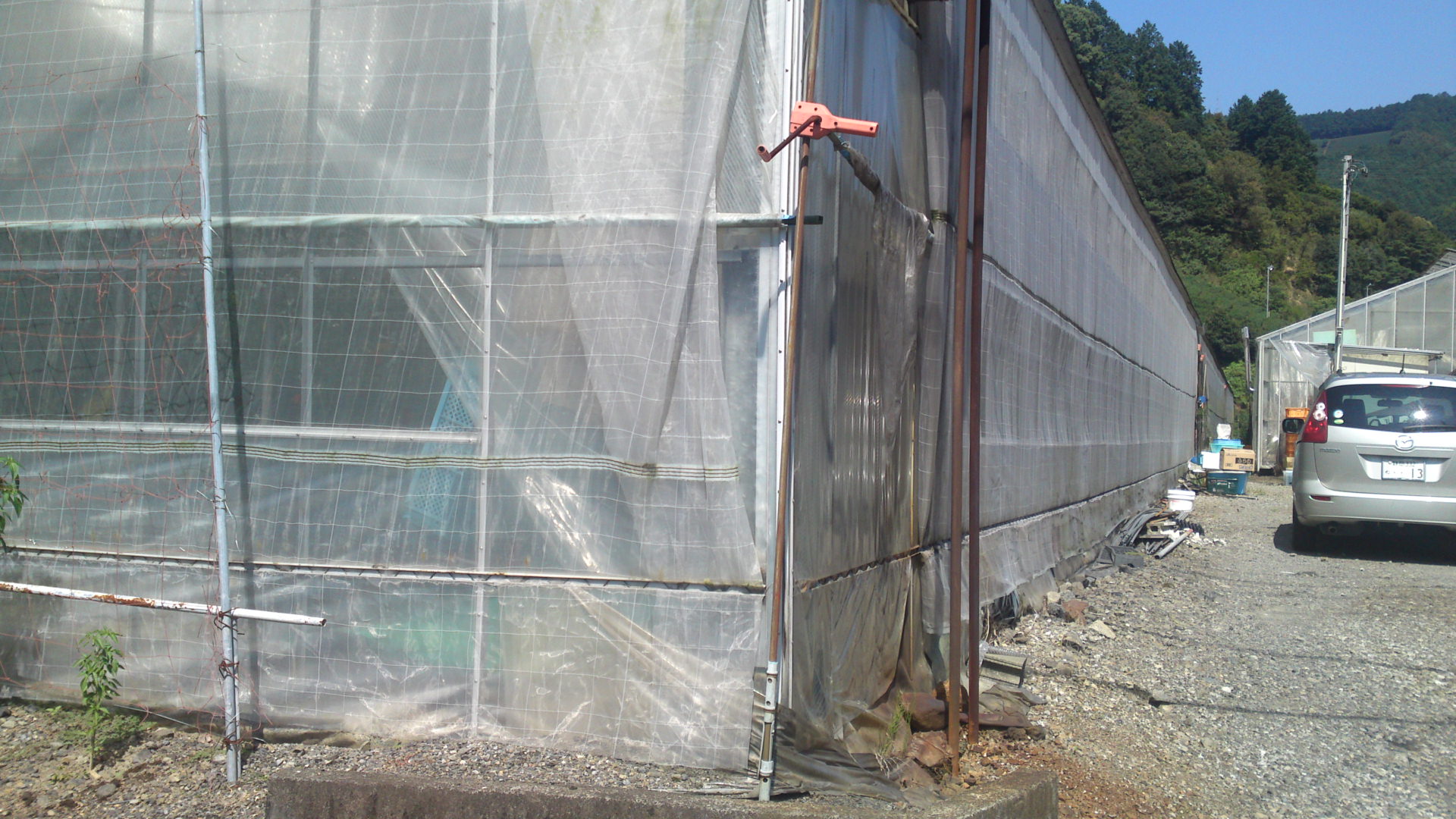
Polyculture: Shigehiko Suzuki at Shige-Chan Garden

Shigehiko Suzuki/鈴木重彦 goes by the nickname “Shige-Chan”, which is also the name of his agricultural enterprise. Actually people have called him simply Shige-chan, a mark of respect from his peers in the local world of agriculture.

As usual On Wednesdays, my good friend Natsuko Koyanagi was on hand to help!

Shige-chan is a polyvalent farmer.
He grows a lot of cress/cresson, a vegetable which has become increasingly popular. He grows it on no less than 220 tsubo/~700 square meters! The above culture is done on “Buckets”.

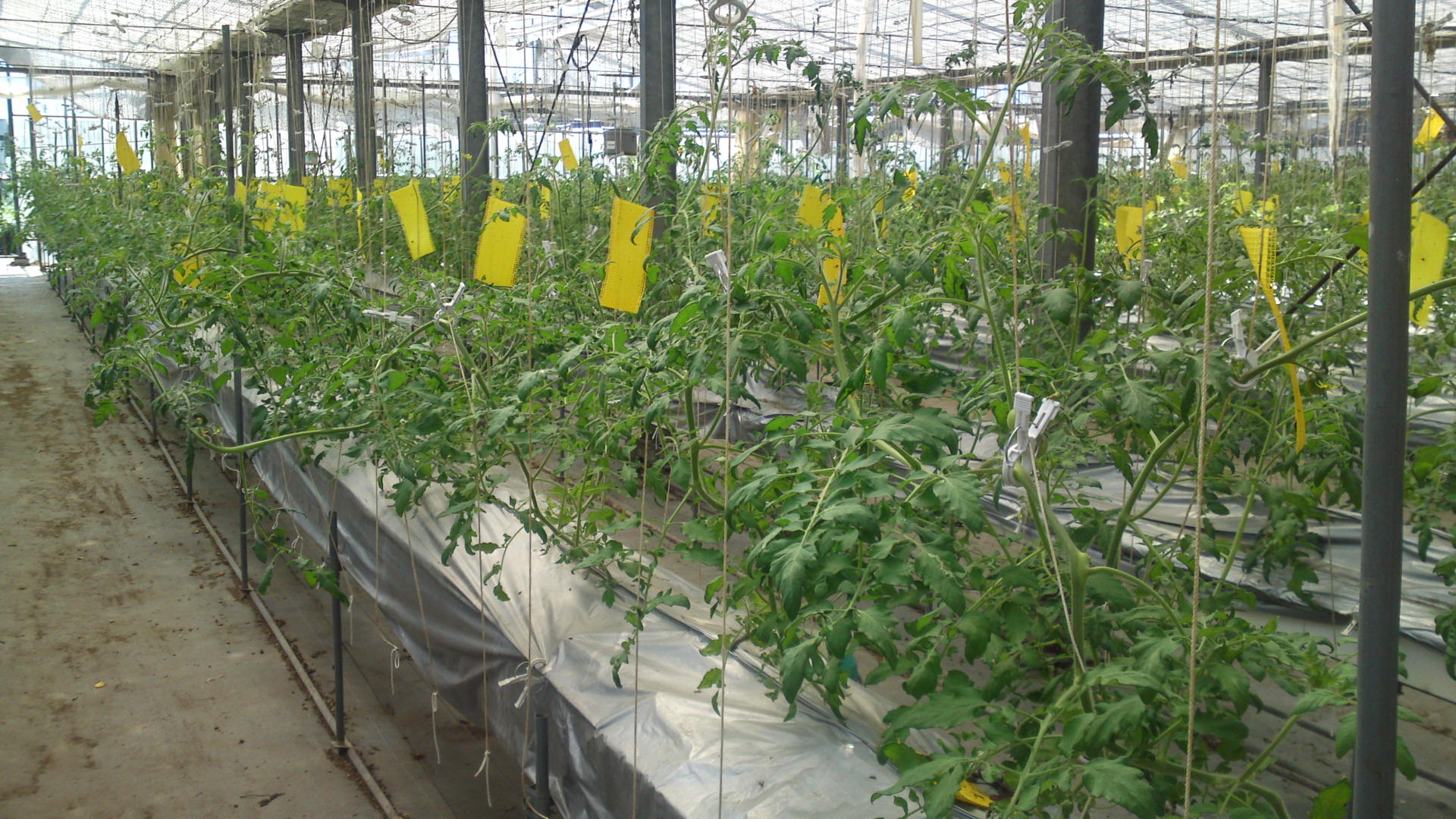
He also grows “Fruitical” tomatoes on 600 more tsubo~2,000 square meters.
All agricultural land is rented!

Although he says that the tomatoes are not up to par in summer, they certainly look beautiful!

The best season is in February but they need great care all year round.
Shige-Chan’s hooby is arm wrestling, so I’m sure he has the stamina!
Would you believe he has only one gentle old lady to help him do all the picking?

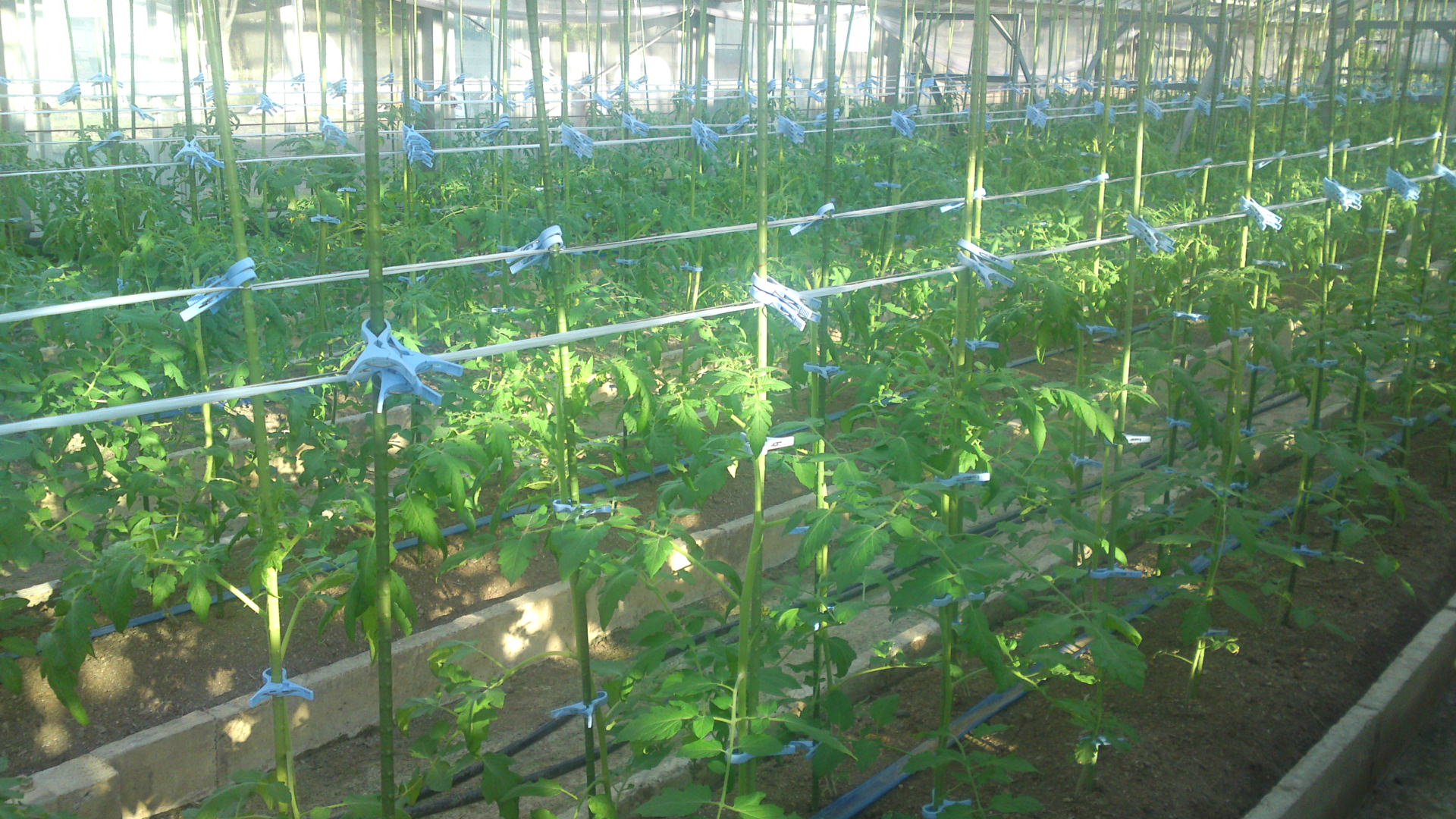
Tomatoes are not attached to poles but kept standing by ropes attached to the “ceiling” of the greenhouses!

It was very hot that day (26 degrees on September 22nd!) and it was even hotter inside!

The gourds seemed to have a good time though!
Shige-chan uses as little pesticides as possiblle and works with his own brand of fertilizers.

And walking between each greenhouse contributed to a lot of lost sweat if not weight!

His other hobby is pisciculture!

This cress is cultivated in “hedge-style”
A central-heating system keeps the temperature above 8~10 degrees in winter while a ventilator systems keep the cress cool in summer.
Incidentally cress must be allowed to flower!

These tomatoes were seeded 6 weeks ago.

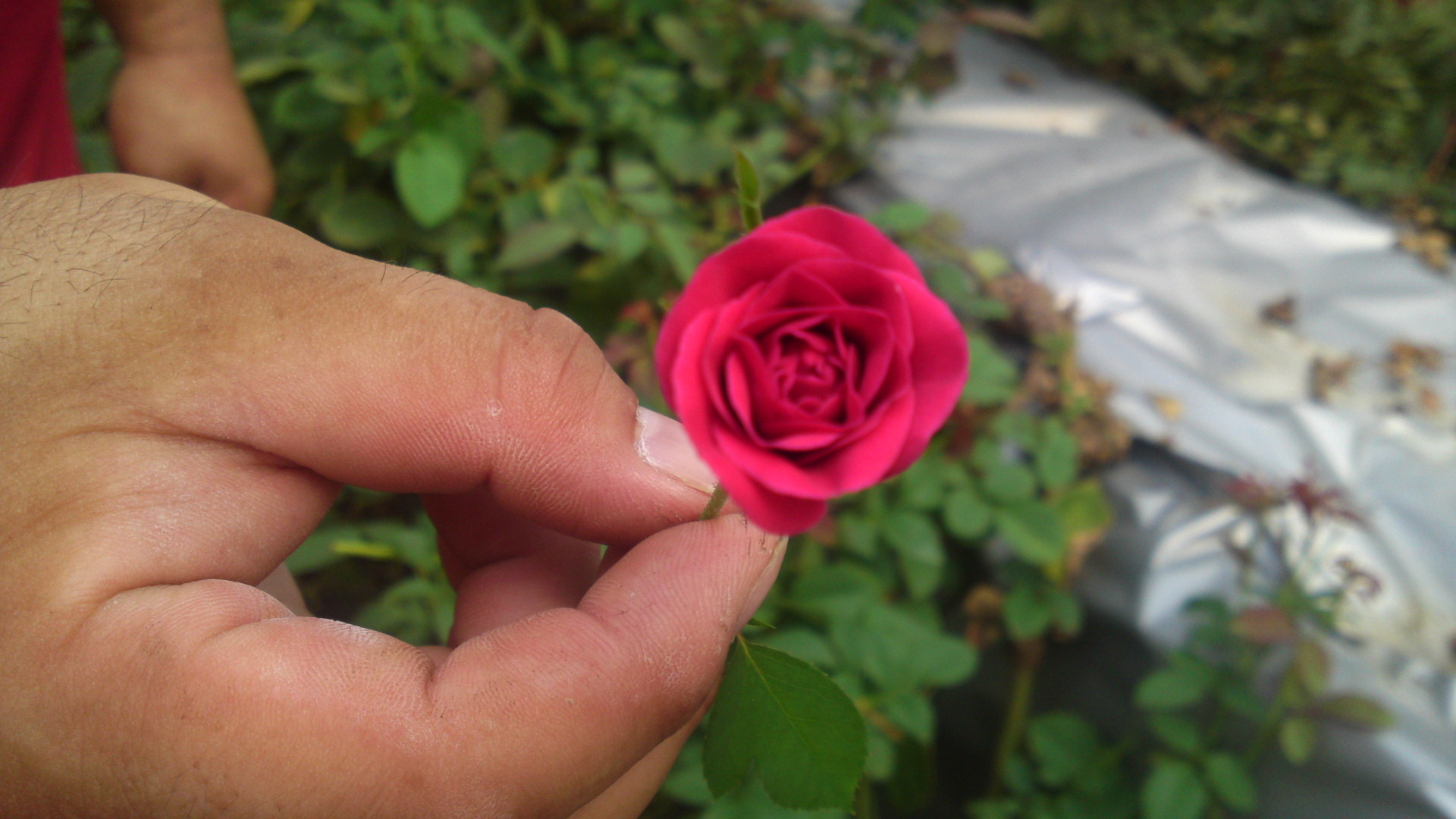
But his very first culture has always been roses for the last 22 years after he finished high school!
Quite a lot of them on 80 tsubos/~260 square meters!

An interesting variety, although

Shige-chan specialises in mini-roses of his own brand.

All roses ae grown in the “arch method” for even culture and straight stems.

Tomatoes ready to be delivered.
Shige-Chan spends every morning of the year (with the sole exception on New Year) from 06:00 t0 11:00 sorting, packaging and sending his tomatoes and cress all over Shizuoka Prefecture and as far as Tokyo!

Tough guy!

Shige-Chan Garden (Mr. Shigehiko Suzuki)
421-2118 Shizuoka City, Aoi Ku, Uchimaki, 1720
Tel.: 090-2773-5182
Fax: 054-207-7268
HOMEPAGE (Japanese
BLOG (Japanese)

RECOMMENDED RELATED SITES:
Warren Bobrow, Bread + Butter, Zoy Zhang, Hungry Neko, Think Twice, Frank Fariello, Mangantayon, Hapabento, Elinluv Tidbit Corner, Tokyo Terrace, Maison de Christina, Chrys Niles,Lexi, Culinary Musings, Wheeling Gourmet, Comestiblog, Chronicles Of A Curious Cook, Tokyo Through The Drinking Glass, Tokyo Foodcast, Palate To Pen, Yellin Yakimono Gallery, Tokyo Terrace, Hilah Cooking, More than a Mount Full, Arkonite Bento, Happy Little Bento; 5 Star Foodie; Jefferson’s Table; Oyster Culture; Gourmet Fury; Island Vittles; Good Beer & Country Boys; Rubber Slippers In Italy; Color Food daidokoro/Osaka;/a; The Witchy Kitchen; Citron Et Vanille, Lunsj Med Buffet/Estonian Gastronomy (English), Cook, Eat, Play, Repeat, Chrisoscope; Jacqueline Church; The Foodonymph (in Dubai!); Alchemy, Simple Ingredients, magical Food (in Ireland!); Curious Foodie; Mr. Foodie (London/UK)

Please check the new postings at:
sake, shochu and sushi

Gardening After Retirement: Yoshizou Sugiyama (1)

I have been observing my neighbour for quite some time, always exchanging daily greetings and a chat now and then for the last 17 years. It seems that all the time I had entertained the wrong impressions about his life past and present although the gentleman had alway been extremely civil with me.

I thought it was about time to have a “real” chat with him. After all, the gentleman had woken me up a few times in the past as early as 6:30 a.m. to offer me some products of his garden, especially red shizo/perilla leaves I’m so fond of!


Spinach

Mr. Yoshizou Sugiyama/杉山芳造 (70) retired at the early age of 53 after scouring the whole of Japan working for Sumitomo Life Insurance. He certainly could afford to retire as he bought land for his new house near my abode.


Just a very few of mr. Sugiyama’s bonsai!

Being born in a local farming family and having an older brother growing rice and tea (he still occasionally gives him a hand), it was only natural that he expanded on his bonsai hobby he had pursued for the last 45 years.


Sato imo/Taro

He first borrowed land from a neighbour to indulge into his gardening hobby as his collection of bonsai did not leave hime any place.
A few ago he finally managed to buy some land next to his home from the local rice grower who had decided to change his field into a much-needed car-park.


Eggplants

The land area is 60 tsubo/~200 square metres. Not much by Western standards, but quite a bit for the Japanese, especially in towns.


Green shiso, leeks, brocoli and more bonsai!

He justly pointed out that real gardening is vastly different from a verandah hobby. He has to use pesticides, although sparingly as he tries to fend off pests with very thin mesh nets.


Fine mesh netting

As for fertilizers, which are unavoidale, he works with a mixture of artificial fertilizer and home-made compost.


The pest trap!

He has also devised his own brand of trap for night pests!


Taiwan tororo

He grows all kinds of vegetables all year round and according to season.
Presently he is tackling Brocoli, Satoimo/Taro, Eggplants, Ha Negi/Leeks, Daikon, Cabbage, Ha Shoga/Stick Ginger, Spinach, Green and Red Shiso/Perilla and a strange kind of Yama Imo/Yam called Taiwan Tororo.


Mukago

He even grows “Mukago”, the fruit of the Yamaimo/Yam!
These do ot come cheap in markets. You can eat them raw, fried, or boiled.

Otherwise you will see him busy at impossibly early hours tending Tomatoes, String beans, Green peas, Lettuce, and what else!

The gentleman has actually proved, in his own poker faced humour, a great source of information that I will have impart into coming articles.

RECOMMENDED RELATED SITES:
Warren Bobrow, Bread + Butter, Zoy Zhang, Hungry Neko, Think Twice, Frank Fariello, Mangantayon, Hapabento, Elinluv Tidbit Corner, Tokyo Terrace, Maison de Christina, Chrys Niles,Lexi, Culinary Musings, Wheeling Gourmet, Comestiblog, Chronicles Of A Curious Cook, Tokyo Through The Drinking Glass, Tokyo Foodcast, Palate To Pen, Yellin Yakimono Gallery, Tokyo Terrace, Hilah Cooking, More than a Mount Full, Arkonite Bento, Happy Little Bento; 5 Star Foodie; Jefferson’s Table; Oyster Culture; Gourmet Fury; Island Vittles; Good Beer & Country Boys; Rubber Slippers In Italy; Color Food daidokoro/Osaka;/a; The Witchy Kitchen; Citron Et Vanille, Lunsj Med Buffet/Estonian Gastronomy (English), Cook, Eat, Play, Repeat, Chrisoscope; Jacqueline Church; The Foodonymph (in Dubai!); Alchemy, Simple Ingredients, magical Food (in Ireland!); Curious Foodie; Mr. Foodie (London/UK)

Please check the new postings at:
sake, shochu and sushi

Shizuoka Agricultural Products: The Nemotos’ Garden

Royichi/良一 and Sumiko/スミ子 Nemoto/根本

It was another one of those blistering days this year’s summer seems intent on inflicting on all of us, citizens or farmers alike.
I already had lost a sizeable amount of liquid when I reached Miwa Agriroad, my regular Wednesday starting point for investigating the local farmers and their products.

Yuyama/湯山 was still a long way away, but my good friend Natsuko Koyanagi/小柳奈津子 and I only had to wait a little while before her husband obligingly delivered his car to us. For all of the locally made chilled lemon and honey drink I had guzzled down, I was really thankful to make the second part of my trip in an air-conditioned car than on my dear bicycle!

The Nemotos are the second generation of that particular farming family.
Their main crops are rice and tea, but that still leaves them with enough time to look after a vast “garden” for extra cash.
Natsuko had called Sumiko Nemoto beforehand , and the dear lady was waiting for us!

Taking pictures and talking to the farmers were a pretty straightforward affair as everything was set as straight as you could hope for. The weather having been dry for a good couple of weeks, no need for boots either. While I was taking the pictures of the egg-plants/aubergines/nasu/茄子 above, the ladies were chatting away, but were always ready to answer questions. They wouldn’t let that city man repeat the same mistakes! LOL

The leeks/negi/葱 did look thirsty!

The hedge of cucumbers/kyuri/胡瓜 had been cleverly placed so as to block a good part of a single side of the garden from the sun and the elements.

These are okra/オクラ, and I’ve learned to appreciate them of late. The Missus chooses them as big as possible before lightly steaming them and then marinate them in the fridge. Make for great appetizers in summer! Have you ever seen their flowers? Beautiful!

Taro/Sato Imo/里芋. The Nemotos actually grow two varieties. I couldn’t see the tubers, but the stems were of two definitely different colours.

While the ladies were busy chattering and I taking pictures, Mr. Nemoto stolidly kept watering the garden. And it certainly needed plenty! He was using a motor pump for it as water is abundant underground.

Aster/アスター

It is not all vegetables in the Nemoto’s garden. Actually many farmers in this vicinity grow flowers, and I can tell you these disappear quickly form the market every morning.
The Nemotos have a special love for Asters, and I agree that they make beautiful flowers!
They also grow Chrysnathemums and daliahs!

Mr. Nemoto kept slowly walking back his hose in hand all the time…

Here’s the grand old chap at last!
I wonder if I might dress like them in summer.
We citizens seem badly protected, whereas Sumiko San in particular seemed to wear half a dozen layers without a sweat!

Bitter melons/Goya/ゴーヤー are not grown in the “warmer” areas of Japan anymore. They are very common in Shizuoka Prefecture where all vegetables and fruit seem to grow. They even grow bananas in nearby Shimizu!

Tomatillo, a Japanese variety.
Except for some specialized farms, these are used more for decoration than food. Very popular with flower arrangement/ikebana/活花 artists!

These are Devil’s Tongue Tubers/Konnyaku/コニャク. The Japanese love these “tubers” to make a kind of jelly. Very popular with vegetarians and people on a diet!

Talking to the farmers has definitely become a pleasure. There are always little stories to listen to and so much to learn!
And like many farmers all over the world, they are generous and proud of their work.
I shouldn’t tell you maybe, but I always end up with a batch of vegetables!
“Did you bring your ecobag?”, Natsuko asked me again with a laugh.
I wouldn’t have forgotten it, although this sounds like using these nice people.
To cut a story short, I ended up with enormous egg plants, small and juicy goya, okra straight as arrows, but then I had to stop them!

Nemotos’ Garden
Shizuoka City, Aoi Ku, Yuyama, 1898
Tel.: 054-2941325

RECOMMENDED RELATED SITES:
Warren Bobrow, Bread + Butter, Zoy Zhang, Hungry Neko, Think Twice, Frank Fariello, Mangantayon, Hapabento, Elinluv Tidbit Corner, Tokyo Terrace, Maison de Christina, Chrys Niles,Lexi, Culinary Musings, Wheeling Gourmet, Comestiblog, Chronicles Of A Curious Cook, Tokyo Through The Drinking Glass, Tokyo Foodcast, Palate To Pen, Yellin Yakimono Gallery, Tokyo Terrace, Hilah Cooking, More than a Mount Full, Arkonite Bento, Happy Little Bento; 5 Star Foodie; Jefferson’s Table; Oyster Culture; Gourmet Fury; Island Vittles; Good Beer & Country Boys; Rubber Slippers In Italy; Color Food daidokoro/Osaka;/a; The Witchy Kitchen; Citron Et Vanille, Lunsj Med Buffet/Estonian Gastronomy (English), Cook, Eat, Play, Repeat, Chrisoscope

Please check the new postings at:
sake, shochu and sushi

French Cuisine: Shizuoka Organic Tomato Appetizer at Pissenlit

Service: excellent and very friendly
Facilities: great washroom, great cleanliness overall
Prices: reasonable, good value.
Strong points: Interesting wine list. Great use of local products.
no-smoking-logo!

As mentioned before, Shizuoka Prefecture is famous all over the country for its tomatoes, especially organic and sweet.
These turn easily into real fruit (as they should be), and I just don’t count how many I eat back home just to refresh myself!

Mr. Tooru Arima had finally announced on his menu board outside his restaurant that he received those great sweet tomatoes gron by Mr. Ishitani In Hamamatsu City!

It was very easy to convince the Missus to sample them!

The dish we were served could be classified under many appellations as it could be considered as an apetizer, a salad or even a dえssert.

Mr. Arima placed quarters of tomatoes around the centre surmounted with mozarella slices and organic greens and basil pesto.
The vinigrette was more a kind of gaspacho made of fine olive oil, juice/coulis for the tomatoes and other seasoning!

The whole concept became very interesting with (same) tomato jelly in the very centre, soft and light, with a topping of (same) omato sherbet!

The perfect appetizer for thirsty customers in scorching summer!

PISSENLIT
420-0839 Shizuoka City, Aoi Ku, Takajo, 2-3-4
Tel.: 054-270-8768
Fax: 054-627-3868
Business hours: 11:30~14:30; 17:00~22:00
Closed on Tuesdays and Sunday evening
Homepage (Japanese)
Credit Cards OK

RECOMMENDED RELATED SITES:
Warren Bobrow, Bread + Butter, Zoy Zhang, Hungry Neko, Think Twice, Frank Fariello, Mangantayon, Hapabento, Elinluv Tidbit Corner, Tokyo Terrace, Maison de Christina, Chrys Niles,Lexi, Culinary Musings, Wheeling Gourmet, Comestiblog, Chronicles Of A Curious Cook, Tokyo Through The Drinking Glass, Tokyo Foodcast, Palate To Pen, Yellin Yakimono Gallery, Tokyo Terrace, Hilah Cooking, More than a Mount Full, Arkonite Bento, Happy Little Bento; 5 Star Foodie; Jefferson’s Table; Oyster Culture; Gourmet Fury; Island Vittles; Good Beer & Country Boys; Rubber Slippers In Italy; Color Food daidokoro/Osaka;/a; The Witchy Kitchen; Citron Et Vanille, Lunsj Med Buffet/Estonian Gastronomy (English), Cook, Eat, Play, Repeat, Chrisoscope

Please check the new postings at:
sake, shochu and sushi

Egg Farm in Shizuoka City: Bi-Ou-Ran (Part 2)

Mr. Shigeru Shimizu/清水茂

As explained in my previous article I was back on the bicycle trail on Saturday with the difference was that I reached the place in record time in spite of the oppressive heat!

I wonder how many tonnes of feed are contained in these silos and accordingly, how many birds are inside the coops!
After all, the whole place covers no less than 1,500 tsubos (4,300 quare meters), big for a single producer in Japan!

The whole complex is surrounded by a tall hedge to protect it from the wind and help control the ambiant temperature.

Incidentally, I noticed that the silos were also protected against the variations of temperature.

I finally found the real entrance to the compound which opens at the very back, away from unknown eyes!

I quickly met Mr. Shimizu who asked me to wait for a while as he was busy with a small emergency. He offered me to stay inside in the cool, but I declined as snooping around is a bad habit of mine!LOL
It is located very much in the middle of the nature with a beautiful mountain background.

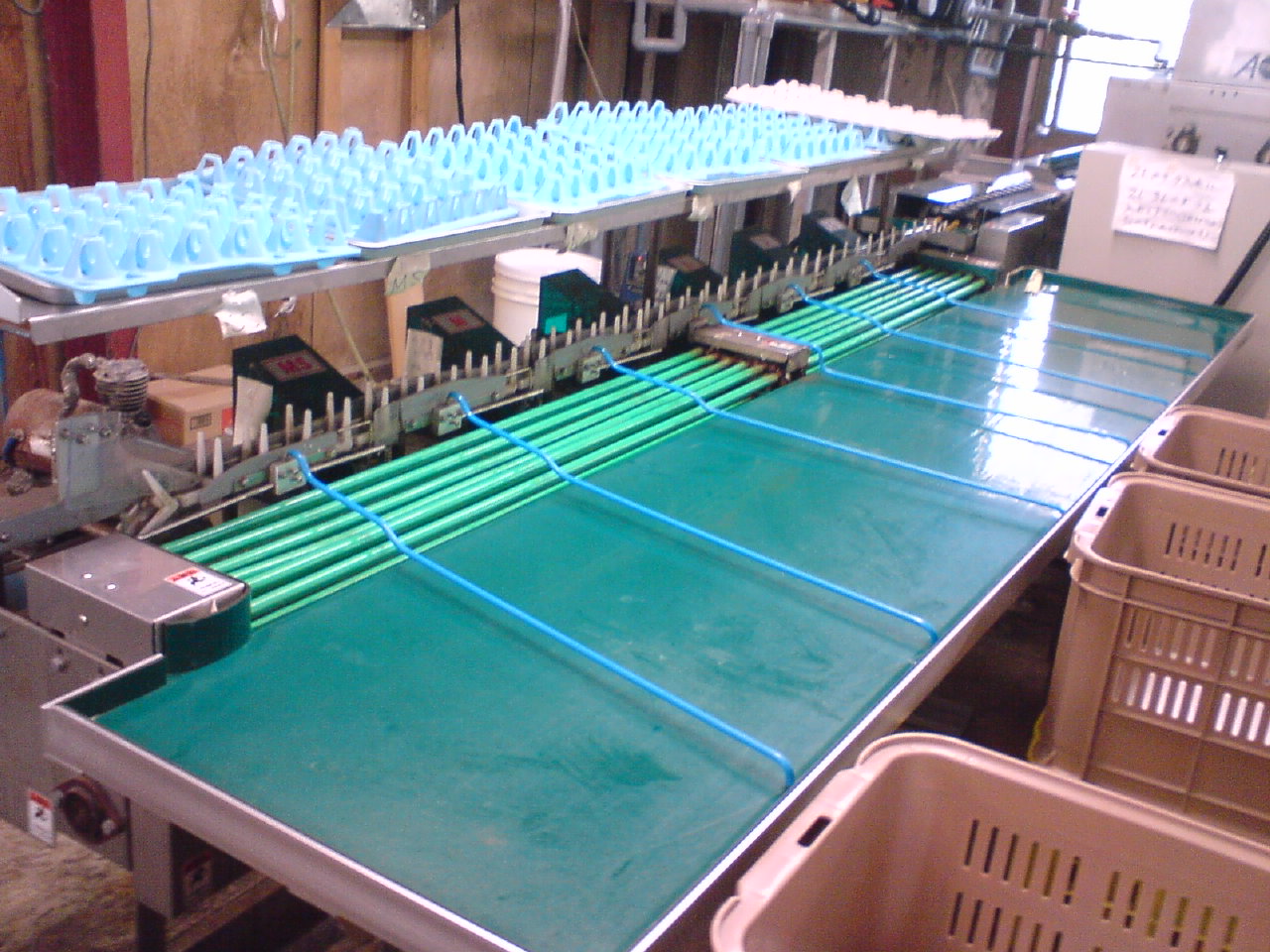
Hand egg-calibrating machine.

I was finally admitted inside, and knowing we were limited in time, I started firing questions.

-When was the egg farm founded?
-1996

-How long have you been actually working in the business?
-Let’s see. I’m 57. I started at 25. 32 years!

-When were you awarded a brand name for your eggs?
-In 1996 (that was quick!).

-How many hens (no cockerel needed whatsoever. I didn’t know!)?
-14,000 (geez!).

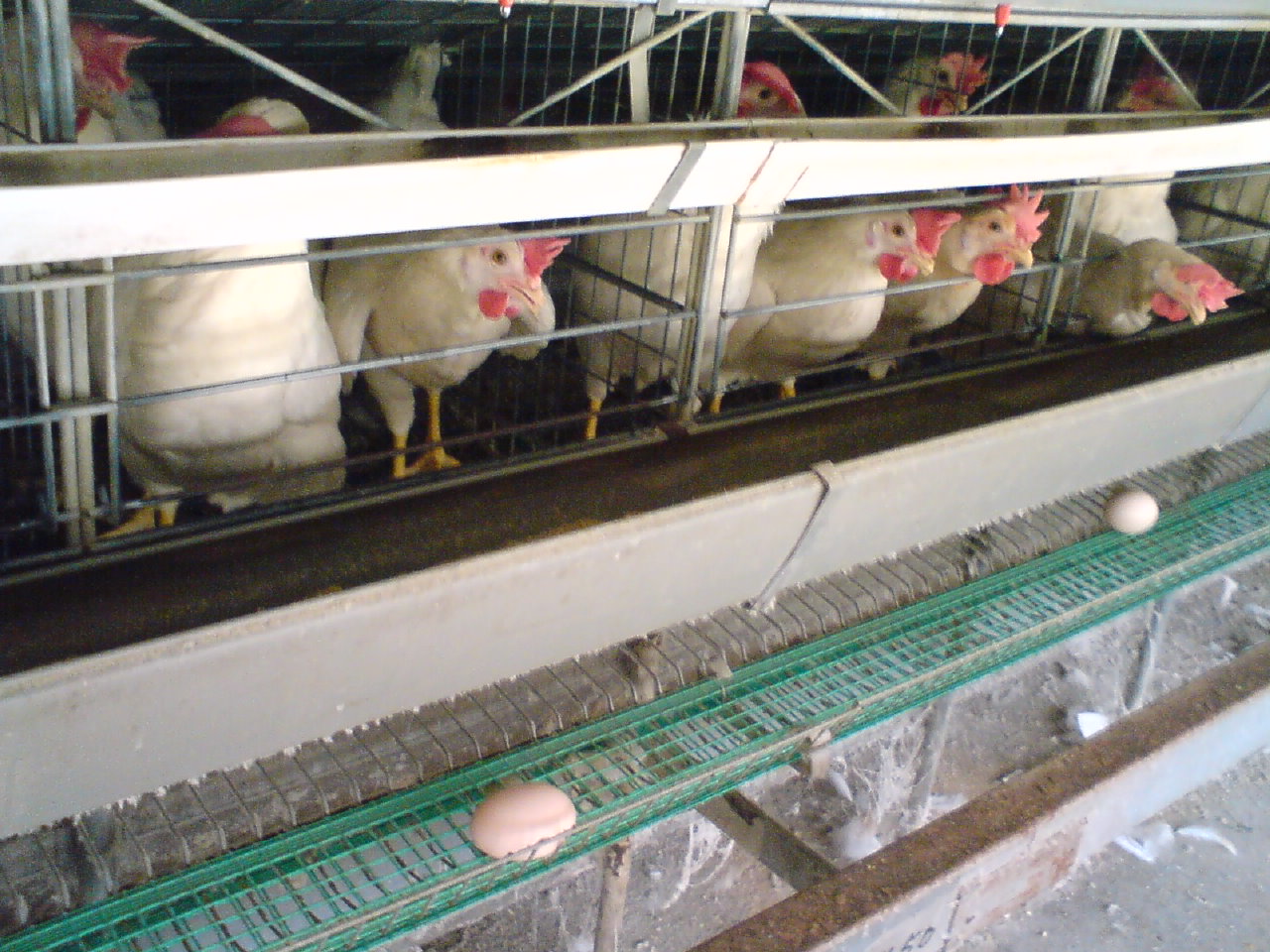
I had trouble keeping my hands off these beauties.

-Then how many eggs do you produce a day?
-About 1,200, but that’s little compared to industrial farms. We strive for quality, not quantity (even so, that’ s a lot to me!). We expect each to produce between 280 and 300 eggs.

-You need quite some staff, then?
-We are 10 in all. That’s enough, although we do have to work in shifts (that was said with a knowing smile, meaning Mr. Shimizu was working all day!).
-How long lasts a working day, then?
-7:00 to 7:00, 12 hours. The hens have to sleep. No forced laying here! (good to know!)

-How do you grade your eggs?
-By size first, into 7 different sizes. The largest are reserved for cake-shops and restaurants. The shell quality has to be the same, and the only way to check it is by touch, sight and experience.

-How many kinds of hens do you breed?
-Two only, Sakura and Momiji. It is enough since we strive for only one kind of yolk, whatever the color of the shell.

-That is a lot of hens, still. How long is their life span?
-As far as the egg-laying season is concerned, only one year. Which means an almost constant turn over. Even so, the hens have to be regulary vaccinated after we get the chicks from a designated hatchery. There are many keys to producing a good product (I didn’t have to ask the questions, as Mr. Shimizu warmed up to the subject. I had told him I was born in the country, and that the questions would not be too general, although I would be careful not to delve in trade secrets!):
The hens must naturally stay healthy. We personally check them everyday. This is not an industrial farm where productivity is placed above the animals’ comfort. They are actually penned in smaller numbers than usual.

Interestingly enough, the hens were not nervous at all. Their crests looked so healthy!

-How do you dispose of the droppings?
-Mixed with other ingredients, they will become fertilizer we sell to local farmers.
-Almost organic, then?
-Yes, almost.
-What about the hens which die on the way?
-We ask a specialized disposal company to take care of them.
-What do you do with the hens after the year has elapsed?
-We sell them to a specialized butcher.
-For how much?
-5 yen per head.
-That’s not much, isn’t it?
-You are telling me!

-What kind of feed do you nourish them with?
-A recipe of our own only.
Mr. Shimizu handed me then a pamphlet with all the ingredients clearly stated. I counted no less than 22, 12 of them not found in industrial egg farms. Enumerating them would be fastidious but I have kept the pamphlet for your questions. It is certainly impressive! At least I can affirm that the corn used is not GM and that some ingredients include garlic and paprika!

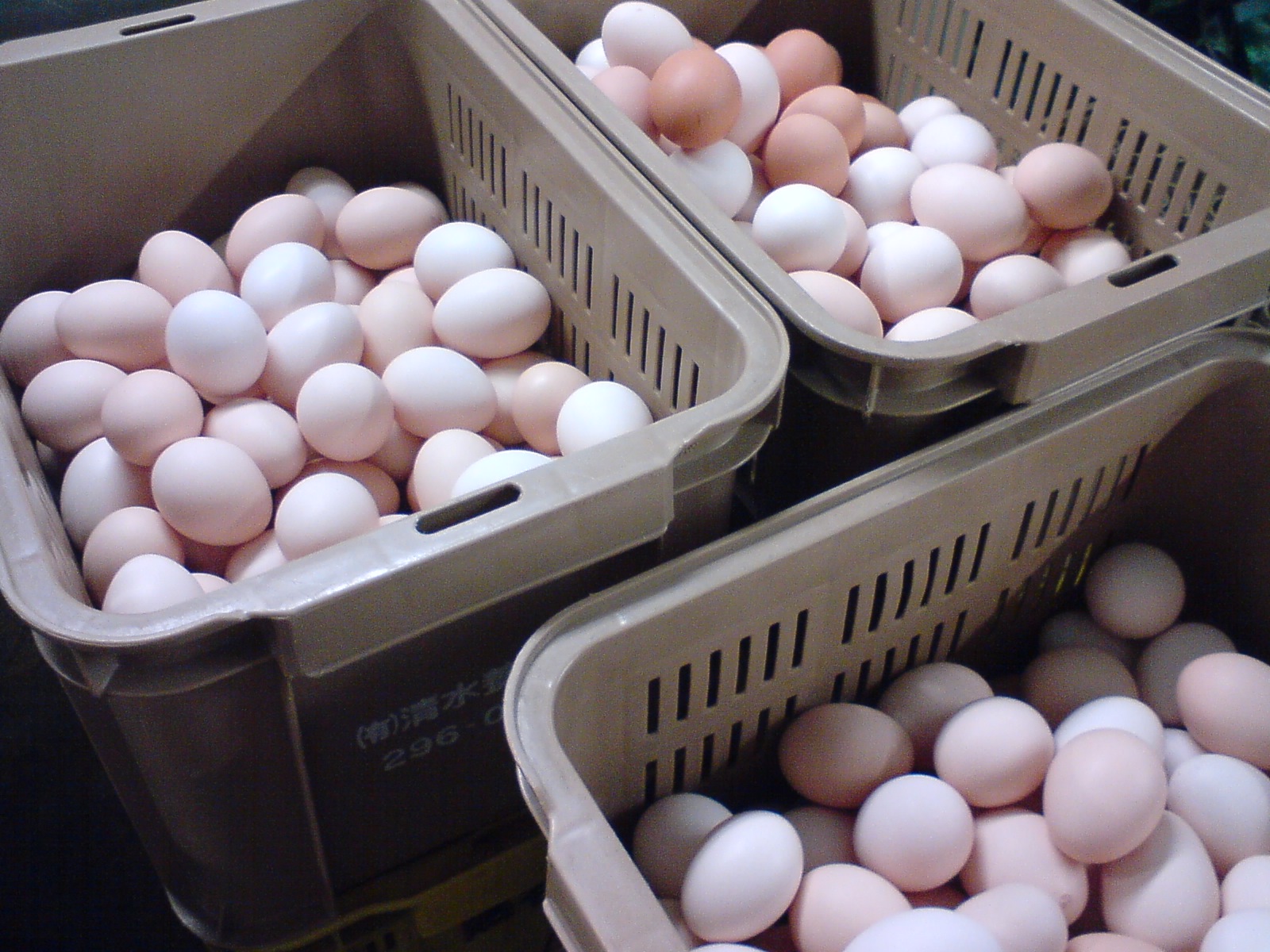
The egss! I came too late. They had already been collected!
One thing is for sure: a soft shell wouldn’t take that shock. No wonder Mr. Shimizu’s eggs are so popular!

The eggs are transported in a cute van!

Mr. Shimizu delivers his eggs to no less than 21 main distributing shops and to no less than 40 restaurants and cake shops. I counted them, but I’m pretty sure they do not include special customers!

The sign to the original shop!

Please remind me I have to buy some for the Missus’ tamagoyaki!

Bi-Ou-Ran
Shimizu Chicken Farm
421-2112, Shizuoka City, Aoi Ku, Endo Shinden, 41-3
Tel.: 054-296-0064

RECOMMENDED RELATED SITES:
Warren Bobrow, Bread + Butter, Zoy Zhang, Hungry Neko, Think Twice, Frank Fariello, Mangantayon, Hapabento, Elinluv Tidbit Corner, Tokyo Terrace, Maison de Christina, Chrys Niles,Lexi, Culinary Musings, Wheeling Gourmet, Comestiblog, Chronicles Of A Curious Cook, Tokyo Through The Drinking Glass, Tokyo Foodcast, Palate To Pen, Yellin Yakimono Gallery, Tokyo Terrace, Hilah Cooking, More than a Mount Full, Arkonite Bento, Happy Little Bento; 5 Star Foodie; Jefferson’s Table; Oyster Culture; Gourmet Fury; Island Vittles; Good Beer & Country Boys; Rubber Slippers In Italy; Color Food daidokoro/Osaka;/a; The Witchy Kitchen; Citron Et Vanille, Lunsj Med Buffet/Estonian Gastronomy (English), Cook, Eat, Play, Repeat, Chrisoscope

Please check the new postings at:
sake, shochu and sushi

Shizuoka Agricultural Products: The Yamaguchis’ Benihoppe Strawberry Fields (end of July)

“Benihoppe” or “Red Cheeks” strawberries is a cultivar which was successfully developped no later than in 2002 in Shizuoka Prefecture. It has since been voted as the best-balanced strawberry in Japan, and Izu Peninsula being near Tokyo, we do not see too many of our fruit on our own market stands!

Now, by sheer coincidence a university student of mine, Haruka Yamaguchi/山口春香, just happened to come from a family, based in Nirayama located in the newly named Izu No Kuni City/伊豆の国市, who have switched to the growing of Benihoppe Strawberries as soon as their cultivar was made available through their cooperative!

To make things even easier, Mr. Izuzawa/伊豆沢秀慶, belonging to the government-sponsored local JA (Japan Agriculture) office, was there on hand to provide me with piles of welcome information. Mind you, I had done a bit of preparation as I had asked Haruka to distribute some business cards to the local farming community!

Mitsuo/光雄 and Tamako/玉子 Yamaguchi are the second generation of strawberry growers in their family. Strawberry culture is big in that particular area as it counts no less than 187 registered farms!
The Yamaguchis’ plot covers 1,500 tsubo (4,500 square meters), a fairly sizeable land in this country, and I don’t include other pieces of land here and there they use for re-planting and so on!
As I said, they switched from Akihime Strawberries to Benihoppe Strawberries as soon possible, and this was certainly a good move.
They employ 3 people on a permanent basis and a couple more at harvest time.

Strawberry culture is more complicated than it looks at first, and I didn’t realize how much I would have to go through (and more later) through this interview.
Abroad, for purposes of commercial production, plants are propagated from runners and, in general, distributed as either bare root plants or plugs. Cultivation follows one of two general models, annual plasticulture or a perennial system of matted rows or mounds. A small amount of strawberries are also produced in greenhouses during the off season.
Now, the Japanese seem to do all that at the same time.
End of March every year the original strawberry seedlings are first acquired from Cooperative nurseries and planted under into a “parent soil”.
Runners are encouraged to developped and are re-planted in small elongated pots called “Nira” (as of Nirayama) pots, an idea locally developped.

Interestingly enough, the “nira” pots are not filled with soil, but with a mixture of peat moss and shredded palm fronds and some fertilizer.

The fertilizer is “IBSI 1” sold at the Cooperative. The Yamaguchis were kind enough to show me a bag of it and

its contents. If one can manipulate it with bare hands (Mrs. Yamaguchi’s in this case) there is little doubt the fertilizer is easy on the environment!

The runners are encouraged onto new seedlings into at least 3 successive “nira” pots.

The strawberry plants will be cultivated separately in open air until the middle of August.

Then the vynil covers will be drawn over the greenhouses and ventilators will reduce the temperature as low as 15~18 degrees Celsius to “trick” the strawberries into believing thay are back into winter.

This is the easy way…
Until 15 years ago, when giant refrigerating ventilators were not used, all the seedlings had to be carried by truck up on the slopes of Mount Fuji as high as the Second Trek Station!

By the middle of September, one seedling will be completely cut out and examined to decide whether the time is ripe for re-planting in real soil inside greenhouses.

The greenhouses are already being prepared and this does involve more work and costly specialized equipment.

The method will then be more traditional with plasticulture system. In this method, raised beds are formed each year, fumigated, and covered with plastic to prevent weed growth and erosion.
Holes will be opened for individual re-planting.

The greenhouses along the road crossing the rice paddies.

Harvesting will start in November and lasts until May with up to 6 peaks.

But that is for the next report!

Yamaguchi Benihoppe Strawberry Farm
410-2114, Izu no Kuni, Nan-jo, 8
Tel.: 055-949-2330

RECOMMENDED RELATED SITES:
Warren Bobrow, Bread + Butter, Zoy Zhang, Hungry Neko, Think Twice, Frank Fariello, Mangantayon, Hapabento, Elinluv Tidbit Corner, Tokyo Terrace, Maison de Christina, Chrys Niles,Lexi, Culinary Musings, Wheeling Gourmet, Comestiblog, Chronicles Of A Curious Cook, Tokyo Through The Drinking Glass, Tokyo Foodcast, Palate To Pen, Yellin Yakimono Gallery, Tokyo Terrace, Hilah Cooking, More than a Mount Full, Arkonite Bento, Happy Little Bento; 5 Star Foodie; Jefferson’s Table; Oyster Culture; Gourmet Fury; Island Vittles; Good Beer & Country Boys; Rubber Slippers In Italy; Color Food daidokoro/Osaka;/a; The Witchy Kitchen; Citron Et Vanille, Lunsj Med Buffet/Estonian Gastronomy (English), Cook, Eat, Play, Repeat, Chrisoscope

Please check the new postings at:
sake, shochu and sushi

Shizuoka Agriculture Portal: Agrigraph

AgriGraph Japan is an enterprise commissioned by Shizuoka Prefecture.
It is a project aiming at making the agriculture (and also tourism, esppecially green tourism) in Shizuoka Prefecture known to the whole world in real time through IT-related tools.

Shizuoka Prefecture is a region blessed with nature thanks to its famous mountains such as Mount Fuji and the Southern Alps to the north, its rich sea to the south, and also with a great economy due to its privileged location along the east-west axis from Tokyo to Nagoya and Osaka.

Therefore, no less than five reporters will scour the whole Prefecture every day in an endeavor to help everyone discover the agriculture and rural villages of this rich “Fuji no Kuni Shizuoka/Shizuoka, the Land of Mount Fuji” through live blogs posted through iPhone in Japanese and immediately delivered in English, Chinese, Korean, French and Portuguese by qualified native staff translators to convey the true meaning and nuances of the reports. No automatic translation whatsoever!

If you wish to promote your own agriculture and farm(s) and create a new relation with other producers abroad, do please join us through our interactive blogs as guest participants. All blogs about agriculture from any country are most welcome!

Check the following links:

AGRIGRAPH (Entry Homepage with acces to all articles and languages)

AGRIGRAPH ENGLISH BLOG

AGRIGRAPGH FRENCH BLOG (FRANÇAIS)

AGRIGRAPH PORTUGUESE BLOG (PORTUGUÊS)

AGRIGRAPH KOREAN (관하여)

AGRIGRAPH CHINESE (中文)

RECOMMENDED RELATED SITES:
Warren Bobrow, Bread + Butter, Zoy Zhang, Hungry Neko, Think Twice, Frank Fariello, Mangantayon, Hapabento, Elinluv Tidbit Corner, Tokyo Terrace, Maison de Christina, Chrys Niles,Lexi, Culinary Musings, Wheeling Gourmet, Comestiblog, Chronicles Of A Curious Cook, Tokyo Through The Drinking Glass, Tokyo Foodcast, Palate To Pen, Yellin Yakimono Gallery, Tokyo Terrace, Hilah Cooking, More than a Mount Full, Arkonite Bento, Happy Little Bento; 5 Star Foodie; Jefferson’s Table; Oyster Culture; Gourmet Fury; Island Vittles; Good Beer & Country Boys; Rubber Slippers In Italy; Color Food daidokoro/Osaka;/a; The Witchy Kitchen; Citron Et Vanille, Lunsj Med Buffet/Estonian Gastronomy (English), Cook, Eat, Play, Repeat, Chrisoscope

Please check the new postings at:
sake, shochu and sushi