Tag Archives: 静岡

Wild Table visits Hunt’s Point Wholesale Fish Exchange in the Bronx-NY. by Warren Bobrow

You thought that Tsukiji in Tokyo was the one destination to see all the best fish in the world packed into one location!
You will have to think again!LOL

Join Warren Bobrow, Contributing Editor at Wild River Review, on Wild Table visits Hunt’s Point Wholesale Fish Exchange in the Bronx-NY. and leave your comments to encourage him to do even more!

A must-read!

RECOMMENDED RELATED SITES:
Bread + Butter, Comestilblog, Greedy Girl, Bouchon For 2, Zoy Zhang, Hungry Neko, Mangantayon, Elinluv Tidbit Corner, Maison de Christina, Chrys Niles, Lexi, Culinary Musings, Eats and Everything, Bite Me New England, Heather Sweet, Warren Bobrow, 5 Star Foodie, Frank Fariello, Oyster Culture, Ramendo, Alchemist Chef, Ochikeron, Mrs. Lavendula, The Gipsy Chef, Spirited Miu Flavor, Wheeling Gourmet, Chef de Plunge, Sushi Nomads, Island Vittles, Jefferson’s Table

Please check the new postings at:
sake, shochu and sushi,
—————————————-
日本語のブログ
—————————————-

Takuan/Japanese Pickled Daikon: Basic Recipe/ Pickle de radis japonais : Takuan !

French version down

Takuan (沢庵), also known as takuwan or takuan-zuke, is a popular traditional Japanese pickle. It is made from daikon radish. In addition to being served alongside other types of tsukemono/Japanese-style pickles in traditional Japanese cuisine, takuan is also enjoyed at the end of meals as it is thought to aid digestion.

Takuan is made by first hanging a daikon radish in the sun for a few weeks until it becomes flexible. Next, the daikon is placed in a pickling crock and covered with a mix of salt, rice bran, optionally sugar, daikon greens, kombu/Dry seaweed, and perhaps chilli pepper and/or dried persimmon peels/even flowers for colouring. A weight is then placed on top of the crock, and the daikon is allowed to pickle for several months. The finished takuan is usually yellow in colour, although most mass-produced takuan rely on food coloring for this effect.

Takuan is popular also in South Korea, and is called danmuji (단무지). It is used as a filling for gimbap, or as an accompaniment to Korean dishes, typically jajangmyeon.

Here is a simple basic recipe to make when you get hold of plenty cheap daikon. Since it is vegan in nature, it shoild please everyone!
Check the extra recipe for ideas!

INGREDIENTS: Bear in mind that the bigger the batch, the better!

-Daikon: 10~15 with their leaves!
-Rice bran: 15 % of the dried daikon weight
-Salt: 6% of the dried daikon weight
-Brown Sugar: half a tablespoon
-Chili pepper: half one, chopped, fresh
-Konbu/dry seaweed: 3~5 cm piece chopped thin
-Fruit peel (persimmon, orange according to colour): 2 fruits
-White sugar: 1 tablespoon per daikon

FIRST RECIPE:

Wash the daikon with their leaves. It is important to dry them with their leaves as to prevent a loos in quality. Place them to dry in a spot well exposed to the sun and wind. Let them dry for 1~2 weeks. Bring them inside at night if you think morning dew will come on them!
They will be ready the moment they bend easily.

-Wipe daikon with a clean towel.
Weight the daikon then and prepare rice bran (15% of daikon weight) and salt (6% of daikon weight).

-Cut the leaves with the end of the daikon. Cut enough of the daikon so that the leaves hold together. Put leaves aside. You will use them later!

-Put each daikon (work on one at a time) on a working table. Roll it by solidly pressing your palms on the daikon all along its length to soften evental hard spots and even the humidity inside.

-In a separate bowl pour in the rice bran, salt, brown sugar, chopped konbu/seaweed, chopped chili pepper and white sugar. Mix well.

-Use a large pickles jar/bucket.
First line the bottom with some of the pickle mixture.
Line a first layer of daikon, leaving as little sapce between as possible.
Sprinkle with pickle mixture.
Fill any space left with the daikon leaves.
Repeat same procedure with the rest of the daikon.

-Line the top with the remaining daikon leaves.
Press down with your hands, putting all your weight behind your hands.
Sprinkle some extra salt over the top to prevent mold from forming.

You can use a special pickle vat as in picture above and screw down the lid for maximum pressure.
If you uve a normal vat, plce a clean wooden or plastic circle on top of the daikon and lay a weight/stone at least 3 times the weight of the daikon.
In the latter case cover with newspaper and a lid to prevent any dust insid.e

-Pickle for 4 weeks in winter, or 3 weeks in summer.
Clean them quickly in clean cold running water before cutting and serving them!

SECOND RECIPE: Traditional but the process is the same!

INGREDIENTS:

-1) Dried daikon: 12 kg
-2) Rice bran: 1.5 kg
-3) Salt: 720 g
-4) Kaki/Persimmon (frozen): 5~6
-Chili peppers: 10 (cut in halves9
-Konbu/seaweed: 40 cm (to be chopped)

Look at the pictures, the process is the same!

Drying
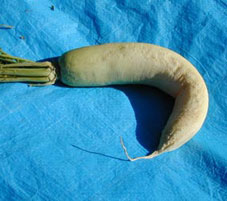
Soft enough to bend

Cutting the leaves away

Pickle mixture

Pickle mixture added with kobu, chili peppers and persimmons

Fitting the daikon in tightly

Covering with the pickle mixture

Covering with the leaves

Putting the weights on top!
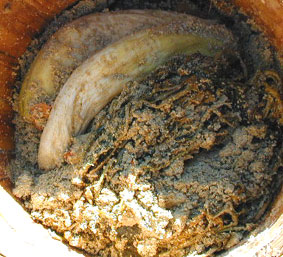
Two months later.
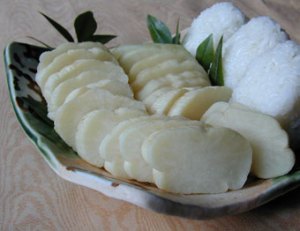
Washed, cut and served!

Le Takuan (沢庵), aussi appelé takuwan ou takuan-zuke est un pickle traditionnel japonais courant ! Il est fait à partir de radis japonais daikon et est servi avec d’autres légumes vinaigrés dans les plats traditionnels japonais. On peut aussi le consomme en fin de repas étant donné qu’il est réputé pour favoriser la digestion !

Tout d’abord il vous faudra suspendre le radis au soleil pendant quelques semaines pour qu’il soit plus maléable, ensuite il faudra le placé dans un pot de fermentation recouvert d’un mélange de sel, de son de riz, et à votre goût du sucre, d’algue kombu ou autre algue séchée ou du piment, de la peau de kaki et même des fleurs qui donneront de la couleur à votre ouvrage ! La plupart des takuan utilisent la couleur comme argument de vente !

On trouve le Takuan en Corée du Sud sous le nom de danmuji (단무지) souvent utilisé comme garniture pour le gimbap ou en accompagnement d’autres plats tels que le jajangmyeon.

Voici une recette simple et utile si vous mettez la main sur plein de daikon, ou alors les obtenez à bon prix !. Une recette végétarienne qui devrait vous donner des idées.

INGREDIENTS: Gardez à l’esprit que plus c’est gros, mieux c’est !

-Daikon: 10~15 avec leurs feuilles!
-Son de riz: 15 % du poids des daikon
-Sel: 6% du poids des daikon secs
-Sucre brun: la moitié d’une cuillère à soupe
-Piment: Une demi piment frais et haché
-Konbu/algue sèche: 3~5 cm haché finement
-Peua de fruits : (selon la couleur que vous voudrez, kaki ou orange): 2 fruits
-Sucre blanc: 1 cuillère à soupe par légume

Première recette :

Lavez le daikon avec ses feuilles. Il est important qu’ils soient séchés avec le feuilles pour ne pas qu’ils perdent en qualité. Mettez-les dans un un endroit sec et bien exposé au soleil et au vent. Laissez les sécher pendant une ou deux semaines. Ramnez les dans l’intérieur de la maison pendant la nuit si vous pensez que la rosée va les endommager ! Ils seront considérés comme prêts une fois que vous pourrez les plier facilement.

Essuyez-les avec un linge propre et pesez-le pour faire en sorte que le son de riz en pèse 15 pour cent et 6 pour cent de sel.

Coupez les feuilles à l’extrémitié du daikon. Coupez-le assez pour que les feuilles restent liées entre elles et gardez-les de côté pour une utilisation ultérieure.

Mettez chaque daikon (maniez-en un seul à la fois) sur un plan de travail. Roulez-le fermement avec vos paumes et sur toute sa longueur pour ramollir les nœuds un peu trop durs et en retirer l’humidité.

Dans un récipient séparé, mettez le son de riz, le sucre brun, les algues hachées finement, les piments et le sucre blanc. Mélangez bien.

Prenez ensuite un gros récipient, et au premier étage mettez vos pickles en faisant en sorte que ce premier étage ait peut d’espace entre ses pickles. Saupoudrez-le avec la mixture et remplissez les espaces avec les feuilles. Refaire cette procédure avec tous les daikons que vous avez sous la main.

Couvrez le dessus avec le reste de vos feuilles de daiko, et appuyez de tout votre poids. Saupoudrez de sel pour éviter la moisissure.

Vous pouvez utiliser un accessoir pour pickles comme celui ci-dessus pour un maximum de pression, il suffira de placer un bout de bois propre ou de plastique au dessus des daikons ainsi qu’une pierre d’environs trois fois le poids des radis japonais ! Dans ce cas il faudra couvrir avec des journaux pour bloquer l’entrée de particules étrangères.

-Pickle for 4 weeks in winter, or 3 weeks in summer.
Clean them quickly in clean cold running water before cutting and serving them!

Laissez fermenter tout ce beau monde 4 semaines en hiver et 3 en été. Nettoyez les ensuite rapidement avec de l’eau froide avant de les couper et les servir.

Deuxième recette: La méthode à l’ancienne, mais qui suit un peu le même processus !

INGREDIENTS:

-Son de riz: 1,5 kg
-Sel: 720grammes
 Piment: Une dizaine coupés en moitié
-Konbu/algue sèche:  40 cm à hacher
– Kaki (congelés) : 5 ou 

Séchage

On vérifie la flexibilité !

On coupe les feuilles !

La mixture à pickles!

Avec les algues, les kakis et les piments.

On serre les daikons !

On couvre le tout avec la mixture !

Puis les feuilles !

On met un peu de poids là dessus.

Et voici après deux mois.

Le festin après lavage !

RECOMMENDED RELATED SITES:
Bread + Butter, Comestilblog, Greedy Girl, Bouchon For 2, Zoy Zhang, Hungry Neko, Mangantayon, Elinluv Tidbit Corner, Maison de Christina, Chrys Niles, Lexi, Culinary Musings, Eats and Everything, Bite Me New England, Heather Sweet, Warren Bobrow, 5 Star Foodie, Frank Fariello, Oyster Culture, Ramendo, Alchemist Chef, Ochikeron, Mrs. Lavendula, The Gipsy Chef, Spirited Miu Flavor, Wheeling Gourmet, Chef de Plunge, Sushi Nomads, Island Vittles, The French Market Maven, Tokyo Through The Drinking Glas, Palate To Pen, Tokyo Foodcast, Good Beer & Country Boys, Tokyo Terrace, Think Twice, Jefferson’s Table, While mY Sautoir Gently Weeps

Please check the new postings at:
sake, shochu and sushi,
—————————————-
日本語のブログ
—————————————-

Wasabi: All you need to know!

For all my agnosticism, I sometimes think I am blessed to be born in Dijon, Bourgogne, France and lived in Shizuoka City, the birthplace of Wasabi!

The sign at the entrance of Utogi, the birthplace of wasabi!

Around 1600, farmers in Utougi District, some 33 km from Shizuoka JR Station along the Abe River, first started experimenting with the culture of that particular plant, which they already knew as a wild vegetable used for pickling. At the time they were only processing the stems, leaves and flowers.

Utogi Village

If you want to visit Utogi, where you will find a soba restaurant and other shops as well as the possibility of trekking and festivals watching in April and October, either go by car (55 minutes) or take a bus (Shizuoka JR Station/75 minutes). The trip along the Abe River is worth for its own sake with all the changing landscapes and vistas!
I did it by bicycle, but it took me 5 hours for the return-trip from the city centre and had to push the bicycle along forthe last 3 kilometres. Even a maoutain bike would have made it!

Another view of Utogi

Wasabi Monument in Utogi.

They even have their own “Mon/Arms”!

This is still a very popular kind of pickles in Shizuoka where they are sold in season.
In 1604, Tokugawa Ieyasu, the Japanese Overlord/Shogun, who had just moved to Sumpu (presently Shizuoka City), grew extremely fond of the grated root and helped spread its use all over the country. Its present culture has expanded outside our Prefecture, especially in Nagano, but Shizuoka still produces not only 80% of the whole crop in Japan, and the best wasabi are grown in Utougi and in the Amagi Range in Izu Peninsula.

This gentleman is the 17th generation of the first wasabi growers in Utogi! Check His homepage (Japanese) where you can order a whole array of products! Look at him in his field on youtube!

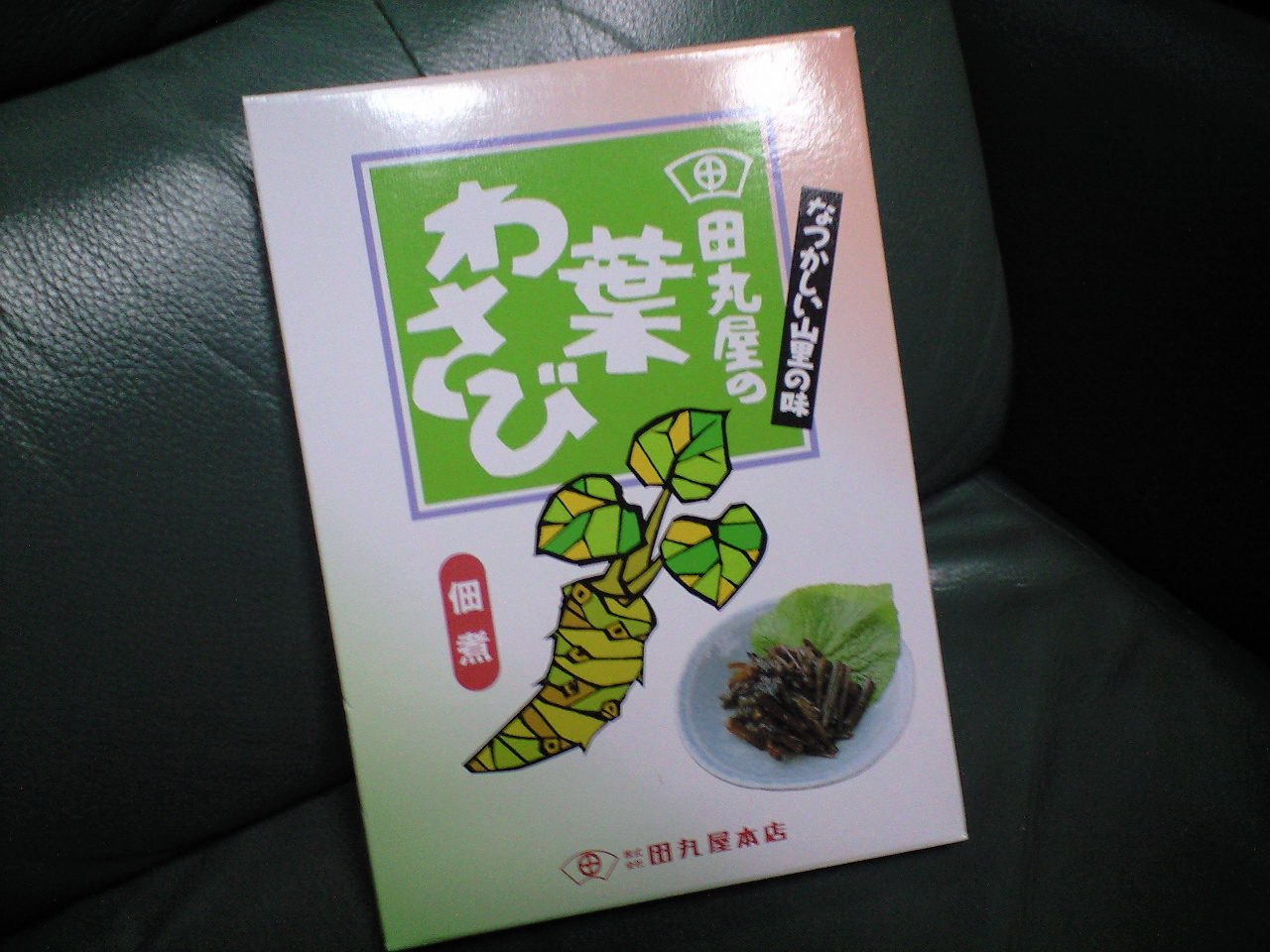
Tamaruya stand at Haneda Airport

The first and oldest wasabi shop, Tamaruya, is still very much in business in Shizuoka City and even has a stand in Haneda Airport, Shizuoka City!

Wasabi growing is backbreaking work. You need a constant temperature, so you have to be located at a certain altitude (weel over 1,000 metres in some cases) as extreme heat is not welcome, as well as extrem cold.

Pure, soft, constant water is a must. Shizuoka water is known as the best in Japan as demonstrated by its superlative (and rare) sake.

Fields need constant care during the two years it takes for roots to be mature. You can drink the water in these fields without any fear!

WASABI IN JAPANESE CUISINE

If you want to grate your own wasabi, you will need a grater.
The best (above) are made with shark skin!
Grated wasabi is the most common use for the plant, especially with sushi and sashimi.

Wasabi Flowers.

But the stems, leaves and flowers are extensively used.
The leaves can be eaten raw and are great with miso!

The stems are a delicacy marinated in rice vinegar.

Wasabi zuke/wasabi stems and flowers pickled in sake kasu/sake white lees.
Wasabi zuke in Shizuoka is simply extravagant as the sake breweries sell their best white lees/sake kasu (after the sake has been pressed) to the local farmers and producers!

Soon I will post an interesting home-made recipe for wasabi zuke!

The same leaves, once pickled, can be included inside inari zushi for the pleasure of vegans!

Na no hana/rape flowers boiled and seasoned with wasabi mayonnaise.

Now, you might know it, but thinly sliced wasabi root is not as strong as grated wasabi. In Shizuoka, as it is not that expensive, try and ask your favourite sushi chef to cut it in very thin strips and roll as it is in a “maki”. It’s called “namida maki/tear maki” or “bakudan maki/bomb maki” (the real one, not the buster made with grated wasabi!). A favourite of mine!

FRENCH CUISINE

Wasabi is getting more and more popular in French and other cuisines all over the world.
The above dish was created by Dominique Corby a great French Chef who learned his craft at the Tour d’Argent in Paris, among others, before coming to Japan to look after the kitchen of the Sakura Restaurant in the New Otani Hotel in Osaka and of the 6eme Sens in Tokyo.

His cuisine was created with whole wasabi (1 metre long!) i sent him by cool box from Shizuoka.
These are the best grown in Utogi. Very fat, clean, with no black marks and with enormous stems and leaves. Dominique steame the leaves and stems before serving them with fish seasoned with a wasabi sauce reduction from the roots!

FANCY FOODS

Wasabi Dango!

Wasabi comes into many kinds of fancy food for the pleasure of all, young and old!

Wasabi soft Ice-cream!

DERIVATED PRODUCTS

Wasabi comes into a whole array of derivated products worth exploring:

Wasabi Dressing 1

Wasabi Dressing 2

Wasabi dressing is not that strong and can be used in cold and hot/warm dishes.
The Missus uses it extensively with dtir-fried veetables and meat.

Nori/seaweed and miso seasoned with wasabi is another great vegan seasoning!

Wasabi salt by Tamaruya!

Stewed wasabi by Tamaruya!

Wasabi Shochu!

The only true wasabi shochu is made by Bandai Brewery in Shuzenji, Izu peninsula, Shizuoka Prefecture! (don’t be fooled by unscrupulous producers/traders!).

HEALTH FACTS:

-Wasabi is a natural medicinal herb as it contains big amounts of Potassium, Calcium, Magnesium, Vitamin B2 ad C.

-Combined with vinegar, or mustard, or ginger, helps combat fppd poisining, obesity and helps blood flow.

-Combined with Chinese cabbage, or cabbage, or yam, helps combat ulcers and cancer.

-Combine with onion, or leek, or galic chive, helps combat blood vessel ageaing and heart diseases, as well as preserve skin health.

-Combined with chili peppers, or umeboshi/Japanese pickled plums, or orange, or grapefruit, helps appetite and quick illness recovery, helps skin rejuvenation and helps combat ageing.

FOR RESIDENTS AND VISITORS IN SHIZUOKA CITY:

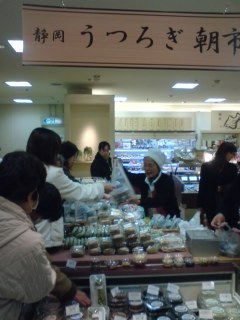
On every first Wednesday of the month, a small but very special fair is held in the basement of Isetan Store in Shizuoka City.
It is called “Shizuoka Utsurogi Ichiba” after a group of farmers residing and conducting business up Abe River in Shizuoka City, up to an altitude of 1,500 metres, around Utogi, the birthplace of wasabi, and still considered the best in the world.
Try to come as soon as Isetan opens as it can become quite a unashamed tussle with all these local grannies fighting for the best morsel!
All products on sale are purely local and practically devoid of industrial fertilizers. It is actually a paradise for vegetarians as only vegetables are represented there. A multitude of succulent and extravagant wasabi pickles, pickled plums, onions, etc.
The names, addresses and even phone numbers of the farmers are clearly stated, making all purchases eminently traceable.

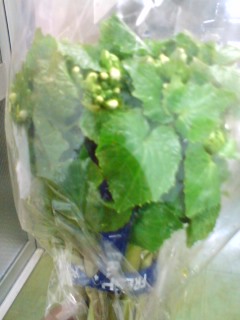
But the pinnacle is some incredible fresh vegetables, including enormous fresh wasabi roots at ridiculously low prices. I grabbed tis couple of fresh bouquets of wasabi stems, leaves and flowers for my better half (worse?) who loves them as tempura or home-made pickles! I wonder what people in Tokyo would have to pay for that!

It is possible to travel up to Utogi and buy directly from the Farmers Cooperative at:
422–8031 Shizuoka City, Yumei Cho, 2-20
TEl.: 054-2869018

RECOMMENDED RELATED SITES:
Bread + Butter, Comestilblog, Greedy Girl, Bouchon For 2, Zoy Zhang, Hungry Neko, Mangantayon, Elinluv Tidbit Corner, Maison de Christina, Chrys Niles, Lexi, Culinary Musings, Eats and Everything, Bite Me New England, Heather Sweet, Warren Bobrow, 5 Star Foodie, Frank Fariello, Oyster Culture, Ramendo, Alchemist Chef, Ochikeron, Mrs. Lavendula, The Gipsy Chef, Spirited Miu Flavor, Wheeling Gourmet, Chef de Plunge, Sushi Nomads, Island Vittles, The French Market Maven, Tokyo Through The Drinking Glas, Palate To Pen, Tokyo Foodcast, Good Beer & Country Boys, Tokyo Terrace, Think Twice, Jefferson’s Table, While mY Sautoir Gently Weeps

Please check the new postings at:
sake, shochu and sushi,
—————————————-
日本語のブログ
—————————————-

Vegan Japanese Cuisine: Grilled Aubergines-Egg Plants and Garlic Chives Dressing

Looking through my notes I found another easy vegan Japanese recipe with aubergines/egg plants that requires only little work and provides plenty of beneficial elements!

Chinese Chives, or Garlic Chives (English), Ciboule de Chine (France), or Nira/韮 in Japanese have a dintinct taste and are widely used in Japanese cuisine for fried foods.
Both leaves and the stalks of the flowers are used as a flavoring similarly to chives, green onions or garlic and are used as a stir fry ingredient.

Garlic Chives and tofu.

The flowers may also be used as a spice. In Vietnam, the leaves of garlic chives are cut up into short pieces and used as the only vegetable in a soup of broth.

Grilled Aubergines/Egg Plants and Chinese Chives Dressing!

INGREDIENTS: For 3~4 people

-Aubergines/Egg plants: 3
-Garlic Chives/Nira: 1 bunch
-Soy sauce: 1.5 tablespoons
-Rice vinegar: 1 tablespoon
-Sugar: 1/2 tablespoons
-Sesame oil: 1/2 tab;espoon
-White sesame seeds: 1 tablespoon

RECIPE:

-Chopp the garlic chives finely. Drop tthm in saucepan with the soy sauce, rice vinegar, sugar, sesame oil and sesame seeds. Mix well. Let marinate for 15 minutes, stirring form time to time.

-Cut the stem end of the aubergines./ egg plants
Grill the egg plants/aubergines directly over the flame on a grill.
Doing it in the oven is fine, too.

-Once the the egg plants/aubergines have been evenly grilled and become soft inside, peel them completely.

-Cut the aubergines/egg plants into bite-sized pieces and serve topped with plenty of garlic chives dresing.

-Can be savoured hot, lukewarm or chilled!

RECOMMENDED RELATED SITES
Not-Just-Recipes, Bengal cuisine, Cooking Vegetarian, Frank Fariello, Gluten-free Vegan Family, Meatless Mama, Warren Bobrow, Wheeling Gourmet, Le Petit Cuisinier, Vegan Epicurean, Miss V’s Vegan Cookbook, Comestiblog, To Cheese or not To Cheese, The Lacquer Spoon, Russell 3, Octopuspie, Bread + Butter, Pegasus Legend, Think Twice, The French Market Maven

Please check the new postings at:
sake, shochu and sushi

—————————————-
日本語のブログ
—————————————-

Gastronomic Cycling in Shizuoka (2)

Today was also a glorious day, even in the second half of the afternoon with blue skies and crisp air. Time to go out!

Bazooka Gourmet will smirk again when he sees that I had to change the basket yesterday as it finally fell apart!

I took the street at the back of the office, running along the Sumpu Castle Park and Moat. Sumpu is the old name of Shizuoka City. The caste which had been leveled down in early Edo Times was rebuilt to two thirds of its original size at the end of last millennium (LOL, not so long ago, actually!).

The city is still asking the country to pay for the repair of the wall which collapsed in three different spots during last summer’s earthquake (do you remember my earthquake bento?).

I was then cycling past the Old City Hall Dome built by Queen Victoria’s subjects in the 19th Century. To think that a former Mayor wanted to pull it down. It is presently used as a museum and local government seat.

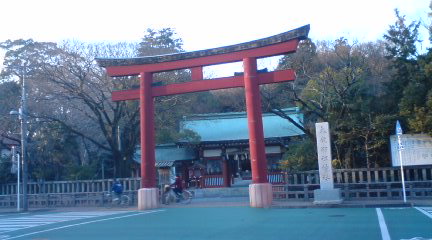
A minute later I reached the entrance of Sengen Shrine street, the destination of the day, marked by a giant red torii. A torii is a Japanese entranc/arch erected to allow birds to perch and rest on (Shintoism).

Sengen Shrine is only about 300 metres long but it is one of the oldest street in town. Although it has been renovated over the ages, one can still find traditional shops and quaint sites.
The shop above is famous oden-ya/Japanese pot au feu restaurant.

Shizuoka-style oden is renown all over Japan!

Taking a short peek (I will write a full about oden again soon).
Note that I use my mobile phone camera. A real camera tends to put off people for good reasons….

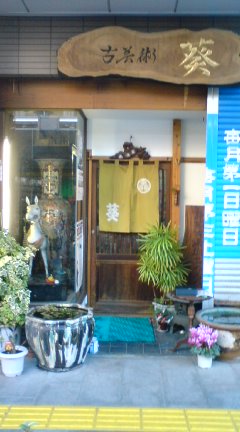
Narrow but interesting (reason coming in next pic!) entrance of an antique shop.

Although the shop sells all kinds of old sabres and knives, the police notice states you are allowed to carry knives with blades over 5 cm long!

This shop specializes in peanuts only!

They went as far as to designing their own “mon/arms” with peanut plants!

This cafe specializes in organic food, a very real real thing in Shizuoka!

A sign to make sure you know they use only organic vegetables!

A local celebrity: Yamada Nagamasa

Yamada Nagamasa (1590~1630) voyaged to Siam where 7,000 samurais lived in Ayathaya as the personal guard of the Siam King.

The statue was erected in 1991. Note that due to the closure of the country in Edo Times, he probably become the last Japanese sailor of note for the next 200 years!

A grocery selling only organic vegetables!

Would love to taste these!

At the first crossing stands this quaint shop selling miniature cars.

Hundred of them all different!
Did you know that Tamiya Miniature Company is in Shizuoka City?

Real antiques for the collectors!

The City Tourism Bus (names in French…) clearly indicates this is a street to explore.

This street is one of the very last where you still can find shops selling traditional gardening tools, some of them real monsters! LOL

This pet clinic (real vet!) is apparently the best business in the whole street!

End of the street and entrance to the Sengen Shrine (will write a report about it one day!) and it’s back along the other side of the street towards my real destination I ignored on purpose at the entrance of the street.

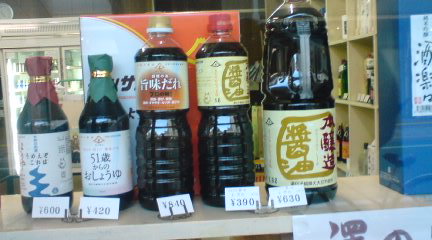
A soy sauce shop, probably the only one in town.

And an old one at that! These ceramic bottles are over 80 years old!

Local soy sauce brands.

A yeast and miso shop. Only a few shops left in Shizuoka. This is the place to buy artisanal miso!

That shop still sells traditional cookware, kitchen and bathroom wooden and metallic utensils. Almost no plastic there!

Shizuoka is famous for this kind of bamboo craft!

Now, this is the guy I had left for dessert!
Now, what is he cooking on his copper hot plate?

Can you guess? Hot Cakes? Yes and no…

have you heard of Doraemon, the Japanese manga character?
He loves “dorayaki”, the Japanese double hot cake filled with anko/sweetmeats!
This is the only place left in Shizuoka still cooking them every day in the true traditional way!

I did ask for the authorization to take pictures.
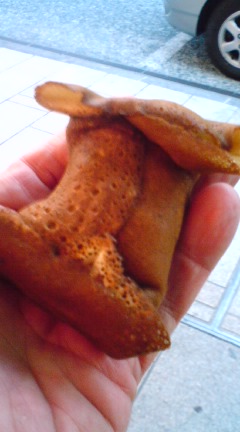
The man was real sweet (of course…) and gave me (to prove the great taste…good businessman!) a single hot cake wrapped around anko/sweetmeats!

Hot, simple and so delicious!
The gentleman was beaming all the time.
“If you want to take more picture, come inside!”
????

I only understood when I passed the “noren”/Entrance curtain!
The place for all its tiny size was a real Ali Baba cavern full of antique collectibles!

I almost screamed when I discovered those exquiisite antique glasses,

Cups, saucers and more!
Who could have believed there was a cultured man behind that artisan?
I know I will come for more than one reason!
No wonder customers kept streaming in!

Mr. Kawauchi make the dorayaki. His smiling wife packs them carefully and individually in cellophane paper printed with”Dorayaki”, the shop name and all ingredients used!

Out of the package.
They are big and sell for only 100 yen/1.10 US $.
Mr. Kawauchi was selling them only 42 yen when he opened his shop 22 year ago!

After a big bite.
The hot cake is unbelievely light and soft. The taste is certainly heads, shoulders and torso above anything sold at higher prices in department stores!

Where next?

RECOMMENDED RELATED SITES:
Bread + Butter, Comestilblog, Greedy Girl, Bouchon For 2, Zoy Zhang, Hungry Neko, Mangantayon, Elinluv Tidbit Corner, Maison de Christina, Chrys Niles, Lexi, Culinary Musings, Eats and Everything, Bite Me New England, Heather Sweet, Warren Bobrow, 5 Star Foodie, Frank Fariello, Oyster Culture, Ramendo, Alchemist Chef, Ochikeron, Mrs. Lavendula, The Gipsy Chef, Spirited Miu Flavor, Wheeling Gourmet, Chef de Plunge, Sushi Nomads, Island Vittles, The French Market Maven, Tokyo Through The Drinking Glas, Palate To Pen, Tokyo Foodcast, Good Beer & Country Boys, Tokyo Terrace, Think Twice, Jefferson’s Table

Please check the new postings at:
sake, shochu and sushi,
—————————————-
日本語のブログ
—————————————-

Japanese Seasonal Fish: Bora/Mullet

There are at least 12 recognized kinds of mullet being caught all over the world.
The flathead mullet in particular is an important food fish for many around the world, and can be both fished and farmed. The roe of this mullet is salted, dried, and compressed to make a specialty food across the world, such as Korean myeongran jeot, Japanese karasumi, Italian botargo, and Egyptian batarekh . In Egypt, the fish itself is salted, dried, and pickled to make feseekh.

Flathead Mullet, Mugil Cephalus in Latin, or Bora/鯔/鰡 in Japanese will reach length of over 80 cm in Japan, although the average length will more around 50 cm.

It is caught south of Hokkaido near river mouths or in bays receiving lots of river waters.
Like any othe fish, it will be called other names depending upon the region: Isegoi (Western Japan), Itanebora (Ehime Prefecture), Mabora (Hiroshima Prefecture), Tsukura (Okinawa), Kuchime, Mejiro, Hebuna, Haku, Makuchi, Kurome, or Merome.

It is a versatile fish:

Served raw as sashimi in Jpaanese Cuisine or,

as carpaccio in Italian style.

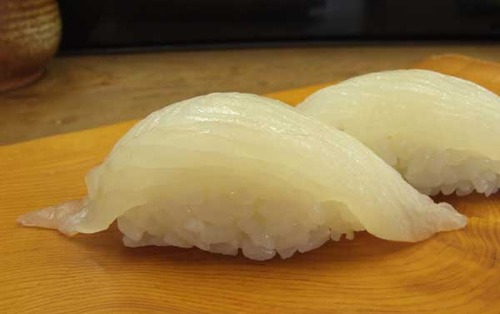
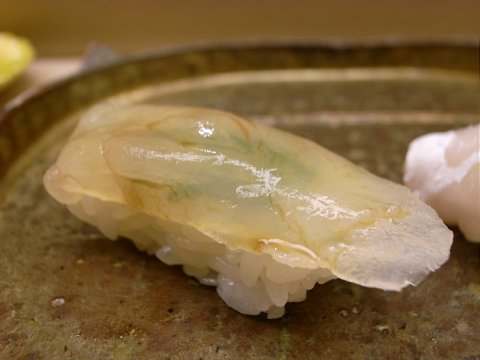
It is more unusual as sushi nigiri (front two) and will probably be found as such only locally.

To answer a query from Luke, it is more encountered cooked:
Deep-fried and served with a soy-based sauce is common to many asian countries.

Deep-fried before being served wit a sweet and saour sauce,

or the same again with tofu is popular in Taiwan (and in Japan!).

First steamed and then served with a sauce made with sweet pickled plum and miso is supposed to be of Chinese origin, but can be found again in many Asians countries.

But for all these recipes, the most valuable (and very expensive at that!) is the roe of the female mullets!

It is served as it is extavagantly in Japanese or Italian cuisine sashimi or carpaccio.

The combinations are infinite!

An extravagant salad of Japanese and Italian inspiration!

Grated over an extragant pasta dish!

RECOMMENDED RELATED SITES:
Bread + Butter, Comestilblog, Greedy Girl, Bouchon For 2, Zoy Zhang, Hungry Neko, Mangantayon, Elinluv Tidbit Corner, Maison de Christina, Chrys Niles, Lexi, Culinary Musings, Eats and Everything, Bite Me New England, Heather Sweet, Warren Bobrow, 5 Star Foodie, Frank Fariello, Oyster Culture, Ramendo, Alchemist Chef, Ochikeron, Mrs. Lavendula, The Gipsy Chef, Spirited Miu Flavor, Wheeling Gourmet, Chef de Plunge, Sushi Nomads, Island Vittles, Jefferson’s Table

Please check the new postings at:
sake, shochu and sushi,
—————————————-
日本語のブログ
—————————————-

Today’s Lunch Box/Bento (’10/06): Pasta Bento

The Dragon is still in a good mood (the bright weater and her day off might explain it! LOL).
For once, she kept away from rice or bread and concocted a pasta bento.

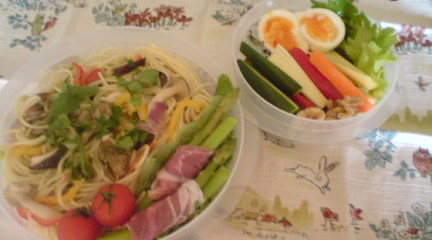
It certainly made for a colourful bento!

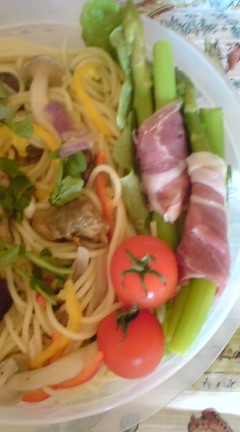
The pasta base was made with spaghettini.
After boiling and cooling them she mixed in tinned smoked oyters, and vegetables she had lightly fried beforehand: shimeji muchrooms, red and yellow pimentoe, red onion and sliced shiitake. She seasoned the lot with the smoked oysters oil and smoked salt, and a little dressing. She finally topeed it fresh cress.

As for the garnish: Boiled green asparaguses rolled in raw ham and mini tomatoes lined with lettuce.

The side dish consisted of soft boiled egg, and vegetable sticks with their dipping sauce: carrots, cucumber, and celery.
A few walnuts and a mini banana (not featured) for dessert.

Very healthy, indeed. No wonder the Missus is checking my waistline every morning! LOL

RECOMMENDED RELATED SITES:
Warren Bobrow, Bread + Butter, Zoy Zhang, Hungry Neko, Think Twice, Frank Fariello, Mangantayon, Hapabento, Elinluv Tidbit Corner, Tokyo Terrace, Maison de Christina, Chrys Niles,Lexi, Culinary Musings, Wheeling Gourmet

Please check the new postings at:
sake, shochu and sushi

—————————————-
日本語のブログ
—————————————-

Japanese Seasonal Fish: Makogarei/Turbot

“Makogarei” or Pleuronectes yokohamae Gunther for the specialists is one of the many kinds of turbot indigeneous to Japan.
You will find it on the markets between June and August.
Depending where you live, you might do well to know its other names: “Aome” (Sendai), “Mushibirama” (Konahama), “Mako” (Tokyo) or “Amakarei” among many.
It is net-caught all around Japan.

It has comparatively a lot of flesh for a turbot, making it a choice morsel for nigiri or sashimi.

It can reach a length of 30 cm. Contrary to many other fish, the size will bear no incidence on the taste, but if you wish for extra taste, avoid female specimen bearing eggs/roe, and if possible, although a bit extravagant, choose a live fish (possible at Parche, Shizuoka JR Station!).
A good sushi or Japanese restaurant will deep-fry the bones and head for you, making for a great snack with great ale!

As a sushi nigiri, it is served as it is, and can be savoured with a little salt and lemon juice only as seasoning.

Many people also ask their sushi nigiri seasoned with tare/sauce.

One more way is to present it as konbujime/marineated in seaweed.

being a large fish, it can be easily manipulated into bo sugata sushi/baton sushi with the rice inside the fish.

Small specimens are appreciated grilled whole with some lemon, soy sauce and grated daikon.

Another popular cuisine is to stew/simmer the whole fish in soy sauce, mirin and sake as ni-zakana.

The sperm sacs/shirako of the male specimens are much appreciated in European-style cuisine!

RECOMMENDED RELATED SITES:
Bread + Butter, Comestilblog, Greedy Girl, Bouchon For 2, Zoy Zhang, Hungry Neko, Mangantayon, Elinluv Tidbit Corner, Maison de Christina, Chrys Niles, Lexi, Culinary Musings, Eats and Everything, Bite Me New England, Heather Sweet, Warren Bobrow, 5 Star Foodie, Frank Fariello, Oyster Culture, Ramendo, Alchemist Chef, Ochikeron, Mrs. Lavendula, The Gipsy Chef, Spirited Miu Flavor, Wheeling Gourmet, Chef de Plunge, Sushi Nomads, Island Vittles

Please check the new postings at:
sake, shochu and sushi,
—————————————-
日本語のブログ
—————————————-

Gastronomic Cycling in Shizuoka (1)

Many friends have enquired why I call myself a “cycling gourmet” (instead of the celebrated “galloping one”).
There is no mystery there for the simple reason that I have never driven, or was tempted to, a car in my life.
Thanks to that, I’m still comparatively in good health in spite of my ever-going battle of the bulge and a blood pressure to keep in check.

As for my bicycle(s), do not expect me to ride the state-of-the-art mountain bike (although I’d love to own one!), great for riding on all roads, but definitely unpractical. I need that sturdy basket in the front!
In any case there is no way you can suddenly stop to take a picture with your car sitting in the middle of the street!
Japan might be a congested, teeming land, but there are millions of pictures begging to be taken of the everyday life of its people, the more for it that it is the safest country in the world. With a minimum of (good) manners you will soon discover that almost everyone is happy to be reported on!

Shizuoka City is a very compact town in spite of its fairly large population of over 800,000 souls. Really big buildings are only to be found near the large Railway Station (this is earthquake country after all). In spite of many wide arteries gridiing the area, there are plenty of side streets to explore.

A typical thoroughfare starts from the Central Police Station onto the Shichiken-cho street through Komagata Street.
I will spare you from all the ubiquitous chain cafes, diners, nonsensical cake shops and the like to concentrate on the places of true interest.
Japanese cities can appear bland and jumblelike to the point of sheer boredom at first contact, but if you know what and where to search there is plenty to discover, big or small, local or foreign, amusing or downright alien.

Shichiken-cho starts with th Isetan Store, one of the major chain department stores in Japan.

The food department is invariably located on the first or basement floor in such buildings.
Isetan is worth some study as they make an (albeit a bit weak) effort to promote truly local gastronomy:

Map of Shizuoka Prefecture and its main fisheries harbours with the fish of the day.

Shizuoka sake!

Shizuoka Green Tea with a map of the main fields!

Shizuoka Wasabi products.

Shizuoka processed fish.

Keeping straight (you must explore the side streets at night with their many izakayas!) you will find Il Cuore Trattoria, a great Italian Cafe where you can enjoy your drink and tasty light fare at a table outside on the pavement (in warm weather!).

The best and most beautiful cappucino in town!

Just keep going on, and you will find Takahashiya Sembei shop.

The oldest rice crackers shop. All sembei are made over a charcoal fire!

To be fair, there are many small cheap restaurants (ramen, yakiniku, etc..), cafes, bakeries, boutiques, beauty salons and whatnot along the way, but they would not have you raise an eyebrow.
You will also find one useful Shizutetsu grocery store along the way, but skip it for the time being.

Now, when entering Komagata Street, you do have to keep an eye open for some intriguing sights.

Don’t forget to pay a visit to the minuscule Komagata Shrine,

and salute its dragons (we know this guy, don’t we?)!

Just past the Komagata Shrine you will discover where the true locals buy their everyday needs at ancient grocery stores.

Tomitaya is your typical Shizuoka off license/liquor shop,

offering rare Shizuoka sake, some of which you will not find in any other shop in Shizuoka City!

Have a good look at what is displayed at the shops.

Not only the (very low) prices are clearly indicated, but also the origin of all the veg, meat, fish and fruit!

There must be good reasons for the local to crowd such grocery stores!
Great places for expats with gastronomic priorities and limited budgets!

Sano Rice(only) shop.

Very good value for very fine rice coming form all over Japan!
A reference shop for vegans and vegetarians!

I’m pretty sure you will have missed a lot on your way out, therefore on your way back proceed slowly and have two or three more looks.

Dotai Kotai Izakaya. They are part of a big chain, but they have the merit to serve a few eminent Shizuoka sake and decent food.

There are some intriguing signs to be put on film.
The shop above sells beef, chicken, pork, sausages, delicatessen all in the same place,….

Scorpion Hearts?
This is not a food store, but a beauty salon!

Amici, a tiny watering hole I definitely will have to investigate in the near future!

A quaint entrance to an unusual cafe.

No comments!
The amateurs of the truly bizarre should come well-equipped!

I just loved that one!

Biwa is a popular “Chinese Fusion” restaurant with ladies but I hold reservations as to that kind of presentation…

Unusual design for a Crepe shop called Roulotte.

But the kids seem to love it!

Osakaya is shop solely selling “katsuo bushi/Dry bonito shavings”. Shizuoka is the main area for ships to bring their bonito catch in Japan.

Ichome, a kitch jumble of a trattoria, which seems to be really popular.
I’ll have to check!

Will meet you soon at the next destination!

RECOMMENDED RELATED SITES:
Bread + Butter, Comestilblog, Greedy Girl, Bouchon For 2, Zoy Zhang, Hungry Neko, Mangantayon, Elinluv Tidbit Corner, Maison de Christina, Chrys Niles, Lexi, Culinary Musings, Eats and Everything, Bite Me New England, Heather Sweet, Warren Bobrow, 5 Star Foodie, Frank Fariello, Oyster Culture, Ramendo, Alchemist Chef, Ochikeron, Mrs. Lavendula, The Gipsy Chef, Spirited Miu Flavor, Wheeling Gourmet, Chef de Plunge, Sushi Nomads, Island Vittles, The French Market Maven, Tokyo Through The Drinking Glas, Palate To Pen, Tokyo Foodcast, Good Beer & Country Boys, Tokyo Terrace, Think Twice

Please check the new postings at:
sake, shochu and sushi,
—————————————-
日本語のブログ
—————————————-

Today’s Lunch Box/Bento (’10/05)

Today was a bright day and the Missus was in a fairly good morning mood (evenings are somewhat different), and the colourful bento proved it!

The Missus? (picture taken at a fashion store in Shizuoka City)

Friends who know my e-mail address know that a dragon and a raabit are featured therein, but have you ever wondered who was which? LOL
If you want to see more pictures of everyday life in Shizuoka with more dragons and oddities, just go THERE!

As I said, the bento was full of colours!

The rice is violet because it was steamed together with pieces of violet sweet potatoes/murasaki satsuma imo. The potatoes were placed on top of the rice before steaming it. They were then stirred together with black sesame seeds when the rice was cooked.

As for the garnish, I got my compulsory tamagoyaki/Japanese omelette (cooked with pieces of sweet pimentoes), lettuce and mini-tomato.

The shiitake and the rolls were fried together and seasoned with wasabi dressing.

The rolls were made enoki (farm-growned) mushrooms rolled into thin pork belly strips and fried together. The enoki being thin, long and tender,they blend in very quickly.

The salad/dessert side dish consisted of a bed of shredded greens covered with pieces of lettuce, celery, orange sweet pimento and cheese, cucumber slices, walnuts, home-made apple compote and wedges of kiwi fruit for dessert.

The real Missus? (picture taken at Komagata Shrine in Shizuoka City)

Thank you, Dragon! (Alright, she is the Rabbit!)

RECOMMENDED RELATED SITES:
Warren Bobrow, Bread + Butter, Zoy Zhang, Hungry Neko, Think Twice, Frank Fariello, Mangantayon, Hapabento, Elinluv Tidbit Corner, Tokyo Terrace, Maison de Christina, Chrys Niles,Lexi, Culinary Musings, Wheeling Gourmet

Please check the new postings at:
sake, shochu and sushi

—————————————-
日本語のブログ
—————————————-

Vegan Japanese Cuisine: Egg plants/Aubergines & Miso Caviar

This recipe is another/different version form the previous egg plants/aubergines recipe to cater for vegan priorities.
Back in France, we do call aubergine paste, aubergine caviar (probably because of the sometimes reminiscent dark colour).
The process is almost the same, and it is of course open to variations, especially as far spices are concerned.

INGREDIENTS: For 2 people

-Egg plants/Aubergins: 3~4
-Rice vinegar: 1 tablespoon
-Miso (of your choice): 1 tablespoon
-Fresh perilla/shiso leaves: enough for decoration. Chop them finely first.

-Salt: no need as enough is contained inside the miso

-Optional: Spices (of your choice), grated ginger, and so on.

RECIPE:

-Grill the egg plants/aubergines directly over the flame on a grill.
Doing it in the oven is fine, too.

-Once the the egg plants/aubergines have been evenly grilled and become soft inside, peel them completely.

-Mash them finely with a knife.
Do not use a food processor as the the egg plants/aubergines will become a messy juice!

-Pour the mashed egg plants/aubergines in a bowl.
Add the rice vinegar and miso.
Mix well.
Served topped with finely chopped shiso leaves.

-Experiment with grated garlic, sesame oil and grated ginger!

RECOMMENDED RELATED SITES
Not-Just-Recipes, Bengal cuisine, Cooking Vegetarian, Frank Fariello, Gluten-free Vegan Family, Meatless Mama, Warren Bobrow, Wheeling Gourmet, Le Petit Cuisinier, Vegan Epicurean, Miss V’s Vegan Cookbook, Comestiblog, To Cheese or not To Cheese, The Lacquer Spoon, Russell 3, Octopuspie, Bread + Butter, Pegasus Legend, Think Twice, The French Market Maven

Please check the new postings at:
sake, shochu and sushi

—————————————-
日本語のブログ
—————————————-

Vegetarian Japanese Cuisine: Egg Plant/Aubergine & Yoghurt Paste

Aubergines or egg plants were introduced from India to Jpan a very long time ago.
The Japanese since then have adopted them in their gastronomy and lore. Interetingly enough, it has become the symbol of both male virility and utter stupidity! (In Frnce they are a surname given to lady traffic wardens!).

Aubergines are a very versatile vegetable which can be easily cooked/prepared into vegetarian cuisine.
Here is a simple recipe reminiscent ofTurkish gastronomy to enjoy as a snack on freshly toasted bread!

Egg Plant/Aubergine & Yoghurt Paste!

INGREDIENTS: For 2 people

-Egg plants/aubergines: 4 (organic if possible!)
-Garlic: 1 clove (grated)
-Yoghurt: 2~3 cups/400~600 cc/ml
-Olive oIl (EVA): 2 tablespoons
-Salt: 1/2 teaspoon
-Lemon juice: To taste

Optional: spices to taste

RECIPE:

-Grill the egg plants/aubergines directly over the flame on a grill.
Doing it in the oven is fine, too.

-Once the the egg plants/aubergines have been evenly grilled and become soft inside, peel them completely.

-Mash them finely with a knife.
Do not use a food processor as the the egg plants/aubergines will become a messy juice!

-Pour the mashed egg plants/aubergines in a large bowl. Add grated garlic, olive oil and yoghurt.
Mix well.
Season with lemon juice, salt and spices (optional). Check taste and rectify if needed.
The taste might a bit bland to some, so season it to your preferences.
You may add some parmegiano cheese for example.

In Turkey they don’t always include garlic. Actually recipes vary greatly in that country.
The Japanese will sometimes add sesame oil.
Nuts paste or ground sesame seeds are also a great alternative!

Enjoy it on your favourite toasted bread!

RECOMMENDED RELATED SITES
Not-Just-Recipes, Bengal cuisine, Cooking Vegetarian, Frank Fariello, Gluten-free Vegan Family, Meatless Mama, Warren Bobrow, Wheeling Gourmet, Le Petit Cuisinier, Vegan Epicurean, Miss V’s Vegan Cookbook, Comestiblog, To Cheese or not To Cheese, The Lacquer Spoon, Russell 3, Octopuspie, Bread + Butter, Pegasus Legend, Think Twice, The French Market Maven

Please check the new postings at:
sake, shochu and sushi

—————————————-
日本語のブログ
—————————————-

Tamagoyaki Nori Cheese Roll

Found this easy Winter Ci\omfort food recipe in my notes which for a simple combination of Japanese and American/European (?) tastes!

It is tentatively called Tamagoyaki Nori Cheese Roll/卵焼き海苔チーズ巻!

INGREDIENTS:

-Eggs: quantity depending on the number of servings. Better think big!
-Nori/dry seaweed: a few sheets
-Cheese: slice pizza cheese is fine. Of course you can upgrade!

RECIPE:

-Make thin sheets of tamagoyaki in this way or that way first.

-Spread one sheet of tamagoyaki on workig table.

-Spread nori/dry seaweed all over it.

-Place cheese slices along one end. Think of how wide you want to make the roll when you choose the size of the cheese slices. Cut the cheese to size if necessary.
Season the cheese with black pepper if you wish for more taste.
You could vary by adding some thin ham slices, too.

-Roll the maki from the cheese end.
If the tamagoyaki was still hot, it could be eaten right away.
Better so is to place them aside until your start your meal.
Wrap them in foil paper and heat them.
before serving cut them across and serve them with the cheese flowing out!

-You may of course serve them with a sauce of your making and some greens!

RECOMMENDED RELATED SITES:
Bread + Butter, Comestilblog, Greedy Girl, Bouchon For 2, Zoy Zhang, Hungry Neko, Mangantayon, Elinluv Tidbit Corner, Maison de Christina, Chrys Niles, Lexi, Culinary Musings, Eats and Everything, Bite Me New England, Heather Sweet, Warren Bobrow, 5 Star Foodie, Frank Fariello, Oyster Culture, Ramendo, Alchemist Chef, Ochikeron, Mrs. Lavendula, The Gipsy Chef, Spirited Miu Flavor, Wheeling Gourmet, Chef de Plunge, Sushi Nomads, Island Vittles, The French Market Maven

Please check the new postings at:
sake, shochu and sushi,
—————————————-
日本語のブログ
—————————————-

Italian Restaurant: Dinner at Contorno

Service: excellent and very friendly
Facilities: great washroom, great cleanliness overall
Prices: very reasonable, good value.
Strong points: Very fresh local ingredients extensively used.
no-smoking-logo1 All non-smoking!

Yesterday was Friday. The university having taken a day off before the final exams, there was no lecturing duty. The weather, although a bit chilly and windy, was absolutely glorious. I did not need more reasons to get away from that computer!
Contorno Italian Restaurant stands 5 minutes walk from Mochimune Station, 2 stops away from Shizuoka City.
It became a good opportunity to take a long 2-hour stroll on my own at my pace along the shore to work up an appetite!

I did show a bit early but the owner nonetheless invited me and opened the place for me.
I rewarded his hospitality by ordering a bottle and share it ith nad his sous-chef.

FALCHINI 2007, white, Vernaccha, Di San Gimignagno

Great golden colour.
Very clear and clean.
Aroma: Muscat and raisins.
Tasting: Solid attack.
Lingered longer on than expected.
Deep muscat and raisins.
Holds well with food.
Soft but solid on the palate. Memories of oak
Overall: Very honest, solid, well-balance white wine. Eminently drinkable with any food.
Melinda and Jen are going to kill with that kind of succinct tasting report!

As for the antipasto misti, I can already hear Lou-Ann and Frank scream in the distance!
Look at these fresh oysters! They are called Ako Kaki and they come all the way from Hyogo Prefecture (near Kobe City). They are small by Japanese standards, but I can garantee you they are a mouthful. Fat but vey firm, just perfect. Notice the edible fresh seaweeds around them. These disappeared quickly, too!
The rillettes (pork) are of course home-made.
That with the Parma ham, semi-dried tomato and black olives and my appetite was really sharpened (as we say in French)!

I din’t bother looking at the menu and consulted the small blackboard on which were chalk-written the recommendations of the day.
I first opted for the Duck Breast Roast.
Served with a solid and delicious sauce made red wine and fond de veau, the duck was raosted to perfection, red and soft inside.
As for the vegetables, including yellow, red pimentoes, kabocha, brocoli, carrot, rape plant, sweet potato, string beans and red daikon, they were all organically grown in Fujinomiya City at the foot of Mount Fuji!

But my eyes (and stomach!) had noticed something else which urged me to check the blackboard again after I had finished the duck:
Shungiku Risotto Kaki Soroe: “Shungiku” is a variety of chrysanthemum grown for its edible leaves, “kaki” means “oyster” and “sore” means “topped with”.

One enormous sauteed Ako Oyster on top of the risotto (sorry for the fuzzy picture, butI was desperate!)!
Perfectly balanced risotto, sublime simplicity and that oyster again!
Italian Cuisine with Japanese finesse!

And the dessert!
Shizuoka (Most famous area for strawberries in Japan!) straberry tart conceived on a marzipan base. A real red fruit sauce concocted with red wine, fruit coulis, lemon juice and real red fruit.
Once again sublime simplicity, great balance and perfect volume!

I will have a hard time explaining the Missus what I wa doing in Mochimune! LOL

CONTORNO
421-0122, Shizuoka City, Suruga Ku, Mochimune, 5-1-10, Sunrise Mochimune (5 minutes walk from Mochimune JR Station. Second stop after Shizuoka)
Tel.: 054-2565877
Business hours: 11:30~14:30, 17:00~21:30
Closed on Wednesdays

RECOMMENDED RELATED SITES:
Bread + Butter, Comestilblog, Greedy Girl, Bouchon For 2, Zoy Zhang, Hungry Neko, Mangantayon, Elinluv Tidbit Corner, Maison de Christina, Chrys Niles, Lexi, Culinary Musings, Eats and Everything, Bite Me New England, Heather Sweet, Warren Bobrow, 5 Star Foodie, Frank Fariello, Oyster Culture, Ramendo, Alchemist Chef, Ochikeron, Mrs. Lavendula, The Gipsy Chef, Spirited Miu Flavor, Wheeling Gourmet, Chef de Plunge, Sushi Nomads, Island Vittles, The French Market Maven

Please check the new postings at:
sake, shochu and sushi,
—————————————-
日本語のブログ
—————————————-
Japanese Cuisine: Omelette Ribbons

The Japanese not only make great tamagoyaki/omelettes but extensively use eggs for decoration, especially sushu and salads.
One such decorations are omelette ribbons.

Here is the basic recipe that could help you with future decoration!

Japanese Omelette ribbons!

INGREDIENTS:

-Eggs
-Oil

RECIPE:

-Having beaten the eggs, sieve/filter them through a large piece of gaze (this is the little secret!) into anther bowl as shown on picture above.
Organize yourself so as not to spill egg everywhere. Yse large bowls and plenty of gaze!
No need to season the eggs as the thin size of the ribbons will facilitate the absorption of any environmental seasoning.

-Use a square or rectangular non-stick tamagoyaki frypan.
Pour and spread a small quantity of oil.
Pour the eggs into a thin layer.
Bear in mind that the oil needs not to be sohot or the eggs will “crackle”.
Also bear in mind that not enough egg will ot spread evenly all over the surface of the frypan. Not enough or too much are failure. Practice will soon make you a master!

-One more reason the omelette ought to be thick enough is that, when you turn it over with a long chopstick as shown on above picture, it will not break up.

-Fry both sides.

-Spread the omelette sheet on a working table while you eventuall fry more.

-First cut the sheet into wide strips/bands. Think about the eventual lenght of your ribbons.

-Finally cut across into thin ribbons.

-Enjoy the fun of easy decoration later!

RECOMMENDED RELATED SITES:
Bread + Butter, Comestilblog, Greedy Girl, Bouchon For 2, Zoy Zhang, Hungry Neko, Mangantayon, Elinluv Tidbit Corner, Maison de Christina, Chrys Niles, Lexi, Culinary Musings, Eats and Everything, Bite Me New England, Heather Sweet, Warren Bobrow, 5 Star Foodie, Frank Fariello, Oyster Culture, Ramendo, Alchemist Chef, Ochikeron, Mrs. Lavendula, The Gipsy Chef, Spirited Miu Flavor, Wheeling Gourmet, Chef de Plunge, Sushi Nomads, Island Vittles, The French Market Maven

Please check the new postings at:
sake, shochu and sushi,
—————————————-
日本語のブログ
—————————————-