Tag Archives: 静岡

Today’s Lunch Box/Bento (’09/35)

BENTO-09-05-25a

Today’s bento was a bit of a straightforward affair making good use of what was left in the fridge!

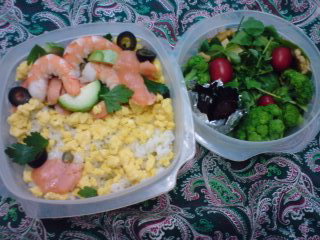
BENTO-09-05-25b

Plenty of steamed later mixed with Japanese cucumber pickles.
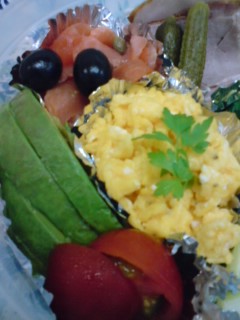
Boiled Shrimps and smoked salmon dipped in lemon juice with scrambled eggs, Italian parsley, pickled mini melon and black olives.

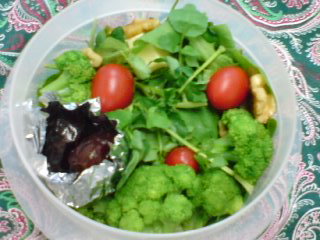
BENTO-09-05-25c

Salad, very simple too: Green leaves, boiled broccoli, processed cheese, Ameera Gibbins sweet mini tomatoes and honeypreserved dates for dessert.

What is the Missus cooking tonight, especially after the little earthquake we had?

Please check the new postings at:
sake, shochu and sushi

—————————————-
日本語のブログ
—————————————-

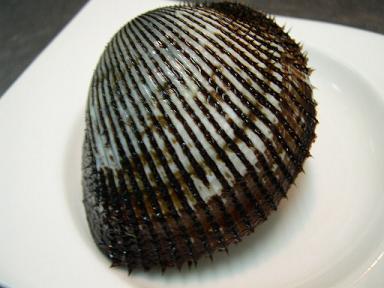
Shellfish Species 10: Ark Shell/Akagai

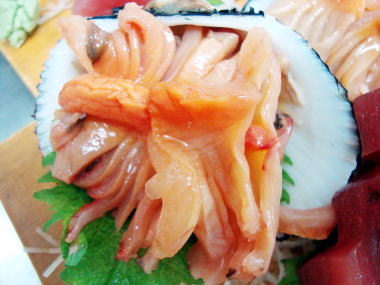
AKAGAI-5
(Ark shell sashimi in its own shell)

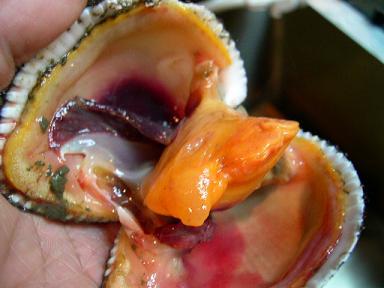
Akagai or Ark Shell tends to frighten potential sheffish amateurs because of its other English name, “Bloody Shell”, not only because of its deep reddish-orange colour, but also because of the reddish water it gives off upon opening.

AKAGAI-1

Now, shellfish do not have blood in our mammal concept.
Bear in mind that many shellfish are used for dyeing cloth, and if if I’m not mistaken, ark shells fulfill both utilitarian and gastronomic needs.

AKAGAI-2

It does require some skill to open and present.

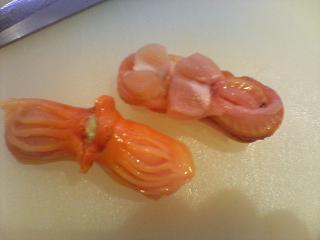
AKAGAI-3

The main “Tongue” and “Thread/Akahimo” are edible.

The best season is Autumn, although they are available all year round. They are pretty abondant along the Japan southern coastlines, but many of them are also imported from Korea and China amounting to 80% of the total domestic consumption.

AKAGAI-4

Ark shells are usually not served cooked.
Sashimi (see top picture) is very much apprecaited but sushi nigiri is definitely the most popular way to savour them!

Please check the new postings at:
sake, shochu and sushi

—————————————-
日本語のブログ
—————————————-

Italian Restaurant: La Prima Porta

PRIMAPORTA-2
(Haruka Yamaguchi)

Service: excellent and very friendly
Facilities: great washroom, great cleanliness overall
Prices: reasonable, good value.
Strong points: Authentic Italian Cuisine with a local twist. Very fresh local ingredients extensively used.

End of last April, Il Cuore finally opened its second restaurant called La Prima Porta!
The concept is completely different and it took me some time to find a seat there, so popular it has become!
Located in the middle of the Shizuoka “nightlife quarter”, it has the particularity to be opened from 18:00 to 02:00, making it the “latest” Italian restaurant in town.
Its young but experienced and very talented chef Keizo Kaneko is already quite famous, especially among female night-owls, and I can garantee you had better reserve your seat(s) in this place which used to be “izakaya” and was quickly re-decorated with the minimum fuss.
Keizo usually works on his own in front of his customers with the help of a single waitress to look after 8 guests at the counter and the same again at tables.
There is plenty to use from the menu, but just ask Keizo what he has in the fridge and proceed from there!

To cut a long stroy short, I visited for the second time with my good friend Haruka Yamaguchi who took the pics for me!

PRIMAPORTA-6

Keizo has a short but very well-balanced wine list to select wines from. What I do usually is just give him a price and let choose one for me!
I FRATI, Lugana, 2007, White, Ca dei Frati in Lombardia
Jen and Melinda, the following tasting notes are for you!
Colour: Very clear light golden hue
Aroma: Fruity and flowery. Sweetish. Muscat
Taste: Pleasant tingle. Well-rounded. Sweetish at first. Muscat and raisins. Dry finish with nice acidity.
Lingers for a while in back of the palate.
Great on its own, but makes for a great match with food, especially vegetables.

PRIMAPORTA-5

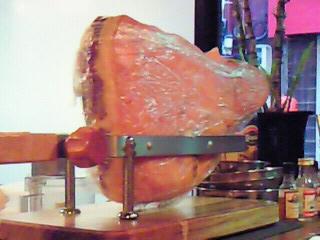
The two-year matured raw Parma Ham was just too much to ignore!

PRIMAPORTA-4

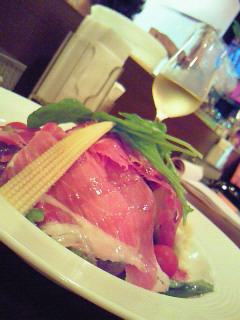
Justmake a salad of it! I ordered.
The picture does not give enough credit to th mountain of succulent local vegetables hiddden under the succulent ham!

PRIMAPORTA-3

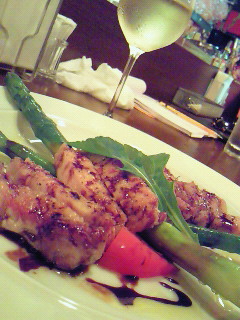
As for the meat, we had a choice between poultry, pork andd beef. We opted for the pork.
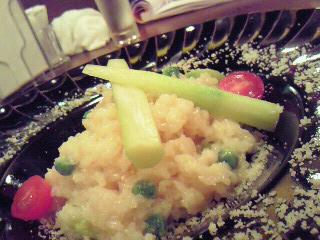
Very simple “Kogane Buta/Small golden pork” from Niigata Prefecture sauteed with balsamico sauce and giant asparafuses and string beans from Shimizu, Shizuoka City!
Simple in appearance and concept but sublimein taste. I usually am not that fond of fat, but when crispiness turns into a melting swetnees under your teeth, ou just forget it was fat!

PRIMAPORTA-2

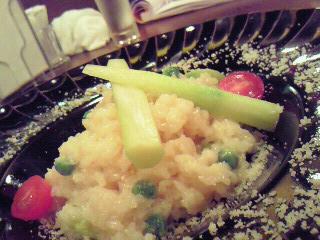
After some discussion we chose risotto over pasta as the night was still young (meaning that we planned to go somewhere else!).
my friend just could not stop extolling the gastronomic virtues of this beautiful vegetarian risotto with gree peas and broad beans grown in Shizuoka!

Don’t worrytehre’s more coming soon! LOL

La PRIMA PORTA
420-0032 Shizuoka City, Aoi Ku, Ryogae-cho, 2-7-1, Akiyama Bldg. 1F
Tel.: 054-251-6633
Business hours: 18:00~26:00
Closed on Sundays and National Holidays
Credit cards OK
Homepage (Japanese)

Please check the new postings at:
sake, shochu and sushi

—————————————-
日本語のブログ
—————————————-

French Restaurant: Lunch at Pissenlit

PISSENLIT-7

Service: excellent and very friendly
Facilities: great washroom, great cleanliness overall
Prices: reasonable, good value.
Strong points: Interesting wine list. Great use of local products.
no-smoking-logo!

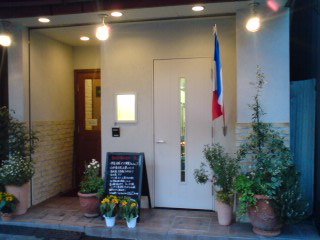
Tooru Arima, after working for ten years at Shimizu Hotel Quest, decided it was about time to fly on his own wings and opened Pissenlit with his wife Takako on September 24th, 2008.
PISSENLIT-10

A small restaurant, it sits a maximum of 20 guests.
I visited it at lunch time for the first time last Sunday, a rainy cricket-less Sunday and came back with the Missus for lunch yesterday.
If lunch gives a faithful idea of the level of the restaurant, Pissenlit is bound to become a regular visit.
To the Missus’ delight, the place is completely non-smoking!
PISSENLIT-5

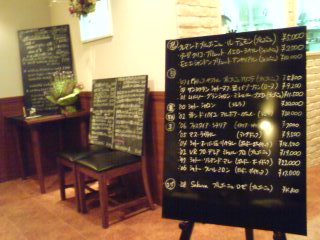
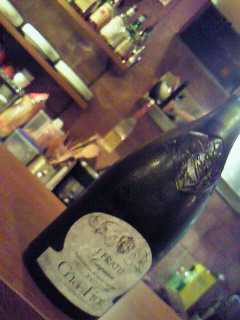
The wine list is more than adequate and offers a good variety from Cremant de Bourgogne to a rare Chateau Chalon. It even features two local sake: hana no Mai and Fujinishiki!
PISSENLIT-1

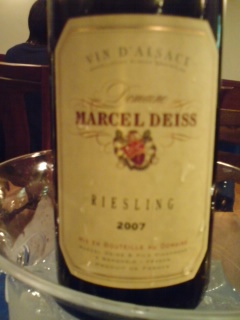
I ordered a Alsace bottle by Marcel Weiss, Riesling 2007 in the village of Bergheim.
PISSENLIT-2

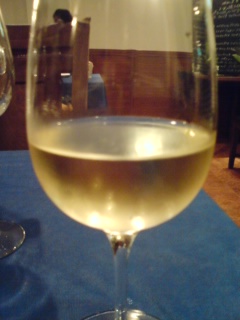
The tasting notes are for Jen and Melinda!

Colour and clarity: Very clear golden colour
Aroma: Fruity and flowery. Slightly sweet and dee.
Taste: Fresh tingling flowery attack/light, petillant typical of Alsace.
lingers for a little while in back of the palate.
Reveals otherv facets with food. Well rounded.
PISSENLIT-3

They have two lunch fixed menus. I chose the “Creatif menu”, fairly reasonable at under 30 US$:
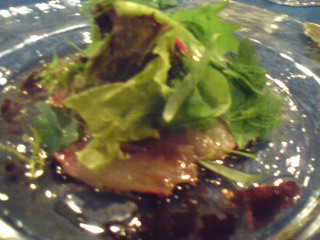
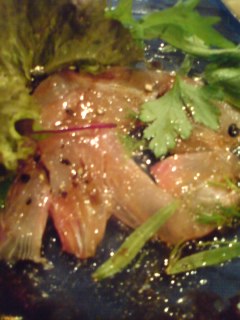
Out of 5 starters I chose the Aji/Saurel Carpaccio Salad.
The fish come the neighbouring harbour of Yui. Great freshness and perfect with its green and balsamico vinegar!
PISSENLIT-4

For a better look of the fish!

PISSENLIT-6

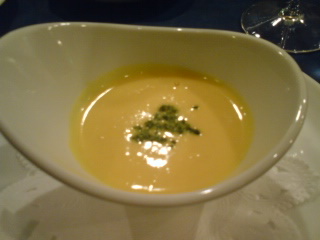
A soft and pleasing carrot cream soup.
PISSENLIT-7

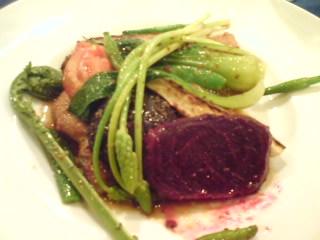
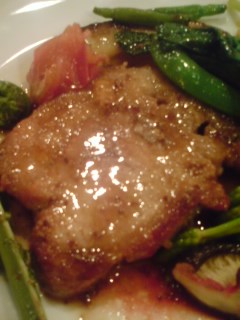
The main dish: “Yusui” Pork from Fujinomiya City, one of 3 main dishes to choose from.
This main dish is the epitome of Mr. Arima’s cuisine which can be described as an intriguing combination of local ingredients and those of othe regions and countries: Wild asparaguses from France, Green Papaya from Okinawa, organic red beet from Shiuzoka, Lily flower buds, etc.
PISSENLIT-8

For a better view of this juicy pork from pigs raised in our Prefecture!
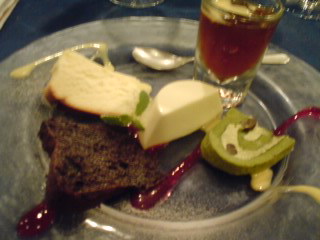
PISSENLIT-9

I’ve heard that many guests come especially for the dessert plate (chaging regularly).
The present assortment includes Macha Roll Cake with Azuki beans, Gateau Chocolat, Pannacotta, Souffle Cheese Cake and Black Tea Jelly!

I will show picture of what we had yesterday in another posting!
Moreover I shall visit Pissenlit for dinner very soon to delve into Mr.Arima’s Carte which includes such delicacies aas Castelnaudary’s Cassoulet, Vendee Duck, Hungary Mangaricia Pork, Foie gras marbre and Bourgogne Escargots with Morel Mushrooms Fricassee!

PISSENLIT
420-0839 Shizuoka City, Aoi Ku, Takajo, 2-3-4
Tel.: 054-270-8768
Fax: 054-627-3868
Business hours: 11:30~14:30; 17:00~22:00
Closed on Tuesdays and Sunday evening
Homepage (Japanese)

Please check the new postings at:
sake, shochu and sushi

—————————————-
日本語のブログ
—————————————-
Shellfish Species 9: Round Clam-Hen Clam/Bakagai

AOYAGI-1

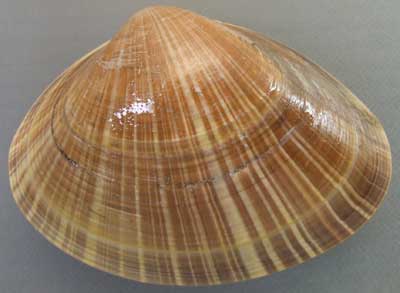
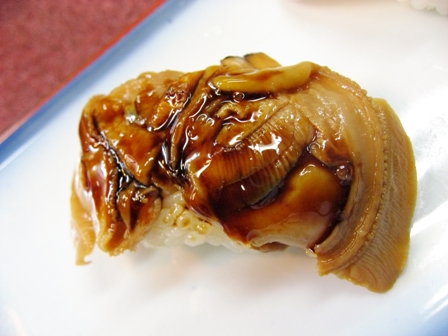
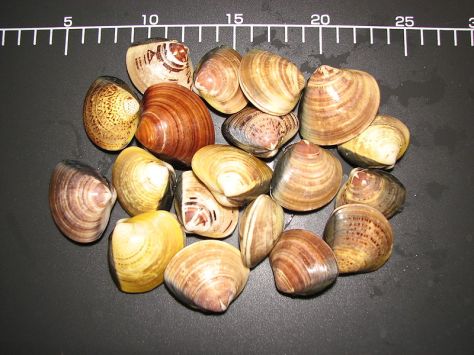
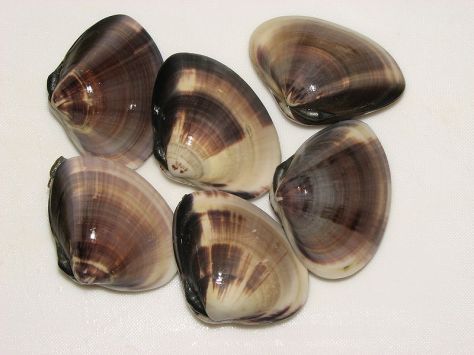
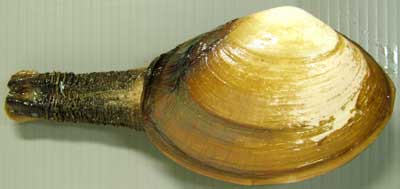
“Bakagai”, or Round clam/Hen Clam in English is found mainly in the Central part of Honshu Island.

AOYAGI-2

Actually, you have a good chance to discover it at low tide all over Japan.

AOYAGI-6

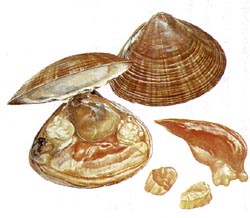
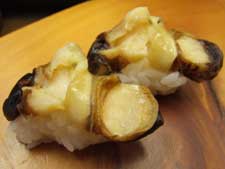
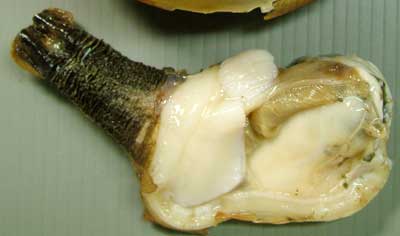
It is a versatile shellfish as it provides for two distinct morsels:

AOYAGI-5

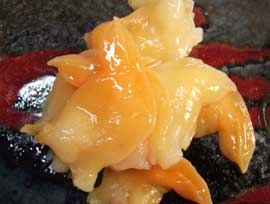
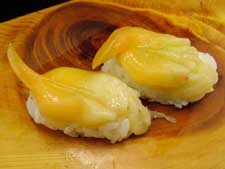
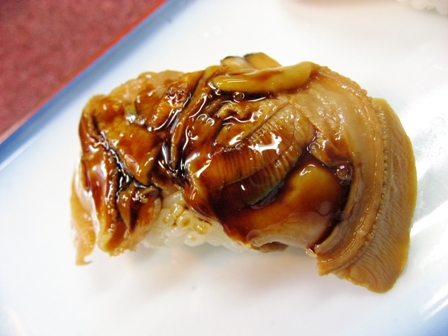
The “Tongue” called “Aoyagi”. It is very popular in Japan for its colour and sweetness. It is both eaten as Sashimi and

AOYAGI-3

Sushi as nigiri.

AOYAGI-4

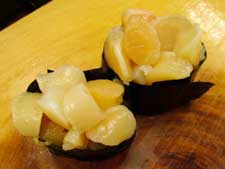
The second morsel, one of two muscle parts is called “Kobashira/Small pillar”.
Sushi chefs will keep them until they have enough to serve as sashimi or even better as suhi as gunkan!

Make sure to order either “Aoyagi” or “Kobashira” unless you want to start a long conversation by ordering “Bakagai”!

Please check the new postings at:
sake, shochu and sushi

—————————————-
日本語のブログ
—————————————-

Sashimi Plate at Tomii (’09/05/20)

TOMII-09-05-20b

I suppose I need not introduce my favourite Japanese restaurant in Shizuoka City any more, as I just have stopped counting the articles I wrote about this place!

Anyway, Last night I went for a quick fix before resuming work.

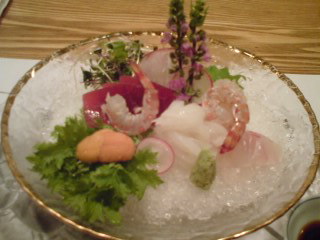
Look at pic above showing what I was served as “o-sukuri/sashimi plate:
Front row:
-Uni/Sea Urchin, “Saimaki Kuruma Ebi/Shrimp variety, Aka Ika/Red Cuttle Fish, Ishidai/Seabream variety
Second row:
-Hon Maguro Akami/Blue Fin Tuna Lean Part, Kurodai/Black Seabream, Houbo/Bluefin Robin.
Note the Shiso/perilla flowers!

TOMII-09-05-20c

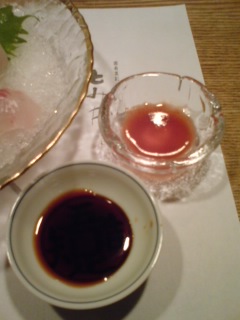
Apart of the freshly grated wasabi, I was presented two kinds of soy sauces: normal soy sauce and the other a mixture of soy sauce and sweet pickled Japanese plum/Ume Shoyu. The later is great with white-fkesh fish!

TOMII-09-05-20a

Before that I was served “Shunsai/Spring Vegetable”, a very tasty morsel for which vegans and vegetarians would swim across the Pacific Ocean!

TOMII
Shizuoka City, Aoi Ku, Tokiwa-cho, 1-2-7, Tomii Bldg, 1F
Tel.: 054-274-0666
Business hours: 17:00~22:00
Closed on Sundays
HOMEPAGE (Japanese)

Please check the new postings at:
sake, shochu and sushi

—————————————-
日本語のブログ
—————————————-

Shellfish Species 8: Pen Shell/Tairagi

TAIRAGI-4

Pen Shells or Tairagi in Japanese are usually sold in winter but tend to still appear in Sping in Shizuoka.

TAIRAGI-1

Also called Tairagai, it was very common not so long ago when the domestic catch amounted to 13,395 tonnes in 1976 to suddenly fall to a mere 134 tonnes in 1994!
It disappeared from the Tokyo Bay and is presently mainly caught in the Inner Japanese Sea between Shikoku and Honshu Islands.

TAIRAGI-2

It has become expensive these days and when you realize there is not so much to eat for such a big shell, one can understand it is fast becoming a rare morsel.

TAIRAGI-3

It is particularly delicious as sashimi or salt-grilled and is very similar to scallops, although distinctly different in shape.
Naturally it is most popular served as sushi nigiri!

Please check the new postings at:
sake, shochu and sushi

—————————————-
日本語のブログ
—————————————-
Shellfish Species 7: Clam/Hamaguri

HAMAGURI-SUSHI2

Clams come in many varieties in Japan.
They are either called Common Orient Clams or Hard Clams, whatever their mode of cooking.

HAMAGURI-JAPANESE

Japanese Clam Variety

In 1993, Japan produced 29,000 tonnes before suffering a steep decline down to only 1,500 tonnes in 2000.
Since then imported clams are 15 times the domestic production.
Main importers to Japan are:

HAMAGURI-CHINA

China (see variety above): 20,100 tonnes

HAMAGURI-NORTH-KOREA

North Korea (see variety above): 3,33 tonnes

A great part of both Chinese and North Korean varieties are imported young and “re-planted” on Japanese beaches to be sold as Japanese varieties!

80 percent of all clams are sold over the counter at supermarkets while 20 percent are proceesed by canneries.

Clams, like everywhere in the world, are cooked/prepared inmay ways in Japan:

HAMAGURI-NI

Ni-Hamaguri/simmered clams served in broth with vegetables, tofu and chopped thin leeks.

HAMAGURI-SUSHI1

Chirashizushi/”Decoration Sushi”, very popular in Japanese homes!

HAMAGURI-SUSHI2

But my favourite is Ni-Hamaguri Sushi!
The clam,s large variety only, are first slowly simmered into broth, then drained and cooled before being served brushed with a sweet “tare” sauce. Sublime!

Please check the new postings at:
sake, shochu and sushi

—————————————-
日本語のブログ
—————————————-
Shellfish Species 6: Turbo Shell/Sazae

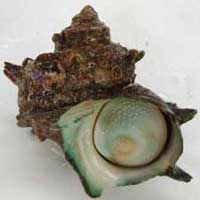
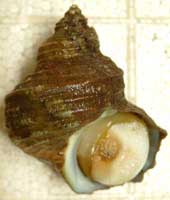
SAZAE-1 SAZAE-2
Japanese turbo shells with and without “spikes”

Turbo shells are common all over the world, but are not eaten everywhere. Called Sazae or Sadae in Japan, they are at their best in Winter and Spring.
About 10,000 tonnes are consumed every year.

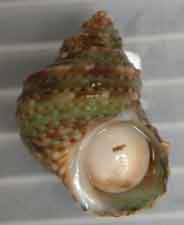
SAZAE-KOREA

Korean turbo shells are also found in markets.

The Japanese consider that the best specimen should have a comparatively thin shell and well-pointed “head horn”.
They should not emit any noise when lightly shaken.
They should be avoided in hot weather as they tend to spoil quickly.

SAZAE-3 SAZAE-4

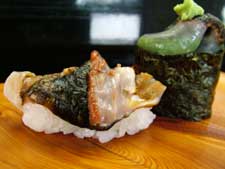
They can enjoyed grilled with soy sauce.
As sushi,they can be served as nigiri either raw or cooked.
Large specimen’s livers are served raw as “gunkan”!

Note: I feel in a good mood today as I slowly manage to convince old Blogspot friends like Melinda and new ones like Rachael to modify their Comment Box! At last I can leave messages and compliments for these great sites! LOL

Please check the new postings at:
sake, shochu and sushi

—————————————-
日本語のブログ
—————————————-
Today’s Lunch Box/Bento (’09/34)

BENTO-09-05-19a

After Yesterday’s traditional Japanese bento, the Missus prepared an “open sandwich bento” more reminiscent of European/American packed lunches!

BENTO-09-05-19b

As she is away on a vacation today she did not need to prepare food for both of us.
She toatsed some bread and proceeded to rummage through the refrigerator:

BENTO-09-05-19c

Smoked salmon with capers and black olives.
Japanese-style scrambled eggs with Italian parsley from our verandah for a finishing touch.
Avocado slices.
Sweet plum tomato.
Dip sauce for the vegetables.

BENTO-09-05-19d

Smoked pepper ham and cornichons.
Lettuce.
Cucumber and celery sticks for the dipping sauce (or is this the other way round?LOL)
Honey-pickled dates for dessert.

Very healthy!

Please check the new postings at:
sake, shochu and sushi

—————————————-
日本語のブログ
—————————————-
Shellfish Species 5: Gaper/Mirugai

MIRUKUI-1

We are just in season for Mirugai or Gaper Shellfish.
Known under many names including Mirugai, Mirukui, Mirukuigai, Mirukugai, Guidakku, Umitake or Atlantic Miru, it is a bit grotesque with its vent protruding endlessly.
In Japan it is collected mainly in the sea between Shikoku and Honshu islands.

MIRUKUI-2

It can be either dark brown or completely whitish beige.
When consumed as sushi or sashimi, the dark skin is taken off.
It is widely consumed in this country and more are imported from Canada, and Korea. There is practically no difference in taste or quality whatever its origin.

MIRUKUI-3

It is particularly popular with sushi lovers with a big appetite!

————————-
Please check the new postings at:
sake, shochu and sushi

—————————————-
日本語のブログ
—————————————-

Today’s Lunch Box/Bento (’09/33)

BENTO-09-05-18a

Today’s bento was probably the most “traditional” the Missus prepared this year. It is very reminiscent of high school students can expect from their mothers.

BENTO-09-05-18b

The rice part is a double-decker. That is soy sauce will be brushed on a first layer of plain steamed rice and covered with dry seaweed. The operation is repeated to form the two-tier rice dish.

BENTO-09-05-18c

As for the garnish the Missus made small “sandwiches” with slices of zucchini intersped with a chicken paste she made with minced chicken, a lttle sake and what else before rolling them in cornstarch and frying them. Served with lettuce and fresh cress, it made for the vegetable part.

BENTO-09-05-18d

As for the “salad” part, she included mimosa-style boiled egg halves, “yama imo/taro roots” (raw) salad with two kinds of sesame seeds, pickled Japanese gourd and pickled Japanese cherry blossom, and a plum tomato for dessert.

Not as big as usual, but I have to lose weight!LOL

Please check the new postings at:
sake, shochu and sushi

—————————————-
日本語のブログ
—————————————-
Shellfish Species 4: Surf Clam/Torigai

torigai1.jpg

“Torigai” does not have a real name in English. They are approximately translated “large cockle”
They appear on the market in Spring and earlier in Shizuoka Prefecture. They are mainly found in Tokyo Bay, Ise bay and Seto Inner Sea. Some are imported from Korea, but catches can wildly vary, especially with the occurence of “red tides”. A lot are imported from Aichi Prefecture to Shizuoka.

TORIGAI-SHELL

They must be absolutely fresh to be consumed.
One easy way to check if they are still fresh is to slam them on the wooden board. They shouldimmediately retract, even if cut out. They are at their cheapest between March and May.

torigai-nigiri.jpg
(Pic taken at Sushiya No Ichi, Shizuoka City)

They can appreciated either as tsumami with a little grated wasabi and shoyu, or as nigiri.
Beware of torigai with a thin colour! They are not fresh!

————————-
Please check the new postings at:
sake, shochu and sushi

—————————————-
日本語のブログ
—————————————-
Shellfish Species 3: Oysters/Kaki

Oysters! One would be hard put to find a produce from the sea more internationally recognized as a gourmet’s choice! Moreover, it is the only shellfish you coul survive on if you get marrooned on a desert island! It is a complete food in irself if consumed raw.
For a long time (that is before coming to Japan), I had thought that my country, France, was the place to eat them. Well, I must admit it was a little pretentious from me, especially in the light that more than half of the oysters consumed back at home originated from Japan!

Now the Japanese has come with many ways of appreciating them:
-As in the picture above they would eat them as sashimi with a dash of wasabi and soy sauce.

-Or just a little lemon juice as in Euope, Americas or Oceania.

-Or in another japanese fashion, with ponzu and momijioroshi (succulent!)

-Or, and here Japanese and foreigners are simply crazy about them, as “kakifrai”, deep-fried oysters in batter and breadcrumbs with a nice tartare sauce!

-Or finally, and I would recommend the experience to all foreigners, as “kaki-gohan”, either with oysters steamed together with the rice, or cooked apart in light broth poured over a bowl of freshly steamed rice!

Of course, any good sushi restaurants will serve oysters as nigiri or gunkan!

In Japan, oysters come from various areas, mainly Hiroshima, Iwate and so on.
As for Shizuoka Prefecture, oysters mainly come from Hamanako inland sallted lake near Hamamatsu City.

————————-
Please check the new postings at:
sake, shochu and sushi

—————————————-
日本語のブログ
—————————————-
Shellfish Species 2: Scallops/Hotategai

hotategai.jpg

Hotategai, or Scallops, is another worldwide favourite and also a source of dispute caused by illegal poaching, international or domestic.
The season is summer and the shellfish is sometimes called Akitagai, as of Akita Prefecture.
They are caught off Hokkaido, Aomori, Iwate and Miyagi Prefectures.
The domestic production/catch is over 300.000 tonnes a year, while 400 tonnes are imported from China as whole Scallops and 700 tonnes as the muscle part only (“kaibashira”). Japanese scallops will be significantly larger than the Chinese.

Of course, they are much appreciated as sashimi, but also as sushi:
HOTATENIGIRI
(pic taken at Sushi Ko in Shizuoka City)

They are also much appreciated cooked/grilled in the shell with just a little shoyu and sake:
HOTAGE-GRILLED

Actually, a good-class sushi restaurants will serve the muscle part as sashimi or sushi, and will serve the rest of the shellfish cooked in light broth inside the shell later!

————————-
Please check the new postings at:
sake, shochu and sushi

—————————————-
日本語のブログ
—————————————-