Tag Archives: Desserts

Strawberry Custard Gratin

Since I have just written about the nutritional values of strawberries, I thought that some simple strawberries recipes were in order!
Here is a simple recipe to please people of any age!

Strawberry Custard Gratin!

INGREDIENTS: 2~ people

-Srawberries: 10~
-Egg: 1 large
-Sugar: 5 tablespoons
-Cake wheat flour: 3 + 1/2 tablespoons
-Milk: 100 cc/ml/1/2 cup
-Fresh cream: 100 cc/ml/1/2 cup
-Vanilla essence: 5~6 drops

RECIPE:

-Thoroughly mix the flour and sugar in a bowl.

-Beat the egg and add to flour. Mix well. Add all the milk and half of the fresh cream. Mix well.

-Cover with cellophane paper and leave in a microwave for 2 minutes.

-Take out and add the remaining cream. Mix well. Put back into microwave oven for 2 more minutes. As it will have solidified a bit, add vanilla essence, stir and mix well until smooth.

-In an oven dish place the strawberries in a set pattern and pour in cream.

-Place some half strawberries on top for decoration. Bake in oven for 10 miutes at 200 degrees celsius.

-Eat hot or lukewarm.

RECOMMENDED RELATED SITES:
Warren Bobrow, Bread + Butter, Zoy Zhang, Hungry Neko, Think Twice, Frank Fariello, Mangantayon, Hapabento, Elinluv Tidbit Corner, Tokyo Terrace, Maison de Christina, Chrys Niles,Lexi, Culinary Musings, Wheeling Gourmet, Comestiblog, Chronicles Of A Curious Cook, Tokyo Through The Drinking Glass, Tokyo Foodcast, Palate To Pen, Yellin Yakimono Gallery, Tokyo Terrace, Hilah Cooking, More than a Mount Full, Arkonite Bento, Happy Little Bento; 5 Star Foodie; Jefferson’s Table; Oyster Culture; Gourmet Fury; Island Vittles; Good Beer & Country Boys; Rubber Slippers In Italy; Color Food daidokoro/Osaka;/a; The Witchy Kitchen; Citron Et Vanille, Lunsj Med Buffet/Estonian Gastronomy (English), Cook, Eat, Play, Repeat

Please check the new postings at:
sake, shochu and sushi

French Cuisine: Mocha Creme Brulee & Panacotta at Pissenlit

Service: excellent and very friendly
Facilities: great washroom, great cleanliness overall
Prices: reasonable, good value.
Strong points: Interesting wine list. Great use of local products.
no-smoking-logoentirely non-smoking!
These are the desserts we had the other day to finish our dinner on a grand and sweet note!

The Missus chose the Panacotta and assorted fruit plate. Not so French after all, although panacotta should be translated as blanc-manger! LOL
A great and light combination of tastes and colours!

I’m just a sucker for creme brulee!
This one had the great merit of being flavoure with mocha coffee.
Great presentation, too!

PISSENLIT
420-0839 Shizuoka City, Aoi Ku, Takajo, 2-3-4
Tel.: 054-270-8768
Fax: 054-627-3868
Business hours: 11:30~14:30; 17:00~22:00
Closed on Tuesdays and Sunday evening
Homepage (Japanese)
Credit Cards OK

RECOMMENDED RELATED SITES:
Warren Bobrow, Bread + Butter, Zoy Zhang, Hungry Neko, Think Twice, Frank Fariello, Mangantayon, Hapabento, Elinluv Tidbit Corner, Tokyo Terrace, Maison de Christina, Chrys Niles,Lexi, Culinary Musings, Wheeling Gourmet, Comestiblog, Chronicles Of A Curious Cook, Tokyo Through The Drinking Glass, Tokyo Foodcast, Palate To Pen, Yellin Yakimono Gallery, Tokyo Terrace, Hilah Cooking, More than a Mount Full, Arkonite Bento, Happy Little Bento; 5 Star Foodie; Jefferson’s Table; Oyster Culture; Gourmet Fury; Island Vittles; Good Beer & Country Boys; Rubber Slippers In Italy; Color Food daidokoro/Osaka;/a; The Witchy Kitchen; Citron Et Vanille, Lunsj Med Buffet/Estonian Gastronomy (English), Cook, Eat, Play, Repeat

Please check the new postings at:
sake, shochu and sushi

French Gastronomy: Pigeon at Pissenlit

Service: excellent and very friendly
Facilities: great washroom, great cleanliness overall
Prices: reasonable, good value.
Strong points: Interesting wine list. Great use of local products.
no-smoking-logo!

When I saw the new “noren/entrance curtain” at the entrance of Pissenlit the other day (secret?) I knew it was a lost cause!
I just had to check what was on the menu, which evolves so well with the seasons!

The chef, Mr. Tooru Arima, told me that he had just received pigeon from Ibaraki Prefecture!
-Okay, I’ll go for it!
-It will take some time. How about an hors d’oeuvres first?
-Fine, I leave it to you!

What came was a very unusual combination of North African and Japanese cuisine!
Actually, when you think that Japan imports vast quantities of squid/cuttlefish from North Africa, I shouldn’t have been surprised.
The squid is called “mimi ika/耳烏賊”, meaning squid with “large ears”. It is comparativeley small but with large “ears”.
The dish consisted of a taboule salad with Moroccan couscous and home-marinated, very soft mimi ika squid, and plenty of local trefoil and herbs.
A very sophisticated hors d’oeuvres!

And then the whole pigeon came!
It is prepared in two steps, first a l’etouffee/pan steamed and then roasted before being cut and served with its sauce and vegetables (organic vegetables from Shizuoka).
Cooked to perfection, well roasted and crunchy on the outside and tender and half raw in the middle. Going through many textures in a single bite!

The head has been cut to reveal the brains, a real delicacy if a bit gross!

Now the “stick” is very japanese in concept. It is simply a yakitori made with the liver and heart of the smae pigeon!
Barbarous again, but so delicious!

It was lunch and I had been ravenous. I therefore finished with a small plate of cheese to go with the red wine:
Aged gruyere, Trou du Cru, Crottin Chavignol, Roquefort and Explorateur!

What’s in next? LOL

PISSENLIT
420-0839 Shizuoka City, Aoi Ku, Takajo, 2-3-4
Tel.: 054-270-8768
Fax: 054-627-3868
Business hours: 11:30~14:30; 17:00~22:00
Closed on Tuesdays and Sunday evening
Homepage (Japanese)
Credit Cards OK

RECOMMENDED RELATED SITES:
Warren Bobrow, Bread + Butter, Zoy Zhang, Hungry Neko, Think Twice, Frank Fariello, Mangantayon, Hapabento, Elinluv Tidbit Corner, Tokyo Terrace, Maison de Christina, Chrys Niles,Lexi, Culinary Musings, Wheeling Gourmet, Comestiblog, Chronicles Of A Curious Cook, Bento Boutique, Tokyo Through The Drinking Glass, Tokyo Foodcast, Urban Sake, Sake World, Palate To Pen, Yellin Yakimono Gallery, Tokyo Terrace, Hilah Cooking, More than a Mount Full, Arkonite Bento

Please check the new postings at:
sake, shochu and sushi

—————————————-
日本語のブログ
—————————————-

French Cake by Bernard Heberle: Foret Noire

My good friend, Bernard Heberle, the owner/chef of Abondance in Hamamatsu City has just been elected the best patissier in Shizuoka Prefecture (4,000,000 souls) by the biggets Food Blog Community in Japan, namely Tabelog!
He was kind enough to send me his latest creation with the following comments in French:

“Biscuit léger au chocolat surmonté de copeaux de chocolat imbibé de liqueur de griotte sertie d’un moelleux au chocolat blanc et griottine et une mousse au chocolat amer et finition a la crème chantilly vanillée.”

“light chocolate biscuit topped with chocolate flakes imbibed with griotte/cherry liqueur surrounded with a white chocolate moelleux and griottine/cherry, and a sour chocolate mousse and vanilla scented Chantilly cream.”

Hope you understand!
In any case an absolute marvel!

Abondance
Address: Hamamatsu Shi, Sumiyoshi, 2-14-27 (in front of Seirei Hospital)
Tel.: 053-4738400
Fax: 053-4738401
Opening hours: 10:00~20:00. Closed on Tuesdays.
Homepage

RECOMMENDED RELATED SITES:
Warren Bobrow, Bread + Butter, Zoy Zhang, Hungry Neko, Think Twice, Frank Fariello, Mangantayon, Hapabento, Elinluv Tidbit Corner, Tokyo Terrace, Maison de Christina, Chrys Niles,Lexi, Culinary Musings, Wheeling Gourmet, Comestiblog, Chronicles Of A Curious Cook, Bento Boutique, Tokyo Through The Drinking Glass, Tokyo Foodcast, Urban Sake, Sake World, Palate To Pen, Yellin Yakimono Gallery, Tokyo Terrace, Hilah Cooking, More than a Mount Full, Arkonite Bento

Please check the new postings at:
sake, shochu and sushi

—————————————-
日本語のブログ
—————————————-

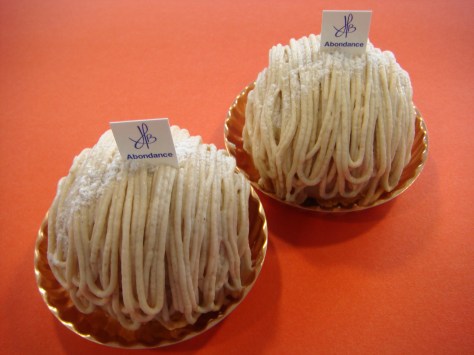
French Cake by Bernard Heberle: 4810 (Mont-Blanc)

4810

My good French friend, Bernard Heberle, a native from Alsace in France and plying his trade as a patissier in Hamamatsu City, has just sent me his last creation:

4810!
Yes, you read well, this cake’s name is a number!
Can you guess?

In his own words:
“En cette période des Kinmokusei , je te présente ce gâteau bien connu des japonais et peut être leur favori avec les short cake.
Son nom 4810 ( Non , ce n’est pas son prix , seulement l’altitude de notre Mont Blanc )
Celui ci , le notre est une base de meringue au lait avec une crème de marron et une génoise a la vanille , crème pâtissière et crème montée, nous utilisons des marrons italien du Piémont.”

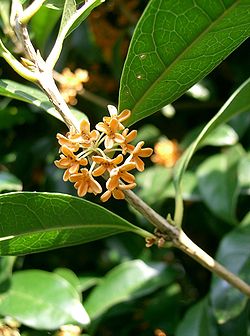
“In the Kinmokusei (fragrant orange-colored olive, the tree of Shizuoka Prefecture. Look below for picture) season, I would like to introduce a cake well known to the Japanese and perhaps their favourite with short cake.
Its name is 4810 (No, it’s not its price, only the height of Mont-Blanc!).
This particular creation rests on a milk meringue, then a marron cream and vanilla genoise. Next a creme patissier and a creme montee.
We use Itlian marrons from Piemonte.”

Kinmokusei
Kinmokusei (fragrant orange-colored olive, the tree of Shizuoka Prefecture)

Abondance
Address: Hamamatsu Shi, Sumiyoshi, 2-14-27 (in front of Seirei Hospital)
Tel.: 053-4738400
Fax: 053-4738401
Opening hours: 10:00~20:00. Closed on Tuesdays.
Homepage

RECOMMENDED RELATED SITES:
Warren Bobrow
Bread + Butter
5 Star Foodie
Frank Fariello
Mangantayon
Elinluv Tidbit Corner
Oyster Culture
Meatless Mama
Think Twice

Please check the new postings at:
sake, shochu and sushi

—————————————-
日本語のブログ
—————————————-

Japanese Cakes/Wagashi 12: Recipe-Dango/Sweet Dumplings

DANGO-1a
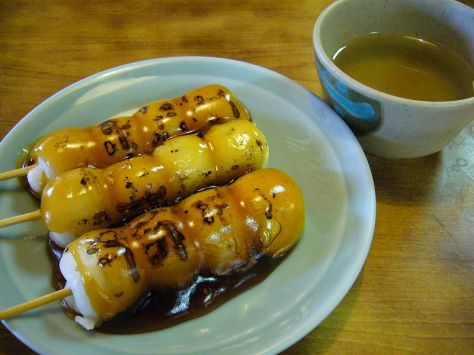
(Mitarashi Dango)

This simple recipe is particularly dedicated to my friends at Bouchonfor2, Bread + Butter, Eeyoreblues 27 and The Sophisticated Gourmet!

Japanese dango are not complicated, although it might be better to make a lot at a time!

INGREDIENTS:
-Rice (“Uruchi Kome”/normal Japnese round rice): 200g
-Water (for dango): 130cc
-Water (for sauce): 60cc
-Cornstarch: 1 teaspoon
-Sugar: 1 teaspoon
-Soy sauce: 2 teaspoons

RECIPE:

DANGO-RECIPE-1

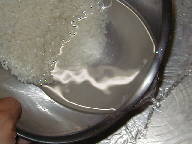
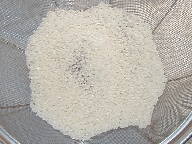
Wash rice thoroughly.
If rice is no-wash type, skip 3 first steps.

DANGO-RECIPE-2

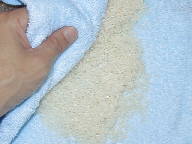
Once the rice washing water is coming out clean, drain rice and spread ontowel. Take off all excess humidity.

DANGO-RECIPE-4

Let the rice dry for two hours.

DANGO-RECIPE-3

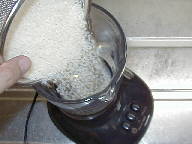
Pour rice in Blender/mixer. First work the blender for only a few seconds at a time until all the rice has been broken completeley. Then blend three times 15 seconds at a time.

DANGO-RECIPE-5

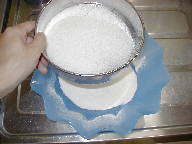
If the rice does not turn into powder easily, sift rice as many times as necessary until all rice has been reduced to powder.

DANGO-RECIPE-6

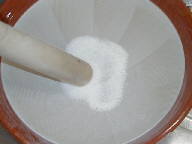
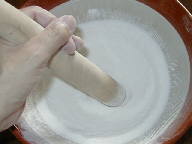
Finish the job with mortar and pestle.

DANGO-RECIPE-7

Once the rice has been reduced completely topowder, work the pestle in for 5 more minutes.

DANGO-RECIPE-8

Add water and mix well with spoon.

DANGO-RECIPE-9

Divide into small portions and steam for 15 minutes.

DANGO-RECIPE-10

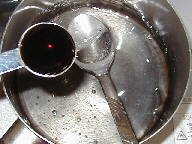
In a pan add cornstarch to water (for the sauce). keep stirring over a low fire. once the water has been become transparent add sugar and soy sauce and mix well until you obtain a smooth syrup. take off fire.

DANGO-RECIPE-11

Fill a glass with water and keep within arm’s reach.
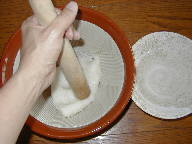
Drop all the steamed dango paste into mortar.
Work dango paste with a wet wooden pestle.
Once the paste ahas been become sticky and elastic, form small balls (the operation should not last more than 10 minutes).
Wet them to prevent them from sticking to each other.

DANGO-RECIPE-12

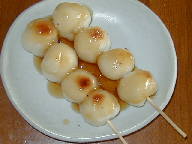
Push a wet (important!) stick through the balls (4 or 5 at the most).
Grill the balls (or not) for better effect.
Serve them smeared with syrup.

Please check the new postings at:
sake, shochu and sushi

—————————————-
日本語のブログ
—————————————-

Japanese Cakes/Wagashi 11: Dango/Sweet Dumplings

DANGO-1a
(Mitarashi Dango)

Dango (団子) is a Japanese dumpling made from mochi-ko (rice flour), related to mochi. It is often served with green tea.
In Edo times, they were very popular at tea stands along the country roads.

Dango are eaten year-round, but the different varieties are traditionally eaten in given seasons. Three to four dango are often served on a skewer. One variety of dango from Hokkaidō is made from potato flour and baked with shoyu (soy sauce).

Types of dango:

There are many different varieties of dango which are usually named after the various seasonings served on or with it.

DANGO-2
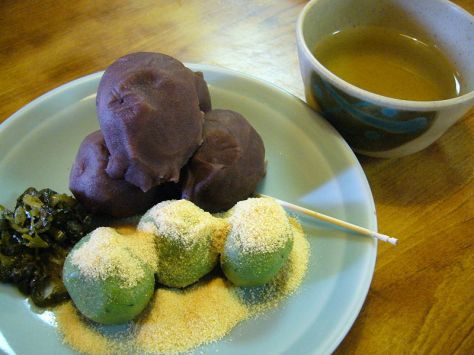
Chadango: Green-tea flavored Dango.

DANGO-4
Dango served covered with anko

Actually, if you want to write all about Dango, you’d need to publish a whole book!

Chichi dango: Slightly-sweet light treats usually eaten as a dessert.

DANGO-1
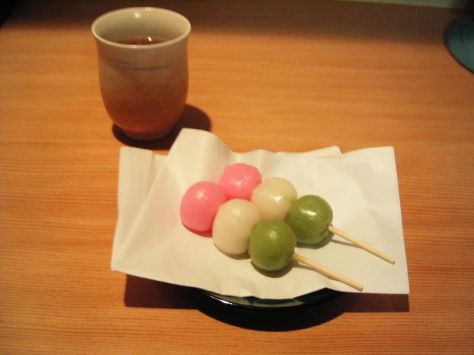
Hanami dango: Also has three colors, Hanami dango is traditionally
made during Sakura-viewing season. Hence the name Hanami (Hanami means “flower viewing”; hana meaning “flower”, and mi meaning “to see”).

DANGO-1b
Kushi dango: Dango held by a skewer

DANGO-3
Mitarashi: Covered with a syrup made from shouyu (soy sauce), sugar and starch.

Please check the new postings at:
sake, shochu and sushi

—————————————-
日本語のブログ
—————————————-

Japanese Dessert: Kakigoori/Shaved Ice with Syrup

KAKEKOORI-1

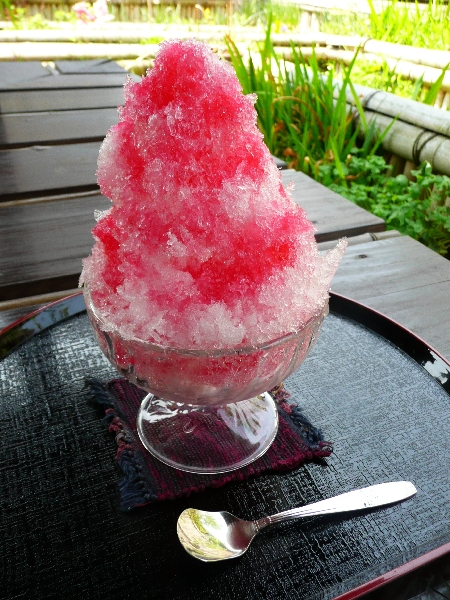
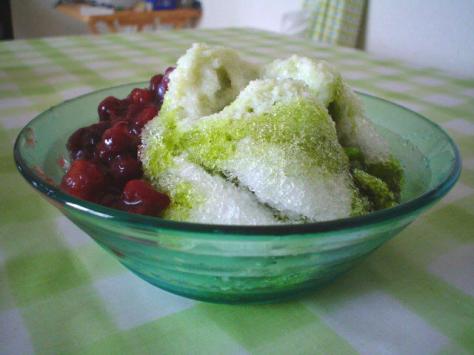
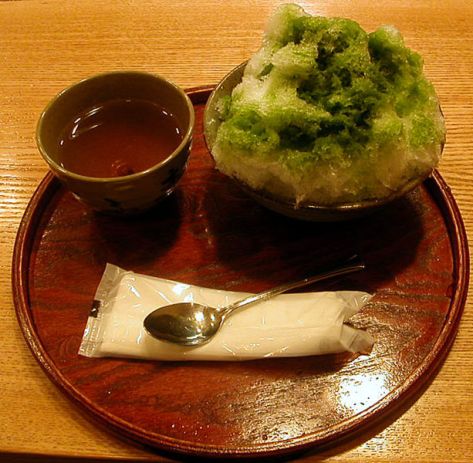
Kakigōri (かき氷) is a very popular Japanese dessert made from shaved ice flavored with syrup.
It was served for the first time in Kanagawa Prefecture in 1869!

KAKEKOORI-2

Popular flavors include: strawberry, cherry, lemon, green tea, grape, melon, “blue-Hawaii” sweet plum, and colorless syrup. Some shops provide colorful varieties by using two or more different syrups. To sweeten Kakigōri, condensed milk is often poured on top of it.

KAKEKOORI-3

It is nearly identical to a snow cone but can have a slightly rougher consistency and a spoon is almost always used. The traditional way of making kakigōri involves using a hand cranked machine to spin a block of ice over an ice shaving blade. However, electric ice shavers are most often used, though street vendors can still be seen hand-shaving ice blocks in the summer.

KAKEKOORI-4

In addition to the streets, kakigōri is also sold in festivals, convenience stores, coffee shops, and restaurants. During the hot summer months, kakigōri is sold virtually everywhere in Japan. Some coffee shops serve it with ice cream and sweet bean paste. Convenience stores may also sell it already flavored and packaged similar to ice cream.

KAKEKOORI-5

In other countries in East Asia, similar varieties can be seen.

Halo halo: Filipino shaved ice topped with sweetened beans, nata de coco and ice cream. “Halo-Halo” literally means “mix-mix” in the Tagalog language. Some shops in Japan also sell these sweets.
Bingsu (빙수) Korean shaved ice. The most popular kind is patbingsu. It is topped with sweetened red beans, canned fruits, and soybean powder. Many other varieties can be found throughout the country.
Bàobīng (刨冰) in Mandarin Pinyin or Chhoah-peng (剉冰) in Taiwanese POJ: Taiwanese shaved ice. There are many varieties in Taiwan. Some of them are topped with fresh fruits, fruits syrup and condensed milk. Some of them are topped with sweetened beans, glutinous rice balls and brown sugar syrup, while others will even use seafood. Some vendors use milk ice to make finer shaved ice, and some vendors may sometimes use a hand blade to shave block ice in order to produce rough crushed ice.
Ice kacang: Malaysia and Singapore Shaved ice topped with sweetened syrup of various colours and flavours, condensed and evaporated milk, and sometimes also durian pulp or vanilla ice cream. Beneath the ice sweetened red beans, canned fruit, attap seeds and grass jelly are usually added. Electric ice shavers are often used; though some vendors may use a hand blade to shave the ice in order to produce a rough texture. A variation of this would be Cendol which is shaved ice with sweet green coloured glutinous rice noodles drizzled with palm sugar it is usually accompanied with kidney beans and canned sweetcorn.
Nam Kang Sai: Thai Shaved Ice. In Thailand, this kind of cold dessert is very popular as well. The differences from other countries’ shaved ice is that in the Thai version the toppings (mixings) are in the bottom and the shaved ice is on top. There are between 20-30 varieties of mixings that can be mixed in. Among them are young coconut that have been soaked in coconut milk, black sticky rice, chestnuts,sweetened taro, red beans, sarim (thin strands of cooked flour that is very chewy and slippery) and many more.

Please check the new postings at:
sake, shochu and sushi

—————————————-
日本語のブログ
—————————————-

Japanese Cakes/Wagashi 10: Youkan: Easy Recipe-Mizu Youkan

MIZU-YOKAN-1

Youkan come in many guises. Here is an easy and ver basic recipe for “Mizu Youkan” that you will be able to adapt into many creations of yours! For vegans, vegetarians and omnivores!

INGREDIENTS:
-Boiled azuki beans: 1 can (430 g)
-Brown sugar: 60 g
-Salt: a pinch
-Agar agar Powder (“kanten” in Japanese): 4 g
-Water: 300 ml + 300 ml

RECIPE:

MIZU-YOKAN-2

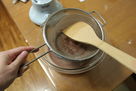
Blend beans and 300 ml of water until smooth.

MIZU-YOKAN-3

Pass mixture through fine sieve.

MIZU-YOKAN-4

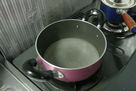
In 300 ml of water drop agara agar. Bring to boil, stirring at the same time. Then keep stirring vern medium fire for 1 minute.

MIZU-YOKAN-5

Switch off fire. Pour sugar and salt. Mix well. Add bean paste. Mix well.

MIZU-YOKAN--6

Pour in recipients of your choice (that is when the fun starts!) and let cool completely. Keep in fridge (not too cold, please). Take out of recipient and serve!

More recipes to come!

Please check the new postings at:
sake, shochu and sushi

—————————————-
日本語のブログ
—————————————-

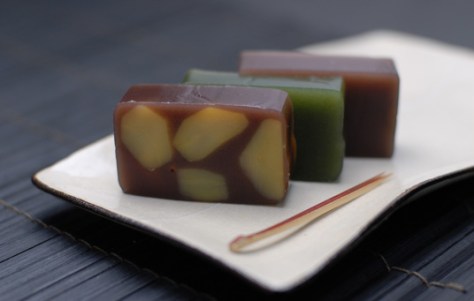
Japanese Cakes/Wagashi 9: Youkan

YOUKAN-JELLY

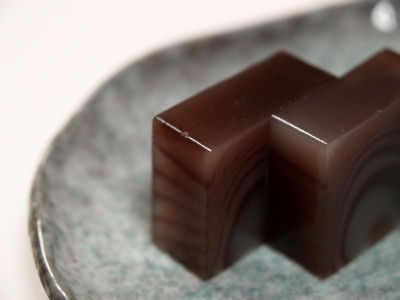
Here is another popular type of Japanese Wagashi fit for Vegans and Vegetarians: Youkan!

YOUKAN-MIZUYOKAN
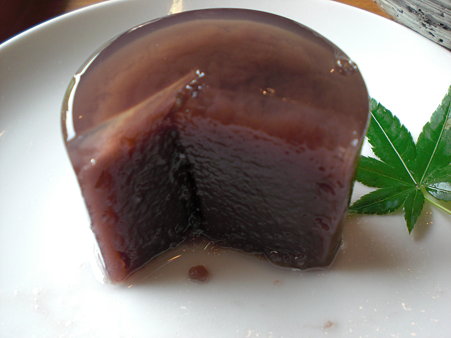
Mizu Youkan

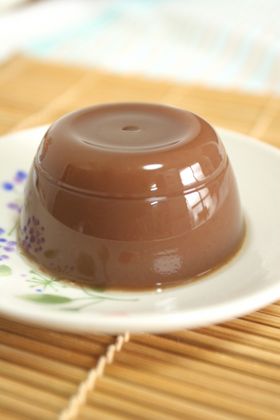
Yōkan (羊羹) is a thick jellied dessert made of red bean paste, agar (寒天/”kanten” in Japanese, and sugar. It is usually sold in a block form, and eaten in slices.

There are two main types: neri yōkan and mizu yōkan. “Mizu” means “water”, and indicates that it is made with more water than usual. Mizu yōkan is often chilled and eaten in summer.
Although most yōkan found in Japan and abroad are typically made with red bean paste, yōkan made from white kidney bean paste (しろあん, 白餡, shiro an in Japanese) are also relatively common. This type of yōkan is milky and translucent with a much milder flavour than that made of red bean paste.

YOUKAN-GREENTEAYOUKAN
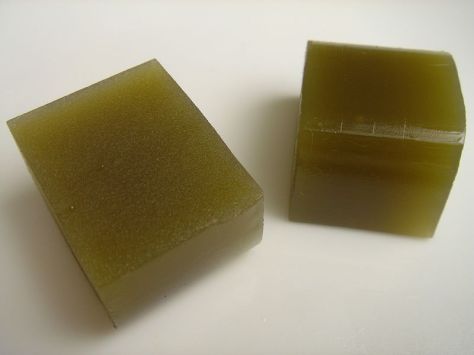
Tea Youkan

As such, they can be effectively flavoured and coloured by using green tea powder.

YOUKAN-TRICOLOUR

MizuyōkanYōkan may also contain chopped chestnuts, persimmons, whole sweetened azuki beans, figs, and sweet potato, among other additions. Sugar can be also be substituted with honey, dark brown sugar, or molasses to alter the taste of the yōkan produced. There is also shio yōkan, which uses small amounts of salt as a sweetener.

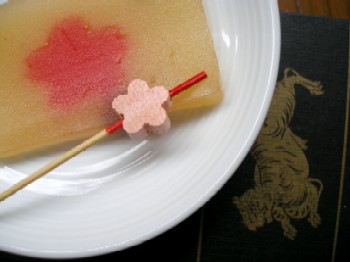
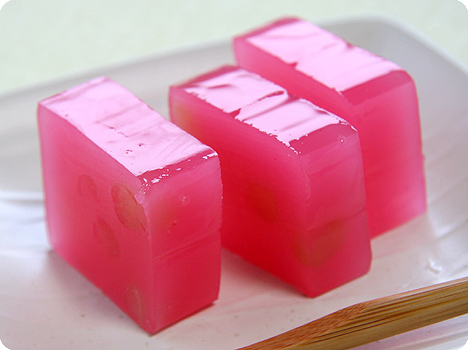
Other Pictures of Youkan:

YOUKAN-BICOLOUR

YOUKAN-CHERRY

YOUKAN-PINK

I will introduce an easy recipe soon!

Please check the new postings at:
sake, shochu and sushi

—————————————-
日本語のブログ
—————————————-

Japanese Cakes/Wagashi 8: Recipe-Beni Mochi

BENI-MOCHI-1

Here is a simple Japanese Cake/Wagashi Recipe that can be adapted to all shapes by vegans and vegetarians! Beni Mochi.
Beni Mochi, or 紅餅 in Japanese, means “Red Mochi”.

INGREDIENTS: 16 pieces

-Rice flour: 250 g
-White sugar: 80 g
-Water: 100 ml/half a cup (for white mochi)
-Brown sugar (take care in choosing the colour): 80 g
-Water: 100 ml/half a cup (for red mochi)

RECIPE:

BENI-MOCHI-2

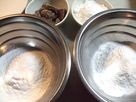
Divide rice flour into two equal parts (125 g) and pour into two different bowls.

BENI-MOCHI-3

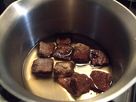
In a deep pan, drop red sugar and add water. Heat over fire until completed melted. Switch off fire. Add rice flour and mix well.
Repeat same procedure with white sugar.

BENI-MOCHI-4

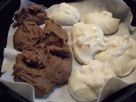
In a steamer, put mochi pastes (take care no to mix them) on a steaming paper and steam for 10 minutes.

BENI-MOCHI--5

Take out. Let cool. Make two balls and keep in different bowls.

BENI-MOCHI--6

Shape the mochi as above or according to your preference. Put them back inside the steamer on steming paper and steam for 10 more minutes.

BENI-MOCHI--7

Let cool and serve!
Are best enjoyed with Japanese tea, hot or cold!

Please check the new postings at:
sake, shochu and sushi

—————————————-
日本語のブログ
—————————————-

LE CAFE-LABO: Classic Cakes (12)-Acapulco

acapulco-1

It had been some time since I checked on that great confectionery institution in Shizuoka City, LE CAFE-LABO, so yesterday afternoon I paid a visit to their shop In Isetan Department Store to find out if they had a new creation on display for my students!

acapulco-2

In fact they did!
The cake is called “Acapulco”.
I refrained buying two of them, otherwise my lady student might miscontrued my intent! LOL

It is very feminine and luscious not only in looks and concept, but also in taste and texture.
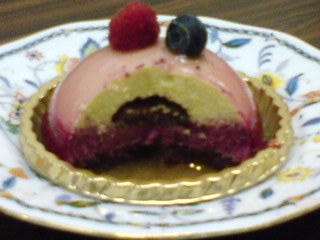
The base is a chocolate joconde short cake with a layer of cassis mousse surmounted with a small chocoate macaron inside. The whole is covered with a “mound” of green apple mousse overlaid with a thin layer of cassis jell.

Perfect for the summer with a cold glass of tea!

LE CAFE-LABO
424-0886 Shizuoka City, Shimizu Ku, Kusanagi, 46
Tel.: 054-3441661
Also available at Isetan Dept. Store, Shizuoka City, Aoi Ku, Shichiken-Cho.

Please check the new postings at:
sake, shochu and sushi

—————————————-
日本語のブログ
—————————————-

Japanese Cakes/Wagashi 7: Creation 3-Hanabira Mochi

WAGASHI-HANABIRAMOCHI

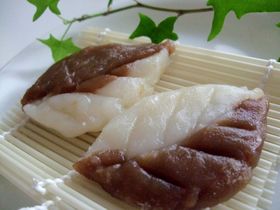
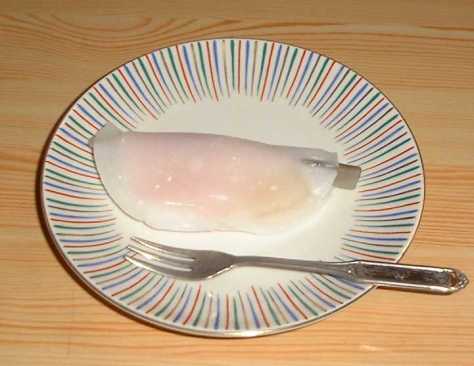
Here is another traditional Japanese Cake/Wagashi: Hanabira Mochi (菱葩餅 in Japanese)!
Hanabiramochi is a Japanese sweet usually eaten at the beginning of the year. Hanabiramochi is also served at the first tea ceremony of the New Year.

The name “hanabiramochi” literally means “flower petal mochi”. The original form of Hanabiramochi is Hishihanabira, a dessert that was eaten by the Imperial family at special events coinciding with the beginning of the year.

Hanabiramochi was first made in the Meiji Era (8 September 1868 – 30 July 1912), but it is now a familiar New Year wagashi.

The exact shape of hanabiramochi is strictly defined by tradition. The white mochi covering is flat and round, folded over to form a semicircular shape, and must have a pink color showing through in the center of the confection, fading to a white at the edge. Unlike a daifuku the mochi must not completely seal the insides.

In the center of a hanabiramochi is a layer of anko, a sweet bean paste, commonly the white kind made from sweetened mung beans. In the very center is a thin strip of sweetly flavoured gobo (burdock root) which protrudes from the mochi on both sides.

Each element of the hanabiramochi is significant.

The red colour showing through the white mochi is not only appropriate to the celebration of the new year but also evokes the Japanese apricot/plum (ume) blossom, which in turn represents the purity, perseverance, and renewal associated with the New Year.

The gobo represents pressed ayu, a fish exclusive to East Asia, and a prayer for a long life.

A vegan way to celebrate the New Year!

Please check the new postings at:
sake, shochu and sushi

—————————————-
日本語のブログ
—————————————-

Japanese Cakes/Wagashi 6: Creation 2/Sakura Mochi

WAGASHI-SAKURA-MOCHI-2

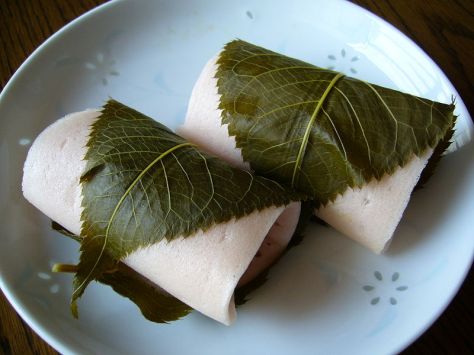
Sakura Mochi (桜餅) is a variety of wagashi, or Japanese confectionery consisting of a sweet pink mochi (rice cake) and red bean paste, covered with a leaf of sakura (cherry blossom).

Sakura Mochi (桜餅) or Cherry Blossom Mochi has been popular all over Japan since the beginning of gastronomy in the Land of the Rising Sun.
The style of Sakura Mochi differs from the regions in Japan.
Basically, the east of Japan such as Tokyo uses shiratama-ko (白玉粉/ rice flour) and the west side such as Kansai uses dōmyōji-ko (道明寺粉/glutinous rice flour) for “batter”.

WAGASHI-SAKURA-MOCHI
Anko is folded inside a mochi sheet and again inside an edible cherry tree leaf.

WAGASHI-SAKURA-MOCHI-3

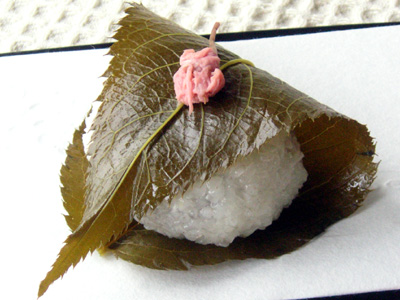
Here the anko is inside white mochi, then folded in cherry tree leaf and topped with an edible cherry flower.

WAGASHI-SAKURA-MOCHI-4

A smaller, very cute Sakura Mochi: the coloure mochi contains anko and is presented inside an edible cherry tree leaf.

WAGASHI-SAKURA-MOCHI-5

Sakura mochi as sold over the counter in the Kansai/West Japan Region.
They are also called Sakura Dango/Cherry Balls (no comment, please!LOL)

SIMPLE RECIPE
This recipe is for making Western-style sakuramochi. Serves 8.

INGREDIENTS:
3/4 cup glutinous rice flour
1/3 cup sugar
1 cup water
3/4 cup red bean paste
red food coloring (optional)
8 sakura leaves pickled in salted water

PREPARATION:
Wash pickled sakura leaves and dry.
Boil water in a pan.
Mix glutinous flour in the water.
Cover the pan with a lid and leave it for 5 minutes.
Place a wet cloth in a steamer and put the dough on the cloth.
Steam the dough for about 20 minutes over medium heat.
Remove the steamed dough to a bowl.
Mash the dough slightly with a wooden pestle, mixing sugar into the dough.
Dissolve a little bit of red food color in some water.
Add some of the red water in the dough and mix well.
Divide the pink mochi into 8 balls.
Flat each mochi ball by hands and place red bean paste filling on the dough.
Wrap the filling with mochi and rounds by hands.
Wrap each mochi with a sakura leaf.

Please check the new postings at:
sake, shochu and sushi

—————————————-
日本語のブログ
—————————————-

Japanese Cakes/Wagashi 6: Creation 1

WAGASHI-VARIETIES-1

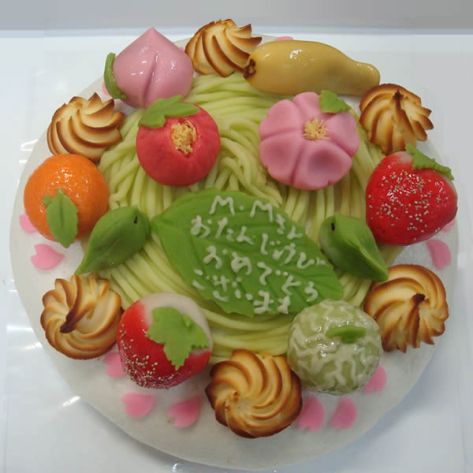
Here is an example of what could be done by a Japanese chef as Wagashi/Japanese Cake!
This particular Birthday Cake creation is the work of Chef Maeda at Kouseido in Osaka City!
Will look around and post other creations whenever I can!

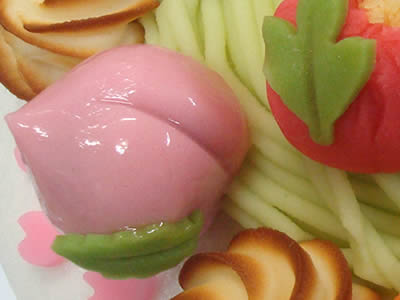
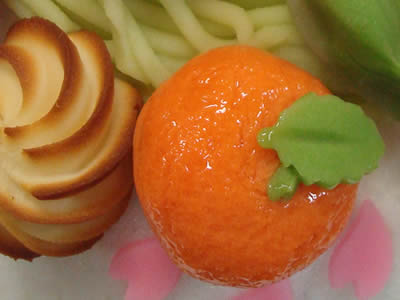
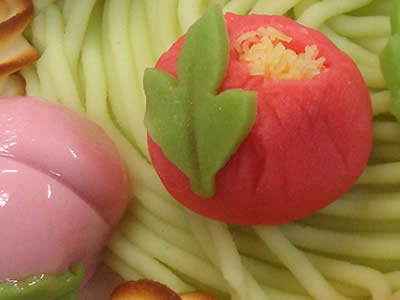
Here is a breakdown of the above:

WAGASHI-VARIETIES-MOMO

“Momo”/Peach

WAGASHI-VARIETIES-MIKAN

“MIkan”/Orange

WAGASHI-VARIETIES-TSUBAKI

“Tsubaki”/Camelia

WAGASHI-VARIETIES-SAKURA

“Sakura”/Cherry Blossom

WAGASHI-VARIETIES-ICHIGO

“Ichigo”/Strawberry

WAGASHI-VARIETIES-MELON

“Meron”/Melon

Please check the new postings at:
sake, shochu and sushi

—————————————-
日本語のブログ
—————————————-