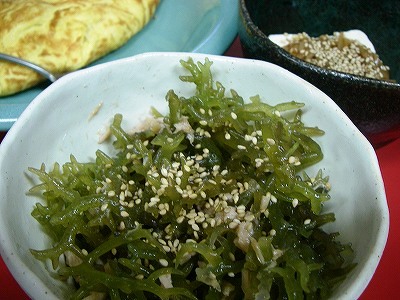
Tag Archives: Japanese Gastronomy

French Gastronomy: Pacific Saury and Potato Terrine with Aioli at Pissenlit

Service: excellent and very friendly
Facilities: great washroom, great cleanliness overall
Prices: reasonable, good value.
Strong points: Interesting wine list. Great use of local products.
no-smoking-logoentirely non-smoking!

Pacific Saury. or sanma/秋刀魚 (Atumn Sword Fish in Japanese) is very much in season right now when it is fat and easily prepared.
The Japanese love it as sashimi or grilled directly over a fire.

Tooru Arima at Pissenlit in Shizuoka City came up with a typically French creation: terrine!

The organic potatoes had been first boiled and seasoned and then sieved before being laid and seasoned again with ground black pepper in a kind of almost solid puree intersped with very thin slices of Pacific saury. Cutting/slicing the fish can be done only with the proper Japanes knife and skills.

The terrine was then gently cooked in bain-marie and cooled down completely before being served at room temperature.

A succulent aioli mayonnaise and organic greens from Mishima City completed this simple dish but so beutiful in balance and taste!

PISSENLIT
420-0839 Shizuoka City, Aoi Ku, Takajo, 2-3-4
Tel.: 054-270-8768
Fax: 054-627-3868
Business hours: 11:30~14:30; 17:00~22:00
Closed on Tuesdays and Sunday evening
Homepage (Japanese)
Credit Cards OK

RECOMMENDED RELATED SITES:
Warren Bobrow, Bread + Butter, Zoy Zhang, Hungry Neko, Think Twice, Frank Fariello, Mangantayon, Hapabento, Elinluv Tidbit Corner, Tokyo Terrace, Maison de Christina, Chrys Niles,Lexi, Culinary Musings, Wheeling Gourmet, Comestiblog, Chronicles Of A Curious Cook, Tokyo Through The Drinking Glass, Tokyo Foodcast, Palate To Pen, Yellin Yakimono Gallery, Tokyo Terrace, Hilah Cooking, More than a Mount Full, Arkonite Bento, Happy Little Bento; 5 Star Foodie; Jefferson’s Table; Oyster Culture; Gourmet Fury; Island Vittles; Good Beer & Country Boys; Rubber Slippers In Italy; Color Food daidokoro/Osaka;/a; The Witchy Kitchen; Citron Et Vanille, Lunsj Med Buffet/Estonian Gastronomy (English), Cook, Eat, Play, Repeat, Chrisoscope; Jacqueline Church; The Foodonymph (in Dubai!); Alchemy, Simple Ingredients, magical Food (in Ireland!); Curious Foodie; Mr. Foodie (London/UK)

Please check the new postings at:
sake, shochu and sushi

French gastronomy with local products: Roasted Pork and Organic Vegetables at Pissenlit

Service: excellent and very friendly
Facilities: great washroom, great cleanliness overall
Prices: reasonable, good value.
Strong points: Interesting wine list. Great use of local products.
no-smoking-logoentirely non-smoking!

The main reason for my choosing a restaurant is whether it serves cuisine made with as many locla products as possible, be they vegetables, meat, fruit or fish. or all of them!

Luckily enough, Shziuoka Prefecture is a mine gold when it comes to local poducts as proved in this latest seasonal creation by Tooru Arima at Pissenlit in Shizuoka city!

The pork is “Yusui Buta/湧水豚” from Fujinomiya City at the foot of Mount Fuji which was served roasted with a dijon seed mustard sauce.

All the vegetables were organic and grown by Mr. Hirooka in Mishima City (also at the foot Mount Fuji!).
The vegetables represented here are from the top: Okra. Shishito pepper, Shikaku Ingen/squre string bean, and Ingen mame/String bean.

The pork lay partly over a slice of roasted white eggplant/aubergine.
The later is topped with okra and its flower!

For a better view of the okra flower!
Succulent!

PISSENLIT
420-0839 Shizuoka City, Aoi Ku, Takajo, 2-3-4
Tel.: 054-270-8768
Fax: 054-627-3868
Business hours: 11:30~14:30; 17:00~22:00
Closed on Tuesdays and Sunday evening
Homepage (Japanese)
Credit Cards OK

RECOMMENDED RELATED SITES:
Warren Bobrow, Bread + Butter, Zoy Zhang, Hungry Neko, Think Twice, Frank Fariello, Mangantayon, Hapabento, Elinluv Tidbit Corner, Tokyo Terrace, Maison de Christina, Chrys Niles,Lexi, Culinary Musings, Wheeling Gourmet, Comestiblog, Chronicles Of A Curious Cook, Tokyo Through The Drinking Glass, Tokyo Foodcast, Palate To Pen, Yellin Yakimono Gallery, Tokyo Terrace, Hilah Cooking, More than a Mount Full, Arkonite Bento, Happy Little Bento; 5 Star Foodie; Jefferson’s Table; Oyster Culture; Gourmet Fury; Island Vittles; Good Beer & Country Boys; Rubber Slippers In Italy; Color Food daidokoro/Osaka;/a; The Witchy Kitchen; Citron Et Vanille, Lunsj Med Buffet/Estonian Gastronomy (English), Cook, Eat, Play, Repeat, Chrisoscope; Jacqueline Church; The Foodonymph (in Dubai!); Alchemy, Simple Ingredients, magical Food (in Ireland!); Curious Foodie; Mr. Foodie (London/UK)

Please check the new postings at:
sake, shochu and sushi

Iwate Prefecture Specialties 3: Spiny Lobster

As previously mentioned, I’ve just spent a nice holiday away from it all in Iwate Prefecture in the North/Tohoku Part of Japan, in Morioka more precisley!

Although Iwate Prefecture does not have as long a seashore as in Shizuoka, it’s nonetheless noted for its fish and crustaceans, especially spiny lobsters/Ise Ebi/伊勢海老!

The above sashimi dish was served to us for dinner at our hotel in Shizukuishi, a noted area for skiing and hotsprings.

The spiny lobster is estremely fresh of course and its raw meat is very sweet, a real morsel here in Japan.
The fish are maguro/tuna toro and sanma/Pacific Saury.

A great extravagant combination!

RECOMMENDED RELATED SITES:
Warren Bobrow, Bread + Butter, Zoy Zhang, Hungry Neko, Think Twice, Frank Fariello, Mangantayon, Hapabento, Elinluv Tidbit Corner, Tokyo Terrace, Maison de Christina, Chrys Niles,Lexi, Culinary Musings, Wheeling Gourmet, Comestiblog, Chronicles Of A Curious Cook, Tokyo Through The Drinking Glass, Tokyo Foodcast, Palate To Pen, Yellin Yakimono Gallery, Tokyo Terrace, Hilah Cooking, More than a Mount Full, Arkonite Bento, Happy Little Bento; 5 Star Foodie; Jefferson’s Table; Oyster Culture; Gourmet Fury; Island Vittles; Good Beer & Country Boys; Rubber Slippers In Italy; Color Food daidokoro/Osaka;/a; The Witchy Kitchen; Citron Et Vanille, Lunsj Med Buffet/Estonian Gastronomy (English), Cook, Eat, Play, Repeat, Chrisoscope; Jacqueline Church; The Foodonymph (in Dubai!); Alchemy, Simple Ingredients, magical Food (in Ireland!); Curious Foodie; Mr. Foodie (London/UK)

Please check the new postings at:
sake, shochu and sushi

Iwate Prefecture Specialties 2: Sanma/Pacific Saury

Sanma O-tsukuri: plate of Pacific Saury sashimi

As previously mentioned, I’ve just spent a nice holiday away from it all in Iwate Prefecture in the North/Tohoku Part of Japan, in Morioka more precisley!

Although Iwate Prefecture does not have as long a seashore as in Shizuoka, it’s nonetheless noted for its fisheries, especially sanma/Pacific saury!

As it comes absolutely fresh in that Prefecture, it is best savored raw in season (right now) when it is “fat”.
We ate the above in a great little izakaya in Morioka City.
The fish was cut in almost paper-thin slices and served with lime, grated ginger, momijioroshi/grated daikon with chili pepper and finely chopped thin leeks to be dipped into soy sauce.
A must for sashimi officionados!

RECOMMENDED RELATED SITES:
Warren Bobrow, Bread + Butter, Zoy Zhang, Hungry Neko, Think Twice, Frank Fariello, Mangantayon, Hapabento, Elinluv Tidbit Corner, Tokyo Terrace, Maison de Christina, Chrys Niles,Lexi, Culinary Musings, Wheeling Gourmet, Comestiblog, Chronicles Of A Curious Cook, Tokyo Through The Drinking Glass, Tokyo Foodcast, Palate To Pen, Yellin Yakimono Gallery, Tokyo Terrace, Hilah Cooking, More than a Mount Full, Arkonite Bento, Happy Little Bento; 5 Star Foodie; Jefferson’s Table; Oyster Culture; Gourmet Fury; Island Vittles; Good Beer & Country Boys; Rubber Slippers In Italy; Color Food daidokoro/Osaka;/a; The Witchy Kitchen; Citron Et Vanille, Lunsj Med Buffet/Estonian Gastronomy (English), Cook, Eat, Play, Repeat, Chrisoscope; Jacqueline Church; The Foodonymph (in Dubai!); Alchemy, Simple Ingredients, magical Food (in Ireland!); Curious Foodie; Mr. Foodie (London/UK)

Please check the new postings at:
sake, shochu and sushi

Iwate Prefecture Specialties 1: Noodles and Soba

Jaja Men

I’ve just spent a nice holiday away from it all in Iwate Prefecture in the North/Tohoku Part of Japan, in Morioka more precisley!

Whenever you mention Morioka City in this country, the Japanese will firts say noodles, ramen, Ja Ja Men and so on!
A paradise for the Missus who is a me, vermicelli, udon, soba and pasts addict!

The picture above shows the Ja Ja Men, maybe its most famous morsel in taht field (I will write a more detailed report on my visit as soon as I more time!)

Yasai Soba Salad

Soba are next and this particular cold soba served with loads of finely chopped carrot and cucumber and katsuo bushi/dry bonito havings was simple and tasty!
The Missus certainly enjoyed them!

As for me, I had sake soba!

The small flask at the right contains cold sake. I poured it over the two-tier soba dishes. The sake will drip into the bttom dish (thrid one) and will be added tothe suace later. Served with mushrooms and grated daikon.
Now, that was a beauty!

Tororo Soba

Tororo means grated yama imo/yam. Another Missus’ favorite (I mean another “favorite”, not another “Missus”).
We ate that in Hiraizumi on top of a mountain!

Cold tomato Spaghetti salad.

I had this in the same restaurant, It was made with local products only!

Local Korean restaurants serve their own variety of “Re men/cold ramen”!
Very tasty indeed and always serve dwith a slice of fruit in it!

RECOMMENDED RELATED SITES:
Warren Bobrow, Bread + Butter, Zoy Zhang, Hungry Neko, Think Twice, Frank Fariello, Mangantayon, Hapabento, Elinluv Tidbit Corner, Tokyo Terrace, Maison de Christina, Chrys Niles,Lexi, Culinary Musings, Wheeling Gourmet, Comestiblog, Chronicles Of A Curious Cook, Tokyo Through The Drinking Glass, Tokyo Foodcast, Palate To Pen, Yellin Yakimono Gallery, Tokyo Terrace, Hilah Cooking, More than a Mount Full, Arkonite Bento, Happy Little Bento; 5 Star Foodie; Jefferson’s Table; Oyster Culture; Gourmet Fury; Island Vittles; Good Beer & Country Boys; Rubber Slippers In Italy; Color Food daidokoro/Osaka;/a; The Witchy Kitchen; Citron Et Vanille, Lunsj Med Buffet/Estonian Gastronomy (English), Cook, Eat, Play, Repeat, Chrisoscope; Jacqueline Church; The Foodonymph (in Dubai!); Alchemy, Simple Ingredients, magical Food (in Ireland!); Curious Foodie; Mr. Foodie (London/UK)

Please check the new postings at:
sake, shochu and sushi

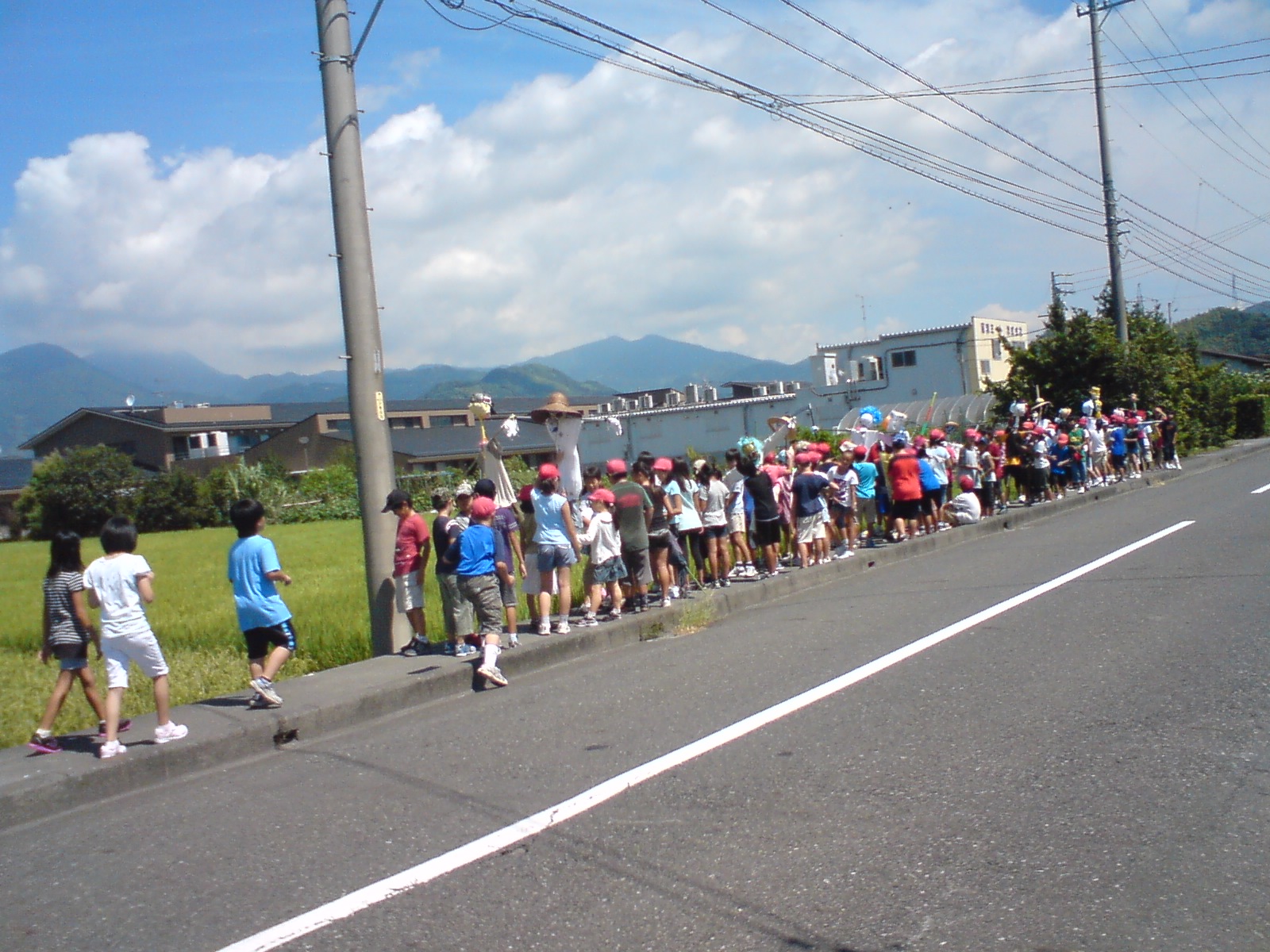
Erecting the Kakashi/Scarecrow at Ryunan Primary School Rice Paddy

Ryunan Primary School has been organizing a traditional Festival for the last 40 years: Scarecrow Erecting!

This Festival takes place on the first morning of the second semester of the scholar year.
As I had been invite to attend (I coach cricket there, too) I found myself meeting the kids at 10:40 a.m. in blinding heat!

<

The school was founded 46 years and is still a large one by Shizuoka City standards in spite of the declining population.

I told you it was really hot (33 degrees celsius) and the teachers (and I) were wearing bandanas! As for the kids caps are compulsory!

But some kids managed to forget them, which shows that Japanese society is not that much different! LOL

For once I was allowed to take pictures of the kids as this was a public event, and the kids loved the attention (all those V signs!)!

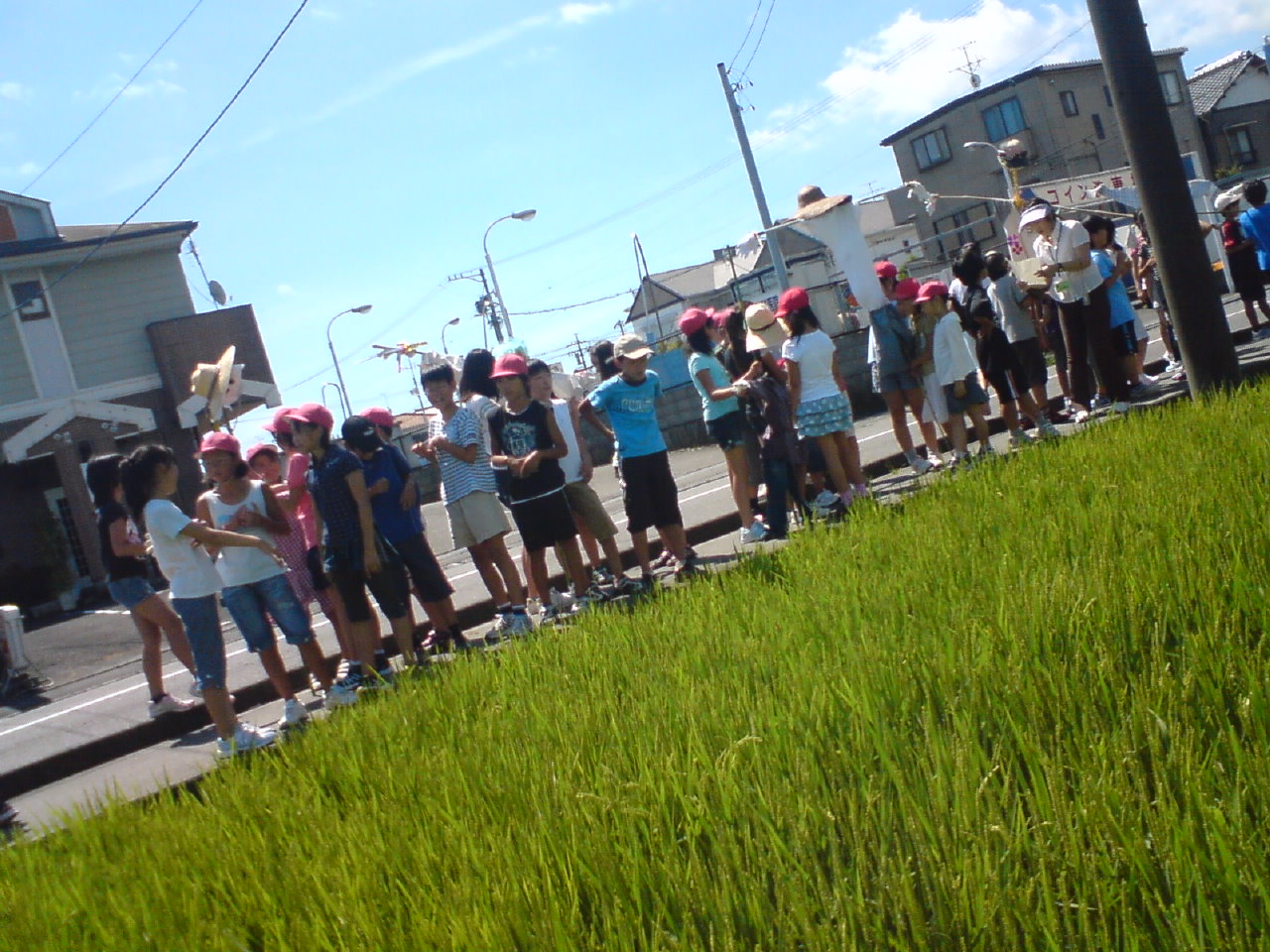
The kids were divided into 21 groups of 5th graders looking after 2nd graders.

The kids who had forgotten their caps were already having second thoughts!

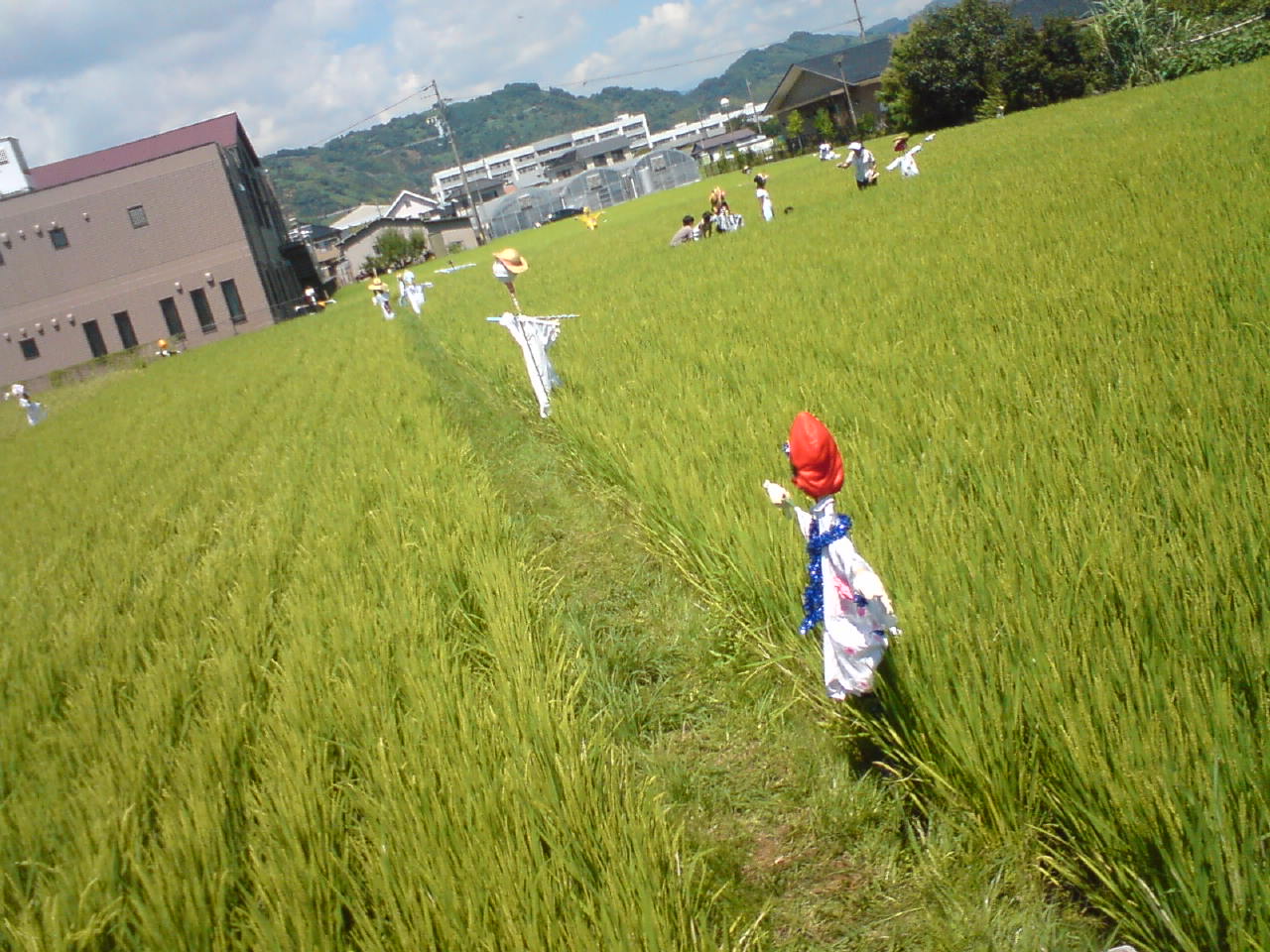
The school rice paddy is located behind the school at a distance and across a wide street.

It is a large rice paddy, by scholl paddies standards, and thekids could walk across it thanks to elevated narrow paths.

That “kakashi/scarecrow” is about to get a sun-tan (or sunstroke!)!

The kids plant their own rice in May.
Until two years ago they used Asahi no Yume/朝日の夢/Morning Sun Dream variety. But they have switcged to Hi no Hikari/ヒノヒカリ/Day’s Sunshine.

I must say were very disciplined and were waiting for their turn to bring their kakashi into the rice paddies with a smile!

Each group went to a preordained spot and waited for their teachers to give a hand (and a hammer) to ercet their charges.

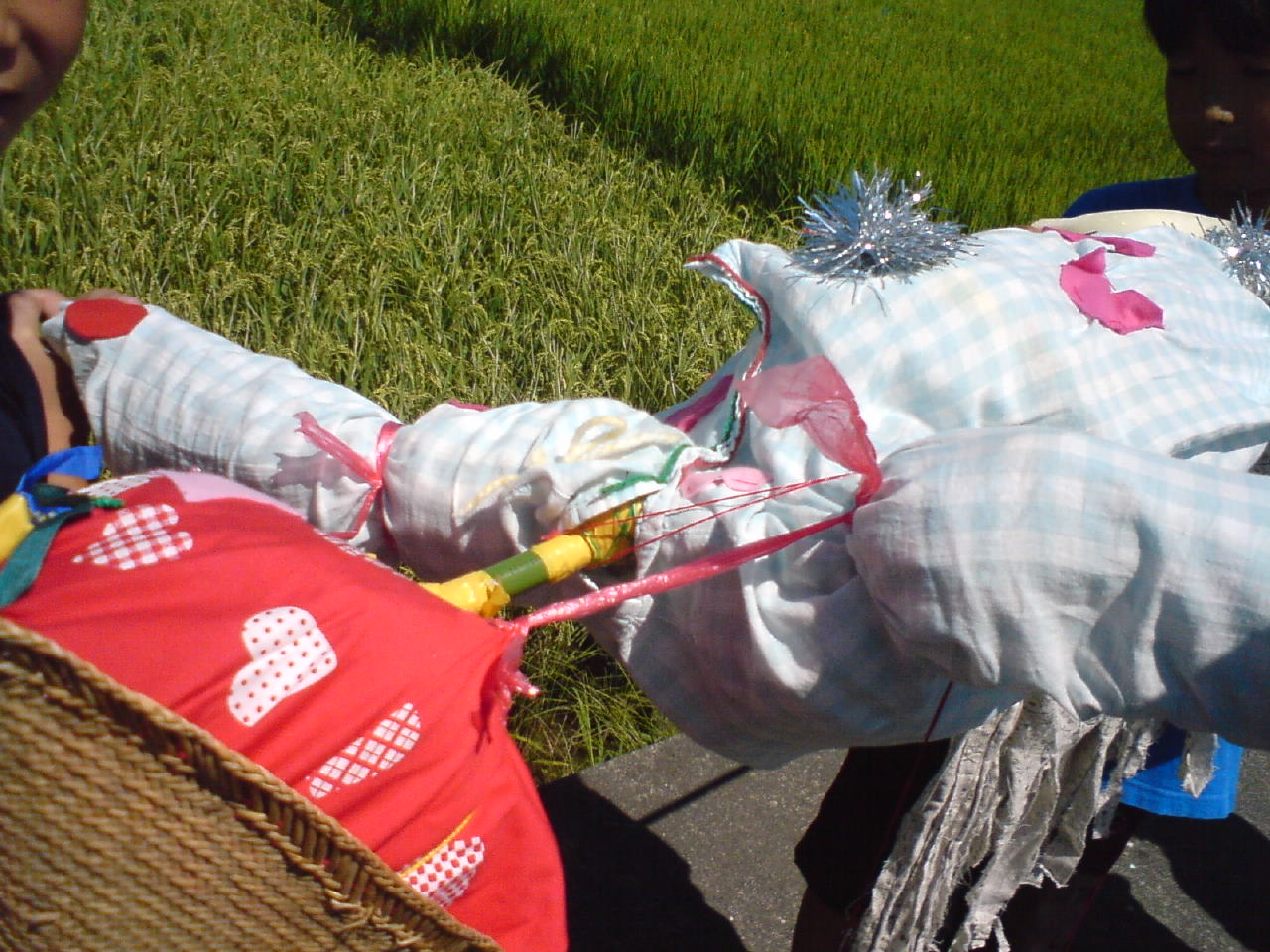
Some kakashi wer cute!
Incidentally, the teacher is not a scarecrow!

This one might scare the crows (loads of them here!) but not the kids!

I’m afraid this one will be eaten by the birds!

Now, what are those red eggs?
The teachers explained that they use only a minimum of fertilizer and pesticide so as not to interfere with the ecology.

-“The eggs of a jumbo Ta Mushi!” as repied one of the kids, taking one of them out to admire…
Big slug!
Actually the paddy is full of life, and the kids have no qualms chasing them!

Smiles everywhere!

The kakashi will stay there for people to admire and birds to avoid until October when the kids will harvest the rice and cook it themselves for school lunch!

RECOMMENDED RELATED SITES:
Warren Bobrow, Bread + Butter, Zoy Zhang, Hungry Neko, Think Twice, Frank Fariello, Mangantayon, Hapabento, Elinluv Tidbit Corner, Tokyo Terrace, Maison de Christina, Chrys Niles,Lexi, Culinary Musings, Wheeling Gourmet, Comestiblog, Chronicles Of A Curious Cook, Tokyo Through The Drinking Glass, Tokyo Foodcast, Palate To Pen, Yellin Yakimono Gallery, Tokyo Terrace, Hilah Cooking, More than a Mount Full, Arkonite Bento, Happy Little Bento; 5 Star Foodie; Jefferson’s Table; Oyster Culture; Gourmet Fury; Island Vittles; Good Beer & Country Boys; Rubber Slippers In Italy; Color Food daidokoro/Osaka;/a; The Witchy Kitchen; Citron Et Vanille, Lunsj Med Buffet/Estonian Gastronomy (English), Cook, Eat, Play, Repeat, Chrisoscope; Jacqueline Church; The Foodonymph (in Dubai!); Alchemy, Simple Ingredients, magical Food (in Ireland!); Curious Foodie; Mr. Foodie (London/UK)

Please check the new postings at:
sake, shochu and sushi

Mango Cheesecake

When it comes to sweets in Summer, it is not always easy to satisfy yourself or your friends. Especially cakes tend to become either too heavy or too light.
The Japanese have struck the right balance with their notion of cheesecakes.
Here is a simple recipe that should please everyone, be the adults or kids!
Keep in mind this is the basic recipe. Obviously you can add for taste all kinds of liqueurs!

Mango Cheesecake

INGREDIENTS: For an 18 cm diameter mold (12 inches)

-Cream cheese: 250 g
-Sugar: 80 g
-Frozen mango: 100 g
-Eggs: 3 large
-Plain yoghurt (Before drainage. Sieve it through a coffe drip paper filter): 500 g
-Cornstarch: 40 g
-Cholate chips cookies: 150 g
-Margarine: 70 g

RECIPE:

– Bring back cream cheese to room temperatue. Drain water from yoghurt.

-Heat the margarine for 30 seconds in the microwave at 600 Watts.

-Drop the chocolate chips cookies in a food processor and break them up. Add the margarine and mix.

-Spread the cookies mixture over the bottom of the mold. Use a mold with a bottom that can be lifted up, or line th mold withh baking paper (oil it a bit then). Leave the mold inside the refrigerator.

-Drop in a (cleaned) processor the cream cheese, sugar, frozen mango, eggs (and liqueurs or other options) and mix well.

-Pour the mixture into a bowl, Add the drained yoghurt and mix with a hand whisker.

-Add the cornsrach and mix well.

-Pour the cheesecake into the mold over the biscuit mixture.

-Preheat oven to 200 degrees Celsius. lower temperature to 180 degrees Celsius and bake for 50~55 minutes.

-Cool down the cake completely before unmolding it.

-Easy, ain’t it?

RECOMMENDED RELATED SITES:
Warren Bobrow, Bread + Butter, Zoy Zhang, Hungry Neko, Think Twice, Frank Fariello, Mangantayon, Hapabento, Elinluv Tidbit Corner, Tokyo Terrace, Maison de Christina, Chrys Niles,Lexi, Culinary Musings, Wheeling Gourmet, Comestiblog, Chronicles Of A Curious Cook, Tokyo Through The Drinking Glass, Tokyo Foodcast, Palate To Pen, Yellin Yakimono Gallery, Tokyo Terrace, Hilah Cooking, More than a Mount Full, Arkonite Bento, Happy Little Bento; 5 Star Foodie; Jefferson’s Table; Oyster Culture; Gourmet Fury; Island Vittles; Good Beer & Country Boys; Rubber Slippers In Italy; Color Food daidokoro/Osaka;/a; The Witchy Kitchen; Citron Et Vanille, Lunsj Med Buffet/Estonian Gastronomy (English), Cook, Eat, Play, Repeat, Chrisoscope; Jacqueline Church; The Foodonymph (in Dubai!); Alchemy, Simple Ingredients, magical Food (in Ireland!); Curious Foodie; Mr. Foodie (London/UK)

Please check the new postings at:
sake, shochu and sushi

Halloween Chocolate Chou

Halloween is not that far away and people will be looking for new ideas.
I personaly am looking forward to it as I need a welcome shiver in this hellish heat!
Here is a simple recipe for a universal favorite, chou or chou a la creme in French, to enjoy with your children and sweet-toothe adult friends!

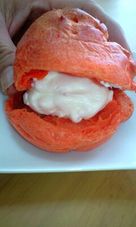
Halloween Chocolate Chou!

INGREDIENTS: Enough for 30 small choux

Chocolate Custard
-Milk: 2 cups/400 ml/cc
-Sweet chocolate of your choice, crumbled: 1 cup/200 ml/cc
-Flour: 2 tablespoons
-Cornstarch: 2 tablespoons
-Unsalted butter: 20 g
-Vanilla essence: a few drops

Whipped cream:
-Fresh cream: 1 cup/200 ml/cc

Chou pastry:
-Butter: 100 g
-Water: 180 ml/cc
-Flour: 100 g
-Egg yolks: 4
-Red liquid coloring: 5 measure spoons (such spoons are usually sold together with the coloring)
-Yellow Liquid coloring: 5 measure spoons
Experiment with the coloring

Decoration:
-Chocolate: as appropriate

RECIPE:

-Heat milk to lukewarm. Add butter, flour, and cornstarch. Mix well. Heat in microwave oven at 600 Watts for 3 minutes. Mix from time to time.

-In a separate bowl, melt the chocolate over a bain-marie. Add vanill essence and mix. Take off fire and add milk mixture. Mix well.

-Pass the chocolate custard through a sieve.

-That’s how it should look!

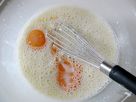
-In a separate bowl mix the water with coloring liquid.

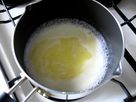
-Drop the butter into a pan with the colored water. Heat and stir until the butter has completely melted. Switch off fire when liquid starts boiling.

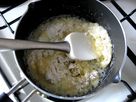
-Add sieved flour and mix with spatula.

-Mix until smooth.
Switch on fire again. Mix with spatula.
Once the diugh starts detaching easily from the bottom of the pan, siwtch off fire.

-Add egg yolks one at a time and mix well until smooth before adding the next yolk.

-On an oven plate lined with cooking paper, make 30 choux. keep them separate by about 5 cm/2 inches. Spray them with a water atomizer a little before baking them.

-Bake at 190 degrees Celsius for 25~30 minutes.

-Take choux out and let cool completely.

-Whip the fresh cream until consistent enough.
Cut choux in halves.
Fill them with whipped cream. Top the cream delicately with the other chou half as shown above.

-Put the chocolate custard into a pastry bag and fill the choux with chocolate custard so as to hide the whipped cream. Decorate with chocolate.

Have fun and do not hesitate to experiment (other colors?)!

RECOMMENDED RELATED SITES:
Warren Bobrow, Bread + Butter, Zoy Zhang, Hungry Neko, Think Twice, Frank Fariello, Mangantayon, Hapabento, Elinluv Tidbit Corner, Tokyo Terrace, Maison de Christina, Chrys Niles,Lexi, Culinary Musings, Wheeling Gourmet, Comestiblog, Chronicles Of A Curious Cook, Tokyo Through The Drinking Glass, Tokyo Foodcast, Palate To Pen, Yellin Yakimono Gallery, Tokyo Terrace, Hilah Cooking, More than a Mount Full, Arkonite Bento, Happy Little Bento; 5 Star Foodie; Jefferson’s Table; Oyster Culture; Gourmet Fury; Island Vittles; Good Beer & Country Boys; Rubber Slippers In Italy; Color Food daidokoro/Osaka;/a; The Witchy Kitchen; Citron Et Vanille, Lunsj Med Buffet/Estonian Gastronomy (English), Cook, Eat, Play, Repeat, Chrisoscope; Jacqueline Church; The Foodonymph (in Dubai!); Alchemy, Simple Ingredients, magical Food (in Ireland!); Curious Foodie; Mr. Foodie (London/UK)

Please check the new postings at:
sake, shochu and sushi

Double Cheese Chou

The Japanese love their chou a la creme! Actually they call them chou cream! Mixing up connections? They particularly love the small version/petit chou that you would not find easily in shops in Europe or America. In this country they are everywhere!

Here is a typical Japanese version:
Double Cheese Chou!

INGREDIENTS: Enough for 6 fairly big (by Japanese standards!) choux (plural with an “x”!)

Chou Pastry:
-Unsalted butter: 30g
-Water: 20 ml/cc
-Milk: 20 ml/cc
-White sugar: 1/2 teaspoon
-Salt: a pinch
-Flour: 30 g
-Egg: 1

Cheese Custard Cream:
-Milk: 200 ml/cc/1 cup
-White sugar: 50 g
-Flour: 30 g
-Egg yolks: 2
-Vanilla Essence: a few drops

Cheese Whipped Cream:
-Fresh cream: 100 ml/cc/1/2 cup
-White sugar: 1 + 1/2 teaspoons
-Cream Cheese: 40 g

RECIPE:

-Cheese Custard Cream:
In an oven bowl sieve in flour and sugar. Add milk little by little and mix well.

-Add the cream cheese after crumbling it between your fingers. Wrap with cellophane paper. Put in microwave for 2 minutes at 500 Watts.

-Take off cellophane paper at once. Mix thoroughly with a hand whisker. Add egg yolks and mix well again.

-Wrap with cellophan paper again and put back into microwave oven for 2 minutes at 500 Watts. Take out cellophane paper. Mix well until smooth. Add vanilla essence and mix well again.

-Transfer into a fridge dish. Cover well with cellophane paper so as to prevent cream from drying. Mixing again with a saptula from time to time will help cream to chill more quickly.

-Chou pastry:
Sieve flour.
In a pan drop butter, milk, water, sugar and salt. Mix and cook over a medium high fire.

-Mixing with a spatula melt butter with other ingredients. Once the butter has completely melted and started “boilin”, add all flour and mix quickly with spatula.

-Once the water has evaporated take away from fire and mix again energetically.

-Once the pastry has become smooth and uniform and can be easily detached from the bottom of the pan, add betaen eggs little by little and mix weel until smooth.

-The pastry will be ready when it becomes “bright” and slightly adhere to the spatula.

-On a oven plate lined with baking paper place 6 balls of pastry with a spoon. Keep them sufficiently separated from each other.

-Wet the tips of your fingers with water and shape the balls. Don’t worry too much about the aspect. As long as they are roughly rounded, no problem!

-Lightly spray them with water and bake at 200 degrees Celsius for 10~15 minutes ir until they have completely risen.

-Once they have completely risen lower temperature to 170 degrees Celsius and bake for 15~20 more minutes. Do not open oven halway and make sure to lower the temperature!

-Take chou out and let cool completely.

Cheese whipped cream:
-Bring cheese cream temperature to room temperature. Warm it up inside microwave oevn to soften. Don’t overheat it, just soften it! Transfer into a bowl

-Beat the cheese with a hand whisker until smooth. Add sugar and fresh cream and whisk until fluffy and light.

-Cut chou cream in halves and fill bottom halves with cheese custard using a spoon.

-Cover cheese custard with cheese whipped cream with a pastry bag. Top the whole delicately with the chou upper half.

Not that difficult, is it?

RECOMMENDED RELATED SITES:
Warren Bobrow, Bread + Butter, Zoy Zhang, Hungry Neko, Think Twice, Frank Fariello, Mangantayon, Hapabento, Elinluv Tidbit Corner, Tokyo Terrace, Maison de Christina, Chrys Niles,Lexi, Culinary Musings, Wheeling Gourmet, Comestiblog, Chronicles Of A Curious Cook, Tokyo Through The Drinking Glass, Tokyo Foodcast, Palate To Pen, Yellin Yakimono Gallery, Tokyo Terrace, Hilah Cooking, More than a Mount Full, Arkonite Bento, Happy Little Bento; 5 Star Foodie; Jefferson’s Table; Oyster Culture; Gourmet Fury; Island Vittles; Good Beer & Country Boys; Rubber Slippers In Italy; Color Food daidokoro/Osaka;/a; The Witchy Kitchen; Citron Et Vanille, Lunsj Med Buffet/Estonian Gastronomy (English), Cook, Eat, Play, Repeat, Chrisoscope; Jacqueline Church; The Foodonymph (in Dubai!); Alchemy, Simple Ingredients, magical Food (in Ireland!); Curious Foodie; Mr. Foodie (London/UK)

Please check the new postings at:
sake, shochu and sushi

Where to eat locally grown organic vegetables in Shizuoka

Salad of organic vegetables from Bio Farm at Uzu

It is one thing to know that Shizuoka Prefecture is getting deserved fame for the quality and variety of its vegetables all year round and especially organic vegetables, but it is another to know where, or more precisley in which restaurants, to savour them in good company.
We are presently blessed with three restaurants in Shizuoka City (still looking for more in the whole Prefecture!) which not only serve them but can arrange full vegetarian and vegan meals on request!

UZU

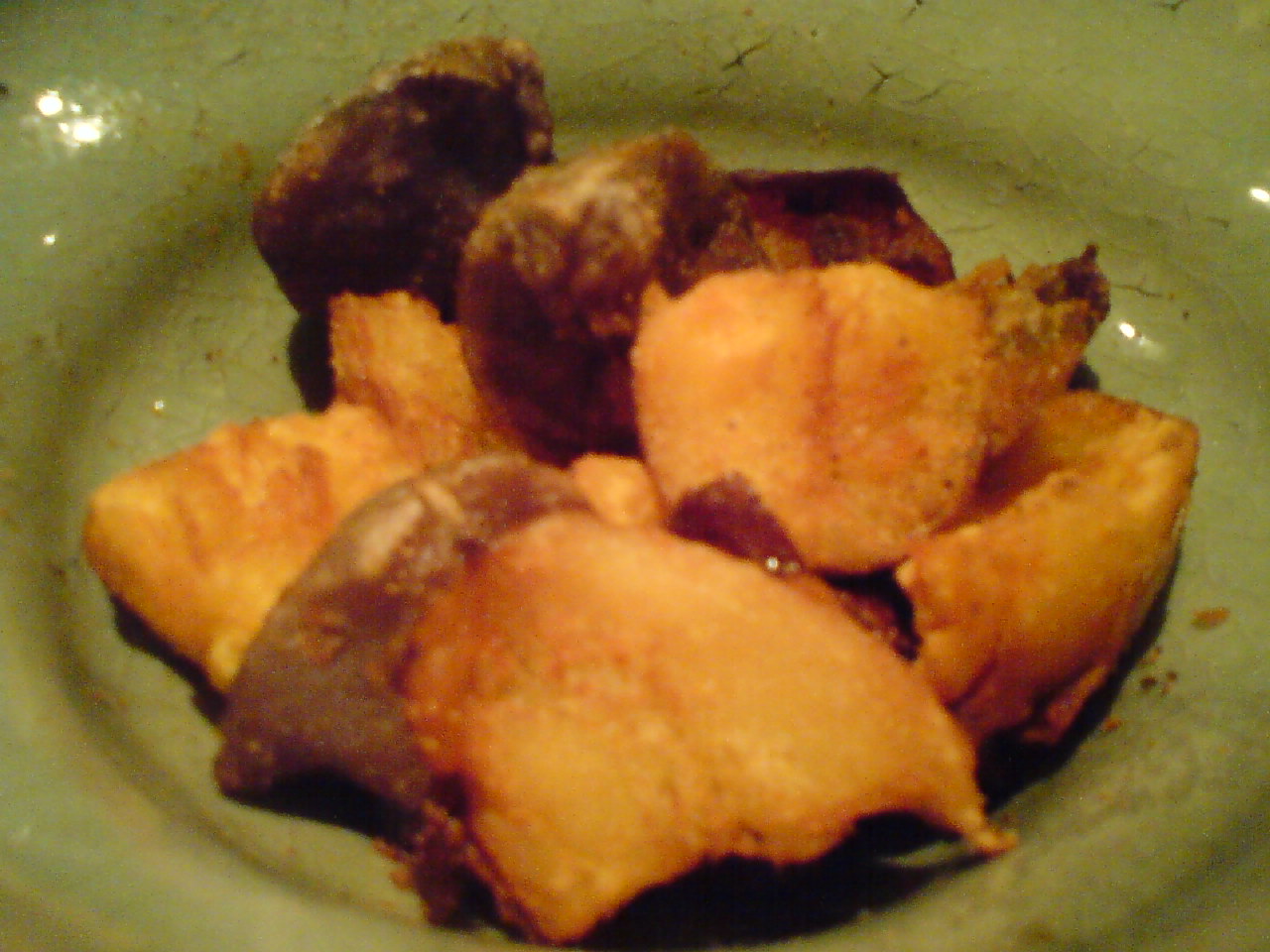
Deep-fried organic potatoes from Bio Farm

Service: excellent, easy-going and very friendly
Facilities: great washroom, great cleanliness overall
Prices: very reasonable, good value.
Strong points: Very fresh local ingredients, especially organic vegetables extensively used. Local sake. Home-made umeshu. Great shochu list.

Uzu is arguably the best Izakaya in the whole Prefecture having won accolades from its peers, national medias and gastronme writers.
Although they serve all kinds of food, vegetarian and omnivores, they make organic vegetables their specialty. Most of them are grown at Matsuki Bio Farm in Shibakawa, Fujinomiya City at the foot of Mount Fuji.

Check their homepage as they update it as the menu changes, which is almost everyday as they serve only seasonal food.

UZU-4

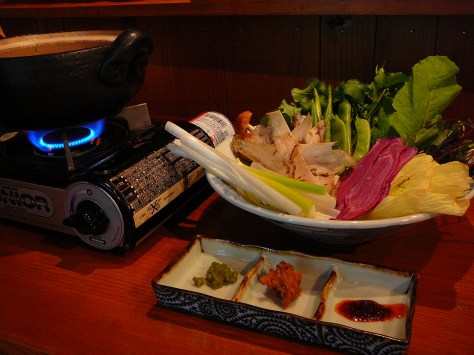
Vegetables Shabu shabu

UZU
Shizuoka City, Otowa-cho, 3-18
Tel.: 054-249-6262
Business hours: 17:00=23:00
Closed on Mondays and first Tuesday
Reservations recommended
Credit cards OK
HOMEPAGE (Japanese)

———————

TETSUYA SUGIMOTO

Ranking
Service: Highly professional and friendly
Equipment: Great overall cleanliness. Beautiful washroom
Prices:~
Strong points:Freshest produce and ingredients only, mainly from Shizuoka Prfecture. Organic vegetables. Seasonal food only

Map (Japanese)
Entirely non-smoking!

If you happen to visit Shizuoka City, you will find many restaurants and izakayas serving and mainly using produce/products and ingredients from Shizuoka Prefecture. There are many treasures to be discovered in this hoard!
One of them is the French restaurant going by the name of Sugimoto Tetsuya!

If you can read Japanese you will know what is waiting for you inside!
A gastronomic paradise in Shizuoka Prefecture!
Mr. Sugimoto does everything by himself: chef, waiter and entertainer! This is real slow food in its true and best meaning!
Almost all ingredients are from Shizuoka Prefecture, be they vegetables, fruit, meat or fish!
But his specialty is organic vegetables from Shizuoka Prefecture!
I requested that particular dish to feature only produce for Shizuoka Prefecture only.

All these were organic vegetables grown by different farmers in Hamamatsu City.
The dish included egg-plants/aubergines, 3 varieties of zucchini, tomato and “manganji” Chili pepper.

To give you an idea how Mr. Sugimoto works, all vegetables were first sauteed separately and cooked in the oven before served with two different dressings:
-Olive oil and orange juice
-Framboise/raspberry vinegar

Tetsuya SUGIMOTO
420-0038 Shizuoka City, Aoi Ku, Umeya,, 2-13,1F
Tel./Fax: 054-251-3051
Opening hours:11:30~14:30,17:30~21:30
Holidays: undecided
Cedit cards OK
HOMEPAGE

————————

PISSENLIT

Service: excellent and very friendly
Facilities: great washroom, great cleanliness overall
Prices: reasonable, good value.
Strong points: Interesting wine list. Great use of local products.
no-smoking-logoentirely non-smoking!

Great food is great food!
Be you vegan, vegetarian or omnivore, one can only appreciate and being thankful for savouring vegetables not only of the best quality, but local and organically grown to boot!
I will never tire of saying to everyone how lucky we are here in Shizuoka Prefecture, Japan, a region renown nationally and increasingly internationally for its exceptional gastronomy!

Pissenlit, with Uzu and Tetsuya Sugimoto is is generally considered as one of the “Shizuoka City Triumvirate” when it comes to healthy, local and sublime gastronomy.
Chef Tooru Arima has many contacts in the Prefecture and it is always a good idea what’s available as it can change very quickly. He is particularly fond of oraganic vegetables grown by Mr. Hideyaki Hirokawa in Mishima City

Even if I have nurtured a special relation with chef Tooru Arima (and many others), he he is only too happy to oblige with his custon\mers’ selfish requests!

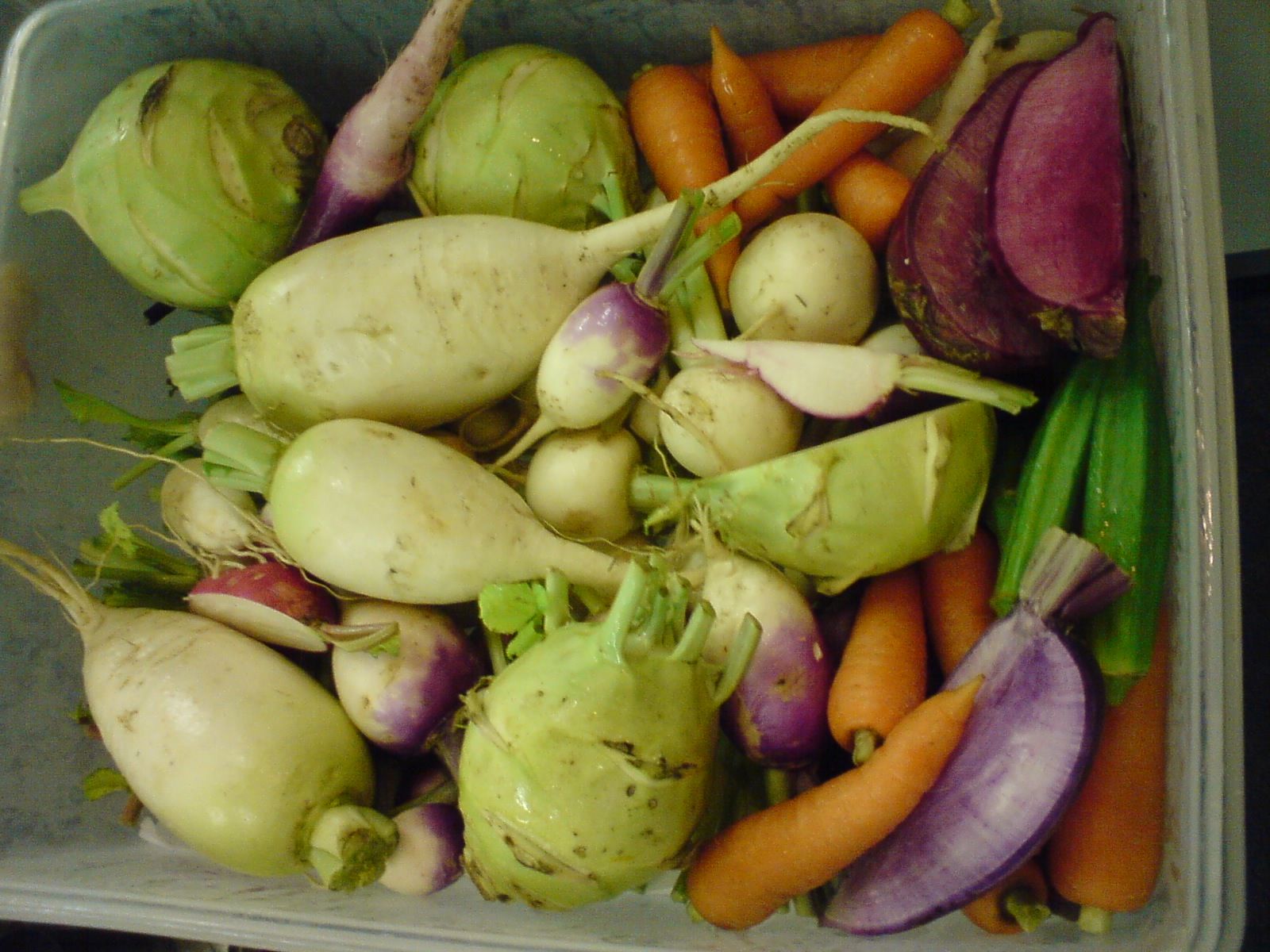
The above is a sample of the greens grown by Mr. Hirokawa!

And these the other organic vegetables grown by the same farmer!

If you have the occasion to visit Mishima City this is the address of our great farmer!

Mr. Hideyaki Hirokawa, Mishima City, Kawaharagaya Yamada, 765
Tel.: 055-973-2702

PISSENLIT
420-0839 Shizuoka City, Aoi Ku, Takajo, 2-3-4
Tel.: 054-270-8768
Fax: 054-627-3868
Business hours: 11:30~14:30; 17:00~22:00
Closed on Tuesdays and Sunday evening
Homepage (Japanese)
Credit Cards OK

————————-

STILL LOOKING AROUND!

————————-

RECOMMENDED RELATED SITES:
Warren Bobrow, Bread + Butter, Zoy Zhang, Hungry Neko, Think Twice, Frank Fariello, Mangantayon, Hapabento, Elinluv Tidbit Corner, Tokyo Terrace, Maison de Christina, Chrys Niles,Lexi, Culinary Musings, Wheeling Gourmet, Comestiblog, Chronicles Of A Curious Cook, Tokyo Through The Drinking Glass, Tokyo Foodcast, Palate To Pen, Yellin Yakimono Gallery, Tokyo Terrace, Hilah Cooking, More than a Mount Full, Arkonite Bento, Happy Little Bento; 5 Star Foodie; Jefferson’s Table; Oyster Culture; Gourmet Fury; Island Vittles; Good Beer & Country Boys; Rubber Slippers In Italy; Color Food daidokoro/Osaka;/a; The Witchy Kitchen; Citron Et Vanille, Lunsj Med Buffet/Estonian Gastronomy (English), Cook, Eat, Play, Repeat, Chrisoscope; Jacqueline Church; The Foodonymph (in Dubai!); Alchemy, Simple Ingredients, magical Food (in Ireland!); Curious Foodie; Mr. Foodie (London/UK)

Please check the new postings at:
sake, shochu and sushi

Shizuoka Agricultural Products: Mrs. Toshiko Otsuka’s Fig Orchard

Mrs. Toshika Otsuka/大塚敏子

Figs have been very popular in Japan for eons.
They were introduced in Japan at the beginning of the Edo Era (17th Century) in Nagasaki (Kyushu Island) from Persia through China.
Interestingly enough the Japanese consume only a little quantity of dry figs that they mainly use in cakes. They prefer their fruit fresh and eat them either as appetizers (with sesame dressing/gomadare) or as dessertfruit.

They are grown inside greenhouses or in open air, depending on the variety and growing method.
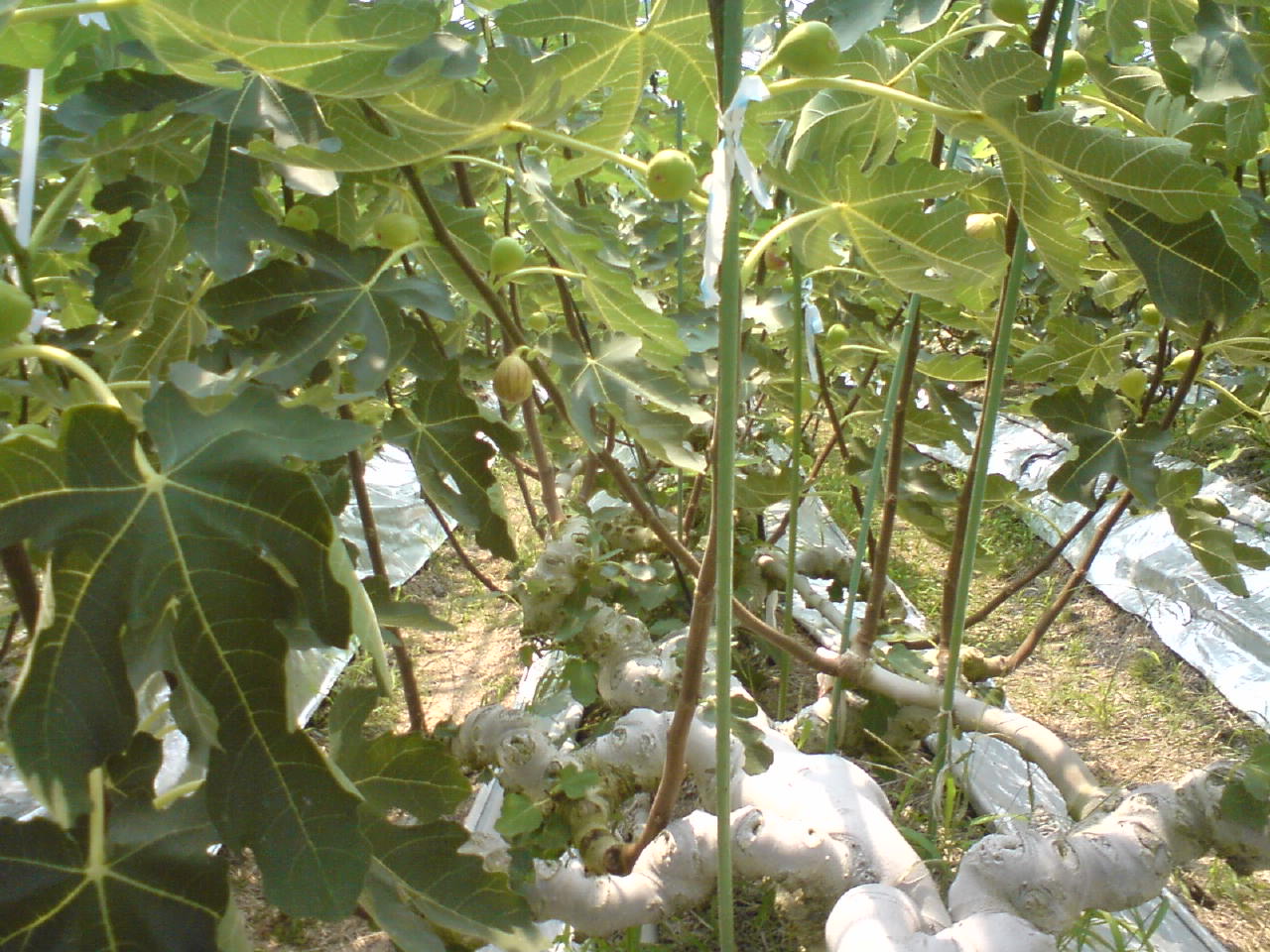
Mrs. Otsuka grows hers exclusively inside greenhouses on a total area of 240 tsubo/~750 square meters.

Once again my good friend, Natsuko Koyanagi/小柳奈津子 was on hand to help with introductions.
It was quite a distance away from her usual area as figs are grown only on the right bank of the Abe River due to the needed sun exposure whereas Natsuko lives on the left bank. We knew we had arrived before we discovered the greenhouses as the cloying smell of the figs had wafting around us into our car very quickly!

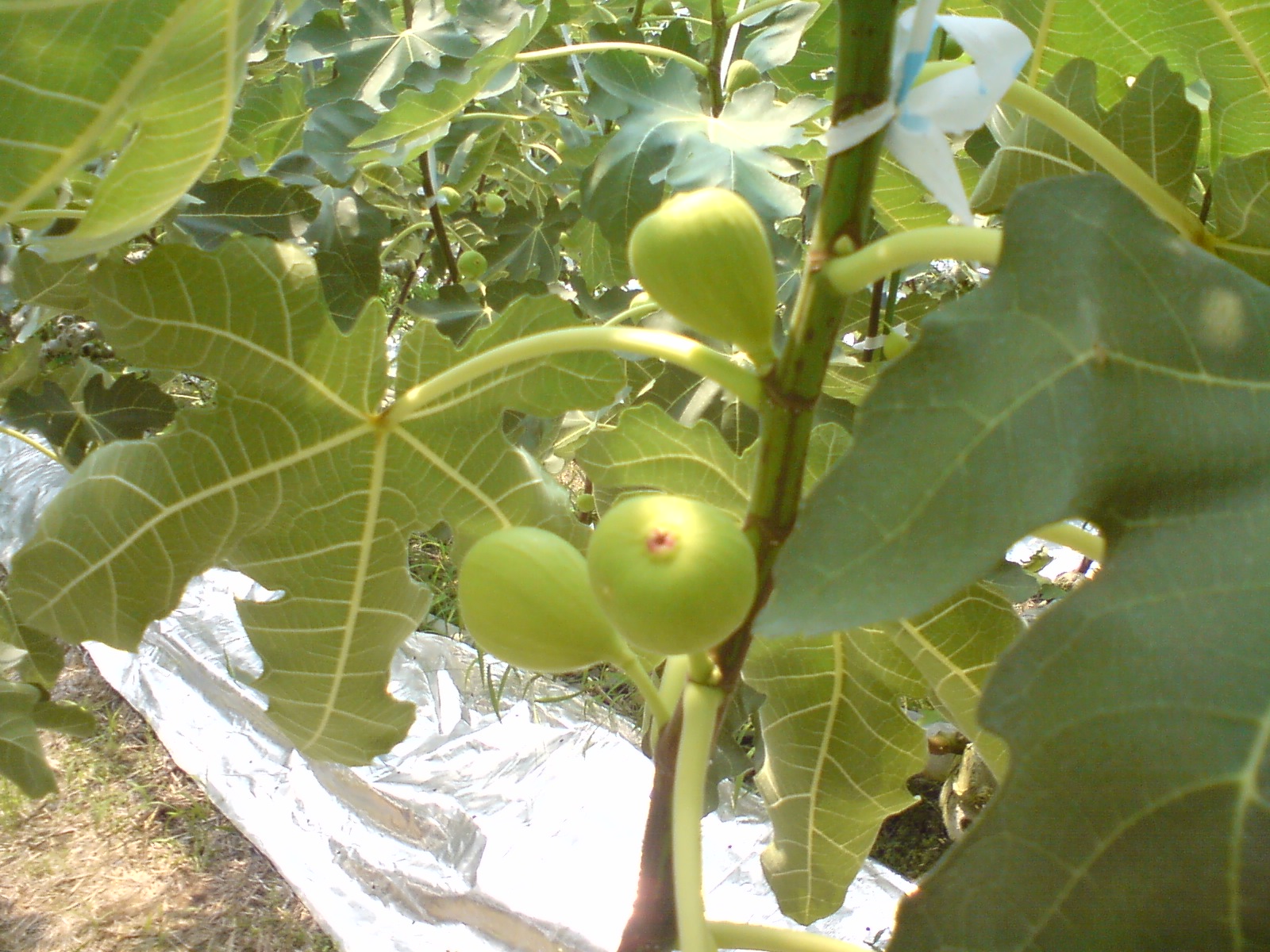
Mrs. Otsuko grows a single variety called Masui Dofin/マスイドフィン, a Japanese hybrid.
Do you know how the Japanese write “ichijiku” for fig? 無花果/No flower fruit! At least knowing the kanji characters meant I was not going to make the mistake asking when flowers were supposed to bloom!

Her trees are pretty old by Japanese standards (these can live a long time indeed!) as she first planted them 27 years ago. Her orchard is her own supply of cash to the homestead as her husband has his own job. Nevertheless, he gives a hand before leaving to work and after coming back from work. Either he is a tough guy or a loving one! (or both? LOL).

Watering is done through a pipe system snaking over the whole grenhouses.
As for fertilizer, she told me in with almost naive honesty that she asks a specialist every year to check on her orchard and decide what’s best!

I saw quite a few figs I would lay my hands on!
Actually, Mrs. Otsuka explained me that Summer is not so much the right season to really savor them. Although she harvests them everyday and “ship” them to the Cooperative, the best season is the Fall when figs are at their best and do not spoil easily.
As she accepte personal orders, you can be sure I will visit her again in a couple of months!

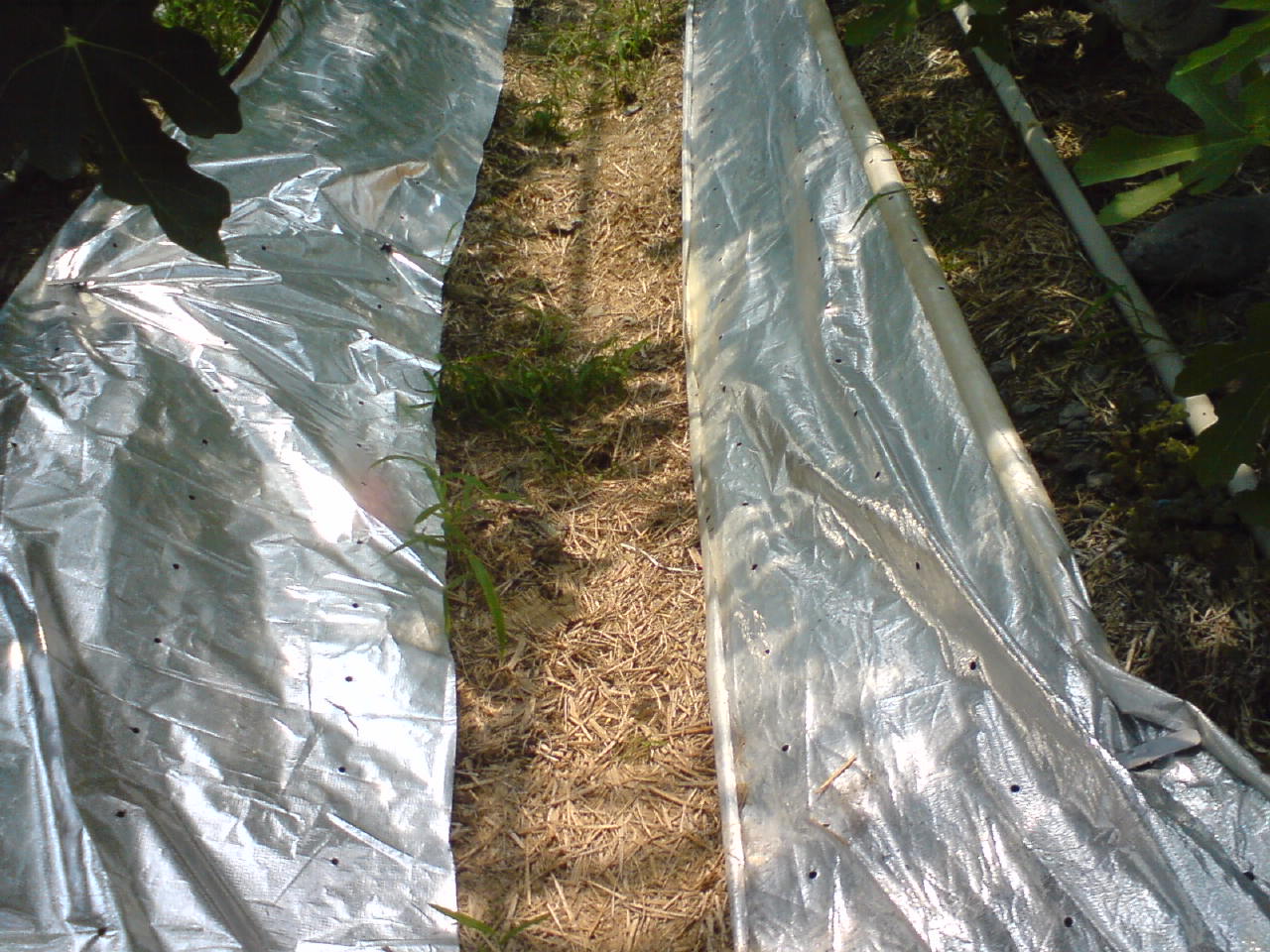
Aluminum foil sheets are spread on the soil along each row of fig trees not so much to protect the soil but to reflect the sun and provide more exposure and heat. And I can tell you this is sweat work!

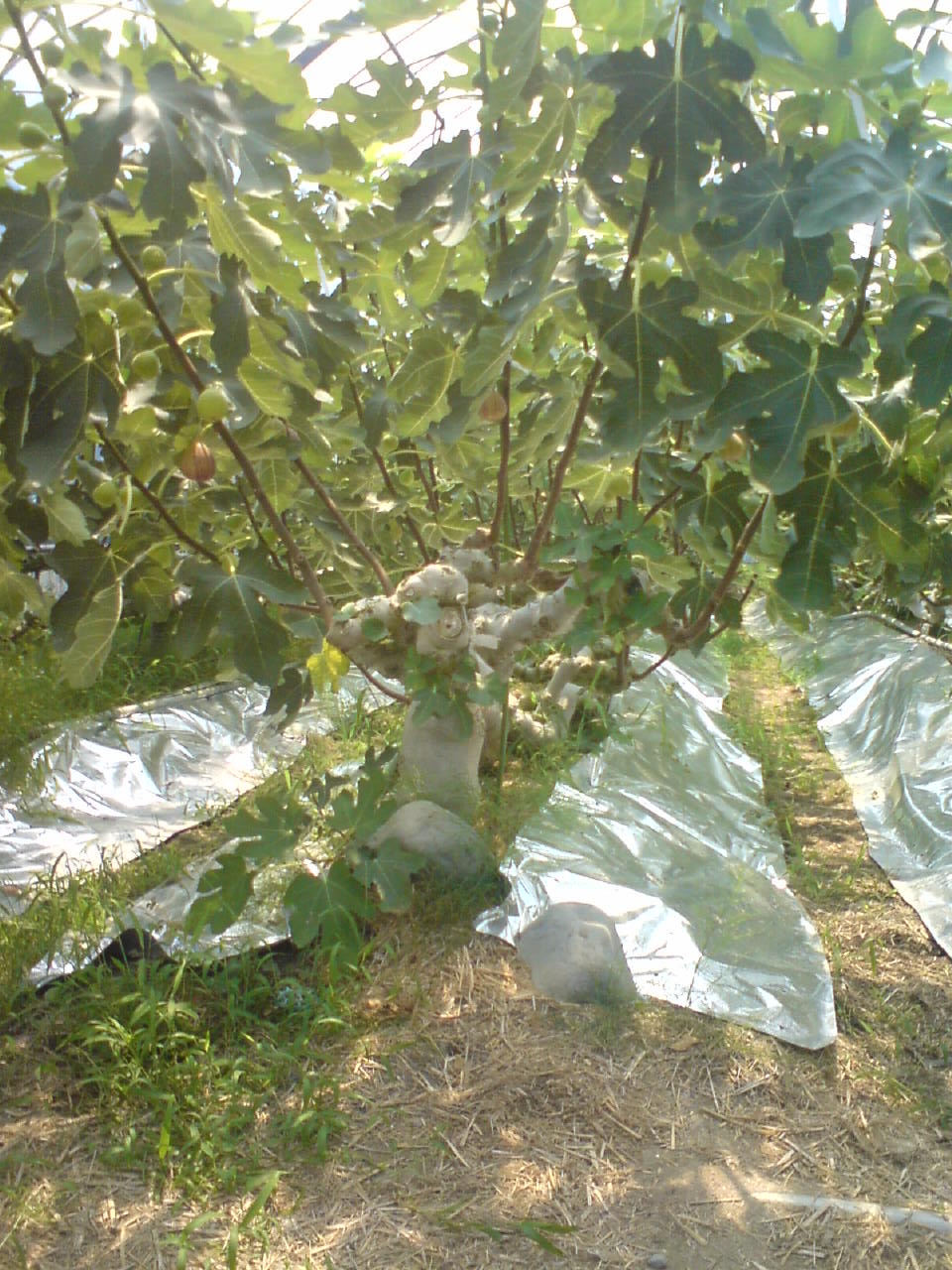
Trees are trimmed completely of their branches around January and you can count each year going along the scars left on them!
Fruit bearing branches do have to be supported and are tied with twine to the roof to keep them erect and give as much as vital space as possible to the fruit.

Harvesting is always done in the morning when the temperature is lower. The fruit will keep their umami/balance then. Fruit are calibrated and carefully put into boxes before delivery.

Mrs. Otsuka pointed out an interesting detail: when harvesting one has cto cover herself/himself completely, especially arms an legs as fig leaves are really tough and their rims can cut through your skin if you are not careful!
And one has to constantly clean the soil of fallen leaves as they rot easily!

Greenhouses have to left open on their side for better air circulation, but all openings have to be netted or birds will have a feast!

Certainly learned a lot again and am ready to be taught more!

Mrs. Toshiko Otsuka’s Fig Orchard
Sshizuoka City, Aoi Ku, Fukudagaya, 123-1
Tel.: 054-294-9787
Personal orders accepted

RECOMMENDED RELATED SITES:
Warren Bobrow, Bread + Butter, Zoy Zhang, Hungry Neko, Think Twice, Frank Fariello, Mangantayon, Hapabento, Elinluv Tidbit Corner, Tokyo Terrace, Maison de Christina, Chrys Niles,Lexi, Culinary Musings, Wheeling Gourmet, Comestiblog, Chronicles Of A Curious Cook, Tokyo Through The Drinking Glass, Tokyo Foodcast, Palate To Pen, Yellin Yakimono Gallery, Tokyo Terrace, Hilah Cooking, More than a Mount Full, Arkonite Bento, Happy Little Bento; 5 Star Foodie; Jefferson’s Table; Oyster Culture; Gourmet Fury; Island Vittles; Good Beer & Country Boys; Rubber Slippers In Italy; Color Food daidokoro/Osaka;/a; The Witchy Kitchen; Citron Et Vanille, Lunsj Med Buffet/Estonian Gastronomy (English), Cook, Eat, Play, Repeat, Chrisoscope; Jacqueline Church; The Foodonymph (in Dubai!); Alchemy, Simple Ingredients, magical Food (in Ireland!); Curious Foodie; Mr. Foodie (London/UK)

Please check the new postings at:
sake, shochu and sushi

Seaweed: The Vegan Food of the Oceans!

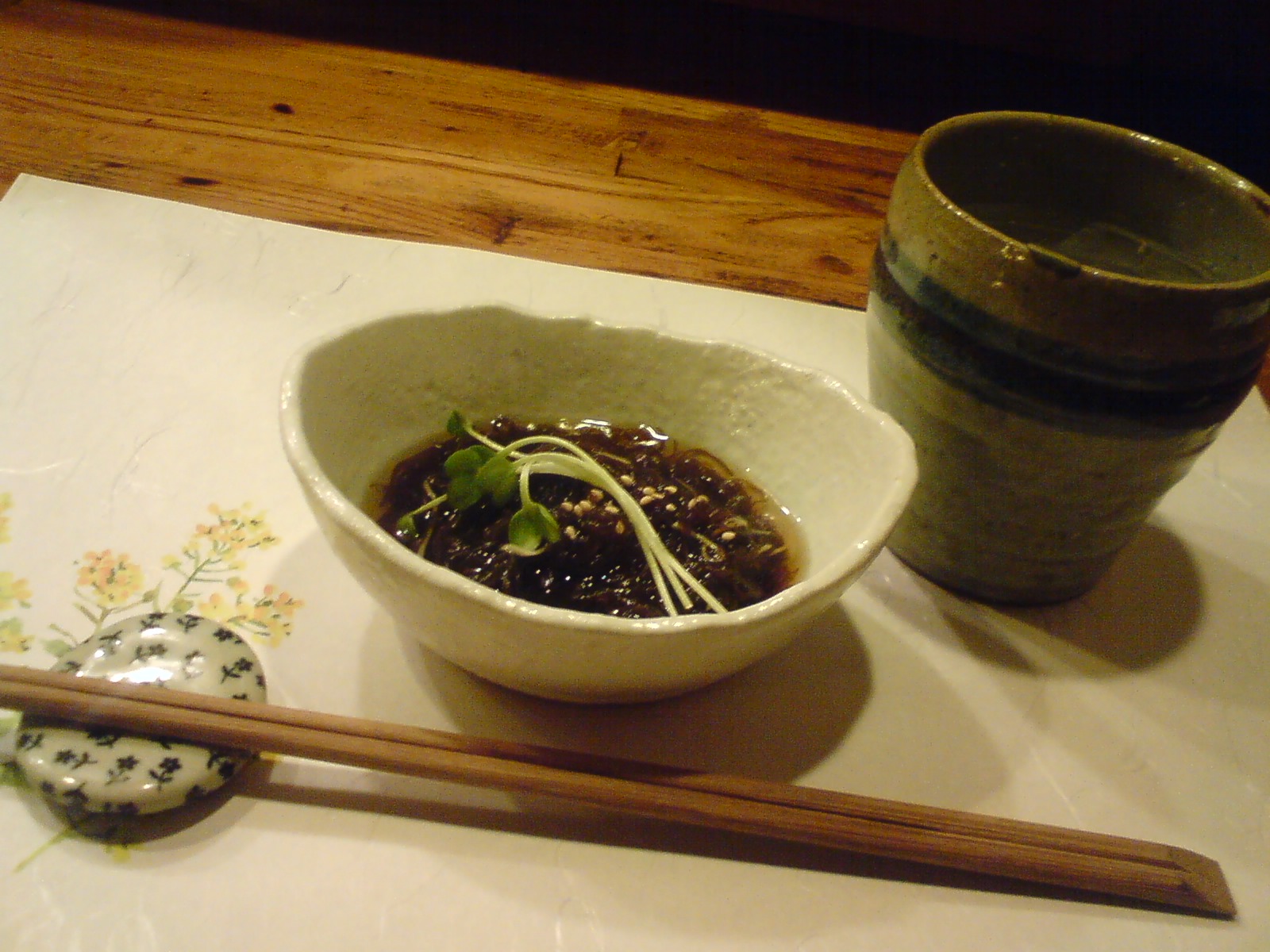
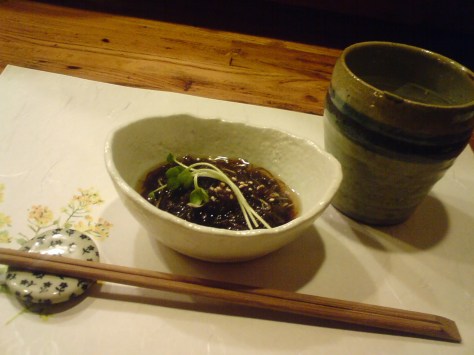
Mozuku in amazu/sweet vinegar as served at Yasaitei, Shizuoka City.

I have recently been asked again by many friends about seaweed in Japan. Here is the original posting with a few additions!

Seaweed or algae have been used for eons by humans, but have only been recently rediscovered as a food of their own.
Seaweeds are consumed by coastal people, particularly in East Asia, e.g., Japan, China, Korea, Taiwan, Thailand, and Vietnam, but also in Indonesia, Belize, Peru, the Canadian Maritimes, Scandinavia, Ireland, Wales, the Philippines, and Scotland.
It is rich in calcium and magnesium and seaweed noodles can be cooked into pancit canton, pancit luglug, spaghetti or carbonara.
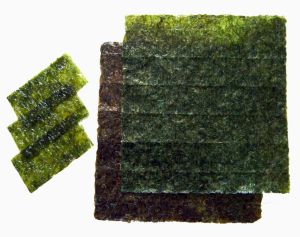
Nori

In Asia, Zicai (紫菜) (in China), gim (in Korea) and nori (in Japan) are sheets of dried Porphyra used in soups or to wrap sushi. Chondrus crispus (commonly known as Irish moss or carrageenan moss) is another red alga used in producing various food additives, along with Kappaphycus and various gigartinoid seaweeds. Porphyra is a red alga used in Wales to make laver. Laverbread, made from oats and the laver, is a popular dish there. Affectionately called “Dulce” in northern Belize, seaweeds are mixed with milk, nutmeg, cinnamon, and vanilla to make a common beverage.

Seaweeds are also harvested or cultivated for the extraction of alginate, agar and carrageenan, gelatinous substances collectively known as hydrocolloids or phycocolloids. Hydrocolloids have attained commercial significance as food additives. The food industry exploits their gelling, water-retention, emulsifying and other physical properties. Agar is used in foods such as confectionery, meat and poultry products, desserts and beverages and moulded foods. Carrageenan is used in salad dressings and sauces, dietetic foods, and as a preservative in meat and fish products, dairy items and baked goods. It is a vital jelly component for vegansand vegetarians.

Alginates are used in wound dressings, and production of dental moulds. In microbiology research, agar is extensively used as culture medium.

Seaweed is a source of iodine, necessary for thyroid function and to prevent goitre.

Seaweed extract is used in some diet pills. Other seaweed pills exploit the same effect as gastric banding, expanding in the stomach to make the body feel more full.

Finally seaweed provide jel for beauty products and make-ups!
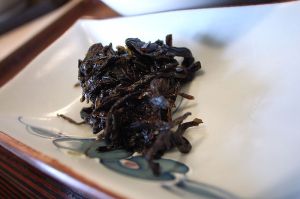
Konbu Tsukudani, a popular Japanese seaweed dish.

The Japanese divide their edible seaweed into three main groups:
BROWN ALGAE:

-Konbu/昆布, or Laminariaceae Bory (Latin), comprises many varieties, some of them regional: Makonbu or Saccharina japonica(真昆布), Onikonbu or Laminaria diabolica(羅臼昆布), Rishiri Konbu or Laminaria ochotensis(利尻昆布), Hosome Konbu or Laminaria religiosa(細目昆布), Hitaka or Mitsuishi Konbu or Laminaria angustata(日高昆布、三石昆布), Naga or Hamanaka Konbu or Laminaria longissima(長昆布、浜中昆布), and Kagome or Kjellmaniella crassifolia(籠目昆布).

-Hijiki or hiziki (ヒジキ, 鹿尾菜 or 羊栖菜, hijiki) (Sargassum fusiforme, or Hizikia fusiformis) is a brown sea vegetable growing wild on rocky coastlines around Japan, Korea, and China. Its two names mean deer-tail grass and sheep-nest grass respectively. It is also called sweet seaweed.

-Hibatama or Fucus, a genus of brown alga in the Class Phaeophyceae to be found in the intertidal zones of rocky seashores almost everywhere in the world.

-Hondawara or ホンダワラ(馬尾藻、神馬藻 (Sargassum fulvellum)

-Mozuku, or Cladosiphon okamuranus (水雲; 藻付; 海蘊; 海雲) , a type of edible seaweed in the genus Cladosiphon, naturally found in Okinawa, Japan. Most of the mozuku now is farmed by locals, and sold to processing factories. The main use of mozuku is as food, and as source of one type of sulfated polysaccharide called Fucoidan to be used in cancer treatment aid health supplements. Mozuu is usually served in rice vinegar in Japan.
-Wakame (ワカメ), Undaria pinnatifida, a sea vegetable, or edible seaweed. In Japan it is most widely used in miso soup.
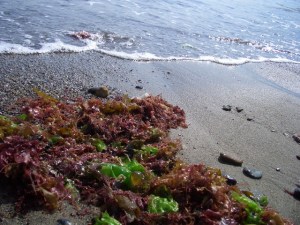
Yes, these violet and green alagae are edible!

VIOLET ALGAE:

-Asakusa Nori, or アサクサノリ(浅草海苔 (Porphyra tenera).

-Tengusa, which gives agar agar, a gelatinous substance. Historically and in a modern context, it is chiefly used as an ingredient in desserts throughout Japan, but also as solid jelly used as decoration in salads and others.

GREEN ALGAE:

-Aosa or sea lettuce comprising comprise the genus Ulva, a group of edible green algae that are widely distributed along the coasts of the world’s oceans.

-Aonori (青海苔 or アオノリ, “blue seaweed” or “green seaweed”), also known as green laver, a type of edible green seaweed, including species from the genera Monostroma and Enteromorpha of Ulvaceae. It is commercially cultivated in some bay areas in Japan, such as Ise Bay. It contains rich minerals such as calcium, magnesium, lithium, vitamins, and amino acids such as methionine.
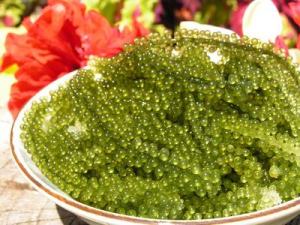
-Umibudou, or sea grapes, a delicacy of its own!

MARKET AVAIBILITY IN JAPAN:

In Japan it is interesting to note you can easily buy seaweed in paste form:
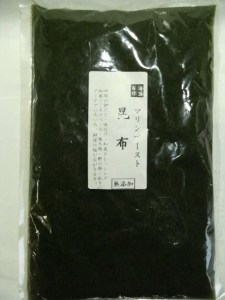
Konbu
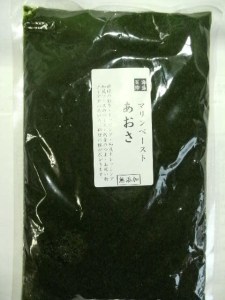
Aosa
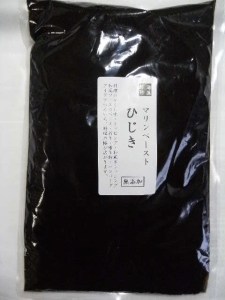
Hijiki

Next here are some pics to help you discover/recognize edible varieties in the markets:
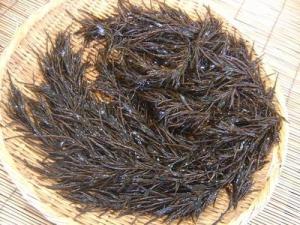
Akamoku
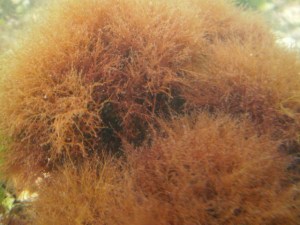
Makusa
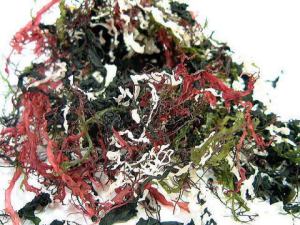
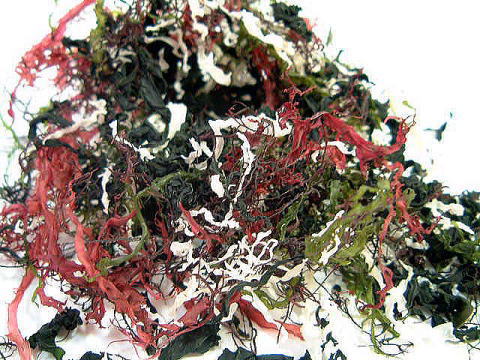
They often come as a mixture!
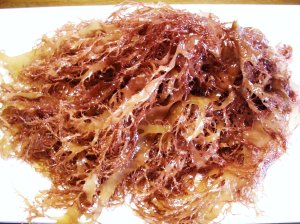
Red Algae

JAPANESE GASTRONOMY:

Here are some examples of the use of seaweed in Japanese gastronomy that can be expanded and inspired from wherever in the world you are, you being vegan, vegetarian or omnivore!
I have reduced the size of the pictures. Click on them to enlarge and copy them!
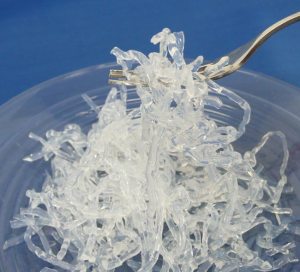
Agar or Crystal Kaiso/Crystal Seaweed!
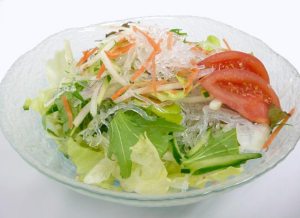
The same in a salad!

An example of seaweed salad with wakame and agar.
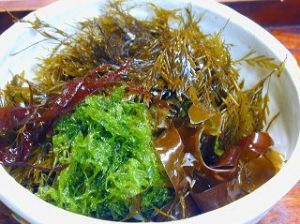
Another seaweed salad with samples harvesyed in Noto Peninsula, Ishikawa Prefecture!
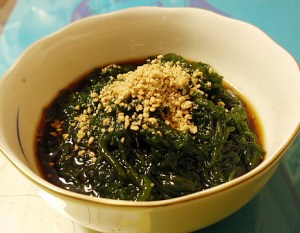
An Okinawa variety called somen nori!
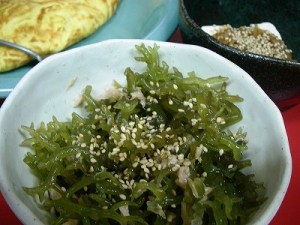
Another local variety called Tsunotama/Horns and Balls!
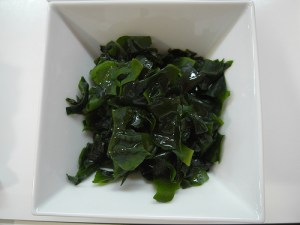
Wakame appetizer!
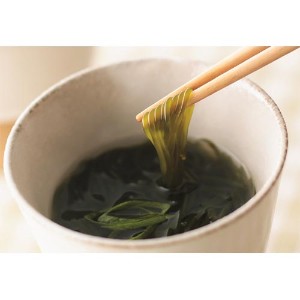
Wakame Noodles!
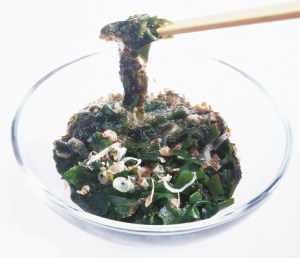
Another Wakame salad!
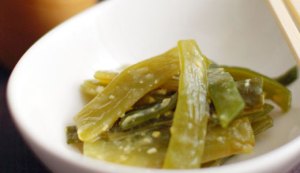
Wakame sticks cooked with miso paste!
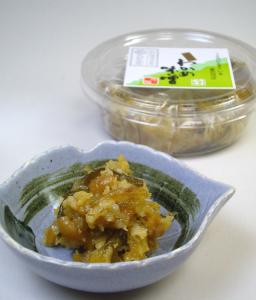
Wakame and Miso Paste mix from Kanzanji, Shizuoka Prefecture!
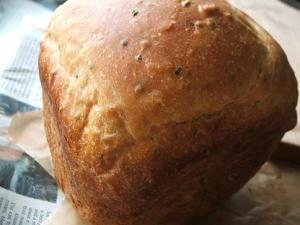
Wakame and Miso Bread!
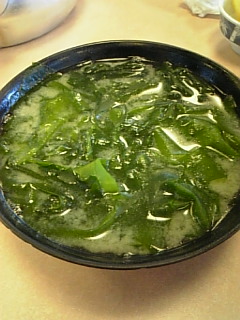
Wakame Miso Soup!
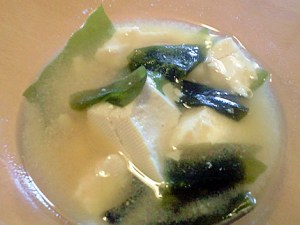
Wakame, tofu and miso Soup!
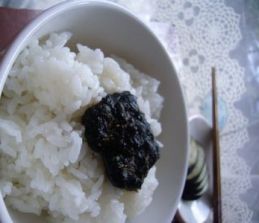
A bowl of freshly steamed rice with seaweed paste!
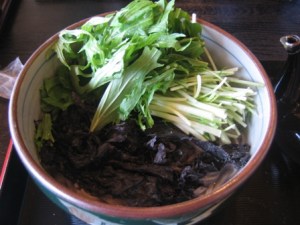
Soba/Buckwheat noodles with nori and green leaf vegetables!
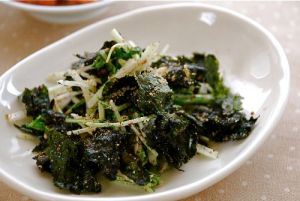
Seaweed, trefoil and ground seame seeds salad!
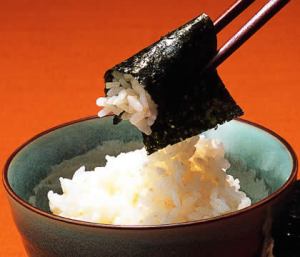
The best way to eat rice?

RECOMMENDED RELATED SITES:
Warren Bobrow, Bread + Butter, Zoy Zhang, Hungry Neko, Think Twice, Frank Fariello, Mangantayon, Hapabento, Elinluv Tidbit Corner, Tokyo Terrace, Maison de Christina, Chrys Niles,Lexi, Culinary Musings, Wheeling Gourmet, Comestiblog, Chronicles Of A Curious Cook, Tokyo Through The Drinking Glass, Tokyo Foodcast, Palate To Pen, Yellin Yakimono Gallery, Tokyo Terrace, Hilah Cooking, More than a Mount Full, Arkonite Bento, Happy Little Bento; 5 Star Foodie; Jefferson’s Table; Oyster Culture; Gourmet Fury; Island Vittles; Good Beer & Country Boys; Rubber Slippers In Italy; Color Food daidokoro/Osaka;/a; The Witchy Kitchen; Citron Et Vanille, Lunsj Med Buffet/Estonian Gastronomy (English), Cook, Eat, Play, Repeat, Chrisoscope; Jacqueline Church; The Foodonymph (in Dubai!); Alchemy, Simple Ingredients, magical Food (in Ireland!); Curious Foodie

Please check the new postings at:
sake, shochu and sushi

Matsutake Mushrooms and Conger Eel Fritters at Pissenlit

Service: excellent and very friendly
Facilities: great washroom, great cleanliness overall
Prices: reasonable, good value.
Strong points: Interesting wine list. Great use of local products.
no-smoking-logoentirely non-smoking!

If celebrated chefs like Dominique Corby at 6eme Sens in Tokyo (1 Michelin Star and a regular on TV’s) say that Tooru Arima at Pissenlit is a chef is worth the trip all the way don to Shizuoka City, there is little else I can say except paying a regular visit to the establishment!

The cuisine at Pissenlit is always seasonal as his Matsutake Mushrooms and Conger Eel Fritters/Beignets de Matsutake et de Congre.
Matsutake Mushrooms have just appeared on the market, and he announced them as Haya matsutake/早松茸/early matsutake.
Frankly speaking i don’t have a real clue as to the order of the cooking, although I suspect it was done allat one time (maybe not for the mushroom, though) but it is certainly a small tour de force.

Thin strips of congre eel/anago/穴子 were rolled around matsutake mushroom and dipped in a thickish batter. The way of serving it was also a little piece of art.
The batter was solid and slightly crispy, more like a cake than a fritter batter.
The dressing made of olive oil, river weeds extract and matsutake juice was sublime and I cerainly didn’t leave a drop (sponged in a little nread…).
I left the plate absolutely clean!

PISSENLIT
420-0839 Shizuoka City, Aoi Ku, Takajo, 2-3-4
Tel.: 054-270-8768
Fax: 054-627-3868
Business hours: 11:30~14:30; 17:00~22:00
Closed on Tuesdays and Sunday evening
Homepage (Japanese)
Credit Cards OK

RECOMMENDED RELATED SITES:
Warren Bobrow, Bread + Butter, Zoy Zhang, Hungry Neko, Think Twice, Frank Fariello, Mangantayon, Hapabento, Elinluv Tidbit Corner, Tokyo Terrace, Maison de Christina, Chrys Niles,Lexi, Culinary Musings, Wheeling Gourmet, Comestiblog, Chronicles Of A Curious Cook, Tokyo Through The Drinking Glass, Tokyo Foodcast, Palate To Pen, Yellin Yakimono Gallery, Tokyo Terrace, Hilah Cooking, More than a Mount Full, Arkonite Bento, Happy Little Bento; 5 Star Foodie; Jefferson’s Table; Oyster Culture; Gourmet Fury; Island Vittles; Good Beer & Country Boys; Rubber Slippers In Italy; Color Food daidokoro/Osaka;/a; The Witchy Kitchen; Citron Et Vanille, Lunsj Med Buffet/Estonian Gastronomy (English), Cook, Eat, Play, Repeat, Chrisoscope; Jacqueline Church; The Foodonymph (in Dubai!); Alchemy, Simple Ingredients, magical Food (in Ireland!); Curious Foodie

Please check the new postings at:
sake, shochu and sushi

Fromage Creme Brulee at Pissenlit

Service: excellent and very friendly
Facilities: great washroom, great cleanliness overall
Prices: reasonable, good value.
Strong points: Interesting wine list. Great use of local products.
no-smoking-logoentirely non-smoking!

Some desserts are classics wherever you find yourself in the world.
Creme brulee is one of them.
Thinking that it means “burnt cream” in French, one would be excused to question the naming of such a good and simple (in concept) dessert!
Many French restaurants are judged through the way handle so-called easy classics, especially terrines and pates for appetizers and creme brulee for dessert as they often tend to leave a lasting image as the first and last dish of a superb meal!

Whatever their simplicity, they cannot be served with a sophisticated touch.
This is where chefs like Tooru Arima are above the crowds.
The creme brulee comes with a spoon of passion fruit for extra seasoning and a small fruit salad for more decoration and a lightened dessert.

The creme is based on a pudding/custard made with fromage blanc and eggs of the best quality into an unctuous blend under a solid caramel you dleight into breaking after you have smeared it with the passion fruit!

Who said one would kill for such desserts! LOL

PISSENLIT
420-0839 Shizuoka City, Aoi Ku, Takajo, 2-3-4
Tel.: 054-270-8768
Fax: 054-627-3868
Business hours: 11:30~14:30; 17:00~22:00
Closed on Tuesdays and Sunday evening
Homepage (Japanese)
Credit Cards OK

RECOMMENDED RELATED SITES:
Warren Bobrow, Bread + Butter, Zoy Zhang, Hungry Neko, Think Twice, Frank Fariello, Mangantayon, Hapabento, Elinluv Tidbit Corner, Tokyo Terrace, Maison de Christina, Chrys Niles,Lexi, Culinary Musings, Wheeling Gourmet, Comestiblog, Chronicles Of A Curious Cook, Tokyo Through The Drinking Glass, Tokyo Foodcast, Palate To Pen, Yellin Yakimono Gallery, Tokyo Terrace, Hilah Cooking, More than a Mount Full, Arkonite Bento, Happy Little Bento; 5 Star Foodie; Jefferson’s Table; Oyster Culture; Gourmet Fury; Island Vittles; Good Beer & Country Boys; Rubber Slippers In Italy; Color Food daidokoro/Osaka;/a; The Witchy Kitchen; Citron Et Vanille, Lunsj Med Buffet/Estonian Gastronomy (English), Cook, Eat, Play, Repeat, Chrisoscope; Jacqueline Church; The Foodonymph (in Dubai!); Alchemy, Simple Ingredients, magical Food (in Ireland!); Curious Foodie

Please check the new postings at:
sake, shochu and sushi

Marinated Tuna Sushi/Magurozuke Sushi

Whenever tuna is available one ought to taste it raw as sashimi or sushi.
Now, avaibility does not always mean quality.
On the other hand, the Japanese have a simple and delicious way to accomodate tuna of any quality: magurozuke, which basically means marinated tuna, a concept easy to understand anywhere in our world!
Here is a basic recipe you can easily improve and adapt. I can guarantee you that your friends will look at you with a different eye!

INGREDIENTS:

-Tuna: raw for sashimi, enough for a plate of sushi
-Sushi rice: as appropriate. Check Sushi Rice Recipe here!

-Marinade/Zuketare:
-Soy sauce: 2 tablespoons
-Japanese sake: 2 tablespoons
-Mirin/Japanese sweet sake: 1 tablespoon
-Chopped thin leeks: as appropriate
-Wasabi paste: as appropriate

RECIPE

-Prepare the marinade: In a bowl drop the soy sauce, Japanese sake, mirin and chopped leeks. Mix quickly.
Slice the tuna for sushi. Take care of slicing it in equal size (especially thickness) slices!
Drop all the slices inside the marinade. Stir gently so as all fish is marinated. Cover with cellophane paper and leave inside the fridge for at least 30 minutes.

-Prepare the rice balls/shari in a slightly elongated size. Remember that the rice balls/shari should be slightly narrower and shoter than the tuna slices.
Smear a little wasabi paste on top of each rice ball. Skip if you don’t like wasabi. On the other hand you could top the nigiri (taht is on top ofthe fish, not the rice ball) with a little grated ginger!
Take tuna slice out one by one, shake them over the marinade bowl to let run excess marinade (do not sponge it off!), place a slice on each rice ball firmly enough (no need to overpress it between your hands, or you will have marinade everywhere!).
Place on a service dish and eat as soon as possible.

Easy and so impressive!

RECOMMENDED RELATED SITES:
Warren Bobrow, Bread + Butter, Zoy Zhang, Hungry Neko, Think Twice, Frank Fariello, Mangantayon, Hapabento, Elinluv Tidbit Corner, Tokyo Terrace, Maison de Christina, Chrys Niles,Lexi, Culinary Musings, Wheeling Gourmet, Comestiblog, Chronicles Of A Curious Cook, Tokyo Through The Drinking Glass, Tokyo Foodcast, Palate To Pen, Yellin Yakimono Gallery, Tokyo Terrace, Hilah Cooking, More than a Mount Full, Arkonite Bento, Happy Little Bento; 5 Star Foodie; Jefferson’s Table; Oyster Culture; Gourmet Fury; Island Vittles; Good Beer & Country Boys; Rubber Slippers In Italy; Color Food daidokoro/Osaka;/a; The Witchy Kitchen; Citron Et Vanille, Lunsj Med Buffet/Estonian Gastronomy (English), Cook, Eat, Play, Repeat, Chrisoscope; Jacqueline Church; The Foodonymph (in Dubai!); Alchemy, Simple Ingredients, magical Food (in Ireland!); Curious Foodie

Please check the new postings at:
sake, shochu and sushi