Tag Archives: sake

Shimada City: a New Portal to Japan!

Horai Bridge

Ask Businessmen and tourists coming to Japan from China and Korea and they will answer the new starting venue in this country is Shimada City!
Shimada City? Where can that be? So many people in other celebrated metropolises will surely ask.

Shimada City is slightly away from the center of Shizuoka Prefecture which in turn lies in the very middle of Japan halfway between Tokyo and Nagoya, the most traveled portion of this country. But it all started with the advent of Shimada Airport, also called Mount Fuji-Shizuoka Airport, in 2009. You will understand why we see many Chinese and Korean visitors in this area when you realize planes daily land there directly form Seoul-Incheon and Shanghai-Pudong. In fact, it is faster and cheaper to travel from Shimada to Paris via Seoul-Incheon Aiport!

All that is fine, you might say, what brings all these visitors to that particular part of Japan? What does it has to offer to businessmen and tourists?
Well businessmen know that Shizuoka is the third richest Prefecture, GDP-wise, after Aichi and Kanagawa Prefectures (which incidentally follow each other along the Tokaido Road!), and that ought to be a good enough reason.
Alright, alright, businessmen also share more reasons to come with tourists!

Shimada City and its neighborhoods certainly have enough to warrant a serious visit and a longer stay than expected. After all, if you also come from Kyushu or Hokkaido you will appreciate to learn they are regularly serviced with direct flights from Mount Fuji-Shizuoka Airport.

Shimada tea fields

Shimada City being in the middle of Shizuoka prefecture finds itself in the heart of green tea country. It also has two railway stations, more precisely in Kanaya where you can board the Steam Locomotive for a beautiful trip along the Oigawa Main Line up to Senzu Hot Springs Resort across vast expanses of green tea fields bordering the Oi River. Do not forget to pay an enriching visit to the Tea Museum/Ocha No Sato in Kanaya!

Horai Bridge

The same Oi River was at its most difficult to cross in Shimada City along the Old Tokaido Road prompting the Meiji Government to build the (still) longest wooden bridge in the world, the Horai Bridge, in 1879. It is 897.4m long and 2.7m wide.
Not only it deserved to be walked across for a great vista but it also has the great merit to lead to vast green tea fields beyond a small mountain ridge along a lane dotted with statues of Seven Deities.

Obi Sword dancer

Every city worth its salt in Japan has a major festival to boast from.
Shimada City not only has one, but it is one of the so-called most unusual festivals in Japan!: the Shimada Obi Matsuri and its Daimyo Procession.
The 300-year old Daimyo Gyoretsu imitates the procession of a grand jumangoku (one hundred thousand koku, units of rice) daimyo, and a total of 250 marchers stretch over 500 meters. Particularly striking is the presence of oyakko who walk gracefully, carrying an obi for safe delivery of babies on the tip of a wooden sword.
The procession is held every three years, in the years of the tiger, snake, monkey and wild boar. It’s commemorated by a grand statue in case you cannot visit the city on time for the festival!

Oomuraya Brewery

Now that we have enough reasons to either choose Shimada as a practical entry portal to Japan for our business or a source of new hidden treasures, what about the communications, accommodations and gastronomy?

Communications are no problem at all as the Mount Fuji Shizuoka Airport is directly linked by bus to Shimada Tokaido Line Railway Stations and the Shinkasen/Bullet Train Stations in Hamamatsu, Kakegawa and Shizuoka Cities, all within 90 minutes of Nagoya and Tokyo. Moreover, a (free) parking lot for more than 1,000 cars, taxis and car rental companies are part of the facilities.

Accommodations should not be a worry either as the city has enough hotels of all grades, Western or Japanese style near and by the railway station.

As for gastronomy, the City is blessed with a celebrated Sake Brewery, Oomuraya Shuzo, whose brands “Onna Nakase” (“Make a Lady weep”), “Wakatake” (“Young Bamboo) and “Onigoroshi” (“Goblin-Killing”) are known as far as New York, Paris and London.
The presence of a great sake brewery means that the local Japanese Izakayas in particular are of a higher level. What with superlative marine products from nearby Suruga Bay and the extravagant abundance of vegetables (don’t forget the green tea!), there is plenty to please everyone, be they vegetarian, omnivores, drinkers or not!

Recommended Hotel:
Hotel Route Inn Shimada Ekimae, 427-0022 Shizuoka Ken, Shimada Shi, Hon Toori, 5-1-13, Tel.: (81)(0)547-37-0055, Fax: (81)(0)547-037-0065, http://www.route-inn.co.jp/search/hotel/index.php?hotel_id=48

Recommended Restaurant:
Setsugetsuka (Soba, menus to please both vegetarians and omnivores alike. Great sake!), (Closed on Mondays and third Tuesday), 427-0022 Shizuoka ken, Shimada Shi, Hon Toori, 2-3-4, Tel.: (81)(0)547-35-5241
http://www3.tokai.or.jp/soba-setugetuka/top.htm

Tea Museum/Ocha No Sato, (Closed on Tuesdays) Shizuoka Ken, Shimada Shi, Kanaya, 3053-2, Tel.: (81)(0)547-46-5588
http://www.ochanosato.com/

Oomuraya Sake Brewery (Closed on Sundays), 427-0022 Shizuoka ken, Hon Toori, 1-1-8, tel.: (81)(0)547-37-3058, Fax: (81)(0)547-37-7567
(Visits and tasting sessions for small groups possible upon reservation)

RECOMMENDED RELATED SITES:
Warren Bobrow, Bread + Butter, Zoy Zhang, Hungry Neko, Think Twice, Frank Fariello, Mangantayon, Hapabento, Elinluv Tidbit Corner, Tokyo Terrace, Maison de Christina, Chrys Niles,Lexi, Culinary Musings, Wheeling Gourmet, Comestiblog, Chronicles Of A Curious Cook, Tokyo Through The Drinking Glass, Tokyo Foodcast, Palate To Pen, Yellin Yakimono Gallery, Tokyo Terrace, Hilah Cooking, More than a Mount Full, Arkonite Bento, Happy Little Bento; 5 Star Foodie; Jefferson’s Table; Oyster Culture; Gourmet Fury; Island Vittles; Good Beer & Country Boys; Rubber Slippers In Italy; Color Food daidokoro/Osaka;/a; The Witchy Kitchen; Citron Et Vanille, Lunsj Med Buffet/Estonian Gastronomy (English), Cook, Eat, Play, Repeat, Chrisoscope

Please check the new postings at:
sake, shochu and sushi

Shizuoka Sake Tasting: Yamanaka Brewery-Aoitenka Junmai Hyakumangoku Rice

Yamanaka Brewery is a small, ancient and traditional brewery lost a long way south of Kakegawa Station and it is not easy to find their brews even in Shizuoka City. Luckily enough I happened to find this sake made with Hyakumangoku rice grown in Shizuoka Prefecture!

Rice: Hyakumangoku (Shizuoka-grown)
Milled down to: 65%
Dryness: +2.0
Acidity: 1.4
Yeast: Association No 1001
Alcohol: 15~16 degrees
Bottled in June 2010

Clarity: very clear
Color: transparent
Aroma: fruity, light, banana, chocolate, vanilla, hints of pineapple
Body: fluid
Taste: Dry soft attack with junmai petillant.
Complex and fruity: chocolate, coffee beans, banana.
Quickly disappears with notes of almonds.
Gets drier with food.
Easy to drink.

Overall: A sake for all seasons.
Very fruity, dry and soft.
Actually quite complex and showing more facets than expected.
A sure value!

Must-see tasting websites:
-Sake: Tokyo Through The Drinking Glass, Tokyo Foodcast, Urban Sake, Sake World
-Wine: Palate To Pen, Warren Bobrow, Cellar Tours, Ancient Fire Wines Blog
-Beer: Good Beer & Country Boys, Another Pint, Please!
-Japanese Pottery to enjoy your favourite drinks: Yellin Yakimono Gallery
——————————–
Please check the new postings at:
sake, shochu and sushi

—————————————-
日本語のブログ
—————————————-

Shizuoka Sake Tasting: Senju Brewery-Junmai Ginjo Homare Fuji

Senju Brewery is the sole sake brewery in Iwata city famous for the Yamaha Company.
It’s a bit off the beaten track and their sake are not always easy to find!

Sake made with Shizuoka-grown Homare Fuji sake rice usually (if the space is available) bear a sticker with Homare Fuji written on it Japanese characters.
The label was actually designed a couple years ago by a local university student!

Senju Brewery-Junmai Ginjo Homare Fuji

Rice: Homare Fuji: 100%
Rice milled down to 55%
Alcohol: 15~16 degrees
Botteld in August 2010

Clarity: very clear
Colour: light golden
Aroma: Discreet, fruity and elegant: Pineapple, vanilla
Body: fluid
Taste: Dryish attack. Fruity. Light and complex. Dry nuts, almonds, Macadamia nuts. Disappears quickly.
Very easy to drink.
“Fleety” when chilled.
More almonds and turns sweetish on second and third cups, although drier almonds make a comeback later.
Changes little with food, although turns a little drier.

Comments: My best Junmai Ginjo with Homare Fuji Rice so far!
Complex and surprising.
Can be appreciated either chilled or at room temperature.
Will open up with more facets at the latter including memories of coffee beans typical of Shizuoka sake.
Definitely recommended to light sake lovers!

Must-see tasting websites:
-Sake: Tokyo Through The Drinking Glass, Tokyo Foodcast, Urban Sake, Sake World
-Wine: Palate To Pen, Warren Bobrow, Cellar Tours, Ancient Fire Wines Blog
-Beer: Good Beer & Country Boys, Another Pint, Please!
-Japanese Pottery to enjoy your favourite drinks: Yellin Yakimono Gallery
——————————–
Please check the new postings at:
sake, shochu and sushi

—————————————-
日本語のブログ
—————————————-

Shizuoka Sake Tasting: Hamamatsu-Tenjingura Brewery/Shusseijyo Aki Agari Tokubetsu Honjozo

Hamamatsu-Tenjigura was the oldest Sake Brewery in Hamamatsu City until it started absorbing all the neighbouring cities.
It stands in Shizuoka Prefecture for having the only “Brewmistress”!

Their sake come into two distinct varieties, the ones designed for food, the others for separate tasting.
This particular sake was great with food prepared by the Missus!
It also has the merit to made with Shizuoka-grown Homare Fuji Sake Rice!
And it certainly makes for a long title!

Hamamatsu-Tenjigura Brewery: Shusseijyo Aki Agari (Autumn’s First) Tokubetsu Honjozo Homare Fuji

Rice: Homare Fuji 100%
Rice milled down to 60%
Alcohol: 15~16 degrees
Bottled in August 2010

Clarity: Very clear
Colour: Transparent
Aroma: Dry and fruity: bananas, coffee beans and coconuts
Body: Fluid
Taste: Very dry attack. Fruity: Coconuts, almonds.
Disappears quickly with a drier note with more almonds and nuts/coffee beans.
Changes little with food with an even drier note.

Overall: An eminently drinkable sake for dry sake fans.
At 60% millage simply an extravagant Tokubetsu Honjozo!
Great accompaninent to food.
Could be enjoyed in any way, chilled, room temperature or lukewarm!

It was certainly perfect with the Missus’ food: Deep-fried lotus roots chips and cheese gyoza!

Must-see tasting websites:
-Sake: Tokyo Through The Drinking Glass, Tokyo Foodcast, Urban Sake, Sake World
-Wine: Palate To Pen, Warren Bobrow, Cellar Tours, Ancient Fire Wines Blog
-Beer: Good Beer & Country Boys, Another Pint, Please!
-Japanese Pottery to enjoy your favourite drinks: Yellin Yakimono Gallery
——————————–
Please check the new postings at:
sake, shochu and sushi

—————————————-
日本語のブログ
—————————————-

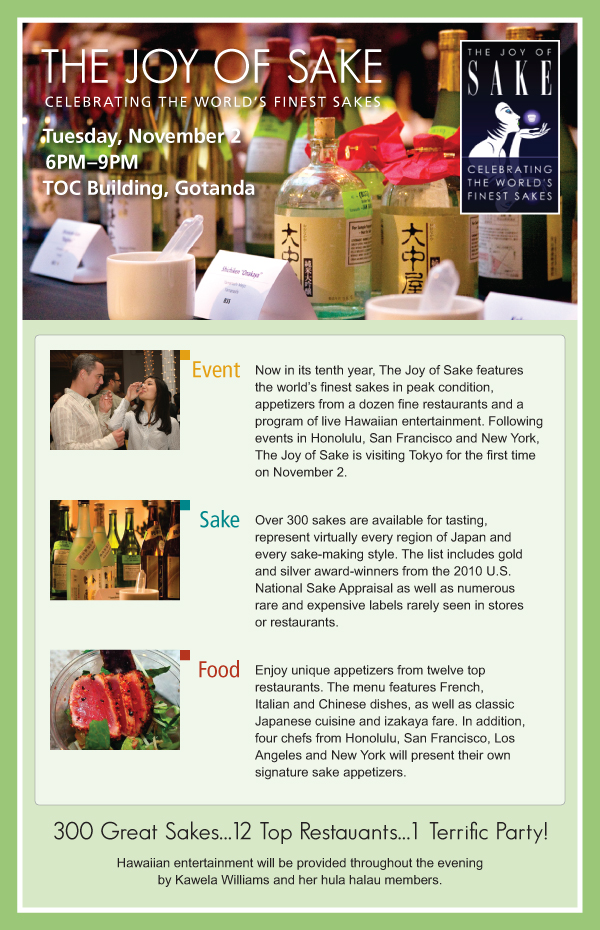
THE JOY OF SAKE in TOKYO, November 2nd

For more details check: http://www.joyofsake.com

RECOMMENDED RELATED SITES:
Warren Bobrow, Bread + Butter, Zoy Zhang, Hungry Neko, Think Twice, Frank Fariello, Mangantayon, Hapabento, Elinluv Tidbit Corner, Tokyo Terrace, Maison de Christina, Chrys Niles,Lexi, Culinary Musings, Wheeling Gourmet, Comestiblog, Chronicles Of A Curious Cook, Tokyo Through The Drinking Glass, Tokyo Foodcast, Palate To Pen, Yellin Yakimono Gallery, Tokyo Terrace, Hilah Cooking, More than a Mount Full, Arkonite Bento, Happy Little Bento; 5 Star Foodie; Jefferson’s Table; Oyster Culture; Gourmet Fury; Island Vittles; Good Beer & Country Boys; Rubber Slippers In Italy; Color Food daidokoro/Osaka;/a; The Witchy Kitchen; Citron Et Vanille, Lunsj Med Buffet/Estonian Gastronomy (English), Cook, Eat, Play, Repeat, Chrisoscope

Please check the new postings at:
sake, shochu and sushi

Shizuoka Sake Tasting: Bandai Brewery-Junmai Ginjo Genshu Homare Fuji

Bandai Brewery is located in one of the most scenic cities of Shizuoka Prefecture, Izu Peninsula formerly called Shuzenji. The city has recently been included into a larger city called Izu City, but people and tourists certainly don’t mix the two when they say they are going to Shuzenji!
One can reach this city also famous for its hotsprings and Japanese inns by taking a local train from Mishima City.
When you go down at Shuzenji Station, don’t forget to visit the souvenir shop where you will find all the products of Bandai Brewery, including real wasabi shochu!

Bandai Brewery is one of the oldest breweries in the Prefecture and its history under other names can be traced back to the 16th Century!
Like most of the other sake breweries in Shizuoka Prefecture, it has started to use locally grown sake rice to ensure a stable output.

Rice: Homare Fuji 100% (grown in Shizuoka Prefecture)
Rice milled down to 60%
Dryness: +3
Alcohol: 16~17 degrees (genshu: no water added)
Bottled in July 2010

Clarity: very clear
Colour: faint golden hue
Aroma: Strong and fruity: banana, vanilla, hints of pineapple
Body: fluid
Taste: Strongish attack with junmai petillant and a lot of fruit. Warms back of the palate. Well-rounded backed up by pleasant alcohol.
Complex: banana, gum-candy, almonds with memories of coffee beans later.
Softens with food to turn dry again on its own.
Almonds and banana tend to follow each other alternatively.

Overall: A sake you might as well drink chilled as it is quite sweet in spite of a +3 dryness level (quite dry by Shizuoka standards).
One of those sake you can pour over an ice-cream!
Very pleasant. Tends to get drier with food.
Would very well accompany blue cheese like a Port wine, or being drunk as a digestif!

Must-see tasting websites:
-Sake: Tokyo Through The Drinking Glass, Tokyo Foodcast, Urban Sake, Sake World
-Wine: Palate To Pen, Warren Bobrow, Cellar Tours, Ancient Fire Wines Blog
-Beer: Good Beer & Country Boys, Another Pint, Please!
-Japanese Pottery to enjoy your favourite drinks: Yellin Yakimono Gallery
——————————–
Please check the new postings at:
sake, shochu and sushi

—————————————-
日本語のブログ
—————————————-

Food Humor: Acid Milk!

A few years ago we used to see those big ads in Japan for “Homo Milk” standing for “Homogeneous Milk”. That is, until someone pointed out this might mislead some people into the wrong conclusions…

I found this truck in front of a kindergarten this morning on the way to my classroom.
After some investigation I found out (with the help of my Japanese student), that yoghurt is also called fermented milk in Japanese!
Acid Milk simply stands for Yoghurt!
Even so, it might be a good idea (but I suppose it is too late!) to think of a change of name, unless some people (again!) think of an even worse possibility! LOL

Must-see tasting websites:
-Sake: Tokyo Through The Drinking Glass, Tokyo Foodcast, Urban Sake, Sake World
-Wine: Palate To Pen, Warren Bobrow, Cellar Tours, Ancient Fire Wines Blog
-Beer: Good Beer & Country Boys, Another Pint, Please!
-Japanese Pottery to enjoy your favourite drinks: Yellin Yakimono Gallery
——————————–
Please check the new postings at:
sake, shochu and sushi

—————————————-
日本語のブログ
—————————————-

Shizuoka Sake Tasting: Yamanaka Brewery-Aoitenka Toubinkoi Muroka Junmai Ginjo

Yamanaka Brewery i not easy to access as it is far away from Kakegawa Station near the sea and one can reach only by bus, car and bicycle (not from Shizuoka City for the latter!)!
It is a fairly small establishement, although very well known, the more for it that its neighbour is the famous soy sauce brewery, Sakae!

This particular bottle was extravagant for many reasons.
The decoration was very original in the sense that the label on the bottle is actually made of cloth!
Coming into a great box with plenty of explanations, both the bottle and box are worth a collector’s attention.

The contents were also absolutely extravagant:
The real title is Yamanaka Shuzo/Yamanak Brewery, Aointenka (sake name), Tobinkoi (sake extracted drop by drop by being left hanging into sacke inside the tank and into a large glass jar), Muroka (unfiltered), Junami Ginjo (high premium with no alcohol added), Genshu (no pure water added), the whole meaning a completely untouched sake brew!

Now for the details:
Rice: Yamada Nishiki from Hyogo Prefecture
Rice milled down to 48% (high dai ginjo level!)
Yeast: 1401
Dryness: +2
Acidity: 1.7
Alcohol: 16~17 gegrees
Bottled in July 2010

Clarity: very clear
Colour: transparent
Aroma: Slghtly dry and very fruity. Almonds, coconuts with notes of pineapple. Extremely pleasant
Body: fluid
Taste: Very complex and fruity. Extremely pleasant and sophisticated.
Dry and fruity. Junmai petillant spreading over the back of the palate. Lingers on only a little.
Dry almonds, pineapple with hints of banana and vanilla.
Finishes on a very dry almond note, but turns a little sweetish with food. Later on reveals faint notes of dark chocolate and cofee beans.

Overall: Simply extravagant, although its pricetag is ridiculously cheap (that is for that quality!). The rice millage would be of another plane elsewhere!
Sophisticated, lmost “feminine” in spite of high alcohol content.
Best appreciated lightly chilled or at room temperature.
Personally the best aperitif one can come across!

Must-see tasting websites:
-Sake: Tokyo Through The Drinking Glass, Tokyo Foodcast, Urban Sake, Sake World
-Wine: Palate To Pen, Warren Bobrow, Cellar Tours, Ancient Fire Wines Blog
-Beer: Good Beer & Country Boys, Another Pint, Please!
-Japanese Pottery to enjoy your favourite drinks: Yellin Yakimono Gallery
——————————–
Please check the new postings at:
sake, shochu and sushi

—————————————-
日本語のブログ
—————————————-

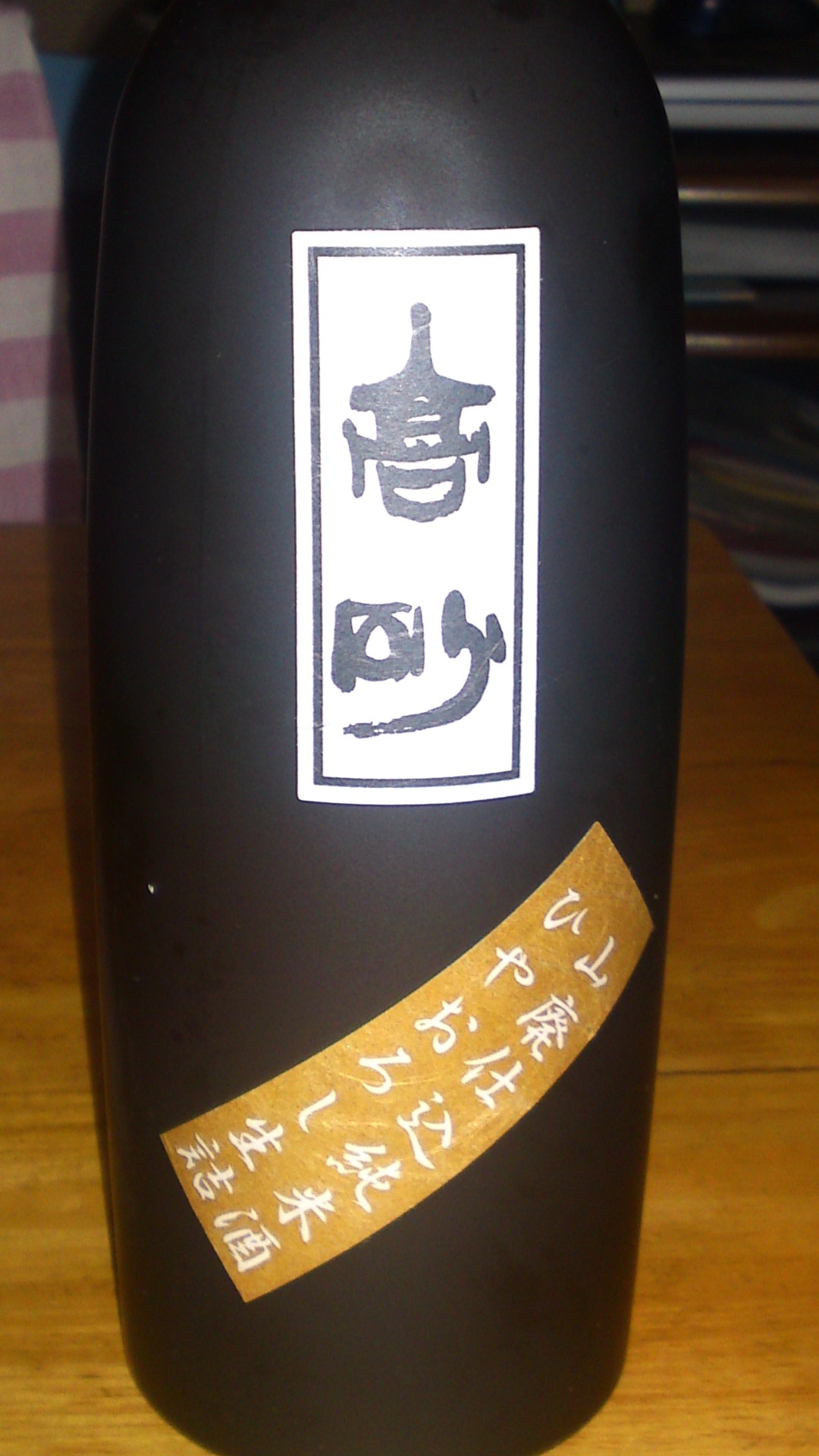
Shizuoka Sake Tasting: Fuji-Takasago Brewery/Takasago Yamahai Junmai Hiyaoroshi

It’s been some time since I tasted a sake from Fuji-Takasago Brewery in Fujinomiya City.
Since September is the time to taste the Hiyaoroshi sake/sake taht has been sterelized only once, it is such an embarrssment of choices, but I opted for this brewery as it is slightly unusual in Shizuoka refecture.

The real title for this particular sake is “Takasago Yamahai Shikomi Junmai Shu Hiyaoroshi Namatsume”!
Meaning: Takasago (main name) Yamahai Shikomi (old style brewing) Junmai Shu (Junmai=no alcohol added) Hitaoroshi Namatsume (bottled without a second sterilization.
On top of this it is a genshu/no water added!

Fuji-Takasago Brewery/Takasago Yamahai Junmai Hiyaoroshi

Rice: Yamada Nishiki 100% (Hyogo Prefecture)
Riced milled down to 55% (extravagant!)
Alcohol: 16~17 degrees (genshu)
Dryness: -3 (sweet for Shizuoka)
Bottled in September 2010

Clarity: very clear
Colour: Faint golden hue
Aroma: Strong, very fruity: bananas, vanilla, sweet ornages
Body: Fluid
Taste: Strong attack with a lot of junmai “petillant”, sweetish.
Complex: Macadamia nuts, bananas, oranges, vanilla.
Warms back of the palate for some time. Lingers for a while with very dry almonds backed up by oranges and vanilla.
Sweet by Shizuoka standards at first approach but dries up quickly.

Overall: A sake that can be greatly enjoyed chilled or at room temperature.
Great as a sweetish aperitif or in lieu of a port wine.
Strikes a great marriage with choclate or blue cheese.
Chilled, can be drunk as a dessert drink! Would do excellently poured over ice-cream!

Must-see tasting websites:
-Sake: Tokyo Through The Drinking Glass, Tokyo Foodcast, Urban Sake, Sake World
-Wine: Palate To Pen, Warren Bobrow, Cellar Tours, Ancient Fire Wines Blog
-Beer: Good Beer & Country Boys, Another Pint, Please!
-Japanese Pottery to enjoy your favourite drinks: Yellin Yakimono Gallery
——————————–
Please check the new postings at:
sake, shochu and sushi

—————————————-
日本語のブログ
—————————————-

Vegan & Avocado & Banana Shake

I wonder if there is a country where one cannot find some kind of shake!
But, they use ice-cream and dairy products to make them!

Well, there is a simple way to make them vegan!
How about this one:

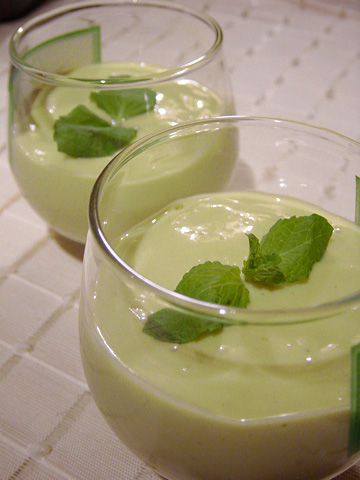
Vegan & Avocado & Banana Shake!

INGREDIENTS: For 2 people
-Avocado: 1/2 ripe
-Soy milk: 200 cc/ml
-Banana: 1
-Lemon juice: 1 reaspoon
-Honey (liquid): 2 teaspoons
-Mint leaves: for decoration.

RECIPE:

-Leave banana and avacado in refrigeartor long enough to get them really chilled.

-Cut avocado and banana in small enough pieces.

-Put everything into blender and mix well.

-Pour in glasses and serve topped with mint leaves.

How simpler can you make it? LOL

RECOMMENDED RELATED SITES
Not-Just-Recipes, Bengal cuisine, Cooking Vegetarian, Frank Fariello, Gluten-free Vegan Family, Meatless MamaFrank Fariello, , Warren Bobrow, Wheeling Gourmet, Le Petit Cuisinier, Vegan Epicurean, Miss V’s Vegan Cookbook, Comestiblog, To Cheese or not To Cheese, The Lacquer Spoon

Please check the new postings at:
sake, shochu and sushi

—————————————-
日本語のブログ
—————————————-

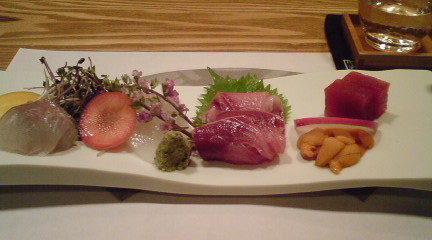
Sashimi Plate at Tomii (’09/12/04)

I suppose I do not need to introduce Tomii again as it is my favourite Japanese restaurant in the whole of Shizuoka Prefecture!
To make a long story short, I paid them a visit last night on my way back from university before going home.

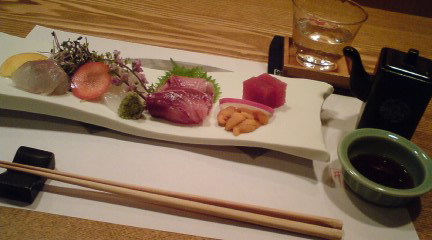
I was not that hungry, so I just ordered “o-tsukuri/sashimi plate”.

From left to right:
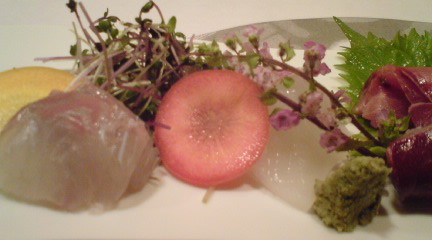
Yellow carrot, Suzuki/black bass, various sprouts, Kyoto ninjin/Kyoto re carrot, Aka Ika/red squid, shiso/perilla flowers and beni shigure daikon/red daikon variety.

For a clsoer view of thefresh vegetables!

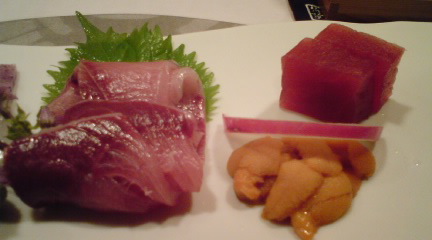
From left to right:
Kan buri/Winter yelowtail on shiso/perilla leaf, Uni/seaurchin under a slice beni daikon/red daikon and bachmaguro/tuna variety.

I had sake with all that of course.

I particularly enjoyed a new brew by Doi Brewery in Kakegawa City:

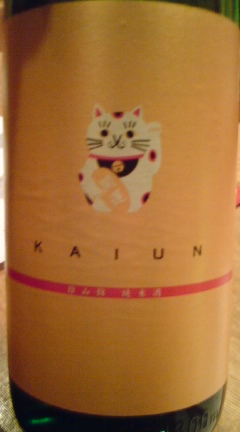
Doi Brewery: Kaiun Junmai
Rice: Oyamanishiki
Rice milled down to 60%
Alcohol: 15 degrees
Dryness: +4
Acidity: 1.5
Amino acids: 1.2
Bottled in March 2009

Clarity: very clear
Colour: faint golden hue
Aroma: Fresh, discreet, feminine, fruity. Memories of vanilla, banana and pineapple.
Body: velvety
Taste: Soft attack. Well-rounded. Short tail.
Pleasant, fleeting, feminine, sophisticated.
Fruity and dry, but very smooth.
Pineapple, soft citruses
Junmai tingle appears with food with a late appearance by almonds.
Very soft and fleeting finish with more dry almonds.

Overall: Extravagant, sophisiticated, fleetingly feminine are not exaggerated descriptions for this sake, the last created by Master Brewer hase who passed away in 2009.
Now, how would you drink it?
With your love? as an extravagant aperitif? Or on your own away from the bustle of everyday life….

TOMII
Shizuoka City, Aoi Ku, Tokiwa-cho, 1-2-7, Tomii Bldg, 1F
Tel.: 054-274-0666
Business hours: 17:00~22:00
Closed on Sundays
HOMEPAGE (Japanese)

RECOMMENDED RELATED SITES:
Bread + Butter, Comestilblog, Greedy Girl, Bouchon For 2, Zoy Zhang, Hungry Neko, Mangantayon, Elinluv Tidbit Corner, Maison de Christina, Chrys Niles, Lexi, Culinary Musings, Eats and Everything, Bite Me New England, Heather Sweet, Warren Bobrow, 5 Star Foodie, Frank Fariello, Oyster Culture, Ramendo, Alchemist Chef, Ochikeron, Mrs. Lavendula, The Gipsy Chef, Spirited Miu Flavor,
-Sake: Tokyo Through The Drinking Glass, Tokyo Foodcast, Urban Sake, Sake World
-Wine: Palate To Pen
-Beer: Good Beer & Country Boys, Another Pint, Please!
-Japanese Pottery to enjoy your favourite drinks: Yellin Yakimono Gallery

Please check the new postings at:
sake, shochu and sushi

—————————————-
日本語のブログ
—————————————-

Uncovering Sake’s hidden Stories by Melinda Joe

Sake-Pine-Ball

The present article has been written by my good friend Melinda Joe on behalf of a common friend, namely John Gauntner, the foreign (as to the Japanese) authority on Japanese sake!

MELINDA-JOE
Melinda Joe

I like secrets as much as, if not slightly more than, the next guy, so it didn’t take much convincing to get me to read John Gauntner’s new e-book, Sake’s Hidden Stories. Although it wasn’t the juicy, tell-all memoir I hope he’ll pen one day, this collection of essays offers a glimpse of a world that is closed to most of us, particularly non-speakers of Japanese. It tells stories of strong wills, iconoclasts, and errant sons who return home to carry on the work of generations. In our fast-paced modern society, where individualism reigns supreme, the words honor, duty, and tradition seem like anachronistic concepts; yet, these are the very forces that have kept the sake industry alive.

Part of what attracted me, and my fellow nihon-shu bloggers Tim, Etsuko, and Robert-Gilles; to sake was the spirit and enthusiasm of the folks who make it. However, much of the sake literature out there – at least in English – focuses mainly on the products themselves. It’s refreshing to finally find a book that introduces the people behind the brand. A sake insider for more than a decade, Mr. Gauntner is the perfect man for the job. He takes us with him up the gravelly roads and through the cool, dark rooms of centuries-old buildings. Some of the anecdotes describe his first meetings with the brewery owners and staff, and readers feel his surprise and, in many cases, awe.

After meeting the former president of Tairin Brewery in Gifu, Gauntner asks how he was able to control the milling of the rice, which was done at that time on a primitive machine.

The older gentleman answered very simply and humbly, “Well, I listen to it.” You listen to it? Huh?

He walked over to one end of the small machine and lifted up – of all things – a stethoscope that hung neatly over a pipe. “Well, Yeah. I use this, and I listen to it. I have been doing this in this way for so many years that I can easily tell by the sound of the rice spinning inside how much has been milled away.”

Amazing. Most modern seimaiki are automated so the operator has to do nothing, just put in the rice, set the controls, and wait. But for decades this gentleman has been listening to the sound of the rice as it rolled around inside the cylindrical drum, and by using only his senses, polished with years of experience, he can be so accurate that they could make the fine sake Tairin is known for. By using a stethoscope. Simply wild.

The book contains a fair amount of technical information, and, although the first section is devoted to sake basics, true novices may find it difficult to take everything in. The author was a former engineer and his fascination with machinery is evident. For those with a firm foundation of sake knowledge, however, the book is a terrific resource providing in-depth details of production.

Still, everyone can relate to he characters themselves (and, in the sake world, there are plenty of them). When he meets the purple-track-suit-wearing Nakao-san, president and toji of Tsuyu Masamune in Osaka, Gauntner wonders how he learned to make sake.

“Ah, but that’s another long story,” he begins, raising his teacup as if toasting the idea for emphasis. He sets it down on the low table between us before continuing. “You see, I never wanted to be in this business. Originally I was not going to take over the brewery here. I wanted to be a phys ed instructor.”

That’s not the only surprise the kuramoto has in store for him.

In another departure from precedent, Nakao-san has begun to hold the occasional rap concert inside his brewery for the local community rap fans. “It’s kind of tight, but we have barely enough space. The band is down there, people dance up there, on that platform, just in front of the tanks. It’s kinda cool, actually.

These kinds of delightful details make Sake’s Hidden Stories a lot of fun to read, and you’ll definitely feel like an insider by the end of the book. In fact, you may end up itching to take to the sake road yourself. I certainly did!

Must-see tasting websites:
-Sake: Tokyo Through The Drinking Glass, Tokyo Foodcast, Urban Sake, Sake World
-Wine: Palate To Pen
-Beer: Good Beer & Country Boys, Another Pint, Please!
-Japanese Pottery to enjoy your favourite drinks: Yellin Yakimono Gallery

English Sake Brewer Master in Japan: Phillip Harper (3) (Postnotes added!)

tetsukezu

A lot has been written and will be written both here in Japan and abroad on Phillip Harper as he has, with the likes of John Gauntner, Timothy Sullivan and Melinda Joe, established himself as one of the references proving once for all that Japanese sake has at last expanded beyond the confines of this island for the good of all.
It is only a question of time when sake breweries will become a part of life like wine and beer abroad as demonstrated by the five existing branches of large Japanese breweries in the United States employing a full American staff and Moto I, the entirely owned and run American Sake Brewery.

harper-1

What makes the difference is that Phillip has gone as far as becoming the only foreign sake “toji”/master brewer in a Japanese brewery, namely Ki no Shita Brewery in Kyoto Prefecture!
An Oxford graduate hailing from Cornwall, it took him 18 years of sheer courage and guts to break into the closely guarded world of Japanese sake to gain recognition and earn his master brewer status in 2001.
The media (including The Los Angeles Times) finally take good note of his achievements when he was formally asked by Owner Yoshito Kinoshita to become his new Master Brewer (incidentally Phillip had already held that position in Osaka for two years).

This the third of the three bottles I received from his fans in Tokyo. That particular one was sent to me by Melinda Joe.

Kinoshita Brewery, Tamagawa, Tetsukezu Genshu Junmai Ginjo
Rice: Gohyakumangiku
Rice milled down to: 60%
Alcohol: 18~19 degrees (high as it is a genshu/unaltered alcohol contents)

Clarity: Very clear
Colour: Transparent
Aroma: Fruity, elegant. Strawberries, apricot.
Body: Velvety
Taste: Strong attack backed by alcohol.
Shortish tail. Warms up back of the palate.
Complex. Junmai tingle.
Fruity and dryish: apricots with hints of strawberries, almonds and macadamia nuts.
Elegant.
Dry almonds making a regular comeback.
Holds its own well with food, but revealing different facets, especially strawberries with a dry finish.

Overall: Elegant and easy to drink in spite of high alcohol contents.
For once, similar to Shizuoka-brewed sake.
Combines fruitiness and dryness into a remarkably palatable (eminently drinkable) creation!

PHILLIP’S COMMENTS:

The specs for that sake are:

SMV +4, Acidity 1.7, Amino Acids 1.5, Alcohol 18.7.

It was brewed with the same organic rice used to make the Konotori kimoto you reviewed the other day – at 60% polish this time.
Though it doesn’t seem to have made an impression on you, that sake isslightly effervescent. Bubbly sake is usually made either by refermenting in the bottle (like Champagne…), or injecting gas into the sake itself. Oh,and a few people do a kind of sparkling wine thing with secondary fermentationin tanks. Tetsukezu bubbles are different, because they derive from the originalfermentation in the mash itself. We trap them in by a secret method that I can’t
reveal, except to say that it is as high-tech as all the other stuff we do at Tamagawa.

Regards, Philip

———————————
Must-see tasting websites:
-Sake: Tokyo Through The Drinking Glass, Tokyo Foodcast, Urban Sake, Sake World
-Wine: Palate To Pen
-Beer: Good Beer & Country Boys, Another Pint, Please!
-Japanese Pottery to enjoy your favourite drinks: Yellin Yakimono Gallery
———————————————–
Please check the new postings at:
sake, shochu and sushi

—————————————-
日本語のブログ
—————————————-

English Sake Brewer Master in Japan: Phillip Harper (3)

tetsukezu

A lot has been written and will be written both here in Japan and abroad on Phillip Harper as he has, with the likes of John Gauntner, Timothy Sullivan and Melinda Joe, established himself as one of the references proving once for all that Japanese sake has at last expanded beyond the confines of this island for the good of all.
It is only a question of time when sake breweries will become a part of life like wine and beer abroad as demonstrated by the five existing branches of large Japanese breweries in the United States employing a full American staff and Moto I, the entirely owned and run American Sake Brewery.

harper-1

What makes the difference is that Phillip has gone as far as becoming the only foreign sake “toji”/master brewer in a Japanese brewery, namely Ki no Shita Brewery in Kyoto Prefecture!
An Oxford graduate hailing from Cornwall, it took him 18 years of sheer courage and guts to break into the closely guarded world of Japanese sake to gain recognition and earn his master brewer status in 2001.
The media (including The Los Angeles Times) finally take good note of his achievements when he was formally asked by Owner Yoshito Kinoshita to become his new Master Brewer (incidentally Phillip had already held that position in Osaka for two years).

This the third of the three bottles I received from his fans in Tokyo. That particular one was sent to me by Melinda Joe.

Kinoshita Brewery, Tamagawa, Tetsukezu Genshu Junmai Ginjo
Rice: Gohyakumangiku
Rice milled down to: 60%
Alcohol: 18~19 degrees (high as it is a genshu/unaltered alcohol contents)

Clarity: Very clear
Colour: Transparent
Aroma: Fruity, elegant. Strawberries, apricot.
Body: Velvety
Taste: Strong attack backed by alcohol.
Shortish tail. Warms up back of the palate.
Complex. Junmai tingle.
Fruity and dryish: apricots with hints of strawberries, almonds and macadamia nuts.
Elegant.
Dry almonds making a regular comeback.
Holds its own well with food, but revealing different facets, especially strawberries with a dry finish.

Overall: Elegant and easy to drink in spite of high alcohol contents.
For once, similar to Shizuoka-brewed sake.
Combines fruitiness and dryness into a remarkably palatable (eminently drinkable) creation!

PHILLIP’S COMMENTS:

The specs for that sake are:

SMV +4, Acidity 1.7, Amino Acids 1.5, Alcohol 18.7.

It was brewed with the same organic rice used to make the Konotori kimoto you reviewed the other day – at 60% polish this time.
Though it doesn’t seem to have made an impression on you, that sake isslightly effervescent. Bubbly sake is usually made either by refermenting in the bottle (like Champagne…), or injecting gas into the sake itself. Oh,and a few people do a kind of sparkling wine thing with secondary fermentationin tanks. Tetsukezu bubbles are different, because they derive from the originalfermentation in the mash itself. We trap them in by a secret method that I can’t
reveal, except to say that it is as high-tech as all the other stuff we do at Tamagawa.

Regards, Philip

———————————
Must-see tasting websites:
-Sake: Tokyo Through The Drinking Glass, Tokyo Foodcast, Urban Sake, Sake World
-Wine: Palate To Pen
-Beer: Good Beer & Country Boys, Another Pint, Please!
-Japanese Pottery to enjoy your favourite drinks: Yellin Yakimono Gallery
———————————————–
Please check the new postings at:
sake, shochu and sushi

—————————————-
日本語のブログ
—————————————-

English Sake Brewer Master in Japan: Phillip Harper (2)

time-machine

A lot has been written and will be written both here in Japan and abroad on Phillip Harper as he has, with the likes of John Gauntner, Timothy Sullivan and Melinda Joe, established himself as one of the references proving once for all that Japanese sake has at last expanded beyond the confines of this island for the good of all.
It is only a question of time when sake breweries will become a part of life like wine and beer abroad as demonstrated by the five existing branches of large Japanese breweries in the United States employing a full American staff and Moto I, the entirely owned and run American Sake Brewery.

harper-1

What makes the difference is that Phillip has gone as far as becoming the only foreign sake “toji”/master brewer in a Japanese brewery, namely Ki no Shita Brewery in Kyoto Prefecture!
An Oxford graduate hailing from Cornwall, it took him 18 years of sheer courage and guts to break into the closely guarded world of Japanese sake to gain recognition and earn his master brewer status in 2001.
The media (including The Los Angeles Times) finally take good note of his achievements when he was formally asked by Owner Yoshito Kinoshita to become his new Master Brewer (incidentally Phillip had already held that position in Osaka for two years).

This the second of the three bottles I received from his fans in Tokyo. That particular one was sent to me by Etsuko Nakamura.

Kinoshita Brewery, TIME MACHINE Tamagawa
Dryness: -72
Acidity: 3.2 (very high compared to Shizuoka)
Rice milled down to 88%

Clarity: Slightly smoky (nothing wrong with this as it contains some lees)
Colour: Rich gold
Aroma: Powerful. Fruity. Plums
Body: Velvety
Taste: Powerful. Strong and pleasant attack. Complex. Flowery and fruity: plums and mirabelles. Memories of coffee beans and almonds.
Bitter chocolate peaking out later.
Liquorish with a hint of acidity.

Overall: I’ve been accused of not beingvery lyrical in my comments, whatever my feelings towards a wine or sake in spite of my great love for them. I suppose I’m too old to change! LOL
I waited until the very last glass (note, galss, not cup!) before writing my impressions.
Frankly speaking, an unknowledgeable person could be easily fooled into believing into thinking he is drinking wine! What with the bottle shape, the colour of the sake and the quaint label!
Liquorish, but not tart or overwhelming, I slowly savoured it like Sauternes or sweet white Port.
With plenty of translated explanations, it should hit the palate of some vaunted “tasters” anywhere in the world!

PHILLIP’S NOTES:

“We also do a barking mad sake called Time Machine that is made in the style of the Edo Period. Etsuko took a shine to it last year. We pressed this year’sTime Machine last week: specs are

SMV -70, Acidity 3.4, Amino acids 7.3, Alcohol 16.6.”
(Specs seem to vary with what is written on the labels)
Phillip later commented:
“The discrepancy in the data is because you drank last year’s
(slightly diluted) version: I gave the specs for this year’s
genshu – which, for your information, is already more deeply
coloured than the bottle you drank, only a week after pressing.”

———————————
Must-see tasting websites:
-Sake: Tokyo Through The Drinking Glass, Tokyo Foodcast, Urban Sake, Sake World
-Wine: Palate To Pen
-Beer: Good Beer & Country Boys, Another Pint, Please!
-Japanese Pottery to enjoy your favourite drinks: Yellin Yakimono Gallery
———————————————–
Please check the new postings at:
sake, shochu and sushi

—————————————-
日本語のブログ
—————————————-