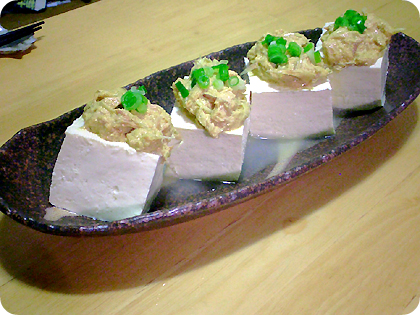
Tag Archives: Simple Recipes

Vegan Sushi Plate at Sushi Ko, Shizuoka (’10/01/14)

The Missus and I visited our favourite Sushi Restaurant last night, Sushi Ko. it might not be the most expensive or sophisticated sushi restaurant in our Prefecture but you get the best food at the best price.
It certainly makes for far better value than some vaunted establishments in Tokyo or New York where you pay ridiculous prices for tiny pieces of art in outrageously expensive surroundings!
Moreover, Mr. Oda is one of those very few true chefs who take pleasure in tackling any challenge thrown at him by customers.
He knows that I will always ask him to come with a vegan sushi plate not only to demonstrate that such gastronomy exists, but also to lure more customers to his business, which is quite flourishing.

Here what he concocted for us. Sorry for the slightly fuzzy pictures, but I had to contend with an impatient Missus!

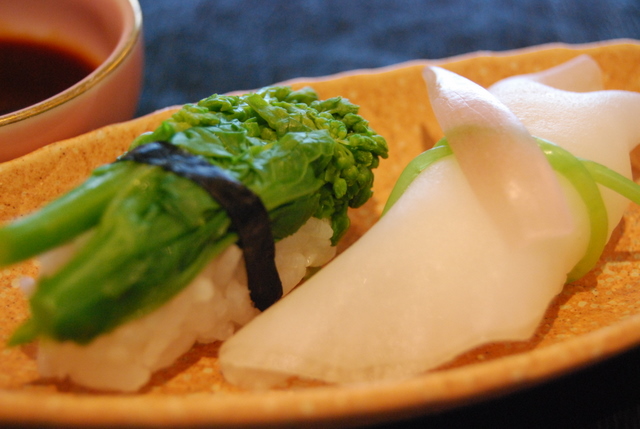
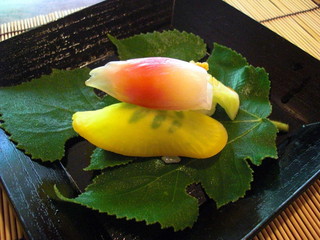
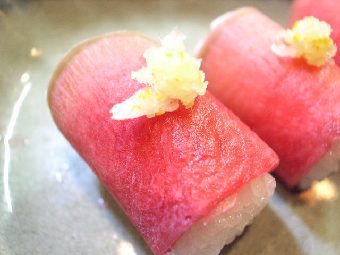
These rolls were made with thin wide strips of daikon that mr. Oda quickly marinated in lemon water instead of using dry nori/seaweed.
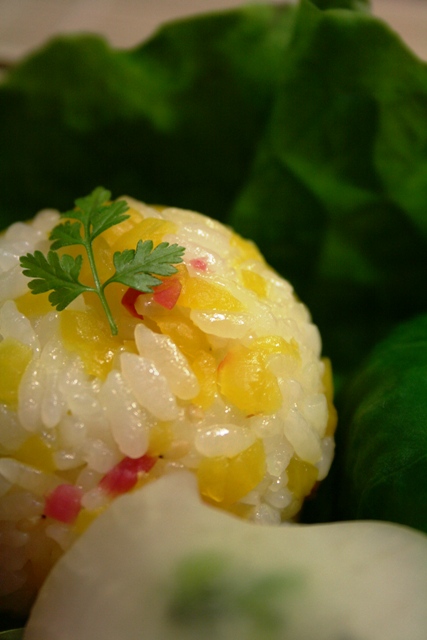
Inside he rolled sushi rice (shari) with trefoil stems, umeboshi/pickled Japanese plum meat and shiso/perilla leaves!

Buckwheat sprouts/Hime Soba Me/姫蕎麦芽 Nigiri!

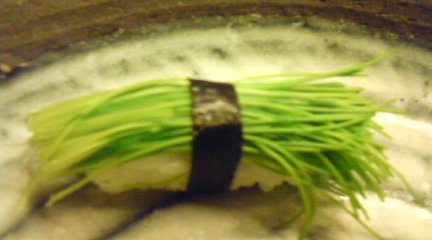
Thin leek sprouts/Me Negi/芽葱 Nigiri!

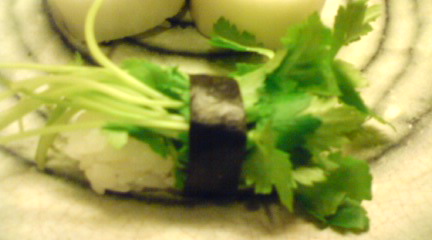
Trefoil/Mitsuba/三つ葉 Nigiri!

What is Mr. Oda going to come up with next time? LOL

Sushi Ko
shizuoka City, Aoi Ku, Ryogae-cho. 2-3-1 (Aoba Koen)
Tel.: 054-2512898
Business Hours: 17:00~25:00. 17:00~23:00 (Sundays)
Closed on Wednesdays
Reservations recommended
Credit cards OK
HOMEPAGE (Japanese)

RECOMMENDED RELATED SITES
Not-Just-Recipes, Bengal cuisine, Cooking Vegetarian, Frank Fariello, Gluten-free Vegan Family, Meatless MamaFrank Fariello, , Warren Bobrow, Wheeling Gourmet, Le Petit Cuisinier, Vegan Epicurean, Miss V’s Vegan Cookbook, Comestiblog, To Cheese or not To Cheese, The Lacquer Spoon, Russell 3, Octopuspie, Bread + Butter, Pegasus Legend, Think Twice

Please check the new postings at:
sake, shochu and sushi, Island Vittles

—————————————-
日本語のブログ
—————————————-

Vegetables Facts and Tips 16: Avocado

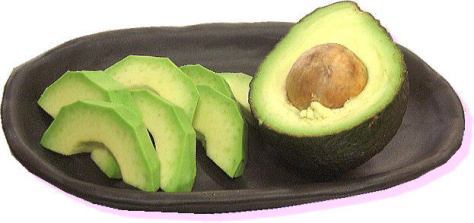
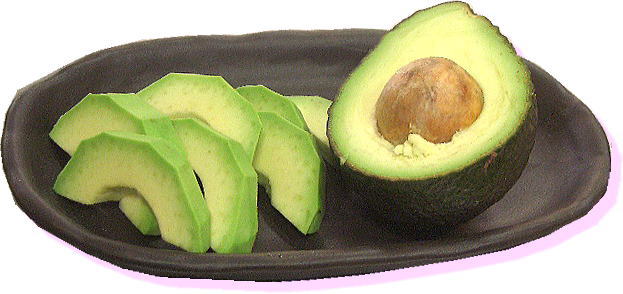
The avocado (Persea americana), aguacate (Spanish), butter pear or alligator pear, is a tree native to the Caribbean, Mexico, South America and Central America, classified in the flowering plant family Lauraceae along with cinnamon, camphor and bay laurel. The name “avocado” also refers to the fruit (technically a large berry that contains a large seed) of the tree which may be egg-shaped or spherical.

Avocados are a commercially valuable fruit and are cultivated in tropical climates throughout the world (and some temperate ones, such as California), producing a green-skinned, pear-shaped fruit that ripens after harvesting. Trees are partially self-pollinating and often are propagated through grafting to maintain a predictable quality and quantity of the fruit.

P. americana, or the avocado, originated in the state of Puebla, Mexico. The oldest evidence of avocado use was found in a cave located in Coxcatlán, Puebla, Mexico that dates to around 10,000 years BCE.

The word ‘avocado’ comes from the Nahuatl word ahuacatl (‘testicle’, a reference to the shape of the fruit). Avocados were known by the Aztecs as ‘the fertility fruit’.

The subtropical species needs a climate without frost and with little wind. High winds reduce the humidity, dehydrate the flowers, and affect pollination. In particular, the West Indian type requires humidity and a tropical climate which is important for flowering. When even a mild frost occurs, premature fruit drop may occur, although the Hass cultivar can tolerate temperatures down to −1°C. The trees also need well-aerated soils, ideally more than 1 m deep.

An average avocado tree produces about 120 avocados annually. Commercial orchards produce an average of 7 tonnes per hectare each year, with some orchards achieving 20 tonnes per hectare.

High avocado intake has been shown to have an effect on blood serum cholesterol levels. Specifically, after a seven-day diet rich in avocados, hypercholesterolemia patients showed a 17% decrease in total serum cholesterol levels. These subjects also showed a 22% decrease in both LDL (bad cholesterol) and triglyceride levels and 11% increase in HDL (good cholesterol) levels.[20] Additionally a Japanese team synthesised the four chiral components and identified (2R, 4R)-16-heptadecene-1, 2, 4-triol as the natural antibacterial component.

The fruit has a markedly higher fat content than most other fruit, mostly monounsaturated fat, and as such serves as an important staple in the diet of various groups where access to other fatty foods (high-fat meats and fish, dairy, etc) is limited.

The avocado is very popular in vegetarian cuisine, making an excellent substitute for meats in sandwiches and salads because of its high fat content.

FACTS:

-Contains large amounts of unsaturated fats, Potassium, Phosphorus, Vitamins B1, B2, and B6, Vitamin C, Vitamin E, Pantoten acid and vegetal fibers.

-Helps lower bad cholesterol and high blood pressure.

-Season: available all year long thanks to high import/export.

TIPS:

-Choose green hard specimens if you have the time to let them ripen to your taste. As soon as it is ripened keep in the fridge, but consume as soon as possible.

-When choosing ripe specimens, choose firm and plentiful. Loose space under the skin is a bad sign.

HEALTH FACTS:

-When combined with apple or lemon, help lower blood cholesterol

-When combined with asparaguses, helps combat skin ageing.

-Generally helps combat bad cholesterol and ageing.

COOKING TIPS:
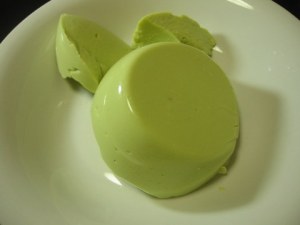

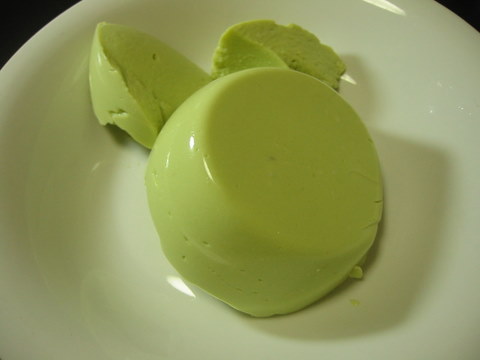
Avocado Pudding
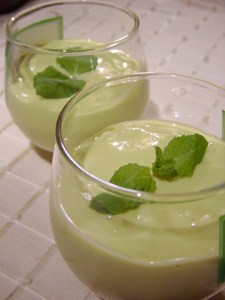

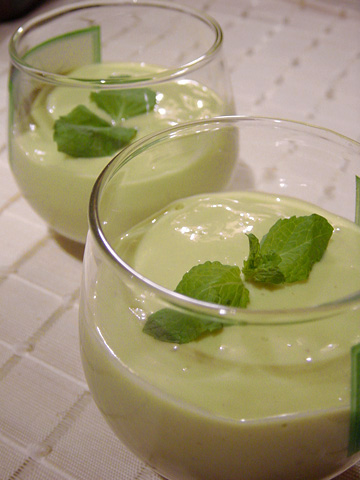
Banana and avocado shake

Avocadoes of course are great raw or mashed in puddings, dips, sauces and drinks for instance, but they are also great cooked!
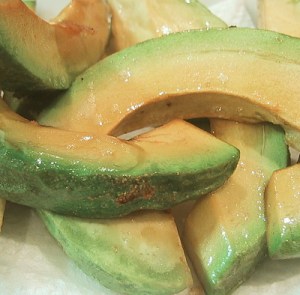
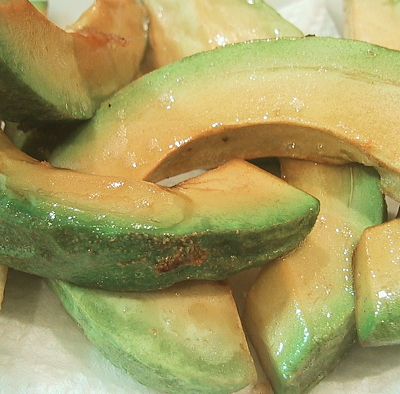
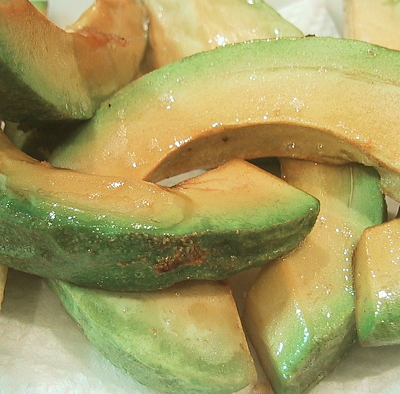
They can deep-fried when unripe (see above picture!).
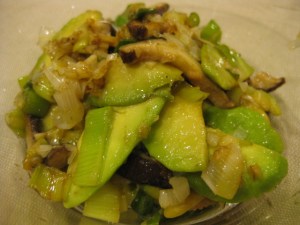
They can be stir-fried in a vegan recipe.
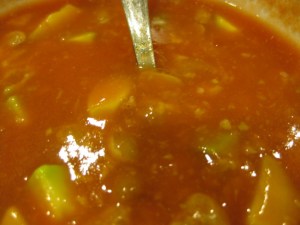
They are great in a vegan gazpacho!
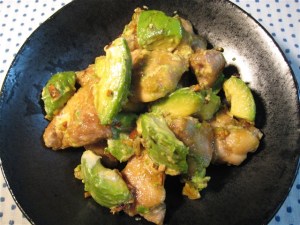
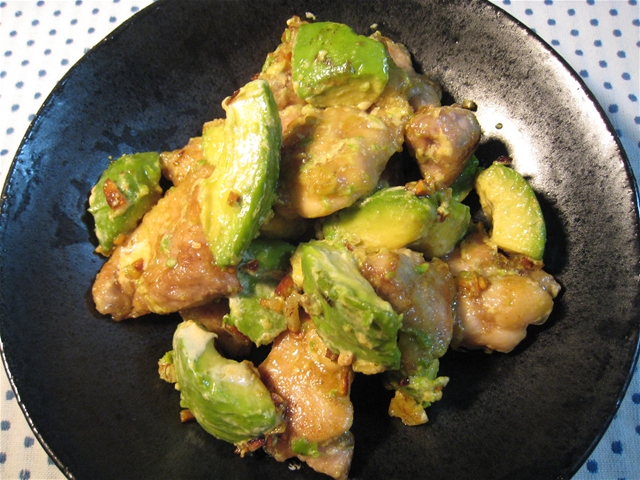
And beautiful stir-fried with chicken!
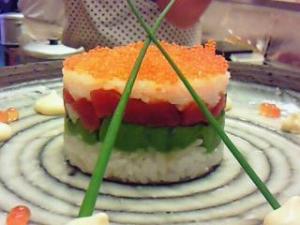
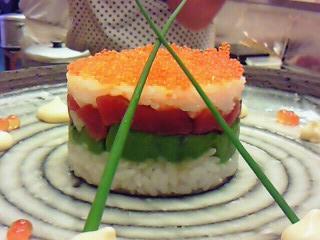
And don’t forget all the possible combinations as sushi!

RECOMMENDED RELATED SITES
Not-Just-Recipes, Bengal cuisine, Cooking Vegetarian, Frank Fariello, Gluten-free Vegan Family, Meatless MamaFrank Fariello, , Warren Bobrow, Wheeling Gourmet, Le Petit Cuisinier, Vegan Epicurean, Miss V’s Vegan Cookbook, Comestiblog, To Cheese or not To Cheese, The Lacquer Spoon, Russell 3, Octopuspie, Bread + Butter, Pegasus Legend, Think Twice

Please check the new postings at:
sake, shochu and sushi, Island Vittles

—————————————-
日本語のブログ
—————————————-

Avocado’s hard! No worries! Deep-fry it!

Coming back to a comment and question about what to do with an avocado you peeled away before realizing it was to hard to prepare for your California Roll, Avocado Soup or Avocado Salad, there is no need to worry.

No worries! as they say in Australia!

The same Australians might be tempted to tease you with a few jokes of their own.
A habit they have is to scream “good nut!” when one of their bowler throws an excellent ball to a befuddled batsman during a cricket match.
The same “nut” could be rightfully construed to another word meaning exactly the same when our yankee friends play “hard ball” at Baseball!

I can hear some of good-natured friends saying that once again the old geezeer is laying on it heavily, but have you heard of the real meaning of the word “avocado” in its country of origin?
About time I stop, or some unwanted spammer will find his/her/its way in!

Alright, you found out your avocado is too hard.
Just peel it completely.
Cut it into appropriate “wedges”.
Sprinkle them with a little salt and deep-fry them as they are for 2 minutes at 180 degrees Celsius.

Serve them with a good beer.
You’ll find they are crispy outside and so sogt inside!
You could sprinkle them with a little lemon juice or some chili powder for more taste.
Plenty of possibilities here. Great snacks for our vegan friends!

RECOMMENDED RELATED SITES
Not-Just-Recipes, Bengal cuisine, Cooking Vegetarian, Frank Fariello, Gluten-free Vegan Family, Meatless MamaFrank Fariello, , Warren Bobrow, Wheeling Gourmet, Le Petit Cuisinier, Vegan Epicurean, Miss V’s Vegan Cookbook, Comestiblog, To Cheese or not To Cheese, The Lacquer Spoon, Russell 3, Octopuspie, Bread + Butter, Pegasus Legend, Think Twice

Please check the new postings at:
sake, shochu and sushi

—————————————-
日本語のブログ
—————————————-

Vegan Japanese Cuisine: Kabocha No Amakarani

Many people in Japan believe that Kabocha originates from Japan.
Actually it was introduced to Asia a long time ago after it was discovered on the American Continent.
Even the etymology is not Japanese as it refers (apparently, but nothing sure about that!) tothe varieties first grown and developped in Cambodia, according to the sam Japanese who can’t enough of them and mostly import them from Tonga, of all places!

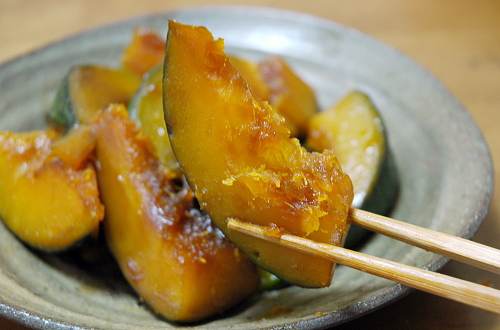
“Kabocha No Amakarani”, or 南瓜の甘辛煮in Japanese means simmered/stewed sweet and spicy kabocha.
It is very easy to make, even if it entails some handiwork. and can be enjoyed by all, vegans or not!

The following recipe bein the basic one, I will keep to the method and leave the exact quantities to your preferences!

RECIPE:

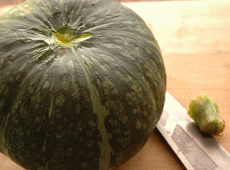
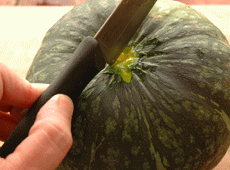
First take the stem end out. It sounds evident, but you will make things hard for you if you skip that simple step!

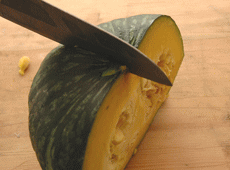
Turn the kabocha over (now you understand why you have taken the stem out?). Cut in half through the middle. Take care not to slip and cut your fingers!

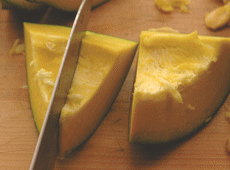
Having cut the kabocha in half, cut it again in half (fourth). The raw kabocha might be hard to cut. There is no need to use brute force. Cut it slowly!

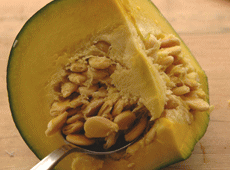
This will make it easy to scoop out (and discard the seeds).

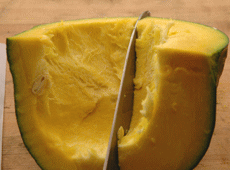
Cut each quarter again across as shown in above picture.

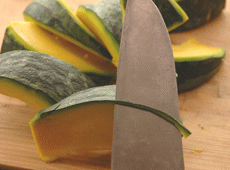
Then cut again as shown in above picture for individual pieces.

The next step is bit of a pain, but absolutely necessary.
Cut away the skin edges as shown in above picture.
Why?
-1) for a more even cooking.
-2) the edges will turn hard and will be diificult to bite through. You might even cut your lips. Believe me!
-3) the kabocha wedges will not break down upon stewing.

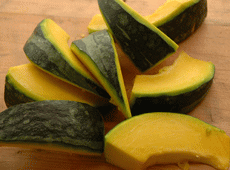
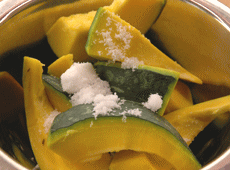
The kabocha wedges as they should be before stewing!

put all the kabocha wedges into a large bowl. Add sugar and mix. Leave it to marinate for at least 3 hours. It will soften the kabocha. It will also enhance the “umami”/taste. Water that will have seeped out will be used when simmering/stewing the kabocha. Don’t throw it away!

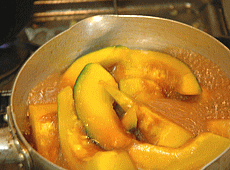
Place the kabocha wedges in a larg pan skin down (at least at first!).
Pour their water on top.
Pour dashi so as to cover them.
See dashi recipe HERE.
Cover with lid and cook for a while over a medium fire.
Once it starts to boil, take off lid and season with a little soy sauce and spices if wanted.
Cover again and stew over a low fire until liquid/juices have disappeared.
Can be eaten hot or cold!

RECOMMENDED RELATED SITES
Not-Just-Recipes, Bengal cuisine, Cooking Vegetarian, Frank Fariello, Gluten-free Vegan Family, Meatless MamaFrank Fariello, , Warren Bobrow, Wheeling Gourmet, Le Petit Cuisinier, Vegan Epicurean, Miss V’s Vegan Cookbook, Comestiblog, To Cheese or not To Cheese, The Lacquer Spoon, Russell 3, Octopuspie, Bread + Butter, Pegasus Legend, Think Twice

Please check the new postings at:
sake, shochu and sushi

—————————————-
日本語のブログ
—————————————-

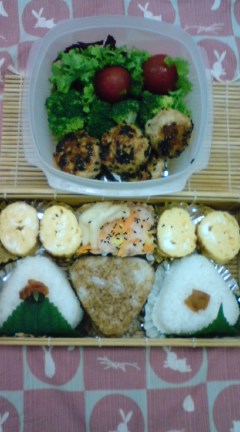
Today’s Lunch Box/Bento (’10/02)

I will have to be more careful when I describe the Missus’ bentoes this year, as she makes a point to read my comments and crash on me, talons extended, if I make a mistake (who do you think is the dragon in my e-mail address? LOL).
The positive side is that she is starting getting serious about her creations!

As in the rest of North Hemisphere, we are going through a very cold spell in Japan. Here in Shizuoka, the mildest region in these islands after Okinawa, the situation is not dramatic, but it is markedly colder than usual. Therefore bentoes need to pack more body-heating ingredients, but at the same time control the calorie intake!

Today’s bento was certainly well-balanced, keeping in mind this a bento for an adult.

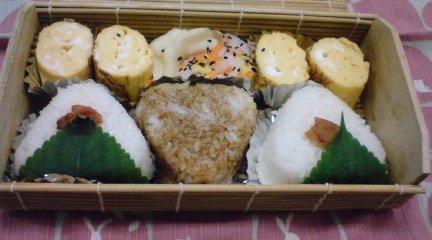
It contained three musubi/rice balls (triangular actually) of two different kinds. Two were made of plain steamed rice with umeboshi/Japanese pickled plum.
The plums had been marinated in honey, counterbalancing the salty taste.
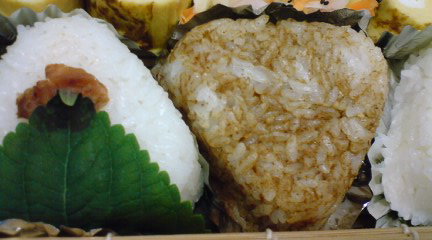
The third one was made of freshly steamed (with konbu/seaweed) rice mixedd with katsuo soboro/bonito powder.
The two umeboshi musubi were wrapped in large egoma/shiso-perilla variety leaves. These leaves are even tastier than the usual shiso leaves.

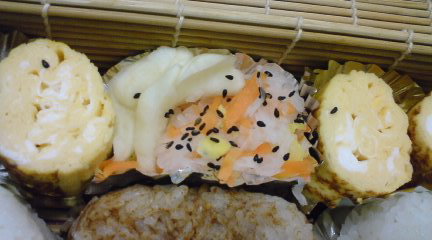
The tamagoyaki/Japanese omelette was of the plain variety.
When I asked about my dessert, my other half tersely repled that this was my dessert!
The pickled vegetables are home-made and served with a sprinkle of black sesame seeds.

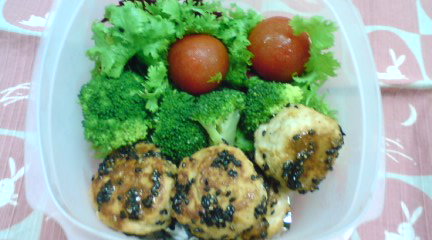
The garnish part was certainly colourful and well-balanced with boiled brocoli, fresh plum tomatoes, a liitle red trevise cabbage and plenty of succulent wasabi lettuce (nothing to do with wasabi but reminiscent of its taste!).

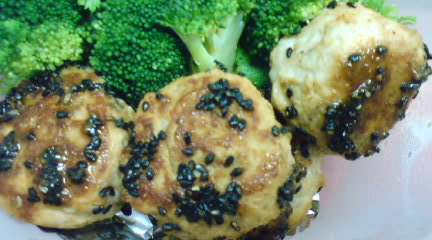
The meat part are tsukune/Japanese meat balls.
They consisted of chicken minced meat, grated renkon/lotus roots and spices that the Missus would not reveal. They were subsequently fried in oil, soy sauce, mirin and I don’t know what (keeping myself away from those talons!) and served coated with plenty of black sesame seeds.

No complaints!

RECOMMENDED RELATED SITES:
Warren Bobrow, Bread + Butter, Zoy Zhang, Hungry Neko, Think Twice, Frank Fariello, Mangantayon, Hapabento, Elinluv Tidbit Corner, Tokyo Terrace, Maison de Christina, Chrys Niles,Lexi, Culinary Musings, Wheeling Gourmet

Please check the new postings at:
sake, shochu and sushi

—————————————-
日本語のブログ
—————————————-
Vegan Japanese Cuisine: Gazpacho

Gazpacho is a world popular cold Spanish tomato-based raw vegetable soup, originating in the southern region of Andalusia. Gazpacho is widely consumed throughout Spain, neighboring Portugal (where it is known as gaspacho) and parts of Latin America.

But sometimes vegans have some edifficulty in reproducing it according to their preferences.
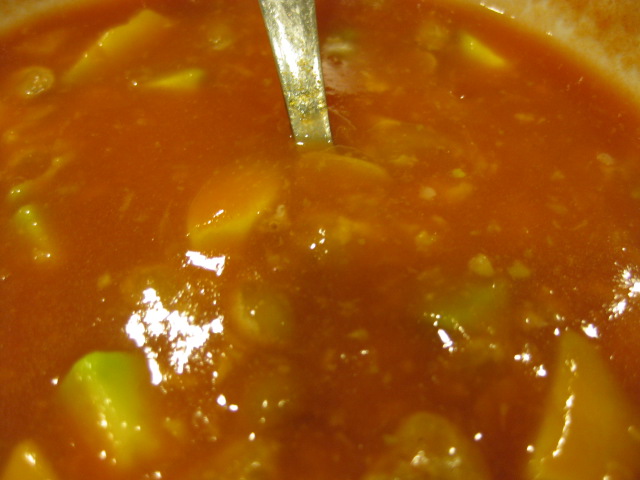
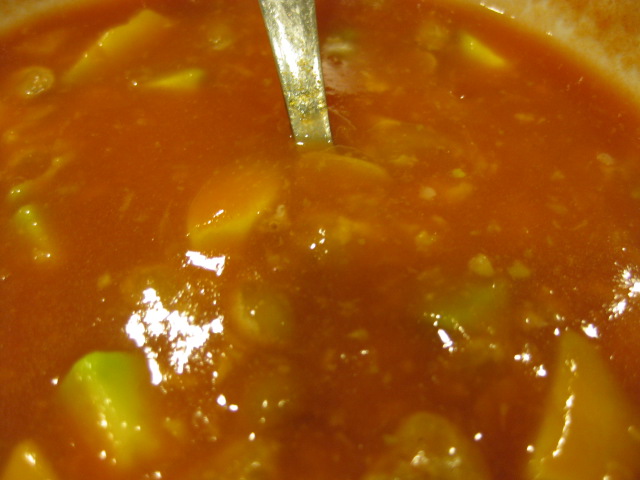
Here is a simple Japanese version using natto and avocado that any vegans and vegetarians can enjoy!
Actually the Japanese believe that Gazpacho is beneficial to human skin!

Vegan Japanese Gazpacho

INGREDIENTS:

-Tomato juice: 1 standard can (of course you can/may prepare your own from organic tomatoes!)
-Natto: 1 standard pack: 50 g
-Avocado: 1 half (Jenn, asked me how to proceed to prevent avocado from chamging colour. Simple. sprinkleit with lemonjuice!)
-Garlic: 2 cloves
-Sesame oil: a little
-Salt and pepper to taste
-Optional spices (chili, nutmeg, etc.)
-Optional Vegetables (celery, coriander, etc.)

RECIPE:

-Cut avocado in pieces. Grate garlic.

-Mix the natto wll with a little sesame oil.

-In a large bowl pour the tomato juice and natto. Add salt, pepper and spices.

3- Heat the whole for 1 minute.

4. Let cool completely and leave in refrigerator.
Eat/drink chilled topped with some freshly cut greens.

RECOMMENDED RELATED SITES
Not-Just-Recipes, Bengal cuisine, Cooking Vegetarian, Frank Fariello, Gluten-free Vegan Family, Meatless MamaFrank Fariello, , Warren Bobrow, Wheeling Gourmet, Le Petit Cuisinier, Vegan Epicurean, Miss V’s Vegan Cookbook, Comestiblog, To Cheese or not To Cheese, The Lacquer Spoon, Russell 3, Octopuspie, Bread + Butter, Pegasus Legend, Think Twice

Please check the new postings at:
sake, shochu and sushi

—————————————-
日本語のブログ
—————————————-
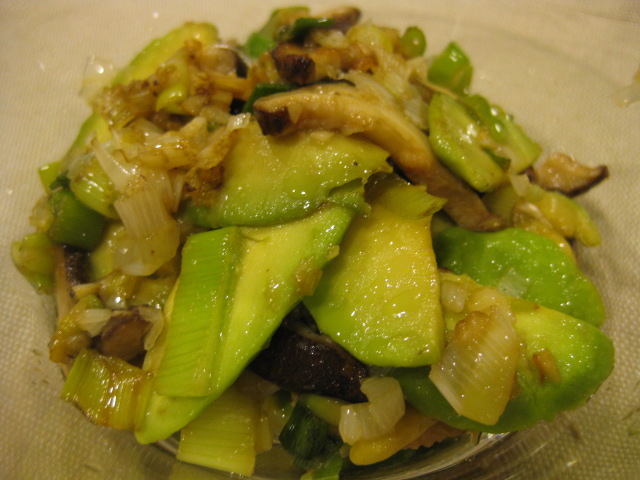
Vegan Japanese Cuisine: Sauteed Avocado

Avocadoes are great and versatile vegetables/fruits that can be combined in so many ways.
They also have the marked advantage to provide much-needed calories and beneficial ingredients.

Here is a simple but hearty way to prepare them:

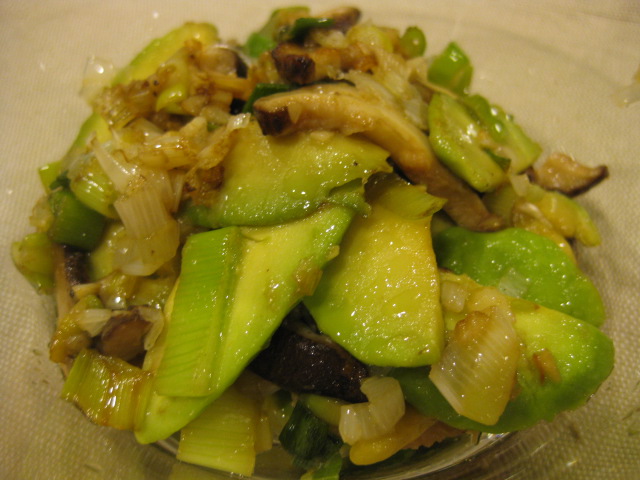
Sauteed Avocado!

INGREDIENTS: For one person (can be multiplied accordingly!)

-Avocado: 1 half
-Long leeks: 1 half, chopped
-Shiitake: 3 (fresh)
-Sesame oil: 2 tablespoons
-Soy sauce: 1.5 tablespoons

RECIPE:

-Cut the avocado in proper (to your liking) size pieces. Do the same with the shiitake. Chop the leeks finely

-in a frypan pour the sesame oil and fry the leeks first.

-Add the shiitake and fry to satisfaction. Add avocado and soy sauce and turn the whole in the frypan a few times.

-Lastly season with black pepper and serve.

NOTE:

-If you happen to have unripe and hard avocado, fry them first until crispy outside. You’ll find out they’ll be very soft inside.
-For extra seasoning you may use chillies or curry powder!

RECOMMENDED RELATED SITES
Not-Just-Recipes, Bengal cuisine, Cooking Vegetarian, Frank Fariello, Gluten-free Vegan Family, Meatless MamaFrank Fariello, , Warren Bobrow, Wheeling Gourmet, Le Petit Cuisinier, Vegan Epicurean, Miss V’s Vegan Cookbook, Comestiblog, To Cheese or not To Cheese, The Lacquer Spoon, Russell 3

Please check the new postings at:
sake, shochu and sushi

—————————————-
日本語のブログ
—————————————-
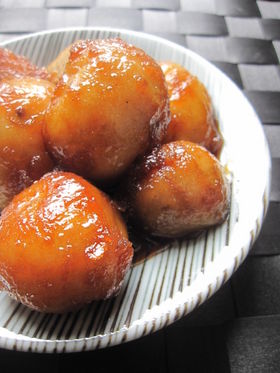
Vegan Japanese Deep-fried Taro/Sato Imo Age

Taro or Sato Imo in Jpaanese, can also for some great and hearty dishes for c\vegans and vegetarians, too!

Hre is a very simple recipe that can be enjoyed by all!
As for the Dashi, or Jpanese soup stock, check HERE for the basic recipe!

INGREDIENTS: For 4 people

-Taro/Sato imo: 16 small
-Dashi: 4 tablespoons
-Mirin/Sweet sake: 4 tablespoons
-Soy sauce: 3 tablespoons
-Sugar: 2 teaspoons
-Oil for deepfrying

RECIPE:

-Clean the taro/sato imo quickly.
Boil them in water for 15 minutes.
Peel them.

-Heat the deep frying oil to 170 degrees Celsius and deep fry the taro/sato imo until they obtain a nice brownish colour.

-In a pan drop dashi, mirin, soy sauce and sugar and heat (and stir) until the sugar has completely dissolved. Transfer the taro/sato imo into the pan and cook for a while in the sauce.

-Simmer until the sauce has reached a thick consistence.
Serve at once.
A few chopped greens would make for a good seasoning.
You may add spices of your liking to the sauce (grated ginger, chilies, etc.).

RECOMMENDED RELATED SITES
Not-Just-Recipes, Bengal cuisine, Cooking Vegetarian, Frank Fariello, Gluten-free Vegan Family, Meatless MamaFrank Fariello, , Warren Bobrow, Wheeling Gourmet, Le Petit Cuisinier, Vegan Epicurean, Miss V’s Vegan Cookbook, Comestiblog, To Cheese or not To Cheese, The Lacquer Spoon, Russell 3

Please check the new postings at:
sake, shochu and sushi

—————————————-
日本語のブログ
—————————————-
Vegan White Miso Soup

As promised, back to my vegan and vegetarian friends to whom I promised this series of dashi-based (for most of them) soups (and other dishes).
Miso is increasingly becoming popular.
Check the miso posting!
And check the dashi posting, too!

Vegan White Miso Soup!

INGREDIENTS: For one person

-Egg-plant/aubergine: 1 half
-Onion: 1/4 (sliced)
-Konbu dashi/seaweed soup stock: 1 cup/ 200cc/ml
-White miso paste: 1 tablespoon
-White leek cut into very fine strips for decoration and finishing taste point

RECIPE:

1-Cut the egg-plant/aubergine into thin slices. Wash in water.

2-Pour some oil in a frypan and fry the egg-plant/aubergines slices until both sides are slightly brown.

3-Pour the konbu dashi into a pan. Add the sliced onion and simmer for a while until onuon are soft enough.

4-Add fried egg-plant/aubergines. Add and mix in white miso paste.

5-Serve in a bowl with chopped white leeks.

NOTE:

The miso contains enough salt, so no need to add any really.
I also add ground sesame seeds before serving.
One can add some sesame oil when frying the egg-plants/aubergines.
Add spices according to preferences.

RECOMMENDED RELATED SITES
Not-Just-Recipes, Bengal cuisine, Cooking Vegetarian, Frank Fariello, Gluten-free Vegan Family, Meatless MamaFrank Fariello, , Warren Bobrow, Wheeling Gourmet, Le Petit Cuisinier, Vegan Epicurean, Miss V’s Vegan Cookbook, Comestiblog, To Cheese or not To Cheese, The Lacquer Spoon, Russell 3

Please check the new postings at:
sake, shochu and sushi

—————————————-
日本語のブログ
—————————————-
Vegan Japanese Dashi/Soup Stock: The Basic Recipe

So many times have I heard my vegan and vegetarian friends complain about the fact that most dashi/soup stock is not done according to their priorities in Japan, making it impossible for them to enjoy food in this country.
Fortunately, this is a big misconception. Vegan dashi exists and is very easy to make or request.
Now, to make sure that the same friends can savour Japanese food, either at home or with friends, here is the basic ans simple recipe!
Please save or copy this recipe for future reference (I have more vegan soup recipes in store for you!)

Vegan Japanese Dashi/Soup Stock

INGREDIENTS: (multiply according to demands. This is the minimum quantity!)

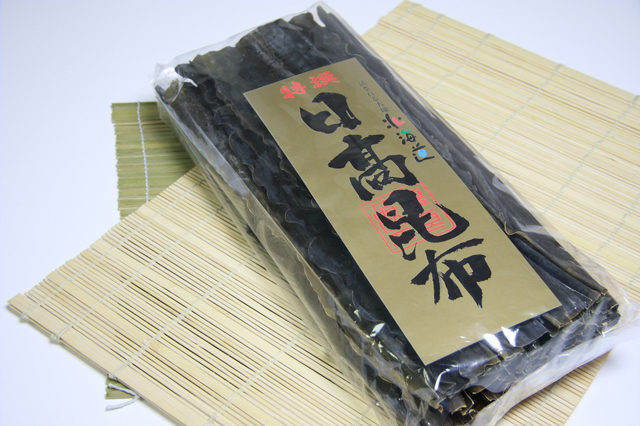
Konbu as sold in Japan

Konbu out of its packaging

-Konbu/dried thick dark seaweed: 5cm×5cm piece (dry)
-Water: 400cc/ml
-Japanese sake: 1 tablespoon (don’t worry, the alcohol will disappear upon heating/cooking!)
-Mirin/sweet sake (same comments as above!): 2 tablespoons
-Soy sauce: 2 and a half tablespoons

RECIPE:

Pour the awter into a large pan. Drop the seaweed into the water.
Switch on the fire.
The moment bubbles appear on the surface of the konbu, the water will start sucking the its essence in.
At that time add soy sauce, sake and mirin.

Taste from time to time to decide when taste suits you best.
Switch fire then and take konbu out.
Let cool completely, pour it inside a bottle. Seal the bottle properly and store inside refrigerator.
Use it as soon as possible.

The seaweed doesn’t have to be thrown away. It is edible as it is once cooked!

RECOMMENDED RELATED SITES
Not-Just-Recipes, Bengal cuisine, Cooking Vegetarian, Frank Fariello, Gluten-free Vegan Family, Meatless MamaFrank Fariello, , Warren Bobrow, Wheeling Gourmet, Le Petit Cuisinier, Vegan Epicurean, Miss V’s Vegan Cookbook, Comestiblog, To Cheese or not To Cheese, The Lacquer Spoon, Russell 3

Please check the new postings at:
sake, shochu and sushi

—————————————-
日本語のブログ
—————————————-
Vegan Sushi Recipe Suggestions 2: Daikon

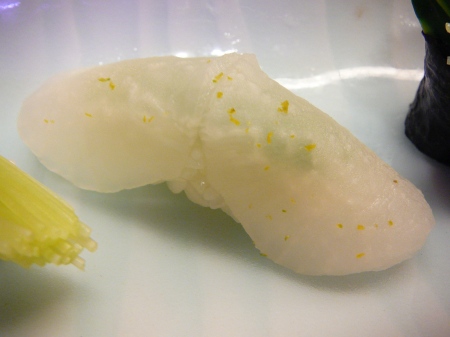
Daikon Nigiri as served at Sushi Ko, Shizuoka City, Japan!

SYNOPSIS:

I already have introduced Vegan and Vegetarian Sushi, but following further requests and questions by my vegan (I’m not!) friends, I decided to contribute a small series of postings to give them more detailed suggestions and ideas!

Now, please check sushi rice recipe HERE to make things more practical!

1) Myoga/Myoga Ginger

————————————

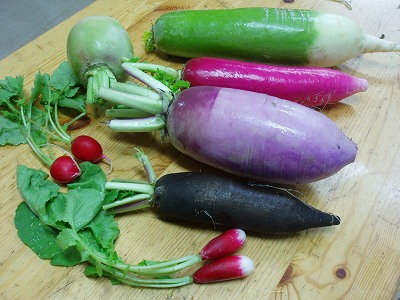
The second vegetable amenable to sushi I would like to introduce is Daikon, or Japanese Radish/Daikon Radish.

Please check DAIKON HERE on Wikipedia!

Daikon seems to be known only in its big white shape with a green top.
Actually, not only it is a versatile vegetables, but it does come into many shapes and colors as shown in picture above.

Once cut, look at these beautiful colors.

Daikon sushi, especially served as nigiri can be made very simple as in above picture where the daikon was sliced very thin and marinated for a while in lemon added water.

For more sophisticated preparations and presentations browse below!

The same as the top picture. The daikon was marinated for a while in yuzu juice and rice vinegar then derved with grated yuzu zest/skin.

Simple but so sophisticated. The other one is rape blossom.

Daikon can be pickled Japanese-style into “takuan/沢庵”, making for great colors and combination!

Takuan & Beni Shoga/takuan and red ginger temari sushi!

Great color afain with Koushin Daikon/紅芯大根!

The possibilities are infinite. Can you imagine the takuan above on a rice ball. The whole daikon was first pickled then peeled/cut into a sheet, rolled with lettuce and cut across!

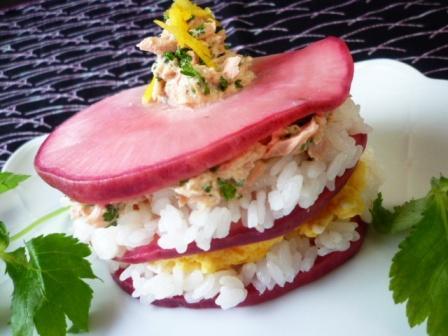
And how about a daikon millefeuille sushi for dessert!

RECOMMENDED RELATED SITES
Not-Just-Recipes, Bengal cuisine, Cooking Vegetarian, Frank Fariello, Gluten-free Vegan Family, Meatless MamaFrank Fariello, , Warren Bobrow, Wheeling Gourmet, Le Petit Cuisinier, Vegan Epicurean, Miss V’s Vegan Cookbook, Comestiblog, To Cheese or not To Cheese, The Lacquer Spoon, Russell 3

Please check the new postings at:
sake, shochu and sushi

—————————————-
日本語のブログ
—————————————-
Vegan New Year Sashimi at Yasaitei

January 5th, 2010. Tuesday, isn’t it? Back to the office. Usual break before late evening work. Hungry, but can’t eat too much as dinner will be waiting for me at 9:30 back home.
Only one option: the quick snack at Yasaitei. Becoming too much of a habit….

What would you expect me to order, then?
Vegatables sashimi!
Boring, you might say…
Totally agree, but boredom is so tatsy sometimes!

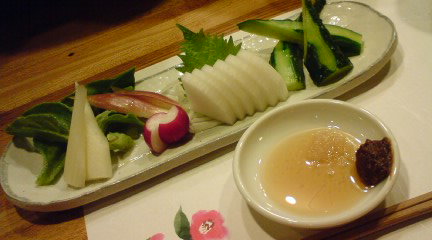
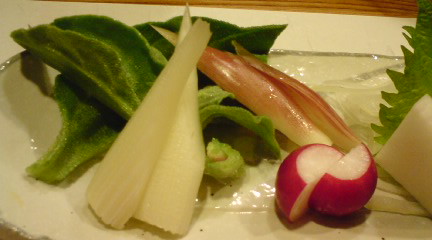
In the front, “the usual stuff” you might say:
Celery (grown in Shizuoka Prefecture), red radihes and myoga ginger sprouts.
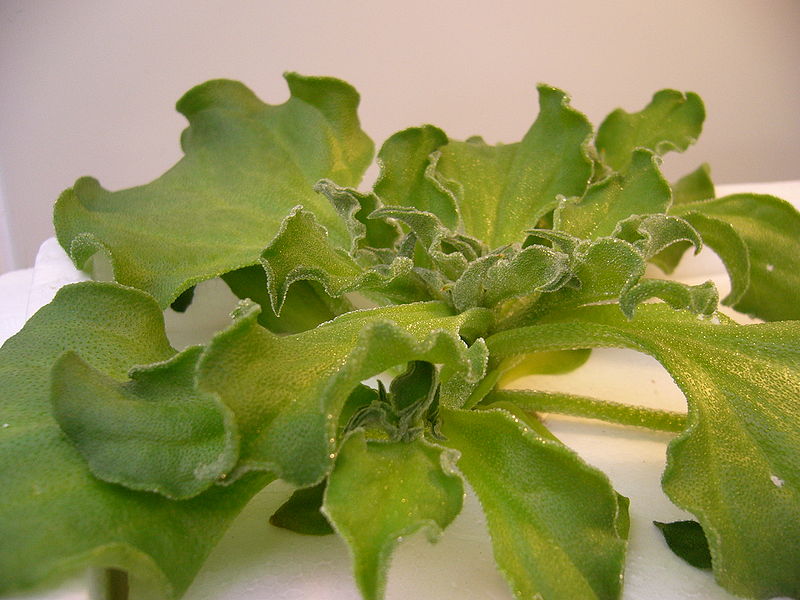
Now, what is that leafy thing on the left in the background?

Common Ice Plant or Crystalline Iceplant? In Japanese? Ice Plant?
The French actually use it in their cuisine under the name of ficoïde glaciale.

Wikipedia will only say that Mesembryanthemum crystallinum is a prostrate succulent plant that is native to Africa, Western Asia and Europe. The plant is covered with large, glistening bladder cells, reflected in its common names of Common Ice Plant, Crystalline Iceplant or Iceplant.
Its leaves are edible, as with other some members of the Aizoaceae family. It is also cultivated for ornamentation (hum!).

And I can tell you they are worth discovering, be vegan, vegetarian or omnivore!

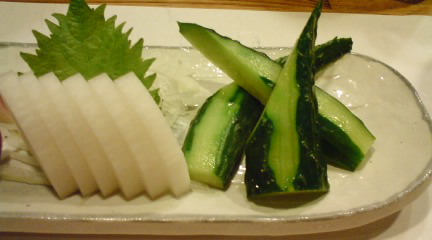
Now, for the second half of the plate: Juicy daikon and crunchy succulent cucumber backed with shiso/perill leaf and sliced winter onions (sweet!)

The dressing was the “usual” sesame oil with rock salt and dark miso.

But I needed a little more (with the second glass of Doman shochu!):
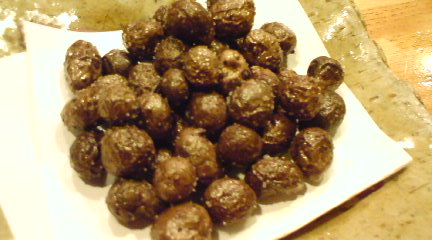
Mukago/零余子!
Now, unfortunately, it might be difficult to find that little thing outside Japan, but note it down on your notebook!

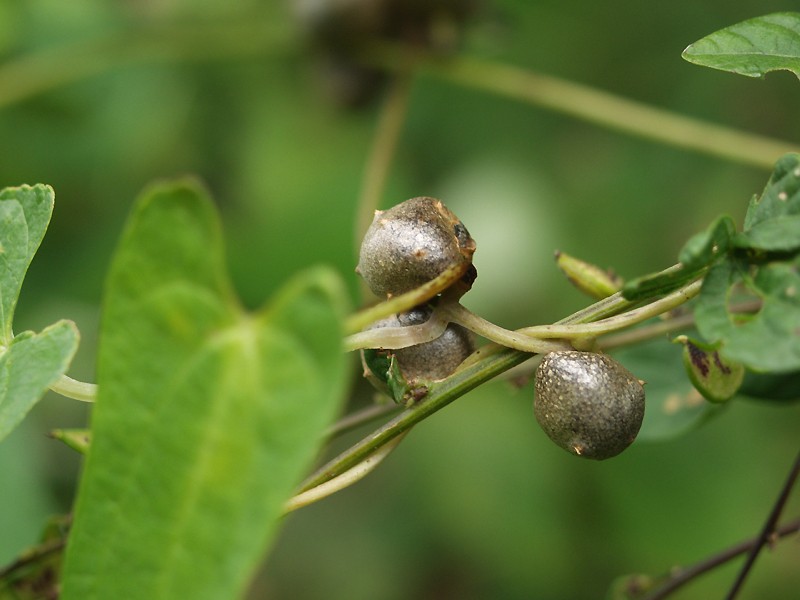
Mukago

A bit difficult to explain. An aerial tuber?
The fact is that it is some kind of fruit/nut/seed (I don’t have a clue here!) produced by yama imo or glutinous yam in Japanese, as one form of natural reproduction.
These mukago are succulent either boiled, or as in this case deep-fried.
Can’t stop eating them once started!

YASAITEI
Shizuoka City, Aoi Ku, Tokiwa-Cho, 1-6-2 Green Heights Wamon 1-C
Tel.: 054-2543277
Business hours: 17:30~22:00
Closed on Sundays
Reservations highly recommended
Seating: 6 at counter + 20 at tables
Set Courses: 3,000, 4,000, 5,000 yen
HOMEPAGE (Japanese)

RECOMMENDED RELATED SITES
Not-Just-Recipes, Bengal cuisine, Cooking Vegetarian, Frank Fariello, Gluten-free Vegan Family, Meatless MamaFrank Fariello, , Warren Bobrow, Wheeling Gourmet, Le Petit Cuisinier, Vegan Epicurean, Miss V’s Vegan Cookbook, Comestiblog, To Cheese or not To Cheese, The Lacquer Spoon, Russell 3

Please check the new postings at:
sake, shochu and sushi

—————————————-
日本語のブログ
—————————————-
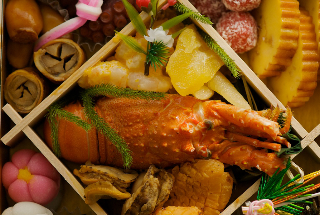
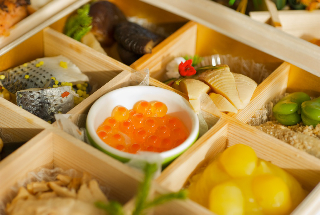
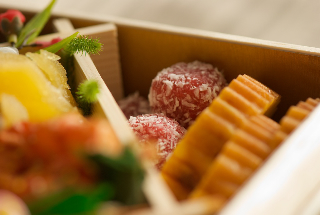
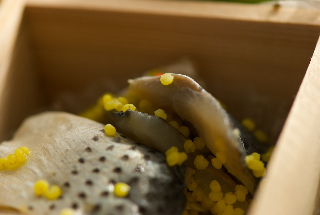
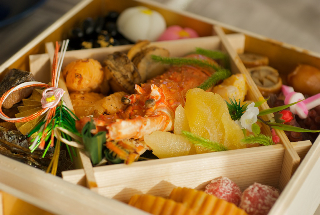
Japanese New Year Cuisine/O-Sechi Ryouri

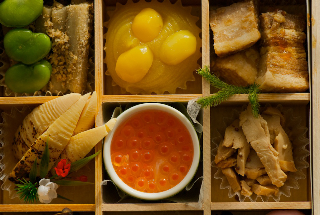
A great friend of mine, who also lives in Shizuoka just sent me pictures of the traditional Japanese New Year Meal he shared with his Missus:
In his own words:

“First meal of 2010. Traditional Japanese food. 45 different items in three boxes, plus sake and special soup. Brunch. Fantastic meal!”

All pictures taken by Marcus Grandon:

Marcus’ first serving!

RECOMMENDED RELATED SITES:
Warren Bobrow, Bread + Butter, Zoy Zhang, Hungry Neko, Think Twice, Frank Fariello, Mangantayon, Hapabento, Elinluv Tidbit Corner, Tokyo Terrace, Maison de Christina, Chrys Niles,Lexi, Culinary Musings, Wheeling Gourmet, Sushi Nomads, Oyster Culture, Ravenous Couple

Please check the new postings at:
sake, shochu and sushi

—————————————-
日本語のブログ
—————————————-
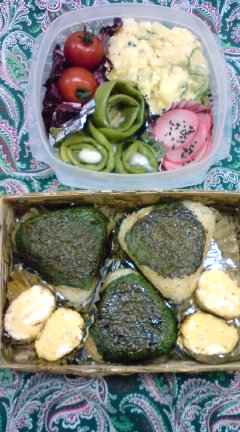
Today’s Lunch Box/Bento (’10/01)

Today’s bento was the first of the year.
The Missus being still on holiday made it in a bit of a hurry as she being bsuy cleaning our place like very Japanese housewife does at the beginning of the year. A good time forme to escape to work! LOL

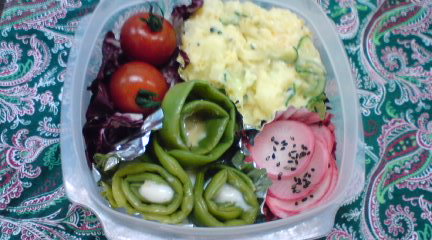
Being conscious of the too many calories I’ve been infgetsing recently she kept my bento to a healthy minimum.: musubi/rice balls, tamagoyaki and salad.

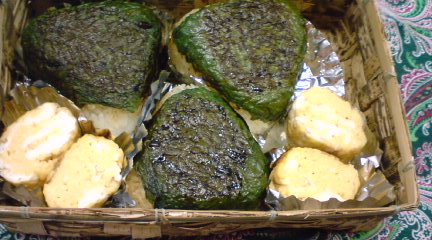
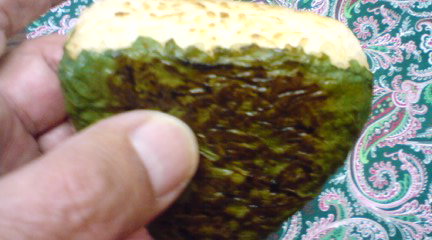
The musubi/rice balls were an interesting concept: She had marinated large egoma leaves (a large and very tasty variety of shiso/perilla) overnght in miso and what else. After steaming the rice, she made triangular rice balls (balls is not the right term, then!), sauteed and then wrapped them inside the leaves. They also contained a honey-sweetened umeboshi/Japanese pickled plum. Very tasty!

The salad dish was basically made up of leftovers:
Potato, onion, cucumber and tobikko/flying fish roe salad, boiled large green beans she rolled with some dressing in the middle. home-made pickled red daikon with black sesame, and plum tomatoes on trevise cabbage.

Colorful, healthy and tasty! No complaints! LOL

RECOMMENDED RELATED SITES:
Warren Bobrow, Bread + Butter, Zoy Zhang, Hungry Neko, Think Twice, Frank Fariello, Mangantayon, Hapabento, Elinluv Tidbit Corner, Tokyo Terrace, Maison de Christina, Chrys Niles,Lexi, Culinary Musings, Wheeling Gourmet

Please check the new postings at:
sake, shochu and sushi

—————————————-
日本語のブログ
—————————————-
Vegan Sushi Recipe Suggestions 1: Myoga/Myoga Ginger

I already have introduced Vegan and Vegetarian Sushi, but following further requests and questions by my vegan (I’m not!) friends, I decided to contribute a small series of postings to give them more detailed suggestions and ideas!

Now, please check sushi rice recipe HERE to make things more practical!

The first vegetable amenable to sushi I would like to introduce is Myoga, or Myoga Ginger.

Please check Myoga HERE on Wikipedia!

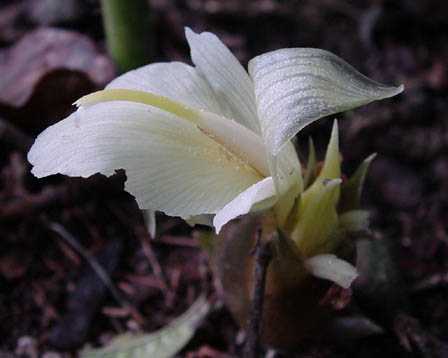
Myoga is a very interesting vegetable as not only the shoots but also the flowers are edible!

The flower in its natural state!

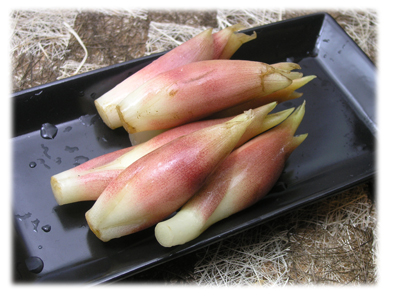
As bought at the market.

Interestingly enough, as Japan makes an enormous consumption of them it has to import a lot from New Zealand and Australia. I’m sure you can buy it at local Asian markets. It could porve an interesting cultivation for some, too!

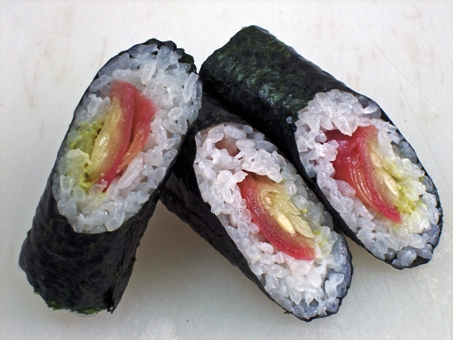
Myoga sushi roll.

Now there are two basic ways of presenting myoga as sushi.
First, as shown on above picture, as a roll.
It doesn’t have to be complicated. Just chop the myoga in strips and fill the roll with it accompanied by some wasabi.

Myoga Sushi nigiri.

The other basic way is present it as sushi nigiri on top of a small ball of sushi rice previously smeared with a little wasabi.

You can prepare the myoga in two basic ways,too:
The first one would would be just to wash it and use it raw.
The second would be to pickle it in rice vinegar and sugar for a while, press it and serve it in both sushi styles as explained above.

There are other interesting possibilities when you let your imagination go free as in above picture where the rice is replaced with a small cube of tofu and the topping is made with chopped myoga, tofu and wasabi all mixed together!

To further convince you, look at the picture above:
All vegan sushi:
from top down: Cucumber, egg plant/aubergine and myoga. The last are pickled daikon!

RECOMMENDED RELATED SITES
Not-Just-Recipes, Bengal cuisine, Cooking Vegetarian, Frank Fariello, Gluten-free Vegan Family, Meatless MamaFrank Fariello, , Warren Bobrow, Wheeling Gourmet, Le Petit Cuisinier, Vegan Epicurean, Miss V’s Vegan Cookbook, Comestiblog, To Cheese or not To Cheese, The Lacquer Spoon, Russell 3

Please check the new postings at:
sake, shochu and sushi

—————————————-
日本語のブログ
—————————————-