Tag Archives: Vegan

Vegan Japanese Cuisine: Fried-Stewed Kabocha

I’ve already have introduced a similar basic recipe, but with dashi and and without precise ingredients quantities.
Many people in Japan believe that Kabocha originates from Japan.
Actually it was introduced to Asia a long time ago after it was discovered on the American Continent.
Even the etymology is not Japanese as it refers (apparently, but nothing sure about that!) to the varieties first grown and developped in Cambodia, according to the same Japanese who can’t get enough of them and mostly import them from Tonga, of all places!
Here is a more precise and little different recipe of this vey popular vegetable:

Kabocha no Itame-ni/南瓜の炒め煮/Fried-Stewed Kabocha!
Dedicated to my new friend, Vegansarus!

INGREDIENTS: For 2~4 persons

-Kabocha/Pumpkin: 500 g
-Leeks: 1/2 cup/100 ml/cc (finely chopped)
-Oil (of your choice): 3 tablespoons
-Fresh ginger: 5~6 thin slices (fresh ginger)
-Water: 1 ~ cup/200ml/cc~
-Soy sauce: 2 tablespoons
-Sugar: 1 tablespoon
-Salt: 1/2 teaspoon

RECIPE:

First take the stem end out. It sounds evident, but you will make things hard for you if you skip that simple step!

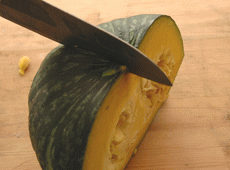
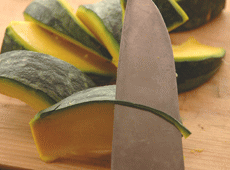
Turn the kabocha over (now you understand why you have taken the stem out?). Cut in half through the middle. Take care not to slip and cut your fingers!

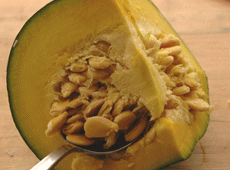
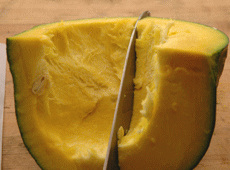
Having cut the kabocha in half, cut it again in half (fourth). The raw kabocha might be hard to cut. There is no need to use brute force. Cut it slowly!

This will make it easy to scoop out (and discard the seeds).

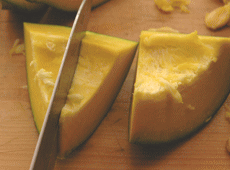
Cut each quarter again across as shown in above picture.

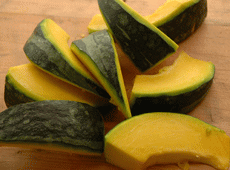
Then cut again as shown in above picture for individual pieces.

The next step is bit of a pain, but absolutely necessary.
Cut away the skin edges as shown in above picture.
Why?
-1) for a more even cooking.
-2) the edges will turn hard and will be diificult to bite through. You might even cut your lips. Believe me!
-3) the kabocha wedges will not break down upon stewing.

The kabocha wedges as they should be before stewing!

In a saucepan drop the oil, leeks and fresh ginger. Fry them for a while, then drop in all the kabocha. Fry for a while on a medium fire.

-Add water, soy sauce, sugar and salt. Lower fire. Cover with lid. Stew for 15 minutes or until the kabocha is soft. The point for better taste is the preliminary frying!

RECOMMENDED RELATED SITES:
Warren Bobrow, Bread + Butter, Zoy Zhang, Hungry Neko, Think Twice, Frank Fariello, Mangantayon, Hapabento, Elinluv Tidbit Corner, Tokyo Terrace, Maison de Christina, Chrys Niles,Lexi, Culinary Musings, Wheeling Gourmet, Comestiblog, Chronicles Of A Curious Cook, Tokyo Through The Drinking Glass, Tokyo Foodcast, Urban Sake, Sake World, Palate To Pen, Good Beer & Country Boys, Another Pint, Please!, Yellin Yakimono Gallery, Tokyo Terrace, Hilah Cooking, Vegansarus

Please check the new postings at:
sake, shochu and sushi

—————————————-
日本語のブログ
—————————————-

Vegan Japanese Cuisine: Deep-fried Tofu Balls

Meat balls, or any balls for that matter, don’t have to be made with meat, eggs or dairy products to be attractive and tasty.
It is quite a simple task to create them when you have tofu around!

Here is an easy and healthy recipe:
Deep-fried Tofu Balls:

INGREDIENTS: For 4 people or 16 balls

-Tofu: 350g of well pressed kinu/silk tofu
-Hijiki/sweet seaweed: 1 tablespoon (water-softened)
-Burdock root: 20 cm long piece (finely chopped)
-Carrot: 2~3 cm long piece (finely chopped)
-Soy sauce: 1 tablespoon
-Sugar: 1 tablespoon
-Flour: 1 tablespoon
-White sesame seeds: 1 tablespoon
-Leeks: 1 tablespoon (finely chopped)
-Ground black pepper: a little
-Fresh ginger: 1 teaspoon (grated)

No need for salt as it is contained in the soy sauce.
You may add a little miso paste and p0nzu for further seasoning.

RECIPE:

-Pour a litle oil in small frypan and throw in the choopped burdock root and carrot, the hijiki/sweet seaweed, soy sauce, sugar, grated ginger and fry until most of the misture has disappeared. let cool down.

-In a bowl throw in the tofu (well pressed to get rid of excess humidity) and break it into fine lumps. Add the fried vegetables, flour, sesame seeds, chopped leeks and mix well.

-Shape balls and deep-fry until they have become a nice brown colour.

-Serve with short pieces of thin leeks topping.

RECOMMENDED RELATED SITES:
Warren Bobrow, Bread + Butter, Zoy Zhang, Hungry Neko, Think Twice, Frank Fariello, Mangantayon, Hapabento, Elinluv Tidbit Corner, Tokyo Terrace, Maison de Christina, Chrys Niles,Lexi, Culinary Musings, Wheeling Gourmet, Comestiblog, Chronicles Of A Curious Cook, Tokyo Through The Drinking Glass, Tokyo Foodcast, Urban Sake, Sake World, Palate To Pen, Good Beer & Country Boys, Another Pint, Please!, Yellin Yakimono Gallery, Tokyo Terrace, Hilah Cooking, Vegansarus

Please check the new postings at:
sake, shochu and sushi

—————————————-
日本語のブログ
—————————————-

Vegan Japanese Cuisine: Daikon Chrysanthemums

Here is a simple and “artistic” recipe using daikon and yuzu/lime.
It’s called 菊花大根/Kikuhana Daikon which can be translated as Chrysanthemum Daikon.
You don’t need Chrysanthemums, but only cut the daikon into the shape of the flower!

INGREDIENTS:

-Daikon: Roughly a quarter.
-Lime: 1
-Salt: a little
-Sugar: 3 tablespoons

RECIPE:

-Cut the daikon into slices you will then trim into the shape of flowers with a knife or a mold. As for the trimmings you may add them to the whole marinade and serve them with another salad or side dish.

-Sprinkle the daikon flowers with a little salt and let them marinate for 10~15 minutes.

-Peel the lime and cut the skin/zest into thin strips.

-In a bowl, press out the lime juice. If you don’t get enough, add rice vinegar to it until you obtain the equivalent of 3 tablespoons of “juice”. Add the sugar and lime zest strips and mix well.

-Drain the daikon flowers (and trimmings if included). No need to press them hard. Add them to the marinade. Cover with cellophane paper and let marinate inside the fridge for a whole day.

-Serve it in a nice “artistic” fashion!

RECOMMENDED RELATED SITES:
Warren Bobrow, Bread + Butter, Zoy Zhang, Hungry Neko, Think Twice, Frank Fariello, Mangantayon, Hapabento, Elinluv Tidbit Corner, Tokyo Terrace, Maison de Christina, Chrys Niles,Lexi, Culinary Musings, Wheeling Gourmet, Comestiblog, Chronicles Of A Curious Cook, Tokyo Through The Drinking Glass, Tokyo Foodcast, Urban Sake, Sake World, Palate To Pen, Good Beer & Country Boys, Another Pint, Please!, Yellin Yakimono Gallery, Tokyo Terrace, Hilah Cooking

Please check the new postings at:
sake, shochu and sushi

—————————————-
日本語のブログ
—————————————-

New Vegetable: Tsubomina/蕾菜

Picture taken at Parche Supermarket on March 1st, 2010

Earlier in the day, I mentioned a new vegetable that the Missus included in my bento: Tsubomina or 蕾菜 in Japanese.
The first Kanji character is made up of made up of the character meaning “plant” or “grass” at the top over another character meaning “thunder”. The second kanji means “plant”.

Stir-fried Tsubomina in my bento.

Tsubomina sold in Hakata, Fukuoka, Kysushu island.

Tsubomina sprouts

Tsubomina belongs to the same group of plants as Brussels sprouts, Chinese Cabbage, Komatsuna/leaf Mustard, Broccoli, Daikon, turnips and so on, that is Brassicaceae. It is actually a variety of Leaf Mustard. The latter is a plant introduced in Japan from China.

Picture taken at Parche Supermarket on March 1st, 2010

Although it had been grown since 2005 with various results, JA/Japan Agriculture (Association) officially put it on the markets in Hakata, Fukuoka City in Kyushu island in February 2009.
Due to a certain weakness to insects, it is harvested in Februaray and March only.
Growers started “exporting” it through Japan, altough it is available only in Nagoya, Tokyo and Shizuoka for the moment being. But it is only a question of time before it is sold all over the nation.

Picture taken at Parche Supermarket on March 1st, 2010

Actually the competition is starting heating up for the good of the consumers.
Tsubomina was sold 300~350 yen for 3 small specimens last year. It is already sold for only 250 yen for 3 large specimens since yesterday in Shizuoka City!

Picture taken at Parche Supermarket on March 1st, 2010

Copy of the advertisement appearing in local magazines in Fukuoka where many restaurants serve it in Japanese, Chinese and other foods.

Picture taken at Parche Supermarket on March 1st, 2010

It can be served raw in salads. I tasted it this morning raw. It is crunchy, almost sweet, without any acidity, and eminently eatable.
moreover the high contrast in white and green colours make for a very decorative item.
It can be cooked in almost any kind of Asian gastronomic manner: fried, stir-fried, nabe/pot-au-feu, etc. Vegetarians and vegans should appreciate it as it combines a goog bite, a great taste and plenty of nutrients!

RECOMMENDED RELATED SITES:
Warren Bobrow, Bread + Butter, Zoy Zhang, Hungry Neko, Think Twice, Frank Fariello, Mangantayon, Hapabento, Elinluv Tidbit Corner, Tokyo Terrace, Maison de Christina, Chrys Niles,Lexi, Culinary Musings, Wheeling Gourmet, Comestiblog

Please check the new postings at:
sake, shochu and sushi

—————————————-
日本語のブログ
—————————————-

Vegan Caprese-Style Tomato & Tofu Salad

I’ve already introduced vegan tofu salads for my friends.
This is another one with a lttle twist!

INGREDIENTS: For 1~2 persons

-Tofu (kinu tofu): 1/2 block: 200g
-Tomato: a large whole one
-Basil leaves: 10 (large and fresh!)

Dressing:
-Wine vinegar: 1/4 cup: 50 cc/ml
-Salt: 1/3 teaspoon
-Whole black peppers: 3 seeds, ground (use a bottle!)
-Garlic: 1/2 clove (fresh!)
-Red chili pepper: 1/2 (fresh if possible) (Chopped finely)
-Olive oil (EV): 1.1/4~ tablespoon
-Onion: 15 g (Fresh and new if possible!)

RECIPE:

-Cut the tofu in 1 cm-thick slices.

-Cut out the stem end off the tomato and cut into half-moon slices.

-Crush the garlic and throw it into a small pan with the wine vinegar, Salt, black pepper, and red chili pepper and heat it until reduced to half.

-Transfer the dressing into a bowl floating on a larger bowl half-filled with water and ice and leave until chilled.

-Take out unsightly pieces out of the dressing. Grate the onion over it and mix. Add the oil oil and mix.

-On a serving dish place the slices of tofu and tomatoes and the basil leaves alternatively as shown on picture above. Season with dressing and serve!

-Very low in calories!

RECOMMENDED RELATED SITES
Not-Just-Recipes, Bengal cuisine, Cooking Vegetarian, Frank Fariello, Gluten-free Vegan Family, Meatless Mama, Warren Bobrow, Wheeling Gourmet, Le Petit Cuisinier, Vegan Epicurean, Miss V’s Vegan Cookbook, Comestiblog, To Cheese or not To Cheese, The Lacquer Spoon, Russell 3, Octopuspie, Bread + Butter, Pegasus Legend, Think Twice, The French Market Maven

Please check the new postings at:
sake, shochu and sushi

—————————————-
日本語のブログ
—————————————-

Vegan Japanese Cuisine: New Lotus Roots & Umeboshi

Lotus roots, when new and fresh, should be prized for their great natural taste. They can even be eaten almost raw after a little marinating. The Japanese have a simple and delicate way to prepare them with umeboshi/Japanese pickled plums, which should please vegans and vegetarians (and omnivores). It certainly makes for a great snack with Japanese sake or shochu!

INGREDIENTS:

-Lotus root: 1 piece, 10 cm long. Choose it absolutely fresh and comparatively slender.
-Umeboshi: 2
-Shiso/perilla leaves: 2
-Japanese sake: according to taste and preferences.
-Soy sauce: according to taste and preferences.
-Rice vinegar: according to taste and preferences.

RECIPE:

-Peel and cut the lotus root into hin slices. Wash them 2 or 3 times in cold clean water.

-In a pan heat some water to just before boiling point. Add some rice vinegar and cook the lotus roots in eat until they become translucent.
Do not overcook them. Drain them thoroughly and put aside.

-Take the seeds out of the umebshi and sieve the meat into a bowl. Add Japanese sake (or cooking sake) to make it into a thin liquid paste. add a few drops of soy sauce for seasoning. Taste. If it is too sour to your liking add some mirin/sweet Japanese sake.

-Add the umeboshi to the lotus roots slices and mix well so as to cover all the lotus root slices surface.

-Cut the shiso/perilla leaves in 3 first, then chopp them fine across.

-Serve as in the picture, lotus root sliced mounted on top of each other and topped with chopped shiso leaves.

RECOMMENDED RELATED SITES
Not-Just-Recipes, Bengal cuisine, Cooking Vegetarian, Frank Fariello, Gluten-free Vegan Family, Meatless Mama, Warren Bobrow, Wheeling Gourmet, Le Petit Cuisinier, Vegan Epicurean, Miss V’s Vegan Cookbook, Comestiblog, To Cheese or not To Cheese, The Lacquer Spoon, Russell 3, Octopuspie, Bread + Butter, Pegasus Legend, Think Twice, The French Market Maven

Please check the new postings at:
sake, shochu and sushi

—————————————-
日本語のブログ
—————————————-

Vegetables facts & Tips 19: Yama Imo/Yama No Imo/Japanese Yam

Yama no Imo Plant

Yama Imo or Yama no Imo/山芋 is the Japanese name for Japanese Yam.
It has been picked in its natural form and cultivated for eons in Japan where it comes into many recipes, either as a vegetable of its own or as an additive to Japanese recipes as a liaising ingredient.
It is also extensively used in vegetarian (vegan) cuisine in this country.
It is also very much valued for its stamina and medicinal properties.

FACTS:

-Contains a high amount of potassium, calcium, magnesium, natrium and other minerals.
Rich in Vitamin B1, B2, B6 and C and vegetal fibers.

-Easy to digest and eat either raw or cooked.

VARIETIES:

There are quite a few varieties and can be all used in the same way:

Yama no imo: Nagaimo/長い芋

Shizenjyo is the natural and highly priced Japanese Yam!

Ichyo Imo

Tsukune Imo

Mukago

Mukago is actually the aerial seed and can be eaten. Slightly expensive considering the size, but great taste, boiled or deep-fried.

TIPS:

-Choose a specimen that shows a uniform colour without blemishes.

-Some people’skin might get irritated when cutting the yama Imo. In this case deep-freeze it first and cut it as it is.

-Preserve as a whole wrapped into newspaper inside the fridge.

-Preserve it cut inside an airtight vinyl bag in the freezer.

COOKING:

It is greatly appreciated just cut in thin slices/sticks with a little ponzu, shiso and ponzu!

It is often served as a component of an array of dishes into a full Japanese meal. Grated into paste, it is called “tororo”.

It can be sauteed/fried with olive oil, sesame oil or butter!

Grated, it can combined with tofu,

or into okonmiyaki!

It can also become a great appetizer when combined with agar agar!

Europeans and Americans will appreciate it as a gratin!

HEALTH FACTS:

-Combined with daikon, or turnips, or Chinese cabbage, or chili peppers, helps reinforce the digestive system and appetite.

-Combined with okra, or lotus roots, or nameko mushrooms, helps lower blood cholesterol and provides additional stamina.

-Combined with soy beans, or pomegranate, or myoga ginger, helps balance hormones and blood circulation.

-Combined with cabbage, or potatoes, or broccoli, or Chinese cabbage, helps combat cancer and ageing.

RECOMMENDED RELATED SITES:
Warren Bobrow, Bread + Butter, Zoy Zhang, Hungry Neko, Think Twice, Frank Fariello, Mangantayon, Hapabento, Elinluv Tidbit Corner, Tokyo Terrace, Maison de Christina, Chrys Niles,Lexi, Culinary Musings, Wheeling Gourmet, Social Culinaire, Sushi Nomads, Cook, Eat & Share, Gourmet Fury, 5 Star Foodie

Please check the new postings at:
sake, shochu and sushi

—————————————-
日本語のブログ
—————————————-

Vegan Treats at Yasaitei

Once I explained the notion of “Jooren” or “regular customer” in Japan.
Whereas in many other countries patronizing the same establishment on a regular basis might be considered at best as an ostentatious show, and a disreputable habit at worst, eating and drinking out in Japan is a sine qua non prerequisite to a successful life, both professional and social. Therefore it always is a good idea to ptronize a few etablishments even if it is for a quick drink or snack.
It also makes conversation so much easier and the visits more welcome as it provides a pleasant break from the usual coded life of the Japanese.

good Japanese chefs will always tackle the challenge to satisfy culinary priorities, including vegetarianism and veganism. After all, most omnivores’ food is over 80% vegetarian. Don’t be afraid to ask for precise explanations of your food!

This “o-toshi”/snack served with first drink consists of komatsuna/Japanese Mustard Spinach, enoki mushrooms, mitsuba/trefoil and nameko mushrooms prepared in o-hitashi style/slightly boiled and cooled down before being served in their own juices.

As for drinks, do not worry as Japanese sake and shochu are vegan.
This particular shochu is a bit extravagant. It was distilled by Takashima Brewery in Numazu City, Shizuoka, from the white lees of supelative sake before being matured for a couple of years in sherry barrels imported from Sapin!
Tastes like a soft flowery whisky!

vegerables are plentuful in Japan, and especially in Shizuoka.
They make for beautiful presentation with a minimum of care and improvisation.
Back home, first choose a nice tray to present to your friend or family!
The concept is almost like a flower arrangement!

The best “sauce” for such a vegan sashimi is a mixture (according to your preferences) of sesame oil, sea salt and dark miso!

Wherever you are, I’m sure you will find plenty of vegetables to work with:
In our case,we have form the left: Myoga ginger sprouts, Ice plant, Ameera/very sweet tomato and young ginger roots. It is the season for the laterr and they are so tender that they make a very tasty, crucnhy, raw treat!

Daikon (choose the upper part, as the pointed end is a bit too strong!) on a leaf of shiso/perilla and thinly sliced Spring onions from Shizuoka, radish, kiirokyo ninjin/Yellow Kyoto carrot and those crunchy Japanese cucumbers!

A “side view” to help you understand the presentation!

And another one from the other end!

I sincerely hope this will have given you a few ideas!

YASAITEI
Shizuoka City, Aoi Ku, Tokiwa-Cho, 1-6-2 Green Heights Wamon 1-C
Tel.: 054-2543277
Business hours: 17:30~22:00
Closed on Sundays
Reservations highly recommended
Seating: 6 at counter + 20 at tables
Set Courses: 3,000, 4,000, 5,000 yen
HOMEPAGE (Japanese)

RECOMMENDED RELATED SITES
Not-Just-Recipes, Bengal cuisine, Cooking Vegetarian, Frank Fariello, Gluten-free Vegan Family, Meatless Mama, Warren Bobrow, Wheeling Gourmet, Le Petit Cuisinier, Vegan Epicurean, Miss V’s Vegan Cookbook, Comestiblog, To Cheese or not To Cheese, The Lacquer Spoon, Russell 3, Octopuspie, Bread + Butter, Pegasus Legend, Think Twice, The French Market Maven

Please check the new postings at:
sake, shochu and sushi

—————————————-
日本語のブログ
—————————————-

Vegan French Cuisine: Quinoa, Green Vegetables & Vanilla

Spring is coming fast (at least in Japan!) and whatever your culinary priorities, all kinds of green vegetables are coming around the corner!
Here, in Shizuoka especially, broad beans, corgettes/zucchinis and broad beans are readily available!

Quinoa with Green Vegetables and Vanilla!

INGREDIENTS: for 6 persons

-Quinoa: 250 g
-Young spinach sprouts (small leaves): a fistful
-Zucchini/Courgette: 1 small green and firm
-Broad beans (fesh!): 500 g (pods included)
-Vanilla: 1 pod
-Salt (fleur de sel if possible), black pepper (ground): to taste
-Olive oil (EV): 80 ml/cc

RECIPE:

-Cook the quinoa al dente in lightly salted water.
Cool it under running cold water. Drain well.

– Take broad beans out of their pods and drop into boiling water for 30 seconds. Cool them under cold running water. Delicately peel them.

-Cook the broad beans again in slightly salted water for 3 minutes just under boiling temperature. Cool under cold running water. Drain well and put aside.

-Wash then cut the zucchimi/courgette in small pieces. Wash and drain well the spinach sprouts.

-Cut the vanilla pod along ts length and take flesh/seeds out with the point of a knife and mix with the olive oil in a small bowl.

-In a large bowl mix all the vegetables and then the vanilla sauce.
Leave inside refrigerator for at least 1 hour.

-Before serving, add a little salt and plenty of pepper.

-Drink a white sparkling wine with it!

RECOMMENDED RELATED SITES
Not-Just-Recipes, Bengal cuisine, Cooking Vegetarian, Frank Fariello, Gluten-free Vegan Family, Meatless Mama, Warren Bobrow, Wheeling Gourmet, Le Petit Cuisinier, Vegan Epicurean, Miss V’s Vegan Cookbook, Comestiblog, To Cheese or not To Cheese, The Lacquer Spoon, Russell 3, Octopuspie, Bread + Butter, Pegasus Legend, Think Twice, The French Market Maven, Fuji Mama, Great Teacher Sato

Please check the new postings at:
sake, shochu and sushi, Easy Does It Recipes
—————————————-
日本語のブログ
—————————————-

Vegetables Facts & Tips 9/1: Shiitake Mushrooms (Amended & expanded)

mushrooms-market
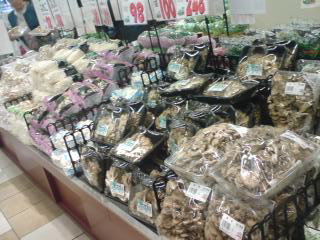
(Mushrooms at at a Shizuoka Supermarket)

I don’t intend to talk about wild mushrooms here as I would need a very thick book to post!
Japan is arguably the country cultivating the greatest number of varieties (new ones appear and disappear every year!), so I will limit myself to give information on at least some of them and furthermore introduce most varieties I have found in Japanese supermarkets (most of them should be available in many countries).

SHIITAKE

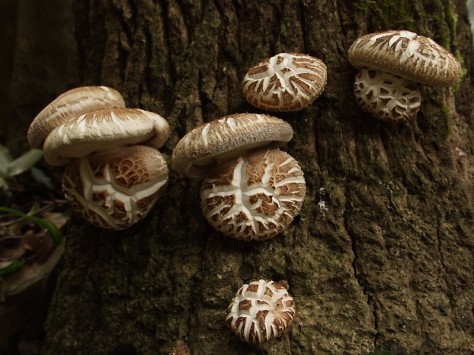
efbd93efbd88efbd89efbd89efbd94efbd81efbd8befbd85

FACTS:
Shiitake/Lentinula Edodes (Black Forest Mushrooms) are native to China but have been grown in both Japan and China since prehistoric times[2]. They have been cultivated for over 1000 years; the first written record of shiitake cultivation can be traced to Wu Sang Kwuang, born during the Song Dynasty (AD 960–1127). However, some documents record the uncultivated mushroom being eaten as early as AD 199.
Fresh and dried shiitake have many uses in the cuisines of East Asia. In Chinese cuisine, they are often sauteed in vegetarian dishes such as Buddha’s delight. In Japan, they are served in miso soup, used as the basis for a kind of vegetarian dashi, and also as an ingredient in many steamed and simmered dishes. In Korean cuisine, they are commonly used in dishes such as bulgogi (marinated grilled beef), jjigae (stews), and namul (sauteed vegetable dishes). In Thailand, they may be served either fried or steamed.

Shiitake are often dried and sold as preserved food in packages. These must be rehydrated by soaking in water before using. Many people prefer dried shiitake to fresh, considering that the sun-drying process draws out the umami flavour from the dried mushrooms by breaking down proteins into amino acids and transforms ergosterol to vitamin D. The stems of shiitake are rarely used in Japanese and other cuisines, primarily because the stems are harder and take longer to cook than the soft fleshy caps. The highest grade of shiitake are called donko in Japanese.
Extracts from shiitake mushrooms (such as ichtyol) have also been researched for many other immunological benefits, ranging from anti-viral properties to possible treatments for severe allergies, as well as arthritis.
The Japanese actually consume them from their raw form more than in any other country.

FACTS:

-Season: best in October~March for outdoors cultivation

-Main beneficial ingredients: Vitamin B1, B2, B6, c, N6, Ergosterol, Lentinan, Fibers, Potassium, Magensium, Phosphorus.

TIPS:

-Loosely wrap them in clean Newspaper or Kitchen Paper and store them in fridge away from the light.

-Choose specimens with unbroken “umbrella” and no black marks under.

-Fresh Shiitake are best enjoyed for their taste by keeping their cooking simple such as fry them over a grill with a dash of soy sauce and sake!

-If you want to dry them, do so under sunlight for best taste!

-Preserve dried shiitake in fridge to avoid mold and insects!

HEALTH FACTS:

-Dried shiitake contain more Vitamnin D!

-Combined with burdock root, or broccoli, or carrot, or asparaguses, helps combat cancer and helps with skin rejuvenation.

-Combined with konbu/seaweed, or spinach, or sardines, or sesame, helps combat bone diseases, activates blood circulation, helps combat nervous problems and rheumatism.

-Combined with sesame, or walnuts, or kabocha, or mayonnaise, helps combat ageing.

-Combined with celery, or cuttle fish/squid, or octopus, or mackerel, helps reinforce liver, combats high blood pressure, heart diseases and artery hardening.

RECOMMENDED RELATED SITES:
Warren Bobrow, Bread + Butter, Zoy Zhang, Hungry Neko, Think Twice, Frank Fariello, Mangantayon, Hapabento, Elinluv Tidbit Corner, Tokyo Terrace, Maison de Christina, Chrys Niles,Lexi, Culinary Musings, Wheeling Gourmet, Social Culinaire, Sushi Nomads, Cook, Eat & Share, Gourmet Fury, 5 Star Foodie

Please check the new postings at:
sake, shochu and sushi

—————————————-
日本語のブログ
—————————————-

Vegan Life in Japan (& Shizuoka)

Vegan Fried Avocado

I have always been intrigued bt the priorities and needs of my vegan and vegetarian friends. I’m an incorrigible omnivore and will ever be, but I can appreciate other gastronomies, be they even based on vegetables only.
I also hold a deep interest in anything organic, although I don’t make it a tenet of my everyday life.
As a general rule I strive for balance.
Vegans and vegetarians have their reasons to be so, and that is their private concern. Full stop.
On the other hand, I cannot be forced in changing my ways. I did recently have to fend a concerted hate mail assault by a group of slightly misled vegans following an article of mine, but that is not going to stop me from trying to help my friends in this country.

Many vegans and vegetarians harbour doubts as to whether visit Japan, or Shizuoka for that matter.
They should not be wary of the life here. I dare say that it is almost the ideal country for them to live!
Alright, they certainly need to be prepared!

Japanese vegan Dashi

The very first query I have to field is:
-“But they use dashi everywhere!”
The Japanese certainly do, but there two basic kinds of dashi/Japanese soupstocks: one made with dry bonito shavings and the other made with konbu/seaweed. Check Vegan Dashi Recipe.

Now miso is also vegan, so you can imagine all the sooup recipes you can concoct! Just Have a look at Vegan Recipes and you will discover what I’m suggesting!

-“Alright! Now, I have my soup to keep me hot in winter. But I also fancy a drink with my food. Now, what would you recommend?”
Well there is a atriaght easy answer: Japanese Sake!
To cut a long story short, do read what I wrote about the ultimate vegan drink!
Let just me say that true high quality (Shizuoka is the best! Lucky, aren’t I?) is made with pure water, rice, and yeast. That is all! Sometimes lactic acid is used, but it is of vegetal origin.
Incidentally, high quality shochuis also vegan!

Vegan sashimi at Yasaitei, Japan.

Now, that we have covered this important subject, shall we go to our main concern, namely vegetables?
You will be, I’m ready to bet about it, really flabbergasted by the variety of vegetables available in this country and especially Shizuoka, a famed area for organic vegetable cultivation.
The Japanese are even cultivating vegetables that have been forgotten elsewhere!
Check the following:
Vegetables Facts & Tips.
For Vegans and Vegetarians: Forgotten Vegetables.

tomii-veg31

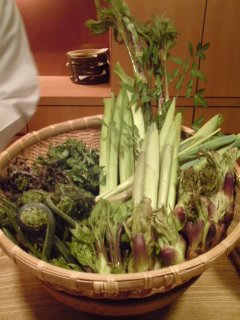
Mountain vegetables at Tomii, Shzuoka City.

Have you heard of the Japanese mountain vegetables/Sansai/山菜?
It is just mind-boggling to discover them all!
Check: Japanese Mountain Vegetables!

Do not forget that tea and soba can be vegan! How about a combination of tea and soba for a quick lunch?

CHAZUKE-1

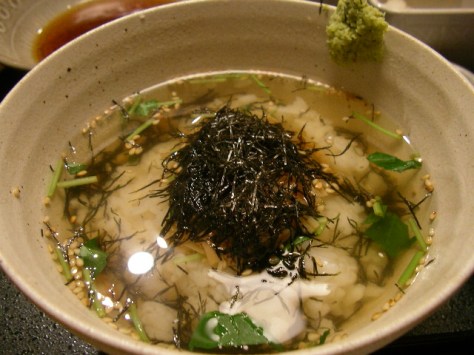
Chazuke

And how about Somen, Chazuke, and Tofu?

zarudofu

“Zarudofu”

Learn how to make your own Tofu!

tofu-kinds-5

“Tofu Doughnuts” at Shizutetsu Supermarket in Shizuoka City

Ever heard of Tofu Donuts?
Why don’t you try your hand after reading that easy Vegan Tofu Donut Recipe?

Vegan sushi plate at Sushi Ko, Shizuoka City.

-“I want to eat sushi, but how can I get vegan sushi in Japan?”
That should not be a problem.
First why don’t you have a look at the following:
Vegan & Vegetarian Sushi.
Vegan Sushi Recipe Suggestions.

Just walk around and try to find a friendly Sushi Restaurant along with some friends first and gently ask for vegetable sushi (without the bonito shavings or mayonnaise!). Keep going to the same place and soon or later the chef will enjoy the challenge and even propose new creations.
Or check the Sushi Rice Basic Recipe and try making it at home!

And Wasabi is also vegan!

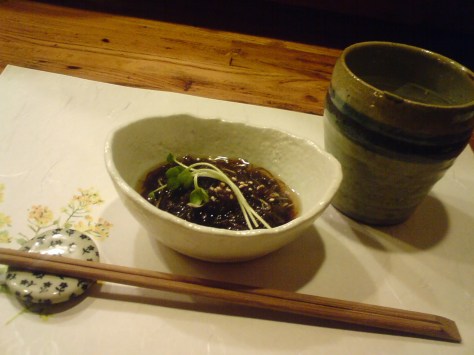
Mozuku seaweed served at Yasaitei, Shizuoka City.

Do not forget all the possibilities offered by seaweed, probably the most ubiquitous gastronomic ingredient in this country!
And ther are plenty of varieties: check Seaweed, the Vegetable of the Oceans!

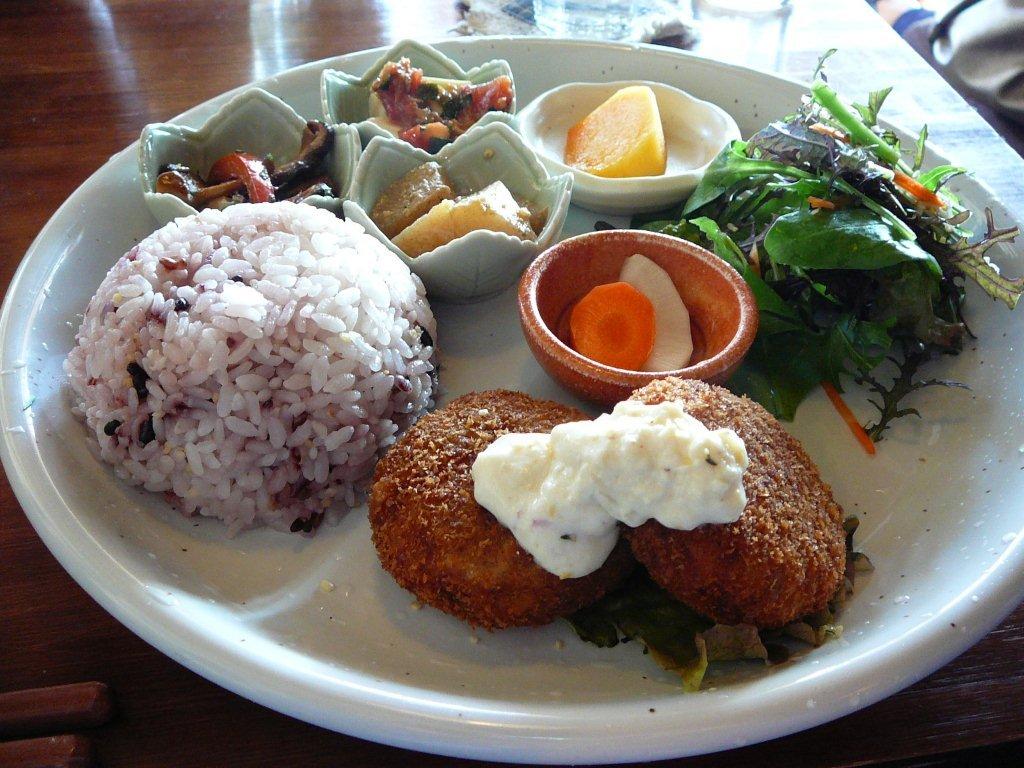
The all-organic vegetables lunch tray at Magokoro in Kamakura, Kanagawa Prefecture. They have a vegan version!

I’m not that keen on religion, but if your are a Budhist, Japanese temples sometimes offer vegan/vegetarian meals! Kamakura is just but an example!

WAGASHI-1

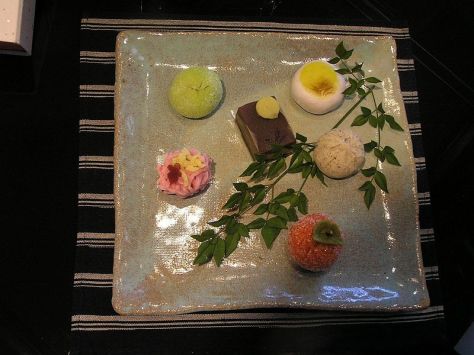
Wagashi Tray.

-“And what for dessert?”
I knew you were going to ask that!
Have you heard of Wagashi?
Just reading about it will make you salivate!

Aright, if you need help, just drop me a line!LOL
At least I sincerely hope I have contributed to the image of Japan you wished to see!

RECOMMENDED RELATED SITES
Not-Just-Recipes, Bengal cuisine, Cooking Vegetarian, Frank Fariello, Gluten-free Vegan Family, Meatless Mama, Warren Bobrow, Wheeling Gourmet, Le Petit Cuisinier, Vegan Epicurean, Miss V’s Vegan Cookbook, Comestiblog, To Cheese or not To Cheese, The Lacquer Spoon, Russell 3, Octopuspie, Bread + Butter, Pegasus Legend, Think Twice, The French Market Maven

Please check the new postings at:
sake, shochu and sushi

—————————————-
日本語のブログ
—————————————-

Seaweed: The Vegetable of the Oceans

Mozuku in amazu/sweet vinegar as served at Yasaitei, Shizuoka City.

Seaweed or algae have been used for eons by humans, but have only been recently rediscovered as a food of their own.
Seaweeds are consumed by coastal people, particularly in East Asia, e.g., Japan, China, Korea, Taiwan, Thailand, and Vietnam, but also in Indonesia, Belize, Peru, the Canadian Maritimes, Scandinavia, Ireland, Wales, Philippines, and Scotland.
It is rich in calcium and magnesium and seaweed noodles can be cooked into pancit canton, pancit luglug, spaghetti or carbonara.
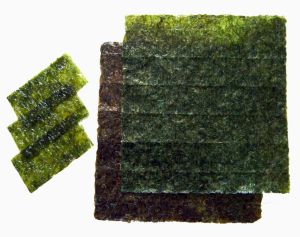
Nori

In Asia, Zicai (紫菜) (in China), gim (in Korea) and nori (in Japan) are sheets of dried Porphyra used in soups or to wrap sushi. Chondrus crispus (commonly known as Irish moss or carrageenan moss) is another red alga used in producing various food additives, along with Kappaphycus and various gigartinoid seaweeds. Porphyra is a red alga used in Wales to make laver. Laverbread, made from oats and the laver, is a popular dish there. Affectionately called “Dulce” in northern Belize, seaweeds are mixed with milk, nutmeg, cinnamon, and vanilla to make a common beverage.

Seaweeds are also harvested or cultivated for the extraction of alginate, agar and carrageenan, gelatinous substances collectively known as hydrocolloids or phycocolloids. Hydrocolloids have attained commercial significance as food additives. The food industry exploits their gelling, water-retention, emulsifying and other physical properties. Agar is used in foods such as confectionery, meat and poultry products, desserts and beverages and moulded foods. Carrageenan is used in salad dressings and sauces, dietetic foods, and as a preservative in meat and fish products, dairy items and baked goods.

Alginates are used in wound dressings, and production of dental moulds. In microbiology research, agar is extensively used as culture medium.

Seaweed is a source of iodine, necessary for thyroid function and to prevent goitre.

Seaweed extract is used in some diet pills. Other seaweed pills exploit the same effect as gastric banding, expanding in the stomach to make the body feel more full.
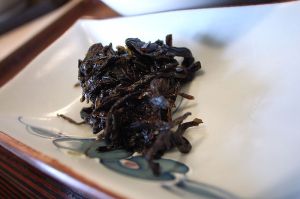
Konbu Tsukudani, a popular Japanese seaweed dish.

The Japanese divide their edible seaweed into three main groups:
BROWN ALGAE:

-Konbu/昆布, or Laminariaceae Bory (Latin), comprises many varieties, some of them regional: Makonbu or Saccharina japonica(真昆布), Onikonbu or Laminaria diabolica(羅臼昆布), Rishiri Konbu or Laminaria ochotensis(利尻昆布), Hosome Konbu or Laminaria religiosa(細目昆布), Hitaka or Mitsuishi Konbu or Laminaria angustata(日高昆布、三石昆布), Naga or Hamanaka Konbu or Laminaria longissima(長昆布、浜中昆布), and Kagome or Kjellmaniella crassifolia(籠目昆布).

-Hijiki or hiziki (ヒジキ, 鹿尾菜 or 羊栖菜, hijiki) (Sargassum fusiforme, or Hizikia fusiformis) is a brown sea vegetable growing wild on rocky coastlines around Japan, Korea, and China. Its two names mean deer-tail grass and sheep-nest grass respectively.

-Hibatama or Fucus, a genus of brown alga in the Class Phaeophyceae to be found in the intertidal zones of rocky seashores almost everywhere in the world.

-Hondawara or ホンダワラ(馬尾藻、神馬藻 (Sargassum fulvellum)

-Mozuku, or Cladosiphon okamuranus (水雲; 藻付; 海蘊; 海雲) , a type of edible seaweed in the genus Cladosiphon, naturally found in Okinawa, Japan. Most of the mozuku now is farmed by locals, and sold to processing factories. The main use of mozuku is as food, and as source of one type of sulfated polysaccharide called Fucoidan to be used in cancer treatment aid health supplements.

-Wakame (ワカメ), Undaria pinnatifida, a sea vegetable, or edible seaweed. In Japan it is most widely used in miso soup.
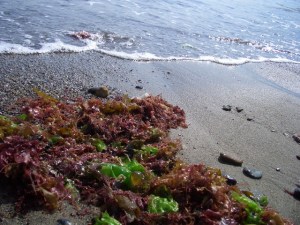
Yes, these violet and green alagae are edible!

VIOLET ALGAE:

-Asakusa Nori, or アサクサノリ(浅草海苔 (Porphyra tenera).

-Tengusa, which gives agar agar, a gelatinous substance. Historically and in a modern context, it is chiefly used as an ingredient in desserts throughout Japan, but also as solid jelly used as decoration in salads and others.

GREEN ALGAE:

-Aosa or sea lettuce comprising comprise the genus Ulva, a group of edible green algae that are widely distributed along the coasts of the world’s oceans.

-Aonori (青海苔 or アオノリ, “blue seaweed” or “green seaweed”), also known as green laver, a type of edible green seaweed, including species from the genera Monostroma and Enteromorpha of Ulvaceae. It is commercially cultivated in some bay areas in Japan, such as Ise Bay. It contains rich minerals such as calcium, magnesium, lithium, vitamins, and amino acids such as methionine.
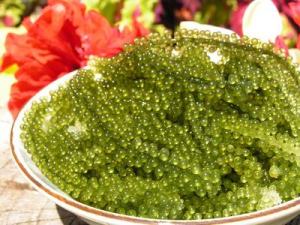
-Umibudou, or sea grapes, a delicacy of its own!

MARKET AVAIBILITY IN JAPAN:

In Japan it is interesting to note you can easily buy seaweed in paste form:
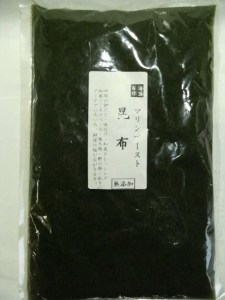
Konbu
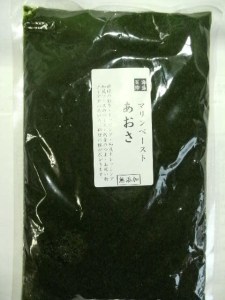
Aosa
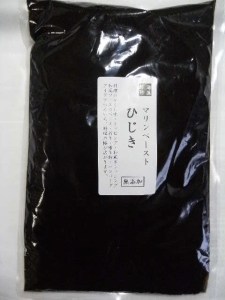
Hijiki

Next here are some pics to help you discover/recognize edible varieties in the markets:
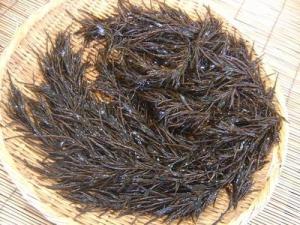
Akamoku
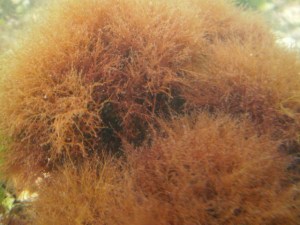
Makusa
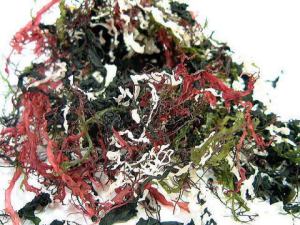
They often come as a mixture!
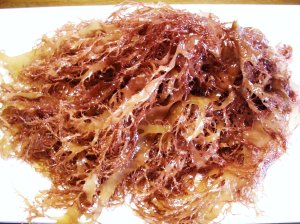
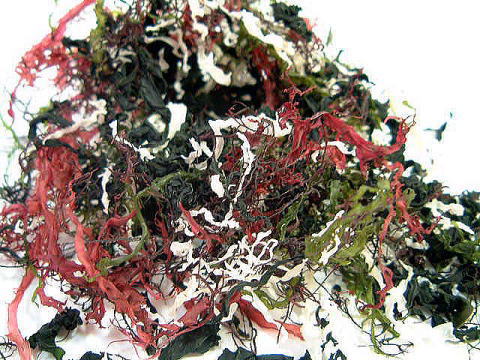
Red Algae

JAPANESE GASTRONOMY:

Here are some examples of the use of seaweed in Japanese gastronomy that can be expanded and inspired from wherever in the world you are, you being vegan, vegetarian or omnivore!
I have reduced the size of the pictures. Click on them to enlarge and copy them!
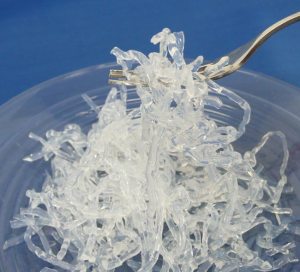
Agar or Crystal Kaiso/Crystal Seaweed!
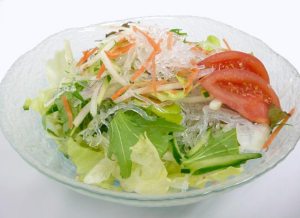
The same in a salad!

An example of seaweed salad with wakame and agar.
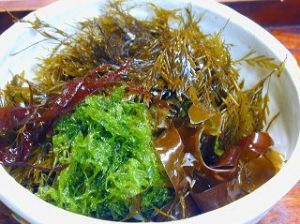
Another seaweed salad with samples harvesyed in Noto Peninsula, Ishikawa Prefecture!
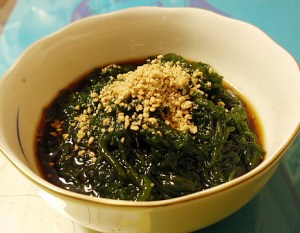
An Okinawa variety called somen nori!
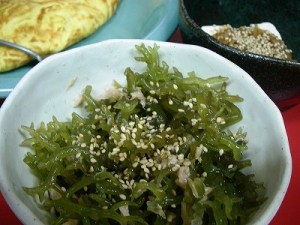
Another local variety called Tsunotama/Horns and Balls!
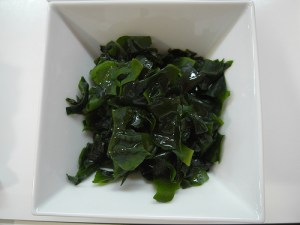
Wakame appetizer!
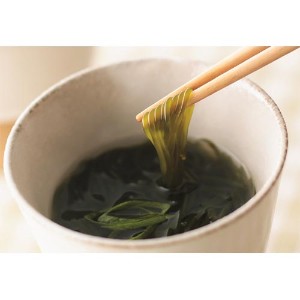
Wakame Noodles!
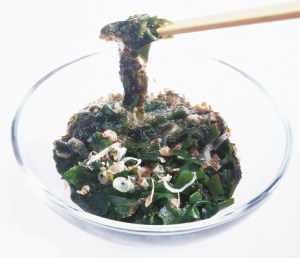
Another Wakame salad!
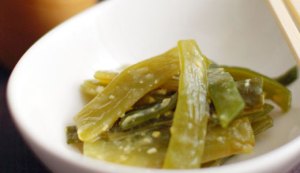
Wakame sticks cooked with miso paste!
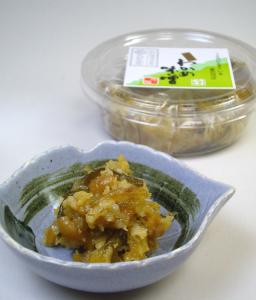
Wakame and Miso Paste mix from Kanzanji, Shizuoka Prefecture!
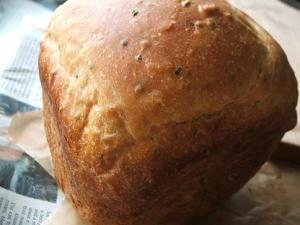
Wakame and Miso Bread!
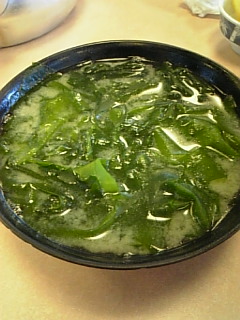
Wakame Miso Soup!
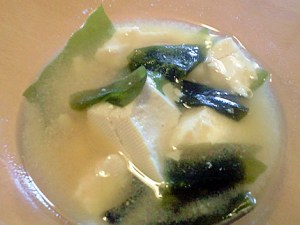
Wakame, tofu and miso Soup!
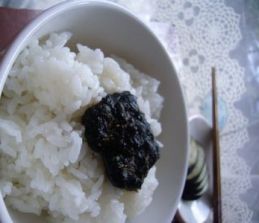
A bowl of freshly steamed rice with seaweed paste!
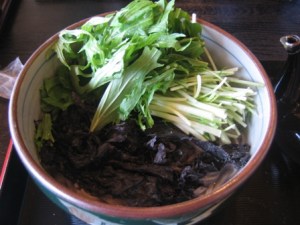
Soba/Buckwheat noodles with nori and green leaf vegetables!
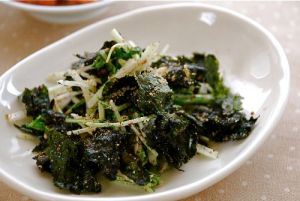
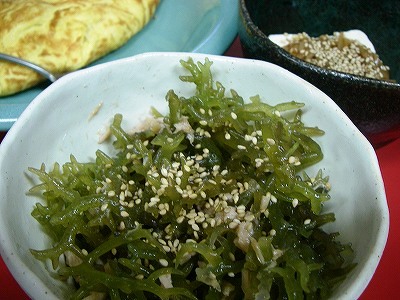
Seaweed, trefoil and ground seame seeds salad!
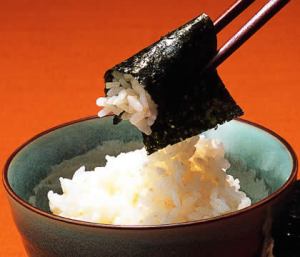
The best way to eat rice?

RECOMMENDED RELATED SITES
Not-Just-Recipes, Bengal cuisine, Cooking Vegetarian, Frank Fariello, Gluten-free Vegan Family, Meatless Mama, Warren Bobrow, Wheeling Gourmet, Le Petit Cuisinier, Vegan Epicurean, Miss V’s Vegan Cookbook, Comestiblog, To Cheese or not To Cheese, The Lacquer Spoon, Russell 3, Octopuspie, Bread + Butter, Pegasus Legend, Think Twice, The French Market Maven

Please check the new postings at:
sake, shochu and sushi

—————————————-
日本語のブログ
—————————————-

Vegan Sashimi at Yasaitei (again!/10-02-15)

How many times have I written about Yasaitei? LOl
And I don’t think I will ever tire of it! Well, if it can help my vegan and vegetarian friends, so much the better. As an omnivore I feel the urge to lend a hand and help them enjoy life in this great country.
I’m actually preparing an article on vegan life in Japan for later in the day to as much information as possible into one posting.

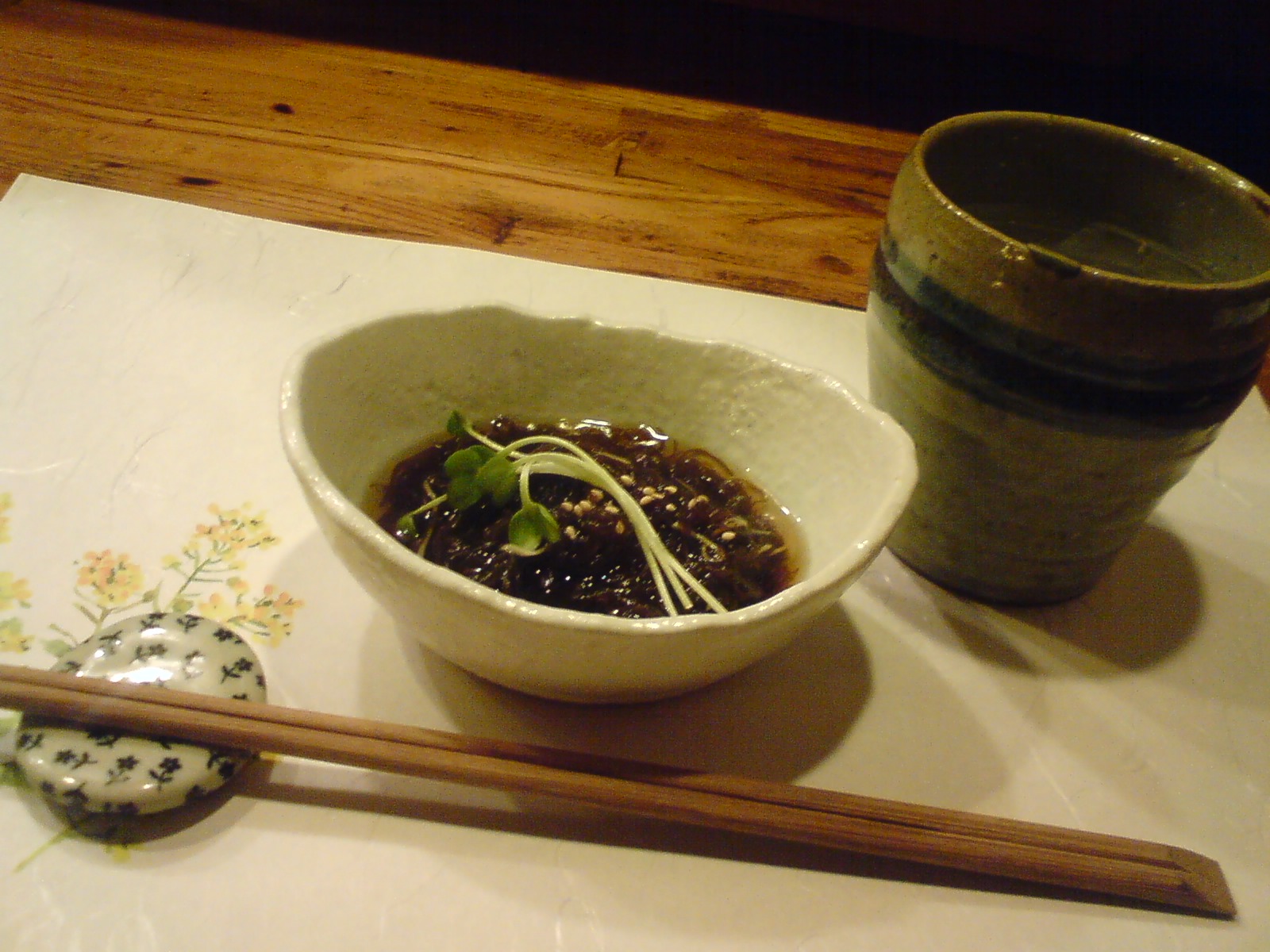
Before I describe the vegan sashimi plate, let me introduce what came with my glass of shochu (vegan alcoholic drink, by the way): mozuku.
Mozuku/モズク is Nemacystus decipiens in Latin.
It is a seaweed that is collected in many areas of Japan and the two main varieties are Okinawa Mozuku/オキナワモズク Cladosiphon okamuranus (Latin) and Ishi Mozuku/Rock Mozukuイシモズク Sphaerotrichia divaricata (Latin). They are usually served in amazu/甘酢/sweet vinegar. At Yasaitei, they come topped with a few sesame seeds and kawaire daikon sprouts/かわいれ大根.
It almost tastes like a dessert.
I shall also write a long article on seaweed, the vegetable of the oceans later in the day!

Alright, now for the description of the plate:
Ameera (sweet) tomatoes from Western Shizuoka, fat celery stem bottoms, firm and so sweet, my favourite green, ice plant, also crunchy, soft and sweet, myoga ginger hid behind, and Spring cabbage. The latter also has a nice bite, is very soft, almost sweet in taste.

Shiso/perilla leaf on a bed of sliced Winter onion is hidden behind the cabbage. Red radish, crucnhy and very soft, and those Japanese cucumbers, gorged with water under a crunchy skin.

For a “side view” to help you understand the presentation.
Simple and so extravagant at the same time!

YASAITEI
Shizuoka City, Aoi Ku, Tokiwa-Cho, 1-6-2 Green Heights Wamon 1-C
Tel.: 054-2543277
Business hours: 17:30~22:00
Closed on Sundays
Reservations highly recommended
Seating: 6 at counter + 20 at tables
Set Courses: 3,000, 4,000, 5,000 yen
HOMEPAGE (Japanese)

RECOMMENDED RELATED SITES
Not-Just-Recipes, Bengal cuisine, Cooking Vegetarian, Frank Fariello, Gluten-free Vegan Family, Meatless Mama, Warren Bobrow, Wheeling Gourmet, Le Petit Cuisinier, Vegan Epicurean, Miss V’s Vegan Cookbook, Comestiblog, To Cheese or not To Cheese, The Lacquer Spoon, Russell 3, Octopuspie, Bread + Butter, Pegasus Legend, Think Twice, The French Market Maven

Please check the new postings at:
sake, shochu and sushi

—————————————-
日本語のブログ
—————————————-
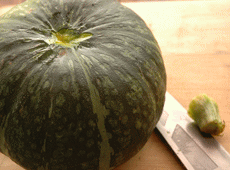
Vegetables Facts & Tips 18: Cabbage

The cabbage is a popular cultivar of the species Brassica oleracea Linne (Capitata Group) of the Family Brassicaceae (or Cruciferae), and is used as a leafy green vegetable. It is a herbaceous, biennial, dicotyledonous flowering plant distinguished by a short stem upon which is crowded a mass of leaves, usually green but in some varieties red or purplish, which while immature form a characteristic compact, globular cluster (cabbagehead).

The plant is also called head cabbage or heading cabbage, and in Scotland a bowkail, from its rounded shape. The Scots call its stalk a castock, and the British occasionally call its head a loaf.

Cabbage leaves often display a delicate, powdery, waxy coating called bloom. The sharp or bitter taste sometimes present in cabbage is due to glucosinolate(s).

The cultivated cabbage is derived from a leafy plant called the wild mustard plant, native to the Mediterranean region, where it is common along the seacoast. Also called sea cabbage and wild cabbage, it was known to the ancient Greeks and Romans. The English name derives from the Normanno-Picard caboche (head), perhaps from boche (swelling, bump).

That for the Wikipedia definition.

FACTS:

-Cabbages are also a good source of riboflavin.
-Cabbages are an excellent source of vitamins A, C, and K. It also contains significant amounts of glutamine, an amino acid which has anti-inflammatory properties.

-It is a source of indole-3-carbinol, or I3C, a compound used as an adjuvant therapy for recurrent respiratory papillomatosis, a disease of the head and neck caused by human papillomavirus (usually types 6 and 11) that causes growths in the airway that can lead to death.

-It also contains a marked amount of Calcium, Amino Acids, Potassium and Magnesium.

-The best season from January to May, and June to July.

VARIETIES:

Japan is the World’s No 5 cabbage grower, and so many varieties are available here:

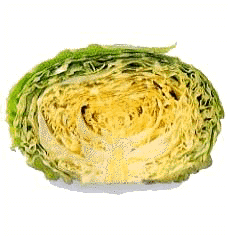
“Haru Kabetsu/Haru Tama” or Spring Cabbage.
Planted in the Fall and harvested in Spring.
The inside is yellow and soft. Can be eaten raw.

“Fuyu Kabetsu/Kantam” or Winter Cabbage.
Planted in Summer and harvested in Winter.
Large number of leaves make it a very dense cabbage.
Great for stews as the shape will hold.

“Kougen Kabetsu” or Plateau Cabbage.
Planted at high altitude in Nagano and Gunma Prefectures in Spring and harvested in Summer and Fall.
Very cold-resistant.

“Petit-Vert”
Very rich in Vitamin C and carotenes, as well as many other nutrients, it is becoming increasingly popular as an organic vegetable both in homes and restaurants. Its small size and tenderness make it easy to use both as decoration and vegetable dish.

“Green Ball”.
Very popular raw in salads or pickled.

“Saboi Kabetsu”/Savoy Cabbage.
Prized for its eleganat looks.
It originated from French Savoie.
Very popular in stews.

“Murasaki kabetsu”/Violet or Red Cabbage.
Not to be confused with the Italian Trevise.
Natural colour.
Very popular raw in salads or pickled.

“Takenoko Kabetsu” or Bamboo Shoot Cabbage.
Popular for its shape. Very soft, great raw in salads.

“Me Kabetsu” or Brussels Sprouts.
Contains 4 times as many Vitamin C as other cabbage varieties.
Very popular in Japanese gastronomy thanks to its small size and taste.

“Kuro Kabstu” or Black Cabbage (Carboronero).
Actually of a very dark green colour.
High in fibers and rich in flavour, popular in stews.

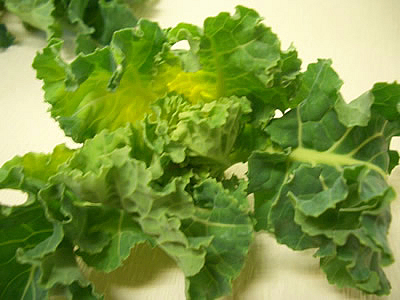
“Keeru Kabetsu” or Kale Cabbage.
High in Vitamin C and carotenes.
Popular as vegetable juice and in stews.

“Afurika Kabetsu”, or African Cabbage.
Also called by its Swahili name, Skumaiki.
has been called the Super Cabbage for its high contents in nutrients.

TIPS:

-To preserve it cut, wrap it tightly in xellophane paper as not to allow any air between the leaves before you stor it in the fridge.

-Choose specimens with thick outer leaves.

-After cutting it. sprinkle with water as it will be easily absorbed by the leaves, amking easier to eat, but do it quickly!

-Choose specimens that feel heavy and tight.

HEALTH FACTS:

-Combined withbasket clams, or cockles, or liver, or vegetal oil, helps combat anemia and ageing, reinforces the digestive system and general health.

-Combined with lemon, or orange, or grapefruit, ortangerines, helps combat artery hardening and stress, helps blood circulation and skin rejuvenatin.

-Combined with spinach, or eel, or carrot, or Chinese chives, helps combat common colds and canacer, promotes virility.

-Combined with Cashew nuts, or vegetal oil, or peanuts, or cod roe, helps combat stress and ageing, and promotes memory.

RECOMMENDED RELATED SITES
Not-Just-Recipes, Bengal cuisine, Cooking Vegetarian, Frank Fariello, Gluten-free Vegan Family, Meatless Mama, Warren Bobrow, Wheeling Gourmet, Le Petit Cuisinier, Vegan Epicurean, Miss V’s Vegan Cookbook, Comestiblog, To Cheese or not To Cheese, The Lacquer Spoon, Russell 3, Octopuspie, Bread + Butter, Pegasus Legend, Think Twice, The French Market Maven, Fuji Mama, Great Teacher Sato, Peas Love Carrots

Please check the new postings at:
sake, shochu and sushi

—————————————-
日本語のブログ
—————————————-
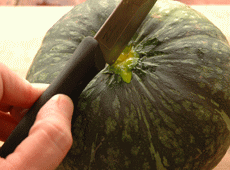
Vegan Japanese Cuisine: Fried Bell Peppers, Shimeji Mushrooms & Umeboshi

There is a wealth of vegan/vegetarian recipes in Japanese cuisine to the point that people with such priorities might feel attracted by this country. Don’t forget there is a traditional Budhist (I’m not) vegetarian gastronomy which can be easily amended to vegan tastes!

A note before I continue:
A vegan friend pointed out that honey is not vegan when I advised to use honey-pickled Japanese plums. I shall leave that to you.
Just bear in mind that non-honey Japanese pickled plums are higher in slat, although the same salt can be used as the seasoning itself.

Green peppers, or bell peppers are full of extremely important beneficial elements, so here is a very simple way to accomodate them:

Fried Bell Peppers, Shimeji Mushrooms & Umeboshi!

INGREDIENTS: For 2~3 people


-Shimeji mushrooms: 1 pack or a large fistful


-Bell Peppers: 2


-Umeboshi/Pickled Japanese plums: 2

-Olive oil: 2 tablespoons
-Black pepper: to taste
-Soy sauce: a little

Optional spices (chili pepper): to taste

RECIPE:

-Take seed out of umeboshi/pickled Japanese plum and cut to a pulp with a knife.

-Cut the bell peppers in trips. Make sure you have discarded all the seeds. They are not easily digested.

-Separate the shimeji mushrooms.

-Pour the olive oil on a frypan and stir fry the bell peppers and shimeji mushrooms until as soft as you wish.

-Add umeboshi, balck pepper, soy sauce and optional spices. Mix and stir-fry for a few seconds.

-Serve topped with some fresh green sprouts.

Easy again, ain’t it?

RECOMMENDED RELATED SITES
Not-Just-Recipes, Bengal cuisine, Cooking Vegetarian, Frank Fariello, Gluten-free Vegan Family, Meatless Mama, Warren Bobrow, Wheeling Gourmet, Le Petit Cuisinier, Vegan Epicurean, Miss V’s Vegan Cookbook, Comestiblog, To Cheese or not To Cheese, The Lacquer Spoon, Russell 3, Octopuspie, Bread + Butter, Pegasus Legend, Think Twice, The French Market Maven, Fuji Mama, Great Teacher Sato

Please check the new postings at:
sake, shochu and sushi

—————————————-
日本語のブログ
—————————————-