Tag Archives: Vegan

Vegan Japanese Cuisine: Egg plants/Aubergines & Miso Caviar

This recipe is another/different version form the previous egg plants/aubergines recipe to cater for vegan priorities.
Back in France, we do call aubergine paste, aubergine caviar (probably because of the sometimes reminiscent dark colour).
The process is almost the same, and it is of course open to variations, especially as far spices are concerned.

INGREDIENTS: For 2 people

-Egg plants/Aubergins: 3~4
-Rice vinegar: 1 tablespoon
-Miso (of your choice): 1 tablespoon
-Fresh perilla/shiso leaves: enough for decoration. Chop them finely first.

-Salt: no need as enough is contained inside the miso

-Optional: Spices (of your choice), grated ginger, and so on.

RECIPE:

-Grill the egg plants/aubergines directly over the flame on a grill.
Doing it in the oven is fine, too.

-Once the the egg plants/aubergines have been evenly grilled and become soft inside, peel them completely.

-Mash them finely with a knife.
Do not use a food processor as the the egg plants/aubergines will become a messy juice!

-Pour the mashed egg plants/aubergines in a bowl.
Add the rice vinegar and miso.
Mix well.
Served topped with finely chopped shiso leaves.

-Experiment with grated garlic, sesame oil and grated ginger!

RECOMMENDED RELATED SITES
Not-Just-Recipes, Bengal cuisine, Cooking Vegetarian, Frank Fariello, Gluten-free Vegan Family, Meatless Mama, Warren Bobrow, Wheeling Gourmet, Le Petit Cuisinier, Vegan Epicurean, Miss V’s Vegan Cookbook, Comestiblog, To Cheese or not To Cheese, The Lacquer Spoon, Russell 3, Octopuspie, Bread + Butter, Pegasus Legend, Think Twice, The French Market Maven

Please check the new postings at:
sake, shochu and sushi

—————————————-
日本語のブログ
—————————————-

Vegetables Tips & Facts 7: Edible Flowers (amended & expanded)

flowers-8
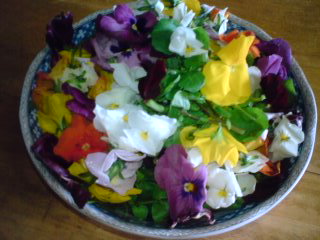
(5 edible flowers and water cress salad)

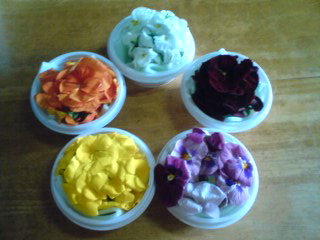
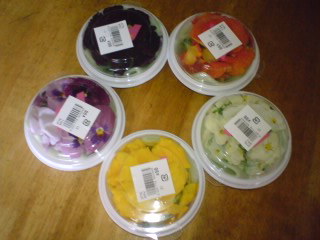
The other day, while I was shopping at the big supermarket at the Shizuoka JR Station I was reminded of a recent post by Natasha at 5 Star Foodie when I noticed edible flowers on sale.
Edible flowers have been on the Japanese markets for quite a few years already.
They tend to first appear in late winter, although it is only a question of time when they will be sold all year long!

flowers-1

flowers-2

They come in very cheap, at 98 yen a small box (1 US$), but they ought to be used as early as possible.
Aichi Prefecture, our neighbour Prefecture seems to have become the largest growing area in Japan.
Thai, Indian and Persian citizens, as far as I know, have been using flowers in food for quite some time. The Japanese have served mini-chrysanthemum and perilla flowers since immemorial times.

flowers-3 flowers-4 flowers-5 flowers-6 flowers-71

Most edible flowers are of the pansy, snapdragon, primura, roses, Cosmos, nasturium and so on.
Do you recognize some of them above?

FACTS:

Now, the great news is that they contain an enormous amount of Vitamin A carotene:
1,100 to 9,400 micrograms per 100 grams as compared to 390 micrograms for tomatoes, 720 micrograms for broccoli and 3,100 micrograms for spinach.
as well as Vitamin C:
230 t0 650 mg per 100 grams as compared to 20 mg for tomatoes, 100 mg for spinach and 160 mg for broccoli!

TIPS:

The Japanese will use them either in flower or vegetable salads or on cakes.
Perilla flowers/shiso no hana are regularly served with sashimi or many kinds of fresh foods!

HEALTH FACTS:

-Edible Chrysanthemums combined with shiitake or mackerel enriches the blood, helps combat ageing and stress.

-Edible Chrysanthemums combined with wakame/seawedd or ginger helps combat muscle/body swelling and helps lower blood pressure.

-Edible flowers combined with oil is a generally beneficila combination.

-Edibke flowers combined with grapefruit or strawberries are beneficial to the skin and helps combat ageing.

One small advice for caution: don’t overeat them as they have purgative powers!

The best season for edible flowers is from September to December in Japan.

RECOMMENDED RELATED SITES:
Bread + Butter, Comestilblog, Greedy Girl, Bouchon For 2, Zoy Zhang, Hungry Neko, Mangantayon, Elinluv Tidbit Corner, Maison de Christina, Chrys Niles, Lexi, Culinary Musings, Eats and Everything, Bite Me New England, Heather Sweet, Warren Bobrow, 5 Star Foodie, Frank Fariello, Oyster Culture, Ramendo, Alchemist Chef, Ochikeron, Mrs. Lavendula, The Gipsy Chef, Spirited Miu Flavor, Wheeling Gourmet, Chef de Plunge, Sushi Nomads, Island Vittles, The French Market Maven

Please check the new postings at:
sake, shochu and sushi,
—————————————-
日本語のブログ
—————————————-

Vegan Sashimi Plate at Yasaitei (’10/01/20)

I suppose I don’t have to explain any more this longing I have for Yasatei Izakaya in Shizuoka City, nor the reasons I have to invent to go there!

Therefore, I will start right away describing what I hate and drank there yesterday evening:

Let’s start with the “front row”:
-Slices of green zucchini grown in the western part of Shizuoka Prefecture. They were first cut, then massaged with salt and finally washed, making them tender and tasty.
-Iceplant leaves. I already mentioned this plant is worth discovering, you be vegan, vegetarian or omnivore! They are tender and crispy at the same time, and almost sweet with no tanginess, whatsoever.
-Carrots.
-Sweet red pimento.

“Back row”:
-Plum tomato.
-Daikon. Juicy and so soft in taste!
-Cucumber. Japanese variety, crispy!

Side view to show how the shiso/perilla leaf is supported by thinly sliced onion (winter onion grown in Shizuoka, with its tanginess taken away in a cold water bath).

As usual the dressing was a small saucer of sesame oil with high-quality salt and dark miso paste.

I found out that shochu is the best alcohol to enjoy with such vegetarian/vegan fare.
Incidentally, good quality shochu is vegan.
The first glass (straight with plentyof ice) is called “Doman”, the name of a very rare crab found in Hamanako Lake in the western part of Shizuoka Prefecture. It is a rice shochu distilled by Hamamatsu-Tenjigura Brewery in Hamamatsu City. Crispy and gentle on the palate with plenty of character at 25 degrees proof.

My second glass came from a rare bottle of brown sugar shochu made in Amami Oshima, a small island south of Kagoshima Prefecture, Kyushu Island (great place to visit and forget about cities, I guarantee you!).
The reason it was at Yasaitei is that one of the lady waitresses is married to a gentleman from that far away island!
The name “Hikanzakura” is the name of a local cherry tree. I don’t have a clue how Oshima Shokuryo Co. distills it, but it is so flowery and mellow, even at 30 degrees proof!

YASAITEI
Shizuoka City, Aoi Ku, Tokiwa-Cho, 1-6-2 Green Heights Wamon 1-C
Tel.: 054-2543277
Business hours: 17:30~22:00
Closed on Sundays
Reservations highly recommended
Seating: 6 at counter + 20 at tables
Set Courses: 3,000, 4,000, 5,000 yen
HOMEPAGE (Japanese)

RECOMMENDED RELATED SITES
Not-Just-Recipes, Bengal cuisine, Cooking Vegetarian, Frank Fariello, Gluten-free Vegan Family, Meatless Mama, Warren Bobrow, Wheeling Gourmet, Le Petit Cuisinier, Vegan Epicurean, Miss V’s Vegan Cookbook, Comestiblog, To Cheese or not To Cheese, The Lacquer Spoon, Russell 3, Octopuspie, Bread + Butter, Pegasus Legend, Think Twice, The French Market Maven

Please check the new postings at:
sake, shochu and sushi

—————————————-
日本語のブログ
—————————————-

Vegan Korean Cuisine: Kimchi Tofu Miso Soup

Although I live in and loves its food, I’ve learnt to appreciate Korean gastronomy through many trips to Seoul and eating at Yakiniku Restaurants here.

I’M sure that vegan and vegetarinas would love a simple tatse of Korean food according to their preferences.
Her is a very simple recipe for cold winters!

Kimchi Tofu Miso Soup!

INGREDIENTS:

-Kimchi: as much as you want
-Tofu (soft silk/kinu tofu style): 200 g
-Sesame oil: 1 tablespoon
-Leeks: as much as you like (chopped)
-Dashi/Konbu Dashi (vegan dashi)/ soup stock: 1 cup/200 cc/ml (check dashi posting)
-Miso: 1 tablespoon (check miso posting!)

-Optional: freshly cut green leaf vegetables for decoration.

RECIPE:

-Heat the sesame oil in a pan. Fry the leeks and kimchi together for a while.

-Add dashi soup stock and bring to boil.
As soon as it boils, lower fire to small.
Add miso and stir and add tofu cut in bite-sized pieces and cooked until tofu is warm enough (never overcook tofu!)

-Pour into serving bowl and eat with chopsticks and Chinese spoo (or just with a spoon!).
-I like it served with freshly chopped thin leeks or coriander!

Simple again, isn’t it?

RECOMMENDED RELATED SITES
Not-Just-Recipes, Bengal cuisine, Cooking Vegetarian, Frank Fariello, Gluten-free Vegan Family, Meatless MamaFrank Fariello, , Warren Bobrow, Wheeling Gourmet, Le Petit Cuisinier, Vegan Epicurean, Miss V’s Vegan Cookbook, Comestiblog, To Cheese or not To Cheese, The Lacquer Spoon, Russell 3, Octopuspie, Bread + Butter, Pegasus Legend, Think Twice

Please check the new postings at:
sake, shochu and sushi

—————————————-
日本語のブログ
—————————————-

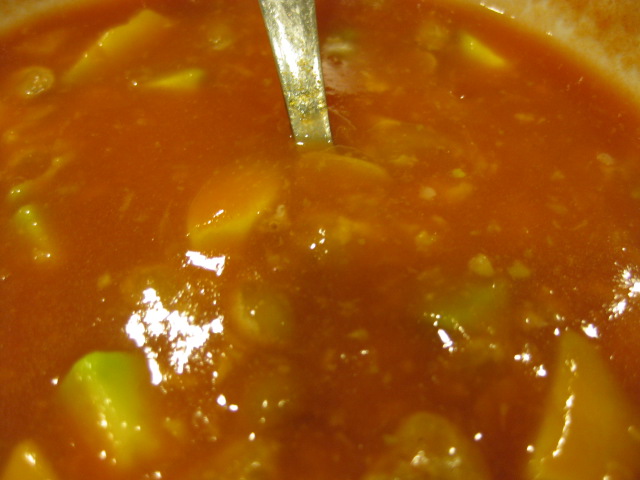
Vegan Japanese Cuisine: Taro & Tomato Stew

Benn rummaging through my notes and discovered another simple and hearty recipe for my vegan and vegetarian friends!

Taro & Tomato Stew!

INGREDIENTS: For 2 people

-Taro/Sato Imo: 4
-Carrot: 1
-Onion: 1
-Garlic: 1 clove
-Tomato: 100~200 g (canned with their water, or fresh, peeled and seeded)
-Cabbage: 3 leaves
-Miso: 2 tablespoons
-Water: 1/2 cup/100 cc/ml
-Mirin/sweet sake: a little for taste and seasoning

RECIPE:

1-Peel taro and cut into big pieces. Cut carrot into large pieces. Cut onion into 4 quarters. Cut the garlic into thin slices. Cut the cabbage into rough pieces.

2-In a pan drop the taro, carrot, onion and garlic with the tomato and switch on fire. Bring to boil and then lower fire. Cover with lid and cook until vegetables are soft.

3-If you have a pressure cooker, pour everything into it, heat and cook on a low fire for 5 minutes.

4-Add cabbage, miso, mirin and water and cook for a while until cabbage has become soft. Rectify/season with a little salt if necessary although miso contains enough salt.

NOTES:

-Any miso can be used according to your preferences.
-I personally add some lemon juice.
-When servin in bowls, I top it with chopped thin leeks. Fresh coriander would be great, too.

RECOMMENDED RELATED SITES
Not-Just-Recipes, Bengal cuisine, Cooking Vegetarian, Frank Fariello, Gluten-free Vegan Family, Meatless MamaFrank Fariello, , Warren Bobrow, Wheeling Gourmet, Le Petit Cuisinier, Vegan Epicurean, Miss V’s Vegan Cookbook, Comestiblog, To Cheese or not To Cheese, The Lacquer Spoon, Russell 3, Octopuspie, Bread + Butter, Pegasus Legend, Think Twice

Please check the new postings at:
sake, shochu and sushi

—————————————-
日本語のブログ
—————————————-

Vegan Japanese Cuisine: Water Spinach Miso Soup

Water Spinach is called Kuushinsai/空芯菜 in Japanese.
Ipomoea aquatica, latin foe Water Spinach is a semi-aquatic tropical plant grown as a leaf vegetable. It is known in English as Water Spinach, Water Morning Glory, Water Convolvulus, or by the more ambiguous names “Chinese spinach” and “swamp cabbage”. It has many other names in other languages. It is found throughout the tropical and subtropical regions of the world; it is not known exactly where it originated.

Water spinach

Ipomoea aquatica is most commonly grown in East and Southeast Asia. Because it flourishes naturally in waterways and requires little if any care, it is used extensively in Malay and Chinese cuisine, especially in rural or kampung (village) areas.

The vegetable is a common ingredient in Southeast Asian dishes. In Singapore, Indonesia and Penang, the leaves are usually stir fried with chile pepper, garlic, ginger, dried shrimp paste (belacan/terasi) and other spices. In Penang and Ipoh, it is cooked with cuttlefish and a sweet and spicy sauce. During the Japanese Occupation of Singapore in World War II, the vegetable grew remarkably well and easily in many areas, and become a popular wartime crop.

In Chinese cuisine (traditional and simplified Chinese: 空心菜) there are numerous ways of preparation, but a simple and quick stir-fry either plain or with minced garlic is probably the most common. In Cantonese cuisine, a popular variation adds preserved tofu (furu, Mandarin). In Hakka cuisine, yellow bean paste[clarification needed] is added, sometimes along with fried shallots. The vegetable is also extremely popular in Taiwan, where it grows well.

In Thailand, where it is called phak bung (Thai: ผักบุ้ง), and in Burma, where it is called ga zun ywet, it is frequently stir-fried with oyster sauce or yellow soybean paste, and garlic and chillies. It can also be eaten raw, for instance with green papaya salad.

In Vietnam, it once served as a staple vegetable of the poor (known as rau muống). In the south, the stems are julienned into thin strips and eaten with many kinds of noodles, and used as a garnish as well. Ipomoea aquatica has become a common ingredient of Vietnamese cuisine.

In the Philippines, Ipomoea aquatica is usually sauteed in cooking oil, onions, garlic, vinegar, and soy sauce. This dish is called “adobong kangkong”. It is also a common leaf vegetable in fish and meat stews like sinigang. There is also an appetizer in the Philippines called “crispy kangkong”, in which Ipomoea aquatica leaves are coated with batter and fried until crisp and golden brown.

Here is a simple vegan Japanese-style recipe with miso soup:

Water Spinach Miso Soup!

INGREDIENTS:

-Water Spinach/Kushinsai: 1 bunch (leaves only)
-Wakame/seaweed (if dry, soften in lukewarm water first): as much as you want!)
-Aburaage/deep-fried tofu sheet: 1 half (cut according to preferences)
-Dashi/ Konbu dashi/ Seaweed dashi: 1 cup/200 cc/ml (check dashi posting)
-Miso: 1.5 tablespoons (check miso posting!)
-Chopped thin leeks

RECIPE:

1.Wash the water spinach, cut out the leaves and drain.
Leave the aburaage in some lukewarm water for a while to take off excess oil.

2.In a pan pour the dashi. Add aburaage and wakame. Heat till just before boiling point (Boiling miso is not a good thing!).
Add miso and mix until well incorporate. Add water spinach and cook until the vegetables are cooked to satisfaction (completely raw water spinach are a bit hard on the system!).
Serve in bowl sprinkled with chopped thin leeks.

RECOMMENDED RELATED SITES
Not-Just-Recipes, Bengal cuisine, Cooking Vegetarian, Frank Fariello, Gluten-free Vegan Family, Meatless MamaFrank Fariello, , Warren Bobrow, Wheeling Gourmet, Le Petit Cuisinier, Vegan Epicurean, Miss V’s Vegan Cookbook, Comestiblog, To Cheese or not To Cheese, The Lacquer Spoon, Russell 3, Octopuspie, Bread + Butter, Pegasus Legend, Think Twice

Please check the new postings at:
sake, shochu and sushi

—————————————-
日本語のブログ
—————————————-

Vegan Sushi Plate at Sushi Ko, Shizuoka (’10/01/14)

The Missus and I visited our favourite Sushi Restaurant last night, Sushi Ko. it might not be the most expensive or sophisticated sushi restaurant in our Prefecture but you get the best food at the best price.
It certainly makes for far better value than some vaunted establishments in Tokyo or New York where you pay ridiculous prices for tiny pieces of art in outrageously expensive surroundings!
Moreover, Mr. Oda is one of those very few true chefs who take pleasure in tackling any challenge thrown at him by customers.
He knows that I will always ask him to come with a vegan sushi plate not only to demonstrate that such gastronomy exists, but also to lure more customers to his business, which is quite flourishing.

Here what he concocted for us. Sorry for the slightly fuzzy pictures, but I had to contend with an impatient Missus!

These rolls were made with thin wide strips of daikon that mr. Oda quickly marinated in lemon water instead of using dry nori/seaweed.
Inside he rolled sushi rice (shari) with trefoil stems, umeboshi/pickled Japanese plum meat and shiso/perilla leaves!

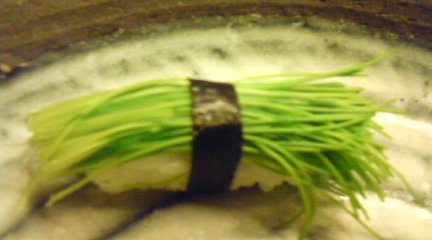
Buckwheat sprouts/Hime Soba Me/姫蕎麦芽 Nigiri!

Thin leek sprouts/Me Negi/芽葱 Nigiri!

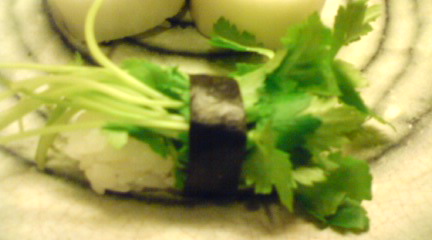
Trefoil/Mitsuba/三つ葉 Nigiri!

What is Mr. Oda going to come up with next time? LOL

Sushi Ko
shizuoka City, Aoi Ku, Ryogae-cho. 2-3-1 (Aoba Koen)
Tel.: 054-2512898
Business Hours: 17:00~25:00. 17:00~23:00 (Sundays)
Closed on Wednesdays
Reservations recommended
Credit cards OK
HOMEPAGE (Japanese)

RECOMMENDED RELATED SITES
Not-Just-Recipes, Bengal cuisine, Cooking Vegetarian, Frank Fariello, Gluten-free Vegan Family, Meatless MamaFrank Fariello, , Warren Bobrow, Wheeling Gourmet, Le Petit Cuisinier, Vegan Epicurean, Miss V’s Vegan Cookbook, Comestiblog, To Cheese or not To Cheese, The Lacquer Spoon, Russell 3, Octopuspie, Bread + Butter, Pegasus Legend, Think Twice

Please check the new postings at:
sake, shochu and sushi, Island Vittles

—————————————-
日本語のブログ
—————————————-

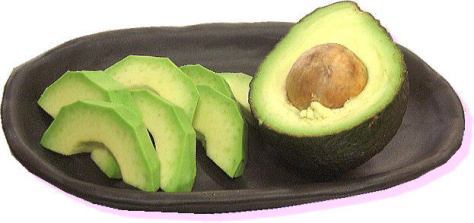
Vegetables Facts and Tips 16: Avocado

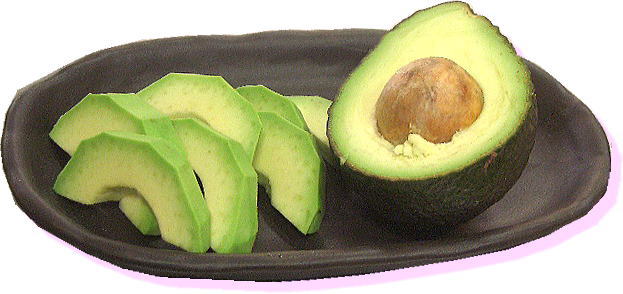
The avocado (Persea americana), aguacate (Spanish), butter pear or alligator pear, is a tree native to the Caribbean, Mexico, South America and Central America, classified in the flowering plant family Lauraceae along with cinnamon, camphor and bay laurel. The name “avocado” also refers to the fruit (technically a large berry that contains a large seed) of the tree which may be egg-shaped or spherical.

Avocados are a commercially valuable fruit and are cultivated in tropical climates throughout the world (and some temperate ones, such as California), producing a green-skinned, pear-shaped fruit that ripens after harvesting. Trees are partially self-pollinating and often are propagated through grafting to maintain a predictable quality and quantity of the fruit.

P. americana, or the avocado, originated in the state of Puebla, Mexico. The oldest evidence of avocado use was found in a cave located in Coxcatlán, Puebla, Mexico that dates to around 10,000 years BCE.

The word ‘avocado’ comes from the Nahuatl word ahuacatl (‘testicle’, a reference to the shape of the fruit). Avocados were known by the Aztecs as ‘the fertility fruit’.

The subtropical species needs a climate without frost and with little wind. High winds reduce the humidity, dehydrate the flowers, and affect pollination. In particular, the West Indian type requires humidity and a tropical climate which is important for flowering. When even a mild frost occurs, premature fruit drop may occur, although the Hass cultivar can tolerate temperatures down to −1°C. The trees also need well-aerated soils, ideally more than 1 m deep.

An average avocado tree produces about 120 avocados annually. Commercial orchards produce an average of 7 tonnes per hectare each year, with some orchards achieving 20 tonnes per hectare.

High avocado intake has been shown to have an effect on blood serum cholesterol levels. Specifically, after a seven-day diet rich in avocados, hypercholesterolemia patients showed a 17% decrease in total serum cholesterol levels. These subjects also showed a 22% decrease in both LDL (bad cholesterol) and triglyceride levels and 11% increase in HDL (good cholesterol) levels.[20] Additionally a Japanese team synthesised the four chiral components and identified (2R, 4R)-16-heptadecene-1, 2, 4-triol as the natural antibacterial component.

The fruit has a markedly higher fat content than most other fruit, mostly monounsaturated fat, and as such serves as an important staple in the diet of various groups where access to other fatty foods (high-fat meats and fish, dairy, etc) is limited.

The avocado is very popular in vegetarian cuisine, making an excellent substitute for meats in sandwiches and salads because of its high fat content.

FACTS:

-Contains large amounts of unsaturated fats, Potassium, Phosphorus, Vitamins B1, B2, and B6, Vitamin C, Vitamin E, Pantoten acid and vegetal fibers.

-Helps lower bad cholesterol and high blood pressure.

-Season: available all year long thanks to high import/export.

TIPS:

-Choose green hard specimens if you have the time to let them ripen to your taste. As soon as it is ripened keep in the fridge, but consume as soon as possible.

-When choosing ripe specimens, choose firm and plentiful. Loose space under the skin is a bad sign.

HEALTH FACTS:

-When combined with apple or lemon, help lower blood cholesterol

-When combined with asparaguses, helps combat skin ageing.

-Generally helps combat bad cholesterol and ageing.

COOKING TIPS:
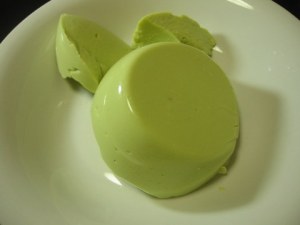

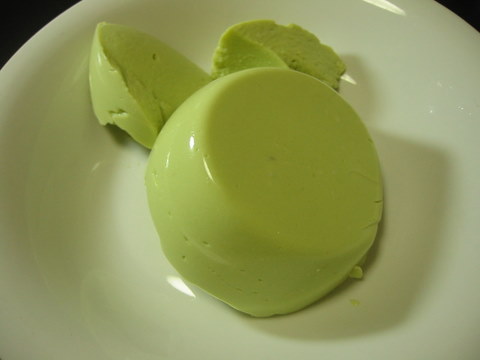
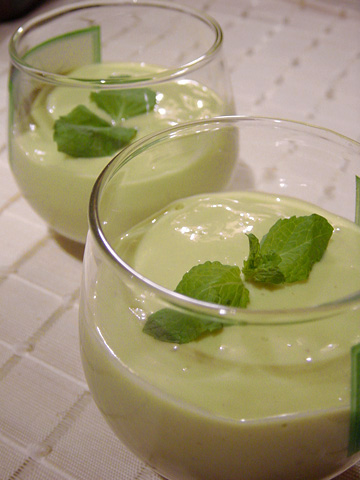
Avocado Pudding
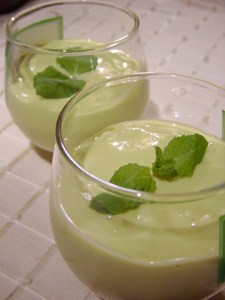

Banana and avocado shake

Avocadoes of course are great raw or mashed in puddings, dips, sauces and drinks for instance, but they are also great cooked!
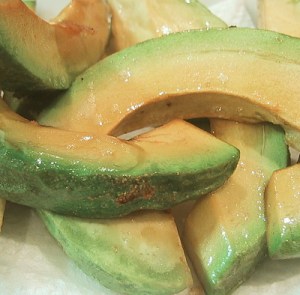
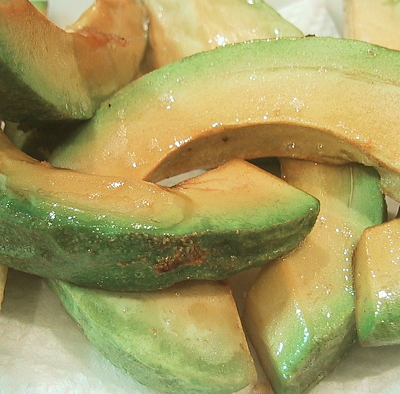
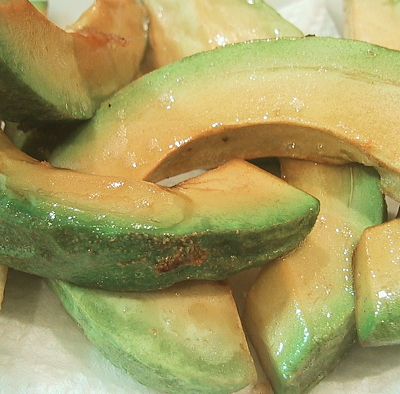
They can deep-fried when unripe (see above picture!).
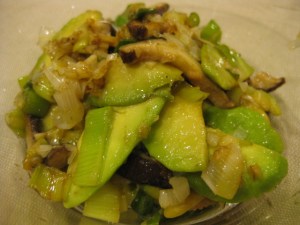
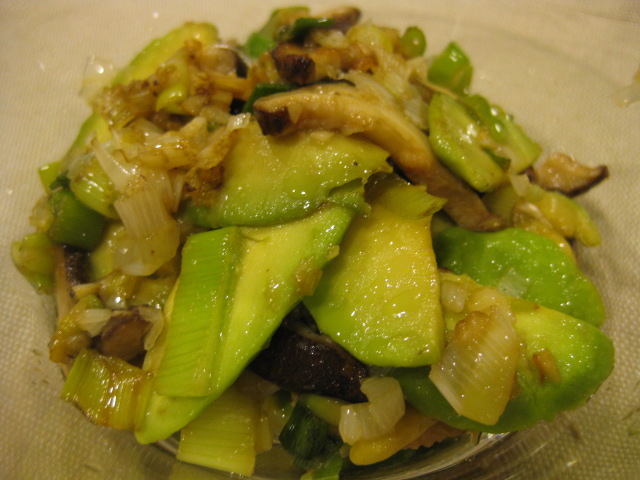
They can be stir-fried in a vegan recipe.
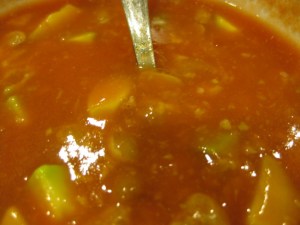
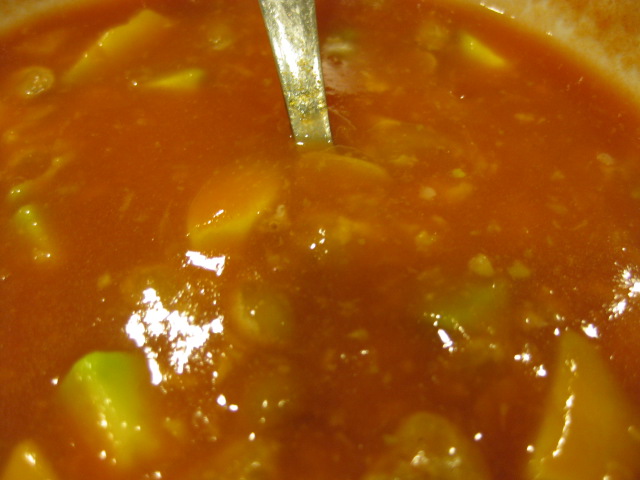
They are great in a vegan gazpacho!
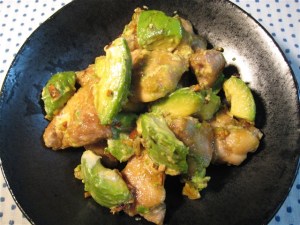
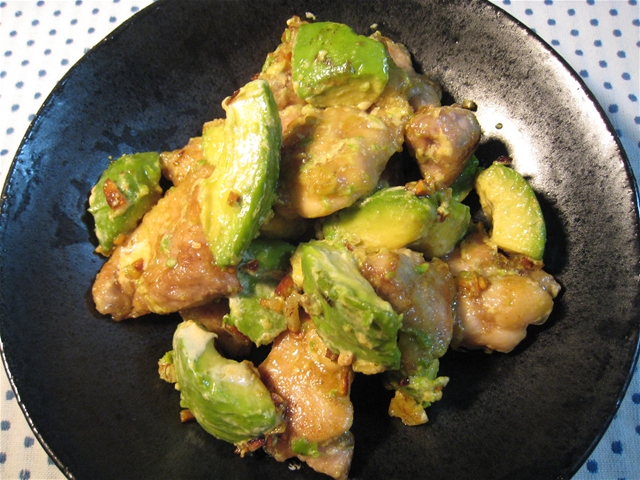
And beautiful stir-fried with chicken!
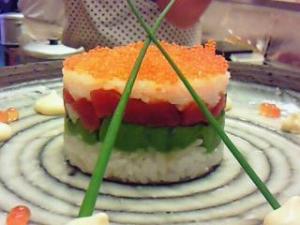
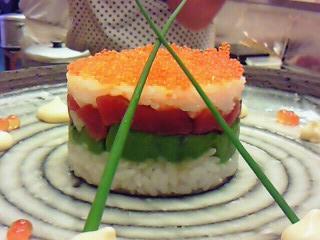
And don’t forget all the possible combinations as sushi!

RECOMMENDED RELATED SITES
Not-Just-Recipes, Bengal cuisine, Cooking Vegetarian, Frank Fariello, Gluten-free Vegan Family, Meatless MamaFrank Fariello, , Warren Bobrow, Wheeling Gourmet, Le Petit Cuisinier, Vegan Epicurean, Miss V’s Vegan Cookbook, Comestiblog, To Cheese or not To Cheese, The Lacquer Spoon, Russell 3, Octopuspie, Bread + Butter, Pegasus Legend, Think Twice

Please check the new postings at:
sake, shochu and sushi, Island Vittles

—————————————-
日本語のブログ
—————————————-

Avocado’s hard! No worries! Deep-fry it!

Coming back to a comment and question about what to do with an avocado you peeled away before realizing it was to hard to prepare for your California Roll, Avocado Soup or Avocado Salad, there is no need to worry.

No worries! as they say in Australia!

The same Australians might be tempted to tease you with a few jokes of their own.
A habit they have is to scream “good nut!” when one of their bowler throws an excellent ball to a befuddled batsman during a cricket match.
The same “nut” could be rightfully construed to another word meaning exactly the same when our yankee friends play “hard ball” at Baseball!

I can hear some of good-natured friends saying that once again the old geezeer is laying on it heavily, but have you heard of the real meaning of the word “avocado” in its country of origin?
About time I stop, or some unwanted spammer will find his/her/its way in!

Alright, you found out your avocado is too hard.
Just peel it completely.
Cut it into appropriate “wedges”.
Sprinkle them with a little salt and deep-fry them as they are for 2 minutes at 180 degrees Celsius.

Serve them with a good beer.
You’ll find they are crispy outside and so sogt inside!
You could sprinkle them with a little lemon juice or some chili powder for more taste.
Plenty of possibilities here. Great snacks for our vegan friends!

RECOMMENDED RELATED SITES
Not-Just-Recipes, Bengal cuisine, Cooking Vegetarian, Frank Fariello, Gluten-free Vegan Family, Meatless MamaFrank Fariello, , Warren Bobrow, Wheeling Gourmet, Le Petit Cuisinier, Vegan Epicurean, Miss V’s Vegan Cookbook, Comestiblog, To Cheese or not To Cheese, The Lacquer Spoon, Russell 3, Octopuspie, Bread + Butter, Pegasus Legend, Think Twice

Please check the new postings at:
sake, shochu and sushi

—————————————-
日本語のブログ
—————————————-

Vegan Japanese Cuisine: Kabocha No Amakarani

Many people in Japan believe that Kabocha originates from Japan.
Actually it was introduced to Asia a long time ago after it was discovered on the American Continent.
Even the etymology is not Japanese as it refers (apparently, but nothing sure about that!) tothe varieties first grown and developped in Cambodia, according to the sam Japanese who can’t enough of them and mostly import them from Tonga, of all places!

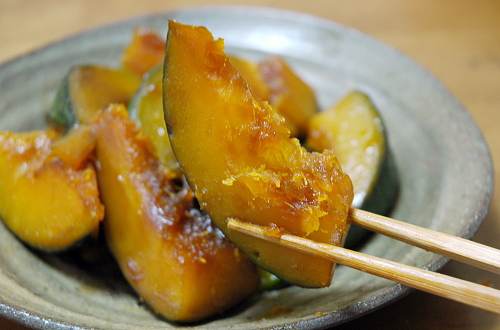
“Kabocha No Amakarani”, or 南瓜の甘辛煮in Japanese means simmered/stewed sweet and spicy kabocha.
It is very easy to make, even if it entails some handiwork. and can be enjoyed by all, vegans or not!

The following recipe bein the basic one, I will keep to the method and leave the exact quantities to your preferences!

RECIPE:

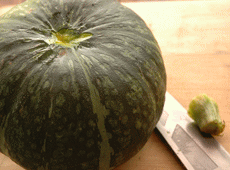
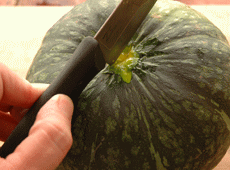
First take the stem end out. It sounds evident, but you will make things hard for you if you skip that simple step!

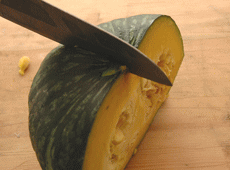
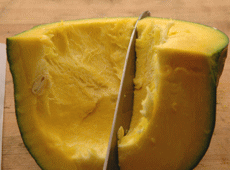
Turn the kabocha over (now you understand why you have taken the stem out?). Cut in half through the middle. Take care not to slip and cut your fingers!

Having cut the kabocha in half, cut it again in half (fourth). The raw kabocha might be hard to cut. There is no need to use brute force. Cut it slowly!

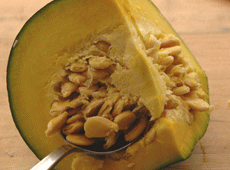
This will make it easy to scoop out (and discard the seeds).

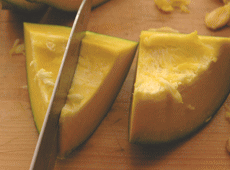
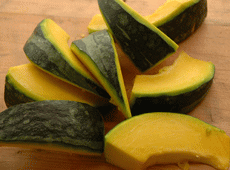
Cut each quarter again across as shown in above picture.

Then cut again as shown in above picture for individual pieces.

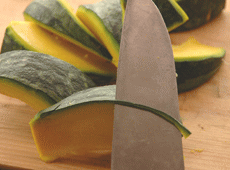
The next step is bit of a pain, but absolutely necessary.
Cut away the skin edges as shown in above picture.
Why?
-1) for a more even cooking.
-2) the edges will turn hard and will be diificult to bite through. You might even cut your lips. Believe me!
-3) the kabocha wedges will not break down upon stewing.

The kabocha wedges as they should be before stewing!

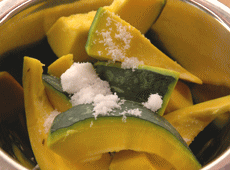
put all the kabocha wedges into a large bowl. Add sugar and mix. Leave it to marinate for at least 3 hours. It will soften the kabocha. It will also enhance the “umami”/taste. Water that will have seeped out will be used when simmering/stewing the kabocha. Don’t throw it away!

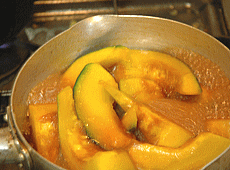
Place the kabocha wedges in a larg pan skin down (at least at first!).
Pour their water on top.
Pour dashi so as to cover them.
See dashi recipe HERE.
Cover with lid and cook for a while over a medium fire.
Once it starts to boil, take off lid and season with a little soy sauce and spices if wanted.
Cover again and stew over a low fire until liquid/juices have disappeared.
Can be eaten hot or cold!

RECOMMENDED RELATED SITES
Not-Just-Recipes, Bengal cuisine, Cooking Vegetarian, Frank Fariello, Gluten-free Vegan Family, Meatless MamaFrank Fariello, , Warren Bobrow, Wheeling Gourmet, Le Petit Cuisinier, Vegan Epicurean, Miss V’s Vegan Cookbook, Comestiblog, To Cheese or not To Cheese, The Lacquer Spoon, Russell 3, Octopuspie, Bread + Butter, Pegasus Legend, Think Twice

Please check the new postings at:
sake, shochu and sushi

—————————————-
日本語のブログ
—————————————-

French Restaurant: Vegetarian Lunch at Tetsuya Sugimoto

Service: excellent and very friendly
Facilities: great washroom, great cleanliness overall
Prices: reasonable, good value.
Strong points: Very fresh local ingredients extensively used. Seasonal ingredients only.

Today is Sunday.
As the Missus has to work (for an orthondontist! You can imagine what I’m going though about to\eeth hygiene!LOL) and that I didn’t any have sports event to worry about, I just went to my office for some “work”.
I was not that hungry when an idea burst into the back of my head: why not check on my good friend Tetsuya Sugimoto? I knew he was getting all kind of supremley delicious vegatables for all over the Prefecture and beyond.
My hunch had been the right one when I saw the vegetables advertized on their blackboard outside!

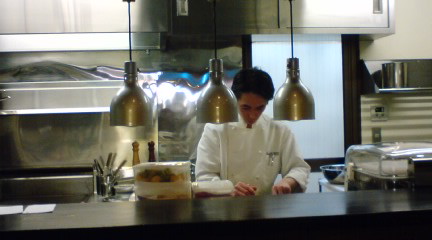
Apart of very comfortable tables and chairs, the restaurant has a beautiful counter where loners (and couples!) can enjoy thir meal almost in semi privacy while ogling at the chef working in his kitchen.

The view from the counter towards the entrance!

The other from the counter looking at Tetsya Sugimoto at work!

Testuya Sugimoto has a wine list all the more remarkable for its very reasonable prices when you consider the taste and combination of the available nectars.
As there was little chance of my guzzling down a full bottle, I just asked for a couple of glass of red wine.

I was served a Bourgogne Pinot Noir 2007 by Chanson et Freres.
A bit young and tannic, but just what I needed!

Now, I didn’t even bother looking at the Sunday Lunch menu and set Courses. I had made sure to come late enough not to interfere with the restaurant’s business and asked Tetsuya in person (if you know him, he is very amenable and will accomodate all your priorities) what he could do with allthe vegetables he had on hand.
“OK!” was the terse reply, but he had realized that I had seen what vegetables were on offer!

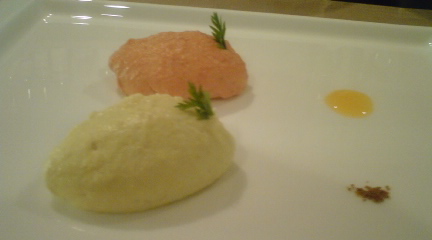
The little appetizer above is a combination of two different carrot mousses, red Kyo ninjin and yellow Kyo ninjin (Kyo stands for Kyoto-style, Ninjin for carrots) grown in Hamamatsu city. A dessert if there was one!

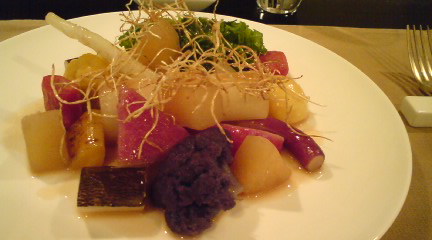
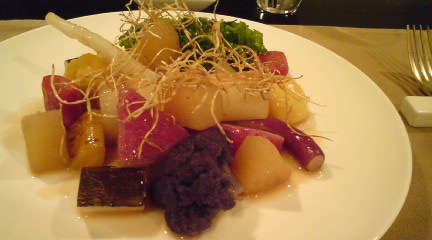
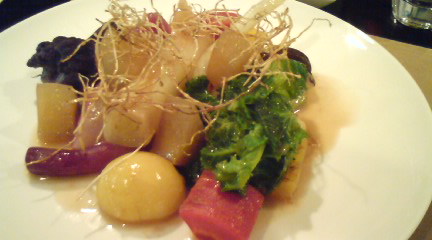
And then came the “platter” of sauteed vegetables!

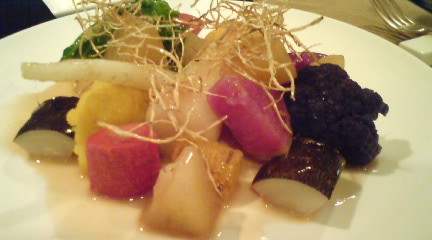
Viewed at a different angle!

And viewed form another angle again!

Testuya explained to me that all the vegetables were sauteed with a little oil, salt and pepper only. The sauce was formed nturally with water and the vegetables juices! Vegans, rejoice!

Now the vegetables were:
Yacon, Kuro Daikon (black-skinned daikon), Yellow and Violet Cauliflower, Aka Kyoninjin (red Kyoto-style carrots), Kiiro Kyoninjin (yellow Kyoto-style carrots), Hina no Kabu/long thin red and white turnip, Petit Vert Lettuce, Shiroi Kabu/White round turnips, andLeek/Poireau from Mr. Matsuki’s Biofarm in Shibakawa-Cho at the foot of Mount Fuji (the other vegetables are from Hamamatsu City).

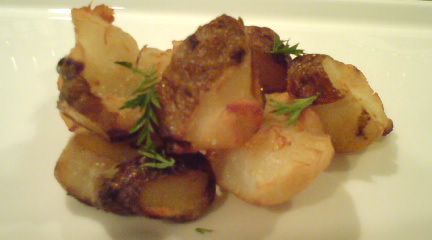
Testyya belatedly he had forgotten to include the topinambours from Hokkaido Island! He then prepared a small plate of sauteed topinambour in olive oil. Absolutely gorgeous!

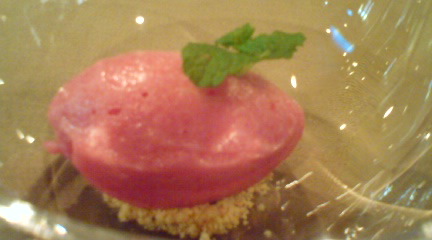
The deseert was a beautiful sorbet made with late-ripening apples from Hokkaido. The texture was reminiscent of apple compote. Delicious!

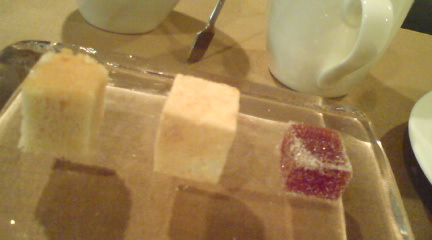
Coffee and mignardises!

For a better view of the mignardises!

My, my, now how much did you pay for that? You might ask.
40 US $, wine, coffe, bread and butter included!
I was so embarrassed I left a 10 US $ tip!

Tetsuya SUGIMOTO
420-0038 Shizuoka Shi, Aoi Ku, Umeya, 2-13, 1F
Tel./Fax: 054-251-3051
Open for lunch and dinner
Vegetarian and Vegan courses on order
Closed on Wednesdays
Credit Cards OK

RECOMMENDED RELATED SITES:
Bread + Butter, Comestilblog, Greedy Girl, Bouchon For 2, Zoy Zhang, Hungry Neko, Mangantayon, Elinluv Tidbit Corner, Maison de Christina, Chrys Niles, Lexi, Culinary Musings, Eats and Everything, Bite Me New England, Heather Sweet, Warren Bobrow, 5 Star Foodie, Frank Fariello, Oyster Culture, Ramendo, Alchemist Chef, Ochikeron, Mrs. Lavendula, The Gipsy Chef, Spirited Miu Flavor, Wheeling Gourmet, Chef de Plunge, Sushi Nomads, Chuckeats, Not-Just-Recipes, Bengal cuisine, Cooking Vegetarian, Gluten-free Vegan Family, Meatless Mama, Le Petit Cuisinier, Vegan Epicurean, Miss V’s Vegan Cookbook, To Cheese or not To Cheese, The Lacquer Spoon, Russell 3, Octopuspie, Pegasus Legend, Gourmet Fury

Please check the new postings at:
sake, shochu and sushi

—————————————-
日本語のブログ
—————————————-

Vegan Japanese Cuisine: Gazpacho

Gazpacho is a world popular cold Spanish tomato-based raw vegetable soup, originating in the southern region of Andalusia. Gazpacho is widely consumed throughout Spain, neighboring Portugal (where it is known as gaspacho) and parts of Latin America.

But sometimes vegans have some edifficulty in reproducing it according to their preferences.
Here is a simple Japanese version using natto and avocado that any vegans and vegetarians can enjoy!
Actually the Japanese believe that Gazpacho is beneficial to human skin!

Vegan Japanese Gazpacho

INGREDIENTS:

-Tomato juice: 1 standard can (of course you can/may prepare your own from organic tomatoes!)
-Natto: 1 standard pack: 50 g
-Avocado: 1 half (Jenn, asked me how to proceed to prevent avocado from chamging colour. Simple. sprinkleit with lemonjuice!)
-Garlic: 2 cloves
-Sesame oil: a little
-Salt and pepper to taste
-Optional spices (chili, nutmeg, etc.)
-Optional Vegetables (celery, coriander, etc.)

RECIPE:

-Cut avocado in pieces. Grate garlic.

-Mix the natto wll with a little sesame oil.

-In a large bowl pour the tomato juice and natto. Add salt, pepper and spices.

3- Heat the whole for 1 minute.

4. Let cool completely and leave in refrigerator.
Eat/drink chilled topped with some freshly cut greens.

RECOMMENDED RELATED SITES
Not-Just-Recipes, Bengal cuisine, Cooking Vegetarian, Frank Fariello, Gluten-free Vegan Family, Meatless MamaFrank Fariello, , Warren Bobrow, Wheeling Gourmet, Le Petit Cuisinier, Vegan Epicurean, Miss V’s Vegan Cookbook, Comestiblog, To Cheese or not To Cheese, The Lacquer Spoon, Russell 3, Octopuspie, Bread + Butter, Pegasus Legend, Think Twice

Please check the new postings at:
sake, shochu and sushi

—————————————-
日本語のブログ
—————————————-

Vegan Japanese Cuisine: Sauteed Avocado

Avocadoes are great and versatile vegetables/fruits that can be combined in so many ways.
They also have the marked advantage to provide much-needed calories and beneficial ingredients.

Here is a simple but hearty way to prepare them:

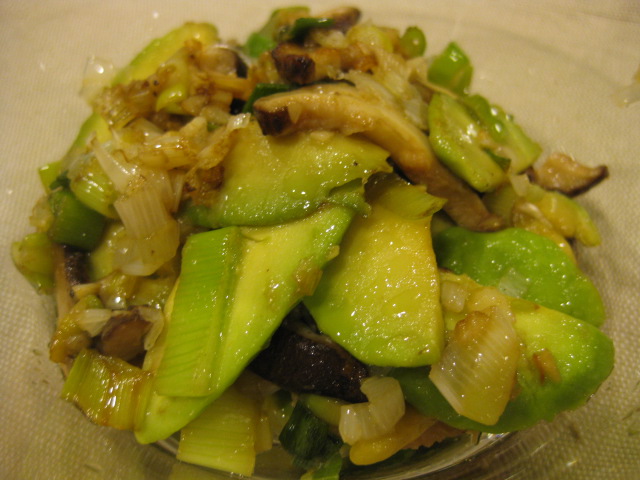
Sauteed Avocado!

INGREDIENTS: For one person (can be multiplied accordingly!)

-Avocado: 1 half
-Long leeks: 1 half, chopped
-Shiitake: 3 (fresh)
-Sesame oil: 2 tablespoons
-Soy sauce: 1.5 tablespoons

RECIPE:

-Cut the avocado in proper (to your liking) size pieces. Do the same with the shiitake. Chop the leeks finely

-in a frypan pour the sesame oil and fry the leeks first.

-Add the shiitake and fry to satisfaction. Add avocado and soy sauce and turn the whole in the frypan a few times.

-Lastly season with black pepper and serve.

NOTE:

-If you happen to have unripe and hard avocado, fry them first until crispy outside. You’ll find out they’ll be very soft inside.
-For extra seasoning you may use chillies or curry powder!

RECOMMENDED RELATED SITES
Not-Just-Recipes, Bengal cuisine, Cooking Vegetarian, Frank Fariello, Gluten-free Vegan Family, Meatless MamaFrank Fariello, , Warren Bobrow, Wheeling Gourmet, Le Petit Cuisinier, Vegan Epicurean, Miss V’s Vegan Cookbook, Comestiblog, To Cheese or not To Cheese, The Lacquer Spoon, Russell 3

Please check the new postings at:
sake, shochu and sushi

—————————————-
日本語のブログ
—————————————-
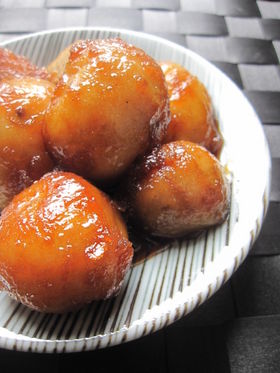
Vegan Japanese Deep-fried Taro/Sato Imo Age

Taro or Sato Imo in Jpaanese, can also for some great and hearty dishes for c\vegans and vegetarians, too!

Hre is a very simple recipe that can be enjoyed by all!
As for the Dashi, or Jpanese soup stock, check HERE for the basic recipe!

INGREDIENTS: For 4 people

-Taro/Sato imo: 16 small
-Dashi: 4 tablespoons
-Mirin/Sweet sake: 4 tablespoons
-Soy sauce: 3 tablespoons
-Sugar: 2 teaspoons
-Oil for deepfrying

RECIPE:

-Clean the taro/sato imo quickly.
Boil them in water for 15 minutes.
Peel them.

-Heat the deep frying oil to 170 degrees Celsius and deep fry the taro/sato imo until they obtain a nice brownish colour.

-In a pan drop dashi, mirin, soy sauce and sugar and heat (and stir) until the sugar has completely dissolved. Transfer the taro/sato imo into the pan and cook for a while in the sauce.

-Simmer until the sauce has reached a thick consistence.
Serve at once.
A few chopped greens would make for a good seasoning.
You may add spices of your liking to the sauce (grated ginger, chilies, etc.).

RECOMMENDED RELATED SITES
Not-Just-Recipes, Bengal cuisine, Cooking Vegetarian, Frank Fariello, Gluten-free Vegan Family, Meatless MamaFrank Fariello, , Warren Bobrow, Wheeling Gourmet, Le Petit Cuisinier, Vegan Epicurean, Miss V’s Vegan Cookbook, Comestiblog, To Cheese or not To Cheese, The Lacquer Spoon, Russell 3

Please check the new postings at:
sake, shochu and sushi

—————————————-
日本語のブログ
—————————————-
Vegan White Miso Soup

As promised, back to my vegan and vegetarian friends to whom I promised this series of dashi-based (for most of them) soups (and other dishes).
Miso is increasingly becoming popular.
Check the miso posting!
And check the dashi posting, too!

Vegan White Miso Soup!

INGREDIENTS: For one person

-Egg-plant/aubergine: 1 half
-Onion: 1/4 (sliced)
-Konbu dashi/seaweed soup stock: 1 cup/ 200cc/ml
-White miso paste: 1 tablespoon
-White leek cut into very fine strips for decoration and finishing taste point

RECIPE:

1-Cut the egg-plant/aubergine into thin slices. Wash in water.

2-Pour some oil in a frypan and fry the egg-plant/aubergines slices until both sides are slightly brown.

3-Pour the konbu dashi into a pan. Add the sliced onion and simmer for a while until onuon are soft enough.

4-Add fried egg-plant/aubergines. Add and mix in white miso paste.

5-Serve in a bowl with chopped white leeks.

NOTE:

The miso contains enough salt, so no need to add any really.
I also add ground sesame seeds before serving.
One can add some sesame oil when frying the egg-plants/aubergines.
Add spices according to preferences.

RECOMMENDED RELATED SITES
Not-Just-Recipes, Bengal cuisine, Cooking Vegetarian, Frank Fariello, Gluten-free Vegan Family, Meatless MamaFrank Fariello, , Warren Bobrow, Wheeling Gourmet, Le Petit Cuisinier, Vegan Epicurean, Miss V’s Vegan Cookbook, Comestiblog, To Cheese or not To Cheese, The Lacquer Spoon, Russell 3

Please check the new postings at:
sake, shochu and sushi

—————————————-
日本語のブログ
—————————————-