Tag Archives: Vegatarian

Japanese Vegetarian & Vegan Cakes: Wagashi/和菓子6: Creation 2-Sakura Mochi (& Recipe!)

WAGASHI-SAKURA-MOCHI-2

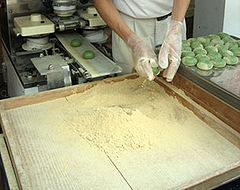
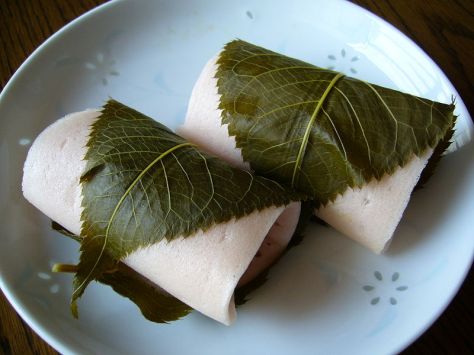
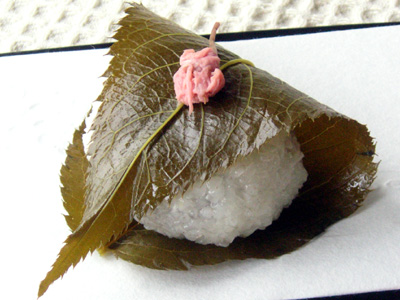
Sakura Mochi (桜餅) is a variety of wagashi, or Japanese confectionery consisting of a sweet pink mochi (rice cake) and red bean paste, covered with a leaf of sakura (cherry blossom).

Sakura Mochi (桜餅) or Cherry Blossom Mochi has been popular all over Japan since the beginning of gastronomy in the Land of the Rising Sun.
The style of Sakura Mochi differs with the regions in Japan.
Basically, the east of Japan such as Tokyo uses shiratama-ko (白玉粉/ rice flour) and the west side such as Kansai uses dōmyōji-ko (道明寺粉/glutinous rice flour) for “batter”.
WAGASHI-SAKURA-MOCHI
Anko is folded inside a mochi sheet and again inside an edible cherry tree leaf.
WAGASHI-SAKURA-MOCHI-3

Here the anko is inside white mochi, then folded in cherry tree leaf and topped with an edible cherry flower.

WAGASHI-SAKURA-MOCHI-4

A smaller, very cute Sakura Mochi: the colored mochi contains anko and is presented inside an edible cherry tree leaf.

WAGASHI-SAKURA-MOCHI-5

Sakura mochi as sold over the counter in the Kansai/West Japan Region.
They are also called Sakura Dango/Cherry Balls (no comment, please!LOL)

SIMPLE RECIPE
This recipe is for making Western-style sakuramochi. Serves 8.

INGREDIENTS:
3/4 cup glutinous rice flour
1/3 cup sugar
1 cup water
3/4 cup red bean paste
red food coloring (optional)
8 sakura leaves pickled in salted water

PREPARATION:
Wash pickled sakura leaves and dry.
Boil water in a pan.
Mix glutinous flour in the water.
Cover the pan with a lid and leave it for 5 minutes.
Place a wet cloth in a steamer and put the dough on the cloth.
Steam the dough for about 20 minutes over medium heat.
Remove the steamed dough to a bowl.
Mash the dough slightly with a wooden pestle, mixing sugar into the dough.
Dissolve a little bit of red food color in some water.
Add some of the red water in the dough and mix well.
Divide the pink mochi into 8 balls.
Flaten each mochi ball by hands and place red bean paste filling on the dough.
Wrap the filling with mochi and rounds by hands.
Wrap each mochi with a sakura leaf.

RECOMMENDED RELATED WEBSITES

With a Glass,
Clumsyfingers by Xethia
Adventures in Bento Making, American Bento, Beanbento, Bento No1, Bento Wo Tsukurimashou, Cooking Cute, Eula, Hapabento , Happy Bento, Jacki’s Bento Blog, Kitchen Cow, Leggo My Obento, Le Petit Journal Bento & CO (French), Lunch In A Box, My Bento Box, Vegan Lunch Box; Tokyo Tom Baker, Daily Food Porn/Osaka, Only Nature Food Porn, Happy Little Bento, The Herbed Kitchen, J-Mama’s Kitchen, Cook, Eat, Play, Repeat; Bento Lunch Blog (German); Adventures In Bento; Anna The Red’s Bento Factory; Cooking Cute; Timeless Gourmet; Bento Bug; Ideal Meal; Bentosaurus; Mr. Foodie (London/UK); Ohayo Bento

Must-see tasting websites:

-Sake: Tokyo Through The Drinking Glass, Tokyo Foodcast, Urban Sake, Sake World
-Wine: Palate To Pen, Warren Bobrow, Cellar Tours, Ancient Fire Wines Blog
-Beer: Good Beer & Country Boys, Another Pint, Please!
-Japanese Pottery to enjoy your favourite drinks: Yellin Yakimono Gallery
Japanese Vegetarian & Vegan Cakes: Wagashi/和菓子5: Creation 1-Birthday Cake

WAGASHI-VARIETIES-1

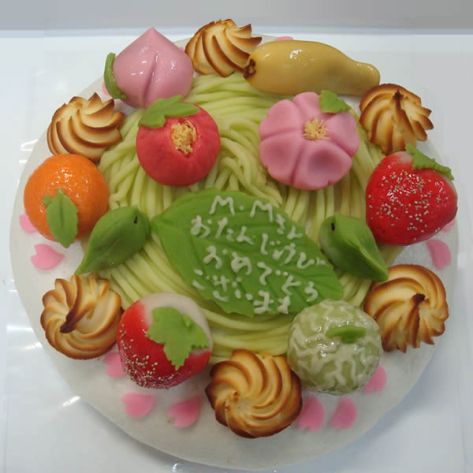
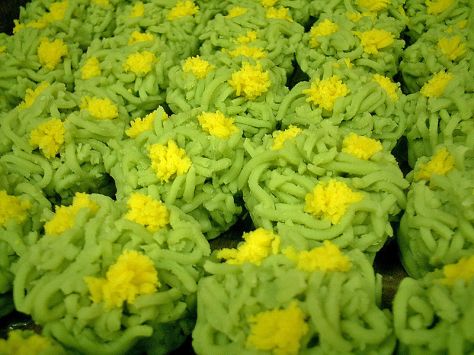
Here is an example of what could be done by a Japanese chef as Wagashi/Japanese Cake!
This particular Birthday Cake creation is the work of Chef Maeda at Kouseido in Osaka City!
Will look around and post other creations whenever I can!

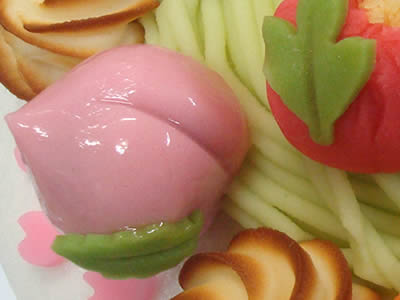
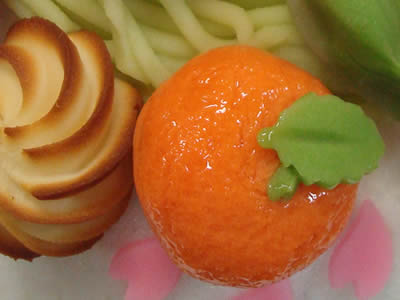
Here is a breakdown of the above:

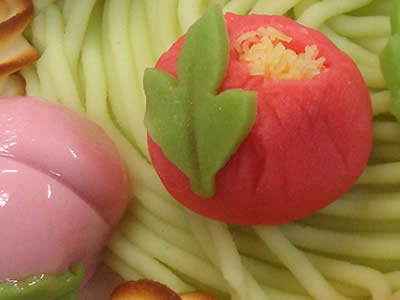
WAGASHI-VARIETIES-MOMO

“Momo”/Peach

WAGASHI-VARIETIES-MIKAN

“MIkan”/Orange

WAGASHI-VARIETIES-TSUBAKI

“Tsubaki”/Camelia

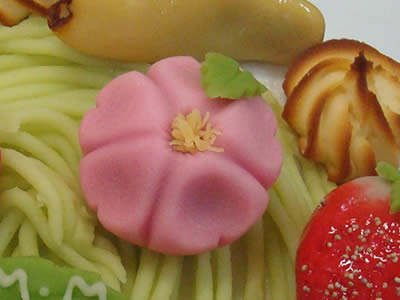
WAGASHI-VARIETIES-SAKURA

“Sakura”/Cherry Blossom

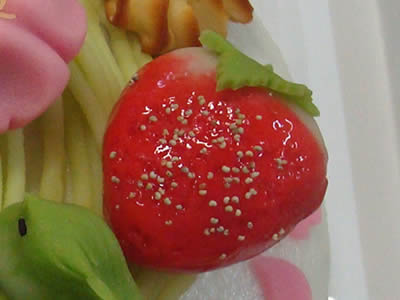
WAGASHI-VARIETIES-ICHIGO

“Ichigo”/Strawberry

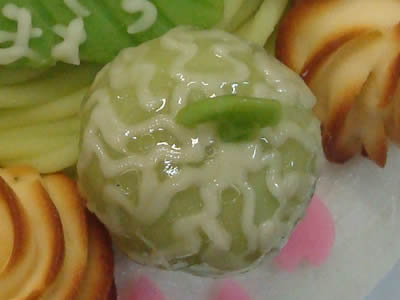
WAGASHI-VARIETIES-MELON

“Meron”/Melon

RECOMMENDED RELATED WEBSITES

With a Glass,
Clumsyfingers by Xethia
Adventures in Bento Making, American Bento, Beanbento, Bento No1, Bento Wo Tsukurimashou, Cooking Cute, Eula, Hapabento , Happy Bento, Jacki’s Bento Blog, Kitchen Cow, Leggo My Obento, Le Petit Journal Bento & CO (French), Lunch In A Box, My Bento Box, Vegan Lunch Box; Tokyo Tom Baker, Daily Food Porn/Osaka, Only Nature Food Porn, Happy Little Bento, The Herbed Kitchen, J-Mama’s Kitchen, Cook, Eat, Play, Repeat; Bento Lunch Blog (German); Adventures In Bento; Anna The Red’s Bento Factory; Cooking Cute; Timeless Gourmet; Bento Bug; Ideal Meal; Bentosaurus; Mr. Foodie (London/UK); Ohayo Bento

Must-see tasting websites:

-Sake: Tokyo Through The Drinking Glass, Tokyo Foodcast, Urban Sake, Sake World
-Wine: Palate To Pen, Warren Bobrow, Cellar Tours, Ancient Fire Wines Blog
-Beer: Good Beer & Country Boys, Another Pint, Please!
-Japanese Pottery to enjoy your favourite drinks: Yellin Yakimono Gallery
Japanese Vegetarian & Vegan Cakes: Wagashi/和菓子4: Recipe-Mochi

WAGASHI-SAKURA-MOCHI
Wagashi/Sakura Mochi

Mochi/餅 is probably the most ancient sweet/cake confectioned by humans in Japan as its main ingredient is glutinous rice.
It is the more popular as it can be eaten and made all year round.
Kinako/黄粉 is a powder made from roasted soy beans (next article).
The combination of the two and other ingredients such as sweetmeats/anko/餡子, also made from soy beans, make for a valuable, tasty and nourishing food!
Read notes below!

Here is a simple way to make mochi.
Bear in mind that mochi can be eaten fresh as it is, especially with wagashi cakes, and that it can be mixed with other ingredients for colouring. It can be also dried and grilled and also included in soups and other recipes such as mochi pizza!

INGREDIENTS:
Glutinous rice: 3 go (Japanese measure): 540 cc (2.8 cups)
Kinako (to taste)

Notes on kinako and glutinous rice:

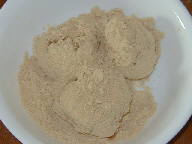
MOCHI-KINAKO

Kinako (黄粉 or きなこ), also known as soybean flour, is a product commonly used in Japanese cuisine. In order to create the soybean flour, soybeans are toasted and ground into powder. Its flavor is commonly compared to that of peanut butter.

Kinako, being composed of soybeans, is a healthy topping and flavoring which contains B vitamins and protein. It can also be used as a drink;. For example, warabi mochi is a famous kinako-covered sweet.

I will introduce a recipe soon!

MOCHI-TRADITIONAL

Glutinous rice (Oryza sativa var. glutinosa or Oryza glutinosa; also called sticky rice, sweet rice, waxy rice, botan rice, biroin chal, mochi rice, and pearl rice) is a type of short-grained Asian rice that is especially sticky when cooked. It is called glutinous (Latin glūtinōsus) in the sense of being glue-like or sticky and not in the sense of containing gluten; on the other hand, it is called sticky but should not be confused with the other varieties of Asian rice that become sticky to one degree or another when cooked.

RECIPE:

MOCHI-1
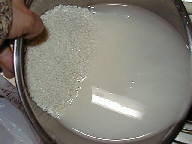
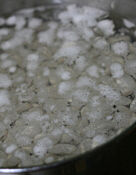
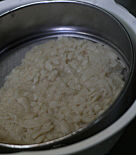
Wash the rice and let it soak in water overnight.

MOCHI-2
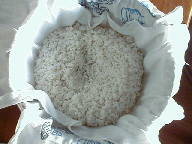
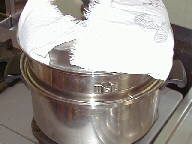
Pour water in steamer. Bring to boil. Set a clean cloth inside. Drain rice. Pour rice inside cloth. Dig a “well” in the middle for better cooking.

MOCHI-3
Steam over a medium fire for 20~25 minutes.

MOCHI-4
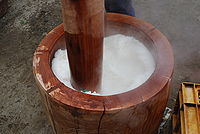
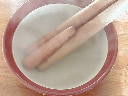
Pour hot water inside pestle bowl and leave the wooden sticks inside water for long enough to have all of them well impregnated with water. Throw water away just before next step. This will insure a better mochi!

MOCHI-5
Check rice for an even cooking. No water should be left or the mochi will be runny. If you make a small quantity, softer rice than usual is better as it will tend to dry faster than a large quantity.

MOCHI-6
Now this is the hard part!
You will need three adults to press hard on the rice with the wooden sticks at the same time to crush the rice completely. It might take as long as 10 minutes.

MOCHI-7
Now that the rice has been softened, one can continue on his own or work in shifts. Pound the rice in the middle 10 times. Turn over the rice from outside to inside and continue always around the clock.
Important: always pound in the middle, never on the sides or you will break the bowl!

MOCHI-8
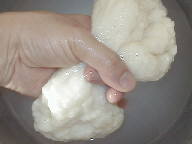
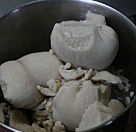
That is how it should look. Make balls by twisting rice out.

MOCHI-9
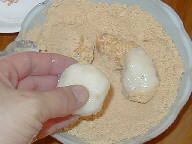
Roll mochi in kinako mixed with sugar to taste. They are ready to be eaten!

MOCHI-10
This is how they are served in Japan for children (and adults!)

MOCHI-11
If you want to preserve them for a while before eating, roll them in rice powder. Rice powder will come in useful if you want to fashion the mochi into thin sheets or else.

MOCHI-12
That is how they look grilled!

RECOMMENDED RELATED WEBSITES

With a Glass,
Clumsyfingers by Xethia
Adventures in Bento Making, American Bento, Beanbento, Bento No1, Bento Wo Tsukurimashou, Cooking Cute, Eula, Hapabento , Happy Bento, Jacki’s Bento Blog, Kitchen Cow, Leggo My Obento, Le Petit Journal Bento & CO (French), Lunch In A Box, My Bento Box, Vegan Lunch Box; Tokyo Tom Baker, Daily Food Porn/Osaka, Only Nature Food Porn, Happy Little Bento, The Herbed Kitchen, J-Mama’s Kitchen, Cook, Eat, Play, Repeat; Bento Lunch Blog (German); Adventures In Bento; Anna The Red’s Bento Factory; Cooking Cute; Timeless Gourmet; Bento Bug; Ideal Meal; Bentosaurus; Mr. Foodie (London/UK); Ohayo Bento

Must-see tasting websites:

-Sake: Tokyo Through The Drinking Glass, Tokyo Foodcast, Urban Sake, Sake World
-Wine: Palate To Pen, Warren Bobrow, Cellar Tours, Ancient Fire Wines Blog
-Beer: Good Beer & Country Boys, Another Pint, Please!
-Japanese Pottery to enjoy your favourite drinks: Yellin Yakimono Gallery
Japanese Vegetarian & Vegan Cakes: Wagashi/和菓子3: Recipe-Shiro Anko/White Sweetmeats

WAGASHI-SHIROANKO-1

In my previous article, I introduced the recipe for “red sweetmeats” or just “anko” in Japanese, an important ingredients in Wagashi.
But the red/violet colour is not always wanted.
Another popular way to make anko is to use “ingen mame”/kidney beans (US), or string/French beans (Europe).
Note that soy beans/”daizu” are not used in this recipe!
The advantage are multiple, as the “white” (actually beige) colour can be modified by adding green peas (green), pumpkin (yellow or orange), fruit pulp from papaya and mango (orange). Variations are practically unlimited!

INGREDIENTS:
Kidney beans: 500g
Sugar: 400g
Salt: three small pinches

RECIPE:

WAGASHI-SHIROANKO-2
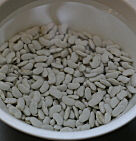
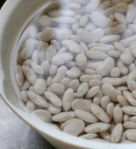
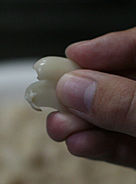
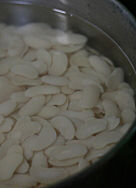
Put beans with 3 times their volume of water in a large pan. Let soak for two nights. Change water twice a day.

WAGASHI-SHIROANKO-3
Beans should have lost their “wrinkles” by then.

WAGASHI-SHIROANKO-b
Bring water to boil over strong fire. Simmer for 5 minutes over medium fire.

WAGASHI-SHIROANKO-4
Drain water, making sure beans don’t dry up. The skin of the beans should peel off easily. Take skins and dark spots away.

WAGASHI-SHIROANKO-5
Simmer again peeled beans until they get soft and start breaking up. Start on a strong fire to bring to boil, then lower to medium fire.

WAGASHI-SHIROANKO-6
Heat until most of the water has evaporated. Beans will pass through sieve more easily.

WAGASHI-SHIROANKO-7
Pass all the beans through the sieve. Wash and dry the pan.

WAGASHI-SHIROANKO-8
Add sugar to sieved beans and stir/mix over low fire.

WAGASHI-SHIROANKO-9
Sugar becoming liquid upon heating will give a watery aspect to the mixture. Heat over low fire, stirring all the time for 25 minutes.

WAGASHI-SHIROANKO-10
Once satisfied with the paste consistency, add salt, mix and stop fire.

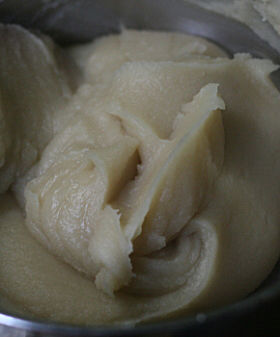
WAGASHI-SHIROANKO-11
Transfer to another dish for preserving until use. Do it at once while it is still hot.
Make sure it does not dry up.
Cover with a lid.
If lid does not close well enough, wrap the whole into cellophane paper.

RECOMMENDED RELATED WEBSITES

With a Glass,
Clumsyfingers by Xethia
Adventures in Bento Making, American Bento, Beanbento, Bento No1, Bento Wo Tsukurimashou, Cooking Cute, Eula, Hapabento , Happy Bento, Jacki’s Bento Blog, Kitchen Cow, Leggo My Obento, Le Petit Journal Bento & CO (French), Lunch In A Box, My Bento Box, Vegan Lunch Box; Tokyo Tom Baker, Daily Food Porn/Osaka, Only Nature Food Porn, Happy Little Bento, The Herbed Kitchen, J-Mama’s Kitchen, Cook, Eat, Play, Repeat; Bento Lunch Blog (German); Adventures In Bento; Anna The Red’s Bento Factory; Cooking Cute; Timeless Gourmet; Bento Bug; Ideal Meal; Bentosaurus; Mr. Foodie (London/UK); Ohayo Bento

Must-see tasting websites:

-Sake: Tokyo Through The Drinking Glass, Tokyo Foodcast, Urban Sake, Sake World
-Wine: Palate To Pen, Warren Bobrow, Cellar Tours, Ancient Fire Wines Blog
-Beer: Good Beer & Country Boys, Another Pint, Please!
-Japanese Pottery to enjoy your favourite drinks: Yellin Yakimono Gallery
Japanese Vegetarian & Vegan Cakes: Wagashi/和菓子2: Recipe-Anko/Sweetmeats

WAGASHI-4

One main ingredients in traditional Wagashi/Japanese Cakes is “anko/餡子” (or more simply “an”) which can be translated as “sweetmeats” or “bean jam”.

I would like here to introduce a simple way to make one’s own “anko” at home:

INGREDIENTS:

Azuki/Adzuki/red beans (in Japanese: 小豆): 150 g
Sugar: 150g
Salt: a little

RECIPE:

a) Wash azuki lightly. Put in a large basin with an equal amount of water and turn on heat to high.

b) Bring to boil. If beans level is higher that of water, add water till beans are completely covered. Let simmer. Add water 2 or 3 times as soon as the water does not cover completely the beans and this until beans stop floating on water.

c) Drain beans, put them back into basin with same amount of water and turn fire to high. Repeat a) operation.

d) Cook as c) for 40~60 minutes.

e) Mash azuki beans lightly. Add sugar. Simmer and stir to mix, making sure the jam does not overboil.

f) Add a little salt (to your taste) and mix.
Let cool completely.
You can eat it as it is of course, but you will need it to make your cakes!
You can either sieve it to make it a very fine paste, sieve a part and mix it with the unsieved part, or use it as it is. In any case it will be easy to fashion!

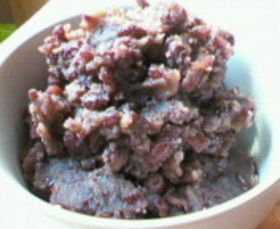
WAGASHI-ANKO

RECOMMENDED RELATED WEBSITES

With a Glass,
Clumsyfingers by Xethia
Adventures in Bento Making, American Bento, Beanbento, Bento No1, Bento Wo Tsukurimashou, Cooking Cute, Eula, Hapabento , Happy Bento, Jacki’s Bento Blog, Kitchen Cow, Leggo My Obento, Le Petit Journal Bento & CO (French), Lunch In A Box, My Bento Box, Vegan Lunch Box; Tokyo Tom Baker, Daily Food Porn/Osaka, Only Nature Food Porn, Happy Little Bento, The Herbed Kitchen, J-Mama’s Kitchen, Cook, Eat, Play, Repeat; Bento Lunch Blog (German); Adventures In Bento; Anna The Red’s Bento Factory; Cooking Cute; Timeless Gourmet; Bento Bug; Ideal Meal; Bentosaurus; Mr. Foodie (London/UK); Ohayo Bento

Must-see tasting websites:

-Sake: Tokyo Through The Drinking Glass, Tokyo Foodcast, Urban Sake, Sake World
-Wine: Palate To Pen, Warren Bobrow, Cellar Tours, Ancient Fire Wines Blog
-Beer: Good Beer & Country Boys, Another Pint, Please!
-Japanese Pottery to enjoy your favourite drinks: Yellin Yakimono Gallery
Japanese Vegetarian & Vegan Cakes: Wagashi/和菓子1: Introduction

WAGASHI-1

There is a traditional way of making cakes in Japan that ought to please no end vegans and people allergic to wheat flour and dairy products, namely Wagashi!

Wagashi (和菓子) is a traditional Japanese confectionery which is often served with tea, especially the types made of mochi, azuki bean paste, and fruits.

Wagashi is typically made from natural based (mainly plant) ingredients. The names used for wagashi commonly fit a formula—a natural beauty and a word from ancient literature; they are thus often written with hyōgaiji (kanji that are not commonly used or known), and are glossed with furigana.

Generally, confectioneries that were introduced from the West after the Meiji Restoration (1868) are not considered wagashi. Most sorts of Okinawan confectionery and those originating in Europe or China that use ingredients alien to traditional Japanese cuisine, e.g., kasutera, are only rarely referred to as wagashi.

WAGASHI-2
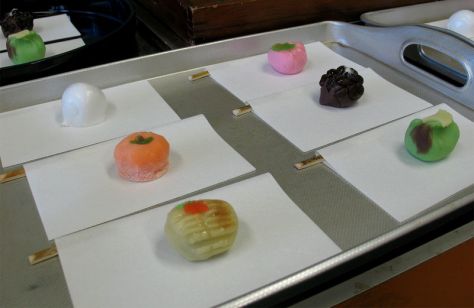
Assortment of wagashi for a tea ceremony

During the Edo period, the production of sugarcane in Okinawa became highly productive, and low quality brown sugar as well as heavily processed white sugar became widely available. A type of sugar, wasanbon, was perfected in this period and is still used exclusively to make wagashi. Wagashi was a popular gift between samurai, in significance much like a good wine. Wagashi is served as part of a Japanese tea ceremony, and serving a good seasonal wagashi shows one’s educational background.

WAGASHI-3
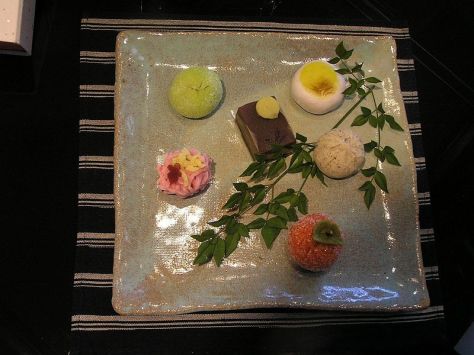
Wagashi in the shape of rape flowers/Na no Hana

There are many, many kinds of Wagashi.
I will (re-)introduce them in the next postings, followed by other postings on the basic preparation.

WAGASHI-ABEKAWAMOCHI-2
Shizuoka’s Abekawa Mochi

Just know that about every region in Japan has its own traditional Wagashi!

Avaibility:
Wagashi is widely available in Japan, but quite rare outside it.
Minamoto Kitchoan (源 吉兆庵)
Has a varied selection, and stores in New York City (shipping throughout the US), London (shipping throughout Europe), and Singapore, in addition to Japan.
Toraya (とらや)
Has a full Paris store, stores in Japan, and sells a limited selection (yōkan only) at New York stores.
Fugetsu-do
Family owned and operated in the USA, since 1903, Fugetsu-do now ships anywhere in the USA.

RECOMMENDED RELATED WEBSITES

With a Glass,
Clumsyfingers by Xethia
Adventures in Bento Making, American Bento, Beanbento, Bento No1, Bento Wo Tsukurimashou, Cooking Cute, Eula, Hapabento , Happy Bento, Jacki’s Bento Blog, Kitchen Cow, Leggo My Obento, Le Petit Journal Bento & CO (French), Lunch In A Box, My Bento Box, Vegan Lunch Box; Tokyo Tom Baker, Daily Food Porn/Osaka, Only Nature Food Porn, Happy Little Bento, The Herbed Kitchen, J-Mama’s Kitchen, Cook, Eat, Play, Repeat; Bento Lunch Blog (German); Adventures In Bento; Anna The Red’s Bento Factory; Cooking Cute; Timeless Gourmet; Bento Bug; Ideal Meal; Bentosaurus; Mr. Foodie (London/UK); Ohayo Bento

Must-see tasting websites:

-Sake: Tokyo Through The Drinking Glass, Tokyo Foodcast, Urban Sake, Sake World
-Wine: Palate To Pen, Warren Bobrow, Cellar Tours, Ancient Fire Wines Blog
-Beer: Good Beer & Country Boys, Another Pint, Please!
-Japanese Pottery to enjoy your favourite drinks: Yellin Yakimono Gallery
Japanese Vegetarian & Vegan Cuisine Ingredient: Yomogi!

“Yomogi”, also called “Mochigusa” (mochi grass) has been picked, used and grown for ages in most of this country, first as a medicinal herb and second for food.
Its latin name is “Artemisia princeps”. It mainly grows in mountains on sun-exposed slopes. Not to be confused with “niga-yomogi”, the Japanese name for thujone, e.g. absinthe!

Preparation of wagashi/Japanese cakes made with rice flour, yomogi and anko/sweetmeats!

It blooms in June~July. Farmers have long used its roots as medicine, after pressing water out and drying them.
The leaves are considered to help against lack of appetite, thin blood, stomach colds, diarrhea, nose bleed, constipation and gout. They are aslo extensively used in baths.
As for medicine make Yomogi sake: Leave 300g. of leaves in 1.8 l. of sake for half a year. Drink a 20ml, 3 times a day.
Leaves can be applied on insect-bitten skin.

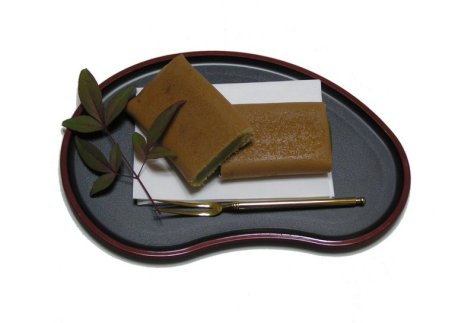
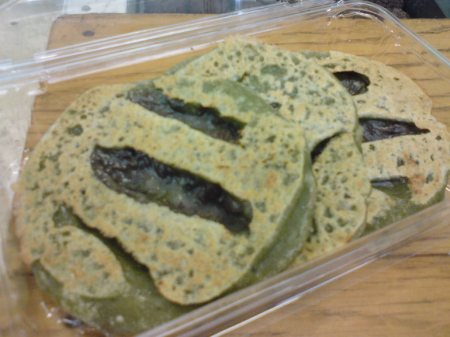
“Kintsuba/Sabre guard” wagashi made with rice flour, yomogi and sweetmeats (Miwa Supermarket, Shizuoka City)

There are many ways to enjoy them as food as well as medicine:
-Tempura
-Sasa Dango

Sasa Dango

In Shizuoka, you will also find many farmers selling a sweet in the shape of a hot cake with sweetmeats (anko) inside.

RECOMMENDED RELATED WEBSITES

With a Glass,
Clumsyfingers by Xethia
Adventures in Bento Making, American Bento, Beanbento, Bento No1, Bento Wo Tsukurimashou, Cooking Cute, Eula, Hapabento , Happy Bento, Jacki’s Bento Blog, Kitchen Cow, Leggo My Obento, Le Petit Journal Bento & CO (French), Lunch In A Box, My Bento Box, Vegan Lunch Box; Tokyo Tom Baker, Daily Food Porn/Osaka, Only Nature Food Porn, Happy Little Bento, The Herbed Kitchen, J-Mama’s Kitchen, Cook, Eat, Play, Repeat; Bento Lunch Blog (German); Adventures In Bento; Anna The Red’s Bento Factory; Cooking Cute; Timeless Gourmet; Bento Bug; Ideal Meal; Bentosaurus; Mr. Foodie (London/UK); Ohayo Bento

Must-see tasting websites:

-Sake: Tokyo Through The Drinking Glass, Tokyo Foodcast, Urban Sake, Sake World
-Wine: Palate To Pen, Warren Bobrow, Cellar Tours, Ancient Fire Wines Blog
-Beer: Good Beer & Country Boys, Another Pint, Please!
-Japanese Pottery to enjoy your favourite drinks: Yellin Yakimono Gallery

Vegan French Steamed Organic Salad at Pissenlit

Service: excellent and very friendly
Facilities: great washroom, great cleanliness overall
Prices: reasonable, good value.
Strong points: Interesting wine list. Great use of local products.
no-smoking-logoentirely non-smoking!

Great food is great food!
Be you vegan, vegetarian or omnivore, one can only appreciate and being thankful for savouring vegetables not only of the best quality, but local and organically grown to boot!
I will never tire of saying to everyone how lucky we are here in Shizuoka Prefecture, Japan, a region renown nationally and increasingly internationally for its exceptional gastronomy!

Bazooka Gourmet is probably going to have another (shooting) field day when he learns that I have just been approached by the local government to help promote the local agriculture through blogging!
What can I say? It’s simply a pleasure!

To cut an increasingly long story short, I visited Pissenlit for lunch, and when I saw “Mishima Hirokawa San Yasai no Etuvee”/Steamed vegetables grown by Mr. (Hideyaki) Hirokawa in Mishima City, I knew that no-one could unhook me from my (delicious) doom!
To tell the truth I have nurtured a special relation with chef Tooru Arima (and many others), and he is only too happy to oblige with my sometimes very selfish requests!

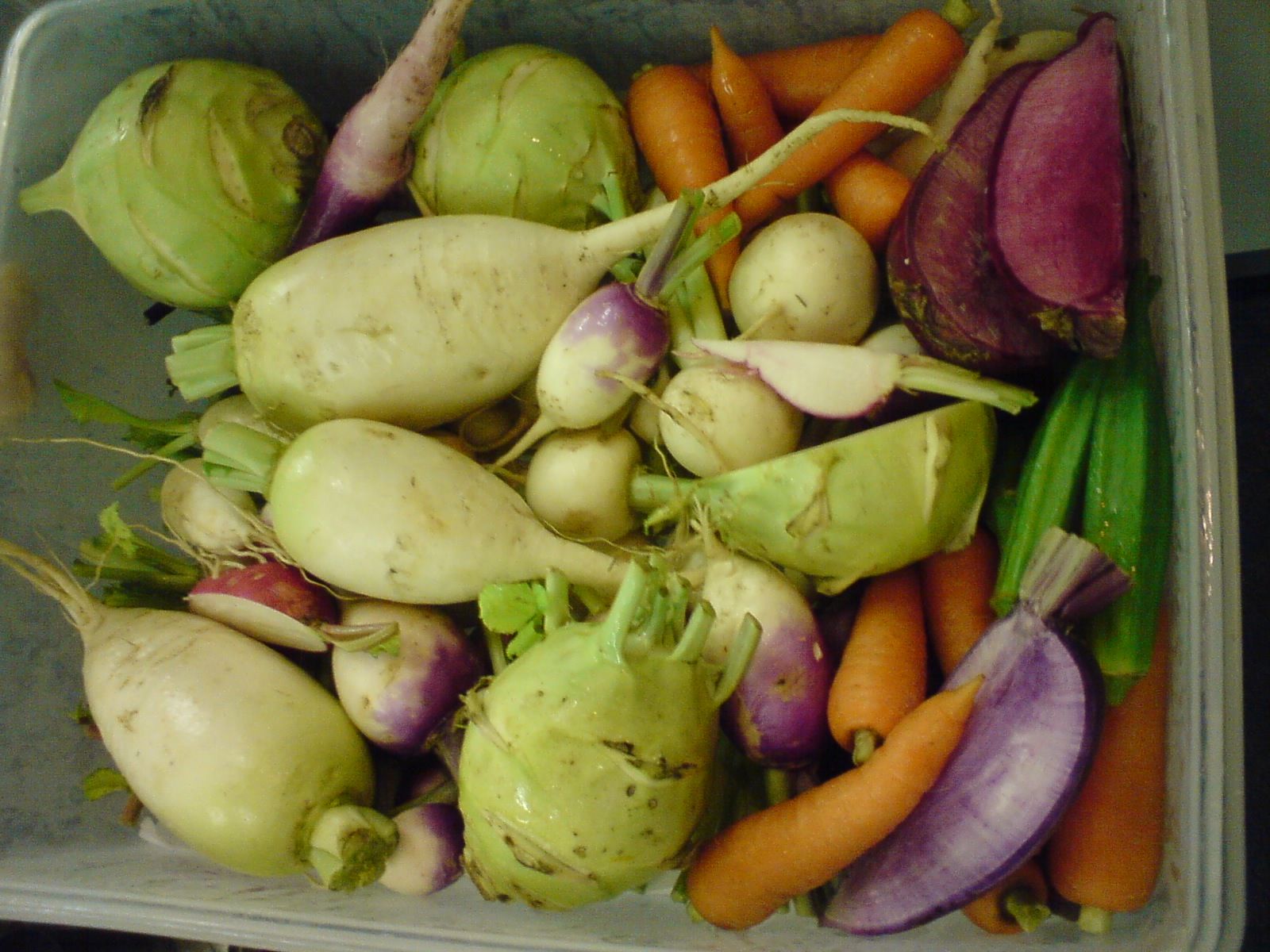
He gracefully allowed me to take pics of his treasures! The pic above are greens grown by Mr. Hirokawa!

And these the other organic vegetables grown by the same farmer!

Alright, let me give you at least the names of the vegetables I enjoyed so much:
in above picture you can see:
Front row: Carrot/Ninjin/人参, Red Round Daikon/Beni Maru Daikon/紅丸大根
Second row: Violet Round Daikon/Murasaki Maru Daikon/紫丸大根, Snow Beauty Daikon/Yuki Bijin Daikon/雪美人大根, Day Field Leaf Turnip/Hinona No Kabu/日野菜の蕪, Cauliflower/こりフラワー, and Ayame Turnip/Ayame Kabu/あやめ蕪.

Front row: Violet Round Daikon/Murasaki Maru Daikon/紫丸大根, Stick Junior Broccoli/シティックジューニアブロッコリー, Snow Beauty Daikon/Yuki Bijin Daikon/雪美人大根, Red Round Daikon/Beni Maru Daikon/紅丸大根,
Carrot/Ninjin/人参
Second row: Akakura Daikon/赤くら大根, Day Field Leaf Turnip/Hinona No Kabu/日野菜の蕪, Red Long Water Daikon/Aka Naga Mizu Daikon/赤長水大根, Cauliflower/こりフラワー, and Ayame Turnip/Ayame Kabu/あやめ蕪.
Third row: Small Turnip/Ko Kabu/子株 on top of White Cucumber/Shiro Kyuuri/白胡瓜.

Front row: Ayame Turnip/Ayame Kabu/あやめ蕪, Cauliflower/こりフラワー, Aka Naga Mizu Daikon/赤長水大根, and Small Turnip/Ko Kabu/子株 on top of White Cucumber/Shiro Kyuuri/白胡瓜.
Second row: Carrot/Ninjin/人参, Red Round Daikon/Beni Maru Daikon/紅丸大根, Snow Beauty Daikon/Yuki Bijin Daikon/雪美人大根, Day Field Leaf Turnip/Hinona No Kabu/日野菜の蕪, and Akakura Daikon/赤くら大根.
Third row: Stick Junior Broccoli/シティックジューニアブロッコリー and Akakura Daikon/赤くら大根.

Front row: Small Turnip/Ko Kabu/子株 on top of White Cucumber/Shiro Kyuusri/白胡瓜, Day Field Leaf Turnip/Hinona No Kabu/日野菜の蕪, Violet Round Daikon/Murasaki Maru Daikon/紫丸大根.
Second row: Red Log Water Daikon/Aka Naga mizu Daikon/赤長水大根, Cauliflower/こりフラワー, Snow Beauty daikon/Yuki Bijin Daikon/雪美人大根, and Stick Junior Broccoli/シティックジューニアブロッコリー.
Third row: Ayame Turnip/Ayame Kabu/あやめ蕪, Red Round Daikon/Beni maru Daikon/紅丸大根 and Carrot/Ninjin/人参!

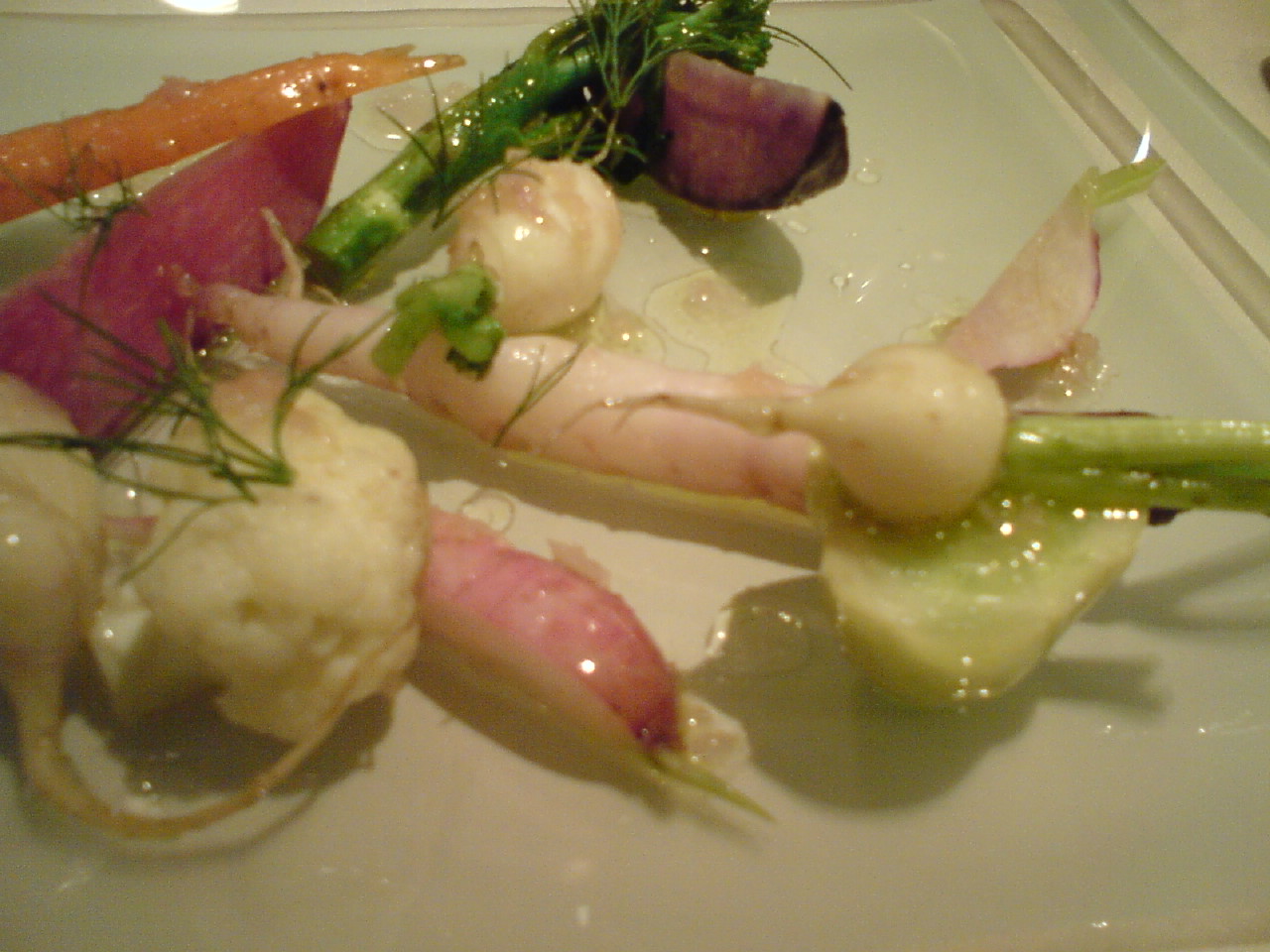
The vegetables were steamed/cooked to perfection providing a satisfying bite with the right combination of tenderness and crunchiness.
The dressing was also vegan, shallots, garlic, olive oil, Guerande salt and vegetables “juices”, providing for an elegant and precise seasoning!

If you have the occasion to visit Mishima City this is the address of our great farmer!

Mr. Hideyaki Hirokawa, Mishima City, Kawaharagaya Yamada, 765
Tel.: 055-973-2702

PISSENLIT
420-0839 Shizuoka City, Aoi Ku, Takajo, 2-3-4
Tel.: 054-270-8768
Fax: 054-627-3868
Business hours: 11:30~14:30; 17:00~22:00
Closed on Tuesdays and Sunday evening
Homepage (Japanese)
Credit Cards OK

RECOMMENDED RELATED SITES:
Warren Bobrow, Bread + Butter, Zoy Zhang, Hungry Neko, Think Twice, Frank Fariello, Mangantayon, Hapabento, Elinluv Tidbit Corner, Tokyo Terrace, Maison de Christina, Chrys Niles,Lexi, Culinary Musings, Wheeling Gourmet, Comestiblog, Chronicles Of A Curious Cook, Tokyo Through The Drinking Glass, Tokyo Foodcast, Palate To Pen, Yellin Yakimono Gallery, Tokyo Terrace, Hilah Cooking, More than a Mount Full, Arkonite Bento, Happy Little Bento; 5 Star Foodie; Jefferson’s Table; Oyster Culture; Gourmet Fury; Island Vittles; Good Beer & Country Boys; Rubber Slippers In Italy; Color Food daidokoro/Osaka;/a; The Witchy Kitchen; Citron Et Vanille, Lunsj Med Buffet/Estonian Gastronomy (English), Cook, Eat, Play, Repeat, Chrisoscope

Please check the new postings at:
sake, shochu and sushi