Category Archives: 魚海の幸

Jaoanese Shellfish Species 9: Round Clam-Hen Clam/Bakagai

AOYAGI-1

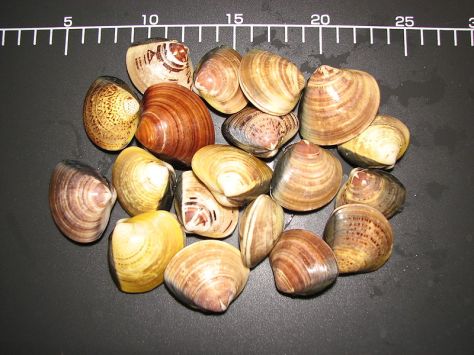
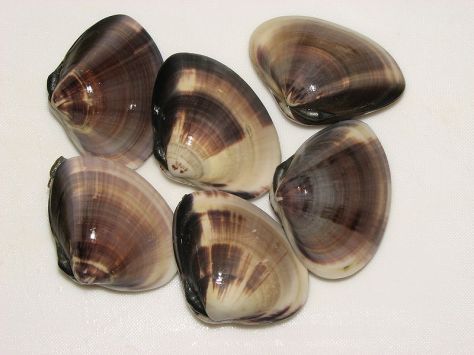
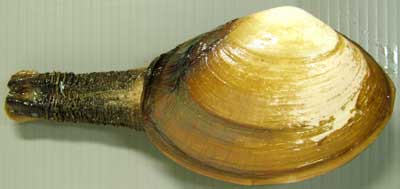
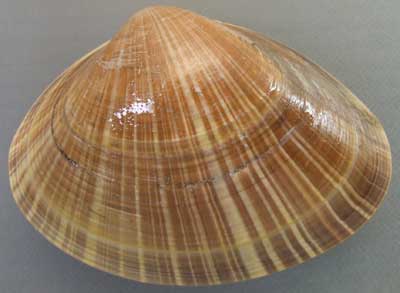
“Bakagai”, or Round clam/Hen Clam in English, is found mainly in the Central part of Honshu Island.

AOYAGI-2

Actually, you have a good chance to discover them at low tide all over Japan.

AOYAGI-6

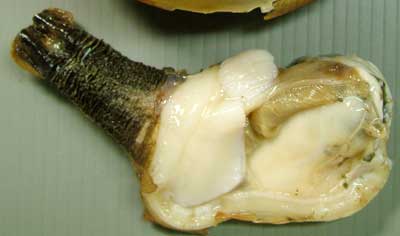
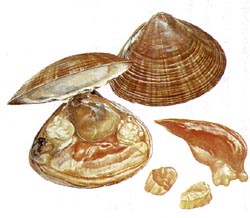
It is a versatile shellfish as it provides for two distinct morsels:

AOYAGI-5

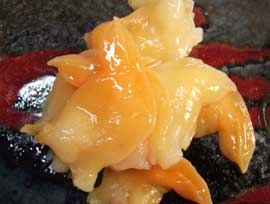
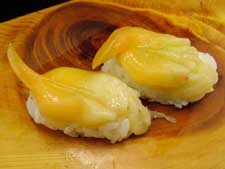
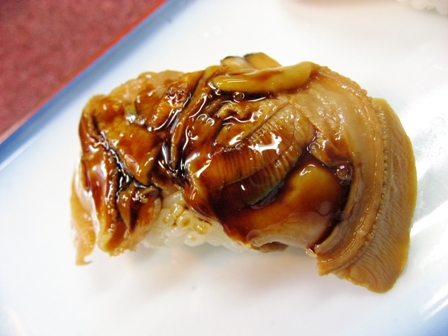
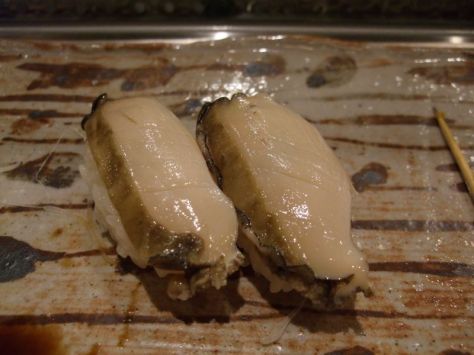
The “Tongue” called “Aoyagi”. It is very popular in Japan for its colour and sweetness. It is both eaten as Sashimi and…

AOYAGI-3

Sushi as nigiri.

AOYAGI-4

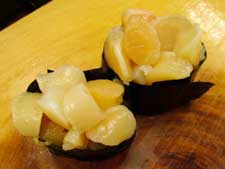
The second morsel, one of two muscle parts is called “Kobashira/Small pillar”.
Sushi chefs will keep them until they have enough to serve as sashimi or even better as suhi as gunkan!

Make sure to order either “Aoyagi” or “Kobashira” unless you want to start a long conversation by ordering “Bakagai”! esecially considering that “baka” in japanese means “Idiot”!

RECOMMENDED RELATED WEBSITES

The Indian Tourist, Masala Herb by Helene Dsouza in Goa, India
Mummy I Can Cook! by Shu Han in London
Pierre.Cuisine, Francescannotwrite, My White Kitchen, 47 Japanese Farms Through The Eyes of Its Rural Communities, Foodhoe, Chucks Eats, Things that Fizz & Stuff, Five Euro Food by Charles,Red Shallot Kitchen by Priscilla,With a Glass, Nami | Just One Cookbook, Peach Farm Studio, Clumsyfingers by Xethia, PepperBento,Adventures in Bento Making, American Bent, Beanbento, Bento No, Bento Wo Tsukurimashou, Cooking Cute, Eula, Hapabento , Happy Bento, Jacki’s Bento Blog, Kitchen Cow, Leggo My Obento, Le Petit Journal Bento & CO (French), Lunch In A Box,
Susan at Arkonlite, Vegan Lunch Box; Tokyo Tom Baker, Daily Food Porn/Osaka, Only Nature Food Porn, Happy Little Bento, The Herbed Kitchen, J-Mama’s Kitchen, Cook, Eat, Play, Repeat, Bento Lunch Blog (German), Adventures In Bento, Anna The Red’s Bento Factory, Cooking Cute, Timeless Gourmet, Bento Bug, Ideal Meal, Bentosaurus, Mr. Foodie (London/UK), Ohayo Bento,

Must-see tasting websites:

-Sake: Tokyo Through The Drinking Glass, Tokyo Foodcast, Urban Sake, Sake World
-Wine: Palate To Pen, Warren Bobrow, Cellar Tours, Ancient Fire Wines Blog
-Beer: Good Beer & Country Boys, Another Pint, Please!
-Japanese Pottery to enjoy your favourite drinks: Yellin Yakimono Gallery

Japanese Shellfish 7: Clam-Hamaguri-蛤

HAMAGURI-SUSHI2

Clams come in many varieties in Japan.
They are either called Common Orient Clams or Hard Clams, whatever their mode of cooking.

HAMAGURI-JAPANESE

Japanese Clam Variety

In 1993, Japan produced 29,000 tonnes before suffering a steep decline down to only 1,500 tonnes in 2000.
Since then imported clams are 15 times the domestic production.
Main importers to Japan are:

HAMAGURI-CHINA

China (see variety above): 20,100 tonnes

HAMAGURI-NORTH-KOREA

North Korea (see variety above): 3,33 tonnes

A great part of both Chinese and North Korean varieties are imported young and “re-planted” on Japanese beaches to be sold as Japanese varieties!

80 percent of all clams are sold over the counter at supermarkets while 20 percent are proceesed by canneries.

Clams, like everywhere in the world, are cooked/prepared in may ways in Japan:

HAMAGURI-NI

Ni-Hamaguri/simmered clams served in broth with vegetables, tofu and chopped thin leeks.

HAMAGURI-SUSHI1

Chirashizushi/”Decoration Sushi”, very popular in Japanese homes!

HAMAGURI-SUSHI2

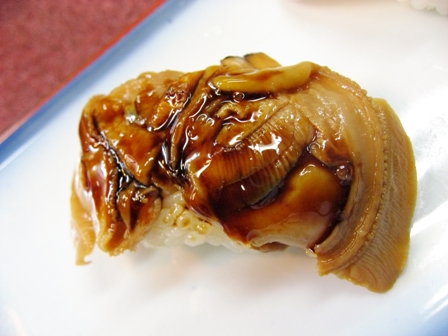
But my favourite is Ni-Hamaguri Sushi!
The clams, large variety only, are first slowly simmered into broth, then drained and cooled before being served brushed with a sweet “tare” sauce. Sublime!

RECOMMENDED RELATED WEBSITES

Masala Herb by Helene Dsouza in Goa, India
Mummy I Can Cook! by Shu Han in London
Pierre.Cuisine, Francescannotwrite, My White Kitchen, 47 Japanese Farms Through The Eyes of Its Rural Communities, Foodhoe, Chucks Eats, Things that Fizz & Stuff, Five Euro Food by Charles,Red Shallot Kitchen by Priscilla,With a Glass, Nami | Just One Cookbook, Peach Farm Studio, Clumsyfingers by Xethia, PepperBento,Adventures in Bento Making, American Bent, Beanbento, Bento No, Bento Wo Tsukurimashou, Cooking Cute, Eula, Hapabento , Happy Bento, Jacki’s Bento Blog, Kitchen Cow, Leggo My Obento, Le Petit Journal Bento & CO (French), Lunch In A Box,
Susan at Arkonlite, Vegan Lunch Box; Tokyo Tom Baker, Daily Food Porn/Osaka, Only Nature Food Porn, Happy Little Bento, The Herbed Kitchen, J-Mama’s Kitchen, Cook, Eat, Play, Repeat, Bento Lunch Blog (German), Adventures In Bento, Anna The Red’s Bento Factory, Cooking Cute, Timeless Gourmet, Bento Bug, Ideal Meal, Bentosaurus, Mr. Foodie (London/UK), Ohayo Bento,

Must-see tasting websites:

-Sake: Tokyo Through The Drinking Glass, Tokyo Foodcast, Urban Sake, Sake World
-Wine: Palate To Pen, Warren Bobrow, Cellar Tours, Ancient Fire Wines Blog
-Beer: Good Beer & Country Boys, Another Pint, Please!
-Japanese Pottery to enjoy your favourite drinks: Yellin Yakimono Gallery

Japanese Shellfish 6: Turbo Shells-Sazae-栄螺

SAZAE-1 SAZAE-2
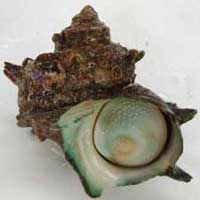
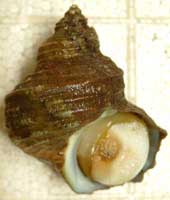
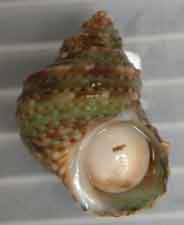
Japanese turbo shells with and without “spikes”

Turbo shells, also called Horned Turban, are common all over the world, but are not eaten everywhere. Called Sazae or Sadae in Japan, they are at their best in Winter and Spring.
About 10,000 tonnes are consumed every year.

SAZAE-KOREA

Korean turbo shells are also found in markets.

The Japanese consider that the best specimen should have a comparatively thin shell and well-pointed “head horn”.
They should not emit any noise when lightly shaken.
They should be avoided in hot weather as they tend to spoil quickly.

SAZAE-3 SAZAE-4

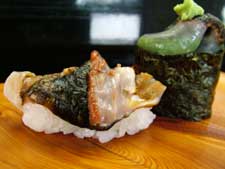
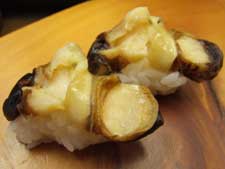
They can be enjoyed grilled with soy sauce.
As sushi,they can be served as nigiri either raw or cooked.
Large specimen’s livers are served raw as “gunkan”!

RECOMMENDED RELATED WEBSITES

Masala Herb by Helene Dsouza in Goa, India
Mummy I Can Cook! by Shu Han in London
Pierre.Cuisine, Francescannotwrite, My White Kitchen, 47 Japanese Farms Through The Eyes of Its Rural Communities, Foodhoe, Chucks Eats, Things that Fizz & Stuff, Five Euro Food by Charles,Red Shallot Kitchen by Priscilla,With a Glass, Nami | Just One Cookbook, Peach Farm Studio, Clumsyfingers by Xethia, PepperBento,Adventures in Bento Making, American Bent, Beanbento, Bento No, Bento Wo Tsukurimashou, Cooking Cute, Eula, Hapabento , Happy Bento, Jacki’s Bento Blog, Kitchen Cow, Leggo My Obento, Le Petit Journal Bento & CO (French), Lunch In A Box,
Susan at Arkonlite, Vegan Lunch Box; Tokyo Tom Baker, Daily Food Porn/Osaka, Only Nature Food Porn, Happy Little Bento, The Herbed Kitchen, J-Mama’s Kitchen, Cook, Eat, Play, Repeat, Bento Lunch Blog (German), Adventures In Bento, Anna The Red’s Bento Factory, Cooking Cute, Timeless Gourmet, Bento Bug, Ideal Meal, Bentosaurus, Mr. Foodie (London/UK), Ohayo Bento,

Must-see tasting websites:

-Sake: Tokyo Through The Drinking Glass, Tokyo Foodcast, Urban Sake, Sake World
-Wine: Palate To Pen, Warren Bobrow, Cellar Tours, Ancient Fire Wines Blog
-Beer: Good Beer & Country Boys, Another Pint, Please!
-Japanese Pottery to enjoy your favourite drinks: Yellin Yakimono Gallery

Japanese Shellfish 5: Geoduck-Mirugai-海松貝

MIRUKUI-1

We are just in season for Mirugai or Gaper Shellfish.
Known under many names including Mirugai, Mirukui, Mirukuigai, Mirukugai, Guidakku, Umitake or Atlantic Miru, it is a bit grotesque with its vent protruding endlessly. Its common English names are Pacfic Gaper, Geoduck or Trough Sheel.
In Japan it is collected mainly in the sea between Shikoku and Honshu islands.

MIRUKUI-2

It can be either dark brown or completely whitish beige.
When consumed as sushi or sashimi, the dark skin is taken off.
It is widely consumed in this country and more are imported from Canada, and Korea. There is practically no difference in taste or quality whatever its origin.

A real monster!
But plenty to eat!

As sashimi!

As nigiri sushi!

For sushi lovers with a big appetite!

RECOMMENDED RELATED WEBSITES

Masala Herb by Helene Dsouza in Goa, India
Mummy I Can Cook! by Shu Han in London
Pierre.Cuisine, Francescannotwrite, My White Kitchen, 47 Japanese Farms Through The Eyes of Its Rural Communities, Foodhoe, Chucks Eats, Things that Fizz & Stuff, Five Euro Food by Charles,Red Shallot Kitchen by Priscilla,With a Glass, Nami | Just One Cookbook, Peach Farm Studio, Clumsyfingers by Xethia, PepperBento,Adventures in Bento Making, American Bent, Beanbento, Bento No, Bento Wo Tsukurimashou, Cooking Cute, Eula, Hapabento , Happy Bento, Jacki’s Bento Blog, Kitchen Cow, Leggo My Obento, Le Petit Journal Bento & CO (French), Lunch In A Box,
Susan at Arkonlite, Vegan Lunch Box; Tokyo Tom Baker, Daily Food Porn/Osaka, Only Nature Food Porn, Happy Little Bento, The Herbed Kitchen, J-Mama’s Kitchen, Cook, Eat, Play, Repeat, Bento Lunch Blog (German), Adventures In Bento, Anna The Red’s Bento Factory, Cooking Cute, Timeless Gourmet, Bento Bug, Ideal Meal, Bentosaurus, Mr. Foodie (London/UK), Ohayo Bento,

Must-see tasting websites:

-Sake: Tokyo Through The Drinking Glass, Tokyo Foodcast, Urban Sake, Sake World
-Wine: Palate To Pen, Warren Bobrow, Cellar Tours, Ancient Fire Wines Blog
-Beer: Good Beer & Country Boys, Another Pint, Please!
-Japanese Pottery to enjoy your favourite drinks: Yellin Yakimono Gallery

Japanese Shellfish Species 4: Heart Clam-Torigai-鳥貝

torigai1.jpg

“Torigai/鳥貝” has many names in English: Heart Clam, Surf Clam, Japanese Cockle. In Japanese it is called “Bird Shell”!
They appear on the market in Spring and earlier in Shizuoka Prefecture. They are mainly found in Tokyo Bay, Ise bay and Seto Inner Sea. Some are imported from Korea, but catches can wildly vary, especially with the occurence of “red tides”. A lot are imported from Aichi Prefecture to Shizuoka.

TORIGAI-SHELL

They must be absolutely fresh to be consumed.
One easy way to check if they are still fresh is to slam them on the wooden board. They should immediately retract, even if cut out. They are at their cheapest between March and May.

Torigai in its natural element

Torigai Ngiri sushi!

RECOMMENDED RELATED WEBSITES

Masala Herb by Helene Dsouza in Goa, India
Mummy I Can Cook! by Shu Han in London
Pierre.Cuisine, Francescannotwrite, My White Kitchen, 47 Japanese Farms Through The Eyes of Its Rural Communities, Foodhoe, Chucks Eats, Things that Fizz & Stuff, Five Euro Food by Charles,Red Shallot Kitchen by Priscilla,With a Glass, Nami | Just One Cookbook, Peach Farm Studio, Clumsyfingers by Xethia, PepperBento,Adventures in Bento Making, American Bent, Beanbento, Bento No, Bento Wo Tsukurimashou, Cooking Cute, Eula, Hapabento , Happy Bento, Jacki’s Bento Blog, Kitchen Cow, Leggo My Obento, Le Petit Journal Bento & CO (French), Lunch In A Box,
Susan at Arkonlite, Vegan Lunch Box; Tokyo Tom Baker, Daily Food Porn/Osaka, Only Nature Food Porn, Happy Little Bento, The Herbed Kitchen, J-Mama’s Kitchen, Cook, Eat, Play, Repeat, Bento Lunch Blog (German), Adventures In Bento, Anna The Red’s Bento Factory, Cooking Cute, Timeless Gourmet, Bento Bug, Ideal Meal, Bentosaurus, Mr. Foodie (London/UK), Ohayo Bento,

Must-see tasting websites:

-Sake: Tokyo Through The Drinking Glass, Tokyo Foodcast, Urban Sake, Sake World
-Wine: Palate To Pen, Warren Bobrow, Cellar Tours, Ancient Fire Wines Blog
-Beer: Good Beer & Country Boys, Another Pint, Please!
-Japanese Pottery to enjoy your favourite drinks: Yellin Yakimono Gallery

Japanese Shellfish Species 3: Oysters-kaki-牡蠣

Oysters! One would be hard put to find a produce from the sea more internationally recognized as a gourmet’s choice! Moreover, it is the only shellfish you could survive on if you got marrooned on a desert island! It is a complete food in irself if consumed raw.
For a long time (that is before coming to Japan), I had thought that my country, France, was the place to eat them. Well, I must admit it was a little pretentious from me, especially in the light that more than half of the oysters consumed back at home originated from Japan!

Now the Japanese has come with many ways of appreciating them:

As in the picture above they would eat them as sashimi with a dash of wasabi and soy sauce.

-Or just a little lemon juice as in Euope, Americas or Oceania.

-Or in another Japanese fashion, with ponzu and momijioroshi (succulent!)

-Or, and here Japanese and foreigners are simply crazy about them, as “kakifrai”, deep-fried oysters in batter and breadcrumbs with a nice tartare sauce!

-Or finally, and I would recommend the experience to all foreigners, as “kaki-gohan”, either with oysters steamed together with the rice, or cooked apart in light broth poured over a bowl of freshly steamed rice!

Of course, any good sushi restaurants will serve oysters as nigiri or gunkan!

In Japan, oysters come from various areas, mainly Hiroshima, Iwate and so on.
As for Shizuoka Prefecture, oysters mainly come from Hamanako inland salted lake near Hamamatsu City.

RECOMMENDED RELATED WEBSITES

Masala Herb by Helene Dsouza in Goa, India
Mummy I Can Cook! by Shu Han in London
Pierre.Cuisine, Francescannotwrite, My White Kitchen, 47 Japanese Farms Through The Eyes of Its Rural Communities, Foodhoe, Chucks Eats, Things that Fizz & Stuff, Five Euro Food by Charles,Red Shallot Kitchen by Priscilla,With a Glass, Nami | Just One Cookbook, Peach Farm Studio, Clumsyfingers by Xethia, PepperBento,Adventures in Bento Making, American Bent, Beanbento, Bento No, Bento Wo Tsukurimashou, Cooking Cute, Eula, Hapabento , Happy Bento, Jacki’s Bento Blog, Kitchen Cow, Leggo My Obento, Le Petit Journal Bento & CO (French), Lunch In A Box,
Susan at Arkonlite, Vegan Lunch Box; Tokyo Tom Baker, Daily Food Porn/Osaka, Only Nature Food Porn, Happy Little Bento, The Herbed Kitchen, J-Mama’s Kitchen, Cook, Eat, Play, Repeat, Bento Lunch Blog (German), Adventures In Bento, Anna The Red’s Bento Factory, Cooking Cute, Timeless Gourmet, Bento Bug, Ideal Meal, Bentosaurus, Mr. Foodie (London/UK), Ohayo Bento,

Must-see tasting websites:

-Sake: Tokyo Through The Drinking Glass, Tokyo Foodcast, Urban Sake, Sake World
-Wine: Palate To Pen, Warren Bobrow, Cellar Tours, Ancient Fire Wines Blog
-Beer: Good Beer & Country Boys, Another Pint, Please!
-Japanese Pottery to enjoy your favourite drinks: Yellin Yakimono Gallery

Japanese Shellfish Species 2: Scallops-Hotategai-帆立貝

hotategai.jpg

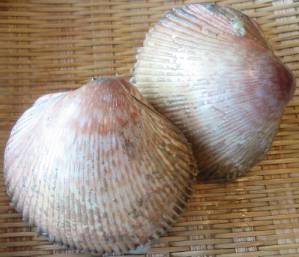
Hotategai/帆立貝, or Scallops, is another worldwide favourite and also a source of dispute caused by illegal poaching, international or domestic.
The season is summer and the shellfish is sometimes called Akitagai/秋田貝, as of Akita Prefecture.
They are caught off Hokkaido, Aomori, Iwate and Miyagi Prefectures.
The domestic production/catch is over 300.000 tonnes a year, while 400 tonnes are imported from China as whole Scallops and 700 tonnes as the muscle part only (“kaibashira/貝柱”). Japanese scallops will be significantly larger than the Chinese.

Of course, they are much appreciated as sashimi, but also as sushi:
HOTATENIGIRI

(pic taken at Sushi Ko in Shizuoka City)

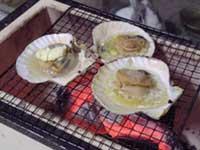
They are also much appreciated cooked/grilled in the shell with just a little shoyu and sake:
HOTAGE-GRILLED

Actually, a good-class sushi restaurant will serve the muscle part as sashimi or sushi, and will serve the rest of the shellfish cooked in light broth inside the shell later!

RECOMMENDED RELATED WEBSITES

Masala Herb by Helene Dsouza in Goa, India
Mummy I Can Cook! by Shu Han in London
Pierre.Cuisine, Francescannotwrite, My White Kitchen, 47 Japanese Farms Through The Eyes of Its Rural Communities, Foodhoe, Chucks Eats, Things that Fizz & Stuff, Five Euro Food by Charles,Red Shallot Kitchen by Priscilla,With a Glass, Nami | Just One Cookbook, Peach Farm Studio, Clumsyfingers by Xethia, PepperBento,Adventures in Bento Making, American Bent, Beanbento, Bento No, Bento Wo Tsukurimashou, Cooking Cute, Eula, Hapabento , Happy Bento, Jacki’s Bento Blog, Kitchen Cow, Leggo My Obento, Le Petit Journal Bento & CO (French), Lunch In A Box,
Susan at Arkonlite, Vegan Lunch Box; Tokyo Tom Baker, Daily Food Porn/Osaka, Only Nature Food Porn, Happy Little Bento, The Herbed Kitchen, J-Mama’s Kitchen, Cook, Eat, Play, Repeat, Bento Lunch Blog (German), Adventures In Bento, Anna The Red’s Bento Factory, Cooking Cute, Timeless Gourmet, Bento Bug, Ideal Meal, Bentosaurus, Mr. Foodie (London/UK), Ohayo Bento,

Must-see tasting websites:

-Sake: Tokyo Through The Drinking Glass, Tokyo Foodcast, Urban Sake, Sake World
-Wine: Palate To Pen, Warren Bobrow, Cellar Tours, Ancient Fire Wines Blog
-Beer: Good Beer & Country Boys, Another Pint, Please!
-Japanese Pottery to enjoy your favourite drinks: Yellin Yakimono Gallery

Japanese Shellfish Species 1: Abalone-Awabi-鮑

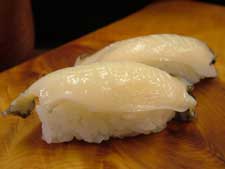
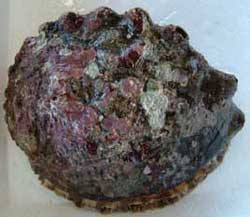
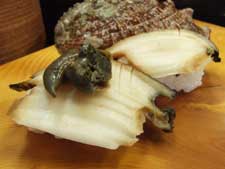
AWABI-KURO-2
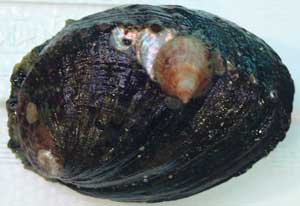
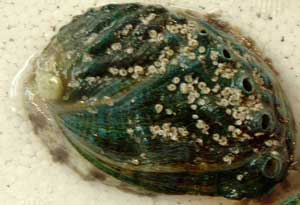
Kuro Awabi/”Black Abalone

With the weather definitely turning hotter, the first abalones or “awabi” start appearing on the markets.
The Japanese are great connoisseurs and amateurs of abalones, and they do have to import a lot to satisfy their demand!
There are many varieties of different quality avalaible in the markets and restaurants.
Most are eaten raw, especially as sushi on nigiri!

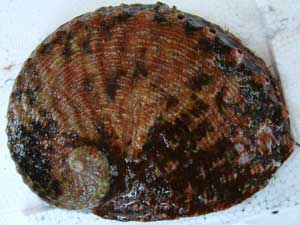
AWABI-KURO-1
Kuro Awabi/”Black Abalone”

As for the main varieties, you can sample expensive Kuro Awabi or “Black Abalones”

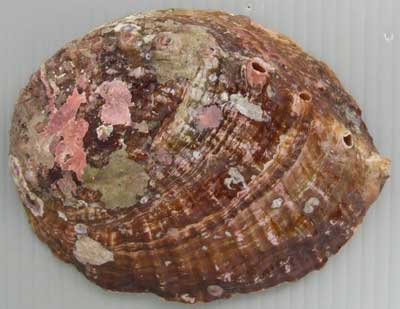
AWABI-EZO-1

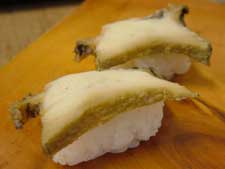
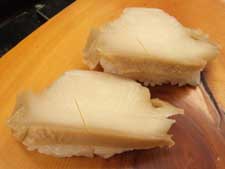
Another expensive variety is Ezo Awabi/”Ezo Abalone”

AWABI-EZO-2
Ezo Awabi as sushi.

Lesser varieties include:

AWABI-MADAKA-1

Madaka Awabi

AWABI-MADAKA-2

Madaka Awabi as sushi

AWABI-MEGAI-1

Megai Awabi

AWABI-MEGAI-2

Megai Awabi as sushi.

AWABI-VICTORIA-1

Victoria Awabi imported from Australia.

AWABI-VICTORIA-2

Victoria Awabi as sushi.

Do not forget that catching abalones in any place in Japan without a proper license is a severly punished poaching offense!

RECOMMENDED RELATED WEBSITES

Masala Herb by Helene Dsouza in Goa, India
Mummy I Can Cook! by Shu Han in London
Pierre.Cuisine, Francescannotwrite, My White Kitchen, 47 Japanese Farms Through The Eyes of Its Rural Communities, Foodhoe, Chucks Eats, Things that Fizz & Stuff, Five Euro Food by Charles,Red Shallot Kitchen by Priscilla,With a Glass, Nami | Just One Cookbook, Peach Farm Studio, Clumsyfingers by Xethia, PepperBento,Adventures in Bento Making, American Bent, Beanbento, Bento No, Bento Wo Tsukurimashou, Cooking Cute, Eula, Hapabento , Happy Bento, Jacki’s Bento Blog, Kitchen Cow, Leggo My Obento, Le Petit Journal Bento & CO (French), Lunch In A Box,
Susan at Arkonlite, Vegan Lunch Box; Tokyo Tom Baker, Daily Food Porn/Osaka, Only Nature Food Porn, Happy Little Bento, The Herbed Kitchen, J-Mama’s Kitchen, Cook, Eat, Play, Repeat, Bento Lunch Blog (German), Adventures In Bento, Anna The Red’s Bento Factory, Cooking Cute, Timeless Gourmet, Bento Bug, Ideal Meal, Bentosaurus, Mr. Foodie (London/UK), Ohayo Bento,

Must-see tasting websites:

-Sake: Tokyo Through The Drinking Glass, Tokyo Foodcast, Urban Sake, Sake World
-Wine: Palate To Pen, Warren Bobrow, Cellar Tours, Ancient Fire Wines Blog
-Beer: Good Beer & Country Boys, Another Pint, Please!
-Japanese Pottery to enjoy your favourite drinks: Yellin Yakimono Gallery

Japanese Gastronomy: Sushi & Sashimi – Eat Local!

009

Saurel pike/Aji from Suruga Bay, Shizuoka Prefecture

Very few people will disagree with the notion that Japan is the ideal place to discover and savour sushi and sashimi in the whole world. Nevertheless, there are a few rules of the thumb to respect, even in this gastronomic paradise.
The overriding rule is that you should try and eat only local fish or seafood.
Tsukiji might be considered a sushi paradise by Tokyoites (it has or will be moved to another location), but the cheap prices enjoyed by tourists cannot conceal the reality: the fish and seafood are “imported” from all over Japan and beyond!
More than often, Edomae (Tokyo) sushi is nothing but a clever way to “dress up” ingredients to lure officionados (and customers) into believing they are eating top quality sushi (with the consequent prices).
Now, if you have the chance and time to explore Japan beyond Tokyo, you will discover an unfathomable treasure trove of gastronomic pleasure and knowledge!
After all, this country is a vast archipelago stretched across greatly different seas and climates, making for a diversity difficult to equal.
So, even if you cannot possibly explore all the shores of this nation, make a point to learn about the food available wherever you choose to stay.
The same goes for residents, not only for their own sake, but for that of their visitors and friends!

018

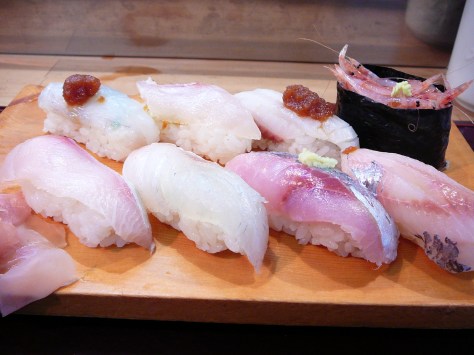
Sushi set with fish all caught in Suruga Bay, Shizuoka Prefecture

You also ought to do some homework. Sushi chefs worthy of their salt will be only too happy to answer questions to genuinely interested customers and come up with revelations of their own.
As an example to illustrate the need for some basic knowledge, in Hokkaido “oyakodon” (“parent and child”) is not cooked chicken and omelette on a bowl of rice, but raw salmon and its roe spread on top the same bowl of rice!
Likewise, the same fish will more than often be sold under a myriad of names.
Many morsels will not be found anywhere else suc as “sakura ebi/cherry shrimps” and fresh”shirasu/sardine whiting” in Shizuoka Prefecture.
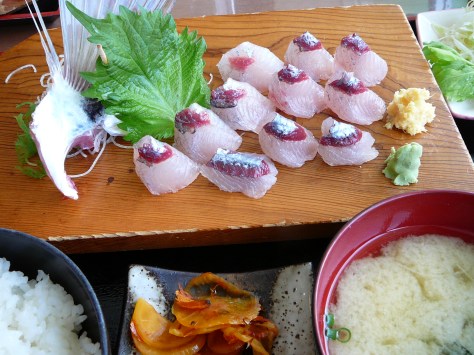
Sashimi in most cases has to be perfectly fresh as typified by “kubiore saba” in Yakushima Island where fishermen break the neck (“kubiore”) of mackerels (“saba”) to preserve their quality upon catching. The same fish will be served within a few hours, or less, on the local tables.
On the other hand, tuna sashimi is best consumed first thawed and then ripened for a few days in a refrigerator.
In Hokkaido, large shrimps, especially “botan ebi” will be served only raw, whereas “kuruma ebi” will be first boiled in other regions.

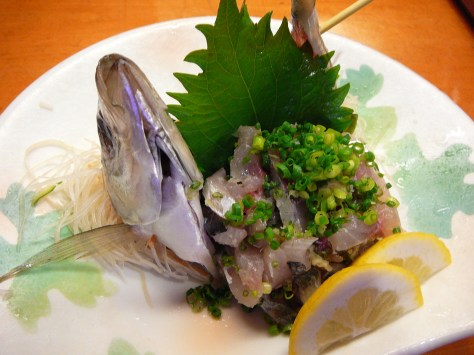
If you ask for “tataki”, make sure it means the whole fish, especially “aji/mackerel pike” that will be served finely cut as tartare atop the dressed fish. And if the fish is really fresh such small and medium fish will have their bones and heads served deep-fried for a beautiful crispy snack!

002

Flying Fish/Tobiuo sashimi from Yakushima Island

On the other hand, sushi follows different rules.
Fish and seafood placed on “donburi” (bowl) are usually of the freshly brought variety but fish served as nigiri is prepared in a different way.
The greatest sushi (and this cannot be done in Tsukiji!) are made with fish which has been gutted and cleaned live within seconds, then dressed into strips/fillets left to mature in a refrigerator on clean cloth/kitchen paper. This can be done only with fish caught locally!
The same obviously goes with shellfish and other marine ceatures: One cannot sample better “uni/sea urchin” away from Hokkaido or sakura ebi from Shizuoka.

Vegan and vegetarians, upon finding a restaurant willing to satisfy their priorities should also ask for food grown locally, a search easier than one might think at first as there are many non-meat eaters in this mainly Buddhist country.
The same vegetables will make for the perfect combination when associated with local fish!

RECOMMENDED RELATED WEBSITES

Masala Herb by Helene Dsouza in Goa, India
Mummy I Can Cook! by Shu Han in London
Pierre.Cuisine, Francescannotwrite, My White Kitchen, 47 Japanese Farms Through The Eyes of Its Rural Communities, Foodhoe, Chucks Eats, Things that Fizz & Stuff, Five Euro Food by Charles,Red Shallot Kitchen by Priscilla,With a Glass, Nami | Just One Cookbook, Peach Farm Studio, Clumsyfingers by Xethia, PepperBento,Adventures in Bento Making, American Bent, Beanbento, Bento No, Bento Wo Tsukurimashou, Cooking Cute, Eula, Hapabento , Happy Bento, Jacki’s Bento Blog, Kitchen Cow, Leggo My Obento, Le Petit Journal Bento & CO (French), Lunch In A Box,
Susan at Arkonlite, Vegan Lunch Box; Tokyo Tom Baker, Daily Food Porn/Osaka, Only Nature Food Porn, Happy Little Bento, The Herbed Kitchen, J-Mama’s Kitchen, Cook, Eat, Play, Repeat, Bento Lunch Blog (German), Adventures In Bento, Anna The Red’s Bento Factory, Cooking Cute, Timeless Gourmet, Bento Bug, Ideal Meal, Bentosaurus, Mr. Foodie (London/UK), Ohayo Bento,

Must-see tasting websites:

-Sake: Tokyo Through The Drinking Glass, Tokyo Foodcast, Urban Sake, Sake World
-Wine: Palate To Pen, Warren Bobrow, Cellar Tours, Ancient Fire Wines Blog
-Beer: Good Beer & Country Boys, Another Pint, Please!
-Japanese Pottery to enjoy your favourite drinks: Yellin Yakimono Gallery

French Gastronomy: Organic Vegetables & Madai Seabream at Pissenlit-Shizuoka City!

Service: Excellent and very friendly.
Facilities: Great cleanliness overall. Superb washroom (mouthwash and toothpicks provided!)!
Prices: Reasonable to slightly expensive, very good value.
Strong points: Interesting wine list. Great use of local products, especially organic vegetables and Shizuoka-bred meat.

Difficult to believe as it is, but Shizuoka Prefecture, both officially at the Government level and unofficially by all gastronomes here, has the largest number of varieties of food grown, bred or caught both on land and at sea in Japan!
No wonder that the local restaurants find it both so easy and pleasurable to associate local products any time of the year!

So the other day, actually Saturday last week when I had lunch at Pissenlit in Shizuoka City, Chef Touru Arima/有馬亨さん first served me as an amuse-bouche a veloute/smooth soup made from organic Takinogawa burdock root from Kitayama Farm in Fujinomiya City.

The wine served then was not from Shizuoka, but it is worth talking about it as it was made in Osaka from Delaware and Koshu grapes! Its name, “Ganko Oyaji Tetsukuri Wain”, means “Wine hand-made by an old stubborn man”!

Nakamura Winery in Osaka also makes the above white wine called “Yume Asuka” or “Dream Asuka”!

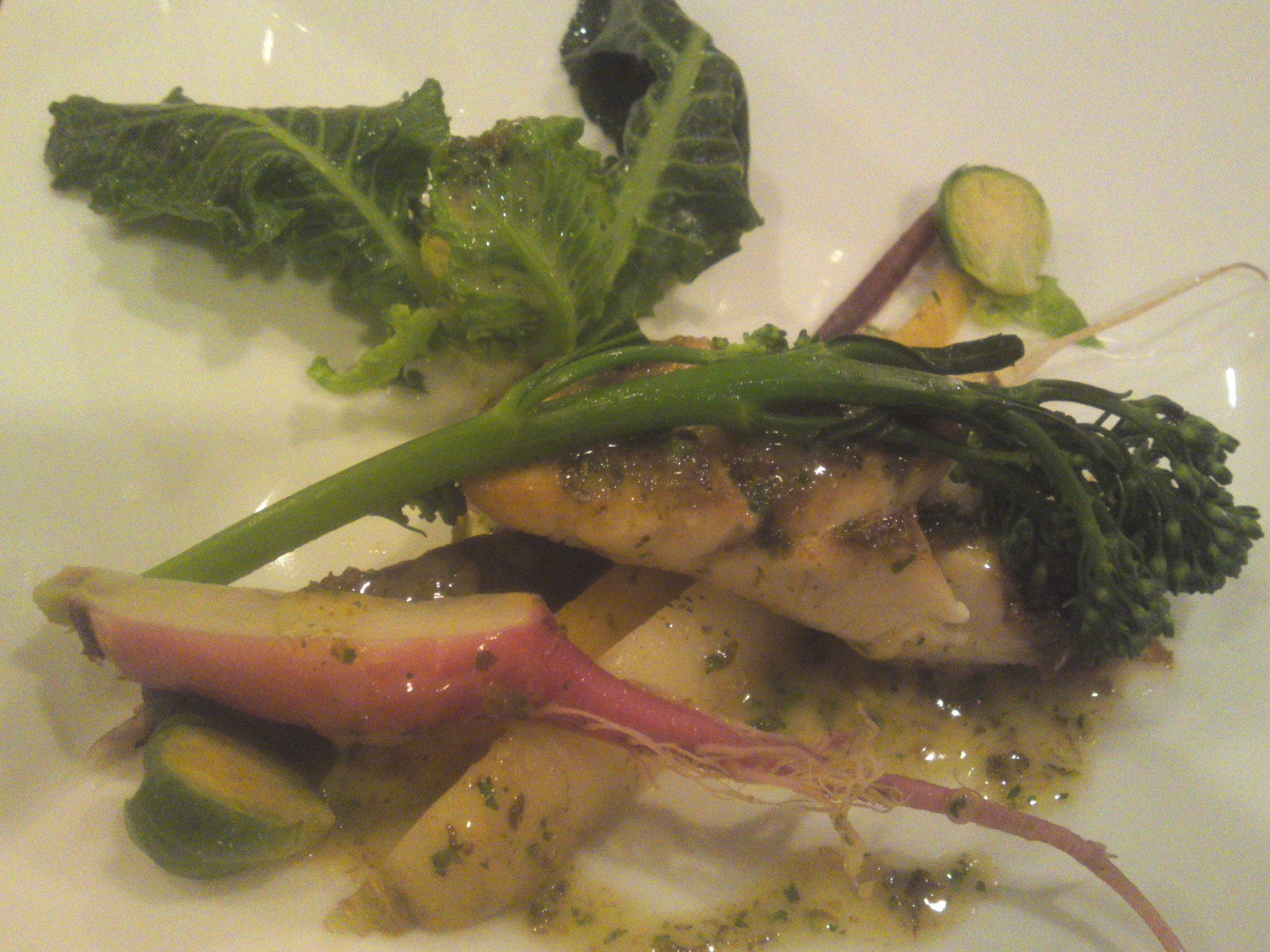
Here is the happy marriage of products from the land and sea of Shizuoka Prefecture!

The Madai/真鯛/”True Seabream” was caught off Sagara/相良 shore, west of Shizuoka City, an area of Suruga Bay replete with semi-deep water fish.
First sauteed on its skin and then finished in the oven, the skin had a beautiful crispy bite in superb contradiction with the flesh perfect tenderness. The sauce kept to a minimum with lemon and butter accentuated all the freshness of the fish.

The organic vegetables came from two distinct farms: Shizuen No Chikara In Shizuoka City and Kitayama in Fujinomiya City!

Beautiful carrots!

Now, what is this organic vegetable from Kitayama Farm?

Romanesco broccoli bud!
So extravagant, elegant, beautiful and full of flavors!

To be continued… (can you wait?)

PISSENLIT

420-0839 Shizuoka City, Aoi Ku, Takajo, 2-3-4
Tel.: 054-270-8768
Fax: 054-627-3868
Business hours: 11:30~14:30; 17:00~22:00
Closed on Tuesdays and Sunday evening
HOMEPAGE (Japanese)
E-Mail: pissenlit2008@ybb.ne.jp
Credit Cards OK
Entirely non-smoking!

RECOMMENDED RELATED WEBSITES

Masala Herb by Helene Dsouza in Goa, India
Mummy I Can Cook! by Shu Han in London
Pierre.Cuisine, Francescannotwrite, My White Kitchen, 47 Japanese Farms Through The Eyes of Its Rural Communities, Foodhoe, Chucks Eats, Things that Fizz & Stuff, Five Euro Food by Charles,Red Shallot Kitchen by Priscilla,With a Glass, Nami | Just One Cookbook, Peach Farm Studio, Clumsyfingers by Xethia, PepperBento,Adventures in Bento Making, American Bent, Beanbento, Bento No, Bento Wo Tsukurimashou, Cooking Cute, Eula, Hapabento , Happy Bento, Jacki’s Bento Blog, Kitchen Cow, Leggo My Obento, Le Petit Journal Bento & CO (French), Lunch In A Box,
Susan at Arkonlite, Vegan Lunch Box; Tokyo Tom Baker, Daily Food Porn/Osaka, Only Nature Food Porn, Happy Little Bento, The Herbed Kitchen, J-Mama’s Kitchen, Cook, Eat, Play, Repeat, Bento Lunch Blog (German), Adventures In Bento, Anna The Red’s Bento Factory, Cooking Cute, Timeless Gourmet, Bento Bug, Ideal Meal, Bentosaurus, Mr. Foodie (London/UK), Ohayo Bento,

Must-see tasting websites:

-Sake: Tokyo Through The Drinking Glass, Tokyo Foodcast, Urban Sake, Sake World
-Wine: Palate To Pen, Warren Bobrow, Cellar Tours, Ancient Fire Wines Blog
-Beer: Good Beer & Country Boys, Another Pint, Please!
-Japanese Pottery to enjoy your favourite drinks: Yellin Yakimono Gallery

Japanese Gastronomy: Oysters steamed in Rice/Kaki Meshi Recipe

Winter means a large supply of fresh oyters in Japan and many other countries! But we certainly need some fresh and simple ideas to consume them, even if raw oysters are the norm.
Oyster chowder is a traditional option for example.
Have you heard of this typical Japanese dish called “Kaki Meshi/牡蠣飯, or oysters steamed in rice?
It has the advantage of being a hearty, simple and very healthy recipe.

Here is the basic recipe. There are plenty of options open for it!

INGREDIENTS: As I often do with basic Japanese recipes, I leave it to you as for exact quantities to accomodate personal preferences and priorities.

-Oysters/蠣
-Rice/米
-Soy sauce/醤油
-Japanese sake/酒
-Dashi/Japanese soup stock/出汁
-Grated daikon/大根おろし
-Ginger/生姜/cut into very fine strips
-Lime/yuzu/柚子/grated zest
-Thin leeks/子葱/コネギ
-Trefoil/Mitsuba/三葉

RECIPE:

Oysters:
Using fresh oysters in their shells (don’t forget to take them out!LOL) is a bit too extravagant for this recipe, and hard work.
In Japan they can be found in any markets sold packed in water. This country being very strict on hygiene rules, I have no problem using them.

Rice:
Prepare the rice before opening the pack of oysters.
3 “go”, or about 540 cc (liquid measure) should be enough. Use Japanese round rice. Check if it has to be washed first or not, as both varieties are available.
(After washing the rice, if necessary) let soak the rice in clear water for 30 minutes.
Drain thoroughly.

Massaging the oysters in grated daikon:
This is a very important step which will ensure that the oysters are properly cleaned.
Prepare enough grated daikon.
If you use oysters just taken out of their shells, massaging them with salt might be better.
Wash quickly under clear clean water and drain thoroughly.

Pre-cooking the oysters:
In pan pour just enough sake and soft soy sauce variety to simmer the the oysters in for 2~3 minutes.
The more sake, the better!
Do experiment!

Sieving/filter the juices:
Take oysters out with a sieve ladle and keep aside.
Strain/filter the juices into the rice cooker.

Preparing the rice steaming liquid/soup:
Add dashi/Japanese soup stock so that the total liquid is the equivalent of the rice volume x 1.2=about 650 cc.

Steaming:
Pour the rice into the steaming liquid.
Place oysters and ginger on top.
Close rice cooker and switch on.

Wait until the rice is cooked.
DO NOT OPEN the cooker at once, but leave it closed for 10 more minutes!
Open the cooker.
Drop in 90% of the chopped thin leeks, grated yuzu zest and cut trefoil.
Mix in quickly.
Serve at once sprinkled with some more thin leeks, grated yuzu and cut trefoil.

RECOMMENDED RELATED WEBSITES

Masala Herb by Helene Dsouza in Goa, India
Mummy I Can Cook! by Shu Han in London
Pierre.Cuisine, Francescannotwrite, My White Kitchen, 47 Japanese Farms Through The Eyes of Its Rural Communities, Foodhoe, Chucks Eats, Things that Fizz & Stuff, Five Euro Food by Charles,Red Shallot Kitchen by Priscilla,With a Glass, Nami | Just One Cookbook, Peach Farm Studio, Clumsyfingers by Xethia, PepperBento,Adventures in Bento Making, American Bent, Beanbento, Bento No, Bento Wo Tsukurimashou, Cooking Cute, Eula, Hapabento , Happy Bento, Jacki’s Bento Blog, Kitchen Cow, Leggo My Obento, Le Petit Journal Bento & CO (French), Lunch In A Box,
Susan at Arkonlite, Vegan Lunch Box; Tokyo Tom Baker, Daily Food Porn/Osaka, Only Nature Food Porn, Happy Little Bento, The Herbed Kitchen, J-Mama’s Kitchen, Cook, Eat, Play, Repeat, Bento Lunch Blog (German), Adventures In Bento, Anna The Red’s Bento Factory, Cooking Cute, Timeless Gourmet, Bento Bug, Ideal Meal, Bentosaurus, Mr. Foodie (London/UK), Ohayo Bento,

Must-see tasting websites:

-Sake: Tokyo Through The Drinking Glass, Tokyo Foodcast, Urban Sake, Sake World
-Wine: Palate To Pen, Warren Bobrow, Cellar Tours, Ancient Fire Wines Blog
-Beer: Good Beer & Country Boys, Another Pint, Please!
-Japanese Pottery to enjoy your favourite drinks: Yellin Yakimono Gallery

Bento designed by Gentil Restaurant, Shizuoka, at the 2nd Mt. Fuji Network Forum!

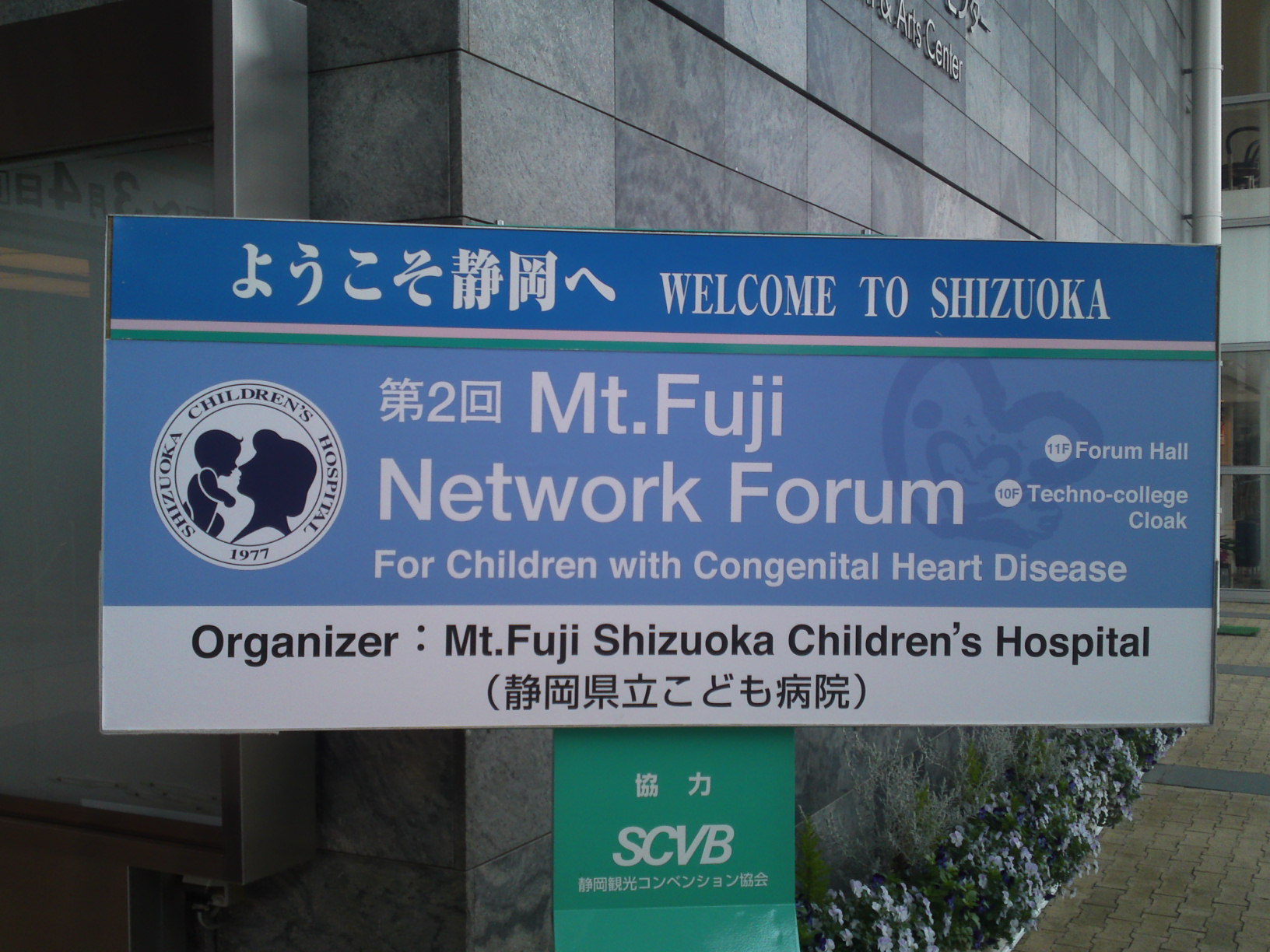
The 2nd Mt. Fuji Network Forum was being held at Grandship on the 2nd and 3rd of March 2012 for an international seminar on children with congenital heart diseases.
As Ms. Keiko Kubota, Chef at Restaurant Gentil, had devised a bento for the participants using exclusively products of Shizuoka Prefecture I deemed it of great interest!

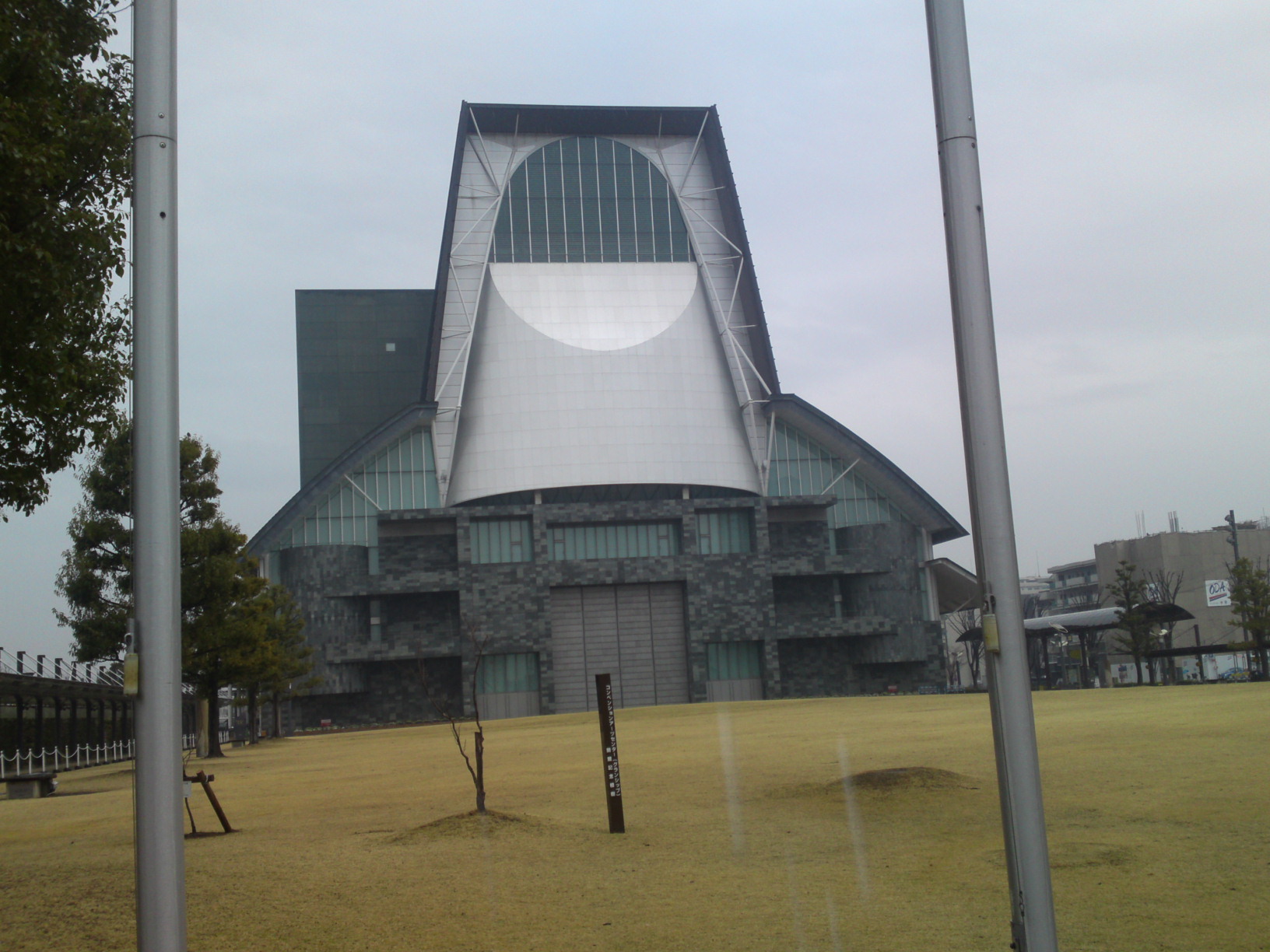
Granship really looks a ship!

The official event board organised by Shizuoka Children’s Hospital!

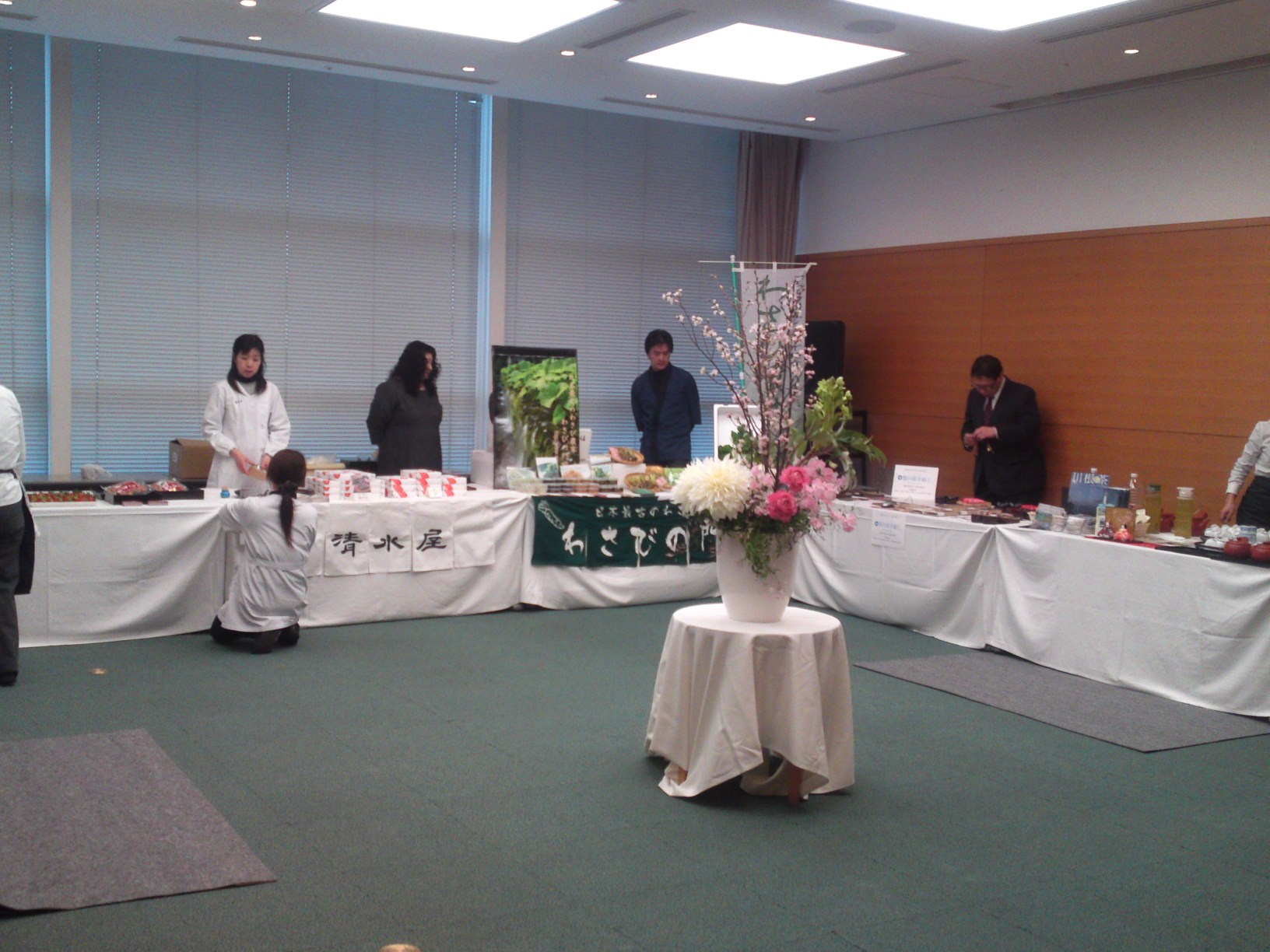
A room had been specially designated to promote some Shizuoka Products!

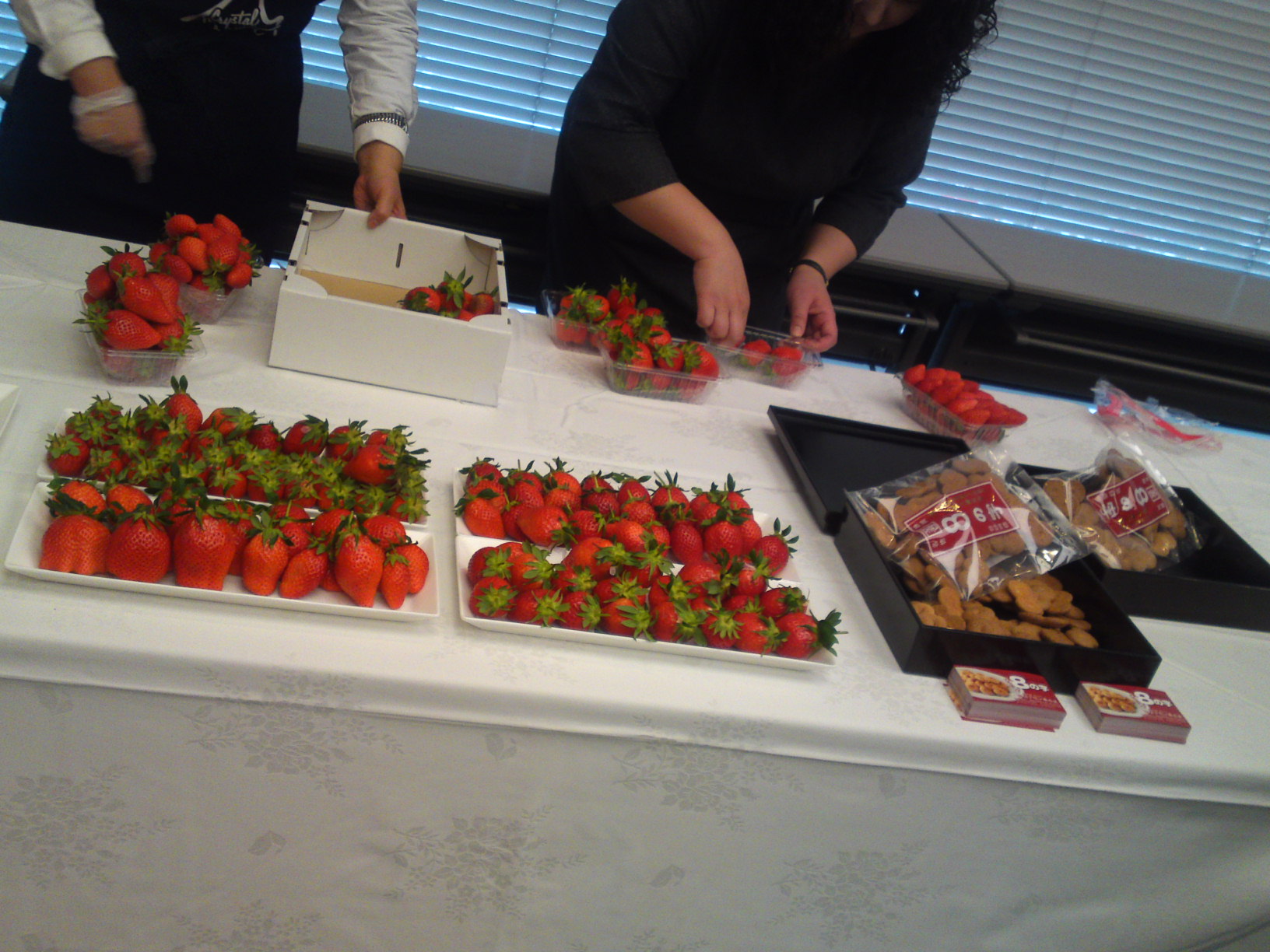
Extravagant strawberries from Fujieda City!

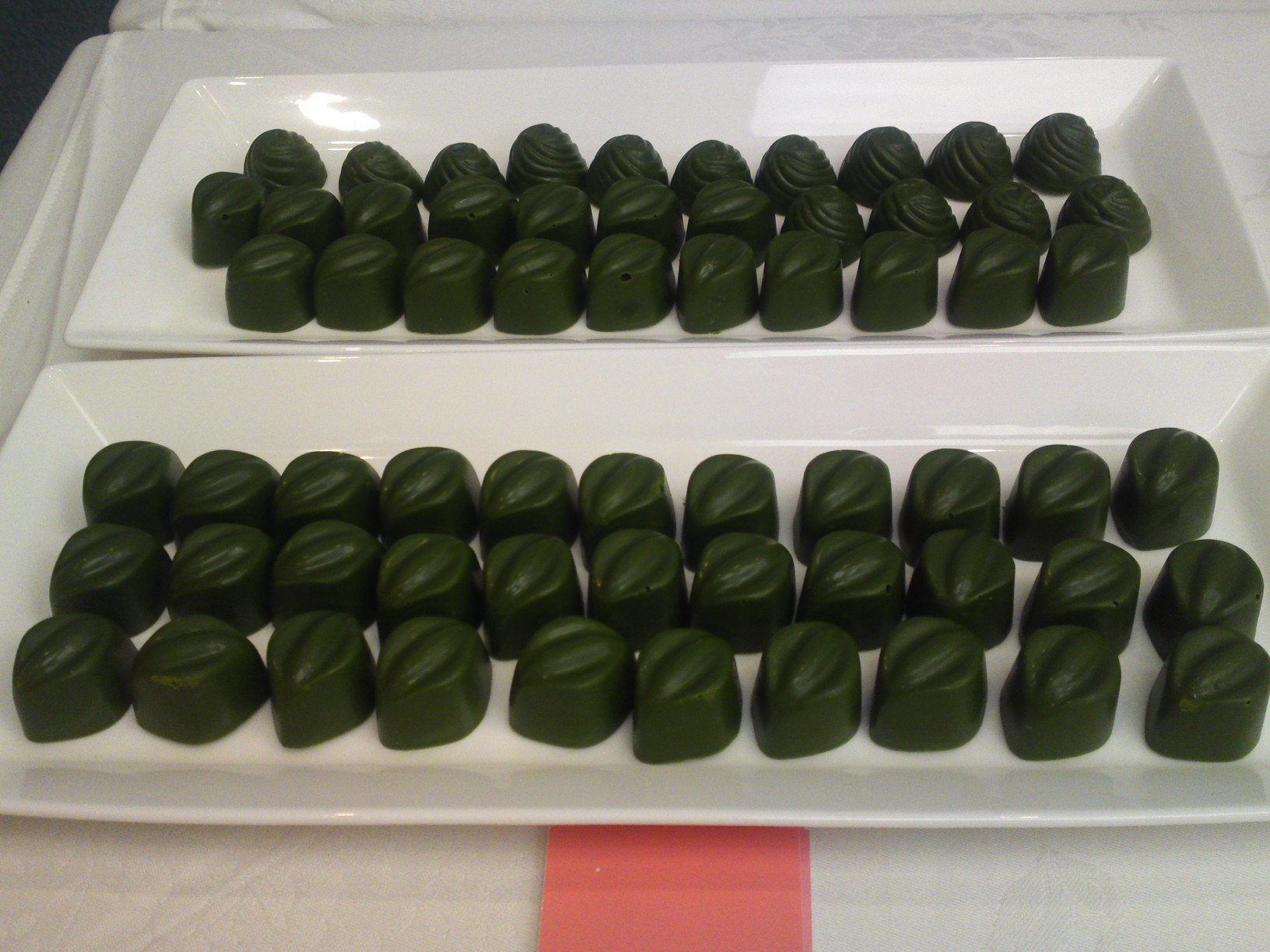
Shizuoka Matcha Chocolates by Gentil!

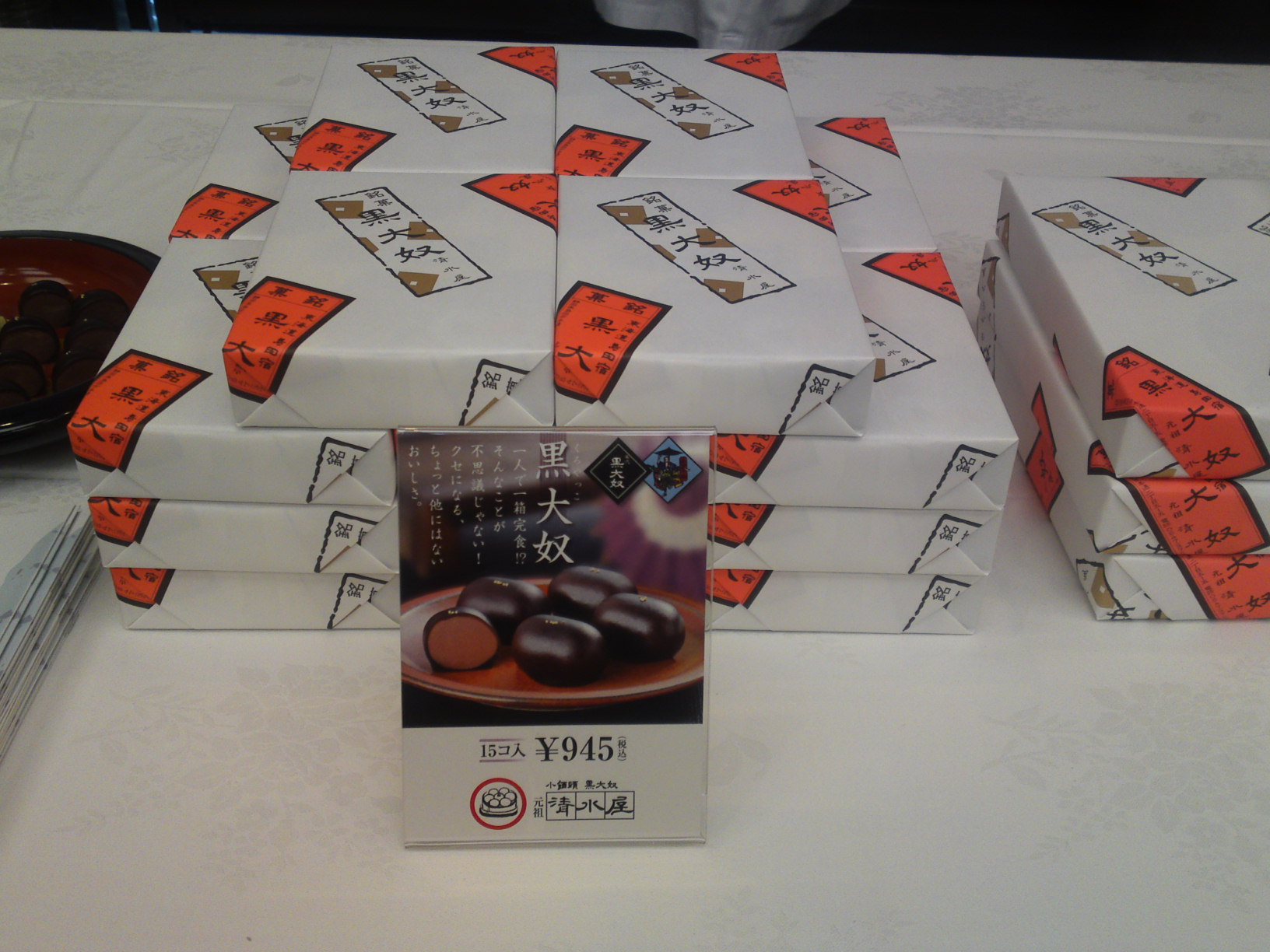
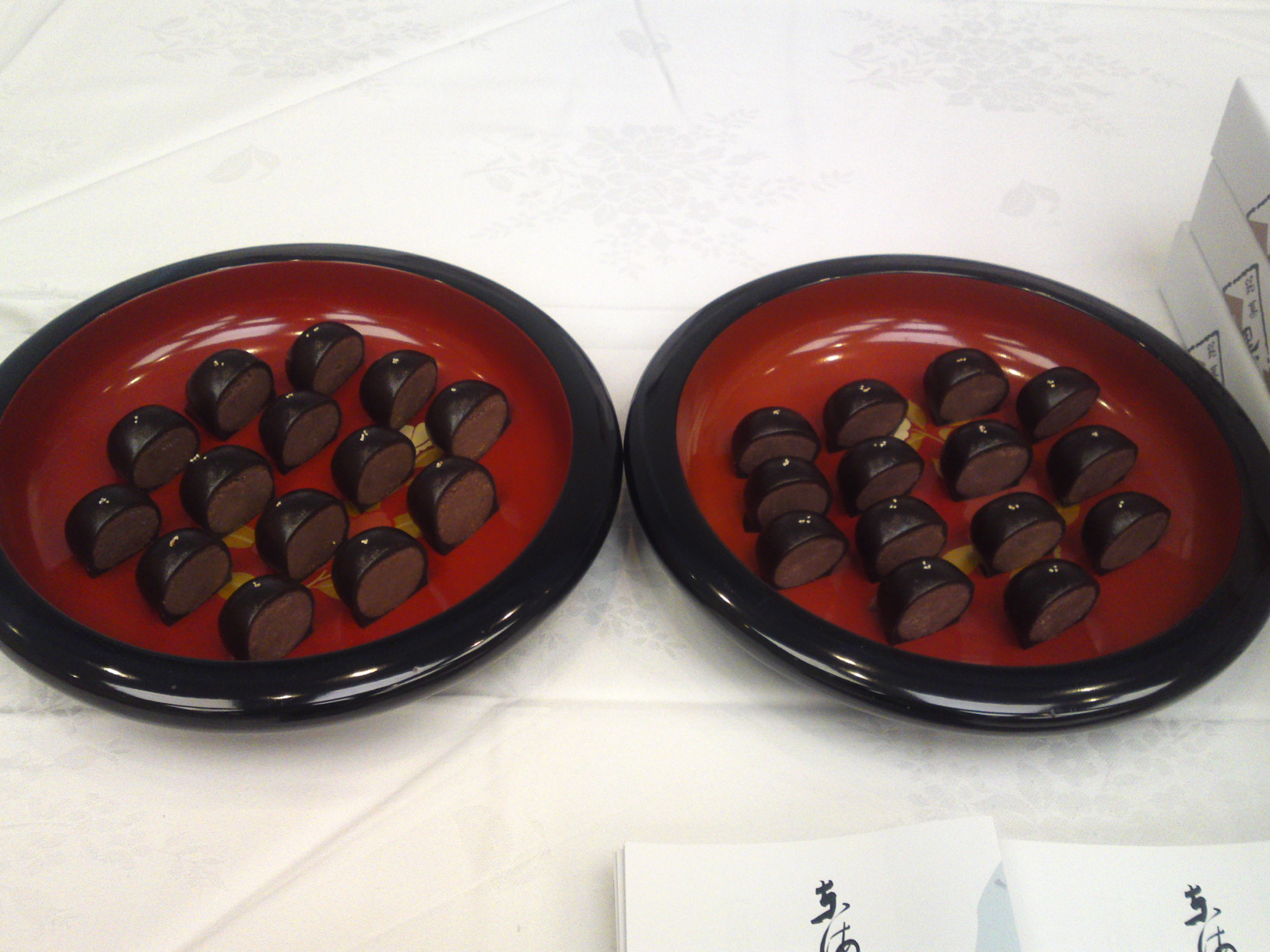
Azuki wagashi cakes by Shimmizuya in Shimada City!

Yummy!

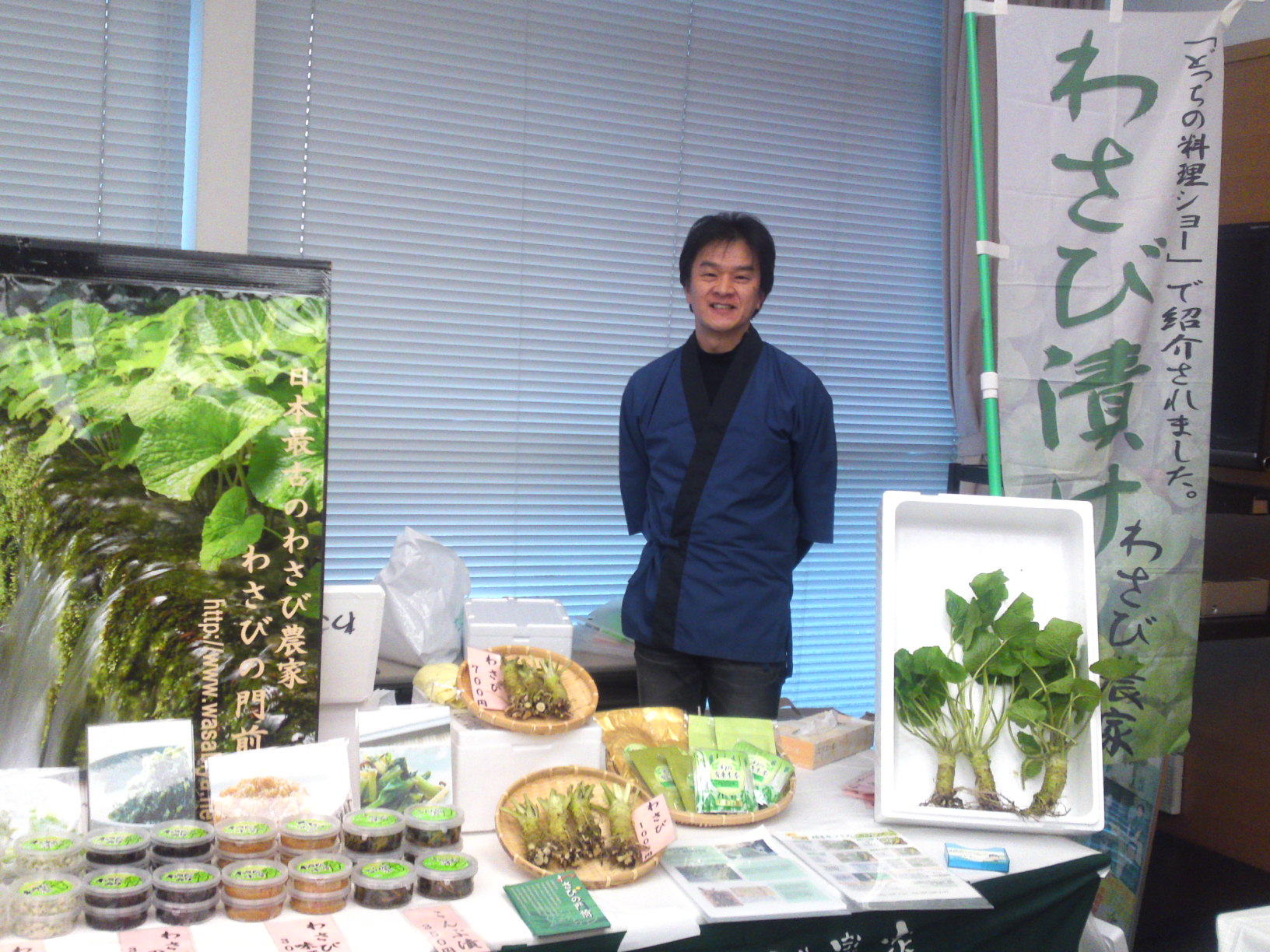
Mr. Shiratori, the 16th generation of the oldest wasabi growing family in Japan, in Utogi, Shizuoka City!

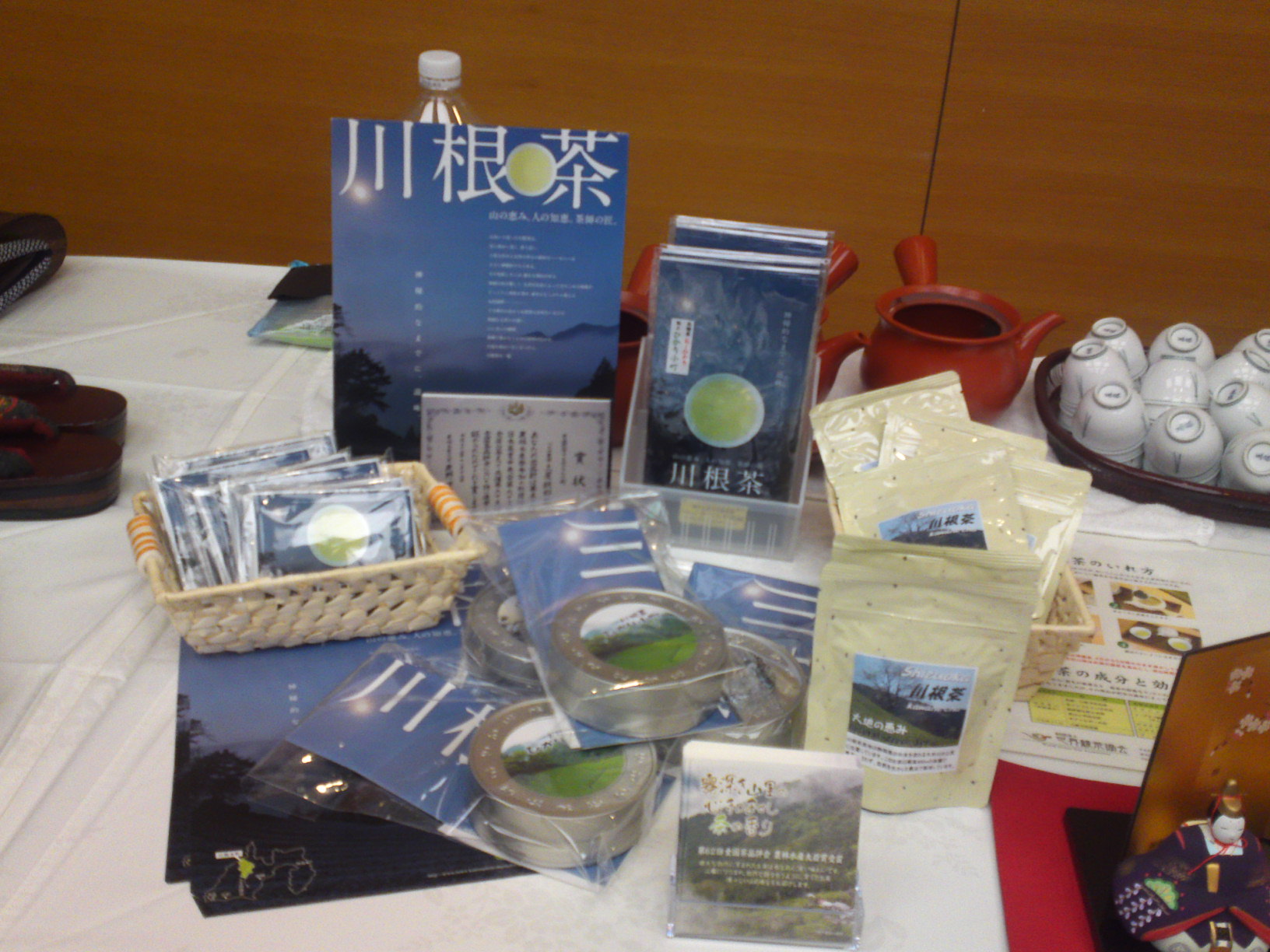
Famous green tea from Kawane!

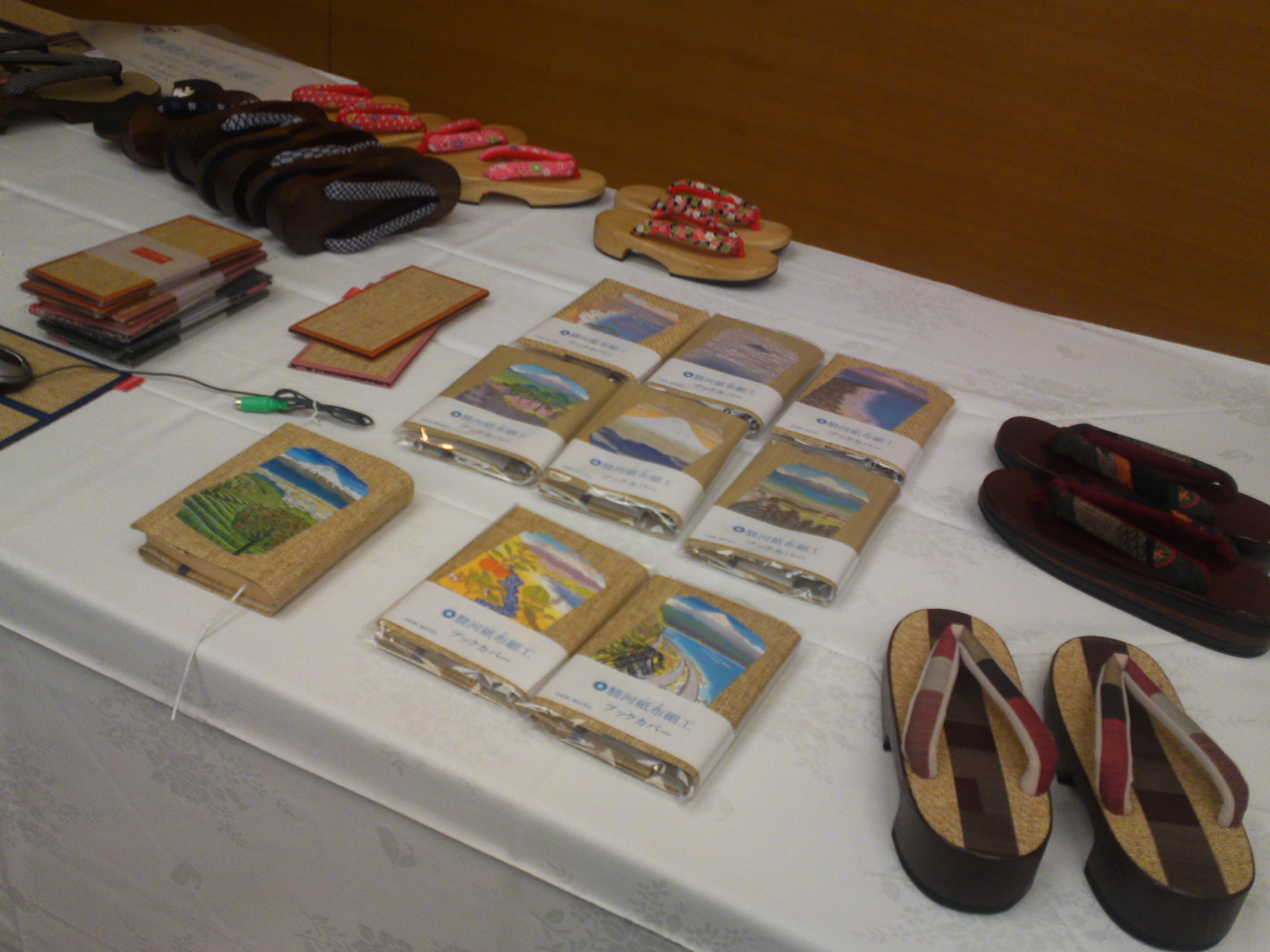
Crafts of Shizuoka including geta!

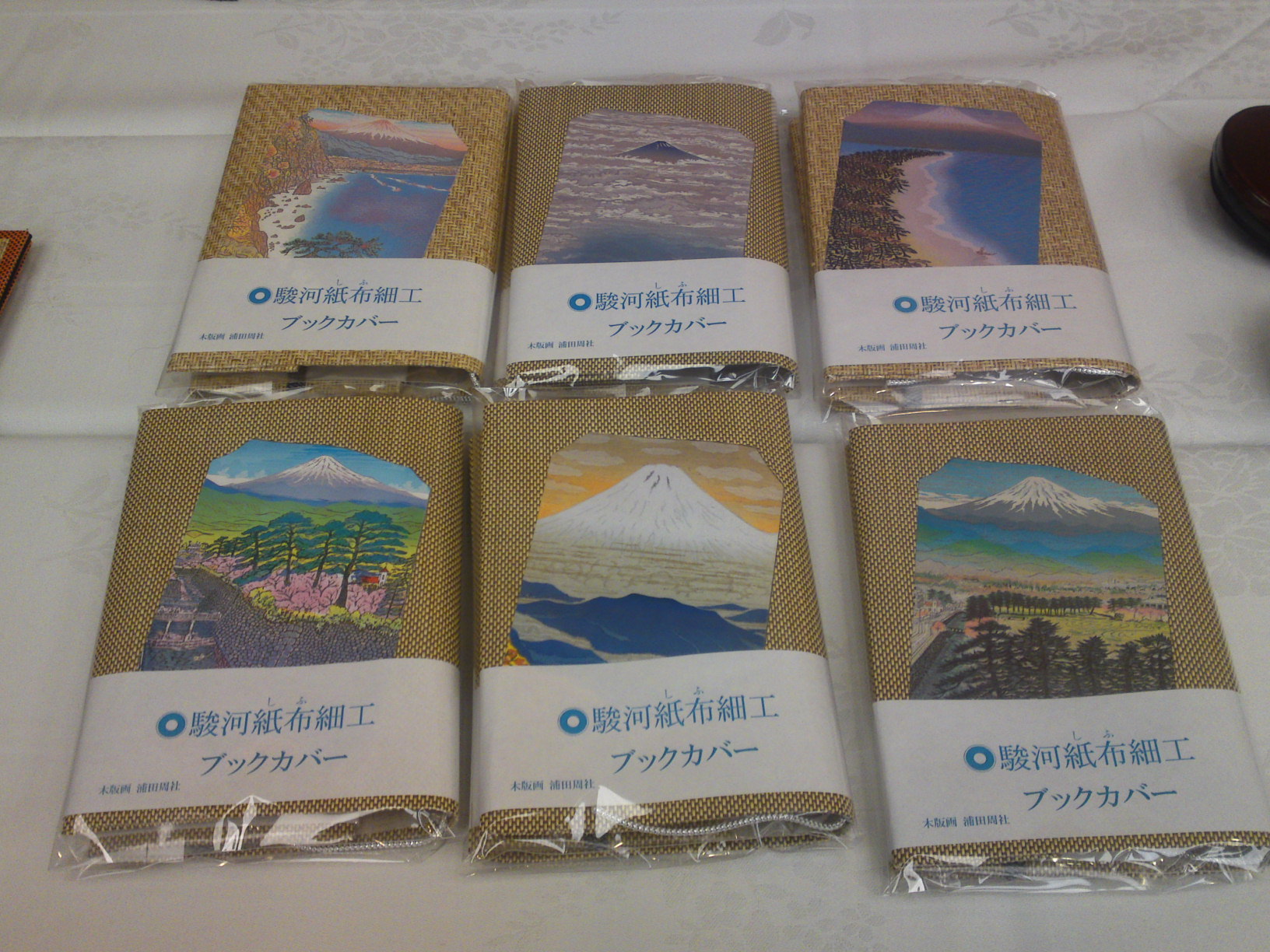
Handcrafted book covers!

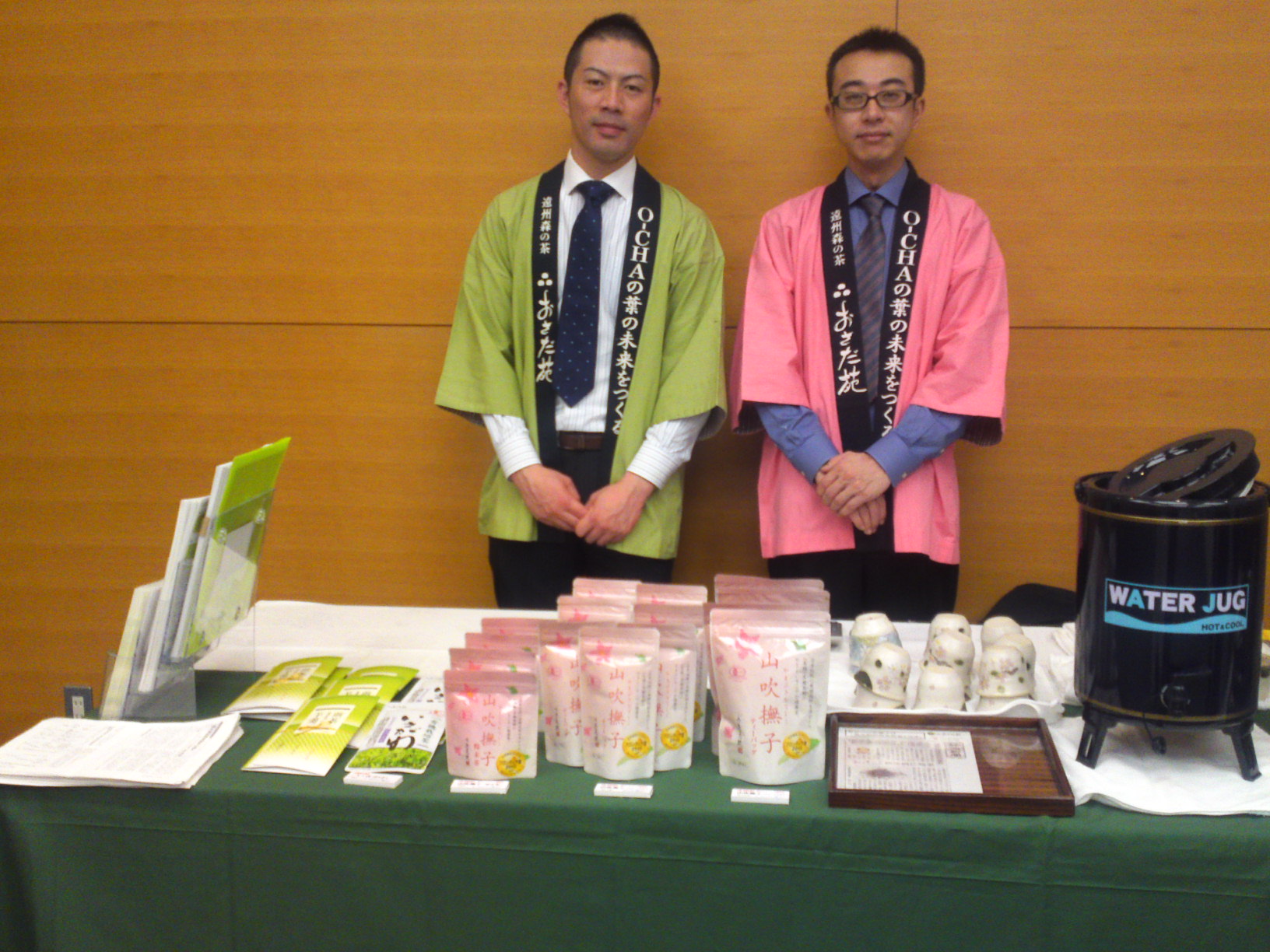
Yamabuki Nadeshiko Organic Health Tea by Osada Tea Factory in Mori Machi!

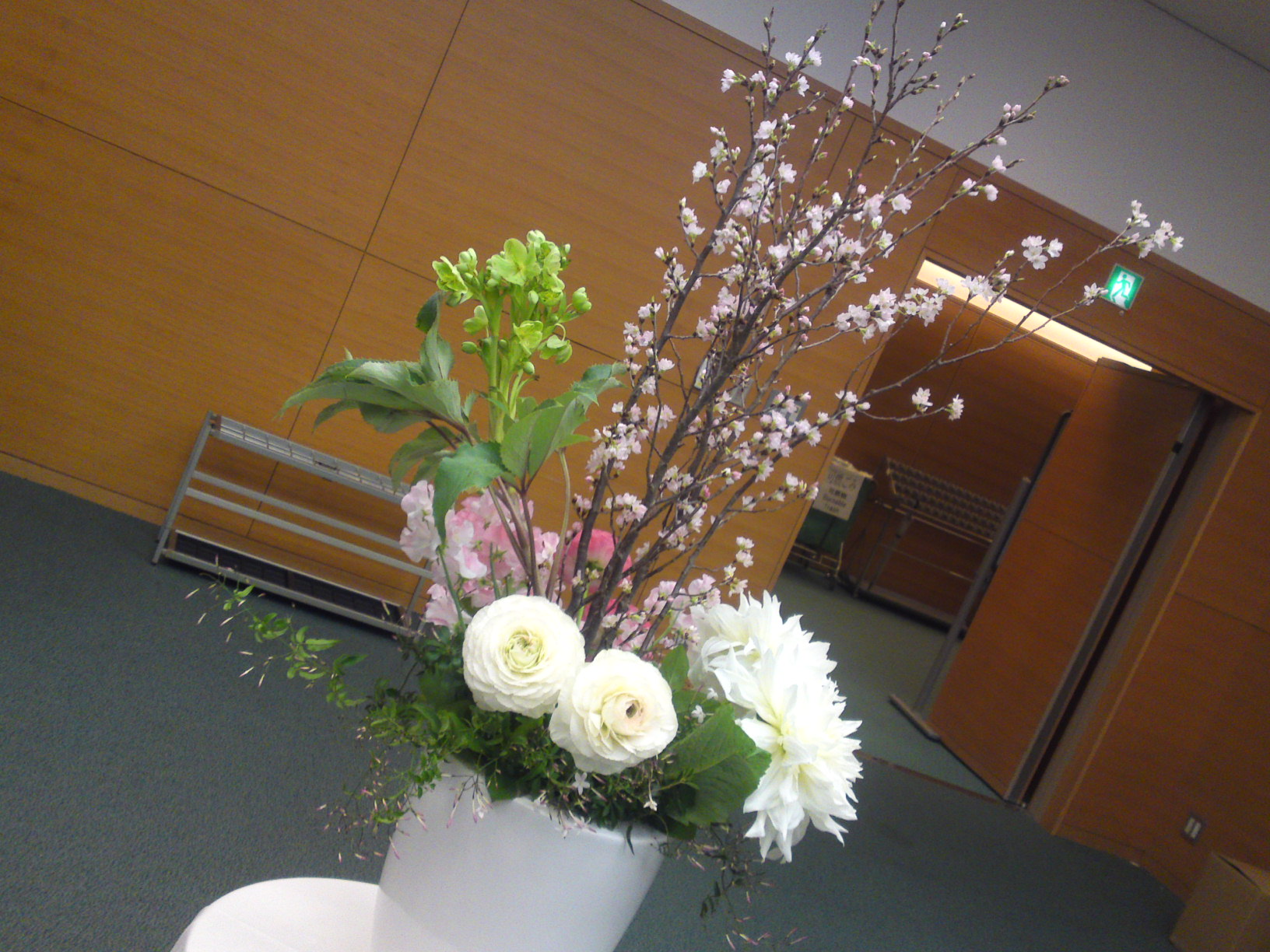
Real flowers including cherry blossoms!

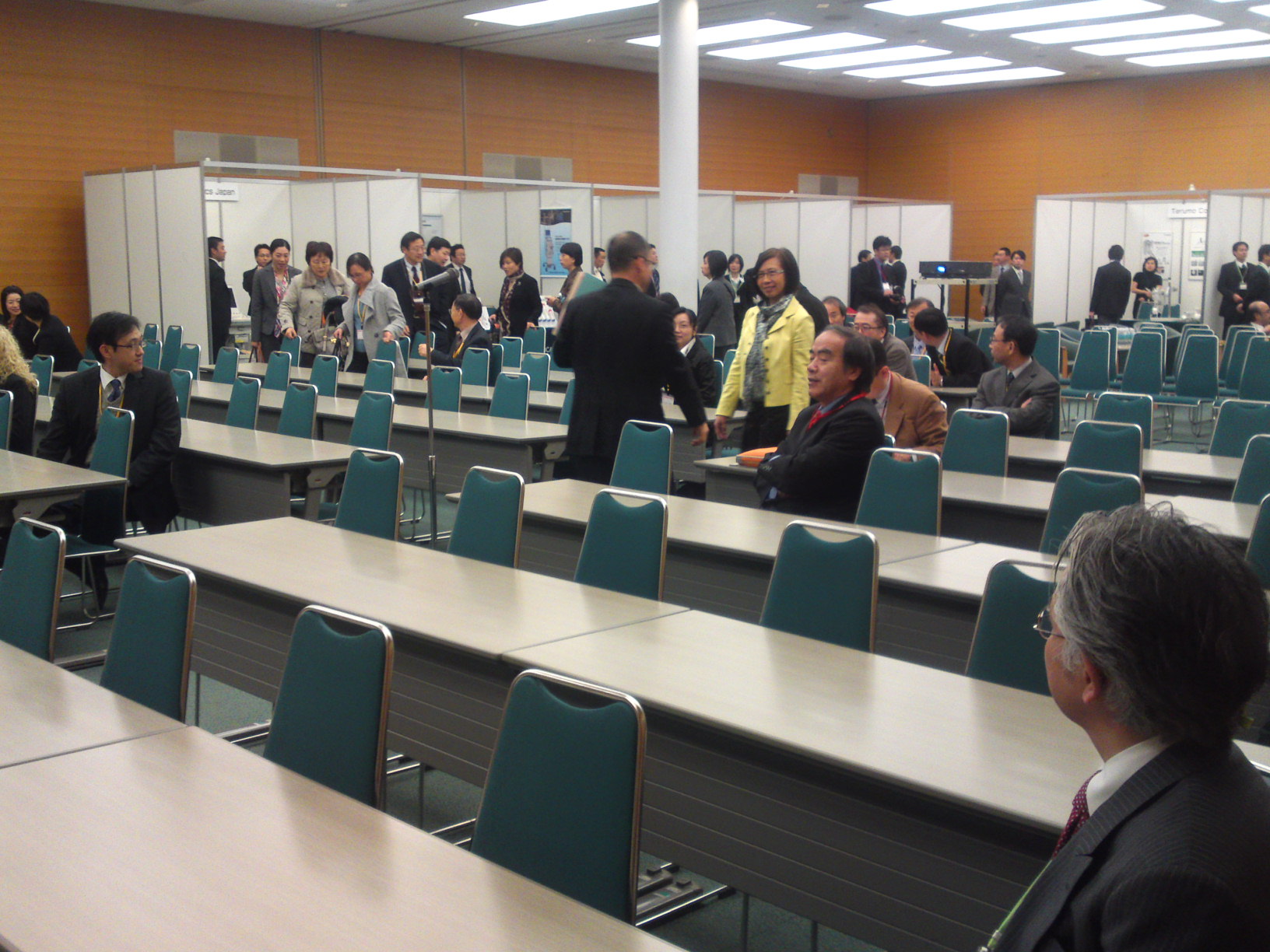
The doctors havin a break and waiting for their bentos coming all the way from Yui!

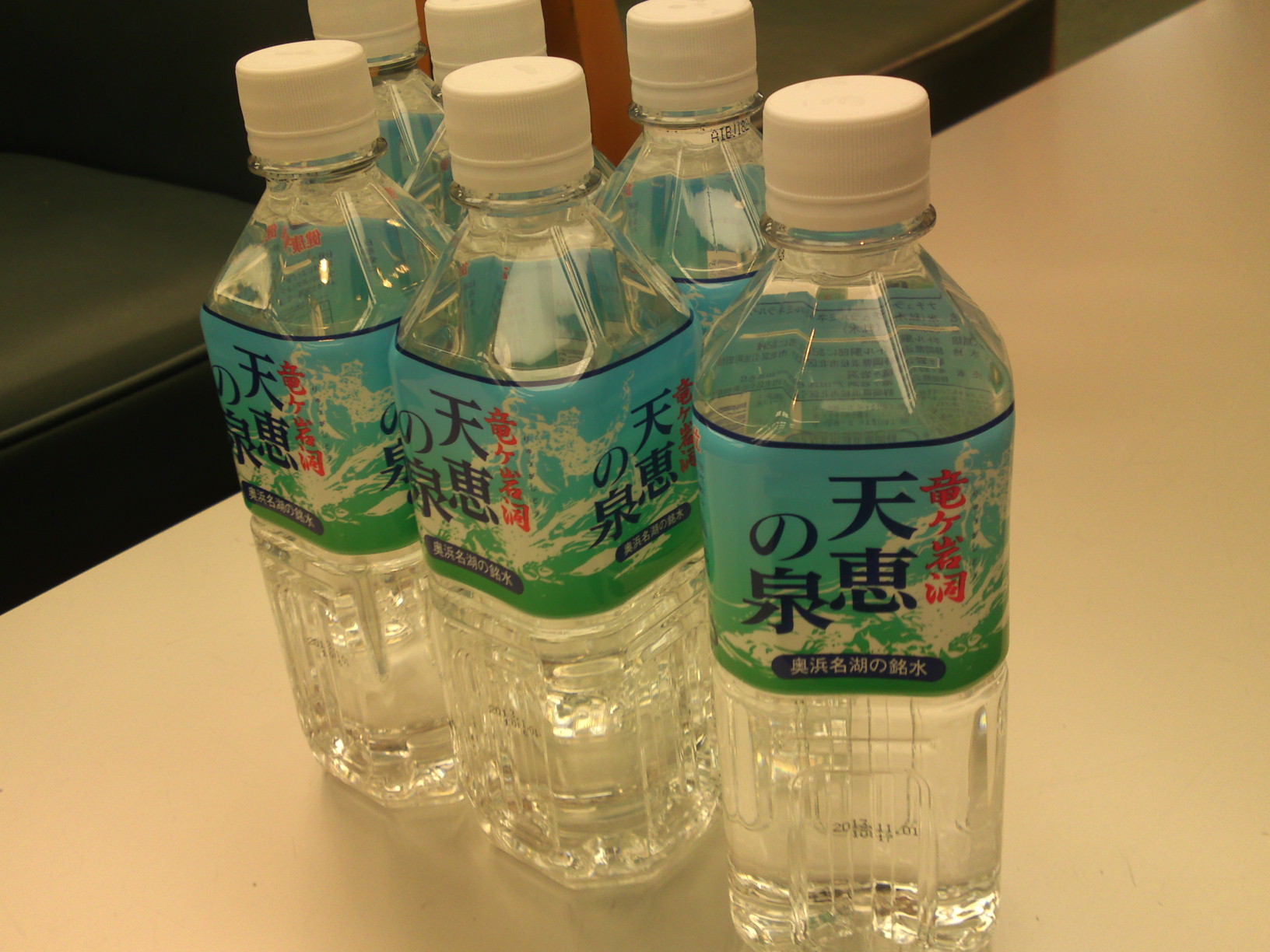
The water served at the seminar came from the Tenkei Source in Ryuugagandou, Hinasa Machi, Hamamatsu City!

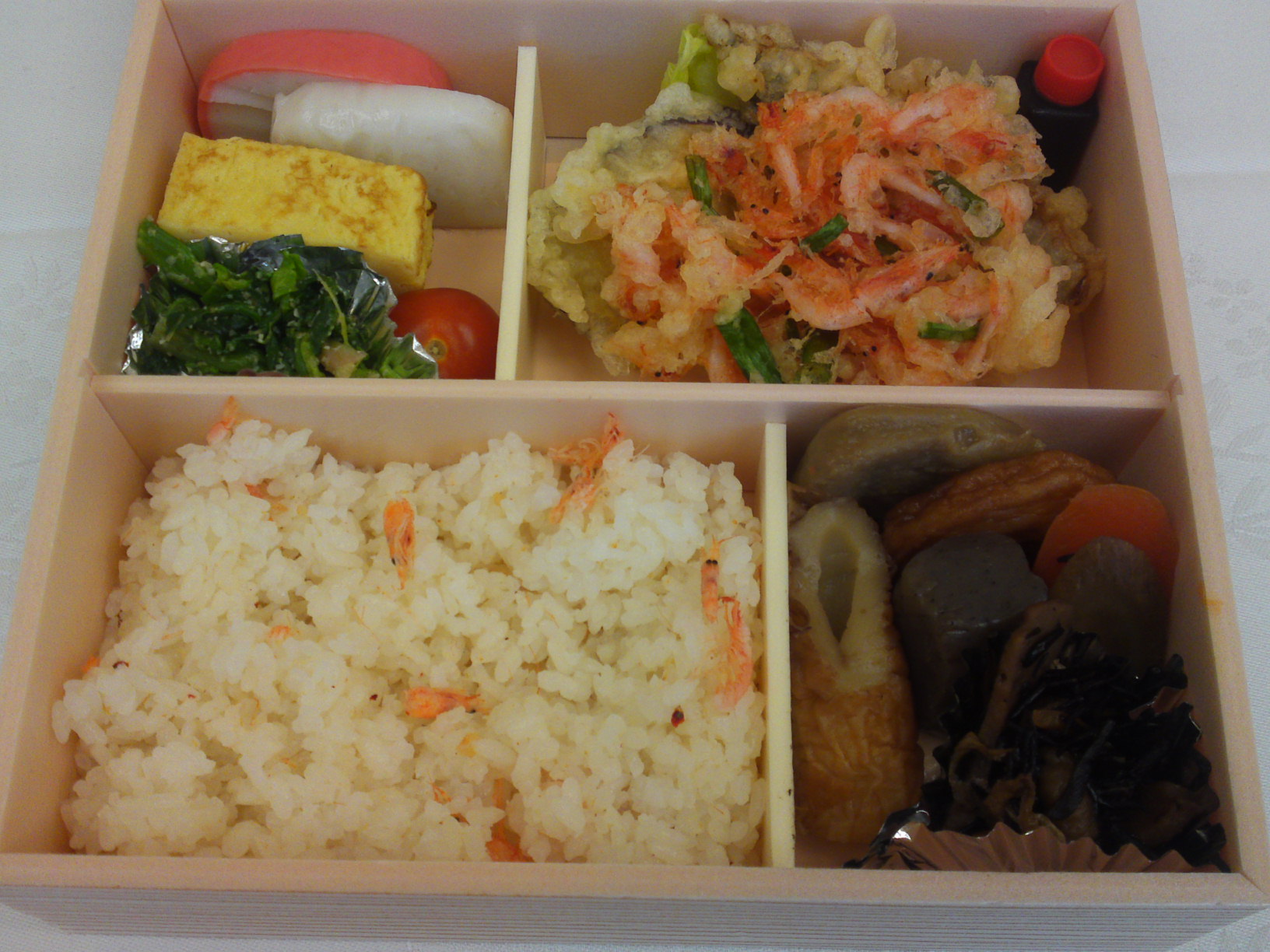
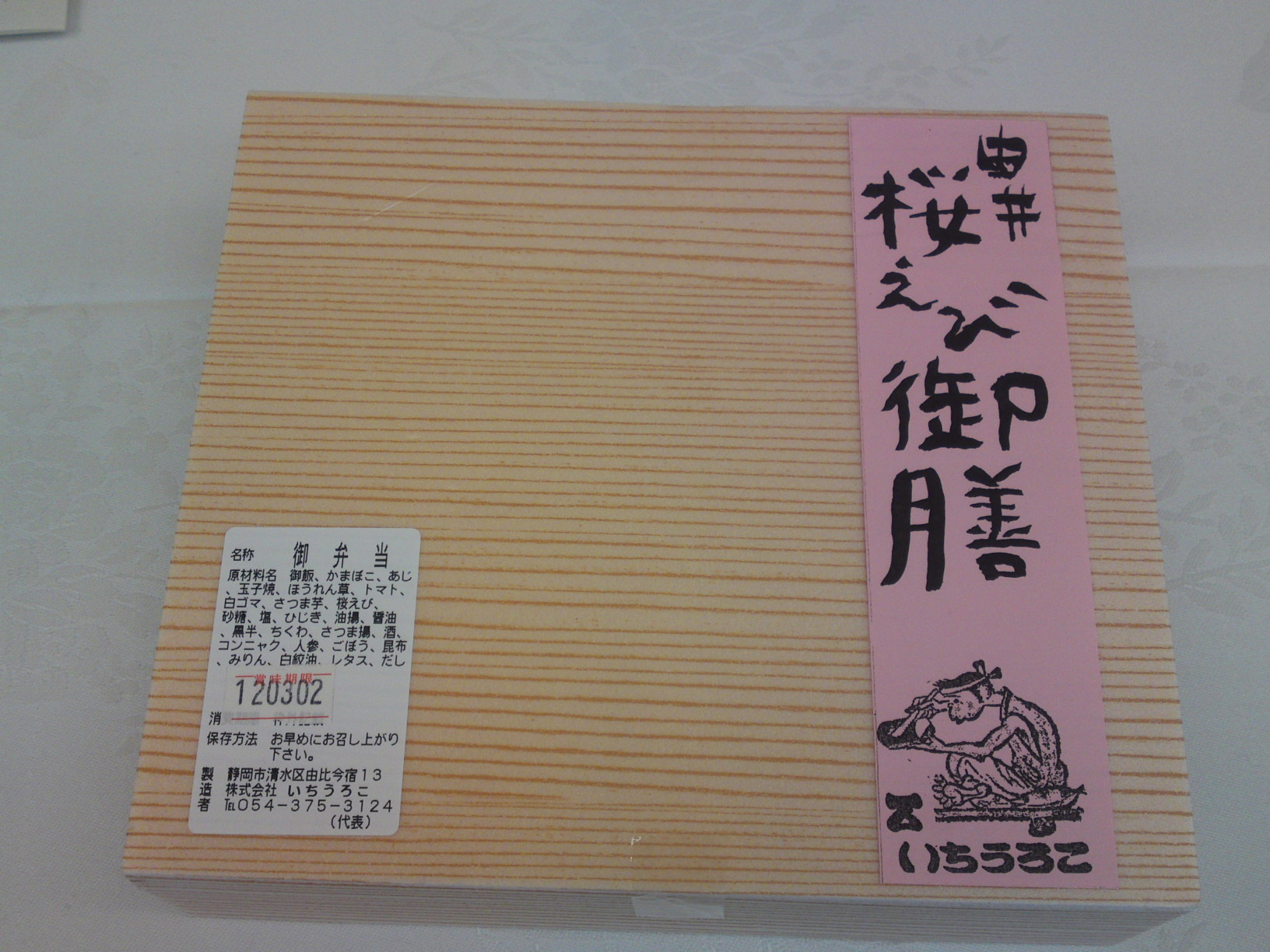
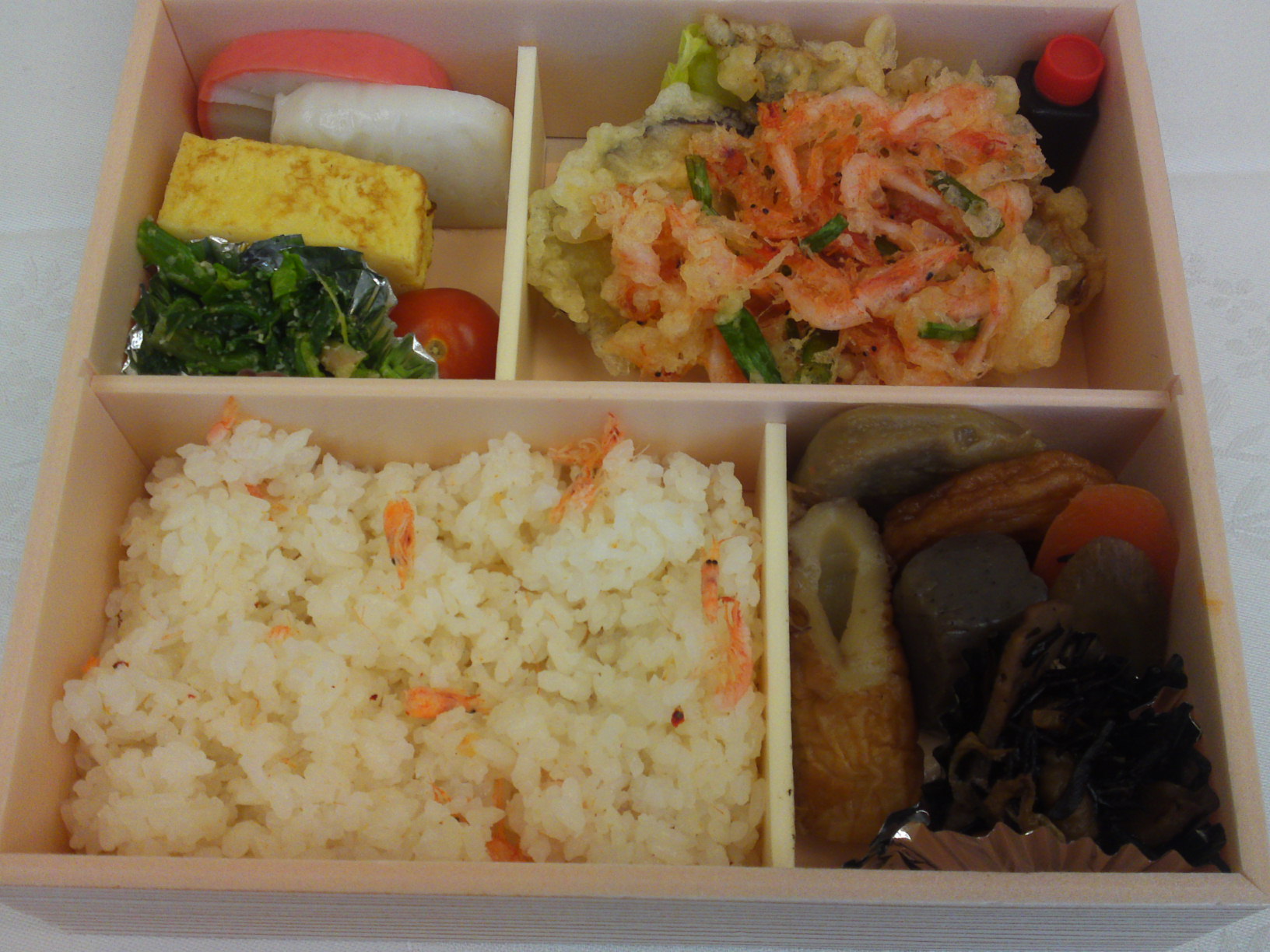
The bento box/lunch box!

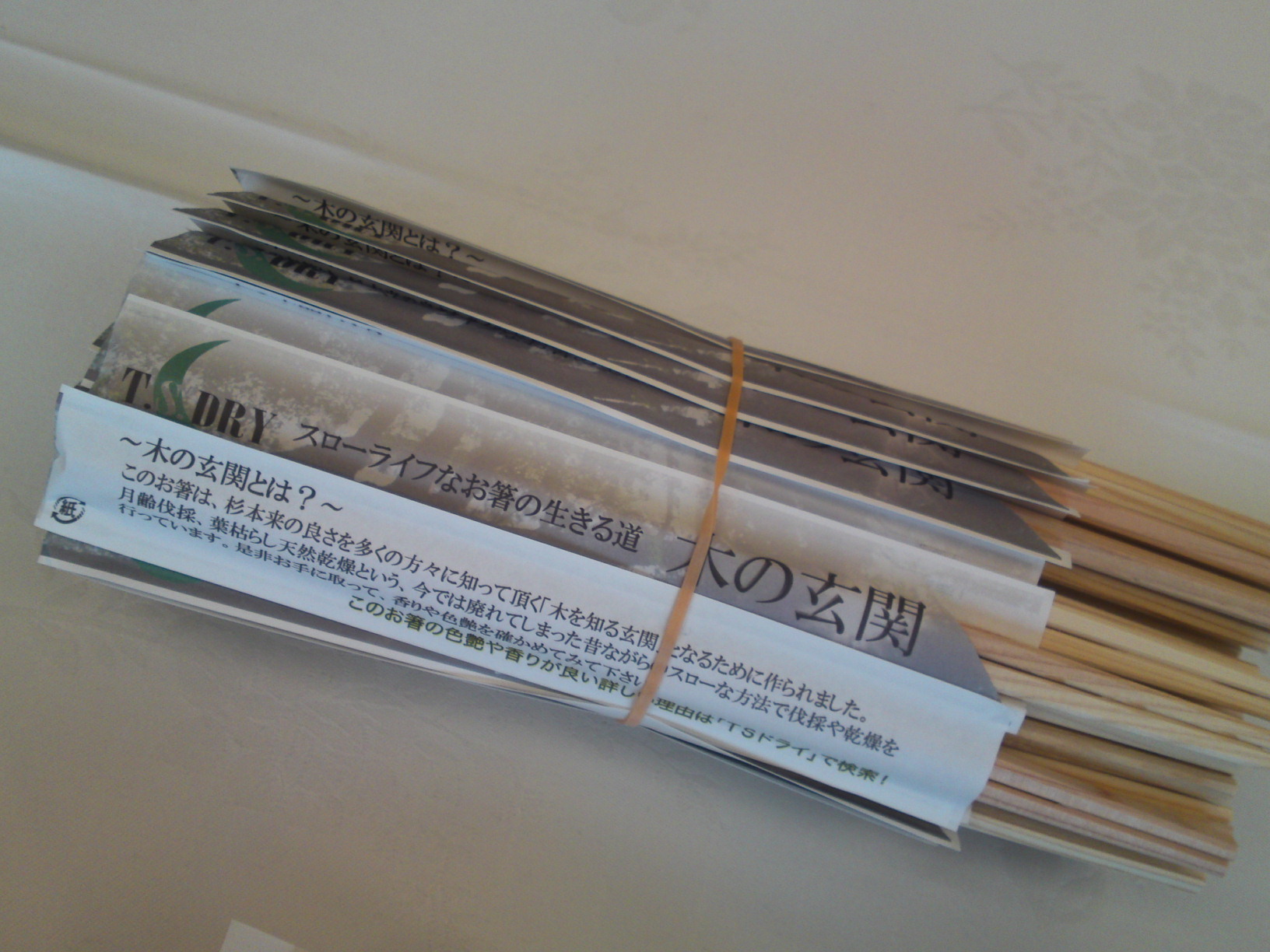
Even the chopsticks came from Shizuoka, namely in Tenryu, Hamamatsu City!

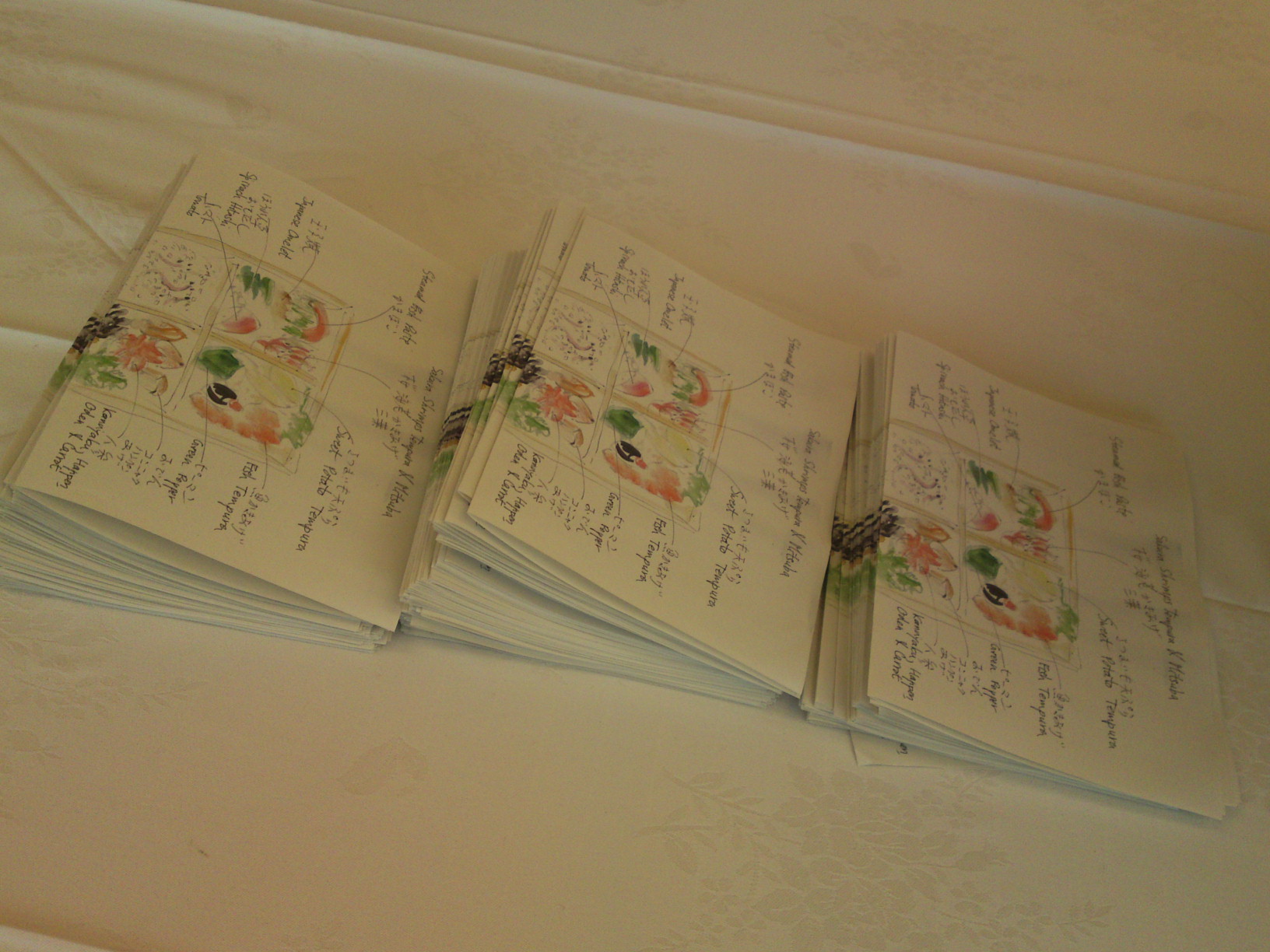
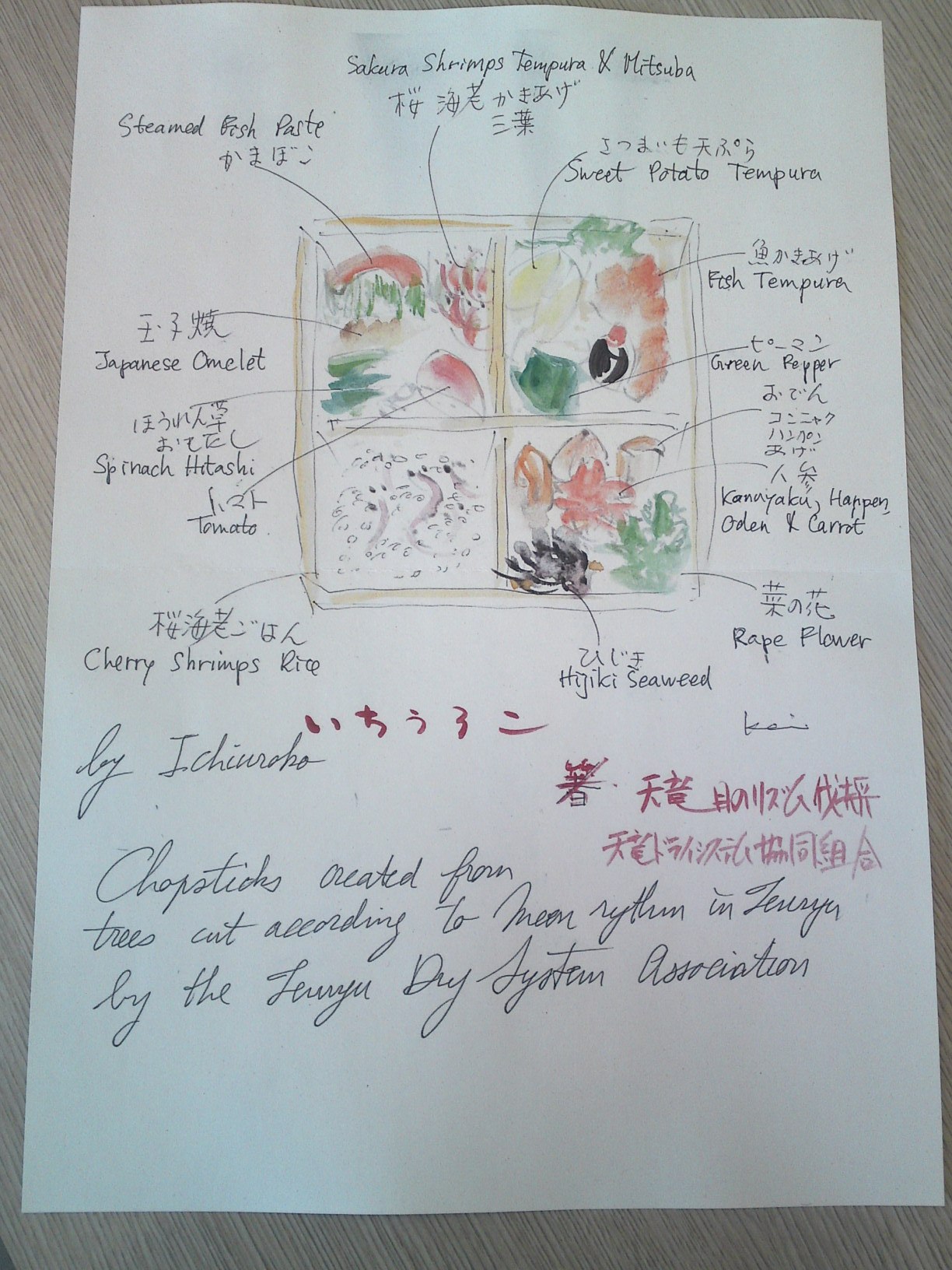
Pamphlets introducing the contents in Japanese and English had been readied!

The picture was hand-drawn by Ms. Keiko Kubota!

Alright, what did we have?
All Shizuoka products, even the rice and salt!

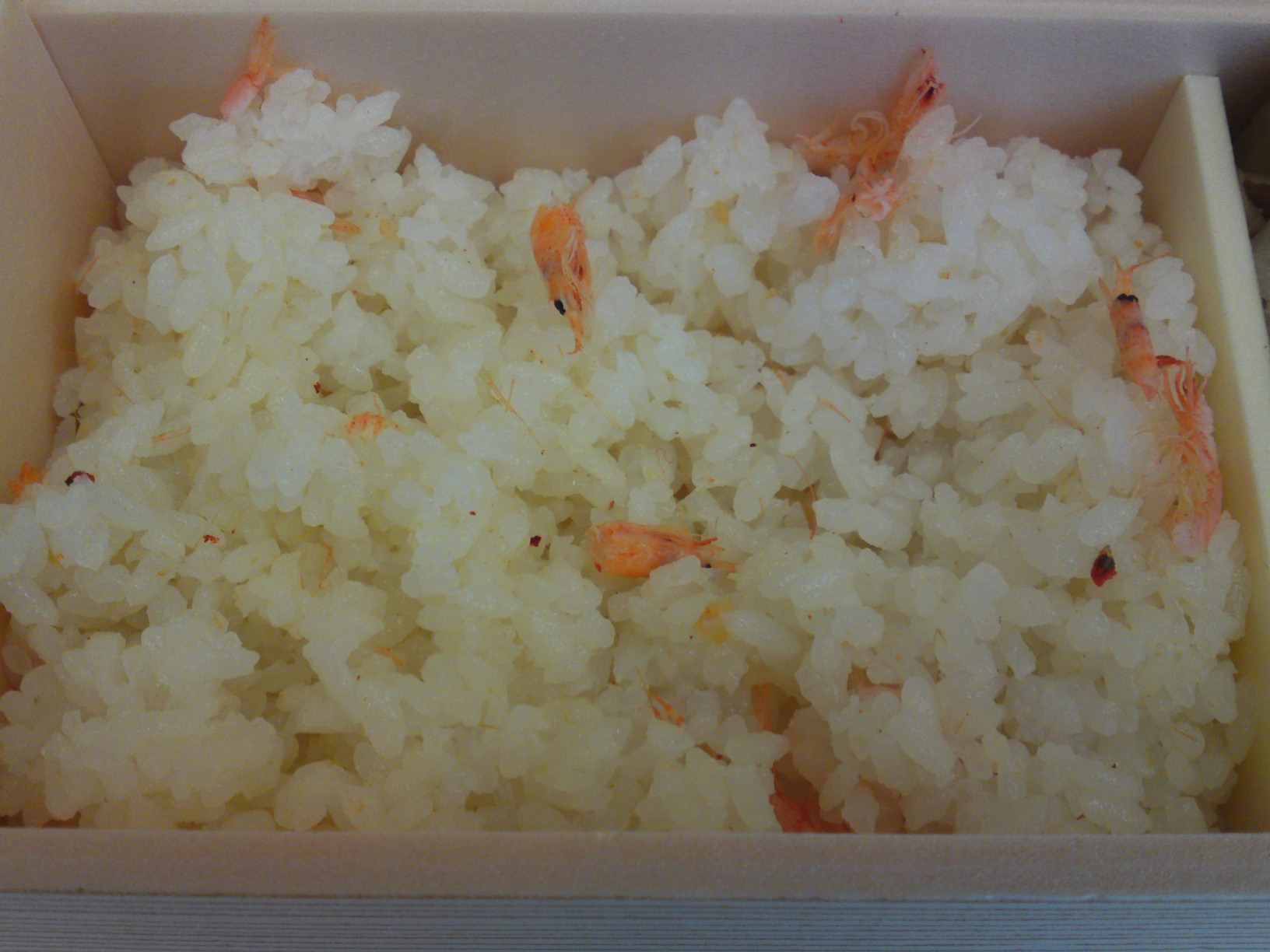
Cherry shrimps/Sakura ebi steamed rice!

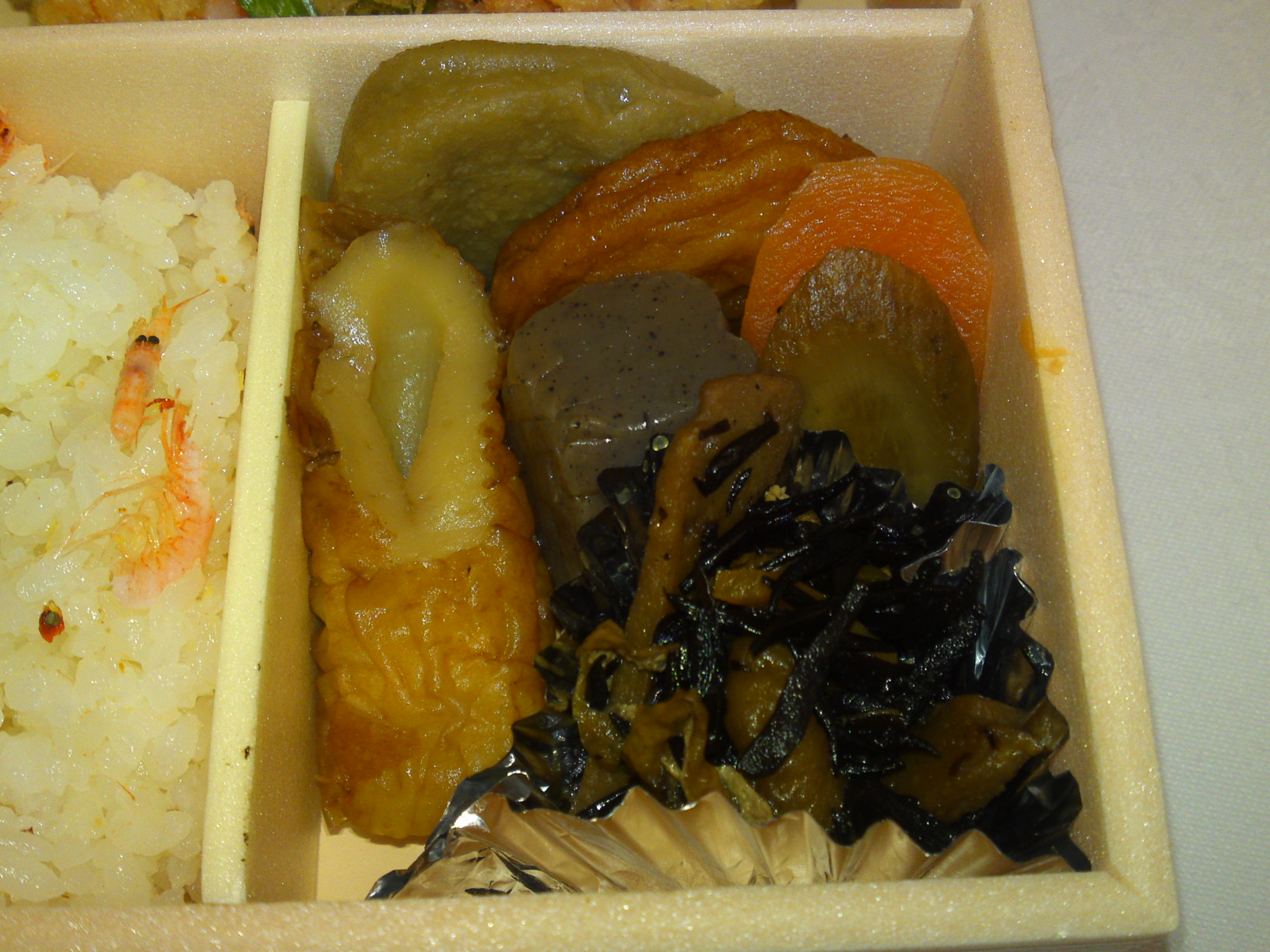
Hanpen, oden, carrot, konyaku, rape flowers and hijiki seaweed!

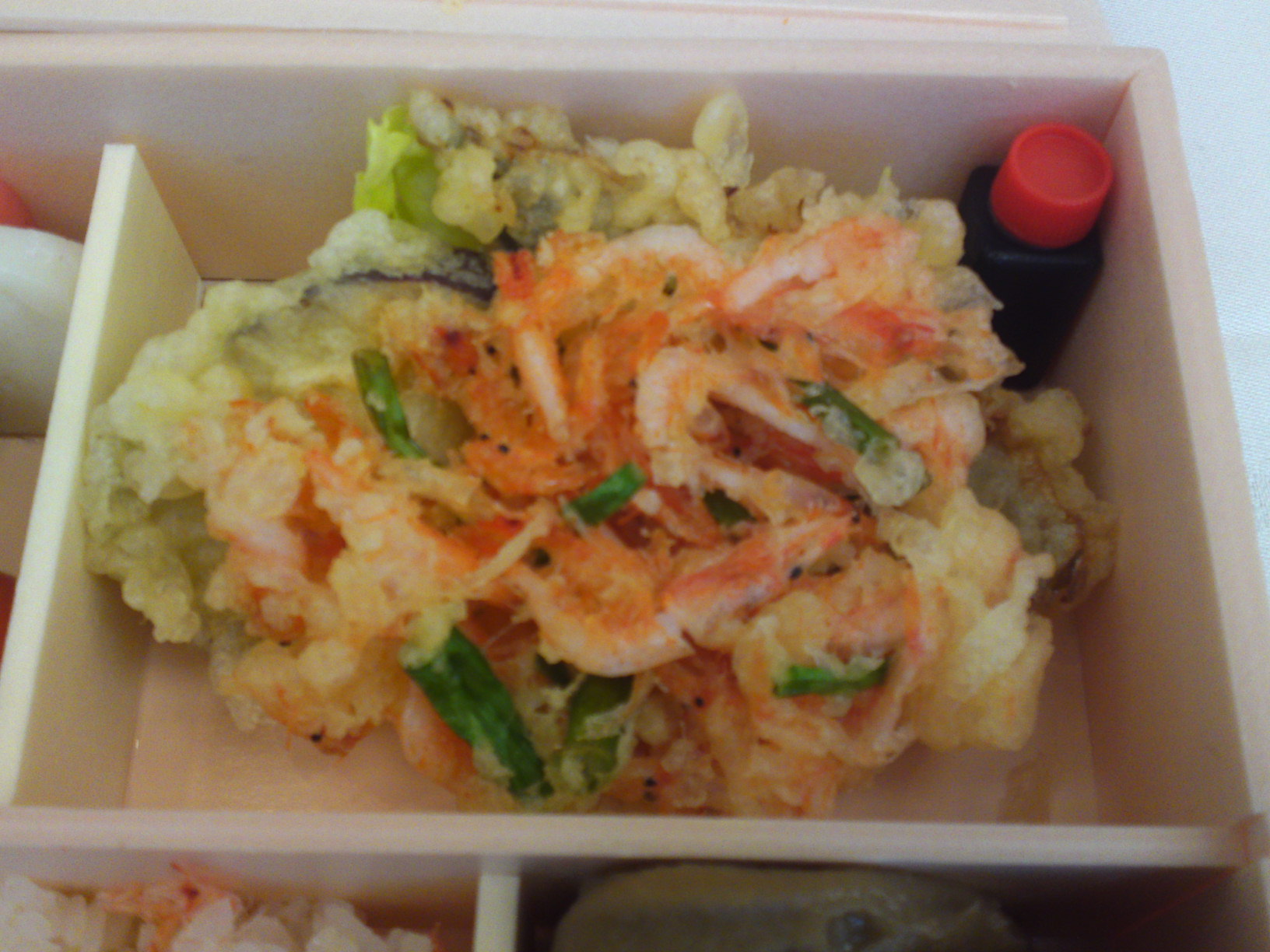
Tempura: Sweet potato, horse mackerel, green pepper and Sakura ebi/sakura shrimps!

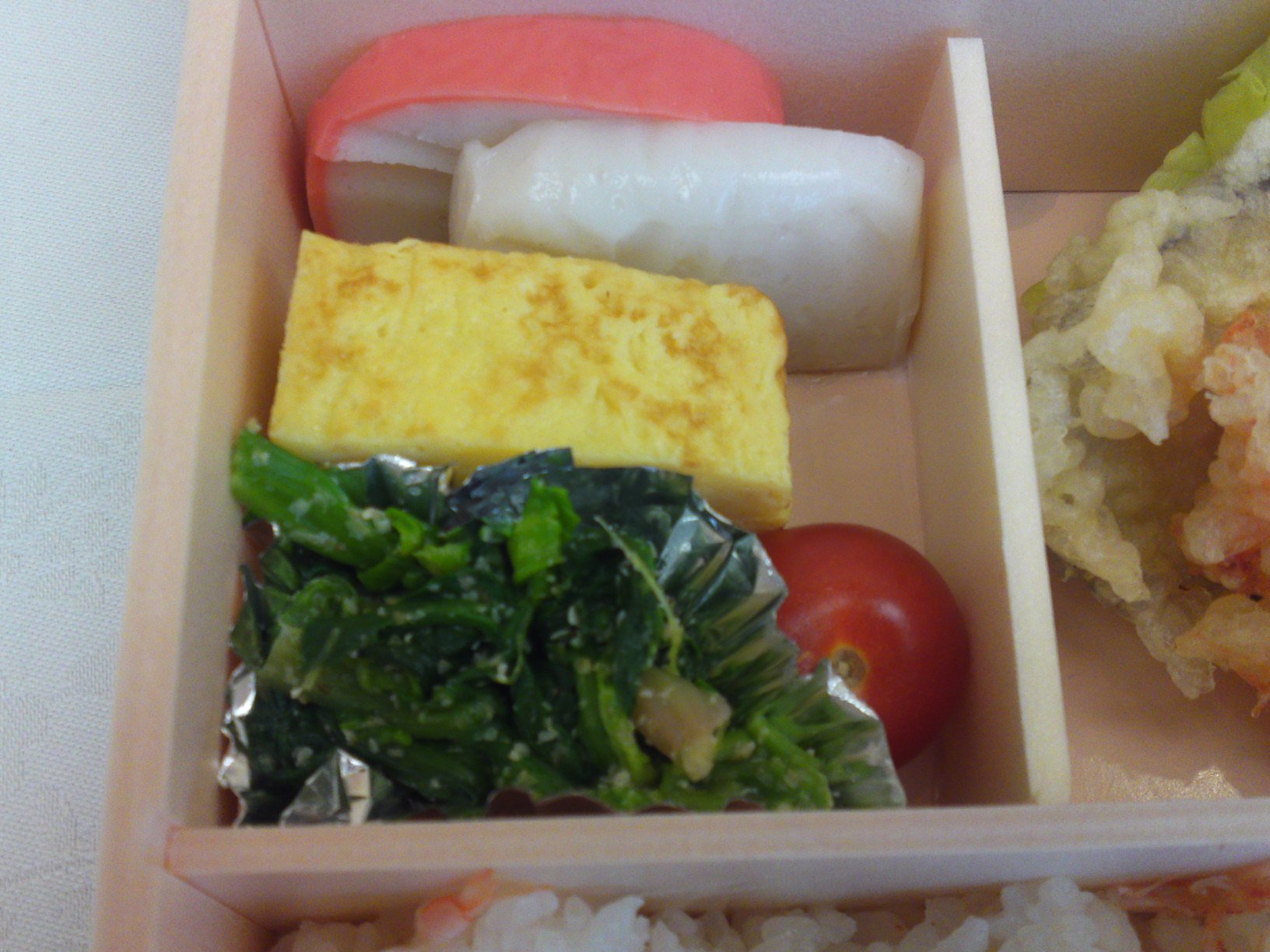
Kamaboko/steamed fish paste, tamagoyaki/Japanese omelet, spinach hitashi and tomato!

A very healthy lunch for doctors!

RECOMMENDED RELATED WEBSITES

Mummy I Can Cook! by Shu Han in London
Pierre.Cuisine, Francescannotwrite, My White Kitchen, 47 Japanese Farms Through The Eyes of Its Rural Communities, Foodhoe, Chucks Eats, Things that Fizz & Stuff, Five Euro Food by Charles,Red Shallot Kitchen by Priscilla,With a Glass, Nami | Just One Cookbook, Peach Farm Studio, Clumsyfingers by Xethia, PepperBento,Adventures in Bento Making, American Bent, Beanbento, Bento No, Bento Wo Tsukurimashou, Cooking Cute, Eula, Hapabento , Happy Bento, Jacki’s Bento Blog, Kitchen Cow, Leggo My Obento, Le Petit Journal Bento & CO (French), Lunch In A Box,
Susan at Arkonlite, Vegan Lunch Box; Tokyo Tom Baker, Daily Food Porn/Osaka, Only Nature Food Porn, Happy Little Bento, The Herbed Kitchen, J-Mama’s Kitchen, Cook, Eat, Play, Repeat, Bento Lunch Blog (German), Adventures In Bento, Anna The Red’s Bento Factory, Cooking Cute, Timeless Gourmet, Bento Bug, Ideal Meal, Bentosaurus, Mr. Foodie (London/UK), Ohayo Bento,

Must-see tasting websites:

-Sake: Tokyo Through The Drinking Glass, Tokyo Foodcast, Urban Sake, Sake World
-Wine: Palate To Pen, Warren Bobrow, Cellar Tours, Ancient Fire Wines Blog
-Beer: Good Beer & Country Boys, Another Pint, Please!
-Japanese Pottery to enjoy your favourite drinks: Yellin Yakimono Gallery

Sushi: Kawahagi-Filefish Sashimi & Sushi at Sushi Ko in Shizuoka City!

Service: Very friendly and always accommodating
Facilities: Great overall cleanliness. Superb washroom
Prices: Reasonable
Strong points: Great use of local seafood. Will try hard to accommodate any requests!

Kawahagi, or Filefish or Leather jacket in the Land of Oz, must be one of the most underrated fish in the World!
Some people go as far as to say that penny for penny it is worth more than overpriced globefish/fugu!

As we sat at Sushi Ko, our favorite Sushi Restaurant in Shizuoka City we noticed “Kawahagi Tsukuri”/カワハギ造り/Filefish sashimi Plate written on the small board featuring the “specials” of the day!

The live filefish taken out of the tank by the chef!
The fish had been caught off Sagara in Shizuoka Prefecture!

Sushi Ko has a great list of local sake, but I had to order one from Masu Ichi Brewery in Shizuoka City as this might well be the last bottle as the brewery closed down following the untimely death of its owner/master brewer. An incredible loss for the Shizuoka Sake World!

Tuna Tartare as the snack for the first drink!

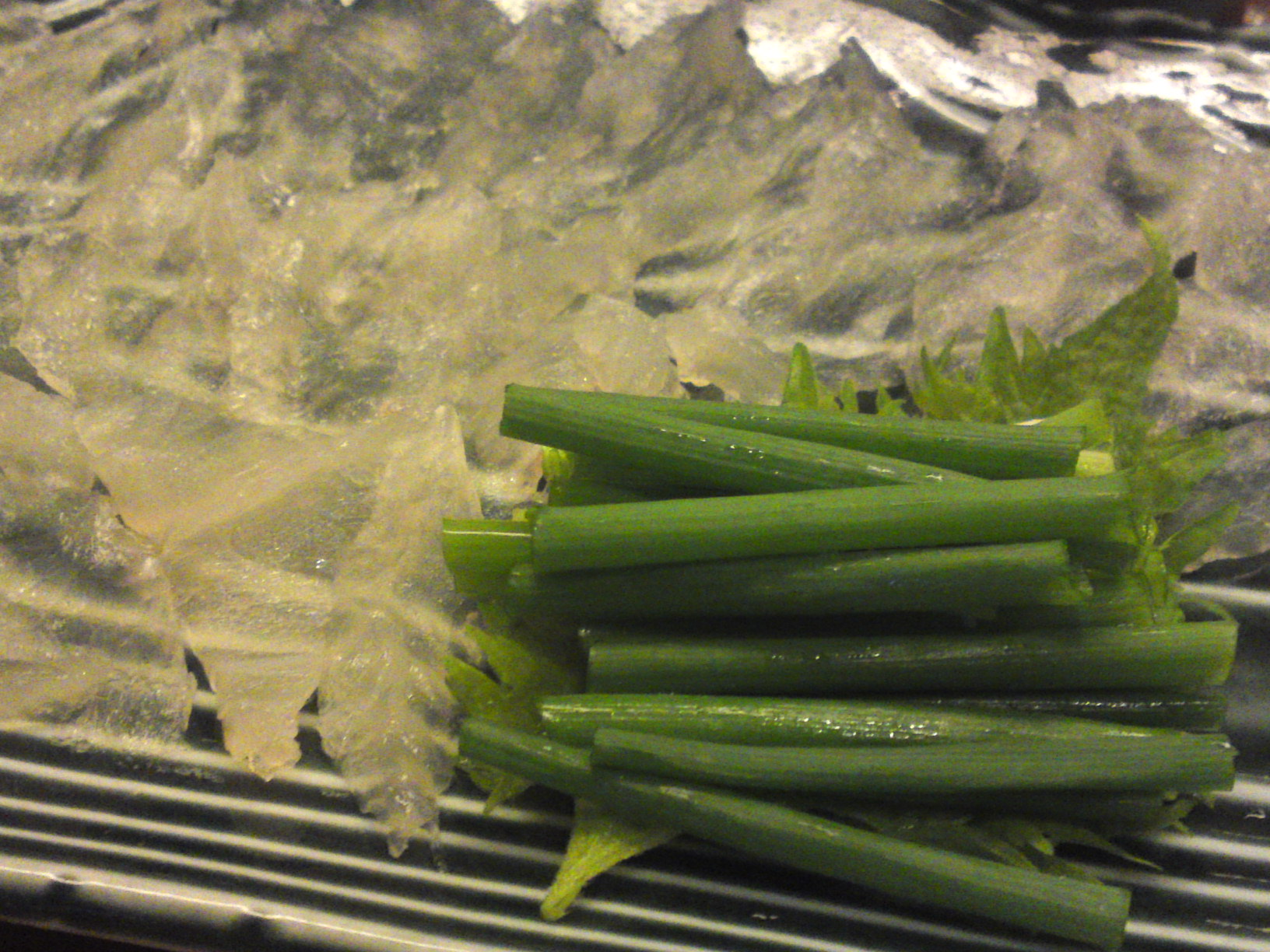
The filefish sashimi plate!
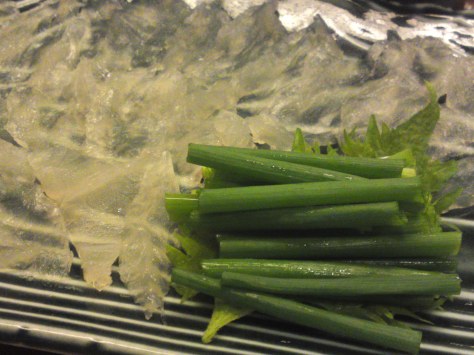
You roll the fine slices of filefish around some thin leeks before dipping it in its sauce!
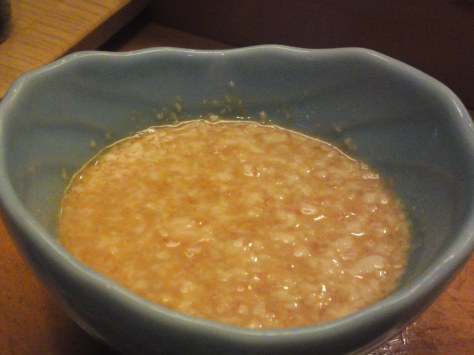
The dip sauce!
It was made with the fresh raw liver of the filefish finely chopped and mixed with ponzu!
A true delicacy!

The chef had kept apart a little sashimi and liver for two more morsels!

A nigiri with chopped thin leeks under the fish topped with its liver!

A gunkan/”mother ship” with the sashimi topped with its liver and chopped thin leeks!
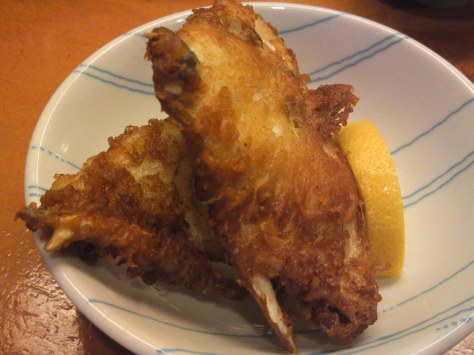
And the deep-fried jowls of the fish you eat with your fingers (that you lick later!) to cap it all!
Have I convinced you to look for that fish next time you see it on a market?

“Pon kara maguro”/deep-fried tuna cubes with grated daikon seasoned with chili pepper!

Of course the filefish was only the beginning of our dinner.
So for the record here we go including the above picture!

Maguro Zuke/Marinated lean part of tuna!

Hotate/Scallops!

Amaebi/Sweet shrimps!
(sorry for the fuzzy pic, as my mind was getting a bit fuzzy with all the sake!)

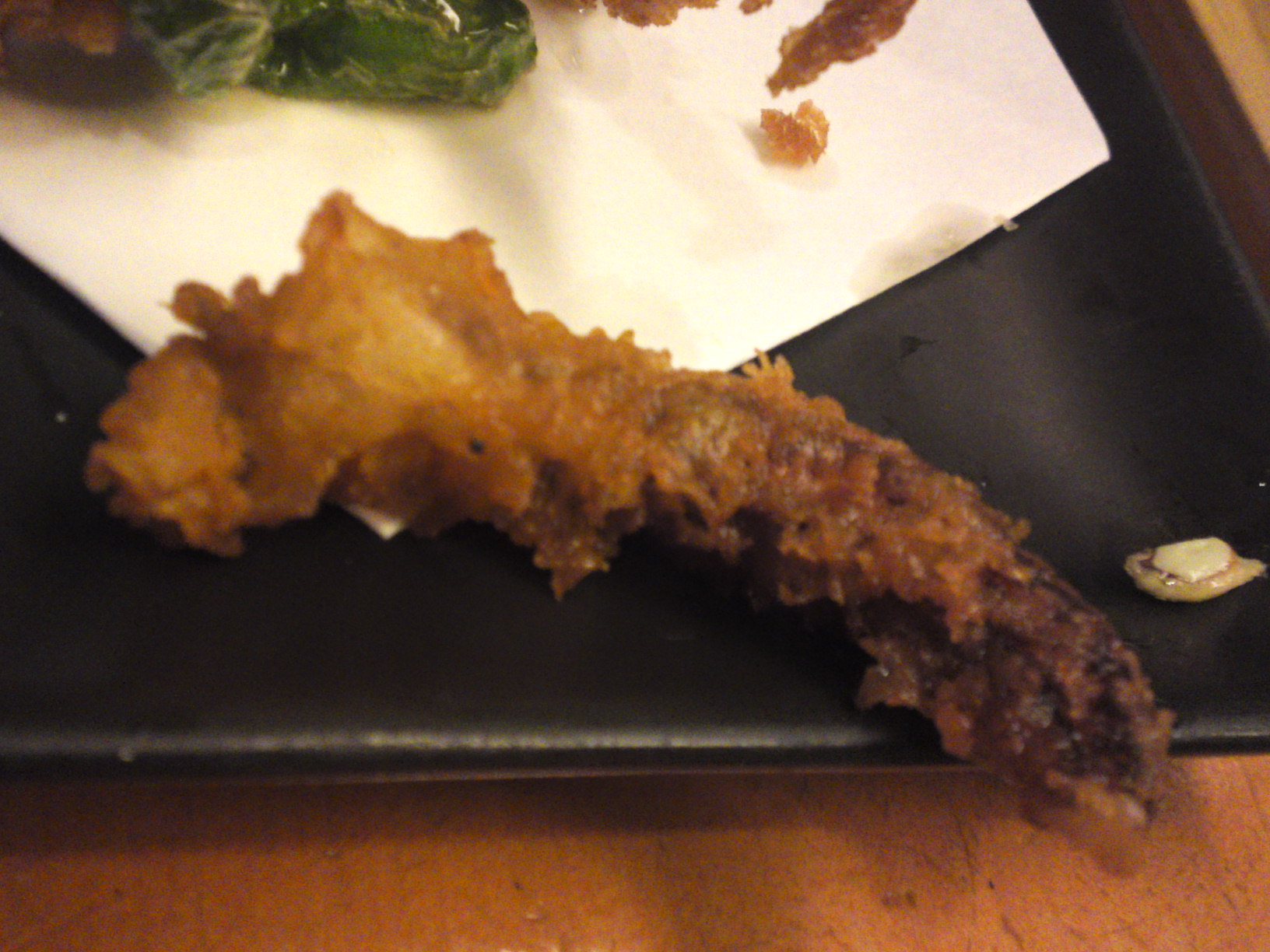
Geso karaage/Deep-fried squid tentacles!
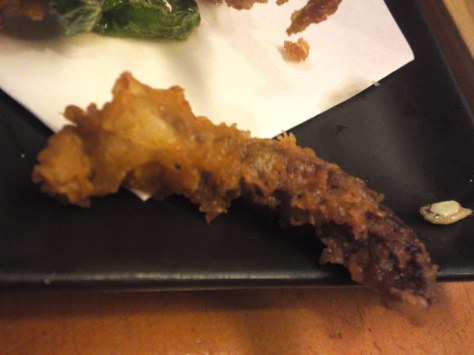
The same, to eat with your fingers!

Ankimo/Frogfish liver or “Japanese foie gras”!

Anago to kyuri maki/Broiled Conger eel and cucumber roll!
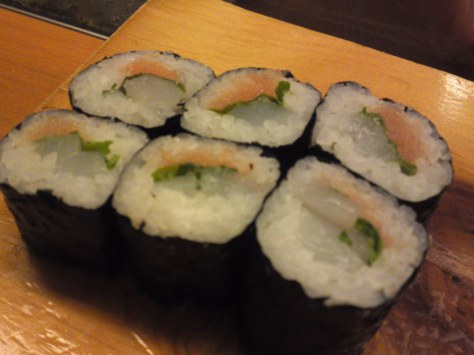
Ika shiso to mentaiko maki/Squid, perilla leaf and cod roe pickled in chili pepper roll!

Shirako yaki/Baked cod sperm sacs!

Rainbow California Roll!

Containing: avocado, tamagoyaki/Japanese omelet, salmon, salmon roe, prawn, cucumber and akami/lean tuna! Seven of them of course!

Kanpyou maki, the roll for the vegetarians and vegans!
Kanpyou is made with the shavings of a gourd, first dried and then marinated in sweet sauce!
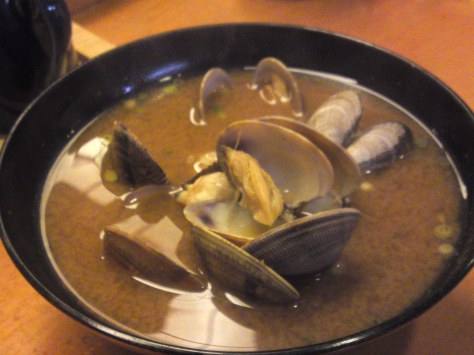
Asari miso shiru/Miso soup with cockles!

To be continued…

SUSHI KO
Shizuoka City, Aoi Ku, Ryogae-cho. 2-3-1 (Aoba Koen)
Tel.: 054-2512898
Business Hours: 17:00~25:00. 17:00~23:00 (Sundays)
Closed on Wednesdays
Reservations recommended
Credit cards OK
HOMEPAGE (Japanese)

RECOMMENDED RELATED WEBSITES

Mummy I Can Cook! by Shu Han in London
Pierre.Cuisine, Francescannotwrite, My White Kitchen, 47 Japanese Farms Through The Eyes of Its Rural Communities, Foodhoe, Chucks Eats, Things that Fizz & Stuff, Five Euro Food by Charles,Red Shallot Kitchen by Priscilla,With a Glass, Nami | Just One Cookbook, Peach Farm Studio, Clumsyfingers by Xethia, PepperBento,Adventures in Bento Making, American Bent, Beanbento, Bento No, Bento Wo Tsukurimashou, Cooking Cute, Eula, Hapabento , Happy Bento, Jacki’s Bento Blog, Kitchen Cow, Leggo My Obento, Le Petit Journal Bento & CO (French), Lunch In A Box,
Susan at Arkonlite, Vegan Lunch Box; Tokyo Tom Baker, Daily Food Porn/Osaka, Only Nature Food Porn, Happy Little Bento, The Herbed Kitchen, J-Mama’s Kitchen, Cook, Eat, Play, Repeat, Bento Lunch Blog (German), Adventures In Bento, Anna The Red’s Bento Factory, Cooking Cute, Timeless Gourmet, Bento Bug, Ideal Meal, Bentosaurus, Mr. Foodie (London/UK), Ohayo Bento,

Must-see tasting websites:

-Sake: Tokyo Through The Drinking Glass, Tokyo Foodcast, Urban Sake, Sake World
-Wine: Palate To Pen, Warren Bobrow, Cellar Tours, Ancient Fire Wines Blog
-Beer: Good Beer & Country Boys, Another Pint, Please!
-Japanese Pottery to enjoy your favourite drinks: Yellin Yakimono Gallery
Japanese Gastronomy: Himono/干物-Dried Fish

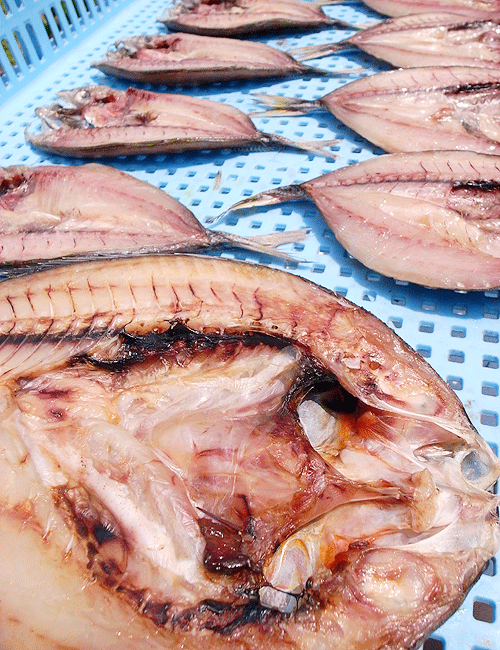
How many people outside Shizuoka Prefecture know that half (yes, half!) of all dried fish are caught and processed in our Prefecture, notably along the shores of the Izu Peninsula?
When will i convince everyone that Shizuoka Prefecture is THE true gastronomic region of Japan? LOL
To those guys living in Tokyo, may I remind them that Mount Fuji, Izu Peninsula and wasabi are all in Shizuoka Prefecture? Please someone stop me! (Would you belive I have been challenged on the veracity of the last?)

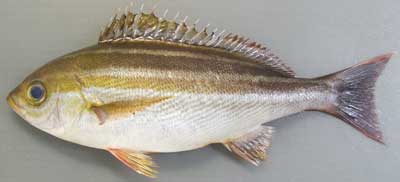
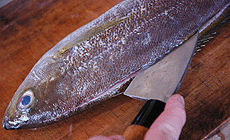
I chose a fish called “isaki” or “Chicken Grunt” (who came up with that English name?) that is quite common on our shores.
The recipe naturally applies to loads of fish!

CLEANING THE FISH:

Using a strong short sharp knife (the Japanese use the same knife to cut and gut medium size fish), first get rid of the scales as much as possible.
Wash once under running clear cold water.
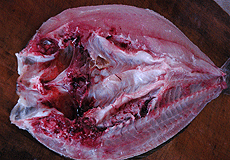
Cut along the back (not the belly! very important) from the tail to the head as shown on above picture deeply enough to reach the main bone.

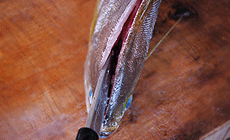
Once the knife has cut all along the back and reached the head, cut the head in half along the same cutting line.
The head of a isaki being small it is quite easy. It might require some strength for bigger head fish like seabreams. Call the MOTH then! (not the moths, the “Man”! LOL).

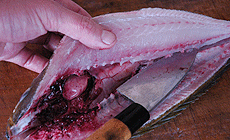
Open the fish and continue cutting in half all the way through.

Take out all innards carefully so as not having them getting in contact with the flesh!
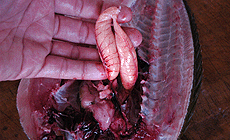
Depending upon the season, you might be lucky to get male sperm sacks (shirako). Don’t throw that away. They are great simmered with soy sauce, mirin/sweet sake, japanese sake and chili pepper! (see pic below).

Open the fish and clean it under running clear cold water.
Take water off with some kitchen paper or a clean piece of cloth.
Sprinkle with salt and dry outside under the sun until it has reached a nice aspect. You could also smoke it.
It can be preserved inside an airtight plastic bag and frozen, although eaten quickly it will taste so much better!

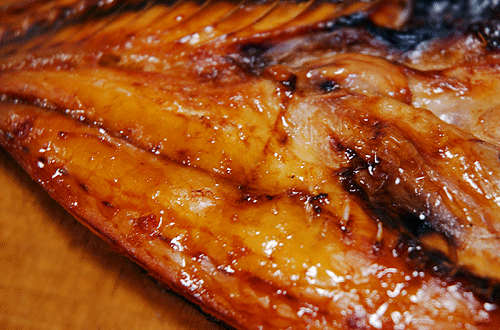
The Japanese grill their himono/dried fish pasted with a little soy sauce or tare. Beautiful with beer!

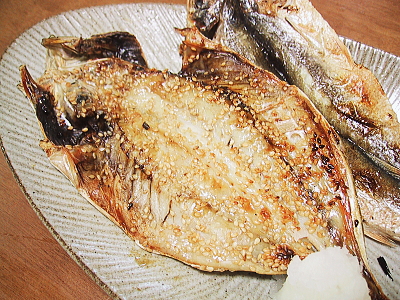
Great also grilled with a little salt!

If grilled with salt don’t forget the freshly grated daikon (and lemon juice, and soy sauce…)

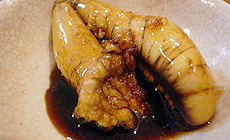
The male sperm sacs (shirako) make for a great snack with your beer or sake once simmered in soy sauce, mirin/sweet sake and Japanese sake (and a little chili pepper)!

RECOMMENDED RELATED WEBSITES

Pierre.Cuisine, Francescannotwrite, My White Kitchen, 47 Japanese Farms Through The Eyes of Its Rural Communities, Foodhoe, Chucks Eats, Things that Fizz & Stuff, Five Euro Food by Charles,Red Shallot Kitchen by Priscilla,With a Glass, Nami | Just One Cookbook, Peach Farm Studio, Clumsyfingers by Xethia, PepperBento,Adventures in Bento Making, American Bent, Beanbento, Bento No, Bento Wo Tsukurimashou, Cooking Cute, Eula, Hapabento , Happy Bento, Jacki’s Bento Blog, Kitchen Cow, Leggo My Obento, Le Petit Journal Bento & CO (French), Lunch In A Box,
Susan at Arkonlite, Vegan Lunch Box; Tokyo Tom Baker, Daily Food Porn/Osaka, Only Nature Food Porn, Happy Little Bento, The Herbed Kitchen, J-Mama’s Kitchen, Cook, Eat, Play, Repeat, Bento Lunch Blog (German), Adventures In Bento, Anna The Red’s Bento Factory, Cooking Cute, Timeless Gourmet, Bento Bug, Ideal Meal, Bentosaurus, Mr. Foodie (London/UK), Ohayo Bento,

Must-see tasting websites:

-Sake: Tokyo Through The Drinking Glass, Tokyo Foodcast, Urban Sake, Sake World
-Wine: Palate To Pen, Warren Bobrow, Cellar Tours, Ancient Fire Wines Blog
-Beer: Good Beer & Country Boys, Another Pint, Please!
-Japanese Pottery to enjoy your favourite drinks: Yellin Yakimono Gallery
Japanese Gastronomy: Ebi Furai/Deep-fried Prawns

The Japanese love to deep-fry their food to the point that many izakaya propose full deep-fried food sets and menus including vegetables and seafood, and the ubiquitous prawns.
The Japanese will usually utilize kuruma ebi/Imperial prawns or Black Tiger variety for the latter.
There is nothing complicated about preparing deep-fried prawns. The key is to use fresh ingredients and serve everything as soon as ready.

INGREDIENTS:

-Imperial Prawns/Black Tiger Prawns
-Salt and pepper: to taste
-All-purpose flour
-Egg (s)
-Breadcrumbs or panko (the rough style). Real fresh breadcrumbs are the best.
-Tartare sauce for serving. or tare/bulldog sauce and mustard.

RECIPE:

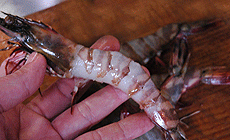
If the prawn is absolutely fresh take the shell off leaving the head and tail on. Note that the shell can be deep-fried for a crunchy snack!
If not, take the head off but leave the point of the the tail on for “handling” when eating it.

Take off the innards with a toothpick by inserting it under the blackish thread and pulling it out. Don’t worry about “breaking the back” of the prawn. Actually this is the trick which prevents the prawn from bending upon frying!

Actually, continue with the trick by making a few shallow cuts acrosss the back of the prawn to make sure it will not bend at all!
Sprinkle with salt (a little only!) and pepper to taste.

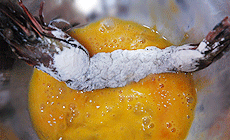
Roll prawns in flour.

Then in the beaten eggs.

Apply plenty of breadcrumbs/panko all over the prawns, head and tail included. Pat them lightly between you palms to help breadcrumbs to adhere.

Heat the oil at 170 degrees (less is unsuitable, 180 degrees is the very maximum). Drop the prawns gently into the oil head first.
Avoid manipulating them while frying.
Don’t fry too many at one time as the temperature of the oil will suddenly decrease.
Take them out with chopsticks. Place them on a grill for a few seconds to get rid of excess oil.
Serve with sauce and eat at once!

RECOMMENDED RELATED WEBSITES

Pierre.Cuisine, Francescannotwrite, My White Kitchen, 47 Japanese Farms Through The Eyes of Its Rural Communities, Foodhoe, Chucks Eats, Things that Fizz & Stuff, Five Euro Food by Charles,Red Shallot Kitchen by Priscilla,With a Glass, Nami | Just One Cookbook, Peach Farm Studio, Clumsyfingers by Xethia, PepperBento,Adventures in Bento Making, American Bent, Beanbento, Bento No, Bento Wo Tsukurimashou, Cooking Cute, Eula, Hapabento , Happy Bento, Jacki’s Bento Blog, Kitchen Cow, Leggo My Obento, Le Petit Journal Bento & CO (French), Lunch In A Box,
Susan at Arkonlite, Vegan Lunch Box; Tokyo Tom Baker, Daily Food Porn/Osaka, Only Nature Food Porn, Happy Little Bento, The Herbed Kitchen, J-Mama’s Kitchen, Cook, Eat, Play, Repeat, Bento Lunch Blog (German), Adventures In Bento, Anna The Red’s Bento Factory, Cooking Cute, Timeless Gourmet, Bento Bug, Ideal Meal, Bentosaurus, Mr. Foodie (London/UK), Ohayo Bento,

Must-see tasting websites:

-Sake: Tokyo Through The Drinking Glass, Tokyo Foodcast, Urban Sake, Sake World
-Wine: Palate To Pen, Warren Bobrow, Cellar Tours, Ancient Fire Wines Blog
-Beer: Good Beer & Country Boys, Another Pint, Please!
-Japanese Pottery to enjoy your favourite drinks: Yellin Yakimono Gallery