Category Archives: Uncategorized

Japanese Cuisine: “Zensai”/Hors d’Oeuvres

zensai-09-02-04

Good Japanese Cuisine Restaurants in this country have a way to encourage you to eat and ord by serving “Zensai”, or Hors d’Oeuvres with your first drink. Whereas it can be mediocre at the best in most establishments, it becomes a real treat at Tomii, one of my favourite “Nihon Ryouri”?Japanese Cuisine restaurants in Shizuoka City!

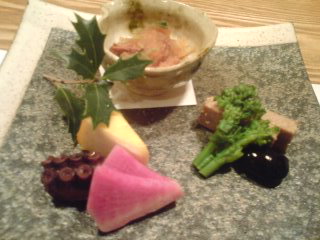
This is what I was served last night as I took a break from work:

-Hotate Kainashira Daikon Oroshi/in the small pot, cooked scallops and served cold with grated daikon and sauce.
-Na no Hana/Rape flowers atop:
-Tori no Matsukazekaze Yaki/Japanese-style Chicken Terrine
-Fuku Mame/ a large sweet black bean
-Aka kabu/Red Turnip atop Tako/Simmered Octopus and in front of Uni Shinjo Take/steamed fish paste coated with sea urchin sauce

I wouldn’t mind dining on s eries of them!

TOMII
Shizuoka City, Aoi Ku, Tokiwa-cho, 1-2-7, Tomii Bldg, 1F
Tel.: 054-274-0666
Business hours: 17:00~22:00
Closed on Sundays
HOMEPAGE (Japanese)


The Japan Blog List

Please check the new postings at:
sake, shochu and sushi

—————————————-
日本語のブログ
—————————————-

Japanese Seasonal Fish: Seabass/Suzuki

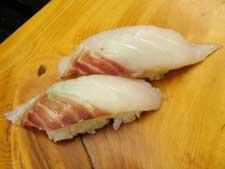
seabass-1

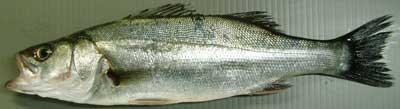
Suzuki or seabass is a fish so popular with anglers all over the world that a lot of people forget it is an extremely popular fish for sashimi and sushi in Japan.

seabass-2
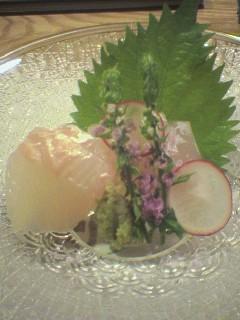
(Pic taken at Tomii Restaurant in Shizuoka City)

Like any other fish, it bears many names: Madaka, Hakura, Shiibasu.
In the Kanto area, including Shizuoka Prefecture, it is called Seigo when under 25cm. At 3 years of age, when it has attained a length of near 60cm, it is called Fukko or Suzuki.
In Kansai it is called Seigo, Hane, and Suzuki.

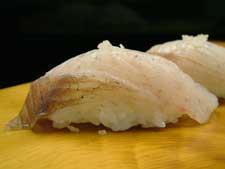
seabass-3seabass-4

As you can see above the colour and texture are slightly different (Fukko is on the right)

It is indeed a bit early to introduce this fish, but I can’t help thonking about it!
A summer fish par excellence, it is caught mainly in Central and western japan.
The bigger and the older the fish, the better it is considered. After a decline in the 1980’s, catches have increased recently, reaching more than 9,300 tonnes after 2000.

Of course it is a fish you can appreciate cooked or simmered, or grilled, although it becomes fragile and breaks up easily upon being cooked.


The Japan Blog List

Please check the new postings at:
sake, shochu and sushi

—————————————-
日本語のブログ
—————————————-

Foodbuzz Virtual Bar (second proposal): Submit a Drink!

drinks

Greetings, everyone!
You can’t stop the old geezer!

I recently made a proposal for a Foodbuzz Virtual Bar, but after some talks (Thanks, Natasha and Jen!) and a lot of thinking (not true, LOL, pining, I would say!), it might prove too big an enterprise for the Foodbuzz gurus to change the whole tool bar to accomodate a new “Tasting/Drinks/Bar” portal.

Now, until time and technology is found, a (momentarily) satisfactory solution could be to add a new item to the “Submit Foodbuzz” window called “Submit a Drink”!
To this, a whole range of alternate subdivisions could be added like in the “Submit a Recipe” item (courses, cuisines, diets, etc.) such as “Wines”, “Beers”, “Sake”, “Spirits”, Soft Drinks”, etc.

What do you all think?


The Japan Blog List

Please check the new postings at:
sake, shochu and sushi

—————————————-
日本語のブログ
—————————————-

Today’s Lunch Box/ Bento (‘9/8)

bento-09-02-03a

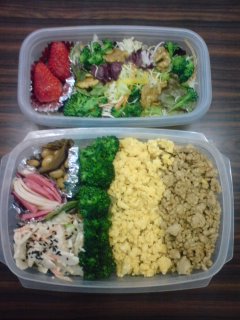
Today’s Bento could called “traditional” or “classic”. At least in its concept and presentation, but with a little twist!

bento-09-02-03b

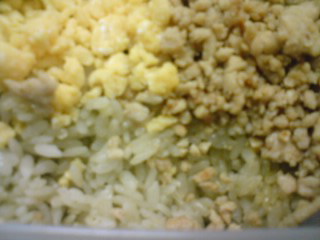
The rice is concealed by a topping made of Japanese-style scrambled eggs and a fried mixture of minced chicken and tofu (combined as a paste first, then fried). On the left, a trio of accompaniments: renkon (lotus roots) and tea-smoked chicken ham (bottom), home-made daikon pickles (one plain, the other marinated in umezu/Japanese plum vinegar-middle), and stewed soy bean salad by the Missus’ mother.
The rice dish and the garnish are divided with a line of broiled broccoli.

bento-09-02-03c

The little twist was the Missus steamed the rice with green tea powder. If you want to try it (very tasty), sprinkle the rice (in water) with plenty of green tea powder before steaming. Mix the lot only once the rice is properly cooked.

bento-09-02-03d

As for the salad, simple affair: On a bed of shredded greens more greens, walnuts and Shizuoka-grown strawberries for dessert1

Had a little problem standing up after that!


The Japan Blog List

Please check the new postings at:
sake, shochu and sushi

—————————————-
日本語のブログ
—————————————-

Bryan Baird’s Newsletter (2009/4)


The Japan Blog List

Please check the new postings at:
sake, shochu and sushi

—————————————-
日本語のブログ
—————————————-

Baird Beer & Taproom Events Bulletin 2009 #4
bryan-sayuri.gif

Dear Taproom Friend & Baird Beer Enthusiast:

Today marks the 8th annual release of the first fruited ale ever brewed at Baird Beer: The Carpenter’s Mikan Ale.

The Carpenter’s Mikan Ale 2009 (ABV 6.7%):

The mikans used in this brew are fresh, succulent, and local — harvested on the Heda land and by the hand of our carpenter friend, Nagakura-san. The Baird brewers hand-process the harvested mikans, shaving off the outer skin of the peel and pressing the juice. Both peel shavings and juice are added to the brew at different stages of production. The mikans serve to add depth and complexity to an already sumptious ale; their role is to complement, not dominate.

In addition to mikans, the 2009 Carpenter’s Mikan Ale incorporates a grain bill including Maris Otter pale ale malt, wheat malt, unmalted wheat and two types of Japanese sugar (sudakito and akato). The hopping schedule features cirtrusy Centennial and Cascade varieties including dry-hop additions to the conditioning tank. The combination of mikans and citrus hops provide an exquisitely complex yet balanced fruit character. The wonderful aromatics of this character waft gorgeously from the billowy white head that forms in the glass. Final transport to beer Nirvana comes courtesy of the tight and spritzy natural carbonation that works to keep you tastebuds fresh and alert.

The Carpenter’s Mikan Ale is now pouring from the taps of both of our Taprooms. It also will be available on draught and in bottle-conditioned form (633 ml bottls) at select Baird Beer retailing pubs, restaurants and liquor stores throughout Japan.

Big Beer Winter Week 2009:

Each winter we use our Taproom as a venue for a week-long celebration of strong and fortifying ales and lagers. We call this celebration Big Beer Winter Week. During this week, a collection of strong ales and lagers will be served simultaneously and paired with cuisine designed to complement these robust and warming libations. This year, we will hold this event at each Taproom during successive weeks. Specific dates are listed below:

*Nakameguro Taproom Big Beer Winter Week 2009 (Wednesday, February 11 – Tuesday, February 17)
*Fishmarket Taproom Big Beer Winter Week 2009 (Wednesday, February 18 – Monday, February 23)

Please mark your calendar and plan to join us for some wonderful winter revelry. Specific details regarding big beers to be served will be forthcoming shortly in an upcoming bulletin.

Cheers,
Bryan Baird

Baird Brewing Company
Numazu, Japan
HOMEPAGE


The Japan Blog List

Please check the new postings at:
sake, shochu and sushi

—————————————-
日本語のブログ
—————————————-

Today’s Lunch Box/Bento (‘9/7)

bento-09-02-02-a

The days are still (relatively at 11 degrees!) cold in Shizuoka City, and the Missus thought of providing me with the right kind of needed calories.

bento-09-02-02-b

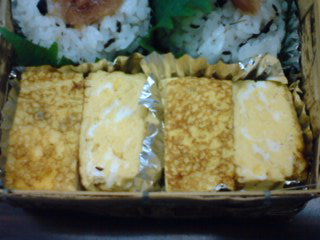
Therefore, I was offered 4 fairly large “nigiri/rice balls” containing “hijiki/sweet seaweed” and white sesame topped with “soft” umeboshi/Japanese pickled plums, the whole wrapped into “shiso/perilla” leaves.

bento-09-02-02-c

The plain “tamagoyaki/Japanese Omlelette” arrangement drew my attention as she alternated them upwards and sideways.
My compliment only drew a hiding (-“I always present them so!”-“Sorry, girl! I was too hungry to notice it before!”) from my (?) half. LOL

bento-09-02-02-d

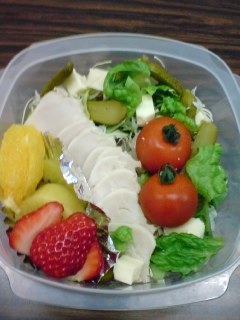
As for the “accompaniment”, I was served, on a bed of chopped greens, home-made “chicken ham” later smoked with tea leaves. I refrained from complimenting as I had my dose of hiding for the day. Then some lettuce (not cut, but hand-shred), cornichons, soft cheese, plum tomatoes, and fruit for dessert: Shizuoka-grown orange, golden kiwi and strawberries.

If I can’t compliment, I can’t complain, either! LOL


The Japan Blog List

Please check the new postings at:
sake, shochu and sushi

—————————————-
日本語のブログ
—————————————-

Donburi: Sushi as a full meal

donburi-sapporo-1
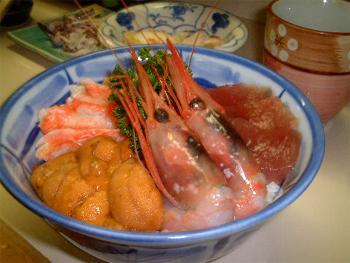
From bottom, clockwise:
“Uni” (Sea Urchin), “Kani Tsume” (Crab legs), “Maguro” (Tuna), “Nanban Ebi” ( large prawn variety)

“Donburi” is a popular way to eat sushi with foreigners as it combines quality and quantity, and usually reasonable prices!
I thought a few examples might help you choose your favourites nex time you come to Japan!
The above donburi and three following were savoured in Sapporo and Otaru (Hokkaido Island).
donburi-sapporo-2
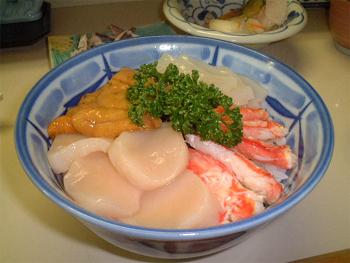
From bottom, clockwise:
A little variation from the first pic!

“Hotate” (Scallops), “Uni” (Sea urchin), “Ika” (Squid), “Kani Tsume” (Crab legs)
donburi-sapporo-3
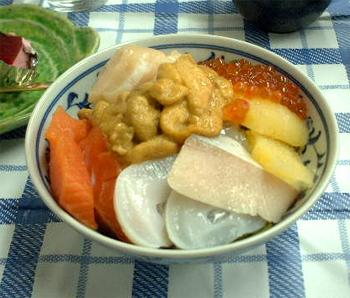
A more extravagant sample this time:

From top middle clockwise:
“Ikura” (salmon roe), “Kazu no ko” (herring roe), “Kampachi” (Amberjack), “Tako” (octopus), “Sake” (raw salmon), “Hotate” (scallops), in the centre, “Uni” (sea urchin)
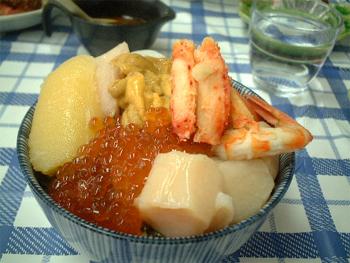
donburi-sapporo-4
This is a truly extravagant one!

From bottom, clockwise:
“Hotate” (Scallops), “Ikura” (Salmon roe), “Kazu no Ko” (Herring roe), “Kampachi” (Amberjack), “Uni” ( Sea Urchin), “Kani Tsume” (Crab leg), “Ebi” (Boiled prawn)

———————–
During a recent trip in Shiretoko, Hokkaido Island, we dropped at Ikyuya Restaurant, located in a small city called Shari (some of the place names in Hokkaido can become a real puzzle as they are mostly very local names written in Kanji that fit the pronunciation instead of the meaning!).
We (the Missus) had chosen this establishment as a representative of the local cuisine favoured by local people.
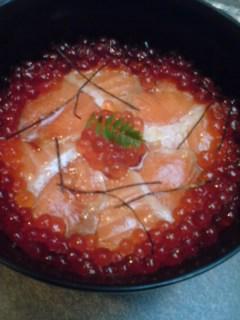
donburi-hokkaido-1

THe Missus oredered the “Oyako Don”/”Father-Mother and Son-Daughter Bowl”.
In Shizuoka it means chicken omelette (the Hen and the Egg!) spread on a bowl of rice. In Hokkaido, it stands for Shake sahimi”/salmon sashimi and “Ikura”/salmon roe spread over a bowl of rice. It must have been good as for once silence reigned around the table!
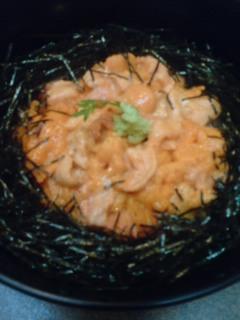
donburi-hokkaido-2

Our two friends (which included our gracious driver) opted for “Uni don”/sea urchin and chopped dry nori/seaweed spread over a bowl of rice,
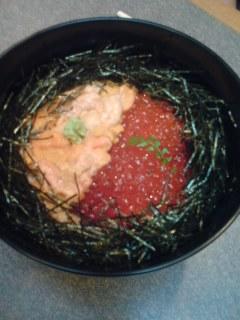
donburi-hokkaido-3

“Uni to Ikura Don”/sea urchin and salmon roe spread over a bowl of rice.
Extravagance at a very reasonable rice, absolutely fresh and sweet seafood away from metropolises, what more can you ask?
Ikyuya
Hokkaido, Shari Cho, Utoro Higashi, 13 (2 minutes walk from Utoro Hotsprings Bus Terminal)
Tel.: 0152-242557
Opening hours: 11:00~18:00 (might get closed in the afternoon on busy days. Come early!)
———————–
Home-made Donburi
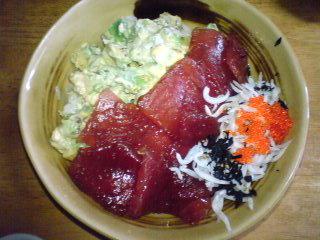
donburi-home

You do not have to go to a Japanese restaurant or sushi bar to eat “donburi” if you happen to have a wife who not only likes them but can also concoct them!
In short, my better (worse?) half once came up with the following for lunch:

Plain steamed rice topped with slices of “akami”/ lean tuna part, avocado salad with mayonnaise and wasabi pickles (the latter provided a nice balance with a spicy touch), boiled shirasu/whitebait sprinkled with “hijiki” seaweed and “tobikko”/flying fish roe.
The tobikko added a nice colour finish touch. It is quite cheap down here in Shizuoka City. From what I saw on Chuckeats Blog, it seems quite a treat over there in the U.S.!
I poured a little Shizuoka-made wasabi dressing on top. This dressing is a lot milder than pure grated wasabi with a little sweetness which combines well with the fish!

Please check the new postings at:
sake, shochu and sushi

—————————————-
日本語のブログ
—————————————-
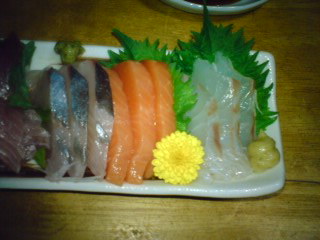
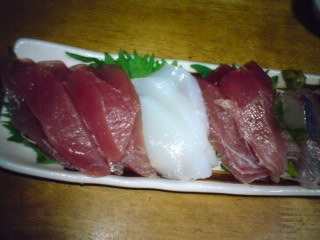
7 US$ Sashimi Plate!

7-sashimi-1

The Missus welcomed me back home last night with her “triumphant smile”. By this, I knew she had made a good bargain at one of the nearby supermarkets.
Good, I will be able to humor her more easily, I thought (sly macho reaction,…)
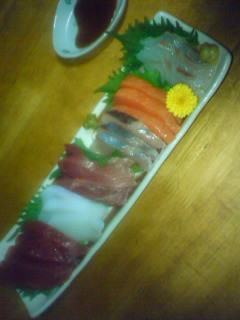
Anyway, she had noticed a good sashimi set being sold for 1,000 yen (about 11 US$) at Coop Supermarket but could not decide whether to buy it or not (it was about 5:00 p.m.) and proceeded forward. But her feminine (sorry!) instincts called her back as this was just the time when bargains start at this good (and very reasonable) big supermarket chain. The price had gone down to 600 yen (about 7 US$)!

7-sashimi-2
(from right to left: “Tai/Seabream”, “Shake or sake/Salmon” and “Kanpachi/Amberjack)

I don’t have to tell you with what relish she grabbed it!
She had the sashimi already seved on a plate on the dining room table for me to admire. I decided to take a pic, but she said that the dsiplay was not good enough for a pic!
I waited for her to go back to the kitchen and took my mobile phone out to take a few pics in a hurry!
The pics are of poor quality, I must admit, but I hope it will give some ideas to my friends!

7-sashimi-3
(from right to left: “Tonbo maguro/Tuna Variety, “Ika/Squid” and “Mebachi maguro/Big-eyed tuna”)

All seafood, except for the salmon are apparently from Shizuoka Prefecture. No wonder it is so cheap (even in Japan)

Please check the new postings at:
sake, shochu and sushi

—————————————-
日本語のブログ
—————————————-
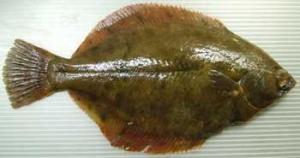
Japanese Seasonal Fish: Turbot/Makogarei

makogarei

“Makogarei” or Pleuronectes yokohamae Gunther for the specialists is one of the many kinds of turbot indigeneous to Japan.
You will find it on the markets between June and August.
Depending where you live, you might do well to know its other names: “Aome” (Sendai), “Mushibirama” (Konahama), “Mako” (Tokyo) or “Amakarei” among many.
It is net-caught all around Japan.
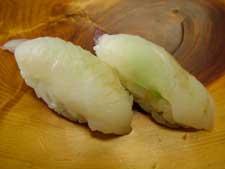
It has comparatively a lot of flesh for a turbot, making it a choice morsel for nigiri or sashimi.

makogare-sushi

It can reach a length of 30 cm. Contrary to many other fish, the size will bear no incidence on the taste, but if you wish for extra taste, avoid female specimen bearing eggs/roe, and if possible, although a bit extravagant, choose a live fish (possible at Parche, Shizuoka JR Station!).
A good sushi or Japanese restaurant will deep-fry the bones and head for you, making for a great snack with great ale!

Please check the new postings at:
sake, shochu and sushi

—————————————-
日本語のブログ
—————————————-
Italian Restaurant: Aquavite (first visit in 2009)

aqua-09-61aqua-09-71
(pics by Haruka Yamaguchi)

Service: Excellent and very friendly
Facilities: great and very large washroom, great cleanliness overall
Prices: reasonable to expensive.
Specialty:Top-class Italian wines, Charcoal grill.

Last week was my first “visit” to this old favourite Italian Restaurant of mine in Shizuoka City, namely Aquavite.
A ever-solid reference, I have introduced it time and again, therefore I will keep to the basics, that is the food I enjoyed in the company of my good friend, Haruka Yamaguchi, who was kind to help me with the photographs!

aqua-09-2a
(Haruka Yamaguchi)

I’m slowly introducing my (young, and don’t start gossiping! I know her whole family!) friend to wine, and I’m sure that friends like Jen would approve! Haruka wanted white wine.
aqua-09-22
(Haruka Yamaguchi)
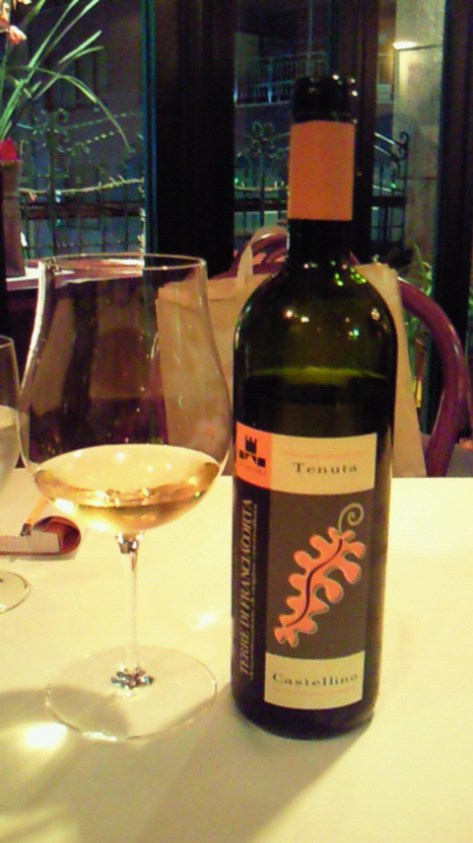
Aquavite had this (for a reasonable price!) 2002 Tenuta Castellino, Terre di Francia Acorta in Coccaglio (12.5 proof). Rowena, have you heard of it?
A very pleasant aroma of Muscat, dry and fruity was rediscovered in tasting it, fruity, dry flowery with a gentle lingering. Proved as soft, elegant and complex for the whole meal. Haruka was not holding up this time!

aqua-j-09-2

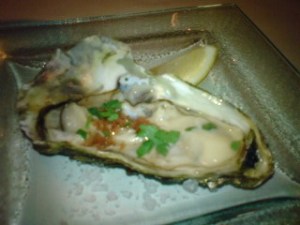
The first hors d’oeuvre was a succulent Iwate “Sanriku” Oyster served with just enough sesaoning.

aqua-j-09-3

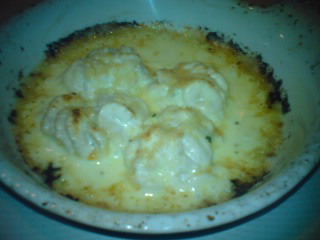
The second hors d’oeuvre,”Shirako Gratin” did not make my friend blush! (“shirako” is what male cod fish are proud of!). Light, eminently tasty, I wish I could serve it online!

aqua-j-09-4

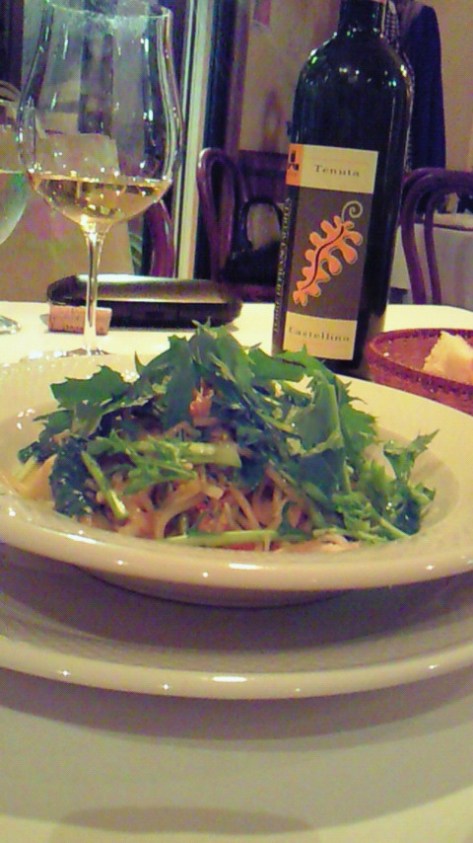
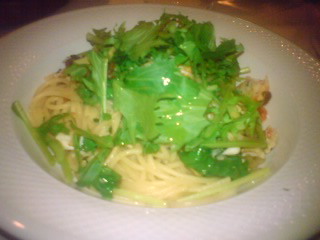
The pasta dish was a beautiful creation in its simplicity: Shizuoka-grown mizuna with “Taragani” Crab Peperocino Spaghetti!
Light, elegant and the perfect amount of spiciness!

aqua-j-09-5

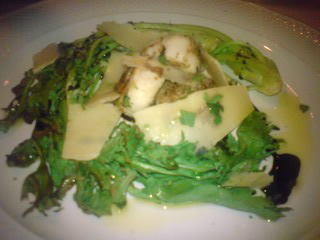
Grilled scallops with mizuna and Parmeggiano. Need I comment?

aqua-j-09-6

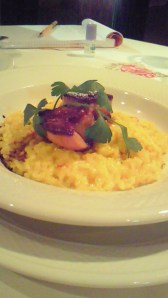
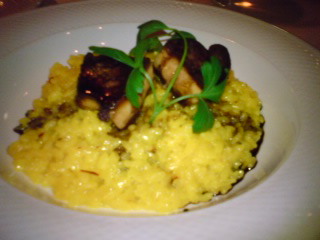
The Milano Risotto and its Foie Gras! Perfect balance with a very light risotto and rich foie gras sauteed with balsamico!

aqua-j-09-7

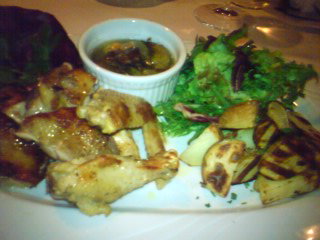
Charcoal-grilled “Shamo Niwatori” Chicken (extravagant in Japan!) with grilled new potatoes and its ramequin of liver and heart!

aqua-j-09-8

And then it was time for dessert:
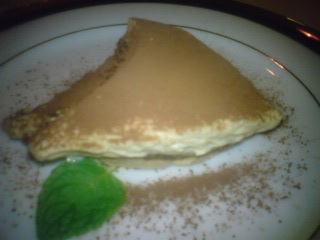
Tiramisu for me (let’s keep things simple! LOL)

aqua-09-9
(Haruka Yamaguchi)

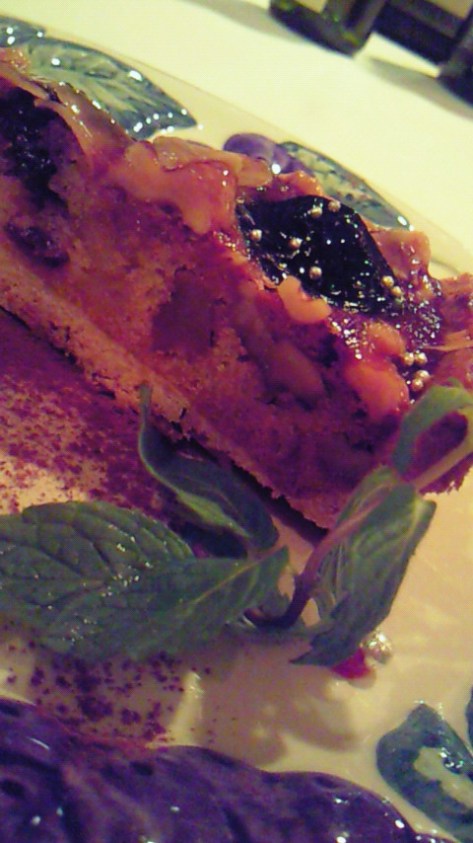
Haruka kept very silent as she devoured her Torta di Bosaiola with prunes and nuts!

Well, well, where are going next (actually expect something soon about Italian Cuisine!)

Address: 420-0034 Shizuoka Shi, Tokiwa-cho, 1-2-7, Tomii Bldg. 3F
Tel. & fax: 054-2740777
Opening hours: 11:30~14:00 (on reservations only), 18:00~22:00
Closed on Sundays
Homepage (Japanese)
Credit Cards OK


The Japan Blog List

Please check the new postings at:
sake, shochu and sushi

—————————————-
日本語のブログ
—————————————-
Bryan Baird’s Newsletter


The Japan Blog List

Please check the new postings at:
sake, shochu and sushi

—————————————-
日本語のブログ
—————————————-
Baird Beer & Taproom Events Bulletin 2009 #3
bryan-sayuri.gif

Dear Taproom Friend & Baird Beer Enthusiast:

Thanks to all of you who took part in the IPA Festival held at our two Taprooms. Even though climax was reached and our hop orgy is over, the IPA fun continues with today’s general release of Brewmaster’s Nightmare Rye IPA.

Brewmaster’s Nightmare Rye IPA (ABV 6.5%):

Malted rye is notoriously difficult to handle in the brewhouse. When mashing it produces a glutinous, gummy wort that is difficult to lauter. Should the brewmaster fail to set his mash bed just right or tick up the lauter speed a notch too high, a day infinitely long and arduous awaits. However, when processed deftly the malted rye lends a spicy, peppery character to the wort flavor that is supremely interesting. Combined with the spicy, fruity and herbal character of well-selected hops, the flavor reward is sublime.

Brewmaster’s Nightmare Rye IPA combines this rye-accented malt mash with gobs and gobs of resinous and spicy American hops (Warrior, Simcoe, Columbus and Santiam) producing a veritable fireworks show of flavor in the mouth. If hoppy, complex brews are your thing, this is your baby!

Draught and bottle (633 ml) versions will be available at fine Baird Beer retailing establishments throughout Japan (including the Fishmarket and Nakameguro Taprooms).

Cheers,
Bryan Baird

Baird Brewing Company
Numazu, Japan
HOMEPAGE

24 Ways of Preparing Chicken by Mira of Malaysia!

myra-2
Glancing Thru My Crystal Ball

Mira of Malaysia (from Sarawak, Borneo, now living in Kuching) is a student from Malaysia who has been recently chosen by Foodbuzz, a world-wide Food Bloggers Community counting more than 18,000 (in only 2 years!), with 23 other bloggers to post a food event article and pictures for the pleasure of all!

myra-1
Glancing Thru My Crystal Ball

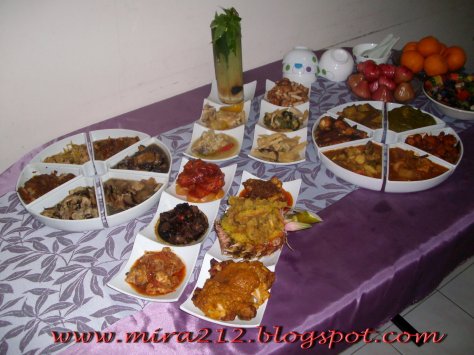
So Mira, with a little help of her friends prepared, cooked and presented no less than 24 different chicken dishes, including Malay, Chinese, Indian and Sarawak, her home, in as many pictures and recipes!

Do visit her blog at Glancing Thru My Crystal Ball, I can guarantee you will not only enjoy every recipe, picture and comment, but you will feel the more cognizant for it!
I forgot to mention it: Mira is apparently setting a record (as far as I know!) as the youngest blogger chosen by Foodbuzz for their 24, 24, 24 Worldwide Event!

Now, you can be sure the Missus will ask me to do all Mira’s recipes! LOL


The Japan Blog List

Please check the new postings at:
sake, shochu and sushi

—————————————-
日本語のブログ
—————————————-

Japanese Fish Species: Scabbard Fish/Tachiuo

scabbard-fish-a1
(Sorry, but that fish is just too long for the screen!)

Scabbard Fish or “Tachiuo” (太刀魚/Great Sword Fish in Japanese), a very popular in Japan in spite of its great length is usually caught in Summer in Japan but also appears in Winter in Shizuoka Prefcture.
As other fish it owns other names: Tachi (not in Hokkaido, where the word means “whiting”!), Shirada and Tachinouo.
It is mainly caught off Wakayama, Ehime and Oita Prefectures, although it is also caught in Suruga Bay off Shizuoka Prefecture
It is both caught by line or net.
In 1999, 37,000 tonnes were caught, but it fell to 23,000 tonnes in 2000.
It is also imported from Kore and China, although their fish is slightly different from the Japanese variety. More than half of imported fish are eaten west of Kansai.

scabbard-fish-c

It is fish than can be eaten raw as nigiri.

scbbard-fish-b1

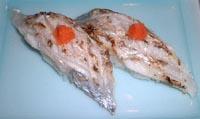
I personally prefer it “aburi” (slightly grilled) with a dash of ponzu and some momijioroshi (grated daikon with chili pepper) as above served at Sushi Ko Restaurant.

scabbard-fish-d

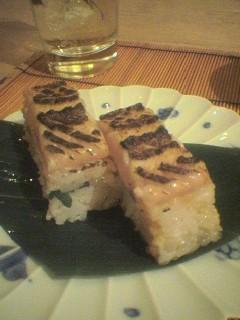
Some time ago I ate it at Oboro No Tsuki Restaurant (now defunct) as above:
They first put a double layer of sushi rice interspaced with shiso leaves (perilla) in a box for “oshi zushi” (pressed sushi), then top it with thick fillets (the fish is actually quite thin) and press the whole.
Next they slightly grill the top (“aburi”), take it out of the box and cut it to size.
Quite tasty and appetizing-looking!


The Japan Blog List

Please check the new postings at:
sake, shochu and sushi

—————————————-
日本語のブログ
—————————————-
Today’s Lunch Box/ Bento (‘9/6)

bento-09-01-27a

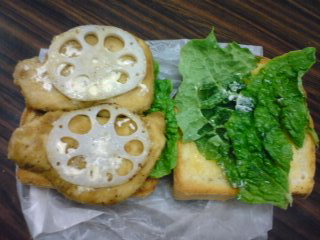
For once, my Tuesday’s Sandwich Bento featured a real sandwich!

bento-09-01-27c

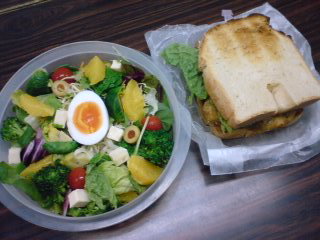
The Missus had baked new bread last night. She toasted two slices of them and inserted in between lettuce, fried slices of tuna she had covered with deep-fry powder mix and cornstarch seasoned with pepper and a little salt, and two slices of “renkon/lotus roots” she had fried to a crisp (and seasoned with a little mayonaise).
Af airly big sandwich that took me some time to finish!

bento-09-01-27b

The “salad” had enough vitamin C and iron to last me a week:
on a bed of shredded greens, a half egg, brocoli, mini tomatoes, Brussels sprouts, cheese, olives, and orange (I must have missed somthing!) on which I poured dressing from the fridge!
Incidentally I keep not only chopsticks at work, but also a fork, spoon and a knife! LOL


The Japan Blog List

Please check the new postings at:
sake, shochu and sushi

—————————————-
日本語のブログ
—————————————-

Foodbuzz Postings Presentation

vatel
(Willem Claesz Heda)

Dear All!
Greetings!
The old geezer is at it again!

Foodbuzz bloggers are a great many and they also represent the whole spectrum of our world. But they share only two common factors: the love of good food (and drinks) and the English language (at least for a start!).
The natural consequence is a need for postings not only of high interest, but also of high quality standards.
Accordingly, I would like to share some my views on what would make an attractive page to all visitors.
True to say, these are personal views and anyone has the right to disagree with all of them!

Size:
Out: a webpage stretched all over the screen (and beyond…)
In: A clear-cut webpage with neutral margins

The eyes can take in only 60% of the whole screen as a single image without having to move right or left. If they also have to move up and down as well, they will quickly send a negative image to the viewer’s brain.

Screen wall and wallpapers
Out: Big colorful heading taking over 30% of the screen upon entrance
Overwhelming wall paper.
Loud invasive music.
Too many sponsor banners
In: A simple and precise heading introducing the viewer to the true nature and purpose of the blog.
Music is fine if you invite the visitor to click on it.
The less graphics, the better
A white or light neutral color background.

Having to scroll down a page because the heading is taking almost the whole of the screen will stop many viewers into their tracks.
Big red hearts all over the screen because Valentine day is around the corner, or rainbow stripes slicing across everything are tacky and cheap at the best, and a painful hindrance at the worst, discouraging potential visitors from the very moment they discover a new blog.
A webpage looking like an advertisement billboard will achieve only the opposite result.
If your posting is good enough to be read until the end, only then viewers will be more enticed to peruse through the commercials and eventually click on them. Let’s face it: a conservative estimate would amount to at least 10,000 viewers hitting on any banner at least once a day to make any significant profit.
Unless you are a third-grader reading a picture book, would you expect to read a magazine with the text printed in yellow over a black background, or vice-versa?
A blog is no less than another form of magazine.

Pictures:
Out: Framing.
Staggered alignment.
Very large pictures
Excessive “copyright naming”
In: Pictures of a reasonable size aligned along the left margin border
Pictures used as related reference to your posting.

If your posting is about a topic more than a report, one single picture or graphic should be enough.
If you write a recipe, introduce more pictures (a smaller size that can be enlarged with a click are best, then) to illustrate various steps if absolutely necessary.
If you write about a meal at a restaurant, do not illustrate your posting with a single pic of yourself in the company of the chef unless you are both superstars (in which case your place is in a magazine or on TV!). Visitors will expect a good photograph of each dish you enjoyed! This is where real sharing starts!
Bloggers have a right to protect their pictures (I personally don’t), but enormous names written across the pictures are terribly detrimental to the pictures themselves. Sensible small lettering should be enough (fine, I understand that anyone can “cut out” a photograph!).

Titles:
Out: Pompous declarations.
Empty grand announcements obviously aimed at luring in more viewers
Interminable titles.
In: Short, precise and truthful titles

Your title is the first and lasting impression given to the visitor. The posting will live by it!

Font:
Out: Large fancy lettering
In: Small readable standard lettering

Too large and fat lettering will uselessly expand the article to infinity.
A visitor should be able to size up the first one or two chapters quickly instead of stretching his senses into a painful search.
Large fonts will only conceal a lack of quality or contents like an over-chilled wine or a scalding-hot Japanese sake.
When necessary, bold black or red letters for subtitles should be sufficient.

Syntax, Grammar and spelling:
Out: Lack of punctuation.
Typos.
Poor grammar and syntax
In: Proofread your article before publishing it

If “non-native” English speakers make an effort to write their postings in English, “native” speakers should make an effort to write in style. After all, “non-native” bloggers will learn a lot from their “native” friends!

References:
Out: Constant references to oneself, one’s own past postings or articles
Omission to refer to other postings or articles from which you had a fair reason to borrow.
In: Introducing other bloggers’ work or websites, especially when their postings are directly related.

Referring to related blogs in your posting will become another reason for visitors to come back

Cheers to that!


The Japan Blog List

Please check the new postings at:
sake, shochu and sushi

—————————————-
日本語のブログ
—————————————-