Today’s Lunch Box/ Bento (‘9/6)

bento-09-01-27a

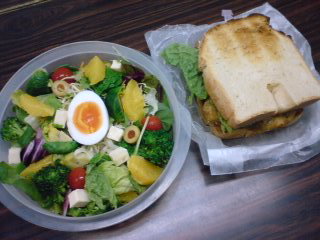
For once, my Tuesday’s Sandwich Bento featured a real sandwich!

bento-09-01-27c

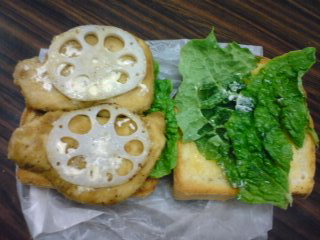
The Missus had baked new bread last night. She toasted two slices of them and inserted in between lettuce, fried slices of tuna she had covered with deep-fry powder mix and cornstarch seasoned with pepper and a little salt, and two slices of “renkon/lotus roots” she had fried to a crisp (and seasoned with a little mayonaise).
Af airly big sandwich that took me some time to finish!

bento-09-01-27b

The “salad” had enough vitamin C and iron to last me a week:
on a bed of shredded greens, a half egg, brocoli, mini tomatoes, Brussels sprouts, cheese, olives, and orange (I must have missed somthing!) on which I poured dressing from the fridge!
Incidentally I keep not only chopsticks at work, but also a fork, spoon and a knife! LOL


The Japan Blog List

Please check the new postings at:
sake, shochu and sushi

—————————————-
日本語のブログ
—————————————-

Foodbuzz Postings Presentation

vatel
(Willem Claesz Heda)

Dear All!
Greetings!
The old geezer is at it again!

Foodbuzz bloggers are a great many and they also represent the whole spectrum of our world. But they share only two common factors: the love of good food (and drinks) and the English language (at least for a start!).
The natural consequence is a need for postings not only of high interest, but also of high quality standards.
Accordingly, I would like to share some my views on what would make an attractive page to all visitors.
True to say, these are personal views and anyone has the right to disagree with all of them!

Size:
Out: a webpage stretched all over the screen (and beyond…)
In: A clear-cut webpage with neutral margins

The eyes can take in only 60% of the whole screen as a single image without having to move right or left. If they also have to move up and down as well, they will quickly send a negative image to the viewer’s brain.

Screen wall and wallpapers
Out: Big colorful heading taking over 30% of the screen upon entrance
Overwhelming wall paper.
Loud invasive music.
Too many sponsor banners
In: A simple and precise heading introducing the viewer to the true nature and purpose of the blog.
Music is fine if you invite the visitor to click on it.
The less graphics, the better
A white or light neutral color background.

Having to scroll down a page because the heading is taking almost the whole of the screen will stop many viewers into their tracks.
Big red hearts all over the screen because Valentine day is around the corner, or rainbow stripes slicing across everything are tacky and cheap at the best, and a painful hindrance at the worst, discouraging potential visitors from the very moment they discover a new blog.
A webpage looking like an advertisement billboard will achieve only the opposite result.
If your posting is good enough to be read until the end, only then viewers will be more enticed to peruse through the commercials and eventually click on them. Let’s face it: a conservative estimate would amount to at least 10,000 viewers hitting on any banner at least once a day to make any significant profit.
Unless you are a third-grader reading a picture book, would you expect to read a magazine with the text printed in yellow over a black background, or vice-versa?
A blog is no less than another form of magazine.

Pictures:
Out: Framing.
Staggered alignment.
Very large pictures
Excessive “copyright naming”
In: Pictures of a reasonable size aligned along the left margin border
Pictures used as related reference to your posting.

If your posting is about a topic more than a report, one single picture or graphic should be enough.
If you write a recipe, introduce more pictures (a smaller size that can be enlarged with a click are best, then) to illustrate various steps if absolutely necessary.
If you write about a meal at a restaurant, do not illustrate your posting with a single pic of yourself in the company of the chef unless you are both superstars (in which case your place is in a magazine or on TV!). Visitors will expect a good photograph of each dish you enjoyed! This is where real sharing starts!
Bloggers have a right to protect their pictures (I personally don’t), but enormous names written across the pictures are terribly detrimental to the pictures themselves. Sensible small lettering should be enough (fine, I understand that anyone can “cut out” a photograph!).

Titles:
Out: Pompous declarations.
Empty grand announcements obviously aimed at luring in more viewers
Interminable titles.
In: Short, precise and truthful titles

Your title is the first and lasting impression given to the visitor. The posting will live by it!

Font:
Out: Large fancy lettering
In: Small readable standard lettering

Too large and fat lettering will uselessly expand the article to infinity.
A visitor should be able to size up the first one or two chapters quickly instead of stretching his senses into a painful search.
Large fonts will only conceal a lack of quality or contents like an over-chilled wine or a scalding-hot Japanese sake.
When necessary, bold black or red letters for subtitles should be sufficient.

Syntax, Grammar and spelling:
Out: Lack of punctuation.
Typos.
Poor grammar and syntax
In: Proofread your article before publishing it

If “non-native” English speakers make an effort to write their postings in English, “native” speakers should make an effort to write in style. After all, “non-native” bloggers will learn a lot from their “native” friends!

References:
Out: Constant references to oneself, one’s own past postings or articles
Omission to refer to other postings or articles from which you had a fair reason to borrow.
In: Introducing other bloggers’ work or websites, especially when their postings are directly related.

Referring to related blogs in your posting will become another reason for visitors to come back

Cheers to that!


The Japan Blog List

Please check the new postings at:
sake, shochu and sushi

—————————————-
日本語のブログ
—————————————-

Today’s Lunch Box/ Bento (‘9/5)

bento-09-27a

The weather has unseasonably cold these in Shizuoka. The water outside even froze outside during the night, in a region where it prctically never snows!
The Missus felt I was in the need for a few more body-warming calories!

bento-09-27b

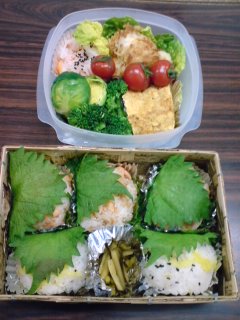
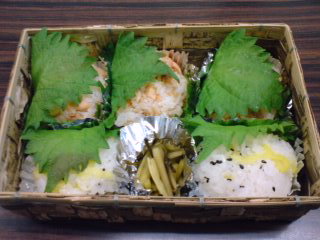
Consequently she prepared no less than five “nigiri/rice balls”, three containing fried salmon and two mixed with “takuan/pickled daikon” and black sesame. She wrapped each in a large “shiso/perilla” leaf and added some pickled wasabi stems.

bento-09-27c

As for the “main dish”, she made some fresh “tamagoyaki/Japanese omelette”, fried a few “ika shumai/cutttle fish dumpling” over small lettuce leaves, boild brocli and Brussels sprouts (to which I added dressing at work), Home-made shredded daikon and carrots sweet pickles and a few mini-tomatoes.

Mind you, I still felt hungry in late afternoon!


The Japan Blog List

Please check the new postings at:
sake, shochu and sushi

—————————————-
日本語のブログ
—————————————-

The Best Desserts of the Past Year


The Japan Blog List

Please check the new postings at:
sake, shochu and sushi

—————————————-
日本語のブログ
—————————————-

One always fondly remembers his/her desserts as the apotheose to a great meal. I thought I would run an anthology of the best desserts I personally savoured for the past and share it with friends before leaving onto new adventures this year!

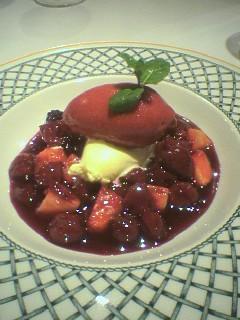
Read Fruit salad topped with Vanilla Ice-cream and Raspberry Sorbet at Hana Hana Restaurant:
dessert-foodbuzz-1
A favourite end-of-the-summer dessert back in France served in Shizuoka City. I wouldn’t mind eating it at any time of a hot day!

Chocolate Mousse, Mikan Orange Sherbet and Campari Jelly at Sugimoto:
dessert-foodbuzz-2
I was served this simple and extremely elegant dessert by Tetsuya Sugimoto in his former restaurant in Shizuoka City!

Petit Mont-Blanc and cassis Sherbet at Gentil:
dessert-foodbuzz-3
Refined and delicate, it didn’t last long with me!
A celebratedcreation by Gentil, in Shizuoka City, which specializes in small sophisticated desserts!

Creme Caramel Brulee and Caramel Ice-cream at Hana hana:
dessert-foodbuzz-4
Hana Hana in Shizuoka City has become famous for this particular dessert combining two sublime ways to accomodate Caramel. Actually I should say three because the creme is Caramel, the “burnt” topping is Caramel and the Ice-cream is Caramel!

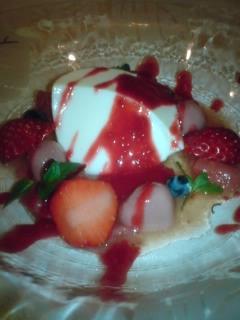
Italian and Japanese Dessert Marriage at Aquavite:
dessert-foodbuzz-5
A very original at one of the best Italian Restaurants in Shizuoka City:
a combination of panacotta, Shizuoka “Benihoppe/Red Cheek” strawberries, “Tama Konnyaku” (Devil’s Tongue Tuber Jelly) from Yamagata Prefecture and at least three kinds of fruit coulis.

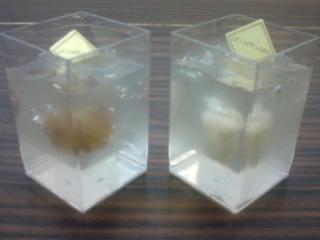
Champagne Jelly by Le Cafe-Labo:
dessert-foodbuzz-6a
This particlar creation by one of the best confectiners in Shizuoka is a bit of misnomer as they used Cremant de Bourgogne from the Cote Chalonnaise in France. A bit extravagant when you know that Cremant, yen for yen (cent for cent), is better value than overpriced Champagne!
dessert-foodbuzz-6b
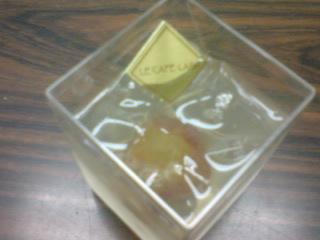
Ladies and vegans, rejoice! This is a very very healthy low-calorie dessert as the jelly is 100% natural “kanten” or Japanese agar/seaweed jelly!
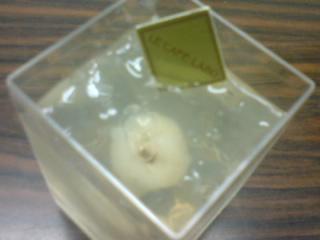
They come with two different garnish: “kyoho Budo”, a very large expensive Japanese grape variety (usually seedless) as a shown in picture above and:
dessert-foodbuzz-6c
Lychee.
Both have a very light but solid consistency. It melts deliciously inside the mouth with an elegant Cremant wine taste. It has a “short tail”, meaning you cannot wait for the next spoonful!
Definitely for ladies or calories-minding couples!

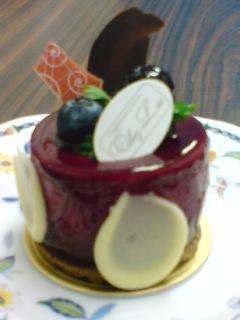
Bourgogne Noir Dijon at Chez Lui:
dessert-foodbuzz-7
Chez Lui is a large “chain company” based in Tokyo and represented at Parco in Shizuoka City, but their cakes have the merit to be made on site.
I could be accused of favoritism as I was born in Dijon!
But I must admit this is probably the best cassisbased cake I ever ate!
It is mainly made up of Cassis Mousse coated with Cassis Coulis and decorated outside with white chocolate. It is furthermore topped with blueberry, blackberry, mint and chocolate.
The inside is pretty complex with a double base of almond biscuit and chocolate short cake.
A small chocolate short cake disc about two thirds of the cake in diameter has been “inserted” inside the mousse with some Creme Chantilly.

Ma-cha Mousse by Chocolat Fin:
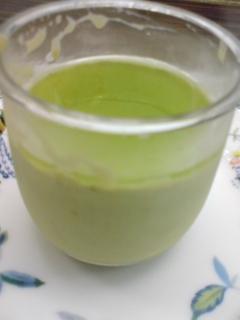
dessert-foodbuzz-8a
This particular might look simple, but not only it is more sophisiticated that one might first think but one has to understand this THE true Shizuoka dessert because Shizuoka Prefecture grows more than 55% of the national green tea crop!
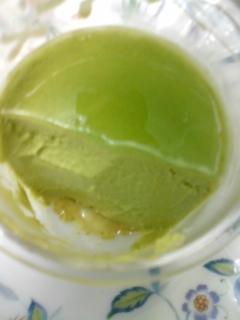
dessert-foodbuzz-8b
Chocolat Fin, another great confectioner in Shzuoka City, had the greaty idea to come up with a creation made with ma-cha tea, a superior class of tea used in tea ceremonies and restaurants. As it comes under the form of extremely fine powder it is very easy to manipulate.
This Ma-cha pudding was underllined with a caramel sauce and topped with a fine layer of ma-cha jelly. The whole pudding is a perfection of balance, not too sweet, with a definite tea savour and firm enough for you to dig in with your spoon. Actually, I made a point of leaving it in the fridge for a couple of hours before devouring it. It almost ate like an ice-cream!

Pistache by Le Cafe-labo:
dessert-foodbuzz-9
After admiring this other creation by Le Cafe-Labo (it certainly deserves it!), you can either savour it layer by layer, one at a time, or cut through it to entertain yourself with the combination of the tastes.
And you certainly have quite a few to review:
from top to bottom:
1) Pistachio Mousse
2)Chocolate Cream
3) Chocolate Mousse
4) Raspberry Sauce
5) Chocolate Crunchy
6) Pistachio Syrup

Gateau Basque at Bouquet:
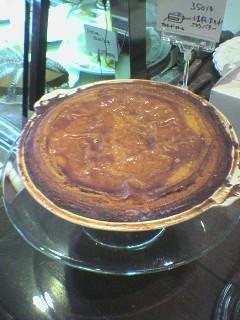
dessert-foodbuzz-10a
I’m an unconditional fan of Gateau Basque. Bouquet, another great confectioner in Shizuoka City is the only one I know in the whole Prefecture, and probably in the whole of Japan, who came out with the perfect and authentic cake!
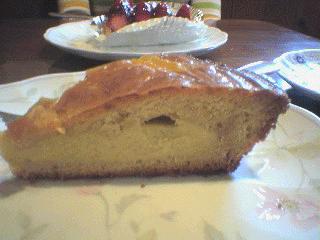
dessert-foodbuzz-10b
(cut from whole cake in picture at the top)
It is not easy to prepare, and the owner, a very shy man, makes only two a day if he is in a good mood. It tends to disappear quickly, but it is possible to reserve.
It is a lot lighter than it looks. Ladies and Gentlemen alike will enjoy to its just value!

I did savour many more memorable desserts, but I will have to stop there, otherwise I will have to start a book!
Pervert Daikon?


The Japan Blog List

Please check the new postings at:
sake, shochu and sushi

—————————————-
日本語のブログ
—————————————-

pervert-daikon

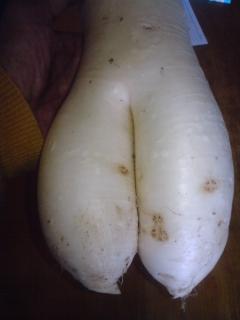
My usually prudish half turned up triumphantly with this strange daikon grown in her parents’ garden!

I didn’t know where to start cutting it…

In the end I saw gradually disappearing as I grated the whole for a “daikon-nabe”!

French Restaurant: Hana Hana (first visit in 2009)


The Japan Blog List

Please check the new postings at:
sake, shochu and sushi

—————————————-
日本語のブログ
—————————————-

hana-09-4

Service: Excellent and very friendly
Facilities: great and very large washroom, great cleanliness overall
Prices: reasonable, good value

Hana Hana in Shizuoka City has always been a favourite because you can always expect both their classical dishes to be on the menu while seasonal offerings and creations are constantly appearing around the corner for your great pleasure!

Today being Thursday, the Missus and I visited the place for lunch. Instead of choosing one of the very good value “lunch sets”, we opted for the Lunch Course menu which allows you to choose three courses out of a good eighteen with coffee, bread and amuse bouche included!

Here was what we savoured:

hana-09-1

As I said above, the amuse-bouche is included, and we were served a Hana Hana classic, namely “shirako/Cod Sperm Sacs” (sorry, I’m a blunt savage!) sauteed Italian-style. Even the Missus who usually avoid this acquired taste morsel greatly appreciated it. Crispy outside, melting like foie gras inside.

hana-09-2

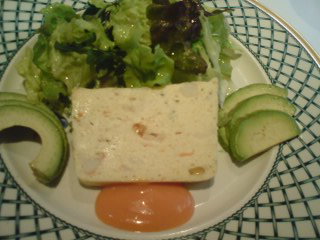
The Missus next chose a Hana Hana regular hors d’oeuvre, “Suwa Gani Terrine/Suwa (from Hokkaido) Crab Terrine”. A very light terrine served with a cold tomato coulis and crispy fresh greens.

hana-09-3

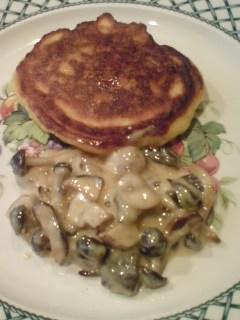
As for me, I ordered a new dish, Foie gras stuffed blini with cream sauce mushrooms. Lighter than expected, but very satisfying and succulent. A great simple but sophisticated idea!

hana-09-41

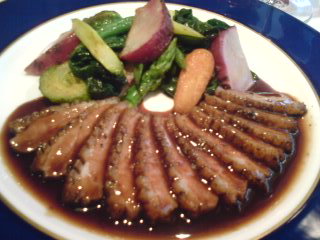
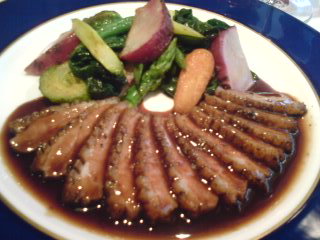
The Missus, a duck addict, could not help try the young duck breast roasted and sliced with a delightful sweet sauce (madeira wine?). She somehow managed to leave a few slices for me to taste!

hana-09-5

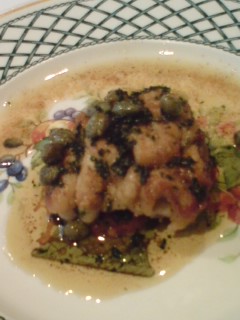
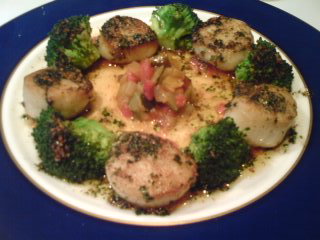
Being a galant gentleman (who am I kidding? certainly not my better-worse half!), I asked for the scallops sauteed Provence-style as my poor companion could not decide which main order to go for. Actually, I was looking forward to the small exchange cited above! Cooked to perfection with delightful petite ratatouille.

hana-09-3_0001

And it was time for dessert!
The Caramel Creme Brulee topped Caramel Ice-cream would have Rich take the next plane to Japan!

hana-09-7

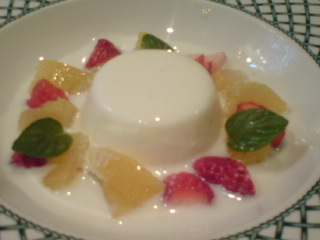
As for the Blanc-manger, the French equivalent of the Chinese almond curd dessert, I can assure you that the next Chinese (and other Asian) tourists to Shizuoka would not miss it for anything!

Saying that I’m looking forward to my next visit is a gross understatement!

Hana Hana
Open for lunch and dinner.
Closed on Tuesdays and Wednesdays (will change in the near future, so please do call!)
420-0037 Shizuoka City, Aoi Ku, Hitoyado-cho, 1-3-12
Tel. & Fax: 054-2210087
Credit cards OK

French Wines In Shizuoka City at La Vigne!


The Japan Blog List

Please check the new postings at:
sake, shochu and sushi

—————————————-
日本語のブログ
—————————————-

lavigne-1

Service: Excellent and very friendly
Facilities: great washroom, great cleanliness overall
Prices: reasonable, good value
Non-smoking!

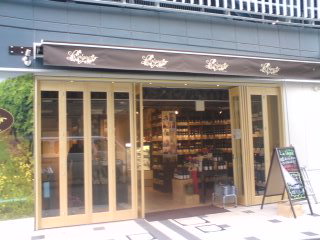
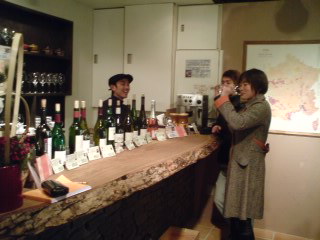
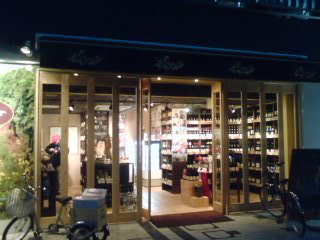
La Vigne, which has just opened in Shizuoka City on December 18th, 2008, is a new concept in this city as far as wine shops are concerned.

A subsidiary of a Nagoya Company which has two other shops in Kasugai City (Aichi Prefecture) and Asahikawa City (Hokkaido Prefecture), it sells wines exclusively from France and directly imported from the winegrowers!

lavigne-2

The other innovation is the standing bar included on the premises where Mr. Hirotaka Sato and his staff serve a daily selection of wines by the glass at very reasonable prices, from 200 to 1,000 yen!. One can also have a cup of coffee instead, with a croissant or freshly baked bread. A menu including cheese, soup and light dishes/snacks is available all day long! Everything is “paid on delivery”, keeping everything to a comfortable minimum!

lavigne-5

By all day long, I mean all day long, as they are opened from 10:00 a.m. to 10:00 p.m.!

lavigne-4

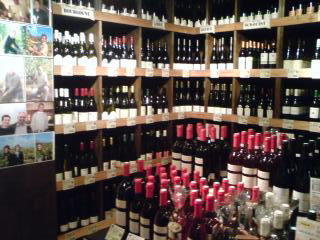
As for wines there is plenty of good value to choose from, including special sales.
Do not forget to have a good look inside the refrigerated cellar!

lavigne-3

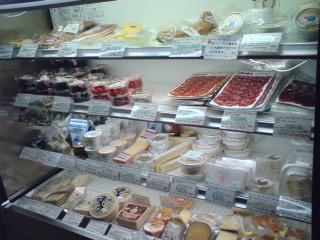
A limited, but excellent delicatessen display allows you to buy and take some great snacks with your wine back home, including cheese and sausages!

lavigne-6

Come early enough to get some freshly baked bread and have a look at some interesting canned food and preserves!

A very easy-going place to taste a wine in all tranquility without the usual hassles!

LA VIGNE
420-0852 Shizuoka City, Aoi Ku, Gofuku-Cho, 17-2, 1F (within walking distance for Shizuoka JR Station in front of Fugetsuro!)
Tel. & Fax: 054-2054181
Business hours: 10:00~22:00
HOMEPAGE (Japanese)

Vegan and Vegetarian Ultimate Drink: Japanese Sake!


The Japan Blog List

Please check the new postings at:
sake, shochu and sushi

—————————————-
日本語のブログ
—————————————-

virtual-bar1

I’m persuaded many vegans and vegetarians all over the World like their drinks!
The fact is that they may some reservations as whether their drink qualify as far as their culinary priorities prevail.
For example, do you know that many wines (don’t misunderstand me, I love me my wine!) are still filtered in the traditional way with egg whites?

On the other hand, (good/unfortunately there is not so good, too…) Japanese sake is exclusively made with rice, pure water and vegetal yeast. That is all! Sometimes, brewers will use lactic acid to help with preservation, but it is also of vegetal origin.
Some brewers (not many, only 13 of them in the whole of Japan) like Aoshima Brewery in Fujieda City, Shizuoka Prefecture will go as far as making organic sake with rice grown organically!

The (simplified) process of making sake is as follows:

-Rice millage/polishing: the rice will be milled down carefully as the starches are concentrated in the middle of the grain contrarily to edible rice. The more the rice is polished, the higher quality of the sake.
-Washing and soaking: the rice is washed and then soaked in pure water.
-Steaming: the rice is then steamed and left to cool on large pieces of absolutely clean cloth.
-Production of koji/malted rice: some rice is malted with Aspergillus oryzae mold
-Yeast starter: malted rice, regular steamed rice and pure water are mixed in a vat to which is added a culture of pure yeast cells. The latter is one the main ingredients which will differentiate all sake in taste, aroma and other characteristics. The wole is called “moto” or “origin/root” of the sake.
-Moromi and sandan shikomi: moromi is is the “moto” transferred to a larger vat where rice, malted rice and pure water are added. This is done in three steps, “sandan shikomi”, for a gradual and even process.
This is left to ferment for eighteen to thirty-two days.This step will also define the characteristics of the sake.
-Pressing: it is done in many ways, depending on the quality of the sake
-Filtering: The brewer will choose to filter it or not through various processes.
-Pasteurization: Most sake is pasteurized as “nama”/unpasteurized sake has to be kept at low temperature, making it very difficult to export. A pity, as this is “true sake”!
-At this time, pure water may be added to the “genshu” (unaltered sake) to lower the alcohol content, and also pure rice acohol for a different type of sake.

(Simplified) List of Sake types:

-Futsushu/”normal sake”: made with rice milled/polished down to 80% (that is, 20% will be polished off). Can be rotgut or incredibly good sake depending on millage, equipment and ingredients.
-Junmai/”pure rice”: made with rice milled to 70% or lower. No alcohol was added.
-Junmai Ginjo: made with rice milled down to 60% or lower. No alcohol wa added.
-Junmai Daiginjo: made from rice milled down to 50% or lower. No alcohol was added.
-Honjozo: made with rice milled to 70% or lower. Alcohol was added.
-Ginjo: made with rice milled to 60% or lower. Alcohol was added.
-Daiginjo: made with rice milled to 50% or lower. Alcohol was added.

In the case of Shizuoka Prefecture, futsushu is usually made from rice milled down to 70~65%, junmai and honjozo, 60 t0 50%, junami Ginjo and ginjo, 50~40%, junmai daiginjo and daiginjo, 40~…%.

Tere are other intermediary “appelations” such as Tokubetsu (special) Junmai and Tokubetsu Honjozo, Yamahai, etc…

“Nama” means “unpasteurized, “genshu”, unaltered sake, “muroka”, unfiltered, as for most commonly used added indications.

Incidentally, sake powder resulting from polishing will be used for Japanese-style cakes or animal feed depending on quality. “Sake kasu”/white lees which are left after pressing and filtering are used to make “amazake”, “Sake kasu nabe”, pickles and so on!

For a thorough study of Japanese sake, read John Gautner’s website or buy his books. John is the universally recognized non-japanese authority on Sake!

Must-see sake blogs:
-If you live in the Us, and particularly New York, visit Timothy Sullivan’s blog!
-If you live in Tokyo or Japan visit Melinda Joe and Etsuko Nakamura‘s blogs!
-If you want to know ALL about one region’s sake and sake breweries, visit Shizuoka Sake!

Cheers, Kampai!

Today’s Lunch Box/Bento (‘9/4)


The Japan Blog List

Please check the new postings at:
sake, shochu and sushi

—————————————-
日本語のブログ
—————————————-

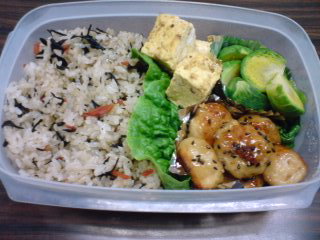
bento-09-20a

Today was Tuesday, the day after Monday, both days when I can expect a bento by the Missus!
She had quite a battle this morning as things seem to drop or fly all the time!

bento-09-20b

Now, for the main dish, she steamed rice with hijiki/sweet seaweed and Kyo-ninjin/Kyoto-style deep red carrot and a couple of secrets she would not reveal.
She prepared tamagoyaki/Japanese omelette and chicken balls she fried with a seet and sour sauce containing thinly sliced kinkan/kumquats (in season right now/which reminds me I marinated some in vodka last year!) and served with black sesame. Plenty of lettuce and boiled Brussels sprouts.

bento-09-20c

As for the salad and dessert she included some yellow and violet yams/sweet potatoes salad, a plum tomato, boiled broccoli, shredded vegetables and cress, and finally a couple of “kinkan amani” (“kinkan” for kumquat, “ama” for sweet, “ni” for simmer) prepared by Lojol‘s wife!

Before I left she enquired if I was going to drink tonight (I didn’t last night). When I asked why, she replied she would have to take it in account before preparing dinner.
Stupid question!

Bryan Baird’s Newsletter


The Japan Blog List

Please check the new postings at:
sake, shochu and sushi

—————————————-
日本語のブログ
—————————————-

Baird Beer & Taproom Events Bulletin 2009 #2
bryan-sayuri.gif

Dear Taproom Friend & Baird Beer Enthusiast:

During this winter period of short days and long nights have you been wondering about the 2009 release of Dark Sky Imperial Stout? Wonder no longer — Dark Sky will be pouring from the taps of fine pubs and restaurants throughout Japan beginning Wednesday, January 21.

*Dark Sky Imperial Stout (ABV 9%):

As the name implies, this is an extremely foreboding brew, pitch black in color, unctuous in body, complex and elusive in flavor, and hoppily aromatic. This granddaddy of Stouts is brewed with eight different malts, Japanese dark sugar and five varieties of hops. If you are a fan of hearty dark ales, Dark Sky Imperial Stout is for you!

In addition to Dark Sky on draught, a limited number of 633 ml bottles (adorned with our new label artwork) will be available for purchase both direct from the brewery estore and through the family of Baird Beer retaililng liquor stores in Japan.

Remainder: The IPA Festival (Ten Days, 10 IPAs) is in progress at our Nakameguro Taproom in Tokyo. The final festival day is Monday, January 26. If you have yet to attend, please make haste.

Cheers,
Bryan Baird

Baird Brewing Company
Numazu, Japan
HOMEPAGE

Abondance’s Classic Cakes (1): Tendresse/Tenderness


The Japan Blog List

Please check the new postings at:
sake, shochu and sushi

—————————————-
日本語のブログ
—————————————-

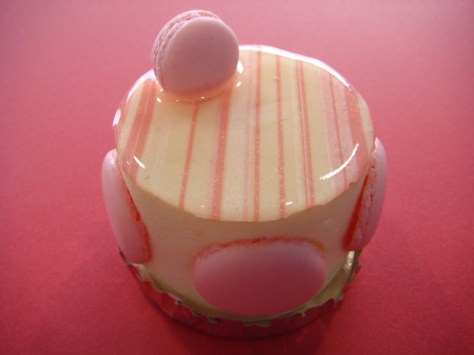
abondance-tendresse

Bernard Heberle in Hamamatsu City has become the reference in the whole of Shizuoka Prefecture when it comes to French cake and confectionery.
A man of character, he has steadfastly kept faithful to his principles and ethics and blessed us with uncompromising creations of a level diificult to equal!

This particular creation is named “Tendresse” in French, meaning tenderness in English.
In Bernard’s French words:
-“Voici le gâteau que je te propose ce mois ” Tendresse ” qui est un gâteau a base de Fromage blanc et de pâte a bombe , très léger et même ceux qui n’aime pas le fromage y trouverons leurs plaisir. Léger et onctueux décoré avec des macarons a la Framboise.”
-“Here is the cake I would like to introduce your friends to this month. It is called “Tenderness” and is made with a very light combination of Fromage Blanc/White cheese and Pate a bombe/very fine sponge cake variety. Even people who do not like cheese will appreciate it. Light and soft, it is decorated with raspberry macarons”.

I’m ready to take the 30-minute bullet train to Hamamatsu to savour it!

Abondance
Address: Hamamatsu Shi, Sumiyoshi, 2-14-27 (in front of Seirei Hospital)
Tel.: 053-4738400
Fax: 053-4738401
Opening hours: 10:00~20:00. Closed on Tuesdays.
Homepage

Tofu Recipes (1): Fried Namaage with Cheese and Ponzu


The Japan Blog List

Please check the new postings at:
sake, shochu and sushi

—————————————-
日本語のブログ
—————————————-

toofu-recipe-1

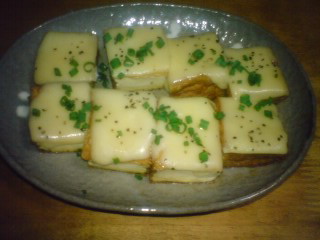
This is I hope the first installment of a long series of simple recipes with tofu. Some will be vegan and vegetarian, some vegetarian like this one, others for omnivores!

tofu-kinds-21

This particular one is one one of the Missus’ favorites.
She uses on full “namaage tofu”, tofu that was deep-fried whole and that you can buy either fresh at a Japanese market or packaged.

She cuts the tofu in equal-sized bite pieces about 1 cm thick and fry them in a non-stick pan. No real need for any oil as what is contained in the surface of the tofu will be sufficient.
The point is that she fries them only on side. While they cook she lay a thin piece of mild/processed cheese over each tofu piece, add some black pepper, and cover with a glass lid. When the cheese has nicely melted over the tofu, she takes off the lid, sprinkles the whole with ponzu and fries for another minute. She serves on a dish with the sauce and liberally sprinkles the lot with chopped thin leeks!

Great snack with Japanese sake or beer!

Today’s Lunch Box/ Bento (‘9/3)


The Japan Blog List

Please check the new postings at:
sake, shochu and sushi

—————————————-
日本語のブログ
—————————————-

bento-09-19a

The Missus has decided to expand here bento repertoire and to experiment with design and ingredients!

bento-09-19b

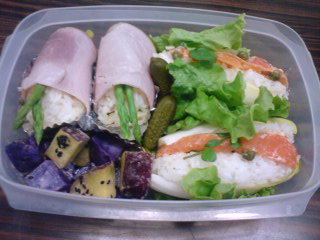
She devised two types of “nigiri/rice balls”:

bento-09-19e

Two were wrapped in a thin ham with a pair of mini-asparaguses. I ate them wrapped again inside lettuce provided together in the box.
As for the rice, it had been mixed withn white sesame.

bento-09-19d1

The other two “sandwiched” a slice of seasoned smoked salmon and were wrapped again between two chickory/endive leaves and topped with cresson and capers.

I was provided with some cornichons and yam/sweet potato (yellow and violet) salad with black sesame in lieu of dessrt.

bento-09-19c

As for the salad dish, it contained a boiled half egg, boiled Brussels sprouts, brocoli and broad beans, cut plum tomatoes on a bed of shredded vegetables, to which I added dressing I keep in the fridge at work!
I certainly don’t mind those changes! LOL
Vegetables Facts and Tips (5): Yams


The Japan Blog List

Please check the new postings at:
sake, shochu and sushi

—————————————-
日本語のブログ
—————————————-

satsuma-1

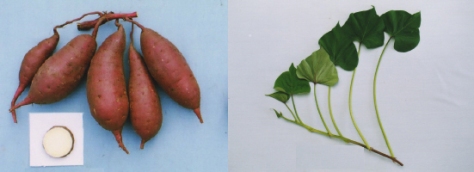
Yams or “Satsuma Imo” were first introduced to Japan in the rykyu Islands (Okinawa) in 1604 by the Chinese. It was then introduced in Kyushu in 1609, an area that grows 80% of the total Japanese production.

It has been recognized in this country fro a long time for both its nutritional and pharmaceutical qualities.

satsumabeni_haruka

There are over a hundred species in Japan, but the most popular edible ones (not the ones exclusively used for making shochu) have red skins and light yellow flesh.

satsumatanegashima

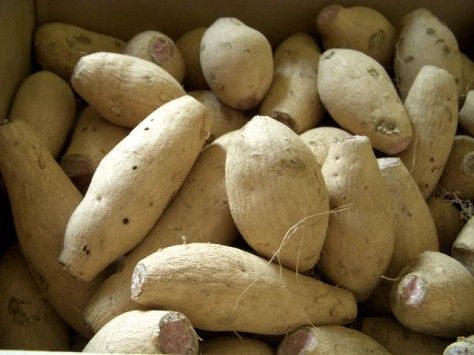
My personal favorite is the “Tanekoshima Gold Imo” grown in Taneko Island south of Kyushu. It has the particularity of being red when raw before chaning to a rich golden color when cooked. Among other varieties, the violet yams are getting increasingly popular.

yummy
Tanekoshima yam (deep yellow), “common yam” (light yellow) and Murasaki/Violet yam.

The Missus particularly likes to mix the three above as a cold salad with mayonnaise or cream-based dressing.

FACTS:
-Season: September to November
-Main elements: Carbohydrates, Carotene, Vitamin C, Vitamin E, Potassium, Calcium, Magnesium, vegetal fibers.
-Beneficial to digestion.
-Lose very little of its beneficial elements even after a long cooking.

TIPS:
-Choose specimens with nice color and a “fat/roundish” aspect!
-Plunge yam in cold water as soon as you have cut them. They will not lose their color!
-Boil, bake or steam long enough before taking skin off. Discard skin!