Tag Archives: グルメ

Japanese Cuisine: Koyadofu Cheese & Bacon Rolls

Koyadofu is one kind of tofu that can beasily arranged into all kinds of interesting appetizers in Japanese Homes’ Gastronomy!
Here is a simple suggestsion for yummy snack to be eaten by all, and with a good beer for adults!

Koyadofu Cheese & Bacon Rolls

INGREDIENTS: For 8 rolls

-Koyadofu: 4 sheets or 80 g
-Sliced cheese: 2
-Flour: as appropriate
-Thin pork belly slices: 8
-Salad oil a little

SAUCE:
-Dashi/Japanese soup stock (if unavailable use bouillon of your choice): 1 cup/200ml/cc
-Soy sauce: 2 tablespoons
-Mirin/sweet Japanese sake: 2 tablespoons
-Sugar: 1 tablespoon

RECIPE:

-Soften the koyadofu into lukewarm water. Press water out firmly.
Cut each “sheet” into identical halves

-Cut the sliced cheese into 4 identical parts.

-Cut the koyadofu as shown in picture through 4 fifths of it depth. Insert a pice of sliced cheese inside the cut.

-Roll the koyadofu “sandwich” inside a slice of pork belly and sprinkle with flour.

-Heat some oil in frying pan. Place the rolls together with their “tails” down. Cover with glass lid and cook over medium fire until the meat is conpletely cooked and attained a nice colour.

-Add the sauce ingredients and cook turning the rolls 2 or 3 times until the juices have practically disappeare/evaporated.

-Serve on a plate with some chopped thin leeks and if desired sprinkle with a little chili pepper!

RECOMMENDED RELATED SITES:
Warren Bobrow, Bread + Butter, Zoy Zhang, Hungry Neko, Think Twice, Frank Fariello, Mangantayon, Hapabento, Elinluv Tidbit Corner, Tokyo Terrace, Maison de Christina, Chrys Niles,Lexi, Culinary Musings, Wheeling Gourmet, Comestiblog, Chronicles Of A Curious Cook, Bento Boutique, Tokyo Through The Drinking Glass, Tokyo Foodcast, Urban Sake, Sake World, Palate To Pen, Yellin Yakimono Gallery, Tokyo Terrace, Hilah Cooking, More than a Mount Full, Arkonite Bento

Please check the new postings at:
sake, shochu and sushi

—————————————-
日本語のブログ
—————————————-

Vegan Japanese Tofu Gratin

Gratin can become a problem for vegans as they usually involve the use of butter and milk.
Here is a simple recipe that will help you solve that problem:

Japanese Beans Gratin!

INGREDIENTS: For 1 person

-Tofu (kinudofu/Silk tofu) 1 block/300g
-Onion: 1
-Shiitake Mushrooms: 3
-Oil: 2 tablespoons
-Flour: 2 tablespoons
-Soy milk: 1 cup/200 cc/ml
-Miso: 1 tablespoon
-Salt & pepper: as appropriate

RECIPE:

-Cut/Dig out tofu block to a depth of 2 cm and leaving a 1 cm wide rim.

-In an oven dish cook the tofu block for 2 miutes 30 seconds in the microwave oven, take out and let rest for more than 3 hours.

-Chop the onion finely and cut the shiitake mushrooms in 5 millimeter/half a centimeter strips.

-Wrap the chopped onion in cellophane paper and cook in microwave oven for 1 minute.

-Pour some oil in a frying pan and sautee the onions. Once a nice smell cmes out the onions add the shiitake mushrooms and fry. Season with salt and pepper.

-Switch off the fire. Add the flour and mix well with a soft spatula.

-Add the soy milk and miso and mix. Switch on the fire and cook until the sauce has acquired a smooth texture. Switch off fire. (you may add the tofu dug out of the block!)

-Pour some oil in a clean frying pan and fry the tofu block on both sides until it attains a nice colour (see picture above).

-Serve the fried tofu on a dish and pour the onion-mushroom sauce on it!

NOTE:

-If you want to really look it like a gratin, you may grill the lot!

-Decorate with some leafy greens!

RECOMMENDED RELATED SITES:
Warren Bobrow, Bread + Butter, Zoy Zhang, Hungry Neko, Think Twice, Frank Fariello, Mangantayon, Hapabento, Elinluv Tidbit Corner, Tokyo Terrace, Maison de Christina, Chrys Niles,Lexi, Culinary Musings, Wheeling Gourmet, Comestiblog, Chronicles Of A Curious Cook, Bento Boutique, Tokyo Through The Drinking Glass, Tokyo Foodcast, Urban Sake, Sake World, Palate To Pen, Yellin Yakimono Gallery, Tokyo Terrace, Hilah Cooking, More than a Mount Full, Arkonite Bento

Please check the new postings at:
sake, shochu and sushi

—————————————-
日本語のブログ
—————————————-

Make your own Tofu (repeat)

zarudofu
“Zarudofu”, my favourite variety of tofu just filtered out in a “zaru/basket”. You just eat it with a spoon on its own. No seasoning needed!

Following a suggestion by Japansoc I decided to pst again the tofu recipe!
This article concerns the home-making of it!

Ingredients (for one large piece, one cho/”丁” in Japanese)

Soy beans: 2 cups (360cc)
Nigari: 2 large tablespoons
(Magnesium chloride is an important coagulant used in the preparation of tofu from soy milk. In Japan it is sold as nigari (the term is derived from the Japanese word for “bitter”), a white powder produced from seawater after the sodium chloride has been removed, and the water evaporated. In China it is called “lushui”.. Nigari or Lushui consists mostly of magnesium chloride, with some magnesium sulfate and other trace elements. It is also an ingredient in baby formula milk).
Water: 5 cups (twice and a half the volume of soy beans)

Utensils:
One large pot
One large clean cloth pouch to press tofu through
One bowl
One mixer
One thermometer
One large piece of gauze to filter water off shaped tofu
One large wooden spoon
One wooden tofu-shaper case

RECIPE:
toofu-1

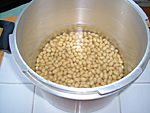
1) Preparation: soak soy beans in water overnight

toofu2

2) Preparation: Mix nigari with 1 cup of water and set aside

toofu-3

3) According to its size, Pour the whole or part by part soy beans and water (1) and make paste as fine as possible. If mixer runs at an even pace without crushing beans into paste, add more water. The paste obtained is called “namago” (生呉)

toofu-4

4) Pour the bean paste into a large pot with an equal amount of water. Heat stirring all the time. The paste will come to a boil suddenly. Switch off fire. Switch on low once the paste has settled for 10 minutes and take off fire.

toofu-5

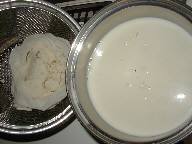
5) Pour paste into the cloth pouch and press. Right of the picture is tofu paste before pressing. Left is pressed out tofu

toofu-6

6) Solidifying (coagulating) with nigari.
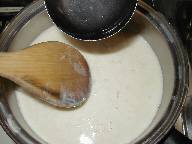
Stir tofu over light fire. When the temperature has reached 75~80 degrees Celsius pour in nigari slowly and stir all the time. The solid matter will sink to the bottom and accumulate. The coagulation will be complete when liquid above tofu has become transparent. Stop the operation and let rest for 15 minutes.

toofu-7

7) Arrange the gauze inside tofu a tofu shaper case which should have small holes to let excess water run out.

toofu-8

8) Cover with lid with a weight (or glass of water) of about 250 g and further press out water for 15 minutes

toofu-9

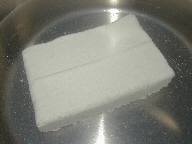
9) Delicately empty tofu in basin filled with called water and leave it there for an hour to take out excess nigari. Store in refrigerator.

RECOMMENDED RELATED SITES:
Warren Bobrow, Bread + Butter, Zoy Zhang, Hungry Neko, Think Twice, Frank Fariello, Mangantayon, Hapabento, Elinluv Tidbit Corner, Tokyo Terrace, Maison de Christina, Chrys Niles,Lexi, Culinary Musings, Wheeling Gourmet, Comestiblog, Chronicles Of A Curious Cook, Bento Boutique, Tokyo Through The Drinking Glass, Tokyo Foodcast, Urban Sake, Sake World, Palate To Pen, Yellin Yakimono Gallery, Tokyo Terrace, Hilah Cooking, More than a Mount Full, Arkonite Bento

Please check the new postings at:
sake, shochu and sushi

—————————————-
日本語のブログ
—————————————-

Koyadofu/Pressed Tofu Recipe

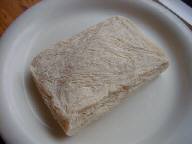
As promised here is the basic recipe to make Koyadofu/高野豆腐 or pressed tofu.

Koyadofu is extensively used in veganand vegetarian food in Japan.

It can also be deep-fried into great crunchy morsels!

INGREDIENTS:

-Tofu: 1 block/400 g (actually it is up to you!)

RECIPE:

-Place the tofu in a plate/bowl and let rest there for 10 minutes.  Throw away the water that comes out naturally. Cut the tofu into 3 “slices” across the width. You may skip that step and proceed with whole block.

-Wrap the tofu into cellophane paper and freeze the tofu inside the freezer of your refrigerator.

-Will be ready once completely frozen.
The trick is to press water out of the tofu once you have thawn it.
The tofu will have taken its colour and consistency naturally.

Recipe suggestion:

Prepare a stock soup with 1 cup of seaweed dashi/soup stock, 2 tablespoons of sugar, a little salt, 1 and a half teaspoons of mirin/sweet sake, and 1 and a half teaspoons of soy sauce.
Cook the koyadofu in it and serve once soft enough.

RECOMMENDED RELATED SITES:
Warren Bobrow, Bread + Butter, Zoy Zhang, Hungry Neko, Think Twice, Frank Fariello, Mangantayon, Hapabento, Elinluv Tidbit Corner, Tokyo Terrace, Maison de Christina, Chrys Niles,Lexi, Culinary Musings, Wheeling Gourmet, Comestiblog, Chronicles Of A Curious Cook, Bento Boutique, Tokyo Through The Drinking Glass, Tokyo Foodcast, Urban Sake, Sake World, Palate To Pen, Yellin Yakimono Gallery, Tokyo Terrace, Hilah Cooking, More than a Mount Full, Arkonite Bento

Please check the new postings at:
sake, shochu and sushi

—————————————-
日本語のブログ
—————————————-

Vegan Japanese Burger

Here is another simple recipe to convince my friends that Japan is a great country for vegans and vegetarians (and omnivores!)!

Vegan Japanese Burger!

INGREDIENTS:

Koyadoufu as sold in Japan either in single sheets or ready cut.

Koyadiufu cuisine example

Koyadoufu/高野豆腐 is tofu which has been pressed hard to almost a solid state although it still possesses an elastic and tender quality.
It is available in Asian markets either dried or preserved in light brine.

I will post the recipe very soon!

-Koyadofu: 1 “sheet” or approximately 100 g (wet weight)
-Boiled soy beans: 1/2 cup
-Carrot: 1/2
-Cabbage: 2 leaves
-Black pepper: a litle
-Miso: 1 teaspoon
-Tomato puree: 1 teaspoon
-Oil: 1 tablespoon
-Flour: 2 tablespoons
-Potato: 1
-Soy milk: 5 tablespoons
-Salad oil: 3 tablespoons
-Salt: a small pinch

RECIPE:

-If the koyadofu is dry let in rest in lukewarm water until it has come back to its soft state. Press the water out hard and chop finely.

-Drop the boiled soy beasn in a food processor/mixer to “chop” finely. Don’t make a paste!

-Chop the carrot finely. Cut the the cabbage leaves into very thin strips>

-Fry the carrot and cabbage in a fry pan with oil and black pepper.

-Once the oil has coated the carrot and cabbage well, reduce fire to low, cover with a lid and steam fry for a while.

-Once the carrot and cabbage are cooked add the miso, tomato puree, chopped koyadoufu, soy beans, and continue steam-frying for a little while.
Switch off the fire.
Add the flour and mix.

-Let cool long enough to be able to handle it.
Form a burger and place on an oiled oven hot plate.

-Peel the potato and cook it in a microwave oven until tender (or boil it beforehand).

-Let the potato cool down before dropping it in the food processor with the soy milk and salad oil. Mash the potato, but don’t process too long or te potato willbecome glue!

-Season with a little salt and cover the burger with it.

-Bake for 10 minutes at 190 degrees Celsius or until it has reached a clour of your liking!

RECOMMENDED RELATED SITES:
Warren Bobrow, Bread + Butter, Zoy Zhang, Hungry Neko, Think Twice, Frank Fariello, Mangantayon, Hapabento, Elinluv Tidbit Corner, Tokyo Terrace, Maison de Christina, Chrys Niles,Lexi, Culinary Musings, Wheeling Gourmet, Comestiblog, Chronicles Of A Curious Cook, Bento Boutique, Tokyo Through The Drinking Glass, Tokyo Foodcast, Urban Sake, Sake World, Palate To Pen, Yellin Yakimono Gallery, Tokyo Terrace, Hilah Cooking, More than a Mount Full, Arkonite Bento

Please check the new postings at:
sake, shochu and sushi

—————————————-
日本語のブログ
—————————————-

Japanese Snack: Wasabi, Umeboshi & Avocado Salad

SYNOPSIS:

Living in a Prefecture that grows 80% of all wasabi in Japan, I thought it was about time I came up with a few recipes with wasabi!

I fully understand that wasabi and wasabi paste is not readily available outside Japan, but if you have the chance to get at least a tube of real wasabi, I a a few recipes for you that requires only a little of the precious stuff.
Bear in mind that wasabi (as well as umeboshi!) is a natural medicine by itself, one more reason for you to buy some.

As for the following recipe, the second one, vegans and vegetarians can substitute the mayonnaise with gomadare/sesame sauce or a simple vinaigrette with olive oil, wine vinegar, salt pepper and wasabi!

Wasabi, Umeboshi & Avocado Salad:

INGREDIENTS: For 1~2 persons

-Avocado: 1 (choose a ripe one!)
-Umeboshi/Japanese pickled plum: 1 (if you don’t want too much salt, choose a sweet one!)
-Mayonnaise: 1 teaspoon
-Wasabi paste: 1/2 teaspoon
-Soy sauce: 1 teaspoon
-Lemon juice: as appropriate
-Nori/dry seaweed: as appropriate

RECIPE:

-Cut avocado in halves, peel, discard seed and cut into samll enough pieces. Drop them in a bowl. Add the lemon juice and stir delicately. Very iportant as it will preserve the colour of the avocado and add to taste.

-Take out and discard the umeboshi seed and chop/mash fine. Add to avocado and stir delicately.

-Add mayonnaise (or vinaigrette), wasabi, soy sauce and stir/mix delicately.

-Serve in a bowl topped with dry seaweed cut in short and thin strips.

NOTE:

-Add peeled orange wedges for looks and taste!

So easy, isn’t it?

RECOMMENDED RELATED SITES:
Warren Bobrow, Bread + Butter, Zoy Zhang, Hungry Neko, Think Twice, Frank Fariello, Mangantayon, Hapabento, Elinluv Tidbit Corner, Tokyo Terrace, Maison de Christina, Chrys Niles,Lexi, Culinary Musings, Wheeling Gourmet, Comestiblog, Chronicles Of A Curious Cook, Bento Boutique, Tokyo Through The Drinking Glass, Tokyo Foodcast, Urban Sake, Sake World, Palate To Pen, Yellin Yakimono Gallery, Tokyo Terrace, Hilah Cooking, More than a Mount Full, Arkonite Bento

Please check the new postings at:
sake, shochu and sushi

—————————————-
日本語のブログ
—————————————-

Vegan Japanese Snack: Imo & Wasabi

Living in a Prefecture that grows 80% of all wasabi in Japan, I thought it was about time I came up with a few recipes with wasabi!

I fully understand that wasabi and wasabi paste is not readily available outside Japan, but if you have the chance to get at least a tube of real wasabi, I a a few recipes for you that requires only a little of the precious stuff.
Bear in mind that wasabi is a natural medicine by itself, one more reason for you to buy some.
The present recipe also include yama imo/山芋, or long yam, which also so good for stamina and health!

Vegan Japanese Snack: Imo & Wasabi

INGREDIENTS: For 2 people

-Long yam (fresh): 7 cm long piece
-Mitsuba/Trefoil/Japanese honeywort
-Dry seaweed/nori: as appropriate
-Soy sauce: 1 teaspoon
-Wasabi paste: 1/2 teaspoon
-Soy sauce for “washing”: 1 teaspoon

RECIPE:

-Peel the yam and cut into pieces of your preferred size.
If you are sensitive to the yam “juice”, freeze it first!

-Boil the trefoil lightly and for only a short time. Drain and press water out. Add the soy sauce “for washing”, mix and press the the trefoil again!
Cut the trefoil into 1 cm long pieces.

-In a bowl mix the yam and trefoil with the soy sauce and wasabi. Mix well.
Place in serving dish topped with dry seaweed cut into short thin strips.

-You may add many green leaf veg to this recipe of course and decorate it with sliced red radihes for example!

RECOMMENDED RELATED SITES:
Warren Bobrow, Bread + Butter, Zoy Zhang, Hungry Neko, Think Twice, Frank Fariello, Mangantayon, Hapabento, Elinluv Tidbit Corner, Tokyo Terrace, Maison de Christina, Chrys Niles,Lexi, Culinary Musings, Wheeling Gourmet, Comestiblog, Chronicles Of A Curious Cook, Bento Boutique, Tokyo Through The Drinking Glass, Tokyo Foodcast, Urban Sake, Sake World, Palate To Pen, Yellin Yakimono Gallery, Tokyo Terrace, Hilah Cooking, More than a Mount Full, Arkonite Bento

Please check the new postings at:
sake, shochu and sushi

—————————————-
日本語のブログ
—————————————-

Gastronomic Cycling in Shizuoka: 8-Takajo Story 1

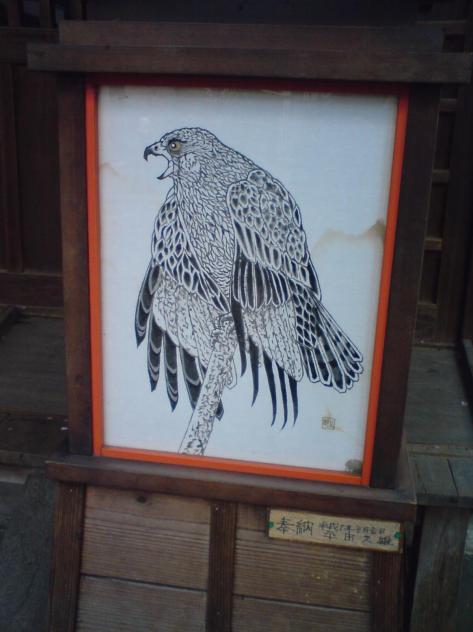
Picture of Falcon/Taka at Inari Shinto Shrine

Takajo is one of the oldest traditional quarters/precincts (in Japanese 町. Pronouce “machi” or “chyo”) in Shizuoka City.
It already existed more than 500 years ago when our city had a different name, Sumpu, and the Shogun Tokugawa Ieayasu came here to retire from politics.
The city and its depedencies were then divided into precise “machi”, each defined by the craft or profession of its inhabitants.
Takajo/鷹匠, meaning falconry was initially occupied by falcon breeders and their families. Falconry was a favourite past time of the nobility and a statue of Tokugawa Ieyasu with a falcon standing on his wrist is a celebrated sight in town. Accordingly the falconry guild wielded a lot of power in the daily affairs of the city.
Whether it stretched then as far as it presently does is difficult to verify, but the main shinto shrine, Inari Jinja, clearly indicates it lay near Sumpu Castle acroos from the precinct called Sumpu-Jo, the political centre of the City in Edo Era.
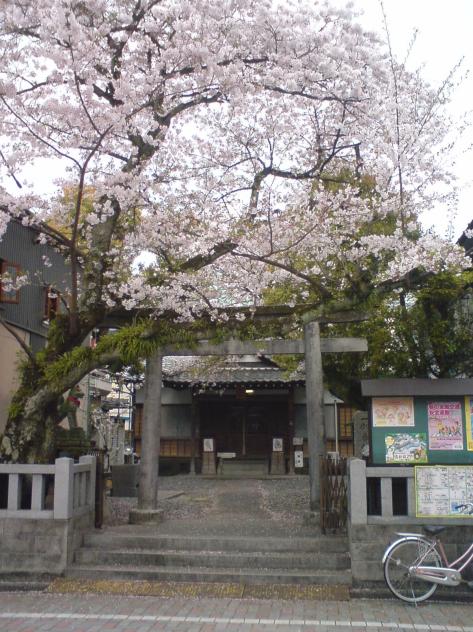
The Inarai Shinto Shrine in Takajo 1 Cho-me.

Although the name of Takajo had existed as the name of a village for more than 500 years, it got official recognition as the name of a distinct village only in 1876 and was finally incorporated into Shizuoka City, which has changed its name from Sumpu, in 1890 with three subdivions, or cho/丁 (or called cho-me/丁目 when counted).
In 1945 a part of the third “cho” was incorporated in neighbouring Tenma-Cho, and again in 1966 some areas of Takajo became part of Sumpu-Jo district.
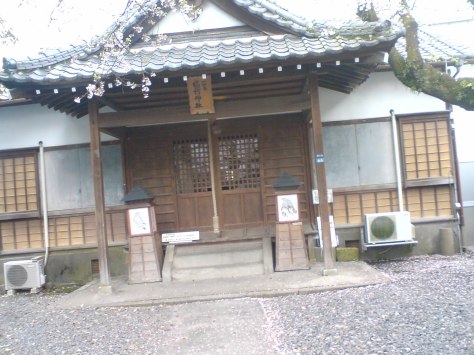
Inari Shinto Shrine/稲荷神社 is probably the oldest living site (although it has been rebuilt numerous times) as it was erected in 1631. It was officially recognized as the Shinto Shrine of Takajo first “cho” in 1879 by the Meiji Emperor Govenment.
For all these years I have lived and worked almost across the road, I haven’t heard yet of an ofiicial shrine for the second and third “cho”.

As Shizuoka City was in great part destroyed during WWII, Takajo grew again in a somewhat haphazard manner in spite of its straight narrow streets.
For long it was a fairly drab residential area with dark alleys at night, although it never bore a notorious reputation.
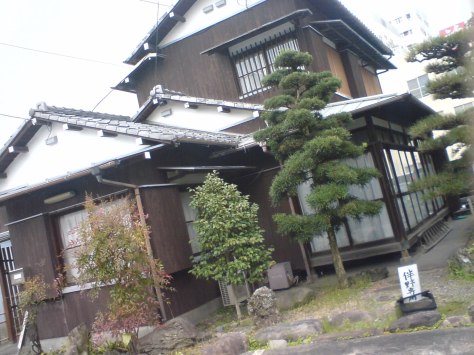
If you look around, that is along the “back streets”, you still can find old tradional Japanese houses!

Until the 1980’s questions and queries about that particular area did not raise as mauch as an eyebrow, but with the end of the bubble economy, this quiet and almost comatose part of the city suddenly became the focus of many a shop owner’s attention, be they restaurants, bars, fashion shops, antique shops or cake shops to the point that Takajo was soon dubbed as the “Daikanyama” of Shizuoka City in imitation of the fashionable district in Tokyo.
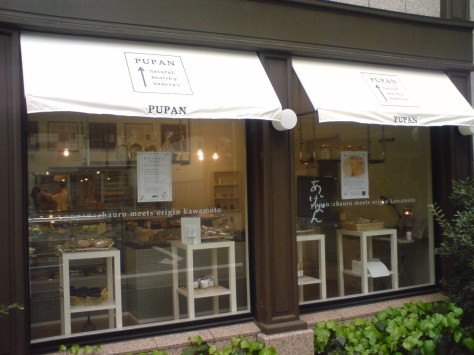
Pupan, a high quality but expensive cake shop/bakery.

The area has now become so replete with “small” businesses that is has become a destination ofits own worth for shoppers and revellers at any times of the day and night.
One would sorely be tried to describe the whole district in a pre-ordained manner unless one would be pedantic enough to grid it into a meaningless pattern. It is simply a maze (I was going to say an amazing labyrinth) and one had better follow his/her instinct when exploring it!
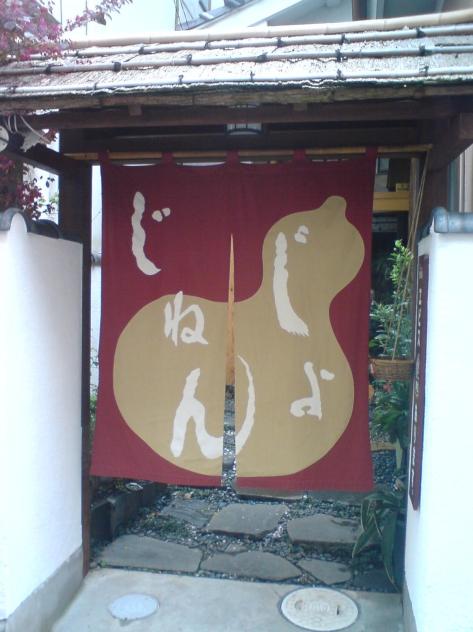
Look out for some beautiful noren/暖簾 or shop entrance curtains, especially old homes reclaimed as restaurants!

The best ay to vist the whole place at leisure is naturally my good bicycle which allows me to rapidly reach a certain spot where I will leave it (don’t worry, nobody is going to steal it!) before I can espy places of interest and steal a picture or two:
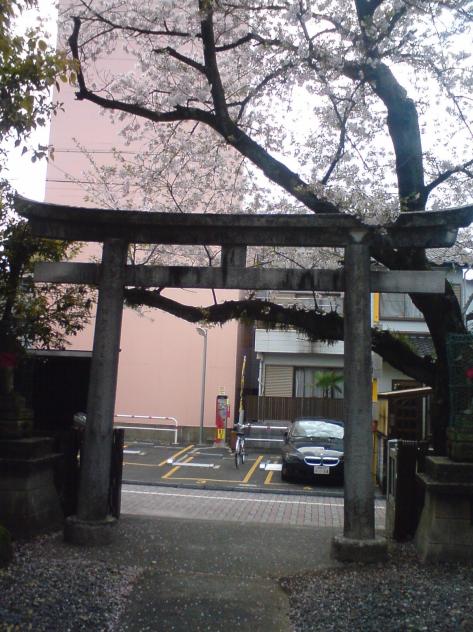
Inari Shinto Shrine entrance as seen from the shrine front yard.
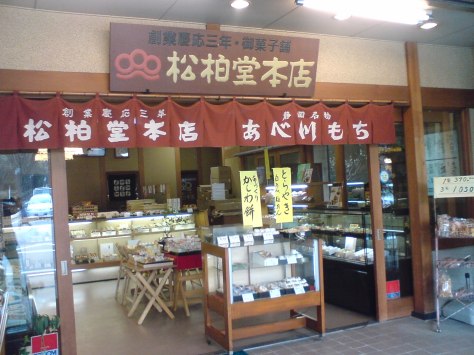
This very old shop sells “Abekawa Mochi”, a traditional wagashi/Japanese cake made in this city for than 400 years!
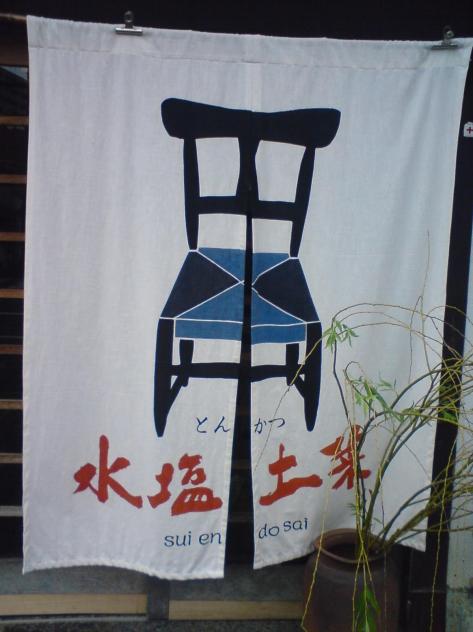
Another noren/暖簾, shop entrance curtain!
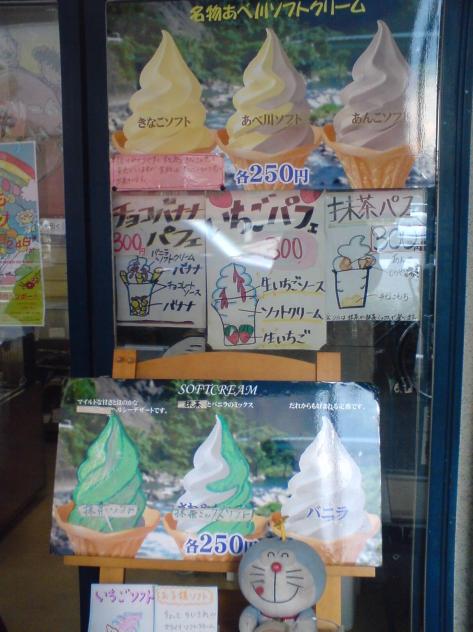
This place sells succulent soft ice creams made with matcha tea and kinako!
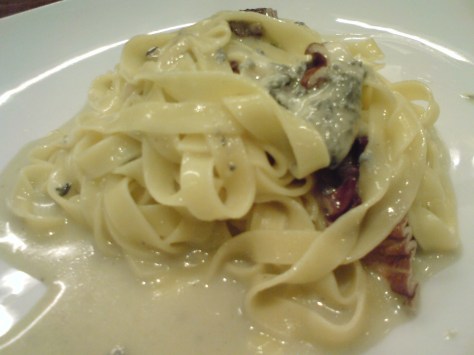
Do you remember the pasta at this Italian Restaurant?
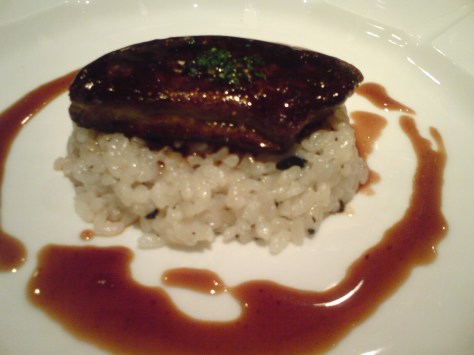
And the Foie gras at this French restaurant?

Alright, I’ll start introducing (re-introducing)them all with other sights from the next posting!LOL
It promises to be loooonnnngggg series!

RECOMMENDED RELATED SITES:
Warren Bobrow, Bread + Butter, Zoy Zhang, Hungry Neko, Think Twice, Frank Fariello, Mangantayon, Hapabento, Elinluv Tidbit Corner, Tokyo Terrace, Maison de Christina, Chrys Niles,Lexi, Culinary Musings, Wheeling Gourmet, Comestiblog, Chronicles Of A Curious Cook, Bento Boutique, Tokyo Through The Drinking Glass, Tokyo Foodcast, Urban Sake, Sake World, Palate To Pen, Yellin Yakimono Gallery, Tokyo Terrace, Hilah Cooking, More than a Mount Full, Arkonite Bento. Island Vittles, Skewer It!

Please check the new postings at:
sake, shochu and sushi

—————————————-
日本語のブログ
—————————————-
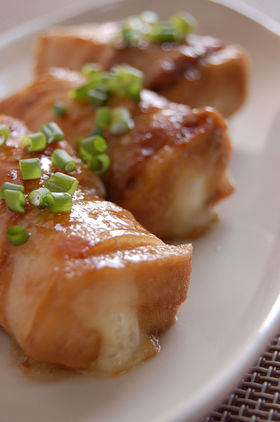
Japanese Seasonal Fish: Torafugu/Tiger Puffer

Torafugu or Tiger Puffer is one of more than a 100 hundred varieties of edible Puffer Fish or Globe Fish, but Tiger Puffer is by a great distance the most popular variety in Japan!

It is also known in Japanese as Honfugu/本河豚 or Oofugu/大河豚.
The main season is Winter and a little later for other regions.
It is caught on both sides of Japan especially in Central and East Japan.
It is a specialty in Hamamatsu in our Shizuoka Prefecture.

11,000 tonnes are caught yearly around Japan.
It is bred in Japan to the tune of 4,700 tonnes.
13,000 tonnes are mainly imported from China and South Korea.

In Japan, although it can be bought already dressed, one needs a special license to cut it, serve it, or sell it as the innards contain a violently lethal poison, although cheap fugu (not torafugu) does not always contain such toxin!

Cheap fugu can be eaten raw as sashimi all over Japan.

But more expensive torafugu sashimi is served as a piece of art!

As sashimi, it is best avoured with leeks, lemon, momijioroshi/grated daikon with chili pepper and ponzu!

As sushi, it can be served fairly plain.

Or aburi/炙り, lightly seared on one side!

Or more artistically with sansho and herbs!

Or even with its skin as the latter is edible!

It can also be served as gunkan seasoned with its own liver: a true delicacy!

Shirako/白子 or male spem sacs are also a delicay!

Torafugu can anturally be cooked, especially the bony parts full of meat but difficult to cut. My favourite is karaage/唐揚, deep-fried!

It is also very popular in cold weather a nabe/鍋 in Japan,

and in South Korea!

RECOMMENDED RELATED SITES:
Warren Bobrow, Bread + Butter, Zoy Zhang, Hungry Neko, Think Twice, Frank Fariello, Mangantayon, Hapabento, Elinluv Tidbit Corner, Tokyo Terrace, Maison de Christina, Chrys Niles,Lexi, Culinary Musings, Wheeling Gourmet, Comestiblog, Chronicles Of A Curious Cook, Bento Boutique, Tokyo Through The Drinking Glass, Tokyo Foodcast, Urban Sake, Sake World, Palate To Pen, Yellin Yakimono Gallery, Tokyo Terrace, Hilah Cooking, More than a Mount Full, Arkonite Bento. Island Vittles, Skewer It!

Please check the new postings at:
sake, shochu and sushi

—————————————-
日本語のブログ
—————————————-

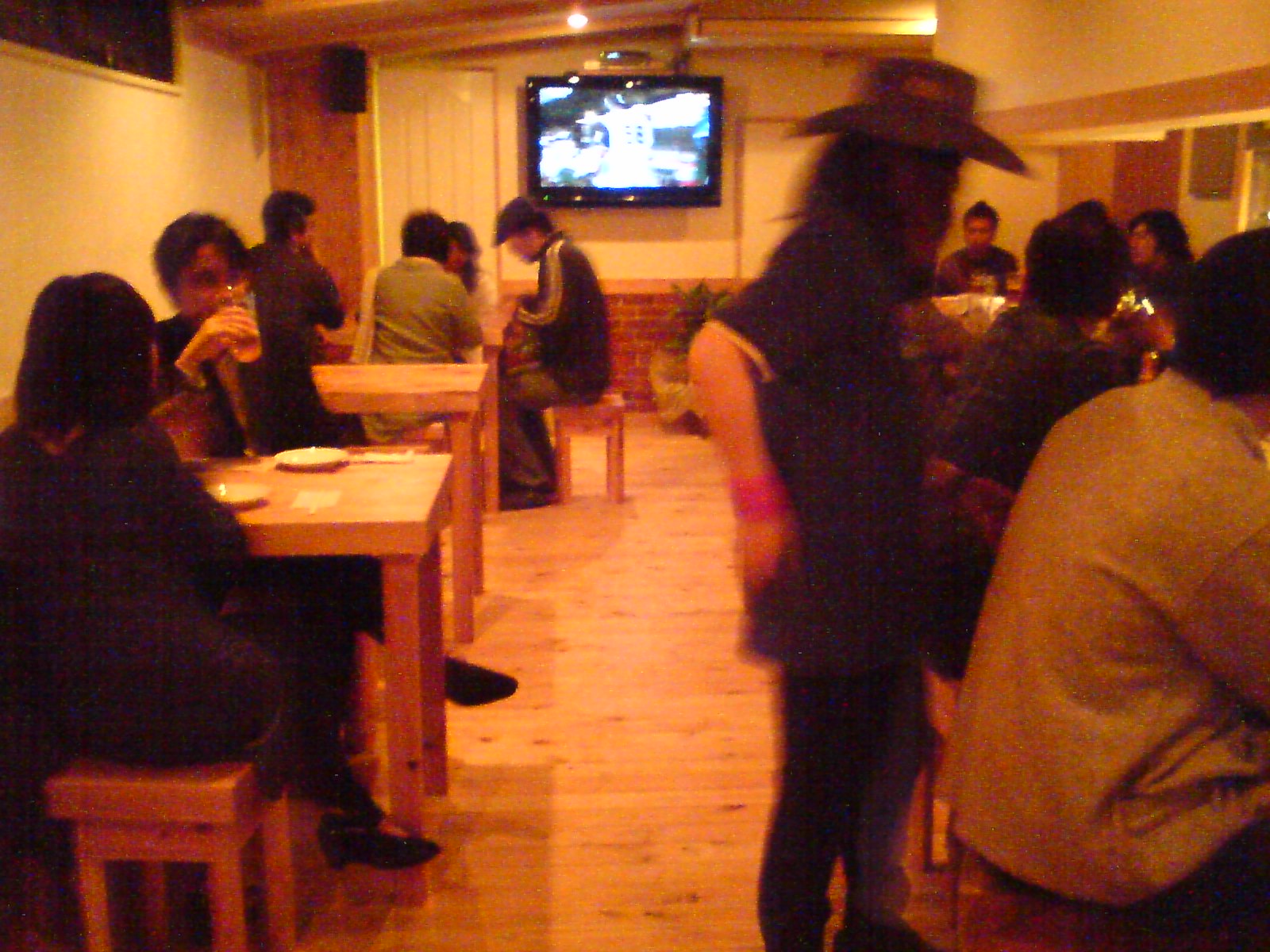
New Pub in Shizuoka! Beer No Yokota serving Baird Beer!

Service: very friendly
Facilities: very clean
no-smoking-logoNon-smoking!
Strong points: The beer!

I finally managed to find the time to visit Beer No Yokota Pub twice since its opening last Sunday!
It was not easy to do a proper interview as the place gets crowded very quickly as the word has spread in town like a bush fire!

As I said before, it is located in Gofuku-cho behind the City Hall, only 10 minutes walk away from Shizuoka JR Station, making it a very practical place to meet and enjoy true beer!

True beer, you said?

Yep, true beer as the owner, a very easy-going gentleman, Mr. Fumitake Yokota worked for Bryan Baird at the Numazu Fishmarket Taproom for 4 years before looking after the Nakameguro Taproom in Tokyo, is serving no less than 7 beers concocted by Bryan Baird on the tap and 5 more from other breweries. more are bound to come soon as there 15 taps!


Suruga Bay Imperial Stout

Alright you want to know about the beer menu already in place?
Here you are:
-PROMPTON ALE: Y700 (473ml), Y500 (300ml)/original!
-BAIRD BEER: Y800 (473ml), Y550 (300ml)
RISING SUN PALE ALE
RED ROSE AMBER ALE
NUMAZU LAGER
TEIKOKU IPA
ANGRY BOY BROWN ALE
MIDNIGHT OIL EXPORT STOUT (+Y50)
SURUGA BAY IMPERIAL STOUT (+Y50)
-YOKOHAMA BEER PILSNER: Y800 (420ml)
-ATSUGI HONEY ALE: Y900 (420ml)
-HATSUISHIKAN BEER WINTER SMOKE: Y900 (420ml)
-EDELWEISS (AUSTRIA): Y900 (420ml)
-WESTON CIDER: Y600 (300ml)

The pub can seat around 40 guests at tables, a counter along the kitchen or counters running along the wall and window.
My favourite spot is definitely at the counter at the window!
Don’t worry, there is still more space for standing guests who pefer wandering between tables and customers!

Don’t steal these!

Note that Yokota san is using a very clever on the tap draught system taking only minimum space thanks to Japanese technology!

Sports buffs will be glad to discover a screen with Sky TV Sports!

Toilets are are both for ladies (seat) and gentlemen (standing). Very clean for such an establishment! Always good to know!

Apart of the beer, cocktails and whisky are available.
As for food, expect pub grub! Spicy fried potatoes, snacks, simple pasta…
Alright, here is the present food menu (bound to change!):
JAPANESE PICKLES: Y 400
COLESLAW: Y 500
STEAMED CHICKEN & VEGETABLES SALAD: Y 500
ROASTED MUSHROOMS: Y 500
SQUID FRITTERS: Y 600
SPICY FRIED CHICKEN WINGS: Y 600 (3 pieces)
JAPANESE-STYLE FRIED CHICKEN LEG MEAT: Y 850
STEWED MINCED CHICKEN & LIVER SAUCE PASTA: Y 900
ROSEMARY POTATOES: Y 500
SIMMERED JAPANESE SMELT/WAKASAGI: Y500
MIXED NUTS: Y 300
MATSUURA SWEET POTATO CHIPS: Y 300
CREAM CHEESE & HONEY DESSERT: Y 600
SALAMI: Y 600

Drinks may be paid COD (cash on delivery) at the counter.
If you take food as well, you will be asked to paid a bill instead of COD.

BEER NO YOKOTA
Shizuoka Shi, Aoi Ku, Gofukucho, 2-5-22, Social Kadode Bldg, 2F (above a Chinese restaurant and behind the City Hall-turn left-on your right-hand side)
Tel.: 054-2553683
Opening hours: Monday to Friday: 17:00~24:00; Saturday, Sunday & National Holidays: 15:00~24:00
HOMEPAGE (Japanese)

RECOMMENDED RELATED WEBSITES:
-Shizuoka Bloggers: Think Twice, Mangantayon
-Beer: Good Beer & Country Boys, Another Pint, Please!, Baird Beer
-Sake: Tokyo Through The Drinking Glass, Tokyo Foodcast, Urban Sake, Sake World
-Wine: Palate To Pen
-Japanese Pottery to enjoy your favourite drinks: Yellin Yakimono Gallery, Shizuoka Guide Diary,

Please check the new postings at:
sake, shochu and sushi

—————————————-
日本語のブログ
—————————————-

Vegan Japanese Non-Wheat Steamed Bread

Although I’m not, I understand that being a vegan or vegetarian can be trying at times, and even frustrating when looking for new reipes.
Now, if on top of that you suffer from allergies such wheat allergy it can easily become a nightmare.
Here is one vegan bread recipe that does not make use of wheat flour!
And it is Japanese, although all Asians could say the contrary!LOL

Vegan Japanese Non-Wheat Steamed Bread

INGREDIENTS:

-Rice flour: 200 g (sold as “riz blanc”/リブラン in Japan)
-Brown sugar (fine): 100 g
-Cornstarch (vegan one): 2 tablespoons
-Baking powder (vegan one): 2 teaspoons
-Salt: a pinch
-Salad oil or olive oil: 1 tablespoon
-Soy milk: 200 cc/ml

RECIPE:

-Pour the rice flour, brown sugar, cornstarch, baking powder and salt in a vinyl pouch and shake until well mixed.

-Pour rice flour mix in a rice steamer/cooker mold. Add soy milk and mix with a spatula. It will appear as slightly more liquid than a pancake mixture.

-Add the oil and mix well. Steam until satisfaction. Don’t hesitate to continue steaming if not satisfied with the consistency. Actually steaming it twice will achieve proper results!

RECOMMENDED RELATED SITES:
Warren Bobrow, Bread + Butter, Zoy Zhang, Hungry Neko, Think Twice, Frank Fariello, Mangantayon, Hapabento, Elinluv Tidbit Corner, Tokyo Terrace, Maison de Christina, Chrys Niles,Lexi, Culinary Musings, Wheeling Gourmet, Comestiblog, Chronicles Of A Curious Cook, Bento Boutique, Tokyo Through The Drinking Glass, Tokyo Foodcast, Urban Sake, Sake World, Palate To Pen, Yellin Yakimono Gallery, Tokyo Terrace, Hilah Cooking, More than a Mount Full, Arkonite Bento

Please check the new postings at:
sake, shochu and sushi

—————————————-
日本語のブログ
—————————————-

Vegan Japanese Bread

Everyone likes his/her bread but some pople do have priorities!
Here is a simple recipe for vegans and vegetarians!

Vegan Japanese Bread!

INGREDIENTS:

-All-purpose flour: 260 g
-Salt: 4 g
-Brown sugar: 20 g
-Fermented soy milk margarine: 20 g
-Water: 130 ml/cc
-Soy milk: 50 ml/cc
-Baking powder: 2 g

RECIPE:

-For quick results us a HB (stands for “Home Bakery” in Japanese) bread cooker.

-In a bowl drop and mix flour, salt, sugar and fermented soy milk margarine.

-In the HB “pan” pour the water and soy milk and stir.

-Add the flour, salt, sugar and fermented soy milk margarine mixture and stir.

-Add yeast powder, stir and close the HB. Switch on and wait!

Simple, isn’t it?
The HB is worth the investment, I can tell you!

RECOMMENDED RELATED SITES:
Warren Bobrow, Bread + Butter, Zoy Zhang, Hungry Neko, Think Twice, Frank Fariello, Mangantayon, Hapabento, Elinluv Tidbit Corner, Tokyo Terrace, Maison de Christina, Chrys Niles,Lexi, Culinary Musings, Wheeling Gourmet, Comestiblog, Chronicles Of A Curious Cook, Bento Boutique, Tokyo Through The Drinking Glass, Tokyo Foodcast, Urban Sake, Sake World, Palate To Pen, Yellin Yakimono Gallery, Tokyo Terrace, Hilah Cooking, More than a Mount Full, Arkonite Bento

Please check the new postings at:
sake, shochu and sushi

—————————————-
日本語のブログ
—————————————-

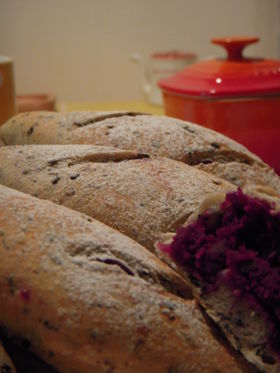
Japanese Bread: Beni Imo to Goma no Pan/Violet Sweet Potato and Sesame Bread

This recipe is a quick and simple braed suggestion for Debra at Hapabento who loves her violet Sweet Potatoes and might one day find herself in a hurry!

Beni Imo to Goma no Pan/Violet Sweet Potato and Sesame Bread!

INGREDIENTS:

-All-purpose flour: 200 g
-Whole wheat flour: 50 g
-Sugar: 10 g
-Salt: 3 g
-Dry yeast: 5 g
-Soy milk: 160 g
-Butter: 15 g
-Black sesame seeds: 20 g

Violet Sweet Potato Paste
-Sweet violet Potato: 200 g
-maple syrup: 2 tablespoons

RECIPE:

-After having heated the violet sweet potatoes, peel them. Cook inside the microwave oven until soft.
Instead of above and if you have the time, bake the violet sweet potatoes inside their skin at 250 degrees Celsius for 30~40 minutes. This way the sweey potatoes will be sweeter.
In a bowl reduce them into a paste with a wooden spoon/spatula.
Add the maple syrup and mix well.
Make a ball with it and leave aside.

-Warm up soy milk to 40 degrees. Add all-purpose flour, whole wheat flour, dry yeast, sugar and salt. Mix well and form a ball. Knead on a working table until smooth.

-add butter and knead. Add black sesame seeds and mix. Let ferment a first time for 50 minutes at 35 degrees Celsius.

-Wrap violet sweet potato paste ball with the bread dough and let ferment a second time for 30 minutes at 30 degrees Celsius.

-Shape the bread according to preference. Make incisions/cuts across the surface. Humidify it with a water sprayer. bake for 15 minutes at 200 degrees Celsius., or steam it for 15 minutes at 220 degrees Celsius.

Still searching for violet sweet potato recipes!LOL

RECOMMENDED RELATED SITES:
Warren Bobrow, Bread + Butter, Zoy Zhang, Hungry Neko, Think Twice, Frank Fariello, Mangantayon, Hapabento, Elinluv Tidbit Corner, Tokyo Terrace, Maison de Christina, Chrys Niles,Lexi, Culinary Musings, Wheeling Gourmet, Comestiblog, Chronicles Of A Curious Cook, Bento Boutique, Tokyo Through The Drinking Glass, Tokyo Foodcast, Urban Sake, Sake World, Palate To Pen, Yellin Yakimono Gallery, Tokyo Terrace, Hilah Cooking, More than a Mount Full, Arkonite Bento

Please check the new postings at:
sake, shochu and sushi

—————————————-
日本語のブログ
—————————————-

Yakitori Cutting Techniques 3: Negima/Neck & Leeks

SYNOPSIS:

Looking at my friends Island Vittles and Skewer It! blogs on yakitori I decided to start a series on that worldwide known Japanese specialty that is “Yakitori/焼き鳥/”Grilled Chicken”.
I hope that this series of postings on various basic recipes will help her and all other foodies interested in that simple, healthy and so delicious delicacy!

This particular series will deal with the cutting techniques which should help you make your own yakitori at home!

Yakitori Cutting Techniques 3: Negima/Neck & Leeks:

“Negima/葱真” liteerally means “leeks in between”.
It is a very popular way of preparing yakitori and provides a great nutrition balance.
Note that negima can also be written 葱鮪 which means that tuna is used instead of chicken. Some people argue that it was the original form of negima!

-One uses the neck meat from the chicken. I told you taht everything can be used. If you don’t believe me, wait until the next postings! LOL
-Choose a long and comparatively thin leek with a clear white and green part.

-Cut the leek into 25 mm/1 inch pieces.
-Keep white and green pieces separate.
-If the white part is too thick, cut in half as shown in picture.

-Cut the thick part of the neck meat into 25~40 mm/1 inch~1 inch and half long pieces.
Cut the thin part of the neck into 40~50 mm/ 1 inch and a half~2 inches long pieces.

-Skewer in this order:
1) One piece of th thin part of the neck meat
2) Green leek piece
3) One piece of the thick part of the neck meat
4) White leek piece
5) One piece of the thick part of the neck meat

This will provide even exposure to the fire/grill

As the white part of the leek is longer skewer them separately for a nice combination! That latter is called “ikada”.
One meat skewer should weigh about 30 g.

RECOMMENDED RELATED SITES:
Warren Bobrow, Bread + Butter, Zoy Zhang, Hungry Neko, Think Twice, Frank Fariello, Mangantayon, Hapabento, Elinluv Tidbit Corner, Tokyo Terrace, Maison de Christina, Chrys Niles,Lexi, Culinary Musings, Wheeling Gourmet, Comestiblog, Chronicles Of A Curious Cook, Bento Boutique, Tokyo Through The Drinking Glass, Tokyo Foodcast, Urban Sake, Sake World, Palate To Pen, Yellin Yakimono Gallery, Tokyo Terrace, Hilah Cooking, More than a Mount Full, Arkonite Bento. Island Vittles, Skewer It!

Please check the new postings at:
sake, shochu and sushi

—————————————-
日本語のブログ
—————————————-

Fruit Cocktails by Wataru Matsumoto 1: Haaru Lemon

(Courtesy of Yoko Kosugi)

As promised, I’m starting this (hopefully long) series of cocktails concocted by Wataru Matsumoto, owner/bartender at BOTANICAL (Comfort bar) in Shizuoka City.
No worries about copyrights as Mr. Matsumoto is only too happy to share his secrets!

Fruit Cocktail 21: Haaru lemon

Haaru lemon is a Japanese brand of Meyer lemon, a very sweet lemon with an orange skin.

INGREDIENTS:

-Haaru lemon: 1
-Gin (Beefeater): 1 standard measure
-Syrup: 1 dash
-Ice
-Mineral Water

RECIPE:

-Cut out a wedge of the Haaru lemon.

-In a shaker, press the rest of the Haaru lemon and pour the gin and syrup over enough ice.

-Shake well.

-Pour in a long glass over a large cube of ice.

-Fill with mineral water. Stir gently. Add the lemon wedge and serve!

BOTANICAL (Comfort Bar)
420-0082 Shizuoka City, Aoi Ku, Ryogae-cho, 1-6-13, Shade Bldg, 1F
Tel.: 054-221-8686
Opening hours: 17:00~01:00
Closed on Mondays.
Credit Cards OK

RECOMMENDED RELATED WEBSITES:
-Sake: Tokyo Through The Drinking Glass, Tokyo Foodcast, Urban Sake, Sake World
-Wine: Palate To Pen
-Beer: Good Beer & Country Boys, Another Pint, Please!
-Japanese Pottery to enjoy your favourite drinks: Yellin Yakimono Gallery
Warren Bobrow
Tokyo Terrace

————————-
英語を読めれば次のブログを是非ご覧になって下い!
Shizuoka Sake
Shizuoka Shochu
Shizuoka Sushi
Sizuoka Gourmet