Tag Archives: 刺身

Shellfish Species 8: Pen Shell/Tairagi

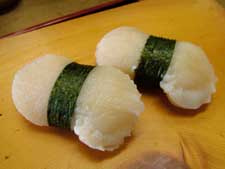
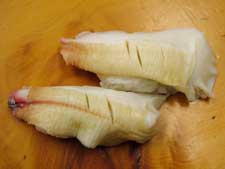
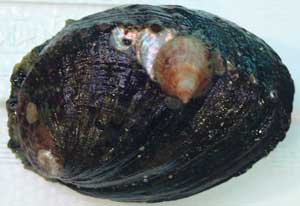
TAIRAGI-4

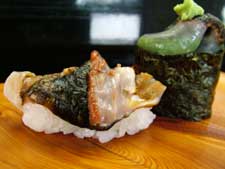
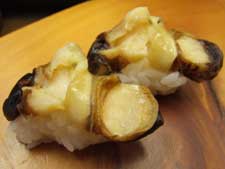
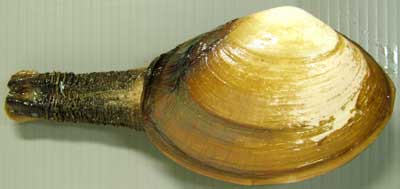
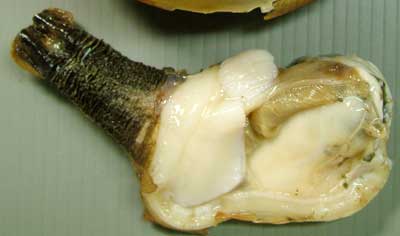
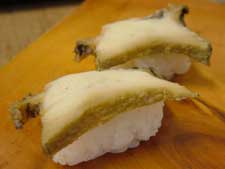
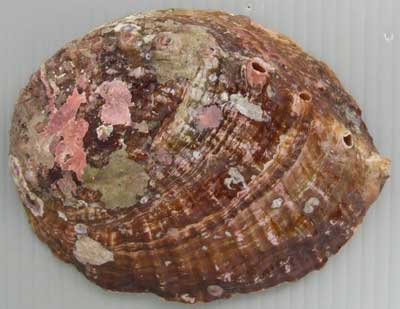
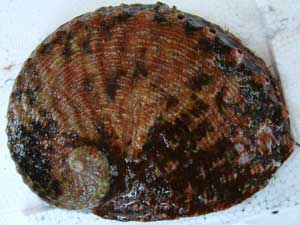
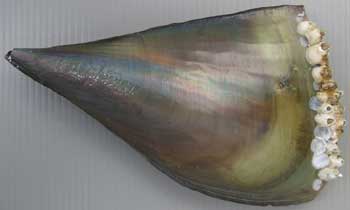
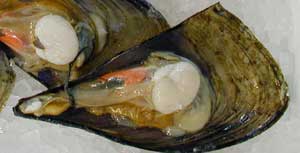
Pen Shells or Tairagi in Japanese are usually sold in winter but tend to still appear in Sping in Shizuoka.

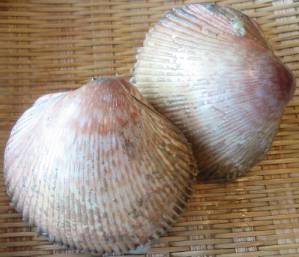
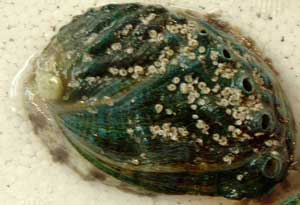
TAIRAGI-1

Also called Tairagai, it was very common not so long ago when the domestic catch amounted to 13,395 tonnes in 1976 to suddenly fall to a mere 134 tonnes in 1994!
It disappeared from the Tokyo Bay and is presently mainly caught in the Inner Japanese Sea between Shikoku and Honshu Islands.

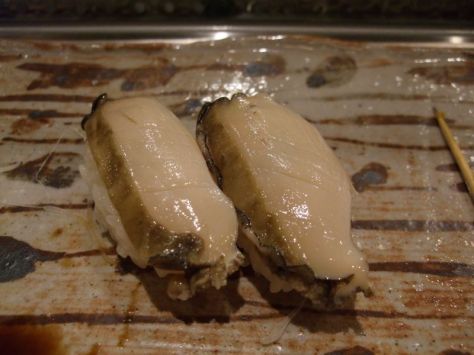
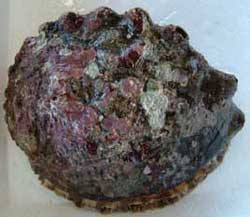
TAIRAGI-2

It has become expensive these days and when you realize there is not so much to eat for such a big shell, one can understand it is fast becoming a rare morsel.

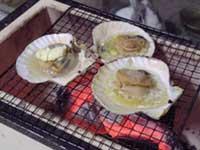
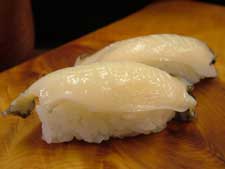
TAIRAGI-3

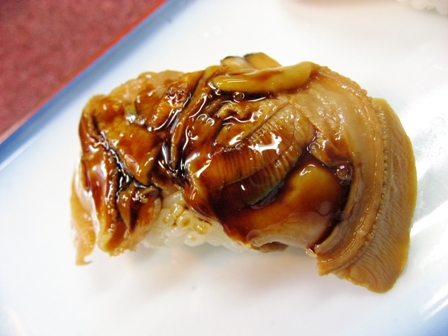
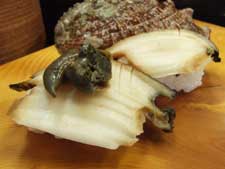
It is particularly delicious as sashimi or salt-grilled and is very similar to scallops, although distinctly different in shape.
Naturally it is most popular served as sushi nigiri!

Please check the new postings at:
sake, shochu and sushi

—————————————-
日本語のブログ
—————————————-

Shellfish Species 7: Clam/Hamaguri

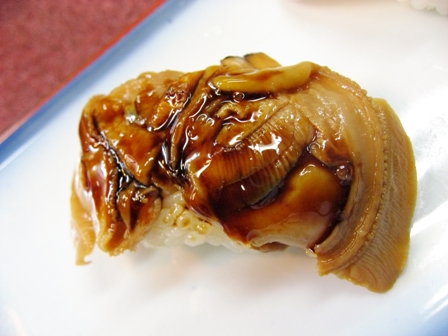
HAMAGURI-SUSHI2

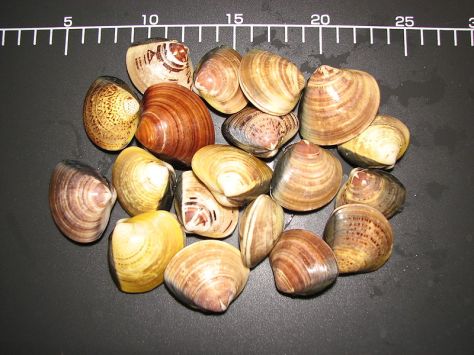
Clams come in many varieties in Japan.
They are either called Common Orient Clams or Hard Clams, whatever their mode of cooking.

HAMAGURI-JAPANESE

Japanese Clam Variety

In 1993, Japan produced 29,000 tonnes before suffering a steep decline down to only 1,500 tonnes in 2000.
Since then imported clams are 15 times the domestic production.
Main importers to Japan are:

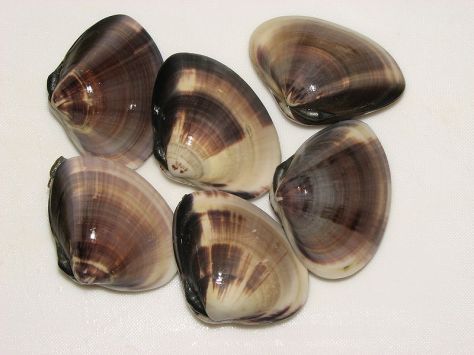
HAMAGURI-CHINA

China (see variety above): 20,100 tonnes

HAMAGURI-NORTH-KOREA

North Korea (see variety above): 3,33 tonnes

A great part of both Chinese and North Korean varieties are imported young and “re-planted” on Japanese beaches to be sold as Japanese varieties!

80 percent of all clams are sold over the counter at supermarkets while 20 percent are proceesed by canneries.

Clams, like everywhere in the world, are cooked/prepared inmay ways in Japan:

HAMAGURI-NI

Ni-Hamaguri/simmered clams served in broth with vegetables, tofu and chopped thin leeks.

HAMAGURI-SUSHI1

Chirashizushi/”Decoration Sushi”, very popular in Japanese homes!

HAMAGURI-SUSHI2

But my favourite is Ni-Hamaguri Sushi!
The clam,s large variety only, are first slowly simmered into broth, then drained and cooled before being served brushed with a sweet “tare” sauce. Sublime!

Please check the new postings at:
sake, shochu and sushi

—————————————-
日本語のブログ
—————————————-

Shellfish Species 6: Turbo Shell/Sazae

SAZAE-1 SAZAE-2
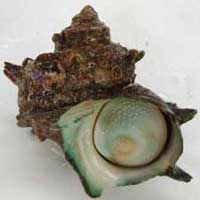
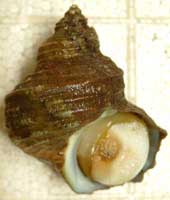
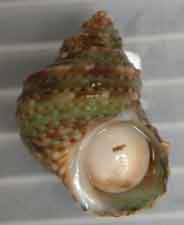
Japanese turbo shells with and without “spikes”

Turbo shells are common all over the world, but are not eaten everywhere. Called Sazae or Sadae in Japan, they are at their best in Winter and Spring.
About 10,000 tonnes are consumed every year.

SAZAE-KOREA

Korean turbo shells are also found in markets.

The Japanese consider that the best specimen should have a comparatively thin shell and well-pointed “head horn”.
They should not emit any noise when lightly shaken.
They should be avoided in hot weather as they tend to spoil quickly.

SAZAE-3 SAZAE-4

They can enjoyed grilled with soy sauce.
As sushi,they can be served as nigiri either raw or cooked.
Large specimen’s livers are served raw as “gunkan”!

Note: I feel in a good mood today as I slowly manage to convince old Blogspot friends like Melinda and new ones like Rachael to modify their Comment Box! At last I can leave messages and compliments for these great sites! LOL

Please check the new postings at:
sake, shochu and sushi

—————————————-
日本語のブログ
—————————————-

Shellfish Species 5: Gaper/Mirugai

MIRUKUI-1

We are just in season for Mirugai or Gaper Shellfish.
Known under many names including Mirugai, Mirukui, Mirukuigai, Mirukugai, Guidakku, Umitake or Atlantic Miru, it is a bit grotesque with its vent protruding endlessly.
In Japan it is collected mainly in the sea between Shikoku and Honshu islands.

MIRUKUI-2

It can be either dark brown or completely whitish beige.
When consumed as sushi or sashimi, the dark skin is taken off.
It is widely consumed in this country and more are imported from Canada, and Korea. There is practically no difference in taste or quality whatever its origin.

MIRUKUI-3

It is particularly popular with sushi lovers with a big appetite!

————————-
Please check the new postings at:
sake, shochu and sushi

—————————————-
日本語のブログ
—————————————-

Shellfish Species 4: Surf Clam/Torigai

torigai1.jpg

“Torigai” does not have a real name in English. They are approximately translated “large cockle”
They appear on the market in Spring and earlier in Shizuoka Prefecture. They are mainly found in Tokyo Bay, Ise bay and Seto Inner Sea. Some are imported from Korea, but catches can wildly vary, especially with the occurence of “red tides”. A lot are imported from Aichi Prefecture to Shizuoka.

TORIGAI-SHELL

They must be absolutely fresh to be consumed.
One easy way to check if they are still fresh is to slam them on the wooden board. They shouldimmediately retract, even if cut out. They are at their cheapest between March and May.

torigai-nigiri.jpg
(Pic taken at Sushiya No Ichi, Shizuoka City)

They can appreciated either as tsumami with a little grated wasabi and shoyu, or as nigiri.
Beware of torigai with a thin colour! They are not fresh!

————————-
Please check the new postings at:
sake, shochu and sushi

—————————————-
日本語のブログ
—————————————-

Shellfish Species 3: Oysters/Kaki

Oysters! One would be hard put to find a produce from the sea more internationally recognized as a gourmet’s choice! Moreover, it is the only shellfish you coul survive on if you get marrooned on a desert island! It is a complete food in irself if consumed raw.
For a long time (that is before coming to Japan), I had thought that my country, France, was the place to eat them. Well, I must admit it was a little pretentious from me, especially in the light that more than half of the oysters consumed back at home originated from Japan!

Now the Japanese has come with many ways of appreciating them:
-As in the picture above they would eat them as sashimi with a dash of wasabi and soy sauce.

-Or just a little lemon juice as in Euope, Americas or Oceania.

-Or in another japanese fashion, with ponzu and momijioroshi (succulent!)

-Or, and here Japanese and foreigners are simply crazy about them, as “kakifrai”, deep-fried oysters in batter and breadcrumbs with a nice tartare sauce!

-Or finally, and I would recommend the experience to all foreigners, as “kaki-gohan”, either with oysters steamed together with the rice, or cooked apart in light broth poured over a bowl of freshly steamed rice!

Of course, any good sushi restaurants will serve oysters as nigiri or gunkan!

In Japan, oysters come from various areas, mainly Hiroshima, Iwate and so on.
As for Shizuoka Prefecture, oysters mainly come from Hamanako inland sallted lake near Hamamatsu City.

————————-
Please check the new postings at:
sake, shochu and sushi

—————————————-
日本語のブログ
—————————————-

Shellfish Species 2: Scallops/Hotategai

hotategai.jpg

Hotategai, or Scallops, is another worldwide favourite and also a source of dispute caused by illegal poaching, international or domestic.
The season is summer and the shellfish is sometimes called Akitagai, as of Akita Prefecture.
They are caught off Hokkaido, Aomori, Iwate and Miyagi Prefectures.
The domestic production/catch is over 300.000 tonnes a year, while 400 tonnes are imported from China as whole Scallops and 700 tonnes as the muscle part only (“kaibashira”). Japanese scallops will be significantly larger than the Chinese.

Of course, they are much appreciated as sashimi, but also as sushi:
HOTATENIGIRI
(pic taken at Sushi Ko in Shizuoka City)

They are also much appreciated cooked/grilled in the shell with just a little shoyu and sake:
HOTAGE-GRILLED

Actually, a good-class sushi restaurants will serve the muscle part as sashimi or sushi, and will serve the rest of the shellfish cooked in light broth inside the shell later!

————————-
Please check the new postings at:
sake, shochu and sushi

—————————————-
日本語のブログ
—————————————-

Shellfish Species 1: Abalone/Awabi

AWABI-KURO-2
Kuro Awabi/”Black Abalone

With the weather definitely turning hotter, the first abalones or “awabi” start appearing on the markets.
The Japanese are great connoisseurs and amateurs of abalones, and they do have to import a lot to satisfy their demand!
There amany varieties of different quality avalaible inthe markets and restaurants.
Most are eaten raw, especially as sushi on nigiri!

AWABI-KURO-1
Kuro Awabi/”Black Abalone”

As for the main varieties, you can sample expensive Kuro Awabi or “Black Abalones”

AWABI-EZO-1

Another expensive variety is Ezo Awabi/”Ezo Abalone”

AWABI-EZO-2
Ezo Awabi as sushi.

Lesser varieties include:

AWABI-MADAKA-1
Madaka Awabi

AWABI-MADAKA-2
Madaka Awabi as sushi

AWABI-MEGAI-1
Megai Awabi

AWABI-MEGAI-2
Megai Awabi as sushi.

AWABI-VICTORIA-1
Victoria Awabi imported from Australia.

AWABI-VICTORIA-2
Victoria Awabi as sushi.

Do not forget that catching abalones in a ny place in Japan without a proper license is a severly punished poaching offense!

————————-
Please check the new postings at:
sake, shochu and sushi

—————————————-
日本語のブログ
—————————————-

Sushi Restaurant: Sushi Ko (revisited)

012

As advertised on Foodbuzz, I finally managed to drag the Missus to a belated visit of our favourite Sushi Restaurant in Shizuoka City: Sushi Ko!
I also succeeded in persuading the Missus in helping me with the pics. I hope this will become useful with friends who need information!

007

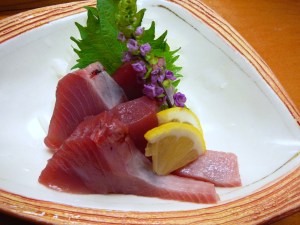
As we are just in season we started with katsuo/bonito. Maybe I told you that the best bonito is caught by fishermen from Shizuoka Prefecture who bring it to the Harbours of Numazu and Yaizu!
Notice the shiso/perilla flower sprig!

010

Every time, and I say every time, we visit Sushi Ko, the Missus must have deep-fried tuna served with momijioroshi (grated daikon with cayenne pepper)! Alright, it’s a great morsel, indeed!

008

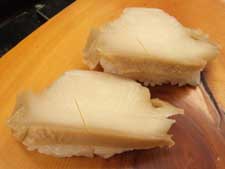
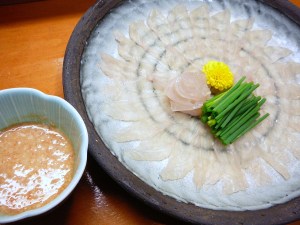
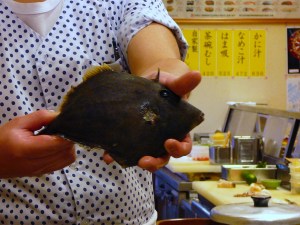
Kawahagi/Filefish is in season, too.
We asked Mr. Oda to serve it as to serve it as tsukuri:

011

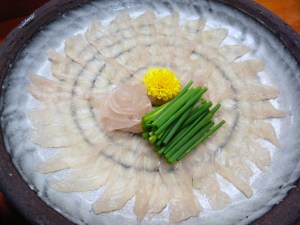
You roll a few pieces around a couple of hosonegi/thin leek and dip it in a sauce made with the fresh raw liver of the fish and some soy sauce and sake (see pic at the top)!

013

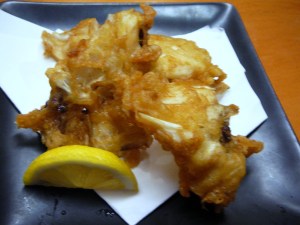
The “jowls” came later deep-fried!

015

I then challenged Mr. Oda to serve us one of his vegetarian sushi set:
Menegi/dwarf leek, Soba Me/Buckwheat Sprouts, Mitsuba/Trefoil, Kawaire Daikon!

017

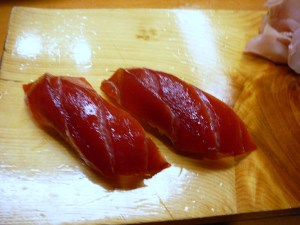
Maguro Zuke/Marinated raw tuna. Another specialty of the house!

020

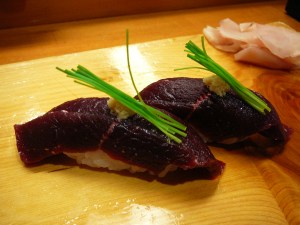
Kujira/Whale meat. Shizuoka Prefecture is one of the rare places where you can find it in Japan!

022

Sakura Ebi/Cherry Shrimps, fresh from Yui as gunkan. Can be found in that state only in Shizuoka Prefecture!

024

Pirikara Hotate Maki/Hot Scallops Roll. Another specialty of the house. American Friends, I can hear you salivating (drooling)!

026

Tamagoyaki! Cute, ain’t it?

027

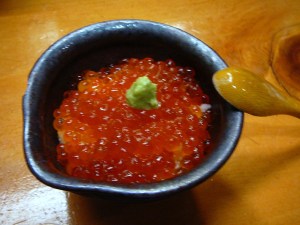
Ikura no Mini Donburi/Mini bowl of salmon roe!

We did drink a lot, and only ate that. Mind you, we came back home full and content!

Sushi Ko
shizuoka City, Aoi Ku, Ryogae-cho. 2-3-1 (Aoba Koen)
Tel.: 054-2512898
Business Hours: 17:00~25:00. 17:00~23:00 (Sundays)
Closed on Wednesdays
Reservations recommended
Credit cards OK
HOMEPAGE (Japanese)

Please check the new postings at:
sake, shochu and sushi

—————————————-
日本語のブログ
—————————————-

Sushi Restaurant: Ginta

ginta-1

Yesterday, I had the pleasure to introduce a “hidden treasure” to my friends Anselmo and Ticiana Zeri with Ticiana’s moter, Helda, who were on their 6th visit of Japan. Anselmo had found my blogs some time ago as he researched on Japan and had contacted me for more information.
Anselmo then decided it was grand time to visit Shizuoka Prefecture.
It was my pleasure to guide them for two days in and around Shizuoka City.
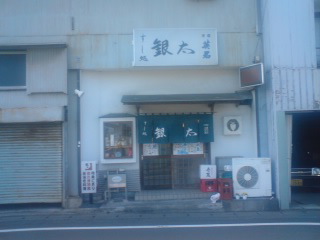
Yesterday I took them to Ginta, a minuscule Sushi restaurant not far from Yui Harbour famed for its sakura ebi/Cherry shrimps.
To cap it all we are in the middle of the season guaranteeing the best seafood available in this small city.

ginta-21

Now, Mr. Hara’s restaurant is unassuming and can be easily missed. But I can guarantee you you do need to reserve if you venture there at lunch as hordes of tourists and businessmen from all corners of Japan make a point tocome just to savour the region’s specialties.

There are indeed many possibilities, and a very good, amost ridiculous prices.
We decided to sample the 3,000 yen sakura ebi full course:

ginta-3

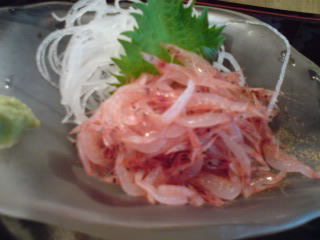
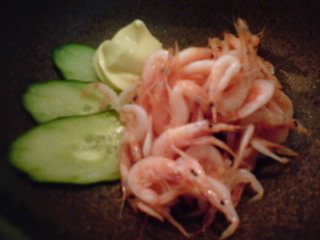
Raw Sakura Ebi, caught in the very morning in Suruga Bay.
Mr. Hara demostrated us how to recognize fresh Sakura Ebi. Take a few between two fingers. They should slip easily away!

ginta-4

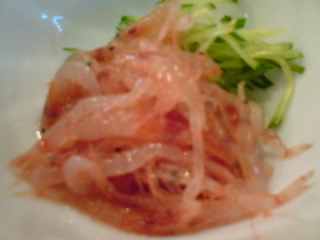
Boiled sakura Ebi salad. Great with Eikun, the local sake available in Ginta!

ginta-5

Sakura Ebi lightly pickled in rice vinegar.

ginta-6

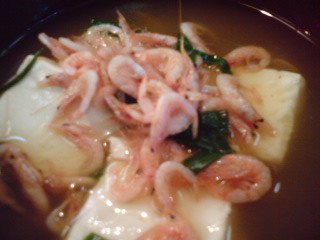
Sakura Ebi in “Suimono/clear hot soup” style with tofu.

ginta-11

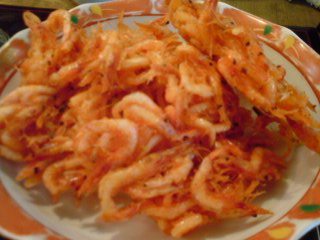
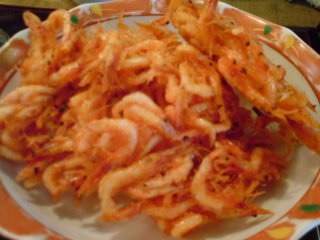
Sakura Ebi Kakiage/Sakura Ebi Tempura. Extremely generous portions.

ginta-7

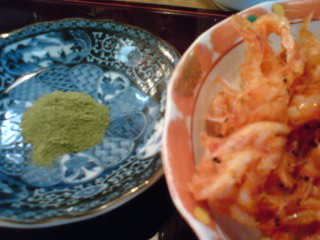
The Kakiage is served with salt and matcha tea mixture. Perfect with tempura! We hust ate them with our fingers!

ginta-8

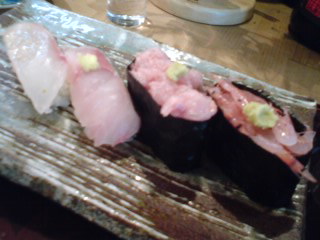
Sushi set (part of the full-course!):
Tai/Seabream sushi served with its deep-fried scales between the fish slice and rhe rice.
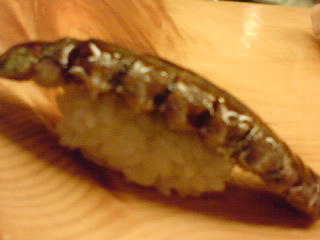
Aji/Horesemackerel-Saurel with a dash of fresh grated ginger.
Kawahagi/Filefish with its flesh chopped in tartare style with its fresh liver in gunkan manner topped with a dash of fresh grated wasabi. A rare morsel indeed!
Sakura Ebi in gunkan manner topped with a dash of fresh grated wasabi.
Mr. Hara advised us not to dip the sushi directly into the soy sauce, but to “brush” it with a piece of pickled ginger (provided on the same dish) after having dippe it into soy sauce. “That will be just quite enough soy sauce!”, he added.

Actually, once mr. Hara has warmed up to a particular customer, he can become an incredible source of information that even fishmongers at Tsukiji would not be able to equal! I can guarantee you an interesting report next I go there to sample his local fish sushi sets!

ginta-9

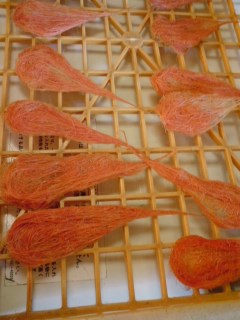
Now, what are these Sakura Ebi-shaped things?
This is another specialty of Yui: People there take the long antenna (three times as long as the body) and dry them in the sun after having “shaped them”. These will be used all year long crushed into powder over a bowl of freshly cooked rice!

Since the Missus gotextremely jealous of our little venture, you can expect a report soon!

GINTA
421-3111 Shizuoka Shi, Shimizu Ku, Yui cho, Imajuku, 165. (get off at Yui Station and walk to your right. Only a few minutes away)
Tel.: 0543-75-3004
Opening hours: 11:00~23:00
Closed on Tuesdays
Reservations on the telephone recommended!

Please check the new postings at:
sake, shochu and sushi

—————————————-
日本語のブログ
—————————————-

Sashimi Set at Tomii (’09-04)

tomii-09-04

For all my regular visits at Tomii, my favourite Japanese Cuisine Restaurant in Shizuoka City, It had been some time since I last introduced one of their seasonal sashimi plates!

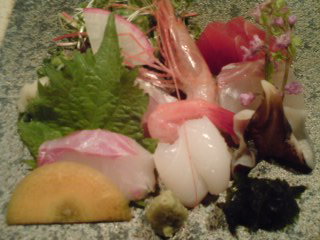
I need little to say anything about the quality and presentation as they are perect as usual, so I’ll just describe the assortment:

Front row, left to right:
Sakuradai Seabream with a sllice of yellow carrot, Grated wasabi, Yari Ika/Calamari variety/Squid, Torigai/Surf Clam with fresh seaweed in front.

Second row:
Behind the shiso/perilla leaf, Aji/Horsemackerel-saurl from Kogawa, Shizuoka, Amaebi/Sweet Prawn, Ishidai Seabream with Shiao/Perilla flowers.

Third row:
Aka daikon/ red Daikon and various herbs, Honmaguro/Blue fin tuna.
Hoped you enjoyed the explanation as much as I enjoyed the taste! LOL

TOMII
Shizuoka City, Aoi Ku, Tokiwa-cho, 1-2-7, Tomii Bldg, 1F
Tel.: 054-274-0666
Business hours: 17:00~22:00
Closed on Sundays
HOMEPAGE (Japanese)

———————————————–
Please check the new postings at:
sake, shochu and sushi

—————————————-
日本語のブログ
—————————————-

Foodbuzz 24, 24, 24: 24 Sashimi & 24 Sushi in Wasabi Land!

24-24-24-131
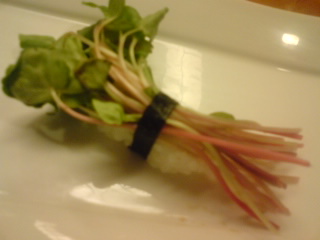
(Vegan Sushi: Soba no Shinme/Buckwheat Sprouts)

Wasabi has arguably become the most famous single Japanese condiment/spice in the World, but how many people know that it originated in Shizuoka Prefecture, which incidentally grows 80% of the total production in Japan?
(farmers have started growing it South Korea, Taiwan, Tasmania and elsewhere with various degrees of success)
It is mass-produced in the Izu Peninsula and at the foot of Mount Fuji, but the best wasabi is cultivated in altitude (500~1,000 meters) in Utougi, Shizuoka City, about 33 km up the Abe River.
An organic vegetable by definition, it requires a full two years to mature into constantly flowing pure water in comparatively cold environment.
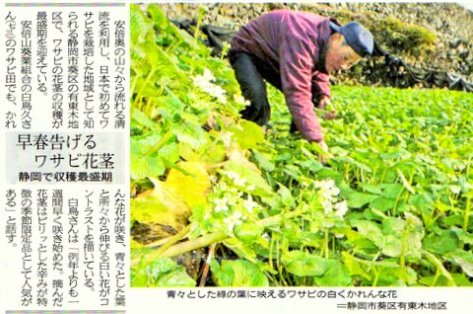
img043
(Utougi/Courtesy of Shizuoka Shinbun, January 21st, 2009/Start of harvest season!)

Widely known in its wild form all over Japan, a resident in Utougi first successfully grew it in 1604. Tokugawa Ieyasu, the Shogun of Japan who had just retired in Sumpu (present Shizuoka City) after closing the doors of Japan, fell enamored with the condiment and actively promoted it.
The root is grated, preferably on a sharkskin grater, before being used, not only for sushi and sashimi, but also for raw or cooked meat, o-cha zuke (vegans, rejoice!) and almost any seafood.
dominique1
(Courtesy of Dominique Corby)

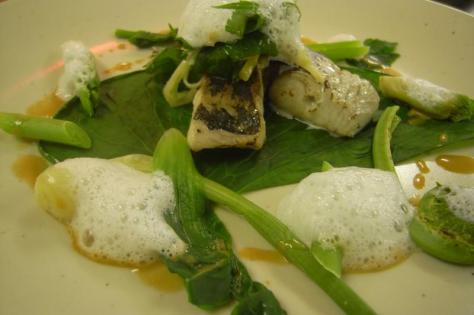
The stems and leaves are edible and a rare treat in their raw form in salads, in tempura, or steamed as demonstrated by Dominique Corby in his Osaka restaurant.
The stems and leaves (and flowers!) are also cut and pickled into sakekasu/sake white lees to become “wasabizuke”, another Shizuoka gastronomic specialty!
Tamaruya, the first shop to sell it at the beginning of the 17th Century, still exists in Shizuoka City, and even has a stand at Haneda Airport in Tokyo!
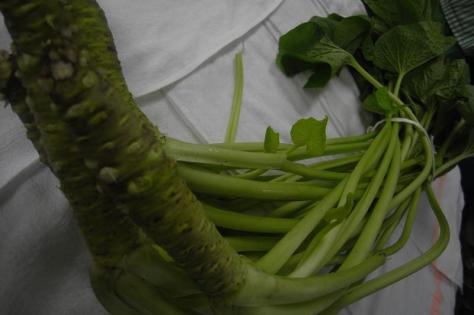
dominique2
(Fresh whole wasabi fromUtogi sold at Shizuoka JR Station!)

The wasabi served and used in Shizuoka restaurants (and many homes) is naturally of the best quality. If you happen to stop over in Shizuoka City, make a point to visit Sunpu Raku Ichi shop inside the JR Station where the plant is sold fresh and whole for a ridiculous price!
Shizuoka Prefecture is not only blessed with wasabi (and green tea), but also prides itself in catching some of the best fish in Japan thanks to the rich waters of Suruga Bay and Peninsula. It is an open secret that most of it finds it way onto Tokyo restaurant tables!
As the icing on the cake, know that Shizuoka Prefecture has acquired national fame for providing some of the rarest and best sake thanks to the extravagant abundance of pure water flowing from the Southern Alps and Mount Fuji!

Which naturally leads me to the main theme of this posting, namely sashimi and sushi.
There is a widespread misconception that it is all about fish and meat.
Not true at all, as vegan and vegetarian friends will read in this account of the mission Foodbuzz had agreed to follow me on.
24-24-24-1a
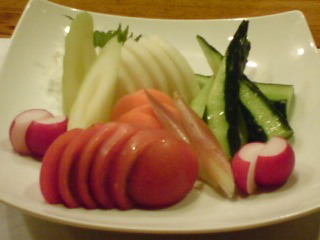
(Vegan/Vegetarian Sashimi at Yasaitei)

There was no way I could fit everything into one dinner.
The obvious solution was to have two meals, lunch and dinner and a couple of friends to help me out!
Therefore, I booked lunch both at Yasatei and Sushi Ko in Shizuoka City. Neither place usually opens for lunch, buy I had enough reasons to persuade my good friends to indulge the old geezer!
Lunch was all about Sashimi:
I ran first to Yasaitei to sample their vegetable sashimi of the day:
(See pic above, left to right, bottom to top)
Celery, Tomato (Ameera variety from Iwata City, as sweet as a fruit!), Organic Carrot from Chiba Prefecture, Myoga, Red Radish, Cucumber (su yoo/四葉/four leaves variety) and Daikon all grown organically (but for the carrot) in Shizuoka Prefecture. Shiso/perilla leaves and chopped white winter onion from Shizuoka, too.
24-24-24-1b1
As for their dressing, they were served with sesame oil, salt and miso mix.

Just took the time to call my good friend Mika and off we went to Sushi Ko, one of the best (and most reliable) sushi restaurants in town for all the other sushi promised!
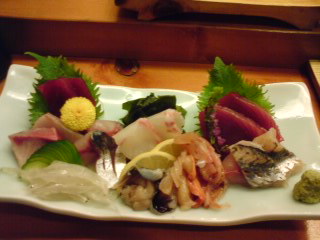
24-24-24-21
Explaining the taste, texture and what else will make this blog too long (I promise to answer any queries!), so I shall keep to simple names and explanations:
The first sashimi plate was:
(from right column to left column)
Shirauo/Japanese anchovy, Buri/Amberjack, Mebachi Maguro Akami/Big-eye Tuna Lean Part, Torigai/Surf Clam, Akagai/Blood Clam, Ishidai/Snapper variety, Aji/Saurel=Horse Mackerel, Katsuo/Bonito.
Served with shiso/perilla leaves and flowers, Wakame/Seaweed and edible Chrysanthemum/Kiku.
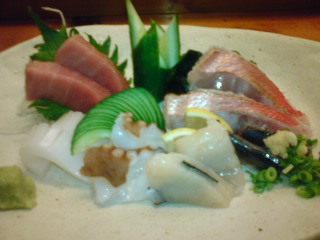
24-24-24-6
As for the second sashimi plate:
(front, then back)
Mooko Ika/Cuttlefish variety, Matako/Octopus, Hotate/Scallops stuffed with nori/dry seaweed, Seguro Iwashi/Black-back Sardine.
Minami Maguro Chutoro/South Pacific Tuna semi-fat part, Kinmeidai/Snapper variety.
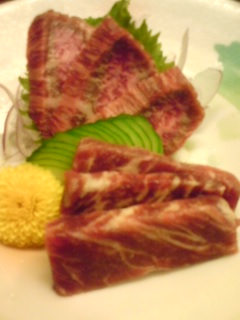
24-24-24-4a
The last sashimi are for the barbarian (I’m one of them) meat-eaters:
Gyusashi/Raw beef (above), Basashi/Raw horsemeat (below)
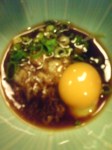
24-24-24-4b
Served with a mixture of soy sauce, raw quail egg, grated ginger and chopped thin leeks.

Well, I basically took care of all the sashimi, while my friend got herself lost in the following sushi:
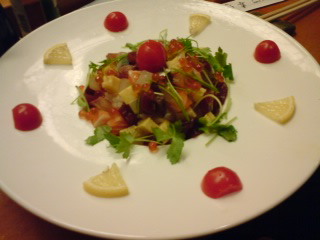
24-24-24-31
Chirashizuhi: Cubes of Tamagoyaki/Japanese omelette, Shake/Salmon, Amberjack (do you remember the Japanese word? LOL), Akami, Ikura/salmon roe, and mini tomatoes.
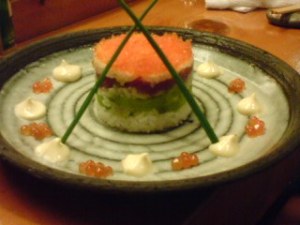
24-24-24-5
Millefueille Sushi:
Thin slices of cucumber, shari/sushi rice, avocado, shari, maguro akami, shari, tobikko/flying fish roe.
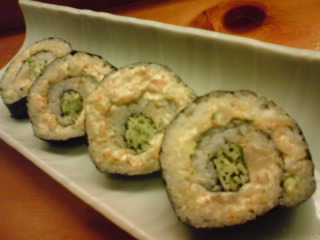
24-24-24-7
That is when Mika’s eyes got bigger than her stomach and asked for Sushi Ko’s special “Pirikara Hotate Maki/Spicy scalops Roll” consisting of finely chopped cucumber and a mixture of chopped scallops, mayonnaise, chili pepper, sesame oil, tobikko, wasabi and “tenkasu/fried tenpura batter crumbs”!
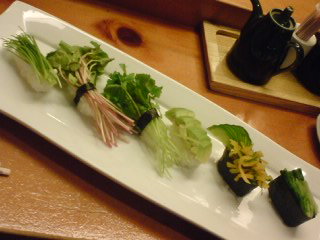
24-24-24-8
I was still hungry enough to ask for a set of 6 vegan/vegetarian sushi:
(from left to right)
Menegi/Leek Sprouts, Soba no Shinme/Buckwheat Sprouts, Mitsuba, avocado, Takuan/pickled Daiko and sSiso and Cucumber Gunkan, Mizuna Gunkan.

That was it for lunch!

——–

As for dinner, I asked Marcus, another foodbuzz member living in Shizuoka City to help me back at Sushi Ko as some serious drinking was involved,too!
We kept to sushi as the sashimi (24) had already been taken care of!

Her they are in the chronoligical order.
I found out later that some pics were a bit fuuzzy. I took all pictures with my mobile phone as a real camera would have bothered some of the customers in that very busy place. At least, they have the merit to be authentic!
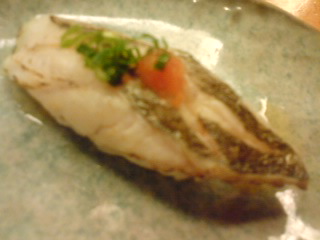
24-24-24-15
Tachiuo Aburi/Lightly grilled Scabbard Fish with ponzu, momioroshi and chopped thin leeks
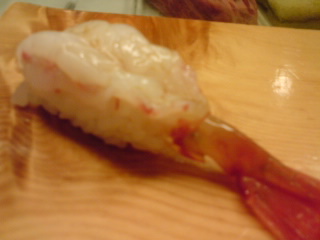
24-24-24-16
Botan ebi/large raw prawn (very sweet!)
24-24-24-17
Hirame/Sole (fuzzy pic/sorry!). Served with salt and lemon juice. No need for soy sauce!
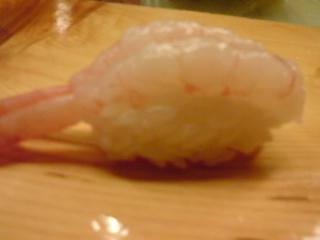
24-24-24-18
Amaebi/Sweet shrimp

24-24-24-19
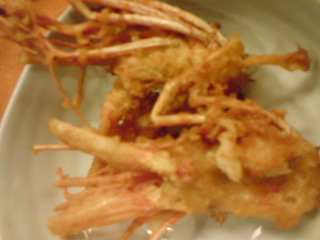
The deep-fried heads of the botan ebi. Tasted like rice crackers!
24-24-24-20
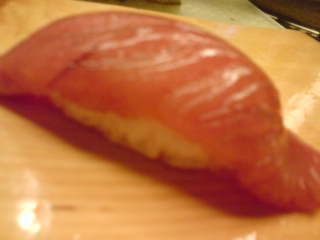
Maguro zuke/Marinated Tuna (my favourite!)
24-24-24-211
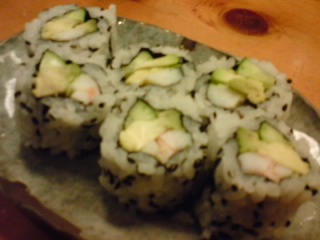
California roll/Japanese size!: boiled prawn, tamagoyaki, cucumber and black sesame.
24-24-24-22
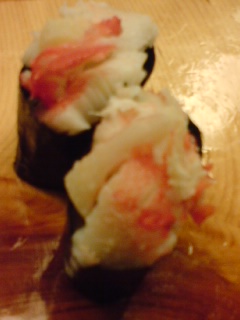
Kani Tsume/Taraba Crab Pincers

24-24-24-23
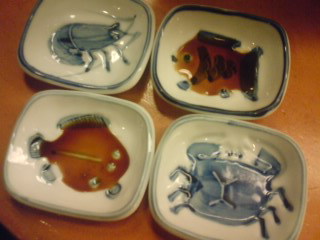
Cute soy soy sauce saucers, aren’t they? (inedible!)
24-24-24-24
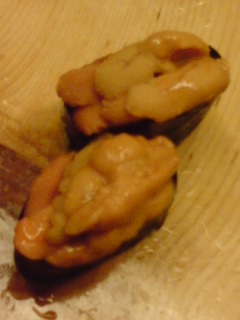
Uni gunkan/Sea Urchin Gunkan

24-24-24-25
Shako/Mantis Shrimp. “Shako” also means “garage” in Japanese. Would you believe that a lot of Japanese customers actually say “Garage, kudasai!”?
24-24-24-26
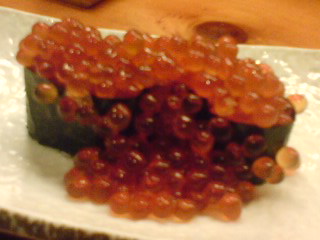
Ikura gunkan/Salmon Roe Gunkan. Very generous serving!
24-24-24-27
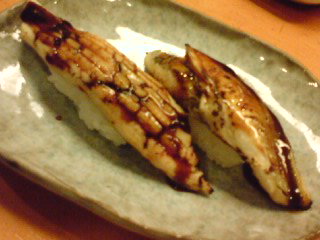
Anago/Conger Eel. Traditionally cooked and served with sweet sauce.
24-24-24-28
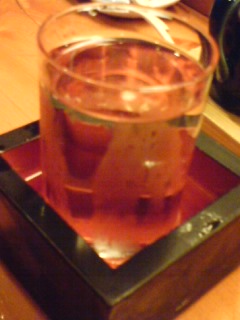
That’s the way they serve sake all over Japan!
24-24-24-291
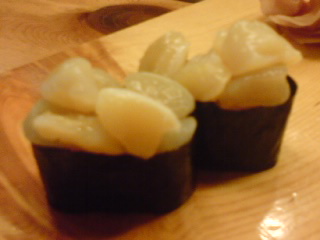
Kobashira/Round Clam Round Twin Muscles Gunkan.
24-24-24-30
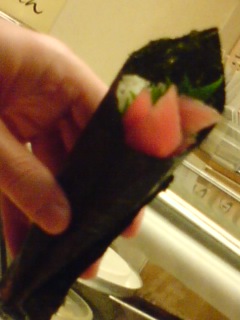
Maguro Te-Maki/Maguro Hand Roll.

24-24-24-311
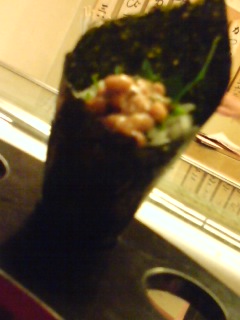
Vegan/vegetarian Te-Maki: natto, shiso, ume/Japanese pickled plum.
24-24-24-32
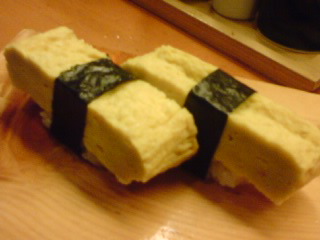
Tamagoyaki/Japanese Omelette sushi for first dessert.
24-24-24-33
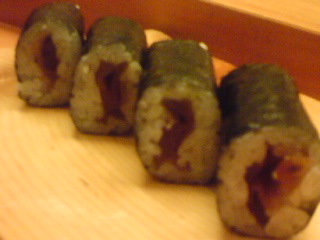
Vegan/vegetarian Kanpyo-Maki/Dry Gourd Shavings (later cooked and marinated) roll for second dessert!

Now, I know I sampled exactly 24 sashimi, but I have the impression that I had more than 24 sushi!
Oh well, no worries!

I can send extra pics to anyone asking for them!

YASAITEI
Shizuoka City, Aoi Ku, Tokiwa-Cho, 1-6-2 Green Heights Wamon 1-C
Tel.: 054-2543277
Business hours: 17:30~22:00
Closed on Sundays
Reservations highly recommended
———–
SUSHI KO
shizuoka City, Aoi Ku, Ryogae-cho. 2-3-1 (Aoba Koen)
Tel.: 054-2512898
Business Hours: 17:00~25:00. 17:00~23:00 (Sundays)
Closed on Wednesdays
Reservations recommended
Credit cards OK
HOMEPAGE (Japanese)

Please check the new postings at:
sake, shochu and sushi
Mika could not help asking for the dessert-like Millefueille Ssushi made (from bottom to top) sliced cucumber, shari/sushi rice, avocado, shari, maguro akami, shari and tobikko/flying fish roe.

—————————————-
日本語のブログ
—————————————-
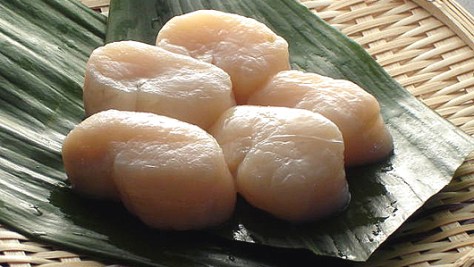
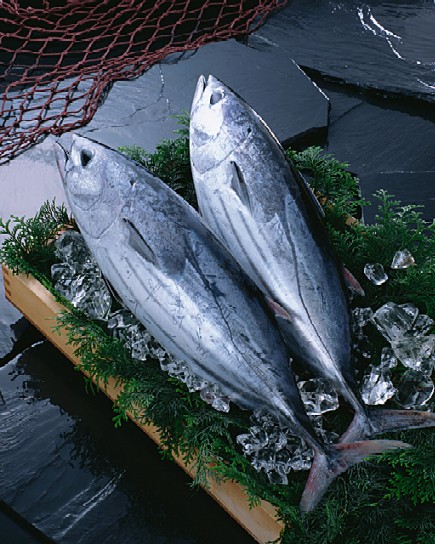
Japanese Fish Species: Bonito/Katsuo

bonito-pic

Bonito or “katsuo” in Japanese are extensively caught by fishermen from Numazu, Shimizu, Yaizu and Omaezaki Harbours. The main fishing areas are Shizuoka, Mie, Kochi & Miyazaki Prefectures.
It is also called “katsu” (Tohoku Region), “Honkatsuo” (Kyushu Island), “Magatsuo” (Shikoku and Kyushu Islands. N.B.: the same name designates another fish in other parts of Japan!), “Suji” (Yamaguchi & Wakayam Pref>).
It appears on the markets early Spring~Autumn as “sho gatsuo” (first bonito in Spring) and “modori gatsuo” (return bonito end of Autumn).
They are traditionally line-caught but nets have been used extensively in recent years.

bonito-sashimi

It can be appreciated raw, as sashimi with its skin or without it, preferably served with a saucer of soy sauce (shoyu) mixed with thin slices of fresh garlic, or with wasabi, a touch of lemon and shoyu,

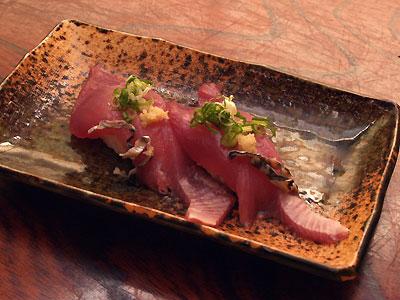
bonito-3

or as nigiri topped with grated fresh ginger a thin slice of garlic, unless you prefer grated fresh ginger with chopped thin leeks.

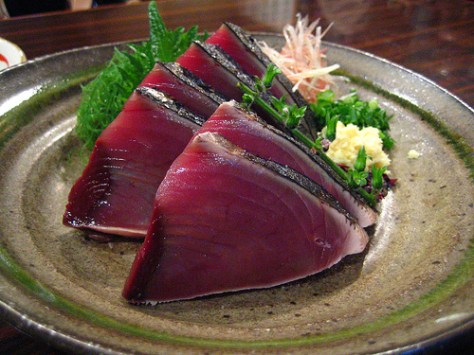
bonito-tataki

Another very popular way to eat it that will please Europeans and North Americans alike, is “tataki”.

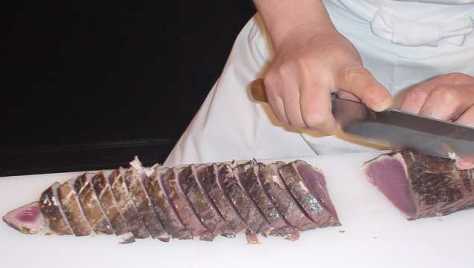
bonito-tataki-cut

The fish is first seared/grilled over charcoal until it is lightly cooked on the whole outside then plunged into ice water to stop it from cooking any longer. It is then cut into large slices and served with freshly chopped garlic and thin leeks, “shiso” leaves (perilla/beefsteak plant) and wasabi.

Note 1: in restaurants specify whether you want the skin or not when ordering sashimi.

Note 2: the same fish is a staple food in Sri LAnka where it is first smoked and then prepared as soup or curry!

Please check the new postings at:
sake, shochu and sushi

—————————————-
日本語のブログ
—————————————-
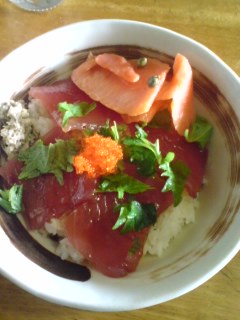
Sushi Donburi for Friday the 13th! / Budget Lunch (part of)

donburi-09-02-13

Yesterday I made the mistake to notify the Missus too early that I was not going out tonight as per my usual schedule.
-“Fine,” she replied, “and I expect you to cook as well!”
-“No problem!”
-“I’d better prepare a light lunch, then!”
-“….”

So as part of a “budget lunch” including salad and miso soup (and strawberries for dessert) she prepared the above donburi:
-The rice was steamed rice to which she mixed the konbu/seaweed finely cut.
-She marinated thin slices of raw tuna in ponzu, sake and what else. The leftover marinade was poured over the rice to season it before she placed the pieces of tuna on top.
-Smoked salmon with capers.
-A spoon of “tobikko/flying fish roe”
-a generous portion of locally-made (up the Abe River in Shizuoka City) “Wasabi zuke/chopped wasabi stems and flowers fermented in “sake kasu/sake white lees” (all from Shizuoka Prefecture!)
-She tore some shiso/perilla leaves above the fish, et voila!

Friday the 13th it is today. Let’s hope it is my (our) lucky day!

Please check the new postings at:
sake, shochu and sushi

—————————————-
日本語のブログ
—————————————-
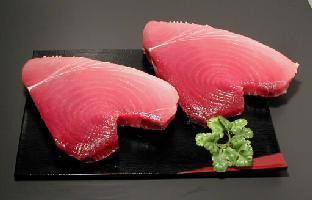
Sashimi and Sushi for the Saint Valentine!

shizuokaminamimagurochu

I suppose I have to bend to the Saint Valentine since I started receiving presents from other ladies (at my grand age?).
I would like to reciprocate, but in Japan men have to wait until March 14t, “White Day”, another festivity invented the Japanese Chocolate Businesses.
I will just suggest to do it more the “Japanese Way”, LOL.

Above are two heart-shaped slices of Minami Maguro/South Pacific Tuna. That is for the solid appetites.

st-valentine-sushi

Now, for the small appetites, how about these dainty, minuscule “genkan sushi” with ikura/salmon roe.
they are very easy to design. They are everywhere in Sushi restaurants these days!

Please check the new postings at:
sake, shochu and sushi

—————————————-
日本語のブログ
—————————————-