Tag Archives: Japanese Cuisine

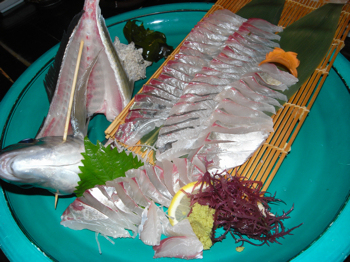
Sashimi Set at Tomii (’09-04)

tomii-09-04

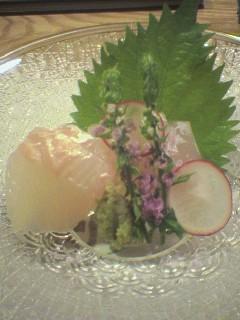
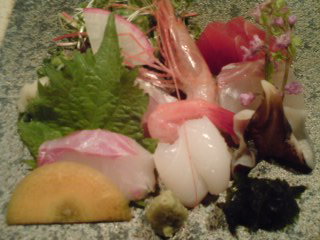
For all my regular visits at Tomii, my favourite Japanese Cuisine Restaurant in Shizuoka City, It had been some time since I last introduced one of their seasonal sashimi plates!

I need little to say anything about the quality and presentation as they are perect as usual, so I’ll just describe the assortment:

Front row, left to right:
Sakuradai Seabream with a sllice of yellow carrot, Grated wasabi, Yari Ika/Calamari variety/Squid, Torigai/Surf Clam with fresh seaweed in front.

Second row:
Behind the shiso/perilla leaf, Aji/Horsemackerel-saurl from Kogawa, Shizuoka, Amaebi/Sweet Prawn, Ishidai Seabream with Shiao/Perilla flowers.

Third row:
Aka daikon/ red Daikon and various herbs, Honmaguro/Blue fin tuna.
Hoped you enjoyed the explanation as much as I enjoyed the taste! LOL

TOMII
Shizuoka City, Aoi Ku, Tokiwa-cho, 1-2-7, Tomii Bldg, 1F
Tel.: 054-274-0666
Business hours: 17:00~22:00
Closed on Sundays
HOMEPAGE (Japanese)

———————————————–
Please check the new postings at:
sake, shochu and sushi

—————————————-
日本語のブログ
—————————————-

Japanese Seasonal Fish: Striped Horse mackerel/Shimaaji

shimaaji-1

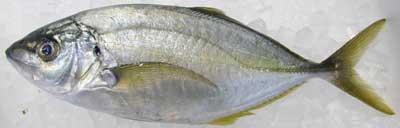
Shimaaji, or Striped Horsemackerel is one variety of Aji/Horsemackerel-Saurel.
Although the season is said to be in Summer, the taste varies little with the time of the year.
Striped Horsemackerel caught by anglers off the Izu Peninsula, Shizuoka Prefecture, are said to be the best in Japan.
It is known under the other names of Ookami, Kose and Katsuoaji.
It is very popular as sashimi:

shimaaji-2

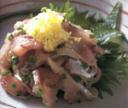
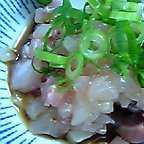
or as tataki (tartare), my favourite, with a dash of fresh grated ginger:
<a

shimaaji-3 shimaaji-3a

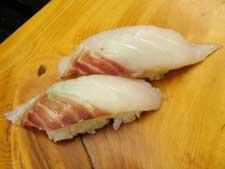
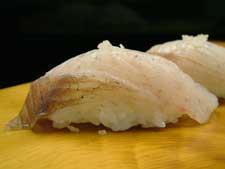
Of course, as a sushi, it has many lovers:

shimaaji-4

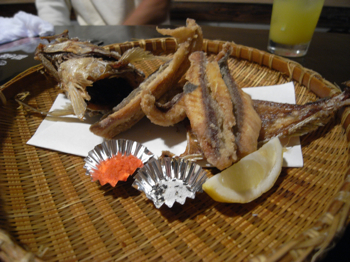
The best sushi restaurants will prepare the sashimi or sushi from live specimen swimming in their tanks and later serve the bones and head deep-fried. They will serve the whole fish deep-fried for the guests who are so keen on eating raw fish!

shimaaji-5

Recently, breeding the fish from their eggs off Chichijima Island has been successful, meaning more on our plates in the future!

Please check the new postings at:
sake, shochu and sushi

—————————————-
日本語のブログ
—————————————-

Tuna Species: Kindai Tuna/Kindai Maguro

kuromaguro.jpg

Following a kind request by my good Foodbuzz friend, Elizabeth, I decided to re-post an article on this particular tuna species to clear some misunderstandings and add new information!

“Kuromaguro” or Blue Fin Tuna has become almost a mythical fish all over the world to the point that non-Japanese refer to it by its Japanese name.

“Kuromaguro”, or Blue Fin Tuna (or Tunny) has many other names in Japanese: Honmaguro, Maguto,Meji,Yokowa, Shibi, Imoshii, Shibimaguro, Kuroshibi, and Hatsu!

The best are caught in Winter mainly in the seas off Kochi (Shikoku Island), Miyagi and Hokkaido Prefectures.
This variety is the most expensive and can reach astronomical prices, especially caught in Winter off Hokkaido.
Imported Kuromaguro usually reaches Japan frozen, but in recent years the fish has been successfully raised in semi-wild environments in Spain, Australia and Croatia and arrives in Japan fresh by plane.
Imports and sales of Kuromaguro are monopolised by Japanese trade associations, unless you are lucky enough to catch one (careful here, as poaching is a major offense in Japan!).
Between you and me, if you want to eat Kuromaguro sashimi, it might come cheaper if you do it while travelling in Spain!
Did you know that Japanese importers will fly to Spain and other countries just to check that the fish are bled properly?

Now “Kindai Maguro” (近/kin for “near/nearby” and 大/dai for “big”) is the name given Kuromaguro/Blue Fin Tuna entirely human-fed (I mean fed by humans, not fed with humans!LOL).
There is big “but”, though! Huma-fed does not mean human-raised.
Young tuna have first to be located, encircled with large nets, guided near a shore and then provided with food. What people forget is that the tuna gills are hard. If the fish cannot swim freely enough it will wither and eventually die. So Kindai Tuna is nothing less than wild tuna caught into a trap and raised inside it!

BUT GOOD NEWS!

Only last week, the Tokai Marine Studies University in Shimizu Ku, Shizuoka City (Shizuoka, Banzai!) has just announced that they have succeeded in raising Kuromaguro from the eggs! What is with the recent success by fish farmers in raising another variety of Kuromaguro in Kyushu, Specialist are confident that Japan will be able to actually export completely human-raised tuna in the foreseeable future!

———————
Related terms:

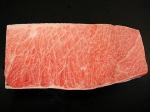
kuromaguro-otoro
Kuromaguro Otoro (fat part)

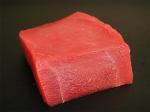
kuromaguro-chutoro
Kuromaguro Chutoro (semi-fat part)

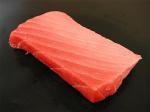
kuromaguro-akami
Kuromaguro Akami (lean part)

Please check the new postings at:
sake, shochu and sushi

—————————————-
日本語のブログ
—————————————-

Vegetables Facts and Tips (9/1): Mushrooms/Shitake

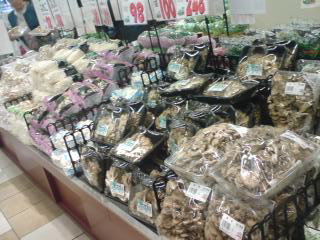
mushrooms-market
(Mushrooms at at a Shizuoka Supermarket)

I don’t intend to talk about wild mushrooms here as I would need a very thick book to post!
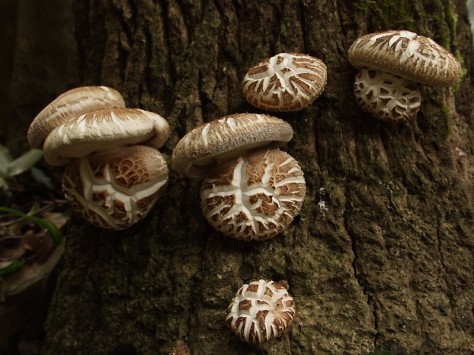
Japan is arguably the country cultivating the greatest number of varieties ( new ones appear and disappear every year!), so I will limit myself to give information on at least four of them and furthermore introduce most varieties I have found in Japanese supermarkets (most of them should be available in many countries.

SHIITAKE

efbd93efbd88efbd89efbd89efbd94efbd81efbd8befbd85

FACTS:
Shiitake/Lentinula Edodes (Black Forest Mushrooms) are native to China but have been grown in both Japan and China since prehistoric times[2]. They have been cultivated for over 1000 years; the first written record of shiitake cultivation can be traced to Wu Sang Kwuang, born during the Song Dynasty (AD 960–1127). However, some documents record the uncultivated mushroom being eaten as early as AD 199.
Fresh and dried shiitake have many uses in the cuisines of East Asia. In Chinese cuisine, they are often sauteed in vegetarian dishes such as Buddha’s delight. In Japan, they are served in miso soup, used as the basis for a kind of vegetarian dashi, and also as an ingredient in many steamed and simmered dishes. In Korean cuisine, they are commonly used in dishes such as bulgogi (marinated grilled beef), jjigae (stews), and namul (sauteed vegetable dishes). In Thailand, they may be served either fried or steamed.

Shiitake are often dried and sold as preserved food in packages. These must be rehydrated by soaking in water before using. Many people prefer dried shiitake to fresh, considering that the sun-drying process draws out the umami flavour from the dried mushrooms by breaking down proteins into amino acids and transforms ergosterol to vitamin D. The stems of shiitake are rarely used in Japanese and other cuisines, primarily because the stems are harder and take longer to cook than the soft fleshy caps. The highest grade of shiitake are called donko in Japanese.
Extracts from shiitake mushrooms (such as ichtyol) have also been researched for many other immunological benefits, ranging from anti-viral properties to possible treatments for severe allergies, as well as arthritis.
The Japanese actually consume them from their raw form more than in any other country.

-Season: best in October~March for outdoors cultivation
-Main beneficial ingredients: Vitamin B1, B2, N6, Ergosterol, Lentinan, Fibers.

TIPS:

-Loosely wrap them in clean Newspaper or Kitchen Paper and store them in fridge away from the light.
-Choose specimens with unbroken “umbrella” and no black marks under.
-Fresh Shiitake are best enjoyed for their taste by keeping their cooking simple such as frying them over a grill with a dash of soy sauce and sake!

Please check the new postings at:
sake, shochu and sushi

—————————————-
日本語のブログ
—————————————-

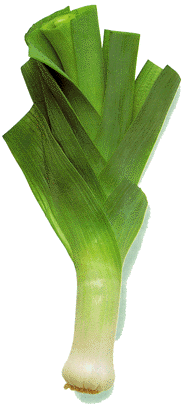
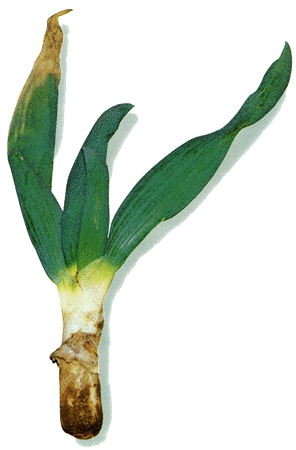
Vegetables Facts and Tips (8): Leeks

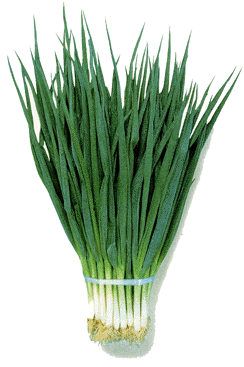
negi-1

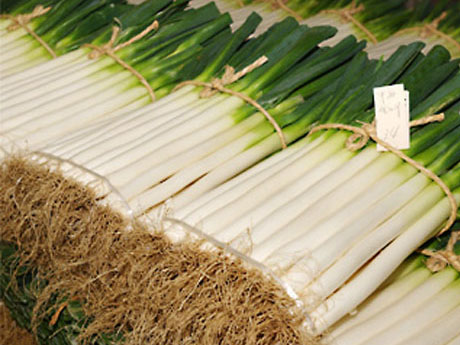
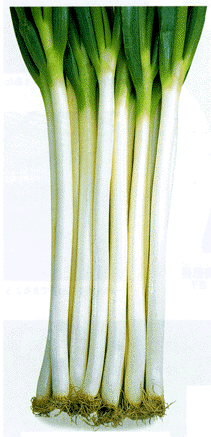
Leeks, or “negi” in Japanese, is an almost universal vegetable.
It is used in cuisine at restaurants and homes on all continents and has been recognized for ages as very beneficial plant.

Recent research has demonstrated that it is an effective cure against cold in particular, not only for humans, but for many animals, too.
Some people do not appreciate them because of their pungent smell and taste, but this can be taken care of with a couple of simple steps.

Back home in France, we boil the central part of fat leeks and eat them under the name of “poor man’s asparaguses”!

FACTS:
-Season: leeks can be bought all year round, but the best season is from November to February in the Northern Hemisphere.

-Main beneficial elements: Carotene (green part), Vitamin C (white part), Calcium, Vitamin B1 (beneficial for blood circulation).
It is not only efficient against colds, but also to the stomach and innards health.

TIPS:
-Fatter specimens will have more taste.
-Choose specimen with a “wet” bottom cut.
-If you use large specimen raw in salads, first cut 5=8 cm long sections, then cut them thin lengthwise and leave them some time in clean cold water. The pungency will greatly diminish.
-To chop leeks for cooking, cut them first in 5~10 cm sections, then cut them thin lengthwise and only then chop them crosswise.

VARIETIES:
There are innemurable varieties in the World, but I will introduce here the main varieties encountered in Japan:

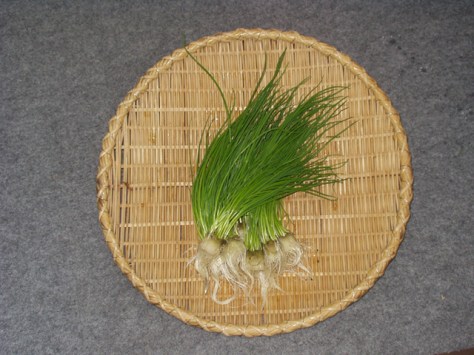
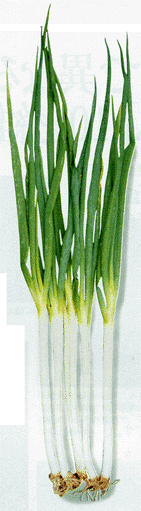
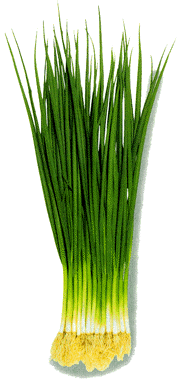
negi-senju
“Senju”
The most common and popular variety

negi-hakata-manno-negi
“Hakata Manno”:
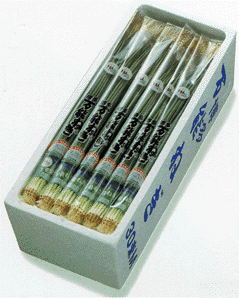
A choice specimen raised in Kyushu Island

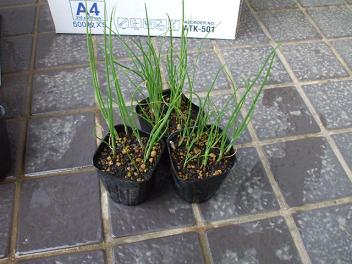
negi-hime
“Me” or “Hime”:
Could be called leek sprouts,too.
Eaten raw in salads, sushi, finger foods.

negi-ito-negi
“Ito” or Thread Leek, used in the same way as “Me/Hime”.

negi-kositsu-negi
“Koshitsu”, another common and popular variety.

negi-kujo-futo-negi
“Kujo-Futo”:
A choice specimen origintaing from Kyoto.

negi-kujo-hoso1
“Kujo Hoso”. Same as above, but a lot thinner.

negi-riiki
“Riiki”
A short fat specimen popular for “nabe” and soups.

negi-shimonita-negi
“Shimonita”.
A fat variety with a short stem and long leaves. Popular with soupsand “nabe” (Japanese-style pot-au-feu)

Please check the new postings at:
sake, shochu and sushi

—————————————-
日本語のブログ
—————————————-

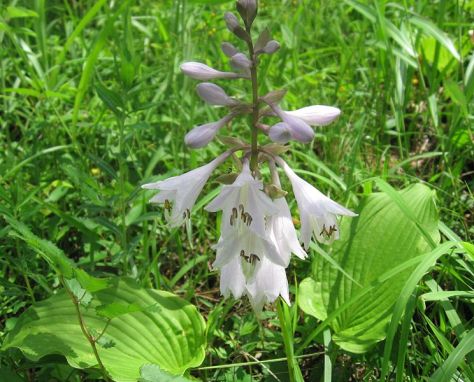
New Vegetable: Urui/Hosta Montana

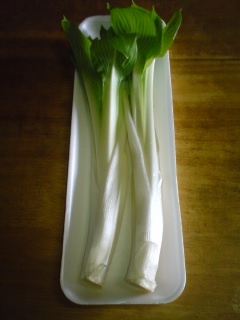
urui-61

Last Sunday, while visiting my favourite supermarket inside the Shizuoka JR Station in search of unusual vegetables I had the pleasure to re-discover that increasingly popular Japanese vegetable, namely urui.
Its Latin name id Hosta Montana. If someone knows the English name, I would be very grateful to be enlightened!
Now, originally this vegetable was a “sansai/wild vegetable” until it has been successfully grown almost all over Japan.

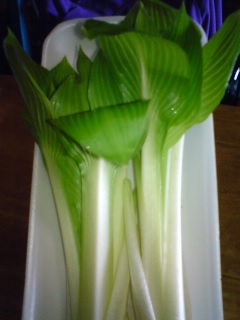
urui-1

The real name of this mountain plant is Oobagibooshi, too long a name to be marketed, hence the “new” name “urui” for the cultivated species.
At full maturity it can reach imposing height and width.
Like asparaguses, it is harvested early before it extends over a foot/30 cm height.

urui-2

The leaves are still small, thin and tender then.
The whole plant, unless cooked as tenpura or fried, needs to be lightly boiled in lightly salted water beforehand.

urui-31

To prepare the plant for the evening snack I had in mind for the Missus (Natasha, Tangled Noodle, do you remember? LOL) I cut the plant into 3 equal lengths and boiled the two bottom ones first as they would take longer. Once boiled to satsifaction I took theme out and cooled them under cold water, cut them lengthwise to thin enough strips and laid them onto a sheet of kitchen paper.
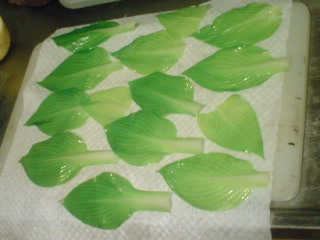
I boiled the leaves just long enough to make them tender, cooled them under cold water and spread them on a sheet of kitchen paper.

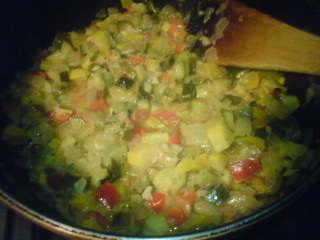
fine-ratatouille

I had cooked a fine ratatouille beforehand, let it cool completely and added a dressing of my making with soft Dijon mustard, tarragon white wine vinegar, walnut oil, pepper and salt.
Now vegan and vegetarian friends should proceed directly to the dish I created as the rest ill not suit them!

seafood

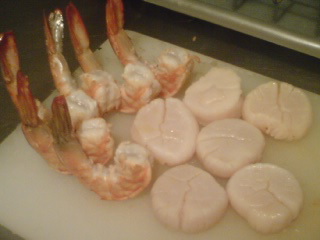
Next I lightly fried small scallops (after marinating then in lemon juice for a couple of minutes) just enough to keep them almost raw inside and put them aside to cool. I did the same, marinade included with some white shrimps.
Note: to attain their “standing shape” is very easy. First “peel” them leaving the tail ends for better “handling”, make a shallow cut along their back, take out the innards and fry just enough to cok both sides to a nice color and keep them almost hlf raw inside. This way they will be firm but extremely tender.

snack

As for the dish itself, vegan and vegetarian friends can forget the seafood and replace it with more ratatouille and edible flowers for example.
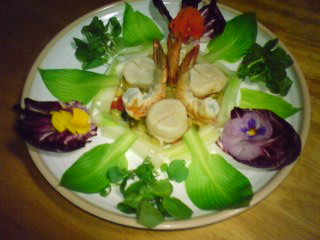
I built an “enclosure” with the cut urui stem, filled it with ratatouille. I placed the seafood geomatrically above the ratatouille. Around it I alternately placed urui leaves, trevise with edible flowers and watercress.
I made a point to take a pic before we sprinkled the lot with dressing (I leave the choice to you!)
Great with a Blanquette de Limoux sparkling wine!

Please check the new postings at:
sake, shochu and sushi

—————————————-
日本語のブログ
—————————————-

Vegetables Facts and Tips (7): Edible Flowers

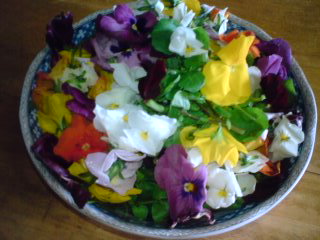
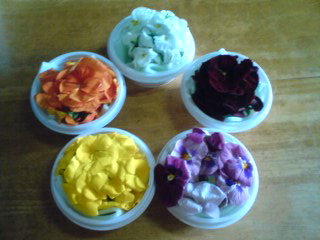
flowers-8
(5 edible flowers and water cress salad)

Yesterday, while I was shopping at the big supermarket at the Shizuoka JR Station I was reminded of a recent post by Natasha at 5 Star Foodie when I noticed edible flowers on sale.
Edible flowers have been on the Japanese markets for quite a few years already.
They tend to first appear in late winter, although it is only a question of time when they will be sold all year long!

flowers-1

flowers-2

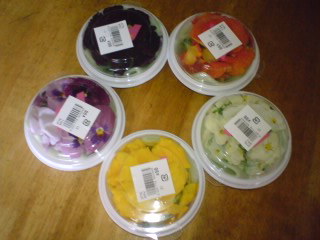
They come in very cheap, at 98 yen a small box (1 US$), but they ought to be used as early as possible.
Aichi Prefecture, our neighbour Prefecture seems to have become the largest growing area in Japan.
Thai, Indian and Persian citizens, as far as I know, have been using flowers in food for quite some time. The Japanese have served mini-chrysanthemum and perilla flowers since immemorial times.

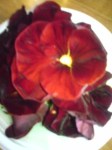
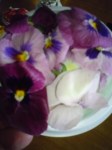
flowers-3 flowers-4 flowers-5 flowers-6 flowers-71

Most edible flowers are of the pansy, snapdragon, primura and so on varieties.
Do you recognize some of them above?

Now, the great news is that they contain an enormous amount of Vitamin A carotene:
1,100 to 9,400 micrograms per 100 grams as compared to 390 micrograms for tomatoes, 720 micrograms for broccoli and 3,100 micrograms for spinach.
as well as Vitamin C:
230 t0 650 mg per 100 grams as compared to 20 mg for tomatoes, 100 mg for spinach and 160 mg for broccoli!
The Japanes will use them either in flower or vegetable salads or on cakes.

One small advice for caution: don’t overeat them as they have purgative powers!

Please check the new postings at:
sake, shochu and sushi

—————————————-
日本語のブログ
—————————————-

Vegan/vegetarian Japanese Dressing: Gomadare/Sesame Dressing

fig-sesame

Following a few queries about gomadare/sesame dressing I (and the Missus) use a lot, I felt a little information and a simple recipe would come in useful.

Gomadare is a great tasty dressing that can be used indifferently with cold dishes as a normal dressing, or in and with hot food, especially nabe/Japanese pot-au-feu, shabu-shabu and any meat or veg actually.
The problem that the gomadare sold over the counter is not vegan, or even vegetarian for that matter (it usually contains egg white and I don’t know what!)

Now, here is a simple recipe that will add that little zest and “consistency” to your favourite food:
Ingredients (for about 2 people):
white sesame seeds: 2 large tablespoons
soy milk: 4 large tablespoons
miso: 1 teaspoon
soy sauce: a little (up to taste)
sugar: a little
ground white sesame: a little

First ground together with a pestle the white sesame seeds, soy milk and miso until it has attained a nice smooth consistency.
If have difficulty mixing it, heat it a little.
Add soy sauce, sugar and ground white sesame to taste.
A little experimentation will work wonders.

Tip: my favourite dish is to peel ripe figs (see pic), cut them in quarters and pour a generous amount of gomadare over it!

Enjoy!

Please check the new postings at:
sake, shochu and sushi

—————————————-
日本語のブログ
—————————————-

Shizuoka Izakaya: Uzu

uzu-1

Service: Excellent and very friendly. Very Japanese atmosphere.
Facilities: good washroom facilities. Great cleanliness overall
Prices: reasonable.
Specialty: Great sake from Shizuoka and Japan Great Shochu.

Uzu has been an institution in Shizuoka City for now 8 years and has maintained and improved on its quality, both in service and food (and drinks!) all the while.
The cuisine is typical of a new wave of young Japanese chefs who strive to offer dishes made from local ingredients, including organic vegetables and meat from animals raised in an healthy environment in the Prefecture, always looking for the unusual and delicious!

uzu-7

The atmosphere is so Japanese!
You can choose a table with a view on a minuscule garden, or if you prefer to see the chef and staff at work, sit at the counter.
Before looking at the ever-changing food menu, have a good look at the sake and shochu list.
I urgently recommend the sake tasting set with three sake from Shizuoka usually including Kikuyoi, Hatsukame and another one!

uzu-2

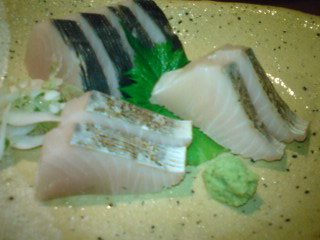
A typical example of their originality is the delicious sashimi we were offered, the Missus and I:
“Kan Sawara”: Young cod caught in the coldest time of the year in Suruga Bay off Shizuoka. They had found only enough for one day. Very firm flesh for a fish, but with a very soft bite and a taste that would have Tokyoites take the first train!

uzu-3

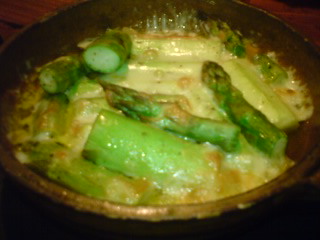
They also offer plenty of variety to please European and American palates such as the above green asparaguses (large specimens grown locally) and mozzarella gratin!

uzu-4

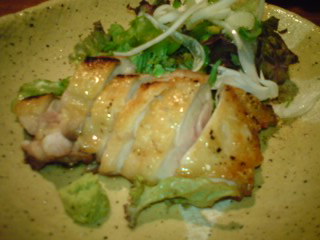
“Shamo Chicken”/Chicken comparable to the Bresse chicken in France, grilled to perfection, with a crispy skin and so tender flesh, and served with grated fresh wasabi!

uzu-5

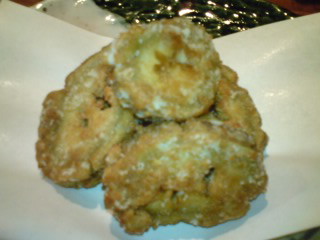
Vegans and vegetarians should not worry. There is plenty for them, such as this very unusual giant burdock root/”Oura Gobo” grown organically at the foot of Mount Fuji and deep-fried with a light cornstarch coating. Very satisfying bite and delicious!

uzu-6

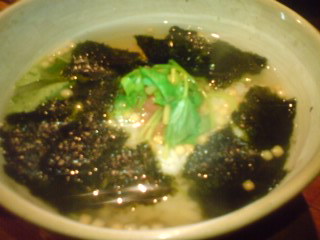
Also try their “O-cha-zuke”/rice in hot tea. Great hot vegan/vegetarian fare in Winter!

uzu-10

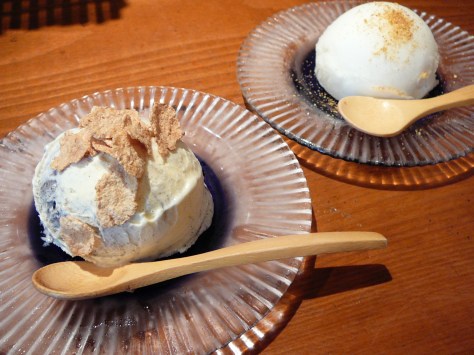
Yes, yes, they have desserts!
You must try their fabulous home-made ice-creams and sherbets!

Will visit them soon again!

UZU
Shizuoka City, Otowa-cho, 3-18
Tel.: 054-249-6262
Business hours: 17:00=23:00
Closed on Mondays and first Tuesday
Reservations recommended
Credit cards OK
HOMEPAGE (Japanese)

Please check the new postings at:
sake, shochu and sushi

—————————————-
日本語のブログ
—————————————-

Japanese Cuisine: “Zensai”/Hors d’Oeuvres

zensai-09-02-04

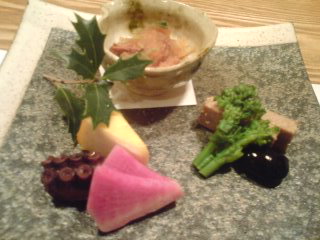
Good Japanese Cuisine Restaurants in this country have a way to encourage you to eat and ord by serving “Zensai”, or Hors d’Oeuvres with your first drink. Whereas it can be mediocre at the best in most establishments, it becomes a real treat at Tomii, one of my favourite “Nihon Ryouri”?Japanese Cuisine restaurants in Shizuoka City!

This is what I was served last night as I took a break from work:

-Hotate Kainashira Daikon Oroshi/in the small pot, cooked scallops and served cold with grated daikon and sauce.
-Na no Hana/Rape flowers atop:
-Tori no Matsukazekaze Yaki/Japanese-style Chicken Terrine
-Fuku Mame/ a large sweet black bean
-Aka kabu/Red Turnip atop Tako/Simmered Octopus and in front of Uni Shinjo Take/steamed fish paste coated with sea urchin sauce

I wouldn’t mind dining on s eries of them!

TOMII
Shizuoka City, Aoi Ku, Tokiwa-cho, 1-2-7, Tomii Bldg, 1F
Tel.: 054-274-0666
Business hours: 17:00~22:00
Closed on Sundays
HOMEPAGE (Japanese)


The Japan Blog List

Please check the new postings at:
sake, shochu and sushi

—————————————-
日本語のブログ
—————————————-

Japanese Seasonal Fish: Seabass/Suzuki

seabass-1

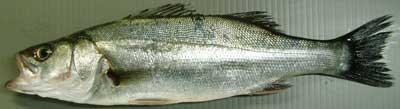
Suzuki or seabass is a fish so popular with anglers all over the world that a lot of people forget it is an extremely popular fish for sashimi and sushi in Japan.

seabass-2
(Pic taken at Tomii Restaurant in Shizuoka City)

Like any other fish, it bears many names: Madaka, Hakura, Shiibasu.
In the Kanto area, including Shizuoka Prefecture, it is called Seigo when under 25cm. At 3 years of age, when it has attained a length of near 60cm, it is called Fukko or Suzuki.
In Kansai it is called Seigo, Hane, and Suzuki.

seabass-3seabass-4

As you can see above the colour and texture are slightly different (Fukko is on the right)

It is indeed a bit early to introduce this fish, but I can’t help thonking about it!
A summer fish par excellence, it is caught mainly in Central and western japan.
The bigger and the older the fish, the better it is considered. After a decline in the 1980’s, catches have increased recently, reaching more than 9,300 tonnes after 2000.

Of course it is a fish you can appreciate cooked or simmered, or grilled, although it becomes fragile and breaks up easily upon being cooked.


The Japan Blog List

Please check the new postings at:
sake, shochu and sushi

—————————————-
日本語のブログ
—————————————-

The Best Desserts of the Past Year


The Japan Blog List

Please check the new postings at:
sake, shochu and sushi

—————————————-
日本語のブログ
—————————————-

One always fondly remembers his/her desserts as the apotheose to a great meal. I thought I would run an anthology of the best desserts I personally savoured for the past and share it with friends before leaving onto new adventures this year!

Read Fruit salad topped with Vanilla Ice-cream and Raspberry Sorbet at Hana Hana Restaurant:
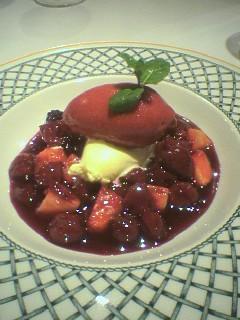
dessert-foodbuzz-1
A favourite end-of-the-summer dessert back in France served in Shizuoka City. I wouldn’t mind eating it at any time of a hot day!

Chocolate Mousse, Mikan Orange Sherbet and Campari Jelly at Sugimoto:
dessert-foodbuzz-2
I was served this simple and extremely elegant dessert by Tetsuya Sugimoto in his former restaurant in Shizuoka City!

Petit Mont-Blanc and cassis Sherbet at Gentil:
dessert-foodbuzz-3
Refined and delicate, it didn’t last long with me!
A celebratedcreation by Gentil, in Shizuoka City, which specializes in small sophisticated desserts!

Creme Caramel Brulee and Caramel Ice-cream at Hana hana:
dessert-foodbuzz-4
Hana Hana in Shizuoka City has become famous for this particular dessert combining two sublime ways to accomodate Caramel. Actually I should say three because the creme is Caramel, the “burnt” topping is Caramel and the Ice-cream is Caramel!

Italian and Japanese Dessert Marriage at Aquavite:
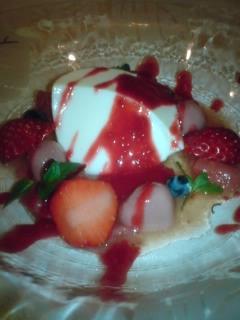
dessert-foodbuzz-5
A very original at one of the best Italian Restaurants in Shizuoka City:
a combination of panacotta, Shizuoka “Benihoppe/Red Cheek” strawberries, “Tama Konnyaku” (Devil’s Tongue Tuber Jelly) from Yamagata Prefecture and at least three kinds of fruit coulis.

Champagne Jelly by Le Cafe-Labo:
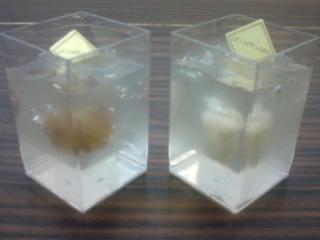
dessert-foodbuzz-6a
This particlar creation by one of the best confectiners in Shizuoka is a bit of misnomer as they used Cremant de Bourgogne from the Cote Chalonnaise in France. A bit extravagant when you know that Cremant, yen for yen (cent for cent), is better value than overpriced Champagne!
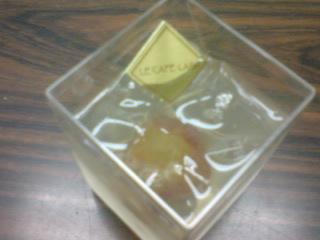
dessert-foodbuzz-6b
Ladies and vegans, rejoice! This is a very very healthy low-calorie dessert as the jelly is 100% natural “kanten” or Japanese agar/seaweed jelly!
They come with two different garnish: “kyoho Budo”, a very large expensive Japanese grape variety (usually seedless) as a shown in picture above and:
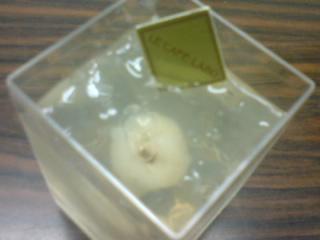
dessert-foodbuzz-6c
Lychee.
Both have a very light but solid consistency. It melts deliciously inside the mouth with an elegant Cremant wine taste. It has a “short tail”, meaning you cannot wait for the next spoonful!
Definitely for ladies or calories-minding couples!

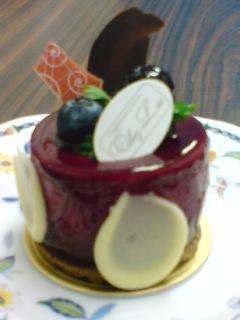
Bourgogne Noir Dijon at Chez Lui:
dessert-foodbuzz-7
Chez Lui is a large “chain company” based in Tokyo and represented at Parco in Shizuoka City, but their cakes have the merit to be made on site.
I could be accused of favoritism as I was born in Dijon!
But I must admit this is probably the best cassisbased cake I ever ate!
It is mainly made up of Cassis Mousse coated with Cassis Coulis and decorated outside with white chocolate. It is furthermore topped with blueberry, blackberry, mint and chocolate.
The inside is pretty complex with a double base of almond biscuit and chocolate short cake.
A small chocolate short cake disc about two thirds of the cake in diameter has been “inserted” inside the mousse with some Creme Chantilly.

Ma-cha Mousse by Chocolat Fin:
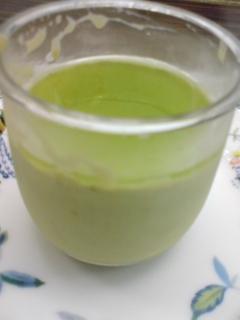
dessert-foodbuzz-8a
This particular might look simple, but not only it is more sophisiticated that one might first think but one has to understand this THE true Shizuoka dessert because Shizuoka Prefecture grows more than 55% of the national green tea crop!
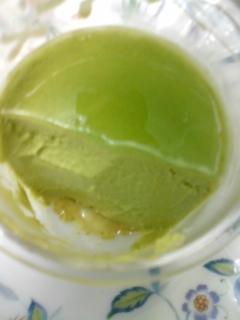
dessert-foodbuzz-8b
Chocolat Fin, another great confectioner in Shzuoka City, had the greaty idea to come up with a creation made with ma-cha tea, a superior class of tea used in tea ceremonies and restaurants. As it comes under the form of extremely fine powder it is very easy to manipulate.
This Ma-cha pudding was underllined with a caramel sauce and topped with a fine layer of ma-cha jelly. The whole pudding is a perfection of balance, not too sweet, with a definite tea savour and firm enough for you to dig in with your spoon. Actually, I made a point of leaving it in the fridge for a couple of hours before devouring it. It almost ate like an ice-cream!

Pistache by Le Cafe-labo:
dessert-foodbuzz-9
After admiring this other creation by Le Cafe-Labo (it certainly deserves it!), you can either savour it layer by layer, one at a time, or cut through it to entertain yourself with the combination of the tastes.
And you certainly have quite a few to review:
from top to bottom:
1) Pistachio Mousse
2)Chocolate Cream
3) Chocolate Mousse
4) Raspberry Sauce
5) Chocolate Crunchy
6) Pistachio Syrup

Gateau Basque at Bouquet:
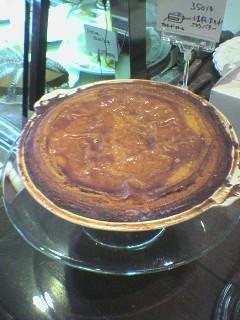
dessert-foodbuzz-10a
I’m an unconditional fan of Gateau Basque. Bouquet, another great confectioner in Shizuoka City is the only one I know in the whole Prefecture, and probably in the whole of Japan, who came out with the perfect and authentic cake!
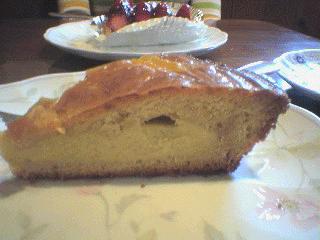
dessert-foodbuzz-10b
(cut from whole cake in picture at the top)
It is not easy to prepare, and the owner, a very shy man, makes only two a day if he is in a good mood. It tends to disappear quickly, but it is possible to reserve.
It is a lot lighter than it looks. Ladies and Gentlemen alike will enjoy to its just value!

I did savour many more memorable desserts, but I will have to stop there, otherwise I will have to start a book!
Tofu Recipes (1): Fried Namaage with Cheese and Ponzu


The Japan Blog List

Please check the new postings at:
sake, shochu and sushi

—————————————-
日本語のブログ
—————————————-

toofu-recipe-1

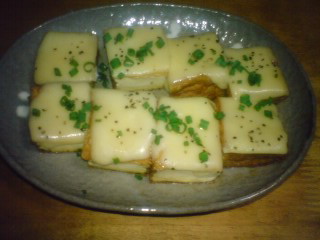
This is I hope the first installment of a long series of simple recipes with tofu. Some will be vegan and vegetarian, some vegetarian like this one, others for omnivores!

tofu-kinds-21

This particular one is one one of the Missus’ favorites.
She uses on full “namaage tofu”, tofu that was deep-fried whole and that you can buy either fresh at a Japanese market or packaged.

She cuts the tofu in equal-sized bite pieces about 1 cm thick and fry them in a non-stick pan. No real need for any oil as what is contained in the surface of the tofu will be sufficient.
The point is that she fries them only on side. While they cook she lay a thin piece of mild/processed cheese over each tofu piece, add some black pepper, and cover with a glass lid. When the cheese has nicely melted over the tofu, she takes off the lid, sprinkles the whole with ponzu and fries for another minute. She serves on a dish with the sauce and liberally sprinkles the lot with chopped thin leeks!

Great snack with Japanese sake or beer!

Japanese Snack: Sakamushi Asari/Cockles steamed in Sake


The Japan Blog List

Please check the new postings at:
sake, shochu and sushi

—————————————-
日本語のブログ
—————————————-

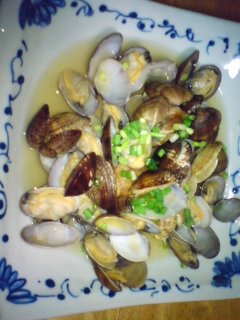
sakamushi

The night before, the Missus did not feel like cooking anything big and came with a succession of “snacks”.
One of them was cockles she had steamed in Sake or “Sakamushi Asari”.
She usually utilizes Japanese sake, but this time she opted for old Chinese rice wine. Of course one can replicate the recipe with a dry white wine!
When you choose your cockles at the market, tap them ligtly with a finger. If they are alive you will see them retract whatever was poking outside. If not, disregard them.
First leave the cockles in slightly salted water overnight to have them disgorge any sand that has been inevitably sucked inside.
Next day drain water and have them “dance” inside a bowl by making them twirl/run around by hand for a minute. This will have them retracting more inside. After cooking they will detach easily from their shells. Incidentally, “tossing” them will not work.
Drop them in a fry pan with a good glass of sake , some mirin/sweet sake and som shoyu ponzu (normal soy sauce is too salty or strong). Cover with a glass lid and heat them on a strong fire until they are all open. Serve them in dish with a good measure of chopped thin leeks.

Simple is sometimes the best!

Shizuoka Fish: Red Trumpet Fish/”Aka Yagara”


The Japan Blog List

Please check the new postings at:
sake, shochu and sushi

—————————————-
日本語のブログ
—————————————-

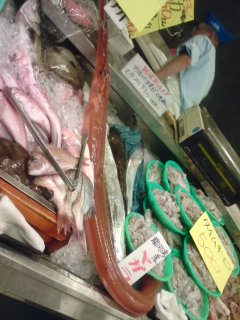
yagara-1

This evening, on my way back from University in Fukuroi City, I ventured inside the great Supermarket inside Shizuoka City JR Station as they are bound, especially in the seafood department, to exhibit some interesting specimens.
I certainly was not disappointed!

yagara-2

Here is another picture to give you an idea of the size!

Trumpet Fishes come in “blue” and “red” varieties.
This one is a red (“aka”) Trumpet Fish.
A bit of a monster, it was a good 1,5 meter (five feet) long and weighed over 5 kg.
I was told 3 meters (10 feet) long specimens are regularly caught in Suruga Bay, the main Bay of Shizuoka Prefecture!

I knew that my friends at Tomii Restaurant would be interested.
I called them on my mobile.
They replied they definitely were!
I bought the fish on their behalf. At 130 US$, it was cheap (I actually bargained a bit!), considering what customers would pay for this delicate fish, either as sublime sashimi or delicious “nabe”!