Tag Archives: Japanese Gastronomy

Edamame Spanish Omelette

Edamame/枝豆 seem to become evermore popular throughout the world.
It is ironic that common soy beans were not Japanese originally to later become a Japanese specialty in its unripe shape!
Everyone knows about Spanish omelettes. Her is a simple recipe combining Spanish and Japanese Cuisines that I’m sure everyone will be able to expand on:

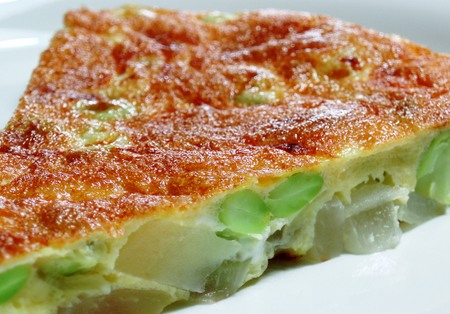
Edamame Spanish Omelette!

INGREDIENTS: For a 20cm-diameter frypan

Potatoes: 3 medium
-Onion: half 1 medium/thinly sliced
-Eggs: 3
-Salt: 1 teaspoon or as appropriate
-Olive oil: 2 tablespoons
-Edamame: 100 g (beans only)

RECIPE:

-Boil the edamame enough to be able to peel the beans easily.

-Peel potatoes. Cut lengthwise in 4 portions and cut each portion in about 3cm thick strips. Cut strips into 3 cm long pieces. Wash rapidly and drain.

-Pour oil in a frypan. Add salt (imporatnt point) first. Throw in potatoes and fry for a short while until potato pieces are completely coated with oil.

-Reduce fire to medium low. Cover with glass lid. Cook/simmer for 10 minutes.
Turn over from time to time to evenly cook potatoes. Avoid “burning” them. Once the potatoes have become translucent (if 10 minutes have not elapsed, stop cooking!), switch fire and Pour excess oil in a small bowl.

-Beat the eggs in a bowl and season according to preference. No need for more salt!

-Throw the edamame and sliced onion into the frypan containg the potatoes. Add the oil back.

-Turn the frypan around to coat all the vegetables with the ol. Cook over a small fire for about 5 minutes. Trurn over from time to time for even cooking. Avoid “burning” the vegetables.

-Season the vegetables according to preference. No need for more salt!

-Add the beaten eggs evenly. Fry, turning from time to time.
If you want to cook only on one side keep frying until the omelette is ready.
If you want to cook on bothe sides, get a plate ready in your other hand and turn the omelette onto the plate and let it slide again into the frypan. Repeat operation 2 or 3 times if necessary.

-Check by pressing a finger on the middle of the omellette. It shouldn’t sink.

-Serve on a large plate as it is or cut to size.

-Serve with a green salad and white wine!

RECOMMENDED RELATED SITES:
Warren Bobrow, Bread + Butter, Zoy Zhang, Hungry Neko, Think Twice, Frank Fariello, Mangantayon, Hapabento, Elinluv Tidbit Corner, Tokyo Terrace, Maison de Christina, Chrys Niles,Lexi, Culinary Musings, Wheeling Gourmet, Comestiblog, Chronicles Of A Curious Cook, Bento Boutique, Tokyo Through The Drinking Glass, Tokyo Foodcast, Urban Sake, Sake World, Palate To Pen, Yellin Yakimono Gallery, Tokyo Terrace, Hilah Cooking, More than a Mount Full, Arkonite Bento, Tokyo Tom Baker, Daily Food Porn/Osaka, Only Nature Food Porn, Happy Little Bento, While My Sautoir Gently Sweats

Please check the new postings at:
sake, shochu and sushi

Vegetables Facts & Tips 21: Myoga/Myoga Ginger

Following a comment by Debra at Hapabento, I thought it might be a good time to (re-) introduce this evry colourful and tasty vegetable, namely Myoga or Myoga Ginger.

Although it is called Myoga Ginger, it is another variety of ginger cultivated for its bud and flower instead of its root.

Wikipedia definition:
Myōga (茗荷) or myoga ginger (Zingiber mioga, Zingiberaceae) is an herbaceous, deciduous, perennial native to Japan that is grown for its edible flower buds and flavorful shoots. Flower buds are finely shredded and used in Japanese cuisine as a garnish for miso soup, sunomono and dishes such as roasted eggplant.

A traditional crop in Japan, myoga has been introduced to cultivation in Australia and New Zealand for export to the Japanese market.

As a woodland plant myoga has specific shade requirements for its growth. It is frost-tolerant to 0F, -18C possibly colder.

Myoga flowers are edible!

FACTS:

-Myoga can be cultivated between June and October, and again bewteen March and May.

-Very high contents in Potassium and Calcium, Also contains Magnesium, Iron and manganese.

-Vitamin B1, B2 and B6. Vegetal fibers.

-It is considered as a natural herb medicine which helps preserve one’s stamina in summer, especially, as far back as the 3rd Century. It does help digestion.

-Preservation is done best by wrapping in kitchen paper inside the fridge. Can be safely kept for 10 days.

TIPS:

-Choose firm and “tight” specimens. When cutting them through the the leaves should stick tightly to eah other.

-Choose specimens with a nice and bright colour, well-rounded and compact in shape.

VARIETY:

Myoga Take/”Myoga Bamboo”

Myoga Take are the young stems of myoga which are also edible.

RECIPES:

Myoga pickled in miso paste

Myoga can be pickled in many manners with miso, sweet vinegar, etc. on ots own or together with other vegetables.

It can be made into great vegan or omnivore sushi rolls!

How about those sushi nigiri?

Great, thinly chopped on tofu!

Actually, the possibilities are endless!

HEALTH FACTS:

-Combined with yam, or with shiso/perilla leaves, or with cabbage, or with leek, helps restore appetite, helps combat ageing and prevent cancer.

-Combined with wakame seaweed, or with mackerel, or with sardines, or with tofu, helps prevent high blood pressure and heart diseases, and has a general beneficial health influence.

-Combined with eels, or with oyters, or with garlic, or with onions, helps restore health, prevent cancer and provide for stamina.

-Combined with cucumber, or with celery, or with oysters, or with gourd, helps with body elimination and prevent kidney diseases.

RECOMMENDED RELATED SITES:
Warren Bobrow, Bread + Butter, Zoy Zhang, Hungry Neko, Think Twice, Frank Fariello, Mangantayon, Hapabento, Elinluv Tidbit Corner, Tokyo Terrace, Maison de Christina, Chrys Niles,Lexi, Culinary Musings, Wheeling Gourmet, Comestiblog, Chronicles Of A Curious Cook, Bento Boutique, Tokyo Through The Drinking Glass, Tokyo Foodcast, Urban Sake, Sake World, Palate To Pen, Yellin Yakimono Gallery, Tokyo Terrace, Hilah Cooking, More than a Mount Full, Arkonite Bento, Tokyo Tom Baker, Daily Food Porn/Osaka, Only Nature Food Porn, Happy Little Bento

Please check the new postings at:
sake, shochu and sushi

Vegan Japanese Stew

Just about time I came back to my vegan and vegetarian (I’m not) friends with a recipe they can create in Japan or back home!

Vegan Japanese Stew!

INGREDIENTS: For 6 people

-Carrots: 2]
-Soy beans: 2 cups
-Konbu/seaweed (dry): 20 cm
-Sato Imo/taro: 7~
-Mirin/sweet sake: 1 cup
-Soy sauce (of your choice): 90 cc/ml

RECIPE:

Clean the sato imo/taro.

Peel the carrots.

Peel the sato imo/taro and clean under running cold water.

The soy beans should have been left to soak for a whole night before being boiled for 3 hours or until soft.

About time to slice those carrots!

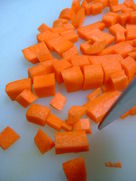
Dice the carrots.

Drop the carrots and soy beans inside a large pot.

Break/cut the konbu/seaweed into large pieces.

Break again into small pieces. You will eat them!

Pour plenty of water.

Simmer over a small fire for 40 minutes.

Slice the sato imo/taro.

Cut in cubes.

Scoop out unwanted matters from the surface.

Add the cubed sato imo/taro.

Stir to mix.

Add mirin/sweet sake.

Add soy sauce.

Simmer until water disappears.

Continue simmering!

You are almost there!

Serve!

It can be served both hot or at room temperature. Great in bento!

RECOMMENDED RELATED SITES:
Warren Bobrow, Bread + Butter, Zoy Zhang, Hungry Neko, Think Twice, Frank Fariello, Mangantayon, Hapabento, Elinluv Tidbit Corner, Tokyo Terrace, Maison de Christina, Chrys Niles,Lexi, Culinary Musings, Wheeling Gourmet, Comestiblog, Chronicles Of A Curious Cook, Bento Boutique, Tokyo Through The Drinking Glass, Tokyo Foodcast, Urban Sake, Sake World, Palate To Pen, Yellin Yakimono Gallery, Tokyo Terrace, Hilah Cooking, More than a Mount Full, Arkonite Bento, Tokyo Tom Baker, Daily Food Porn/Osaka, Only Nature Food Porn, Happy Little Bento

Please check the new postings at:
sake, shochu and sushi

Japanese Appetizer: Octopus & Okra Salad in Ginger Marinade

Spring and warmer days have finally come to Japan!
It is time to enjoy lighter and fresher food!
Here is a simple idea for a sanck/appetizer which can be easily prepared anywhere:

Octopus & Okra In Ginger Marinade!

INGREDIENTS: For 2~ people

-Boiled octopus: 2 tentacles (they say “foot” in Japanese!)
-Okra: 10
-Salt: as appropriate

Marinade/sauce:
-Rice vinegar: 2 tablespoons
-Light soy sauce: 2 teaspoons
-Dashi/Soup stock: 3 tablespoons
-Fresh ginger juice: 1~teaspoon(s)

RECIPE:

-Cut the octopus in thin slices and cut again across into 2~3 pieces.

-Cut the stem end off the okura. Get rid of their “hairs” by rolling them around inside a Japanese-style mortar.

-Drop the okra in warm salted water and leave them ther for a while. Scoop them out and drain well. Cut them into small squares, then chop them with a sharp knife.

-Chill the octopus and okra well before preparing them before the meal. Take them out of the refrigerator. Mount the octopus slices on a plate as shown on the picture above and top with okura. Pour the marinade over the top.

-You may mix the whole as you are eating it!

RECOMMENDED RELATED SITES:
Warren Bobrow, Bread + Butter, Zoy Zhang, Hungry Neko, Think Twice, Frank Fariello, Mangantayon, Hapabento, Elinluv Tidbit Corner, Tokyo Terrace, Maison de Christina, Chrys Niles,Lexi, Culinary Musings, Wheeling Gourmet, Comestiblog, Chronicles Of A Curious Cook, Bento Boutique, Tokyo Through The Drinking Glass, Tokyo Foodcast, Urban Sake, Sake World, Palate To Pen, Yellin Yakimono Gallery, Tokyo Terrace, Hilah Cooking, More than a Mount Full, Arkonite Bento, Tokyo Tom Baker, Daily Food Porn/Osaka, Only Nature Food Porn, Happy Little Bento, While My Sautoir Gently Sweats

Please check the new postings at:
sake, shochu and sushi

French Restaurant: Hana Hana (2010/04/16)

Cassoulet

Service: excellent and very friendly
Facilities: great washroom, great cleanliness overall
Prices: reasonable, good value.
Strong points: Generous portions (for a Japanese restaurant), classic French and Italian and unpretentious. “Special” Wine list!

Last night saw cats and dogs falling anew with the unpredictable weather. Neither of us felt going back home and starting cooking. It was about time we visited an od friend of ours at Hana Hana!

The greatest quality of this unpretentious and very friendly restaurant combining the delicacies of Southern France and Italy resides in its succulent fare served in generous portions (for a Japanese restaurant), and all this at reasonable prices (for japan, again!)

Here is what we had last night:

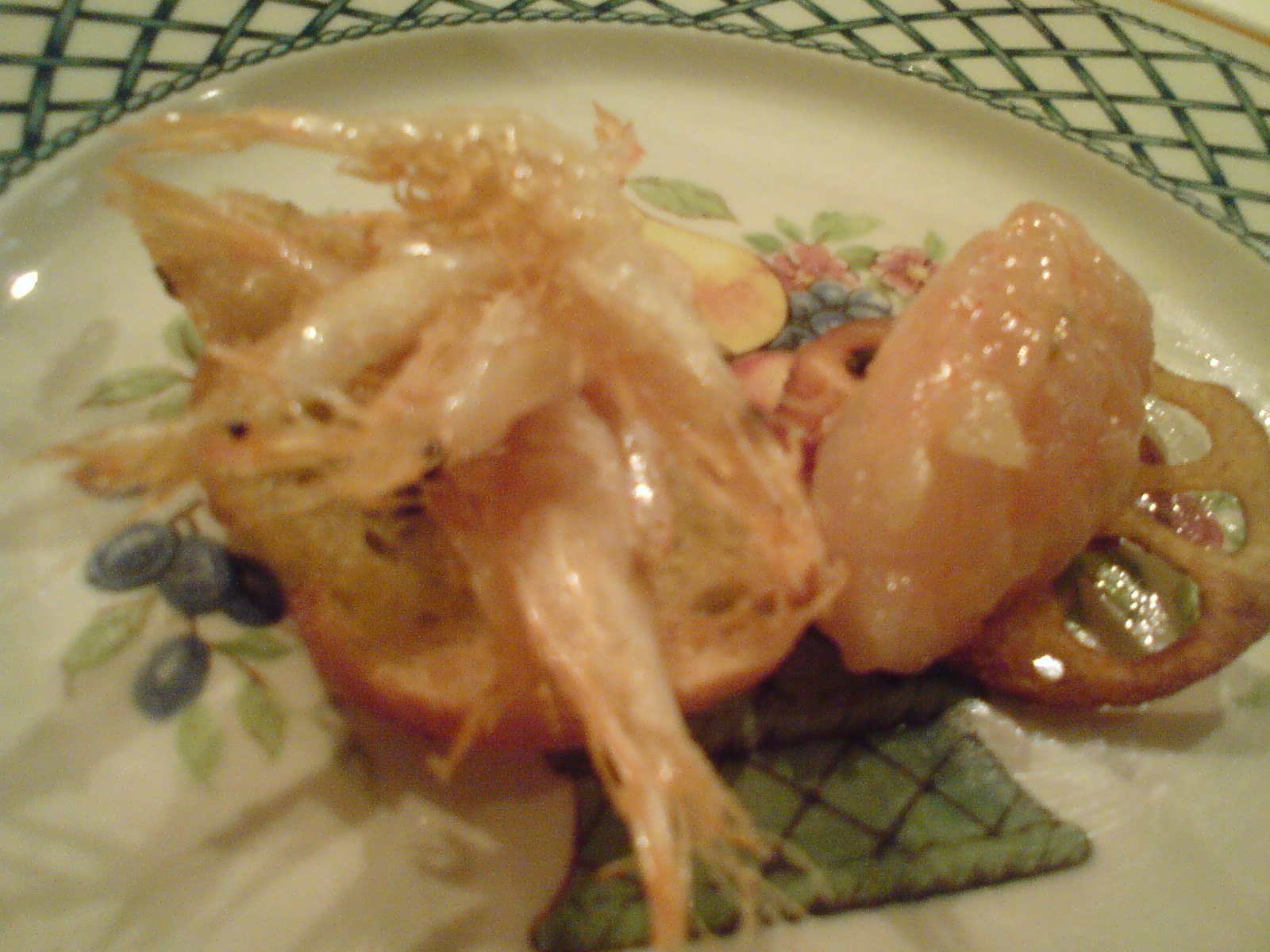
Appetizer: deep-fried /shiroebi/white shrimps/Glass shrimps on a potato chip and amadai/Tilefish tartare on a lotus root chip.

Tilefish or amadai/アマダイ/甘鯛、尼鯛 in Japanese

Glass Shrimps/White Shrimps or shiroebi/白海老 in Japanese.

The Missus ordered a “Country-style” salad, but it was so big that the chef served a single portion on two different plates without even asking us! Great home-made sausages, duck and so on!

As for the beautiful duckling terrine, the two of us had to dig in as the portion was definitely not Japanese-sized! LOL
It certainly wasn’t easy to keep off the bread!

Now, the Missus’ main dish as a great combination of French and Japanese cuisines: Baked amadai/tilefish with wasabi sauce!
Did I tell you that Shizuoka Prefecture grows 80& of all wasabi in Japan?LOL

When I was wondering what main dish I would order, the chef just suggested, Alsation Choucroute or Cassoulet?
Not fair! Being a Burgundian, I was truly caught halfway!
Alright, I’ll take the Cassoulet!
…..
My, my, now, that was big!
The Missus: -I’ll have the finest little piece of each: Duck confit, pork belly cut and home-made sausage!
She could have tried to help me more…. LOL again!
Do you know the hree basic cassoulets? To give you an idea, mine included two of them!
No need to tell you it was perfect!

We don’t make a rule of eaing dessert, but we have never been able to escape from Hana Hana’s offerings!
The Missus had this Creme Blanche (meringue, fresh cream and cottage cheese) with a red fruit soup, a beautiful combination in colours and tastes!

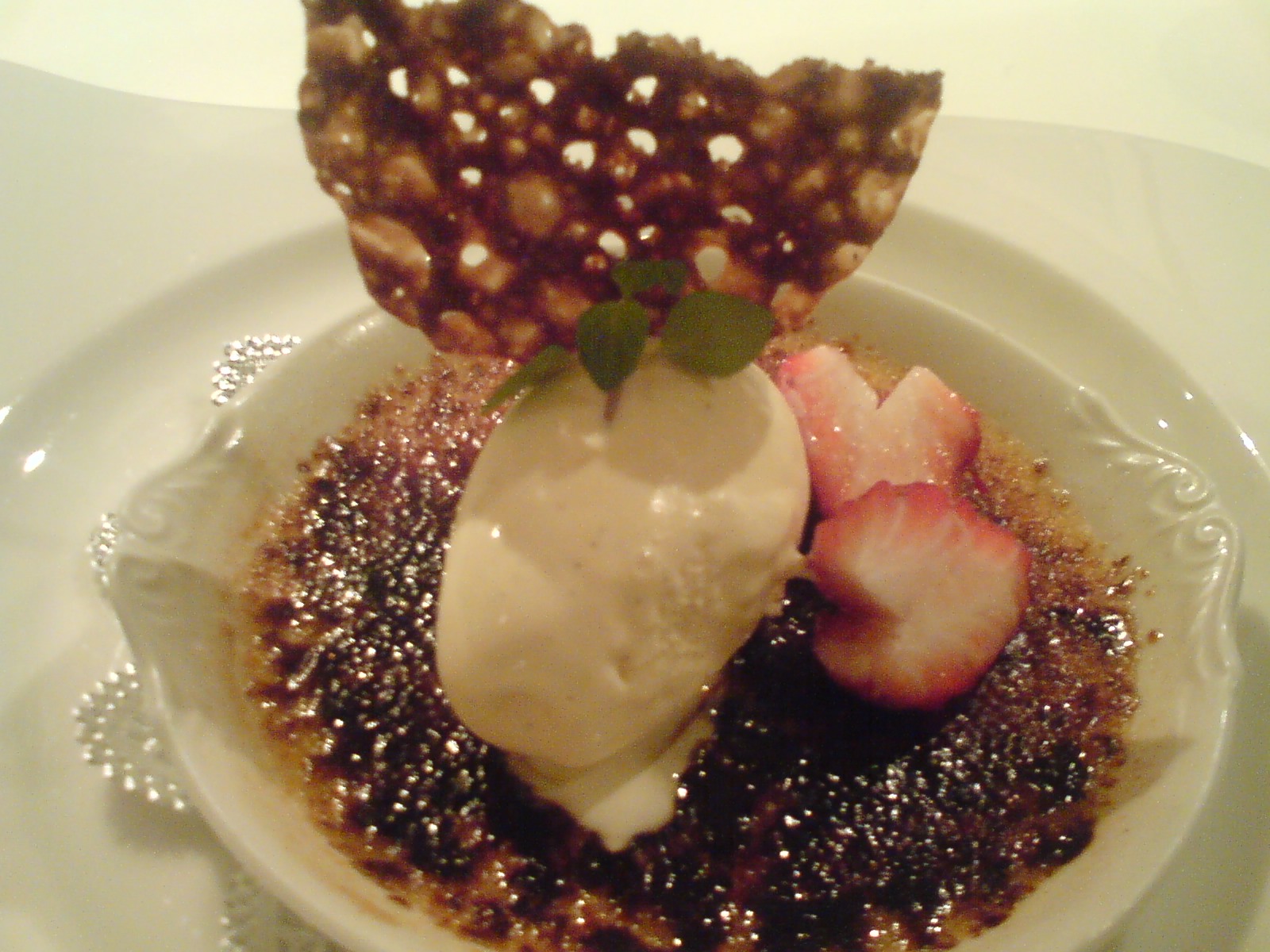
I’ve always been a sucker for Hana Hana’s Creme Brulee!
Just the right amount of cream and plenty of caramel and a beautiful ice-cream on top!

I’ll have to find a reason to go back on my own!
Why?
There is still this Alsatian Choucroute bugging me!

Hana Hana
Open for lunch and dinner. Closed on Tuesdays and Wednesdays
420-0037 Shizuoka City, Aoi Ku, Hitoyado-cho, 1-3-12
Tel. & Fax: 054-2210087
Credit cards OK

RECOMMENDED RELATED SITES:
Warren Bobrow, Bread + Butter, Zoy Zhang, Hungry Neko, Think Twice, Frank Fariello, Mangantayon, Hapabento, Elinluv Tidbit Corner, Tokyo Terrace, Maison de Christina, Chrys Niles,Lexi, Culinary Musings, Wheeling Gourmet, Comestiblog, Chronicles Of A Curious Cook, Bento Boutique, Tokyo Through The Drinking Glass, Tokyo Foodcast, Urban Sake, Sake World, Palate To Pen, Yellin Yakimono Gallery, Tokyo Terrace, Hilah Cooking, More than a Mount Full, Arkonite Bento, Tokyo Tom Baker, Daily Food Porn/Osaka, Only Nature Food Porn, Happy Little Bento

Please check the new postings at:
sake, shochu and sushi

Egg-Plant/Aubergine Carpaccio

Aubergines or egg plants as they are called in the US are a world-popular vegetable. They originated in India, but are found everywhere.
The Japanes make a large consumption of them and try to come with new recipes.
Here is a simple recipe that blends many culinary cultures:
Aubergines/Egg-Plants Carpaccio!
Incidently, you can easily make it vegan!

INGREDIENTS: For 2 people

-Egg-plants/Aubergines: 2
-Grated fresh ginger juice: as appropriate
-Fruit tomatoes: as appropriate
-Lucolla: as appropriate
-Garlic: 1 clove
-Dressing: vinaigrette as appropriate
-Olive oil: EV as appropriate

RECIPE:

Grill the egg-plants/aubergines directly on a grill over the fire. Turn them around until they are properly cooked.
Peel them as soon as possible.

-Place the peeled hot aubergines into a bowl with vinaigrette and ginger juice. Let cool completely. Chill inside refrigerator.

-Take out serving dishes. Cut the garlic clove in halves and brush the plate with them for plenty of taste!
If you have any left chop it finely and add it to the egg plants/aubergines.

-Take the aubergines out of the bowl (proceed one at a time). Wrap each in cellophane paper. Press it with your hand to make it flat. Take out and cut into slices to the appropriate size.

-Arrange the slices as you would do with carpaccio.

-Cocasse/cut in small squares the tomatoes. Place them with some luccola atop the egg-plants/aubergines.

-Delicately pour good quality EV olive oil all over the carpaccio.

-Enjoy!

RECOMMENDED RELATED SITES:
Warren Bobrow, Bread + Butter, Zoy Zhang, Hungry Neko, Think Twice, Frank Fariello, Mangantayon, Hapabento, Elinluv Tidbit Corner, Tokyo Terrace, Maison de Christina, Chrys Niles,Lexi, Culinary Musings, Wheeling Gourmet, Comestiblog, Chronicles Of A Curious Cook, Bento Boutique, Tokyo Through The Drinking Glass, Tokyo Foodcast, Urban Sake, Sake World, Palate To Pen, Yellin Yakimono Gallery, Tokyo Terrace, Hilah Cooking, More than a Mount Full, Arkonite Bento

Please check the new postings at:
sake, shochu and sushi; Happy Little Bento

Horse Meat Sashimi at Tomii

Horse meat has been a favourite of the Japanese (and only the French and the Tatars!). They call it “Sakura” as it is reminiscent of the colour of cherry blossoms!
The best quality is produced in Kagoshima Prefecture in the Island of Kyushu.

It is usually served in very thin sashimi/carpaccio-style slices.

In sushi restaurants, it will usually be frozen for easier cutting, but Tomii beig a high-quality restaurant they avoid frezzing which might add water to the meat.
It is very sweet and tender, and a very special morsel.

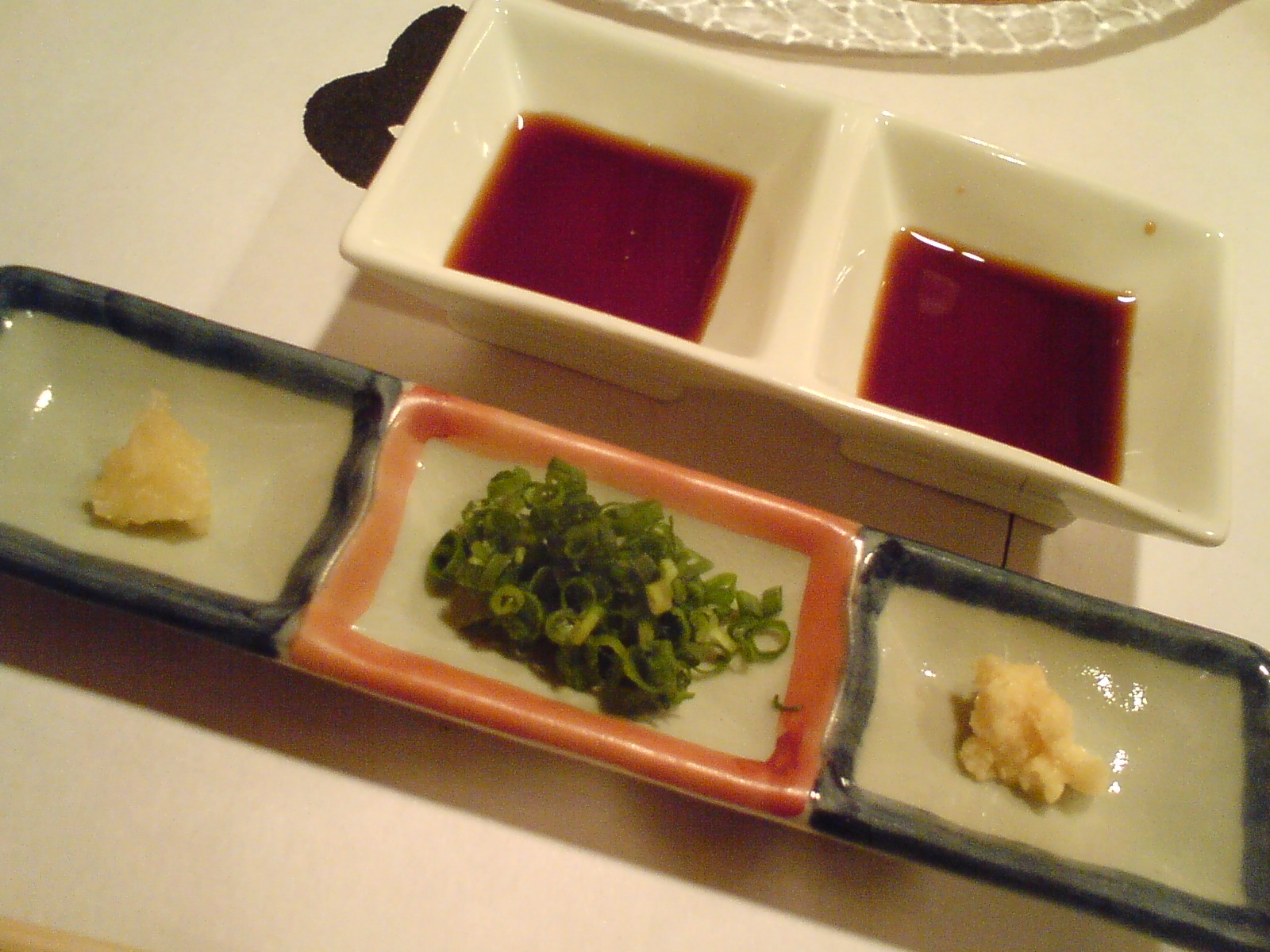
It is always served with two types of seasoning at Tomii:
Soy sauce (light variety) with freshly grated ginger, or the same soy sauce with grated garlic. Both are complemented with very finely chopped fresh thin leek!

To be enjoyed with a great sake or shochu!

TOMII
Shizuoka City, Aoi Ku, Tokiwa-cho, 1-2-7, Tomii Bldg, 1F
Tel.: 054-274-0666
Business hours: 17:00~22:00
Closed on Sundays
HOMEPAGE (Japanese)

RECOMMENDED RELATED SITES:
Warren Bobrow, Bread + Butter, Zoy Zhang, Hungry Neko, Think Twice, Frank Fariello, Mangantayon, Hapabento, Elinluv Tidbit Corner, Tokyo Terrace, Maison de Christina, Chrys Niles,Lexi, Culinary Musings, Wheeling Gourmet, Comestiblog, Chronicles Of A Curious Cook, Bento Boutique, Tokyo Through The Drinking Glass, Tokyo Foodcast, Urban Sake, Sake World, Palate To Pen, Yellin Yakimono Gallery, Tokyo Terrace, Hilah Cooking, More than a Mount Full, Arkonite Bento

Please check the new postings at:
sake, shochu and sushi; Happy Little Bento

Mando: Neo Japanesque Bar/SpanishTapas Bar

Service: Excellent and very friendly
Facilities: great and very large washroom, great cleanliness overall
Prices: reasonable to a little expensive.
Specialty: Tapas. Japanese sake, including many local Shizuoka Brands, shochu and wines.

More and more culinary specialties are being presented for the ever-growing pleasure of revellers in Shizuoka City.
The latest addition, which opened last month, is a very interesting combination of Japanese and Spanish cuisines served in a bar/restaurant very reminiscent of Spain.

A very-easy going place with very friendly staff (7) ably coached by veteran manager Takeshi Hirai (who also looks after two more establishments), one can first quaff one’s thirst in many ways:

Japanese sake (350~1,200 yen for a 90ml glass) is top-class including no less than 19 different bottles from Shizuoka Prefecture: Isojiman, Aoshima, Kokkou, Sugii, Doi, Takashima, Morimoto, Oomuraya, Kanzawagawa, Eikun and Hatsukame Breweries!
Other prefecture are represented by 11 more brands.

Incidentally, if you come there just drinking,there is a space for guests who prefer standing with a glass in hand!

Plenty of wine, naturally!

Wine is available by the bottle, half-bottle, and glass.
7 liqueurs, plenty of cocktails, soft drinks, Japanese tea and herbal teas are also on the menu!

And shochu: 13 imo/tuber, 11 mugi/barley, 8 kome/rice, 3 awamori from Okinawa and 7 limited editions!

As for food, you had better check the menu of the day written on blackboard as it changes every day.
On the average 13~ tapas (300~600 yen) and 16~ dishes (200~1,400 yen) are on offer, although one can ask the chefs about avaibility of other foods!

If you can’t read the menu, no problem, just point at the food inside the glass display boxes: Fish,

Tapas,

More tapas,

Vegetable terrine,

and even more tapas!

Eating tapas with a glass of wine is probably the cheapest way to truly enjoy the place!

Mind you, they quickly add up!

A great place on your own for a quick fix or with good company for a long night out!

MANDO, Neo Japanesque Bar
420-0031 Shizuoka City, Aoi Ku, Gofuku-cho 2-4-6, Mori Bldg 1 & 2F (along Genan Street)
Tel. & Fax: 054-221-5103
Opening hours: 17:00~02:00
Closed on Sundays
Parties possible on reservation (second floor can turned into private party space)
Credit cards OK

RECOMMENDED RELATED SITES:
Warren Bobrow, Bread + Butter, Zoy Zhang, Hungry Neko, Think Twice, Frank Fariello, Mangantayon, Hapabento, Elinluv Tidbit Corner, Tokyo Terrace, Maison de Christina, Chrys Niles,Lexi, Culinary Musings, Wheeling Gourmet, Comestiblog, Chronicles Of A Curious Cook, Bento Boutique, Tokyo Through The Drinking Glass, Tokyo Foodcast, Urban Sake, Sake World, Palate To Pen, Yellin Yakimono Gallery, Tokyo Terrace, Hilah Cooking, More than a Mount Full, Arkonite Bento

Please check the new postings at:
sake, shochu and sushi; Happy Little Bento

Italian Cuisine: Cipolla Ripiena/Stuffed Onion at Il Paladino

Service: Excellent and very friendly
Facilities: great and very large washroom, great cleanliness overall
Prices: reasonable to expensive.
Specialty:Sicilian Cuisine. Top-class Italian wines and great collection of Grappa.
no-smoking-logo1 Non-smoking at tables.
Just had to go for a “glass of wine” after a long work day before definitely calling it a day and have dinner at home!

The chef came up with an interesting “appetizer”, a specialty from Piemonte: Cipolla Ripiena/Stuffed Onion!
NOTE: Thanks to Foods & Crafts for correcting me! Incidentlly I’m french! LOL

A large onion is cut in half and “dug out” to just leave a couple of “layers” of fresh onion inside the outside skin.
It is then filled the chopped dug out part mixed with wild boar ragu/stew. The wild boar came from Shimada City in the Central part of Shizuoka Prefecture!

It was topped with a generous measure of parmiggiano and Italian parsley before being baked to perfection!

Will definitely have to make it back home!

Tratorria . Il Paladino
420-9839 Shizuoka City, Aoi-Ku, Takajo, 2-8-19
Tel.: 054-253-6537
Opening hours: 11:30~13:30, 17:00~22:00
Closed on Mondays
Credit cards OK (Dinner only)

RECOMMENDED RELATED SITES:
Warren Bobrow, Bread + Butter, Zoy Zhang, Hungry Neko, Think Twice, Frank Fariello, Mangantayon, Hapabento, Elinluv Tidbit Corner, Tokyo Terrace, Maison de Christina, Chrys Niles,Lexi, Culinary Musings, Wheeling Gourmet, Comestiblog, Chronicles Of A Curious Cook, Bento Boutique, Tokyo Through The Drinking Glass, Tokyo Foodcast, Urban Sake, Sake World, Palate To Pen, Yellin Yakimono Gallery, Tokyo Terrace, Hilah Cooking, More than a Mount Full, Arkonite Bento

Please check the new postings at:
sake, shochu and sushi; Happy Little Bento

Japanese Cuisine: Sauteed Chicken

Japanese Cuisine: Sauteed Chicken

The Japanese have a very healthy and tasty way of sauteeing very fresh high grade chicken.
It is simple, but not necessarily cheap as the chicken must of the best quality for such a recipe, but it certainly makes for great presentation!

INGREDIENTS: For one person

-1 large chicken breast with the skin
-Freshly grated and pressed daikon: 1 cup
-Finely chopped leeks: 1/2 cup (choose a fresh and tender leek!)
-Salt and pepper: as appropriate.
-Ponzu: 1/4 cup (if not available, use very light taste soy sauce with a dash of lemon juice)
-Chili pepper powder: as appropriate

RECIPE:

-Season chicken with a little salt and pepper if you wish to. Not much, please!

-Punch holes in the chicken skin with the point of a knife.

-Heat a non-stick frying pan.

-Place the chicken breast skin down on the frying pan. Do nout use oil!

-When the skin starts sizzling, cover with a glass lid and lower fire to medium-low.

-Cook until the chicken is cooked on top and that the skin has turned a nice crispy dark brown.

-Get a long serving individual dish ready.

-Taking care not to burn yourself, transfer the chicken breast onto a working table and cut into slices.

-Transfer the sliced chicken breast onto the serving plate with the slices touching each other in the shape of the initial chicken breast.

-Pour the ponzu all over it. Top the whole first with the grated daikon and then the chopped leeks as shown in above picture.
Last sprinkle with chili pepper powder.

Great with beer or Japanese sake!

RECOMMENDED RELATED SITES:
Warren Bobrow, Bread + Butter, Zoy Zhang, Hungry Neko, Think Twice, Frank Fariello, Mangantayon, Hapabento, Elinluv Tidbit Corner, Tokyo Terrace, Maison de Christina, Chrys Niles,Lexi, Culinary Musings, Wheeling Gourmet, Comestiblog, Chronicles Of A Curious Cook, Bento Boutique, Tokyo Through The Drinking Glass, Tokyo Foodcast, Urban Sake, Sake World, Palate To Pen, Yellin Yakimono Gallery, Tokyo Terrace, Hilah Cooking, More than a Mount Full, Arkonite Bento

Please check the new postings at:
sake, shochu and sushi; Happy Little Bento

Yakitori Cutting Techniques 5: Zuri/Sunazuri/Sunagimo/Gizzards

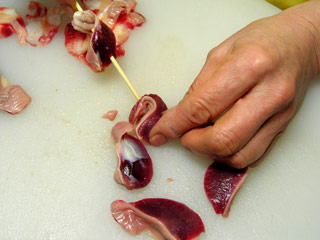
Gizzards are the two sticks in front. The back two are liver.

SYNOPSIS:

Looking at my friends Island Vittles and Skewer It! blogs on yakitori I decided to start a series on that worldwide known Japanese specialty that is “Yakitori/焼き鳥/”Grilled Chicken”.
I hope that this series of postings on various basic recipes will help her and all other foodies interested in that simple, healthy and so delicious delicacy!

This particular series will deal with the cutting techniques which should help you make your own yakitori at home!

Bear in mind than some ingredients such as skin or gizzards might not be considered proper or healthy in some cultures!

Yakitori Cutting Techniques 5: Zuri/Sunazuri/sunagimo/Gizzards:

First clean the gizzards in fresh running cold water.
Cut out the red parts on both sides, left and right as shown in picture and discard.

Cut in half as shown above.

Cut off as much as you can of the hard skin as shown above. A bit difficult, I agree, but ry to cut out and discard only the hard white part. Well, as much as you can!

Pass the stick through each cut folded in two with the white part inside as shown above. This will prevent the gizzards from folding out. Count 3 to each stick.

Here you are!

RECOMMENDED RELATED SITES:
Warren Bobrow, Bread + Butter, Zoy Zhang, Hungry Neko, Think Twice, Frank Fariello, Mangantayon, Hapabento, Elinluv Tidbit Corner, Tokyo Terrace, Maison de Christina, Chrys Niles,Lexi, Culinary Musings, Wheeling Gourmet, Comestiblog, Chronicles Of A Curious Cook, Bento Boutique, Tokyo Through The Drinking Glass, Tokyo Foodcast, Urban Sake, Sake World, Palate To Pen, Yellin Yakimono Gallery, Tokyo Terrace, Hilah Cooking, More than a Mount Full, Arkonite Bento. Island Vittles, Skewer It!

Please check the new postings at:
sake, shochu and sushi

—————————————-
日本語のブログ
—————————————-

For a World Bento Community (A new WBC?)

One of the Missus’ bentoes!

I woke up this morning with an idea floating through my head (not much else at this time of the day!): there seems to be thousands of bloggers out there in the world devoted to bento, so why not try and create together a real community?

The purpose is not to compete with other blogs, be they hobbies or business ventures, nor to force people against their will to join a new group.

Similar efforts have already been achieved. For example, check Biggie’s (Lunch In A Box in San Fransisco) great list of Bento Bloggers!

What needs to be created is a larger informal series of postings or a new blog to inform and direct anyone interested in discovering new tips, health facts, trends and tricks for their lunch boxes.

I was wondering if Foodbuzz would be interested in creating a Bento Buzz and will enquire, but I think it would be more gratifying if bloggers organize it themselves or through like-minded bloggers.

Any thoughts?

P.S:
As for the title WBC meaning “World Bento Community”, it certainly would sound better than a “Group” of people making money out of punching each other to death!

RECOMMENDED RELATED WEBSITES:

Adventures in Bento Making, American Bento, Beanbento, Bento No1, Bento Wo Tsukurimashou, Cooking Cute, Eula, Hapabento , Happy Bento, Jacki’s Bento Blog, Kitchen Cow, Leggo My Obento, Le Petit Journal Bento & CO (French), Lunch In A Box, My Bento Box, Vegan Lunch Box

Please check the new postings at:
sake, shochu and sushi

—————————————-
日本語のブログ
—————————————-

Yakitori Cutting Techniques 4: Kawa/Skin

SYNOPSIS:

Looking at my friends Island Vittles and Skewer It! blogs on yakitori I decided to start a series on that worldwide known Japanese specialty that is “Yakitori/焼き鳥/”Grilled Chicken”.
I hope that this series of postings on various basic recipes will help her and all other foodies interested in that simple, healthy and so delicious delicacy!

This particular series will deal with the cutting techniques which should help you make your own yakitori at home!

Yakitori Cutting Techniques 4: Kawa/Neck:

The best part for kawa/skin yakitori arguably come from the neck of the chicken (choose a large specimen with a long neck!LOL), but other parts are ok. Still, strive for quality!

Scrape most of the fat from the inside of the skin and discard. Too much fat left and the taste will drop with an increase in smoke. Still, leave a little!

This is haow it should look after scaping.

Spread the skin and cut in strips 25 mm/half an inch wide.

Stab skins with a skewer to form yakitori about 30~40 g each stick.

The finished product!

To make a single stick you will need 50 g of neck skin, fat included.

RECOMMENDED RELATED SITES:
Warren Bobrow, Bread + Butter, Zoy Zhang, Hungry Neko, Think Twice, Frank Fariello, Mangantayon, Hapabento, Elinluv Tidbit Corner, Tokyo Terrace, Maison de Christina, Chrys Niles,Lexi, Culinary Musings, Wheeling Gourmet, Comestiblog, Chronicles Of A Curious Cook, Bento Boutique, Tokyo Through The Drinking Glass, Tokyo Foodcast, Urban Sake, Sake World, Palate To Pen, Yellin Yakimono Gallery, Tokyo Terrace, Hilah Cooking, More than a Mount Full, Arkonite Bento. Island Vittles, Skewer It!

Please check the new postings at:
sake, shochu and sushi

—————————————-
日本語のブログ
—————————————-

Beer No Yokota (Baird Beer): New Menu!

Service: very friendly
Facilities: very clean
no-smoking-logoNon-smoking!
Strong points: The beer!

Beer No Yokota has a new menu and it is bound to change regularly as some beers disappear quickly!
Will try to keep it up regularly!

FOOD MENU

JAPANESE PICKLES: Y 500
COLESLAW: Y 500
STEAMED CHICKEN & VEGETABLES SALAD: Y 600
ROASTED MUSHROOMS: Y 500
WAKASAGI KARAAGE/DEEP-FRIED JAPANESE SMELT: Y 500
SQUID FRITTERS: Y 700
ROSEMARY FRIED POTATOES: Y500
SPICY FRIED CHICKEN WINGS: Y 650 (3 pieces)
JAPANESE-STYLE FRIED CHICKEN LEG MEAT: Y 850
STEWED MINCED CHICKEN & LIVER SAUCE PASTA: Y 900
ROSEMARY POTATOES: Y 500
STOUT BEER STEWED VENISON (DEER MEAT): Y1,200
MIXED NUTS: Y 300
MATSUURA SWEET POTATO CHIPS: Y 300
CREAM CHEESE & HONEY DESSERT: Y 600
SALAMI: Y 600

BEERS

-PROMPTON ALE (Scottish 80 Shilling Ale): Y700 (473ml), Y500 (300ml)

-BAIRD BEER: Y800 (473ml), Y550 (300ml)
WHEAT KING ALE (4.2%)
RISING SUN PALE ALE (5.2%)
RED ROSE AMBER ALE (5.5%)
SHIMAGUNI STOUT (4.6%)
SURUGA BAY IMPERIAL IPA (7.5%) Y900 ((473ml), Y650 (300ml)

GANKO OYAJI BARLEY WINE (9.0%)-Y750 (200ml)

-YOKOHAMA BEER PILSNER (5.0%): Y800 (420ml)

-ATSUGI HONEY ABBEY DOUBLE (7.0%): Y900 (420ml)

-BISHOP’S FINGER (5.4%): Y950 (473ml), Y650 (300ml)

-EDELWEISS (AUSTRIA): Y900 (420ml)

-WESTON CIDER: Y1,000 (568ml), Y600 (300ml)

Drinks may be paid COD (cash on delivery) at the counter.
If you take food as well, you will be asked to paid a bill instead of COD.

BEER NO YOKOTA
Shizuoka Shi, Aoi Ku, Gofukucho, 2-5-22, Social Kadode Bldg, 2F (above a Chinese restaurant and behind the City Hall-turn left-on your right-hand side)
Tel.: 054-2553683
Opening hours: Monday to Friday: 17:00~24:00; Saturday, Sunday & National Holidays: 15:00~24:00
HOMEPAGE (Japanese)

RECOMMENDED RELATED WEBSITES:
-Shizuoka Bloggers: Think Twice, Mangantayon
-Beer: Good Beer & Country Boys, Another Pint, Please!, Baird Beer
-Sake: Tokyo Through The Drinking Glass, Tokyo Foodcast, Urban Sake, Sake World
-Wine: Palate To Pen
-Japanese Pottery to enjoy your favourite drinks: Yellin Yakimono Gallery, Shizuoka Guide Diary,

Please check the new postings at:
sake, shochu and sushi

—————————————-
日本語のブログ
—————————————-

Japanese Seasonal Fish: Torafugu/Tiger Puffer

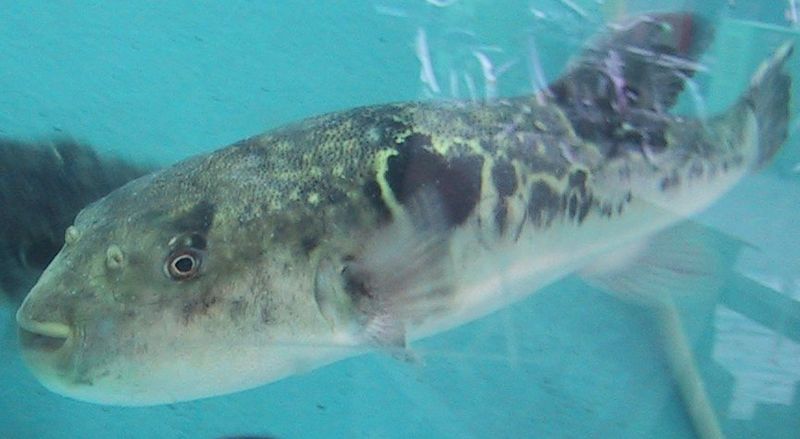
Torafugu or Tiger Puffer is one of more than a 100 hundred varieties of edible Puffer Fish or Globe Fish, but Tiger Puffer is by a great distance the most popular variety in Japan!

It is also known in Japanese as Honfugu/本河豚 or Oofugu/大河豚.
The main season is Winter and a little later for other regions.
It is caught on both sides of Japan especially in Central and East Japan.
It is a specialty in Hamamatsu in our Shizuoka Prefecture.

11,000 tonnes are caught yearly around Japan.
It is bred in Japan to the tune of 4,700 tonnes.
13,000 tonnes are mainly imported from China and South Korea.

In Japan, although it can be bought already dressed, one needs a special license to cut it, serve it, or sell it as the innards contain a violently lethal poison, although cheap fugu (not torafugu) does not always contain such toxin!

Cheap fugu can be eaten raw as sashimi all over Japan.

But more expensive torafugu sashimi is served as a piece of art!

As sashimi, it is best avoured with leeks, lemon, momijioroshi/grated daikon with chili pepper and ponzu!

As sushi, it can be served fairly plain.

Or aburi/炙り, lightly seared on one side!

Or more artistically with sansho and herbs!

Or even with its skin as the latter is edible!

It can also be served as gunkan seasoned with its own liver: a true delicacy!

Shirako/白子 or male spem sacs are also a delicay!

Torafugu can anturally be cooked, especially the bony parts full of meat but difficult to cut. My favourite is karaage/唐揚, deep-fried!

It is also very popular in cold weather a nabe/鍋 in Japan,

and in South Korea!

RECOMMENDED RELATED SITES:
Warren Bobrow, Bread + Butter, Zoy Zhang, Hungry Neko, Think Twice, Frank Fariello, Mangantayon, Hapabento, Elinluv Tidbit Corner, Tokyo Terrace, Maison de Christina, Chrys Niles,Lexi, Culinary Musings, Wheeling Gourmet, Comestiblog, Chronicles Of A Curious Cook, Bento Boutique, Tokyo Through The Drinking Glass, Tokyo Foodcast, Urban Sake, Sake World, Palate To Pen, Yellin Yakimono Gallery, Tokyo Terrace, Hilah Cooking, More than a Mount Full, Arkonite Bento. Island Vittles, Skewer It!

Please check the new postings at:
sake, shochu and sushi

—————————————-
日本語のブログ
—————————————-