Tag Archives: Japanese Gastronomy

Vegan Life in Japan (& Shizuoka)

Vegan Fried Avocado

I have always been intrigued bt the priorities and needs of my vegan and vegetarian friends. I’m an incorrigible omnivore and will ever be, but I can appreciate other gastronomies, be they even based on vegetables only.
I also hold a deep interest in anything organic, although I don’t make it a tenet of my everyday life.
As a general rule I strive for balance.
Vegans and vegetarians have their reasons to be so, and that is their private concern. Full stop.
On the other hand, I cannot be forced in changing my ways. I did recently have to fend a concerted hate mail assault by a group of slightly misled vegans following an article of mine, but that is not going to stop me from trying to help my friends in this country.

Many vegans and vegetarians harbour doubts as to whether visit Japan, or Shizuoka for that matter.
They should not be wary of the life here. I dare say that it is almost the ideal country for them to live!
Alright, they certainly need to be prepared!

Japanese vegan Dashi

The very first query I have to field is:
-“But they use dashi everywhere!”
The Japanese certainly do, but there two basic kinds of dashi/Japanese soupstocks: one made with dry bonito shavings and the other made with konbu/seaweed. Check Vegan Dashi Recipe.

Now miso is also vegan, so you can imagine all the sooup recipes you can concoct! Just Have a look at Vegan Recipes and you will discover what I’m suggesting!

-“Alright! Now, I have my soup to keep me hot in winter. But I also fancy a drink with my food. Now, what would you recommend?”
Well there is a atriaght easy answer: Japanese Sake!
To cut a long story short, do read what I wrote about the ultimate vegan drink!
Let just me say that true high quality (Shizuoka is the best! Lucky, aren’t I?) is made with pure water, rice, and yeast. That is all! Sometimes lactic acid is used, but it is of vegetal origin.
Incidentally, high quality shochuis also vegan!

Vegan sashimi at Yasaitei, Japan.

Now, that we have covered this important subject, shall we go to our main concern, namely vegetables?
You will be, I’m ready to bet about it, really flabbergasted by the variety of vegetables available in this country and especially Shizuoka, a famed area for organic vegetable cultivation.
The Japanese are even cultivating vegetables that have been forgotten elsewhere!
Check the following:
Vegetables Facts & Tips.
For Vegans and Vegetarians: Forgotten Vegetables.
tomii-veg31

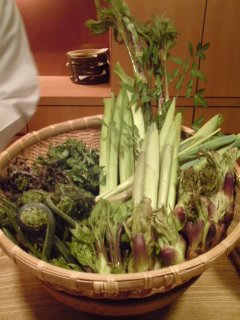
Mountain vegetables at Tomii, Shzuoka City.

Have you heard of the Japanese mountain vegetables/Sansai/山菜?
It is just mind-boggling to discover them all!
Check: Japanese Mountain Vegetables!

Do not forget that tea and soba can be vegan! How about a combination of tea and soba for a quick lunch?
CHAZUKE-1

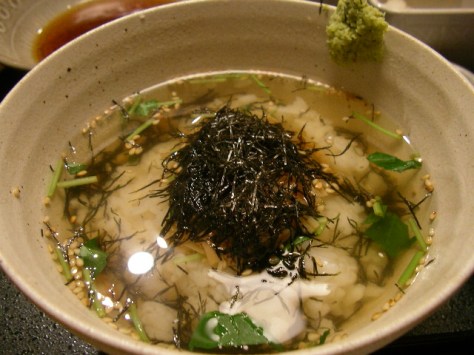
Chazuke

And how about Somen, Chazuke, and Tofu?

zarudofu

“Zarudofu”

Learn how to make your own Tofu!

tofu-kinds-5

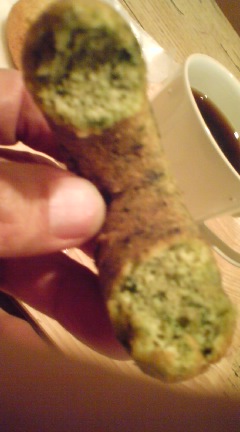
“Tofu Doughnuts” at Shizutetsu Supermarket in Shizuoka City

Ever heard of Tofu Donuts?
Why don’t you try your hand after reading that easy Vegan Tofu Donut Recipe?

Vegan sushi plate at Sushi Ko, Shizuoka City.

-“I want to eat sushi, but how can I get vegan sushi in Japan?”
That should not be a problem.
First why don’t you have a look at the following:
Vegan & Vegetarian Sushi.
Vegan Sushi Recipe Suggestions.

Just walk around and try to find a friendly Sushi Restaurant along with some friends first and gently ask for vegetable sushi (without the bonito shavings or mayonnaise!). Keep going to the same place and soon or later the chef will enjoy the challenge and even propose new creations.
Or check the Sushi Rice Basic Recipe and try making it at home!

And Wasabi is also vegan!

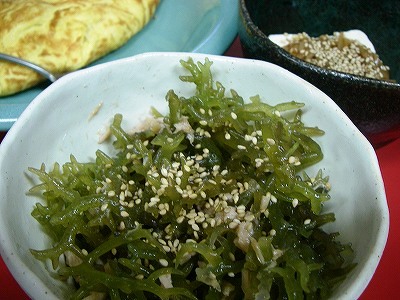
Mozuku seaweed served at Yasaitei, Shizuoka City.

Do not forget all the possibilities offered by seaweed, probably the most ubiquitous gastronomic ingredient in this country!
And ther are plenty of varieties: check Seaweed, the Vegetable of the Oceans!
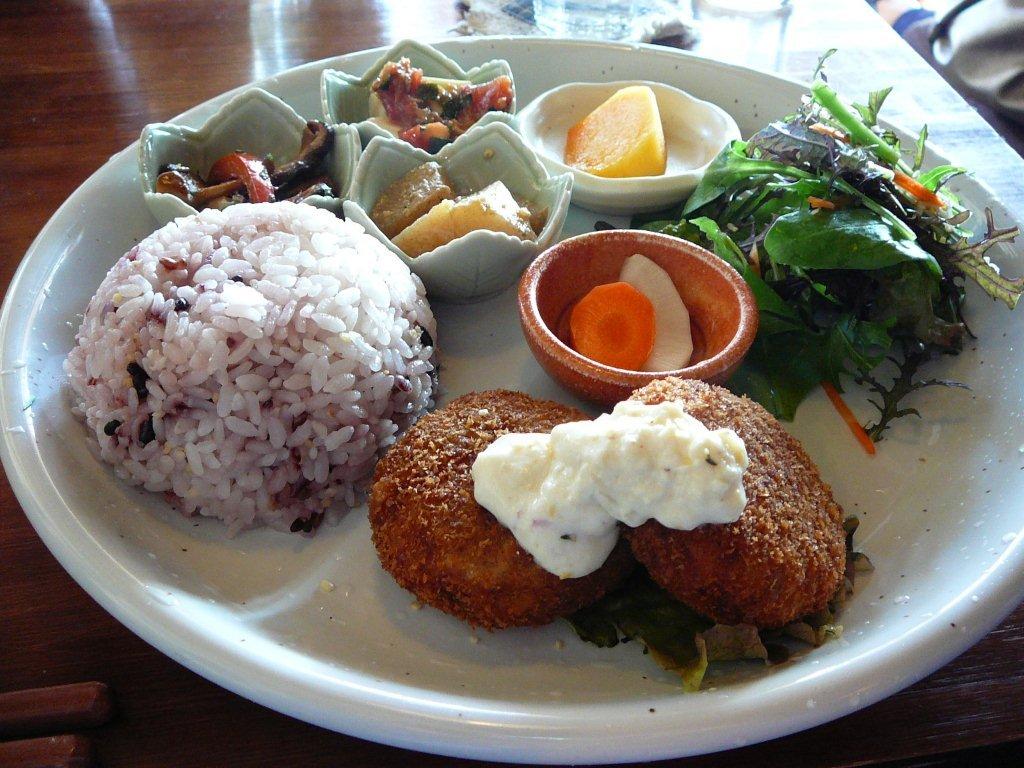
The all-organic vegetables lunch tray at Magokoro in Kamakura, Kanagawa Prefecture. They have a vegan version!

I’m not that keen on religion, but if your are a Budhist, Japanese temples sometimes offer vegan/vegetarian meals! Kamakura is just but an example!
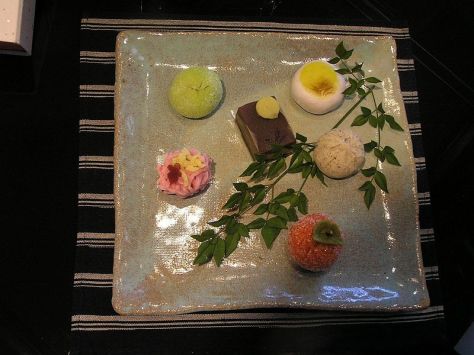
WAGASHI-1

Wagashi Tray.

-“And what for dessert?”
I knew you were going to ask that!
Have you heard of Wagashi?
Just reading about it will make you salivate!

Aright, if you need help, just drop me a line!LOL
At least I sincerely hope I have contributed to the image of Japan you wished to see!

RECOMMENDED RELATED SITES
Not-Just-Recipes, Bengal cuisine, Cooking Vegetarian, Frank Fariello, Gluten-free Vegan Family, Meatless Mama, Warren Bobrow, Wheeling Gourmet, Le Petit Cuisinier, Vegan Epicurean, Miss V’s Vegan Cookbook, Comestiblog, To Cheese or not To Cheese, The Lacquer Spoon, Russell 3, Octopuspie, Bread + Butter, Pegasus Legend, Think Twice, The French Market Maven

Please check the new postings at:
sake, shochu and sushi

—————————————-
日本語のブログ
—————————————-
Seaweed: The Vegetable of the Oceans

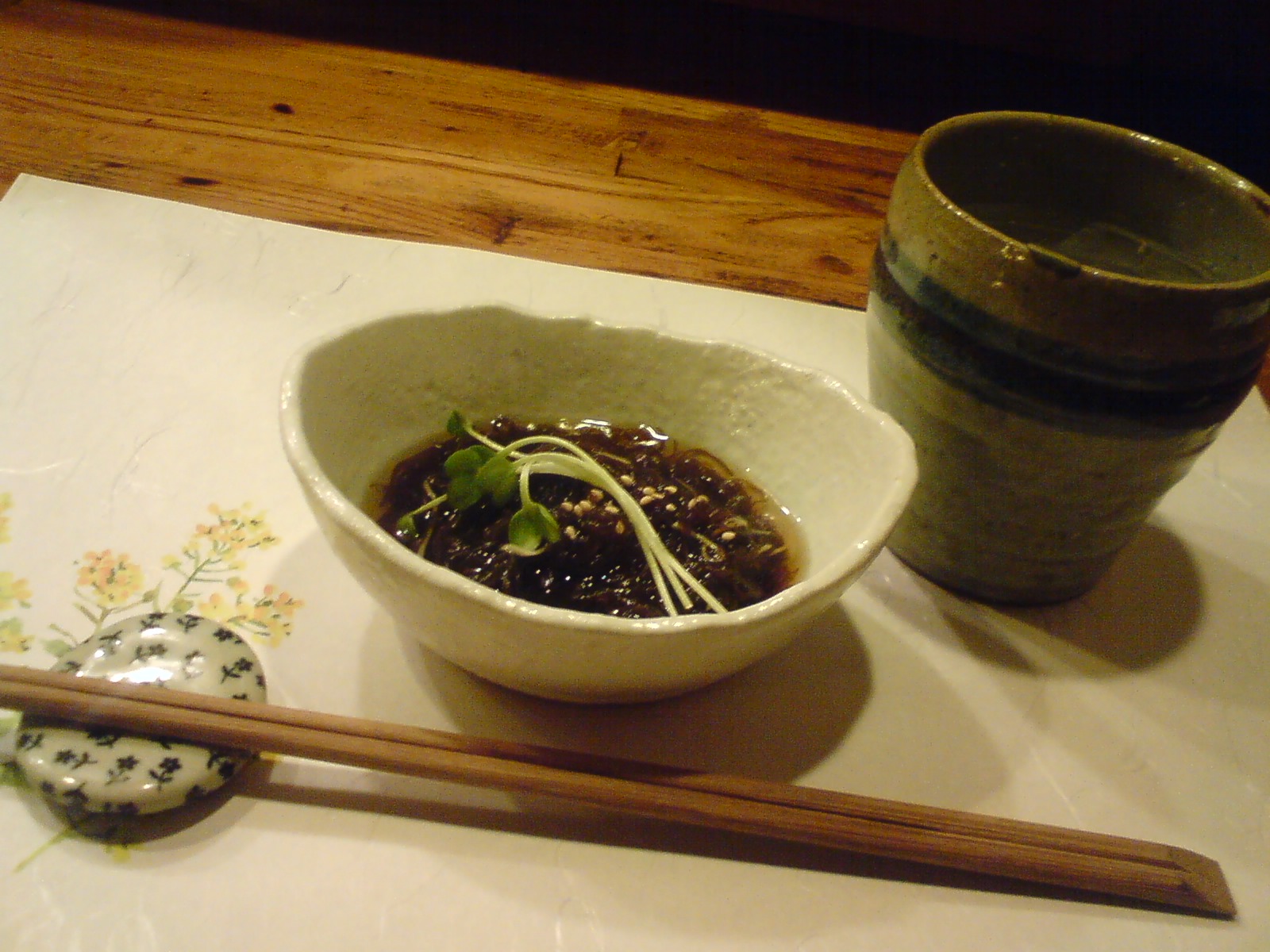
Mozuku in amazu/sweet vinegar as served at Yasaitei, Shizuoka City.

Seaweed or algae have been used for eons by humans, but have only been recently rediscovered as a food of their own.
Seaweeds are consumed by coastal people, particularly in East Asia, e.g., Japan, China, Korea, Taiwan, Thailand, and Vietnam, but also in Indonesia, Belize, Peru, the Canadian Maritimes, Scandinavia, Ireland, Wales, Philippines, and Scotland.
It is rich in calcium and magnesium and seaweed noodles can be cooked into pancit canton, pancit luglug, spaghetti or carbonara.

Nori

In Asia, Zicai (紫菜) (in China), gim (in Korea) and nori (in Japan) are sheets of dried Porphyra used in soups or to wrap sushi. Chondrus crispus (commonly known as Irish moss or carrageenan moss) is another red alga used in producing various food additives, along with Kappaphycus and various gigartinoid seaweeds. Porphyra is a red alga used in Wales to make laver. Laverbread, made from oats and the laver, is a popular dish there. Affectionately called “Dulce” in northern Belize, seaweeds are mixed with milk, nutmeg, cinnamon, and vanilla to make a common beverage.

Seaweeds are also harvested or cultivated for the extraction of alginate, agar and carrageenan, gelatinous substances collectively known as hydrocolloids or phycocolloids. Hydrocolloids have attained commercial significance as food additives. The food industry exploits their gelling, water-retention, emulsifying and other physical properties. Agar is used in foods such as confectionery, meat and poultry products, desserts and beverages and moulded foods. Carrageenan is used in salad dressings and sauces, dietetic foods, and as a preservative in meat and fish products, dairy items and baked goods.

Alginates are used in wound dressings, and production of dental moulds. In microbiology research, agar is extensively used as culture medium.

Seaweed is a source of iodine, necessary for thyroid function and to prevent goitre.

Seaweed extract is used in some diet pills. Other seaweed pills exploit the same effect as gastric banding, expanding in the stomach to make the body feel more full.

Konbu Tsukudani, a popular Japanese seaweed dish.

The Japanese divide their edible seaweed into three main groups:
BROWN ALGAE:

-Konbu/昆布, or Laminariaceae Bory (Latin), comprises many varieties, some of them regional: Makonbu or Saccharina japonica(真昆布), Onikonbu or Laminaria diabolica(羅臼昆布), Rishiri Konbu or Laminaria ochotensis(利尻昆布), Hosome Konbu or Laminaria religiosa(細目昆布), Hitaka or Mitsuishi Konbu or Laminaria angustata(日高昆布、三石昆布), Naga or Hamanaka Konbu or Laminaria longissima(長昆布、浜中昆布), and Kagome or Kjellmaniella crassifolia(籠目昆布).

-Hijiki or hiziki (ヒジキ, 鹿尾菜 or 羊栖菜, hijiki) (Sargassum fusiforme, or Hizikia fusiformis) is a brown sea vegetable growing wild on rocky coastlines around Japan, Korea, and China. Its two names mean deer-tail grass and sheep-nest grass respectively.

-Hibatama or Fucus, a genus of brown alga in the Class Phaeophyceae to be found in the intertidal zones of rocky seashores almost everywhere in the world.

-Hondawara or ホンダワラ(馬尾藻、神馬藻 (Sargassum fulvellum)

-Mozuku, or Cladosiphon okamuranus (水雲; 藻付; 海蘊; 海雲) , a type of edible seaweed in the genus Cladosiphon, naturally found in Okinawa, Japan. Most of the mozuku now is farmed by locals, and sold to processing factories. The main use of mozuku is as food, and as source of one type of sulfated polysaccharide called Fucoidan to be used in cancer treatment aid health supplements.

-Wakame (ワカメ), Undaria pinnatifida, a sea vegetable, or edible seaweed. In Japan it is most widely used in miso soup.

Yes, these violet and green alagae are edible!

VIOLET ALGAE:

-Asakusa Nori, or アサクサノリ(浅草海苔 (Porphyra tenera).

-Tengusa, which gives agar agar, a gelatinous substance. Historically and in a modern context, it is chiefly used as an ingredient in desserts throughout Japan, but also as solid jelly used as decoration in salads and others.

GREEN ALGAE:

-Aosa or sea lettuce comprising comprise the genus Ulva, a group of edible green algae that are widely distributed along the coasts of the world’s oceans.

-Aonori (青海苔 or アオノリ, “blue seaweed” or “green seaweed”), also known as green laver, a type of edible green seaweed, including species from the genera Monostroma and Enteromorpha of Ulvaceae. It is commercially cultivated in some bay areas in Japan, such as Ise Bay. It contains rich minerals such as calcium, magnesium, lithium, vitamins, and amino acids such as methionine.

-Umibudou, or sea grapes, a delicacy of its own!

MARKET AVAIBILITY IN JAPAN:

In Japan it is interesting to note you can easily buy seaweed in paste form:

Konbu

Aosa

Hijiki

Next here are some pics to help you discover/recognize edible varieties in the markets:

Akamoku

Makusa

They often come as a mixture!

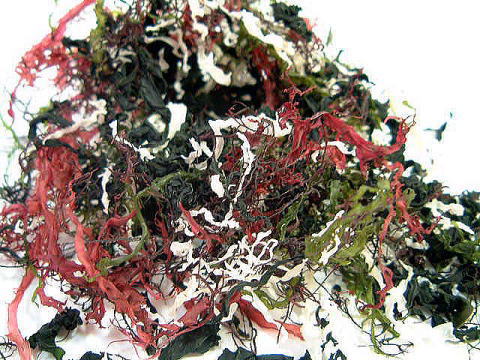
Red Algae

JAPANESE GASTRONOMY:

Here are some examples of the use of seaweed in Japanese gastronomy that can be expanded and inspired from wherever in the world you are, you being vegan, vegetarian or omnivore!
I have reduced the size of the pictures. Click on them to enlarge and copy them!

Agar or Crystal Kaiso/Crystal Seaweed!

The same in a salad!

An example of seaweed salad with wakame and agar.

Another seaweed salad with samples harvesyed in Noto Peninsula, Ishikawa Prefecture!

An Okinawa variety called somen nori!

Another local variety called Tsunotama/Horns and Balls!

Wakame appetizer!

Wakame Noodles!

Another Wakame salad!

Wakame sticks cooked with miso paste!

Wakame and Miso Paste mix from Kanzanji, Shizuoka Prefecture!

Wakame and Miso Bread!

Wakame Miso Soup!

Wakame, tofu and miso Soup!

A bowl of freshly steamed rice with seaweed paste!

Soba/Buckwheat noodles with nori and green leaf vegetables!

Seaweed, trefoil and ground seame seeds salad!

The best way to eat rice?

RECOMMENDED RELATED SITES
Not-Just-Recipes, Bengal cuisine, Cooking Vegetarian, Frank Fariello, Gluten-free Vegan Family, Meatless Mama, Warren Bobrow, Wheeling Gourmet, Le Petit Cuisinier, Vegan Epicurean, Miss V’s Vegan Cookbook, Comestiblog, To Cheese or not To Cheese, The Lacquer Spoon, Russell 3, Octopuspie, Bread + Butter, Pegasus Legend, Think Twice, The French Market Maven

Please check the new postings at:
sake, shochu and sushi

—————————————-
日本語のブログ
—————————————-

Vegan Sashimi at Yasaitei (again!/10-02-15)

How many times have I written about Yasaitei? LOl
And I don’t think I will ever tire of it! Well, if it can help my vegan and vegetarian friends, so much the better. As an omnivore I feel the urge to lend a hand and help them enjoy life in this great country.
I’m actually preparing an article on vegan life in Japan for later in the day to as much information as possible into one posting.

Before I describe the vegan sashimi plate, let me introduce what came with my glass of shochu (vegan alcoholic drink, by the way): mozuku.
Mozuku/モズク is Nemacystus decipiens in Latin.
It is a seaweed that is collected in many areas of Japan and the two main varieties are Okinawa Mozuku/オキナワモズク Cladosiphon okamuranus (Latin) and Ishi Mozuku/Rock Mozukuイシモズク Sphaerotrichia divaricata (Latin). They are usually served in amazu/甘酢/sweet vinegar. At Yasaitei, they come topped with a few sesame seeds and kawaire daikon sprouts/かわいれ大根.
It almost tastes like a dessert.
I shall also write a long article on seaweed, the vegetable of the oceans later in the day!

Alright, now for the description of the plate:
Ameera (sweet) tomatoes from Western Shizuoka, fat celery stem bottoms, firm and so sweet, my favourite green, ice plant, also crunchy, soft and sweet, myoga ginger hid behind, and Spring cabbage. The latter also has a nice bite, is very soft, almost sweet in taste.

Shiso/perilla leaf on a bed of sliced Winter onion is hidden behind the cabbage. Red radish, crucnhy and very soft, and those Japanese cucumbers, gorged with water under a crunchy skin.

For a “side view” to help you understand the presentation.
Simple and so extravagant at the same time!

YASAITEI
Shizuoka City, Aoi Ku, Tokiwa-Cho, 1-6-2 Green Heights Wamon 1-C
Tel.: 054-2543277
Business hours: 17:30~22:00
Closed on Sundays
Reservations highly recommended
Seating: 6 at counter + 20 at tables
Set Courses: 3,000, 4,000, 5,000 yen
HOMEPAGE (Japanese)

RECOMMENDED RELATED SITES
Not-Just-Recipes, Bengal cuisine, Cooking Vegetarian, Frank Fariello, Gluten-free Vegan Family, Meatless Mama, Warren Bobrow, Wheeling Gourmet, Le Petit Cuisinier, Vegan Epicurean, Miss V’s Vegan Cookbook, Comestiblog, To Cheese or not To Cheese, The Lacquer Spoon, Russell 3, Octopuspie, Bread + Butter, Pegasus Legend, Think Twice, The French Market Maven

Please check the new postings at:
sake, shochu and sushi

—————————————-
日本語のブログ
—————————————-

Vegetables Facts & Tips 18: Cabbage

The cabbage is a popular cultivar of the species Brassica oleracea Linne (Capitata Group) of the Family Brassicaceae (or Cruciferae), and is used as a leafy green vegetable. It is a herbaceous, biennial, dicotyledonous flowering plant distinguished by a short stem upon which is crowded a mass of leaves, usually green but in some varieties red or purplish, which while immature form a characteristic compact, globular cluster (cabbagehead).

The plant is also called head cabbage or heading cabbage, and in Scotland a bowkail, from its rounded shape. The Scots call its stalk a castock, and the British occasionally call its head a loaf.

Cabbage leaves often display a delicate, powdery, waxy coating called bloom. The sharp or bitter taste sometimes present in cabbage is due to glucosinolate(s).

The cultivated cabbage is derived from a leafy plant called the wild mustard plant, native to the Mediterranean region, where it is common along the seacoast. Also called sea cabbage and wild cabbage, it was known to the ancient Greeks and Romans. The English name derives from the Normanno-Picard caboche (head), perhaps from boche (swelling, bump).

That for the Wikipedia definition.

FACTS:

-Cabbages are also a good source of riboflavin.
-Cabbages are an excellent source of vitamins A, C, and K. It also contains significant amounts of glutamine, an amino acid which has anti-inflammatory properties.

-It is a source of indole-3-carbinol, or I3C, a compound used as an adjuvant therapy for recurrent respiratory papillomatosis, a disease of the head and neck caused by human papillomavirus (usually types 6 and 11) that causes growths in the airway that can lead to death.

-It also contains a marked amount of Calcium, Amino Acids, Potassium and Magnesium.

-The best season from January to May, and June to July.

VARIETIES:

Japan is the World’s No 5 cabbage grower, and so many varieties are available here:

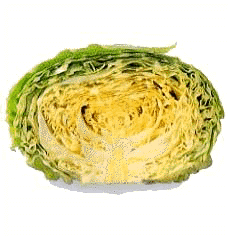
“Haru Kabetsu/Haru Tama” or Spring Cabbage.
Planted in the Fall and harvested in Spring.
The inside is yellow and soft. Can be eaten raw.

“Fuyu Kabetsu/Kantam” or Winter Cabbage.
Planted in Summer and harvested in Winter.
Large number of leaves make it a very dense cabbage.
Great for stews as the shape will hold.

“Kougen Kabetsu” or Plateau Cabbage.
Planted at high altitude in Nagano and Gunma Prefectures in Spring and harvested in Summer and Fall.
Very cold-resistant.

“Petit-Vert”
Very rich in Vitamin C and carotenes, as well as many other nutrients, it is becoming increasingly popular as an organic vegetable both in homes and restaurants. Its small size and tenderness make it easy to use both as decoration and vegetable dish.

“Green Ball”.
Very popular raw in salads or pickled.

“Saboi Kabetsu”/Savoy Cabbage.
Prized for its eleganat looks.
It originated from French Savoie.
Very popular in stews.

“Murasaki kabetsu”/Violet or Red Cabbage.
Not to be confused with the Italian Trevise.
Natural colour.
Very popular raw in salads or pickled.

“Takenoko Kabetsu” or Bamboo Shoot Cabbage.
Popular for its shape. Very soft, great raw in salads.

“Me Kabetsu” or Brussels Sprouts.
Contains 4 times as many Vitamin C as other cabbage varieties.
Very popular in Japanese gastronomy thanks to its small size and taste.

“Kuro Kabstu” or Black Cabbage (Carboronero).
Actually of a very dark green colour.
High in fibers and rich in flavour, popular in stews.

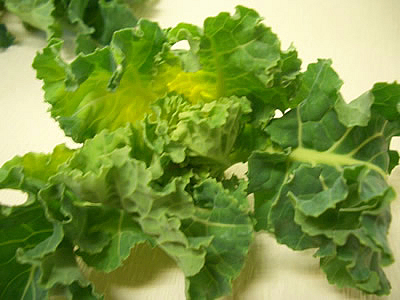
“Keeru Kabetsu” or Kale Cabbage.
High in Vitamin C and carotenes.
Popular as vegetable juice and in stews.

“Afurika Kabetsu”, or African Cabbage.
Also called by its Swahili name, Skumaiki.
has been called the Super Cabbage for its high contents in nutrients.

TIPS:

-To preserve it cut, wrap it tightly in xellophane paper as not to allow any air between the leaves before you stor it in the fridge.

-Choose specimens with thick outer leaves.

-After cutting it. sprinkle with water as it will be easily absorbed by the leaves, amking easier to eat, but do it quickly!

-Choose specimens that feel heavy and tight.

HEALTH FACTS:

-Combined withbasket clams, or cockles, or liver, or vegetal oil, helps combat anemia and ageing, reinforces the digestive system and general health.

-Combined with lemon, or orange, or grapefruit, ortangerines, helps combat artery hardening and stress, helps blood circulation and skin rejuvenatin.

-Combined with spinach, or eel, or carrot, or Chinese chives, helps combat common colds and canacer, promotes virility.

-Combined with Cashew nuts, or vegetal oil, or peanuts, or cod roe, helps combat stress and ageing, and promotes memory.

RECOMMENDED RELATED SITES
Not-Just-Recipes, Bengal cuisine, Cooking Vegetarian, Frank Fariello, Gluten-free Vegan Family, Meatless Mama, Warren Bobrow, Wheeling Gourmet, Le Petit Cuisinier, Vegan Epicurean, Miss V’s Vegan Cookbook, Comestiblog, To Cheese or not To Cheese, The Lacquer Spoon, Russell 3, Octopuspie, Bread + Butter, Pegasus Legend, Think Twice, The French Market Maven, Fuji Mama, Great Teacher Sato, Peas Love Carrots

Please check the new postings at:
sake, shochu and sushi

—————————————-
日本語のブログ
—————————————-

Vegetables Facts & Tips 17: Peppers & Paprika

Bell pepper or sweet pepper is a cultivar group of the species Capsicum annuum (chili pepper). Cultivars of the plant produce fruits in different colors, including red, yellow, green and orange. Bell peppers are sometimes grouped with less pungent pepper varieties as “sweet peppers”. Peppers are native to Mexico, Central America and Northern South America. Pepper seeds were later carried to Spain in 1493 and from there spread to other European, African and Asian countries. Today, Mexico remains one of the major pepper producers in the world.

The misleading name “pepper” (pimiento in Spanish) was given by Christopher Columbus upon bringing the plant back to Europe. At that time peppercorns, the fruit of Piper nigrum, an unrelated plant originating from India, were a highly prized condiment; the name “pepper” was at that time applied in Europe to all known spices with a hot and pungent taste and so naturally extended to the newly discovered Capsicum family. The most commonly used alternative name of the plant family, “chili”, is of Central American origin. Bell peppers are botanically fruits, but are generally considered in culinary contexts to be vegetables. When cut off, the top of the bell pepper is referred to as a “pepper pan”.

Paprika

The term “bell pepper” or “pepper” or “capsicum” is often used for any of the large bell shaped capsicum fruits, regardless of their color. In British English, the fruit is simply referred to as a “pepper”, or additionally by colour (as in the term “green pepper”, for example), whereas in many Commonwealth of Nations countries, such as Australia, India, Malaysia and New Zealand, they are called “capsicum”. Across Europe, the term “paprika”, which has its roots in the word for pepper, is used—sometimes referred to by their color (e.g., “groene paprika”, “gele paprika”, in Dutch, which are green and yellow, respectively). Paprika also refers to the powdered spice made from the same fruit. In France it is called “poivron”, with the same root as “poivre” (meaning “pepper”), or “piment”. In Japan, the word ピーマン (“pîman” from the French) refers only to green bell peppers, whereas パプリカ (“papurika” from paprika) refers to bell peppers of other colors.

In the United States and Canada, in addition to the terms “bell pepper” and “sweet pepper,” the fruit is often referred to simply as a “pepper” or referred to by color (e.g. “red pepper”, “green pepper”), although the more specific term “bell pepper” is understood in most regions. In parts of Indiana, Ohio, and Pennsylvania, the fruit is called a “mango”. The origin of this use is in the use of the term “mango” or “mangoed” to refer to pickled fruits. At a certain time, mangoes were available in the United States only in pickled form. Later, it became common in these regions to use bell peppers in pickled form, thus the term “mangoed peppers” or “mango peppers,” later shortened to “mangoes.”

In Russia it is commonly called болгарский перец (bolgarskiy perets), meaning Bulgarian pepper. In Denmark the bell pepper is referred to as “peberfrugt”, meaning pepper-fruit. In Germany, Finland, Norway, Sweden, former Yugoslavia, the Netherlands and Belgium it is known as “paprika”.

In Brazil it is commonly called Pimentão, meaning Big pepper. It’s widely used in a variety of dishes, like pasta, rice and other dishes from Cuisine of Brazil.

In Argentina it is called “Morrón”. Green and red bell peppers are usually found in small grocery stores; the yellow ones tend to be in the supermarket. Grilled, they may form part of the traditional barbecue of this country, called “Asado” (Castilian Spanish for ‘roasted’ or ‘grilled’).

In Costa Rica it is called “chile dulce” or sweet chili and many typical dishes include it as part of the ingredients.

In India, it is commonly called “capsicum” in English, in addition to native terms such as “Simla mirch” (“Simla chili”).

In Nepal it is called “bhede khursani”. It is eaten with fried noodles, and is cooked and eaten with any vegetable, but bhede khursani is never eaten raw.

In Sri Lanka it is called “Maalu Miris” in Sinhalese and used in “curries” as a vegetable. “Miris” is Chilli, the hotter variety which is used as a hot spice, and “Maalu” means Vegetable; hence, “Maalu Miris” indicates the less spicy version, which is suitable for cooking as a vegetable, instead of using as a spice. With the similar meaning, bell pepper is called “kaRi miLakaay” (கறிமிளகாய்) in Tamil language.

In Egypt it is commonly called “filfil akhdar”, where “filfil” means pepper and “akhdar” means green. It is eaten as a raw snack, in salads, in various soups and stews, and is also cooked stuffed with a rice and beef filling.

In South Korea, the peppers that are green in color, are the only ones that are called “pimang” (피망). All other colors of bell peppers are referred to as “paprika” (파프리카).

In China, peppers that are green in color, including green bell peppers and hot peppers, are called 青椒 (pinyin: qīngjiāo), meaning “green pepper”. All colors of bell peppers can also be referred to as 柿子椒 (pinyin: shìzǐjiāo).

That is for the excellent information found on Wkipedia!

The color can be green, red, yellow, orange and more rarely, white and purple, depending on when they are harvested and the specific cultivar. Green peppers are less sweet and slightly more bitter than red, yellow or orange peppers. The taste of ripe peppers can also vary with growing conditions and post-harvest storage treatment; the sweetest are fruit allowed to ripen fully on the plant in full sunshine, while fruit harvested green and after-ripened in storage are less sweet.

Here are the most common varieties foun in Japan:

From top to bottom and left to right:
Green, red and yellow peppers (bell peppers)
Paprika and Jumbo Piman/Pepper

Red peppers are ripe green peppers, while the jumbo pepper is valued for its size.

“Tongari Piman/Pepper”
Valued for its shape and fewer seeds.

“Ama-Kara/Sweet and hot”
Also called banana peppers when ripe.

Banana Pepper

Valued for its mild taste, making it popular to a larger audience.

More colour varieties!

Anastasha Paprikas

These are becoming increasingly popular in Japan and come in red, almost black and yellow.

FACTS:

-Season: from June to October, although available on the markets all year round.

-Main Beneficial ingredients: Carotens, Vitamins B1, B2, B6, C, K, Vegetal fibers, Potaasium, Magnesium, and Phosphourous.

-Greatly beneficial to skin when fried!

-Should be combined with oil (fried, vinaigrette) whwnever possible for better absorption by human bodies. Are generally beneficial against high blood pressure and helps recovery from fatigue.

TIPS:

-Choose specimens with unblemished stem cuts. The older, the more change in colour there.

-They are best stored inside a vinyl pouch in the refrigerator.
Old specimens will show blemishes and black spots.

HEALTH FACTS:

-Pepper bells combined with whole rice, or yam, or scallops, or oysters, will help combat diabetes and obesity, and revitalize digestive system.

-Pepper bells combined with onion, or konnayaku, or celery, will help combat high blood pressure and artery ageing.

-Pepper bells combined with shiso/perilla, or turnips, or leeks, or chili peppers, will prevent digestive system illnesses and help blood circulation.

-Pepper bells combined Chinese chives, or shiitake mushrooms, or egg plant/aubergine, will help combat cancer, will provide stamina, help combat general ageing and help skin.

-Paprika combined with olive oil, will help combine stress and skin.

-Parika combined with turnips, or leeks will hep blood circulation and combat digestive system illnesses.

RECOMMENDED RELATED SITES
Not-Just-Recipes, Bengal cuisine, Cooking Vegetarian, Frank Fariello, Gluten-free Vegan Family, Meatless Mama, Warren Bobrow, Wheeling Gourmet, Le Petit Cuisinier, Vegan Epicurean, Miss V’s Vegan Cookbook, Comestiblog, To Cheese or not To Cheese, The Lacquer Spoon, Russell 3, Octopuspie, Bread + Butter, Pegasus Legend, Think Twice, The French Market Maven, Fuji Mama, Great Teacher Sato, Peas Love Carrots

Please check the new postings at:
sake, shochu and sushi

—————————————-
日本語のブログ
—————————————-

Vegetables Facts & Tips 14: String Beans, French Beans and Common Beans (amended & expanded)

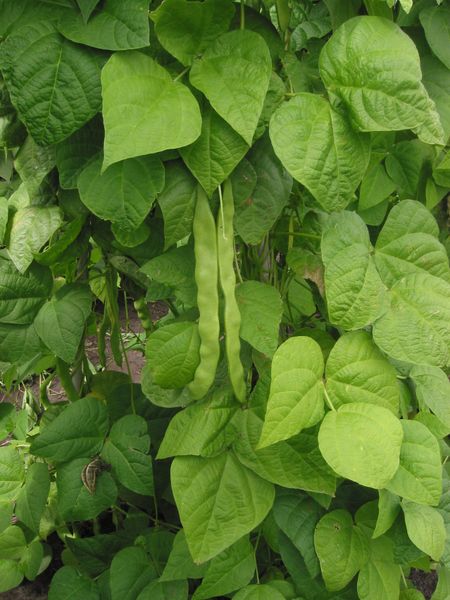
STRING-BEANS-PLANT

Common beans, when green and immature are either called String Beans or French Beans when they don’t have a string.
When reaching maturity they gave way to all kinds of beans.
They were first discovered in Central and South America in the 16th Century and were later introduced in Europe, then China. The French first planted the beans in Japan in rhe second half of the 19th Century.

90% of the crop is harvested three times a year in Hokkaido Island in Japan.

Ther are two main varieties in this country:

STRING-BEANS-DOJYOINGEN
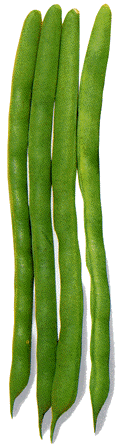
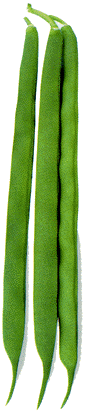
“Dojyo-Ingen”, also called “Kentucky Wonder”. Slightly soft variety.

STRING-BEANS-SAABERUINGEN
“Saaber-Ingen”, thinner and rounder than above without strings.

The Japanese usually boil them lightly or just just cut them in trunks about 5 cm long and add them to all kinds of dishes from clear soups to sauteed food.

OTHER VARIETIES

Mokko Ingen

This variety is gaining popularity for its large size.
Recently found in French and Italian restaurants.
Make for great decoration onthe plate and are succulent lightly steamed, fried or stewed. Can reach 20 cm.

Juroku Sasage

Very thin and long (30 m), grown in Aichi Prefecture. Soft and easy to cook and eat. They are called because they contain 16 (juroku) seeds each.

Kintoki Mame

More widely known for producing azuki bean varieties.
Can be eaten young and greenlike string beans.

Akishima Sasage

Popular for their varying colors. Grown in geenhouses in Gifu Prefecture.
The beans are delicious when stewed.

FACTS:
-Season: June~September
-Main beneficial elements: Protein, Carotene, Vitamin B1 nad Bz, Vitamin C, Vitamin K, Calcium, Calcium, Magnesium and vegetal fibers.
-Eaten with other food high in protein, their Vitamin C are easily ingested by human bodies.
Cooked with oil, their carotene will be easily assimilated by human bodies.

TIPS:
-Just after boiling drain them and let cool inside a sieve. They will be tastier for it.
-If you have plenty, first boil them before storing them in the refrigerator.
-Peel strings away before cooking.
-Choose firm and straight specimens.

HEALTH FACTS:

-Combined with Judas Ear mushrooms, or Konnyaku, or Bamboo shoots, help combat large intestine cancer and obesity.

-Combined with Yoghurt, or natto, or Spinach, or hijiki/sweet seaweed, helps combat intestines poisoning and constipation.

-Combined with Agar agar or onion, help reduce blood cholesterol and high blood pressure.

-Combined with Broccoli, or rape blossoms, or kabocha, or tomato, helps prevent cancer, helps skin rejuvenation and recovery from illness.

RECOMMENDED RELATED SITES
Not-Just-Recipes, Bengal cuisine, Cooking Vegetarian, Frank Fariello, Gluten-free Vegan Family, Meatless Mama, Warren Bobrow, Wheeling Gourmet, Le Petit Cuisinier, Vegan Epicurean, Miss V’s Vegan Cookbook, Comestiblog, To Cheese or not To Cheese, The Lacquer Spoon, Russell 3, Octopuspie, Bread + Butter, Pegasus Legend, Think Twice, The French Market Maven, Fuji Mama, Great Teacher Sato, Peas Love Carrots

Please check the new postings at:
sake, shochu and sushi

—————————————-
日本語のブログ
—————————————-

Vegan Sushi Suggestions 3: Veggie Sushi Tray, Box & Plate Presentations

Veggie Sushi Box for bento/Lunch box!

SYNOPSIS:

I already have introduced Vegan and Vegetarian Sushi, but following further requests and questions by my vegan (I’m not!) friends, I decided to contribute a small series of postings to give them more detailed suggestions and ideas!

Now, please check sushi rice recipe HERE to make things more practical!

————————————

This particular posting is designed to help you with designing Veggetables sushi tray, box or plate presentations!

Asaparaguses, Kabocha and Okra Sushi Nigiri.

Mushroom, maountai Vegetable, Myoga Ginger, Bamboo Shoots, and Leek sprouts Sushi nigiri.

White leek, Sprouts and yam,fresh or seared (repeated) Sushi Gunkan.

White asparaguses, myoga ginger, corn (gunkan) and tomato sushi nigiri.

Sorry, the pic is small, but the tray isquite sophisiticated:

Top: tomato. Second row (from top down): Rice ball wrapped in shiso/perilla leaf, pickled aubergines and myoga ginger. Third row: Tomato and kawaire daikon sprouts. Fourth row: Rice ball wrapped in shiso/perilla leaf, pickled aubergines and myoga ginger. Fifth row: bamboo shoots.

Here the rice is white and violet rices mixed.
Shhitake mushroom, broccoli, pickled yam and fuki.

Small pic again, sorry.
Goya, daikon pickled in sweet vinegar, okra, bamboo shoots and chopped mountain vegetables.

Pickled aubergine, Okra, Myoga Ginger, Plain rice, Burdock root and pickled aubergine.

Ice plant, Avocado and radish, Leek shoots, Myoga Ginger and Shiitake Mushroom.

Leaf sprouts, pickled aubergine, yam and red sweet pimento cubes, green aspargus tips and seared eringe mushroom.

From top:
Ippon Shimeji mushroom (grilled), Myoga Ginger, Pickled celery, Tomato gunkan with cucumber instead of seaweed/nori and Leek sprouts.

Sorry for the fuzzy picture:
From top: orange and its peel marinated in sweet vinegar, Tomato, Onion marinated in sweet vinegar, Kawaire daikon sprouts (lightly boiled), Tomato and okra gunkan and pickled cucumber.

From left: green leaves gunkan, Chinese cabbage (boiled and topped with grated ginger), red seet pimento (lightly grilled), Na no han/rape blossoms (boiled), Bambooo shoot (boiled), and trefoil (lightly boiled).

Okra, celery, myoga ginger and three different pimento.

Green pimento (lightly grilled), na no hana/rape blossom (boiled) and pickled aubergine.

From bootom upwards:
Leek sprouts, bamboo shoots, Myoga ginger and na no hana/rape blossoms!

Still looking around and ordering!

RECOMMENDED RELATED SITES
Not-Just-Recipes, Bengal cuisine, Cooking Vegetarian, Frank Fariello, Gluten-free Vegan Family, Meatless Mama, Warren Bobrow, Wheeling Gourmet, Le Petit Cuisinier, Vegan Epicurean, Miss V’s Vegan Cookbook, Comestiblog, To Cheese or not To Cheese, The Lacquer Spoon, Russell 3, Octopuspie, Bread + Butter, Pegasus Legend, Think Twice, The French Market Maven, Fuji Mama, Great Teacher Sato, Peas Love Carrots

Please check the new postings at:
sake, shochu and sushi

—————————————-
日本語のブログ
—————————————-

Rutabaga Vegetarian Veloute

I have noticed a great interest for rutabaga or Swede turnip 8actually comes with many names) and have always been wndering about many recipes.
It can be prepared almost in the same way as pumpkins, kabocha and potimarrons.

Here is a simple French cuisine-inspired recipe:

Rutabaga Veloute!

INGREDIENTS: For 4 people

-Rutabaga: 1 kg
-Onion: 1 large
-Carrot: 1
-Garlic: 1 clove
-Milk: 750 ml/cc
-Water: 250 ml/cc
-Sugar: 1 tablespoon
-Salt & Pepper: to taste
-Fresh cream: 100 g
-Safran: a few threads
-Chervil: a few leaves

PREPARATION:

-Peel and cut the rutabaga in cubes.
-Peel the carrot and onion and slice.
-Peel and crush the garlic

RECIPE:

-In a large saucepan, drop the rutabaga, carrot, onion and crushed garlic.

-Cover with the milk and water. Add the sugar, salt and pepper.

-Bring to boil, reduce fire so to simmer for 40 minutes.

-Blend the soup in a blender/food processor. or with an electric mixer.
Add the fresh cream and mix.

-Serve decorated with a few safran threads and finely chopped chervil.

NOTES:

-You may add to this soup cooked chestnuts or fried mushrooms!

– You can serve it hot or chilled!

RECOMMENDED RELATED SITES
Not-Just-Recipes, Bengal cuisine, Cooking Vegetarian, Frank Fariello, Gluten-free Vegan Family, Meatless Mama, Warren Bobrow, Wheeling Gourmet, Le Petit Cuisinier, Vegan Epicurean, Miss V’s Vegan Cookbook, Comestiblog, To Cheese or not To Cheese, The Lacquer Spoon, Russell 3, Octopuspie, Bread + Butter, Pegasus Legend, Think Twice, The French Market Maven, Fuji Mama, Great Teacher Sato, Peas Love Carrots

Please check the new postings at:
sake, shochu and sushi

—————————————-
日本語のブログ
—————————————-

Vegetables Fact & Tips 11: Renkon/Lotus Root (amended and expanded)

lotus-root1

In Japan we are near the end of Lotus Roots season, but eat them all year round!
Lotus roots come from a plant called Nelumbo nucifera, also known by a number of names including Indian lotus, sacred lotus, bean of India, or simply lotus. This plant is an aquatic perennial. Under favorable circumstances its seeds may remain viable for many years.
A common misconception is referring to the lotus as a water-lily (Nymphaea), an entirely different plant.

Native to Greater India and commonly cultivated in water gardens, the lotus is the national flower of India and Vietnam.

The flowers, seeds, young leaves, and “roots” (rhizomes) are all edible. In Asia, the petals are used sometimes for garnish, while the large leaves are used as a wrap for food. In Korea, the leaves and petals are used as a tisane. Yeonkkotcha (연꽃차) is made with dried petals of white lotus and yeonipcha (연잎차) is made with the leaves. The rhizome (called ǒu (藕) in pinyin Chinese, ngau in Cantonese, bhe in Hindi, renkon (レンコン, 蓮根 in Japanese), yeongeun (연근) in Korean is used as a vegetable in soups, deep-fried, stir-fried and braised dishes. Petals, leaves, and rhizome can also all be eaten raw, but there is a risk of parasite transmission (e.g., Fasciolopsis buski): it is therefore recommended that they be cooked before eating.

FACTS:
-Season: September~December in Japan.
-Beneficial elements:
Lotus roots have been found to be rich in dietary fiber, vitamin C, potassium, thiamin, riboflavin, vitamin B1 & B6, phosphorus, copper, iron and manganese, while very low in saturated fat.
Various parts of the lotus are also used in traditional Asian herbal medicine.

TIPS:

-Choose specimens with a clear white cut section. There should not be any black spots.
-Use large specimen as they are easier to cut and use.
-To prevent oxydising, warp cut specimen into wet kitchen paper.
-Add vinegar to water when boling them to keep them white.
-The easiest way to peel them is to use a potato peeler!

COOKING:

The stamens can be dried and made into a fragrant herbal tea called liánhuā cha (蓮花茶) in Chinese, or (particularly in Vietnam) used to impart a scent to tea leaves. The lotus seeds or nuts (called liánzĭ, 蓮子; or xian liánzĭ, 鲜莲子, in Chinese) are quite versatile, and can be eaten raw or dried and popped like popcorn, phool makhana. They can also be boiled until soft and made into a paste, or boiled with dried longans and rock sugar to make a tong sui (sweet soup). Combined with sugar, lotus seed paste becomes one of the most common ingredient used in pastries such as mooncakes, daifuku, and rice flour pudding.

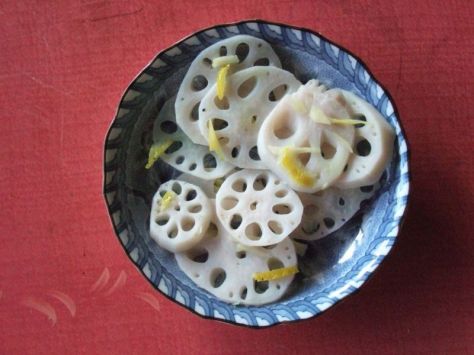
Japanese popular Renkon dishes:

lotus-root-nimono

“NIMONO”

lotus-root-sumono

“SUMONO”

lotus-root-kimpira

“KIMPIRA”

“STUFFED LOTUS ROOTS”

“DEEP-FRIED LOTUS ROOT SANDWICH”

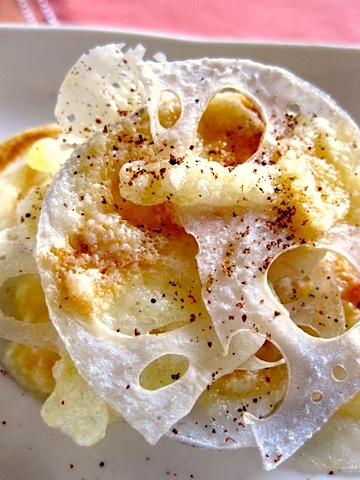
lotus-roots-chips

“CHIPS”

HEALTH FACTS:

-Combined with liver, or beef, or pork, or chicken, helps revitalize human blood and organs.

-Combined with turnips, or daikon, or beansprouts, or trefoil, helps digestion and bowels.

-Combined with leafy vegetables, or potato, or apples, helps combat cancer and obesity.

-Combined with konnyaku, or celery, or lettuce, or green peppers, helps lower blood cholesterol. helps combat artery hardening and prevent heart diseases.

RECOMMENDED RELATED SITES
Not-Just-Recipes, Bengal cuisine, Cooking Vegetarian, Frank Fariello, Gluten-free Vegan Family, Meatless Mama, Warren Bobrow, Wheeling Gourmet, Le Petit Cuisinier, Vegan Epicurean, Miss V’s Vegan Cookbook, Comestiblog, To Cheese or not To Cheese, The Lacquer Spoon, Russell 3, Octopuspie, Bread + Butter, Pegasus Legend, Think Twice, The French Market Maven, Fuji Mama, Great Teacher Sato, Peas Love Carrots

Please check the new postings at:
sake, shochu and sushi

—————————————-
日本語のブログ
—————————————-

Vegetables Facts & Tips 10: Egg Plants/Aubergines (amended & expanded)

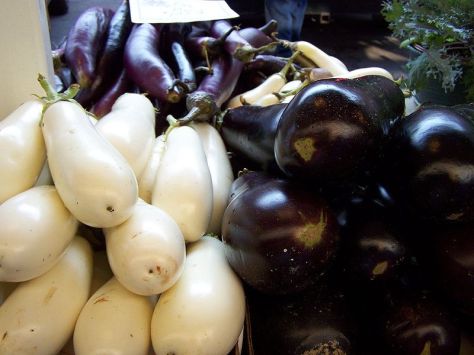
aubergines-1

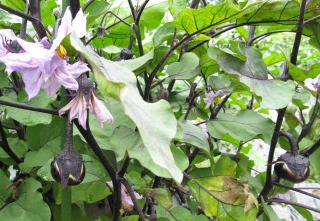
The eggplant, aubergine, or brinjal (Solanum melongena) is a plant of the family Solanaceae (also known as the nightshades) and genus Solanum. It bears a fruit of the same name, commonly used as a vegetable in cooking. As a nightshade, it is closely related to the tomato and potato and is native to India and Sri Lanka.

That for the Wikipedia definition. The word Aubergine is mainly used in Europe. It comes in many shapes, sizes and even colours, but they share the same facts.

FACTS:
-Season: June to September in the Northern Hemisphere, but are available all year round thanks to greenhouse cultivation.
-Main beneficial elements: Potassium, Calcium, Magnesium, Vitamin C and B1, B2
-90% is water, but the skin contains a lot of polyphenols so useful against ageing and arteries cleaning!
It is also of a great help to fight diabetes.

VARIETIES:

As mentioned above, aubergines come in many varieties, but I am introducing here only the varieties and hybrids grown in Japan.

The first one I would to make known is particular to this country:

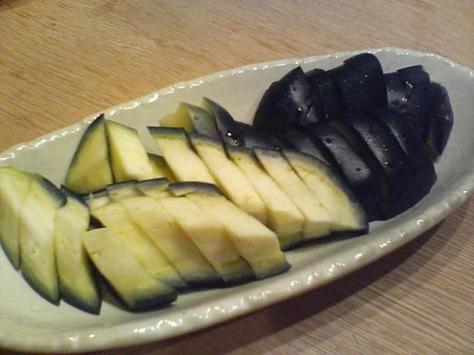
aubergines-mizu

“Mizu Nasu”, litterally “Water Aubergine”
It has the particularity that it can be eaten raw cut and served like sashimi! With miso, pickled plum flesh, wasabi or soy sauce, it opens all kinds of possibilities fro vegans, vegetarians and raw food lovers!

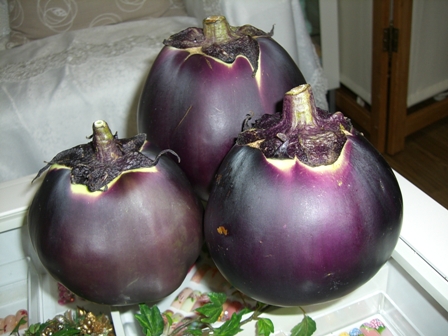
“Bei Nasu”
An American hybrid popular for its large round size.

“Ao nasu”, or green aubergine
Also called “Midori Nasu”. The skin is hard but will soften quickly upon cooking. Appreciated grilled.

“Shiro Nasu”, or white aubergines.
The white colour is due to the absence of Nathnin.
Will get very soft upon cooking.

“Naga Nasu”, or litterally “Long Aubergine”.
Can grow up 30 cm long. Soft flesh, it is most popular grilled.

“Kamo Nasu”
A typical variety originally grown in Kyoto. Small and round with a finely-grained texture. Very popular in higher class gastronomy.

“Zebra Nasu”
Also called Italian Aubergine. Valued for its colourand designs.
Appropriate for slow cooking as hard.

“Tozen Nasu”
Small variety.

The small size of Tozen Nasu Aubergines makes it popular for pickles inparticular.

“Batten Nasu”
From Kumamamoto Prefecture. Sweet and containing a lot of water. Can be eaten raw.

“Okita Nasu”
Another small variety.

Okita Nasu are minuscule, making them very popular for pickles!

“Aka Nasu”, or red aubergine.
Large and beautiful, with little acidity, it is one of the most popular varieties in this country, especially grilled.

“Ko Nasu”, or litterally small aubergine.
Sweet, soft skin, almost containing no seeds, it is popular for pickles. Also exist round.

“Stick Taste”
A new variety, about 10 cm long and svelte. Popular stir-fried. Will keep its colour and design even cooked.

“Thai Nasu”
Small, roundish. Hard variety with a lot of seeds. Slow cooked in curries.

TIPS:

-Choose specimens with a deep colour, bright appearance and comparatively light weight.
-To preserve them, wrap them individually in cellophane paper before storing them in the refrigerator.
-Before cooking them, cut them and leave them in clear water util usage to prevent oxydizing.
If you want to fry them, cut them first and rub them with a lttle salt to take excess water out of them.

HEALTH FACTS:

-Combined with konnyaku/Devil’s Tongue Tuber/Elephant Foot Tuber, or okra, or enoki mushrooms, or burdock root, helps combat artery hardening, cancer and high blood pressure.

-Combined wiyh carrot, or kabocha, or spinach, or pink grapefruit, helps combat cancer and colds, helps skin rejuvenation.

-Combined with wax gourd, or tomato, or cockles, or small clams, helps combat diabetes, cancer and obesity.

-Combined with miso or enoki mushrooms, helps combat cancer, helps lower blood cholesterol and stimulates blood flow.

RECOMMENDED RELATED SITES
Not-Just-Recipes, Bengal cuisine, Cooking Vegetarian, Frank Fariello, Gluten-free Vegan Family, Meatless Mama, Warren Bobrow, Wheeling Gourmet, Le Petit Cuisinier, Vegan Epicurean, Miss V’s Vegan Cookbook, Comestiblog, To Cheese or not To Cheese, The Lacquer Spoon, Russell 3, Octopuspie, Bread + Butter, Pegasus Legend, Think Twice, The French Market Maven, Fuji Mama, Great Teacher Sato, Peas Love Carrots

Please check the new postings at:
sake, shochu and sushi

—————————————-
日本語のブログ
—————————————-

Doughnuts/Donuts: The best in Shizuoka at Hara Donuts!

It is the first time in my life I found something worthwhile writing about doughnuts or donuts as they are sometimes spelt!
I’m not going to rant about the dangers of fast food and sugar absorption, but these are the reasons why I have been avoiding the wares sold by the many famous chain shops (no names!) for so long!

There is only a single Hara Donuts Shop in The whole of Shizuoka Prefecture.
They originated from Kobe City where the original shop is still kiciking and alive. Apparently there are more in large citieslike Tokyo, Nagoya and Kobe. Look out for them!

The original recipe for Hara Donuts was created Mrs. Hara, the owner of a tofu store in Kobe City in 1968.
Now the interesting thing is that all ingredients, even including sugar are made or found in Japan!
Moreover soy milk is used instead of milk! Great for lactose allergics!
The sugar content is low and only real sugar cane sugar is used. No “Company Miracle Recipe Mixture”, preservatives, colorants and what’s not there!
Although it could be considered a chain company now, all donuts are made on site from scratch with the same selected ingredients!

Count a minimum of 10 regular donuts and at least 5 seasonal donuts everyday!
They also make great vegetable donuts!

I chose before taking them withmy coffee to the tiny cafe behind the oven room.
This one (sorry for the fuzzy pic!) is the straight Hara Donut.

This one is a seasonal spinach donut!
Very light but surprisingly fullfilling!
Well-balanced with just enough sugar!

The cafe at the back is tiny and can sit only a maximum of 12 guests.

It’s cozy and extremely clean.
The toilets, a bit small, are state-of the art! (all computer-activated!)

All non-smoking incidentally!
Coffee and tea, cold or hot and in different varieties are available.
Just order your donuts and drink together and a smiling staff will bring it onto your table! Pay at the counter first.
As for take-out, don’t be surprised if you fnd out queuing, it is popular!
Especially with ladies.
Being situated along Aoba Koen-Tokiwa Koen/Aoba-Tokiwa Street Park across Showa Street, it will give you the opportunity to stroll at leisure before reaching the place!

HARA DONUTS
420-0034 Shizuoka City, Aoi Ku, Tokiwa-cho, 2-4-5, Tokiwa-Cho Emple Court, 1F (along Aoba Koen?Tokiwa Koen)
Tel.: 054-2708653
Opening hours: 10:00~19:00 (or if donuts are sold out!)
HOMEPAGE

RECOMMENDED RELATED SITES
Not-Just-Recipes, Bengal cuisine, Cooking Vegetarian, Frank Fariello, Gluten-free Vegan Family, Meatless Mama, Warren Bobrow, Wheeling Gourmet, Le Petit Cuisinier, Vegan Epicurean, Miss V’s Vegan Cookbook, Comestiblog, To Cheese or not To Cheese, The Lacquer Spoon, Russell 3, Octopuspie, Bread + Butter, Pegasus Legend, Think Twice, The French Market Maven, Fuji Mama, Great Teacher Sato, Peas Love Carrots

Please check the new postings at:
sake, shochu and sushi

—————————————-
日本語のブログ
—————————————-
Vegan Japanese Dessert: Sweet Potato, Apple & Gardenia Seeds Kinton

It is always a bit complicated for vegans and vegetarians alike to create desserts without using eggs or dairy products, unlessyou start using derivatives and susbstitues, which is not always a good idea.
The Japanese must be, without knowing it, the greatest creators of vegan desserts thanks to such techniques as found in the making of wagashi!

One variety of wagashi is called Kinton.
Kinton, or きんとんin Japanese is a Japanese tradtional dessert made with chestnuts/kuri/栗 and sugar.
Originally created in Gifu in the late 1870’s it is now found and available almost everywhere in Japan for the pleasure of all, vegans and vegetarians included.

Kuchinashi (Japanese) or Gardenia jasminoides (also known as Gardenia augusta) is a fragrant flowering evergreen tropical plant, a favorite in gardens worldwide. It originated in Asia and is most commonly found growing in Vietnam, Southern China, Taiwan and Japan.
The fruit is used as a yellow dye, which is used for clothes and food (including the Korean mung bean jelly called hwangpomuk).
Medicinal uses:
Gardenia jasminoides fructus (fruit) is used within Traditional Chinese Medicine to “drain fire” and thereby treat certain febrile conditions.

Kuchinashi no Mi/Gardenia fruit.

Kuchinashi no mi/Gardenia fruit, dried as found in Japanese stores.

I took the precaution to go through these preliminary explantaions before introducing the following dessert:

Sweet Potato, Apple & Gardenia Seeds Kinton!

INGREDIENTS:

-Apple: 1 large
-Sweet Potato/Satsuma Imo: 1 medium
-Lemon juice: 1/4
-Sugar: 1 tablespoon
-Gardenia seed/Kuchinashi no Mi: 1

RECIPE:

-Peel the sweet potato, cut in four legthwise and across again every 2 cm. Leave aside in clear cold water.

-Peel the apple, cut into 8 wedges and slice again every 5 mm. Drop in a stainless pot. Add lemon and sugar. Cover with lid and simmer on a low fire until softened.

-Cut the kuchinashi no mi/Gardenia seed in two and insert it in a small cooking bag (gauze as for bouquet garni).

-In a different pan, drop the sweet potato with ebnough water to boil them. Add teh kuchunashi no mi/gardenia seed. Boil until the sweet potato is soft enough to be easily skewered with a bamboo/wooden toothpick.

-Throw the water of the sweet potato out. Keep cooking the sweet potato to let their water evaporate.

-Add 1/3 of the apple to the sweet potato and mix well.

-Serve the sweet potato topped with the cooked apple.

NOTES:

-Roast some some walnuts and top the dessert with them!

RECOMMENDED RELATED SITES
Not-Just-Recipes, Bengal cuisine, Cooking Vegetarian, Frank Fariello, Gluten-free Vegan Family, Meatless Mama, Warren Bobrow, Wheeling Gourmet, Le Petit Cuisinier, Vegan Epicurean, Miss V’s Vegan Cookbook, Comestiblog, To Cheese or not To Cheese, The Lacquer Spoon, Russell 3, Octopuspie, Bread + Butter, Pegasus Legend, Think Twice, The French Market Maven, Fuji Mama, Great Teacher Sato, Peas Love Carrots

Please check the new postings at:
sake, shochu and sushi

—————————————-
日本語のブログ
—————————————-