Tag Archives: Japanese

Shizuoka Food Fair 2

Shizuoka Wasabi! (80% of the national production!)

As I said in my first installment, Shizuoka Prefecture has put some efforts into advertizing their own goods, as for agriculture and crafts, for some time, and a fairly big Food Fair (しずおか食の彩典) was organized on the 19th and 20th of February at Twin Messe in Shizuoka City.

This is the second part of my report, so please follow me!

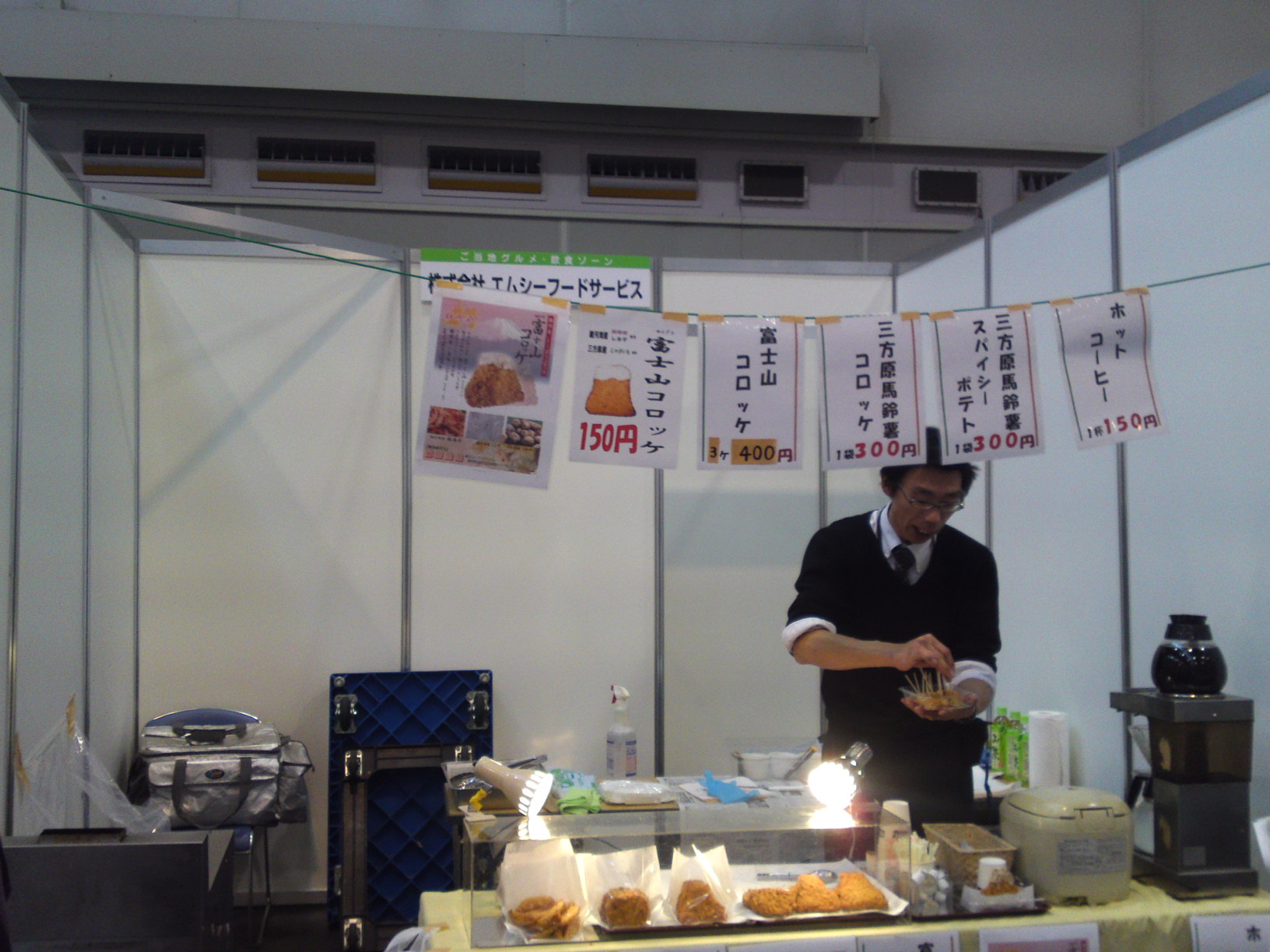
M C Food Service Co. Ltd. Now, what is that lonely gentleman serving?

Croquettes and Spicy fried potatoes! Can you guess which one is called Mount Fuji Croquette?

Fujieda Asa Ramen/Fujieda City Morning Ramen. Yes, they eat ramen in the morning there!

They are also called “Chuuka Soba/中華そば”. Unfortunately they didn’t serve any but in their packs!

Marumatsu Co. Ltd. in Hamamatsu City. They make gyooza/餃子!

The free samples were already gone!

Some stands offered specialties from other prefectures: Yonezawa Beef Charcoal-Grilled Beef/米沢牛炭火焼肉!

They also had croquettes!

Rooster Foods. Now, where did they come from? Among others they served yakisoba!

And Okonomiyaki! They are from Fujinomiya!

Masaki Shoten, specializing in beef from Sasebo (Kyushu Island), 100% beef and American style…

Sasebo Beef Brochettes!

Marikomine Giant Tai Yaki!

Never saw such big Tai Yaki before!

Izumi Foods serving Hiroshima-style okonomiyaki/広島焼 and yakisoba wrapped in omelette/オムそば!

Hiroshima-style okonomiyaki, unless it is another variety just called Hiroshima Yaki!

Shioya Foods also serving Sasebo Beef, but as hamburgers!

Beef Tongue Sausages/牛タンソーセージ! Now, that’s a first!

Field Co. from Miyazaki Prefecture (Kyushu Island) serving their own beef!

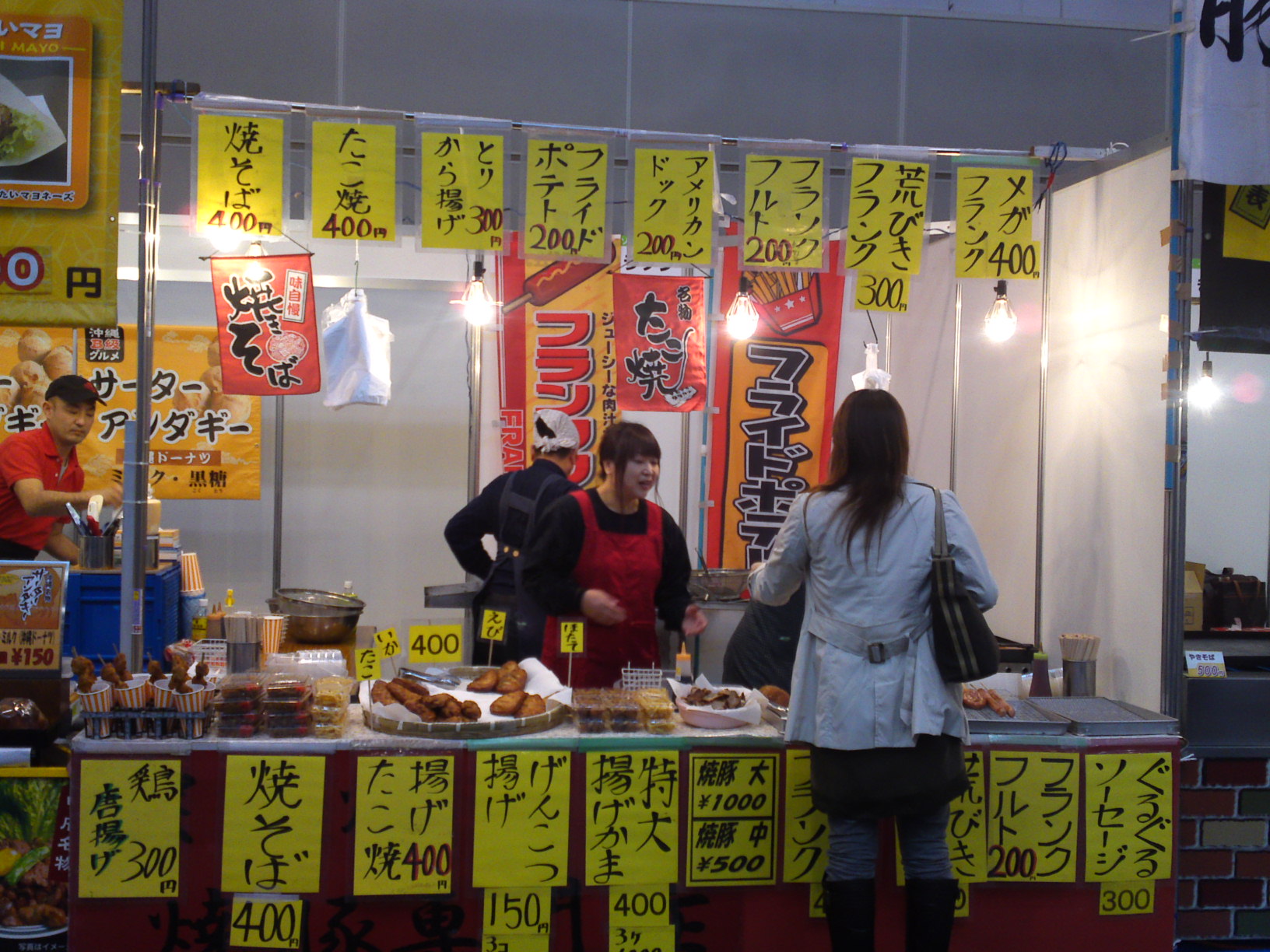
These doughnuts are not a Miyazaki Prefecture’ specialty, but Okinawan Saataa-andagi/サーターアンダギー!

El Corazon Co. were serving Japanese favorites.

Deep-fried seafood cakes made from octopus, shrimps, scallops and so on.

Yokote yakisoba from Akita Prefecture!

The fried eggs will be served on top of the yakisoba!

Back to Shizuoka with the famous oden restaurant, Umi Boozu/海ぼうず!

Shizuoka Oden!

To be continued soon (hopefully still in the proper sequence! LOL)

RECOMMENDED RELATED SITES:
Warren Bobrow, Bread + Butter, Zoy Zhang, Hungry Neko, Think Twice, Frank Fariello, Mangantayon, Hapabento, Elinluv Tidbit Corner, Tokyo Terrace, Maison de Christina, Chrys Niles,Lexi, Culinary Musings, Wheeling Gourmet, Comestiblog, Chronicles Of A Curious Cook, Tokyo Through The Drinking Glass, Tokyo Foodcast, Palate To Pen, Yellin Yakimono Gallery, Tokyo Terrace, Hilah Cooking, More than a Mount Full, Arkonite Bento, Happy Little Bento; 5 Star Foodie; Jefferson’s Table; Oyster Culture; Gourmet Fury; Island Vittles; Good Beer & Country Boys; Rubber Slippers In Italy; Color Food daidokoro/Osaka;/a; The Witchy Kitchen; Citron Et Vanille, Lunsj Med Buffet/Estonian Gastronomy (English), Cook, Eat, Play, Repeat, Chrisoscope, Agrigraph, The Agriculture Portal to shizuoka!

Please check the new postings at:
sake, shochu and sushi

Japanese Vegetables 4: Sweet Potatoes/Satsuma Imo/薩摩芋

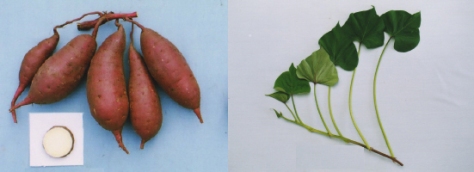
satsuma-1

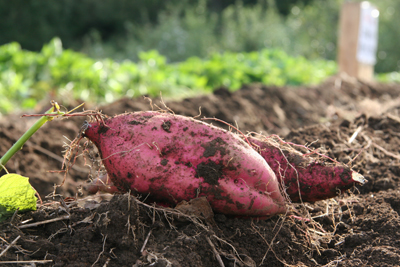
Yams or “Satsuma Imo” were first introduced to Japan in the Ryukyu Islands (Okinawa) in 1604 by the Chinese. They were then introduced in Kyushu in 1609, an area that grows 80% of the total Japanese production.
Ssweet potatoes should not be confused with yams or yama imo/山芋 in Japanese.

They have been recognized in this country for a long time for both their nutritional and pharmaceutical values.

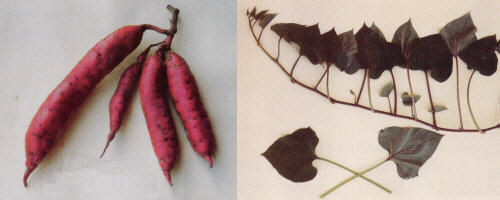
satsumabeni_haruka

FACTS:

-Season: September~November

-Analytic data (as per 100g):
Energy: 132 kcal
Water: 66.1 g
Proteins: 1.2 g
Carbohydrates: 31.5 g

Inorganic qualities:
Natrium: 4 mg
Potassium: 470 mg
Magnesium: 40 mg
Iron: 0.7 mg
Copper: 0.18 mg
Manganese: 0.44 g

Vitamins:
B1: 0.11mg
C: 29 mg
E: 1.6 mg

Dietary fibers: 2.3 g

HEALTH FACTS:

-Combined with burdock root, or shiitake, or carrot, or spinach, helps combat colds, helps enhance skin health, helps combat lung and intestine cancer.
-Combined with devil’s tongue tuber-elephant foot tuber/konnyku, or hijiki sweet seaweeed, or beansprouts, or apple, helps combat cancer, constipation, obesity, and artery hardening.
-Combined with Judas Ear mushroom, or shiitake, or seaweed, or hijiki sweet seaweed, helps lower blood cholesterol, helps combat obesity and diabetes.
-Combined with strawberries, or lemon, or pimentos, helps combat stress, helps skin rejuvenation and intensifies appetite.

VARIETIES

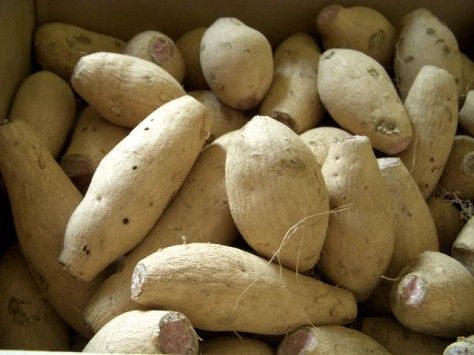
There are over a hundred species in Japan, but the most popular edible ones (not the ones exclusively used for making shochu) have red skins and light yellow flesh.

Beni Azuma/ベニアズマ, mostly eaten in Eastern Japan. Turns very sweet upon cooking.

Naruto Kintoki/鳴門金時, popular in Western Japan. Considered elegant and sweet.

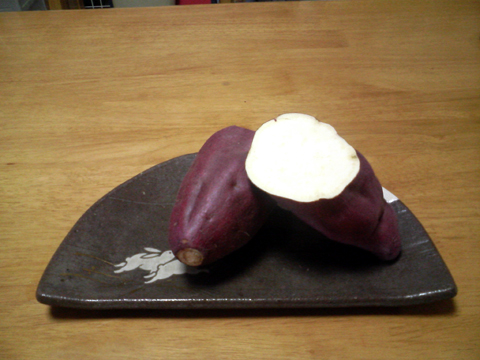
Tosabeni/土佐紅, also attributed “No 14 value (top)”, is very sweet and is a “brand name” sweet potato.

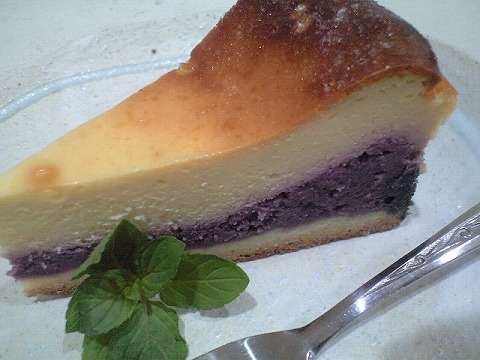
Cheese cake combination with Tosabeni Sweet Potato!

Manamusume,/愛娘 another “No 14 value” brand sweeet potato.

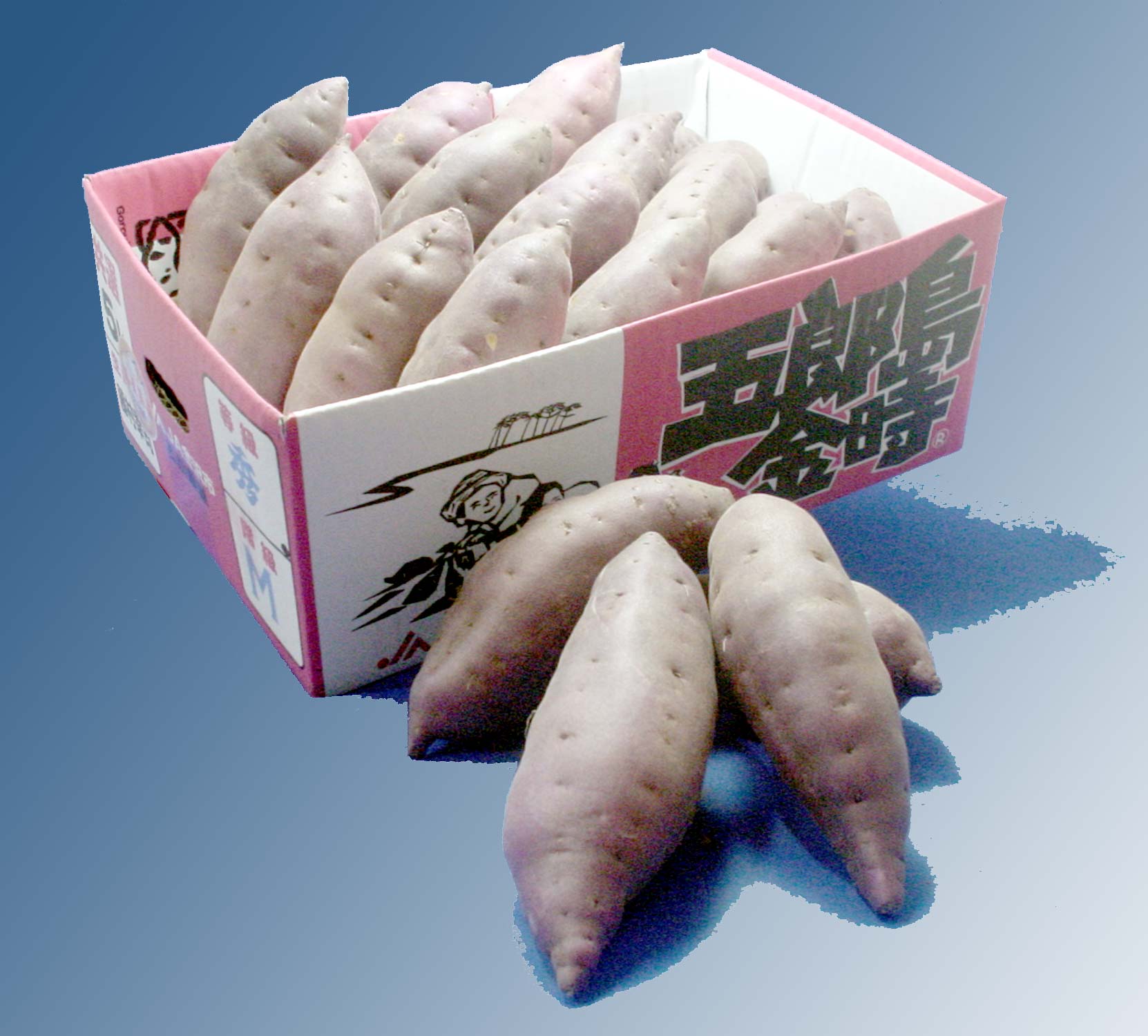
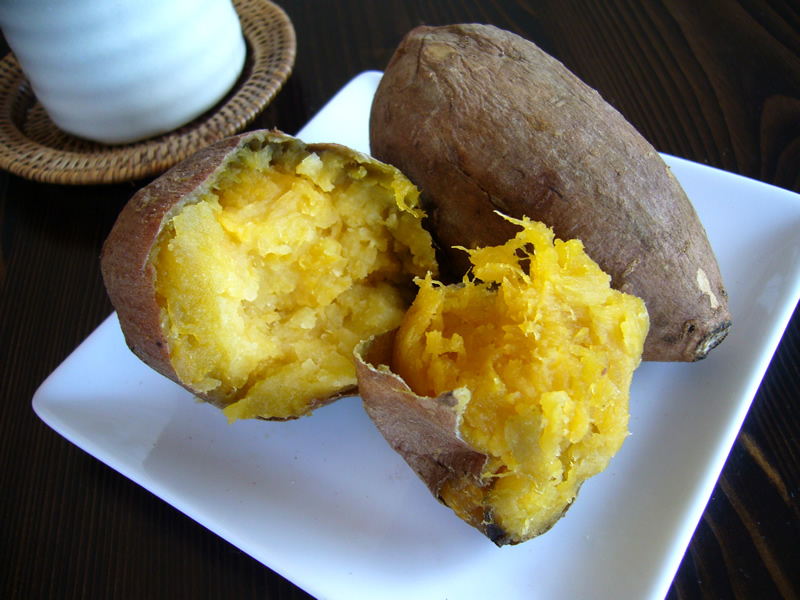
Gorou Shima Kintoki/五郎島金時, particularly popular as baked sweet potato.

Kougane Sengan/黄金千貫, considered as the top shochu sweet potato.

Tanegashima Mukashi Mitsu Imo/種子島昔蜜芋, a sweet potao with a beautiful orange colour and elegant taste.

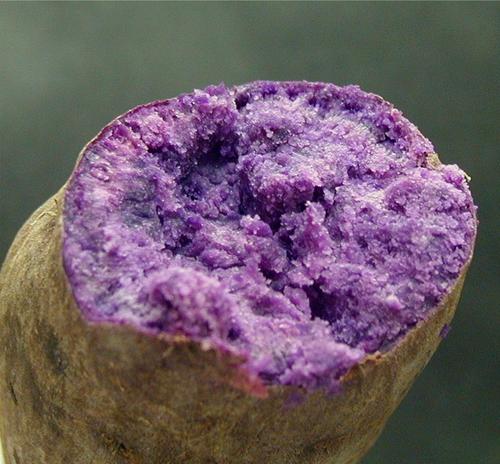
Tanegashima Murasaki Imo/種子島紫芋, as above, but with a beautiful purple colour.

Annou Imo/安納いも, rich in carotens, with a beautiful orange colour and very sweet.

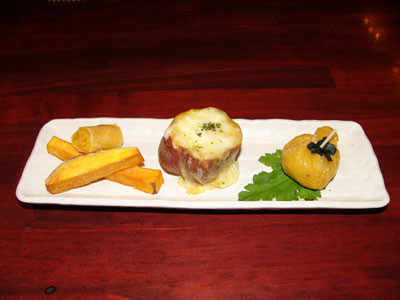
Annou Imo cuisine!

Purple Sweet Road/パープルスイートロード, an interesting name for a sweet tasty hybrid.

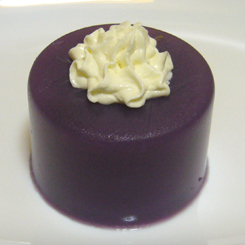
The same as above as hyokan Japanese jelly!

satsumatanegashima

A favorite “Tanegashima Gold Imo” grown in Taneko Island south of Kyushu. It has the particularity of being red when raw before changing to a rich golden color when cooked. Among other varieties, the violet sweet potatoes are getting increasingly popular.

yummy
Tanekoshima sweet potato (deep yellow), “common sweet potato” (light yellow) and Murasaki/Violet potato.

A great combination of the three above as a cold salad with mayonnaise or cream-based dressing.

TIPS:

-Choose specimens with nice color and a “fat/roundish” aspect!
-Plunge yam in cold water as soon as you have cut them. They will not lose their color!
-Boil, bake or steam long enough before taking skin off. Discard skin!
-Leaves can be eaten!

RECOMMENDED RELATED SITES:
Warren Bobrow, Bread + Butter, Zoy Zhang, Hungry Neko, Think Twice, Frank Fariello, Mangantayon, Hapabento, Elinluv Tidbit Corner, Tokyo Terrace, Maison de Christina, Chrys Niles,Lexi, Culinary Musings, Wheeling Gourmet, Comestiblog, Chronicles Of A Curious Cook, Tokyo Through The Drinking Glass, Tokyo Foodcast, Palate To Pen, Yellin Yakimono Gallery, Tokyo Terrace, Hilah Cooking, More than a Mount Full, Arkonite Bento, Happy Little Bento; 5 Star Foodie; Jefferson’s Table; Oyster Culture; Gourmet Fury; Island Vittles; Good Beer & Country Boys; Rubber Slippers In Italy; Color Food daidokoro/Osaka;/a; The Witchy Kitchen; Citron Et Vanille, Lunsj Med Buffet/Estonian Gastronomy (English), Cook, Eat, Play, Repeat, Chrisoscope, Agrigraph, The Agriculture Portal to shizuoka!

Please check the new postings at:
sake, shochu and sushi

Shizuoka Food Fair 1

Shizuoka Prefecture has put some efforts into advertizing their own goods, as for agriculture and crafts, for some time, and a fairly big Food Fair (しずおか食の彩典) was organized on the 19th and 20th of February at Twin Messe in Shizuoka City.

The event was a good start, but I wished it would have been a bit better organized and more lively, but Shizuoka is probably the most conservative prefecture in Japan for all its incredible products and producers and it will take some time before it really becomes a full-fledged event. At least let’s give them a chance!

Still, there was a lot to see (and taste), and I will try to show everything in a series of easy-to read articles!

Next time I meet some of the organizers I will tell them (it is my “job”, actually!) to better indicate the way!
Only one board (in the wrong place) and no sign at the entrance of the actual hall!

Although I came at the very time of the opening, I can’t say that the information desk was very useful…

I tried to follow the “official sequence” and started with the JA/Japan Agriculture (government-sponsored) booths.
This is the JA Suruga (Suruga Bay) booth with plenty of oranges.

JA Shimizu (Shizuoka City, Shimizu Ku) does represent a very large area and products.
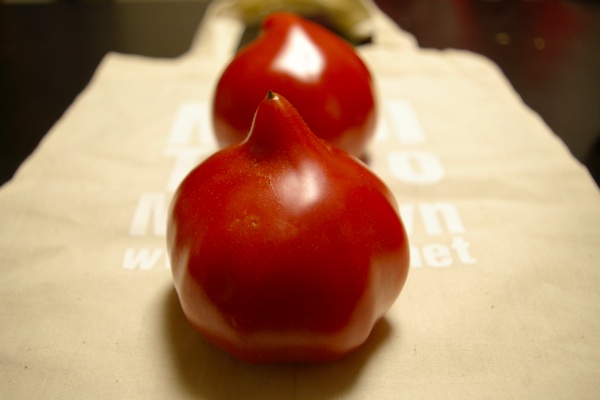
They chose to concentrate on “Red Ole” tomatoes and “Harumi” oranges!

The JA Shizuoka City, covering an even larger area!

Beautiful green tea for all to enjoy!

JA Oigawa, from Central Shizuoka Prefecture.

“Aoshima” Oranges. So cheap!

JA Hainan, a vegetable-growing area.

Beautiful lettuces and shiny daikon!

JA Shizuoka Prefecture. Now, that is covering an area with the population of New Zealand….

Celery! Fair enough, Shizuoka Prefecture produces half of the total national crop!

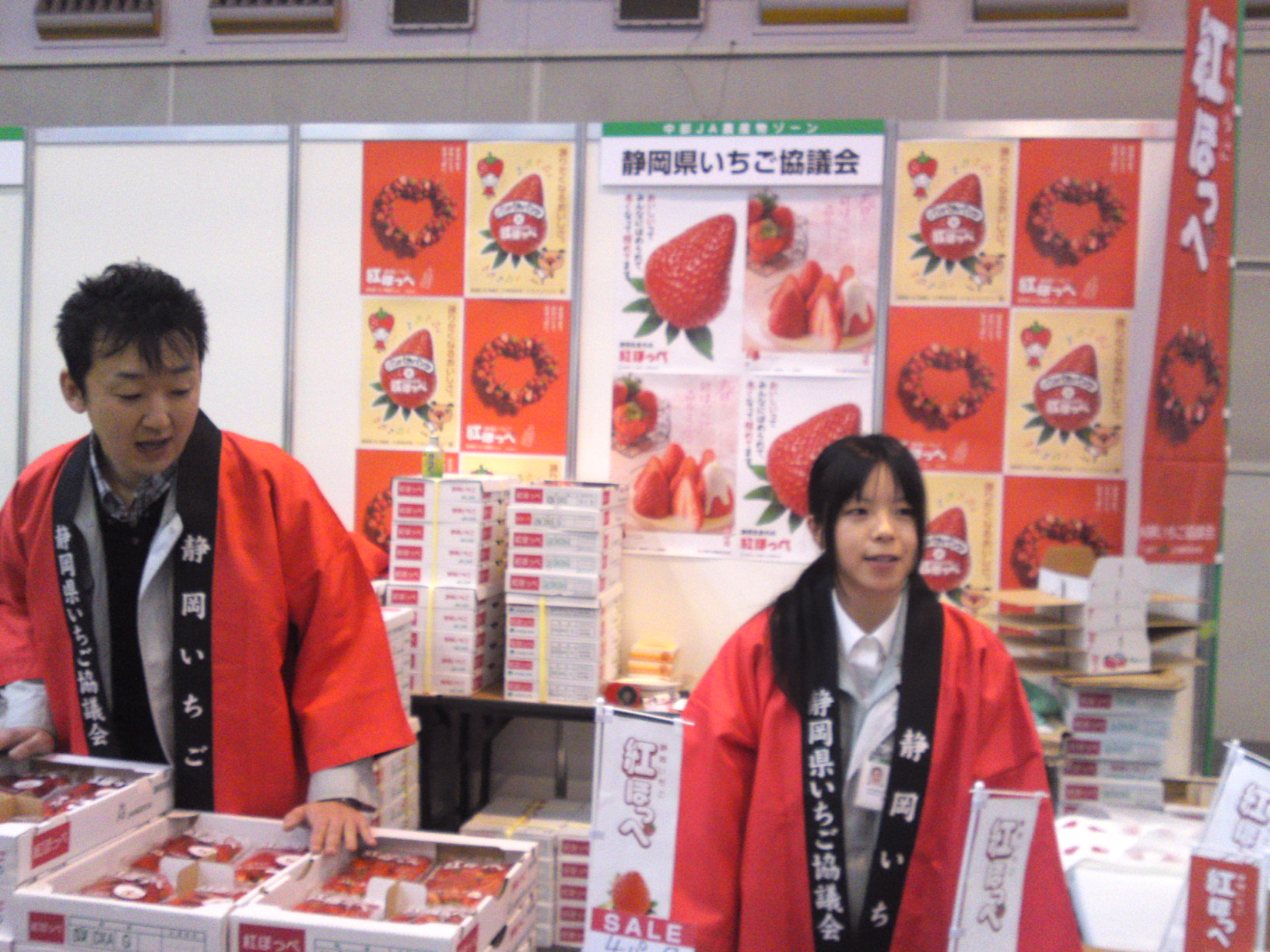
Shizuoka Prefecture Strawberry Growers Association.
Now, we are talking about big business!

I must say that the “Strawberry Lady” had a great way with customers and reporters!

“Benihoppe/Red Cheeks” Strawberries! Considered as the best in Japan!

The next series of booths dealt with ready-to-serve-food in general.
Pizza Nao from Hamamatsu City.

Oven-Baked pizzas inside a trailer!
Looking forward to my next trip to Hamamatsu City! LOL

Soft Ice creams at the Cornette trailer!

Judging form the looks of the lady, these soft ice creams ought to be delicious!

Shirokiya Cakes!
After proceeding from A7 directly to H1, I found myself searching in the program for E20…. (Organization, please!)

But the Japanese cakes/wagashi certainly looked beautiful and yummy!

To be continued soon (hopefully in the proper sequence! LOL)

RECOMMENDED RELATED SITES:
Warren Bobrow, Bread + Butter, Zoy Zhang, Hungry Neko, Think Twice, Frank Fariello, Mangantayon, Hapabento, Elinluv Tidbit Corner, Tokyo Terrace, Maison de Christina, Chrys Niles,Lexi, Culinary Musings, Wheeling Gourmet, Comestiblog, Chronicles Of A Curious Cook, Tokyo Through The Drinking Glass, Tokyo Foodcast, Palate To Pen, Yellin Yakimono Gallery, Tokyo Terrace, Hilah Cooking, More than a Mount Full, Arkonite Bento, Happy Little Bento; 5 Star Foodie; Jefferson’s Table; Oyster Culture; Gourmet Fury; Island Vittles; Good Beer & Country Boys; Rubber Slippers In Italy; Color Food daidokoro/Osaka;/a; The Witchy Kitchen; Citron Et Vanille, Lunsj Med Buffet/Estonian Gastronomy (English), Cook, Eat, Play, Repeat, Chrisoscope, Agrigraph, The Agriculture Portal to shizuoka!

Please check the new postings at:
sake, shochu and sushi

Shizuoka Agricultural Products from the Producer to the Gastronomic Table: Suruga Shamo Chicken at Sunmario

Suruga Shamo Chicken has not only become a famous agricultural product from Shizuoka but it is also celebrated beyond the borders of our Prefecture.
It is considered a high class delicacy with the consequent price.
Only 5 farmers produce it in Shzuoka Prefecture, in the cities of Fujinomiya, Shizuoka and Kikugawa, most of the time in high altitude in a very natural environment.
It is a hybrid from Black Shamo and other upscale breeds.
As a comparison, Shizuoka Prefecture produced 5,570,000 “broiler chickens”, but only 8,550 Suruga Shamo chikens!

Sunmario Restaurant

In spite of the small numbers, no less than 41 restaurants in Shizuoka Prefecture feature it on their menus!
It is also sold and processed by 8 companies in Shizuoka Prefecture and Tokyo.
There is also an Association of Suruga Shamo Chicken Lovers and no less than 55 guests crowded into Sunmario to enjoy a full Suruga Shamo menu on February 22nd!

The guests were coming from all parts of the Shizuoka Prefecture and represented all kinds of businesses including restauration, large industries, government bureaus and the mass media. No less than 2 representatives from Agrigraph Japan were present!

The Menu!
Now, what did we enjoy?

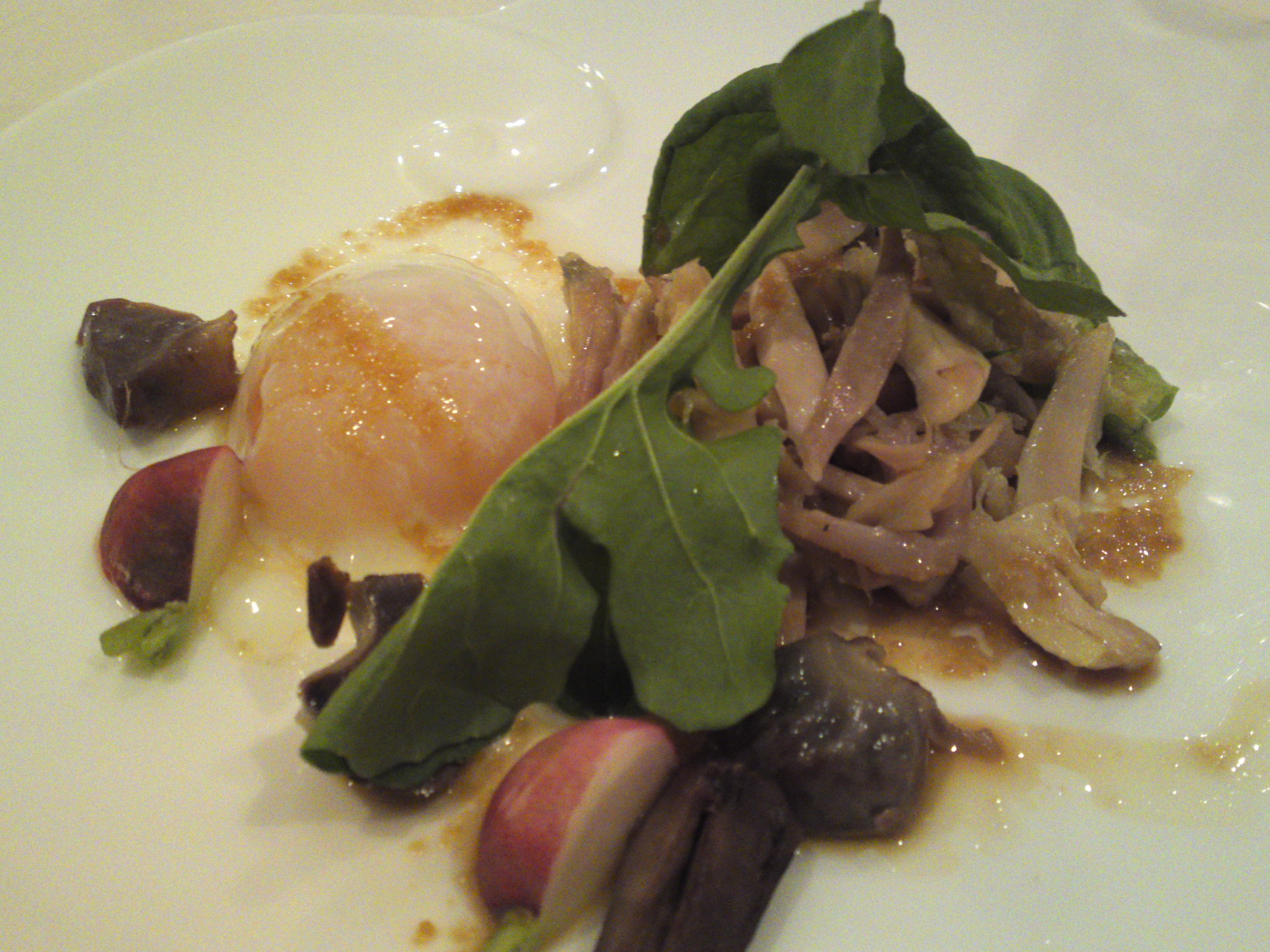
Poached egg in Onsen/ot Spring fashion with Suruga Shamo Chicken confit salad.

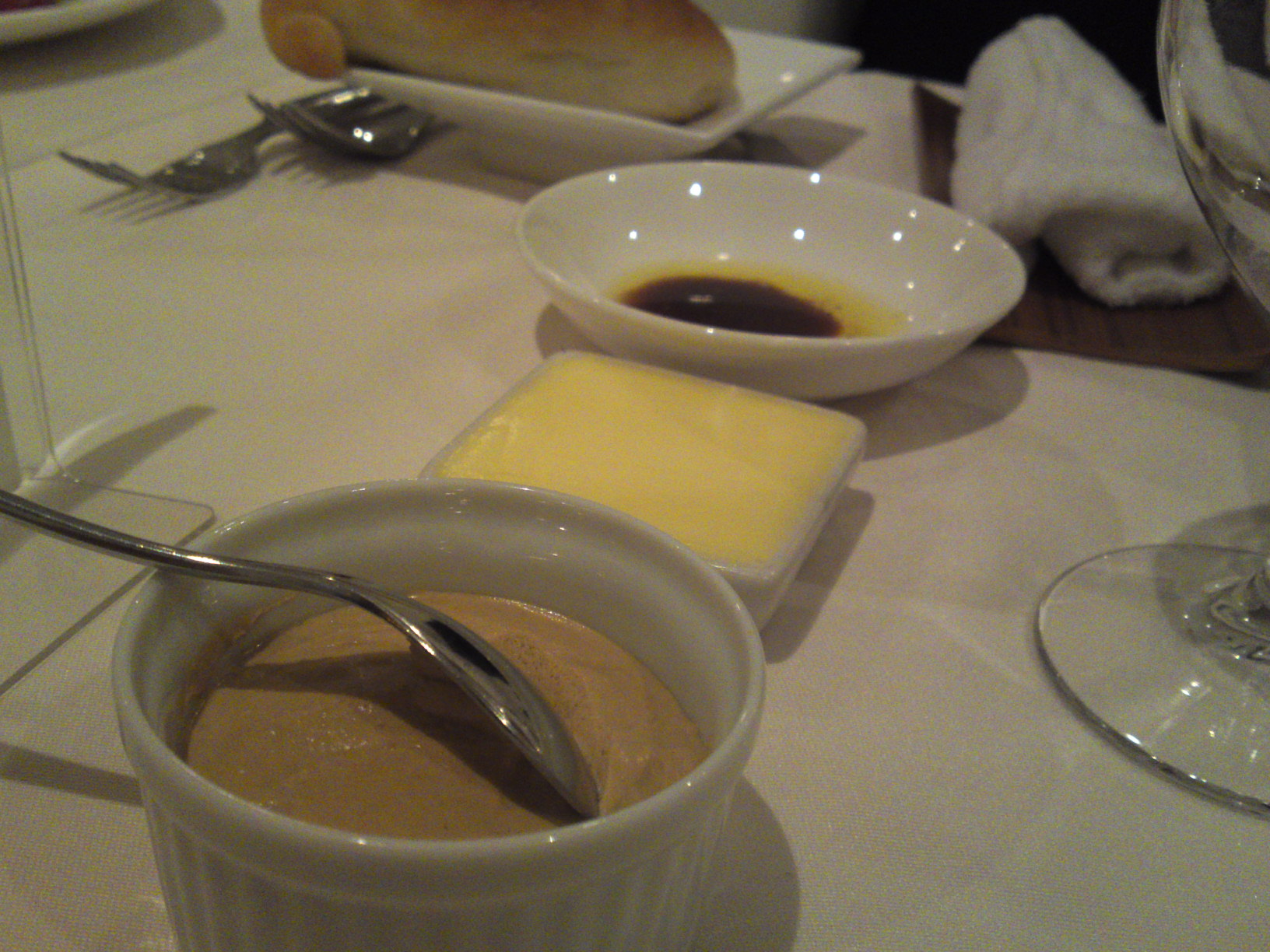
The tidbits including Suruga Shamo liver paste to help you wait!

Suruga Shamo Chicken Consomme with Shizuoka Vegetables.

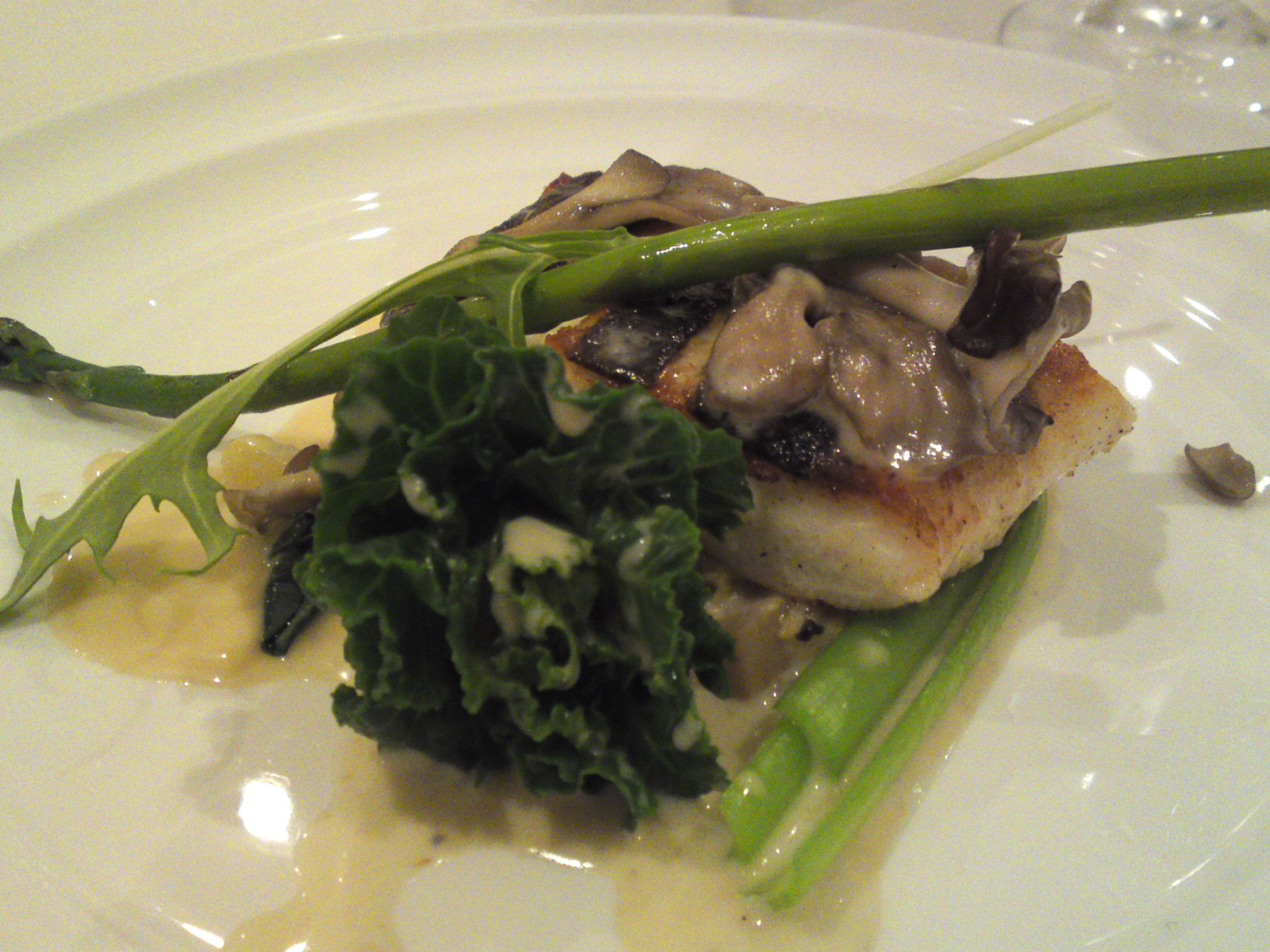
Sole poele/sauteed from Yui, Shimizu Ku, Shizuoka City and Shizuoka mushrooms and Chinese cabbage Cream.

Suruga Shamo Chicken in Coq au Vin fashion.

Shizuoka Matcha Tea Creme Brulee with Shizuoka Bioran Eggs (Endo, Aoi Ku) and Sakura tuiles.
Sorry for the fuzzy picture. I had toe eat, report and talk to dozens of people all at the same time! LOL

Shizuoka Prefecture Suruga Shamo Lovers Association
Shizuoka City, Shimizu Ku, Tenosei, 2-19
Tel./fax: 054-365-6114
HOMEPAGE

Sunmario
Shizuoka City, Suruga Ku, Toro, 2-14-26
Tel.: 054-654-3060
Fax: 054-654-3067
HOMEPAGE

RECOMMENDED RELATED SITES:
Warren Bobrow, Bread + Butter, Zoy Zhang, Hungry Neko, Think Twice, Frank Fariello, Mangantayon, Hapabento, Elinluv Tidbit Corner, Tokyo Terrace, Maison de Christina, Chrys Niles,Lexi, Culinary Musings, Wheeling Gourmet, Comestiblog, Chronicles Of A Curious Cook, Tokyo Through The Drinking Glass, Tokyo Foodcast, Palate To Pen, Yellin Yakimono Gallery, Tokyo Terrace, Hilah Cooking, More than a Mount Full, Arkonite Bento, Happy Little Bento; 5 Star Foodie; Jefferson’s Table; Oyster Culture; Gourmet Fury; Island Vittles; Good Beer & Country Boys; Rubber Slippers In Italy; Color Food daidokoro/Osaka;/a; The Witchy Kitchen; Citron Et Vanille, Lunsj Med Buffet/Estonian Gastronomy (English), Cook, Eat, Play, Repeat, Chrisoscope, Agrigraph, The Agriculture Portal to shizuoka!

Please check the new postings at:
sake, shochu and sushi

Today’s Lunch Box/Bento (’11/13): Smoked Chicken Bento

One the Missus’ favorite ways of preparing chicken is to smoke it.
She has many recipes, but I couldn’t check this one as she did it overnight!

So after she had steamed the rice and fill a box with it, she fried slices of smoked chicken together with pieces of red pimentos and celery (stick and leaves) with a little wasabi dressing and plentyof black sesame seeds to cover and season the rice with the juices.
Simple in concept but very tasty!

More vegetables came into the second box in the shape of salad: carrots with black beans, lettuce and sesame dressing and crushed peanuts, pickles: home-pickled mini melons and daikon, and dessert: boiled violet sweet potato.
A soft-boiled egg completed the lunch for more proteins and balance.

Very satisfying!

RECOMMENDED RELATED SITES

Clumsyfingers by Xethia
Adventures in Bento Making, American Bento, Beanbento, Bento No1, Bento Wo Tsukurimashou, Cooking Cute, Eula, Hapabento , Happy Bento, Jacki’s Bento Blog, Kitchen Cow, Leggo My Obento, Le Petit Journal Bento & CO (French), Lunch In A Box, My Bento Box, Vegan Lunch Box; Tokyo Tom Baker, Daily Food Porn/Osaka, Only Nature Food Porn, Happy Little Bento, The Herbed Kitchen, J-Mama’s Kitchen, Cook, Eat, Play, Repeat; Bento Lunch Blog (German); Adventures In Bento; Anna The Red’s Bento Factory; Cooking Cute; Timeless Gourmet; Bento Bug; Ideal Meal; Bentosaurus; Mr. Foodie (London/UK); Ohayo Bento

Please check the new postings at:
sake, shochu and sushi

—————————————-
日本語のブログ
—————————————-

Today’s Lunch Box/Bento (’11/12): Vegan & Vegetarian Sushi Bento

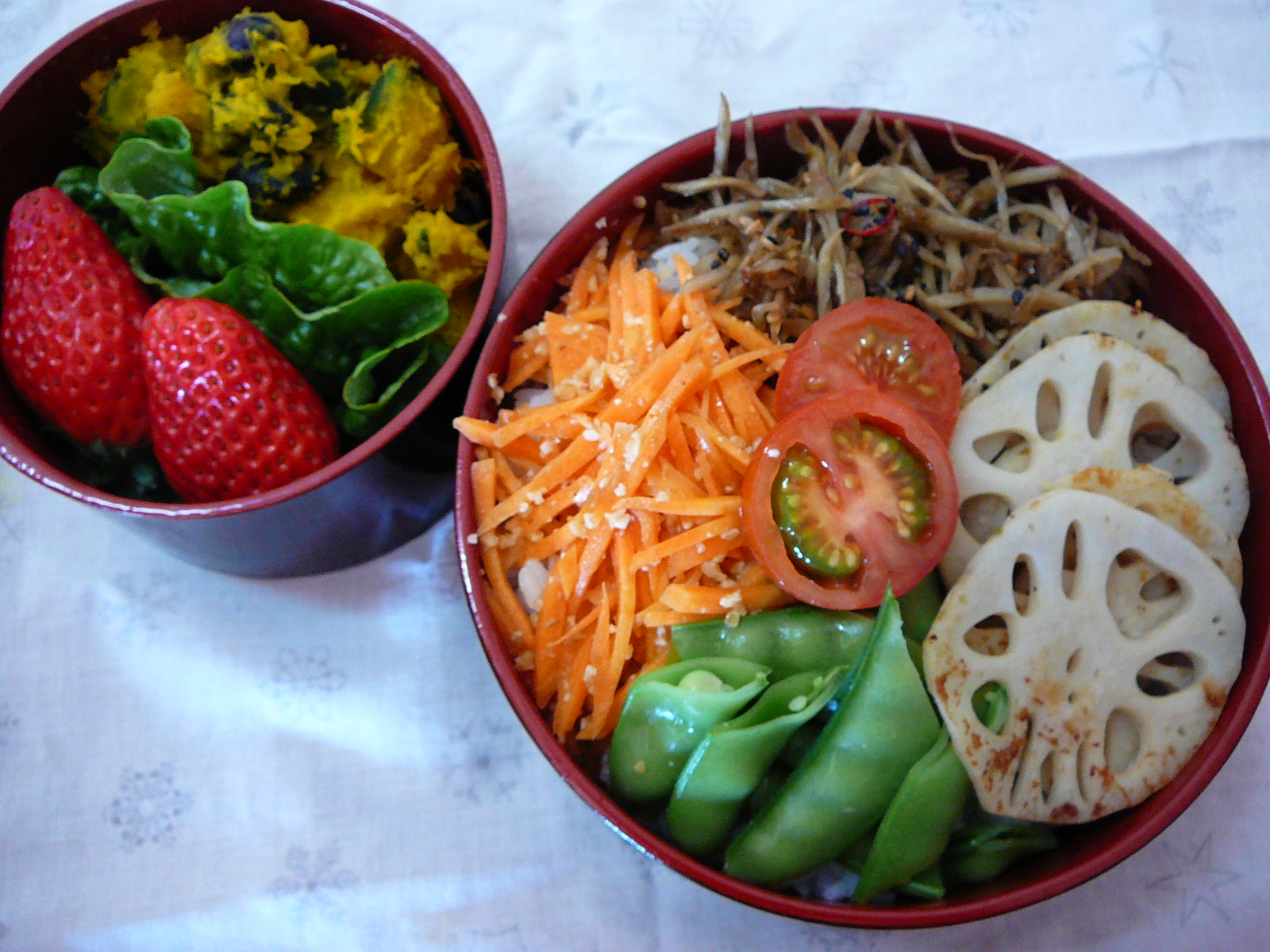
Although I’m not a vegetarian I’ve wanted for a long time the Missus to concoct me an entirely vegetarian bento. Not only she complied, but she made it a sushi as well!

She first steamed the rice and prepared as sushi rice before mixing plenty of sesame seeds in.
She then proceded to cover the lot with vegetables.

She fried sliced lotus roots in spices for a hot addition to the plain boiled green peas in their pods.

Then, keeping in mind the color arrangement and the whole balance, she first added a shredded carrot salad seasoned with gomadare/sesame dressing and crushed peanuts, and next gobo kinpira/stir-fried hot burdock roots (seasoned with chili pepper and black sesame seeds). She finally topped the whole with some sliced plum tomato.

For salad and dessert she prpared a vegan/vegetarian kabocha and black beans salad to which she added fresh lettuce and Akihime strawberries from Shizuoka!

I don’t plan to be a vegan or vegetarian but my sometimes tired body can really appreciate the cuisine now and then!

RECOMMENDED RELATED SITES

Clumsyfingers by Xethia
Adventures in Bento Making, American Bento, Beanbento, Bento No1, Bento Wo Tsukurimashou, Cooking Cute, Eula, Hapabento , Happy Bento, Jacki’s Bento Blog, Kitchen Cow, Leggo My Obento, Le Petit Journal Bento & CO (French), Lunch In A Box, My Bento Box, Vegan Lunch Box; Tokyo Tom Baker, Daily Food Porn/Osaka, Only Nature Food Porn, Happy Little Bento, The Herbed Kitchen, J-Mama’s Kitchen, Cook, Eat, Play, Repeat; Bento Lunch Blog (German); Adventures In Bento; Anna The Red’s Bento Factory; Cooking Cute; Timeless Gourmet; Bento Bug; Ideal Meal; Bentosaurus; Mr. Foodie (London/UK); Ohayo Bento

Please check the new postings at:
sake, shochu and sushi

—————————————-
日本語のブログ
—————————————-

Vegan Sashimi at Yasaitei (18/02/2011)

It has been some time since I paid my last visit to Yasaitei.
I do have to show up there regulaly as they use only seasonal vegetables and other products, be they from the land or the sea!

My vegan and vegetarian (I’m not!) friends know this is a place where they can expect a full meal (thinking ofdevising one for the next article!) according to their priorities! Even the shochu and sake are OK!

All vegetables, from the very snack coming with the first drink!

Yasaitei might be an unpretentious izakaya, but it is a very elegant one!
The chopsticks are of great quality and the paper tablecloth is always decorated with seasonal motifs. Rape flowers/na no hana/菜の花 in this case!

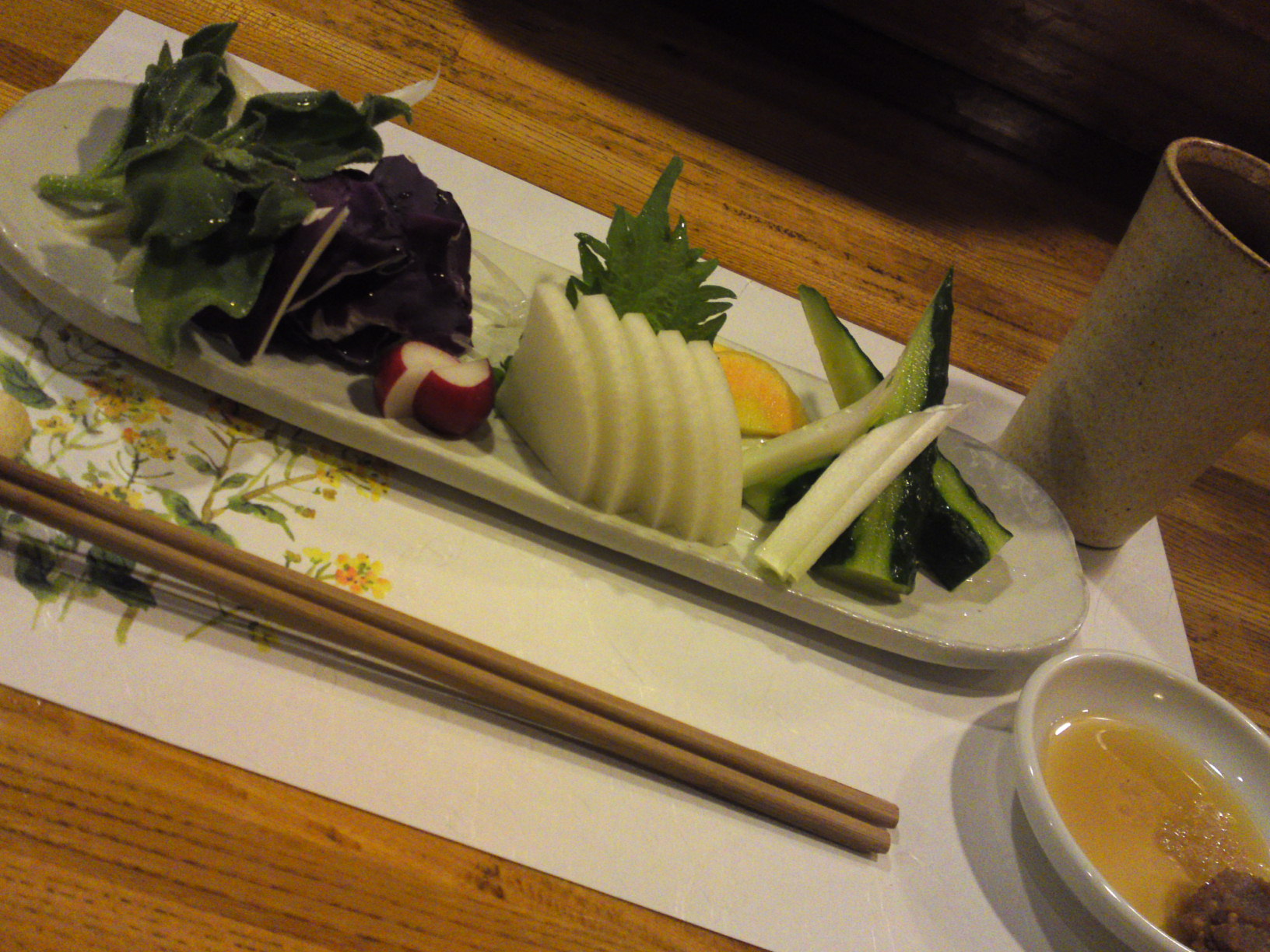
So here is the vegan vegetable sashimi of the day!
Great colors as usual!

Ice plant, myoga (almost completely hidden as it was used as a support), celery, red cabbage (in Japanese, although it is dark violet) and mini radishes.

Daikon (sweet and juicy!) supported by chopped winter onion and a leaf of perilla/shiso. (Yellow carrot at the back.)

A side-view of the daikon support.

Cute urui/hasta montana and crunchy cucumber!

Always wondering what is going to be on offer next time!

YASAITEI
Shizuoka City, Aoi Ku, Tokiwa-Cho, 1-6-2 Green Heights Wamon 1-C
Tel.: 054-2543277
Business hours: 17:30~22:00
Closed on Sundays
Reservations highly recommended
Seating: 6 at counter + 14 at tables
Set Courses: 3,000, 4,000, 5,000 yen
HOMEPAGE (Japanese)

RECOMMENDED RELATED SITES:
Warren Bobrow, Bread + Butter, Zoy Zhang, Hungry Neko, Think Twice, Frank Fariello, Mangantayon, Hapabento, Elinluv Tidbit Corner, Tokyo Terrace, Maison de Christina, Chrys Niles,Lexi, Culinary Musings, Wheeling Gourmet, Comestiblog, Chronicles Of A Curious Cook, Tokyo Through The Drinking Glass, Tokyo Foodcast, Palate To Pen, Yellin Yakimono Gallery, Tokyo Terrace, Hilah Cooking, More than a Mount Full, Arkonite Bento, Happy Little Bento; 5 Star Foodie; Jefferson’s Table; Oyster Culture; Gourmet Fury; Island Vittles; Good Beer & Country Boys; Rubber Slippers In Italy; Color Food daidokoro/Osaka;/a; The Witchy Kitchen; Citron Et Vanille, Lunsj Med Buffet/Estonian Gastronomy (English), Cook, Eat, Play, Repeat, Chrisoscope, Agrigraph, The Agriculture Portal to shizuoka!

Please check the new postings at:
sake, shochu and sushi

Japanese Vegetables 3: Tomatoes

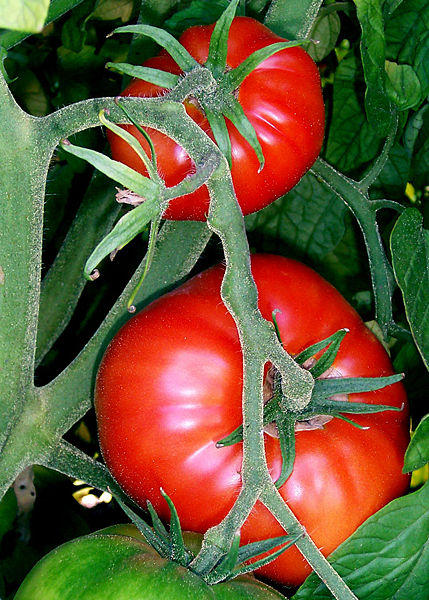
tomato1

Tomatoes have appeared on our tables for so long that we have almost forgotten they came from South America. The Spanish and the Portuguese ignored them. The British studied them. The French brought them to Europe under the name of “Love Apple”, a name still existing in Italy. So it is said,…

FACTS:

-Season: All year round for greenhouse tomatoes, June=September for open-air tomatoes

-Analytic data (as per 100g):
Energy: 19 kcal
Water: 94.0 g
Carbohydrates: 4.7 g

Inorganic qualities:
Natrium: 3 mg
Potassium: 210 mg
Magnesium: 9 mg
Phosphorus: 26 mg

Vitamins:
A Beta caroten: 540 microg
B1: 0.05mg
B2: 0.02 mg
B6: 0.08 mg
C: 15 mg

Dietary fibers: 1.0 g

Licopin (Ricopin), Pectin, Luchin (Ruchin).
Licopin is a carotene variety particularly beneficial in fights against allergies and ageing. The Potassium and Vitamin C and Pectin help control cholesterol in blood.
Luchin reinforces capillary veins and arteries.
Recent researches in Germany and China have proven that tomatoes help control high blood pressure.

HEALTH FACTS:

-Combined with Potatoes, or Broccoli, or garlic, or onion, helps combat ageing.
-Combined with cabbage, or chilies, or spinach, helps combat cancer and helps blood flow.
-Combined with lemon, or cauliflower, or pimentoes, or parsley, helps lower blood pressure and improve blood flow.
-Combined with vinegar, or oranges, or apples, or strawberries, helps recovery from illness and injury, helps combat stiff shoulder.

Who said that the Italians look healthier than everybody else? LOL

VARIETIES
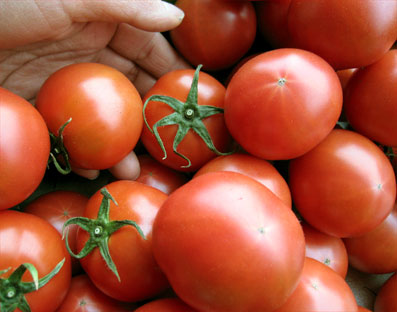
tomato-fruit

“Fruit Tomatoes”

This summer-maturing fruit can be bought all year round with the interesting consequence that tomatoes ripened in winter are sweeter than their summer cousins as they contain less water, earning themselves the name of “fruit tomatoes”, a great oxymoron, if there was one!

Thanks to consumers’ insatiable appetite for novelty, tomatoes are grown into all kinds of size, shape and colour.
Just to cite a few, the following are the most popular in Japan:

tomato-momotaro

“Momotaro Tomatoes”

-Momotaro (after the Japanese “Peach Boy” tale), which becomes “Fruit tomato” in winter.

“Momotaro Tomato/Gold Variety”
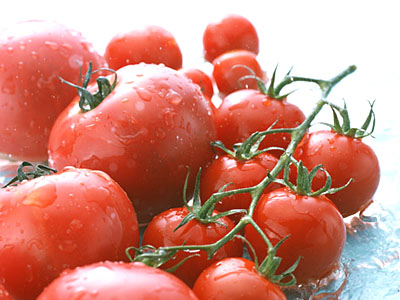
tomato-midi

“Midi Tomatoes”

-Midi Tomato (sometimes called “Plum tomatoes”), a larger cousin of the “Mini tomato”, is very sweet and very high in nutrients. Its aroma has a particularly long life.

tomato-italian
“Italian tomatoes”

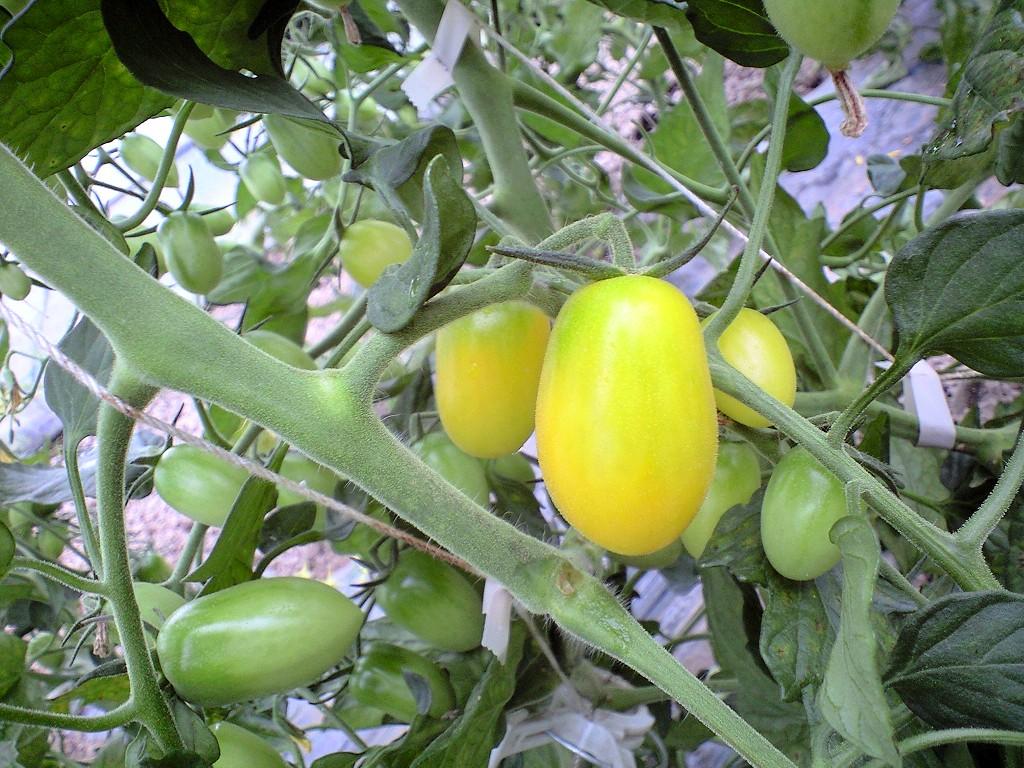
-Italian Tomato: mainly used for cooking, it may often come in a comparatively elongated shape.
It contains less water and reveals both large amounts of sweetness and acidity, making it very conducive to long cooking with the extra bonus of actually improving in taste upon heating.
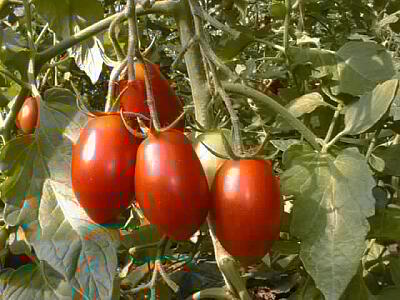
“Sicilian Rouge”, both for cooking and salads.
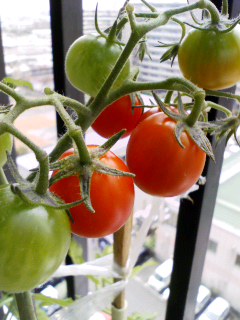
tomato-mini
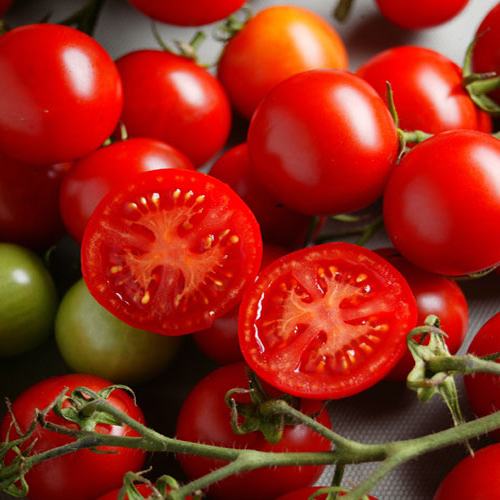
“Mini Tomatoes”

-Mini Tomato: one-bite sized, it is also called “Petit tomato”. It contains twice as many Vitamin C, and it is very rich in beneficent ingredients.

tomato-yellow-mini
“Yellow Mini Tomatoes”

-Yellow Mini Tomato: characteristic for a lot of sweetness and very little acidity. Very handy for children who dislike vegetables!
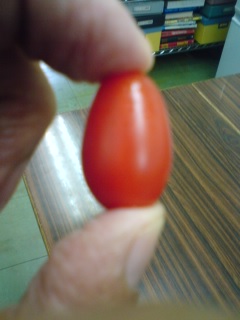
rubbins

“Ameera Rubbins”

-Ameera Rubbins: with its larger Ammeera tomato, it used to be grown exclusively in Shizuoka Prefecture. They are the sweetest of all, tasting like strawberries, and very firm, making them ideal for decoration, notwithstanding their nutrient value. The smallest variety called “Rubbins” used to be grown by only two farmers near Iwata City!
Recently a yellow version is being grown experimentally.

tomato-micromini

“Micro Mini Tomatoes”

-Micro Mini Tomatoes: increasingly popular, they are only 8~10 mm and look somewhat like redcurrants. Very tasty with a beautiful acidity, the Japanese use them not only in salads, but also as the final touch on a plate of sashimi!

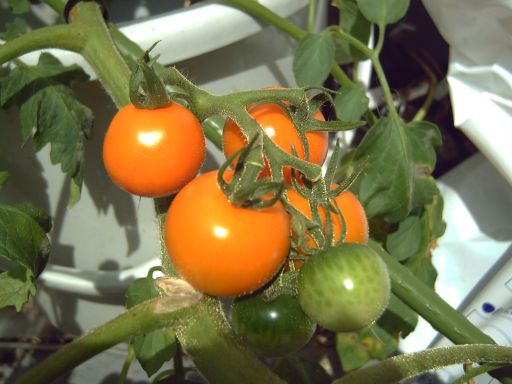
“Fruit Yellow”, a small variety popular with kids!
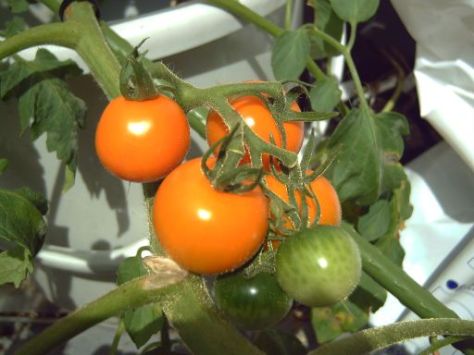
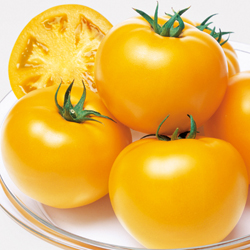
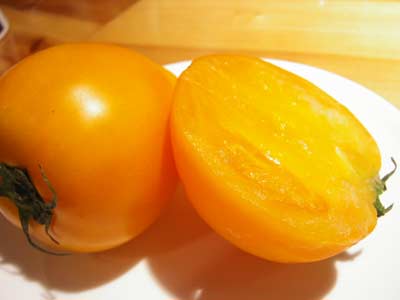
“Fruit Gold”, sweet and rich in vitamins!
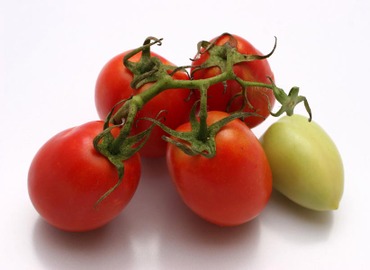
“Nitakikoma”, a Japanese variety which does not break away even after long cooking.

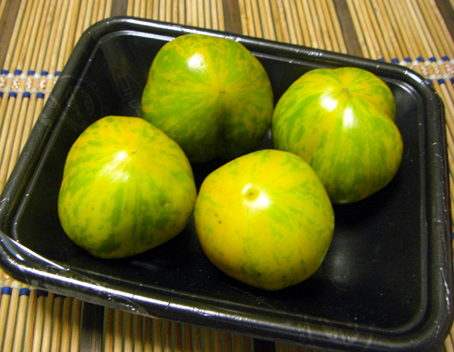
“Green Zebra”, Japanese name for green heirloom tomato
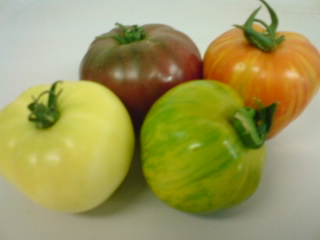
AGRI-TOMATO1

Heirloom Tomatoes grown in Shizuoka City!
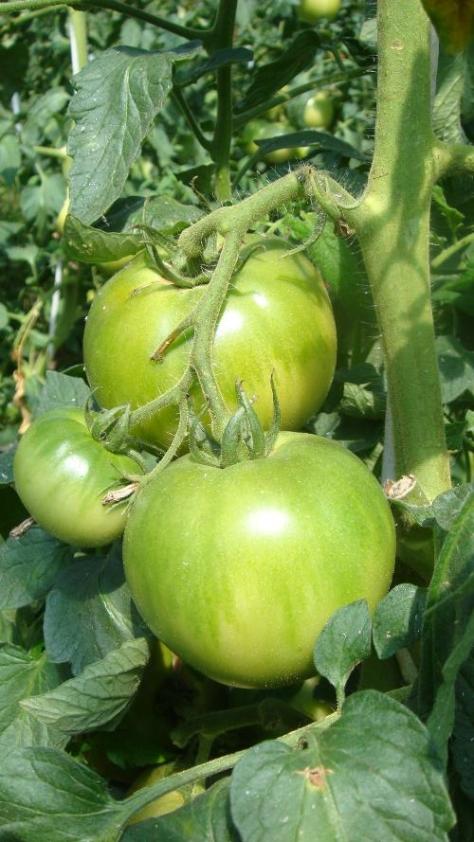
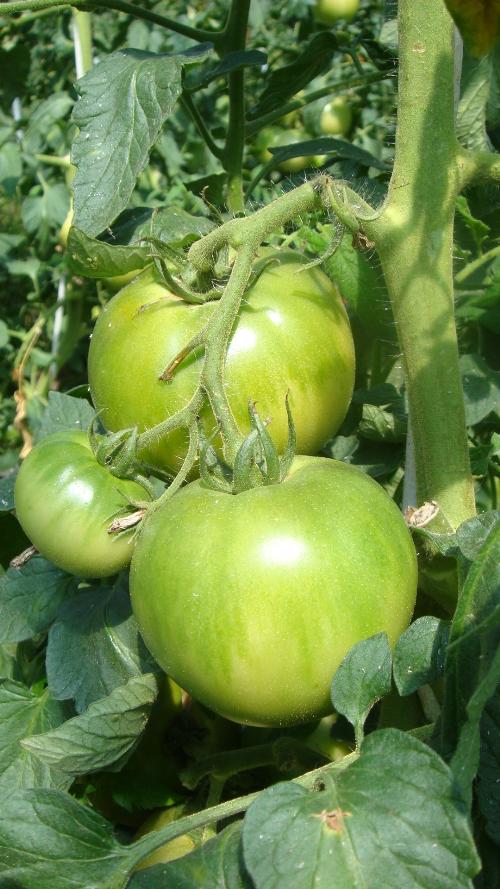
“Green”, stays green when ripe
Great in tenpura!
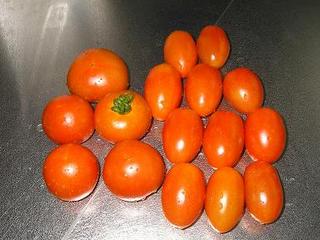
“Cindy Sweet”, well-balanced and sweet

“Aiko”, Japanese variety. Exists both in yellow and red. Eaten cooked or raw.
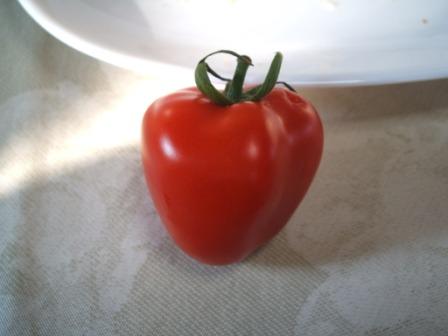
“Tomato Berry”, small, sweet and well-balanced.

“Campari”, grown in Hokkaido, Japan, originally from Holland. Fruity!

“Amakko”, similar to “Campari”. Very sweet!
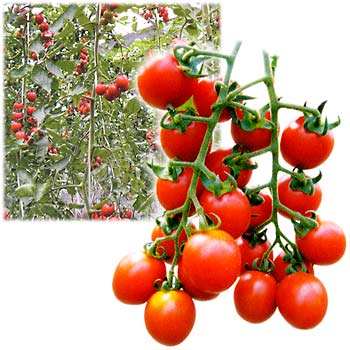
“Piccola Rouge”, Japanese version of an Italian Mini-tomato variety.

“First”. Appears in Winter. Grown in Iwata City, too! Beautiful pointed shape. Juicy!
Also called “Renaissance” in Shizuoka Prefecture.
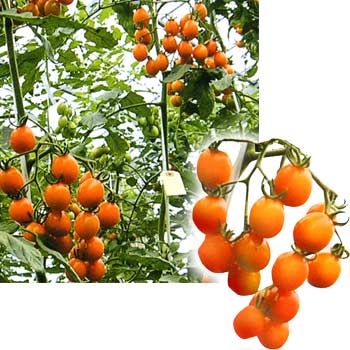
“Piccola Canaria”, an orange variety of the Piccola.
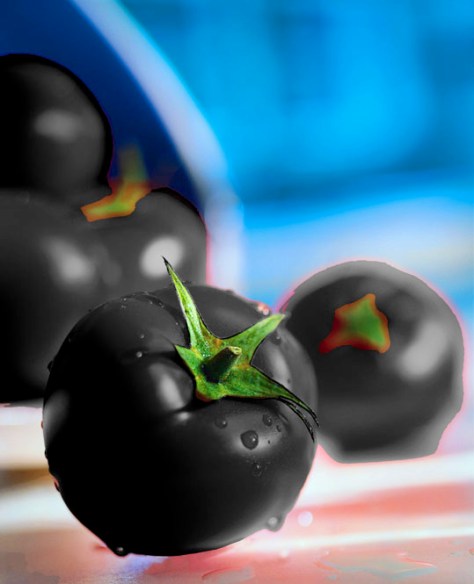
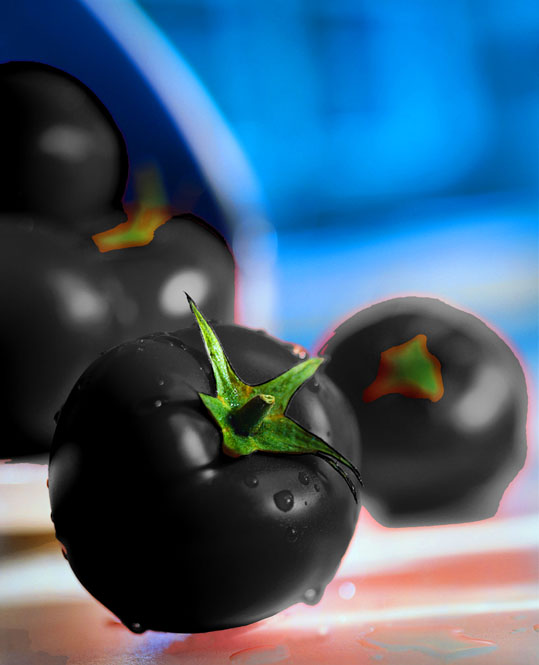
“Black”, as it is called!

“Kisu”. Beautiful colour and very sweet!
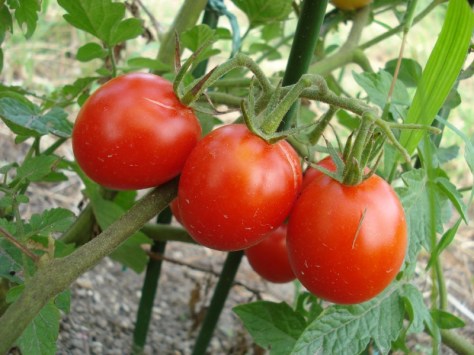
“Zeitaku Tomato”, meaning “Extravagant Tomato” in Japanese! Fruity, juicy and sweet!
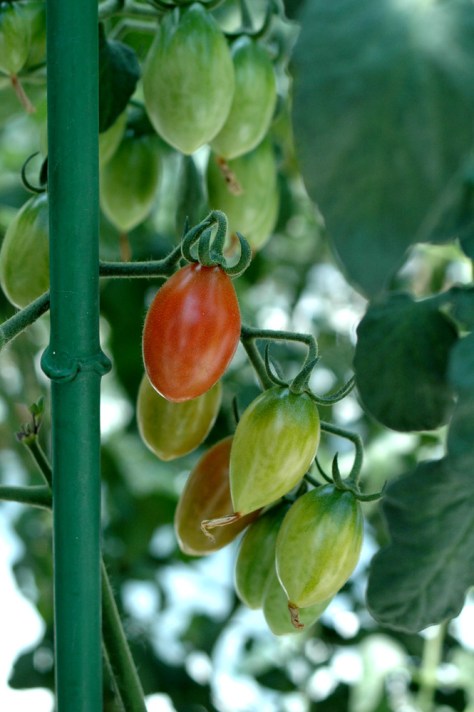
“Guppi”, a tasty tomato apt for cooking.

“Carrot Tomato”. High in carotens, taste similar to carrot. Appreciated raw.

“Orange Banana” from Russia! Very sweet!
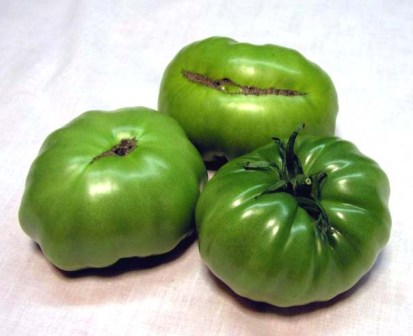
“Evergreen”. Versatile, can be eaten raw, cooked or pickled.
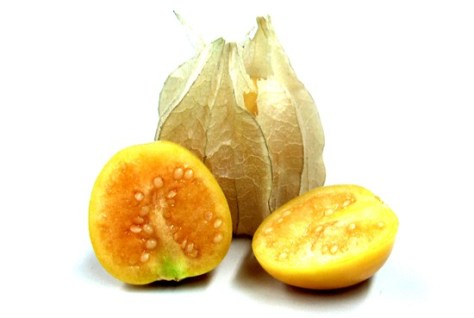
“Strawberry Tomato”. A cousin of tomatoes. God balance between sweetness and acidity.
Also used as decoration.

“Tokutani Tomato”. Fruit tomato, especially grown in Shikoku Island. Brand Tomato. Very expensive!

Many more varieties are regularly imported!

RECOMMENDED RELATED SITES:
Warren Bobrow, Bread + Butter, Zoy Zhang, Hungry Neko, Think Twice, Frank Fariello, Mangantayon, Hapabento, Elinluv Tidbit Corner, Tokyo Terrace, Maison de Christina, Chrys Niles,Lexi, Culinary Musings, Wheeling Gourmet, Comestiblog, Chronicles Of A Curious Cook, Tokyo Through The Drinking Glass, Tokyo Foodcast, Palate To Pen, Yellin Yakimono Gallery, Tokyo Terrace, Hilah Cooking, More than a Mount Full, Arkonite Bento, Happy Little Bento; 5 Star Foodie; Jefferson’s Table; Oyster Culture; Gourmet Fury; Island Vittles; Good Beer & Country Boys; Rubber Slippers In Italy; Color Food daidokoro/Osaka;/a; The Witchy Kitchen; Citron Et Vanille, Lunsj Med Buffet/Estonian Gastronomy (English), Cook, Eat, Play, Repeat, Chrisoscope, Agrigraph, The Agriculture Portal to shizuoka!

Please check the new postings at:
sake, shochu and sushi

Vegan Japanese Recipe: Burdock, Lotus Root & Carrot Kinpira

There are vast treasures to explore for vegetarians and vegans in Japanese gastronomy.
Once such pleasure (rhyme with treasure) is Kinpira/金平!
Here is a recipe that can be built on at will depending on the available vegetables: Burdock, Lotus Root & Carrot Kinpira/gobou, Renkon to Ninjin no Kinpira/牛蒡・蓮根・人参の金平!

INGREDIENTS: 4 people~

-Burdock root: 1
-Carrot: 1/2
-Lotus root: 4~5 cm long piece
-Grated fresh ginger: 1 teaspoon
-Spices of your choice (include chili pepper!)
Vegan Dashi: 1 cup
-Sesame oil: 2 teaspoons
-Mirin/sweet Japanese sake: 3 tablespoons
-Soy sauce 1+1/2 Tablespoons.

RECIPE:

-Clean the burdock root under running clear water, cut out in appropriate-sized thin sticks. Drain well. Peel carrot and cut in same size as burdock root. Peel the lotus roots, slice into 5 mm thick pieces, clean in fresh cold water and drain well.

-In a frypan (if possible, non-stick), pour the sesame oil, drop well-drained vegetables and fry.
When the lotu root pieces have started changing color, add dashi, spices of your choice, grated ginger, mirin and soy sauce, and fry on a low fire (10 minutes).
Once the juices have almost reduced stop fire.

Can be served hot, lukewarm or cold!

RECOMMENDED RELATED SITES:
Warren Bobrow, Bread + Butter, Zoy Zhang, Hungry Neko, Think Twice, Frank Fariello, Mangantayon, Hapabento, Elinluv Tidbit Corner, Tokyo Terrace, Maison de Christina, Chrys Niles,Lexi, Culinary Musings, Wheeling Gourmet, Comestiblog, Chronicles Of A Curious Cook, Tokyo Through The Drinking Glass, Tokyo Foodcast, Palate To Pen, Yellin Yakimono Gallery, Tokyo Terrace, Hilah Cooking, More than a Mount Full, Arkonite Bento, Happy Little Bento; 5 Star Foodie; Jefferson’s Table; Oyster Culture; Gourmet Fury; Island Vittles; Good Beer & Country Boys; Rubber Slippers In Italy; Color Food daidokoro/Osaka;/a; The Witchy Kitchen; Citron Et Vanille, Lunsj Med Buffet/Estonian Gastronomy (English), Cook, Eat, Play, Repeat, Chrisoscope, Agrigraph, The Agriculture Portal to shizuoka!

Please check the new postings at:
sake, shochu and sushi
Japanese Vegetables 2: lotus Roots/Renkon/蓮根

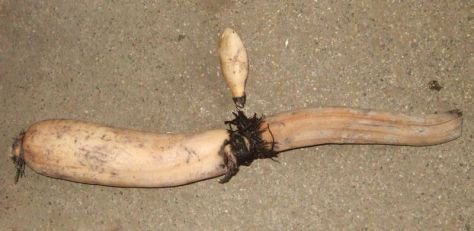
lotus-root1

Lotus roots come from a plant called Nelumbo nucifera, also known by a number of names including Indian lotus, sacred lotus, bean of India, or simply lotus. This plant is an aquatic perennial. Under favorable circumstances its seeds may remain viable for many years.
A common misconception is referring to the lotus as a water-lily (Nymphaea), an entirely different plant.

Native to Greater India and commonly cultivated in water gardens, the lotus is the national flower of India and Vietnam.

The flowers, seeds, young leaves, and “roots” (rhizomes) are all edible. In Asia, the petals are used sometimes for garnish, while the large leaves are used as a wrap for food. In Korea, the leaves and petals are used as a tisane. Yeonkkotcha (연꽃차) is made with dried petals of white lotus and yeonipcha (연잎차) is made with the leaves. The rhizome (called ǒu (藕) in pinyin Chinese, ngau in Cantonese, bhe in Hindi, renkon (レンコン, 蓮根 in Japanese), yeongeun (연근) in Korean is used as a vegetable in soups, deep-fried, stir-fried and braised dishes. Petals, leaves, and rhizome can also all be eaten raw, but there is a risk of parasite transmission (e.g., Fasciolopsis buski): it is therefore recommended that they be cooked before eating.

FACTS:

-Season (in Japan): September~December

-Analytic data (as per 100g):

Energy: 66 kcal
Water: 81.5 g
Protein: 1.9 g
Carbohydrates: 15.5 g

Inorganic qualities:
Natriu: 24 mg
Potassium: 440 mg
Calcium: 20 mg
Iron: 00.5 mg
Zinc: 0.3 mg
Manganese: 0.78 mg

Vitamins:
B1: 0.10 mg
B6: 0.09 mg

Dietary fibers: 5.7 g

HEALTH FACTS:

-Combined with liver, or beef, or pork, or chicken, helps revitalize human blood and organs.

-Combined with turnips, or daikon, or beansprouts, or trefoil, helps digestion and bowels.

-Combined with leafy vegetables, or potato, or apples, helps combat cancer and obesity.

-Combined with konnyaku, or celery, or lettuce, or green peppers, helps lower blood cholesterol. helps combat artery hardening and prevent heart diseases.

VARIETIES

Kaga Renkon/加賀れんこん

Very fine texture and high content in starch,
Best appreciated steamed.

Iwakuni Renkon/岩国れんこん

Large specimen with large holes.

TIPS:

-Choose specimens with a clear white cut section. There should not be any black spots.
-Use large specimen as they are easier to cut and use.
-To prevent oxydising, wrap cut specimen into wet kitchen paper.
-Add vinegar to water when boling them to keep them white.
-The easiest way to peel them is to use a potato peeler!

COOKING:

The stamens can be dried and made into a fragrant herbal tea called liánhuā cha (蓮花茶) in Chinese, or (particularly in Vietnam) used to impart a scent to tea leaves. The lotus seeds or nuts (called liánzĭ, 蓮子; or xian liánzĭ, 鲜莲子, in Chinese) are quite versatile, and can be eaten raw or dried and popped like popcorn, phool makhana. They can also be boiled until soft and made into a paste, or boiled with dried longans and rock sugar to make a tong sui (sweet soup). Combined with sugar, lotus seed paste becomes one of the most common ingredient used in pastries such as mooncakes, daifuku, and rice flour pudding.

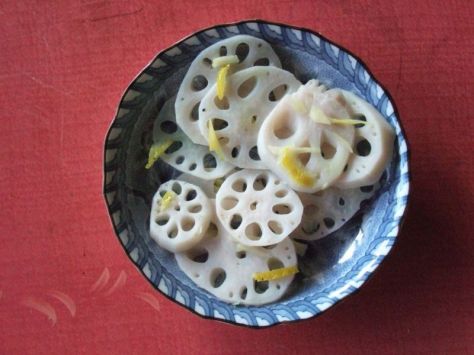
Japanese popular Renkon dishes:

lotus-root-nimono

“NIMONO”

lotus-root-sumono

“SUMONO”

lotus-root-kimpira

“KIMPIRA”

“STUFFED LOTUS ROOTS”

“DEEP-FRIED LOTUS ROOT SANDWICH”

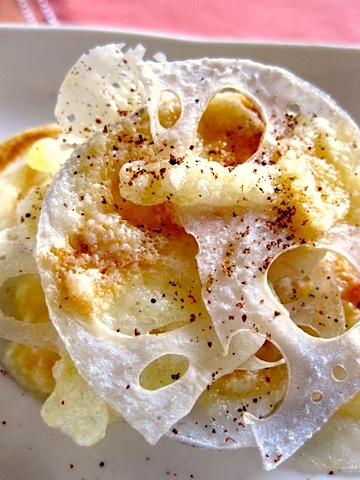
lotus-roots-chips

“CHIPS”

RECOMMENDED RELATED SITES:
Warren Bobrow, Bread + Butter, Zoy Zhang, Hungry Neko, Think Twice, Frank Fariello, Mangantayon, Hapabento, Elinluv Tidbit Corner, Tokyo Terrace, Maison de Christina, Chrys Niles,Lexi, Culinary Musings, Wheeling Gourmet, Comestiblog, Chronicles Of A Curious Cook, Tokyo Through The Drinking Glass, Tokyo Foodcast, Palate To Pen, Yellin Yakimono Gallery, Tokyo Terrace, Hilah Cooking, More than a Mount Full, Arkonite Bento, Happy Little Bento; 5 Star Foodie; Jefferson’s Table; Oyster Culture; Gourmet Fury; Island Vittles; Good Beer & Country Boys; Rubber Slippers In Italy; Color Food daidokoro/Osaka;/a; The Witchy Kitchen; Citron Et Vanille, Lunsj Med Buffet/Estonian Gastronomy (English), Cook, Eat, Play, Repeat, Chrisoscope, Agrigraph, The Agriculture Portal to shizuoka!

Please check the new postings at:
sake, shochu and sushi

Today’s Lunch Box/Bento (’11/11): “Dry Curry” Bento

The Japanese ususally prepare their “curry” in the form of a more or less consistent “soup” that the pour on top of rice.
What they call “dry curry” has nothing dry about it. They mean that the curry, instead of a soup, will take the form of a consistent meat sauce similar to that of Bolognese sauce. In England it would be labelled a “savoury”.

The Missus had already prepared a curry of roughly minced pork and beef with chopped vegetables and plenty of curry paste and condiments of her own.
She reheated it while she steamed the rice.

She then mixed the hot rice with curry poder for a beautiful yellow color.
AS she placed it in the bento box she formed a “well” to be filled with the minced meat curry. She then topped it with a soft-boiled egg broken in small pieces before putting the last touch with kawaire daikon/daikon sprouts and fancy stuffed olives.

As for the fibers and vitamin she preapred a simple salad of baby leaves, boiled Brussels spouts, plum tomatoe, small pieces of cheese and alnuts.

Very hearty and delicious!

RECOMMENDED RELATED SITES

Clumsyfingers by Xethia
Adventures in Bento Making, American Bento, Beanbento, Bento No1, Bento Wo Tsukurimashou, Cooking Cute, Eula, Hapabento , Happy Bento, Jacki’s Bento Blog, Kitchen Cow, Leggo My Obento, Le Petit Journal Bento & CO (French), Lunch In A Box, My Bento Box, Vegan Lunch Box; Tokyo Tom Baker, Daily Food Porn/Osaka, Only Nature Food Porn, Happy Little Bento, The Herbed Kitchen, J-Mama’s Kitchen, Cook, Eat, Play, Repeat; Bento Lunch Blog (German); Adventures In Bento; Anna The Red’s Bento Factory; Cooking Cute; Timeless Gourmet; Bento Bug; Ideal Meal; Bentosaurus; Mr. Foodie (London/UK); Ohayo Bento

Please check the new postings at:
sake, shochu and sushi

—————————————-
日本語のブログ
—————————————-

Japanese Vegetables 1: Burdock Root/Gobou/牛蒡

Burdock root, greater burdock or edible burdock root is called “gobou/牛蒡” in Japanese.
Its Latin name is Arctium lappa.

Although it is a root vegetable with great nutritious and even medical properties, it is commonly eaten only in Japan and Taiwan.

This species is native to the temperate regions of the old world, from Scandinavia to the Mediterranean, and from the British Isles through Russia, and the Middle East to China and Japan, including India.

It is naturalized almost everywhere and is usually found in disturbed areas, especially in soil rich in nitrogen. It is commonly cultivated in Japan.

It prefers a fresh, worked soil, rich in humus, and should be positioned in full sunlight. Burdock is very reactive to nitrogen fertilizer. Propagation is achieved through sowing the seeds midsummer. The harvest occurs three to four months after the seeding until late autumn, when the roots become too fibrous.
In shizuoka it is more and more cultivated in organic fashion with natural/organic fertilizer and no pesticides.

Greater burdock was used during the Middle Ages as a vegetable, but now it is rarely used, with the exception of Japan where it is called gobō (牛蒡 or ゴボウ), Taiwan (牛蒡), Korea where it is called ueong (우엉), Italy, Brazil and Portugal, where it is known as bardana. Plants are cultivated for their slender roots, which can grow about 1 meter long and 2 cm across.

Immature flower stalks may also be harvested in late spring, before flowers appear. The taste resembles that of artichoke, to which the burdock is related.

The root is very crisp and has a sweet, mild, and pungent flavor with a little muddy harshness that can be reduced by soaking julienned/shredded roots in water for five to ten minutes. The harshness shows excellent harmonization with pork in miso soup (tonjiru) and takikomi gohan (a Japanese-style pilaf).

A popular Japanese dish is kinpira gobō, julienned or shredded burdock root and carrot, braised with soy sauce, sugar, mirin and/or sake, and sesame oil. Another is burdock makizushi (rolled sushi filled with pickled burdock root; the burdock root is often artificially colored orange to resemble a carrot). In Kyoto, gobō can also be found as a snack food similar to potato chips. The root is eaten cooked and the young sprout can be eaten just like asparagus. Gobo is also used in tempura.

Apart of its obvious culinary value, it is also valuable for its high content in dietary fibers and beneficiary nutrients.
It has been utilized as a medicinal plant with diuretic, diaphoretic, and blood purifying capabilities. The Japanese have also recognized it to prevent cancer and combat diabetes.

FACTS:

-Season (in Japan): November to January and April to May

-Analytic data (as per 100g):

Energy: 65 kcal
Water: 81.7 g
Protein: 1.8 g
Carbohydrates: 15.4 g
Ash: 0.9 g

Inorganic qualities:
Potassium: 320 mg
Calcium: 46 mg
Magnesium: 54 mg
Phosphorus: 62 mg
Iron: 0,7 mg
Zinc: 0.8 mg

Vitamins:
B1: 0.05 mg
B6: 0.10 mg

Dietary fibers: 5.7 g

HEALTH FACTS:

-Combined with seaweed (wakame), or celery, or enoki mushroom, or konnyaku, helps prevent high blood pressure and blood vessels hardening, helps with hair health and recovery from constipation.
-Combined with dried daikon, or shiitake mushrooms, or celery, or turnips, helps prevent cancer, helps fotiify stomach, and increases skin qulaity.
-Combined with hijiki sweet seaweed, or tofu, or bamboo shoots, or agar agar, helps reduce blood cholesterol and general diets.
-Combined with whole rice (genmai), or oatmeal, or corn flakes, helps prevent diabetes, helps combat obesity and helps prevent blood vessels hardening.

VARIETIES:

Common burdock/gobou/牛蒡

Oura Gobou/大浦ごぼう (on the left), a very thick variety, which reaches 10cm in diameter for 1 meter in length.

Yama Gobou/山gpぼう, a thinner and shorter variety.

Super Risou Gobou/スーパー理想ごぼう, a75 cm long and thin variety with a smooth skin.

TIPS
Do not peel before cooking as the skins contain a lot of nutrients.
Just brush the dirt away under clear running water
Can be easily preserved frozen once cooked

GASTRONOMY

Steamed and seasone burdock root

Simmered burdock appetizer

“Kinpira” burdock, thinly cut and fried with sake, soy sauce, mirin and chili sesame oil.

Simmered Oura Gobou.

Grilled gobou salad

Mixed vegetable “kinpira”

Super Risou Gobou salad/appetizer

Steamed/fried Yama Gobou

Vegan Yama Gobou Sushi

RECOMMENDED RELATED SITES:
Warren Bobrow, Bread + Butter, Zoy Zhang, Hungry Neko, Think Twice, Frank Fariello, Mangantayon, Hapabento, Elinluv Tidbit Corner, Tokyo Terrace, Maison de Christina, Chrys Niles,Lexi, Culinary Musings, Wheeling Gourmet, Comestiblog, Chronicles Of A Curious Cook, Tokyo Through The Drinking Glass, Tokyo Foodcast, Palate To Pen, Yellin Yakimono Gallery, Tokyo Terrace, Hilah Cooking, More than a Mount Full, Arkonite Bento, Happy Little Bento; 5 Star Foodie; Jefferson’s Table; Oyster Culture; Gourmet Fury; Island Vittles; Good Beer & Country Boys; Rubber Slippers In Italy; Color Food daidokoro/Osaka;/a; The Witchy Kitchen; Citron Et Vanille, Lunsj Med Buffet/Estonian Gastronomy (English), Cook, Eat, Play, Repeat, Chrisoscope, Agrigraph, The Agriculture Portal to shizuoka!

Please check the new postings at:
sake, shochu and sushi

Today’s Lunch Box/Bento (’11/10): St. Valentine Bento!

I had to call this bento, “St. Valentine Bento” because the Missus, although one day late, couldn’t help introducing a couple of little hearts in today’s lunch!
Can you see them?

The rice was plain steamed rice but she seasoned it with umeboshi furikake/梅干振り掛け. “Furikake” in Japanese means “sprinkle”, and they come in many varieties in Japan! Actually people make their own in the countryside. For example, Shizuoka is famous for wasabi furikake!
The Missus thought of the color combination when she added home-pickled mini-melon and red daikon!

I must admit that the “side dish” box was pretty elaborate.
Actually, I didn’t request for a bento yesterday and won’t either tomorrow in all probability. That could explain the Missus’ inspiration!

The “white end” consisted of daikon and scallops salad with pink pepper seeds, mini-tomatoes, lettuce and the Missus’ specialty, deep-fried chicken in sesame seeds.
The seasame seeds were coated on the chicken “sasami/fillets” with cornstarch and seasoning before being shallow-fried (“deep-fried” in shallow oil). Very tasty!

The “green end” consisted of boiled broccoli, a half “onsen tamago/温泉卵, that is, a semi-boiled egg which had been later marinated for extra seasoning, fried slices of lotus roots and boiled carrot hearts for the Saint Valentine!

Note that there is no dessert, but I took a batch of mandarines with me!

RECOMMENDED RELATED SITES

Clumsyfingers by Xethia
Adventures in Bento Making, American Bento, Beanbento, Bento No1, Bento Wo Tsukurimashou, Cooking Cute, Eula, Hapabento , Happy Bento, Jacki’s Bento Blog, Kitchen Cow, Leggo My Obento, Le Petit Journal Bento & CO (French), Lunch In A Box, My Bento Box, Vegan Lunch Box; Tokyo Tom Baker, Daily Food Porn/Osaka, Only Nature Food Porn, Happy Little Bento, The Herbed Kitchen, J-Mama’s Kitchen, Cook, Eat, Play, Repeat; Bento Lunch Blog (German); Adventures In Bento; Anna The Red’s Bento Factory; Cooking Cute; Timeless Gourmet; Bento Bug; Ideal Meal; Bentosaurus; Mr. Foodie (London/UK); Ohayo Bento

Please check the new postings at:
sake, shochu and sushi

—————————————-
日本語のブログ
—————————————-

Sushi: Local Seafood at Ekimae Matsuno Sushi

The great thing about (good) sushi restaurants in Shizuoka Prefecture is that they try to serve as much local seafood and products as possible.
One such establishment is Ekimae Matsuno Susuhi,the oldest existing sushi restaurant in Shizuoka City.
Not only the food is (reasonably-priced) first-class but it is mostly from Shizuoka Prefecture.
Here is what I had the pleasure to sample on my last visit:

Maguro no akami/マグロの赤身/ lean part of the yuna. I prefer the lean part to toro which is only for the status-minded or snobbish gastronomes. We do have many kinds of tuna roaming the waters of Suruga Bay and there is not much need to “import” it, either from the rest of Japan or of the World.

Hirame/平目/Sole and Tairagi/タイラギ/Pen shell.
The seaweed, orange and wasabi are all from Shizuoka Prefecture! LOL

Mr. Ueda is experimenting with a new chawanmushi/茶碗蒸し/Japanese salted pudding. Can you guess what it contains?

Ankimo/アンキモ/Steamed frogfish (monkfish) liver.
It is also called “Japanese foie gras” and made with the liver of Frogfish/Ankou/鮟鱇 steamed in Japanese sake!

Deep-fried Red Trumpet Fish/Karaage aka yagara/唐揚げ赤やがら.
A very versatile fish that can enjoyed raw, marinated or cooked!

Vegetables are always welcome: lightly boiled Na no Hana/菜の花/rape plant and grilled Take no Ko/竹の子/bamboo shoots!

Aji no Tataki/鯵のたたき/chopped raw horse mackerel.

The fish is so fresh that you can ask for the bones and head to be deep-fried!

Tamagoyaki/卵焼き/Japanese omelette made with Shizuoka-raised eggs!

My favourite: Tachiuo Aburi Nigiri/Seared Scabbard Fish Nigiri/太刀魚炙り握り
The Scabbard Fish is seared on the skin only and lightly seasoned before being served as nigiri sushi.
A must! So simple and so tasty!

First dessert: Kanpyou Maki/Dried Gourd Shavings Roll/干瓢巻き.
I must mention this is a sushi fit for vegans!

Second dessert: Creme Brulee!
Mr. Ueda is really eclectic and proves he is a good chef with any food!

Are you tempted?

Ekimae Matsuno Sushi/駅前松乃鮨
Shizuoka City, Aoi Ku, Koya Machi, 9-3 (in front of Shizuoka City JR Station, North Side)
Tel.: 054-251-0123
Business hours: 11:00~21:00
Closed on Wednesdays and third Tuesday
HOMEPAGE (Japanese)

RECOMMENDED RELATED SITES:
Taste With The Eyes, Bread + Butter, Zoy Zhang, Hungry Neko, Think Twice, Frank Fariello, Mangantayon, Hapabento, Elinluv Tidbit Corner, Tokyo Terrace, Maison de Christina, Chrys Niles,Lexi, Culinary Musings, Wheeling Gourmet, Comestiblog, Chronicles Of A Curious Cook, Tokyo Through The Drinking Glass, Tokyo Foodcast, Palate To Pen, Yellin Yakimono Gallery, Tokyo Terrace, Hilah Cooking, More than a Mount Full, Arkonite Bento, Happy Little Bento; 5 Star Foodie; Jefferson’s Table; Oyster Culture; Gourmet Fury; Island Vittles; Good Beer & Country Boys; Rubber Slippers In Italy; Color Food daidokoro/Osaka;/a; The Witchy Kitchen, Citron Et Vanille, Lunsj Med Buffet/Estonian Gastronomy (English), Cook, Eat, Play, Repeat, Chrisoscope, Agrigraph, The Agriculture Portal to shizuoka!; Tes At Home, Three Tastes, Tao In The Kitchen

Please check the new postings at:
sake, shochu and sushi

Shimizu Harbor Food Fair: Shimizu Minato Yatai Matsuri

Grand old Ladies serving local food from Kiyozawa Village Station up the Abe River In Shizuoka City!

Today was the second day of the Shimizu Harbor Food Fair/清水みなと屋台まつり, an increasingly popular event already in its 3rd year.
Even at 10:00 in the morning it was already pretty crowded and reporting (and eating) was quite a tussle!

The event seen from Shimizu JR Station platform.

The sun was back with us after 2 days of miserable weather and people were keen to go out and enjoy great local food at the stands/yatai/屋台!

Don’t forget to take a picture of snow-capped Mount Fuji whenever you come to Shimizu as the elevated station is a great viewpoint!

We were still at 10:00. I don’t want to imagine the crowds early in the afternoon, or even in the dark as the event is held until 20:00!

The banner for “inoshishi man/steamed wild boar meat bun”!
All the way from Kiyosawa up in the mountains along the Abe River!

I had to wait 20 minutes before I could get mine!
Actually, one the ladies chased me as I was reporting to kindly hand me the steaming hot wild boar bun in person!

Kintsuba, already almost gone!
A favorite Japanese cake of mine! Actually, it is vegan!

The stand of the famous yakisoba/fried noodles from Fujinomiya City!

Hands off, LOL!
I know a lot of non-Japanese who would not stop eating them!

That is, unless their eyes catch the fried food in that stand!

Appetizing, aren’t they?

But if I were you I would take my time and after two rounds maybe sample of these yakitori!

But there is plenty for those who don’t fancy meat: Scrumptious-looking sastuma sticks/fried sweet potato wedges!

Many local izakayas like “Ashika” had raised their stands for some great PR!

How about some kushiyaki/串焼き/Japanese brochettes?

Don’t forget to sip a glass of great Shimizu Sake: Garyubai/臥龍梅 by Sanwa Brewery/三和酒造!

Takoyaki/たこ焼/Fried octopus dumplings are a universal favorite!

And so much fun to see them being prepared!

And more brochettes and other morsels that Japanese and non-Japanese would love to sample with a (big) glass of beer!

Now, this is a very local specialty: Stick ginger (fresh) and leek bun from Kuno Yamaguchi Garden (Near Kunozan Shrine!)!

I kept this for the end and my just reward for reporting (lol): Shizuoka Ken Suruga Shamo/Shizuoka Prefecture Suruga Shamo Chicken/静岡県駿河しゃも!
Now, this is true (and comparatively expensive: 200 yen a small stick or 500 yen a small bowl of soup) gastronomic food as this variety of chicken raised in Shizuoka Prefecture is known all over the country for its superlative taste!

No need to say that I exchanged business cards with the breeder as I will interview him soon at his farm up in Umegashima in the mountains near the source of the Abe River!

Looking forward to the next event in Shimizu Harbor, a major fishing harbor in the whole of Japan (and the izakas in the vicinity)!

RECOMMENDED RELATED SITES:
Taste With The Eyes, Bread + Butter, Zoy Zhang, Hungry Neko, Think Twice, Frank Fariello, Mangantayon, Hapabento, Elinluv Tidbit Corner, Tokyo Terrace, Maison de Christina, Chrys Niles,Lexi, Culinary Musings, Wheeling Gourmet, Comestiblog, Chronicles Of A Curious Cook, Tokyo Through The Drinking Glass, Tokyo Foodcast, Palate To Pen, Yellin Yakimono Gallery, Tokyo Terrace, Hilah Cooking, More than a Mount Full, Arkonite Bento, Happy Little Bento; 5 Star Foodie; Jefferson’s Table; Oyster Culture; Gourmet Fury; Island Vittles; Good Beer & Country Boys; Rubber Slippers In Italy; Color Food daidokoro/Osaka;/a; The Witchy Kitchen, Citron Et Vanille, Lunsj Med Buffet/Estonian Gastronomy (English), Cook, Eat, Play, Repeat, Chrisoscope, Agrigraph, The Agriculture Portal to shizuoka!; Tes At Home, Three Tastes, Tao In The Kitchen

Please check the new postings at:
sake, shochu and sushi