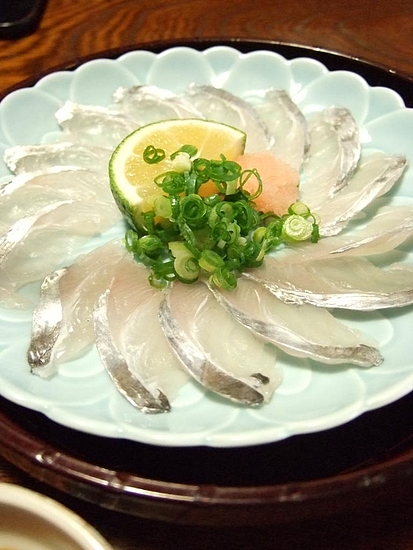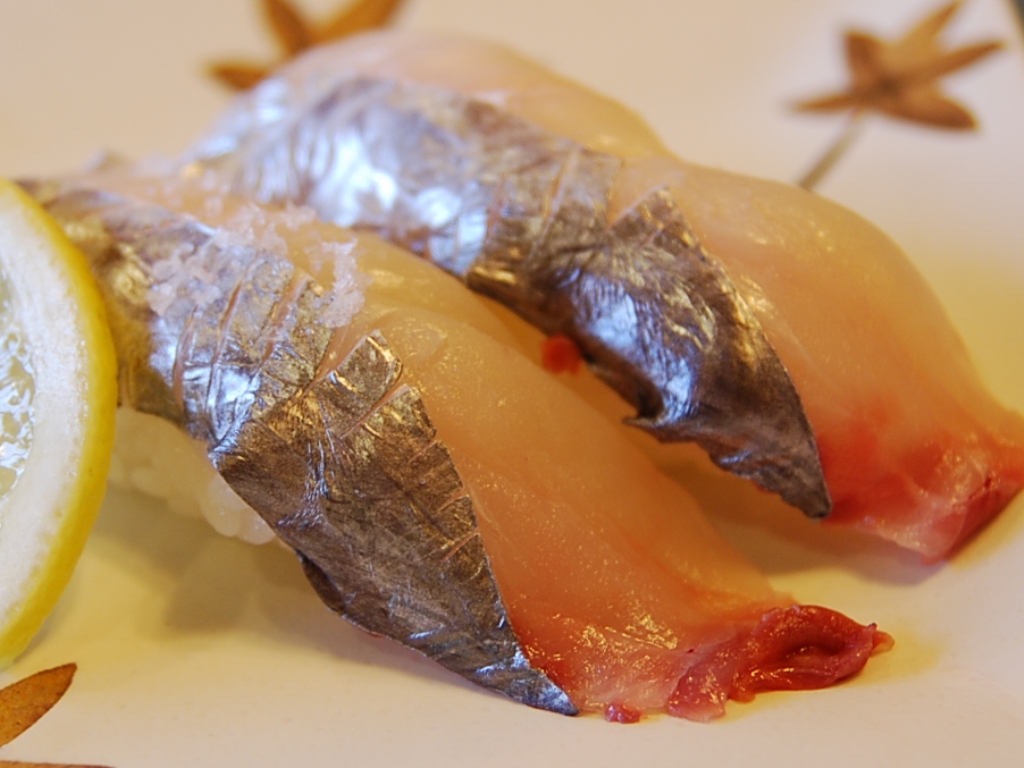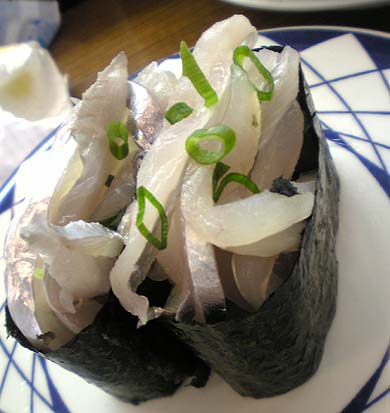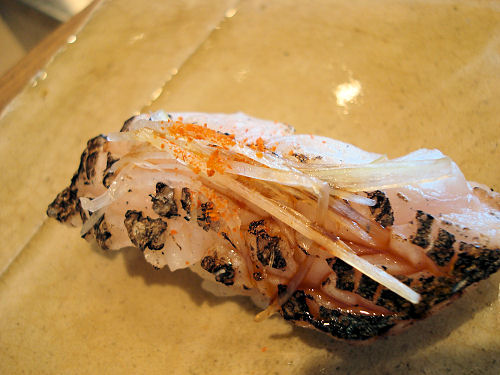
Tag Archives: sashimi

Vegan Sushi at Sushi Ko (Shizuoka City, ’10/04/22)

4 Sprout Sushi Set!

Vegan and vegetarian sushi exists!
Although Im neither, I always make a pont to order a few vegan nigiri at my favourite sushi Restaurant, Shizuoka City.
Every time the Missus and I visit the restaurant like we did last night, Mr. Oda knows what’s coming!
Although it is easier in Shizuoka than anywhere else, one should be able to taste them at any sushi restaurant worth its name. A little smile and politeness will do wonders!

The first thing I asked (there will be a full posting soon about the whole meal!) was to devise a set of sprout sushi as shown in picture at top of this posting.
The first sprout was menegi/芽葱 or thin leek sprouts.

The second one was himesoba/姫蕎麦 or buckwheat sprouts.

The third one was mitsuba/三つ葉 or trefoil sprouts with beautiful leaves.

The fourth one was kawairedaikon/かわいれ大根 or daikon sprouts, lightly boiled and topped with umeboshi.

We did have a sushi roll which is vegan: shiso/始祖 or perilla leaves, natto/納豆 and umeboshi/梅干!

SUSHI KO
shizuoka City, Aoi Ku, Ryogae-cho. 2-3-1 (Aoba Koen)
Tel.: 054-2512898
Business Hours: 17:00~25:00. 17:00~23:00 (Sundays)
Closed on Wednesdays
Reservations recommended
Credit cards OK
HOMEPAGE (Japanese)

RECOMMENDED RELATED SITES:
Warren Bobrow, Bread + Butter, Zoy Zhang, Hungry Neko, Think Twice, Frank Fariello, Mangantayon, Hapabento, Elinluv Tidbit Corner, Tokyo Terrace, Maison de Christina, Chrys Niles,Lexi, Culinary Musings, Wheeling Gourmet, Comestiblog, Chronicles Of A Curious Cook, Bento Boutique, Tokyo Through The Drinking Glass, Tokyo Foodcast, Urban Sake, Sake World, Palate To Pen, Yellin Yakimono Gallery, Tokyo Terrace, Hilah Cooking, More than a Mount Full, Arkonite Bento. Island Vittles, Skewer It!

Please check the new postings at:
sake, shochu and sushi

—————————————-
日本語のブログ
—————————————-

Horse Meat Sashimi at Tomii

Horse meat has been a favourite of the Japanese (and only the French and the Tatars!). They call it “Sakura” as it is reminiscent of the colour of cherry blossoms!
The best quality is produced in Kagoshima Prefecture in the Island of Kyushu.

It is usually served in very thin sashimi/carpaccio-style slices.

In sushi restaurants, it will usually be frozen for easier cutting, but Tomii beig a high-quality restaurant they avoid frezzing which might add water to the meat.
It is very sweet and tender, and a very special morsel.

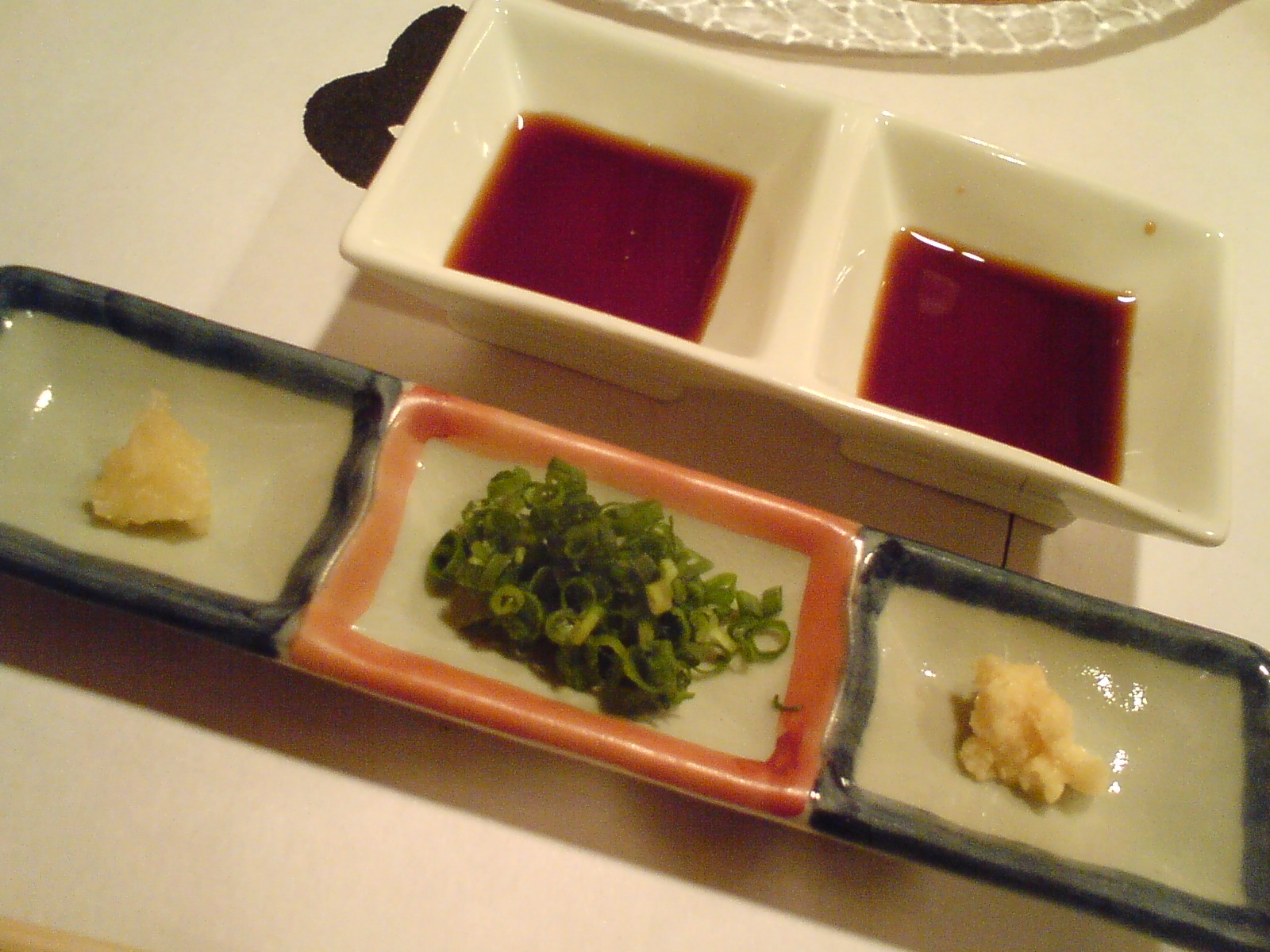
It is always served with two types of seasoning at Tomii:
Soy sauce (light variety) with freshly grated ginger, or the same soy sauce with grated garlic. Both are complemented with very finely chopped fresh thin leek!

To be enjoyed with a great sake or shochu!

TOMII
Shizuoka City, Aoi Ku, Tokiwa-cho, 1-2-7, Tomii Bldg, 1F
Tel.: 054-274-0666
Business hours: 17:00~22:00
Closed on Sundays
HOMEPAGE (Japanese)

RECOMMENDED RELATED SITES:
Warren Bobrow, Bread + Butter, Zoy Zhang, Hungry Neko, Think Twice, Frank Fariello, Mangantayon, Hapabento, Elinluv Tidbit Corner, Tokyo Terrace, Maison de Christina, Chrys Niles,Lexi, Culinary Musings, Wheeling Gourmet, Comestiblog, Chronicles Of A Curious Cook, Bento Boutique, Tokyo Through The Drinking Glass, Tokyo Foodcast, Urban Sake, Sake World, Palate To Pen, Yellin Yakimono Gallery, Tokyo Terrace, Hilah Cooking, More than a Mount Full, Arkonite Bento

Please check the new postings at:
sake, shochu and sushi; Happy Little Bento

Japanese Seasonal Fish: Torafugu/Tiger Puffer

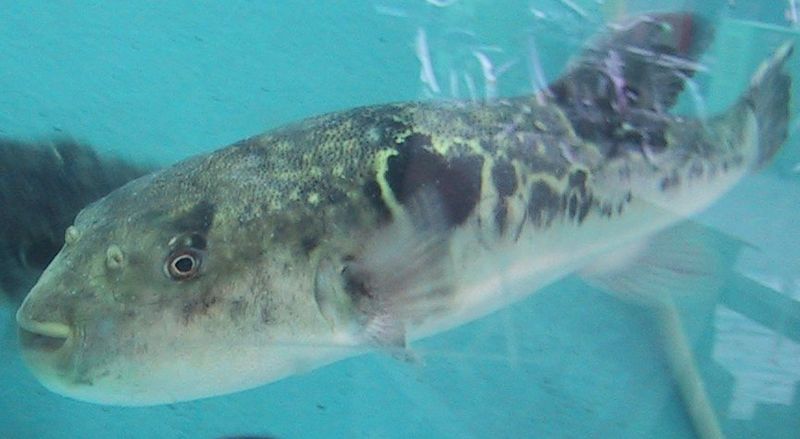
Torafugu or Tiger Puffer is one of more than a 100 hundred varieties of edible Puffer Fish or Globe Fish, but Tiger Puffer is by a great distance the most popular variety in Japan!

It is also known in Japanese as Honfugu/本河豚 or Oofugu/大河豚.
The main season is Winter and a little later for other regions.
It is caught on both sides of Japan especially in Central and East Japan.
It is a specialty in Hamamatsu in our Shizuoka Prefecture.

11,000 tonnes are caught yearly around Japan.
It is bred in Japan to the tune of 4,700 tonnes.
13,000 tonnes are mainly imported from China and South Korea.

In Japan, although it can be bought already dressed, one needs a special license to cut it, serve it, or sell it as the innards contain a violently lethal poison, although cheap fugu (not torafugu) does not always contain such toxin!

Cheap fugu can be eaten raw as sashimi all over Japan.

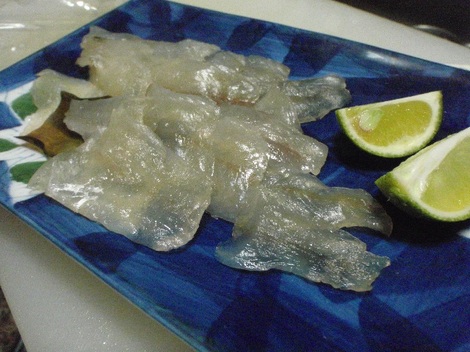
But more expensive torafugu sashimi is served as a piece of art!

As sashimi, it is best avoured with leeks, lemon, momijioroshi/grated daikon with chili pepper and ponzu!

As sushi, it can be served fairly plain.

Or aburi/炙り, lightly seared on one side!

Or more artistically with sansho and herbs!

Or even with its skin as the latter is edible!

It can also be served as gunkan seasoned with its own liver: a true delicacy!

Shirako/白子 or male spem sacs are also a delicay!

Torafugu can anturally be cooked, especially the bony parts full of meat but difficult to cut. My favourite is karaage/唐揚, deep-fried!

It is also very popular in cold weather a nabe/鍋 in Japan,

and in South Korea!

RECOMMENDED RELATED SITES:
Warren Bobrow, Bread + Butter, Zoy Zhang, Hungry Neko, Think Twice, Frank Fariello, Mangantayon, Hapabento, Elinluv Tidbit Corner, Tokyo Terrace, Maison de Christina, Chrys Niles,Lexi, Culinary Musings, Wheeling Gourmet, Comestiblog, Chronicles Of A Curious Cook, Bento Boutique, Tokyo Through The Drinking Glass, Tokyo Foodcast, Urban Sake, Sake World, Palate To Pen, Yellin Yakimono Gallery, Tokyo Terrace, Hilah Cooking, More than a Mount Full, Arkonite Bento. Island Vittles, Skewer It!

Please check the new postings at:
sake, shochu and sushi

—————————————-
日本語のブログ
—————————————-

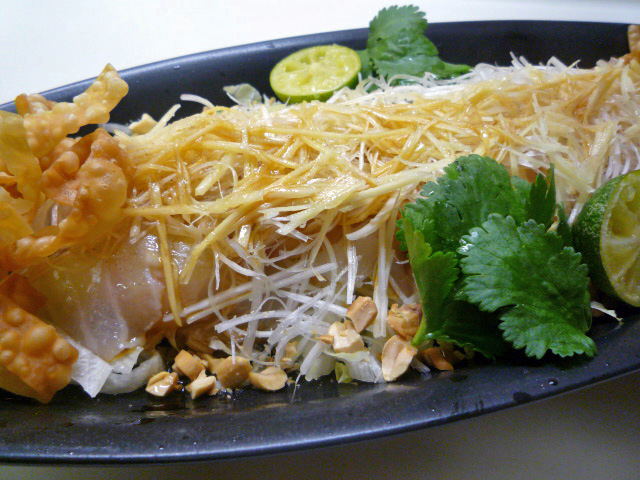
Chinese-Style Sashimi!

Sashimi is not and should not the sole property of Japanese gastronomy.
After all, carpaccio is nothing but a varietyof sahimi!
I remember savouring this Cinese=style sashimi for the first time in Shizuoka City in a great French restaurant!

So next time you get your hands on a nice piece of fresh white-fleshed fish, why don’t you try experiment?
Below is the method. Do experiment with quantities!

Chionese-Style Sashimi!

INGREDIENTS: For 2~people

-Sole, Seabream, Snapper: a large fillet
-White leek: 1
-Fresh coriander: as appropriate
-Wantan, wonton, wuntun wrappers: as appropriate
-Peanuts: as appropriate
-Fresh ginger: as appropriate
-Lettuce: a appropriate
-Lemon or lime: as appropriate
-Peanuts oil: 2 tablespoons
-Sesame oil: 2 tablespoons

Sauce:
-Soy sauce: 3 tablespoons
-White leeks: 1 tablespoon (Chopped finely)
-Red chillies (sliced thin): 1
-Coriander (finely chopped): 1 tablespoon (chopped finely)
-White Sesame oil: 1 tablespoon

RECIPE:

-Cut the fish into thin slices.

-Cut the white leek into very thin strips, leave in water for a while and drain well.

-Cut the lettuce into 1 cm wide strips.

-Cut the wanton wrappers into 1 cm wide strips and deep-fried until crispy. Place them on a kitchen paper to absorb excess oil and cool down.

-Crush the peanuts in small bits.

-Cut the fresh ginger into very thin strips, leave in clean water for a while, then drain thoroughly.

-Prepare the sauce. in a bowl drop the soy sauce, chopped white leeks, thinly sliced red chili, chopped coriander and white sesame oil and mix well. If you warm this sauce up a little before pouring it over the fish, the flavours will be enhanced.

-On a serving dish (look at the picture!), place the slices of fish on a bed of lettuce and sprinkle with a very small amount of salt and pepper.

-Top with a much as you want white leek strips, ginger strips, deep-fried wanton wrappers, crushed peanuts, appropriately cut fresh coriander, lemon or lime slices and pour the sauce all over.

-As a last optional touch, heat peanuts oil and sesame oil (2 to 1) until it smokes and pour it over the top! You could also press a lemon over the top and add more spices in the sauce!

RECOMMENDED RELATED SITES:
Warren Bobrow, Bread + Butter, Zoy Zhang, Hungry Neko, Think Twice, Frank Fariello, Mangantayon, Hapabento, Elinluv Tidbit Corner, Tokyo Terrace, Maison de Christina, Chrys Niles,Lexi, Culinary Musings, Wheeling Gourmet, Comestiblog, Chronicles Of A Curious Cook, Bento Boutique, Tokyo Through The Drinking Glass, Tokyo Foodcast, Urban Sake, Sake World, Palate To Pen, Yellin Yakimono Gallery, Tokyo Terrace, Hilah Cooking, More than a Mount Full, Arkonite Bento

Please check the new postings at:
sake, shochu and sushi

—————————————-
日本語のブログ
—————————————-

Japanese Seasonal Fish: Kisu/Shirogisu-Sillago

SILLAGO-SHIROGISU

Shirogisu, or Sillago in English probably has as many Japanese names as English names.
The Sillago found along the Japanese shores is also called sillago japonica, Whiting or Smelt-Whiting in english, Shirogisu, Kisu, Magisu and Kisugo in Japanese.

The best specimen in Japan are caught in Fukuoka (Kyushu) and Ehime (Shikoku) prefectures from Spring to Summer.
It is also a sport angler’s favourite as they come in all sizes, although the everage will not measure much more than 10 cm.

Standard Shirogisu Sashimi

As a sahimi/raw fish it van be prepared in many manners:
Standard sashimi as above.

Shirogisu Konbujime Sashimi.
As konbujime, it will be matured between two sheets of wet konbu/seaweed to attain a sweet taste.

Shirogisu Aburi Sashimi

As aburi/lightly seared, one can enjoy two different textures and tastes at the same time.
Mind you, it is not easy to sear properly as the fillets are very thin!

The greatest part of the sillago catch comes from Indonesia, Korea, Thailand, China and other Asian countries.
Fortunately, here in Shizuoka, we do catch a sizeable amount in Suruga Bay guaranting freshness in season.

Shirogisu Sushi Nigiri.

If absolutely fresh, shirohisu/sillago makes for an interesting morsel, the more for it as it is quite rare in this sushi nigiri form.

Anglers will certainly appreciate it grilled on the stick at a BBQ on the beach with a nice pint of beer!

But the most popular way of savouring it is arguably as tempura or breaded and deep-fried, although the fish taste will vary greatly with freshness!
But if absolutely fresh, don’t forget to deep-fry its bones and head!

RECOMMENDED RELATED SITES:
Warren Bobrow, Bread + Butter, Zoy Zhang, Hungry Neko, Think Twice, Frank Fariello, Mangantayon, Elinluv Tidbit Corner, Maison de Christina, Chrys Niles,Lexi, Culinary Musings, Wheeling Gourmet, Social Culinaire, Sushi Nomads, Cook, Eat & Share, Gourmet Fury, 5 Star Foodie, Easy Does It Recipes, Oyster Culture, Once A Chef, All In Good Food, Cooking Stuff, Cheese Monger, Palate To Pen, Tokyo Through The Drinking Glass, Tokyo Foodcast, Citron Et Vanille

Please check the new postings at:
sake, shochu and sushi

—————————————-
日本語のブログ
—————————————-

Sashimi Plate at Uzu (’10/02/25)

Service: excellent, easy-going and very friendly
Facilities: great washroom, great cleanliness overall
Prices: very reasonable, good value.
Strong points: Very fresh local ingredients especially organic vegetables extensively used.

Just had our regular visit, the Missus and I last night at Uzu, the talk of the town (on TV nest Sunday!) as far as Izakayas arec ocncerned in this city.

Apart of supremely extravagant vegatables and meat, one can expect the best quality sashimi there, too. And most of it local!

From right to left:
-Isaki/Chicken Grunt (what a name!), both as sashimi and seared sashimi/aburi sashimi (Suruga Bay).
-Kihada Magura/Albacore Tuna
-Madako/True Octopus
-Grated fresh wasabi from up the Abe River, Shizuoka City.
-Benimasu/Salmon Trout from Fijnomya City.

A real treat!

UZU
Shizuoka City, Otowa-cho, 3-18
Tel.: 054-249-6262
Business hours: 17:00=23:00
Closed on Mondays and first Tuesday
Reservations recommended
Credit cards OK

RECOMMENDED RELATED SITES:
Warren Bobrow, Bread + Butter, Zoy Zhang, Hungry Neko, Think Twice, Frank Fariello, Mangantayon, Hapabento, Elinluv Tidbit Corner, Tokyo Terrace, Maison de Christina, Chrys Niles,Lexi, Culinary Musings, Wheeling Gourmet, Social Culinaire, Sushi Nomads, Cook, Eat & Share, Gourmet Fury, 5 Star Foodie, Easy Does It Recipes, Oyster Culture, Once A Chef

Please check the new postings at:
sake, shochu and sushi

—————————————-
日本語のブログ
—————————————-

Sashimi Feast at Ekimae Matsuno Sushi

Now, what makes sushi restaurants of so high level in Shizuoka?
Tokyoites will say that they have Tsukiji and that is enough…
Have you ever wondered how fresh fish, shellfish and others are “fresh” there?
“Fresh fish” at all costs has become a very misleading notion.
The fact it is alive and swimming does not mean it is fresh.

All fish must be caught first and depending on their kind have to be either eaten right away or…
For example seabreams should be kept at least a day alive in an aquarium/tub to get them rid of unwanted parasites inside their innards. But at the same time keeping them alive longer will result in a loss of proteins and fat with the consequence of a fast quality decline.
Tuna has to be blooded very precisely first, then frozen. Once thawed and cut it is usually left at least a week for maturing/ripening before reaching the perfect taste.
On the other hand, squids must be dressed and eaten alive (still moving!).
It is a “case by case” (said in English) as explained by the chef at Ekimae Matsuno Sushi in Shizuoka City.
Founded in 1930, the oldest sushi restaurant know what they are talking about!

Bachi Maguro/目鉢鮪/Big-eyed Tuna from Ogasawara/Shizuoka Prefecture, Tairagai/玉珧/Pen shell from Aichi Prefecture, Sayori/細魚/Japanese Halfbeak from Suruga Bay/Shizuoka Prefecture

The key to appreciating top-class sashimi at all times and seasons is to savour it locally. Only then will you be sure of its origin and quality.
Naturally you must also discover a trustworthy sushi restaurant and chef. Not very difficult here where the competition is intense!

Tachiuo/太刀魚/Scabbard fish partly seared/aburi/炙り, Aori Ika/障泥烏賊/Bigfin Reef Squid rolled with seaweed/nori/海苔, and Madai/真鯛/Japanese red seabream, red seabream snapper. All from Suruga Bay in Shizuoka Prefecture.

Ekimae matsuno Sushi pride themselves in providing Shizuoka Prefecture fare whenever possible, including Japanese sake (all from Shizuoka Prefecture!), and they make no bones (fish bones!LOL) about that! Shy and reserved, they will quickly warm up to your questions if asked in a gentle enough manner good manners!).

I sudenly felt an urgent longing for more Sayori/細魚/Japanese Halfbeak after having sampled it in the first sashimi set. It is such a great and delicate fish and ripened to perfection as a whole fish inside the refrigerated display window. It canbe manipulated in all kinds of designs.

Sorry for the fuzzy pic. I’m still getting used to the newly discovered possibilities of my old mobile phone camera (up to 2 MB).

Kawahagi no Kimo Ae/カワハギの肝和え/Thread-Sail File Fish sashimi seasoned with its Liver. From Suruga Bay, Shizuoka Prefecture.

Now, here is a fish you must eat as fresh as possible!
Take it out alive (caught the day before maximum) out of the aquarium, dress it quickly, clean the liver, and serve the fish cut either in thin strips or slices with its liver chopped into a dip sauce, or season the cut fish directly (once cut) with its live, and serve it with chopped scallions/thin leeks and grated wasabi!
Ah, I forgot to mention that wasabi is from Shizuoka Prefecture (80% of the total national crop!)! Actually I’m repeating that every time! LOL

The chef had the grace (and pride) of showing me this (small, although reaching more than 20 cm!) Aori Ika/障泥烏賊/Bigfin Reef Squid live and kicking before preparing it for me!

It was still moving (I mean the very strips) under my chopsticks.
The chef gently asked me to taste it first as it is with nothing.
Incredible! Crunchy, not the merest hint of “fishy” taste. An experience!
Then he asked me to try it with a little salt only. Another discovery!

Last, the chef brought an enormous fresh egg yolk in a small crystal bowl and invited me to add a little soy sauce to it before dipping the squid in it. You must try that!

This was lunch and I am not eating much then as a rul these days.
I decided to skip the sushi for another (near) day and asked for tamagoyaki/卵焼き/japanese Omelette as dessert.
It came in two varieties:
the thin slices were eggs mixed with fish paste and the other were plain tamagoyaki fried with shiso.

Now, how much did I pay for all that?
60 US $!
Have I convinced you?

Ekimae Matsuno Sushi/駅前松乃鮨
Shizuoka City, Aoi Ku, Koya Machi, 9-3 (in front of Shizuoka City JR Station, North Side)
Tel.: 054-251-0123
Business hours: 11:00~21:00
Closed on Wednesdays and third Tuesday
HOMEPAGE (Japanese)

RECOMMENDED RELATED SITES:
Bread + Butter, Comestilblog, Greedy Girl, Bouchon For 2, Zoy Zhang, Hungry Neko, Mangantayon, Elinluv Tidbit Corner, Maison de Christina, Chrys Niles, Lexi, Culinary Musings, Eats and Everything, Bite Me New England, Heather Sweet, Warren Bobrow, 5 Star Foodie, Frank Fariello, Oyster Culture, Ramendo, Alchemist Chef, Ochikeron, Mrs. Lavendula, The Gipsy Chef, Spirited Miu Flavor, Wheeling Gourmet, Chef de Plunge, Sushi Nomads, Island Vittles, Jefferson’s Table, Rubber Slippers in Italy, The London Foodie

Please check the new postings at:
sake, shochu and sushi,
—————————————-
日本語のブログ
—————————————-

Italian Restaurants: New Team at Aquavite!

Service: Excellent and very friendly
Facilities: great and very large washroom, great cleanliness overall
Prices: reasonable to expensive. Top-class Italian wines. Private room for~8 people.
no-smoking-logo1 Non-smoking at counter!

High quality Italian Cuisine is a trademark of Shizuoka City thanks to the extravagant supply of impeachable ingredients both from the nearby sea and the land, which have contributed to an ever-increasing level in all kinds of cuisines. But Italian gastronomy must be the most competitive specialty inthis status-conscious city.

Like in many top restaurants, recruiting first-class staff upon the departure of established chefs to other shores is a constant headache for Aquavite who are justly proud of their rank as the best Italian Restaurant in town and feel responsible for constantly maintaining and improving standards.

The regulars know only too well, and the place being crowded on a Monday evening just proved it was “business as usual”!

The new team in charge of the kitchen is now Chef Kenichi Honda who worked in Roma for two years and holds an Italian Sommelier License,

and his sous-chef Yuhei Kajiyama.

Both are born in Shizuoka City, a marked advantage when it comes to choosing the best local products which for the majority of their creations.
Like the best Japanese chefs they bring another dimension to Italian cuisine with their almost obsessive attention to every detail.

I managed to pay them a quick visit last night to have a chat (a long one as they were very busy!) and a few pics before I visit them for a full dinner and report in the near future.
Please forgive the inferior quality of the pics, but taking them over the counter in minimum time was not easy!LOL

Stir-fried scallop and grilled “Kinki seabream”.

Italian charcuterie!

Beef Roast.

Porcini cream gnocchi.

Extravagant Minestrone!

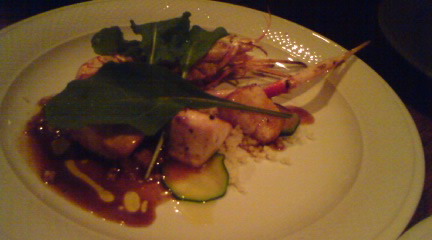
Mekajiki/Marlin and Scampi on a bed of couscous.

See you next time!

Address: 420-0034 Shizuoka Shi, Tokiwa-cho, 1-2-7, Tomii Bldg. 3F
Tel. & fax: 054-2740777
Opening hours: 11:30~14:00 (on reservations only), 18:00~22:00
Closed on Sundays
Homepage (Japanese)
Credit Cards OK

RECOMMENDED RELATED SITES:
Bread + Butter, Comestilblog, Greedy Girl, Bouchon For 2, Zoy Zhang, Hungry Neko, Mangantayon, Elinluv Tidbit Corner, Maison de Christina, Chrys Niles, Lexi, Culinary Musings, Eats and Everything, Bite Me New England, Heather Sweet, Warren Bobrow, 5 Star Foodie, Frank Fariello, Oyster Culture, Ramendo, Alchemist Chef, Ochikeron, Mrs. Lavendula, The Gipsy Chef, Spirited Miu Flavor, Wheeling Gourmet, Chef de Plunge, Sushi Nomads, Island Vittles, Jefferson’s Table, Rubber Slippers in Italy, The London Foodie

Please check the new postings at:
sake, shochu and sushi,
—————————————-
日本語のブログ
—————————————-

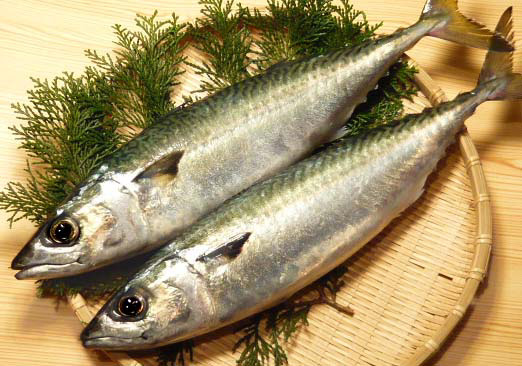
Japanese Seasonal Fish: Saba/Mackerel

Mackerel or saba is a fish eaten over the whole Northern Hemisphere and does come under many varieties and names.
In Japan it is mainly called “Saba”, “Masaba” or “Sekisaba”.
In this country it is mainly caught off Oita, Saga Prefecture, although quite a few are caught off our coasts, especially off Yaizu.
They feed on plankton mainly.

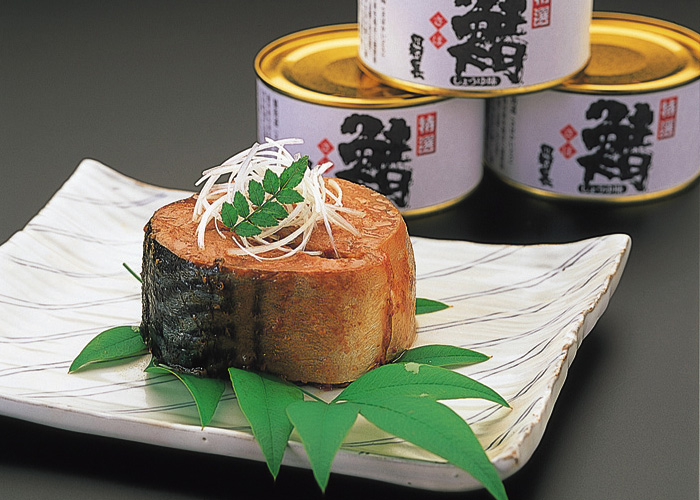
They are prepared and cooked in many guises. In France, my birthplace, they are steamed and then pickled in white wine and spices before being canned.

naturally tinned tuna is available in Japan,too!

In Northern Europe they also eaten half raw as smorgasbrod and pickled fish.

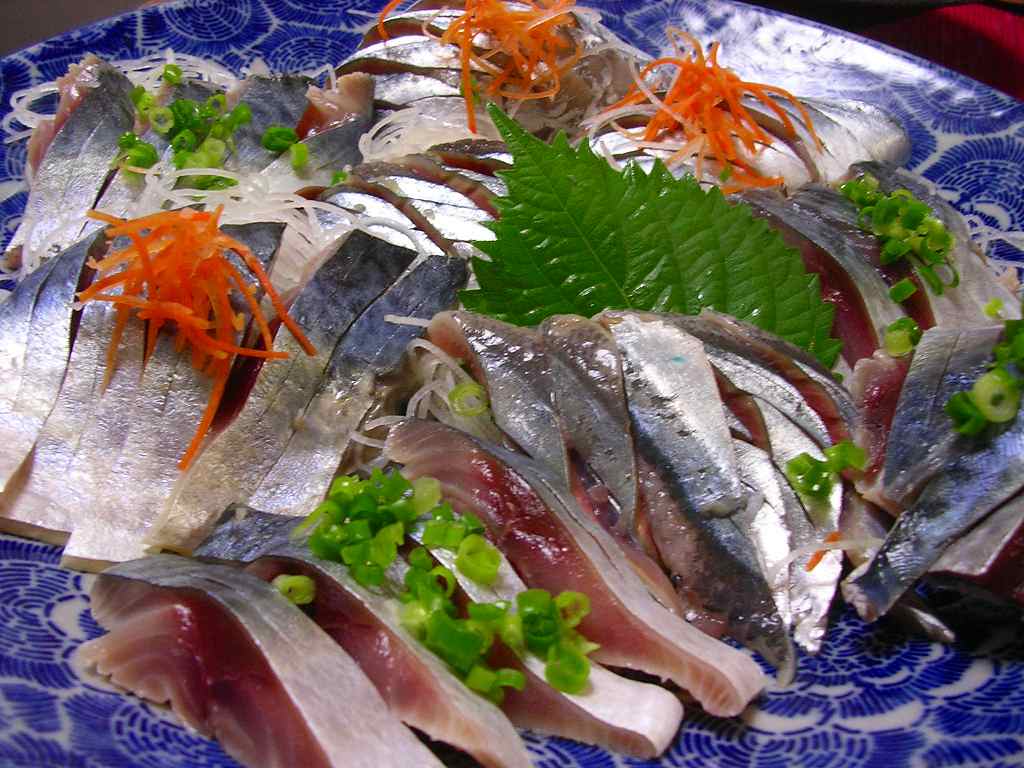
It can be appreciated as sashimi, but it must be absolutely fresh and is best served with grated fresh ginger and lemon.
As far as sushi is concerned, “masaba” variety is best

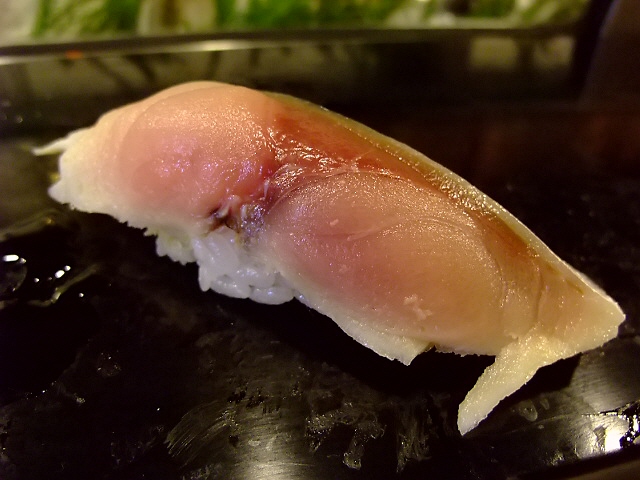
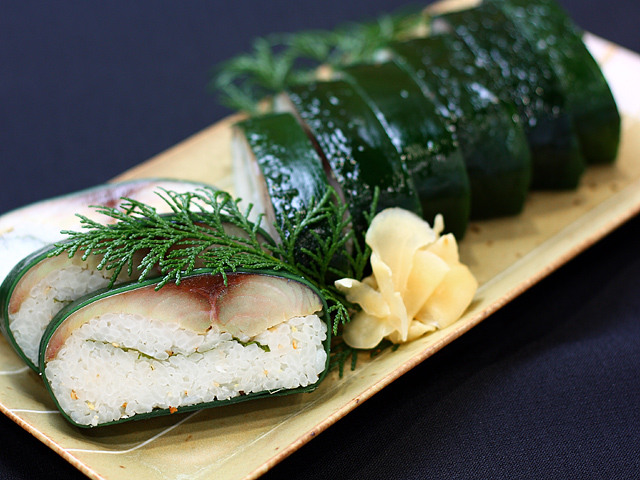
Saba Konbujime nigiri.

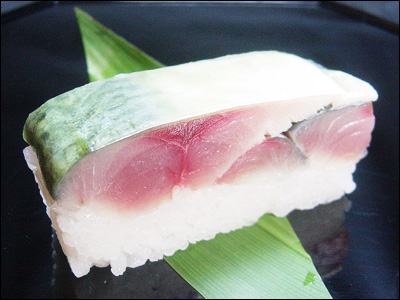
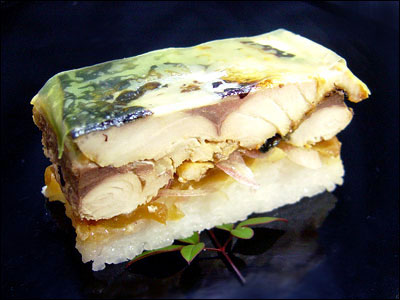
It is especially popular as “oshizushi” (pressed sushi).

Double oshizushi!

My preference goes for Saba konbujime.

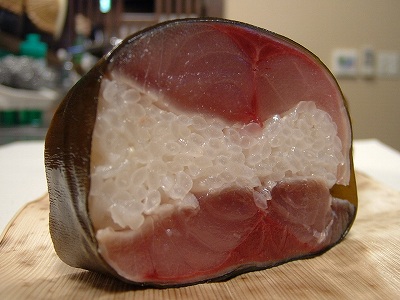
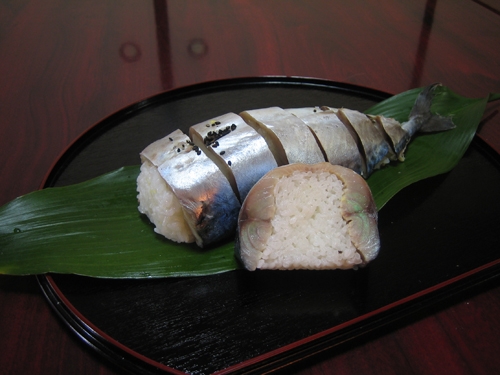
Saba Bogata

The mackerel is kept inside a variety of wet seaweed for an hour or so before put whole on top of a long “bar” of rice, then cut to size.

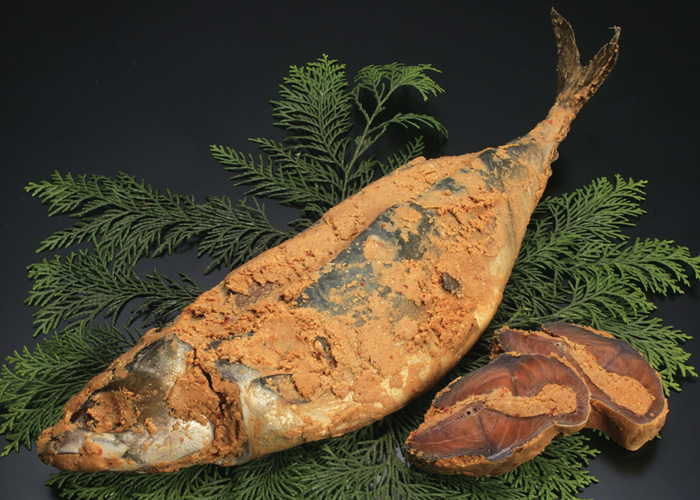
Saba Heshiko Zuke.
Saba/Mackerel has been a staple fish in Japan since immemorial times.
One way to conserve it for better transport away from the shores was “Saba Heshiko zuke”, that is pickled in miso and sake white lees.

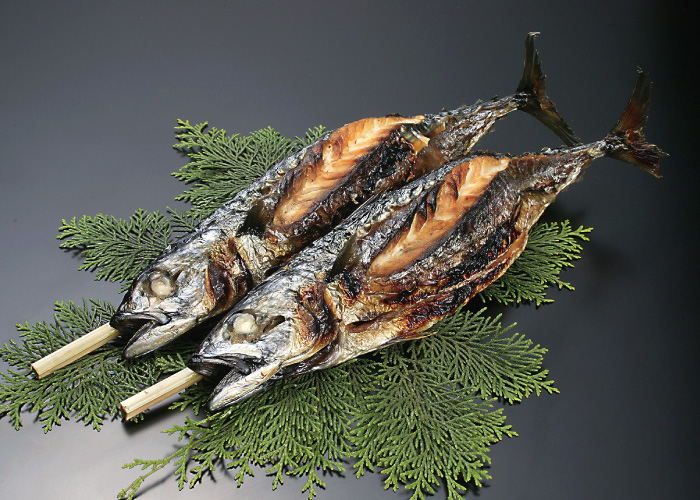
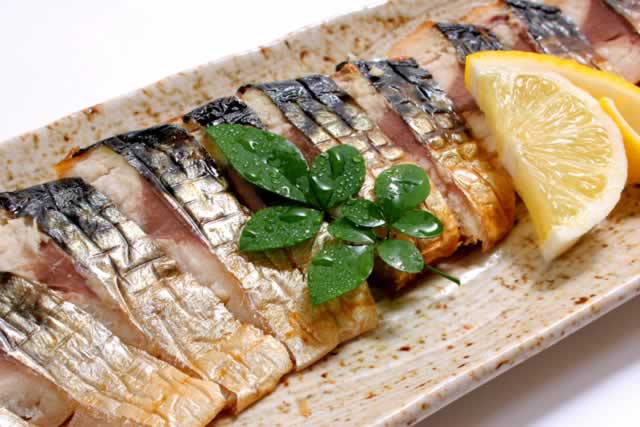
Saba/mackerel is easily grilled, either on the stick as above,

or grilled and served cut in slices.

The same grilled saba can be served as oshizushi/presed sushi!

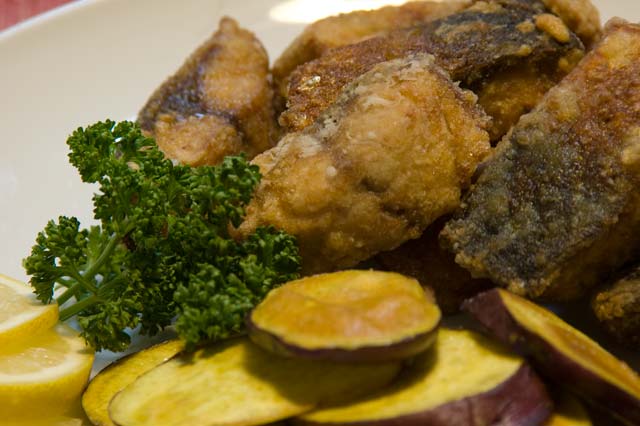
Saba can be also served to a tatsty crispiness by deep-frying it!

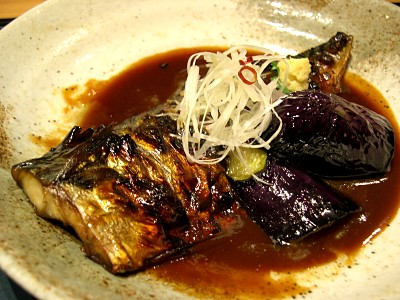
Or simmered the Japanese way with miso, sake, soy sauce, ginger and mirin!

A very versatile fish!

RECOMMENDED RELATED SITES:
Bread + Butter, Comestilblog, Greedy Girl, Bouchon For 2, Zoy Zhang, Hungry Neko, Mangantayon, Elinluv Tidbit Corner, Maison de Christina, Chrys Niles, Lexi, Culinary Musings, Eats and Everything, Bite Me New England, Heather Sweet, Warren Bobrow, 5 Star Foodie, Frank Fariello, Oyster Culture, Ramendo, Alchemist Chef, Ochikeron, Mrs. Lavendula, The Gipsy Chef, Spirited Miu Flavor, Wheeling Gourmet, Chef de Plunge, Sushi Nomads, Island Vittles, Jefferson’s Table, Rubber Slippers in Italy, The London Foodie

Please check the new postings at:
sake, shochu and sushi,
—————————————-
日本語のブログ
—————————————-

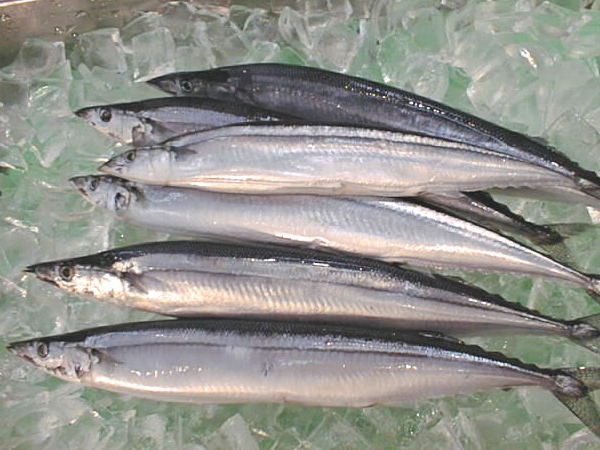
Japanese Seasonal Fish: Sanma/Mackerel Pike

“Sanma” or Mackerel Pike usually comes on our plates with the advent of Autumn, but can be found until mid-winter in Shizuoka Prefecture
Known under other names such “Saira” or “Banjyo”, it is a fish with red meat rich with proteins.
In season, the flesh is fatty and sweet.

Its Japanese name 秋刀魚 means Autumn Sword Fish!

It is mainly caught off the north eastern shores of Japan as the fish swims down from Hokkaido.
But the more south it is caught, the less fat it will contain.
The annual catch exceeds 20,000 tonnes, although breeding is increasingly successful.
If you eat it at a sushi restaurant, you can expect its bones and head served deep-fried.

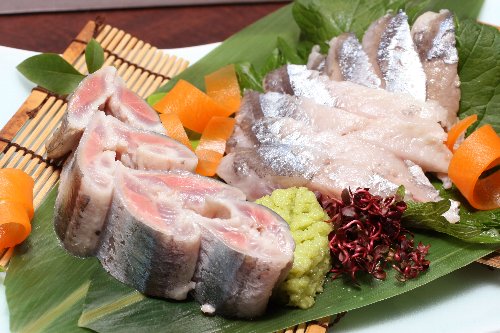
As sashimi it can be enjoyed straight with wasabi and soy sauce.
But as it is a red-flesh fish it beautifully combines with grated ginger, sliced myoga or chopped thin leeks.

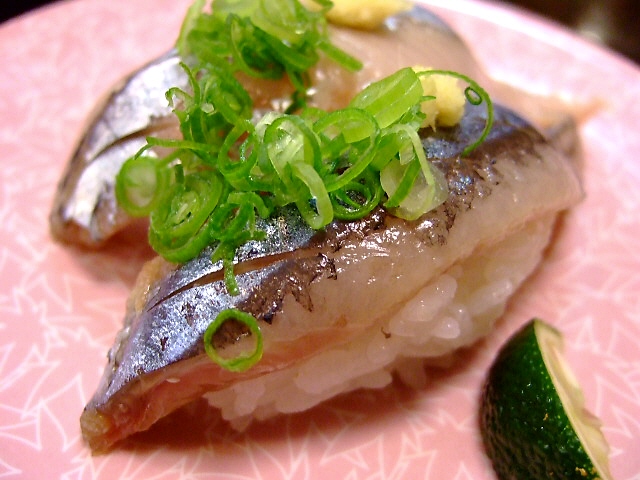
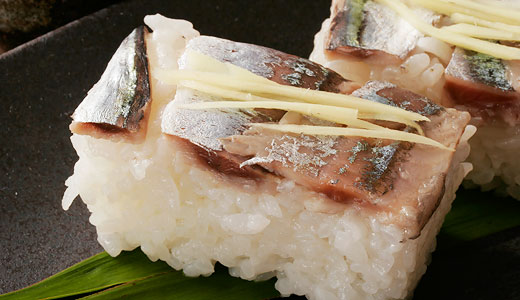
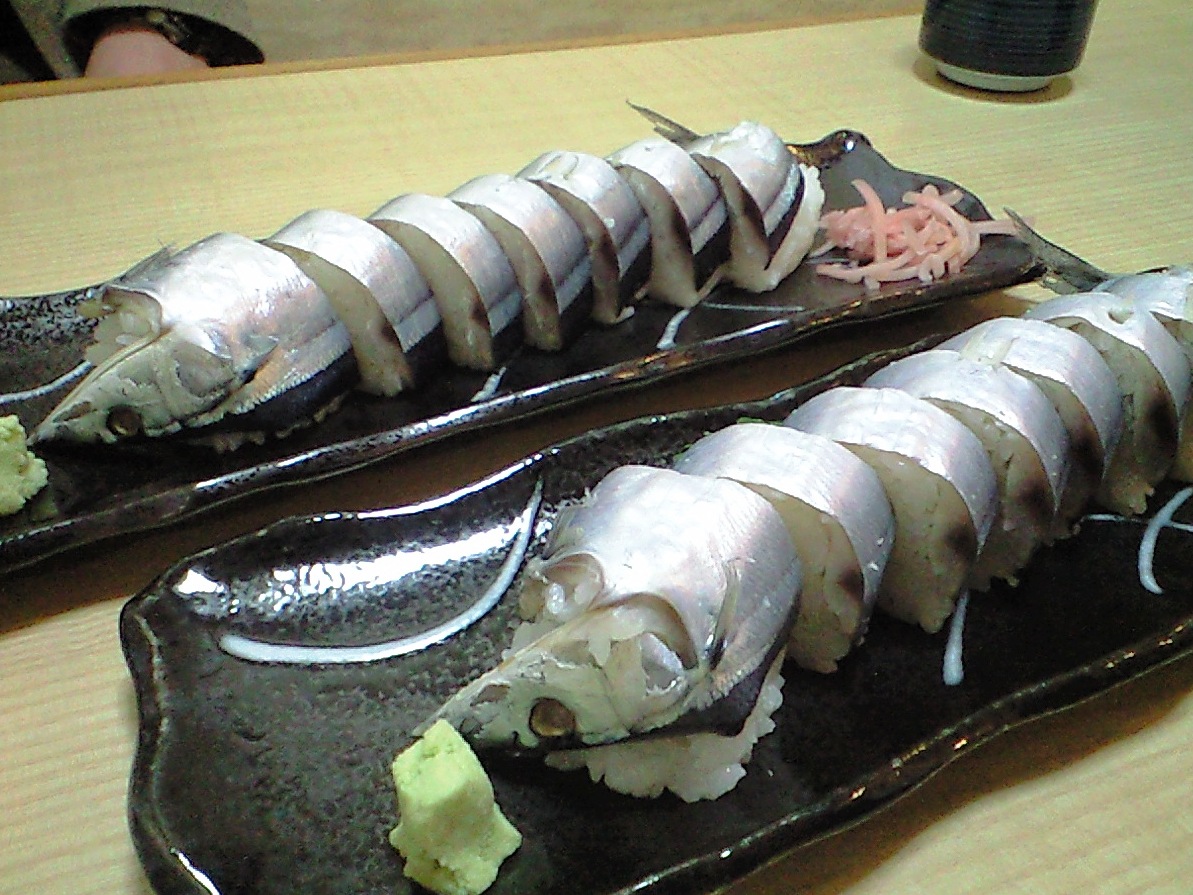
As sushi it does come in many forms and can be pretty spectacular as a single sushi nigiri serving!

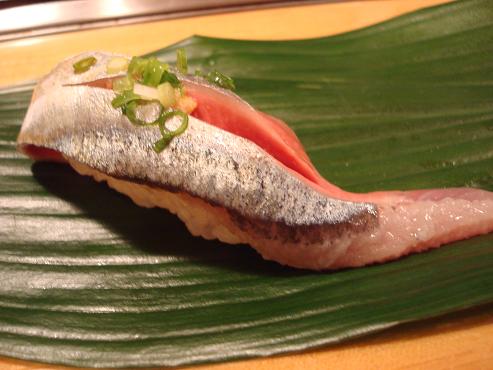
Another sushi nigiri sample!

In waetern Japan it is very popular as oshizushi/pressed sushi.

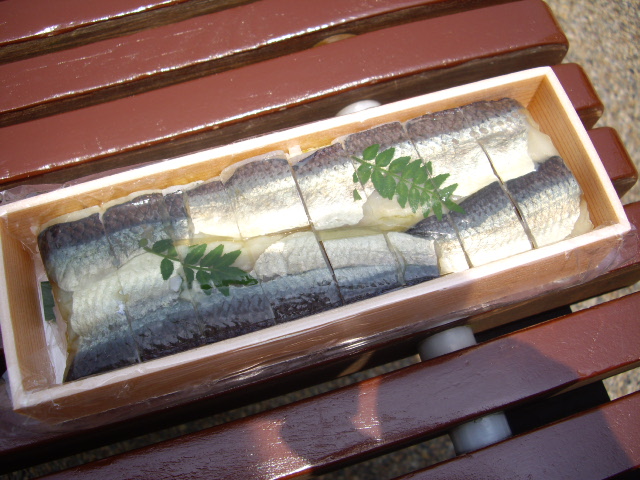
Another popular oshizushi version is “bo-gata/whole fish sushi”!

Bo-gata is often encountered as a sushi bento/lunch box!

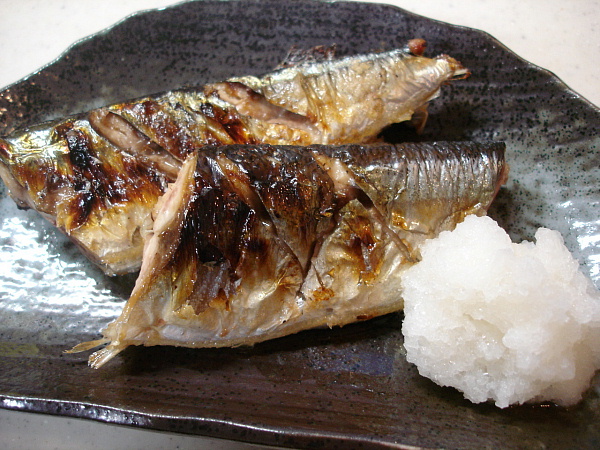
As it is a very rich fish, it can be eaten simply grilled with its skin and grated daikon and lemon.

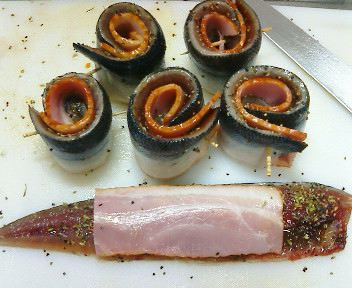
It is easy to manipulate such as the above sanma and bacon roll (later grilled)!

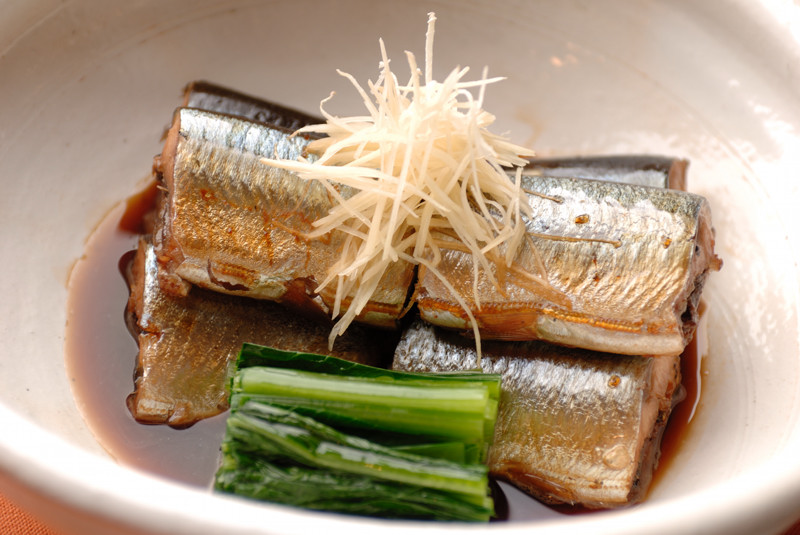
Of course it can be simmered Jpaanese style with soy sauce, mirin, sake and ginger!

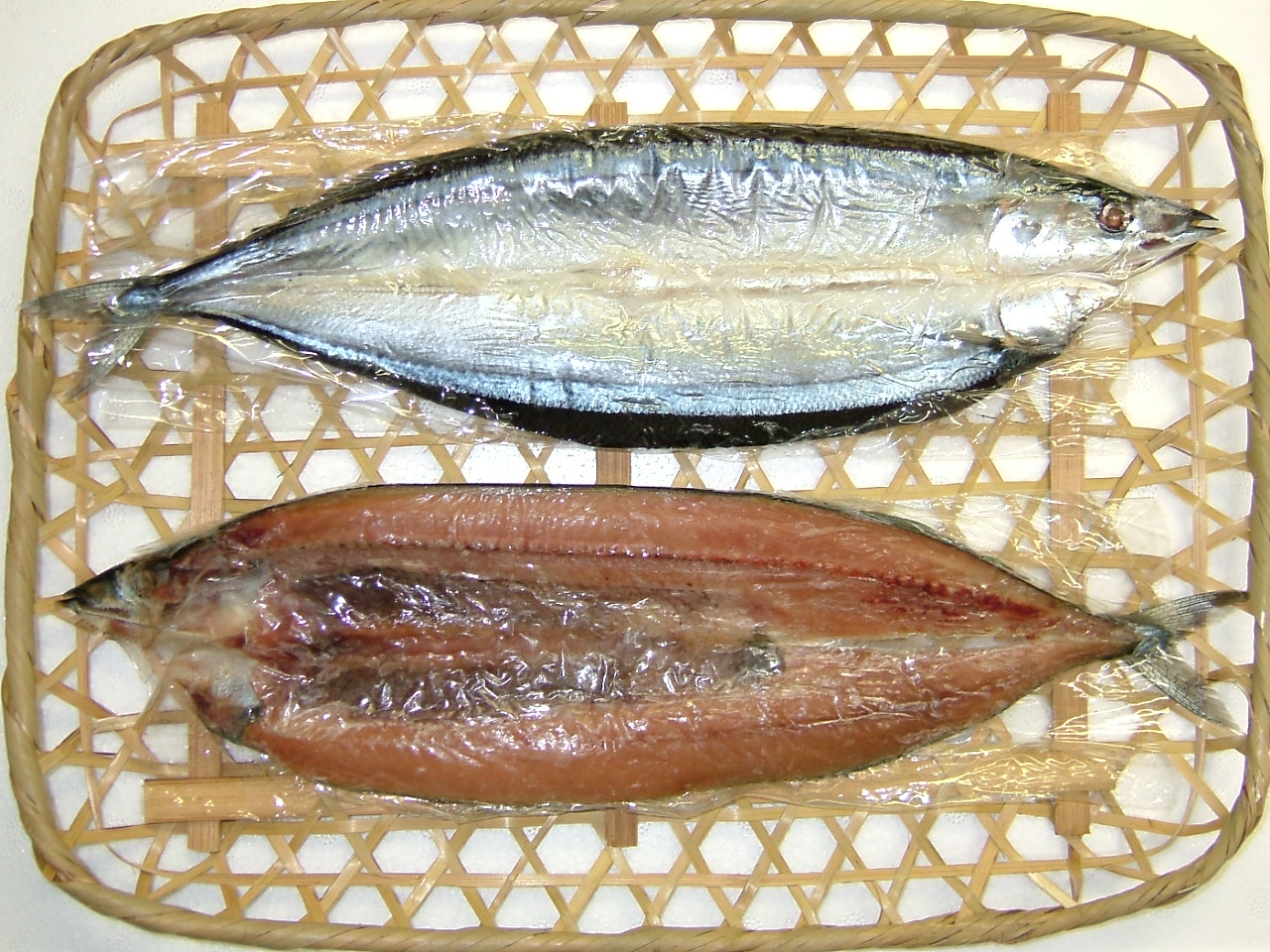
As himono/dried fish it is practical for carrying and grilling later!

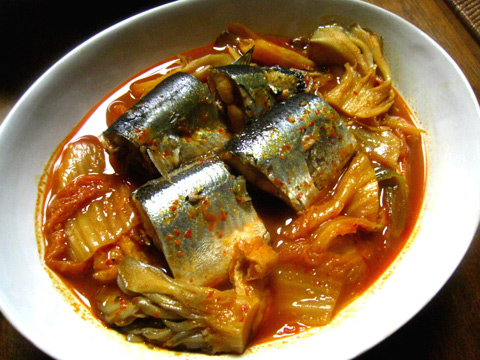
Tinned/canned it is comparatively cheap and can be accomodated in many ways, such as with kimchi!

RECOMMENDED RELATED SITES:
Bread + Butter, Comestilblog, Greedy Girl, Bouchon For 2, Zoy Zhang, Hungry Neko, Mangantayon, Elinluv Tidbit Corner, Maison de Christina, Chrys Niles, Lexi, Culinary Musings, Eats and Everything, Bite Me New England, Heather Sweet, Warren Bobrow, 5 Star Foodie, Frank Fariello, Oyster Culture, Ramendo, Alchemist Chef, Ochikeron, Mrs. Lavendula, The Gipsy Chef, Spirited Miu Flavor, Wheeling Gourmet, Chef de Plunge, Sushi Nomads, Island Vittles, Jefferson’s Table, Rubber Slippers in Italy, The London Foodie

Please check the new postings at:
sake, shochu and sushi,
—————————————-
日本語のブログ
—————————————-

Japanese Seasonal Fish: Shimaaji/Striped Horsemackerel

Shimaaji, or Striped Horsemackerel is one variety of Aji/Horsemackerel-Saurel.
Although the season is said to be in Summer, the taste varies little with the time of the year.
Striped Horsemackerel caught by anglers off the Izu Peninsula are said to be the best in Japan.
It is known under the other names of Ookami, Kose and Katsuoaji.

In English it called Striped Horsemackerel, Saurel or White Trevally.
White trevally, Pseudocaranx dentex, is a jack of the family Carangidae widespread in tropical and warm temperate areas between 40°N and 47°S, in the Atlantic, Mediterranean, Indian and Pacific Oceans. It has a deep body, and a greenish colour with metallic overtones and a dark spot above the gills. The fins are yellow.
In New Zealand, this trevally is known by the Māori as araara, and is generally confined to waters north of Cook Strait, although it sometimes reaches as far south as Otago in the summer.

It is a great fish to serve as sashimi, either in simple slices as above,

Or the whole fish as Tataki/tartare!

In Shizuoka, where the fish is usually served still alive, the bone and heads will served later deep-fired. Superb snack!

The fish is easy to manipulate to make beautig\ful maki with daikon as above!

The sushi nigiri will have photograpers on constant alert!

See what I mean?

Of course aji can be enjoyed grilled with a simple seasoning of soy sauce or ponzu!

Like most white-fleshed fish it can deep-fired in batter and breadcrumbs at home!

RECOMMENDED RELATED SITES:
Bread + Butter, Comestilblog, Greedy Girl, Bouchon For 2, Zoy Zhang, Hungry Neko, Mangantayon, Elinluv Tidbit Corner, Maison de Christina, Chrys Niles, Lexi, Culinary Musings, Eats and Everything, Bite Me New England, Heather Sweet, Warren Bobrow, 5 Star Foodie, Frank Fariello, Oyster Culture, Ramendo, Alchemist Chef, Ochikeron, Mrs. Lavendula, The Gipsy Chef, Spirited Miu Flavor, Wheeling Gourmet, Chef de Plunge, Sushi Nomads, Island Vittles, Jefferson’s Table, Rubber Slippers in Italy, The London Foodie

Please check the new postings at:
sake, shochu and sushi,
—————————————-
日本語のブログ
—————————————-

Japanese Seasonal Fish: Suzuki/Seabass

Suzuki or seabass is a fish so popular with anglers all over the world that a lot of people forget it is also an extremely popular for sashimi and sushi in Japan.

“Simple” Sashimi Plate

Her the seabass was first seared before before being sliced for sashimi!

Like any other fish, it bears many names: Madaka, Hakura, Shiibasu.

In the Kanto (Eastern Japan) area, including Shizuoka Prefecture, it is called Seigo when under 25cm. At 3 years of age, when it has attained a length near 60cm, it is called Fukko or Suzuki.
In Kansai (Western Japan) it is called Seigo, Hane, and Suzuki.

A summer fish par excellence, it is caught mainly in Central and western Japan. But it is also caught in winter in Shizuoka waters.

The bigger and the older the fish, the better it is considered. After a decline in the 1980’s, catches have increased recently, reaching more than 9,300 tonnes after 2000.
It has been raised succesfully, thus replenishing stocks.
170.000 seabasses were raised in 1992!

Great as a sushi and appreciated for it natural taste. A little salt and lemon juice are enough.

As a sashimi it canbe declined in many ways such as carpaccio!

Raw, it can be combined as a simple and sublime salad with octopus for example.

Italian style as fritters combined with a salad!

Of course it is a very versatile fish you can appreciate cooked, simmered, or grilled, although it becomes fragile upon being cooked.

Grilled, Japanese style, with a aonori/seaweed coating!

Grilled on its skin and served French style!

And why not eat it simply as steamed fish?

RECOMMENDED RELATED SITES:
Bread + Butter, Comestilblog, Greedy Girl, Bouchon For 2, Zoy Zhang, Hungry Neko, Mangantayon, Elinluv Tidbit Corner, Maison de Christina, Chrys Niles, Lexi, Culinary Musings, Eats and Everything, Bite Me New England, Heather Sweet, Warren Bobrow, 5 Star Foodie, Frank Fariello, Oyster Culture, Ramendo, Alchemist Chef, Ochikeron, Mrs. Lavendula, The Gipsy Chef, Spirited Miu Flavor, Wheeling Gourmet, Chef de Plunge, Sushi Nomads, Island Vittles, Jefferson’s Table

Please check the new postings at:
sake, shochu and sushi,
—————————————-
日本語のブログ
—————————————-

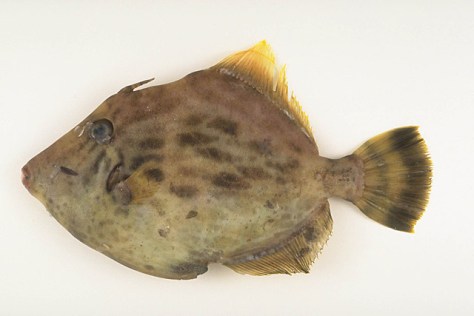
Japanese Seasonal Fish: Kawahagi/Thread-sail Filefish

Kawahagi or Thread-sail Filefish (or simply Filefish) is an angler’s favourite in summer, although it is caught almost all year round in Shizuoka.
Like any other fishes, it has other names such as “Gihagi, “Hagi”, “Gyuu”, “Subuta” or “bakuchiuchi”.
It is fairly common in Central and South Japan.
It is called Leatherjacket down in Australia where it is considered a pest!

The skin should be rough like that of a shark and brightly coloured.
Avoid sticky skin fish.
The bigger the size, the greater the taste (anglers, enjoy!)

In Kansai area, it replaces Fugu/Globefish when it is out of season for its similarity as sashimi.
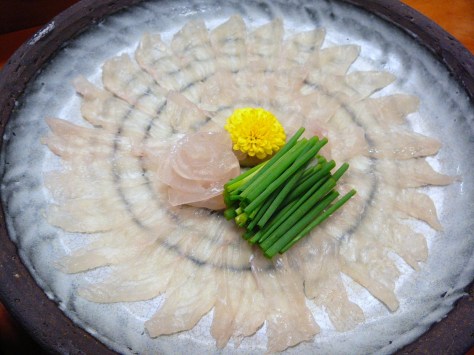
Actually it makes for superlative sashimi as demonstrated by the above O-Tsukuri served at Sushi Ko in Shizuoka City!
012

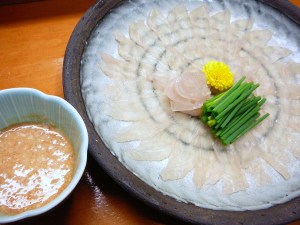
The same served with its own liver dip!
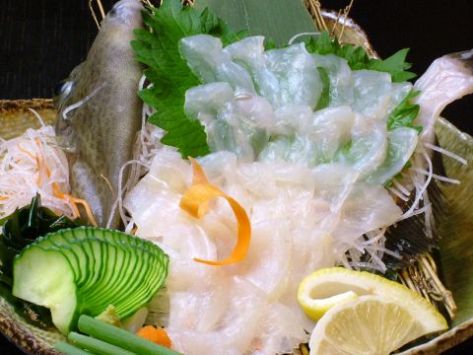
It can make for a spectacular sashimi presentation as a whole fish sashimi plate!
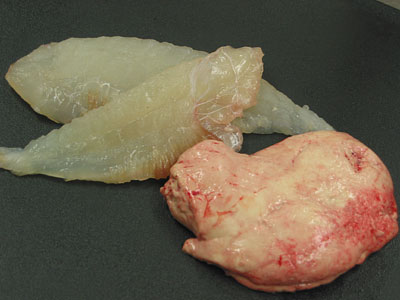
Both its flesh and liver can served raw!
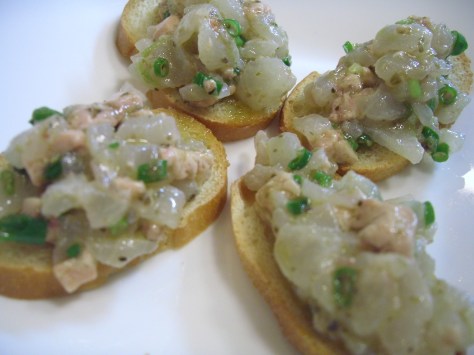
Australians would be surprised to discover it served as tartare on Italian-style crostinis!
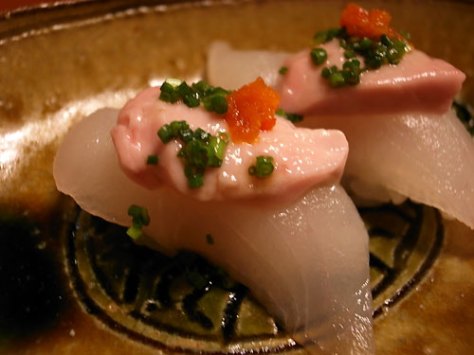
The perfect Kawahagi sushi nigiri must have be topped with its liver!
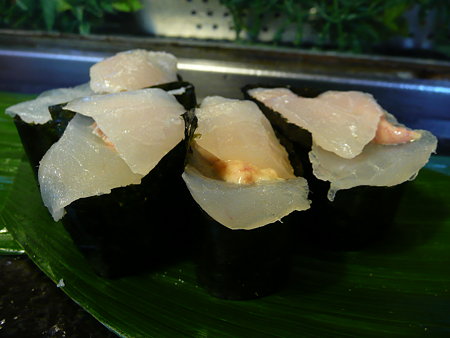
Cut in small slices, it makes for beautiful sushi gunkan!

Cooked, it is very popular simmered in soy sauce, mirin and sugar. A great accompaniment for a nice bowl of freshly steamed rice!
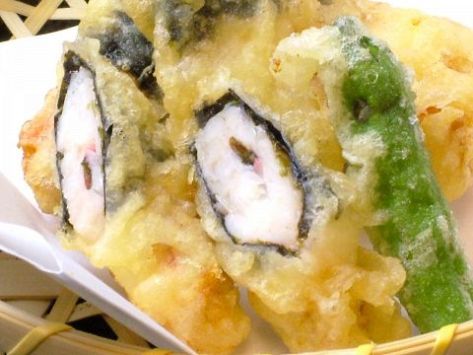
If you want to serve it as tempura, first season it with umeboshi/Japanese pickled plums flesh of the sweet kind.
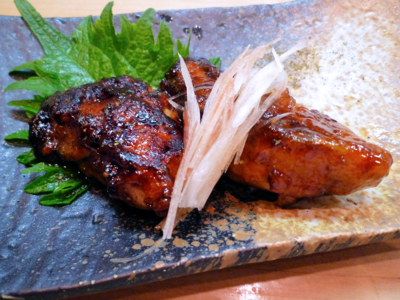
Now, what does this remind you of? Foie gras? Almost right! Grilled kawahagi Liver!

——————————————————————
Savouring the full Filfish meal at Sushi Ko, Shizuoka City:
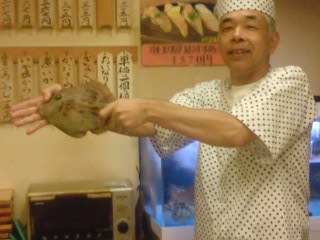
Back in June, as I had to atone for some somewhat egoistical pleasure-seeking, I took the Missus to our favourite Sushi Restaurant in Shizuoka City, namely Sushi Ko,located along Aoba Park.

Although we did order the inevitable favourites, “katsuo/bonito” sashimi, “Shirako to Ankimo/Combination of Cod Sperm sacs and Frogfish/Monkfish liver”, “Pon Kara Maguro/Deep-fried tuna cubes”, “Shishamo/Spirinchus lanceolatus”, “Hotate/Scallops”, “Maguro Zuke/Marinated Tuna sushi”, and “Amaebi nigiri to Shiraebi Gunkan/Sweet shrimp and white shrimp sushi”, the star of the day was “Kawahagi/Filefish”!

The chef took a splendid live specimen (see top pic) just caught off Mochimune coast in Shizuoka City out of the “aquarium” and proceeded to serve the complete fish in three different manners:
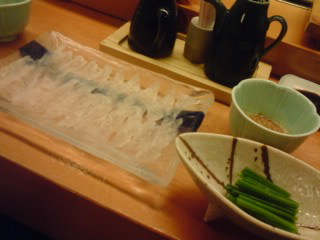

“O-Tsukuri”:
After having taken away the inedible skin, the chef first cut the fillets into very thin slices to be served with thin leeks and dip sauce made of ponzu mixed with the fresh liver of the same fish. As now is the best season, those comparatively thin fish come up with enormous livers!

“O nigiri”:
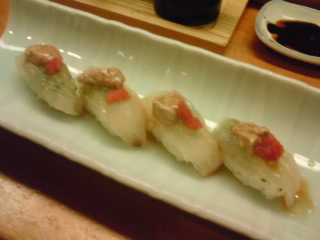
The chef managed to keep four slices aside to prepare nigiri with the fish flesh topped with a piece of its liver, some “momiji oroshi/grated daikon with chili pepper” and seasoned with ponzu!
SUSHI-KO-2008-10-11
“Kara age”:
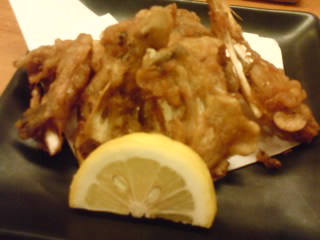
The “cheeks bones” with their meat were last deep-fried and served as they are with some lemon. Simple and great!
All this with one single fish!

Sushi Ko
shizuoka City, Aoi Ku, Ryogae-cho. 2-3-1 (Aoba Koen)
Tel.: 054-2512898
Business Hours: 17:00~25:00. 17:00~23:00 (Sundays)
Closed on Wednesdays
Reservations recommended
Credit cards OK
HOMEPAGE (Japanese)

RECOMMENDED RELATED SITES:
Bread + Butter, Comestilblog, Greedy Girl, Bouchon For 2, Zoy Zhang, Hungry Neko, Mangantayon, Elinluv Tidbit Corner, Maison de Christina, Chrys Niles, Lexi, Culinary Musings, Eats and Everything, Bite Me New England, Heather Sweet, Warren Bobrow, 5 Star Foodie, Frank Fariello, Oyster Culture, Ramendo, Alchemist Chef, Ochikeron, Mrs. Lavendula, The Gipsy Chef, Spirited Miu Flavor, Wheeling Gourmet, Chef de Plunge, Sushi Nomads, Island Vittles, Jefferson’s Table

Please check the new postings at:
sake, shochu and sushi,
—————————————-
日本語のブログ
—————————————-

Japanese Seasonal Fish: Ishigarei/Stone Flounder

Ishigarei, イシガレイ、石鰈 in Japanese, is another popular flatfish/flounder in theis country. For the specialists the Englidh name is stone flounder, and its Latin name Kareus bicoloratus. Interestingly enough these fishes are commonly called flatfishes in Englis, wheeras the Jaapnese write them as “leaf Fishes”!

In Japan, depending upon the region it will be called other names, such as Ishimochi, Ishimochigarei or Shirogarei.
Their season is mainly in Summer in Hokkaido and Eastern Japan, although they might appear a lot earlier in Shizuoka.

Ishigarei is considered the best of all flounders in this country. People generally avoid to catch them during the female egg incubation, but the same egg-bearing fish are a delicacy in Tokyo.

Always choose “lively” specimens when buying them as the taste will soon deteriorate if the fish is not dressed quickly first.
If angler-friend of yours calls on the phone with one of them, don’t discuus and buy the fish!

Stone flounders make for such superlative sashimi that it becomes a bit of a waste to consume in another way.

But who would pass such a Japanese-style carpaccio?

Or an Italian Carpaccio?

Sushi lovers will appreciate it as a sushi nigiri!

A truly extravagant sushi nigiri display. Eat it quickly!

Alright, you were not lucky enough to get it absolutely fresh.
In this case simmer it the Japanese way as Ishigarei Ni (Ni stands for simmer) with soy sauce, sake, mirin and ginger!

Or do it the Italian way with olive oil and dry tomatoes!

RECOMMENDED RELATED SITES:
Bread + Butter, Comestilblog, Greedy Girl, Bouchon For 2, Zoy Zhang, Hungry Neko, Mangantayon, Elinluv Tidbit Corner, Maison de Christina, Chrys Niles, Lexi, Culinary Musings, Eats and Everything, Bite Me New England, Heather Sweet, Warren Bobrow, 5 Star Foodie, Frank Fariello, Oyster Culture, Ramendo, Alchemist Chef, Ochikeron, Mrs. Lavendula, The Gipsy Chef, Spirited Miu Flavor, Wheeling Gourmet, Chef de Plunge, Sushi Nomads, Island Vittles, Jefferson’s Table

Please check the new postings at:
sake, shochu and sushi,
—————————————-
日本語のブログ
—————————————-

Japanese Seasonal Fish: Tachiuo/Scabbard Fish

Scabbard Fish or “Tachiuo” is a summer fish very popular in Japan in spite of its great length.
Tachiuo in Japanese, 太刀魚, means “Great Sword Fish”, not the scabbard!
The Suruga Bay being warmer than the rest of Japan, we have scabbard fish in the dead of winter.
Like other fish it owns other names: Tachi (not in Hokkaido, where the word means ” Cod sperm sacs”!), Shirada and Tachinouo.
It is mainly caught off Wakayama, Ehime and Oita Prefectures.
In Shizuoka it is both caught by line or net.
In 1999, 37,000 tonnes were caught in the whole of Japan, but it fell to 23,000 tonnes in 2000.
It is also imported from Korea and China, although the fish is slightly different from the Japanese variety. More than half of imported fish are eaten west of Kansai.

Scabbard Fish Sashimi Plate

Tachiuo is bot popular raw and cooked.
Raw, it is usually served with ponzu instead of soy suce and topped with momijioroshi/grated daikon mixed with chili pepper.

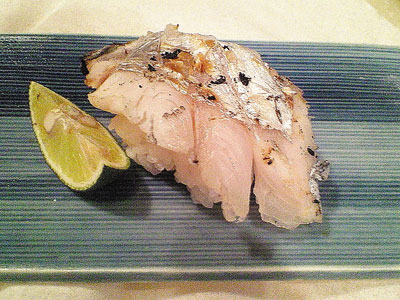
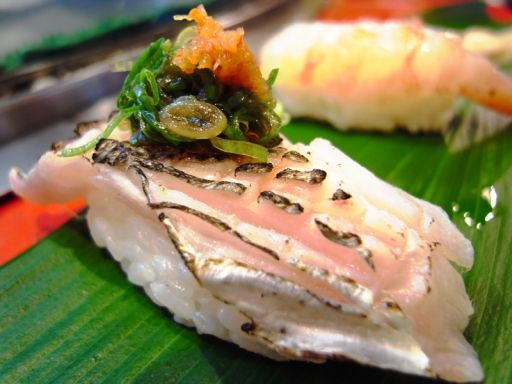
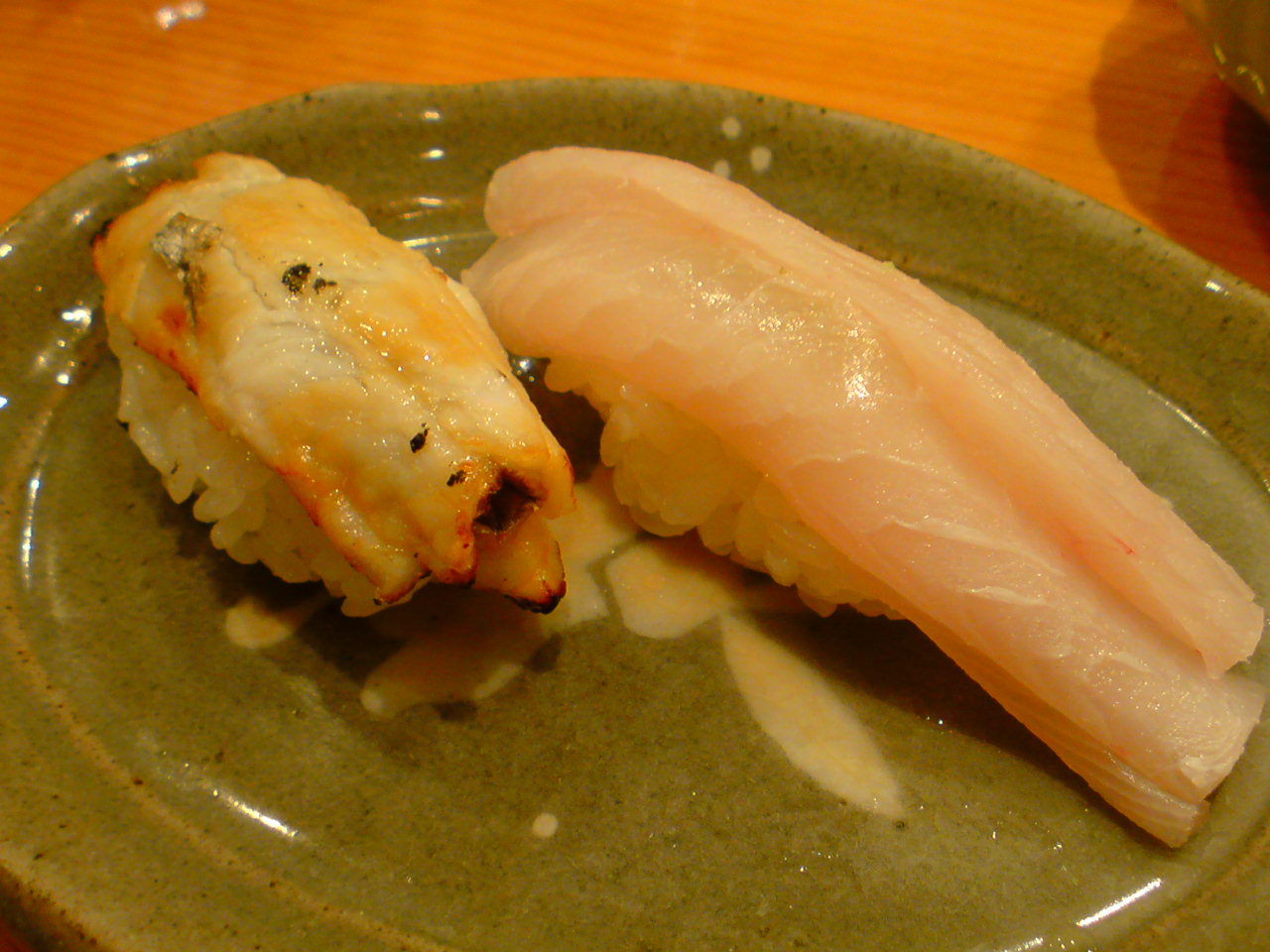
Raw, it is of course popular as sushi nigiri,

cut into fine strips and served as gunkan.

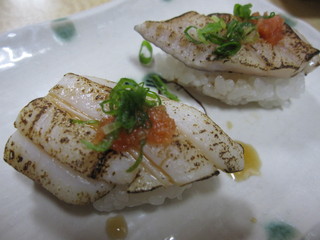
As sashimi I personally prefer it “aburi” (slightly grilled) with a dash of ponzu and some momijioroshi (grated daikon with chili pepper), or with some finely cut vegetables.

The same applies for sushi nigiri as I like my scabbard fish a little grilled first.

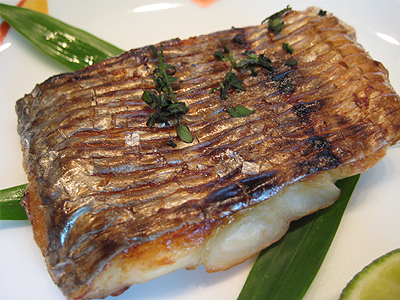
Making incisions into the fish before grilling it will make for another prsentation!

It does not have to be complicated to be yummy!

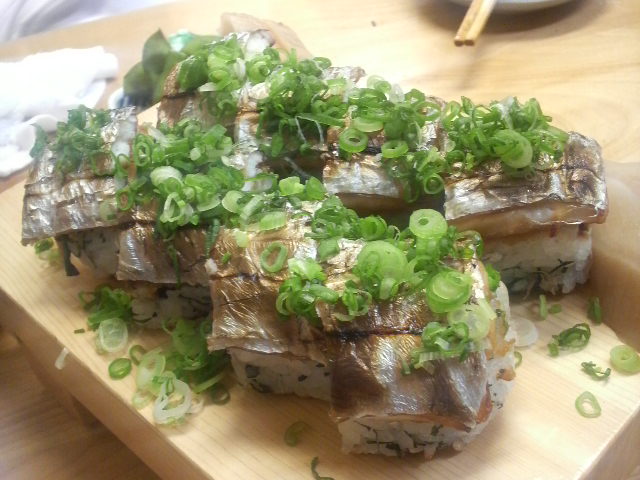
In the Kansai/western Japan region it is very popular in oshizushi/pressed sushi thanks to its flat and long shape.

How about a combination of both raw and aburi style sushi nigiri?

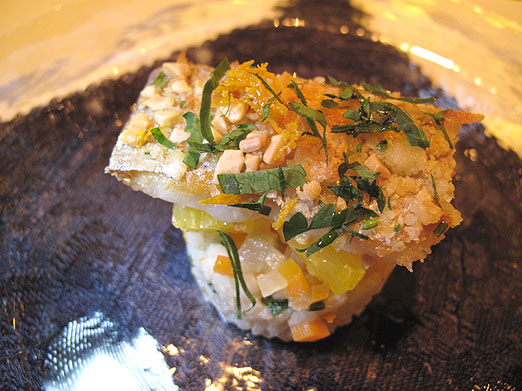
How about an Italian-style sushi nigiri?

As for the cooked scabbard fish, grilling is the most commoon way here in Japan where it is served as simple and healthy food at many meals.

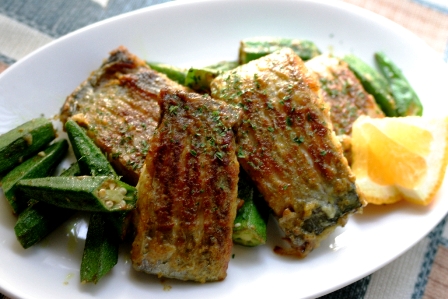
Sauteed with colourful vegetables (okra) make for great presentation in spite of the simplicity of the dish!

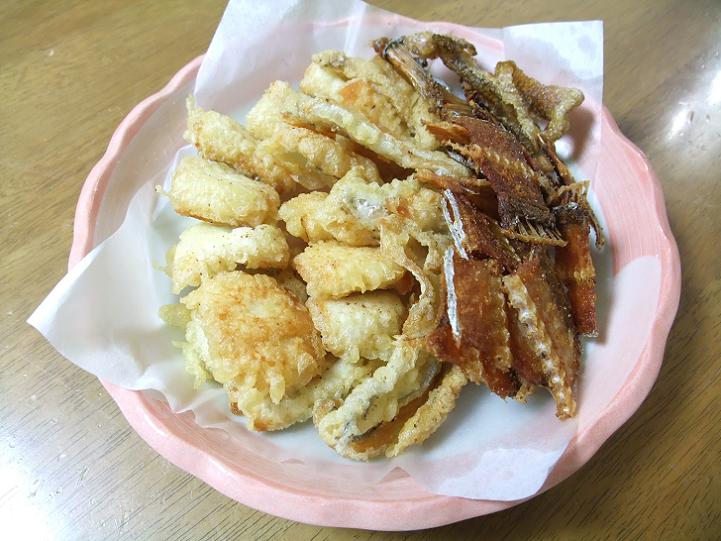
Deep-frying is also very popular especially with its bones when it is very fresh. Such deep-fried bones make for one vital source of calcium for the Japanese.

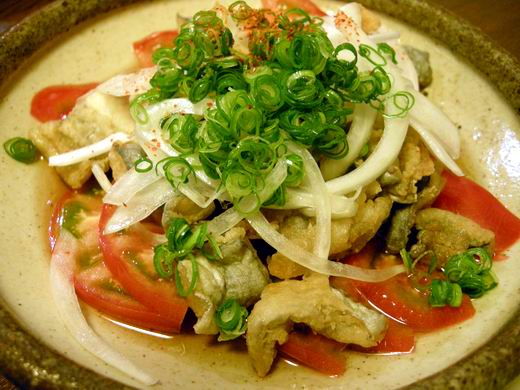
Fried scabbard fish salad.

Cooked, it is a very versatile fish and easy to prepare!

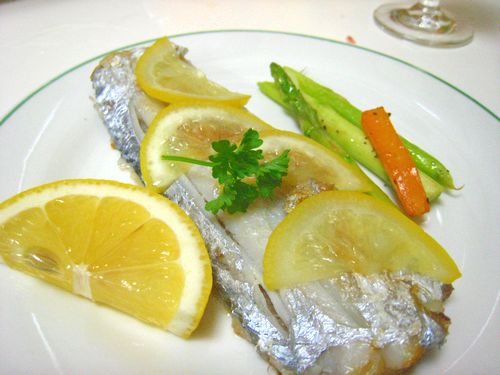
Grilled with lemon!

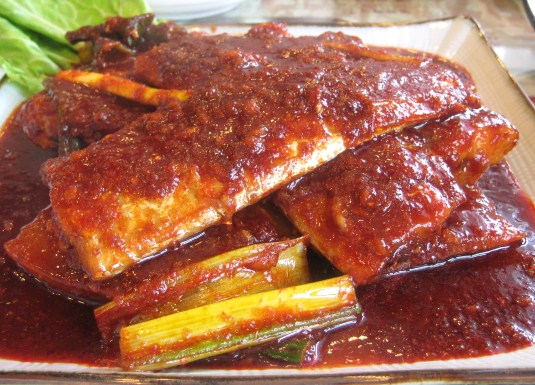
Cooked with chili peppers and miso paste, it makes for an intriguing sweet and hot combination!

RECOMMENDED RELATED SITES:
Bread + Butter, Comestilblog, Greedy Girl, Bouchon For 2, Zoy Zhang, Hungry Neko, Mangantayon, Elinluv Tidbit Corner, Maison de Christina, Chrys Niles, Lexi, Culinary Musings, Eats and Everything, Bite Me New England, Heather Sweet, Warren Bobrow, 5 Star Foodie, Frank Fariello, Oyster Culture, Ramendo, Alchemist Chef, Ochikeron, Mrs. Lavendula, The Gipsy Chef, Spirited Miu Flavor, Wheeling Gourmet, Chef de Plunge, Sushi Nomads, Island Vittles, Jefferson’s Table

Please check the new postings at:
sake, shochu and sushi,
—————————————-
日本語のブログ
—————————————-