Tag Archives: Simple Recipes

French Cuisine: Landes Duckling and Orange Salad at Pissenlit

Service: excellent and very friendly
Facilities: great washroom, great cleanliness overall
Prices: reasonable, good value.
Strong points: Interesting wine list. Great use of local products.
no-smoking-logoentirely non-smoking!

Tooru Arima is a lucky chef:
He has access to some of the best organic vegetables and fruit all year long in this country.
No wonder he can prepare this succulent salad with duckling from the Landes area in France and cook it to perfection before letting it cool down and cut it thin slices to be served with oranges from Shizuoka. As for the green leaf vegetables inclkuding trefoil, luccolla and others are all organic and from our prefecture.
Customers are lucky, too, aren’t they? LOL

PISSENLIT
420-0839 Shizuoka City, Aoi Ku, Takajo, 2-3-4
Tel.: 054-270-8768
Fax: 054-627-3868
Business hours: 11:30~14:30; 17:00~22:00
Closed on Tuesdays and Sunday evening
Homepage (Japanese)
Credit Cards OK

RECOMMENDED RELATED SITES:
Warren Bobrow, Bread + Butter, Zoy Zhang, Hungry Neko, Think Twice, Frank Fariello, Mangantayon, Hapabento, Elinluv Tidbit Corner, Tokyo Terrace, Maison de Christina, Chrys Niles,Lexi, Culinary Musings, Wheeling Gourmet, Comestiblog, Chronicles Of A Curious Cook, Tokyo Through The Drinking Glass, Tokyo Foodcast, Urban Sake, Sake World, Palate To Pen, Good Beer & Country Boys, Another Pint, Please!, Yellin Yakimono Gallery, Tokyo Terrace, Hilah Cooking, More than a Mount Full

Please check the new postings at:
sake, shochu and sushi

—————————————-
日本語のブログ
—————————————-

French Gastronomy: Mosaic Vegetables Terrine at Pissenlit

Service: excellent and very friendly
Facilities: great washroom, great cleanliness overall
Prices: reasonable, good value.
Strong points: Interesting wine list. Great use of local products.
no-smoking-logoentirely non-smoking!

Tooru Arima has a special love for anything vegetables and is constantly on a quest to serve them in an original manner!

Above is a beautiful example of his imagination.
Served with a red sweet pimento mousse, it makes for the best appetizer in town with a great white wine!

PISSENLIT
420-0839 Shizuoka City, Aoi Ku, Takajo, 2-3-4
Tel.: 054-270-8768
Fax: 054-627-3868
Business hours: 11:30~14:30; 17:00~22:00
Closed on Tuesdays and Sunday evening
Homepage (Japanese)
Credit Cards OK

RECOMMENDED RELATED SITES:
Warren Bobrow, Bread + Butter, Zoy Zhang, Hungry Neko, Think Twice, Frank Fariello, Mangantayon, Hapabento, Elinluv Tidbit Corner, Tokyo Terrace, Maison de Christina, Chrys Niles,Lexi, Culinary Musings, Wheeling Gourmet, Comestiblog, Chronicles Of A Curious Cook, Tokyo Through The Drinking Glass, Tokyo Foodcast, Urban Sake, Sake World, Palate To Pen, Good Beer & Country Boys, Another Pint, Please!, Yellin Yakimono Gallery, Tokyo Terrace, Hilah Cooking, More than a Mount Full

Please check the new postings at:
sake, shochu and sushi

—————————————-
日本語のブログ
—————————————-

Vegan Japanese Cuisine: Sweet & Spicy Lotus Roots

This is the first of a series of vegan recipes for such friends as Vegansarus prepared with lotus root or renkon/蓮根 in Japanese. These should be easier and easier to get these days. They do provide a great bite on top of their nutritional value!

Sweet & Spicy Lotus Roots!

INGREDIENTS: for 2 people

-Lotus root: a 20cm long piece
-Fresh ginger juice: 1 teaspoon
-Soy sauce: 1 tablespoon
-Mirin/Sweet sake: 1 tablespoon
-Rice vinegar: 1 tablespoon
-Cornstarch: as appropriate
-White sesame seeds: as much as you want
-Salad oil (of your choice): 1 tablespoon

RECIPE:

-Slice the lotus roots to the thickness of your preference. A lttle thick will provide a satisfying bite.

-Coat the lotus root slices with cornstarch.

-Fry the lotus root slice in oil until both faces have attained a nice brown colour. let them rest on a sheet of kitchen paper to absorb excess oil.

-In a bowl, prepare the sauce by mixing the fresh ginger juice, soy sauce, mirin/sweet sake, rice vinegar.

-In a clean frypan drop the fried lotus root slices. Heat them again. Pour the sauce on them and fry until they become “sticky”.

-Serve them immediately with some white sesame seeds!

Great with Japanese sake or beer!

RECOMMENDED RELATED SITES:
Warren Bobrow, Bread + Butter, Zoy Zhang, Hungry Neko, Think Twice, Frank Fariello, Mangantayon, Hapabento, Elinluv Tidbit Corner, Tokyo Terrace, Maison de Christina, Chrys Niles,Lexi, Culinary Musings, Wheeling Gourmet, Comestiblog, Chronicles Of A Curious Cook, Tokyo Through The Drinking Glass, Tokyo Foodcast, Urban Sake, Sake World, Palate To Pen, Good Beer & Country Boys, Another Pint, Please!, Yellin Yakimono Gallery, Tokyo Terrace, Hilah Cooking, Vegansarus

Please check the new postings at:
sake, shochu and sushi

—————————————-
日本語のブログ
—————————————-

Vegan Japanese Cuisine: Fried-Stewed Kabocha

I’ve already have introduced a similar basic recipe, but with dashi and and without precise ingredients quantities.
Many people in Japan believe that Kabocha originates from Japan.
Actually it was introduced to Asia a long time ago after it was discovered on the American Continent.
Even the etymology is not Japanese as it refers (apparently, but nothing sure about that!) to the varieties first grown and developped in Cambodia, according to the same Japanese who can’t get enough of them and mostly import them from Tonga, of all places!
Here is a more precise and little different recipe of this vey popular vegetable:

Kabocha no Itame-ni/南瓜の炒め煮/Fried-Stewed Kabocha!
Dedicated to my new friend, Vegansarus!

INGREDIENTS: For 2~4 persons

-Kabocha/Pumpkin: 500 g
-Leeks: 1/2 cup/100 ml/cc (finely chopped)
-Oil (of your choice): 3 tablespoons
-Fresh ginger: 5~6 thin slices (fresh ginger)
-Water: 1 ~ cup/200ml/cc~
-Soy sauce: 2 tablespoons
-Sugar: 1 tablespoon
-Salt: 1/2 teaspoon

RECIPE:

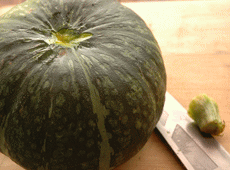
First take the stem end out. It sounds evident, but you will make things hard for you if you skip that simple step!

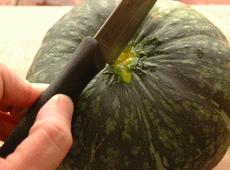
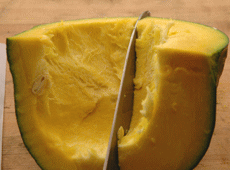
Turn the kabocha over (now you understand why you have taken the stem out?). Cut in half through the middle. Take care not to slip and cut your fingers!

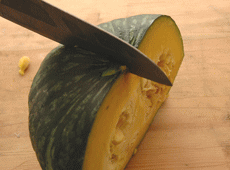
Having cut the kabocha in half, cut it again in half (fourth). The raw kabocha might be hard to cut. There is no need to use brute force. Cut it slowly!

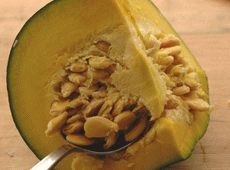
This will make it easy to scoop out (and discard the seeds).

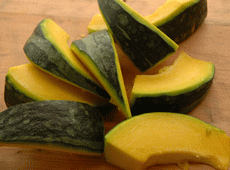
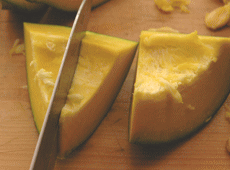
Cut each quarter again across as shown in above picture.

Then cut again as shown in above picture for individual pieces.

The next step is bit of a pain, but absolutely necessary.
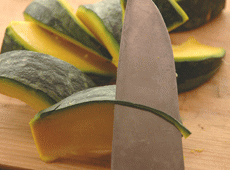
Cut away the skin edges as shown in above picture.
Why?
-1) for a more even cooking.
-2) the edges will turn hard and will be diificult to bite through. You might even cut your lips. Believe me!
-3) the kabocha wedges will not break down upon stewing.

The kabocha wedges as they should be before stewing!

In a saucepan drop the oil, leeks and fresh ginger. Fry them for a while, then drop in all the kabocha. Fry for a while on a medium fire.

-Add water, soy sauce, sugar and salt. Lower fire. Cover with lid. Stew for 15 minutes or until the kabocha is soft. The point for better taste is the preliminary frying!

RECOMMENDED RELATED SITES:
Warren Bobrow, Bread + Butter, Zoy Zhang, Hungry Neko, Think Twice, Frank Fariello, Mangantayon, Hapabento, Elinluv Tidbit Corner, Tokyo Terrace, Maison de Christina, Chrys Niles,Lexi, Culinary Musings, Wheeling Gourmet, Comestiblog, Chronicles Of A Curious Cook, Tokyo Through The Drinking Glass, Tokyo Foodcast, Urban Sake, Sake World, Palate To Pen, Good Beer & Country Boys, Another Pint, Please!, Yellin Yakimono Gallery, Tokyo Terrace, Hilah Cooking, Vegansarus

Please check the new postings at:
sake, shochu and sushi

—————————————-
日本語のブログ
—————————————-

Japanese Cuisine: Nankotsu Tsukune

I have already introduced many ways to make “Tsukune”, or chicken patties in yakitori fashion.

Nankotsu/軟骨/ means cartilage or cartilageous parts of the chicken (and other animals) bones. The Japanese eat them as such in yakitori, but they also add great taste to patties. Moreover they are very nutritious, so do make a good use of them if you can get your hands on fresh ones!

INGREDIENTS: For 3~4 people

-Chicken: 200 g (minced)
-Nankotsu/cartilage: 90 g
-Onion: 1/3 of a medium-sized one
-Fresh ginger: a piece of 5×5 cm
-Salt: a pinch
-Black pepper: a pinch
-Cornstarch: 1 tablespoon
-Japanese sake: a little (for boiling wate)
-Water: for boiling
-Soy sauce: 2 tablespoons
-Sugar: 2 tablespoons
-Japanese sake: 1 tablespoon (for seasoning/cooking)
-White sesame seeds: for seasoning before serving
-Leeks: cut to length appropriate for skewers

RECIPE:

-In a food processor drop the minced chicken, onion, ginger, salt and pepper cornstarch. Let turn for a little while. Stop and drop in the cartilages/nankotsu. Turn until the cartilages have been broken into small pieces.

-Make chicken balls either by hand or with two spoons. Boil them in water added with alittle Japanese sake. Scoop balls out once they have started foating on the surface.

-In a small frypan pour the soy sauce, sugar and sake. Fry the chicken balls with pieces of leeks (broccoli is fine, too) in the sauce till they are well coated.

-Skewer the chicken balls and leek as shown on top picture. Grill them in toatser or oven until they attain the right colour and crispiness. Baste them with the remaining sauce half way!

Makes for a great snack withh beer, or a good addition to bento!

RECOMMENDED RELATED SITES:
Warren Bobrow, Bread + Butter, Zoy Zhang, Hungry Neko, Think Twice, Frank Fariello, Mangantayon, Hapabento, Elinluv Tidbit Corner, Tokyo Terrace, Maison de Christina, Chrys Niles,Lexi, Culinary Musings, Wheeling Gourmet, Comestiblog, Chronicles Of A Curious Cook, Tokyo Through The Drinking Glass, Tokyo Foodcast, Urban Sake, Sake World, Palate To Pen, Good Beer & Country Boys, Another Pint, Please!, Yellin Yakimono Gallery, Tokyo Terrace, Hilah Cooking, More than a Mount Full

Please check the new postings at:
sake, shochu and sushi

—————————————-
日本語のブログ
—————————————-

Today’s Lunch Box/Bento (’10/19)

As we are leaving on our (very short) Spring holiday tomorrow to Kume Island near Okinawa Island, the Missus had to concoct today’s bento with whatever she could find in the fridge and the “pantry”.
My bento friend at Hapabento will note that my (?) half is using traditional (and small) bento boxes until she finds one of her liking make of cedar tree wood. I agree that the woven box ought to be fine, but I’m going to contradict the resident dragon!

This time she actually used two boxes as the rice and meat garnish took all the space in the bottom tier.

The rice was plain steamed rice, but the chicken that she fried with mushrooms (shimeji maibly) and cut leeks provided for plenty of “sauce” and seasoning, agremented with black sesame seeds..

The pickels were all home-made: red daikon, mini lemons and wasabi stems and leaves.

The second granish box made for plenty of colours!
marinated carrot salad and celery leaf, tamagoyaki containing shiso leaves, boiled peas in the pod and radishes.
Plenty of vitamins and fibers!

For a better view of the tamagoyaki.
Frankly speaking I love these “leftovers” bentoes! LOL

RECOMMENDED RELATED SITES:
Warren Bobrow, Bread + Butter, Zoy Zhang, Hungry Neko, Think Twice, Frank Fariello, Mangantayon, Hapabento, Elinluv Tidbit Corner, Tokyo Terrace, Maison de Christina, Chrys Niles,Lexi, Culinary Musings, Wheeling Gourmet, Comestiblog, Chronicles Of A Curious Cook, Bento Boutique, Tokyo Through The Drinking Glass, Tokyo Foodcast, Urban Sake, Sake World, Palate To Pen, Yellin Yakimono Gallery, Tokyo Terrace, Hilah Cooking, More than a Mount Full, Arkonite Bento

Please check the new postings at:
sake, shochu and sushi

—————————————-
日本語のブログ
—————————————-

Today’s Lunch Box/Bento (’10/18)

What with our pending trip to Kume Island, Okinawa, which promises a lot of eating and drinking, the Missus will keep an eye on my calories for the next two days!
So it was back again to a more traditional form of Japanese bento!

She steamed the sice with shredded carrot (you know, those carotenes?) and mixed later with black sesame seeds. She accompanied the rice with home-made pickled red daikon for colour and balance.

As for the garnish, she kept it well-balanced but controlled the volume with an eye for colours.

Salad of pickled green and red cabbage, carrots and konbu seaweed for the fibers. Boiled peas intheir pods for more fibers, iron and vitamin C, seasoned with umeboshi!

For the meat garnish, she prepared a pork and beans stew by frying pieces of pork belly before adding boiled beans and tomato sauce. She sprinkled the lot with chopped parsley and rested a soft boiled egg half which had been marinated in a soy sauce mixture of her own.

For dessert, benihoppe/red cheeks strawberries from Shizuoka. Did you that 2 strawberries contain enough Vitamin C for a single person for a whole day?

RECOMMENDED RELATED SITES:
Warren Bobrow, Bread + Butter, Zoy Zhang, Hungry Neko, Think Twice, Frank Fariello, Mangantayon, Hapabento, Elinluv Tidbit Corner, Tokyo Terrace, Maison de Christina, Chrys Niles,Lexi, Culinary Musings, Wheeling Gourmet, Comestiblog, Chronicles Of A Curious Cook

Please check the new postings at:
sake, shochu and sushi

—————————————-
日本語のブログ
—————————————-

Tofu & Chicken Burgers

The Japanese love hamburgers, or any burger/patty for that matter, but they are not afraid to experiment and make them lighter and healthier.

Here is a simple recipe that can expanded and enjoyed by anyone, whatever their age!

Tofu & Chicken Burgers!

INGREDIENTS: for 10 small burgers

-Tofu: 1 block/400g (kinu/silk tofu)
-Eringe mushrooms: 1 large (if not available, chose a large and soft mushroom)
-Shiitake: 6=7 small ones (fresh if possible. If not, soften them in lukewarm water first)
-Panko/Breadcrumps: 1 and a half cups/300 ml/cc
-Boiled burdock root (or salsifis): 100 g
-Chicken (breast if possible): 100~200g (according to preferences)
-Onion: Half a large one.
-Egg: 1
-Black pepper: a little
-Daikon (grated): as much as you like
-Ponzu: as much as you like (can be replaced with soy sauce)

RECIPE:

-Rub some salt on the tofu, place a weight on it, and take out as much water out of it. Chop the eringe mushroom, onion and shiitake finely and separately. Drop the chicken and burdock root in a food processor and mince.

-Leave the chopped onion in a microwave for 4 minutes at 500W. This way,you won’t have to fry it separately. Definitely healthier!

-In a bowl, drop all the ingredients except the daikon and ponzu.

-Mix well by hand.

-Make 10 small realatively thin burgers/patties between your palms, and press them in their middle.

-Fry them in a little oil in a non-stick frypan over a low fire.

-Fry them slowly on both sides until they attain a nice brown colour.

-Mount them on a bed of greens. Press the water out of the grated daikon. make a ball of it and place it on top of the burgers. Pour some ponzu (or soy sauce) on the grated daikon ball, just enough to colour it.

RECOMMENDED RELATED SITES:
Warren Bobrow, Bread + Butter, Zoy Zhang, Hungry Neko, Think Twice, Frank Fariello, Mangantayon, Hapabento, Elinluv Tidbit Corner, Tokyo Terrace, Maison de Christina, Chrys Niles,Lexi, Culinary Musings, Wheeling Gourmet, Comestiblog, Chronicles Of A Curious Cook, Tokyo Through The Drinking Glass, Tokyo Foodcast, Urban Sake, Sake World, Palate To Pen, Good Beer & Country Boys, Another Pint, Please!, Yellin Yakimono Gallery, Tokyo Terrace, Hilah Cooking, More than a Mount Full

Please check the new postings at:
sake, shochu and sushi

—————————————-
日本語のブログ
—————————————-
Vegan Japanese Cuisine: Deep-fried Tofu Balls

Meat balls, or any balls for that matter, don’t have to be made with meat, eggs or dairy products to be attractive and tasty.
It is quite a simple task to create them when you have tofu around!

Here is an easy and healthy recipe:
Deep-fried Tofu Balls:

INGREDIENTS: For 4 people or 16 balls

-Tofu: 350g of well pressed kinu/silk tofu
-Hijiki/sweet seaweed: 1 tablespoon (water-softened)
-Burdock root: 20 cm long piece (finely chopped)
-Carrot: 2~3 cm long piece (finely chopped)
-Soy sauce: 1 tablespoon
-Sugar: 1 tablespoon
-Flour: 1 tablespoon
-White sesame seeds: 1 tablespoon
-Leeks: 1 tablespoon (finely chopped)
-Ground black pepper: a little
-Fresh ginger: 1 teaspoon (grated)

No need for salt as it is contained in the soy sauce.
You may add a little miso paste and p0nzu for further seasoning.

RECIPE:

-Pour a litle oil in small frypan and throw in the choopped burdock root and carrot, the hijiki/sweet seaweed, soy sauce, sugar, grated ginger and fry until most of the misture has disappeared. let cool down.

-In a bowl throw in the tofu (well pressed to get rid of excess humidity) and break it into fine lumps. Add the fried vegetables, flour, sesame seeds, chopped leeks and mix well.

-Shape balls and deep-fry until they have become a nice brown colour.

-Serve with short pieces of thin leeks topping.

RECOMMENDED RELATED SITES:
Warren Bobrow, Bread + Butter, Zoy Zhang, Hungry Neko, Think Twice, Frank Fariello, Mangantayon, Hapabento, Elinluv Tidbit Corner, Tokyo Terrace, Maison de Christina, Chrys Niles,Lexi, Culinary Musings, Wheeling Gourmet, Comestiblog, Chronicles Of A Curious Cook, Tokyo Through The Drinking Glass, Tokyo Foodcast, Urban Sake, Sake World, Palate To Pen, Good Beer & Country Boys, Another Pint, Please!, Yellin Yakimono Gallery, Tokyo Terrace, Hilah Cooking, Vegansarus

Please check the new postings at:
sake, shochu and sushi

—————————————-
日本語のブログ
—————————————-
Vegan Japanese Cuisine: Daikon Chrysanthemums

Here is a simple and “artistic” recipe using daikon and yuzu/lime.
It’s called 菊花大根/Kikuhana Daikon which can be translated as Chrysanthemum Daikon.
You don’t need Chrysanthemums, but only cut the daikon into the shape of the flower!

INGREDIENTS:

-Daikon: Roughly a quarter.
-Lime: 1
-Salt: a little
-Sugar: 3 tablespoons

RECIPE:

-Cut the daikon into slices you will then trim into the shape of flowers with a knife or a mold. As for the trimmings you may add them to the whole marinade and serve them with another salad or side dish.

-Sprinkle the daikon flowers with a little salt and let them marinate for 10~15 minutes.

-Peel the lime and cut the skin/zest into thin strips.

-In a bowl, press out the lime juice. If you don’t get enough, add rice vinegar to it until you obtain the equivalent of 3 tablespoons of “juice”. Add the sugar and lime zest strips and mix well.

-Drain the daikon flowers (and trimmings if included). No need to press them hard. Add them to the marinade. Cover with cellophane paper and let marinate inside the fridge for a whole day.

-Serve it in a nice “artistic” fashion!

RECOMMENDED RELATED SITES:
Warren Bobrow, Bread + Butter, Zoy Zhang, Hungry Neko, Think Twice, Frank Fariello, Mangantayon, Hapabento, Elinluv Tidbit Corner, Tokyo Terrace, Maison de Christina, Chrys Niles,Lexi, Culinary Musings, Wheeling Gourmet, Comestiblog, Chronicles Of A Curious Cook, Tokyo Through The Drinking Glass, Tokyo Foodcast, Urban Sake, Sake World, Palate To Pen, Good Beer & Country Boys, Another Pint, Please!, Yellin Yakimono Gallery, Tokyo Terrace, Hilah Cooking

Please check the new postings at:
sake, shochu and sushi

—————————————-
日本語のブログ
—————————————-
Today’s Lunch Box/Bento (’10/17)

Spring has come early in Shizuoka, the mildest region in Japan after Okinawa.
This is both a bonus and a pain. We get all these great vegetables before eveyone else, but we are also plagued with grotty weather and cold rain. Mind you, we shouldn’t complain compared to other regions.
In the end it means that the bentoes will be both rich in calories and vitamins!

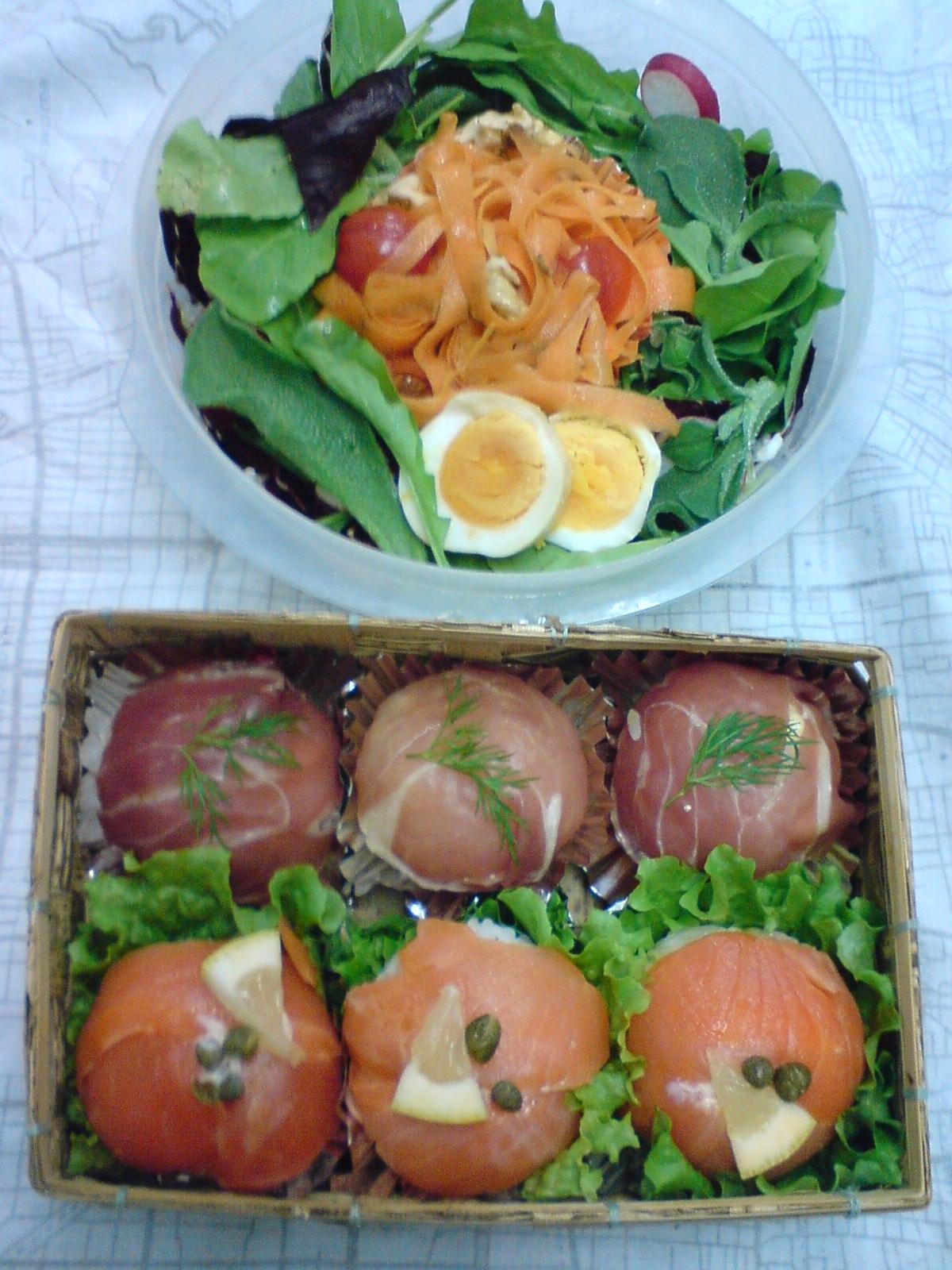
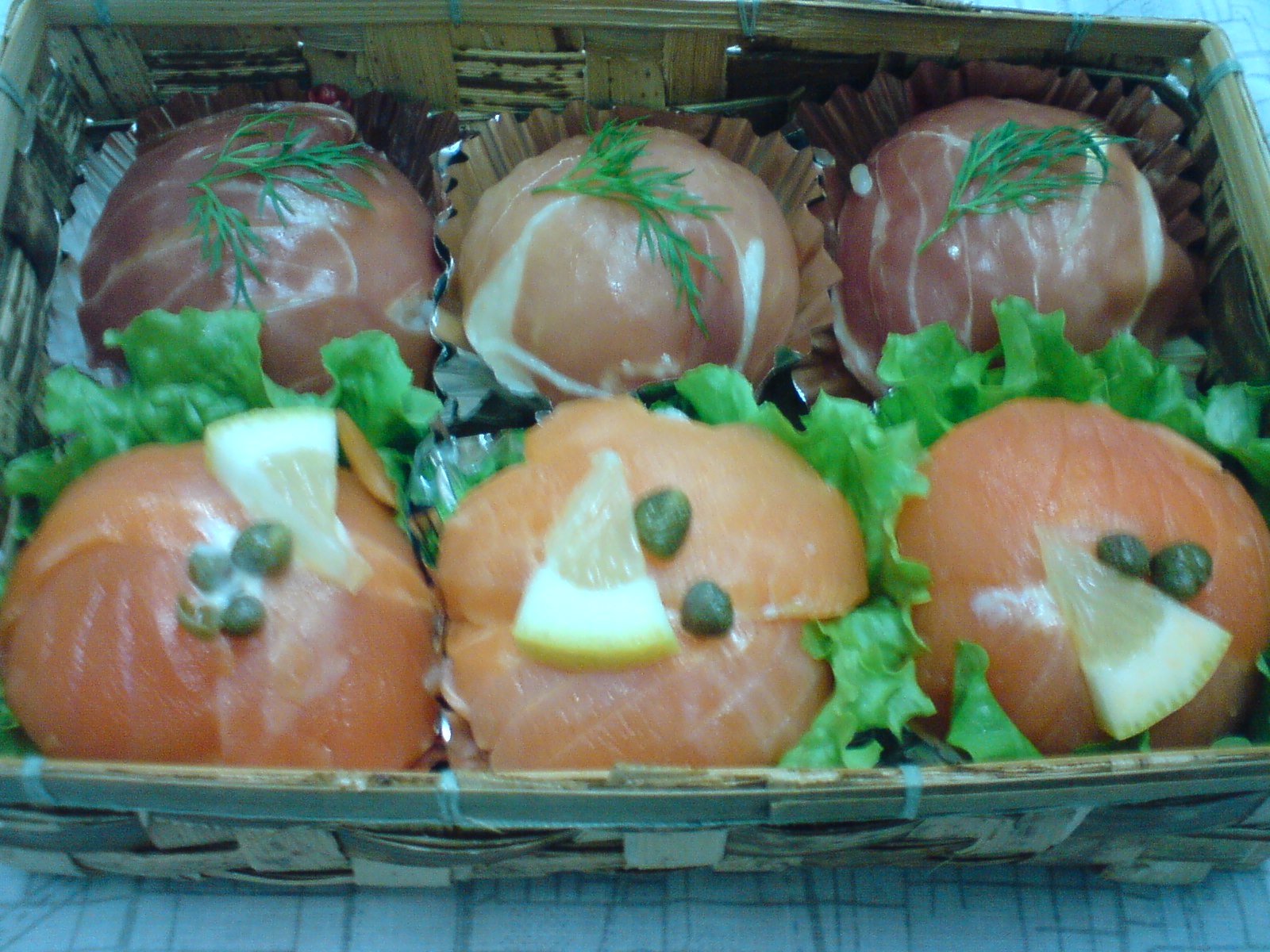
The rice part this time consisted of two kinds of te-mari sushi balls/手まり寿司. The missus, used freshly steamed rice, formed the balls by wrapping rice and the garnish together in cellophane paper, twisting it closed and shaping in balls with her hands. This type of sushi is particular popular in the Kyoto area, where they are both served to adults and kids with beautiful effect.
One of my te-mari sushi contained cheese and was topped with raw ham and some fresh dill.
The other contained Japanese-style pickled cucumber (Very finely chopped) and sesame seeds, and was topped with smoked salmon, lemon, capers and a little tartare sauce. A small piece of lettuce added colour and vitamins!

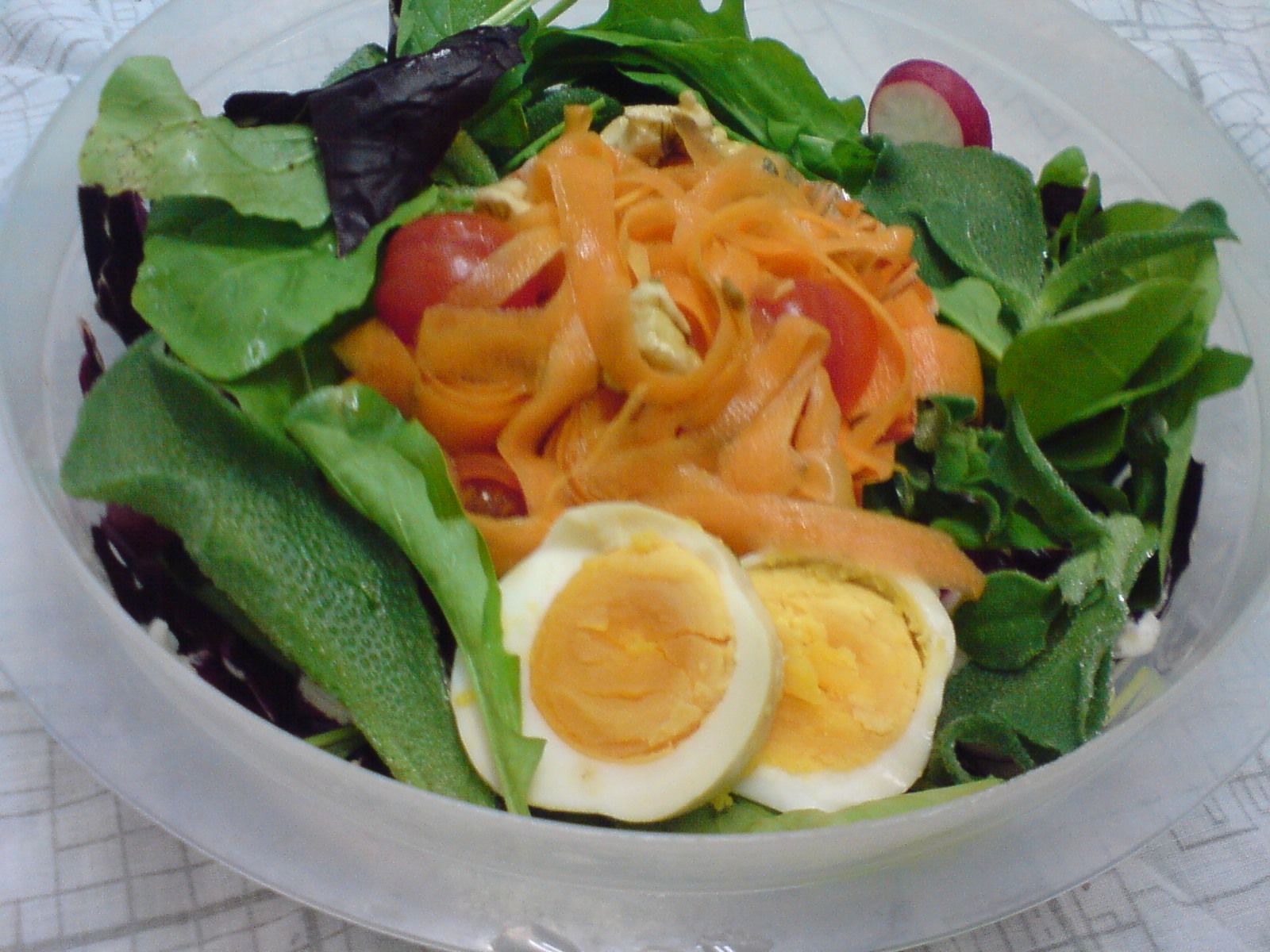
The salad part included home-made marinated carrot tagliatelle salad with walnuts, mini tomatoes and soft-boiled egg. The whole was surrounded by a wealth of hand-broken leaf vegetables: ice plant, trevise, luccolla, and others as well as sliced red radish and mini tomato.

As for dessert I took a couple of mikan/madarines from The Missus’ family garden.
Once again, colourful, healthy and tasty!

RECOMMENDED RELATED SITES:
Warren Bobrow, Bread + Butter, Zoy Zhang, Hungry Neko, Think Twice, Frank Fariello, Mangantayon, Hapabento, Elinluv Tidbit Corner, Tokyo Terrace, Maison de Christina, Chrys Niles,Lexi, Culinary Musings, Wheeling Gourmet, Comestiblog, Chronicles Of A Curious Cook

Please check the new postings at:
sake, shochu and sushi

—————————————-
日本語のブログ
—————————————-
New Vegetable: Tsubomina/蕾菜

Picture taken at Parche Supermarket on March 1st, 2010

Earlier in the day, I mentioned a new vegetable that the Missus included in my bento: Tsubomina or 蕾菜 in Japanese.
The first Kanji character is made up of made up of the character meaning “plant” or “grass” at the top over another character meaning “thunder”. The second kanji means “plant”.

Stir-fried Tsubomina in my bento.

Tsubomina sold in Hakata, Fukuoka, Kysushu island.

Tsubomina sprouts

Tsubomina belongs to the same group of plants as Brussels sprouts, Chinese Cabbage, Komatsuna/leaf Mustard, Broccoli, Daikon, turnips and so on, that is Brassicaceae. It is actually a variety of Leaf Mustard. The latter is a plant introduced in Japan from China.

Picture taken at Parche Supermarket on March 1st, 2010

Although it had been grown since 2005 with various results, JA/Japan Agriculture (Association) officially put it on the markets in Hakata, Fukuoka City in Kyushu island in February 2009.
Due to a certain weakness to insects, it is harvested in Februaray and March only.
Growers started “exporting” it through Japan, altough it is available only in Nagoya, Tokyo and Shizuoka for the moment being. But it is only a question of time before it is sold all over the nation.

Picture taken at Parche Supermarket on March 1st, 2010

Actually the competition is starting heating up for the good of the consumers.
Tsubomina was sold 300~350 yen for 3 small specimens last year. It is already sold for only 250 yen for 3 large specimens since yesterday in Shizuoka City!

Picture taken at Parche Supermarket on March 1st, 2010

Copy of the advertisement appearing in local magazines in Fukuoka where many restaurants serve it in Japanese, Chinese and other foods.

Picture taken at Parche Supermarket on March 1st, 2010

It can be served raw in salads. I tasted it this morning raw. It is crunchy, almost sweet, without any acidity, and eminently eatable.
moreover the high contrast in white and green colours make for a very decorative item.
It can be cooked in almost any kind of Asian gastronomic manner: fried, stir-fried, nabe/pot-au-feu, etc. Vegetarians and vegans should appreciate it as it combines a goog bite, a great taste and plenty of nutrients!

RECOMMENDED RELATED SITES:
Warren Bobrow, Bread + Butter, Zoy Zhang, Hungry Neko, Think Twice, Frank Fariello, Mangantayon, Hapabento, Elinluv Tidbit Corner, Tokyo Terrace, Maison de Christina, Chrys Niles,Lexi, Culinary Musings, Wheeling Gourmet, Comestiblog

Please check the new postings at:
sake, shochu and sushi

—————————————-
日本語のブログ
—————————————-
Today’s Lunch Box/Bento (’10/16)

Shizuoka is replete with new vegetables in this supposedly early Spring and buying them at the local markets in view of including (sorry having them included by the Missus) in the next day’s bento is great fun!

It certainly makes for very colourful bentoes, too!
The Missus has been looking around shops for this elusive (meaning big enough) pinewood bento box for better looks and better taste (she believes that the pine wood will enhance the taste of her creations).
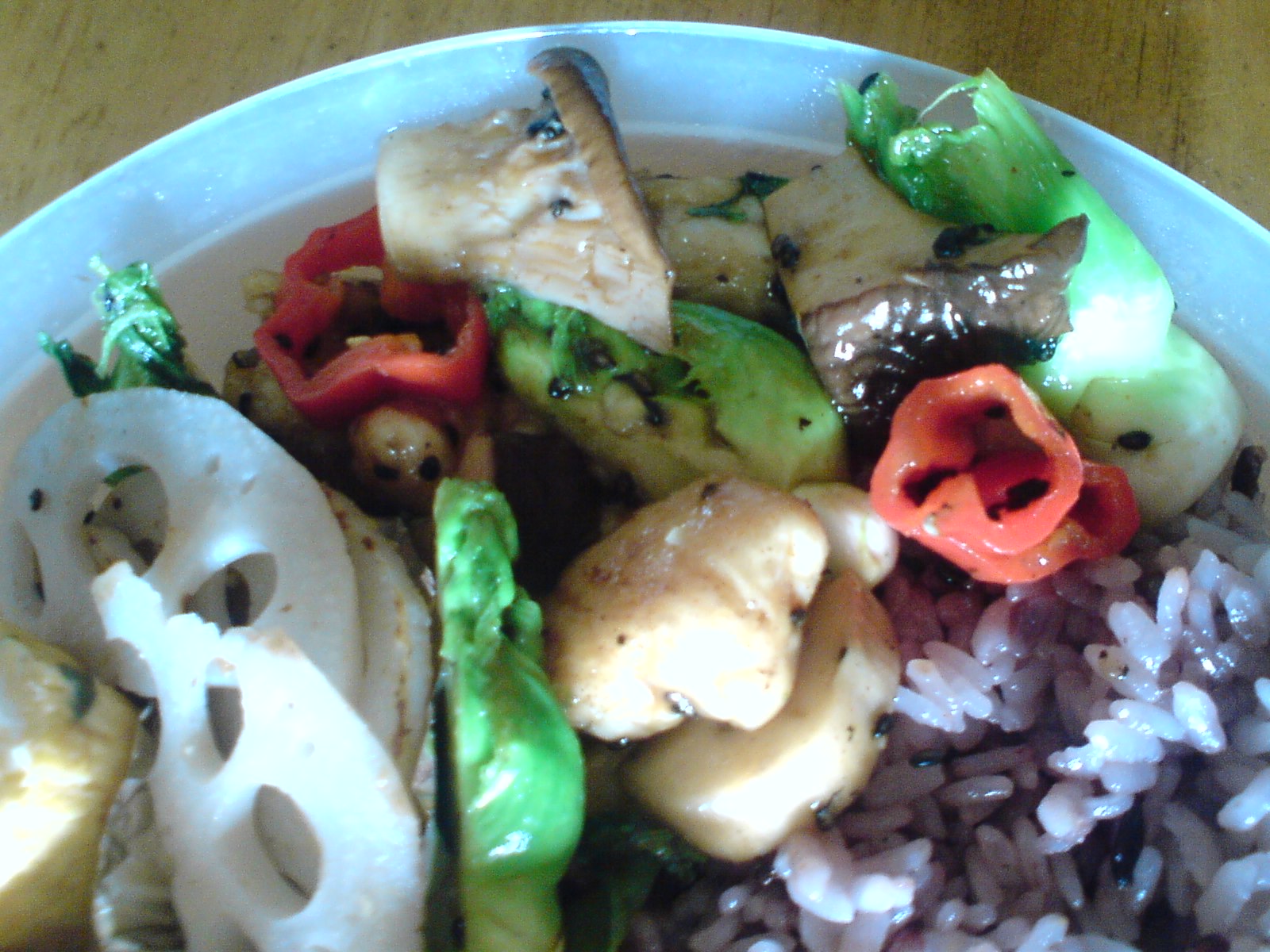
The steamed rice looks violet because it has been supplemented with a little (too much would the rice too dark) with Kuromai/黒米 or “Black Rivce”.
Actually it is not black rice, but dark violet rice. It comes from Iriomote Island in Okinawa. It is simply “ancient rice” as it used to be many centuries ago. It does provide a lot of useful nutrients that have disappeared after white rice was polished.

Now for the garnish:
The Missus concocted her tamagoyaki/Japanese omelette with cheese and ciboulette, also called civette, chiboulette, brelette (French), Schnittlauch (German), chives (English), cebolleta (Spanish). They habeen cultivated for some time in Japan and people are starting discovering them. They contain plenty of Vitamin C and iron! The vegetables include boiled and fried lotus root slices, home-made pickled mini lemons and a new vegetable grown in Fukuoka, Kyushu. I still remember the name but I will check today again and write up some information!

More of the mystery green vegetable, eringe mushrooms. sweet red piments chicken fillets, the whole fried in spicy sauce and agremented with black sesame seeds.

Dessert was benihppe/red cheeks strawberries and mikan/winter oranges from Shizuoka.

Complete, healthy and tasty bento!

RECOMMENDED RELATED SITES:
Warren Bobrow, Bread + Butter, Zoy Zhang, Hungry Neko, Think Twice, Frank Fariello, Mangantayon, Hapabento, Elinluv Tidbit Corner, Tokyo Terrace, Maison de Christina, Chrys Niles,Lexi, Culinary Musings, Wheeling Gourmet, Comestiblog

Please check the new postings at:
sake, shochu and sushi

—————————————-
日本語のブログ
—————————————-
Vegan Caprese-Style Tomato & Tofu Salad

I’ve already introduced vegan tofu salads for my friends.
This is another one with a lttle twist!

INGREDIENTS: For 1~2 persons

-Tofu (kinu tofu): 1/2 block: 200g
-Tomato: a large whole one
-Basil leaves: 10 (large and fresh!)

Dressing:
-Wine vinegar: 1/4 cup: 50 cc/ml
-Salt: 1/3 teaspoon
-Whole black peppers: 3 seeds, ground (use a bottle!)
-Garlic: 1/2 clove (fresh!)
-Red chili pepper: 1/2 (fresh if possible) (Chopped finely)
-Olive oil (EV): 1.1/4~ tablespoon
-Onion: 15 g (Fresh and new if possible!)

RECIPE:

-Cut the tofu in 1 cm-thick slices.

-Cut out the stem end off the tomato and cut into half-moon slices.

-Crush the garlic and throw it into a small pan with the wine vinegar, Salt, black pepper, and red chili pepper and heat it until reduced to half.

-Transfer the dressing into a bowl floating on a larger bowl half-filled with water and ice and leave until chilled.

-Take out unsightly pieces out of the dressing. Grate the onion over it and mix. Add the oil oil and mix.

-On a serving dish place the slices of tofu and tomatoes and the basil leaves alternatively as shown on picture above. Season with dressing and serve!

-Very low in calories!

RECOMMENDED RELATED SITES
Not-Just-Recipes, Bengal cuisine, Cooking Vegetarian, Frank Fariello, Gluten-free Vegan Family, Meatless Mama, Warren Bobrow, Wheeling Gourmet, Le Petit Cuisinier, Vegan Epicurean, Miss V’s Vegan Cookbook, Comestiblog, To Cheese or not To Cheese, The Lacquer Spoon, Russell 3, Octopuspie, Bread + Butter, Pegasus Legend, Think Twice, The French Market Maven

Please check the new postings at:
sake, shochu and sushi

—————————————-
日本語のブログ
—————————————-
Vegan Japanese Cuisine: New Lotus Roots & Umeboshi

Lotus roots, when new and fresh, should be prized for their great natural taste. They can even be eaten almost raw after a little marinating. The Japanese have a simple and delicate way to prepare them with umeboshi/Japanese pickled plums, which should please vegans and vegetarians (and omnivores). It certainly makes for a great snack with Japanese sake or shochu!

INGREDIENTS:

-Lotus root: 1 piece, 10 cm long. Choose it absolutely fresh and comparatively slender.
-Umeboshi: 2
-Shiso/perilla leaves: 2
-Japanese sake: according to taste and preferences.
-Soy sauce: according to taste and preferences.
-Rice vinegar: according to taste and preferences.

RECIPE:

-Peel and cut the lotus root into hin slices. Wash them 2 or 3 times in cold clean water.

-In a pan heat some water to just before boiling point. Add some rice vinegar and cook the lotus roots in eat until they become translucent.
Do not overcook them. Drain them thoroughly and put aside.

-Take the seeds out of the umebshi and sieve the meat into a bowl. Add Japanese sake (or cooking sake) to make it into a thin liquid paste. add a few drops of soy sauce for seasoning. Taste. If it is too sour to your liking add some mirin/sweet Japanese sake.

-Add the umeboshi to the lotus roots slices and mix well so as to cover all the lotus root slices surface.

-Cut the shiso/perilla leaves in 3 first, then chopp them fine across.

-Serve as in the picture, lotus root sliced mounted on top of each other and topped with chopped shiso leaves.

RECOMMENDED RELATED SITES
Not-Just-Recipes, Bengal cuisine, Cooking Vegetarian, Frank Fariello, Gluten-free Vegan Family, Meatless Mama, Warren Bobrow, Wheeling Gourmet, Le Petit Cuisinier, Vegan Epicurean, Miss V’s Vegan Cookbook, Comestiblog, To Cheese or not To Cheese, The Lacquer Spoon, Russell 3, Octopuspie, Bread + Butter, Pegasus Legend, Think Twice, The French Market Maven

Please check the new postings at:
sake, shochu and sushi

—————————————-
日本語のブログ
—————————————-