Tag Archives: Vegan

Egg-Plant/Aubergine Carpaccio

Aubergines or egg plants as they are called in the US are a world-popular vegetable. They originated in India, but are found everywhere.
The Japanes make a large consumption of them and try to come with new recipes.
Here is a simple recipe that blends many culinary cultures:
Aubergines/Egg-Plants Carpaccio!
Incidently, you can easily make it vegan!

INGREDIENTS: For 2 people

-Egg-plants/Aubergines: 2
-Grated fresh ginger juice: as appropriate
-Fruit tomatoes: as appropriate
-Lucolla: as appropriate
-Garlic: 1 clove
-Dressing: vinaigrette as appropriate
-Olive oil: EV as appropriate

RECIPE:

Grill the egg-plants/aubergines directly on a grill over the fire. Turn them around until they are properly cooked.
Peel them as soon as possible.

-Place the peeled hot aubergines into a bowl with vinaigrette and ginger juice. Let cool completely. Chill inside refrigerator.

-Take out serving dishes. Cut the garlic clove in halves and brush the plate with them for plenty of taste!
If you have any left chop it finely and add it to the egg plants/aubergines.

-Take the aubergines out of the bowl (proceed one at a time). Wrap each in cellophane paper. Press it with your hand to make it flat. Take out and cut into slices to the appropriate size.

-Arrange the slices as you would do with carpaccio.

-Cocasse/cut in small squares the tomatoes. Place them with some luccola atop the egg-plants/aubergines.

-Delicately pour good quality EV olive oil all over the carpaccio.

-Enjoy!

RECOMMENDED RELATED SITES:
Warren Bobrow, Bread + Butter, Zoy Zhang, Hungry Neko, Think Twice, Frank Fariello, Mangantayon, Hapabento, Elinluv Tidbit Corner, Tokyo Terrace, Maison de Christina, Chrys Niles,Lexi, Culinary Musings, Wheeling Gourmet, Comestiblog, Chronicles Of A Curious Cook, Bento Boutique, Tokyo Through The Drinking Glass, Tokyo Foodcast, Urban Sake, Sake World, Palate To Pen, Yellin Yakimono Gallery, Tokyo Terrace, Hilah Cooking, More than a Mount Full, Arkonite Bento

Please check the new postings at:
sake, shochu and sushi; Happy Little Bento

Vegan Japanese Cuisine: Yuki Nabe/Tofu Pot au feu

The Japanese have a very simple and healthy tofu recipe called Yuki Nabe/雪鍋 (“Snow Pot) which can be loosely translated as Tofu Pot Au Feu.
By just adapting the dashi soupstock to a vegan seaweed dashi, vegans and vegetarian can enjoy it!

Before reading the ingredients, check:
Vegan Japanese dashi soupstock recipe

INGREDIENTS: For 5 people

Tofu/Kinudofu/Silk tofu: count 1 block per person (1 block is about 300~400 g)
-Freshly grated daikon: 2 cups/400 cc
-Salt: 2 teaspoons
-Dashi: 5 cups/1000 cc
-Mitsuba/Trefoil/Japanese Honeywort: 1/2 cup/100 cc (Chopped). (if unavailable use fresh coriander or thin leeks, although the taste will be a lot stronger. Chopped shiso is fine, too)

RECIPE:

-Lightly press grated daikon to take out excess water.

-In a large Japanese nabe/pot (earthenware pot) pour the dashi/soupstock.

-Heat over a medium fire. Once the dashi starts boiling add the freshly garted daikon. Once it starts boiling again add the tofu cut into fairly bite-sized pieces.

-When it starts boiling again, lower the fire to very low and add the mitsuba and salt (if needed).

-Ask the guests to seve themselves with a ladle into individual bowls. Eat with a Chinese soup spoon (“renge” in Japanese).

-Have some grated lime skin, grated fresh ginger and even grated wasabi ready in small dishes for adults wishing for some more zip!

RECOMMENDED RELATED SITES:
Warren Bobrow, Bread + Butter, Zoy Zhang, Hungry Neko, Think Twice, Frank Fariello, Mangantayon, Hapabento, Elinluv Tidbit Corner, Tokyo Terrace, Maison de Christina, Chrys Niles,Lexi, Culinary Musings, Wheeling Gourmet, Comestiblog, Chronicles Of A Curious Cook, Bento Boutique, Tokyo Through The Drinking Glass, Tokyo Foodcast, Urban Sake, Sake World, Palate To Pen, Yellin Yakimono Gallery, Tokyo Terrace, Hilah Cooking, More than a Mount Full, Arkonite Bento

Please check the new postings at:
sake, shochu and sushi

—————————————-
日本語のブログ
—————————————-

Vegan Chinese Cuisine: Spring Rolls

Chinese (and Japanese) Cuisine can easily be adapted for vegans and vegetarians and deserrves to apprecaited by all.
Vegan and vegetarians recipes are easier and probably healthier!
As for the ingredients, make sure of what the warppers are made of. They can be either made with wheat flour or rice flour. Your choice!
Choose a frying oil of your preference, too.

As for the dip, I leave it to you, although I will check if I can find one for your prirorities!

INGREDIENTS: For 10 rolls

-Spring roll wrappers: 10


Mizuna

Mizuna (Japanese: 水菜 ‘water greens’), also called Xiu Cai, Kyona, Japanese Mustard, Potherb Mustard, Japanese Greens, California Peppergrass, Spider Mustard, etc., is a Japanese name used primarily for cultivated varieties of Brassica rapa nipposinica but also for Brassica juncea var. japonica.


Mizuna and Daikon Salad

In addition to the term “mizuna” (and its alternates) being applied to at least two different species of Brassica, horticulturalists have defined and named a number of varieties. For example, a resource provided by Cornell University and the United States Department of Agriculture lists sixteen varieties including “Early Mizuna”, “Kyona Mizuna”, “Komatsuna Mizuna”, “Vitamin Green Mizuna”, “Kyoto Mizuna”, “Happy Rich Mizuna”, “Summer Fest Mizuna”, “Tokyo Early Mizuna”, “Mibuna Mizuna”, “Red Komatsuna Mizuna”, “Waido Mizuna” and “Purple Mizuna”.[

-Mizuna: as appropriate
-Carrot: as appropriate
-Flour: a little
-Rice vinegar: as you like
-Chili pepper: as you like

RECIPE:

-Cut Mizuna in 6 cm long pieces.

-Cut carrot in 6cm long thin strips.

-Place mizuna and carrot on the first third of the wrapper.

-Roll as above. To securely close it apply a little water mixed a little flour on the inside of the wrapper (only on the end!).

-Deep-fry until it has become crispy and a nice light brown.
Bear in mind that the vegetables contain water. Don’t overfry them!
As soon as they look crispy, scop out and lay on a grill or kitchen paper to take off excess oil.
Dip in rice vinegar seaoned with chili pepper (mustard is great, too).

This is only the basice recipe. One can add all kinds of vegetables. The point is that they must be cut in the same size for even cooking!

RECOMMENDED RELATED SITES:
Warren Bobrow, Bread + Butter, Zoy Zhang, Hungry Neko, Think Twice, Frank Fariello, Mangantayon, Hapabento, Elinluv Tidbit Corner, Tokyo Terrace, Maison de Christina, Chrys Niles,Lexi, Culinary Musings, Wheeling Gourmet, Comestiblog, Chronicles Of A Curious Cook, Bento Boutique, Tokyo Through The Drinking Glass, Tokyo Foodcast, Urban Sake, Sake World, Palate To Pen, Yellin Yakimono Gallery, Tokyo Terrace, Hilah Cooking, More than a Mount Full, Arkonite Bento

Please check the new postings at:
sake, shochu and sushi

—————————————-
日本語のブログ
—————————————-

Vegan Japanese Cuisine: Koyadofu Agedashi

As I said before, Koyadofu is one kind of tofu that can beasily arranged into all kinds of interesting appetizers in Japanese Homes’ Gastronomy!
Here is a simple suggestsion for a yummy lunch to be eaten by all, vegans, vegetarians or omnivores:

Koyadofu Agedashi Appetizer!

Before reading the ingredients, check:
Koyadofu Recipe

Vegan Japanese dashi soupstock recipe

INGREDIENTS: For 2 people

-Koyadofu: 1 sheet (multiply everything accordingly for mor!)
-Cornstarch: as appropriate
-Deep-frying oil: a appropriate

-Dashi soup stock: 1 cup (vegans, check recipe!)
Soy sauce: 1 tablespoon
-Mirin/sweet sake: 1 tablespon
-Fresh grated ginger juice: 1/2 teaspoon
-Green shiso/perilla leaves: 2~3 (if unavailable, use stron flavour leaf vegetable)

RECIPE:

-If dry, let the koyadofu saok in plenty lukewarm water for 10 minutes.
In a pan drop the dashi, soy sauce and sweet sake/ mirin. Cook on medium fire for a little while without boiling too much. Switch off fire and add ginger jice. Mix.
Chop/finely cut green shiso and leave in cold water.

-Take kyadofu out of the water. Press water out hard. Cut into 8 pieces.Roll in cornstarch. Deep-fry at 150~160 degrees Celsius until they have attained a nice brownish colour (if the oil is too hot, it will “smoke”). Let rest on kitchen paper to absorb excess oil.

-Let the deep-fried koyadofu soak in the dashi soup until completely cooled down.
Chill the whole for a while in the refrigerator.

-Serve in a dish with the soupstock.
Drain and press water out the chopped green shiso and place on top.

-You can also serve it hot.
In this case after you have deep-fried the koyadofu and let it rest on a pice of paper kitchen to take excess oil, heat the soupstock. Add cornstarch dissolved in some lukewarm water and make a sweet and sour sauce (“ankake”) and serve it as shown in pic above.

RECOMMENDED RELATED SITES:
Warren Bobrow, Bread + Butter, Zoy Zhang, Hungry Neko, Think Twice, Frank Fariello, Mangantayon, Hapabento, Elinluv Tidbit Corner, Tokyo Terrace, Maison de Christina, Chrys Niles,Lexi, Culinary Musings, Wheeling Gourmet, Comestiblog, Chronicles Of A Curious Cook, Bento Boutique, Tokyo Through The Drinking Glass, Tokyo Foodcast, Urban Sake, Sake World, Palate To Pen, Yellin Yakimono Gallery, Tokyo Terrace, Hilah Cooking, More than a Mount Full, Arkonite Bento

Please check the new postings at:
sake, shochu and sushi

—————————————-
日本語のブログ
—————————————-

Sansai/Mountain vegetable Recipe: Itadori/Japanese Knotweed

The Sansai/Mountain Vegetable season has started for good in Japan and might be around the corner in many parts of the world, but many people are still wondering how to prepare and eat them.

Here is a simple explanation of how the Japanese do it with some of them.
I’ll try to research for more in the near future.

ITADORI/JAPANESE KNOTWEED
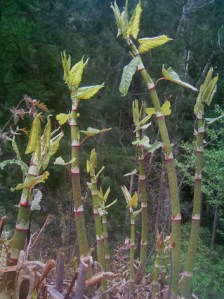
Japanese Knotweed (Fallopia japonica, syn. Polygonum cuspidatum, Reynoutria japonica) is a large, herbaceous perennial plant, native to eastern Asia in Japan, China and Korea. In North America and Europe the species is very successful and has been classified as invasive in several countries. About time to eat it, then!

Closely related species include giant knotweed (Fallopia sachalinensis, syn. Polygonum sachalinense) and Russian vine (Fallopia baldschuanica, syn. Polygonum aubertii, Polygonum baldschuanicum).

Other English names for Japanese knotweed include fleeceflower, Himalayan fleece vine, monkeyweed, Huzhang (Chinese: 虎杖; pinyin: Hǔzhàng), Hancock’s curse, elephant ears, pea shooters, donkey rhubarb (although it is not a rhubarb), sally rhubarb, Japanese bamboo, American bamboo, and Mexican bamboo (though it is not a bamboo). There are also regional names, and it is sometimes confused with sorrel.

In Japanese, the name is itadori (虎杖, イタドリ).

Japanese knotweed flowers are valued by some beekeepers as an important source of nectar for honeybees, at a time of year when little else is flowering. Japanese knotweed yields a monofloral honey, usually called bamboo honey by northeastern U.S. beekeepers, like a mild-flavored version of buckwheat honey (a related plant also in the Polygonaceae).

The young stems are edible as a spring vegetable, with a flavor similar to mild rhubarb. In some locations, semi-cultivating Japanese knotweed for food has been used as a means of controlling knotweed populations that invade sensitive wetland areas and drive out the native vegetation.

RECIPE:
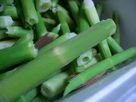
Peel the knotweed from the root (easier this way). Peel all the skin!

Boil the knotweed. If you have a lot of them, proceed in batches.
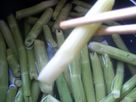
Once the knotweed colour has turned from deep green to “tea green”, the boiling should be enough. It would take up to 2 minutes for items of the thickness shown on the above picture.
Note that that if the deep-green colour hasn’t sufficiently gone, the knotweed will be acid in taste.
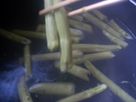
Now as soon as you attained the right colour, scoop knotweed out or over cooking will result in the plant breaking up. Very important!

Transfer immediately into chilled water. Leave it there for a whole night and you will be able to get rid of astrigency and unwanted matters.

Next morning drain, cleanse under cold running water and drain thoroughly.
It can be preserved inside the fridge for quite some time inside a tupperware box.
If you have a lot you can always make salty pickles of them.
If you do so, just put them inside a tightly closed tupperware box with a good measure of salt. Wash them with plenty of water before consuming them.
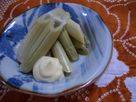
Freshly boiled, they can be eaten as they are with mayonnaise, or a simple dressing for vegans and vegetarians. A little chili pepper is fine, too!

Simple recipe 1:
Two large knotweed (boiled and prepared as above).
Japanese sake: 1/2 tablespoon
Water: 1/2 tablespoon
Mirin/sweet Japanese sake: 1 tablespoon
Men tsuyu/vegan dashi: 1/2 tablespoon
Gently simmer the whole together for a little while.
Try and serve together with other boiled vegetables!

Simple recipe 2:
Two large knotweed (boiled and prepared as above).
Aburaage (fried tofu sheet): 1/2
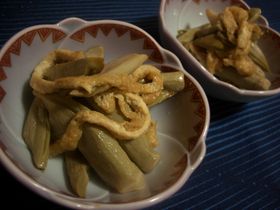
Cut the aburaage into fine strips and fry them quickly with knotweeed.
Add Mirin/sweet sake (1 tablespoon), men tsuyu or vegan dashi (a little less than a tablespoon) while frying. Finish with withsome sesame oil and eat at once!
Great with beer or sake!

Uropean/American style cuisine suggestion:

Itadori/Japanese knotweeed in tomato sauce!

RECOMMENDED RELATED SITES:
Warren Bobrow, Bread + Butter, Zoy Zhang, Hungry Neko, Think Twice, Frank Fariello, Mangantayon, Hapabento, Elinluv Tidbit Corner, Tokyo Terrace, Maison de Christina, Chrys Niles,Lexi, Culinary Musings, Wheeling Gourmet, Comestiblog, Chronicles Of A Curious Cook, Bento Boutique, Tokyo Through The Drinking Glass, Tokyo Foodcast, Urban Sake, Sake World, Palate To Pen, Yellin Yakimono Gallery, Tokyo Terrace, Hilah Cooking, More than a Mount Full, Arkonite Bento

Please check the new postings at:
sake, shochu and sushi

—————————————-
日本語のブログ
—————————————-

Vegan Tofu Curry

As I said before, Koyadofu is one kind of tofu that can beasily arranged into all kinds of interesting appetizers in Japanese Homes’ Gastronomy!
Here is a simple suggestsion for a yummy lunch to be eaten by all, vegans, vegetarians aor omnivores:

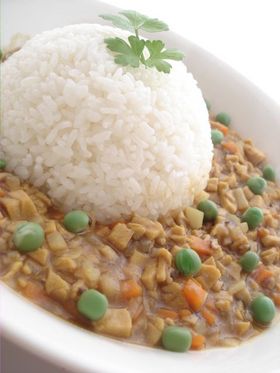
Vegan (Japanese) Tofu Curry!

INGREDIENTS: For 4 people

-Koyadofu: 5 sheets/85 g
-Carrot: 1 medium
-Onion: 1 medium
-Potato: 1 medium
-Shiitake mushrooms: 10 small
-Green peas: the equivalent of 1 small can/60 g
-Curyr powder (of your preference): 1~ tablespoon (I would use 2)
-Soy sauce: 2/3 tablepsoon
-Garan masala powder: 1/2 teaspoon

-Salad oil

-Steamed rice: count a large bowl per person

RECIPE:

-Cut the koyadofu into small bits and let them (if dry) soak in lukewram water until they get soft. Press the water out of them and keep in separate bowl. Finely chop the carrot, onion, potato, and shiitake mushroom. Keep in separate bowl. boil the green peas beforehand if necessary.

-Fry all chopped vegetables in salad oil for a while until the onions become translucent.

-Add some water and bring to boil. Remove any unwanted matter if necessary. Add chopped koyadofu. Cook until carrot are sufficently soft. Switch off fire. Add curry powder and mix quickly. Add soy sauce and garam masala and mix quickly. Switch on the fire and cook over small fire until you are satisfied withe the consistency of the whole.

On a dish turn over a bowl of rice and surround it like in the toppicture with curry to which you add the green peas at the last second (on directly “seeded” over it) for good effect.

RECOMMENDED RELATED SITES:
Warren Bobrow, Bread + Butter, Zoy Zhang, Hungry Neko, Think Twice, Frank Fariello, Mangantayon, Hapabento, Elinluv Tidbit Corner, Tokyo Terrace, Maison de Christina, Chrys Niles,Lexi, Culinary Musings, Wheeling Gourmet, Comestiblog, Chronicles Of A Curious Cook, Bento Boutique, Tokyo Through The Drinking Glass, Tokyo Foodcast, Urban Sake, Sake World, Palate To Pen, Yellin Yakimono Gallery, Tokyo Terrace, Hilah Cooking, More than a Mount Full, Arkonite Bento

Please check the new postings at:
sake, shochu and sushi

—————————————-
日本語のブログ
—————————————-

Vegan Japanese Tofu Gratin

Gratin can become a problem for vegans as they usually involve the use of butter and milk.
Here is a simple recipe that will help you solve that problem:

Japanese Beans Gratin!

INGREDIENTS: For 1 person

-Tofu (kinudofu/Silk tofu) 1 block/300g
-Onion: 1
-Shiitake Mushrooms: 3
-Oil: 2 tablespoons
-Flour: 2 tablespoons
-Soy milk: 1 cup/200 cc/ml
-Miso: 1 tablespoon
-Salt & pepper: as appropriate

RECIPE:

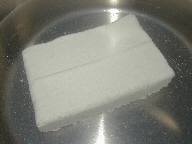
-Cut/Dig out tofu block to a depth of 2 cm and leaving a 1 cm wide rim.

-In an oven dish cook the tofu block for 2 miutes 30 seconds in the microwave oven, take out and let rest for more than 3 hours.

-Chop the onion finely and cut the shiitake mushrooms in 5 millimeter/half a centimeter strips.

-Wrap the chopped onion in cellophane paper and cook in microwave oven for 1 minute.

-Pour some oil in a frying pan and sautee the onions. Once a nice smell cmes out the onions add the shiitake mushrooms and fry. Season with salt and pepper.

-Switch off the fire. Add the flour and mix well with a soft spatula.

-Add the soy milk and miso and mix. Switch on the fire and cook until the sauce has acquired a smooth texture. Switch off fire. (you may add the tofu dug out of the block!)

-Pour some oil in a clean frying pan and fry the tofu block on both sides until it attains a nice colour (see picture above).

-Serve the fried tofu on a dish and pour the onion-mushroom sauce on it!

NOTE:

-If you want to really look it like a gratin, you may grill the lot!

-Decorate with some leafy greens!

RECOMMENDED RELATED SITES:
Warren Bobrow, Bread + Butter, Zoy Zhang, Hungry Neko, Think Twice, Frank Fariello, Mangantayon, Hapabento, Elinluv Tidbit Corner, Tokyo Terrace, Maison de Christina, Chrys Niles,Lexi, Culinary Musings, Wheeling Gourmet, Comestiblog, Chronicles Of A Curious Cook, Bento Boutique, Tokyo Through The Drinking Glass, Tokyo Foodcast, Urban Sake, Sake World, Palate To Pen, Yellin Yakimono Gallery, Tokyo Terrace, Hilah Cooking, More than a Mount Full, Arkonite Bento

Please check the new postings at:
sake, shochu and sushi

—————————————-
日本語のブログ
—————————————-

Make your own Tofu (repeat)

zarudofu
“Zarudofu”, my favourite variety of tofu just filtered out in a “zaru/basket”. You just eat it with a spoon on its own. No seasoning needed!

Following a suggestion by Japansoc I decided to pst again the tofu recipe!
This article concerns the home-making of it!

Ingredients (for one large piece, one cho/”丁” in Japanese)

Soy beans: 2 cups (360cc)
Nigari: 2 large tablespoons
(Magnesium chloride is an important coagulant used in the preparation of tofu from soy milk. In Japan it is sold as nigari (the term is derived from the Japanese word for “bitter”), a white powder produced from seawater after the sodium chloride has been removed, and the water evaporated. In China it is called “lushui”.. Nigari or Lushui consists mostly of magnesium chloride, with some magnesium sulfate and other trace elements. It is also an ingredient in baby formula milk).
Water: 5 cups (twice and a half the volume of soy beans)

Utensils:
One large pot
One large clean cloth pouch to press tofu through
One bowl
One mixer
One thermometer
One large piece of gauze to filter water off shaped tofu
One large wooden spoon
One wooden tofu-shaper case

RECIPE:
toofu-1

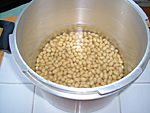
1) Preparation: soak soy beans in water overnight

toofu2

2) Preparation: Mix nigari with 1 cup of water and set aside

toofu-3

3) According to its size, Pour the whole or part by part soy beans and water (1) and make paste as fine as possible. If mixer runs at an even pace without crushing beans into paste, add more water. The paste obtained is called “namago” (生呉)

toofu-4

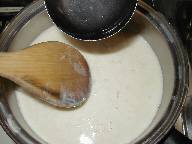
4) Pour the bean paste into a large pot with an equal amount of water. Heat stirring all the time. The paste will come to a boil suddenly. Switch off fire. Switch on low once the paste has settled for 10 minutes and take off fire.

toofu-5

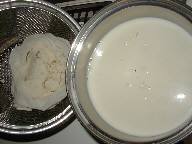
5) Pour paste into the cloth pouch and press. Right of the picture is tofu paste before pressing. Left is pressed out tofu

toofu-6

6) Solidifying (coagulating) with nigari.
Stir tofu over light fire. When the temperature has reached 75~80 degrees Celsius pour in nigari slowly and stir all the time. The solid matter will sink to the bottom and accumulate. The coagulation will be complete when liquid above tofu has become transparent. Stop the operation and let rest for 15 minutes.

toofu-7

7) Arrange the gauze inside tofu a tofu shaper case which should have small holes to let excess water run out.

toofu-8

8) Cover with lid with a weight (or glass of water) of about 250 g and further press out water for 15 minutes

toofu-9

9) Delicately empty tofu in basin filled with called water and leave it there for an hour to take out excess nigari. Store in refrigerator.

RECOMMENDED RELATED SITES:
Warren Bobrow, Bread + Butter, Zoy Zhang, Hungry Neko, Think Twice, Frank Fariello, Mangantayon, Hapabento, Elinluv Tidbit Corner, Tokyo Terrace, Maison de Christina, Chrys Niles,Lexi, Culinary Musings, Wheeling Gourmet, Comestiblog, Chronicles Of A Curious Cook, Bento Boutique, Tokyo Through The Drinking Glass, Tokyo Foodcast, Urban Sake, Sake World, Palate To Pen, Yellin Yakimono Gallery, Tokyo Terrace, Hilah Cooking, More than a Mount Full, Arkonite Bento

Please check the new postings at:
sake, shochu and sushi

—————————————-
日本語のブログ
—————————————-

Koyadofu/Pressed Tofu Recipe

As promised here is the basic recipe to make Koyadofu/高野豆腐 or pressed tofu.

Koyadofu is extensively used in veganand vegetarian food in Japan.

It can also be deep-fried into great crunchy morsels!

INGREDIENTS:

-Tofu: 1 block/400 g (actually it is up to you!)

RECIPE:

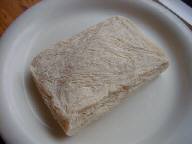
-Place the tofu in a plate/bowl and let rest there for 10 minutes.  Throw away the water that comes out naturally. Cut the tofu into 3 “slices” across the width. You may skip that step and proceed with whole block.

-Wrap the tofu into cellophane paper and freeze the tofu inside the freezer of your refrigerator.

-Will be ready once completely frozen.
The trick is to press water out of the tofu once you have thawn it.
The tofu will have taken its colour and consistency naturally.

Recipe suggestion:

Prepare a stock soup with 1 cup of seaweed dashi/soup stock, 2 tablespoons of sugar, a little salt, 1 and a half teaspoons of mirin/sweet sake, and 1 and a half teaspoons of soy sauce.
Cook the koyadofu in it and serve once soft enough.

RECOMMENDED RELATED SITES:
Warren Bobrow, Bread + Butter, Zoy Zhang, Hungry Neko, Think Twice, Frank Fariello, Mangantayon, Hapabento, Elinluv Tidbit Corner, Tokyo Terrace, Maison de Christina, Chrys Niles,Lexi, Culinary Musings, Wheeling Gourmet, Comestiblog, Chronicles Of A Curious Cook, Bento Boutique, Tokyo Through The Drinking Glass, Tokyo Foodcast, Urban Sake, Sake World, Palate To Pen, Yellin Yakimono Gallery, Tokyo Terrace, Hilah Cooking, More than a Mount Full, Arkonite Bento

Please check the new postings at:
sake, shochu and sushi

—————————————-
日本語のブログ
—————————————-

Vegan Japanese Burger

Here is another simple recipe to convince my friends that Japan is a great country for vegans and vegetarians (and omnivores!)!

Vegan Japanese Burger!

INGREDIENTS:

Koyadoufu as sold in Japan either in single sheets or ready cut.

Koyadiufu cuisine example

Koyadoufu/高野豆腐 is tofu which has been pressed hard to almost a solid state although it still possesses an elastic and tender quality.
It is available in Asian markets either dried or preserved in light brine.

I will post the recipe very soon!

-Koyadofu: 1 “sheet” or approximately 100 g (wet weight)
-Boiled soy beans: 1/2 cup
-Carrot: 1/2
-Cabbage: 2 leaves
-Black pepper: a litle
-Miso: 1 teaspoon
-Tomato puree: 1 teaspoon
-Oil: 1 tablespoon
-Flour: 2 tablespoons
-Potato: 1
-Soy milk: 5 tablespoons
-Salad oil: 3 tablespoons
-Salt: a small pinch

RECIPE:

-If the koyadofu is dry let in rest in lukewarm water until it has come back to its soft state. Press the water out hard and chop finely.

-Drop the boiled soy beasn in a food processor/mixer to “chop” finely. Don’t make a paste!

-Chop the carrot finely. Cut the the cabbage leaves into very thin strips>

-Fry the carrot and cabbage in a fry pan with oil and black pepper.

-Once the oil has coated the carrot and cabbage well, reduce fire to low, cover with a lid and steam fry for a while.

-Once the carrot and cabbage are cooked add the miso, tomato puree, chopped koyadoufu, soy beans, and continue steam-frying for a little while.
Switch off the fire.
Add the flour and mix.

-Let cool long enough to be able to handle it.
Form a burger and place on an oiled oven hot plate.

-Peel the potato and cook it in a microwave oven until tender (or boil it beforehand).

-Let the potato cool down before dropping it in the food processor with the soy milk and salad oil. Mash the potato, but don’t process too long or te potato willbecome glue!

-Season with a little salt and cover the burger with it.

-Bake for 10 minutes at 190 degrees Celsius or until it has reached a clour of your liking!

RECOMMENDED RELATED SITES:
Warren Bobrow, Bread + Butter, Zoy Zhang, Hungry Neko, Think Twice, Frank Fariello, Mangantayon, Hapabento, Elinluv Tidbit Corner, Tokyo Terrace, Maison de Christina, Chrys Niles,Lexi, Culinary Musings, Wheeling Gourmet, Comestiblog, Chronicles Of A Curious Cook, Bento Boutique, Tokyo Through The Drinking Glass, Tokyo Foodcast, Urban Sake, Sake World, Palate To Pen, Yellin Yakimono Gallery, Tokyo Terrace, Hilah Cooking, More than a Mount Full, Arkonite Bento

Please check the new postings at:
sake, shochu and sushi

—————————————-
日本語のブログ
—————————————-

Japanese Snack: Wasabi, Umeboshi & Avocado Salad

SYNOPSIS:

Living in a Prefecture that grows 80% of all wasabi in Japan, I thought it was about time I came up with a few recipes with wasabi!

I fully understand that wasabi and wasabi paste is not readily available outside Japan, but if you have the chance to get at least a tube of real wasabi, I a a few recipes for you that requires only a little of the precious stuff.
Bear in mind that wasabi (as well as umeboshi!) is a natural medicine by itself, one more reason for you to buy some.

As for the following recipe, the second one, vegans and vegetarians can substitute the mayonnaise with gomadare/sesame sauce or a simple vinaigrette with olive oil, wine vinegar, salt pepper and wasabi!

Wasabi, Umeboshi & Avocado Salad:

INGREDIENTS: For 1~2 persons

-Avocado: 1 (choose a ripe one!)
-Umeboshi/Japanese pickled plum: 1 (if you don’t want too much salt, choose a sweet one!)
-Mayonnaise: 1 teaspoon
-Wasabi paste: 1/2 teaspoon
-Soy sauce: 1 teaspoon
-Lemon juice: as appropriate
-Nori/dry seaweed: as appropriate

RECIPE:

-Cut avocado in halves, peel, discard seed and cut into samll enough pieces. Drop them in a bowl. Add the lemon juice and stir delicately. Very iportant as it will preserve the colour of the avocado and add to taste.

-Take out and discard the umeboshi seed and chop/mash fine. Add to avocado and stir delicately.

-Add mayonnaise (or vinaigrette), wasabi, soy sauce and stir/mix delicately.

-Serve in a bowl topped with dry seaweed cut in short and thin strips.

NOTE:

-Add peeled orange wedges for looks and taste!

So easy, isn’t it?

RECOMMENDED RELATED SITES:
Warren Bobrow, Bread + Butter, Zoy Zhang, Hungry Neko, Think Twice, Frank Fariello, Mangantayon, Hapabento, Elinluv Tidbit Corner, Tokyo Terrace, Maison de Christina, Chrys Niles,Lexi, Culinary Musings, Wheeling Gourmet, Comestiblog, Chronicles Of A Curious Cook, Bento Boutique, Tokyo Through The Drinking Glass, Tokyo Foodcast, Urban Sake, Sake World, Palate To Pen, Yellin Yakimono Gallery, Tokyo Terrace, Hilah Cooking, More than a Mount Full, Arkonite Bento

Please check the new postings at:
sake, shochu and sushi

—————————————-
日本語のブログ
—————————————-

Vegan Japanese Snack: Imo & Wasabi

Living in a Prefecture that grows 80% of all wasabi in Japan, I thought it was about time I came up with a few recipes with wasabi!

I fully understand that wasabi and wasabi paste is not readily available outside Japan, but if you have the chance to get at least a tube of real wasabi, I a a few recipes for you that requires only a little of the precious stuff.
Bear in mind that wasabi is a natural medicine by itself, one more reason for you to buy some.
The present recipe also include yama imo/山芋, or long yam, which also so good for stamina and health!

Vegan Japanese Snack: Imo & Wasabi

INGREDIENTS: For 2 people

-Long yam (fresh): 7 cm long piece
-Mitsuba/Trefoil/Japanese honeywort
-Dry seaweed/nori: as appropriate
-Soy sauce: 1 teaspoon
-Wasabi paste: 1/2 teaspoon
-Soy sauce for “washing”: 1 teaspoon

RECIPE:

-Peel the yam and cut into pieces of your preferred size.
If you are sensitive to the yam “juice”, freeze it first!

-Boil the trefoil lightly and for only a short time. Drain and press water out. Add the soy sauce “for washing”, mix and press the the trefoil again!
Cut the trefoil into 1 cm long pieces.

-In a bowl mix the yam and trefoil with the soy sauce and wasabi. Mix well.
Place in serving dish topped with dry seaweed cut into short thin strips.

-You may add many green leaf veg to this recipe of course and decorate it with sliced red radihes for example!

RECOMMENDED RELATED SITES:
Warren Bobrow, Bread + Butter, Zoy Zhang, Hungry Neko, Think Twice, Frank Fariello, Mangantayon, Hapabento, Elinluv Tidbit Corner, Tokyo Terrace, Maison de Christina, Chrys Niles,Lexi, Culinary Musings, Wheeling Gourmet, Comestiblog, Chronicles Of A Curious Cook, Bento Boutique, Tokyo Through The Drinking Glass, Tokyo Foodcast, Urban Sake, Sake World, Palate To Pen, Yellin Yakimono Gallery, Tokyo Terrace, Hilah Cooking, More than a Mount Full, Arkonite Bento

Please check the new postings at:
sake, shochu and sushi

—————————————-
日本語のブログ
—————————————-
Vegan Japanese Non-Wheat Steamed Bread

Although I’m not, I understand that being a vegan or vegetarian can be trying at times, and even frustrating when looking for new reipes.
Now, if on top of that you suffer from allergies such wheat allergy it can easily become a nightmare.
Here is one vegan bread recipe that does not make use of wheat flour!
And it is Japanese, although all Asians could say the contrary!LOL

Vegan Japanese Non-Wheat Steamed Bread

INGREDIENTS:

-Rice flour: 200 g (sold as “riz blanc”/リブラン in Japan)
-Brown sugar (fine): 100 g
-Cornstarch (vegan one): 2 tablespoons
-Baking powder (vegan one): 2 teaspoons
-Salt: a pinch
-Salad oil or olive oil: 1 tablespoon
-Soy milk: 200 cc/ml

RECIPE:

-Pour the rice flour, brown sugar, cornstarch, baking powder and salt in a vinyl pouch and shake until well mixed.

-Pour rice flour mix in a rice steamer/cooker mold. Add soy milk and mix with a spatula. It will appear as slightly more liquid than a pancake mixture.

-Add the oil and mix well. Steam until satisfaction. Don’t hesitate to continue steaming if not satisfied with the consistency. Actually steaming it twice will achieve proper results!

RECOMMENDED RELATED SITES:
Warren Bobrow, Bread + Butter, Zoy Zhang, Hungry Neko, Think Twice, Frank Fariello, Mangantayon, Hapabento, Elinluv Tidbit Corner, Tokyo Terrace, Maison de Christina, Chrys Niles,Lexi, Culinary Musings, Wheeling Gourmet, Comestiblog, Chronicles Of A Curious Cook, Bento Boutique, Tokyo Through The Drinking Glass, Tokyo Foodcast, Urban Sake, Sake World, Palate To Pen, Yellin Yakimono Gallery, Tokyo Terrace, Hilah Cooking, More than a Mount Full, Arkonite Bento

Please check the new postings at:
sake, shochu and sushi

—————————————-
日本語のブログ
—————————————-

Vegan Japanese Bread

Everyone likes his/her bread but some pople do have priorities!
Here is a simple recipe for vegans and vegetarians!

Vegan Japanese Bread!

INGREDIENTS:

-All-purpose flour: 260 g
-Salt: 4 g
-Brown sugar: 20 g
-Fermented soy milk margarine: 20 g
-Water: 130 ml/cc
-Soy milk: 50 ml/cc
-Baking powder: 2 g

RECIPE:

-For quick results us a HB (stands for “Home Bakery” in Japanese) bread cooker.

-In a bowl drop and mix flour, salt, sugar and fermented soy milk margarine.

-In the HB “pan” pour the water and soy milk and stir.

-Add the flour, salt, sugar and fermented soy milk margarine mixture and stir.

-Add yeast powder, stir and close the HB. Switch on and wait!

Simple, isn’t it?
The HB is worth the investment, I can tell you!

RECOMMENDED RELATED SITES:
Warren Bobrow, Bread + Butter, Zoy Zhang, Hungry Neko, Think Twice, Frank Fariello, Mangantayon, Hapabento, Elinluv Tidbit Corner, Tokyo Terrace, Maison de Christina, Chrys Niles,Lexi, Culinary Musings, Wheeling Gourmet, Comestiblog, Chronicles Of A Curious Cook, Bento Boutique, Tokyo Through The Drinking Glass, Tokyo Foodcast, Urban Sake, Sake World, Palate To Pen, Yellin Yakimono Gallery, Tokyo Terrace, Hilah Cooking, More than a Mount Full, Arkonite Bento

Please check the new postings at:
sake, shochu and sushi

—————————————-
日本語のブログ
—————————————-

Vegetables Facts & Tips 20: Japanese Mustard Spinach/Komatsuna

This the 20th installment of a very long (yet incomplete) series of postings to share information on vegetables, especially the ones available in Japan as many expats (and Japanese) and friends abroad need more of such data for their daily requirements.
Please refer to VEGETABLES FACTS & TIPS for other vegetables!

Incidentally、 nothing, pictures included, is copyrighted in my food blogs, so please feel free to use anything!

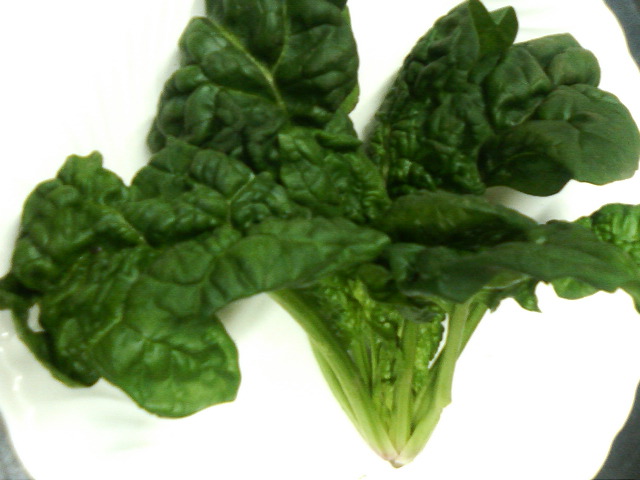
Komatsuna (Brassica rapa var. perviridis or var. komatsuna, コマツナ(小松菜、冬菜、鶯菜) is a type of leaf vegetable. It is a variant of the same species as the common turnip. It is grown in Japan, Taiwan and Korea. It is also known as Japanese Mustard Spinach and is usually stir-fried, pickled, boiled and added to soups or used fresh in salads. It is an excellent source of calcium. It is also used for fodder in some Asian countries. The leaves of komatsuna may be eaten at any stage of their growth. In a mature plant they are dark green with slender light green stalks, around 30 cm long and 18 cm wide. It is most often grown in the spring and autumn, as it cannot endure extreme heat or cold for more than a short time.

That for the Wikipedia information.

FACTS:

-Komatsuna is a very interesting vegetable as it contains a lot of calcium to be added to Potassium and Natrium.
-It is also rich in Vitamin A Beta carotenes, K, B2, C and vegetal fibers.
-Season: December to February and longer in colder countries.
-Originally it was grown in Eastern Japan in Edo Times, but is now available in Osaka and other cities.
-Combined with fish it is particularly beneficient to human bones.

TIPS:

-Can be eaten raw or cooked, sligtly bpoied and stir-fried.

-To preserve more easily, boil them lightly before storing in the fridge.
Ought to be wrapped in newspaper and stored inside the fridge if raw. Can be stored that way for p to 3 days.

-To preserve it beautiful green colour, boil it lightly and trnsfer it immediately into iced water. As it will change colour in contact with oil, add dressing at the very last second.

COOKING SUGGESTIONS:

With pasta!

Komatsuna Bread for vegetarians!

For vegetable and fruit juice!

Komatsuna Kimchi!

VARIETY:

Chijimi Komatsu

A smaller and “frizzled” variety, sweeter than the usual komatsuna.
Can be eaten the same way. Great slightly boiled with ground sesame seeds and dressing.

HEALTH FACTS:

-Combined with dried sardine whiting, or with sakura ebi/Cherry blossom shrimps, or with scallops, or with konbu/seaweed, helps preserve human bones, and activate rejuvenation.

-Combined with tomatoes, or with wakame seaweed, or with carrots, or with green chili peppers, povides for extra stamina, and helps prevent cancer.

-Combined with rice vinegar, or with orange, or with lemon, or with strawberries, helps prevent stress, and sore back/articulations, and helps swift recovery.

-Combined with konnyaku/devil’s tongue tuber, or with mushrooms, or with celery, or with bamboo shoots, helps combat obesity and prevent high blood pressure. Helps lower down blood cholesterol.

RECOMMENDED RELATED SITES:
Warren Bobrow, Bread + Butter, Zoy Zhang, Hungry Neko, Think Twice, Frank Fariello, Mangantayon, Hapabento, Elinluv Tidbit Corner, Tokyo Terrace, Maison de Christina, Chrys Niles,Lexi, Culinary Musings, Wheeling Gourmet, Comestiblog, Chronicles Of A Curious Cook, Bento Boutique, Tokyo Through The Drinking Glass, Tokyo Foodcast, Urban Sake, Sake World, Palate To Pen, Yellin Yakimono Gallery, Tokyo Terrace, Hilah Cooking, More than a Mount Full, Arkonite Bento

Please check the new postings at:
sake, shochu and sushi

—————————————-
日本語のブログ
—————————————-