IZAKAYA RANKING: +3 Service: +3 Excellent and very friendly Facilities: +3 Very clean, Beautiful washroom Prices: +2 reasonable Strong points: Vegan and vegetarian Cuisine possible any time, Izakaya gastronomy, local products, oden. Good list of sake, shochu. Wines also available.
Time and again I have said that vegans and vegetarians would probably have their happiest times in Japan, at least for gastronomes, because this country, and especially Shizuoka with its mild weather and abundance of vegetables in all seasons, can provide all ingredients all year round whose traceability is easy to prove!
The above o-tooshi/お通し/is not vegetarian, but you aforementioned priorities will ensure it is!
There are many places in Shizuoka City and Prefecture offering alternatives to their omnivorous dishes for vegans and vegetarians who still want to enjoy their outing with friends with different priorities.
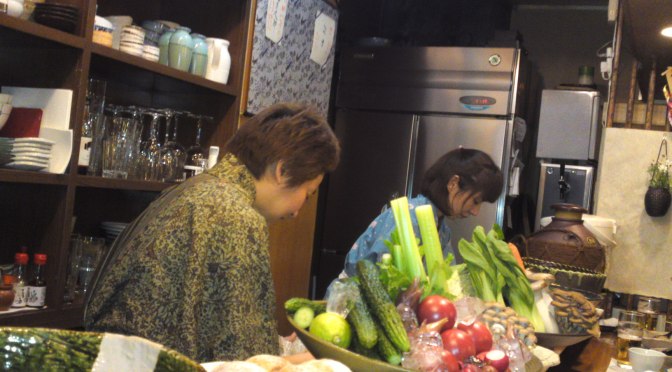
One such place, and arguably the best at it, is Yasaitei in Tokiwa Cho, Aoi Ku, Shizuoka City!
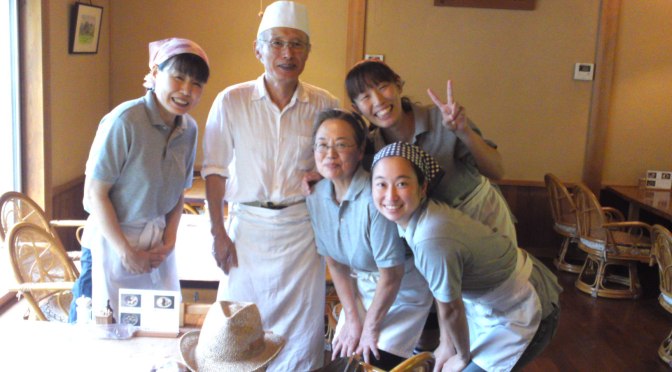
Incidentally the owner/chef and staff are all ladies, but customers are certainly of both genders!
And here is one recommendation:
Vegetable sashimi plate!
The above is the basic one, but you certainly may order for a bigger variety!
View for the other side!
Ice plant and celery!
One thing all these vegetables have in common is that they are super fresh, crunchy, juicy and so tasty!
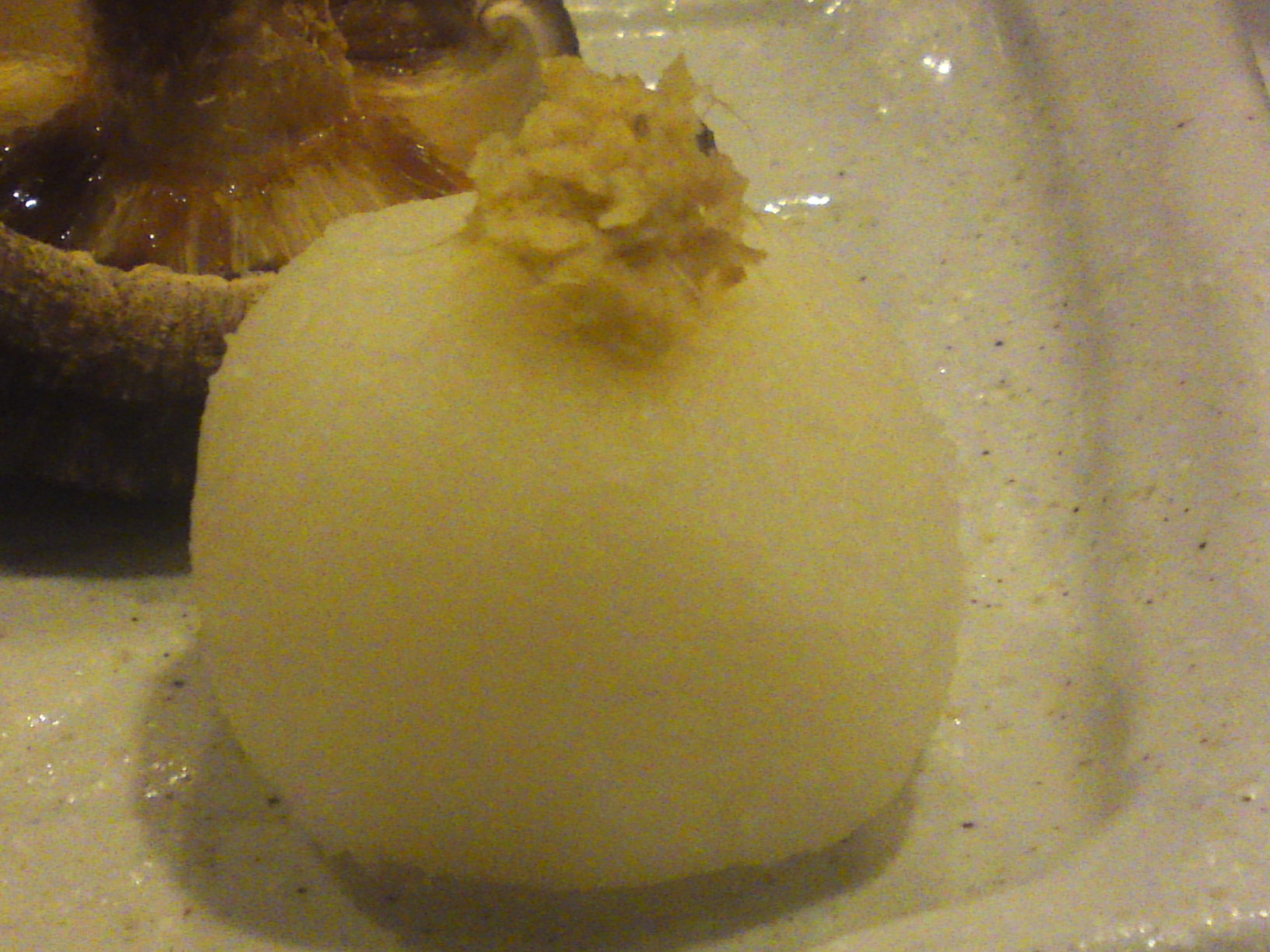
Tomatoes and daikon!
Japanese cucumber!
Onion and shiso/perilla leaf!
Simple but exquisite dressing made with higher-class sesame oil, rock salt and miso paste!
For friends who like seafood: cod roe steamed and marinated in rice vinegar!
Another “o-tooshi/お通し/snack served with the first drink!
Lotus root/renkon/蓮根 in “kinpira” fashion!
Such a satisfying crunch!
Grilled fresh shiitake/椎茸!
The shiitake were simply grilled and seasoned with soy sauce before being served over shiso/perilla leaves.
Freshly grated daikon and ginger were provided for further seasoning and enjoyment.
Surely one of the best ways to enjoy fresh shiitake!
Another o-tooshi!
Mushrooms and fried tofu o-hitashi/お浸し/Japanese-style light appetizer!
Maitake, tomato and spinach stir-fried in sesame oil and served with fresh coriander!
Maitake/舞茸 in English stands for mushrooms called Hen-of-the-Woods, Ram’s Head or Sheep’s Head!
Juicy and so tasty mushrooms!
Note the coriander for beautiful balance in presentation and taste!
Another o-tooshi!
Mushrooms and mekabu/芽蕪/small turnips! If you are vegetarian or vegan just tell them not to top it with katsuo bushi!
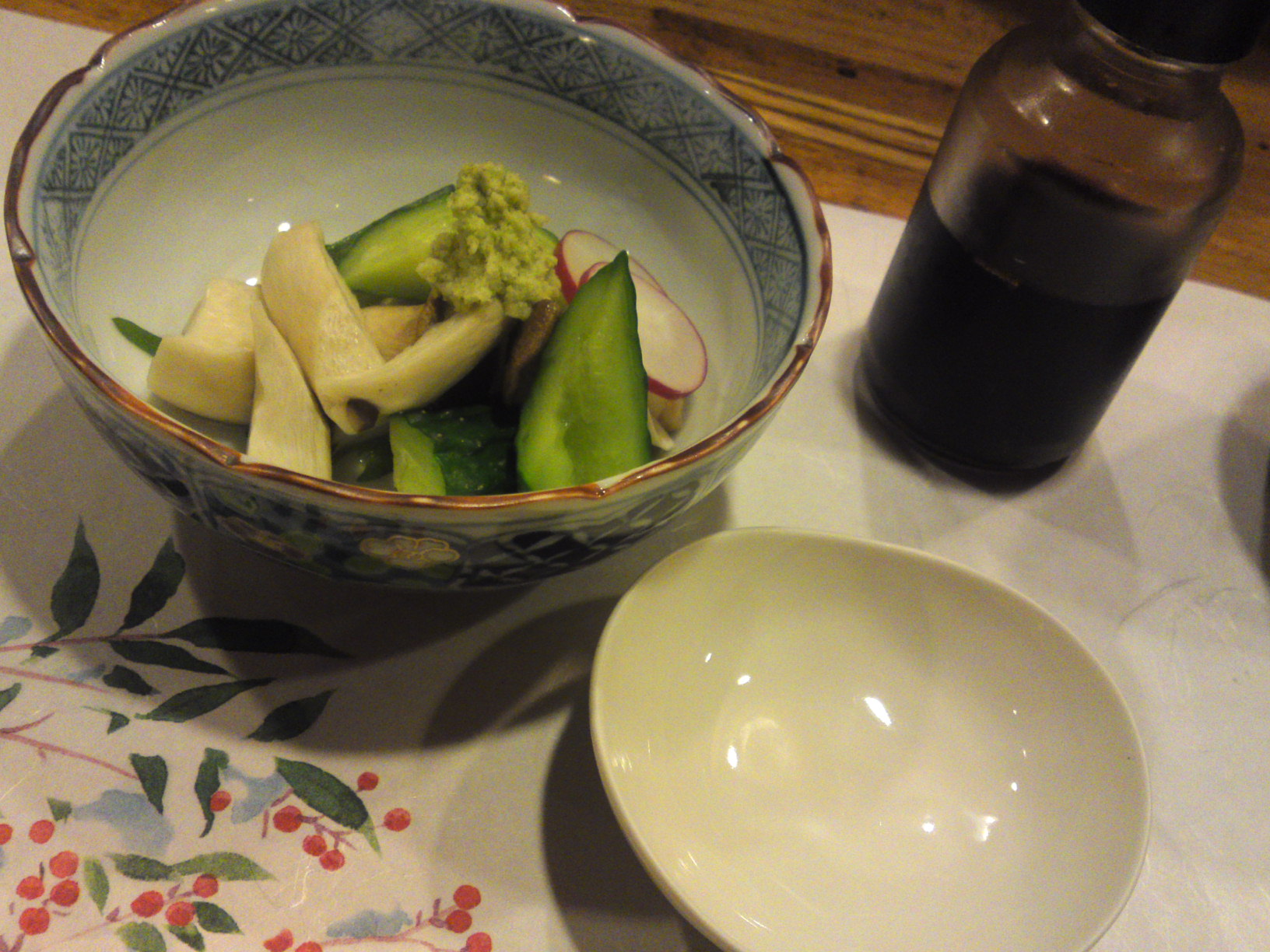
Steamed eringe (or eringi)/エリンゲ/known in English as king trumpet mushroom, French horn mushroom or king oyster mushroom!
The eringe were steamed together with fresh cucumber and served with freshly grated Shizuoka-grown wasabi!
See “Izakaya Ranking” system at bottom of article!
YASAITEI/やさい亭
Shizuoka City, Aoi Ku, Tokiwa-Cho, 1-6-2 Green Heights Wamon 1-C
Tel.: 054-2543277
Business hours: 17:30~22:00
Closed on Sundays
Reservations highly recommended
Seating: 6 at counter + 14 at tables
Set Courses: 3,000, 4,000, 5,000 yen
Individual orders (carte) welcome
Parties welcome
IZAKAYA RANKING SYSTEM
IZAKAYA RANKING:
+1 ought to be visited at least once
+2 could be become a regular visit
+3 must visit!
Service:
+1 standard
+2 pleasant
+3 very good
Equipment & Facilities:
+1 standard
+2 excellent
+3 Superb
Prices:
+1 cheap
+2 slightly expensive but good value
+3 expensive but good value
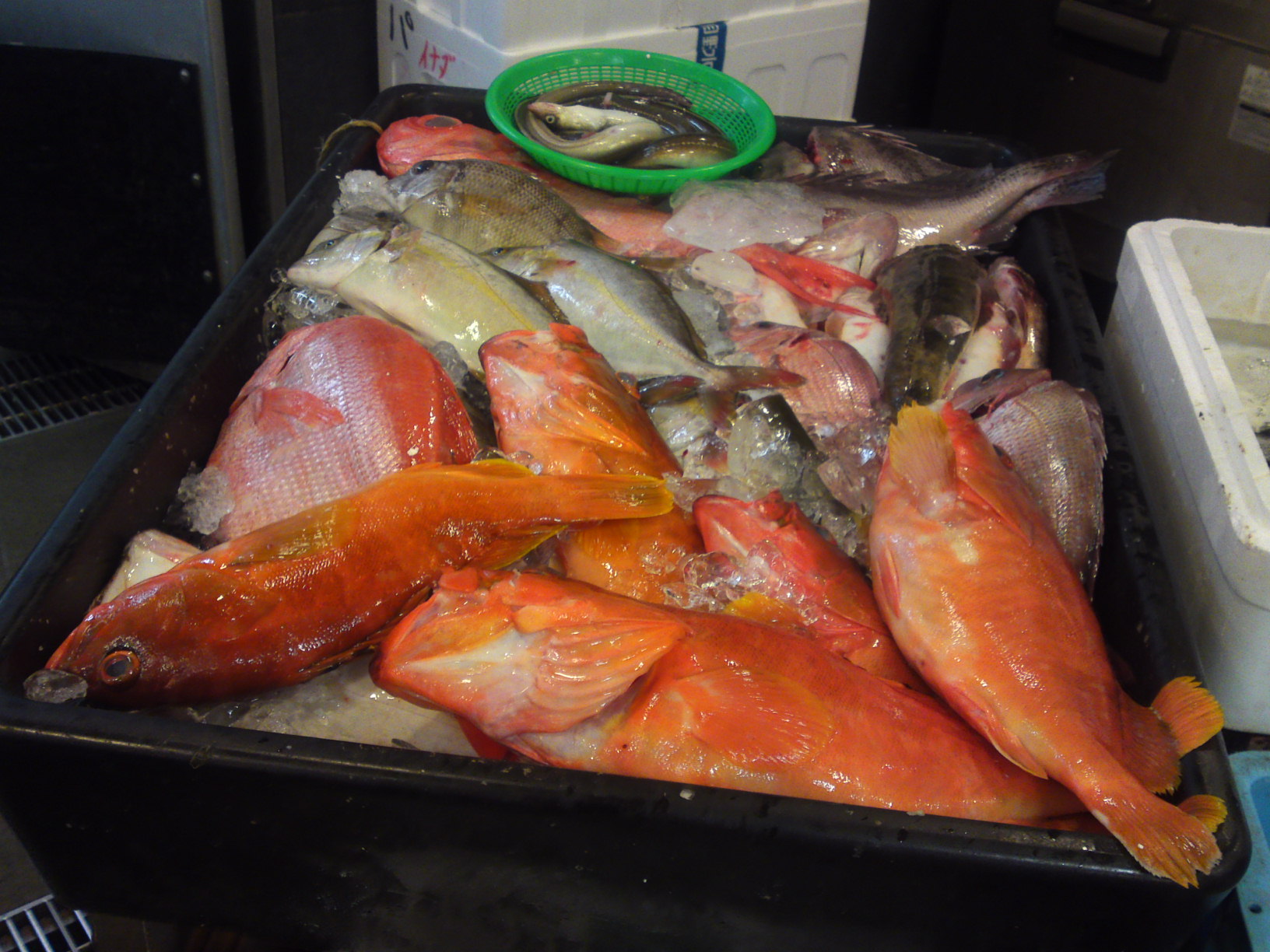
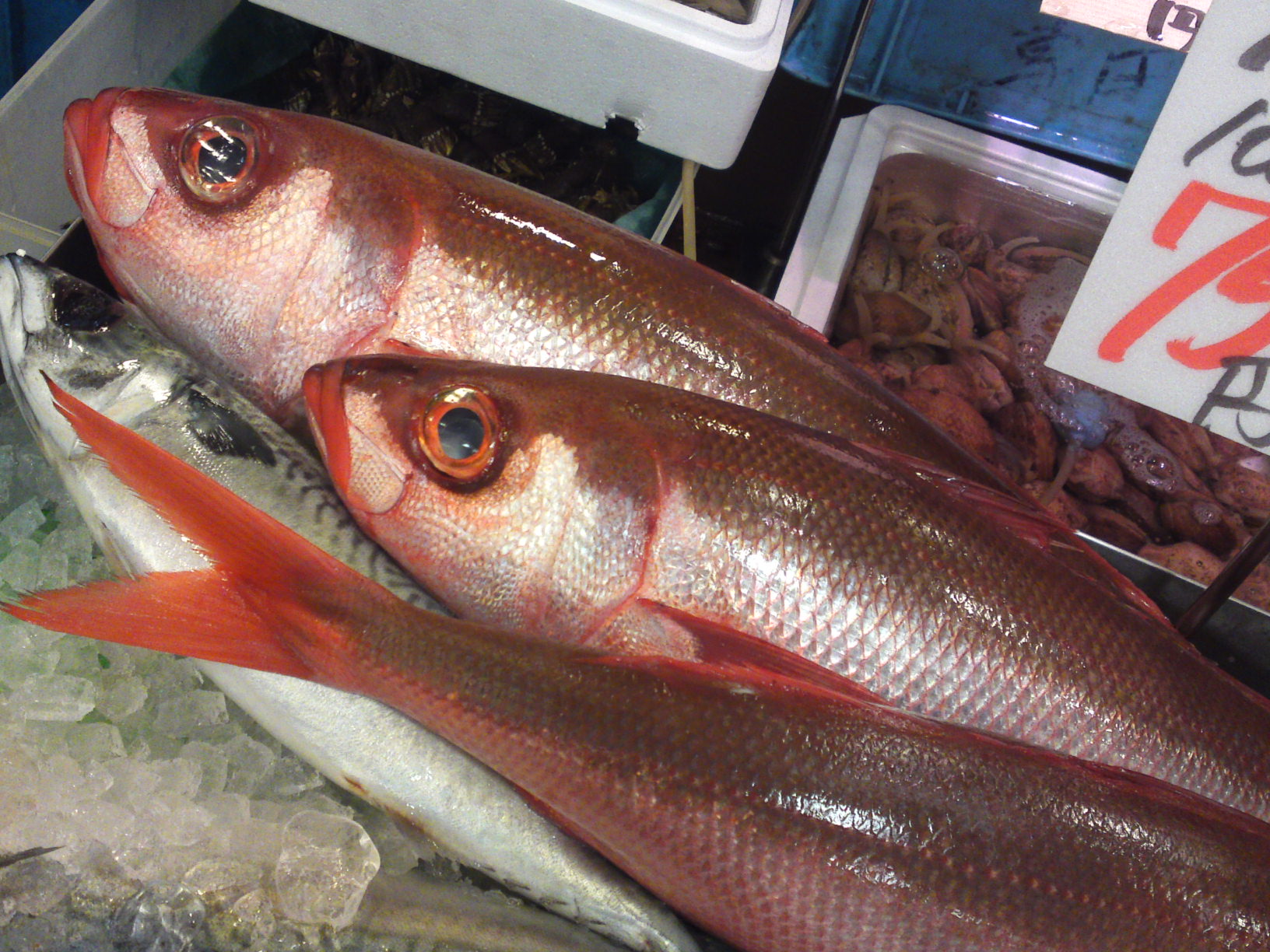
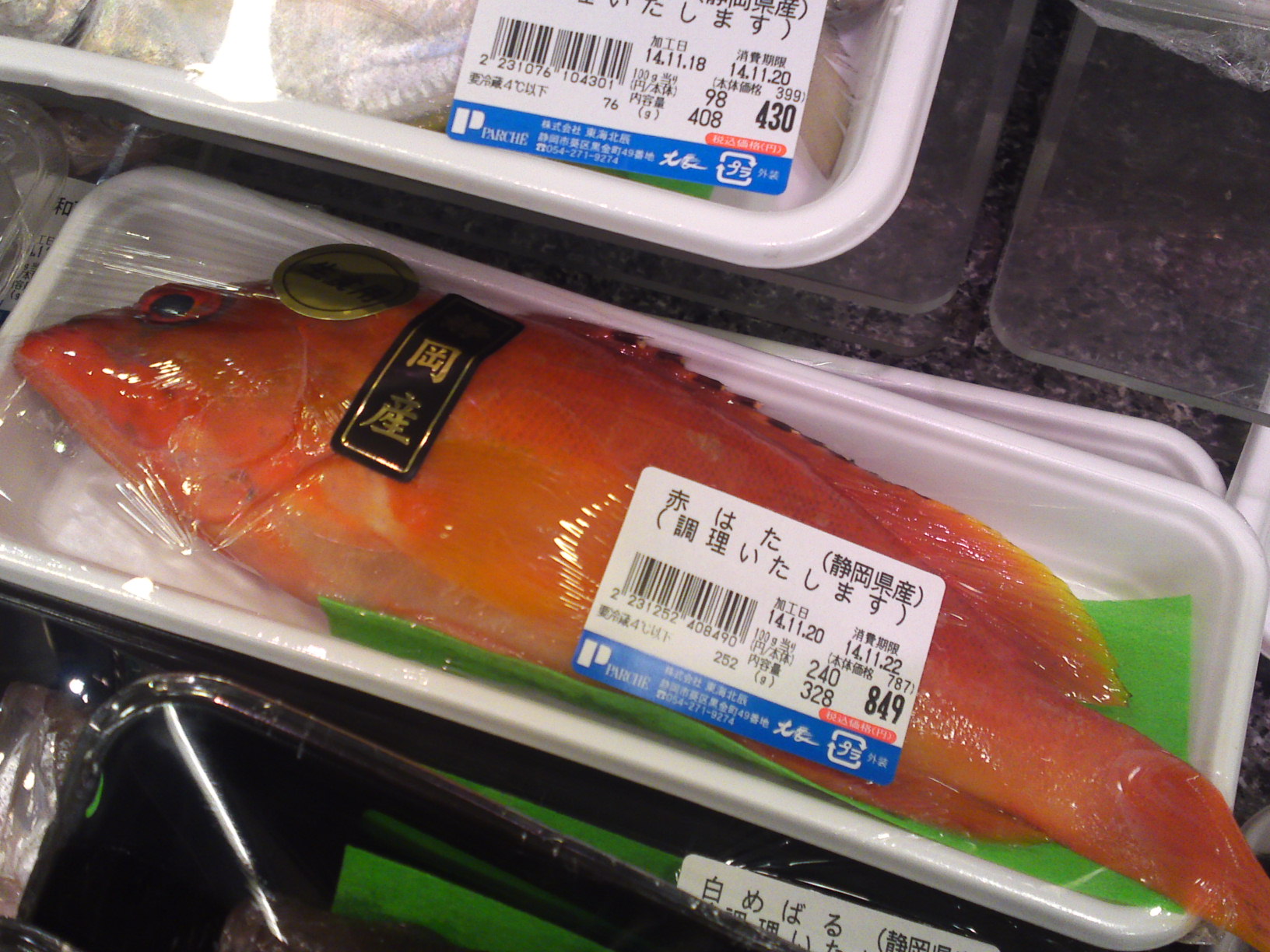
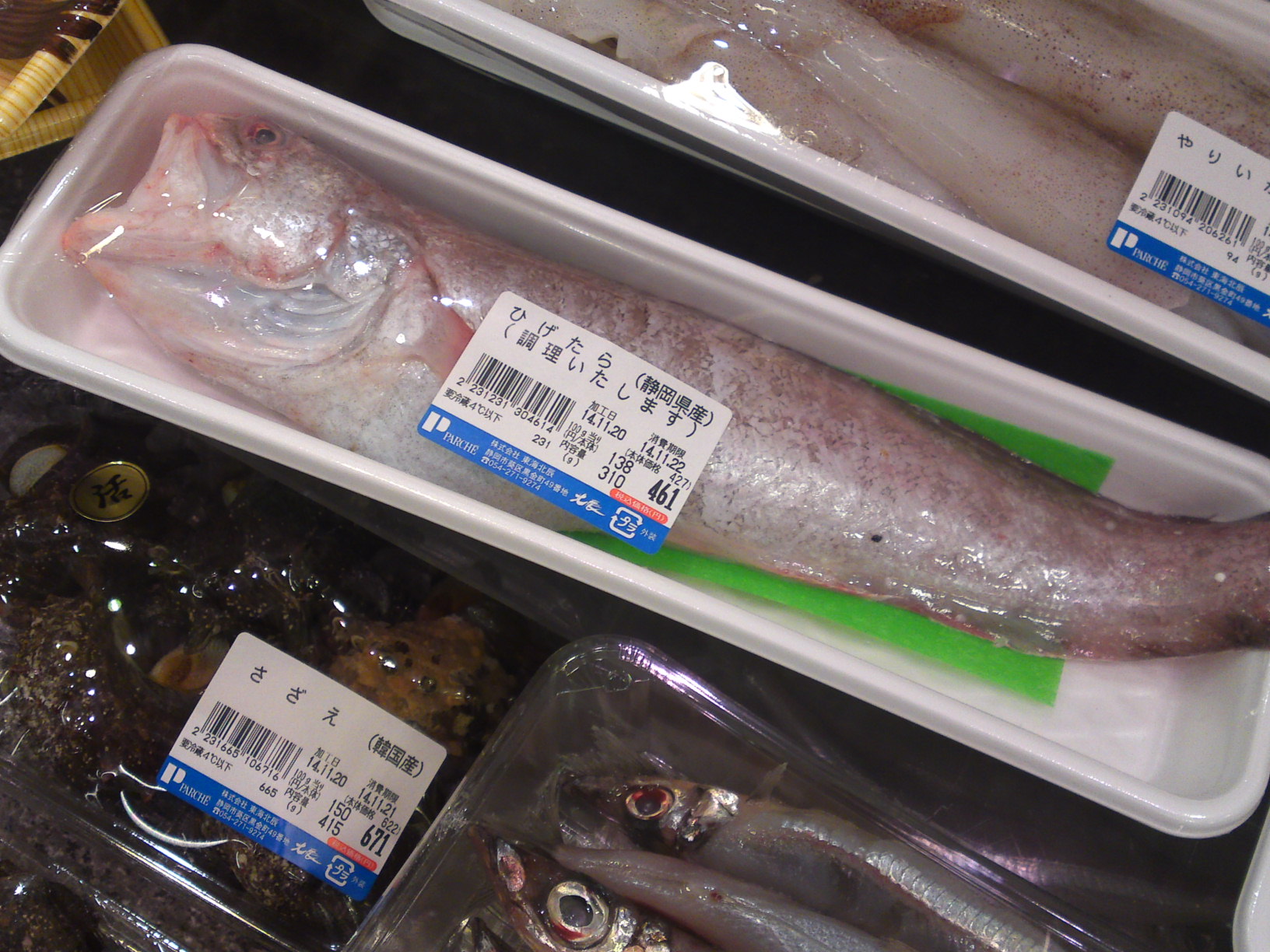
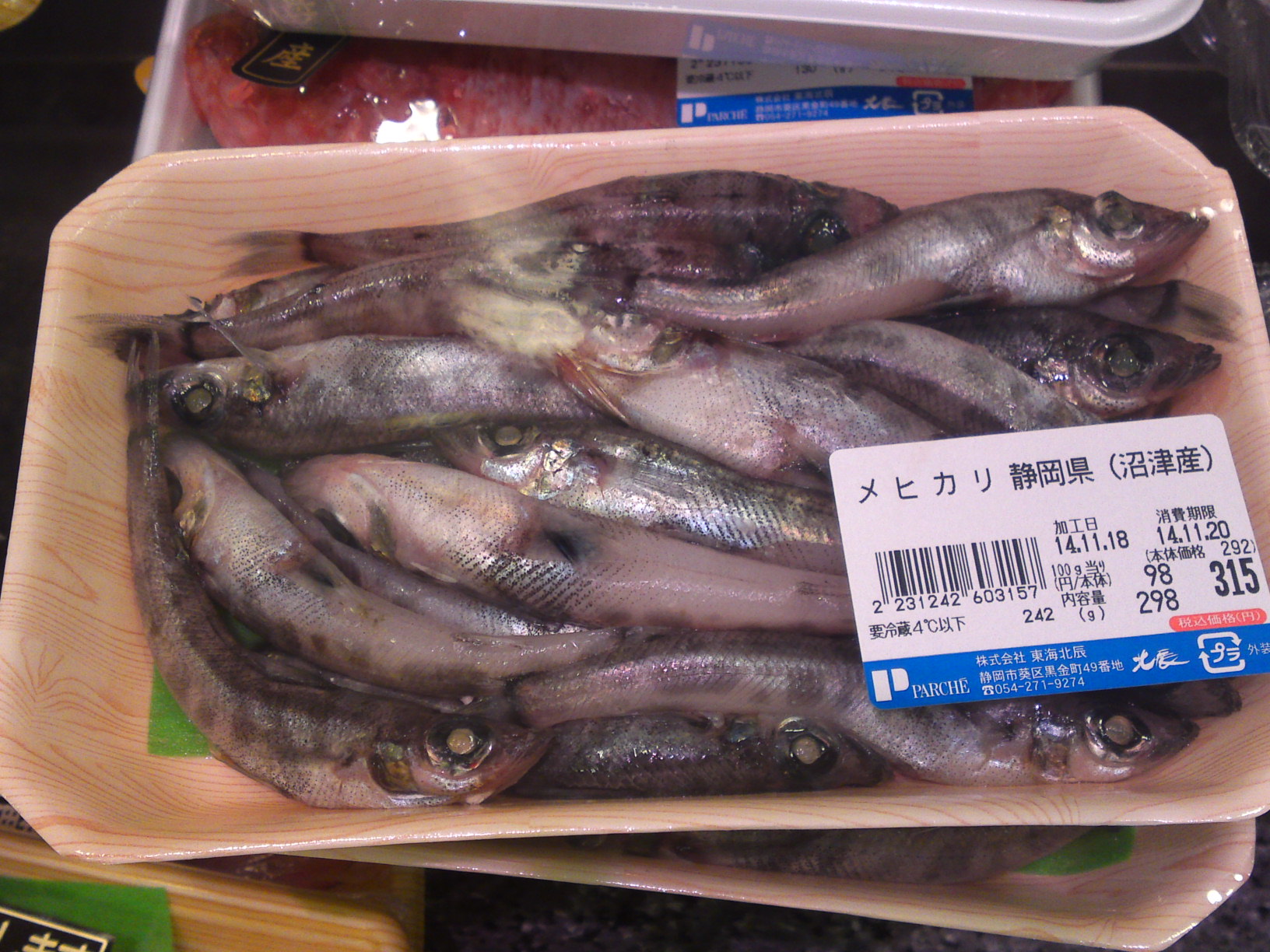
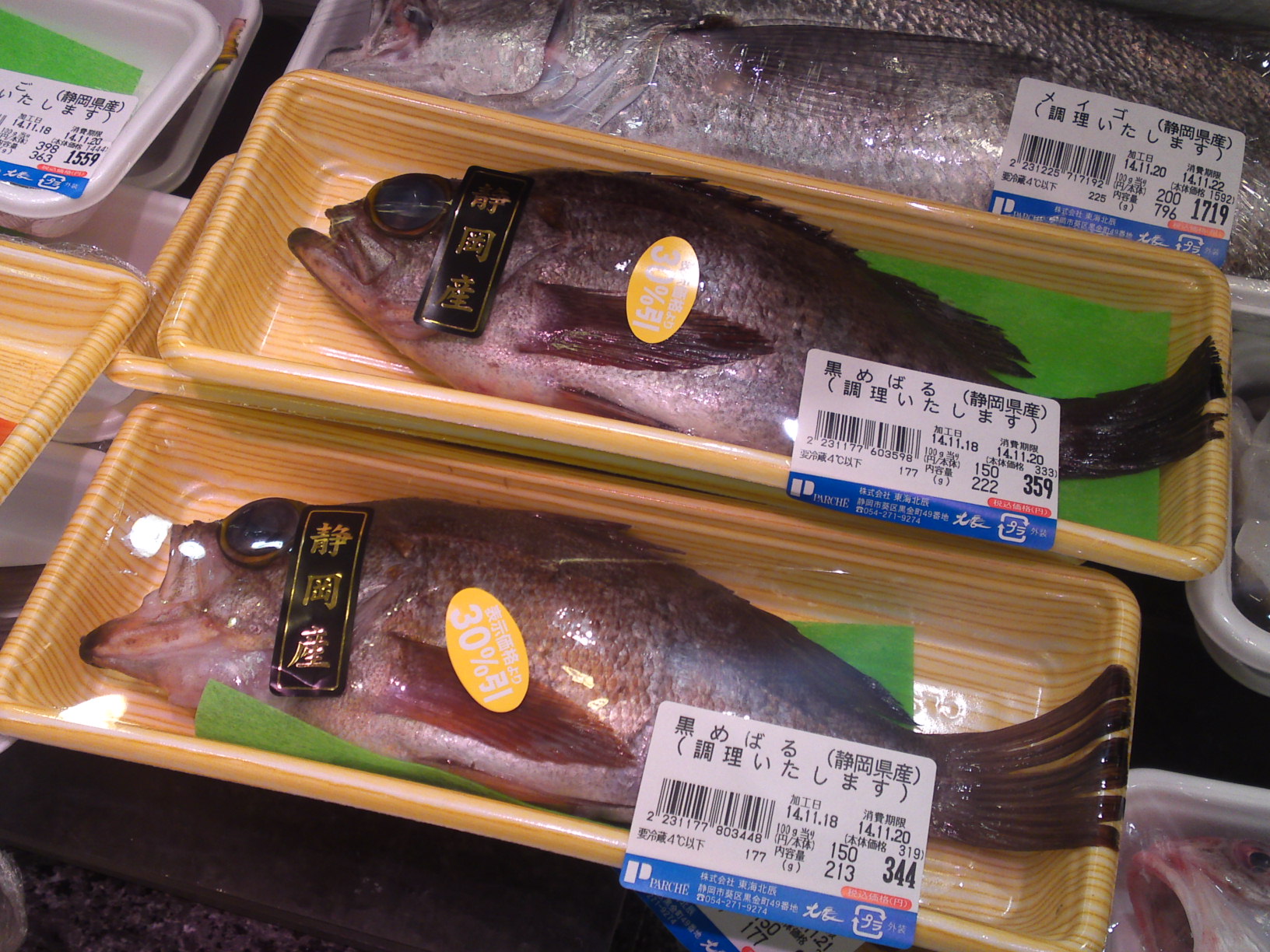
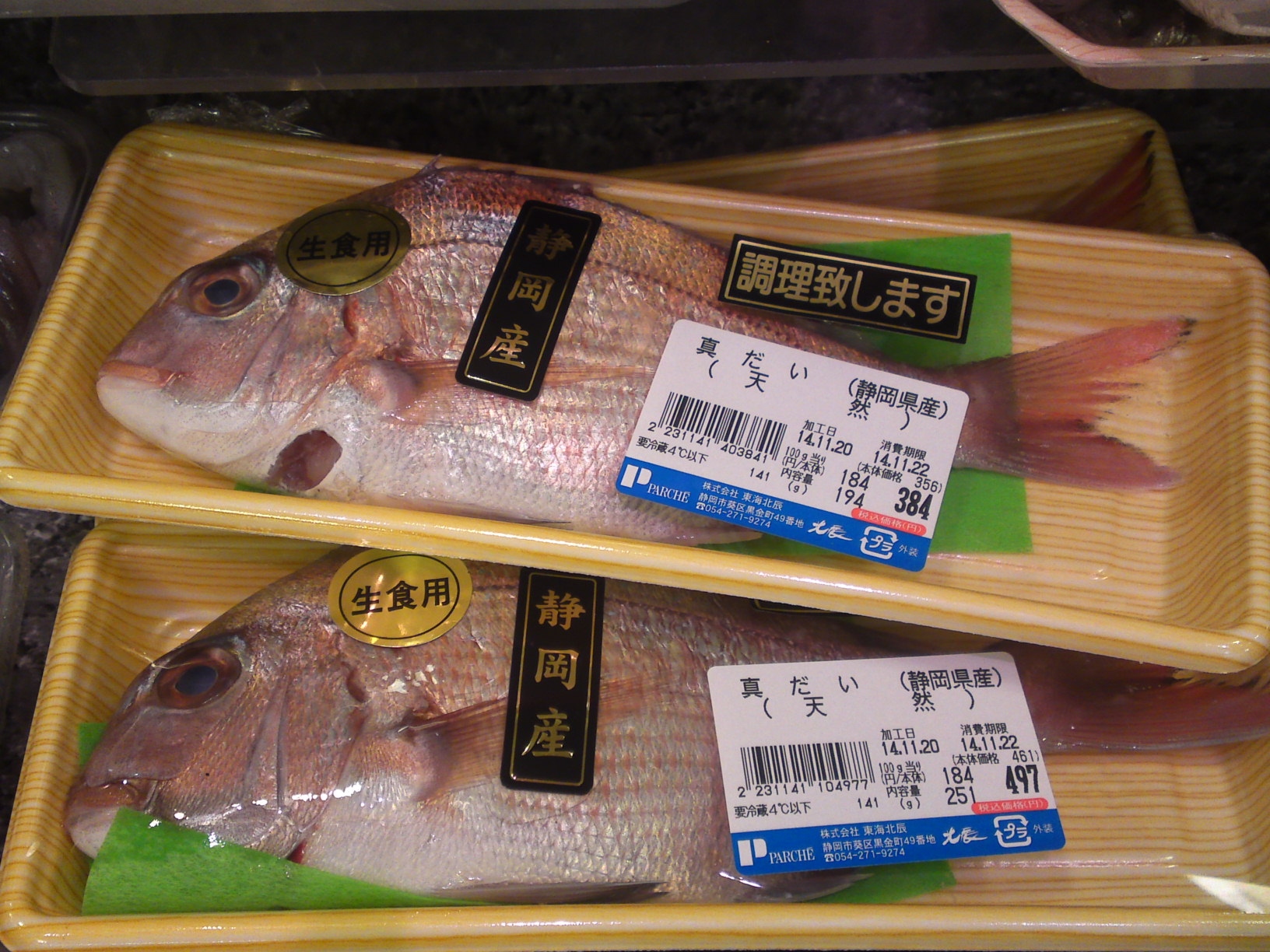
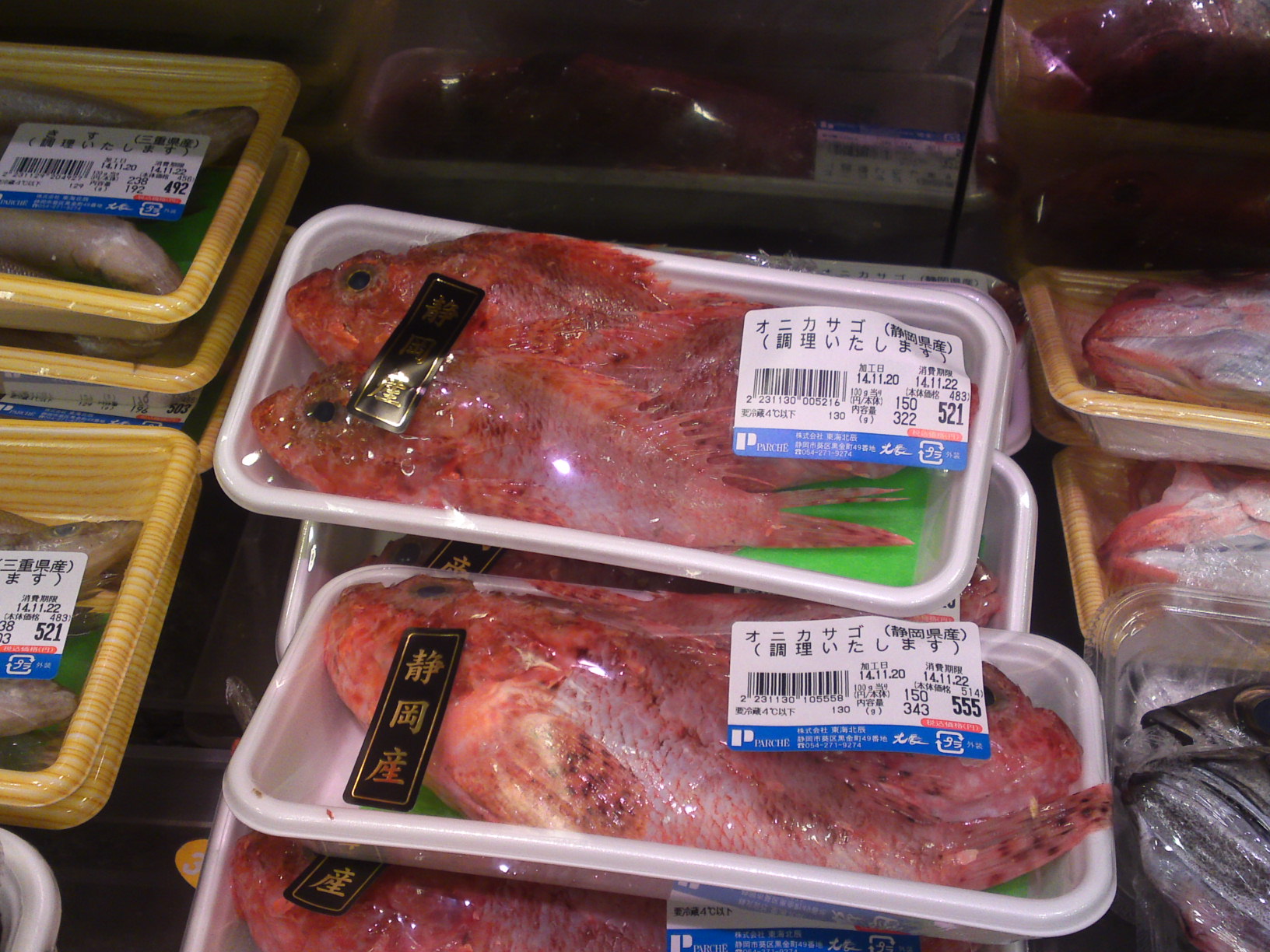
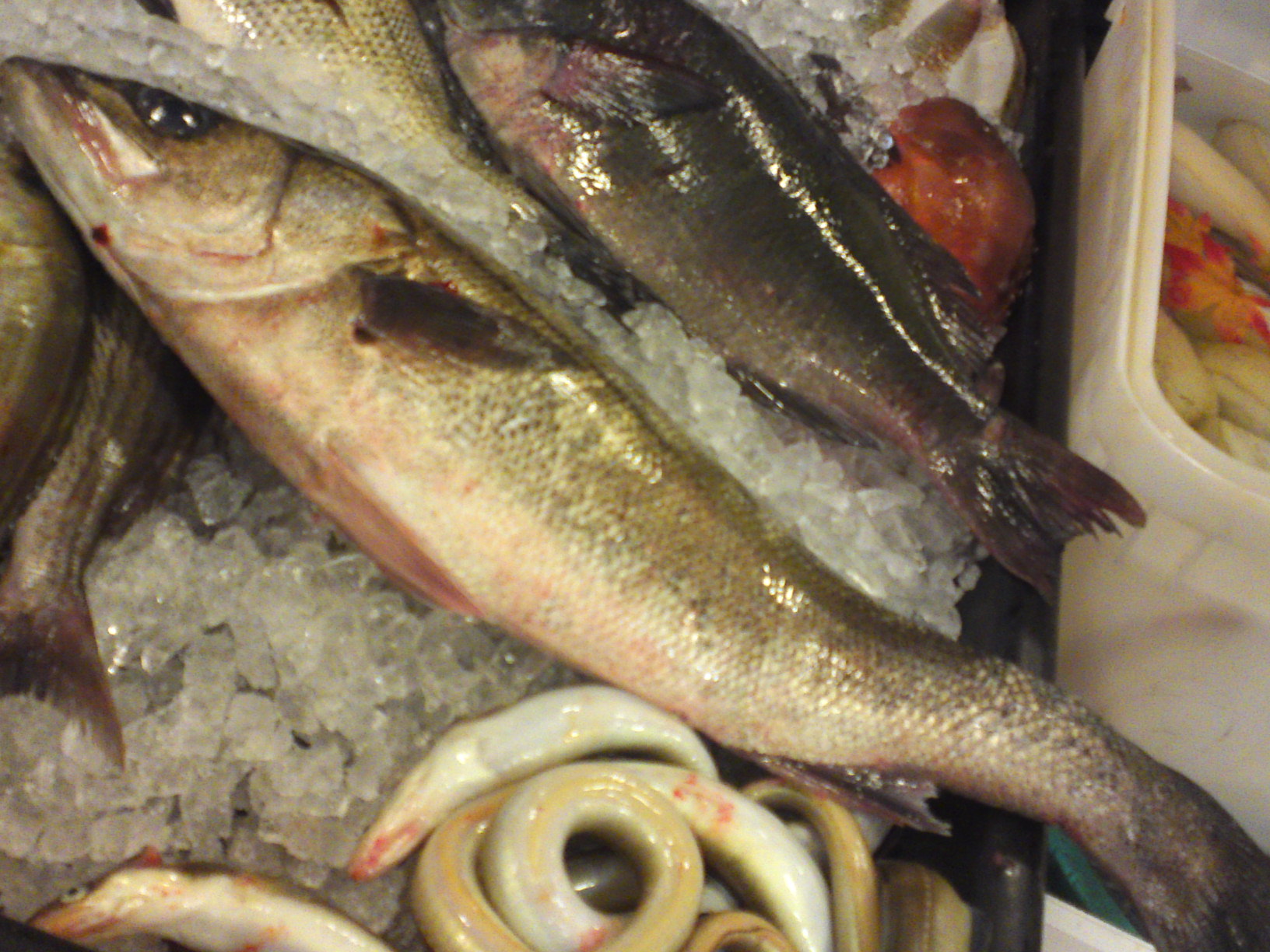
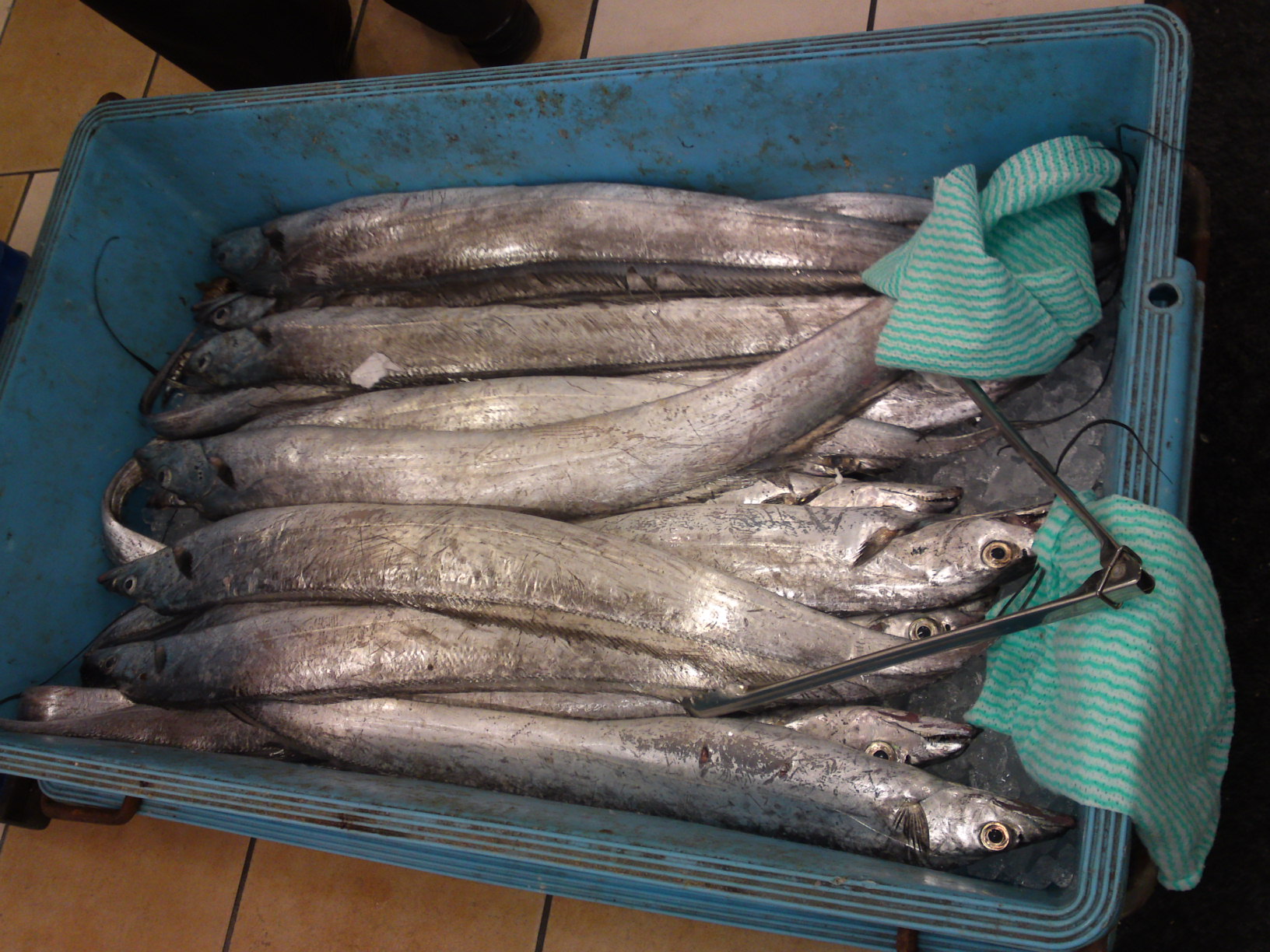
Catch of the night display at Fish market in Parche Department Store, Shizuoka JR Station!
I thought that such a lexicon would become handy both for English-speaking newcomers and long term residents!
I wrote the Japanese pronunciation first, the Chinese (Japanese kanji) characters and the English translations.
Bear in mind that many fish have many names depending on the Japanese region. These are the common names.
If you have a question I will be glad to investigate!
A separate lexicon is being prepared for all other seafood!
——————————–
Traditional Japanese Fish Classification
Akami/赤身: red-fleshed fish (tuna, bonito, etc)
Amago/アマゴ: fresh water Red spotted masu trout, Satsukimasu salmon
Gyoran/魚卵: Fish roe (salmon roe, etc)
Hikarimono/光り物: “shining fish” (scabbard fis, etc.)
Nagamono/長もの: “long fish” (eels, etc.)
Saamon/サーモン: salmons
Shiromi/白身: white-fleshed fish (sole, etc.)
Fish varieties
Aburagarei/油鰈: a cheap variety of karei/鰈: righteye flounder, atheresthes evermanni Jordan and Starks
SN3O0231
Aka saba/赤鯖/REd Mackerel( also called Hachibiki/葉血引: Bonnetmouth/Pacific Bonnetmouth)
Aodai/青鯛: “blue snapper”, paracaesio caeruleus (Katayama)
Atorantikku saamon/アトランティックサーモン: Atlantic salmon
Ainame/鮎並、愛魚女: greenling
SN3O0223
Akahata/赤羽太: an expensive variety of red grouper, epinephelus fasciatus
Aka isaki/赤伊佐木、赤伊佐幾、赤鶏魚/Red chicken grunt
Aka jinmiidai/赤仁羽鯛 (also called Sujiara/筋𩺊): Red-spotted rockcod, Blue spotted grouper
Akakamasu/赤梭魚、赤梭子魚、赤魳 (also called Honkamasu/本梭魚、本梭子魚、本魳): red barracuda, sphyraena pinguis Gunther
Aka kasago/赤笠子、赤瘡魚: rockfish, marbled rockfish, scorpionfish
Akamanbou/赤万包 (also called Mandai/万鯛): Opah,Moonfish
Aka mebaru/赤メバル: red Japanese sea perch-rockfish
Akamutsu/赤鱫、赤鯥 (also called Nodokuro/喉黒): rosy seabass, red gnomefish
Akou/茂魚,石茂魚 (also called kijihata/雉羽太): redspotted grouper
Akoudai/赤魚鯛: rose fish
Amadai/甘鯛: tilefish
Amenouo (Biwa masu)/岩魚, 鯇、天之魚(琵琶鱒): Biwa trout, Biwa salmon (fresh water), char
Aanago/穴子、海鰻: conger eel
Ankou/鮟鱇、鮟: frogfish, monkfish
Ara/𩺊: sawedged perch
Ayu/鮎、香魚: ayu, ayu fish (fresh water)
Bachimaguro/鉢鮪 ・撥鮪(also known as Mebachi/目鉢 。眼撥or as Mebachimaguro/目鉢鮪・眼撥鮪): big-eyed tuna
Bakemaguro/化け鮪(also called Koshinagamaguro/腰長鮪): longtail tuna, longtailed tuna, spot-side tuna (the smallest tuna in Japan)
Binchoumaguro/鬢長鮪 (also known as Binnaga/鬢長 and Tonbomaguro/蜻蛉鮪): Albacore
Binnaga/鬢長 (also known as Binchoumaguro/鬢長鮪 and Tonbomaguro/蜻蛉鮪): Albacore
Biwa masu (Amenouo)/ 琵琶鱒(岩魚, 鯇、天之魚): Biwa trout, Biwa salmon (fresh water), char
Bora/鯔: mullet
Bouzu Konnnyaku/坊主蒟蒻 (also called Chikodai/チコ鯛 or Chidai/血鯛, although misleading): Chunky fathead, cubiceps squmixeps
Budai/ブ鯛: white-spotted parrotfish, Japanese parrotfish
Buri/鰤: yellowtail
Chidai/血鯛: Crimson sea-bream,Porgy
Chouzame/蝶鮫、鱘: sturgeon
Dojyou/鰌:loach
Ebisudai/恵比寿鯛: Deepwater squirrelfish, Ebisu perch, Giant squirrelfish
Ebodai (also called Ibodai)/えぼ鯛(疣鯛): Japanese butterfish, Melon seed, Wart Perch
Fuedai/笛鯛: star snapper
Fugu/鰒、河豚: Globefish
Fuka/鱶: shark
Funa/鮒: crucian carp (fresh water)
Ginzake/銀鮭: coho salmon, silver salmon
Gomasaba/胡麻鯖: blue mackerel
Goten anago/御殿穴子: a cheap variety of Anago/穴子: conger eel, arisoma meeki (Jordan and Snyder)
Hachibiki/葉血引: Bonnetmouth/Pacific Bonnetmouth (also called Aka saba/赤鯖/REd Mackerel)
Hagatsuo/歯鰹: striped bonito
Hakkaku (also called Tokubire)/八角 (トクビレ): a variety of poacher, Podothecus sachi
Hamadai/浜鯛 (also called Onaga/尾長): flame snapper, longtailed red snapper, Onaga
Hamafuefukidai/浜笛吹鯛: a cheap variety of snapper, lethrinus nebulosus (Forsskal)
Hamo/鱧: pike eel
Hata/羽太: grouper, the expensive variety
Hata hata/鰰: a sandfish
Haze/蝦虎魚、鯊: goby
Hedai/平鯛: goldlined seabream-tarwhine-stumpnose
Himekari/姫光: a rare deep sea fish found in Suruga Bay near Numazu City
Hirame/平目、鮃、比目魚: sole, flatfish
Hiramasa/平政: yellowtail amberjack
Hirasaba/平鯖: chub mackerel, Pacific mackerel, blue mackerel
Hirasoudagatsuo/平宗田鰹: auxis, variety of bonito, bullet tuna
Hirasuzuki/平鱸: a variety of sea blackbass
Hokke/𩸽: Okhotsk atka mackerel, Arabesque greenling
Honkamasu/本梭魚、本梭子魚、本魳 (also called Akakamasu/赤梭魚、赤梭子魚、赤魳): red barracuda, sphyraena pinguis Gunther
Honmaguro/本鮪 (also called Kuromaguro/黒鮪): bluefin tuna
Hoshigarei/星鰈: “Star Turbot”,verasper variegatus (Temmink and Schlegel)
Houbou/方々: red gurnard, red robin
Ibodai (also called Ebodai)/ 疣鯛(えぼ鯛): Japanese butterfish, Melon seed, Wart Perch
Ikanago/玉筋魚: Japanese sand lance
Indomaguro印度鮪 (also known as Minamimaguro/南鮪): Southern Bluefin tuna
Irako anago/伊良子穴子: a cheap variety of Anago/穴子: conger eel, synaphobranchus kaupii Johnson
Isaki/伊佐木、伊佐幾、鶏魚: chicken grunt
Ishidai/石鯛: striped beakfish, barred knifejaw
Ishigaki-Ishigakidai/石垣-石垣鯛: spotted knifejaw
Ishigarei/石喰霊: stone flounder
Ishimochi/石持: silver croaker, white croaker, silver jewfish
Iso kasago/磯笠子、磯瘡魚: a variety of rockfish
Iwana/岩魚、嘉魚、鮇: char, charr
Kaiwari/貝割: whitefin trevally
Kajikimaguro/梶木鮪・旗魚鮪 (also known as Makajiki/真梶木・真旗魚): spearfish (blue) marlin
Kagokakidai/駕籠担鯛: Stripey, Microcanthus strigatus (Cuvier)
Kamasu/魳、梭魚、梭子魚: barracuda
Kanpachi/間八、環八: greater amberjack, Japanese amberjack
Karasugarei/烏鰈: Greenland halibut, Mock halibut, Bastard halibut, Black halibut, Reinhardtius hippoglossoides (Walbaum)
Karei/鰈: righteye flounder
Kasago/笠子、瘡魚: False kelpfish, Marbled rockfish
Kasugo/春子鯛: young Madai/真鯛: Japanese seabream
Katsuo/鰹: bonito
Kawahagi/皮剥: filefish, leather jacket
Kibinago/黍女子、黍魚子、吉備女子、吉備奈仔: silver-stripe round herring,
Kibire/黄鰭: yellowback seabream
Kihadamaguro/黄肌鮪 (also known as Kiwada/キワダ(Tokyo, Wakayama), Gesunaga/ゲスナガ(Shizuoka), Mashipi/マシビ(Osaka, Kochi) and Kinhire/キンヒレ: yellowfin tuna
kijihata/雉羽太(also called Akou/茂魚,石茂魚): redspotted grouper
Kinki/金色魚: Thornhead, Idiot, Sebastolobus macrochir (Gunther)
Kinmedai/金目鯛: splendid alfonsino
Kintokidai/金時鯛: red bigeye
Kisu /鱚、鼠頭魚: sand boarer
Ko Aji/子鯵: very young horse mackerel (also called Mame aji/豆鯵)
Kochi/鯒、牛尾魚: flathead
Kohada (konoshiro)/小肌(鰶・鮗・鯯・鱅): dotted gizzard shad
Koi/鯉: carp (fresh water)
Konoshiro (kohada)/小肌(鰶・鮗・鯯・鱅): dotted gizzard shad
Korodai/胡蘆鯛: a cheap variety of snapper, diagramma pictum
Kose/コセ: A variety of Stripped jack, also called Shima aji/縞鯵!
Koshinagamaguro/腰長鮪 (also called Bakemaguro/化け鮪): longtail tuna, longtailed tuna, spot-side tuna (the smallest tuna in Japan)
Koshyo (Koshiodai)/胡椒鯛: crescent sweetlips
Kuchimidai/口美鯛 (also called Menada/目奈陀・目魚): haarder, redlip mullet, Liza haematocheila (Temminck and Schlegel)!
Other names I will have to add to the lexicon!
Kue/九絵、垢穢: longtooth grouper
Kurodai/黒鯛: Japanese black porgy
Kuromaguro/黒鮪(also called Honmaguro/本鮪): bluefin tuna
SN3O0225
Kuro Mebaru/黒眼張、黒眼張魚、黒鮴/Black Japanese sea perch
Kuromutsu/黒鱫、黒鯥: Black gnomefish
Kuro shitabirame/黒舌平目: Black Sole
Kyuusen/九線・九仙 (also called Bera/ベラ): halichoeres poecilopterus (Temminck and Schlegel) a cheap variety of snapper in Eastern Japan, but an expensive one in Western Japan
Maaji/真鯵: Japanese jack mackerel
Ma anago/真穴子 (also called Maru anago/丸穴子): a cheap variety of Anago/穴子: conger eel, conger myriaster (Brevoort)
SN3O0219
Madai/真鯛: Japanese seabream
Madara/真鱈: Pacific cod
Magarei/真鰈: flounder, yellow striped flounder, turbot, halibut
Maiwashi/真鰯: sardine
Makajiki/真梶木・真旗魚 (also known as Kajikimaguro/梶木鮪・旗魚鮪): spear fish (blue) marlin
Makubuu/マクブー (also called Shirokurabera/シロクラベラ): Okinawa Blackspot tuskfish, Choerodon shoenleinii (Valenciennes)
Mame aji/豆鯵: very young horse mackerel (also called Ko Aji/子鯵)
Managatsuo/真魚鰹: butterfish
Mandai/万鯛 (also called Akamanbou/赤万包): Opah,Moonfish
Maruaji/丸鯵: “round horse mackerel”, decpterus akaadsi Abe
Maru anago/丸穴子 (also called Ma anago/真穴子): a cheap variety of Anago/穴子: conger eel, conger myriaster (Brevoort)
Marusoudagatsuo/丸宗田鰹: auxis, variety of bonito, frigate tuna
Masu/鱒: trout
Masunosake/鱒の介: king salmon, chinok salmon
Matoudai/的鯛、馬頭鯛: John dory, St Peter’s fish
Matsukawagarei/松川鰈: An expensive variety of Japanese Karei/鰈: righteye flounder, verasper moseri Jordan and Gilbert
Mebachi/目鉢・眼撥 (also known as Mebachimaguro/目鉢鮪・眼撥鮪or as Bachimaguro/鉢鮪・撥鮪): big-eyed tuna
Mebachimaguro/目鉢鮪 ・眼撥鮪(also known as Mebachi/目鉢 。眼撥or as Bachimaguro/鉢鮪・撥鮪): big-eyed tuna
Mebaru/眼張、眼張魚、鮴: Japanese sea perch, Japanese rock fish
Medai/目鯛: an expensive variety of Japanese snapper, hyperoglyphe japonica
Meichidai/目一鯛: an expensive variety of Japanese snapper, Gymnocranius griseus
Meitagarei/目板鰈: Frog-flounder, Finespotted flounder, Seriola quinqueradiata Temminck and Schlegel
Mejina/眼仁奈: largescale blackfish
Mejiro/目白: young Buri/鰤: yellowtail
Mekajiki/眼梶木・眼旗魚: swordfish, broadbill
Menada/目奈陀・目魚 (also called Kuchimidai/口美鯛): haarder, redlip mullet, Liza haematocheila (Temminck and Schlegel)!
Menuke/目抜: a Japanese variety of rock fish/sea perch, “flame fish”, sebastes flammeus (Jordan and Starks)
Minaimaguro/ 南鮪 (also known as Indomaguro印度鮪): Southern Bluefin tuna
Mizukamasu/水魳、水梭魚、水梭子魚: a variety of Japanese barracuda
Mutsu/鱫、鯥: gnomefish
Namazu/鯰: catfish (fresh water)
Nanyoubudai/: blunt headed parrotfish, parrotfish, Chlorurus microrhinos (Bleeker)
Nishin/鯡・鰊: herring
Nodokuro/喉黒 (also called Akamutsu/赤鱫、赤鯥): Rosy seabass
Noresore/のれそれ: conger eel whiting
Oaka Aji/尾赤鯵:Red tail horse mackerel
Ohyou/大鮃: halibut
Okimebara/沖目張 (also called Usumebaru/薄目張): sebastes Thompson (Jordan and Hubbs): a variety of Japanese sea perch, Japanese rock fish
Okoze/虎魚、鰧: velvet fish
Onaga/尾長(also called Hamadai/浜鯛): flame snapper, longtailed red snapper, Onaga
Onigochi/鬼鯒、鬼牛尾魚/a variety of sand borer
SN3O0222
Onikasago/鬼笠子、鬼瘡魚: Devil scorpion fish
Renkodai/連子鯛: Yellowback seabream
Saamon torauto/サーモントラウト: salmon trout
Sagoshi/サゴシ/Another name for Sawara/鰆/Japanese Spanish mackerel
Sake, Shake/鮭: salmon
Samegarei/鮫鰈: roughscale sole, clidoderma asperrimum (Temminck and schlegel)
Satsuki masu/皐月鱒: Red spotted masu trout, Satsukimasu salmon
Sakura masu/桜鱒: seema, cherry salmon, masu salmon
Same/鮫: shark
Sanma/秋刀魚、青串魚: mackerel pike
Sappa/鯥: Japanese shad
Sawara/鰆: Japanese Spanish mackerel
Sayori/細魚、針魚: halfbeak
Sennendai:千年鯛: Emperor red sanpper
Shiira/鱪、鱰: mahi mahi, dolphinfish
Shimaaji/縞鯵・島鯵: striped jack, white trevally
Shimanagatsuo/縞鰹: Striped butter fish (not to be confused with Suma/縞鰹: a variety of bonito found in South Japan/same kanji characters!)
Shinko/シンコ: young Kohada (konoshiro)/小肌(鰶・鮗・鯯・鱅): dotted gizzard shad
Shirauo/白魚: white bait
Shirasu/白子(Namasirasu/生白子 if raw): sardine whiting
Shirokurabera/シロクラベラ (also called Makubuu/マクブー): Okinawa Blackspot tuskfish, Choerodon shoenleinii (Valenciennes)
Shiro mebaru/白眼張、白眼張魚、白鮴: white Japanese sea perch-rockfish
Shirosaba Fugu/白鯖河豚: a variety of globefish/puffer fish, lagocephalus wheeleri abe, tabeta and kitahama
Shishamo/柳葉魚: Shishamo (meaning willow leaf fish, a kind of Japanese smelt), Spirinchus lanceolatus
Soi or Kurosoi/曽以, 黒曽以: a variety of black rockfish, sebastes schlegeli, 1880
Sujiara/筋𩺊 (also called Aka jinmiidai/赤仁羽鯛): red-spotted rockcod, blue spotted grouper, plectropomus leoparadus(Lacepède,1802)
Suma/縞鰹: a variety of bonito found in South Japan. Not to be confused with Shimanagatsuo/縞鰹(same kanji characters!): striped butter fish
SN3O0211
Suzuki/鱸: Japanese seabass, Japanese dace
SN3O0200
Tachiuo/太刀魚、魛: scabbard fish, cutlass fish
Tai/鯛: Seabream (in Japan, it means the best variety!), red snapper
Taiseiyoumaguro/大西洋鮪: Atlantic (including Mediterranean) bluefin tuna
Takabe/鰖: Yellowstriped Butterfish
Tara/鱈: cod
Tobiuo/飛魚: flying fish
Tonbomaguro/蜻蛉鮪(also known as Binchoumaguro/鬢長鮪 and Binnaga/鬢長): Albacore
Torafugu/虎河豚・虎鰒: globefish
Tsubodai/つぼ鯛: pentaceros japonicus Doderlein (seabream variety)
Ugui/鯎、石斑魚: a Japanese dace, fresh water minnow
Umazura/馬面 (also called Umazurahagi/馬面剥): black scraper, Filefish, Scraper, a large variety of filefish
Umazurahagi/馬面剥(also called Umazura/馬面): black scraper, Filefish, Scraper, a large variety of filefish
Unagi/鰻: eel (only cooked)
Urumeiwashi/うるめ鰯: round Herring
Usumebaru/薄目張 (also called Okimebara/沖目張): sebastes Thompson (Jordan and Hubbs): a variety of Japanese sea perch, Japanese rock fish
Utsubo/鱓: moray eel
Wakasagi/公魚、鰙、若鷺: pond melt, Japanese melt (fresh water)
Yagara/矢柄: trumpet fish
———————————————–
Service: very friendly, attentive and informative Equipment & Facilities: Spotless clean. Superb washroom. Entirely non-smoking! Prices: Reasonable to slightly expensive Strong points: Ju wari/100% soba/buckwheat noodles. Tempura. sake list!
Kishigami Soba Restaurant is located in a celebrated touristic area of Shizuoka City in Utsunoya famous for its many Edo Period houses and inns along the Old Tokaido Road.
It makes for the perfect stop for refreshments in the middle of nature!
It is not that difficult to reach actually.
Just take the bus to Fujieda City at platform 7 in front of Shizuoka JR Station north exit and get off at Utsunoya just before the Fuijieda Tunnel.
Cross the road and take the paved street on the right side snaking up the mountain and you will discover it in the middle of an Edo Travel Inn Village!
The menu is waiting for you outside!
100% buckwheat noodles!
Have a good look inside before choosing a table!
A traveling artist actually drew this picture of the restaurant during his only visit!
The spotless clean kitchen manned by two generations!
Traditional Japan!
A real wood fire stove!
All warm wood!
Although it is open only at lunch time the menu is really extensive!
The elder daughter, Ms. Kayoko Kishigami/岸上香誉子さん is very knowledgeable with sake and a seasonal brew by Sugii Brewery (Fujieda City) was on offer that day!
The Japanese sake from nearby Fujieda City!
The big bonus is a menu in English in no less than 4 pages!
Page 1!
Page 2!
Page 3!
Page 4!
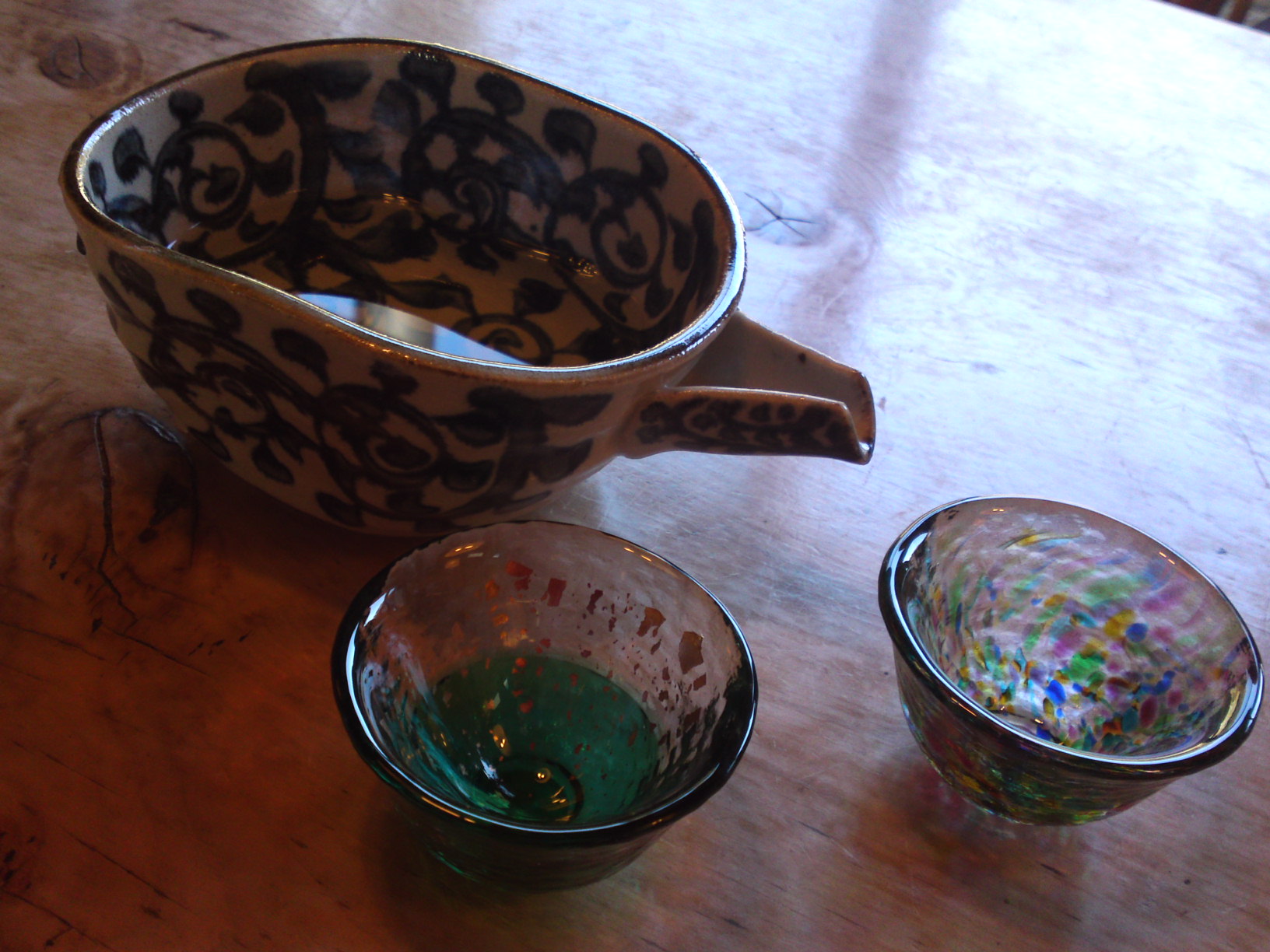
Elegant earthenware and glassware!
My friend’s order!
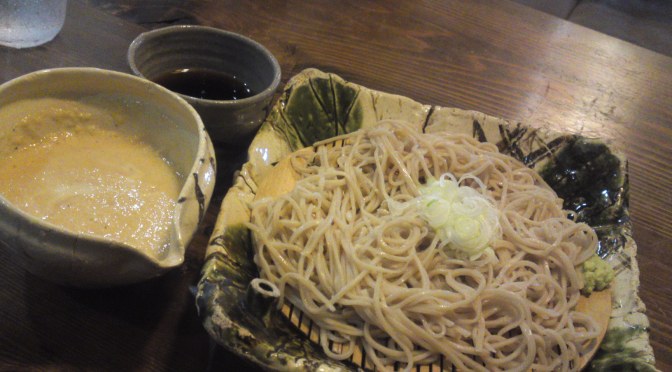
Ten Oroshi Soba!
My order!
Kamo/Duck Oroshi Soba!
The sobayu/buckwheat noodles boiling water to add to the leftover soup and wash it all down!
A meal is not complete at Kishigami without their superb tempura!
What do we have there?
Soba Dango/Buckwheat balls!
Green leafy vegetable!
Maitake/hen-of-the-woods, ram’s head and sheep’s head mushroom!
Another very special treat is this homemade ham prepared every year by Kayoko’s father!
It is made with whole legs of pigs raised in Mikkabi, Western Shizuoka Prefecture which are salted, cured and smoked for a whole month to obtain a succulent ham which is neither raw or cooked! A discovery!
A very original dessert: buckwheat balls with hot sweetmeat/anko shiru!
SOBADOKORO KSHIGAMI SOBA RESTAURANT
Shizuoka City, Aoi Ku, Utsunoya, 232-2
Tel.: 054-258-5664
Opening hours: 11:00~14:00
Closed on Mondays and 3rd Tuesday of the month (next day in case of a national holiday) HOMEPAGE (Japanese) Entirely non-smoking!
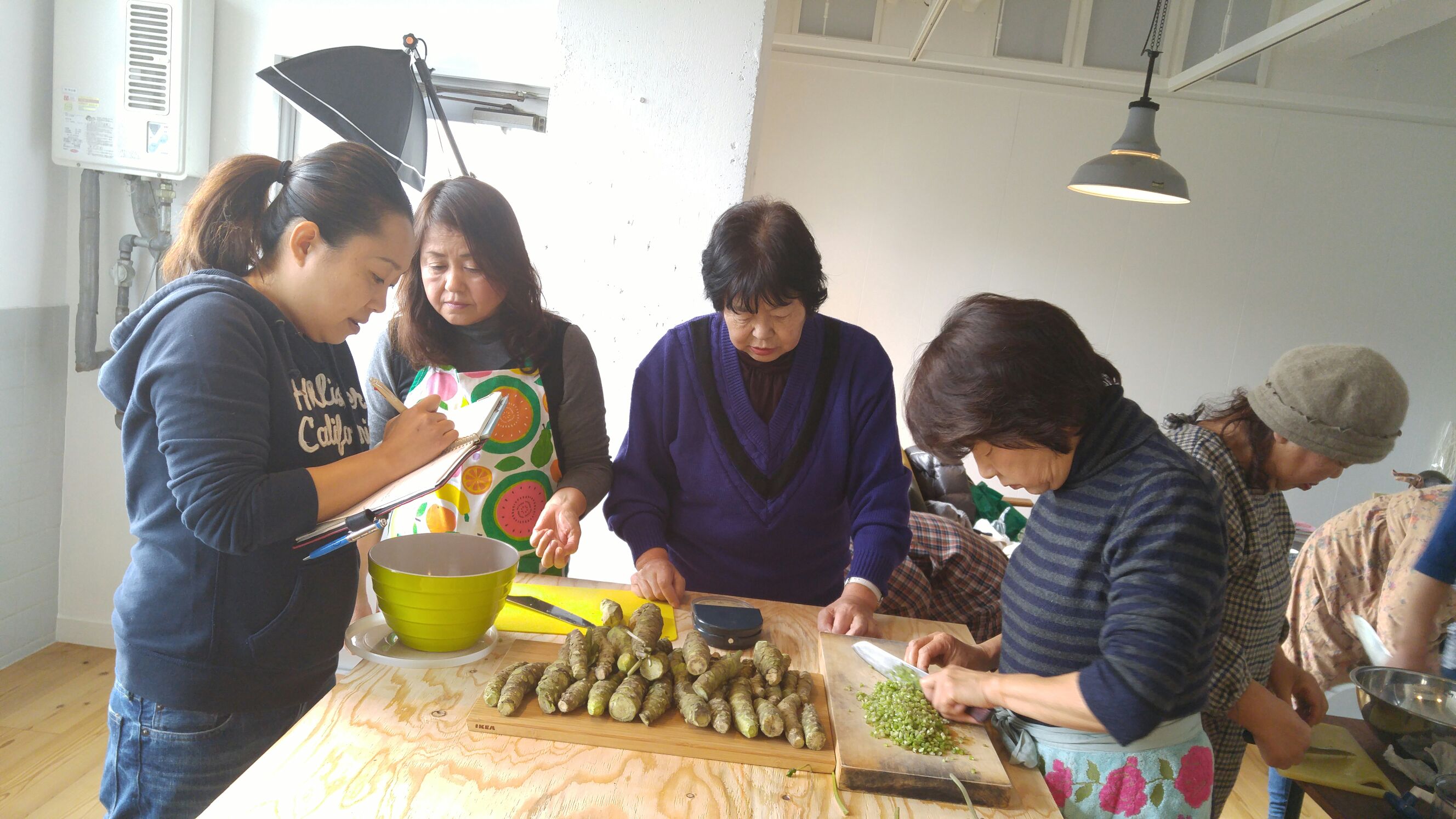
The other day my good friend, Miss Asami Ittoh invited me in the company of 7 more guests to make wasabi zuke according to traditional recipe at her company, Marufuku Tea factory Co. Ltd in Shizuoka City!
Wasabi zuke literally means “pickled wasabi” and it is a typical agricultural product of Shizuoka Prefecture, and particularly Shizuoka City, the birthplace of wasabi in Japan!
Wasabi Zuke might be common in Shizuoka but I can assure you it is a rare and expensive delicacy away from our region!
Maruku Tea factory in Aoi Ku, Shizuoka City!
For that particular session all products were either from Shizuoka or made in Japan!
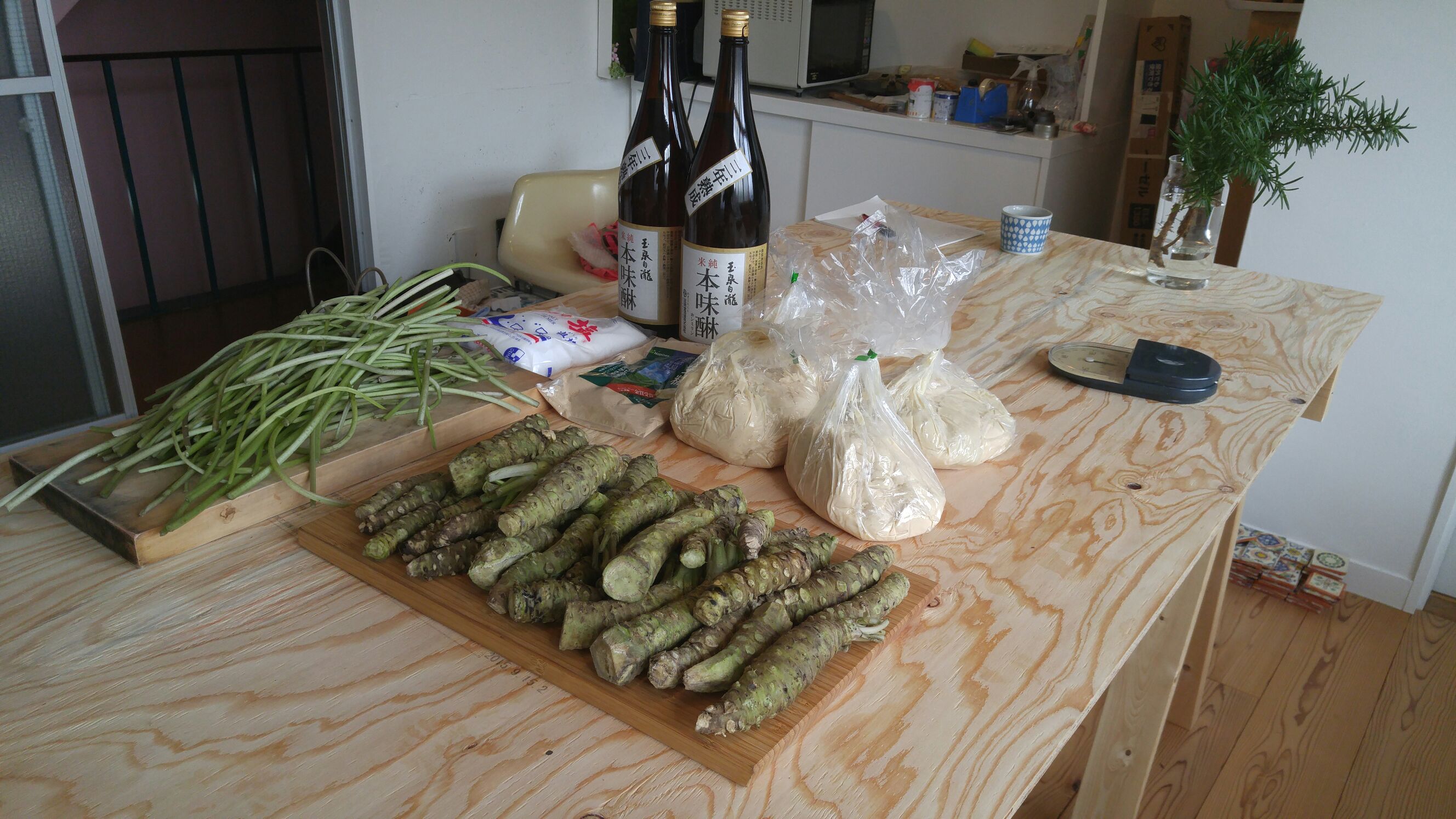
The fresh wasabi roots and stems were cultivated in the mountains along the Abe River in Shizuoka City, the sake kasu/sake white lees came from directly from a sake brewery in Shizuoka Prefecture. The salt, brown cane sugar and the mirin/sweet sake were all made in Japan!
The wasabi and the sake kasu/sake white lees!
All the ingredients for 8 people!
Fresh and clean wasabi roots.
They were of very good quality but cheaper (by Shizuoka standards) due to their inferior shape!
The fresh wasabi stems!
Unprocessed sea salt and top class sugar cane sugar!
The mirin/sweet sake!
All the ingredients with the sake kasu (softened) included.
Each member was allotted the following for the recipe:
Fresh wasabi root: 375 g
Wasai stems and small leaves: 375 g
Sake kasu/Sake white lees: 500 g
Salt: 37 g
Sugar:: 100=120 g
Mirin/sweet sake: optional
Making sure that everybody understood the proportions!
Weighing up everyone’s share!
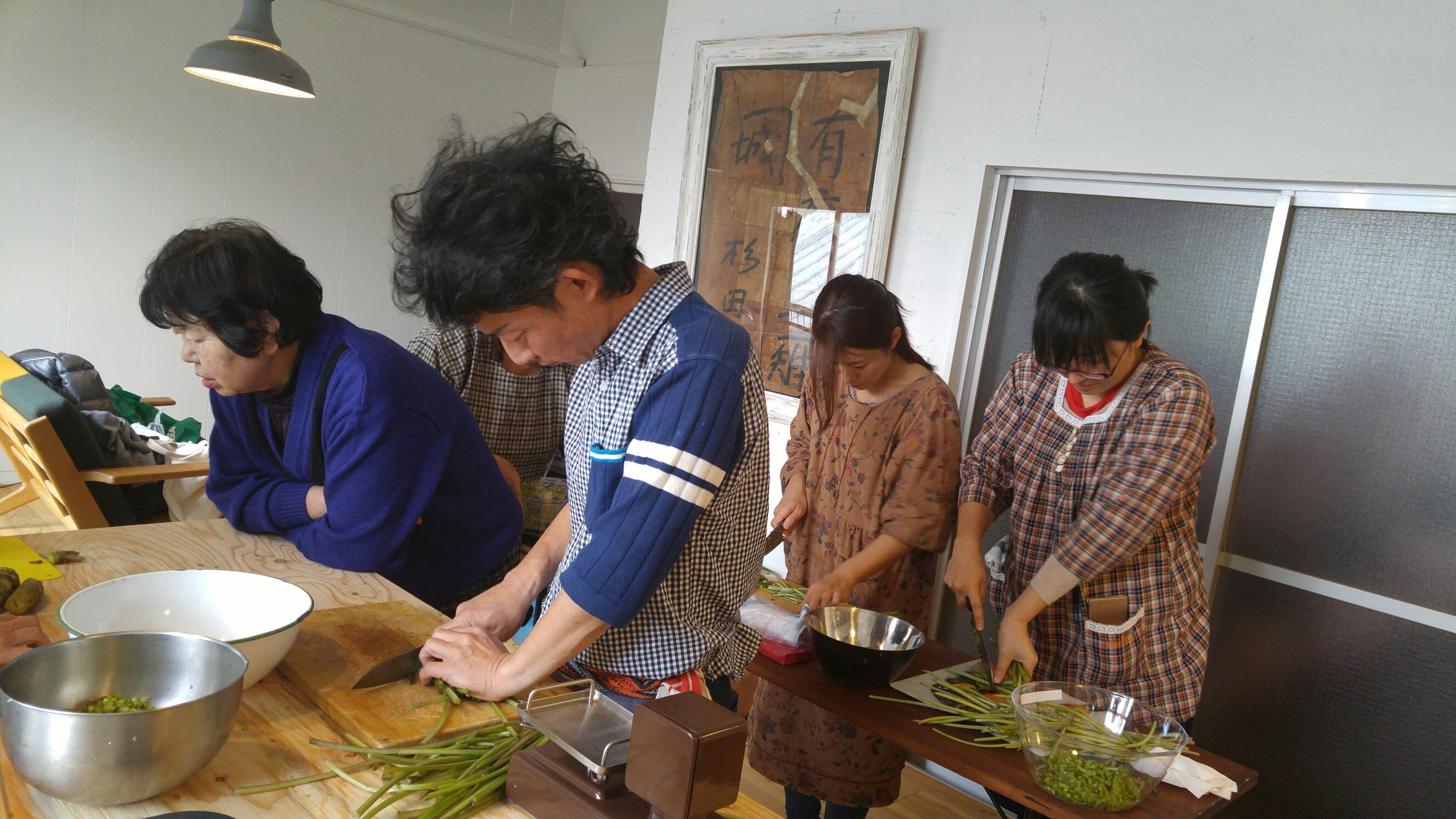
First chopping the wasabi stems!
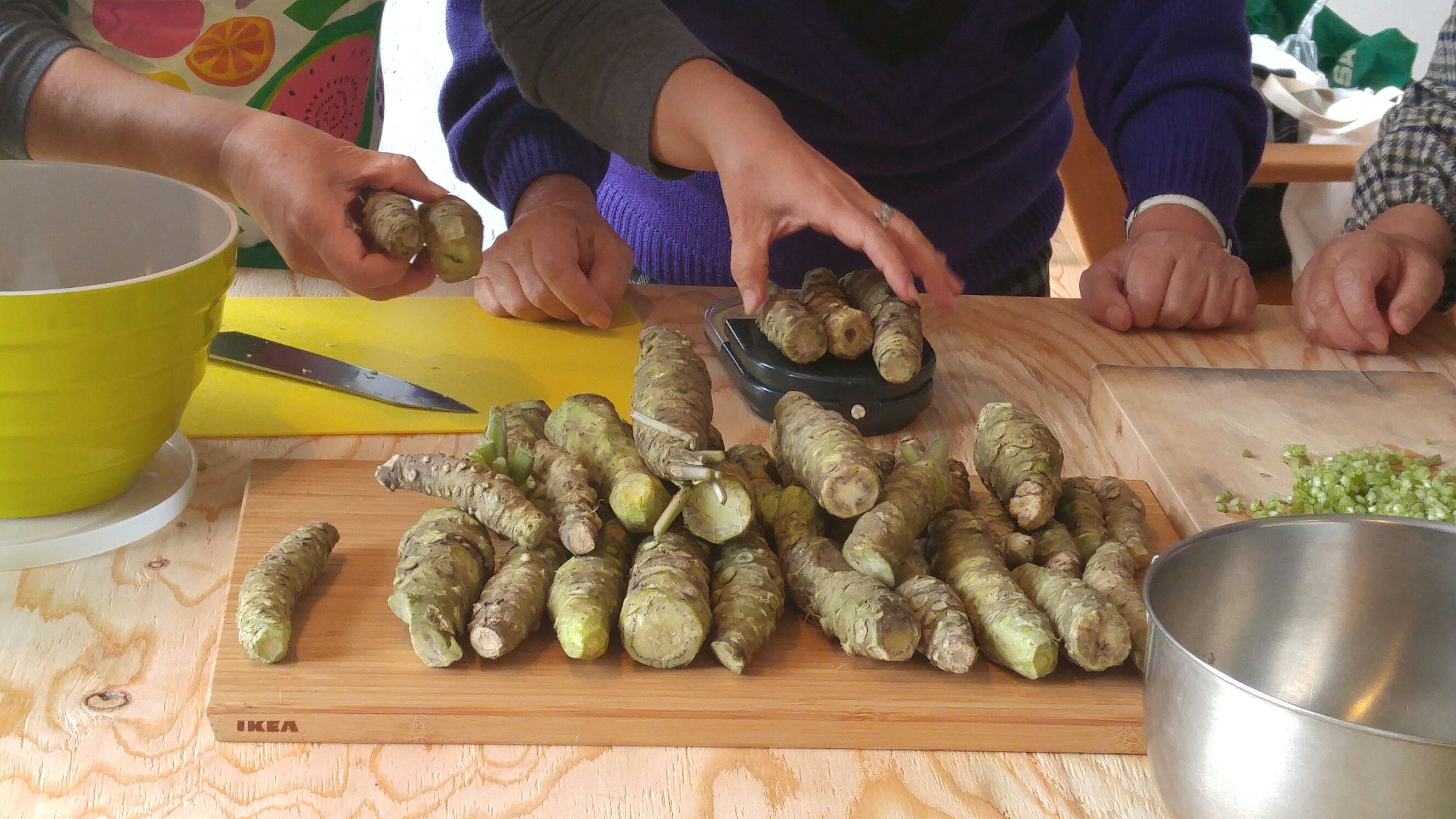
My share of wasabi roots!
We were soon all in tears chopping away the wasabi roots!
First chopping!
Second chopping!
Third chopping!
The roots have to hand-chopped finely to obtain maximum piquancy!
A machine would not do a good job, it is all slow food!
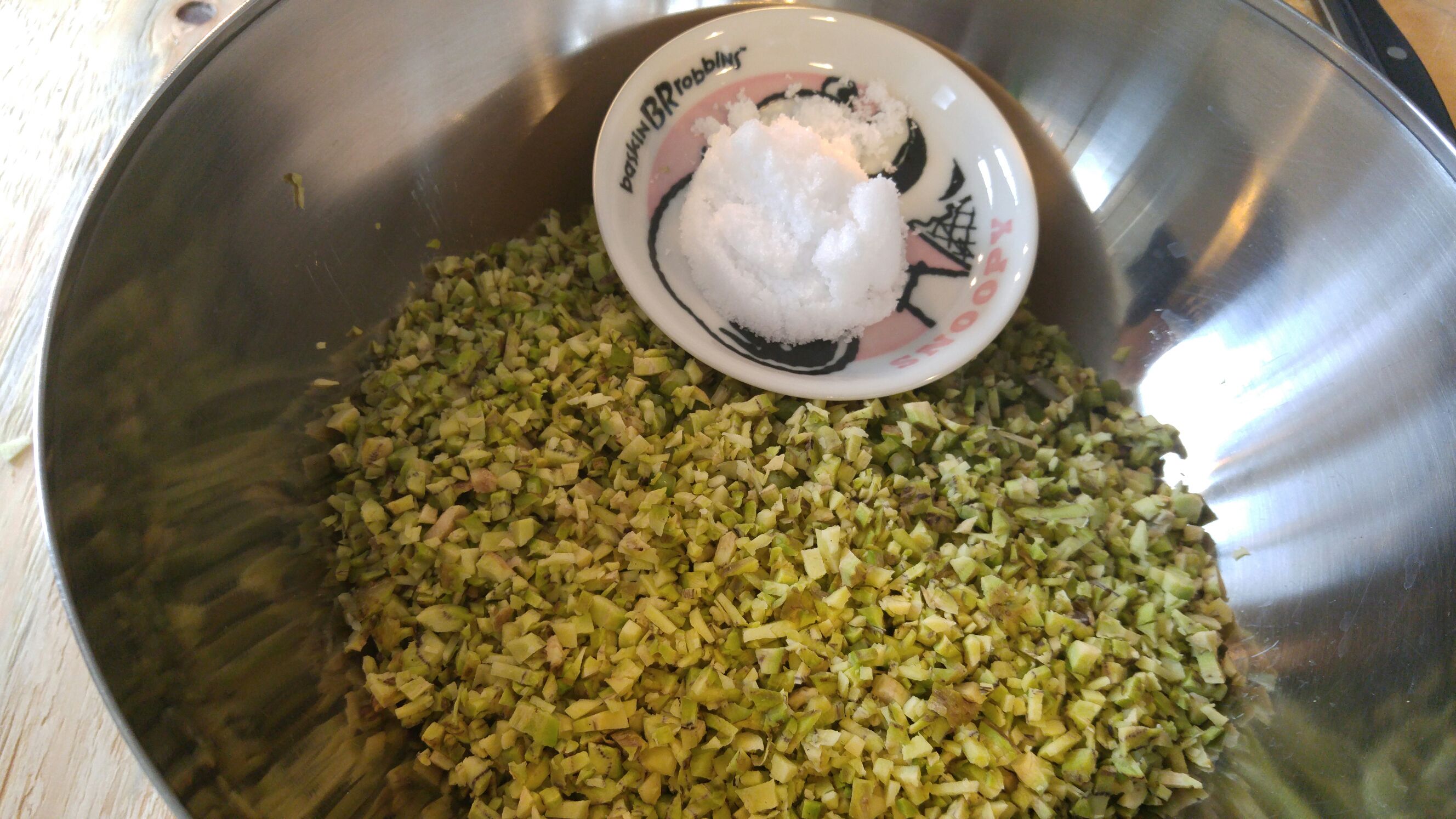
Mixing the chopped stems and roots, adding the salt, mix well and lest rest for 20 minutes!
A well-earned rest!
Pressing out by hand as much of the excess water as possible!
Softened sake kasu/sake white lees!
If you use unprocessed sake kasu, you will have to soften it by kneading it or user a beater!
Adding the sake kasu!
Adding the sugar!
Mixing the whole by hand until you obtain a smooth paste!
Taste and add mirin/sweet sake if necessary!
I didn’t!
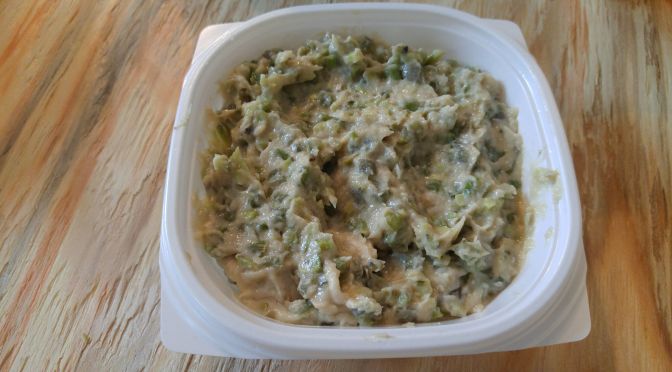
Filling small boxes to take back home!
We had 1.2 kg of it each!
Note that is greener than the comparatively cheap variety you will find in shops downtown!
Simply extravagant!
I dare not imagine the price even in Shizuoka!
To be eaten over freshly steamed white rice, with baked poultry, sausages and even hot on toasts!
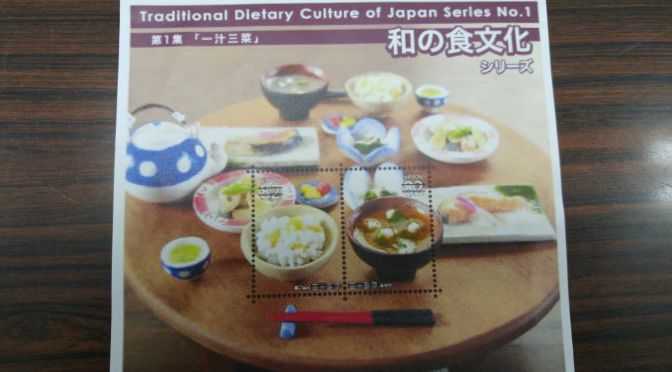
During a recent visit to the Post Office I notice this mini sheet of Commemorative stamps featuring 10 basic letter postage 82 yen stamps!
“Traditional Dietary Culture of Japan Series No 1!
A slightly misleading title, but that is not the first one!
The Japanese staple, steamed rice and miso soup!
The full Japanese dinner!
Mind you people do not eat that much fr dinner every day, but this is a good indication of homey food!
IZAKAYA RANKING: +1~+2 Service: +3 very friendly and smiling. Easy-going but attentive Equipment & Facilities: +3 Very clean overall. Superb gender separated washrooms Prices: +2 reasonable Strong points: Traditional izakaya cuisine including oden. Excellent seafood and drink list including local sake.
Located a few minutes walk from Yaizu JR Station south exit Minato Machi Okamura Ikichi is actually one of the 6 similar establishments owned by Fujieda City-based Okamura Roman Co. with restaurants in Fujieda City (2), Shizuoka City, Yaizu City, Shimada City and a vegetable bar in Fujieda City
They all seem to share two traits:
-Modern design outside (which does not always feature the name of the restaurant) and generally young but knowledgeable and enthusiastic staff!
The food and concept are both traditional and modern for the pleasure of all genders and age groups!
They both have a regular and seasonal menu.
Although they will soon have to think of an English menu the staff will be more than happy to explain it!
I found the range of local sake quite excellent for such an establishment which can seat no less than 134 guests on two different floors!
Of course all kinds of drinks are available!
And the sake comes in generous portions!
Now, as for the food you will to come quite a few times before exhausting the whole menu!
Let me show you what we had for our first visit there!
A Shizuoka delicacy/comfort food: oden/Japanese pot au feu.
The broth not being as dark and strong as in some other izakaya in Shizuoka Prefecture, you certainly drink it up!
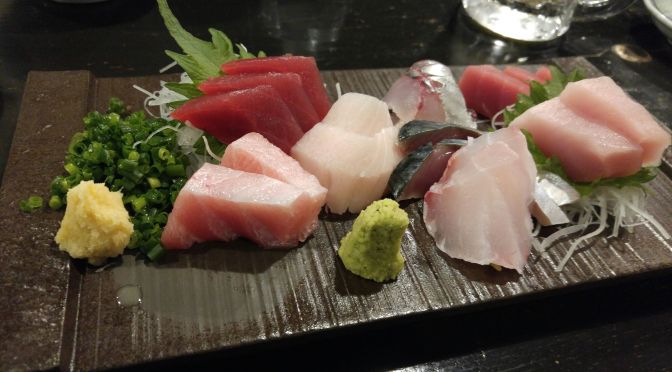
A reasonably-priced sashimi plate (for two)!
Featuring mackerel, seabream and local horse mackerel!
And many types of tuna!
There plenty of vegetables available too fresh or cooked, from the traditional fried potato sticks,
to a unique plate of deep fried burdock root shavings!
Well, I suppose other visits are on the cards before I move to their other establishments!
MINATO MACHI OKAMURA IKICHI/岡むらいきち
Yaizu City, Sakae Machi 1-1-34 (on the left of Yaizu JR Station south exit)
Tel.: 054-620-7880
Opening hours: 17:00~24:00
Closed on Sundays
Credit cards OK
Parties welcome!
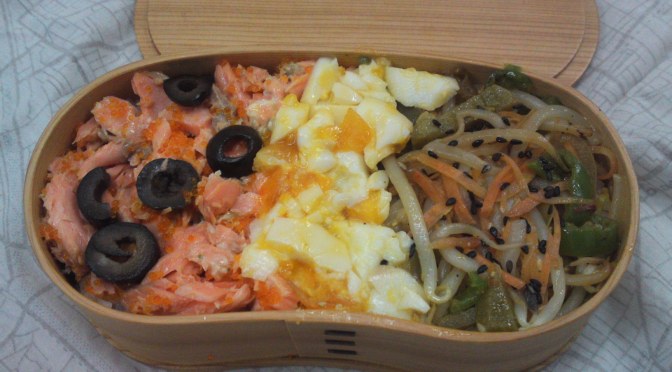
After a very long laps the Dragon (Missus) seems inclined to prepare traditional Japanese lunch boxes/bento, at least on some days when we both are away at work at lunch time!
SN3O0650
She made this comparatively simple one on Saturday, mostly with leftovers!
SN3O0651
On a bed of steamed rice she first placed shredded grilled salmon, slightly seasoned topped with black olives.
SN3O0652
She spread the middle with boiled egg and tartar sauce salad.
SN3O0653
The vegetable part was conceived with stir-fried beansprouts, shredded carrots and green pepper and plenty of black sesame seeds seasoned with spicy sauce!
Here we continue with this series which still promises a long haul!
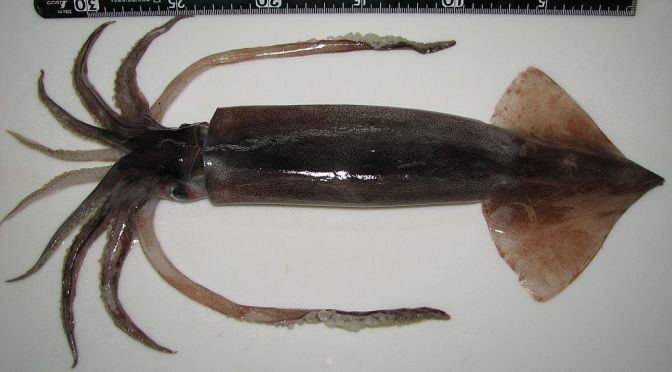
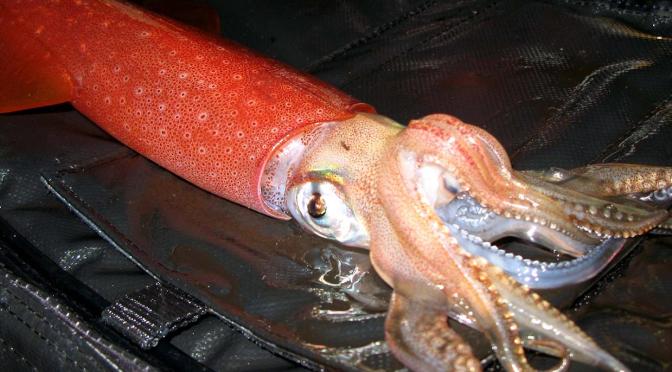
Surume Ika/鯣烏賊 or Japanese Common Squid/Pacific Flying Squid is also called by regional names of Ma Ika, Matsu Ika or Kanzegi.
It is caught off the shores of Northern Japan and south of Kyushu Island.
Catches tend to vary widely.
The Japanese squid can live anywhere from 5°C to 27°C, and tends to inhabit the upper layers of the ocean. They are short lived, only surviving about a year.
The fishing season for the Japanese flying squid is all year round, but the largest and most popular seasons are from January to March, and again from June to September. Gear used to catch the Japanese flying squid is mainly line and hook, lift nets, and gill nets, the most popular method being hook and line used in jigging.
Most of it is turned into various pickled or dried cuttle fish/squid products.
It is also much appreciated broiled or simmered.
Service: attentive and easy-going Equipment & facilities: old but overall clean. Shared washroom (old-fashioned and basic, but clean) Prices: reasonable Strong points: oden, comfort food, great sake list. Great traditional Japanese atmosphere!
SN3O0546
Shizuoka City is renowned all over Japan for a typical Japanese comfort food called “oden”, a kind of Japanese pot–au-feu.
Now, if you want to eat such local food in our city, the best place is Aoba Oden Gai/青葉おでん街 located along Aoba Park Street in Aoi Ku.
This izakaya alley of another era hasn’t changed much when it was created in 1950’s when the City asked the open-air food stands in Aoba Park Street to move out!
SN3O0547
Everyone in town has its very own favorite odenya/oden izakaya but the busiest area is naturally Aoba Oden Gai where you still have to choose among 18-odd shops!
It took me a long time to choose mine and I have never visited another since then!
SN3O0548
It is distinctive for its unusual (in Shizuoka) round-shaped red paper lantern with a small cat daring you to come inside!
SN3O0549
Kasuri/かすり!
Its noren/shop entrance curtain is actually larger than in most shops inside this alley offering some welcome privacy to its patrons!
SN3O0553
There are many reasons for Kasuri having become my favorite odenya in Shizuoka City.
First of all, the Mama-san, although a very discreet lady who shuns photographs, is a person with whom it is a pleasure to share a talk. She is from Akita Prefecture but has lived long enough in Shizuoka to claim a “double nationality”! Her single presence encourages all the customers to join in quickly in interesting conversations and I suspect some of them patronize Kasuri to catch a few tidbits of information!
SN3O0557
Another reason is the best choice in sake both from Shizuoka and elsewhere (including Akita of course!) to be found in that alley. The list is practically changing with every week. Make a point to discuss your choice with the Mama San first!
SN3O0560
Don’t worry, all main drinks are available, including beer, wine, shochu, whisky and some unusual discoveries from time to time!
SN3O0555
Another reason is the style of oden.
In many places in Shizuoka City the broth can be as dark as the middle of the night, but Kasuri serves a version somewhere between Shizuoka and light broth Kansai style, far healthier and tastier for my own point of view.
SN3O0558
The oden themselves are served in many manners, either with Japanese hot mustard, aonori/a mixture based on dry green laver seaweed (only in Shizuoka!) or miso mixture, or with all three if it is your fancy!
Among the oden offered to your choice you will fiund quite a few only encountered in our Prefecture!
SN3O0554
But a more important difference with other odenya is that the Mama San also offers all kinds of freshly prepared comfort food varying with the days and seasonal ingredients available on the local (and in her own Akita Prefecture!)!
SN3O0556
Accordingly the food comes in all styles from very Japanese hors d’oeuvres to…
SN3O0559
hot pasta in small dishes!
Well, it doesn’t matter how many times you come, you can always expect some kind of discovery, especially with many patrons bringing some great morsels from their business trips while having a last drink and morsel before hitting the road back home!
KASURI/かすり
Shizuoka City, Aoi Ku, Tokiwa cho, 2-3-6, Aoba oden Gai
Tel.: 054-255-6758
Opening hours: 16:30~24:30
Closed on Wednesdays
Cash only
If you come as a small group call beforehand as the place does not have many seats!
Here we continue with this series which still promises a long haul!
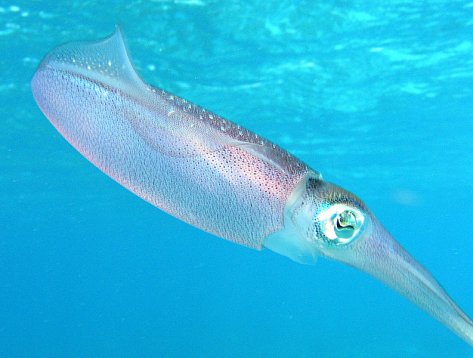
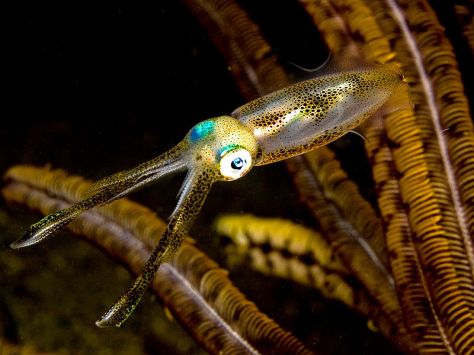
Aori Ika or Bigfin Reef Squid is another extremely popular cuttle fish but in many othere countries.
In French languedoc and Roussillon they call them “piste” and eat them raw marinated in lemon juice, olive oil and spices on top of freshly toasted bread.
American Aori Ika/Caribbean Reef Squid
Of course they come by various regional names in Japan: Mo Ika, Bashoo Ika, Kutsu Ika, Misu Ika, Shiroi Ika.
They are fairly large as they can attain 40~45 cm length for a weight up to 6 kg.
Their season is from Summer to early Autumn (just in time for this article!). They are mainly caught in Central and South Japan along the Southern shores.
The catch has never been big (mainly by trawling nets), making them a choice morsel.
They are considered the best cuttlefish as far as sashimi is concerned.
The Japanese often catch them as a hobby to process and sell at local markets.
As sushi, especially as nigiri, they are simply top-class!
Service: very kind and smiling Equipment & Facilities: Old but very clean. Washroom equipped for physically-impaired customers Prices: reasonable Strong points: Soba/buckwheat noodles, sushi. Pottery on sale
SN3O0554
I discovered this very traditional soba/buckwheat noodles restaurant near the Shimada Municipal Meuseum when I visited the old Ooi River Crossing Village/Kawagoshi Kaidou!
It made for the perfect stop for lunch during a very interesting visit of this important historical site!
SN3O0553
A very traditional entrance!
SN3O0552
It actually doubles up as a pottery atelier and you can find fine artifacts right from the moment you enter the place!
SN3O0551
Some of it is for sale inside the restaurant!
SN3O0546
And you can have a good view of the kitchen and working chef!
SN3O0545
A really peaceful rural atmosphere!
SN3O0547
Traditional Shizuoka Soba with grated yam!
The menu is fairly extensive including even sushi!
As for soba, they are very traditional and authentic!
SN3O0550
This was my order!
SN3O0549
Cold soba with tenpura/Ten Oroshi Soba!
SN3O0548
Absolutely succulent!
Definitely looking forward to my next visit as I want to visit the village a bit more thoroughly in more clement weather!
SOBA GEN/そば玄
427-0037 Shimada City, Kawahara, 2-14-5
Tel.: 0547-34-3332
Mobile: 090-5617-7548
Opening hours: 11:00~14:00 (on week ends: 11:00~15:00). From 17:00, on reservation only
Closed on Mondays and 3rd Tuesday of the month. Open on Monday if it is a National Holiday HOMEPAGE (Japanese)
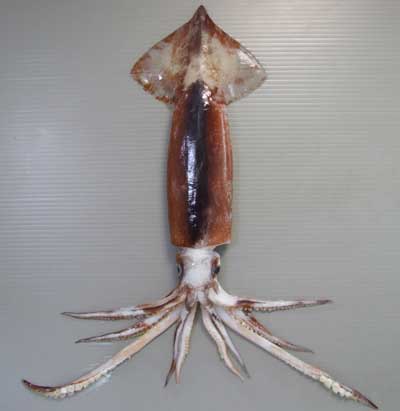
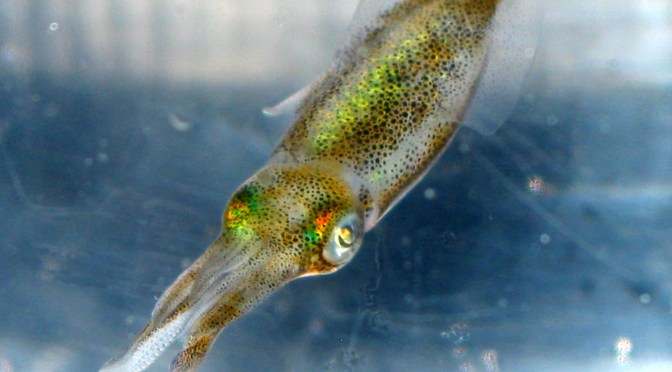
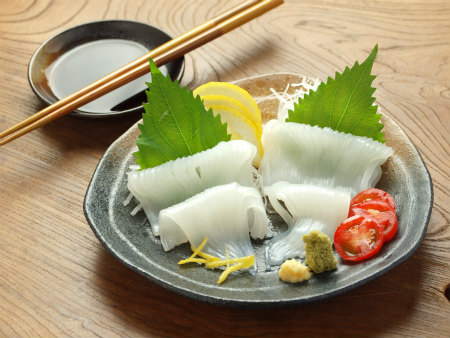
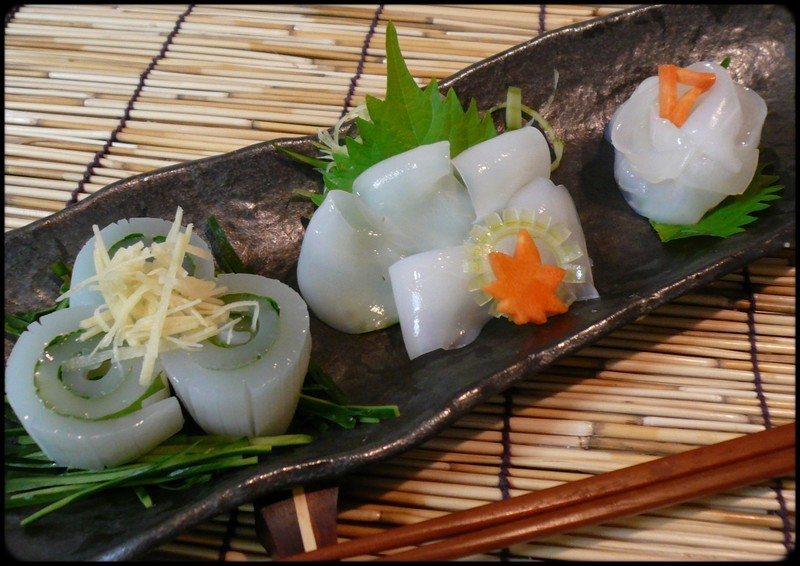
“Kensaki Ika/ケンサキ烏賊 goes by the Latin name of Loligo (Photololigo) edulis Hoyle,1885, but that complicated name does not prevent this particular squid to be extremely popular in Japan!
It is of course known under other local names: Aka Ika/Red Squid, especially in Shizuoka, Budo Ika/Grapes Squid, Shiro Ika, Gotou Ika.
They will soon appear in the markets in Summer.
They are mainly caught by line.
They are more and more available live, so great specimens can be easily bought.
Kensaki Ika Sashimi! “Somen style/noodle style!
Another sashimi presentation!
They are a very versatile kind of squid as they can be appreciated as sashimi, sushi, simmered, boiled, broiled, dried, and especially as tempura!
As a cold boiled appetizer!
As tempura!
Sushi as it is!
Sushi, seasoned!
As for me, it is a bit of a dilemna as I like them both as sushi nigiri and sashimi!
Cuttlefish or squids are eaten almost all the world as they seem to inhabit the whole planet! They are the favourite food of many big fish such as tuna, whales and birds. Although humans contribute to dwindling stocks, they will never consume the same amount as its natural predators.
The Japanese call them Ika/烏賊, roughly meaning crow shellfish/cephalopods.
This is the start of a long series. I do hope you like them, otherwise you are in for a long haul!LOL
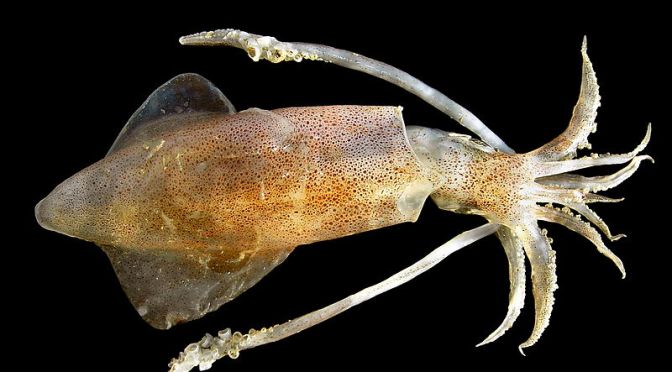
Yari Ika/槍烏賊, or Spear Squid, are also known under the names of sashika, Sayaika, Shyakuhachi, Tsutsuika or Sayanaga.
In Japan they are mainly caught in Winter and Spring off the shores of Aomori, Hokkaido, Ibaragi, Mie, Aichi and Yamaguchi Prefectures.
Females are slightly more rounded thanthe males.
They are either caught with nets or lines.
Their flesh is comparatively thin, but soft and sweet. They are among the most popular in Japan.
The best specimens are the ones caught by line. Buy them live whenever possible.
Still alive spear squid sushi nigiri!
Classical presentation sushi nigiri!
Unusual presentation sushi nigiri!
Classical live spear squid sashimi plate!
CA3F0028
Spear Squid Sashimi Donburi!
Broiled spear squid!
Spear Squid Tempura!
Japanese-Style Sauteed Spear squid!
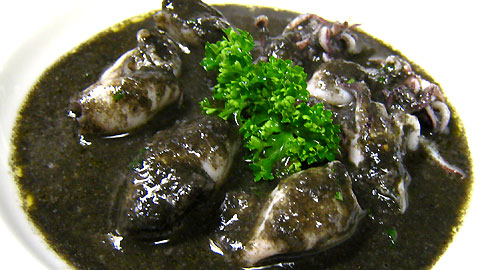
Italian-Style Spear squid in its ink!
They can of course be cooked, or eaten as sashimi, but I reckon sushi nigiri is best.
The best sushi restaurants will serve two of them with two different dip soy sauces.
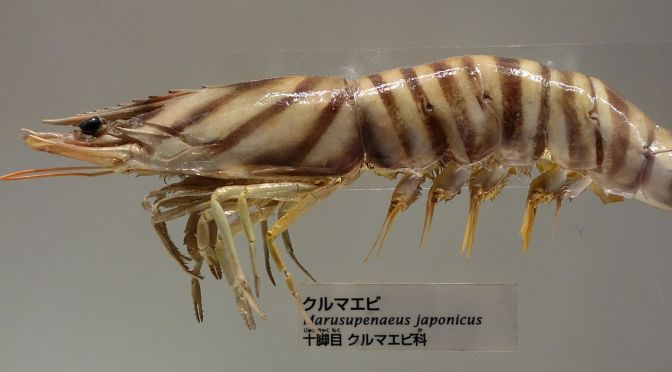
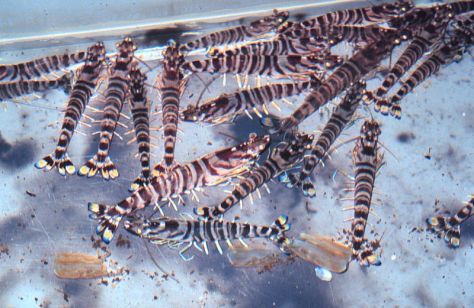
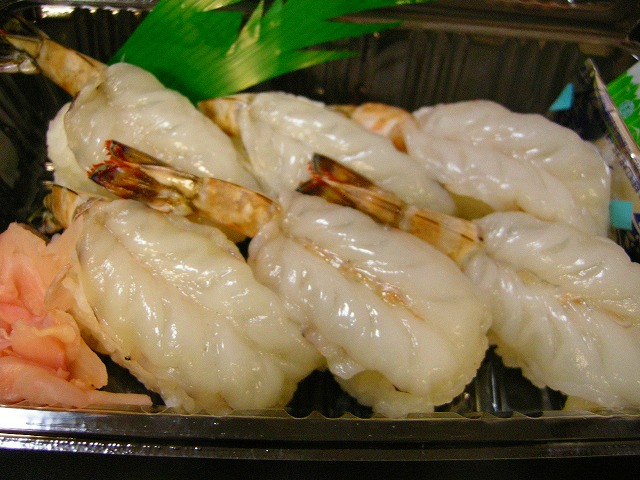
Kuruma Ebi, or Japanese Imperial Prwan, is probably the most popular prawn in Japan!
It has different names depending on its size: Saimaki (up to 5 cm), Maki (up to 10cm)
Its season lasts from late Autumn to the end of Winter.
It is found south of Hokkaido Island down to the Indian Ocean until depths of 50 metres.
It had been successfully artificially grown for some time until diseases put a momentary stop.
The prawn has steadily become a rare morsel. Altogether, natural and human raised specimen, the annual catch amounts only to 2,000 tonnes.
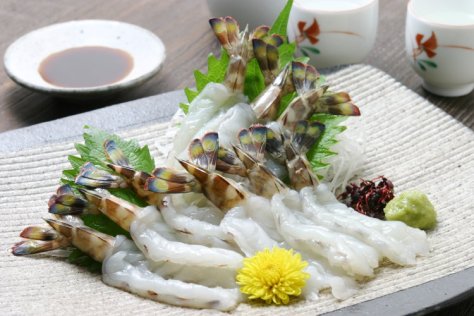
Raw, or
boiled, they make for great decoration on top of suucculent taste!
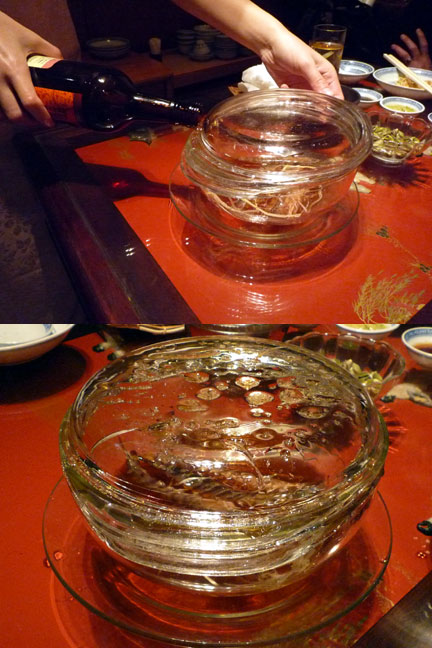
They are very much appreciated a sashimi, especially after having been made to “dance” in Japanese sake!
Grilled on the stick would tempt many a prawn connoisseur!
They make for extravagant tempura!
As sushi Nigiri, they are equally popular raw, or
boiled!
In winter enjoy in “nabe”/Japanese pot au feu!
If you the chance to buy them alive (In Shizuoka, we do have them kicking), put them in a pan with Japanese sake under a lid. Wait until they have grown “quiet”, and prepare them right away!
Service: shy but very kind and smiling Equipment & facilities: Old but very clean. Clean washroom Prices: reasonable Strong points: takoyaki and okonomiyaki and other traditional izakaya foods. Local sake
SN3O0438
The other day having some time to spare I walked along streets near Shimada Railway Station north exit when I found this little place which seemed very popular with the locals. Luckily enough I came in early enough before the place was packed with revelers!
SN3O0441
The atmosphere is reminiscent of the 1960’a and 1970’s and I suspect the whole place dates back to that period with the only concession of a modernized washroom to our present era!
SN3O0442
The food is cooked afresh in front of you and it is worth waiting for it!
SN3O0443
Even the chef seems straight out of a past age!
SN3O0450
No wonder the place is popular with the locals but also with the visiting Chinese and Taiwanese tourists straight out of Shimada Airport!
SN3O0440
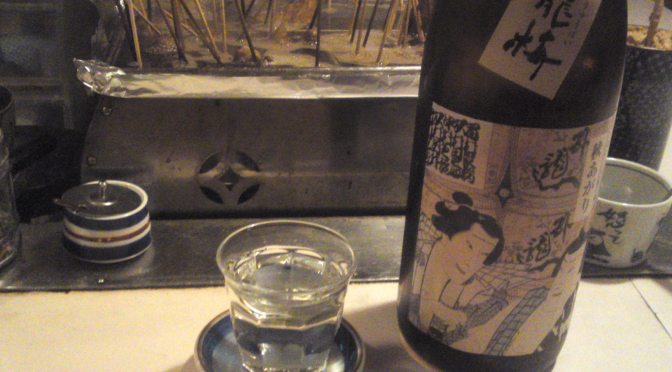
The drinks menu and the menu cartes are also very traditional including a sake from neighboring Oumuraya Brewery!
SN3O0439
My sake!
SN3O0445
Also noticed an intriguing wine liquor!
SN3O0449
As this first visit was dedicated to Osaka=style takoyaki/octopus dumplings I first ordered a plate of takoyaki with soy sauce, mayonnaise and chopped scallions accompanied with a glass of wine liqueur!
SN3O0448
Osaka-style takoyaki are soft and burning hot!
SN3O0469
My second order was takoyaki in “Akashi Yaki” style, that is as it is with a hot clear soup to dip them in!
SN3O0470
Eat them while they are very hot!
SN3O0447
Look forward to the next report which will be about okonomiyaki and other morsels!
TONBO
427-0029 Shimada City, Hinode-Cho, 1-1 ( few minutes’ walk straight from Shimada JR Station North exit)
Tel.: 0547-35-7635
Opening hours: 17:00~22:00
Closed on Sundays and national Holidays.
Orders on the phone and take-out OK!












































 SHIZUOKA GOURMET