Category Archives: Japanese Gastronomy

Today’s Lunch Box/Bento (’11/46): Deep-fried Prawn and Pork Rolls Bento!

The weather is still very hot although the humidity has somewhat abated. It is when people tend to drink more than they eat, forgetting that the human body needs as many calories in hot summers as in cold winters. Since bentoes are served cold or lukewarm at best they are perfect for the summer, although you do have to be careful about preserving the quality and safety of the food. The latter conditions add another reason for bentoes to be made at home unless you want to feed yourself with preservatives!

The Missus had some large prawns handy in the fridge. She rolled them in thin pork belly strips and deep-fried them with coarse panko/breadcrumbs. Once cooked, she let them rest on a grill to cool down and give out any extra fat.

She lined the bento box with plenty of rice topped with shredded vegetables. The latter will soak in any extra juice and sauce and add taste to the whole.
She then placed the prawns on top and seasoned them with sweet sesame and miso barbecue sauce. She added a small cornichon for the last touch.

Plenty of vegetables must balance the meat and the rice (the latter providing only carbohydrates and fibers).
The Missus served them both cooked and raw.

As for the cooked vegetables she stir-fried aubergines/eggplants, green and red peppers, all cut roughly to the same size for even cooking, in a piquant sauce. She put the finishing touch by sprinkling black sesame seeds on top.

As for the raw vegetables, and the color touch, she placed cut yellow plum tomatoes on a bed of cress.
Lastly dessert was provided with red grapes.

Healthy, plentiful and savory!

RECOMMENDED RELATED WEBSITES

With a Glass,
Clumsyfingers by Xethia
Adventures in Bento Making, American Bento, Beanbento, Bento No1, Bento Wo Tsukurimashou, Cooking Cute, Eula, Hapabento , Happy Bento, Jacki’s Bento Blog, Kitchen Cow, Leggo My Obento, Le Petit Journal Bento & CO (French), Lunch In A Box, My Bento Box, Vegan Lunch Box; Tokyo Tom Baker, Daily Food Porn/Osaka, Only Nature Food Porn, Happy Little Bento, The Herbed Kitchen, J-Mama’s Kitchen, Cook, Eat, Play, Repeat; Bento Lunch Blog (German); Adventures In Bento; Anna The Red’s Bento Factory; Cooking Cute; Timeless Gourmet; Bento Bug; Ideal Meal; Bentosaurus; Mr. Foodie (London/UK); Ohayo Bento

Tamagoyaki/Japanese Omelet: Basic Recipe & Presentations

Tamagoyaki: basic recipe

I’ve been asked of late about the basic recipe for “Tamagoyaki”, or Japanese traditional omelette.
There are two ways of making it:
1) the slightly difficult one with chopsticks I’m going to explain today.
2) the easier one, but not traditional way, using European/American tools.

For the traditional recipe,you will need a long pair of chopsticks and a non-stick frypan. Traditional or not, the fry pan will have to be rectangular or square and of a size adapted to the number of eggs used.

Ingredients:
Eggs: 10
Dashi/Japanese stock: 180ml (9 tenths of a cup- A cup is 200ml)
Cooking sugar: 45g
Soy sauce: half a teaspoon
Salt: a pinch
Salad oil for frying

Recipe:

Pour in a bowl all the eggs, dashi, sugar and salt. Mix with a whisker. Do not mix to perfection. This will leave some beautiful white patterns in the omelette.

First heat frypan well. Pour in a little oil and wait until it starts “smoking”. Do not forget the whole process is done over a strong fire!
Get a piece of kitchen paper impregnated with oil handy for the next step.
First pour in half of the eggs.
As the omelette cooks burst any air bubbles open with chopsticks to obtain a uniform cooking.

Fold in eggs from the far end towards you little by little, bursting bubbles open at the same time.
Do not worry too much at this stage if you miss some of them. Try and proceed as quickly as possible.

Keep folding in at your pace until all eggs are rolled in.

Away from the fire, wipe the vacant space wit the oild paper, pour in a little egg.From now on the new egg layer should kept thin. Burst bubbles open as the eggs cook.

Fold each layer around the omelette by turning it aver towards you, let it slip away from you, brush some oil in, add a new layer of eggs, cook and fold, and continue until all eggs are used.

Remember that all should be done over a high fire. It would be easier to do over a low fire, but then the eggs will not be as light and “fluffy”.

Eat hot or cold. Can be cut in all kind of shapes for presentation, salads, or maki.

The Japanese also mix the eggs with raw shrimp of fish paste to attain an even lighter and thinner omelette.

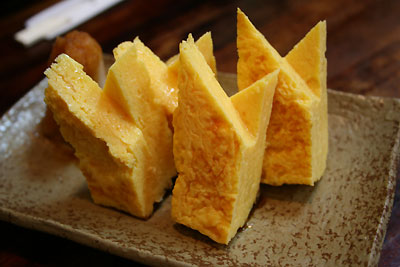
Tamagoyaki: Presentations

As promised to Bill in Japanese Omellete/Tamagoyaki: Basic recipe 1 posting, here are some examples of presentation:
Above is a very popular way of cutting and serving cold, especially at sushi restaurants.


The accent here is not so much on the regularity, but on the colour, making it very home-style.


A very “clean and regular” presentation. Served with grated daikon and soy sauce.


Another example of home-made style served with shiitake mushrooms.


A “classical and professional” presentation!

RECOMMENDED RELATED WEBSITES

With a Glass,
Clumsyfingers by Xethia
Adventures in Bento Making, American Bento, Beanbento, Bento No1, Bento Wo Tsukurimashou, Cooking Cute, Eula, Hapabento , Happy Bento, Jacki’s Bento Blog, Kitchen Cow, Leggo My Obento, Le Petit Journal Bento & CO (French), Lunch In A Box, My Bento Box, Vegan Lunch Box; Tokyo Tom Baker, Daily Food Porn/Osaka, Only Nature Food Porn, Happy Little Bento, The Herbed Kitchen, J-Mama’s Kitchen, Cook, Eat, Play, Repeat; Bento Lunch Blog (German); Adventures In Bento; Anna The Red’s Bento Factory; Cooking Cute; Timeless Gourmet; Bento Bug; Ideal Meal; Bentosaurus; Mr. Foodie (London/UK); Ohayo Bento

Must-see tasting websites:

-Sake: Tokyo Through The Drinking Glass, Tokyo Foodcast, Urban Sake, Sake World
-Wine: Palate To Pen, Warren Bobrow, Cellar Tours, Ancient Fire Wines Blog
-Beer: Good Beer & Country Boys, Another Pint, Please!
-Japanese Pottery to enjoy your favourite drinks: Yellin Yakimono Gallery

Today’s Lunch Box/Bento (’11/45): Spider Crab Bento!

After almost a month’s hiatus the fiery Dragon at home has finally cooled down and resumed her bento creations!
Today’s title comes from the fact we were offered a succulent (and enormous) spider crab last night which the Missus steamed (or boiled? she didn’t tell me!) and partly served for dinner keeping enough apart for today’s bento!

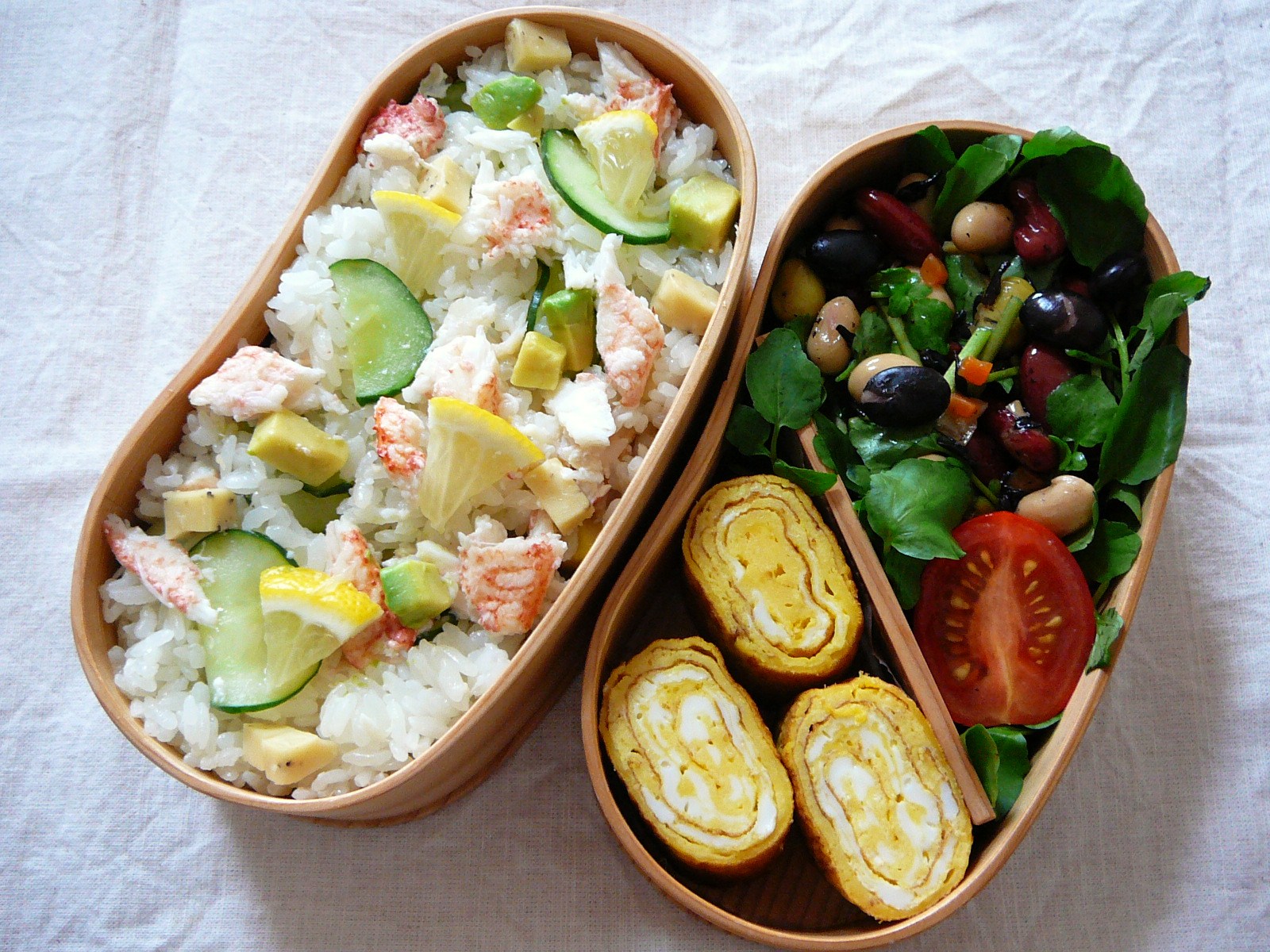
She steamed plain white rice before mixing it with all kinds of ingredients cut in small pieces, except for the crab meat. The latter had been divided into shredded meat and whole leg meat.

She mixed the rice with thinly sliced Japanese cucumbers, small pieces of lemon, avocado, shredded crab meat and small pieces of black pepper processed cheese.
She topped the whole with the same plus the crab leg meat cut into small pieces for design and garnish.

As for the side box she kept things simple and light considering the comeback of the searing hot weather.

For the vegetables she placed bean salad and more boiled black beans on a bed of Shizuoka-grown cress and added a cut plum tomato for more vitamins and design.

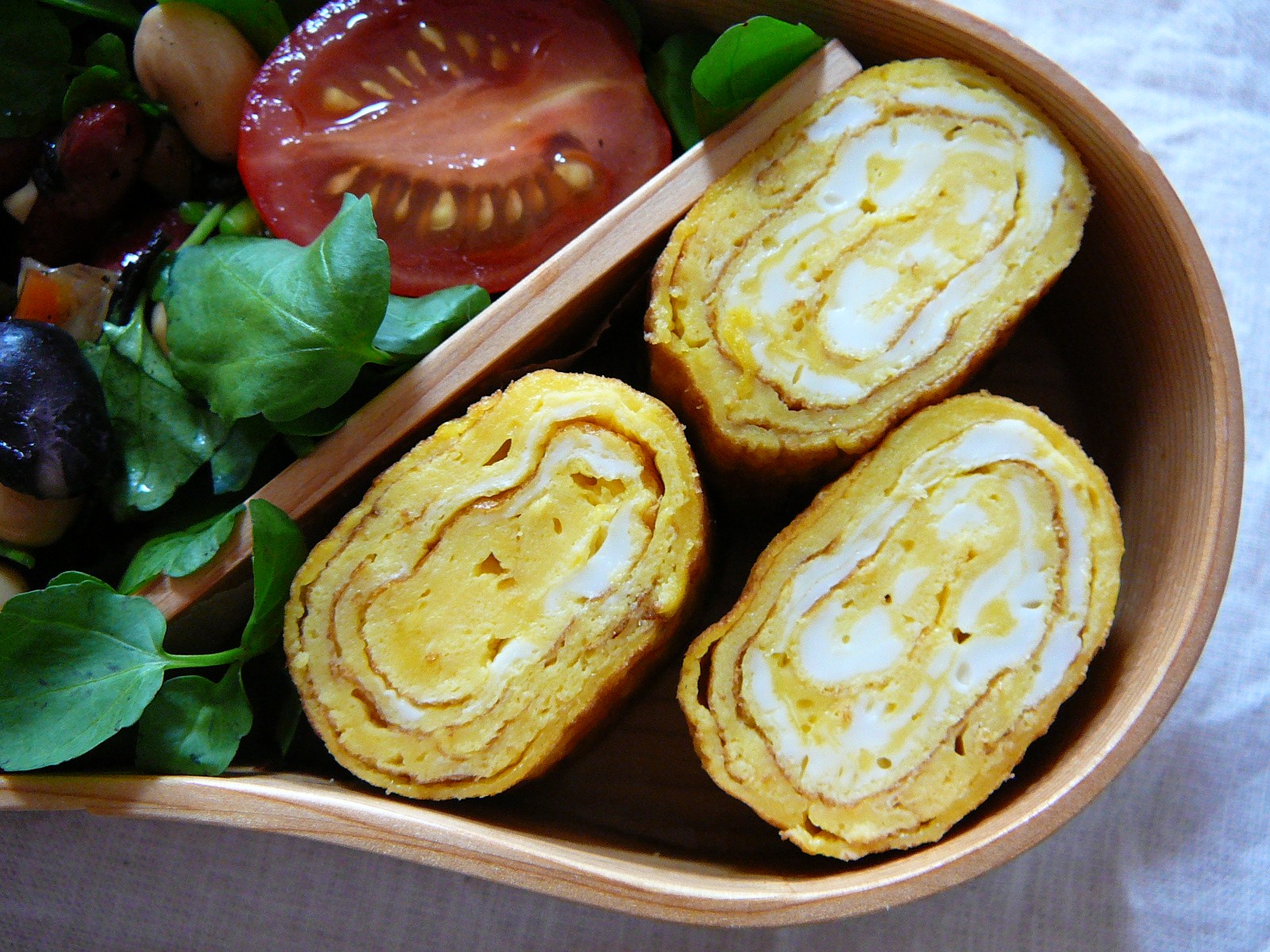
For dessert she prepared her specialty, tamgoyaki/Japanese omelette, sweet enough to be considered as such!

The Dragon might have lost some of her fire but the weather is simply scalding outside.
A tasty and colorful bento for a typical summer day!

RECOMMENDED RELATED WEBSITES

With a Glass,
Clumsyfingers by Xethia
Adventures in Bento Making, American Bento, Beanbento, Bento No1, Bento Wo Tsukurimashou, Cooking Cute, Eula, Hapabento , Happy Bento, Jacki’s Bento Blog, Kitchen Cow, Leggo My Obento, Le Petit Journal Bento & CO (French), Lunch In A Box, My Bento Box, Vegan Lunch Box; Tokyo Tom Baker, Daily Food Porn/Osaka, Only Nature Food Porn, Happy Little Bento, The Herbed Kitchen, J-Mama’s Kitchen, Cook, Eat, Play, Repeat; Bento Lunch Blog (German); Adventures In Bento; Anna The Red’s Bento Factory; Cooking Cute; Timeless Gourmet; Bento Bug; Ideal Meal; Bentosaurus; Mr. Foodie (London/UK); Ohayo Bento

Tuna Species (amended & expanded)

I noticed that many friends all over the World are anglers and fish lovers.
Here is some useful information on the most popular fish in Japan (and in Spain, too), namely Tuna!

Kuromaguro/Blue Fin Tuna

kuromaguro.jpg

Tuna or “Maguro” is the most popular fish for sushi and sashimi lovers in Japan (and abroad). It is said that more than 60% of total catch is consumed in Japan alone (and probably a lot higher depending on species). Incidentally, Japan is not the single bigger consumer of fish. Spain is!

Now, there is tuna and tuna. Briefly said, there are many species with many names and very different price tags as well!

The first species I would like to introduce is “Kuromaguro”, or Blue Fin Tuna (or Tunny).
It has many other names in Japanese: Honmaguro, Maguto, Meji,Yokowa, Shibi, Imoshii, Shibimaguro, Kuroshibi, and Hatsu!

The best are caught in Winter mainly in the seas off Kochi (Shikoku Island), Miyagi (Honshu Island) and Hokkaido Prefectures.
This variety is the most expensive and can reach astronomical prices, especially caught in Winter off Hokkaido.
Imported Kuromaguro usually reaches Japan frozen, but in recent years the fish has been successfully raised in semi-wild environments in Spain, Australia and Croatia and arrives in Japan fresh by plane.
Import and sale of Kuromaguro are monopolised by the Japanese trade associations, unless you are lucky enough to catch one (careful here, as poaching is a major offense in Japan!).
Between you and me, if you want to eat Kuromaguro sashimi, it might come cheaper if you do it while travelling in Spain!
Did you know that Japanese importers will fly to Spain and other countries just to check that the fish are bled properly?

Now the good news for people who think that Bluefin Tuna might disappear from the oceans is that Japan has successfully raised the fish from the egg till fish reaching more than 30 kg in no less than three locations in Japan!
I predict that Japan will export tuna within 10 years!
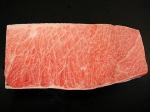
kuromaguro-otoro
Kuromaguro Otoro (fat part)

kuromaguro-chutoro
Kuromaguro Chutoro (semi-fat part)

kuromaguro-akami
Kuromaguro Akami (lean part)

———————

Mebachi/Big-eyed Tuna

mebachi.jpg

Mebachi or Big-eyed Tuna, a fairly reasonable kind of tuna, is especially popular for its “akami” (lean part)
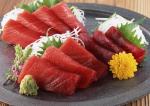
mebachi-akami

It has different names according to the areas: “Darumashibi” (Mie Prefecture), “Mebuto” (Kyushu). In Tokyo, Shizuoka and Wakayama, it is called “Daruma” when caught at a young age.
The best seasons for catching are during the rainy season or the Fall.
This kind of tuna is mainly caught off the shores of Miyagi, Kagoshima, Kochi, Shizuoka, Kanagawa and Hokkaido Prefectures.

As said before, it is mainly appreciated for its lean beautiful red flesh, but also cooked and grilled as “kama”:
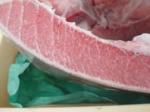
mebachi-kama
In the fall it is also a source of toro (fatty part) when kuromaguro is not available.
In recent years it has been extensively caught in the Pacific, Atlantic and Indian Oceans and in the Mediterranean Sea. It also comes frozen from Chile, Peru and North America. It is also flown fresh from Australia, Indonesia and New York. A lot equally comes frozen from South Korea and Taiwan.

——————–

Kihada: Yellowfin Tuna

kihada1.jpg

“Kihada maguro” or Yellowfin Tuna” will appear on our tables from early summer.
It is mainly caught off Shizuoka, Miyagi and Kochi Prefectures coasts.
Like all other fish it is called other names in different regions:
Kiwada, Itoshibi (Wakayama, Kochi, Kyushu), Shibi (Kyusyu, Osaka), Ban (Osaka) and Tuna Kajibi (Okinawa)
Kihada roams over many seas between 30 degrees north latitude and 30 degrees south latitude and even wider depending on the season.
Most of the fish caught in Japan is served locally as sashimi:
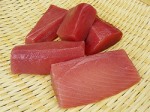
efbd8befbd89efbd88efbd81efbd84efbd81efbc92
Very recognizable for its pinkish colour.
It is also widely appreciated as Zuke (first lightly grilled, then dipped into ice water before being cut into thin slices) on nigiri:
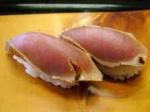
kihada3
A lot is imported frozen.
In Shizuoka try to go for the freshly caught samples coming from Yaizu or Numazu Fishing harbors.

—————–

Minamimaguro/Southern Blue Fin Tuna
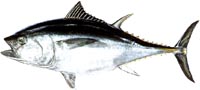
minamimaguro.jpg

Minamimaguro or Southern Blue Fin Tuna could be called a true Shizuoka Prefecture tuna as our Prefecture accounts for 30% of the total in Japan!
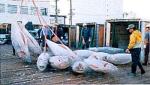
shizuokaminamimaguro
Like all fish it has different names: Indomaguro, Goushyumaguro, Bachimaguro.
In Autumn it is mainly caught off Australia, New Zealand, Capetown (South Africa) in the Southern Hemisphere and off the coasts of Shizuoka, Kochi, Kagoshima and Miyagi Prefectures in Japan.
Mianmimaguro is comparatively cheaper than its fellows as it contains little fat, which on the other hand makes it very easy to freeze and preserve.
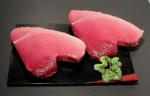
shizuokaminamimagurochu
Regardless of the lack of fat, it makes for excellent sashimi, sushi and various parts are succulent grilled or cooked.
The parts discarded by humans make for a lot of cat food!

————————

Binnaga/Albacore Tuna

binnaga.jpg

Binnaga or Albacore is very often called Tonbo Maguro in Japan. It is also known under the name of Binchyou.
It is caught in the Summer off the coasts of Miyagi, Kochi, Mie and Miyazaki Prefectures.
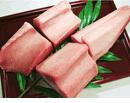
This is probably the cheapest kind of tuna available in Japan apart of Marlin.
binnagatonbo
It makes for most of the cheaper tuna sashimi in supermarkets.
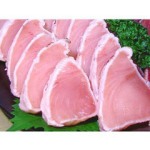
I personally like it fried in large slices before eating them as tuna hamburgers. Absolutely delicious and far healthier than a McDonald’s (let them sue me!)!
efbd82efbd89efbd8eefbd8eagatataki
For people who want to try their hand at making “tataki”, it would be the perfect first step into Japanese gastronomy.
It is also vastly used by canneries under the name of “Sea Chicken”.
It is probably the most popular tuna species outside Japan.

———————–

Mekajiki/Big-eye Marlin

mekajiki.jpg

Strictly speaking, marlins are a different branch from tuna, but as it is so often offered as a substitute for true tuna, I decided to introduce it as such.
There are many types of marlins all over the world, but the most commonly caught and eaten is “Mekajiki”/Big-eye Marlin.
kajiki1.jpg
It is found in various supermarkets and cheap izakaya. Still it is a very popular as sashimi as well as grilled fish. Even in my home country, France, it is served as “Carpaccio”.
It is caught all around Japan from Atumn to Winter.
It is also called “Meka” in Tokyo or “Mesara” in Kanagawa Prefecture.
Sashimi varieties came in two main kinds: “kuro” and “shiro”.
“Makajiki” (“true marlin”) is peach pink while “Mekajiki” (“big-eye marlin”) is of a whitish orange.
More than 1,000 tonnes are caught off Japan, whereas imports amount to more than 1,100 tonnes.
In Europe and America it is popular as canned food or grilled.
mekajiki-sushi
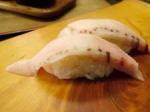
One can enjoy it as cheap “nigiri” in sushi restaurants.
Fresh marlin should be shiny and show veins bright red.
It is mainly caught at night as it swims near the surface then.

RECOMMENDED RELATED WEBSITES

With a Glass,
Clumsyfingers by Xethia
Adventures in Bento Making, American Bento, Beanbento, Bento No1, Bento Wo Tsukurimashou, Cooking Cute, Eula, Hapabento , Happy Bento, Jacki’s Bento Blog, Kitchen Cow, Leggo My Obento, Le Petit Journal Bento & CO (French), Lunch In A Box, My Bento Box, Vegan Lunch Box; Tokyo Tom Baker, Daily Food Porn/Osaka, Only Nature Food Porn, Happy Little Bento, The Herbed Kitchen, J-Mama’s Kitchen, Cook, Eat, Play, Repeat; Bento Lunch Blog (German); Adventures In Bento; Anna The Red’s Bento Factory; Cooking Cute; Timeless Gourmet; Bento Bug; Ideal Meal; Bentosaurus; Mr. Foodie (London/UK); Ohayo Bento

Must-see tasting websites:

-Sake: Tokyo Through The Drinking Glass, Tokyo Foodcast, Urban Sake, Sake World
-Wine: Palate To Pen, Warren Bobrow, Cellar Tours, Ancient Fire Wines Blog
-Beer: Good Beer & Country Boys, Another Pint, Please!
-Japanese Pottery to enjoy your favourite drinks: Yellin Yakimono Gallery

Vegan and Vegetarian Ultimate Drink: Japanese Sake!

virtual-bar1

I’m persuaded many vegans and vegetarians all over the World like their drinks!
The fact is that they may nurture some reservations as whether their drink qualify as far as their culinary priorities prevail.
For example, do you know that many wines (don’t misunderstand me, I love me my wine!) are still filtered in the traditional way with egg whites?

On the other hand, (good/unfortunately there is not so good, too…) Japanese sake is exclusively made with rice, pure water and vegetal yeast. That is all! Sometimes, brewers will use lactic acid to help with preservation, but it is also of vegetal origin.
Some brewers (not many, only 14 of them in the whole of Japan) like Aoshima Brewery in Fujieda City, Shizuoka Prefecture, will go as far as making organic sake with rice grown organically and locally!

The (simplified) process of making sake is as follows:

-Rice millage/polishing: the rice will be milled down carefully as the starches are concentrated in the middle of the grain contrarily to edible rice. The more the rice is polished, the higher quality of the sake.
-Washing and soaking: the rice is washed and then soaked in pure water.
-Steaming: the rice is then steamed and left to cool on large pieces of absolutely clean cloth.
-Production of koji/malted rice: some rice is malted with Aspergillus oryzae mold
-Yeast starter: malted rice, regular steamed rice and pure water are mixed in a vat to which is added a culture of pure yeast cells. The latter is one the main ingredients which will differentiate all sake in taste, aroma and other characteristics. The wole is called “moto” or “origin/root” of the sake.
-Moromi and sandan shikomi: moromi is is the “moto” transferred to a larger vat where rice, malted rice and pure water are added. This is done in three steps, “sandan shikomi”, for a gradual and even process.
This is left to ferment for eighteen to thirty-two days.This step will also define the characteristics of the sake.
-Pressing: it is done in many ways, depending on the quality of the sake
-Filtering: The brewer will choose to filter it or not through various processes.
-Pasteurization: Most sake is pasteurized as “nama”/unpasteurized sake has to be kept at low temperature, making it very difficult to export. A pity as this is “true sake”!
-At this time, pure water may be added to the “genshu” (unaltered sake) to lower the alcohol content, and also pure rice acohol for a different type of sake.

(Simplified) List of Sake types:

-Futsushu/”normal sake”: made with rice milled/polished down to 80% (that is, 20% will be polished off). Can be rotgut or incredibly good sake depending on millage, equipment and ingredients.
-Junmai/”pure rice”: made with rice milled to 70% or lower. No alcohol was added.
-Junmai Ginjo: made with rice milled down to 60% or lower. No alcohol wa added.
-Junamai Daiginjo: made from rice milled down to 50% or lower. No alcohol was added.
-Honjozo: made with rice milled to 70% or lower. Alcohol was added.
-Ginjo: made with rice milled to 60% or lower. Alcohol was added.
-Daiginjo: made with rice milled to 50% or lower. Alcohol was added.

In the case of Shizuoka Prefecture, futsushu is usually made from rice milled down to 70~65%, junmai and honjozo, 60 t0 50%, junami Ginjo and ginjo, 50~40%, junmai daiginjo and daiginjo, 40~…%.

Tere are other intermediary “appelations” such as Tokubetsu (special) Junmai and Tokubetsu Honjozo, Yamahai, etc…

“Nama” means “unpasteurized, “genshu”, unaltered sake, “muroka”, unfiltered, as for most commonly used added indications.

Incidentally, sake powder resulting from polishing will be used for Japanese-style cakes or animal feed depending on quality. “Sake kasu”/white lees which are left after pressing and filtering are used to make “amazake”, “Sake kasu nabe”, pickles and so on!

For a thorough study of Japanese sake, read John Gautner’s website or buy his books. John is the universally recognized non=japanese authority on Sake!

Must-see sake blogs:
-If you live in the Us, and particularly New York, visit Timothy Sullivan’s blog!
-If you live in Tokyo or Japan visit Melinda Joe and Etsuko nakamura‘s blogs!
-If you want to know ALL about one region’s sake and sake breweries, visit Shizuoka Sake!

RECOMMENDED RELATED WEBSITES

With a Glass,
Clumsyfingers by Xethia
Adventures in Bento Making, American Bento, Beanbento, Bento No1, Bento Wo Tsukurimashou, Cooking Cute, Eula, Hapabento , Happy Bento, Jacki’s Bento Blog, Kitchen Cow, Leggo My Obento, Le Petit Journal Bento & CO (French), Lunch In A Box, My Bento Box, Vegan Lunch Box; Tokyo Tom Baker, Daily Food Porn/Osaka, Only Nature Food Porn, Happy Little Bento, The Herbed Kitchen, J-Mama’s Kitchen, Cook, Eat, Play, Repeat; Bento Lunch Blog (German); Adventures In Bento; Anna The Red’s Bento Factory; Cooking Cute; Timeless Gourmet; Bento Bug; Ideal Meal; Bentosaurus; Mr. Foodie (London/UK); Ohayo Bento

Must-see tasting websites:

-Sake: Tokyo Through The Drinking Glass, Tokyo Foodcast, Urban Sake, Sake World
-Wine: Palate To Pen, Warren Bobrow, Cellar Tours, Ancient Fire Wines Blog
-Beer: Good Beer & Country Boys, Another Pint, Please!
-Japanese Pottery to enjoy your favourite drinks: Yellin Yakimono Gallery

Shizuoka Sake Tasting: Sugii Brewery-Junmai, Bodai Moto No Suke, Homare Fuji

Sugii Brewery in Fujieda City with Takashima Brewery in Numazu City and Morimoto Brewery in Kikugawa City is a member of what I have dubbed their group the “Maverick Band”.
These three breweries have never been afraid of experimenting away from the more conservative breweries in our Prefecture.

This particular brew was made with locally grown Homare Fuji Sake rice.
As for the fermenting process it was done according to the ancient methods prevalent in the Edo Period when breweries left more responsibility to the environmental nature. The difference is that it was better controlled than in ancient times!

Rice: Homare Fuji
Rice milled down to 70%
Alcohol: 14.8 degrees
Dryness: 2.5
Acidity: 2.1
Brewed in 2010
Bottled in July 2011

Clarity: very clear
Color: Faint golden hue
Aroma: Slightly dry but fruity: banana, almonds, macadamia nuts, bitter chocolate
Body: Fluid
Taste: Strong junmai petillant attack backed up with a lot of fruit: mandarines, almonds.
Disappears with more oranges, coffee beans, bitter chocolate and dark cherries.
Junmai petillant staying strong all the way.
Ends up on an even drier note with further sips.
Takes a bit of a step back with food with an even stronger dry and acid accent.
Very complex and revealing more facets with the next sip.

Overall: Although a sake very untypical of Shizuoka Prefecture, it is a typical brew of Sugii Brewery!
A complex, surprising and very pleasant sake, best appreciated on its own at room temperature or “nurukan/lukewarm”, although a long distance away from the beaten tracks.
Difficult to categorize but so intriguing.
A true experience on a new path!

RECOMMENDED RELATED WEBSITES

With a Glass,
Clumsyfingers by Xethia
Adventures in Bento Making, American Bento, Beanbento, Bento No1, Bento Wo Tsukurimashou, Cooking Cute, Eula, Hapabento , Happy Bento, Jacki’s Bento Blog, Kitchen Cow, Leggo My Obento, Le Petit Journal Bento & CO (French), Lunch In A Box, My Bento Box, Vegan Lunch Box; Tokyo Tom Baker, Daily Food Porn/Osaka, Only Nature Food Porn, Happy Little Bento, The Herbed Kitchen, J-Mama’s Kitchen, Cook, Eat, Play, Repeat; Bento Lunch Blog (German); Adventures In Bento; Anna The Red’s Bento Factory; Cooking Cute; Timeless Gourmet; Bento Bug; Ideal Meal; Bentosaurus; Mr. Foodie (London/UK); Ohayo Bento

Must-see tasting websites:

-Sake: Tokyo Through The Drinking Glass, Tokyo Foodcast, Urban Sake, Sake World
-Wine: Palate To Pen, Warren Bobrow, Cellar Tours, Ancient Fire Wines Blog
-Beer: Good Beer & Country Boys, Another Pint, Please!
-Japanese Pottery to enjoy your favourite drinks: Yellin Yakimono Gallery

Kakigoori/Shaved Ice Dessert at Iwaraya in Shizuoka City!

Service: Kind and friendly
Equipment: very clean
Prices: Reasonable
Strong points: Authentic traditional Japanese desserts!
Entirely non-smoking!

When I arrived in Shizuoka City 35 years ago there were almost more traditional Japanese dessert shops than their Western equivalent.
Now you must gear yourself on the exploration mode to re-discover them!

They are certainly worth searching for as traditional Japanese desserts are far healthier than our (delicious) Western cakes and creams. Moreover, most are devoid of wheat flour and in many cases of dairy products.

The blazing hot summer in Japan means it is the season for kakigoori/かき氷/shaved ice!
Iwaraya serves no less than six varieties!

Although Iwaraya has a long history dating back to 3 generations and 80 years ago, they opened their own shop only 5 years ago in Takajyo, a gastronomic venue in the City of Shizuoka!

It also has the great merit to be located away from the crowds near the cute Takajyo Shrine dedicated to falconry!

There is a dessert for all seasons as they also make o-shiroko, anmitsu, o-sekihan, o-mochi and waseigashi!
Great with a cup of matcha tea!

This time I enjoyed the lemon shaved ice!

The lemon is juice squeezed in front of you from fresh lemons!
Incidentally their strawberry kakigoori is made with real crushed fresh strawberries!

Now, if you have a Japanese sweet tooth to satisfy try what my friend ordered: Zenzai, a traditional Japanese dessert assortment!

Tempting, isn’t it?
Looking forward to my next visit!

IWAGARAYA/いわがらや
Shizuoka Shi, Aoi Ku, Takajyo, 1-5-12
Tel.: 054-252-0587
Business hours: 10:00~18:00 (~18:30 0n weekends)
Closed on Wednesdays

RECOMMENDED RELATED WEBSITES

With a Glass,
Clumsyfingers by Xethia
Adventures in Bento Making, American Bento, Beanbento, Bento No1, Bento Wo Tsukurimashou, Cooking Cute, Eula, Hapabento , Happy Bento, Jacki’s Bento Blog, Kitchen Cow, Leggo My Obento, Le Petit Journal Bento & CO (French), Lunch In A Box, My Bento Box, Vegan Lunch Box; Tokyo Tom Baker, Daily Food Porn/Osaka, Only Nature Food Porn, Happy Little Bento, The Herbed Kitchen, J-Mama’s Kitchen, Cook, Eat, Play, Repeat; Bento Lunch Blog (German); Adventures In Bento; Anna The Red’s Bento Factory; Cooking Cute; Timeless Gourmet; Bento Bug; Ideal Meal; Bentosaurus; Mr. Foodie (London/UK); Ohayo Bento

Must-see tasting websites:

-Sake: Tokyo Through The Drinking Glass, Tokyo Foodcast, Urban Sake, Sake World
-Wine: Palate To Pen, Warren Bobrow, Cellar Tours, Ancient Fire Wines Blog
-Beer: Good Beer & Country Boys, Another Pint, Please!
-Japanese Pottery to enjoy your favourite drinks: Yellin Yakimono Gallery

Shizuoka Sake Tasting: Morimoto Brewery-Junmai Dai-Ginjyou Yamada Nishiki

When one can combine work and pleasure… What more can you ask?
This is the third report of a three-article assignment on sake brewed by Morimoto Brewery in Kikugawa City, Shizuoka Prefecture!

Rice: Yamada Nishiki (Shizuoka-grown)
Rice milled down to:40%
Alcohol: 15~16 degrees
Dryness: +3.0
Acidity: 1.6
Brewed in 2010 and bottled in 2011

Clarity: Very clear
Color: Faint golden hue
Aroma: Discreet, fleeting. Fruity: custard, dark chocolate, banana.
Body: Fluid
Taste: Dry and fruity attack backed by junmai petillant.
Strong start from bananas before perception of coffee beans and dark chocolate.
Disappears quickly on a drier note.
Dark chocolate and coffee beans make a comeback with almonds with further sips.
Eleagant but very assertive.

Overall: A sake to be enjoyed for its own sake!
Even chilled shows complex facets and elegance.
Keeps surprising you with new impressions lurking behind each sip.
To be enjoyed at leisure preferably in great comapany.
There is no need to accompany it with food although it is assertive enough to happily marry with light vegetable salads in particular.

RECOMMENDED RELATED WEBSITES

With a Glass,
Clumsyfingers by Xethia
Adventures in Bento Making, American Bento, Beanbento, Bento No1, Bento Wo Tsukurimashou, Cooking Cute, Eula, Hapabento , Happy Bento, Jacki’s Bento Blog, Kitchen Cow, Leggo My Obento, Le Petit Journal Bento & CO (French), Lunch In A Box, My Bento Box, Vegan Lunch Box; Tokyo Tom Baker, Daily Food Porn/Osaka, Only Nature Food Porn, Happy Little Bento, The Herbed Kitchen, J-Mama’s Kitchen, Cook, Eat, Play, Repeat; Bento Lunch Blog (German); Adventures In Bento; Anna The Red’s Bento Factory; Cooking Cute; Timeless Gourmet; Bento Bug; Ideal Meal; Bentosaurus; Mr. Foodie (London/UK); Ohayo Bento

Must-see tasting websites:

-Sake: Tokyo Through The Drinking Glass, Tokyo Foodcast, Urban Sake, Sake World
-Wine: Palate To Pen, Warren Bobrow, Cellar Tours, Ancient Fire Wines Blog
-Beer: Good Beer & Country Boys, Another Pint, Please!
-Japanese Pottery to enjoy your favourite drinks: Yellin Yakimono Gallery

Shizuoka Sake Tasting: Morimoto Brewery-Junmai Ginjyou Yamada Nishiki

When one can combine work and pleasure… What more can you ask?
This is the second report of a three-article assignment on sake brewed by Morimoto Brewery in Kikugawa City, Shizuoka Prefecture!

Rice: Yamada Nishiki (Shizuoka-grown)
Rice milled down to: 50
Alcohol: 15~16 degrees
Dryness: +1
Acidity: 1.3
Brewed in 2010 and bottled in 2011

Clarity: Very clear
Color: Very faint golden hue
Aroma: Dry and fruity. Fleeting. Banana, custard
Body: Fluid
Taste: Smooth attack. Fruity: banana, custard.
Just dry enough to allow for an easy appreciation.
Disappears quickly with lots of custard and almonds on a warm note.
Coffee beans and dark chocolate appear with further sips

Overall: An elegant, complex and fruity sake whose facets tend to surprise as they strike your tongue and palate.
A sake to be savored on its own as an aperitif if chilled on a hot evening, or if at room temperature as a great digestif on a winter evening.
Naturally marries well with any food but would gain more by being enjoyed on its own in special company!

RECOMMENDED RELATED WEBSITES

With a Glass,
Clumsyfingers by Xethia
Adventures in Bento Making, American Bento, Beanbento, Bento No1, Bento Wo Tsukurimashou, Cooking Cute, Eula, Hapabento , Happy Bento, Jacki’s Bento Blog, Kitchen Cow, Leggo My Obento, Le Petit Journal Bento & CO (French), Lunch In A Box, My Bento Box, Vegan Lunch Box; Tokyo Tom Baker, Daily Food Porn/Osaka, Only Nature Food Porn, Happy Little Bento, The Herbed Kitchen, J-Mama’s Kitchen, Cook, Eat, Play, Repeat; Bento Lunch Blog (German); Adventures In Bento; Anna The Red’s Bento Factory; Cooking Cute; Timeless Gourmet; Bento Bug; Ideal Meal; Bentosaurus; Mr. Foodie (London/UK); Ohayo Bento

Must-see tasting websites:

-Sake: Tokyo Through The Drinking Glass, Tokyo Foodcast, Urban Sake, Sake World
-Wine: Palate To Pen, Warren Bobrow, Cellar Tours, Ancient Fire Wines Blog
-Beer: Good Beer & Country Boys, Another Pint, Please!
-Japanese Pottery to enjoy your favourite drinks: Yellin Yakimono Gallery

Shizuoka Sake Tasting: Morimoto Brewery-Sayogoromo Tokubetsu Junmai

When one can combine work and pleasure… What more can you ask?
This is the first report of a three-article assignment on sake brewed by Morimoto Brewery in Kikugawa City, Shizuoka Prefecture!

Rice: Homare Fuji (Shizuoka-grown)
Rice milled down to: 60%
Alcohol: 15 degrees
Dryness: +3.5
Acidity: 1.4
Brewed in 2010 and bottled in 2011

Clarity: Very clear
Color: Very faint golden hue
Aroma: Fruity. Complex. Banana, vanilla.
Body: Fluid
Taste: Dry attack. Fruity: banana, coffee beans.
Disappears quickly on an even drier note.
Very little junmai petillant.
Dark chocolate and almonds appear with second sip before vanishing on a very dry note.

Overall: Very dry but smooth sake typical of Morimoto Brewery, which has always entertained the image of a “maverick” brewer in Shizuoka Prefecture.
Eminently drinkable on its own although it would make for the perfect accompaniment to heavy izakaya-style food.
Would also marry well to desserts, especially chocolate.
A brew for the dry sake lovers!

RECOMMENDED RELATED WEBSITES

With a Glass,
Clumsyfingers by Xethia
Adventures in Bento Making, American Bento, Beanbento, Bento No1, Bento Wo Tsukurimashou, Cooking Cute, Eula, Hapabento , Happy Bento, Jacki’s Bento Blog, Kitchen Cow, Leggo My Obento, Le Petit Journal Bento & CO (French), Lunch In A Box, My Bento Box, Vegan Lunch Box; Tokyo Tom Baker, Daily Food Porn/Osaka, Only Nature Food Porn, Happy Little Bento, The Herbed Kitchen, J-Mama’s Kitchen, Cook, Eat, Play, Repeat; Bento Lunch Blog (German); Adventures In Bento; Anna The Red’s Bento Factory; Cooking Cute; Timeless Gourmet; Bento Bug; Ideal Meal; Bentosaurus; Mr. Foodie (London/UK); Ohayo Bento

Must-see tasting websites:

-Sake: Tokyo Through The Drinking Glass, Tokyo Foodcast, Urban Sake, Sake World
-Wine: Palate To Pen, Warren Bobrow, Cellar Tours, Ancient Fire Wines Blog
-Beer: Good Beer & Country Boys, Another Pint, Please!
-Japanese Pottery to enjoy your favourite drinks: Yellin Yakimono Gallery

Vegan Smoked Tofu Recipe!

It is sometimes a hard world for vegans when it comes to find new ideas and recipes, even you love tofu!
My good friend Sissi in Switzerland reminded me it might be time to republish some of my old recipes!
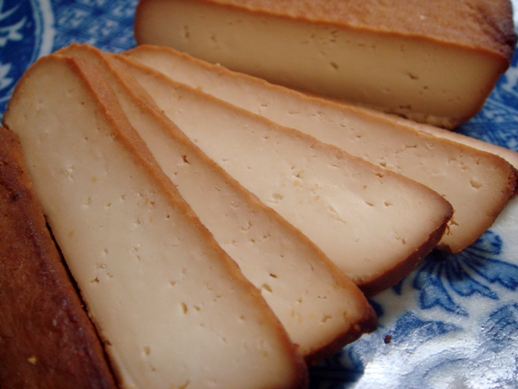
Here is a simple way to prepare and enjoy tofu as it was a big piece of cheese!

Vegan Smoked Tofu!

INGREDIENTS: for ? People

-Tofu: a large piece 300~400g or more
-Miso of your liking, as much as you wish
-Soy sauce, not too much (beware of the salt)
-Japanese Sake or mirin, a little just for the taste
-Spices, if you wish!

RECIPE:

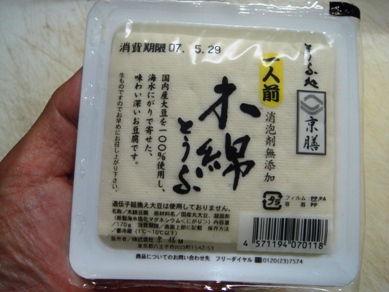
-As the tofu shouldn’t be too soft, choose “momendofu”, or slightly solid.

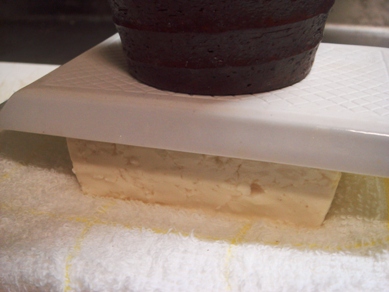
-Place the tofu on a clean cloth.
-Top it with a clean plate or board.
-Put a heavy weight on top.
-Leave it like this for half a day. The tofu will reduce to half.

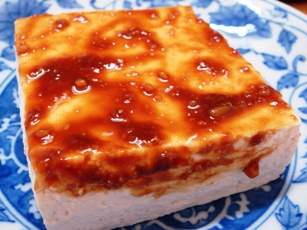
-Smear the whole tofu on every face with plenty of a mixture of miso, soy sauce and other ingredients of your choice. The more, the better.

-Wrap it carefully in cellophane paper and leave it in the fridge overnight.

-Take it out of the fridge and take off the cellophane paper.
-Let it dry for 2 hours at room temperature over a piece of kitchen paper.

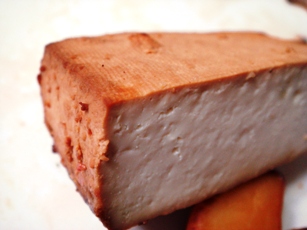
-Smoke inside a Chinese smoking set for 1 hour.

-Very practical for smoking small quantities!

-Here you are! Enjoy!

RECOMMENDED RELATED WEBSITES

With a Glass,
Clumsyfingers by Xethia
Adventures in Bento Making, American Bento, Beanbento, Bento No1, Bento Wo Tsukurimashou, Cooking Cute, Eula, Hapabento , Happy Bento, Jacki’s Bento Blog, Kitchen Cow, Leggo My Obento, Le Petit Journal Bento & CO (French), Lunch In A Box, My Bento Box, Vegan Lunch Box; Tokyo Tom Baker, Daily Food Porn/Osaka, Only Nature Food Porn, Happy Little Bento, The Herbed Kitchen, J-Mama’s Kitchen, Cook, Eat, Play, Repeat; Bento Lunch Blog (German); Adventures In Bento; Anna The Red’s Bento Factory; Cooking Cute; Timeless Gourmet; Bento Bug; Ideal Meal; Bentosaurus; Mr. Foodie (London/UK); Ohayo Bento

Must-see tasting websites:

-Sake: Tokyo Through The Drinking Glass, Tokyo Foodcast, Urban Sake, Sake World
-Wine: Palate To Pen, Warren Bobrow, Cellar Tours, Ancient Fire Wines Blog
-Beer: Good Beer & Country Boys, Another Pint, Please!
-Japanese Pottery to enjoy your favourite drinks: Yellin Yakimono Gallery

Soba Restaurant: Yoshino

Service: Shy but friendly
Facilities: old but clean. Traditional
Prices: Reasonable
Strong points: 10 wari soba. Good list of Shizuoka sake.

As I said before there a lot of soba restaurants of various levels in Shizuoka Prefecture, but Yoshino is definitely a member of the Big League!
It seems that all the doctors of the neighboring clinics have made it their main lunch lair!
But do also come for dinner as there is enough on the menu to attract you again and moreover they serve some top-class sake brewed in our Prefecture!

A traditional entrance to an ancient institution!

True Japanese atmosphere inside!

Among the single dishes I recommend two of them;
-Tamagoyaki/Japanese omelette!

Very light and fine, it is not easy to achieve this way!

Yaki miso/Grilled Miso!

It is actually a mixture of white miso paste, buckwheat and yuzu spread on a wooden spatula and cooked under a grill!

You will find it only at good soba restaurants!

I noticed they are using wasabi salt by Tamaruya Co.!

Actually I should have said 3! Buckwheat and Sakura shrimps tofu!

You will find this delicacy only in Shizuoka Prefecture!

I ordered 10 wari soba tenpura set!

10 wari soba (jyu wari soba) means that the noodles are 100% made of buckwheat flour, whereas the cheaper 8 wari soba (Hachi wari soba) contains 20% of wheat flour!

Seasonal tempura!

Beautiful vegetables!

Crispy prawns!

Soba tsuyu/Soba soup to be added to the remaining accompaniment of sauce, scallions and wasabi to be drunk as a soup!

Now, Yoshino serve their own traditional Japanese dessert: Soba Shiratama Senzai!

Cute, isn’t it?

It is topped with ice cream covered with matcha tea powder. The white balls/dango are made of buckwheat and rice flour. The small jelly cubes are made of Japanese agar agra!

The bottom half is filled with azuki beans and anko/sweetmeats!

I’ll take you dinner there next!

To be continued…

YOSHINO
420-0839 Shizuoka Shi, Takajyo, 1-7-10
Tel.: 054-255-3277
Business hours: 11:00 until they run out of buckwheat!
Closed on Tuesdays

RECOMMENDED RELATED WEBSITES

With a Glass,
Clumsyfingers by Xethia
Adventures in Bento Making, American Bento, Beanbento, Bento No1, Bento Wo Tsukurimashou, Cooking Cute, Eula, Hapabento , Happy Bento, Jacki’s Bento Blog, Kitchen Cow, Leggo My Obento, Le Petit Journal Bento & CO (French), Lunch In A Box, My Bento Box, Vegan Lunch Box; Tokyo Tom Baker, Daily Food Porn/Osaka, Only Nature Food Porn, Happy Little Bento, The Herbed Kitchen, J-Mama’s Kitchen, Cook, Eat, Play, Repeat; Bento Lunch Blog (German); Adventures In Bento; Anna The Red’s Bento Factory; Cooking Cute; Timeless Gourmet; Bento Bug; Ideal Meal; Bentosaurus; Mr. Foodie (London/UK); Ohayo Bento

Must-see tasting websites:

-Sake: Tokyo Through The Drinking Glass, Tokyo Foodcast, Urban Sake, Sake World
-Wine: Palate To Pen, Warren Bobrow, Cellar Tours, Ancient Fire Wines Blog
-Beer: Good Beer & Country Boys, Another Pint, Please!
-Japanese Pottery to enjoy your favourite drinks: Yellin Yakimono Gallery

Japanese Izakaya: Maguro-Ya (Honten)

Service: Shy but friendly
Facilities: old but clean. Traditional
Prices: Appropriate
Strong points: Tuna! Tuna! Tuna! Good list of sake and shochu

A lot, and I mean varieties as well as volume, of tuna swim past Shizuoka Prefecture and it simply becomes evident that a Japanese izakaya would specialize in tuna gastronomy, be it raw or cooked!

We have such a place in Shizuoka City called Maguro Ya/まぐろ家, that is “Tuna House”!
It is located on the second floor of a venerable building in Takajyo, an area replete with izakaya as well as first-class restaurants.

Their menu is certainly worth taking photographs as the explantations become a real study!

Even the snack coming with the first drink includes cooked tuna (featured above with duck and pickled cucumber and octopus salad)!

The following will give you a good indication of you can sample at reasonable prices:

“Three-colored Tuna Sashimi Plate”!

Hon-maguro Akami/Blue Fin Tuna lean part (back).

Hon-maguro Chu-toro/Blue Fin Tuna semi-fat part (belly).

Tonbo-Maguro Toro/Albacore Tuna fat part (belly).

Maguro Kushiyaki/Tuna brochette with plenty of mayonnaise and chopped scallions.

There are plenty of sake, shochu and more for all according to their tastes and priorities!
They also serve 4 different sake from Shizuoka Prefecture in the traditional Japanese way: overflowing glass!

The menu is not all tuna! Try their deep-fried prawns!

Sizzling hot, they will please all, Japanese and expats!

Negitoro and daikon salad. Grated tuna with plenty of thin daikon sticks.

A healthy salad served with an egg yolk you mix with all beforehand!

They offer a six-nigiri sushi plate according to the season!

But the personal reason for my visits is their tuna hamburger (called slider in some countries!)!

A slice of tuna is prepared as deep-fried seafood and sandwiched inside a bun with lettuce and tartar sauce!

Far healthier and tastier than many offerings in notorious diners! LOL

To be continued…

MAGURO-YA
Shizuoka Shi, Aoi ku, Takajyo, 1-11-8, 2F
Tel.: 054-251-410
Business hours: 17:00~24:00
Credit Cards OK

RECOMMENDED RELATED WEBSITES

With a Glass,
Clumsyfingers by Xethia
Adventures in Bento Making, American Bento, Beanbento, Bento No1, Bento Wo Tsukurimashou, Cooking Cute, Eula, Hapabento , Happy Bento, Jacki’s Bento Blog, Kitchen Cow, Leggo My Obento, Le Petit Journal Bento & CO (French), Lunch In A Box, My Bento Box, Vegan Lunch Box; Tokyo Tom Baker, Daily Food Porn/Osaka, Only Nature Food Porn, Happy Little Bento, The Herbed Kitchen, J-Mama’s Kitchen, Cook, Eat, Play, Repeat; Bento Lunch Blog (German); Adventures In Bento; Anna The Red’s Bento Factory; Cooking Cute; Timeless Gourmet; Bento Bug; Ideal Meal; Bentosaurus; Mr. Foodie (London/UK); Ohayo Bento

Must-see tasting websites:

-Sake: Tokyo Through The Drinking Glass, Tokyo Foodcast, Urban Sake, Sake World
-Wine: Palate To Pen, Warren Bobrow, Cellar Tours, Ancient Fire Wines Blog
-Beer: Good Beer & Country Boys, Another Pint, Please!
-Japanese Pottery to enjoy your favourite drinks: Yellin Yakimono Gallery

Akihiro Matsushita: Organic Sake Rice Grower in Fujieda City!

Akihiro Matsushita/松下明弘, Yuuji Miyata/宮田祐二 and Densaburou Aoshima/青島傳三郎!

Akihiro Matsushita is a true pioneer!
No less than 17 years ago he decided to grow all his rice organically, a revolution at the time that did not please many people in the very closed world of Japanese farming!
Fortunately things have changed since then…

15 years ago Akihiro contacted Densaburou (Sake Brewmaster’s name) Aoshima of Aoshima Sake Brewery in Fujieda City to aks him if he would be interested in creating sake with truly organic rice. Densaburou is also a true pioneer in his own closed Japanese sake world who gladly accepted the challenge.
And it certainly was a challenge!

Aoshima Brewery in Fujieda City! Kikuyoi/喜久酔 is their main brand name!

I’ve known Densaburou for quite some time now, and the fact he speaks fluent English does help when I introduce him to foreign fans of his nectars!

Yuuji Miyata/宮田祐二, Ryohei Miyake/三宅良平 and Densaburou Aoshima/青島傳三郎
Whatever the occasion, this is Japan, and nothing will start before business cards have been exchanged!

The fact I know quite a lot of people in the Japanese sake world in Shizuoka Prefecture even helps with my Japanese friends and colleagues.
Before meeting Akihiro Matsushita in his farm, Yuuji Miyamata, the man in charge of the development of Homare Fuji Sake Rice in Yaizu City and Ryohei Miyake, an official from the Shida Haibara Agriculture and Forestry Bureau joined me to visit Densaburou at his brewery as we were all going together to Akihiro’s place. Densaburou does not use the Homare Fuji Sake Rice in his brews but he entertains warm relations with all people concerned with the sake business in his region.

Akihiro is a shy gentleman who will nonetheless quickly open and talk passionately about his trade.
And you certainly need to be passionate and extremely knowledgeable to convince people in one of the most conservative regions of Japan!

Keeping his own fields separated from non-organic growers is no longer a problem, but it was open conflict when he started his venture. He does not remember how many times he had to clean his own fields of mountains of rubbish thrown into them during the night…
But since then Akihiro has been recognized and accepted as a true grower as amply proved by his JAS Organic Grower Recognition and his Shida EM Organic Agriculture Association Chairmanship!

Not only his fields, but surrounding areas have to be kept clean of any chemicals and unwanted materials.
Even so, rice growing within a few meters of the perimeter of his fields will not be sold or used!

Yamada Nishiki, the most famous sake rice variety in Japan! The grains will appear end of August!
The soil being part of the Ooigawa River bed is sandy. The same sand is river sand formed by the constant rubbing of stones.

A single look at the water and soil will tell you this is organic environment with all these bugs and snails!
Akihiro and Densaburou had once thought of ducks to keep their fields clean of bugs. Unfortunately the local stray cats put an end to the trials!

Although Mr. Miyata’s field is not concerned with Yamada Nishiki Sake Rice, his expertise is always welcome!

Akihiro’s fields of organic sake rice and those or normal edible organic rice occupy a lot of land here and there. I asked him if he would be interested in exporting some. He replied that he wouldn’t have enough land to do so! An unequivocal proof of his peers’ and customers’ recognition!

Everyone soon forgot me so passionate their discussions had become!

For all his extremely busy life, Akihiro still finds enough time for constant research: organic black rice!

This passion and thirst for new solutions just proves that Japan and its people, for all the cataclysms that regularly visit them, might bend now and again but will never break like the stalks of their rice!

RECOMMENDED RELATED WEBSITES

With a Glass,
Clumsyfingers by Xethia
Adventures in Bento Making, American Bento, Beanbento, Bento No1, Bento Wo Tsukurimashou, Cooking Cute, Eula, Hapabento , Happy Bento, Jacki’s Bento Blog, Kitchen Cow, Leggo My Obento, Le Petit Journal Bento & CO (French), Lunch In A Box, My Bento Box, Vegan Lunch Box; Tokyo Tom Baker, Daily Food Porn/Osaka, Only Nature Food Porn, Happy Little Bento, The Herbed Kitchen, J-Mama’s Kitchen, Cook, Eat, Play, Repeat; Bento Lunch Blog (German); Adventures In Bento; Anna The Red’s Bento Factory; Cooking Cute; Timeless Gourmet; Bento Bug; Ideal Meal; Bentosaurus; Mr. Foodie (London/UK); Ohayo Bento

Must-see tasting websites:

-Sake: Tokyo Through The Drinking Glass, Tokyo Foodcast, Urban Sake, Sake World
-Wine: Palate To Pen, Warren Bobrow, Cellar Tours, Ancient Fire Wines Blog
-Beer: Good Beer & Country Boys, Another Pint, Please!
-Japanese Pottery to enjoy your favourite drinks: Yellin Yakimono Gallery

French Dessert: Shizuoka Soy Sauce Cake, Frozen Orange Compote & Orange Honey Sorbet at Tetsuya Sugimoto!

Service: Highly professional and friendly
Facilities: Great overall cleanliness. Beautiful washroom
Prices: Appropriate
Strong points: Freshest produce and ingredients only, mainly from Shizuoka Prefecture. Organic vegetables. Seasonal food only.

Map (Japanese)
Entirely non-smoking!

This the fourth of the four-part report on the lunch I had the other day at Testuya Sugimoto in Shizuoka City!
And since it is the last episode, it is naturally the dessert!
But this dessert is a Shizuoka concept!

First of all, the bottom part of the “ice cream”!
It was made with a mandarine orange grown inside a greenhouse in Hamamatsu City, Western part of Shizuoka Prefecture.
Tetsuya first peeled it, cooked it as a compote and then froze it!

The sorbet was made with orange flower honey conceived in Nishiura, Numazu City, Eastern Part of Shizuoka Prefecture!

Now, the cake is even more striking!
It is basically a mousse firmed up with gelatin. The mousse was created with soy sauce from Shizuoka Prefecture!
As for the sugar used in the same cake, it comes from sugar cane grown in Kakegawa City in Central Western Part of our Prefecture!
Its bottom was lined with Genoise short cake and the top sprinkled with more crumbled Genoise.

The soy sauce used in the cake is called “Hon Maru Tei” and is made by Amano Co. Ltd. In Gotemba City in the Western Part of Shizuoka Prefecture!
Testuya explained that soy sauce is not all about a salty taste and that creations are practically unlimited with such an ingredient!

As for the sauce, the chocolate might not be of Japanese origin nut the mint is organic and from Shizuoka Prefecture!

To be followed…

Tetsuya SUGIMOTO
420-0038 Shizuoka City, Aoi Ku, Umeya,2-13,1F
Tel./Fax: 054-251-3051
Opening hours:11:30~14:30,17:30~21:30
Holidays: undecided
Credit cards OK
HOMEPAGE

RECOMMENDED RELATED WEBSITES

With a Glass,
Clumsyfingers by Xethia
Adventures in Bento Making, American Bento, Beanbento, Bento No1, Bento Wo Tsukurimashou, Cooking Cute, Eula, Hapabento , Happy Bento, Jacki’s Bento Blog, Kitchen Cow, Leggo My Obento, Le Petit Journal Bento & CO (French), Lunch In A Box, My Bento Box, Vegan Lunch Box; Tokyo Tom Baker, Daily Food Porn/Osaka, Only Nature Food Porn, Happy Little Bento, The Herbed Kitchen, J-Mama’s Kitchen, Cook, Eat, Play, Repeat; Bento Lunch Blog (German); Adventures In Bento; Anna The Red’s Bento Factory; Cooking Cute; Timeless Gourmet; Bento Bug; Ideal Meal; Bentosaurus; Mr. Foodie (London/UK); Ohayo Bento

Must-see tasting websites:

-Sake: Tokyo Through The Drinking Glass, Tokyo Foodcast, Urban Sake, Sake World
-Wine: Palate To Pen, Warren Bobrow, Cellar Tours, Ancient Fire Wines Blog
-Beer: Good Beer & Country Boys, Another Pint, Please!
-Japanese Pottery to enjoy your favourite drinks: Yellin Yakimono Gallery