Category Archives: vegetables

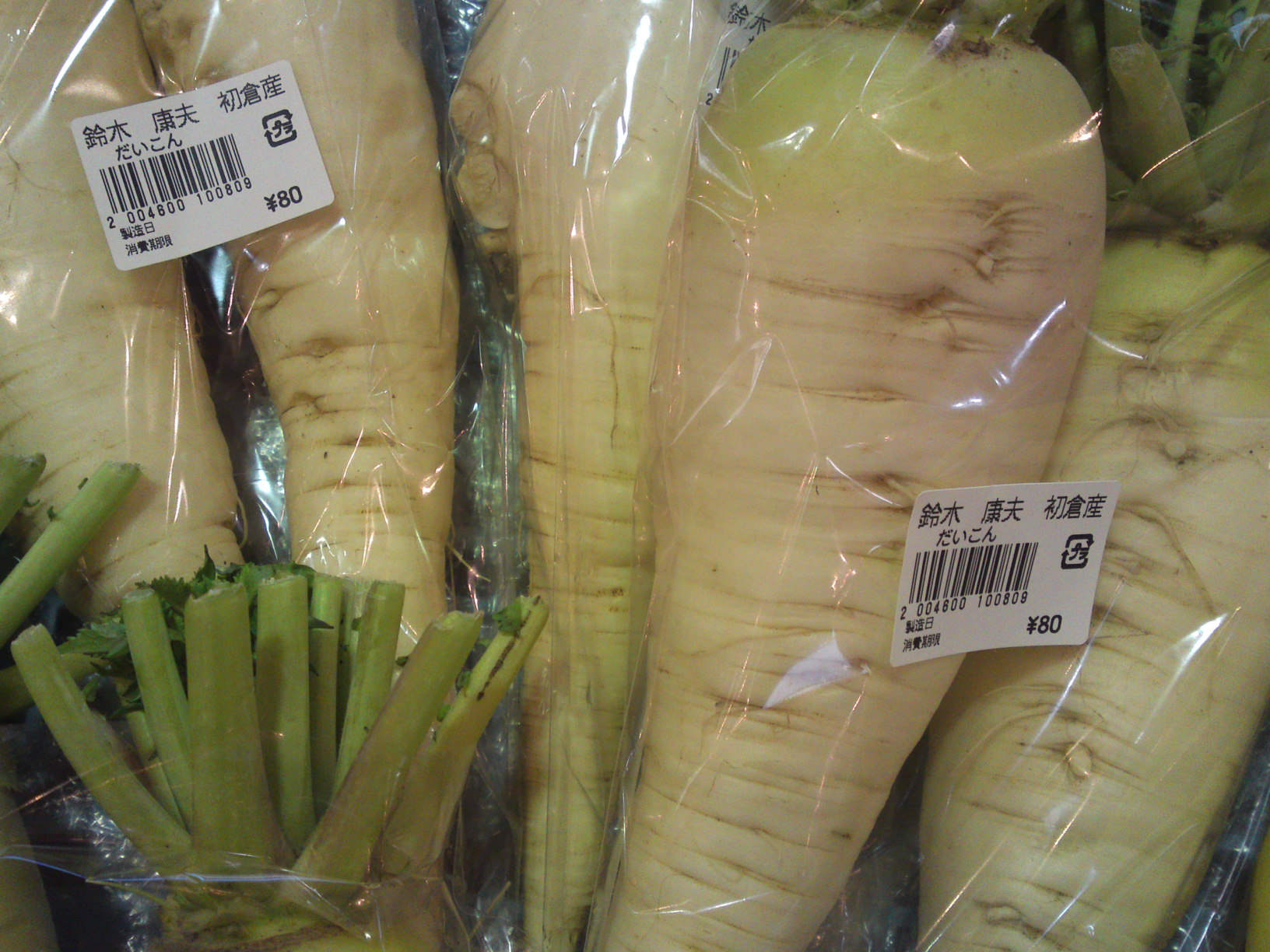
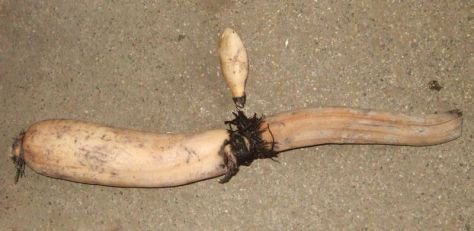
Food Humor: Pervert Daikon or Three-legged Wonder?

Whereas big supermarkets in larger towns such as Tokyo and what else who are “serious” about their products and their displays, local shops do not hesitate to show and sell the tricks of nature!

Actually, and this very seriously, people living in rural Japan are in fact quite happy to discover such natural wonders as they are considered as symbols of fertility (just look around in Japanese countryside, and you are bound to discover all kinds of seriously venerated tricks of nature!).

This particular daikon was displayed by (Farmers Market) Japan Bazaar in Shimada City!

RECOMMENDED RELATED SITES:
Warren Bobrow, Bread + Butter, Zoy Zhang, Hungry Neko, Think Twice, Frank Fariello, Mangantayon, Hapabento, Elinluv Tidbit Corner, Tokyo Terrace, Maison de Christina, Chrys Niles,Lexi, Culinary Musings, Wheeling Gourmet, Comestiblog, Chronicles Of A Curious Cook, Tokyo Through The Drinking Glass, Tokyo Foodcast, Palate To Pen, Yellin Yakimono Gallery, Tokyo Terrace, Hilah Cooking, More than a Mount Full, Arkonite Bento, Happy Little Bento; 5 Star Foodie; Jefferson’s Table; Oyster Culture; Gourmet Fury; Island Vittles; Good Beer & Country Boys; Rubber Slippers In Italy; Color Food daidokoro/Osaka;/a; The Witchy Kitchen; Citron Et Vanille, Lunsj Med Buffet/Estonian Gastronomy (English), Cook, Eat, Play, Repeat, Chrisoscope, Agrigraph, The Agriculture Portal to shizuoka!

Please check the new postings at:
sake, shochu and sushi

Shizuoka Agricultural Products: Japan Bazaar Supermarket in Shimada City

Aki Suzuki/鈴木朋 doing her Sunday shopping at Japan Bazaar!

Contrary to other Prefectures, Shizuoka Prefecture does not so much grow in large mass-producing farms but more in a myriad of highly specialized agricultural ventures.
Which means a lot of cooperation needed for marketing.
The good side of it all is that buyers can visit the supermarkets selling the products of so many small farmers in one single place for the pleasure and convenience of all, especially restaurateurs.

Such a place (there are many others of course!) is “Japan Bazaar” in Shimada City!
My good friend, Ms. Aki Suzuki, Chef at my favorite vegetables restaurant Yasaitei, regularly (that is, on Sundays) drives all the way from Shizuoka City to buy her ingredients there. A must destination for her when you realize they retail the products of more than 260 local farmers!

They even sell wooden fence poles and shiitake wood logs!

It is actually located in the middle of a very scenic spot in Shimada City next to immense tea fields and not far from the Oi River.
Now, let me show what they were selling on a Sunday at around lunch time (yesterday):

Flowers in pots.

Cut flowers for ikebana/flower arrangements.

Flowers is actually a major business in our Prefecture and all year round at that!

Leeks!

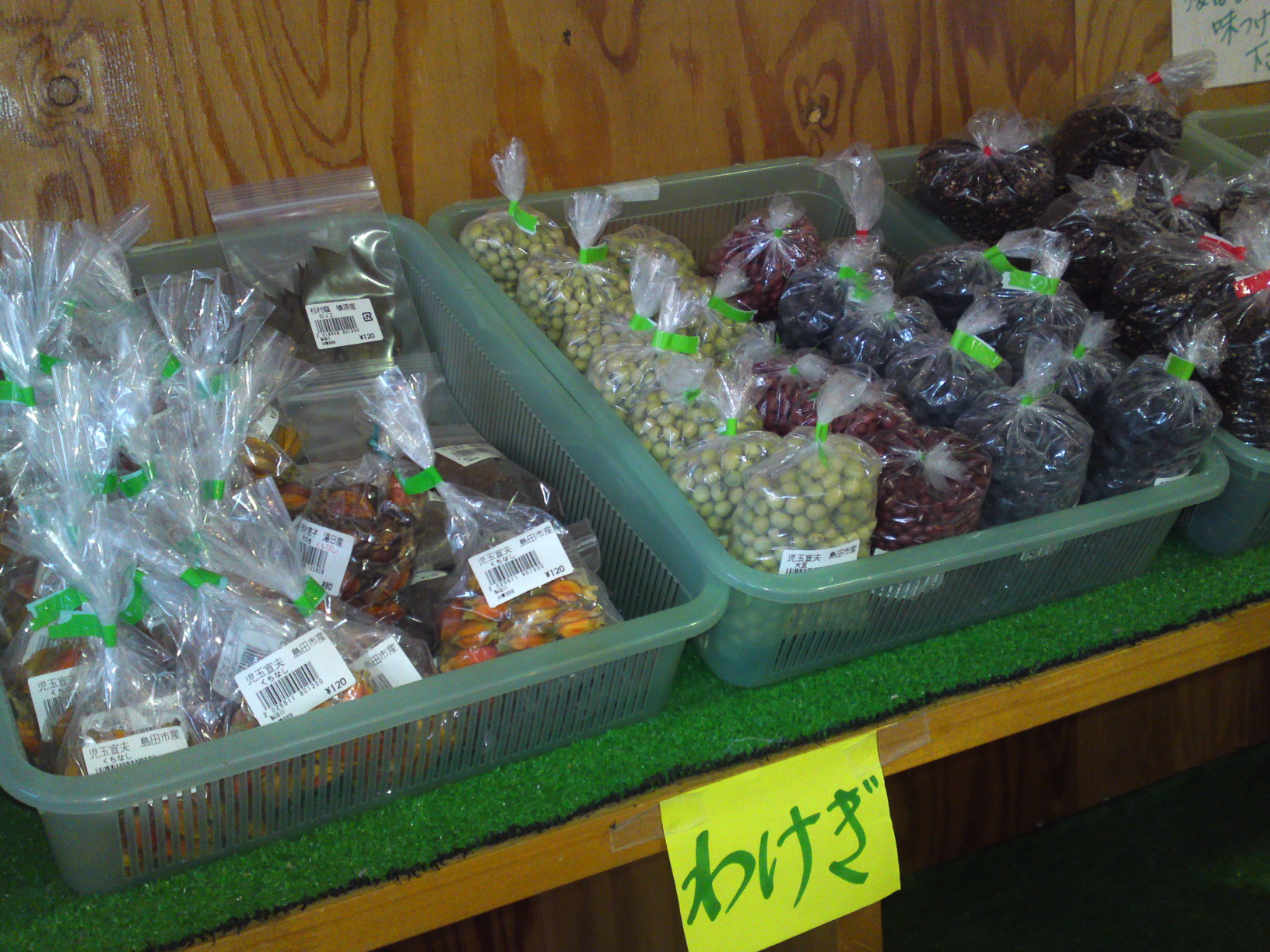
These little seeds on the left are actually gardenia/kuchinashi/梔子 seeds, mainly used as natural colorant!

Broccoli!

Winter/Spring onions, tender and juicy!

Shiitake mushrooms.

Daikon. I just couldn’t help taking a pic of that strange one!

These are daikon, too!

Great traceability!

Mini tomatoes.

Great eggs from Kikugawa City. Aki would come for them only!

Organic eggs from the same producer!

Shizuoka is strawberry country!

Potatoes.

Amanatsu/甘夏 oranges.

Pampeyu! The largest citrus in the world?

Suruga Elegant oranges.

Kintsuba/sword guard cakes.

Home-made bentos!

More of them!

Shizuoka Prefecture is growing more and more of its own rice!

Great traceability again!

Rice powder/Komeko/米粉, great for wheat allergics!

Home-made soap (not for eating!).

Home-made jams!

Tokoroten/Agar agar jelly and konnyaku jelly!

Shimada beef and pork!

Aki’s basket!

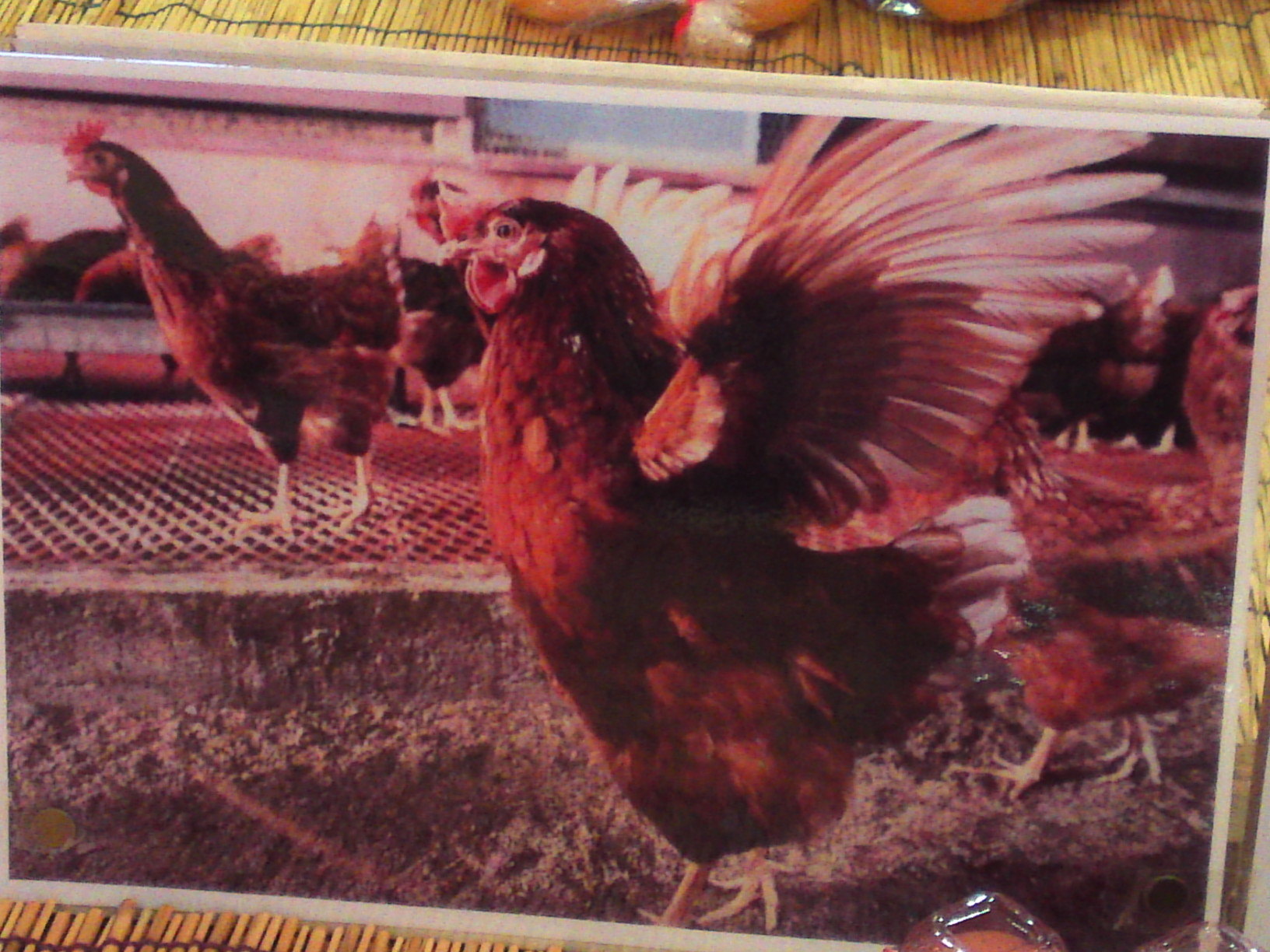
Traceability again: the hens that lay the eggs on sale!

Sake made with sake rice (gohyakumangoku) grown in Shimada City and brewed by Oomuraya Brewery (next article!)

(Farmers Market) Japan Bazaar
427-0111 Shizuoka ken, Shimada Shi, Sakamoto, 4245-3
Tel.: 0547-5505
Fax: 0547-38-5507
Business hours: 09:00~17:30
50-car park
Closed on New Year only

RECOMMENDED RELATED SITES:
Warren Bobrow, Bread + Butter, Zoy Zhang, Hungry Neko, Think Twice, Frank Fariello, Mangantayon, Hapabento, Elinluv Tidbit Corner, Tokyo Terrace, Maison de Christina, Chrys Niles,Lexi, Culinary Musings, Wheeling Gourmet, Comestiblog, Chronicles Of A Curious Cook, Tokyo Through The Drinking Glass, Tokyo Foodcast, Palate To Pen, Yellin Yakimono Gallery, Tokyo Terrace, Hilah Cooking, More than a Mount Full, Arkonite Bento, Happy Little Bento; 5 Star Foodie; Jefferson’s Table; Oyster Culture; Gourmet Fury; Island Vittles; Good Beer & Country Boys; Rubber Slippers In Italy; Color Food daidokoro/Osaka;/a; The Witchy Kitchen; Citron Et Vanille, Lunsj Med Buffet/Estonian Gastronomy (English), Cook, Eat, Play, Repeat, Chrisoscope, Agrigraph, The Agriculture Portal to shizuoka!

Please check the new postings at:
sake, shochu and sushi

Shizuoka Agricultural Products: Stick Ginger at Hatada Garden

Toshikatsu Hatada/畑田敏克, the 7th generation of the Hatada Family!

With Chiba and Inbaraki Prefectures, stick ginger (or leaf ginger/ha shyouga/葉生姜 in Japanese) is a specialty of Shizuoka Prefecture, and the best are said to be cultivated in Kunou/久能, Suruga Ku, Shizuoka City near the sea where the sandy soil is most propitious!

Yesterday morning I found the whole family and their employees hard at work cleaning, sorting, cutting and packaging the leaf ginger harvested that morning.
Father, Mother, son and 4 staff, including a full time are not too many to harvest the vegetable grown on 1,500 tsubo/4,000 square meters in greenhouses.

Toshikatsu’s fater hard at work!
Toshikatsu’s grandfather first grew leaf ginger 34 years ago!

Ready for packaging. Beautiful, aren’t they?

For a closer look!

The root extremity will be snapped off (not cut!).

The snapped off extremities will not be thrown away. They are just too good! Their filaments and other unwanted parts can easily be pared off before the pieces of fresh ginger can be served in many ways, cooked or raw.
Toshikatsu recommend them fried rolled into tasty bacon!

Toshikatsu makes his own jam with the snapped off extremities of the fresh ginger and honey only. A true health food!

Or pickle them in amazu/sweet vinegar! I was offered that lot! a beauty!

The leaf ginger are carefully selected before delivery.

They usually harvest enough to prepare 100 boxes daily, but they have been asked to limit their delivery to forty daily boxes by their Association due to the recent earthquakes in north east Japan.

Half the boxes will be delivered immediately to Tokyo and the other half to various parts of Shizuoka Prefecture.

The inside of the leaf house greenhouses are hot!
I was advised to take off as many clothes as possible before entering.
40 degrees Celsius! No wonder!
The temperature is controlled by automatic ventilators, but Toshikatsu has to visit the greenhouses every morning and lift the second vinyl sheets where, if one is not careful, the temperature might go into the 70’s!

As for fertilizers, Toshikatsu uses only organic fertilizer, liquid or solid.
Pesticides will be spread at the the bare minimum only once a year.

The care for the health and quality of the vegetables will mean an unavoidable number of them rotting away that have to be taken out at once.

Toshikatsu does not market the rhyzomes (roots) that are found in markets all over the world, but use them for planting.

Choosing the right rhyzomes requires a lot of experience, good eyes, nose and ears (the snap sound is the best indictaion of their health!)!
The ryzhomes will be divided and planted from January to April to produce crops from March to July.
I can assure that the planting alone is back-breaking work!

Toshikatsu and his family grow “leafy” leeks between July and December inside the same greenhouses.
They also grow all year round tomatoes on 300 tsubo/1,000 square meters inside green huses, maily Momotaro and Chuudama varieties.
I certainly intend to come back soon to have a close look at those tomatoes!

Now, I took two batches of those freh leaf ginger with me to introduce them to restaurants of my own choosing. Two gastronomic articles are coming very soon!

Toshikatsu Hatada/畑田敏克
Hatada Garden/畑田農園
422-8015 Shizuoka Shi, Suruga Ku, Naka Hiramatsu, 212/静岡市駿河区中平松212
Tel/Fax: 054-238-3484
Mobile Phone: 09014137499
Corporate and individual orders accepted!

RECOMMENDED RELATED SITES:
Warren Bobrow, Bread + Butter, Zoy Zhang, Hungry Neko, Think Twice, Frank Fariello, Mangantayon, Hapabento, Elinluv Tidbit Corner, Tokyo Terrace, Maison de Christina, Chrys Niles,Lexi, Culinary Musings, Wheeling Gourmet, Comestiblog, Chronicles Of A Curious Cook, Tokyo Through The Drinking Glass, Tokyo Foodcast, Palate To Pen, Yellin Yakimono Gallery, Tokyo Terrace, Hilah Cooking, More than a Mount Full, Arkonite Bento, Happy Little Bento; 5 Star Foodie; Jefferson’s Table; Oyster Culture; Gourmet Fury; Island Vittles; Good Beer & Country Boys; Rubber Slippers In Italy; Color Food daidokoro/Osaka;/a; The Witchy Kitchen; Citron Et Vanille, Lunsj Med Buffet/Estonian Gastronomy (English), Cook, Eat, Play, Repeat, Chrisoscope, Agrigraph, The Agriculture Portal to shizuoka!

Please check the new postings at:
sake, shochu and sushi

Chinese Gastronomy: Shizuoka Products at Cham

Service: excellent and very friendly
Facilities: great cleanliness overall
Prices: very reasonable, good value.
Strong points: Great use of local Shizuoka Vegetables and products. Great Chinese Teas!
no-smoking-logo non-smoking at lunch time/Fully non-smoking from April!

Chinese is a very popular cuisine, but when you discover it is exclusively made with local vegetables, meat and seafood, you have no reason left to ignore it!

Mr. Atsushi Tomura, a very talented young chef, opened Cham in Sptember 2008 with his wife and an apprentice.
He will actually move to another address nearer to the JR Station in April, while his apprentice will go back to his family’s business in Fujieda City.
Check both addresses and homepage at the end of this article!

Since it was my firs (belated) visit I opted for the lunch set.
It is superb combination of vegetables I stopped counted and some meat and seafood.
All vegetables exclusively come from the farm of Mr. Furuya in Asabata, Shizuoka City!
Since they obviously use only seasonal vegetables, you can expect this particular offering to change rapidly!

I’ll try to explain what I had the pleasure to savor, but I’m sure to miss a lot as they were simply too busy to explain in detail. That will have to wait until my next visit(s)!
The above is a dish concocted with5 different daikon, meat and miso paste with eggs in soboro style served with ice plants and red lettuce for warpping.

Pork belly wrapped in Chinese Cabbage and served with katsuona Leaf vegetable.

Kiku imo.

Violet and white Cauliflower and Romanesco Cauliflower and Daikon/turnips.

Ajiwai Dori Chicken roll.

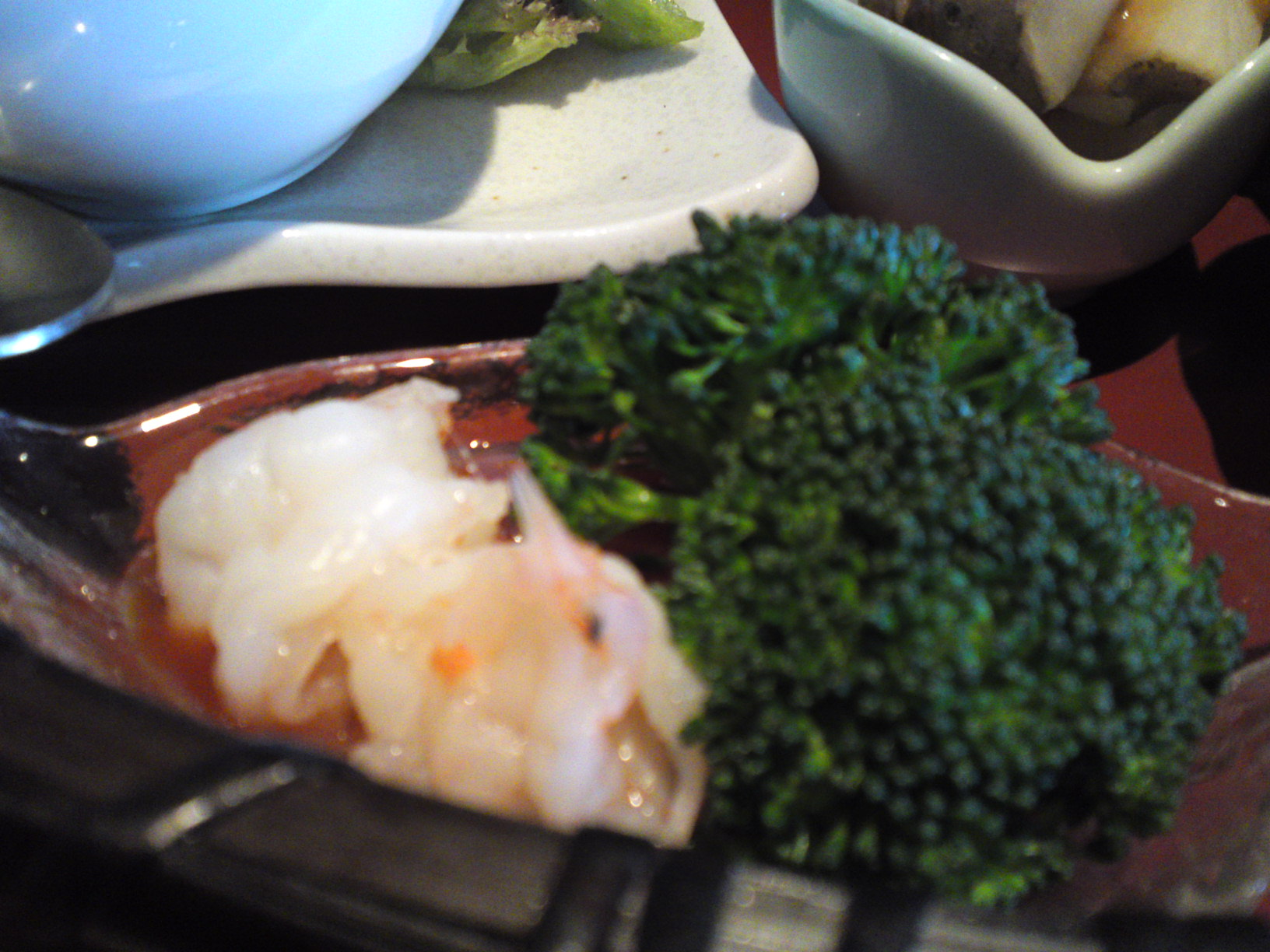
Broccoli and shrimps.
Most dishes had their sauce or dressings under the vegetables for better viewing!

Wakame seaweed and egg soup.

Home-made almond toufu for dessert.

They also offer a great choice of rare Chinese teas of extremely high quality!

The one I chose was called 西湖龍井茶. a real beauty!

Naturally they other Chinese favorites suc as Shoyu raamen, Shyo Raamen, Kuro Kosy\ho Tantanmen, Kuro Kosho Chahan and Yaki Gyoza.
But that is for my next visit!

Incidentally, given one day in advance, they can devise a completely vegetarian menu on order!

Cham
420-0072 Shizuoka Shi, Aoi Ku, 2 Ban-Cho, 4-1
Tel/Fax: 054-253-1300
Business hours: 11:00~14:00; 17:00^22:00
Closed either on Mondays, Tuesdays or Wednesdays. Call beforehand!
(Until end of March)

Shizuoka Shi, Suruga Ku, Minami Cho, 6-7, inside Irifune Yokocho
Tel.: 054-285-71115
Business hours: 17:00~24:00; lunches on order only (1 day advance)
HOMEPAGE
(from April 17th)

RECOMMENDED RELATED SITES:
Warren Bobrow, Bread + Butter, Zoy Zhang, Hungry Neko, Think Twice, Frank Fariello, Mangantayon, Hapabento, Elinluv Tidbit Corner, Tokyo Terrace, Maison de Christina, Chrys Niles,Lexi, Culinary Musings, Wheeling Gourmet, Comestiblog, Chronicles Of A Curious Cook, Tokyo Through The Drinking Glass, Tokyo Foodcast, Palate To Pen, Yellin Yakimono Gallery, Tokyo Terrace, Hilah Cooking, More than a Mount Full, Arkonite Bento, Happy Little Bento; 5 Star Foodie; Jefferson’s Table; Oyster Culture; Gourmet Fury; Island Vittles; Good Beer & Country Boys; Rubber Slippers In Italy; Color Food daidokoro/Osaka;/a; The Witchy Kitchen; Citron Et Vanille, Lunsj Med Buffet/Estonian Gastronomy (English), Cook, Eat, Play, Repeat, Chrisoscope, Agrigraph, The Agriculture Portal to shizuoka!

Please check the new postings at:
sake, shochu and sushi

French Gastronomy: Shizuoka Products at Pissenlit (Spring)

Service: excellent and very friendly
Facilities: great washroom, great cleanliness overall
Prices: reasonable, good value.
Strong points: Interesting wine list. Great use of local products.
no-smoking-logoentirely non-smoking!

I was really starving at lunch yesterday and since Pissenlit is just across the street from my work, I just couldn’t resist the temptation again!
At least it is a clever way to combine work am pleasure as this report will also go to Agrigraph!

Ordering was easy enough, but keep in mind we are talking about slow food. Therefore, I was served the above appetizer made with potatoes and octopus (cooked) to help me wait!

The vegetables dish consisted all of vegetables grwon organically by Mr. Hirokawa in Mishima City!
From bottom to top and right to left:
Stick Senior Broccoli, Beni Kururi Daikon, Black Daikon, Green daikon.
Milano Daikon, Carrot.
Romanesco Cauliflower (called Coral Cauliflower in Japanese), Kooshin Daikon and Ayame Turnip.

For another view.
The dressings were milk mousse and olive oil.

Now that I had satisfied my vegetarian steak, I turned carnivorous with wild boapoele with wine sauce.
A real boar of 35 kg which was hunted in Noda, Shimada City.

For a better view of the vegetables:
Leaf Garlic from Fujieda.
Rape plants, Chrysanthemum leaves, Petit Vert.
May Queen potato Dauphinois. All four vegetables organic and grown by Mr. Hirooka.

And now the dessert.
It deserves some explanations:

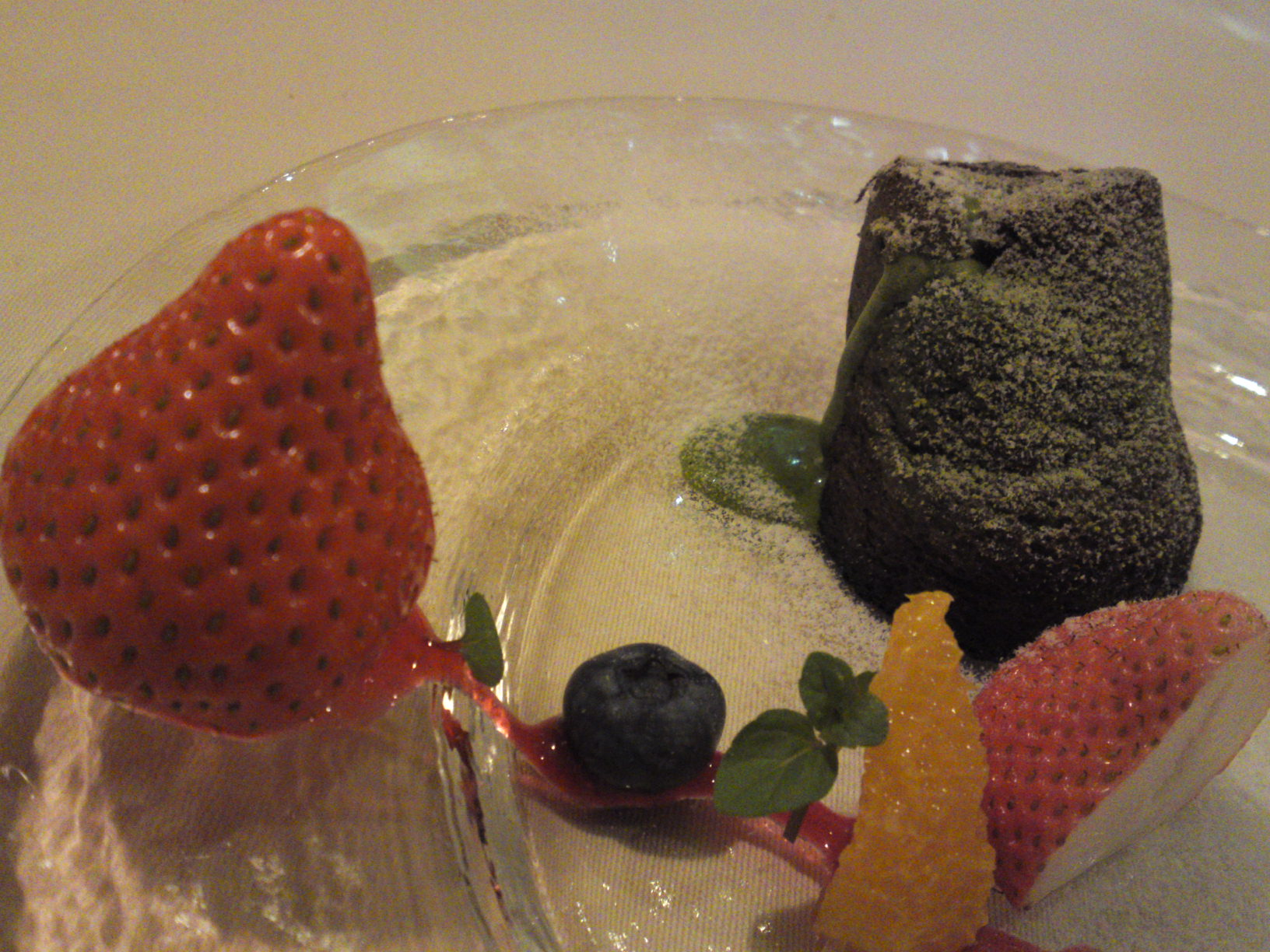
The strawberries are (right) Toukun, only grown in Shizuoka (for the moment) and Ookimi (left), only grown in Saga and Shizuoka Prefectures!
They are linked with raspberry sauce
Now, what is that cake?

It is a “biscuit chaud/hot cake) made with Hon Yama Green Tea from Abe River in Shizuoka City!

When you open it you will discover a tender cake inside the crispy outside and tea cream flowing out!
Superb!

And to finish, a great coffee with orange and ginger chocolates!

No, I don’t know yet when I’ll be back! LOL

PISSENLIT
420-0839 Shizuoka City, Aoi Ku, Takajo, 2-3-4
Tel.: 054-270-8768
Fax: 054-627-3868
Business hours: 11:30~14:30; 17:00~22:00
Closed on Tuesdays and Sunday evening
Homepage (Japanese)
Credit Cards OK

RECOMMENDED RELATED SITES:
Warren Bobrow, Bread + Butter, Zoy Zhang, Hungry Neko, Think Twice, Frank Fariello, Mangantayon, Hapabento, Elinluv Tidbit Corner, Tokyo Terrace, Maison de Christina, Chrys Niles,Lexi, Culinary Musings, Wheeling Gourmet, Comestiblog, Chronicles Of A Curious Cook, Tokyo Through The Drinking Glass, Tokyo Foodcast, Palate To Pen, Yellin Yakimono Gallery, Tokyo Terrace, Hilah Cooking, More than a Mount Full, Arkonite Bento, Happy Little Bento; 5 Star Foodie; Jefferson’s Table; Oyster Culture; Gourmet Fury; Island Vittles; Good Beer & Country Boys; Rubber Slippers In Italy; Color Food daidokoro/Osaka;/a; The Witchy Kitchen; Citron Et Vanille, Lunsj Med Buffet/Estonian Gastronomy (English), Cook, Eat, Play, Repeat, Chrisoscope, Agrigraph, The Agriculture Portal to shizuoka!

Please check the new postings at:
sake, shochu and sushi

French Gastronomy: Shizuoka Products at Tetsuya Sugimoto (spring 2011)

Ranking
Service: Highly professional and friendly
Equipment: Great overall cleanliness. Beautiful washroom
Prices:~
Strong points:Freshest produce and ingredients only, mainly from Shizuoka Prfecture. Organic vegetables. Seasonal food only

Map (Japanese)
Entirely non-smoking!

As it was my turn to look after Fabian, our new German intern at Agrigraph. I just took the opportunity of waht a talented French chef could create with Shizuoka products, me good friend Testuya Sugimoto at Tetsuya SUGIMOTO Restaurant in Shizuoka City!

Tetsuya was kind enough to take out all his treasures of the fridge for our young guest to discover before he chose the ingredients of the day!

Tetsuya prepared two hors d’oeuvres, the first one being yellow carrot mousse and an organic radish (the leaves were delicious) wrapped into burdock roots flakes (a non-vegan mayonnaise was used as the linking agent).

As for the second hors d’oeuvres he used 3 different types of rape flowers to be combined with

mackerel caught in the Suruga Bay off Yui!
The sauces were a dressing made with raspberry vinegar, while the other was an orange olive oil. The powder is crushed senbei/Japanese rice cracker.

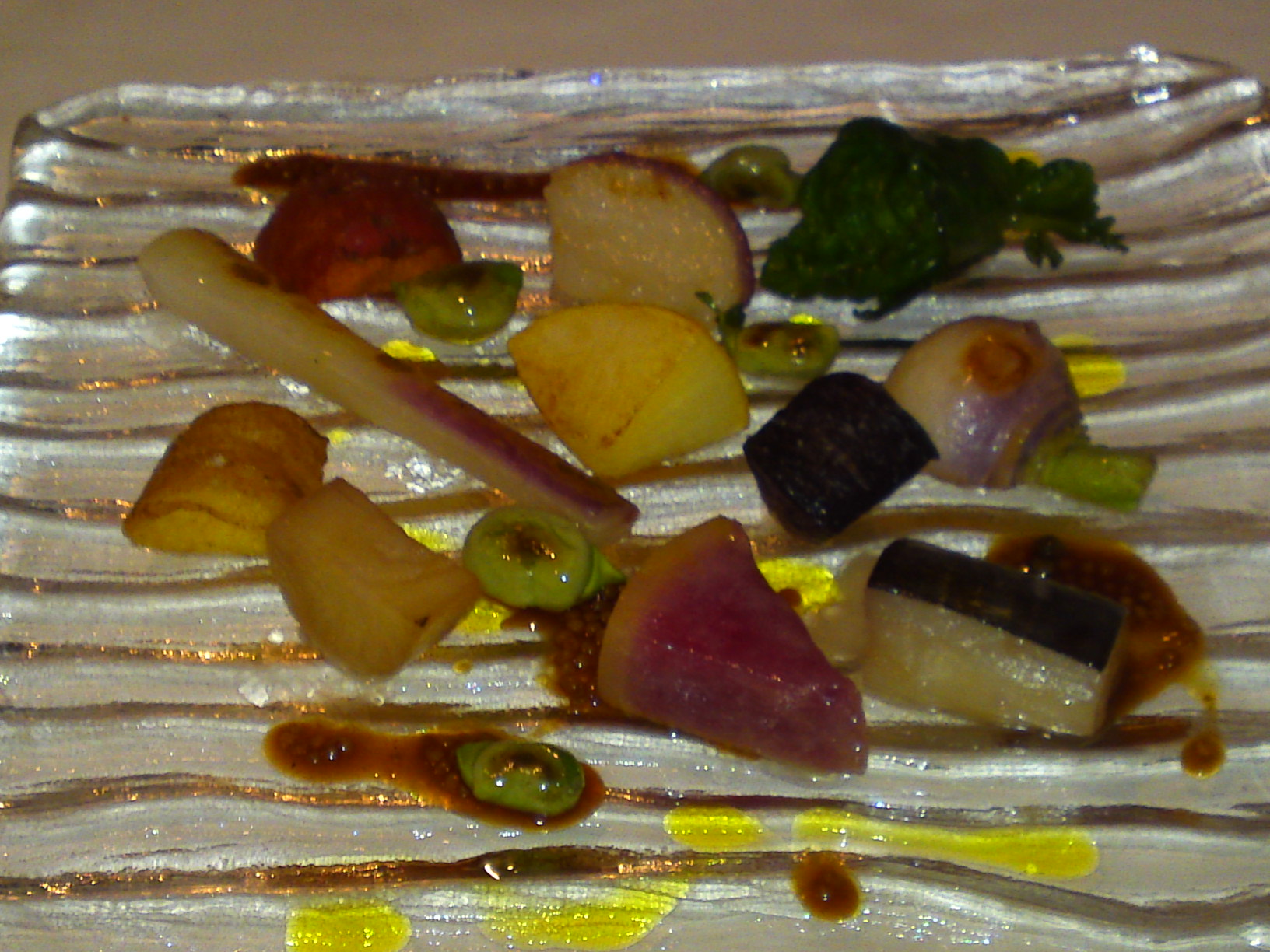
He used the above organic vegetables for our main dish!

The same vegetables cooked and before their sauces were added.
One sauce was a mixture of grain mustard, miso paste and honey, while the other was pistachio oil.

The finished dish:
from bottom, right to left:
Black Daikon, Koushin Daikon, Faabe broad beans, Yacon.
Ayame Yuuki Turnip, Violet carrot, Yellow Turnip, Yellow carrot.
Petit Vert, Red Turnip, Kyoto Carrot, Hinona Turnip.
All cooked to perfection for crispiness and natural taste!

The dessert consisted of a mousse made with brown sugar and rum made from sugar cane grown in Kakegawa City, Shizuoka Prefecture, as for the mousse. The caramel sauce was made from the same sugar!

Tetsuya SUGIMOTO
420-0038 Shizuoka City, Aoi Ku, Umeya,, 2-13,1F
Tel./Fax: 054-251-3051
Opening hours:11:30~14:30,17:30~21:30
Holidays: undecided
Cedit cards OK
HOMEPAGE

RECOMMENDED RELATED SITES:
Warren Bobrow, Bread + Butter, Zoy Zhang, Hungry Neko, Think Twice, Frank Fariello, Mangantayon, Hapabento, Elinluv Tidbit Corner, Tokyo Terrace, Maison de Christina, Chrys Niles,Lexi, Culinary Musings, Wheeling Gourmet, Comestiblog, Chronicles Of A Curious Cook, Tokyo Through The Drinking Glass, Tokyo Foodcast, Palate To Pen, Yellin Yakimono Gallery, Tokyo Terrace, Hilah Cooking, More than a Mount Full, Arkonite Bento, Happy Little Bento; 5 Star Foodie; Jefferson’s Table; Oyster Culture; Gourmet Fury; Island Vittles; Good Beer & Country Boys; Rubber Slippers In Italy; Color Food daidokoro/Osaka;/a; The Witchy Kitchen; Citron Et Vanille, Lunsj Med Buffet/Estonian Gastronomy (English), Cook, Eat, Play, Repeat, Chrisoscope, Agrigraph, The Agriculture Portal to shizuoka!

Please check the new postings at:
sake, shochu and sushi

Vegan Imo Burger

The basic problem for most vegans (and vegetarians) is to find or create food with a sufficien/satisfying “bite”.
Imo or sato imo/taro in this case do provide that satisfactory sensation and can be presented in an appetizing manner for big appetites!

One such simple recipe is Imo Burgers!

INGREDIENTS: for 2~ people

-Sato imo/taro: 7~10 medium-sized
-Cornstarch: 1 tablespoon
-Soy sauce: 1 tablespoon
-Salt: about 1 teaspoon
-Black pepper: as appropriate

-Sweet and sour sauce:
-Water used for boiling the imo: 1 cup/200 cc
-Soy sauce: 2 tablespoons
-Cornstarch: 1 tablespoon
-Sugar: 1 tablespoon
-Fresh ginger juice: ~1 tablespoon

Fresh and tender mushrooms

RECIPE:

Peel and boil taro until you can pass a stick through easily.

Mash the boiled taro in a food processor.

This is how it should look. Don’t worry if somelittle pieces are left.

Transfer into a large bowl and add cornstarch, soy sauc, salt and black pepper.

Mix well with a spatula.

Moisten your hands and form burgers in your preferred shape.

Fry the burgers (on teflon so you don’t need any oil) until they reach a nice color.

Slice some mushrooms (any tender mushrooms are fine).

Add another kind of mushroom shred into strips or ribblens.

Mix the sweet and sour ingredients into a bowl.

Fry the mushrooms in a little oil until they get soft and add sweet and sour sauce and cook until the mushrooms are nice and soft.

Place the burger on a hot serving dish and pour sauce on op.
Enjoy!

RECOMMENDED RELATED SITES:
Warren Bobrow, Bread + Butter, Zoy Zhang, Hungry Neko, Think Twice, Frank Fariello, Mangantayon, Hapabento, Elinluv Tidbit Corner, Tokyo Terrace, Maison de Christina, Chrys Niles,Lexi, Culinary Musings, Wheeling Gourmet, Comestiblog, Chronicles Of A Curious Cook, Tokyo Through The Drinking Glass, Tokyo Foodcast, Palate To Pen, Yellin Yakimono Gallery, Tokyo Terrace, Hilah Cooking, More than a Mount Full, Arkonite Bento, Happy Little Bento; 5 Star Foodie; Jefferson’s Table; Oyster Culture; Gourmet Fury; Island Vittles; Good Beer & Country Boys; Rubber Slippers In Italy; Color Food daidokoro/Osaka;/a; The Witchy Kitchen; Citron Et Vanille, Lunsj Med Buffet/Estonian Gastronomy (English), Cook, Eat, Play, Repeat, Chrisoscope, Agrigraph, The Agriculture Portal to shizuoka!

Please check the new postings at:
sake, shochu and sushi

Shizuoka Food Fair 2

Shizuoka Wasabi! (80% of the national production!)

As I said in my first installment, Shizuoka Prefecture has put some efforts into advertizing their own goods, as for agriculture and crafts, for some time, and a fairly big Food Fair (しずおか食の彩典) was organized on the 19th and 20th of February at Twin Messe in Shizuoka City.

This is the second part of my report, so please follow me!

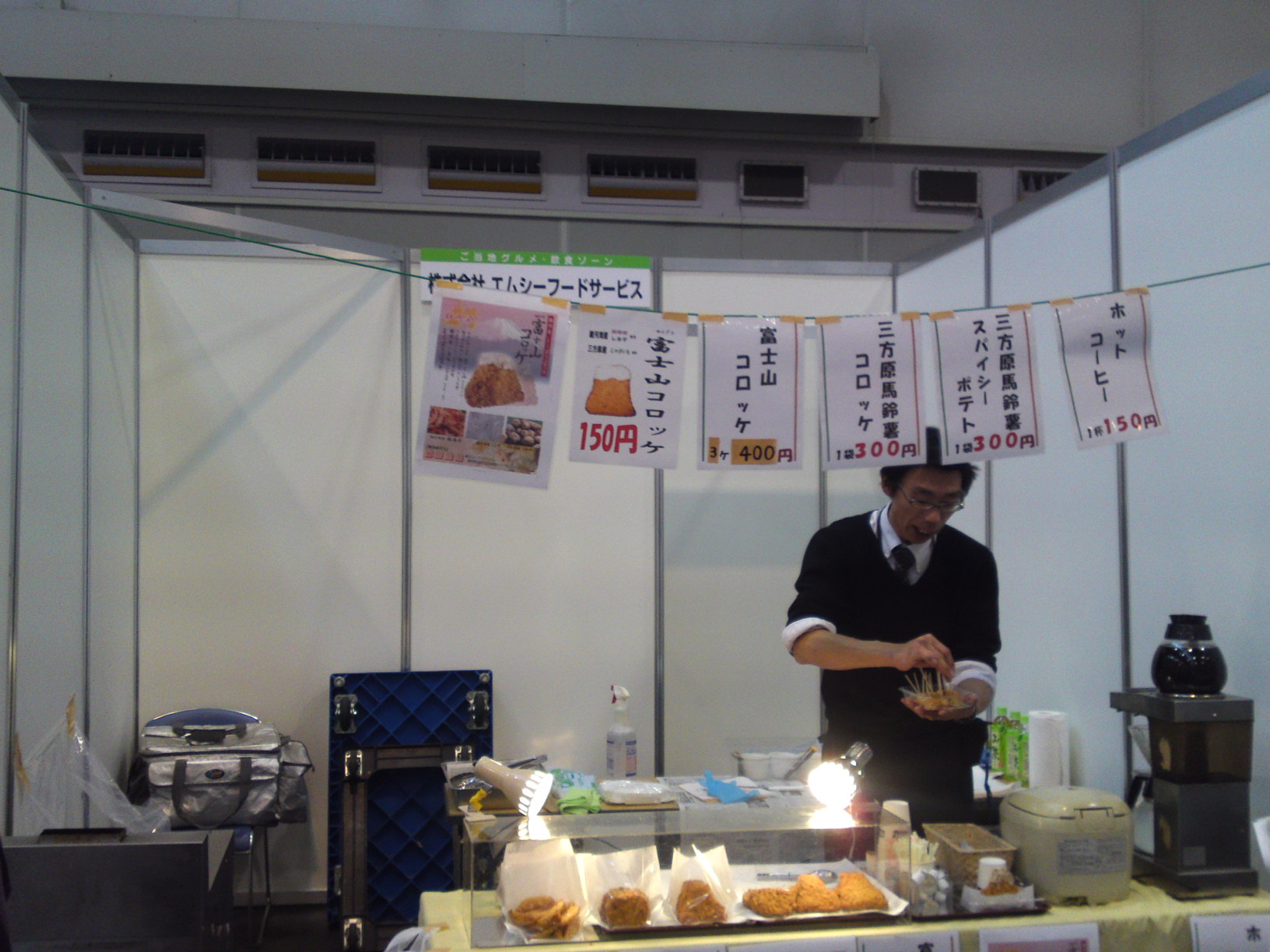
M C Food Service Co. Ltd. Now, what is that lonely gentleman serving?

Croquettes and Spicy fried potatoes! Can you guess which one is called Mount Fuji Croquette?

Fujieda Asa Ramen/Fujieda City Morning Ramen. Yes, they eat ramen in the morning there!

They are also called “Chuuka Soba/中華そば”. Unfortunately they didn’t serve any but in their packs!

Marumatsu Co. Ltd. in Hamamatsu City. They make gyooza/餃子!

The free samples were already gone!

Some stands offered specialties from other prefectures: Yonezawa Beef Charcoal-Grilled Beef/米沢牛炭火焼肉!

They also had croquettes!

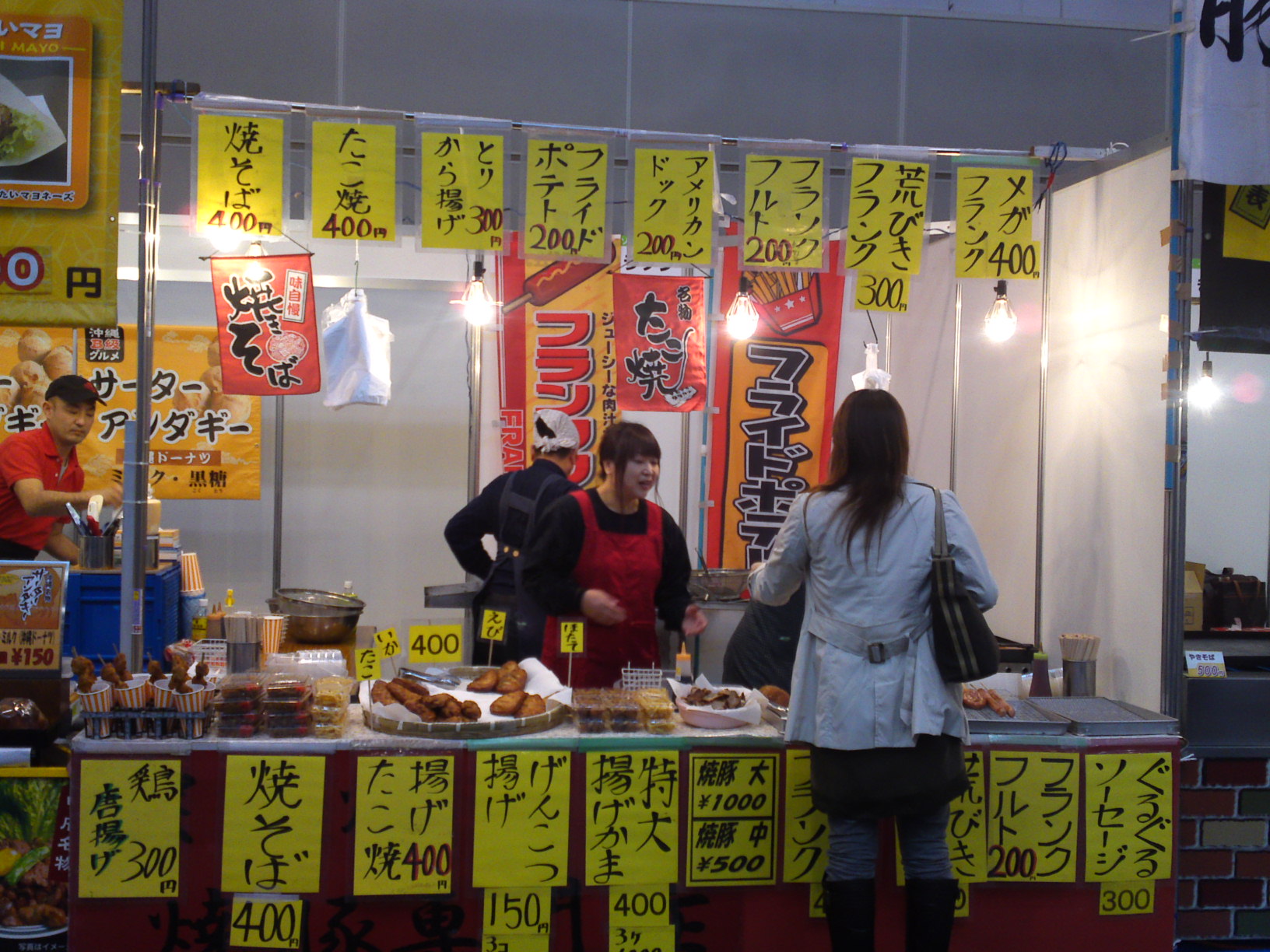
Rooster Foods. Now, where did they come from? Among others they served yakisoba!

And Okonomiyaki! They are from Fujinomiya!

Masaki Shoten, specializing in beef from Sasebo (Kyushu Island), 100% beef and American style…

Sasebo Beef Brochettes!

Marikomine Giant Tai Yaki!

Never saw such big Tai Yaki before!

Izumi Foods serving Hiroshima-style okonomiyaki/広島焼 and yakisoba wrapped in omelette/オムそば!

Hiroshima-style okonomiyaki, unless it is another variety just called Hiroshima Yaki!

Shioya Foods also serving Sasebo Beef, but as hamburgers!

Beef Tongue Sausages/牛タンソーセージ! Now, that’s a first!

Field Co. from Miyazaki Prefecture (Kyushu Island) serving their own beef!

These doughnuts are not a Miyazaki Prefecture’ specialty, but Okinawan Saataa-andagi/サーターアンダギー!

El Corazon Co. were serving Japanese favorites.

Deep-fried seafood cakes made from octopus, shrimps, scallops and so on.

Yokote yakisoba from Akita Prefecture!

The fried eggs will be served on top of the yakisoba!

Back to Shizuoka with the famous oden restaurant, Umi Boozu/海ぼうず!

Shizuoka Oden!

To be continued soon (hopefully still in the proper sequence! LOL)

RECOMMENDED RELATED SITES:
Warren Bobrow, Bread + Butter, Zoy Zhang, Hungry Neko, Think Twice, Frank Fariello, Mangantayon, Hapabento, Elinluv Tidbit Corner, Tokyo Terrace, Maison de Christina, Chrys Niles,Lexi, Culinary Musings, Wheeling Gourmet, Comestiblog, Chronicles Of A Curious Cook, Tokyo Through The Drinking Glass, Tokyo Foodcast, Palate To Pen, Yellin Yakimono Gallery, Tokyo Terrace, Hilah Cooking, More than a Mount Full, Arkonite Bento, Happy Little Bento; 5 Star Foodie; Jefferson’s Table; Oyster Culture; Gourmet Fury; Island Vittles; Good Beer & Country Boys; Rubber Slippers In Italy; Color Food daidokoro/Osaka;/a; The Witchy Kitchen; Citron Et Vanille, Lunsj Med Buffet/Estonian Gastronomy (English), Cook, Eat, Play, Repeat, Chrisoscope, Agrigraph, The Agriculture Portal to shizuoka!

Please check the new postings at:
sake, shochu and sushi

Shizuoka Food Fair 1

Shizuoka Prefecture has put some efforts into advertizing their own goods, as for agriculture and crafts, for some time, and a fairly big Food Fair (しずおか食の彩典) was organized on the 19th and 20th of February at Twin Messe in Shizuoka City.

The event was a good start, but I wished it would have been a bit better organized and more lively, but Shizuoka is probably the most conservative prefecture in Japan for all its incredible products and producers and it will take some time before it really becomes a full-fledged event. At least let’s give them a chance!

Still, there was a lot to see (and taste), and I will try to show everything in a series of easy-to read articles!

Next time I meet some of the organizers I will tell them (it is my “job”, actually!) to better indicate the way!
Only one board (in the wrong place) and no sign at the entrance of the actual hall!

Although I came at the very time of the opening, I can’t say that the information desk was very useful…

I tried to follow the “official sequence” and started with the JA/Japan Agriculture (government-sponsored) booths.
This is the JA Suruga (Suruga Bay) booth with plenty of oranges.

JA Shimizu (Shizuoka City, Shimizu Ku) does represent a very large area and products.
They chose to concentrate on “Red Ole” tomatoes and “Harumi” oranges!

The JA Shizuoka City, covering an even larger area!

Beautiful green tea for all to enjoy!

JA Oigawa, from Central Shizuoka Prefecture.

“Aoshima” Oranges. So cheap!

JA Hainan, a vegetable-growing area.

Beautiful lettuces and shiny daikon!

JA Shizuoka Prefecture. Now, that is covering an area with the population of New Zealand….

Celery! Fair enough, Shizuoka Prefecture produces half of the total national crop!

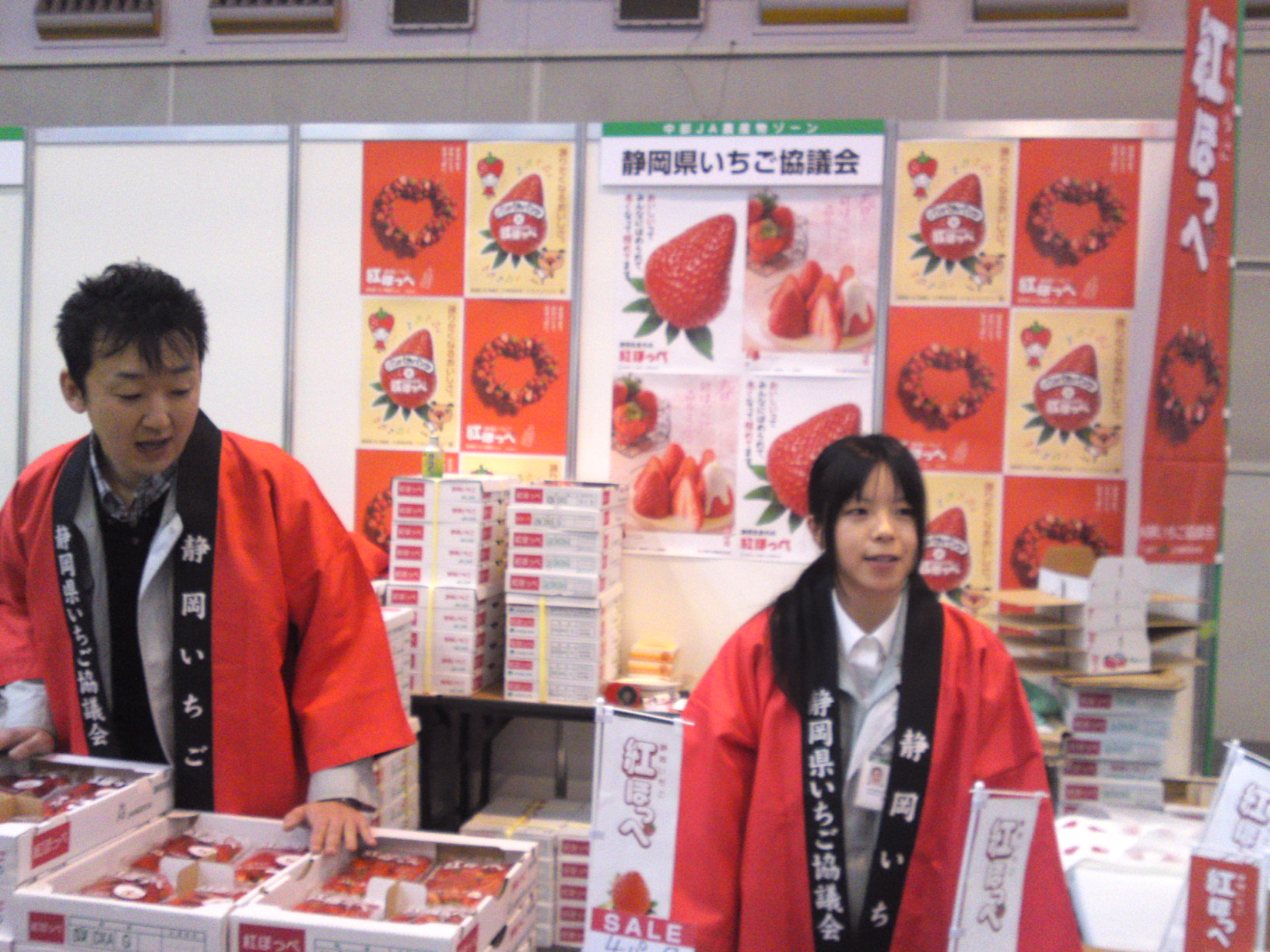
Shizuoka Prefecture Strawberry Growers Association.
Now, we are talking about big business!

I must say that the “Strawberry Lady” had a great way with customers and reporters!

“Benihoppe/Red Cheeks” Strawberries! Considered as the best in Japan!

The next series of booths dealt with ready-to-serve-food in general.
Pizza Nao from Hamamatsu City.

Oven-Baked pizzas inside a trailer!
Looking forward to my next trip to Hamamatsu City! LOL

Soft Ice creams at the Cornette trailer!

Judging form the looks of the lady, these soft ice creams ought to be delicious!

Shirokiya Cakes!
After proceeding from A7 directly to H1, I found myself searching in the program for E20…. (Organization, please!)

But the Japanese cakes/wagashi certainly looked beautiful and yummy!

To be continued soon (hopefully in the proper sequence! LOL)

RECOMMENDED RELATED SITES:
Warren Bobrow, Bread + Butter, Zoy Zhang, Hungry Neko, Think Twice, Frank Fariello, Mangantayon, Hapabento, Elinluv Tidbit Corner, Tokyo Terrace, Maison de Christina, Chrys Niles,Lexi, Culinary Musings, Wheeling Gourmet, Comestiblog, Chronicles Of A Curious Cook, Tokyo Through The Drinking Glass, Tokyo Foodcast, Palate To Pen, Yellin Yakimono Gallery, Tokyo Terrace, Hilah Cooking, More than a Mount Full, Arkonite Bento, Happy Little Bento; 5 Star Foodie; Jefferson’s Table; Oyster Culture; Gourmet Fury; Island Vittles; Good Beer & Country Boys; Rubber Slippers In Italy; Color Food daidokoro/Osaka;/a; The Witchy Kitchen; Citron Et Vanille, Lunsj Med Buffet/Estonian Gastronomy (English), Cook, Eat, Play, Repeat, Chrisoscope, Agrigraph, The Agriculture Portal to shizuoka!

Please check the new postings at:
sake, shochu and sushi

Japanese Vegetables 2: lotus Roots/Renkon/蓮根

lotus-root1

Lotus roots come from a plant called Nelumbo nucifera, also known by a number of names including Indian lotus, sacred lotus, bean of India, or simply lotus. This plant is an aquatic perennial. Under favorable circumstances its seeds may remain viable for many years.
A common misconception is referring to the lotus as a water-lily (Nymphaea), an entirely different plant.

Native to Greater India and commonly cultivated in water gardens, the lotus is the national flower of India and Vietnam.

The flowers, seeds, young leaves, and “roots” (rhizomes) are all edible. In Asia, the petals are used sometimes for garnish, while the large leaves are used as a wrap for food. In Korea, the leaves and petals are used as a tisane. Yeonkkotcha (연꽃차) is made with dried petals of white lotus and yeonipcha (연잎차) is made with the leaves. The rhizome (called ǒu (藕) in pinyin Chinese, ngau in Cantonese, bhe in Hindi, renkon (レンコン, 蓮根 in Japanese), yeongeun (연근) in Korean is used as a vegetable in soups, deep-fried, stir-fried and braised dishes. Petals, leaves, and rhizome can also all be eaten raw, but there is a risk of parasite transmission (e.g., Fasciolopsis buski): it is therefore recommended that they be cooked before eating.

FACTS:

-Season (in Japan): September~December

-Analytic data (as per 100g):

Energy: 66 kcal
Water: 81.5 g
Protein: 1.9 g
Carbohydrates: 15.5 g

Inorganic qualities:
Natriu: 24 mg
Potassium: 440 mg
Calcium: 20 mg
Iron: 00.5 mg
Zinc: 0.3 mg
Manganese: 0.78 mg

Vitamins:
B1: 0.10 mg
B6: 0.09 mg

Dietary fibers: 5.7 g

HEALTH FACTS:

-Combined with liver, or beef, or pork, or chicken, helps revitalize human blood and organs.

-Combined with turnips, or daikon, or beansprouts, or trefoil, helps digestion and bowels.

-Combined with leafy vegetables, or potato, or apples, helps combat cancer and obesity.

-Combined with konnyaku, or celery, or lettuce, or green peppers, helps lower blood cholesterol. helps combat artery hardening and prevent heart diseases.

VARIETIES

Kaga Renkon/加賀れんこん

Very fine texture and high content in starch,
Best appreciated steamed.

Iwakuni Renkon/岩国れんこん

Large specimen with large holes.

TIPS:

-Choose specimens with a clear white cut section. There should not be any black spots.
-Use large specimen as they are easier to cut and use.
-To prevent oxydising, wrap cut specimen into wet kitchen paper.
-Add vinegar to water when boling them to keep them white.
-The easiest way to peel them is to use a potato peeler!

COOKING:

The stamens can be dried and made into a fragrant herbal tea called liánhuā cha (蓮花茶) in Chinese, or (particularly in Vietnam) used to impart a scent to tea leaves. The lotus seeds or nuts (called liánzĭ, 蓮子; or xian liánzĭ, 鲜莲子, in Chinese) are quite versatile, and can be eaten raw or dried and popped like popcorn, phool makhana. They can also be boiled until soft and made into a paste, or boiled with dried longans and rock sugar to make a tong sui (sweet soup). Combined with sugar, lotus seed paste becomes one of the most common ingredient used in pastries such as mooncakes, daifuku, and rice flour pudding.

Japanese popular Renkon dishes:

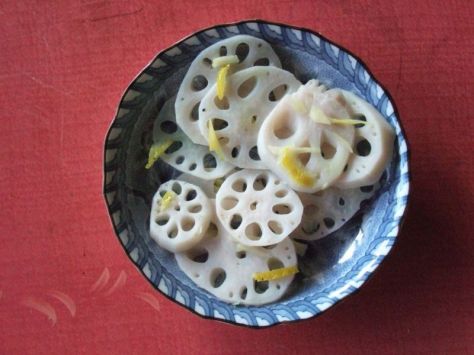
lotus-root-nimono

“NIMONO”

lotus-root-sumono

“SUMONO”

lotus-root-kimpira

“KIMPIRA”

“STUFFED LOTUS ROOTS”

“DEEP-FRIED LOTUS ROOT SANDWICH”

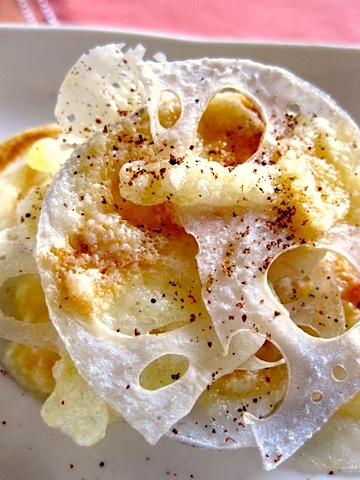
lotus-roots-chips

“CHIPS”

RECOMMENDED RELATED SITES:
Warren Bobrow, Bread + Butter, Zoy Zhang, Hungry Neko, Think Twice, Frank Fariello, Mangantayon, Hapabento, Elinluv Tidbit Corner, Tokyo Terrace, Maison de Christina, Chrys Niles,Lexi, Culinary Musings, Wheeling Gourmet, Comestiblog, Chronicles Of A Curious Cook, Tokyo Through The Drinking Glass, Tokyo Foodcast, Palate To Pen, Yellin Yakimono Gallery, Tokyo Terrace, Hilah Cooking, More than a Mount Full, Arkonite Bento, Happy Little Bento; 5 Star Foodie; Jefferson’s Table; Oyster Culture; Gourmet Fury; Island Vittles; Good Beer & Country Boys; Rubber Slippers In Italy; Color Food daidokoro/Osaka;/a; The Witchy Kitchen; Citron Et Vanille, Lunsj Med Buffet/Estonian Gastronomy (English), Cook, Eat, Play, Repeat, Chrisoscope, Agrigraph, The Agriculture Portal to shizuoka!

Please check the new postings at:
sake, shochu and sushi

Japanese Vegetables 1: Burdock Root/Gobou/牛蒡

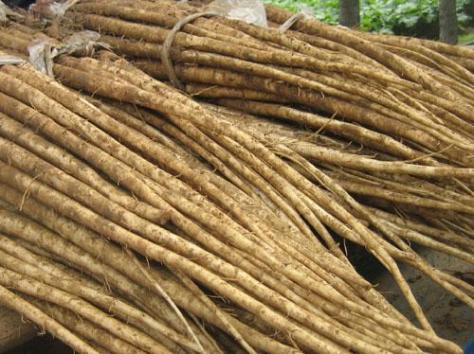
Burdock root, greater burdock or edible burdock root is called “gobou/牛蒡” in Japanese.
Its Latin name is Arctium lappa.

Although it is a root vegetable with great nutritious and even medical properties, it is commonly eaten only in Japan and Taiwan.

This species is native to the temperate regions of the old world, from Scandinavia to the Mediterranean, and from the British Isles through Russia, and the Middle East to China and Japan, including India.

It is naturalized almost everywhere and is usually found in disturbed areas, especially in soil rich in nitrogen. It is commonly cultivated in Japan.

It prefers a fresh, worked soil, rich in humus, and should be positioned in full sunlight. Burdock is very reactive to nitrogen fertilizer. Propagation is achieved through sowing the seeds midsummer. The harvest occurs three to four months after the seeding until late autumn, when the roots become too fibrous.
In shizuoka it is more and more cultivated in organic fashion with natural/organic fertilizer and no pesticides.

Greater burdock was used during the Middle Ages as a vegetable, but now it is rarely used, with the exception of Japan where it is called gobō (牛蒡 or ゴボウ), Taiwan (牛蒡), Korea where it is called ueong (우엉), Italy, Brazil and Portugal, where it is known as bardana. Plants are cultivated for their slender roots, which can grow about 1 meter long and 2 cm across.

Immature flower stalks may also be harvested in late spring, before flowers appear. The taste resembles that of artichoke, to which the burdock is related.

The root is very crisp and has a sweet, mild, and pungent flavor with a little muddy harshness that can be reduced by soaking julienned/shredded roots in water for five to ten minutes. The harshness shows excellent harmonization with pork in miso soup (tonjiru) and takikomi gohan (a Japanese-style pilaf).

A popular Japanese dish is kinpira gobō, julienned or shredded burdock root and carrot, braised with soy sauce, sugar, mirin and/or sake, and sesame oil. Another is burdock makizushi (rolled sushi filled with pickled burdock root; the burdock root is often artificially colored orange to resemble a carrot). In Kyoto, gobō can also be found as a snack food similar to potato chips. The root is eaten cooked and the young sprout can be eaten just like asparagus. Gobo is also used in tempura.

Apart of its obvious culinary value, it is also valuable for its high content in dietary fibers and beneficiary nutrients.
It has been utilized as a medicinal plant with diuretic, diaphoretic, and blood purifying capabilities. The Japanese have also recognized it to prevent cancer and combat diabetes.

FACTS:

-Season (in Japan): November to January and April to May

-Analytic data (as per 100g):

Energy: 65 kcal
Water: 81.7 g
Protein: 1.8 g
Carbohydrates: 15.4 g
Ash: 0.9 g

Inorganic qualities:
Potassium: 320 mg
Calcium: 46 mg
Magnesium: 54 mg
Phosphorus: 62 mg
Iron: 0,7 mg
Zinc: 0.8 mg

Vitamins:
B1: 0.05 mg
B6: 0.10 mg

Dietary fibers: 5.7 g

HEALTH FACTS:

-Combined with seaweed (wakame), or celery, or enoki mushroom, or konnyaku, helps prevent high blood pressure and blood vessels hardening, helps with hair health and recovery from constipation.
-Combined with dried daikon, or shiitake mushrooms, or celery, or turnips, helps prevent cancer, helps fotiify stomach, and increases skin qulaity.
-Combined with hijiki sweet seaweed, or tofu, or bamboo shoots, or agar agar, helps reduce blood cholesterol and general diets.
-Combined with whole rice (genmai), or oatmeal, or corn flakes, helps prevent diabetes, helps combat obesity and helps prevent blood vessels hardening.

VARIETIES:
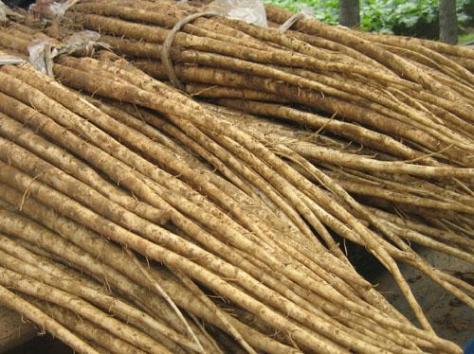
Common burdock/gobou/牛蒡
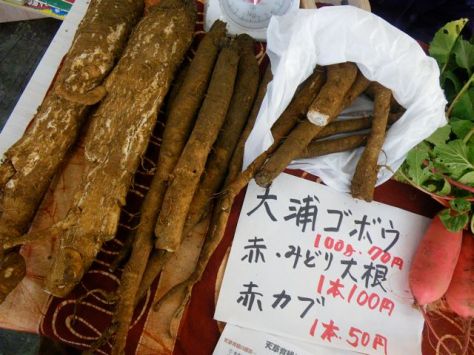
Oura Gobou/大浦ごぼう (on the left), a very thick variety, which reaches 10cm in diameter for 1 meter in length.
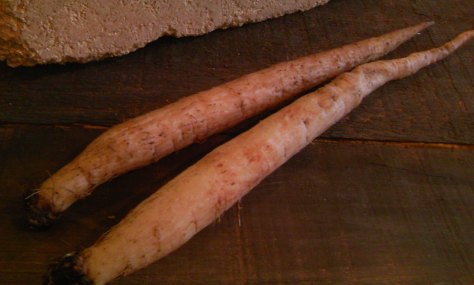
Yama Gobou/山gpぼう, a thinner and shorter variety.
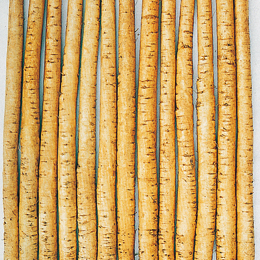
Super Risou Gobou/スーパー理想ごぼう, a75 cm long and thin variety with a smooth skin.

TIPS
Do not peel before cooking as the skins contain a lot of nutrients.
Just brush the dirt away under clear running water
Can be easily preserved frozen once cooked

GASTRONOMY
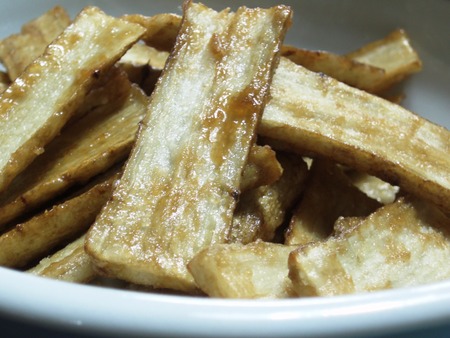
Steamed and seasone burdock root
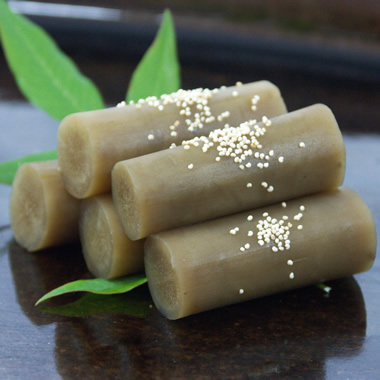
Simmered burdock appetizer
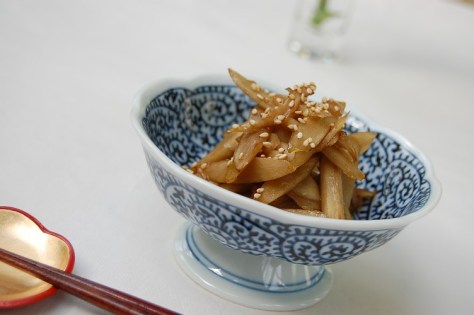
“Kinpira” burdock, thinly cut and fried with sake, soy sauce, mirin and chili sesame oil.
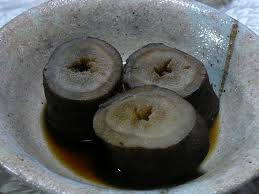
Simmered Oura Gobou.
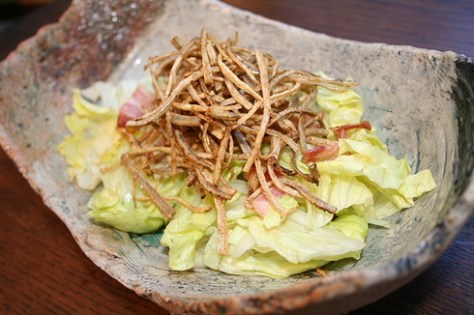
Grilled gobou salad

Mixed vegetable “kinpira”
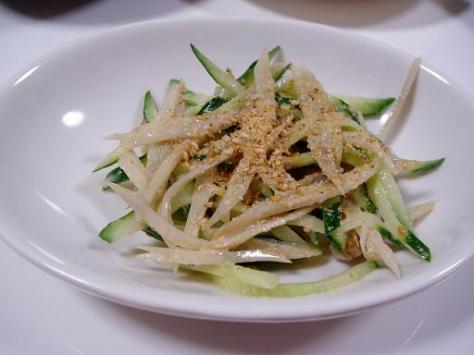
Super Risou Gobou salad/appetizer

Steamed/fried Yama Gobou
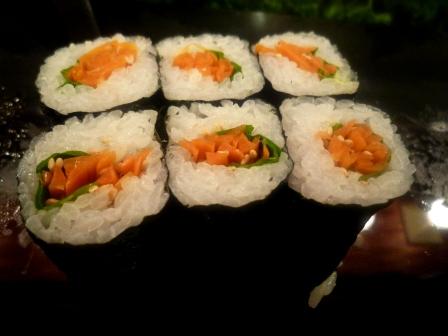
Vegan Yama Gobou Sushi

RECOMMENDED RELATED SITES:
Warren Bobrow, Bread + Butter, Zoy Zhang, Hungry Neko, Think Twice, Frank Fariello, Mangantayon, Hapabento, Elinluv Tidbit Corner, Tokyo Terrace, Maison de Christina, Chrys Niles,Lexi, Culinary Musings, Wheeling Gourmet, Comestiblog, Chronicles Of A Curious Cook, Tokyo Through The Drinking Glass, Tokyo Foodcast, Palate To Pen, Yellin Yakimono Gallery, Tokyo Terrace, Hilah Cooking, More than a Mount Full, Arkonite Bento, Happy Little Bento; 5 Star Foodie; Jefferson’s Table; Oyster Culture; Gourmet Fury; Island Vittles; Good Beer & Country Boys; Rubber Slippers In Italy; Color Food daidokoro/Osaka;/a; The Witchy Kitchen; Citron Et Vanille, Lunsj Med Buffet/Estonian Gastronomy (English), Cook, Eat, Play, Repeat, Chrisoscope, Agrigraph, The Agriculture Portal to shizuoka!

Please check the new postings at:
sake, shochu and sushi

Simple Recipes: Ratatouille

Please check the new postings at:
sake, shochu and sushi

—————————————-
日本語のブログ
—————————————-

ratatouille.jpg
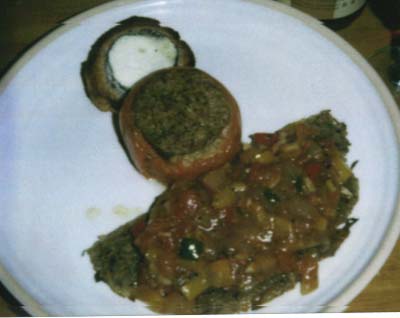
Ratatouille as accompaniment to Stuffed Tomato and Grilled Goat Cheese

In Summer Ratatouille will please both omnivores and vegetarians as it can be served on its own as it is or as an accompaniment to other foods (see pic above).
It can be made in almost any country in the world, but particularly here in Shizuoka Prefecture due to the abundance of great vegetables!

Ingredients (for 4 to 6 people):
Onions: 3 large
Aubergines (egg-plants): 4
Courgettes (zucchini): 4
Tomatoes: 500g
Peppers (pimento): 2 to 4 (mix colours)
Garlic: 2 cloves
Olive oil: 1 cup (extra virgin oil PLEASE!)
Bouquet garni (parsley, thyme, laurel)
Salt & pepper to taste
Soft spices to taste (clove, nutmeg, sage, etc.)

Recipe:

Peel and slice the onions, aubergines and courgettes. Cut the tomatoes in pieces. Cit in strips the peppers after ridding them of their seeds.
Heat the olive oil in a deep saucepan. Throw in the onions first and one minute later all the vegetables the garlic cloves , the bouquet garni, salt, peppers and spices.
Cover and let simmer on small fire for one hour and thirty minutes, mixing now and then to prevent the stew to stick on the bottom of the saucepan.
If too much water is rtill left in the stew, half cover halfway. Take garlic and bouquwr garni before serving.
NOTES: This the basic recipe. I usually add some tomato puree. The size of the cut vegetables depend on their purpose. The smaller they are cut, the shorter the cooking time. Can be served hot as accompaniment (side dish) or as main course for vegetarians (add chick peas!) or refrigerated as snacks for beer in summer.

Today’s “bento”/boxed lunch

Please check the new postings at:
sake, shochu and sushi

—————————————-
日本語のブログ
—————————————-

bento1.jpg

On Mondays, as I’m too busy to come back home for lunch, my better (worse?) half usually prepares a boxed lunch, or “bento”, in various guises.

This time, it was all very Japanese:
bento3.gif
As for staples, she made “shirogoma to tobiko tsuke shyouga nigiri” (balls of rice steamed with fresh ginger topeed with white seame seeds and flying fish roe), “tamafoyaki” (Japanese omelette) and pickled fresh ginger roots.

bento2.gif
As for garnish, she fried asparaguses inside bacon to go with French pickles, fresh mini tomatoes, golden kiwi fruit, lettuce and processed cheese.

All this with avegetable juice pack.
Cannot complain, can I?